

SIST EN 14197-1:2004
(Main)Cryogenic vessels - Static non-vacuum insulated vessels - Part 1: Fundamental requirements
General Information
- Abstract
This European Standard specifies the fundamental requirements for static non vacuum insulated cryogenic vessels designed for a maximum allowable pressure greater than 0,5 bar.
This European Standard applies to static non vacuum insulated cryogenic vessels for fluids as specified in 3.1.
For static non vacuum insulated cryogenic vessels designed for a maximum allowable pressure of not more than 0.5 bar, this European Standard may be used as a guide.
This European Standard is not applicable to vessels built on-site.
- Status
- Published
- Publication Date
- 31-May-2004
- Technical Committee
- TLP - Pressure vessels
- Current Stage
- 6060 - National Implementation/Publication (Adopted Project)
- Start Date
- 01-Jun-2004
- Due Date
- 01-Jun-2004
- Completion Date
- 01-Jun-2004
- Directive
- 2014/68/EU - Directive 2014/68/EU of the European Parliament and of the Council of 15 May 2014 on the harmonisation of the laws of the Member States relating to the making available on the market of pressure equipmentOJ Ref: C 293/01 OJ Date: 12-Aug-2016
97/23/EC - Pressure equipmentOJ Ref: C 266 OJ Date: 09-Sep-2011



Overview
EN 14197-1:2003 - Cryogenic vessels: Static non‑vacuum insulated vessels, Part 1: Fundamental requirements (CEN) sets the fundamental safety, material and operational baseline for stationary, non‑vacuum insulated cryogenic vessels designed for a maximum allowable pressure greater than 0,5 bar. The standard applies to refrigerated liquefied gases defined as cryogenic fluids (e.g., CO2, nitrous oxide, ethylene and compatible mixtures) and is intended for factory-built, transportable static vessels - not for vessels built on‑site.
Key topics and requirements
- Scope and applicability
- Applies to static non‑vacuum insulated cryogenic vessels for specified cryogenic fluids and pressures > 0,5 bar.
- Can be used as a guide for vessels with ps ≤ 0,5 bar.
- Mechanical loads
- Vessels must withstand mechanical loads from pressure testing, filling, thermal movement, handling and environmental actions (wind, seismic where relevant).
- Pressure‑test loading is defined relative to test pressure (pT) and maximum allowable pressure (ps).
- Thermal loads
- Design must account for the full expected temperature range of the vessel and associated equipment (minimum and maximum ambient and service temperatures).
- Special attention to conditions when vessel temperature falls below minimum design level (e.g., repressurization after solidification).
- Materials and corrosion
- Materials in contact with cryogenic fluids must meet compatibility (EN 1797) and toughness requirements at low temperatures (EN 1252‑1 / EN 1252‑2).
- Due to low temperatures and insulated construction, no general corrosion allowance is required for inner surfaces under the insulation.
- Material properties must be certified (EN 10204 inspection certificates).
- Design, fabrication, inspection and testing
- Detailed design, fabrication, inspection and testing requirements are referenced to Part 2 (prEN 14197‑2).
- Vessels must include appropriate valves, pressure relief systems (EN 13648 series), couplings (EN 13275) and be cleaned per EN 12213.
- Marking and documentation
- Mandatory data plate information includes: EN 14197‑1 reference, year, manufacturer, serial number, ps, volume, test pressure, approval fluids, test dates and operating instructions.
- Manufacturer must supply documentation, operating manual and retain records for traceability.
Applications and users
- Intended users: manufacturers, pressure‑equipment designers, inspection and certification bodies, plant operators, industrial gas suppliers, safety engineers and procurement specialists.
- Typical applications: factory‑built stationary storage of refrigerated liquefied gases for industrial, medical or process use where non‑vacuum insulation is employed and pressure containment is critical.
Related standards
- EN 14197 series (Part 2: Design, fabrication, inspection & testing; Part 3: Operational requirements)
- EN 1252‑1 / EN 1252‑2 (material toughness), EN 13648‑1/2 (pressure relief), EN 1797 (gas/material compatibility), EN 10204, EN 12213, EN 13275.
Keywords: EN 14197-1, cryogenic vessels, static non‑vacuum insulated vessels, fundamental requirements, cryogenic safety, pressure relief, materials, inspection.
Relations
- Effective Date
- 28-Jan-2026
- Effective Date
- 28-Jan-2026
- Effective Date
- 28-Jan-2026
- Effective Date
- 28-Jan-2026
- Effective Date
- 28-Jan-2026
- Effective Date
- 28-Jan-2026
- Effective Date
- 28-Jan-2026
- Effective Date
- 28-Jan-2026
- Refers
SIST EN 12213:1999 - Cryogenic vessels - Methods for performance evaluation of thermal insulation - Effective Date
- 28-Jan-2026
- Effective Date
- 28-Jan-2026
- Effective Date
- 28-Jan-2026
- Effective Date
- 28-Jan-2026
- Effective Date
- 22-Dec-2008
- Effective Date
- 22-Dec-2008
Get Certified
Connect with accredited certification bodies for this standard

Institut za varilstvo d.o.o. (Welding Institute)
Slovenia's leading welding institute since 1952. ISO 3834, EN 1090, pressure equipment certification, NDT personnel, welder qualification. Only IIW Au
Sponsored listings
Frequently Asked Questions
SIST EN 14197-1:2004 is a standard published by the Slovenian Institute for Standardization (SIST). Its full title is "Cryogenic vessels - Static non-vacuum insulated vessels - Part 1: Fundamental requirements". This standard covers: This European Standard specifies the fundamental requirements for static non vacuum insulated cryogenic vessels designed for a maximum allowable pressure greater than 0,5 bar. This European Standard applies to static non vacuum insulated cryogenic vessels for fluids as specified in 3.1. For static non vacuum insulated cryogenic vessels designed for a maximum allowable pressure of not more than 0.5 bar, this European Standard may be used as a guide. This European Standard is not applicable to vessels built on-site.
This European Standard specifies the fundamental requirements for static non vacuum insulated cryogenic vessels designed for a maximum allowable pressure greater than 0,5 bar. This European Standard applies to static non vacuum insulated cryogenic vessels for fluids as specified in 3.1. For static non vacuum insulated cryogenic vessels designed for a maximum allowable pressure of not more than 0.5 bar, this European Standard may be used as a guide. This European Standard is not applicable to vessels built on-site.
SIST EN 14197-1:2004 is classified under the following ICS (International Classification for Standards) categories: 23.020.40 - Cryogenic vessels. The ICS classification helps identify the subject area and facilitates finding related standards.
SIST EN 14197-1:2004 has the following relationships with other standards: It is inter standard links to SIST EN 13648-1:2009, SIST EN ISO 21028-1:2017, SIST EN 13648-2:2002, SIST EN 10204:1996, SIST EN 1626:2009, SIST EN ISO 21028-2:2018, SIST EN 1797:2002, SIST EN ISO 24490:2026, SIST EN 12213:1999, SIST EN 14197-3:2004, SIST EN 1473:2021, SIST EN 14197-2:2004; is excused to SIST EN 14197-2:2004, SIST EN 14197-3:2004. Understanding these relationships helps ensure you are using the most current and applicable version of the standard.
SIST EN 14197-1:2004 is associated with the following European legislation: EU Directives/Regulations: 2014/68/EU, 97/23/EC; Standardization Mandates: M/071. When a standard is cited in the Official Journal of the European Union, products manufactured in conformity with it benefit from a presumption of conformity with the essential requirements of the corresponding EU directive or regulation.
SIST EN 14197-1:2004 is available in PDF format for immediate download after purchase. The document can be added to your cart and obtained through the secure checkout process. Digital delivery ensures instant access to the complete standard document.
Standards Content (Sample)
2003-01.Slovenski inštitut za standardizacijo. Razmnoževanje celote ali delov tega standarda ni dovoljeno.Cryogenic vessels - Static non-vacuum insulated vessels - Part 1: Fundamental requirementsKriogene posode – Stabilne, vakuumsko neizolirane posode - 1. del: Osnovne zahteveRécipients cryogéniques - Récipients statiques, non isolés sous vide - Partie 1: Exigences fondamentalesKryo-Behälter - Ortsfeste nicht vakuum-isolierte Behälter - Teil 1: GrundanforderungenTa slovenski standard je istoveten z:EN 14197-1:2003SIST EN 14197-1:2004en23.020.40ICS:SLOVENSKI
STANDARDSIST EN 14197-1:200401-junij-2004
EUROPEAN STANDARDNORME EUROPÉENNEEUROPÄISCHE NORMEN 14197-1August 2003ICS 23.020.40English versionCryogenic vessels - Static non-vacuum insulated vessels - Part1: Fundamental requirementsProduits cryogéniques - Récipients fixes, non isolés sousvide - Partie 1: Exigences fondamentalesKryo-Behälter - Ortsfeste nicht vakuum-isolierte Behälter -Teil 1: GrundanforderungenThis European Standard was approved by CEN on 2 July 2003.CEN members are bound to comply with the CEN/CENELEC Internal Regulations which stipulate the conditions for giving this EuropeanStandard the status of a national standard without any alteration. Up-to-date lists and bibliographical references concerning such nationalstandards may be obtained on application to the Management Centre or to any CEN member.This European Standard exists in three official versions (English, French, German). A version in any other language made by translationunder the responsibility of a CEN member into its own language and notified to the Management Centre has the same status as the officialversions.CEN members are the national standards bodies of Austria, Belgium, Czech Republic, Denmark, Finland, France, Germany, Greece,Hungary, Iceland, Ireland, Italy, Luxembourg, Malta, Netherlands, Norway, Portugal, Slovakia, Spain, Sweden, Switzerland and UnitedKingdom.EUROPEAN COMMITTEE FOR STANDARDIZATIONCOMITÉ EUROPÉEN DE NORMALISATIONEUROPÄISCHES KOMITEE FÜR NORMUNGManagement Centre: rue de Stassart, 36
B-1050 Brussels© 2003 CENAll rights of exploitation in any form and by any means reservedworldwide for CEN national Members.Ref. No. EN 14197-1:2003 E
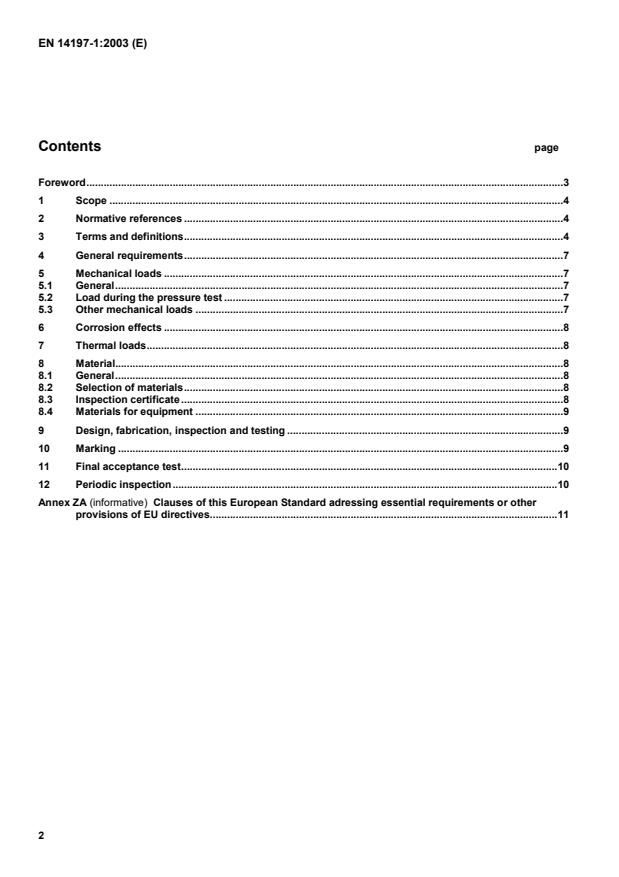
Clauses of this European Standard adressing essential requirements or otherprovisions of EU directives.11
Materials - Part 2: Toughness requirements for temperatures between - 80 C and- 20 C.EN 1626, Cryogenic vessels
Valves for cryogenic service.EN 1797, Cryogenic vessels
Gas/Material compatibility.EN 10204:1991, Metallic products - Types of inspection documents.EN 12213, Cryogenic vessels – Methods for performance evaluation of thermal Insulation.EN 13275, Cryogenic vessels - Pumps for cryogenic service.EN 13648-1:-, Cryogenic vessels – Safety devices for protection against excessive pressure – Part 1: Safety valves forcryogenic service.EN 13648-2, Cryogenic vessels – Safety devices for protection against excessive pressure –Part 2: Bursting disc safetydevices for cryogenic service.prEN 14197-2, Cryogenic vessels - Static non vacuum insulated vessels - Part 2: Design, fabrication, inspectionand testing.prEN 14197-3, Cryogenic vessels - Static non vacuum insulated vessel - Part 3: Operational requirements.3 Terms and definitionsFor the purposes of this European Standard, the following terms and definitions apply:3.1cryogenic fluid (refrigerated liquefied gas)a gas which is partially liquid because of its low temperature.
AAsphyxiant gases2187Carbon dioxide, refrigerated liquid3158Gas, refrigerated liquid, N.O.S.b3 OOxidizing gases2201Nitrous oxide, refrigerated liquid3311Gas, refrigerated liquid, oxidizing, N.O.S3 FFlammable gases1038 Ethylene, refrigerated liquid3312Gas, refrigerated liquid, N.O.S. baItem group, identification number, name and description according to ADRbN.O.S. = not otherwise specifiedThe flammable gases and mixtures of them may be mixed with: Carbon dioxide or other asphyxiant gases.NOTEMixtures of oxidizing and flammable gases are not acceptable.3.2static cryogenic vessela thermally insulated vessel intended for use by one or both cryogenic fluids at a stationary place, consisting of aninsulated vessel, all of the valves and equipment1) together with any additional supporting facilities.This static cryogenic vessel is intended to be transported empty or containing marginal residues of gas. This staticcryogenic vessel represents a complete assembly ready for putting into service.3.3thermal insulationan insulating layer around the vessel. The layer is normally covered by cladding (e.g. of steel, aluminium or plastic).3.4vesselvessel intended to contain the cryogenic fluid.3.5normal operationthe intended operation of the vessel up to the maximum allowable pressure within the designed temperature rangewhen it is located at a site.It means also the transport of the vessel when empty or containing marginal residues of gases including thehandling loads defined in 3.6.
1) in PED ‘accessories’
...