

ASTM A703/A703M-20a
(Specification)Standard Specification for Steel Castings, General Requirements, for Pressure-Containing Parts
General Information
- Abstract
ABSTRACT
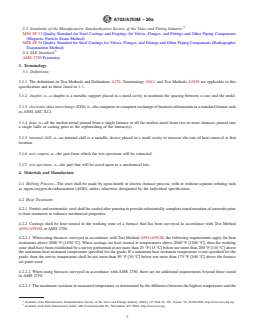
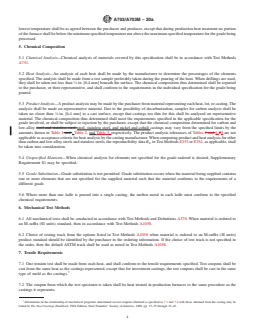
This specification covers steel castings, general requirements, for pressure-containing parts. The steel shall be made by open-hearth or electric-furnace process, with or without separate refining such as argon-oxygen-decarburization (AOD), unless otherwise designated by the individual specification. Ferritic and martensitic steel shall be cooled after pouring to provide substantially complete transformation of austenite prior to heat treatment to enhance mechanical properties. The material shall conform to the specified chemical composition requirements. An analysis of each heat shall be made by the manufacturer to determine the percentages of the elements specified. The mechanical test methods and definitions are presented in details. One tension test shall be made from each heat, and shall conform to the tensile requirements specified. Test coupons shall be cast from the same heat as the castings represented, except that for investment castings, the test coupons shall be cast in the same type of mold as the castings. After machining, each casting shall be tested under specified hydrostatic shell test pressures in the applicable steel rating for which the casting is designed.
SCOPE
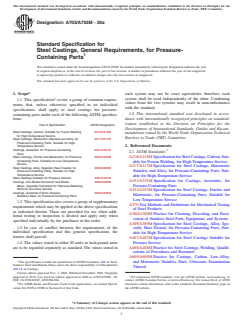
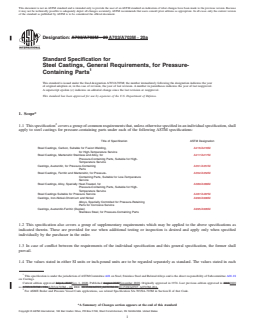
1.1 This specification2 covers a group of common requirements that, unless otherwise specified in an individual specification, shall apply to steel castings for pressure-containing parts under each of the following ASTM specifications:
Title of Specification
ASTM Designation
Steel Castings, Carbon, Suitable for Fusion Welding,
A216/A216M
for High-Temperature Service
Steel Castings, Martensitic Stainless and Alloy, for
A217/A217M
Pressure-Containing Parts, Suitable for High-
Temperature Service
Castings, Austenitic, for Pressure-Containing
A351/A351M
Parts
Steel Castings, Ferritic and Martensitic, for Pressure-
A352/A352M
Containing Parts, Suitable for Low-Temperature
Service
Steel Castings, Alloy, Specially Heat-Treated, for
A389/A389M
Pressure-Containing Parts, Suitable for High-
Temperature Service
Steel Castings Suitable for Pressure Service
A487/A487M
Castings, Iron-Nickel-Chromium and Nickel
A990/A990M
Alloys, Specially Controlled for Pressure-Retaining Parts for Corrosive Service
Castings, Austenitic-Ferritic (Duplex)
A995/A995M
Stainless Steel, for Pressure-Containing Parts
1.2 This specification also covers a group of supplementary requirements which may be applied to the above specifications as indicated therein. These are provided for use when additional testing or inspection is desired and apply only when specified individually by the purchaser in the order.
1.3 In case of conflict between the requirements of the individual specification and this general specification, the former shall prevail.
1.4 The values stated in either SI units or inch-pound units are to be regarded separately as standard. The values stated in each system may not be exact equivalents; therefore, each system shall be used independently of the other. Combining values from the two systems may result in nonconformance with the standard.
1.5 This international standard was developed in accordance with internationally recognized principles on standardization established in the Decision on Principles for the Development of International Standards, Guides and Recommendations issued by the World Trade Organization Technical Barriers to Trade (TBT) Committee.
- Status
- Published
- Publication Date
- 31-Oct-2020
- Technical Committee
- A01 - Steel, Stainless Steel and Related Alloys
- Drafting Committee
- A01.18 - Castings
Buy Documents
ASTM A703/A703M-20a - Standard Specification for Steel Castings, General Requirements, for Pressure-Containing Parts
REDLINE ASTM A703/A703M-20a - Standard Specification for Steel Castings, General Requirements, for Pressure-Containing Parts
Overview
ASTM A703/A703M-20a is the standard specification published by ASTM International that outlines the general requirements for steel castings used in pressure-containing parts. This specification sets forth the foundational production, testing, inspection, and certification requirements that apply unless otherwise specified in individual product standards. ASTM A703/A703M is widely referenced to ensure the reliability and safety of pressure equipment in critical applications such as boilers, valves, and fittings. Its provisions cover steel produced by open-hearth or electric-furnace processes, with optional separate refining (e.g., argon-oxygen-decaburization). The standard applies to various steel grades-including ferritic, martensitic, and austenitic-and supports both SI and inch-pound units.
Key Topics
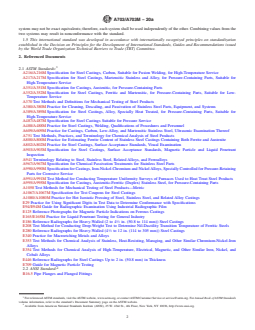
- Scope of Application: ASTM A703/A703M applies to steel castings specified for pressure-retaining applications under several ASTM standards (such as A216/A216M, A217/A217M, A351/A351M, A352/A352M, A389/A389M, A487/A487M, A990/A990M, and A995/A995M).
- Material Requirements: Mandates the use of open-hearth or electric-furnace steel, with optional additional refining for improved quality. The cooling and heat treatment of ferritic and martensitic steels are specified to optimize mechanical properties.
- Testing and Inspection:
- Chemical composition analysis for each heat.
- Mechanical testing, including at least one tension test per heat.
- Use of test coupons from the same heat and similar mold as representative castings.
- Hydrostatic testing of castings after machining to ensure leak-tightness.
- Supplementary Requirements: Offers additional test and inspection options (e.g., destructive tests, radiographic, magnetic particle, or ultrasonic inspections) upon purchaser request.
- Traceability and Marking: Detailed marking requirements ensure every casting is traceable to its heat of origin and compliant with ordering data.
- Quality Assurance: Visual surface acceptance standards, repair by welding requirements (with qualified welders per A488/A488M), and strict policies on peening or plugging to disguise defects.
Applications
ASTM A703/A703M-20a is essential for anyone designing, manufacturing, or procuring steel castings for:
- Pressure Vessels: Ensuring safety of boilers, tanks, and containers subject to internal pressure.
- Industrial Valves and Fittings: Reliable function and integrity in critical upstream, midstream, and downstream processes.
- High-Temperature and Low-Temperature Environments: Applicable for castings targeting both elevated and cryogenic service, aligning with product-specific standards.
- Power Generation Equipment: Critical for parts in turbines and steam pipelines requiring rigorous mechanical property control.
- Chemical and Petrochemical Processing: Maintaining compliance in highly corrosive or challenging operating conditions.
By establishing uniform requirements and clear supplementary options, this standard supports repeatable quality, traceability, and regulatory compliance, enhancing safety in all pressure-containing applications.
Related Standards
ASTM A703/A703M-20a functions as a common set of general requirements referenced by multiple steel casting specifications, including:
- ASTM A216/A216M: Carbon steel castings for high-temperature service.
- ASTM A217/A217M: Martensitic stainless and alloy steel castings for high-temperature, pressure-retaining parts.
- ASTM A351/A351M: Austenitic steel castings for pressure applications.
- ASTM A352/A352M: Ferritic and martensitic steel castings for low-temperature service.
- ASTM A389/A389M: Specially heat-treated alloy steel castings for high-temperature applications.
- ASTM A487/A487M: Steel castings suitable for pressure service.
- ASTM A990/A990M: Iron-nickel-chromium and nickel alloy castings for corrosive, pressure-retaining parts.
- ASTM A995/A995M: Austenitic-ferritic (duplex) stainless steel castings.
Other referenced ASTM and industry standards include: A370 (mechanical testing), A751 (chemical analysis), A488/A488M (welding qualification), and ANSI B16.5 (flanges).
Keywords: ASTM A703, steel castings, pressure-containing parts, general requirements, hydrostatic test, mechanical properties, chemical analysis, supplementary requirements, welding, traceability, industrial valves, pressure vessels.
Relations
- Effective Date
- 01-Mar-2024
- Effective Date
- 01-Mar-2024
- Effective Date
- 01-Mar-2024
- Effective Date
- 01-Mar-2024
- Effective Date
- 01-Mar-2024
- Effective Date
- 15-Nov-2023
- Effective Date
- 01-Nov-2023
- Effective Date
- 01-Nov-2023
- Effective Date
- 01-May-2020
- Effective Date
- 01-May-2020
- Effective Date
- 01-Sep-2019
- Effective Date
- 01-Jul-2019
- Effective Date
- 01-Mar-2019
- Effective Date
- 01-Sep-2018
- Effective Date
- 01-Sep-2018
Buy Documents
ASTM A703/A703M-20a - Standard Specification for Steel Castings, General Requirements, for Pressure-Containing Parts
REDLINE ASTM A703/A703M-20a - Standard Specification for Steel Castings, General Requirements, for Pressure-Containing Parts
Get Certified
Connect with accredited certification bodies for this standard

Element Materials Technology
Materials testing and product certification.

Inštitut za kovinske materiale in tehnologije
Institute of Metals and Technology. Materials testing, metallurgical analysis, NDT.
Sponsored listings
Frequently Asked Questions
ASTM A703/A703M-20a is a technical specification published by ASTM International. Its full title is "Standard Specification for Steel Castings, General Requirements, for Pressure-Containing Parts". This standard covers: ABSTRACT This specification covers steel castings, general requirements, for pressure-containing parts. The steel shall be made by open-hearth or electric-furnace process, with or without separate refining such as argon-oxygen-decarburization (AOD), unless otherwise designated by the individual specification. Ferritic and martensitic steel shall be cooled after pouring to provide substantially complete transformation of austenite prior to heat treatment to enhance mechanical properties. The material shall conform to the specified chemical composition requirements. An analysis of each heat shall be made by the manufacturer to determine the percentages of the elements specified. The mechanical test methods and definitions are presented in details. One tension test shall be made from each heat, and shall conform to the tensile requirements specified. Test coupons shall be cast from the same heat as the castings represented, except that for investment castings, the test coupons shall be cast in the same type of mold as the castings. After machining, each casting shall be tested under specified hydrostatic shell test pressures in the applicable steel rating for which the casting is designed. SCOPE 1.1 This specification2 covers a group of common requirements that, unless otherwise specified in an individual specification, shall apply to steel castings for pressure-containing parts under each of the following ASTM specifications: Title of Specification ASTM Designation Steel Castings, Carbon, Suitable for Fusion Welding, A216/A216M for High-Temperature Service Steel Castings, Martensitic Stainless and Alloy, for A217/A217M Pressure-Containing Parts, Suitable for High- Temperature Service Castings, Austenitic, for Pressure-Containing A351/A351M Parts Steel Castings, Ferritic and Martensitic, for Pressure- A352/A352M Containing Parts, Suitable for Low-Temperature Service Steel Castings, Alloy, Specially Heat-Treated, for A389/A389M Pressure-Containing Parts, Suitable for High- Temperature Service Steel Castings Suitable for Pressure Service A487/A487M Castings, Iron-Nickel-Chromium and Nickel A990/A990M Alloys, Specially Controlled for Pressure-Retaining Parts for Corrosive Service Castings, Austenitic-Ferritic (Duplex) A995/A995M Stainless Steel, for Pressure-Containing Parts 1.2 This specification also covers a group of supplementary requirements which may be applied to the above specifications as indicated therein. These are provided for use when additional testing or inspection is desired and apply only when specified individually by the purchaser in the order. 1.3 In case of conflict between the requirements of the individual specification and this general specification, the former shall prevail. 1.4 The values stated in either SI units or inch-pound units are to be regarded separately as standard. The values stated in each system may not be exact equivalents; therefore, each system shall be used independently of the other. Combining values from the two systems may result in nonconformance with the standard. 1.5 This international standard was developed in accordance with internationally recognized principles on standardization established in the Decision on Principles for the Development of International Standards, Guides and Recommendations issued by the World Trade Organization Technical Barriers to Trade (TBT) Committee.
ABSTRACT This specification covers steel castings, general requirements, for pressure-containing parts. The steel shall be made by open-hearth or electric-furnace process, with or without separate refining such as argon-oxygen-decarburization (AOD), unless otherwise designated by the individual specification. Ferritic and martensitic steel shall be cooled after pouring to provide substantially complete transformation of austenite prior to heat treatment to enhance mechanical properties. The material shall conform to the specified chemical composition requirements. An analysis of each heat shall be made by the manufacturer to determine the percentages of the elements specified. The mechanical test methods and definitions are presented in details. One tension test shall be made from each heat, and shall conform to the tensile requirements specified. Test coupons shall be cast from the same heat as the castings represented, except that for investment castings, the test coupons shall be cast in the same type of mold as the castings. After machining, each casting shall be tested under specified hydrostatic shell test pressures in the applicable steel rating for which the casting is designed. SCOPE 1.1 This specification2 covers a group of common requirements that, unless otherwise specified in an individual specification, shall apply to steel castings for pressure-containing parts under each of the following ASTM specifications: Title of Specification ASTM Designation Steel Castings, Carbon, Suitable for Fusion Welding, A216/A216M for High-Temperature Service Steel Castings, Martensitic Stainless and Alloy, for A217/A217M Pressure-Containing Parts, Suitable for High- Temperature Service Castings, Austenitic, for Pressure-Containing A351/A351M Parts Steel Castings, Ferritic and Martensitic, for Pressure- A352/A352M Containing Parts, Suitable for Low-Temperature Service Steel Castings, Alloy, Specially Heat-Treated, for A389/A389M Pressure-Containing Parts, Suitable for High- Temperature Service Steel Castings Suitable for Pressure Service A487/A487M Castings, Iron-Nickel-Chromium and Nickel A990/A990M Alloys, Specially Controlled for Pressure-Retaining Parts for Corrosive Service Castings, Austenitic-Ferritic (Duplex) A995/A995M Stainless Steel, for Pressure-Containing Parts 1.2 This specification also covers a group of supplementary requirements which may be applied to the above specifications as indicated therein. These are provided for use when additional testing or inspection is desired and apply only when specified individually by the purchaser in the order. 1.3 In case of conflict between the requirements of the individual specification and this general specification, the former shall prevail. 1.4 The values stated in either SI units or inch-pound units are to be regarded separately as standard. The values stated in each system may not be exact equivalents; therefore, each system shall be used independently of the other. Combining values from the two systems may result in nonconformance with the standard. 1.5 This international standard was developed in accordance with internationally recognized principles on standardization established in the Decision on Principles for the Development of International Standards, Guides and Recommendations issued by the World Trade Organization Technical Barriers to Trade (TBT) Committee.
ASTM A703/A703M-20a is classified under the following ICS (International Classification for Standards) categories: 77.140.80 - Iron and steel castings. The ICS classification helps identify the subject area and facilitates finding related standards.
ASTM A703/A703M-20a has the following relationships with other standards: It is inter standard links to ASTM A1080/A1080M-24, ASTM A903/A903M-99(2024), ASTM A941-24, ASTM A370-24, ASTM A488/A488M-24, ASTM E340-23, ASTM A609/A609M-12(2023), ASTM A990/A990M-23, ASTM A995/A995M-20, ASTM A800/A800M-20, ASTM A1080/A1080M-19, ASTM A370-19, ASTM A995/A995M-19, ASTM A995/A995M-18a, ASTM A389/A389M-13(2018). Understanding these relationships helps ensure you are using the most current and applicable version of the standard.
ASTM A703/A703M-20a is available in PDF format for immediate download after purchase. The document can be added to your cart and obtained through the secure checkout process. Digital delivery ensures instant access to the complete standard document.
Standards Content (Sample)
This international standard was developed in accordance with internationally recognized principles on standardization established in the Decision on Principles for the
Development of International Standards, Guides and Recommendations issued by the World Trade Organization Technical Barriers to Trade (TBT) Committee.
Designation:A703/A703M −20a
Standard Specification for
Steel Castings, General Requirements, for Pressure-
Containing Parts
This standard is issued under the fixed designationA703/A703M; the number immediately following the designation indicates the year
of original adoption or, in the case of revision, the year of last revision. A number in parentheses indicates the year of last reapproval.
A superscript epsilon (´) indicates an editorial change since the last revision or reapproval.
This standard has been approved for use by agencies of the U.S. Department of Defense.
1. Scope* each system may not be exact equivalents; therefore, each
2 system shall be used independently of the other. Combining
1.1 This specification covers a group of common require-
values from the two systems may result in nonconformance
ments that, unless otherwise specified in an individual
with the standard.
specification, shall apply to steel castings for pressure-
1.5 This international standard was developed in accor-
containing parts under each of the following ASTM specifica-
dance with internationally recognized principles on standard-
tions:
ization established in the Decision on Principles for the
Title of Specification ASTM Designation
Development of International Standards, Guides and Recom-
Steel Castings, Carbon, Suitable for Fusion Welding, A216/A216M
mendations issued by the World Trade Organization Technical
for High-Temperature Service
Barriers to Trade (TBT) Committee.
Steel Castings, Martensitic Stainless and Alloy, for A217/A217M
Pressure-Containing Parts, Suitable for High-
2. Referenced Documents
Temperature Service
Castings, Austenitic, for Pressure-Containing A351/A351M
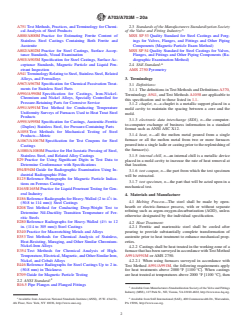
2.1 ASTM Standards:
Parts
A216/A216M SpecificationforSteelCastings,Carbon,Suit-
Steel Castings, Ferritic and Martensitic, for Pressure- A352/A352M
Containing Parts, Suitable for Low-Temperature
able for Fusion Welding, for High-Temperature Service
Service
A217/A217M Specification for Steel Castings, Martensitic
Steel Castings, Alloy, Specially Heat-Treated, for A389/A389M
Pressure-Containing Parts, Suitable for High- Stainless and Alloy, for Pressure-Containing Parts, Suit-
Temperature Service
able for High-Temperature Service
Steel Castings Suitable for Pressure Service A487/A487M
A351/A351M Specification for Castings, Austenitic, for
Castings, Iron-Nickel-Chromium and Nickel A990/A990M
Alloys, Specially Controlled for Pressure-Retaining Pressure-Containing Parts
Parts for Corrosive Service
A352/A352M Specification for Steel Castings, Ferritic and
Castings, Austenitic-Ferritic (Duplex) A995/A995M
Martensitic, for Pressure-Containing Parts, Suitable for
Stainless Steel, for Pressure-Containing Parts
Low-Temperature Service
1.2 This specification also covers a group of supplementary
A370 Test Methods and Definitions for Mechanical Testing
requirements which may be applied to the above specifications
of Steel Products
as indicated therein. These are provided for use when addi-
A380/A380M Practice for Cleaning, Descaling, and Passi-
tional testing or inspection is desired and apply only when
vation of Stainless Steel Parts, Equipment, and Systems
specified individually by the purchaser in the order.
A389/A389M Specification for Steel Castings, Alloy, Spe-
1.3 In case of conflict between the requirements of the
cially Heat Treated, for Pressure-Containing Parts, Suit-
individual specification and this general specification, the
able for High-Temperature Service
former shall prevail.
A487/A487M Specification for Steel Castings Suitable for
Pressure Service
1.4 The values stated in either SI units or inch-pound units
A488/A488M Practice for Steel Castings, Welding, Qualifi-
are to be regarded separately as standard. The values stated in
cations of Procedures and Personnel
A609/A609M Practice for Castings, Carbon, Low-Alloy,
This specification is under the jurisdiction ofASTM Committee A01 on Steel,
and Martensitic Stainless Steel, Ultrasonic Examination
Stainless Steel and Related Alloys and is the direct responsibility of Subcommittee
Thereof
A01.18 on Castings.
Current edition approved Nov. 1, 2020. Published November 2020. Originally
approved in 1974. Last previous edition approved in 2020 as A703/A703M – 20. For referenced ASTM standards, visit the ASTM website, www.astm.org, or
DOI: 10.1520/A0703_A0703M-20A. contact ASTM Customer Service at service@astm.org. For Annual Book of ASTM
For ASME Boiler and Pressure Vessel Code applications, see related Specifi- Standards volume information, refer to the standard’s Document Summary page on
cation SA-703/SA-703M in Section II of that Code. the ASTM website.
*A Summary of Changes section appears at the end of this standard
Copyright © ASTM International, 100 Barr Harbor Drive, PO Box C700, West Conshohocken, PA 19428-2959. United States
A703/A703M−20a
A751 Test Methods, Practices, and Terminology for Chemi- 2.3 Standards of the Manufacturers Standardization Society
cal Analysis of Steel Products of the Valve and Fitting Industry:
A800/A800M Practice for Estimating Ferrite Content of MSS SP 53 Quality Standard for Steel Castings and Forg-
Stainless Steel Castings Containing Both Ferrite and ings for Valves, Flanges, and Fittings and Other Piping
Austenite Components (Magnetic Particle Exam Method)
A802/A802M Practice for Steel Castings, Surface Accep- MSS SP 54 Quality Standard for Steel Castings for Valves,
tance Standards, Visual Examination Flanges, and Fittings and Other Piping Components (Ra-
A903/A903M Specification for Steel Castings, Surface Ac- diographic Examination Method)
ceptance Standards, Magnetic Particle and Liquid Pen-
2.4 SAE Standard:
etrant Inspection
AMS 2750 Pyrometry
A941 TerminologyRelatingtoSteel,StainlessSteel,Related
3. Terminology
Alloys, and Ferroalloys
A967/A967M Specification for Chemical Passivation Treat-
3.1 Definitions:
ments for Stainless Steel Parts
3.1.1 The definitions inTest Methods and Definitions A370,
A990/A990M Specification for Castings, Iron-Nickel-
Terminology A941, and Test Methods A1058 are applicable to
Chromium and Nickel Alloys, Specially Controlled for
this specification and to those listed in 1.1.
Pressure-Retaining Parts for Corrosive Service
3.1.2 chaplet, n—a chaplet is a metallic support placed in a
A991/A991M Test Method for Conducting Temperature
mold cavity to maintain the spacing between a core and the
Uniformity Surveys of Furnaces Used to Heat Treat Steel
mold.
Products
3.1.3 electronic data interchange (EDI), n—the computer-
A995/A995M Specification for Castings, Austenitic-Ferritic
to-computer exchange of business information in a standard
(Duplex) Stainless Steel, for Pressure-Containing Parts
format such as ANSI ASC X12.
A1058 Test Methods for Mechanical Testing of Steel
3.1.4 heat, n—all the molten metal poured from a single
Products—Metric
furnace or all the molten metal from two or more furnaces
A1067/A1067M Specification for Test Coupons for Steel
poured into a single ladle or casting prior to the replenishing of
Castings
the furnace(s).
A1080/A1080M Practice for Hot Isostatic Pressing of Steel,
Stainless Steel, and Related Alloy Castings
3.1.5 internal chill, n—an internal chill is a metallic device
E29 Practice for Using Significant Digits in Test Data to placed in a mold cavity to increase the rate of heat removal at
Determine Conformance with Specifications that location.
E94/E94M Guide for Radiographic Examination Using In-
3.1.6 test coupon, n—the part from which the test specimen
dustrial Radiographic Film
will be extracted.
E125 Reference Photographs for Magnetic Particle Indica-
3.1.7 test specimen, n—the part that will be acted upon in a
tions on Ferrous Castings
mechanical test.
E165/E165M Practice for Liquid Penetrant Testing for Gen-
eral Industry
4. Materials and Manufacture
E186 Reference Radiographs for Heavy-Walled (2 to 4 ⁄2 in.
4.1 Melting Process—The steel shall be made by open-
(50.8 to 114 mm)) Steel Castings
hearth or electric-furnace process, with or without separate
E208 Test Method for Conducting Drop-Weight Test to
refining such as argon-oxygen-decarburization (AOD), unless
Determine Nil-Ductility Transition Temperature of Fer-
otherwise designated by the individual specification.
ritic Steels
E280 Reference Radiographs for Heavy-Walled (4 ⁄2 to 12 4.2 Heat Treatment:
in. (114 to 305 mm)) Steel Castings
4.2.1 Ferritic and martensitic steel shall be cooled after
E340 Practice for Macroetching Metals and Alloys pouring to provide substantially complete transformation of
E353 Test Methods for Chemical Analysis of Stainless,
austenite prior to heat treatment to enhance mechanical prop-
Heat-Resisting, Maraging, and Other Similar Chromium- erties.
Nickel-Iron Alloys
4.2.2 Castings shall be heat treated in the working zone of a
E354 Test Methods for Chemical Analysis of High- furnacethathasbeensurveyedinaccordancewithTestMethod
Temperature,Electrical,Magnetic,andOtherSimilarIron,
A991/A991M or AMS 2750.
Nickel, and Cobalt Alloys 4.2.2.1 When using furnaces surveyed in accordance with
E446 Reference Radiographs for Steel Castings Up to 2 in.
Test Method A991/A991M, the following requirements apply
(50.8 mm) in Thickness for heat treatments above 2000 °F [1100 °C]. When castings
E709 Guide for Magnetic Particle Testing
are heat treated at temperatures above 2000 °F [1100 °C], then
2.2 ANSI Standard:
B16.5 Pipe Flanges and Flanged Fittings
AvailablefromManufacturersStandardizationSocietyoftheValveandFittings
Industry (MSS), 127 Park St., NE,Vienna,VA22180-4602, http://www.mss-hq.org.
4 6
Available fromAmerican National Standards Institute (ANSI), 25 W. 43rd St., Available from SAE International (SAE), 400 Commonwealth Dr.,Warrendale,
4th Floor, New York, NY 10036, http://www.ansi.org. PA 15096, http://www.sae.org.
A703/A703M−20a
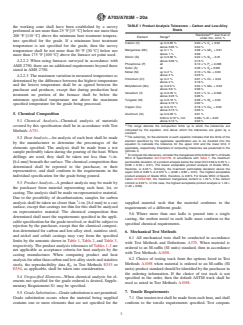
TABLE 1 Product Analysis Tolerances – Carbon and Low-Alloy
the working zone shall have been established by a survey
Steels
performed at not more than 25 °F [15 °C] below nor more than
B,C
Tolerances over max or
A
200 °F [110 °C] above the minimum heat treatment tempera-
Element Range
under min, Limit, %
ture specified for the grade. If a minimum heat treatment
Carbon (C) up to 0.65 % 0.03 × % C + 0.02
L
temperature is not specified for the grade, then the survey
above 0.65 % 0.04 %
Manganese (Mn) up to 1 % 0.08 × % Mn + 0.01
temperature shall be not more than 50 °F [30 °C] below nor L
above 1 % 0.09
more than 175 °F [100 °C] above the furnace set point used.
Silicon (Si) up to 0.60 % 0.22 × % Si − 0.01
L
4.2.2.2 When using furnaces surveyed in accordance with above 0.60 % 0.15 %
Phosphorus (P) all 0.13 × % P + 0.005
L
AMS 2750, there are no additional requirements beyond those
Sulfur (S) all 0.36 × % S + 0.001
L
stated in AMS 2750.
Nickel (Ni) up to 2 % 0.10 × % Ni + 0.03
L
above 2 % 0.25 %
4.2.2.3 The maximum variation in measured temperature as
Chromium (Cr) up to 2 % 0.07 × % Cr + 0.04
L
determined by the difference between the highest temperature
above 2 % 0.18 %
and the lowest temperature shall be as agreed between the
Molybdenum (Mo) up to 0.6 % 0.04 × % Mo + 0.03
L
above 0.6 % 0.06 %
purchaser and producer, except that during production heat
Vanadium (V) up to 0.25 % 0.23 × % V + 0.004
L
treatment no portion of the furnace shall be below the
above 0.25 % 0.06 %
minimum specified temperature nor above the maximum Tungsten (W) up to 0.10 % 0.08 × % W + 0.02
L
above 0.10 % 0.02 %
specified temperature for the grade being processed.
Copper (Cu) up to 0.15 % 0.18 × % Cu + 0.02
L
above 0.15 % 0.05 %
Aluminum (Al) up to 0.03 % 0.01 %
5. Chemical Composition
0.03 to 0.10 %, incl. 0.08× % Al + 0.02
above 0.10 % 0.03 %
5.1 Chemical Analysis—Chemical analysis of materials
A
covered by this specification shall be in accordance with Test
The range denotes the composition limits up to which the tolerances are
computed by the equation, and above which the tolerances are given by a
Methods A751.
constant.
B
The subscript for the elements in each equation indicates that the limits of the
L
5.2 Heat Analysis—An analysis of each heat shall be made
element specified by the applicable specification are to be inserted into the
by the manufacturer to determine the percentages of the
equation to calculate the tolerance for the upper limit and the lower limit, if
elements specified. The analysis shall be made from a test applicable, respectively. Examples of computing tolerances are presented in the
footnote C.
sample preferably taken during the pouring of the heat. When
C
Tocomputethetolerances,considerthemanganeselimits0.50to80 %ofGrade
drillings are used, they shall be taken not less than ⁄4 in.
WC4 of Specification A217/A217M. In accordance with Table 1, the maximum
[6.4 mm] beneath the surface. The chemical composition thus permissible deviation of a product analysis below the lower limit 0.50 is 0.05 % =
(0.08 × 0.50 + 0.01). The lowest acceptable product analysis of Grade WC4,
determined shall be reported to the purchaser, or their
therefore, is 0.45 %. Similarly, the maximum permissible deviation above the
representative, and shall conform to the requirements in the
upper limit of 0.80 % is 0.074 % = (0.08 × 0.80 + 0.01). The highest acceptable
product analysis of Grade WC4, therefore, is 0.874. For Grade WCC of Specifi-
individual specification for the grade being poured.
cation A216/A216M, the maximum manganese content is 1.40 % if the carbon
content is 0.20 %. In this case, the highest acceptable product analysis is 1.49 =
5.3 Product Analysis—A product analysis may be made by
(1.40 + 0.09).
the purchaser from material representing each heat, lot, or
casting. The analysis shall be made on representative material.
Due to the possibility of decarburization, samples for carbon
analysis shall be taken no closer than ⁄4 in. [6.4 mm] to a cast
supplied material such that the material conforms to the
surface, except that castings too thin for this shall be analyzed requirements of a different grade.
on representative material. The chemical composition thus
5.6 Where more than one ladle is poured into a single
determined shall meet the requirements specified in the appli-
casting, the molten metal in each ladle must conform to the
cable specification for the grade involved, or shall be subject to
specified chemical requirements.
rejection by the purchaser, except that the chemical composi-
tion determined for carbon and low-alloy steel, stainless steel,
6. Mechanical Test Methods
and nickel and cobalt castings may vary from the specified
6.1 All mechanical tests shall be conducted in accordance
limits by the amounts shown in Table 1, Table 2, and Table 3,
with Test Methods and Definitions A370. When material is
respectively. The product analysis tolerances of Tables 1-3 are
ordered to an M-suffix (SI units) standard, then in accordance
not applicable as acceptance criteria for heat analysis by the
with Test Methods A1058.
casting manufacturer. When comparing product and heat
6.2 Choice of testing track from the options listed in Test
analysisforotherthancarbonandlow-alloysteelsandstainless
Methods A1058 when material is ordered to an M-suffix (SI
steels, the reproducibility data R , in Test Methods E353 or
units) product standard should be identified by the purchaser in
E354, as applicable, shall be taken into consideration.
the ordering information. If the choice of test track is not
5.4 Unspecified Elements—When chemical analysis for el-
specified in the order, then the default ASTM track shall be
ements not specified for the grade ordered is desired, Supple-
used as noted in Test Methods A1058.
mentary Requirement S1 may be specified.
7. Tensile Requirements
5.5 Grade Substitution—Gradesubstitutionisnotpermitted.
Grade substitution occurs when the material being supplied 7.1 One tension test shall be made from each heat, and shall
contains one or more elements that are not specified for the conform to the tensile requirements specified. Test coupons
A703/A703M−20a
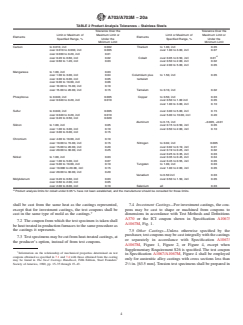
TABLE 2 Product Analysis Tolerances – Stainless Steels
Tolerance Over the Tolerance Over the
Limit or Maximum of Maximum Limit or Limit or Maximum of Maximum Limit or
Elements Elements
Specified Range, % Under the Specified Range, % Under the
Minimum Limit Minimum Limit
Carbon to 0.010, incl 0.002 Titanium to 1.00, incl 0.05
over 0.010 to 0.030, incl 0.005 over 1.00 to 3.00, incl 0.07
over 0.030 to 0.20, incl 0.01
A
over 0.20 to 0.60, incl 0.02 Cobalt over 0.05 to 0.50, incl 0.01
over 0.60 to 1.20, incl 0.03 over 0.50 to 2.00, incl 0.02
over 2.00 to 5.00, incl 0.05
Manganese to 1.00, incl 0.03
over 1.00 to 3.00, incl 0.04 Columbium plus to 1.50, incl 0.05
over 3.00 to 6.00, incl 0.05 tantalum
over 6.00 to 10.00, incl 0.06
over 10.00 to 15.00, incl 0.10
over 15.00 to 20.00, incl 0.15 Tantalum to 0.10, incl 0.02
Phosphorus to 0.040, incl 0.005 Copper to 0.50, incl 0.03
over 0.040 to 0.20, incl 0.010 over 0.50 to 1.00 incl 0.05
over 1.00 to 3.00, incl 0.10
Sulfur to 0.040, incl 0.005 over 3.00 to 5.00, incl 0.15
over 0.040 to 0.20, incl 0.010 over 5.00 to 10.00, incl 0.20
over 0.20 to 0.50, incl 0.020
Aluminum to 0.15, incl –0.005, +0.01
Silicon to 1.00, incl 0.05 over 0.15 to 0.50, incl 0.05
over 1.00 to 3.00, incl 0.10 over 0.50 to 2.00, incl 0.10
over 3.00 to 6.00, incl 0.15
Chromium over 4.00 to 10.00, incl 0.10
over 10.00 to 15.00, incl 0.15 Nitrogen to 0.02, incl 0.005
over 15.00 to 20.00, incl 0.20 over 0.02 to 0.19, incl 0.01
over 20.00 to 30.00, incl 0.25 over 0.19 to 0.25, incl 0.02
over 0.25 to 0.35, incl 0.03
Nickel to 1.00, incl 0.03 over 0.35 to 0.45, incl 0.04
over 1.00 to 5.00, incl 0.07 over 0.45 to 0.55, incl 0.05
over 5.00 to 10.00, incl 0.10 Tungsten to 1.00, incl 0.03
over 10.000 to 20.00, incl 0.15 over 1.00 to 2.00, incl 0.05
over 20.00 to 30.00, incl 0.20
Vanadium to 0.50 incl 0.03
Molybdenum over 0.20 to 0.60, incl 0.03 over 0.50 to 1.50, incl 0.05
over 0.60 to 2.00, incl 0.05
over 2.00 to 8.00, incl 0.10 Selenium all 0.03
A
Product analysis limits for cobalt under 0.05 % have not been established, and the manufacturer should be consulted for those limits.
shall be cast from the same heat as the castings represented, 7.4 Investment Castings—For investment castings, the cou-
except that for investment castings, the test coupons shall be pons may be cast to shape or machined from coupons to
cast in the same type of mold as the castings. dimensions in accordance with Test Methods and Definitions
A370 or the ICI coupon shown in Specification A1067/
7.2 The coupon from which the test specimen is taken shall
A1067M, Fig. 1.
be heat treated in production furnaces to the same procedure as
the castings it represents. 7.5 Other Castings—Unless otherwise specified by the
purchaser,testcouponsmaybecastintegrallywiththecastings
7.3 Test specimens may be cut from heat-treated castings, at
or separately in accordance with Specification A1067/
the producer’s option, instead of from test coupons.
A1067M, Figure 1, Figure 2, or Figure 4, except when
Supplementary Requirement S26 is specified. The test coupon
Information on the relationship of mechanical properties determined on test
in Specification A1067/A1067M, Figure 4 shall be employed
coupons obtained as specified in 7.1 and 7.4 with those obtained from the casting
only for austenitic alloy castings with cross sections less than
may be found in The Steel Castings Handbook, Fifth Edition, Steel Founders’
Society of America, 1980, pp. 15–35 through 15–43. 2 ⁄2 in. [63.5 mm]. Tension test specimens shall be prepared in
A703/A703M−20a
TABLE 3 Product Analysis Tolerances – Nickel and Cobalt Base Alloys
Limit or Maximum of Variation Under Min Limit or Maximum of Variation Under Min
Element Element
Specified Element, % or Over Max Specified Element, % or Over Max
Carbon up to 0.02, incl 0.005 Aluminum up to 0.10, incl 0.02
over 0.02 to 0.20, incl 0.01 over 0.10 to 0.50, incl 0.05
over 0.20 to 0.60 incl 0.02 over 0.50 to 2.00, incl 0.10
over 0.60 to 1.00, incl 0.03 over 2.00 to 5.00, incl 0.20
over 5.00 to 10.00, incl 0.25
Manganese up to 1.00, incl 0.03 over 10.00 to 15.00, incl 0.30
over 1.00 to 3.00, incl 0.04
over 3.00 to 6.00, incl 0.07 Boron up to 0.01, incl 0.002
over 6.00 to 10.00, incl 0.10 over 0.01 to 0.05, incl 0.005
over 0.05 to 0.15, incl 0.010
Silicon up to 0.05, incl 0.02
over 0.05 to 0.25, incl 0.03 Iron up to 0.20, incl 0.02
over 0.25 to 0.50, incl 0.04 over 0.20 to 0.75, incl 0.03
over 0.50 to 1.00, incl 0.05 over 0.75 to 2.50, incl 0.05
over 1.00 to 4.50, incl 0.10 over 2.50 to 5.00, incl 0.07
over 5.00 to 10.00, incl 0.10
Phosphorus all 0.005 over 10.00 to 15.00, incl 0.15
over 15.00 to 30.00, incl 0.30
Sulfur up to 0.02, incl 0.003 over 30.00 to 50.00, incl 0.45
over 0.02 to 0.06, incl 0.005
Copper up to 0.20, incl 0.02
Chromium up to 5.00, incl 0.10 over 0.20 to 0.50, incl 0.03
over 5.00 to 15.00, incl 0.15 over 0.50 to 5.00, incl 0.04
over 15.00 to 25.00, incl 0.25 over 5.00 to 10.00, incl 0.05
over 25.00 to 35.00, incl 0.30 over 10.00 to 20.00, incl 0.10
over 35.00 to 45.00, incl 0.40 over 20.00 to 30.00, incl 0.15
over 45.00 to 50.00, incl 0.50 over 30.00 to 40.00, incl 0.20
over 40.00 to 50.00, incl 0.25
Nickel up to 1.00, incl 0.05
over 1.00 to 5.00, incl 0.10 Vanadium up to 0.50, incl 0.04
over 5.00 to 10.00, incl 0.15 over 0.50 to 1.50, incl 0.05
over 10.00 to 20.00, incl 0.20
over 20.00 to 30.00, incl 0.25 Yttrium up to 0.050, incl 0.005
over 30.00 to 40.00, incl 0.30 over 0.050 to 0.10, incl 0.010
over 40.00 to 60.00, incl 0.35 over 0.10 to 0.20, incl 0.015
over 60.00 to 80.00, incl 0.45
over 80.00 to 99.00, incl 0.60 Zirconium up to 0.10, incl 0.01
over 0.10 ot 0.20, incl 0.02
Cobalt up to 0.10, incl 0.01
over 0.10 to 0.20, incl 0.02 Lanthanum up to 0.20, incl 0.01
over 0.20 to 1.00, incl 0.03
over 1.00 to 5.00, incl 0.05 Cerium up to 0.050, incl 0.005
over 5.00 to 10.00, incl 0.10 over 0.050 to 0.10, incl 0.010
over 10.00 to 15.00, incl 0.15 over 0.10 to 0.20, incl 0.015
over 15.00 to 20.00, incl 0.20
over 20.00 to 25.00, incl 0.25 Hafnium up to 1.50, incl 0.05
over 25.00 to 30.00, incl 0.30 over 1.50 to 3.00, incl 0.10
over 30.00 to 35.00, incl 0.35
over 35.00 to 50.00, incl 0.50 Rhenium up to 1.50, incl 0.05
over 1.50 to 3.00, incl 0.10
Molybdenum up to 1.00, incl 0.03 over 3.00 to 5.00, incl 0.15
over 1.00 to 3.00, incl 0.05 over 5.00 to 7.00, incl 0.20
over 3.00 to 5.00, incl 0.10
over 5.00 to 20.00, incl 0.15 Platinum up to 0.50, incl 0.03
over 20.00 to 30.00, incl 0.25
over 30.00 to 40.00, incl 0.35 Oxygen up to 0.010, incl 0.005
Tungsten up to 1.00, incl 0.04 Nitrogen up to 0.02, incl 0.005
over 1.00 to 3.00, incl 0.10 over 0.02 to 0.19, incl 0.01
over 3.00 to 5.00, incl 0.15 over 0.19 to 0.25, incl 0.02
over 5.00 to 10.00, incl 0.20 over 0.25 to 0.35, incl 0.03
over 10.00 to 20.00, incl 0.25 over 0.35 to 0.45, incl 0.04
over 0.45 to 0.60, incl 0.05
A
Niobium and/or up to 1.50, incl 0.05
Tantalum
over 1.50 to 3.00, incl 0.10 Magnesium up to 0.10, incl 0.01
over 3.00 to 5.00, incl 0.15
over 5.00 to 7.00, incl 0.20 Lead up to 0.01, incl 0.002
over 7.00 to 10.00, incl 0.25
over 10.00 to 13.00, incl 0.30 Tin up to 0.01, incl 0.002
over 0.01 to 0.05, incl 0.005
Zinc up to 0.01, incl 0.002
over 0.01 to 0.05, incl 0.005
A703/A703M−20a
TABLE3 Continued
Limit or Maximum of Variation Under Min Limit or Maximum of Variation Under Min
Element Element
Specified Element, % or Over Max Specified Element, % or Over Max
Titanium up to 0.10, incl 0.02
over 0.10 to 0.50, incl 0.03
over 0.50 to 1.00, incl 0.04
over 1.00 to 2.00, incl 0.05
over 2.00 to 3.50, incl 0.07
over 3.50 to 5.00, incl 0.10
over 5.00 to 10.00, incl 0.20
A
Niobium (Nb) and Columbium (Cb) both designate element 41.
accordance with Test Methods and Definitions A370 or Test 11.2 Itisrealizedthatthefoundrymaybeunabletoperform
Methods A1058 as applicable. thehydrostatictestpriortoshipment,orthatthepurchasermay
wish to defer testing until additional work or machining has
7.6 To determine conformance with the tension test
been performed on the casting. Castings ordered in the rough
requirements, an observed value or calculated value shall be
state for final machining by the purchaser may be tested
rounded off in accordance with Practice E29 to the nearest
hydrostatically prior to shipment by the manufacturer at
500 psi[5MPa]foryieldandtensilestrengthandtothenearest
pressures to be agreed upon with the purchaser. However, the
1 % for elongation and reduction of area.
foundry is responsible for the satisfactory performance of the
castings under the final test required in 11.1.
8. Repair by Welding
8.1 Repair by welding shall be in accordance with the
12. Workmanship, Finish, and Appearance
requirements of individual specification using procedures and
12.1 All castings shall be made in a workmanlike manner
welders qualified in accordance with Practice A488/A488M.
and shall conform to the dimensions on drawings furnished by
9. Flanges the purchaser. When the pattern is supplied by the purchaser,
the dimensions of the casting shall be as predicated by the
9.1 When a flange from a flanged casting is removed to
pattern unless otherwise agreed upon.
make a weld end casting, discontinuities may be observed that
would not have been detrimental in a flanged casting. The
12.2 Machined welding ends shall be suitably protected
dispositionofthecastingshallbesubjecttoagreementbetween
against damage during shipping.
the purchaser and manufacturer.
13. Retests
10. Quality
13.1 If a specimen is machined improperly or if flaws are
10.1 The surface of the casting shall be free of adhering
revealed by machining or during testing, the specimen may be
sand, scale, cracks, and hot tears as determined by visual
discarded and another substituted from the same heat.
examination.Othersurfacediscontinuitiesshallmeetthevisual
13.2 If the results of the mechanical tests for any heat, lot,
acceptance standards specified in the order. Practice A802/
or casting do not conform to the requirements specified,
A802M or other visual standards may be used to define
castings may be reheat treated and retested. When castings are
acceptable surface discontinuities and finish. Unacceptable
reheat treated, they may not be re-austenitized more than three
visual surface discontinuities shall be removed and their
times without the approval of the purchaser. Testing after
removal verified by visual examination of the resultant cavi-
reheat treatment shall consist of the full number of specimens
ties.
taken from locations complying with the specification or order.
10.2 The castings shall not be peened, plugged, or impreg-
NOTE 1—Test Methods and Definitions A370, paragraph 4.4 and Test
nated to stop leaks or disguise rejectable indications.
Methods A1058, paragraph 3.5 address retesting because of mechanical
10.3 Internal chills and chaplets may be used in the manu-
reasonssuchasfailureofthetestequipment.TestMethodsandDefinitions
facture of castings. However, the chills, chaplets, and affected
A370, paragraph 14.4.2 addresses retesting for reasons such as fracture
outside of the middle half of the gauge length or at a punch mark.
cast material must be completely removed.
11. Hydrostatic Tests 14. Inspection
11.1 Each casting shall be tested after machining to the 14.1 Themanufacturershallaffordthepurchaser’sinspector
hydrostatic shell test pressures prescribed in ANSI B16.5 for all reasonable facilities necessary to satisfy that the material is
the applicable steel rating for which the casting is designed. being produced and furnished in accordance with the appli-
Casting shall show no leaks. Castings ordered for working cable specification. Foundry inspection by the purchaser shall
pressures other than those in the standard ANSI ratings, or not interfere unnecessarily with the manufacturer’s operations.
those listed for which test pressures are not specified byANSI All tests and inspections, with the exception of product
B16.5, shall be tested at a pressure agreed upon between analysis (5.2), shall be made at the place of manufacture unless
manufacturer and the purchaser. otherwise agreed.
A703/A703M−20a
15. Rejection and Rehearing 16.2.8 Additional purchase order requirements.
15.1 Any rejection based on test reports shall be reported to 16.3 A signature is not required on the certification.
the manufacturer within 30 days from the receipt of the test
However, the document shall clearly identify the organization
reports by the purchaser. submitting the certification. Notwithstanding the absence of a
signature, the organization submitting the certification is re-
15.2 Material that shows unacceptable discontinuities as
sponsible for its content.
determined by the acceptance standards specified in the order
subsequent to its acceptance at the manufacturer’s works will
16.4 A manufacturer’s certification printed from or used in
be rejected, and the manufacturer shall be notified within
electronic form from an electronic data interchange (EDI)
30 days after discovery of the rejectable condition.
transmission shall be regarded as having the same validity as a
counterpart printed in the certifier’s facility, provided it con-
15.3 Samples that r
...
This document is not an ASTM standard and is intended only to provide the user of an ASTM standard an indication of what changes have been made to the previous version. Because
it may not be technically possible to adequately depict all changes accurately, ASTM recommends that users consult prior editions as appropriate. In all cases only the current version
of the standard as published by ASTM is to be considered the official document.
Designation: A703/A703M − 20 A703/A703M − 20a
Standard Specification for
Steel Castings, General Requirements, for Pressure-
Containing Parts
This standard is issued under the fixed designation A703/A703M; the number immediately following the designation indicates the year
of original adoption or, in the case of revision, the year of last revision. A number in parentheses indicates the year of last reapproval.
A superscript epsilon (´) indicates an editorial change since the last revision or reapproval.
This standard has been approved for use by agencies of the U.S. Department of Defense.
1. Scope*
1.1 This specification covers a group of common requirements that, unless otherwise specified in an individual specification, shall
apply to steel castings for pressure-containing parts under each of the following ASTM specifications:
Title of Specification ASTM Designation
Steel Castings, Carbon, Suitable for Fusion Welding, A216/A216M
for High-Temperature Service
Steel Castings, Martensitic Stainless and Alloy, for A217/A217M
Pressure-Containing Parts, Suitable for High-
Temperature Service
Castings, Austenitic, for Pressure-Containing A351/A351M
Parts
Steel Castings, Ferritic and Martensitic, for Pressure- A352/A352M
Containing Parts, Suitable for Low-Temperature
Service
Steel Castings, Alloy, Specially Heat-Treated, for A389/A389M
Pressure-Containing Parts, Suitable for High-
Temperature Service
Steel Castings Suitable for Pressure Service A487/A487M
Castings, Iron-Nickel-Chromium and Nickel A990/A990M
Alloys, Specially Controlled for Pressure-Retaining
Parts for Corrosive Service
Castings, Austenitic-Ferritic (Duplex) A995/A995M
Stainless Steel, for Pressure-Containing Parts
1.2 This specification also covers a group of supplementary requirements which may be applied to the above specifications as
indicated therein. These are provided for use when additional testing or inspection is desired and apply only when specified
individually by the purchaser in the order.
1.3 In case of conflict between the requirements of the individual specification and this general specification, the former shall
prevail.
1.4 The values stated in either SI units or inch-pound units are to be regarded separately as standard. The values stated in each
This specification is under the jurisdiction of ASTM Committee A01 on Steel, Stainless Steel and Related Alloys and is the direct responsibility of Subcommittee A01.18
on Castings.
Current edition approved July 1, 2020Nov. 1, 2020. Published August 2020November 2020. Originally approved in 1974. Last previous edition approved in 20182020
as A703/A703M – 18a.A703/A703M – 20. DOI: 10.1520/A0703_A0703M-20.10.1520/A0703_A0703M-20A.
For ASME Boiler and Pressure Vessel Code applications, see related Specification SA-703/SA-703M in Section II of that Code.
*A Summary of Changes section appears at the end of this standard
Copyright © ASTM International, 100 Barr Harbor Drive, PO Box C700, West Conshohocken, PA 19428-2959. United States
A703/A703M − 20a
system may not be exact equivalents; therefore, each system shall be used independently of the other. Combining values from the
two systems may result in nonconformance with the standard.
1.5 This international standard was developed in accordance with internationally recognized principles on standardization
established in the Decision on Principles for the Development of International Standards, Guides and Recommendations issued
by the World Trade Organization Technical Barriers to Trade (TBT) Committee.
2. Referenced Documents
2.1 ASTM Standards:
A216/A216M Specification for Steel Castings, Carbon, Suitable for Fusion Welding, for High-Temperature Service
A217/A217M Specification for Steel Castings, Martensitic Stainless and Alloy, for Pressure-Containing Parts, Suitable for
High-Temperature Service
A351/A351M Specification for Castings, Austenitic, for Pressure-Containing Parts
A352/A352M Specification for Steel Castings, Ferritic and Martensitic, for Pressure-Containing Parts, Suitable for Low-
Temperature Service
A370 Test Methods and Definitions for Mechanical Testing of Steel Products
A380/A380M Practice for Cleaning, Descaling, and Passivation of Stainless Steel Parts, Equipment, and Systems
A389/A389M Specification for Steel Castings, Alloy, Specially Heat Treated, for Pressure-Containing Parts, Suitable for
High-Temperature Service
A487/A487M Specification for Steel Castings Suitable for Pressure Service
A488/A488M Practice for Steel Castings, Welding, Qualifications of Procedures and Personnel
A609/A609M Practice for Castings, Carbon, Low-Alloy, and Martensitic Stainless Steel, Ultrasonic Examination Thereof
A751 Test Methods, Practices, and Terminology for Chemical Analysis of Steel Products
A800/A800M Practice for Estimating Ferrite Content of Stainless Steel Castings Containing Both Ferrite and Austenite
A802/A802M Practice for Steel Castings, Surface Acceptance Standards, Visual Examination
A903/A903M Specification for Steel Castings, Surface Acceptance Standards, Magnetic Particle and Liquid Penetrant
Inspection
A941 Terminology Relating to Steel, Stainless Steel, Related Alloys, and Ferroalloys
A967/A967M Specification for Chemical Passivation Treatments for Stainless Steel Parts
A990/A990M Specification for Castings, Iron-Nickel-Chromium and Nickel Alloys, Specially Controlled for Pressure-Retaining
Parts for Corrosive Service
A991/A991M Test Method for Conducting Temperature Uniformity Surveys of Furnaces Used to Heat Treat Steel Products
A995/A995M Specification for Castings, Austenitic-Ferritic (Duplex) Stainless Steel, for Pressure-Containing Parts
A1058 Test Methods for Mechanical Testing of Steel Products—Metric
A1067/A1067M Specification for Test Coupons for Steel Castings
A1080/A1080M Practice for Hot Isostatic Pressing of Steel, Stainless Steel, and Related Alloy Castings
E29 Practice for Using Significant Digits in Test Data to Determine Conformance with Specifications
E94/E94M Guide for Radiographic Examination Using Industrial Radiographic Film
E125 Reference Photographs for Magnetic Particle Indications on Ferrous Castings
E165/E165M Practice for Liquid Penetrant Testing for General Industry
E186 Reference Radiographs for Heavy-Walled (2 to 4 ⁄2 in. (50.8 to 114 mm)) Steel Castings
E208 Test Method for Conducting Drop-Weight Test to Determine Nil-Ductility Transition Temperature of Ferritic Steels
E280 Reference Radiographs for Heavy-Walled (4 ⁄2 to 12 in. (114 to 305 mm)) Steel Castings
E340 Practice for Macroetching Metals and Alloys
E353 Test Methods for Chemical Analysis of Stainless, Heat-Resisting, Maraging, and Other Similar Chromium-Nickel-Iron
Alloys
E354 Test Methods for Chemical Analysis of High-Temperature, Electrical, Magnetic, and Other Similar Iron, Nickel, and
Cobalt Alloys
E446 Reference Radiographs for Steel Castings Up to 2 in. (50.8 mm) in Thickness
E709 Guide for Magnetic Particle Testing
2.2 ANSI Standard:
B16.5 Pipe Flanges and Flanged Fittings
For referenced ASTM standards, visit the ASTM website, www.astm.org, or contact ASTM Customer Service at service@astm.org. For Annual Book of ASTM Standards
volume information, refer to the standard’s Document Summary page on the ASTM website.
Available from American National Standards Institute (ANSI), 25 W. 43rd St., 4th Floor, New York, NY 10036, http://www.ansi.org.
A703/A703M − 20a
2.3 Standards of the Manufacturers Standardization Society of the Valve and Fitting Industry:
MSS SP 53 Quality Standard for Steel Castings and Forgings for Valves, Flanges, and Fittings and Other Piping Components
(Magnetic Particle Exam Method)
MSS SP 54 Quality Standard for Steel Castings for Valves, Flanges, and Fittings and Other Piping Components (Radiographic
Examination Method)
2.4 SAE Standard:
AMS 2750 Pyrometry
3. Terminology
3.1 Definitions:
3.1.1 The definitions in Test Methods and Definitions A370, Terminology A941, and Test Methods A1058 are applicable to this
specification and to those listed in 1.1.
3.1.2 chaplet, n—a chaplet is a metallic support placed in a mold cavity to maintain the spacing between a core and the mold.
3.1.3 electronic data interchange (EDI), n—the computer-to-computer exchange of business information in a standard format such
as ANSI ASC X12.
3.1.4 heat, n—all the molten metal poured from a single furnace or all the molten metal from two or more furnaces poured into
a single ladle or casting prior to the replenishing of the furnace(s).
3.1.5 internal chill, n—an internal chill is a metallic device placed in a mold cavity to increase the rate of heat removal at that
location.
3.1.6 test coupon, n—the part from which the test specimen will be extracted.
3.1.7 test specimen, n—the part that will be acted upon in a mechanical test.
4. Materials and Manufacture
4.1 Melting Process—The steel shall be made by open-hearth or electric-furnace process, with or without separate refining such
as argon-oxygen-decarburization (AOD), unless otherwise designated by the individual specification.
4.2 Heat Treatment:
4.2.1 Ferritic and martensitic steel shall be cooled after pouring to provide substantially complete transformation of austenite prior
to heat treatment to enhance mechanical properties.
4.2.2 Castings shall be heat treated in the working zone of a furnace that has been surveyed in accordance with Test Method
A991/A991M or AMS 2750.
4.2.2.1 When using furnaces surveyed in accordance with Test Method A991/A991M, the following requirements apply for heat
treatments above 2000 °F [1100 °C]. When castings are heat treated at temperatures above 2000 °F [1100 °C], then the working
zone shall have been established by a survey performed at not more than 25 °F [15 °C] below nor more than 200 °F [110 °C] above
the minimum heat treatment temperature specified for the grade. If a minimum heat treatment temperature is not specified for the
grade, then the survey temperature shall be not more than 50 °F [30 °C] below nor more than 175 °F [100 °C] above the furnace
set point used.
4.2.2.2 When using furnaces surveyed in accordance with AMS 2750, there are no additional requirements beyond those stated
in AMS 2750.
4.2.2.3 The maximum variation in measured temperature as determined by the difference between the highest temperature and the
Available from Manufacturers Standardization Society of the Valve and Fittings Industry (MSS), 127 Park St., NE, Vienna, VA 22180-4602, http://www.mss-hq.org.
Available from SAE International (SAE), 400 Commonwealth Dr., Warrendale, PA 15096, http://www.sae.org.
A703/A703M − 20a
lowest temperature shall be as agreed between the purchaser and producer, except that during production heat treatment no portion
of the furnace shall be below the minimum specified temperature nor above the maximum specified temperature for the grade being
processed.
5. Chemical Composition
5.1 Chemical Analysis—Chemical analysis of materials covered by this specification shall be in accordance with Test Methods
A751.
5.2 Heat Analysis—An analysis of each heat shall be made by the manufacturer to determine the percentages of the elements
specified. The analysis shall be made from a test sample preferably taken during the pouring of the heat. When drillings are used,
they shall be taken not less than ⁄4 in. [6.4 mm] beneath the surface. The chemical composition thus determined shall be reported
to the purchaser, or their representative, and shall conform to the requirements in the individual specification for the grade being
poured.
5.3 Product Analysis—A product analysis may be made by the purchaser from material representing each heat, lot, or casting. The
analysis shall be made on representative material. Due to the possibility of decarburization, samples for carbon analysis shall be
taken no closer than ⁄4 in. [6.4 mm] to a cast surface, except that castings too thin for this shall be analyzed on representative
material. The chemical composition thus determined shall meet the requirements specified in the applicable specification for the
grade involved, or shall be subject to rejection by the purchaser, except that the chemical composition determined for carbon and
low-alloy steel and stainless steel steel, stainless steel, and nickel and cobalt castings may vary from the specified limits by the
amounts shown in Table 1 and , Table 2, and Table 3, respectively. The product analysis tolerances of Tables 1 and 1-23 are not
applicable as acceptance criteria for heat analysis by the casting manufacturer. When comparing product and heat analysis for other
than carbon and low-alloy steels and stainless steels, the reproducibility data R , in Test Methods E353 or E354, as applicable, shall
be taken into consideration.
5.4 Unspecified Elements—When chemical analysis for elements not specified for the grade ordered is desired, Supplementary
Requirement S1 may be specified.
5.5 Grade Substitution—Grade substitution is not permitted. Grade substitution occurs when the material being supplied contains
one or more elements that are not specified for the supplied material such that the material conforms to the requirements of a
different grade.
5.6 Where more than one ladle is poured into a single casting, the molten metal in each ladle must conform to the specified
chemical requirements.
6. Mechanical Test Methods
6.1 All mechanical tests shall be conducted in accordance with Test Methods and Definitions A370. When material is ordered to
an M-suffix (SI units) standard, then in accordance with Test Methods A1058.
6.2 Choice of testing track from the options listed in Test Methods A1058 when material is ordered to an M-suffix (SI units)
product standard should be identified by the purchaser in the ordering information. If the choice of test track is not specified in
the order, then the default ASTM track shall be used as noted in Test Methods A1058.
7. Tensile Requirements
7.1 One tension test shall be made from each heat, and shall conform to the tensile requirements specified. Test coupons shall be
cast from the same heat as the castings represented, except that for investment castings, the test coupons shall be cast in the same
type of mold as the castings.
7.2 The coupon from which the test specimen is taken shall be heat treated in production furnaces to the same procedure as the
castings it represents.
Information on the relationship of mechanical properties determined on test coupons obtained as specified in 7.1 and 7.4 with those obtained from the casting may be
found in The Steel Castings Handbook, Fifth Edition, Steel Founders’ Society of America, 1980, pp. 15–35 through 15–43.
A703/A703M − 20a
TABLE 1 Product Analysis Tolerances – Carbon and Low-Alloy
Steels
B,C
Tolerances over max or
A
Element Range
under min, Limit, %
Carbon (C) up to 0.65 % 0.03 × % C + 0.02
L
above 0.65 % 0.04 %
Manganese (Mn) up to 1 % 0.08 × % Mn + 0.01
L
above 1 % 0.09
Silicon (Si) up to 0.60 % 0.22 × % Si − 0.01
L
above 0.60 % 0.15 %
Phosphorus (P) all 0.13 × % P + 0.005
L
Sulfur (S) all 0.36 × % S + 0.001
L
Nickel (Ni) up to 2 % 0.10 × % Ni + 0.03
L
above 2 % 0.25 %
Chromium (Cr) up to 2 % 0.07 × % Cr + 0.04
L
above 2 % 0.18 %
Molybdenum (Mo) up to 0.6 % 0.04 × % Mo + 0.03
L
above 0.6 % 0.06 %
Vanadium (V) up to 0.25 % 0.23 × % V + 0.004
L
above 0.25 % 0.06 %
Tungsten (W) up to 0.10 % 0.08 × % W + 0.02
L
above 0.10 % 0.02 %
Copper (Cu) up to 0.15 % 0.18 × % Cu + 0.02
L
above 0.15 % 0.05 %
Aluminum (Al) up to 0.03 % 0.01 %
0.03 to 0.10 %, incl. 0.08× % Al + 0.02
above 0.10 % 0.03 %
A
The range denotes the composition limits up to which the tolerances are
computed by the equation, and above which the tolerances are given by a
constant.
B
The subscript for the elements in each equation indicates that the limits of the
L
element specified by the applicable specification are to be inserted into the
equation to calculate the tolerance for the upper limit and the lower limit, if
applicable, respectively. Examples of computing tolerances are presented in the
footnote C.
C
To compute the tolerances, consider the manganese limits 0.50 to 80 % of Grade
WC4 of Specification A217/A217M. In accordance with Table 1, the maximum
permissible deviation of a product analysis below the lower limit 0.50 is 0.05 % =
(0.08 × 0.50 + 0.01). The lowest acceptable product analysis of Grade WC4,
therefore, is 0.45 %. Similarly, the maximum permissible deviation above the
upper limit of 0.80 % is 0.074 % = (0.08 × 0.80 + 0.01). The highest acceptable
product analysis of Grade WC4, therefore, is 0.874. For Grade WCC of Specifi-
cation A216/A216M, the maximum manganese content is 1.40 % if the carbon
content is 0.20 %. In this case, the highest acceptable product analysis is 1.49 =
(1.40 + 0.09).
7.3 Test specimens may be cut from heat-treated castings, at the producer’s option, instead of from test coupons.
7.4 Investment Castings—For investment castings, the coupons may be cast to shape or machined from coupons to dimensions
in accordance with Test Methods and Definitions A370 or the ICI coupon shown in Specification A1067/A1067M, Fig. 1.
7.5 Other Castings—Unless otherwise specified by the purchaser, test coupons may be cast integrally with the castings or
separately in accordance with Specification A1067/A1067M, Fig. 1 and Table 1, with Fig. 2, or with Fig. Figure 1, Figure 2, or
Figure 4, except when Supplementary Requirement S26 is specified. The test coupon in Specification A1067/A1067M, Fig.Figure
4 shall be employed only for austenitic alloy castings with cross sections less than 2 ⁄2 in. [63.5 mm]. Tension test specimens shall
be prepared in accordance with Test Methods and Definitions A370 or Test Methods A1058 as applicable.
7.6 To determine conformance with the tension test requirements, an observed value or calculated value shall be rounded off in
accordance with Practice E29 to the nearest 500 psi [5 MPa] for yield and tensile strength and to the nearest 1 % for elongation
and reduction of area.
8. Repair by Welding
8.1 Repair by welding shall be in accordance with the requirements of individual specification using procedures and welders
qualified in accordance with Practice A488/A488M.
A703/A703M − 20a
TABLE 2 Product Analysis Tolerances – Stainless Steels
Tolerance Over the Tolerance Over the
Limit or Maximum of Maximum Limit or Limit or Maximum of Maximum Limit or
Elements Elements
Specified Range, % Under the Specified Range, % Under the
Minimum Limit Minimum Limit
Carbon to 0.010, incl 0.002 Titanium to 1.00, incl 0.05
over 0.010 to 0.030, incl 0.005 over 1.00 to 3.00, incl 0.07
over 0.030 to 0.20, incl 0.01
A
over 0.20 to 0.60, incl 0.02 Cobalt over 0.05 to 0.50, incl 0.01
over 0.60 to 1.20, incl 0.03 over 0.50 to 2.00, incl 0.02
over 2.00 to 5.00, incl 0.05
Manganese to 1.00, incl 0.03
over 1.00 to 3.00, incl 0.04 Columbium plus to 1.50, incl 0.05
over 3.00 to 6.00, incl 0.05 tantalum
over 6.00 to 10.00, incl 0.06
over 10.00 to 15.00, incl 0.10
over 15.00 to 20.00, incl 0.15 Tantalum to 0.10, incl 0.02
Phosphorus to 0.040, incl 0.005 Copper to 0.50, incl 0.03
over 0.040 to 0.20, incl 0.010 over 0.50 to 1.00 incl 0.05
over 1.00 to 3.00, incl 0.10
Sulfur to 0.040, incl 0.005 over 3.00 to 5.00, incl 0.15
over 0.040 to 0.20, incl 0.010 over 5.00 to 10.00, incl 0.20
over 0.20 to 0.50, incl 0.020
Aluminum to 0.15, incl –0.005, +0.01
Silicon to 1.00, incl 0.05 over 0.15 to 0.50, incl 0.05
over 1.00 to 3.00, incl 0.10 over 0.50 to 2.00, incl 0.10
over 3.00 to 6.00, incl 0.15
Chromium over 4.00 to 10.00, incl 0.10
over 10.00 to 15.00, incl 0.15 Nitrogen to 0.02, incl 0.005
over 15.00 to 20.00, incl 0.20 over 0.02 to 0.19, incl 0.01
over 20.00 to 30.00, incl 0.25 over 0.19 to 0.25, incl 0.02
over 0.25 to 0.35, incl 0.03
Nickel to 1.00, incl 0.03 over 0.35 to 0.45, incl 0.04
over 1.00 to 5.00, incl 0.07 over 0.45 to 0.55, incl 0.05
over 5.00 to 10.00, incl 0.10 Tungsten to 1.00, incl 0.03
over 10.000 to 20.00, incl 0.15 over 1.00 to 2.00, incl 0.05
over 20.00 to 30.00, incl 0.20
Vanadium to 0.50 incl 0.03
Molybdenum over 0.20 to 0.60, incl 0.03 over 0.50 to 1.50, incl 0.05
over 0.60 to 2.00, incl 0.05
over 2.00 to 8.00, incl 0.10 Selenium all 0.03
A
Product analysis limits for cobalt under 0.05 % have not been established, and the manufacturer should be consulted for those limits.
9. Flanges
9.1 When a flange from a flanged casting is removed to make a weld end casting, discontinuities may be observed that would not
have been detrimental in a flanged casting. The disposition of the casting shall be subject to agreement between the purchaser and
manufacturer.
10. Quality
10.1 The surface of the casting shall be free of adhering sand, scale, cracks, and hot tears as determined by visual examination.
Other surface discontinuities shall meet the visual acceptance standards specified in the order. Practice A802/A802M or other
visual standards may be used to define acceptable surface discontinuities and finish. Unacceptable visual surface discontinuities
shall be removed and their removal verified by visual examination of the resultant cavities.
10.2 The castings shall not be peened, plugged, or impregnated to stop leaks or disguise rejectable indications.
10.3 Internal chills and chaplets may be used in the manufacture of castings. However, the chills, chaplets, and affected cast
material must be completely removed.
11. Hydrostatic Tests
11.1 Each casting shall be tested after machining to the hydrostatic shell test pressures prescribed in ANSI B16.5 for the applicable
A703/A703M − 20a
TABLE 3 Product Analysis Tolerances – Nickel and Cobalt Base Alloys
Limit or Maximum of Variation Under Min Limit or Maximum of Variation Under Min
Element Element
Specified Element, % or Over Max Specified Element, % or Over Max
Carbon up to 0.02, incl 0.005 Aluminum up to 0.10, incl 0.02
over 0.02 to 0.20, incl 0.01 over 0.10 to 0.50, incl 0.05
over 0.20 to 0.60 incl 0.02 over 0.50 to 2.00, incl 0.10
over 0.60 to 1.00, incl 0.03 over 2.00 to 5.00, incl 0.20
over 5.00 to 10.00, incl 0.25
Manganese up to 1.00, incl 0.03 over 10.00 to 15.00, incl 0.30
over 1.00 to 3.00, incl 0.04
over 3.00 to 6.00, incl 0.07 Boron up to 0.01, incl 0.002
over 6.00 to 10.00, incl 0.10 over 0.01 to 0.05, incl 0.005
over 0.05 to 0.15, incl 0.010
Silicon up to 0.05, incl 0.02
over 0.05 to 0.25, incl 0.03 Iron up to 0.20, incl 0.02
over 0.25 to 0.50, incl 0.04 over 0.20 to 0.75, incl 0.03
over 0.50 to 1.00, incl 0.05 over 0.75 to 2.50, incl 0.05
over 1.00 to 4.50, incl 0.10 over 2.50 to 5.00, incl 0.07
over 5.00 to 10.00, incl 0.10
Phosphorus all 0.005 over 10.00 to 15.00, incl 0.15
over 15.00 to 30.00, incl 0.30
Sulfur up to 0.02, incl 0.003 over 30.00 to 50.00, incl 0.45
over 0.02 to 0.06, incl 0.005
Copper up to 0.20, incl 0.02
Chromium up to 5.00, incl 0.10 over 0.20 to 0.50, incl 0.03
over 5.00 to 15.00, incl 0.15 over 0.50 to 5.00, incl 0.04
over 15.00 to 25.00, incl 0.25 over 5.00 to 10.00, incl 0.05
over 25.00 to 35.00, incl 0.30 over 10.00 to 20.00, incl 0.10
over 35.00 to 45.00, incl 0.40 over 20.00 to 30.00, incl 0.15
over 45.00 to 50.00, incl 0.50 over 30.00 to 40.00, incl 0.20
over 40.00 to 50.00, incl 0.25
Nickel up to 1.00, incl 0.05
over 1.00 to 5.00, incl 0.10 Vanadium up to 0.50, incl 0.04
over 5.00 to 10.00, incl 0.15 over 0.50 to 1.50, incl 0.05
over 10.00 to 20.00, incl 0.20
over 20.00 to 30.00, incl 0.25 Yttrium up to 0.050, incl 0.005
over 30.00 to 40.00, incl 0.30 over 0.050 to 0.10, incl 0.010
over 40.00 to 60.00, incl 0.35 over 0.10 to 0.20, incl 0.015
over 60.00 to 80.00, incl 0.45
over 80.00 to 99.00, incl 0.60 Zirconium up to 0.10, incl 0.01
over 0.10 ot 0.20, incl 0.02
Cobalt up to 0.10, incl 0.01
over 0.10 to 0.20, incl 0.02 Lanthanum up to 0.20, incl 0.01
over 0.20 to 1.00, incl 0.03
over 1.00 to 5.00, incl 0.05 Cerium up to 0.050, incl 0.005
over 5.00 to 10.00, incl 0.10 over 0.050 to 0.10, incl 0.010
over 10.00 to 15.00, incl 0.15 over 0.10 to 0.20, incl 0.015
over 15.00 to 20.00, incl 0.20
over 20.00 to 25.00, incl 0.25 Hafnium up to 1.50, incl 0.05
over 25.00 to 30.00, incl 0.30 over 1.50 to 3.00, incl 0.10
over 30.00 to 35.00, incl 0.35
over 35.00 to 50.00, incl 0.50 Rhenium up to 1.50, incl 0.05
over 1.50 to 3.00, incl 0.10
Molybdenum up to 1.00, incl 0.03 over 3.00 to 5.00, incl 0.15
over 1.00 to 3.00, incl 0.05 over 5.00 to 7.00, incl 0.20
over 3.00 to 5.00, incl 0.10
over 5.00 to 20.00, incl 0.15 Platinum up to 0.50, incl 0.03
over 20.00 to 30.00, incl 0.25
over 30.00 to 40.00, incl 0.35 Oxygen up to 0.010, incl 0.005
Tungsten up to 1.00, incl 0.04 Nitrogen up to 0.02, incl 0.005
over 1.00 to 3.00, incl 0.10 over 0.02 to 0.19, incl 0.01
over 3.00 to 5.00, incl 0.15 over 0.19 to 0.25, incl 0.02
over 5.00 to 10.00, incl 0.20 over 0.25 to 0.35, incl 0.03
over 10.00 to 20.00, incl 0.25 over 0.35 to 0.45, incl 0.04
over 0.45 to 0.60, incl 0.05
A
Niobium and/or up to 1.50, incl 0.05
Tantalum
over 1.50 to 3.00, incl 0.10 Magnesium up to 0.10, incl 0.01
over 3.00 to 5.00, incl 0.15
over 5.00 to 7.00, incl 0.20 Lead up to 0.01, incl 0.002
over 7.00 to 10.00, incl 0.25
over 10.00 to 13.00, incl 0.30 Tin up to 0.01, incl 0.002
over 0.01 to 0.05, incl 0.005
Zinc up to 0.01, incl 0.002
over 0.01 to 0.05, incl 0.005
A703/A703M − 20a
TABLE 3 Continued
Limit or Maximum of Variation Under Min Limit or Maximum of Variation Under Min
Element Element
Specified Element, % or Over Max Specified Element, % or Over Max
Titanium up to 0.10, incl 0.02
over 0.10 to 0.50, incl 0.03
over 0.50 to 1.00, incl 0.04
over 1.00 to 2.00, incl 0.05
over 2.00 to 3.50, incl 0.07
over 3.50 to 5.00, incl 0.10
over 5.00 to 10.00, incl 0.20
A
Niobium (Nb) and Columbium (Cb) both designate element 41.
steel rating for which the casting is designed. Casting shall show no leaks. Castings ordered for working pressures other than those
in the standard ANSI ratings, or those listed for which test pressures are not specified by ANSI B16.5, shall be tested at a pressure
agreed upon between manufacturer and the purchaser.
11.2 It is realized that the foundry may be unable to perform the hydrostatic test prior to shipment, or that the purchaser may wish
to defer testing until additional work or machining has been performed on the casting. Castings ordered in the rough state for final
machining by the purchaser may be tested hydrostatically prior to shipment by the manufacturer at pressures to be agreed upon
with the purchaser. However, the foundry is responsible for the satisfactory performance of the castings under the final test required
in 11.1.
12. Workmanship, Finish, and Appearance
12.1 All castings shall be made in a workmanlike manner and shall conform to the dimensions on drawings furnished by the
purchaser. When the pattern is supplied by the purchaser, the dimensions of the casting shall be as predicated by the pattern unless
otherwise agreed upon.
12.2 Machined welding ends shall be suitably protected against damage during shipping.
13. Retests
13.1 If a specimen is machined improperly or if flaws are revealed by machining or during testing, the specimen may be discarded
and another substituted from the same heat.
13.2 If the results of the mechanical tests for any heat, lot, or casting do not conform to the requirements specified, castings may
be reheat treated and retested. When castings are reheat treated, they may not be re-austenitized more than three times without the
approval of the purchaser. Testing after reheat treatment shall consist of the full number of specimens taken from locations
complying with the specification or order.
NOTE 1—Test Methods and Definitions A370, paragraph 4.4 and Test Methods A1058, paragraph 3.5 address retesting because of mechanical reasons such
as failure of the test equipment. Test Methods and Definitions A370, paragraph 14.4.2 addresses retesting for reasons such as fracture outside of the middle
half of the gauge length or at a punch mark.
14. Inspection
14.1 The manufacturer shall afford the purchaser’s inspector all reasonable facilities necessary to satisfy that the material is being
produced and furnished in accordance with the applicable specification. Foundry inspection by the purchaser shall not interfere
unnecessarily with the manufacturer’s operations. All tests and inspections, with the exception of product analysis (5.2), shall be
made at the place of manufacture unless otherwise agreed.
15. Rejection and Rehearing
15.1 Any rejection based on test reports shall be reported to the manufacturer within 30 days from the receipt of the test reports
by the purchaser.
15.2 Material that shows unacceptable discontinuities as determined by the acceptance standards specified in the order subsequent
to its acceptance at the manufacturer’s works will be rejected, and the manufacturer shall be notified within 30 days after discovery
of the rejectable condition.
A703/A703M − 20a
15.3 Samples that represent rejected material shall be preserved for two weeks from the date of transmission of the test report.
In case of dissatisfaction with the results of the tests, the manufacturer may make claim for a rehearing within that time.
16. Certification
16.1 The manufacturer’s certification shall be furnished to the purchaser stating that the material was manufactured, sampled,
tested, and inspected in accordance with the material specification (including year of issue) and was found to meet the
requirements. When the purchaser imposes the r
...