

ASTM C365/C365M-22
(Test Method)Standard Test Method for Flatwise Compressive Properties of Sandwich Cores
General Information
- Abstract
SIGNIFICANCE AND USE
5.1 Flatwise compressive strength and modulus are fundamental mechanical properties of sandwich cores that are used in designing sandwich panels. Deformation data can be obtained, and from a complete force versus deformation curve, it is possible to compute the compressive stress at any applied force (such as compressive stress at proportional limit force or compressive strength at the maximum force) and to compute the effective modulus of the core.
5.2 This test method provides a standard method of obtaining the flatwise compressive strength and modulus for sandwich core structural design properties, material specifications, research and development applications, and quality assurance.
5.3 In order to prevent local crushing of some honeycomb cores, it is often desirable to stabilize the facing plane surfaces with a suitable material, such as a thin layer of resin or thin facings. Flatwise compressive strength data may be generated using either stabilized specimens (reported as stabilized compression strength) or non-stabilized specimens (reported as bare compression strength). It is customary aerospace industry practice to determine compression modulus only when using stabilized specimens.
5.4 Factors that influence the flatwise compressive strength and shall therefore be reported include the following: core material, methods of material fabrication, core geometry (cell size), core density, specimen geometry, specimen preparation, specimen conditioning, environment of testing, specimen alignment, loading procedure, and speed of testing.
SCOPE
1.1 This test method covers the determination of compressive strength and modulus of sandwich cores. These properties are usually determined for design purposes in a direction normal to the plane of the face sheets (also referred to as the facing plane) as the core would be placed in a structural sandwich construction. The test procedures pertain to compression in this direction in particular, but also can be applied with possible minor variations to determining compressive properties in other directions. Permissible core material forms include those with continuous bonding surfaces (such as balsa wood and foams) as well as those with discontinuous bonding surfaces (such as honeycomb).
1.2 This test method does not cover the determination of compressive core crush properties. Reference Test Method D7336/D7336M for determination of static energy absorption properties of honeycomb sandwich core materials.
1.3 Units—The values stated in either SI units or inch-pound units are to be regarded separately as standard. The values stated in each system are not necessarily exact equivalents; therefore, to ensure conformance with the standard, each system shall be used independently of the other, and values from the two systems shall not be combined.
1.3.1 Within the text, the inch-pound units are shown in brackets.
1.4 This standard does not purport to address all of the safety concerns, if any, associated with its use. It is the responsibility of the user of this standard to establish appropriate safety, health, and environmental practices and determine the applicability of regulatory limitations prior to use.
1.5 This international standard was developed in accordance with internationally recognized principles on standardization established in the Decision on Principles for the Development of International Standards, Guides and Recommendations issued by the World Trade Organization Technical Barriers to Trade (TBT) Committee.
- Status
- Published
- Publication Date
- 30-Apr-2022
- Technical Committee
- D30 - Composite Materials
- Drafting Committee
- D30.09 - Sandwich Construction
Buy Documents
ASTM C365/C365M-22 - Standard Test Method for Flatwise Compressive Properties of Sandwich Cores
REDLINE ASTM C365/C365M-22 - Standard Test Method for Flatwise Compressive Properties of Sandwich Cores
Overview
ASTM C365/C365M-22: Standard Test Method for Flatwise Compressive Properties of Sandwich Cores is a critical international standard developed by ASTM International. This standard outlines the methodology for determining compressive strength and modulus in sandwich cores, with results essential for the design and structural assessment of sandwich panels used across industries such as aerospace, marine, automotive, and construction.
The test method specifically addresses flatwise compression - the compressive loading applied normal (perpendicular) to the facing plane of the sandwich core. Ensuring the accurate evaluation of compressive properties helps optimize panel designs, supports specification adherence, and guides research and quality assurance processes. Both continuous (e.g., foam, balsa wood) and discontinuous (e.g., honeycomb) core materials are covered.
Key Topics
- Flatwise Compressive Strength and Modulus
Fundamental mechanical properties used in sandwich structure design and material selection. - Test Specimen Preparation
Details specimen geometry, conditioning, and stabilization, for both bare and stabilized samples. - Loading and Measurement
Specifies apparatus requirements, including loading platens, displacement monitoring, and testing machine configuration for consistent force application. - Data Collection and Analysis
Outlines procedures for recording force-deformation data, determining stress at various applied forces, and calculating modulus. - Influencing Factors
Highlights the impact of material type, fabrication method, core geometry (cell size and density), specimen preparation, test environment, and alignment. - Reporting Requirements
Comprehensive reporting of methods, dimensions, results, and anomalies to ensure transparency and repeatability.
Applications
The standardized flatwise compressive testing procedures found in ASTM C365/C365M-22 are widely used in:
- Structural Design
Engineers use compressive modulus and strength data to design efficient and reliable sandwich structures, particularly where lightweight cores such as honeycomb or foam are crucial. - Material Selection and Specification
Manufacturers and designers reference this standard to specify minimum property thresholds for core materials. - Quality Assurance
Production lots are often tested per ASTM C365/C365M-22 to ensure consistent mechanical performance across manufactured cores. - Research and Development
Material scientists utilize this method to compare new core materials and stabilization techniques for improved panel performance. - Aerospace and Transportation
In aerospace, stabilized core specimens are commonly used for modulus determination, influencing airframe design and maintenance strategies.
Related Standards
- ASTM C271/C271M - Test Method for Density of Sandwich Core Materials
- ASTM D7336/D7336M - Test Method for Static Energy Absorption Properties of Honeycomb Sandwich Core Materials
- ASTM D883 - Terminology Relating to Plastics
- ASTM D3878 - Terminology for Composite Materials
- ASTM E4 - Practices for Force Calibration and Verification of Testing Machines
- ASTM E122 - Practice for Calculating Sample Size
- ASTM D5229/D5229M - Test Method for Moisture Absorption and Conditioning of Polymer Matrix Composites
These standards provide additional context for specimen conditioning, terminology, quality control, and related mechanical test methods, supporting a holistic approach to sandwich core evaluation.
Adopting ASTM C365/C365M-22 improves the reliability, safety, and performance of composite sandwich constructions by ensuring standardized, repeatable measurement of compressive properties under defined conditions. This test method is integral to advanced materials engineering, quality certification, and regulatory compliance in industries leveraging sandwich panel technologies.
Relations
- Effective Date
- 01-Feb-2024
- Effective Date
- 01-Nov-2023
- Effective Date
- 01-Apr-2022
- Effective Date
- 01-Mar-2020
- Effective Date
- 01-Jan-2020
- Effective Date
- 15-Oct-2019
- Effective Date
- 01-Aug-2019
- Effective Date
- 15-Apr-2019
- Effective Date
- 15-Apr-2019
- Effective Date
- 01-Feb-2019
- Effective Date
- 01-Dec-2018
- Effective Date
- 01-Nov-2018
- Effective Date
- 01-Apr-2018
- Effective Date
- 01-Oct-2017
- Effective Date
- 01-Oct-2017
Buy Documents
ASTM C365/C365M-22 - Standard Test Method for Flatwise Compressive Properties of Sandwich Cores
REDLINE ASTM C365/C365M-22 - Standard Test Method for Flatwise Compressive Properties of Sandwich Cores
Get Certified
Connect with accredited certification bodies for this standard

DIN CERTCO
DIN Group product certification.

Smithers Quality Assessments
US management systems and product certification.
Sponsored listings
Frequently Asked Questions
ASTM C365/C365M-22 is a standard published by ASTM International. Its full title is "Standard Test Method for Flatwise Compressive Properties of Sandwich Cores". This standard covers: SIGNIFICANCE AND USE 5.1 Flatwise compressive strength and modulus are fundamental mechanical properties of sandwich cores that are used in designing sandwich panels. Deformation data can be obtained, and from a complete force versus deformation curve, it is possible to compute the compressive stress at any applied force (such as compressive stress at proportional limit force or compressive strength at the maximum force) and to compute the effective modulus of the core. 5.2 This test method provides a standard method of obtaining the flatwise compressive strength and modulus for sandwich core structural design properties, material specifications, research and development applications, and quality assurance. 5.3 In order to prevent local crushing of some honeycomb cores, it is often desirable to stabilize the facing plane surfaces with a suitable material, such as a thin layer of resin or thin facings. Flatwise compressive strength data may be generated using either stabilized specimens (reported as stabilized compression strength) or non-stabilized specimens (reported as bare compression strength). It is customary aerospace industry practice to determine compression modulus only when using stabilized specimens. 5.4 Factors that influence the flatwise compressive strength and shall therefore be reported include the following: core material, methods of material fabrication, core geometry (cell size), core density, specimen geometry, specimen preparation, specimen conditioning, environment of testing, specimen alignment, loading procedure, and speed of testing. SCOPE 1.1 This test method covers the determination of compressive strength and modulus of sandwich cores. These properties are usually determined for design purposes in a direction normal to the plane of the face sheets (also referred to as the facing plane) as the core would be placed in a structural sandwich construction. The test procedures pertain to compression in this direction in particular, but also can be applied with possible minor variations to determining compressive properties in other directions. Permissible core material forms include those with continuous bonding surfaces (such as balsa wood and foams) as well as those with discontinuous bonding surfaces (such as honeycomb). 1.2 This test method does not cover the determination of compressive core crush properties. Reference Test Method D7336/D7336M for determination of static energy absorption properties of honeycomb sandwich core materials. 1.3 Units—The values stated in either SI units or inch-pound units are to be regarded separately as standard. The values stated in each system are not necessarily exact equivalents; therefore, to ensure conformance with the standard, each system shall be used independently of the other, and values from the two systems shall not be combined. 1.3.1 Within the text, the inch-pound units are shown in brackets. 1.4 This standard does not purport to address all of the safety concerns, if any, associated with its use. It is the responsibility of the user of this standard to establish appropriate safety, health, and environmental practices and determine the applicability of regulatory limitations prior to use. 1.5 This international standard was developed in accordance with internationally recognized principles on standardization established in the Decision on Principles for the Development of International Standards, Guides and Recommendations issued by the World Trade Organization Technical Barriers to Trade (TBT) Committee.
SIGNIFICANCE AND USE 5.1 Flatwise compressive strength and modulus are fundamental mechanical properties of sandwich cores that are used in designing sandwich panels. Deformation data can be obtained, and from a complete force versus deformation curve, it is possible to compute the compressive stress at any applied force (such as compressive stress at proportional limit force or compressive strength at the maximum force) and to compute the effective modulus of the core. 5.2 This test method provides a standard method of obtaining the flatwise compressive strength and modulus for sandwich core structural design properties, material specifications, research and development applications, and quality assurance. 5.3 In order to prevent local crushing of some honeycomb cores, it is often desirable to stabilize the facing plane surfaces with a suitable material, such as a thin layer of resin or thin facings. Flatwise compressive strength data may be generated using either stabilized specimens (reported as stabilized compression strength) or non-stabilized specimens (reported as bare compression strength). It is customary aerospace industry practice to determine compression modulus only when using stabilized specimens. 5.4 Factors that influence the flatwise compressive strength and shall therefore be reported include the following: core material, methods of material fabrication, core geometry (cell size), core density, specimen geometry, specimen preparation, specimen conditioning, environment of testing, specimen alignment, loading procedure, and speed of testing. SCOPE 1.1 This test method covers the determination of compressive strength and modulus of sandwich cores. These properties are usually determined for design purposes in a direction normal to the plane of the face sheets (also referred to as the facing plane) as the core would be placed in a structural sandwich construction. The test procedures pertain to compression in this direction in particular, but also can be applied with possible minor variations to determining compressive properties in other directions. Permissible core material forms include those with continuous bonding surfaces (such as balsa wood and foams) as well as those with discontinuous bonding surfaces (such as honeycomb). 1.2 This test method does not cover the determination of compressive core crush properties. Reference Test Method D7336/D7336M for determination of static energy absorption properties of honeycomb sandwich core materials. 1.3 Units—The values stated in either SI units or inch-pound units are to be regarded separately as standard. The values stated in each system are not necessarily exact equivalents; therefore, to ensure conformance with the standard, each system shall be used independently of the other, and values from the two systems shall not be combined. 1.3.1 Within the text, the inch-pound units are shown in brackets. 1.4 This standard does not purport to address all of the safety concerns, if any, associated with its use. It is the responsibility of the user of this standard to establish appropriate safety, health, and environmental practices and determine the applicability of regulatory limitations prior to use. 1.5 This international standard was developed in accordance with internationally recognized principles on standardization established in the Decision on Principles for the Development of International Standards, Guides and Recommendations issued by the World Trade Organization Technical Barriers to Trade (TBT) Committee.
ASTM C365/C365M-22 is classified under the following ICS (International Classification for Standards) categories: 83.120 - Reinforced plastics. The ICS classification helps identify the subject area and facilitates finding related standards.
ASTM C365/C365M-22 has the following relationships with other standards: It is inter standard links to ASTM D883-24, ASTM D883-23, ASTM E456-13a(2022)e1, ASTM D5229/D5229M-20, ASTM D883-20, ASTM D3878-19a, ASTM D883-19c, ASTM D3878-19, ASTM D883-19a, ASTM D883-19, ASTM D883-18a, ASTM D883-18, ASTM D3878-18, ASTM E456-13A(2017)e1, ASTM E456-13A(2017)e3. Understanding these relationships helps ensure you are using the most current and applicable version of the standard.
ASTM C365/C365M-22 is available in PDF format for immediate download after purchase. The document can be added to your cart and obtained through the secure checkout process. Digital delivery ensures instant access to the complete standard document.
Standards Content (Sample)
This international standard was developed in accordance with internationally recognized principles on standardization established in the Decision on Principles for the
Development of International Standards, Guides and Recommendations issued by the World Trade Organization Technical Barriers to Trade (TBT) Committee.
Designation: C365/C365M − 22
Standard Test Method for
Flatwise Compressive Properties of Sandwich Cores
This standard is issued under the fixed designation C365/C365M; the number immediately following the designation indicates the year
of original adoption or, in the case of revision, the year of last revision. A number in parentheses indicates the year of last reapproval.
A superscript epsilon (´) indicates an editorial change since the last revision or reapproval.
This standard has been approved for use by agencies of the U.S. Department of Defense.
1. Scope mendations issued by the World Trade Organization Technical
Barriers to Trade (TBT) Committee.
1.1 This test method covers the determination of compres-
sive strength and modulus of sandwich cores. These properties
2. Referenced Documents
are usually determined for design purposes in a direction
2.1 ASTM Standards:
normal to the plane of the face sheets (also referred to as the
C271/C271M Test Method for Density of Sandwich Core
facing plane) as the core would be placed in a structural
Materials
sandwichconstruction.Thetestprocedurespertaintocompres-
D883 Terminology Relating to Plastics
sion in this direction in particular, but also can be applied with
D3878 Terminology for Composite Materials
possible minor variations to determining compressive proper-
D5229/D5229M Test Method for MoistureAbsorption Prop-
tiesinotherdirections.Permissiblecorematerialformsinclude
erties and Equilibrium Conditioning of Polymer Matrix
those with continuous bonding surfaces (such as balsa wood
Composite Materials
and foams) as well as those with discontinuous bonding
D7336/D7336M Test Method for Static Energy Absorption
surfaces (such as honeycomb).
Properties of Honeycomb Sandwich Core Materials
1.2 This test method does not cover the determination of
E4 Practices for Force Calibration and Verification of Test-
compressive core crush properties. Reference Test Method
ing Machines
D7336/D7336M for determination of static energy absorption
E6 Terminology Relating to Methods of Mechanical Testing
properties of honeycomb sandwich core materials.
E122 Practice for Calculating Sample Size to Estimate,With
Specified Precision, the Average for a Characteristic of a
1.3 Units—The values stated in either SI units or inch-
Lot or Process
pound units are to be regarded separately as standard. The
E177 Practice for Use of the Terms Precision and Bias in
values stated in each system are not necessarily exact equiva-
ASTM Test Methods
lents; therefore, to ensure conformance with the standard, each
E456 Terminology Relating to Quality and Statistics
system shall be used independently of the other, and values
from the two systems shall not be combined.
3. Terminology
1.3.1 Within the text, the inch-pound units are shown in
brackets. 3.1 Definitions—Terminology D3878 defines terms relating
to high-modulus fibers and their composites, as well as terms
1.4 This standard does not purport to address all of the
relating to sandwich constructions. Terminology D883 defines
safety concerns, if any, associated with its use. It is the
terms relating to plastics. Terminology E6 defines terms
responsibility of the user of this standard to establish appro-
relating to mechanical testing. Terminology E456 and Practice
priate safety, health, and environmental practices and deter-
E177 define terms relating to statistics. In the event of a
mine the applicability of regulatory limitations prior to use.
conflict between terms, Terminology D3878 shall have prece-
1.5 This international standard was developed in accor-
dence over the other terminologies.
dance with internationally recognized principles on standard-
3.2 Symbols:
ization established in the Decision on Principles for the
Development of International Standards, Guides and Recom- 3.2.1 A—cross-sectional area of a test specimen
3.2.2 CV—coefficient of variation statistic of a sample
population for a given property (in percent)
This test method is under the jurisdiction of ASTM Committee D30 on
Composite Materials and is the direct responsibility of Subcommittee D30.09 on
Sandwich Construction. For referenced ASTM standards, visit the ASTM website, www.astm.org, or
Current edition approved May 1, 2022. Published May 2022. Originally contact ASTM Customer Service at service@astm.org. For Annual Book of ASTM
approved in 1955. Last previous edition approved in 2016 as C365/C365M – 16. Standards volume information, refer to the standard’s Document Summary page on
DOI: 10.1520/C0365_C0365M-22. the ASTM website.
Copyright © ASTM International, 100 Barr Harbor Drive, PO Box C700, West Conshohocken, PA 19428-2959. United States
C365/C365M − 22
fc
3.2.3 E —flatwise compressive modulus 6. Interferences
z
fcu
3.2.4 F —ultimate flatwise compressive strength
6.1 Material and Specimen Preparation—Poormaterialfab-
z
fc 0.02
rication practices and damage induced by improper specimen
3.2.5 F —flatwise compressive strength at 2 % LVDT/
z
machining are known causes of high data scatter in composites
compressometer deflection
and sandwich structures in general. A specific material factor
3.2.6 P —maximumforcecarriedbytestspecimenbefore
max
that affects sandwich cores is variability in core density.
failure
Important aspects of sandwich core specimen preparation that
3.2.7 P —force carried by test specimen at 2 % LVDT/
0.02 contribute to data scatter include the existence of joints, voids
compressometer deflection
or other core discontinuities, out-of-plane curvature, and sur-
face roughness.
3.2.8 S —standard deviation statistic of a sample popula-
n–1
tion for a given property
6.2 System Alignment—Non-uniform loading over the sur-
3.2.9 t—thickness of a test specimen face of the test specimen may cause premature failure. Non-
uniform loading may result from non-uniform specimen
3.2.10 x —test result for an individual specimen from the
thickness, failure to locate the specimen concentrically in the
sample population for a given property
fixture, or system or fixture misalignment.
3.2.11 x¯—mean or average (estimate of mean) of a sample
6.3 Geometry—Specific geometric factors that affect sand-
population for a given property
wich flatwise compressive strength include core cell geometry,
3.2.12 δ—LVDT or compressometer deflection
core thickness, and specimen shape (square or circular).
fc0.02
3.2.13 σ —flatwise compressive stress at 2 % LVDT/
z
Flatwise compressive strength and modulus measurements are
compressometer deflection
particularly sensitive to thickness variations over the cross-
sectional area of the specimen, which can cause local loading
4. Summary of Test Method
eccentricities, as well as toe regions in the force versus
displacement curves due to specimen seating.
4.1 This test method consists of subjecting a sandwich core
to a uniaxial compressive force normal to the plane of the
6.4 Environment—Resultsareaffectedbytheenvironmental
facings as the core would be placed in a structural sandwich
conditions under which specimens are conditioned, as well as
construction. The force is transmitted to the sandwich core
the conditions under which the tests are conducted. Specimens
using loading platens attached to the testing machine.
tested in various environments can exhibit significant differ-
ences in both strength behavior and failure mode. Critical
5. Significance and Use
environments must be assessed independently for each core
material tested.
5.1 Flatwise compressive strength and modulus are funda-
mental mechanical properties of sandwich cores that are used
7. Apparatus
in designing sandwich panels. Deformation data can be
7.1 Micrometers and Calipers—A micrometer witha4to
obtained, and from a complete force versus deformation curve,
8mm[0.16to0.32in.]nominaldiameterball-interfaceoraflat
it is possible to compute the compressive stress at any applied
anvil interface shall be used to measure the specimen thick-
force (such as compressive stress at proportional limit force or
ness. A ball interface is recommended for thickness measure-
compressive strength at the maximum force) and to compute
ments of stabilized specimens (in accordance with8.3) whenat
the effective modulus of the core.
least one facing plane surface is irregular (for example, the
5.2 This test method provides a standard method of obtain-
bag-sideofathinfacesheetlaminatethatisneithersmoothnor
ing the flatwise compressive strength and modulus for sand-
flat). A micrometer or caliper with a flat anvil interface is
wich core structural design properties, material specifications,
recommended for thickness measurements of stabilized speci-
research and development applications, and quality assurance.
mens when both facing plane surfaces are smooth (for
5.3 In order to prevent local crushing of some honeycomb example, tooled surfaces). A micrometer or caliper with a flat
cores, it is often desirable to stabilize the facing plane surfaces
anvilinterfaceshallbeusedformeasuringlengthandwidth(or
with a suitable material, such as a thin layer of resin or thin diameter), as well as the specimen thickness when the facing
facings. Flatwise compressive strength data may be generated
planesurfacesarenotstabilized(forexample,bare).Theuseof
using either stabilized specimens (reported as stabilized com- alternative measurement devices is permitted if specified (or
pression strength) or non-stabilized specimens (reported as
agreed to) by the test requestor and reported by the testing
bare compression strength). It is customary aerospace industry laboratory. The accuracy of the instrument(s) shall be suitable
practice to determine compression modulus only when using
for reading to within 1 % of the sample length and width (or
stabilized specimens. diameter) and thickness. For typical specimen geometries, an
instrument with an accuracy of 60.012 mm [60.0005 in.] is
5.4 Factors that influence the flatwise compressive strength
adequate for thickness measurement, whereas an instrument
and shall therefore be reported include the following: core
with an accuracy of 60.25 mm [60.010 in.] is adequate for
material, methods of material fabrication, core geometry (cell
length and width (or diameter) measurement.
size), core density, specimen geometry, specimen preparation,
specimen conditioning, environment of testing, specimen 7.2 Loading Platens—Force shall be introduced into the
alignment, loading procedure, and speed of testing. specimen using one fixed flat platen and one spherical seat
C365/C365M − 22
(self-aligning) platen. The platens shall be well-aligned and
shall not apply eccentric forces. A satisfactory type of appara-
tus is shown in Figs. 1 and 2. The platen surfaces shall extend
beyond the test specimen periphery. If the platens are not
sufficiently hardened, or simply to protect the platen surfaces,
a hardened plate (with parallel surfaces) can be inserted
between each end of the fixture and the corresponding platen.
7.3 Testing Machine—The testing machine shall be in ac-
cordance with Practices E4 and shall satisfy the following
requirements:
7.3.1 Testing Machine Configuration—The testing machine
shall have both an essentially stationary head and a movable
head.
7.3.2 Drive Mechanism—The testing machine drive mecha-
nism shall be capable of imparting to the movable head a
controlled velocity with respect to the stationary head. The
velocity of the movable head shall be capable of being
regulated in accordance with 11.5.
7.3.3 Force Indicator—The testing machine load-sensing
device shall be capable of indicating the total force being
carried by the test specimen. This device shall be essentially
free from inertia lag at the specified rate of testing and shall
indicate the force with an accuracy over the force range(s) of
interest of within 61 % of the indicated value.
7.4 Crosshead Displacement Indicator—The testing ma-
chine shall be capable of monitoring and recording the cross-
head displacement (stroke) with a precision of at least 61%.
If machine compliance is significant, it is acceptable to
FIG. 2 Close-up of Specimen Between Loading Platens
measurethedisplacementofthemovableheadusinganLVDT,
compressometer, or similar device with 61 % precision on
displacement.Atransducer and rod setup, shown in Figs. 1 and
2, has been found to work satisfactorily. In the example shown,
a small hole is drilled in the center of the core specimen and in
the bottom loading platen, and a transducer rod is inserted
through the hole, such that it contacts the upper loading platen.
NOTE 1—Bonded resistance strain gages are not usually considered
satisfactory for measuring strain in this application because of their
stiffness. The reinforcing effect of bonding gages to some cores can lead
to large errors in measurement of strain.
7.5 Conditioning Chamber—When conditioning materials
at non-laboratory environments, a temperature/vapor-level
controlledenvironmentalconditioningchamberisrequiredthat
shall be capable of maintaining the required temperature to
within 63°C[65 °F] and the required relative humidity level
to within 63 % RH. Chamber conditions shall be monitored
either on an automated continuous basis or on a manual basis
at regular intervals.
7.6 Environmental Test Chamber—An environmental test
chamber is required for test environments other than ambient
testing laboratory conditions. This chamber shall be capable of
maintaining the gage section of the test specimen at the
required test environment during the mechanical test. The test
temperature shall be maintained within 63°C[65 °F] of the
required temperature, and the relative humidity level shall be
FIG. 1 Platen, Transducer, and Rod Setup maintained to within 63 % RH of the required humidity level.
C365/C365M − 22
variant flatwise compressive modulus values, as this tolerance is too large
8. Sampling and Test Specimens
to preclude specimen seating effects within the specified displacement
8.1 Sampling—Test at least five specimens per test condi-
range. Such effects are often characterized by the presence of toe regions
tion unless valid results can be gained through the use of fewer
intheforceversusdisplacementdata(seeAnnexA1).Tominimizethetoe
region and provide Hookean (linear) behavior in the specified displace-
specimens, as in the case of a designed experiment. For
mentrange,itisrecommendedthatthecorebeproducedormachinedwith
statistically significant data, consult the procedures outlined in
a facing area thickness tolerance equal to 60.05 % of the nominal core
Practice E122. Report the method of sampling.
thickness(forexample, 60.013mm[60.0005in.]for1.0inchthickcore).
8.2 Geometry—Test specimens shall have a square or cir-
8.4 If core density is to be reported, samples used to
2 2
cular cross-section not exceeding 10 000 mm [16.0 in. ], and
determinedensityshallbeobtainedfromthesamesheetofcore
shall be equal in thickness to the sandwich core thickness.
beingtested.DensitymaybeevaluatedinaccordancewithTest
Minimum specimen cross-sectional areas for various types of
Method C271/C271M.
core materials are as follows:
8.5 Labeling—Label the test specimens so that they will be
NOTE 2—The specimen’s cross-sectional area is defined in the facing
distinct from each other and traceable back to the sheet of
plane, in regard to the orientation that the core would be placed in a
origin, and will neither influence the test nor be affected by it.
structural sandwich construction. For example, for a honeycomb core the
cross-sectional area is defined in the plane of the cells, which is
9. Calibration
perpendicular to the orientation of the cell walls.
9.1 The accuracy of all measuring equipment shall have
8.2.1 Continuous Bonding Surfaces (for example, Balsa
Wood, Foams)—The minimum facing area of the specimen certified calibrations that are current at the time of use of the
2 2
equipment.
shall be 625 mm [1.0 in. ].
8.2.2 Discontinuous Cellular Bonding Surfaces (for
10. Conditioning
example, Honeycomb)—The required facing area of the speci-
men is dependent upon the cell size, to ensure a minimum
10.1 The recommended pre-test condition is effective mois-
number of cells are tested. Minimum facing areas are recom-
ture equilibrium at a specific relative humidity as established
mended in Table 1 for the more common cell sizes. These are
byTest Method D5229/D5229M; however, if the test requestor
intendedtoprovideapproximately60cellsminimuminthetest
doesnotexplicitlyspecifyapre-testconditioningenvironment,
specimen. The largest facing area lis
...
This document is not an ASTM standard and is intended only to provide the user of an ASTM standard an indication of what changes have been made to the previous version. Because
it may not be technically possible to adequately depict all changes accurately, ASTM recommends that users consult prior editions as appropriate. In all cases only the current version
of the standard as published by ASTM is to be considered the official document.
Designation: C365/C365M − 16 C365/C365M − 22
Standard Test Method for
Flatwise Compressive Properties of Sandwich Cores
This standard is issued under the fixed designation C365/C365M; the number immediately following the designation indicates the year
of original adoption or, in the case of revision, the year of last revision. A number in parentheses indicates the year of last reapproval.
A superscript epsilon (´) indicates an editorial change since the last revision or reapproval.
This standard has been approved for use by agencies of the U.S. Department of Defense.
1. Scope
1.1 This test method covers the determination of compressive strength and modulus of sandwich cores. These properties are
usually determined for design purposes in a direction normal to the plane of facings as the the face sheets (also referred to as the
facing plane) as the core would be placed in a structural sandwich construction. The test procedures pertain to compression in this
direction in particular, but also can be applied with possible minor variations to determining compressive properties in other
directions. Permissible core material forms include those with continuous bonding surfaces (such as balsa wood and foams) as well
as those with discontinuous bonding surfaces (such as honeycomb).
1.2 This test method does not cover the determination of compressive core crush properties. Reference Test Method
D7336/D7336M for determination of static energy absorption properties of honeycomb sandwich core materials.
1.3 Units—The values stated in either SI units or inch-pound units are to be regarded separately as standard. The values stated in
each system mayare not benecessarily exact equivalents; therefore, to ensure conformance with the standard, each system shall be
used independently of the other. Combiningother, and values from the two systems may result in non-conformance with the
standard.shall not be combined.
1.3.1 Within the text, the inch-pound units are shown in brackets.
1.4 This standard does not purport to address all of the safety concerns, if any, associated with its use. It is the responsibility
of the user of this standard to establish appropriate safety safety, health, and healthenvironmental practices and determine the
applicability of regulatory limitations prior to use.
1.5 This international standard was developed in accordance with internationally recognized principles on standardization
established in the Decision on Principles for the Development of International Standards, Guides and Recommendations issued
by the World Trade Organization Technical Barriers to Trade (TBT) Committee.
2. Referenced Documents
2.1 ASTM Standards:
C271/C271M Test Method for Density of Sandwich Core Materials
D883 Terminology Relating to Plastics
D3878 Terminology for Composite Materials
This test method is under the jurisdiction of ASTM Committee D30 on Composite Materials and is the direct responsibility of Subcommittee D30.09 on Sandwich
Construction.
Current edition approved May 15, 2016May 1, 2022. Published June 2016May 2022. Originally approved in 1955. Last previous edition approved in 20112016 as
C365/C365M – 11C365/C365M – 16.A. DOI: 10.1520/C0365_C0365M-16. 10.1520/C0365_C0365M-22.
For referenced ASTM standards, visit the ASTM website, www.astm.org, or contact ASTM Customer Service at service@astm.org. For Annual Book of ASTM Standards
volume information, refer to the standard’s Document Summary page on the ASTM website.
Copyright © ASTM International, 100 Barr Harbor Drive, PO Box C700, West Conshohocken, PA 19428-2959. United States
C365/C365M − 22
D5229/D5229M Test Method for Moisture Absorption Properties and Equilibrium Conditioning of Polymer Matrix Composite
Materials
D7336/D7336M Test Method for Static Energy Absorption Properties of Honeycomb Sandwich Core Materials
E4 Practices for Force Calibration and Verification of Testing Machines
E6 Terminology Relating to Methods of Mechanical Testing
E122 Practice for Calculating Sample Size to Estimate, With Specified Precision, the Average for a Characteristic of a Lot or
Process
E177 Practice for Use of the Terms Precision and Bias in ASTM Test Methods
E456 Terminology Relating to Quality and Statistics
3. Terminology
3.1 Definitions—Terminology D3878 defines terms relating to high-modulus fibers and their composites, as well as terms relating
to sandwich constructions. Terminology D883 defines terms relating to plastics. Terminology E6 defines terms relating to
mechanical testing. Terminology E456 and Practice E177 define terms relating to statistics. In the event of a conflict between terms,
Terminology D3878 shall have precedence over the other terminologies.
3.2 Symbols:
3.2.1 A—cross-sectional area of a test specimen
3.2.2 CV—coefficient of variation statistic of a sample population for a given property (in percent)
fc
3.2.3 E —flatwise compressive modulus
z
fcu
3.2.4 F —ultimate flatwise compressive strength
z
fc0.02
3.2.5 F —flatwise compressive strength at 2 % LVDT/compressometer deflection
z
3.2.6 P —maximum force carried by test specimen before failure
max
3.2.7 P —force carried by test specimen at 2 % LVDT/compressometer deflection
0.02
3.2.8 S —standard deviation statistic of a sample population for a given property
n–1
3.2.9 t—thickness of a test specimen
3.2.10 x —test result for an individual specimen from the sample population for a given property
3.2.11 x¯—mean or average (estimate of mean) of a sample population for a given property
3.2.12 δ—LVDT or compressometer deflection
fc0.02
3.2.13 σ —flatwise compressive stress at 2 % LVDT/compressometer deflection
z
4. Summary of Test Method
4.1 This test method consists of subjecting a sandwich core to a uniaxial compressive force normal to the plane of the facings as
the core would be placed in a structural sandwich construction. The force is transmitted to the sandwich core using loading platens
attached to the testing machine.
5. Significance and Use
5.1 Flatwise compressive strength and modulus are fundamental mechanical properties of sandwich cores that are used in
designing sandwich panels. Deformation data can be obtained, and from a complete force versus deformation curve, it is possible
C365/C365M − 22
to compute the compressive stress at any applied force (such as compressive stress at proportional limit force or compressive
strength at the maximum force) and to compute the effective modulus of the core.
5.2 This test method provides a standard method of obtaining the flatwise compressive strength and modulus for sandwich core
structural design properties, material specifications, research and development applications, and quality assurance.
5.3 In order to prevent local crushing of some honeycomb cores, it is often desirable to stabilize the facing plane surfaces with
a suitable material, such as a thin layer of resin or thin facings. Flatwise compressive strength data may be generated using either
stabilized specimens (reported as stabilized compression strength) or non-stabilized specimens (reported as bare compression
strength). It is customary aerospace industry practice to determine compression modulus only when using stabilized specimens.
5.4 Factors that influence the flatwise compressive strength and shall therefore be reported include the following: core material,
methods of material fabrication, core geometry (cell size), core density, specimen geometry, specimen preparation, specimen
conditioning, environment of testing, specimen alignment, loading procedure, and speed of testing.
6. Interferences
6.1 Material and Specimen Preparation—Poor material fabrication practices and damage induced by improper specimen
machining are known causes of high data scatter in composites and sandwich structures in general. A specific material factor that
affects sandwich cores is variability in core density. Important aspects of sandwich core specimen preparation that contribute to
data scatter include the existence of joints, voids or other core discontinuities, out-of-plane curvature, and surface roughness.
6.2 System Alignment—Non-uniform loading over the surface of the test specimen may cause premature failure. Non-uniform
loading may result from non-uniform specimen thickness, failure to locate the specimen concentrically in the fixture, or system
or fixture misalignment.
6.3 Geometry—Specific geometric factors that affect sandwich flatwise compressive strength include core cell geometry, core
thickness, and specimen shape (square or circular). Flatwise compressive strength and modulus measurements are particularly
sensitive to thickness variations over the cross-sectional area of the specimen, which can cause local loading eccentricities, as well
as toe regions in the force versus displacement curves due to specimen seating.
6.4 Environment—Results are affected by the environmental conditions under which specimens are conditioned, as well as the
conditions under which the tests are conducted. Specimens tested in various environments can exhibit significant differences in
both strength behavior and failure mode. Critical environments must be assessed independently for each core material tested.
7. Apparatus
7.1 Micrometers and Calipers—A micrometer with a 4 to 7 mm8 mm [0.16 to 0.28 in.] 0.32 in.] nominal diameter ball-interface
or a flat anvil interface shall be used to measure the specimen thickness. A ball interface is recommended for thickness
measurements of stabilized specimens (in accordance with 8.3) when at least one facing plane surface is irregular (e.g. (for
example, the bag-side of a thin facing face sheet laminate that is neither smooth nor flat). A micrometer or caliper with a flat anvil
interface is recommended for thickness measurements of stabilized specimens when both facing plane surfaces are smooth (e.g.
(for example, tooled surfaces). A micrometer or caliper with a flat anvil interface shall be used for measuring length and width (or
diameter), as well as the specimen thickness when the facing plane surfaces are not stabilized (e.g. (for example, bare). The use
of alternative measurement devices is permitted if specified (or agreed to) by the test requestor and reported by the testing
laboratory. The accuracy of the instrument(s) shall be suitable for reading to within 1 % of the sample length and width (or
diameter) and thickness. For typical specimen geometries, an instrument with an accuracy of 60.012 mm [60.0005 in.]
60.012 mm [60.0005 in.] is adequate for thickness measurement, whereas an instrument with an accuracy of 60.25 mm [60.010
in.] 60.25 mm [60.010 in.] is adequate for length and width (or diameter) measurement.
7.2 Loading Platens—Force shall be introduced into the specimen using one fixed flat platen and one spherical seat (self-aligning)
platen. The platens shall be well-aligned and shall not apply eccentric forces. A satisfactory type of apparatus is shown in Figs.
1 and 2. The platen surfaces shall extend beyond the test specimen periphery. If the platens are not sufficiently hardened, or simply
to protect the platen surfaces, a hardened plate (with parallel surfaces) can be inserted between each end of the fixture and the
corresponding platen.
C365/C365M − 22
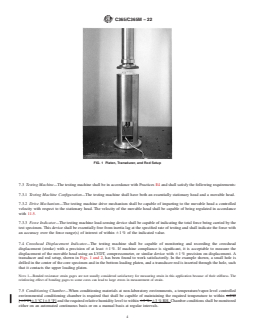
FIG. 1 Platen, Transducer, and Rod Setup
7.3 Testing Machine—The testing machine shall be in accordance with Practices E4 and shall satisfy the following requirements:
7.3.1 Testing Machine Configuration—The testing machine shall have both an essentially stationary head and a movable head.
7.3.2 Drive Mechanism—The testing machine drive mechanism shall be capable of imparting to the movable head a controlled
velocity with respect to the stationary head. The velocity of the movable head shall be capable of being regulated in accordance
with 11.5.
7.3.3 Force Indicator—The testing machine load-sensing device shall be capable of indicating the total force being carried by the
test specimen. This device shall be essentially free from inertia lag at the specified rate of testing and shall indicate the force with
an accuracy over the force range(s) of interest of within 61 % of the indicated value.
7.4 Crosshead Displacement Indicator—The testing machine shall be capable of monitoring and recording the crosshead
displacement (stroke) with a precision of at least 61 %. If machine compliance is significant, it is acceptable to measure the
displacement of the movable head using an LVDT, compressometer, or similar device with 61 % precision on displacement. A
transducer and rod setup, shown in Figs. 1 and 2, has been found to work satisfactorily. In the example shown, a small hole is
drilled in the center of the core specimen and in the bottom loading platen, and a transducer rod is inserted through the hole, such
that it contacts the upper loading platen.
NOTE 1—Bonded resistance strain gages are not usually considered satisfactory for measuring strain in this application because of their stiffness. The
reinforcing effect of bonding gages to some cores can lead to large errors in measurement of strain.
7.5 Conditioning Chamber—When conditioning materials at non-laboratory environments, a temperature/vapor-level controlled
environmental conditioning chamber is required that shall be capable of maintaining the required temperature to within 63°C
[65°F]63 °C [65 °F] and the required relative humidity level to within 63 %. 63 % RH. Chamber conditions shall be monitored
either on an automated continuous basis or on a manual basis at regular intervals.
C365/C365M − 22
FIG. 2 Close-up of Specimen Between Loading Platens
7.6 Environmental Test Chamber—An environmental test chamber is required for test environments other than ambient testing
laboratory conditions. This chamber shall be capable of maintaining the gage section of the test specimen at the required test
environment during the mechanical test. The test temperature shall be maintained within 63 °C [65 °F] of the required
temperature, and the relative humidity level shall be maintained to within 63 % RH of the required humidity level.
8. Sampling and Test Specimens
8.1 Sampling—Test at least five specimens per test condition unless valid results can be gained through the use of fewer specimens,
as in the case of a designed experiment. For statistically significant data, consult the procedures outlined in Practice E122. Report
the method of sampling.
2 2
8.2 Geometry—Test specimens shall have a square or circular cross-section not exceeding 10 000 mm [16.0 in. ], and shall be
equal in thickness to the sandwich core thickness. Minimum specimen cross-sectional areas for various types of core materials are
as follows:
NOTE 2—The specimen’s cross-sectional area is defined in the facing plane, in regard to the orientation that the core would be placed in a structural
sandwich construction. For example, for a honeycomb core the cross-sectional area is defined in the plane of the cells, which is perpendicular to the
orientation of the cell walls.
8.2.1 Continuous Bonding Surfaces (for example, Balsa Wood, Foams)—The minimum facing area of the specimen shall be 625
2 2
mm625 mm [1.0 in. [1.0 in. ].
8.2.2 Discontinuous Cellular Bonding Surfaces (for example, Honeycomb)—The required facing area of the specimen is
dependent upon the cell size, to ensure a minimum number of cells are tested. Minimum facing areas are recommended in Table
1 for the more common cell sizes. These are intended to provide approximately 60 cells minimum in the test specimen. The largest
C365/C365M − 22
TABLE 1 Recommended Minimum Specimen Cross-Sectional
Area
Minimum Cell Size Maximum Cell Size Minimum Cross-Sectional
2 2
(mm [in.]) (mm [in.]) Area (mm [in. ])
... 3.0 [0.125] 625 [1.0]
3.0 [0.125] 6.0 [0.250] 2500 [4.0]
6.0 [0.250] 9.0 [0.375] 5625 [9.0]
2 2
facing area listed in the table (5625 mm [9.0 in. ]) is a practical maximum for this test method. Cores with cell sizes larger than
9 mm [0.375 in.] may require a smaller number of cells to be tested in the specimen.
8.3 Specimen Preparation and Machining—Prepare the test specimens so that the loaded surfaces will be parallel to each other
and perpendicular to the sides of the specimen. Take precautions when cutting specimens from large sheets of core to avoid
notches, undercuts, and rough or uneven surfaces due to inappropriate machining methods. Obtain final dimensions by
water-lubricated precision sawing, milling, or grinding. The use of diamond tooling has been found to be extremely effective for
many material systems. Record and report the specimen cutting preparation method.
NOTE 3—In order to prevent local crushing of some honeycomb cores, it is often desirable to reinforce the facing plane surfaces with a suitable material.
In such instances, the
...