

ASTM G148-97(2018)
(Practice)Standard Practice for Evaluation of Hydrogen Uptake, Permeation, and Transport in Metals by an Electrochemical Technique
General Information
- Abstract
SIGNIFICANCE AND USE
5.1 The procedures described, herein, can be used to evaluate the severity of hydrogen charging of a material produced by exposure to corrosive environments or by cathodic polarization. It can also be used to determine fundamental properties of materials in terms of hydrogen diffusion (for example, diffusivity of hydrogen) and the effects of metallurgical, processing, and environmental variables on diffusion of hydrogen in metals.
5.2 The data obtained from hydrogen permeation tests can be combined with other tests related to hydrogen embrittlement or hydrogen induced cracking to ascertain critical levels of hydrogen flux or hydrogen content in the material for cracking to occur.
SCOPE
1.1 This practice gives a procedure for the evaluation of hydrogen uptake, permeation, and transport in metals using an electrochemical technique which was developed by Devanathan and Stachurski.2 While this practice is primarily intended for laboratory use, such measurements have been conducted in field or plant applications. Therefore, with proper adaptations, this practice can also be applied to such situations.
1.2 This practice describes calculation of an effective diffusivity of hydrogen atoms in a metal and for distinguishing reversible and irreversible trapping.
1.3 This practice specifies the method for evaluating hydrogen uptake in metals based on the steady-state hydrogen flux.
1.4 This practice gives guidance on preparation of specimens, control and monitoring of the environmental variables, test procedures, and possible analyses of results.
1.5 This practice can be applied in principle to all metals and alloys which have a high solubility for hydrogen, and for which the hydrogen permeation is measurable. This method can be used to rank the relative aggressivity of different environments in terms of the hydrogen uptake of the exposed metal.
1.6 This standard does not purport to address all of the safety concerns, if any, associated with its use. It is the responsibility of the user of this standard to establish appropriate safety, health, and environmental practices and determine the applicability of regulatory limitations prior to use.
1.7 This international standard was developed in accordance with internationally recognized principles on standardization established in the Decision on Principles for the Development of International Standards, Guides and Recommendations issued by the World Trade Organization Technical Barriers to Trade (TBT) Committee.
- Status
- Published
- Publication Date
- 30-Apr-2018
- Technical Committee
- G01 - Corrosion of Metals
- Drafting Committee
- G01.11 - Electrochemical Measurements in Corrosion Testing
Overview
ASTM G148-97(2018), published by ASTM International, is a standard practice outlining methodologies for the evaluation of hydrogen uptake, permeation, and transport in metals using an electrochemical technique. This practice utilizes the Devanathan-Stachurski cell method, providing a systematic approach for measuring how hydrogen interacts with various metals and alloys. While primarily designed for laboratory settings, with proper modifications, the techniques described are adaptable for field and plant applications.
Evaluating hydrogen uptake and permeation in metals is critical for understanding material behavior in corrosive environments or under cathodic polarization. The data gathered is essential for predicting issues such as hydrogen embrittlement and identifying conditions that may lead to material failure.
Key Topics
- Hydrogen Uptake and Permeation: Procedures for introducing hydrogen into metal specimens and measuring transport rates using electrochemical cells.
- Diffusion and Trapping: Calculation of effective diffusivity of hydrogen atoms in metals, distinguishing between reversible and irreversible trapping at microstructural sites.
- Environmental Variables: Guidance on controlling and monitoring variables such as temperature, pH, and solution composition to ensure reliable data.
- Specimen Preparation: Recommendations for specimen size, thickness, surface finish, and coating to standardize testing and enhance comparability.
- Analysis and Reporting: Methods for analyzing steady-state and transient hydrogen permeation data, including using Fick’s laws, and reporting results.
Applications
The ASTM G148-97(2018) standard is widely used in industries where metal integrity under hydrogen exposure is a concern, such as:
- Oil & Gas: Assessing pipeline steels and equipment exposed to hydrogen sulfide or cathodic protection systems, helping to prevent hydrogen-induced cracking and increase safety.
- Materials Engineering: Determining fundamental properties like hydrogen diffusivity in metals, ranking environmental aggressivity, and studying the effects of heat treatment, processing, and alloying.
- Corrosion Science: Providing vital insights for the development of corrosion-resistant alloys and protective measures in aggressive service environments.
- Failure Analysis: Supporting the investigation of failures linked to hydrogen embrittlement by correlating laboratory permeation tests with real-world damage.
The data collected using this standard can be combined with other tests to establish critical thresholds for hydrogen content or flux that could lead to cracking or embrittlement, guiding materials selection and protective strategy development.
Related Standards
Professionals using ASTM G148 often reference related standards for comprehensive assessment and monitoring:
- ASTM G96: Guide for Online Monitoring of Corrosion in Plant Equipment (Electrical and Electrochemical Methods).
- ASTM G1: Guide for Preparing, Cleaning, and Evaluating Corrosion Test Specimens.
- ISO 7539-9: Methods for determining hydrogen absorption, diffusion, and trapping in metals.
ASTM G148 also aligns with international standardization principles, as set by the World Trade Organization Technical Barriers to Trade (TBT) Committee, ensuring global relevance and acceptance.
Practical Value
Implementing ASTM G148-97(2018):
- Enhances understanding of hydrogen transport mechanisms in metals.
- Provides a reliable technique for predicting susceptibility to hydrogen embrittlement and cracking in metals exposed to challenging environments.
- Aids in materials selection and design improvements for structures operating in corrosive or hydrogen-rich conditions.
- Supports compliance with international standards and improves communication across global industries.
In summary, ASTM G148 is a critical resource for engineers, researchers, and corrosion professionals seeking standardized, reproducible methods to evaluate the complex interactions between hydrogen and metallic materials, ensuring safer and more reliable use of metals in demanding applications.
Relations
- Effective Date
- 01-May-2018
- Effective Date
- 01-Aug-2013
- Effective Date
- 15-Aug-2008
- Effective Date
- 30-Mar-1990
- Effective Date
- 30-Mar-1990
Get Certified
Connect with accredited certification bodies for this standard

Element Materials Technology
Materials testing and product certification.

Inštitut za kovinske materiale in tehnologije
Institute of Metals and Technology. Materials testing, metallurgical analysis, NDT.
Sponsored listings
Frequently Asked Questions
ASTM G148-97(2018) is a standard published by ASTM International. Its full title is "Standard Practice for Evaluation of Hydrogen Uptake, Permeation, and Transport in Metals by an Electrochemical Technique". This standard covers: SIGNIFICANCE AND USE 5.1 The procedures described, herein, can be used to evaluate the severity of hydrogen charging of a material produced by exposure to corrosive environments or by cathodic polarization. It can also be used to determine fundamental properties of materials in terms of hydrogen diffusion (for example, diffusivity of hydrogen) and the effects of metallurgical, processing, and environmental variables on diffusion of hydrogen in metals. 5.2 The data obtained from hydrogen permeation tests can be combined with other tests related to hydrogen embrittlement or hydrogen induced cracking to ascertain critical levels of hydrogen flux or hydrogen content in the material for cracking to occur. SCOPE 1.1 This practice gives a procedure for the evaluation of hydrogen uptake, permeation, and transport in metals using an electrochemical technique which was developed by Devanathan and Stachurski.2 While this practice is primarily intended for laboratory use, such measurements have been conducted in field or plant applications. Therefore, with proper adaptations, this practice can also be applied to such situations. 1.2 This practice describes calculation of an effective diffusivity of hydrogen atoms in a metal and for distinguishing reversible and irreversible trapping. 1.3 This practice specifies the method for evaluating hydrogen uptake in metals based on the steady-state hydrogen flux. 1.4 This practice gives guidance on preparation of specimens, control and monitoring of the environmental variables, test procedures, and possible analyses of results. 1.5 This practice can be applied in principle to all metals and alloys which have a high solubility for hydrogen, and for which the hydrogen permeation is measurable. This method can be used to rank the relative aggressivity of different environments in terms of the hydrogen uptake of the exposed metal. 1.6 This standard does not purport to address all of the safety concerns, if any, associated with its use. It is the responsibility of the user of this standard to establish appropriate safety, health, and environmental practices and determine the applicability of regulatory limitations prior to use. 1.7 This international standard was developed in accordance with internationally recognized principles on standardization established in the Decision on Principles for the Development of International Standards, Guides and Recommendations issued by the World Trade Organization Technical Barriers to Trade (TBT) Committee.
SIGNIFICANCE AND USE 5.1 The procedures described, herein, can be used to evaluate the severity of hydrogen charging of a material produced by exposure to corrosive environments or by cathodic polarization. It can also be used to determine fundamental properties of materials in terms of hydrogen diffusion (for example, diffusivity of hydrogen) and the effects of metallurgical, processing, and environmental variables on diffusion of hydrogen in metals. 5.2 The data obtained from hydrogen permeation tests can be combined with other tests related to hydrogen embrittlement or hydrogen induced cracking to ascertain critical levels of hydrogen flux or hydrogen content in the material for cracking to occur. SCOPE 1.1 This practice gives a procedure for the evaluation of hydrogen uptake, permeation, and transport in metals using an electrochemical technique which was developed by Devanathan and Stachurski.2 While this practice is primarily intended for laboratory use, such measurements have been conducted in field or plant applications. Therefore, with proper adaptations, this practice can also be applied to such situations. 1.2 This practice describes calculation of an effective diffusivity of hydrogen atoms in a metal and for distinguishing reversible and irreversible trapping. 1.3 This practice specifies the method for evaluating hydrogen uptake in metals based on the steady-state hydrogen flux. 1.4 This practice gives guidance on preparation of specimens, control and monitoring of the environmental variables, test procedures, and possible analyses of results. 1.5 This practice can be applied in principle to all metals and alloys which have a high solubility for hydrogen, and for which the hydrogen permeation is measurable. This method can be used to rank the relative aggressivity of different environments in terms of the hydrogen uptake of the exposed metal. 1.6 This standard does not purport to address all of the safety concerns, if any, associated with its use. It is the responsibility of the user of this standard to establish appropriate safety, health, and environmental practices and determine the applicability of regulatory limitations prior to use. 1.7 This international standard was developed in accordance with internationally recognized principles on standardization established in the Decision on Principles for the Development of International Standards, Guides and Recommendations issued by the World Trade Organization Technical Barriers to Trade (TBT) Committee.
ASTM G148-97(2018) is classified under the following ICS (International Classification for Standards) categories: 77.040.01 - Testing of metals in general. The ICS classification helps identify the subject area and facilitates finding related standards.
ASTM G148-97(2018) has the following relationships with other standards: It is inter standard links to ASTM G96-90(2018), ASTM G96-90(2013), ASTM G96-90(2008), ASTM G96-90(2001)e1, ASTM G96-90(1996)E1. Understanding these relationships helps ensure you are using the most current and applicable version of the standard.
ASTM G148-97(2018) is available in PDF format for immediate download after purchase. The document can be added to your cart and obtained through the secure checkout process. Digital delivery ensures instant access to the complete standard document.
Standards Content (Sample)
This international standard was developed in accordance with internationally recognized principles on standardization established in the Decision on Principles for the
Development of International Standards, Guides and Recommendations issued by the World Trade Organization Technical Barriers to Trade (TBT) Committee.
Designation: G148 − 97 (Reapproved 2018)
Standard Practice for
Evaluation of Hydrogen Uptake, Permeation, and Transport
in Metals by an Electrochemical Technique
This standard is issued under the fixed designation G148; the number immediately following the designation indicates the year of
original adoption or, in the case of revision, the year of last revision.Anumber in parentheses indicates the year of last reapproval.A
superscript epsilon (´) indicates an editorial change since the last revision or reapproval.
1. Scope 2. Referenced Documents
1.1 This practice gives a procedure for the evaluation of 2.1 ASTM Standards:
hydrogen uptake, permeation, and transport in metals using an G96Guide for Online Monitoring of Corrosion in Plant
electrochemical technique which was developed by Devana- Equipment (Electrical and Electrochemical Methods)
than and Stachurski. While this practice is primarily intended
for laboratory use, such measurements have been conducted in 3. Terminology
field or plant applications. Therefore, with proper adaptations,
3.1 Definitions:
this practice can also be applied to such situations.
3.1.1 charging, n—method of introducing atomic hydrogen
into the metal by galvanostatic charging (constant charging
1.2 This practice describes calculation of an effective diffu-
sivity of hydrogen atoms in a metal and for distinguishing current), potentiostatic charging (constant electrode potential),
free corrosion, or gaseous exposure.
reversible and irreversible trapping.
3.1.2 charging cell, n—compartment in which hydrogen
1.3 This practice specifies the method for evaluating hydro-
atoms are generated on the specimen surface. This includes
gen uptake in metals based on the steady-state hydrogen flux.
both aqueous and gaseous charging.
1.4 This practice gives guidance on preparation of
3.1.3 decay current, n—decay of the hydrogen atom oxida-
specimens, control and monitoring of the environmental
tion current due to a decrease in charging current.
variables, test procedures, and possible analyses of results.
3.1.4 Fick’s second law, n—second order differential equa-
1.5 This practice can be applied in principle to all metals
tion describing the concentration of diffusing specie as a
and alloys which have a high solubility for hydrogen, and for
function of position and time. The equation is of the form
which the hydrogen permeation is measurable. This method
]C x,t /]t5]/]xD ]/]x C x,t for lattice diffusion in one di-
~ ! @ ~ !#
can be used to rank the relative aggressivity of different
mensionwherediffusivityisindependentofconcentration.See
environments in terms of the hydrogen uptake of the exposed
3.2 for symbols.
metal.
3.1.5 hydrogen flux, n—the amount of hydrogen passing
1.6 This standard does not purport to address all of the
through the metal specimen per unit area as a function of time.
safety concerns, if any, associated with its use. It is the
The units are typically concentration per unit area per unit
responsibility of the user of this standard to establish appro-
time.
priate safety, health, and environmental practices and deter-
mine the applicability of regulatory limitations prior to use. 3.1.6 hydrogen uptake, n—the concentration of hydrogen
3 3
absorbed into the metal (for example, g/cm or mol/cm ).
1.7 This international standard was developed in accor-
dance with internationally recognized principles on standard-
3.1.7 irreversible trap, n—microstructural site at which a
ization established in the Decision on Principles for the
hydrogen atom has a infinite or extremely long residence time
Development of International Standards, Guides and Recom-
compared to the time-scale for permeation testing at the
mendations issued by the World Trade Organization Technical
relevant temperature, as a result of a binding energy which is
Barriers to Trade (TBT) Committee.
large relative to the migration energy for diffusion.
3.1.8 mobile hydrogen atoms, n—hydrogen atoms that are
associated with sites within the lattice.
This practice is under the jurisdiction ofASTM Committee G01 on Corrosion
ofMetalsandisthedirectresponsibilityofSubcommitteeG01.11onElectrochemi-
cal Measurements in Corrosion Testing.
Current edition approved May 1, 2018. Published June 2018. Last previous For referenced ASTM standards, visit the ASTM website, www.astm.org, or
edition approved in 2011 as G148–97 (2011). DOI:10.1520/G0148-97R18. contact ASTM Customer Service at service@astm.org. For Annual Book of ASTM
Devanathan, M.A.V., and Stachurski, Z., Proceedings of Royal Society, A270, Standards volume information, refer to the standard’s Document Summary page on
90–102, 1962. the ASTM website.
Copyright © ASTM International, 100 Barr Harbor Drive, PO Box C700, West Conshohocken, PA 19428-2959. United States
G148 − 97 (2018)
3.1.9 oxidation cell, n—compartment in which hydrogen 4. Summary of Practice
atoms exiting from the metal specimen are oxidized.
4.1 The technique involves locating the metal membrane
(that is, specimen) of interest between the hydrogen charging
3.1.10 permeation current, n—current measured in oxida-
andoxidationcells.Inthelaboratory,thechargingcellcontains
tion cell associated with oxidation of hydrogen atoms.
the environment of interest. Hydrogen atoms are generated on
3.1.11 permeation transient, n—the increase of the perme-
the membrane surface exposed to this environment. In field or
ationcurrentwithtimefromcommencementofchargingtothe
plant measurements, the wall of the pipe or vessel can be used
attainment of steady state, or modification of charging condi-
asthemembranethroughwhichmeasurementofhydrogenflux
tions (that is, rise transient). The decrease of the permeation
are made. The actual process environment is on the charging
current with time resulting from a decrease in charging current
sideofthemembranewhicheliminatestheneedforacharging
(that is, decay transient).
cell. See 7.1 for guidance on various specimen configurations.
3.1.12 recombination poison, n—chemical specie present
4.2 In gaseous environments, the hydrogen atoms are gen-
within the test environment in the charging cell which en-
eratedbyadsorptionanddissociationofthegaseousspecies.In
hances hydrogen absorption by retarding the recombination of
aqueous environments, hydrogen atoms are produced by elec-
hydrogenatomsadsorbedontothemetalsurfaceintohydrogen
trochemical reactions. In both cases, some of the hydrogen
gas.
atoms diffuse through the membrane and are then oxidized on
exiting from the other side of the metal in the oxidation cell.
3.1.13 reversible trap, n—microstructural site at which a
hydrogen atom has a residence time which is greater than that
4.3 The conditions (for example, environment and the
for the lattice site but is small in relation to the time to attain
electrode potential) on the oxidation side of the membrane are
steady-state permeation, as a result of low binding energy.
controlledsothatthemetalsurfaceiseitherpassiveorimmune
to corrosion. The background current established under these
3.2 Symbols:
conditions prior to hydrogen transport should be relatively
3.2.1 For the purposes of this practice the following sym-
constant and small compared to that of the hydrogen atom
bols apply:
oxidation current.
A = exposed area of specimen in the oxidation cell
4.4 The electrode potential of the specimen in the oxidation
(cm )
cell is controlled at a value sufficiently positive to ensure that
C(x,t) = lattice concentration of hydrogen as a function of
the kinetics of oxidation of hydrogen atoms are limited by the
position and time (mol/cm )
fluxofhydrogenatoms,thatis,theoxidationcurrentdensityis
C = sub-surface concentration of atomic hydrogen at
diffusion limited.
the charging side of the specimen (mol/cm )
4.5 Thetotaloxidationcurrentismonitoredasafunctionof
D = effective diffusivity of atomic hydrogen, taking
eff
time. The total oxidation current comprises the background
into account the presence of reversible and irre-
current and the current resulting from oxidation of hydrogen
versible trapping (cm /s)
atoms. The latter is the permeation current.
D = lattice diffusion coefficient of atomic hydrogen
l
(cm /s)
4.6 The thickness of the specimen is selected usually to
F = faraday’s constant (9.6485 × 10 coulombs/mol)
ensure that the measured flux reflects volume (bulk) controlled
I(t) = time dependent atomic hydrogen permeation cur-
hydrogen atom transport. Thin specimens may be used for
rent (µA)
evaluation of the effect of surface processes on hydrogen entry
I = steady-state atomic hydrogen permeation current
ss
or exit (absorption kinetics or transport in oxide films).
(µA)
J(t) = time-dependent atomic hydrogen permeation flux 4.7 In reasonably pure, defect-free metals (for example,
as measured on the oxidation side of the specimen single crystals) with a sufficiently low density of microstruc-
(mol/s/cm ) tural trap sites, atomic hydrogen transport through the material
J = atomic hydrogen permeation flux at steady-state
is controlled by lattice diffusion.
ss
(mol/s/cm )
4.8 Alloying and microstructural features such as
J(t)/J = normalized flux of atomic hydrogen
ss
dislocations, grain boundaries, inclusions, and precipitate par-
L = specimen thickness (cm)
ticlesmayactastrapsitesforhydrogenthusdelayinghydrogen
t = time elapsed from commencement of hydrogen
transport.Thesetrapsmaybereversibleorirreversibledepend-
charging (s)
ing on the binding energy associated with the particular trap
t = elapsed time measured extrapolating the linear
b
sites compared to the energy associated with migration for
portionoftherisingpermeationcurrenttransientto
hydrogen in the metal lattice.
J(t)=O(s)
t = time to achieve a value of J(t)/J = 0.63 (s)
lag ss
4.9 The rate of hydrogen atom transport through the metal
x = distance into specimen from the charging surface
duringthefirstpermeationmaybeaffectedbybothirreversible
measured in the thickness direction (cm ).
and reversible trapping as well as by the reduction of any
τ = normalized time (D t/L )
oxidespresentonthechargingsurface.Atsteadystateallofthe
τ = Normalized time to achieve a value of j(t)/J =
lag ss
irreversible traps are occupied. If the mobile hydrogen atoms
0.63 (s)
are then removed and a subsequent permeation test conducted
G148 − 97 (2018)
on the specimen the difference between the first and second
permeation transients can be used to evaluate the influence of
irreversibletrappingontransport,assuminganegligibleroleof
oxide reduction.
4.10 Forsomeenvironments,theconditionsonthecharging
side of the specimen may be suitably altered to induce a decay
of the oxidation current after attainment of steady state. The
rate of decay will be determined by diffusion and reversible
trappingonlyand,hence,canalsobeusedtoevaluatetheeffect
of irreversible trapping on transport during the first transient.
4.11 Comparison of repeated permeation transients with
those obtained for the pure metal can be used in principle to
evaluate the effect of reversible trapping on atomic hydrogen
transport.
4.12 Thispracticeissuitableforsystemsinwhichhydrogen
atomsaregenerateduniformlyoverthechargingsurfaceofthe
membrane. It is not usually applicable for evaluation of
corroding systems in which pitting attack occurs unless the
chargingcellenvironmentisdesignedtosimulatethelocalized
pitenvironmentandtheentiremetalchargingsurfaceisactive.
NOTE 1—A Luggin capillary should be used for more accurate
4.13 This practice can be used for stressed and unstressed
measurement of potential when the current is large.
specimens but testing of stressed specimens requires consider-
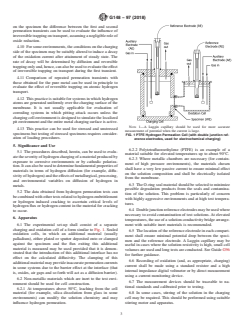
FIG. 1 PTFE Hydrogen Permeation Cell (with double junction ref-
ation of loading procedures.
erence electrodes, used for electrochemical charging)
5. Significance and Use
6.2.2 Polytetrafluoroethylene (PTFE) is an example of a
5.1 The procedures described, herein, can be used to evalu-
material suitable for elevated temperatures up to about 90°C.
atetheseverityofhydrogenchargingofamaterialproducedby
6.2.3 Where metallic chambers are necessary (for contain-
exposure to corrosive environments or by cathodic polariza-
ment of high pressure environments), the materials chosen
tion.Itcanalsobeusedtodeterminefundamentalpropertiesof
shall have a very low passive current to ensure minimal effect
materials in terms of hydrogen diffusion (for example, diffu-
on the solution composition and shall be electrically isolated
sivityofhydrogen)andtheeffectsofmetallurgical,processing,
from the membrane.
and environmental variables on diffusion of hydrogen in
6.3 TheO-ringsealmaterialshouldbeselectedtominimize
metals.
possible degradation products from the seals and contamina-
5.2 The data obtained from hydrogen permeation tests can
tion of the solution. This problem is particularly of concern
becombinedwithothertestsrelatedtohydrogenembrittlement
with highly aggressive environments and at high test tempera-
or hydrogen induced cracking to ascertain critical levels of
tures.
hydrogen flux or hydrogen content in the material for cracking
6.4 Doublejunctionreferenceelectrodesmaybeusedwhere
to occur.
necessary to avoid contamination of test solutions.At elevated
6. Apparatus
temperatures,theuseofasolutionconductivitybridgearrange-
ment with suitable inert materials is recommended.
6.1 The experimental set-up shall consist of a separate
charging and oxidation cell of a form similar to Fig. 1. Sealed
6.5 Thelocationofthereferenceelectrodeineachcompart-
oxidation cells, in which an additional material (usually
ment shall ensure minimal potential drop between the speci-
palladium), either plated or sputter deposited onto or clamped
men and the reference electrode. A Luggin capillary may be
against the specimen and the flux exiting this additional
useful in cases where the solution resistivity is high, small cell
material is measured may be used provided that it is demon-
volumesareusedandlongtestsareconducted.SeeGuideG96
strated that the introduction of this additional interface has no
for further guidance.
effect on the calculated diffusivity. The clamping of this
6.6 Recording of oxidation (and, as appropriate, charging)
additionalmaterialmayprovideinaccuratepermeationcurrents
current shall be made using a standard resistor and a high
in some systems due to the barrier effect at the interface (that
internal impedance digital voltmeter or by direct measurement
is, oxides, air gaps and so forth will act as a diffusion barrier).
using a current monitoring device.
6.2 Non-metallic materials which are inert to the test envi-
6.7 The measurement devices should be traceable to na-
ronment should be used for cell construction.
tional standards and calibrated prior to testing.
6.2.1 At temperatures above 50°C, leaching from the cell
material (for example, silica dissolution from glass in some 6.8 In some cases, stirring of the solution in the charging
environments) can modify the solution chemistry and may cell may be required. This should be performed using suitable
influence hydrogen permeation. stirring motor and apparatus.
G148 − 97 (2018)
7. Specimen 7.2.8 After polishing, the specimen shall be cleaned in
non-chlorinated solvents to remove traces of polishing chemi-
7.1 Design—Specimensmaybeintheformofplateorpipe.
cals and degreased.
The dimensions shall enable analysis of the permeation tran-
7.2.9 The final thickness shall be measured in at least five
sient based on one-dimensional diffusion. For example, for
locations in the exposed region of the membrane. The speci-
plates with a circular exposed area, the radius exposed to the
men shall then be degreased in a suitable non-chlorinated
solution should be sufficiently large relative to thickness. A
solvent and stored in a dry environment or a dessicator.
ratioofradiustothicknessof10:1,orgreater,isrecommended.
7.2.10 Coating of the exit surface of the specimen with
This condition may be made less stringent if the exposed area
palladium or some other suitable material (for example nickel)
in the oxidation side is smaller than that on the charging side.
to reduce the background current shall be undertaken at this
Aratio of radius to thickness of 5:1 is acceptable if the radius
stage, if required.
oftheexposedareaontheoxidationsideisreducedto90%of
7.2.10.1 A thin palladium coating which does not resist
the area of the charging side. For pipes, the ratio of the outer
through put of hydrogen is sometimes applied to one or both
radius to the inner radius should be less than 1:1 if the
sides of the membrane following initial removal of oxide films
experimental results are to be analyzed based on the equations
for the protection of the membrane.
for planar diffusion. Other specimen configurations may be
7.2.10.2 A palladium coating on the charging face of the
used if limited by material form or equipment configuration.
membrane will affect the sub-surface hydrogen concentration
However, it should be realized that such conditions may limit
in the substrate and the measured permeation current. It is
the rigorous analysis of the data thus resulting in only
important to verify that the calculated diffusivity is not
qualitative information. However, in some cases, this may be
influencedbythecoating.Electrochemicalmethodsofforming
sufficient to rank the influence of various environmental or
thecoatingcanintroducehydrogenatomsintothematerialand
material variables on hydrogen charging severity.
may influence the subsequent permeation measurements. Ar-
7.2 Preparation:
gon etching of the surface followed by sputter coating with
7.2.1 Hydrogen atom permeation may be influenced by
palladium can avoid this problem. Palladium coating is par-
microstructural orientation. The form of the original material
ticularly useful for gaseous charging.
shouldbeindicated(forexample,barorplate)andthelocation
7.2.10.3 Palladium coating of the oxidation side of the
and orientation of the specimen relative to that of the original
specimen can enhance the rate of oxidation and, thereby,
material should be defined.
enable attainment of transport limited oxidation of hydrogen
7.2.2 The manufacture of sheet specimens should be con-
atoms at less positive potentials than for the uncoated speci-
sidered carefully. Various methods of machining may be used
men.
including electrochemical discharge machining (EDM) and
7.2.11 Asuitable electrical connection shall be made to the
mechanical cutting.
specimen remote from the active areas.
7.2.3 EDM is particularly useful for preparing slices of
7.2.12 The specimen shall be uniquely identified. Stamping
material but may introduce hydrogen into the metal.Although
or scribing on the specimen remote from the active areas is
hydrogen dissolved in lattice sites or reversible trap sites may
recommended.
belostsubsequenttoEDM,hydrogenatomsmayberetainedin
irreversible trap sites. The amount of hydrogen generated and
8. Test Environment
the extent of ingress into the metal will depend on the details
8.1 The test environment shall be relevant to the intended
of the EDM process and the material characteristics, but
application, where applicable, or otherwise the environment
sufficient material should be removed by subsequent machin-
should be chosen to facilitate ease and reliability of making
ing to ensure that all residual hydrogen atoms are removed.
hydrogen permeation measurements. Suggestions for suitable
7.2.4 Slices of material can be prepared by fine mechanical
systems for the latter case are given in Appendix X1.
cutting and this method is preferred.
8.2 The environments in the charging cell should be of
7.2.5 Sheet specimens shall be machined to the required
thickness. Care should be taken in machining to minimize purity for the intended purpose.
surface damage.
8.3 The environment in the oxidation cell shall be prepared
7.2.6 Thethicknessofthespecimenintheregionofinterest
using recognized analytical grade chemicals and distilled or
shall be as uniform as possible with a maximum variation not
deionized water of purity sufficient to avoid unintentional
greater than 65%.
contamination.
7.2.7 The oxidation side of the specimen shall be mechani-
8.4 If the environment in the charging cell is aqueous, the
callypolishedtoarepeatablefinish.A600gritsurfacefinishis
solution shall be either that directly used in service or a
recommended. The charging side may be similarly treated or
laboratoryenvironmentpreparedwiththepurityasindicatedin
used in condition similar to the service condition being
8.3. Gaseous environments should simulate those for the
modeled.Electropolishingofspecimensmayalsobeemployed
intended application.
in appropriate cases where surface machining is difficult and
may produce excessive cold working damage. However, elec- 8.5 In some cases for which higher purity of the charging
tropolishing may induce hydrogen into the metal and may solution is desirable, the solution may be prepared using
require the use of a low temperature heat treatment to reduce appropriate high purity analytical grade chemicals or pre-
the amount of hydrogen in the metal prior to testing. electrolysis may be employed. Pre-electrolysis can be used to
G148 − 97 (2018)
remove certain cationic contaminants by cathodic deposition
andusuallyinvolvesapplyingavoltagedifferencebetweentwo
platinum electrodes in the solution of interest. The area of the
cathode should be as large as reasonable to enhance the rate of
removal of contaminants.
8.6 Avolume of solution to metal area ratio greater than 20
ml/cm is usually adequate. The volume of solution in the
oxidation chamber need not be particularly large since the
extent of reaction is usually relatively small.
8.7 The volume of solution in the charging cell depends on
the particular choice of environment and the extent of reaction
on the specimen. Poisons added to enhance hydrogen entry
FIG. 2 Electrochemical Hydrogen Permeation Cell Assembly and
may be consumed with time. The volume of solution shall be
the Measuring Apparatus
sufficient to minimize changes in solution composition during
the course of the experiment, or periodic replenishment shall
be used, as needed, to maintain the consumable species within 9.6 The solution for the oxidation cell shall be added to the
suitable levels within the charging cell. relevantchamberandvigorouspurgingwithasuitableinertgas
should be commenced to deaerate the solution quickly, even if
8.8 Flow of solution in the charging cell can affect the local
deaerated previously to minimize aeration during solution
environment at the surface in some cases.Where solution flow
transfer. The potential shall be set to the control value (+300
is relevant to a service condition, the flow conditions shall be
mV SCE is typical for several metals exposed to 0.1M NaOH
simulated or testing should be conducted to enable repeatable
(see 9.12). The magnitude of the background oxidation (pas-
conditions, whether using stirrers or vigorous purging or slow
sive) current will depend on the system but values lower than
bubblingwherethegaspurgetubehasbeenpositionedcloseto
0.1 µA/cm are usually readily attainable.
the specimen.
9.7 The time at which the environment is added to the
8.9 Variations in the pH of the charging solution during a
charging cell depends on the characteristics of the system but,
permeation transient may influence the form of the transient,
ideally, addition of the environment should be made after the
even under constant charging current, becau
...