


ASTM F899-23
(Specification)Standard Specification for Wrought Stainless Steels for Surgical Instruments
Standard Specification for Wrought Stainless Steels for Surgical Instruments
ABSTRACT
This specification covers the chemical requirements for wrought stainless steels used for the manufacture of surgical instruments. Classes of stainless steels covered here are Class 3 (austenitic stainless steel), Class 4 (martensitic stainless steel), Class 5 (precipitation hardening stainless steel), and Class 6 (ferritic stainless steel). The data contained in this specification, such as typical hardness values, common heat treating cycles, and examples of selected stainless steels that have been used for surgical instruments, are provided for reference only. Mechanical property, heat treatment, hardness, and all other requirements except for chemical composition, are governed by the appropriate material standards as specified or as agreed upon between purchaser and supplier.
SCOPE
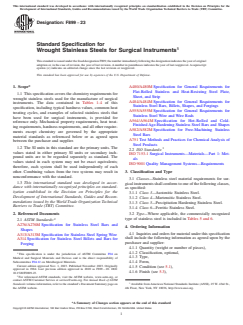
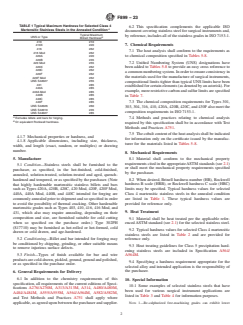
1.1 This specification covers the chemistry requirements for wrought stainless steels used for the manufacture of surgical instruments. The data contained in Tables 1-4 of this specification, including typical hardness values, common heat treating cycles, and examples of selected stainless steels that have been used for surgical instruments, is provided for reference only. Mechanical property requirements, heat treating requirements, hardness requirements, and all other requirements except chemistry are governed by the appropriate material standards as referenced below or as agreed upon between the purchaser and supplier.
1.2 The SI units in this standard are the primary units. The values stated in either primary SI units or secondary inch-pound units are to be regarded separately as standard. The values stated in each system may not be exact equivalents; therefore, each system shall be used independently of each other. Combining values from the two systems may result in nonconformance with the standard.
1.3 This international standard was developed in accordance with internationally recognized principles on standardization established in the Decision on Principles for the Development of International Standards, Guides and Recommendations issued by the World Trade Organization Technical Barriers to Trade (TBT) Committee.
General Information
- Status
- Published
- Publication Date
- 31-Oct-2023
- Technical Committee
- F04 - Medical and Surgical Materials and Devices
- Drafting Committee
- F04.12 - Metallurgical Materials
Relations
- Effective Date
- 01-Nov-2023
- Effective Date
- 01-Feb-2024
- Effective Date
- 01-Jan-2024
- Effective Date
- 01-Jan-2024
- Effective Date
- 01-Nov-2023
- Effective Date
- 01-Nov-2023
- Effective Date
- 01-Sep-2023
- Effective Date
- 01-Sep-2023
- Effective Date
- 01-Aug-2023
- Effective Date
- 01-Mar-2023
- Effective Date
- 01-Feb-2019
- Effective Date
- 01-Nov-2023
- Referred By
ASTM F1744-96(2016) - Standard Guide for Care and Handling of Stainless Steel Surgical Instruments - Effective Date
- 01-Nov-2023
- Effective Date
- 01-Nov-2023
- Effective Date
- 01-Nov-2023
Overview
ASTM F899-23: Standard Specification for Wrought Stainless Steels for Surgical Instruments defines the chemical requirements for wrought stainless steels used in the manufacture of surgical instruments. Developed by ASTM International, this standard identifies four key classes of stainless steels used in surgical applications: austenitic, martensitic, precipitation hardening, and ferritic. The specification ensures that stainless steel materials exhibit consistent quality and chemistry, making them suitable for various surgical applications where mechanical performance, corrosion resistance, and biocompatibility are paramount.
ASTM F899-23 provides the foundation for specifying stainless steels by chemistry, while mechanical, heat treatment, and other requirements are governed by additional material standards or purchaser-supplier agreements. The standard aligns with international standardization principles, facilitating global trade and interoperability of medical devices.
Key Topics
- Material Classes Covered:
- Class 3 - Austenitic stainless steel
- Class 4 - Martensitic stainless steel
- Class 5 - Precipitation hardening stainless steel
- Class 6 - Ferritic stainless steel
- Chemical Requirements:
- Specifies detailed compositional limits for critical alloying elements.
- More restrictive limits than the general Unified Numbering System (UNS) may be set for enhanced uniformity.
- Reference Data Provided:
- Typical hardness values, heat treating cycles, and commonly used steels for surgical instruments (for reference only).
- Dual Unit Usage:
- Both SI and inch-pound units are recognized, but should not be intermixed.
- Quality Assurance:
- Suppliers are recommended to have a quality management program compliant with ISO 9001.
- Purchasers may audit supplier quality programs for compliance.
- International Compatibility:
- Designed in reference to ISO 7153-1 for surgical instrument materials.
Applications
ASTM F899-23 is critical in the following areas:
- Manufacturing of Surgical Instruments: This standard forms the basis for selecting appropriate wrought stainless steels for surgical instruments, such as scalpels, scissors, forceps, retractors, and bone chisels.
- Global Procurement and Sourcing: By specifying chemical composition requirements and cross-referencing international standards, the specification simplifies procurement processes and ensures interoperability across borders.
- OEM and Custom Instrument Development: Instrument designers utilize ASTM F899-23 to qualify base materials according to anticipated use, such as cutting or non-cutting applications, where specific steel types provide performance benefits.
- Quality Control and Regulatory Compliance: Device manufacturers and suppliers employ this standard to demonstrate material conformance during audits and regulatory submissions, supporting risk management and consistent product quality.
- Purchasing Agreements: The standard provides clarity in ordering information, specifying classification, type, form, condition, finish, and mechanical requirements, improving communication between purchasers and suppliers.
Related Standards
ASTM F899-23 is used alongside several other standards to ensure comprehensive control over surgical instrument materials:
- ASTM A276/A276M - Stainless Steel Bars and Shapes
- ASTM A480/A480M - Flat-Rolled Stainless and Heat-Resisting Steel Plate, Sheet, and Strip
- ASTM A484/A484M - Stainless Steel Bars, Billets, Shapes, and Forgings
- ASTM A555/A555M - Stainless Steel Wire and Wire Rods
- ASTM A564/A564M - Hot-Rolled and Cold-Finished Age-Hardening Stainless Steel Bars and Shapes
- ASTM A751 - Test Methods for Chemical Analysis of Steel Products
- ISO 7153-1 - Surgical Instruments-Materials-Metals
- ISO 9001 - Quality Management Systems-Requirements
When specifying or procuring materials for surgical instruments, reference to ASTM F899-23 ensures material consistency, regulatory compliance, and suitability for demanding clinical environments. This standard is an essential resource for manufacturers, regulatory bodies, and procurement teams engaged in the global medical device supply chain.
Buy Documents
ASTM F899-23 - Standard Specification for Wrought Stainless Steels for Surgical Instruments
REDLINE ASTM F899-23 - Standard Specification for Wrought Stainless Steels for Surgical Instruments
Get Certified
Connect with accredited certification bodies for this standard

BSI Group
BSI (British Standards Institution) is the business standards company that helps organizations make excellence a habit.

TÜV Rheinland
TÜV Rheinland is a leading international provider of technical services.

TÜV SÜD
TÜV SÜD is a trusted partner of choice for safety, security and sustainability solutions.
Sponsored listings
Frequently Asked Questions
ASTM F899-23 is a technical specification published by ASTM International. Its full title is "Standard Specification for Wrought Stainless Steels for Surgical Instruments". This standard covers: ABSTRACT This specification covers the chemical requirements for wrought stainless steels used for the manufacture of surgical instruments. Classes of stainless steels covered here are Class 3 (austenitic stainless steel), Class 4 (martensitic stainless steel), Class 5 (precipitation hardening stainless steel), and Class 6 (ferritic stainless steel). The data contained in this specification, such as typical hardness values, common heat treating cycles, and examples of selected stainless steels that have been used for surgical instruments, are provided for reference only. Mechanical property, heat treatment, hardness, and all other requirements except for chemical composition, are governed by the appropriate material standards as specified or as agreed upon between purchaser and supplier. SCOPE 1.1 This specification covers the chemistry requirements for wrought stainless steels used for the manufacture of surgical instruments. The data contained in Tables 1-4 of this specification, including typical hardness values, common heat treating cycles, and examples of selected stainless steels that have been used for surgical instruments, is provided for reference only. Mechanical property requirements, heat treating requirements, hardness requirements, and all other requirements except chemistry are governed by the appropriate material standards as referenced below or as agreed upon between the purchaser and supplier. 1.2 The SI units in this standard are the primary units. The values stated in either primary SI units or secondary inch-pound units are to be regarded separately as standard. The values stated in each system may not be exact equivalents; therefore, each system shall be used independently of each other. Combining values from the two systems may result in nonconformance with the standard. 1.3 This international standard was developed in accordance with internationally recognized principles on standardization established in the Decision on Principles for the Development of International Standards, Guides and Recommendations issued by the World Trade Organization Technical Barriers to Trade (TBT) Committee.
ABSTRACT This specification covers the chemical requirements for wrought stainless steels used for the manufacture of surgical instruments. Classes of stainless steels covered here are Class 3 (austenitic stainless steel), Class 4 (martensitic stainless steel), Class 5 (precipitation hardening stainless steel), and Class 6 (ferritic stainless steel). The data contained in this specification, such as typical hardness values, common heat treating cycles, and examples of selected stainless steels that have been used for surgical instruments, are provided for reference only. Mechanical property, heat treatment, hardness, and all other requirements except for chemical composition, are governed by the appropriate material standards as specified or as agreed upon between purchaser and supplier. SCOPE 1.1 This specification covers the chemistry requirements for wrought stainless steels used for the manufacture of surgical instruments. The data contained in Tables 1-4 of this specification, including typical hardness values, common heat treating cycles, and examples of selected stainless steels that have been used for surgical instruments, is provided for reference only. Mechanical property requirements, heat treating requirements, hardness requirements, and all other requirements except chemistry are governed by the appropriate material standards as referenced below or as agreed upon between the purchaser and supplier. 1.2 The SI units in this standard are the primary units. The values stated in either primary SI units or secondary inch-pound units are to be regarded separately as standard. The values stated in each system may not be exact equivalents; therefore, each system shall be used independently of each other. Combining values from the two systems may result in nonconformance with the standard. 1.3 This international standard was developed in accordance with internationally recognized principles on standardization established in the Decision on Principles for the Development of International Standards, Guides and Recommendations issued by the World Trade Organization Technical Barriers to Trade (TBT) Committee.
ASTM F899-23 is classified under the following ICS (International Classification for Standards) categories: 11.040.30 - Surgical instruments and materials. The ICS classification helps identify the subject area and facilitates finding related standards.
ASTM F899-23 has the following relationships with other standards: It is inter standard links to ASTM F899-20, ASTM A276/A276M-24a, ASTM A484/A484M-24, ASTM A276/A276M-24, ASTM A314-23, ASTM A480/A480M-23b, ASTM A480/A480M-23a, ASTM A484/A484M-23a, ASTM A276/A276M-23, ASTM A484/A484M-23, ASTM A314-19, ASTM F1078-10(2018), ASTM F1744-96(2016), ASTM F1611-20, ASTM F1613-95(2023). Understanding these relationships helps ensure you are using the most current and applicable version of the standard.
ASTM F899-23 is available in PDF format for immediate download after purchase. The document can be added to your cart and obtained through the secure checkout process. Digital delivery ensures instant access to the complete standard document.
Standards Content (Sample)
This international standard was developed in accordance with internationally recognized principles on standardization established in the Decision on Principles for the
Development of International Standards, Guides and Recommendations issued by the World Trade Organization Technical Barriers to Trade (TBT) Committee.
Designation: F899 − 23
Standard Specification for
Wrought Stainless Steels for Surgical Instruments
This standard is issued under the fixed designation F899; the number immediately following the designation indicates the year of original
adoption or, in the case of revision, the year of last revision. A number in parentheses indicates the year of last reapproval. A superscript
epsilon (´) indicates an editorial change since the last revision or reapproval.
This standard has been approved for use by agencies of the U.S. Department of Defense.
1. Scope* A480/A480M Specification for General Requirements for
Flat-Rolled Stainless and Heat-Resisting Steel Plate,
1.1 This specification covers the chemistry requirements for
Sheet, and Strip
wrought stainless steels used for the manufacture of surgical
A484/A484M Specification for General Requirements for
instruments. The data contained in Tables 1-4 of this
Stainless Steel Bars, Billets, Shapes, and Forgings
specification, including typical hardness values, common heat
A555/A555M Specification for General Requirements for
treating cycles, and examples of selected stainless steels that
Stainless Steel Wire and Wire Rods
have been used for surgical instruments, is provided for
A564/A564M Specification for Hot-Rolled and Cold-
reference only. Mechanical property requirements, heat treat-
Finished Age-Hardening Stainless Steel Bars and Shapes
ing requirements, hardness requirements, and all other require-
A582/A582M Specification for Free-Machining Stainless
ments except chemistry are governed by the appropriate
Steel Bars
material standards as referenced below or as agreed upon
A751 Test Methods and Practices for Chemical Analysis of
between the purchaser and supplier.
Steel Products
1.2 The SI units in this standard are the primary units. The 3
2.2 ISO Standards:
values stated in either primary SI units or secondary inch-
ISO 7153-1 Surgical Instruments—Materials—Part 1: Met-
pound units are to be regarded separately as standard. The
als
values stated in each system may not be exact equivalents;
ISO 9001 Quality Management Systems—Requirements
therefore, each system shall be used independently of each
other. Combining values from the two systems may result in
3. Classification and Type
nonconformance with the standard.
3.1 Classes—Stainless steel material requirements for sur-
1.3 This international standard was developed in accor-
gical instruments shall conform to one of the following classes,
dance with internationally recognized principles on standard-
as specified:
ization established in the Decision on Principles for the
3.1.1 Class 3—Austenitic Stainless Steel.
Development of International Standards, Guides and Recom-
3.1.2 Class 4—Martensitic Stainless Steel.
mendations issued by the World Trade Organization Technical
3.1.3 Class 5—Precipitation Hardening Stainless Steel.
Barriers to Trade (TBT) Committee.
3.1.4 Class 6—Ferritic Stainless Steel.
2. Referenced Documents 3.2 Type—Where applicable, the commercially recognized
2 type of stainless steel is included in Tables 5 and 6.
2.1 ASTM Standards:
A276/A276M Specification for Stainless Steel Bars and
4. Ordering Information
Shapes
4.1 Inquiries and orders for material under this specification
A313/A313M Specification for Stainless Steel Spring Wire
shall include the following information as agreed upon by the
A314 Specification for Stainless Steel Billets and Bars for
purchaser and supplier:
Forging
4.1.1 Quantity (weight or number of pieces),
4.1.2 Classification, optional,
This specification is under the jurisdiction of ASTM Committee F04 on
4.1.3 Type,
Medical and Surgical Materials and Devices and is the direct responsibility of
Subcommittee F04.12 on Metallurgical Materials.
4.1.4 Form,
Current edition approved Nov. 1, 2023. Published November 2023. Originally
4.1.5 Condition (see 5.1),
approved in 1984. Last previous edition approved in 2020 as F899 – 20. DOI:
4.1.6 Finish (see 5.3),
10.1520/F0899-23.
For referenced ASTM standards, visit the ASTM website, www.astm.org, or
contact ASTM Customer Service at service@astm.org. For Annual Book of ASTM
Standards volume information, refer to the standard’s Document Summary page on Available from American National Standards Institute (ANSI), 25 W. 43rd St.,
the ASTM website. 4th Floor, New York, NY 10036, http://www.ansi.org.
*A Summary of Changes section appears at the end of this standard
Copyright © ASTM International, 100 Barr Harbor Drive, PO Box C700, West Conshohocken, PA 19428-2959. United States
F899 − 23
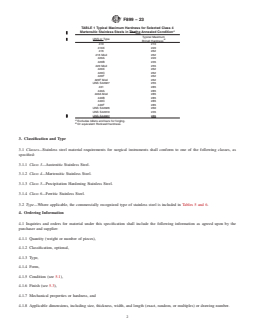
TABLE 1 Typical Maximum Hardness for Selected Class 4
6.2 This specification complements the applicable ISO
A
Martensitic Stainless Steels in the Annealed Condition
document covering stainless steel for surgical instruments and,
Typical Maximum
by reference, includes all of the stainless grades in ISO 7153-1.
UNS or Type
B
Brinell Hardness
410 210
7. Chemical Requirements
410X 220
416 262
7.1 The heat analysis shall conform to the requirements as
416 Mod 262
420A 220 to chemical composition specified in Tables 5-8.
420B 235
7.2 Unified Numbering System (UNS) designations have
420 Mod 255
420X 262
been added to Tables 5-8 to provide an easy cross reference to
420C 262
a common numbering system. In order to ensure consistency in
420F 262
the materials used for the manufacture of surgical instruments,
420F Mod 262
UNS S42027 255
compositional limits tighter than typical UNS limits have been
431 285
established for certain elements (as denoted by an asterisk). For
440A 285
example, more restrictive carbon and sulfur limits are specified
440A Mod 285
440B 285
in Table 7.
440C 285
440F 285 7.3 The chemical composition requirements for Types 301,
UNS S42026 260
303, 304, 316, 410, 420A, 420B, 420C, and 430F also meet the
UNS S42010 235
composition requirements in ISO 7153-1.
UNS S44027 285
A
Excludes billets and bars for forging. 7.4 Methods and practices relating to chemical analysis
B
Or equivalent Rockwell hardness.
required by this specification shall be in accordance with Test
Methods and Practices A751.
7.5 The cobalt content of the heat analysis shall be indicated
4.1.7 Mechanical properties or hardness, and
for information only on the certificate issued by the manufac-
4.1.8 Applicable dimensions, including size, thickness,
turer for the materials listed in Tables 5-8.
width, and length (exact, random, or multiples) or drawing
number.
8. Mechanical Requirements
5. Manufacture 8.1 Material shall conform to the mechanical property
requirements cited in the appropriate ASTM standards (see 2.1)
5.1 Condition—Stainless steels shall be furnished to the
or shall meet the mechanical property requirements specified
purchaser, as specified, in the hot-finished, cold-finished,
by the purchaser.
annealed, solution-treated, solution-treated and aged, quench-
hardened and tempered, or as specified by the purchaser. (Note 8.2 When desired, Brinell hardness number (HB), Rockwell
that highly hardenable martensitic stainless billets and bars hardness B scale (HRB), or Rockwell hardness C scale (HRC)
such as Types 420A, 420B, 420C, 420 Mod, 420F, 420F Mod, limits may be specified. Typical hardness values for selected
440A, 440A Mod, 440B, and 440C intended for forging are Class 4 martensitic stainless steels in the annealed condition
commonly annealed prior to shipment and so specified in order are listed in Table 1. These typical hardness values are
provided for reference only.
to avoid the possibility of thermal cracking. Other hardenable
martensitic grades such as Types 403, 410, 416, 416 Mod, and
9. Heat Treatment
431, which also may require annealing, depending on their
composition and size, are furnished suitable for cold cutting
9.1 Material shall be heat treated per the applicable refer-
when so specified on the purchase order.) Type 302PH
enced ASTM standard (see 2.1) for the selected stainless steel.
(S17710) may be furnished as hot-rolled or hot-formed, cold
9.2 Typical hardness values for selected Class 4 martensitic
drawn or cold drawn, and age-hardened.
stainless steels are listed in Table 2 and are provided for
5.2 Conditioning—Billet and bar intended for forging may
reference only.
be conditioned by chipping, grinding, or other suitable means
9.3 Heat treating guidelines for Class 5 precipitation hard-
to remove injurious surface defects.
ening stainless steels are included in Specification A564/
5.3 Finish—Types of finish available for bar and wire
A564M.
products are cold-drawn, pickled, ground, ground and polished,
9.4 Specifying a hardness requirement appropriate for the
or as specified in the purchase order.
selected alloy and intended application is the responsibility of
the purchaser.
6. General Requirements for Delivery
6.1 In addition to the chemistry requirements of this
10. Special Information
specification, all requirements of the current editions of Speci-
10.1 Some examples of selected stainless steels that have
fications A276/A276M, A313/A313M, A314, A480/A480M,
been used for various surgical instrument applications are
A484/A484M, A555/A555M, A564/A564M, A582/A582M,
listed in Table 3 and Table 4 for information purposes.
and Test Methods and Practices A751 shall apply where
applicable, as agreed upon between the purchaser and supplier. NOTE 1—Re-sulphurized free-machining grades can exhibit lower
F899 − 23
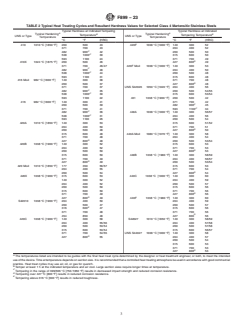
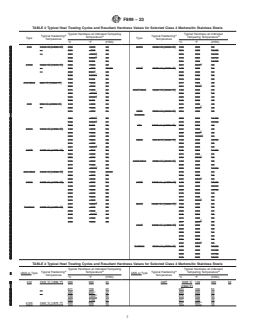
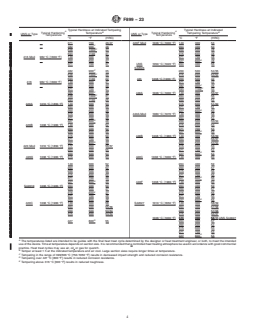
TABLE 2 Typical Heat Treating Cycles and Resultant Hardness Values for Selected Class 4 Martensitic Stainless Steels
Typical Hardness at Indicated Tempering Typical Hardness at Indicated
A A
Typical Hardening B Typical Hardening B
Temperature Tempering Temperature
UNS or Type UNS or Type
Temperature Temperature
°C °F (HRC) °C °F (HRC)
410 1010 °C [1850 °F] 260 500 43 420F 1038 °C [1900 °F] 149 300 52
371 700 43 204 400 52
C
482 900 42 260 500 50
C
538 1000 30 315 600 50
593 1100 24 371 700 49
D
410X 1024 °C [1875 °F] 260 500 46 427 800 49
371 700 46/47 420F Mod 1038 °C [1900 °F] 149 300 53
C
482 900 48 204 400 50
C
538 1000 44 260 500 48
593 1100 31 315 600 48
416 Mod 982 °C [1800 °F] 149 300 38 371 700 48
D
260 500 37 427 800 48
371 700 37 UNS S42026 1050 °C [1920 °F] 204 400 56
C
482 900 35 260 500 54/55
C
538 1000 30 315 600 53/54
593 1100 22 431 1038 °C [1900 °F] 260 500 42
416 982 °C [1800 °F] 149 300 41 371 700 42
C
260 500 39 482 900 45
C
371 700 41 593 1100 34
C
482 900 36 440A 1038 °C [1900 °F] 149 300 56/57
C
538 1000 31 204 400 56
593 1100 26 260 500 54
420A 1010 °C [1850 °F] 149 300 53 315 600 51/52
204 400 50 371 700 51
D
260 500 48 427 800 50
315 600 48 440A Mod 1080 °C [1976 °F] 149 300 58
371 700 48 204 400 54
D
427 800 48 260 500 53/54
420B 1038 °C [1900 °F] 149 300 52 315 600 53
204 400 52 371 700 53
D
260 500 50 427 800 53
315 600 50 440B 1038 °C [1900 °F] 149 300 58/59
371 700 49 204 400 56/57
D
427 800 49 260 500 53/54
420 Mod 1010 °C [1850 °F] 177 350 56/57 315 600 53
204 400 55 371 700 54
D
260 500 54 427 800 54
420X 1038 °C [1900 °F] 315 600 53 440C 1038 °C [1900 °F] 149 300 60
149 300 52 204 400 59
204 400 52 260 500 57
260 500 50 315 600 56
315 600 50 371 700 56
D
371 700 49 427 800 56
D
427 800 49 440F 1038 °C [1900 °F] 149 300 60
S42010 1038 °C [1900 °F] 204 400 50 204 400 59
260 500 47 260 500 57
E
316 600 47 315 600 56
371 700 48 371 700 56
D
454 850 48 427 800 56
420C 1038 °C [1900 °F] 149 300 58 S42027 1010 °C [1850 °F] 149 300 58/59
204 400 55/56 204 400 57/58
260 500 53/54 260 500 57/58
315 600 53/54 315 600 56/57
371 700 54/55 UNS S44027 1038 °C [1900 °F] 149 300 58
D
427 800 55 204 400 57
260 500 54
315 600 53
371 700 53
D
427 800 53
A
The temperatures listed are intended to be guides with the final heat treat cycle determined by the designer or heat treatment engineer, or both, to meet the intended
use of the device. Time at temperature depends on section size. It is recommended that a controlled heat treating atmosphere be used in accordance with good commercial
practice. Heat treat cycles may use air, oil, or gas for quench.
B
Temper at least 1 h at the indicated temperature and air cool. Large section sizes require longer times at temperature.
C
Tempering in the range of 399/566 °C [750 ⁄1050 °F] results in decreased impact strength and reduced corrosion resistance.
D
Tempering over 427 °C [800 °F] results in reduced corrosion resistance.
E
Tempering above 316 °C [600 °F] results in reduced toughness.
F899 − 23
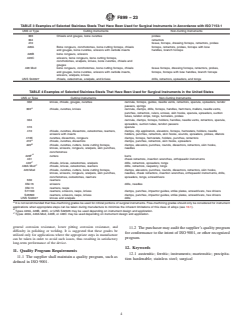
TABLE 3 Examples of Selected Stainless Steels That Have Been Used for Surgical Instruments in Accordance with ISO 7153-1
UNS or Type Cutting Instruments Non-Cutting Instruments
303 Chisels and gouges, bone curettes probes
304 retractors
410 tissue, forceps, dressing forceps, retractors, probes
420A Bone rongeurs, conchotomes, bone cutting forceps, chisels forceps, retractors, probes, forceps with bow
and gouges, bone curettes, scissors with carbide inserts handles, branch forceps
420B bone rongeurs, scissors
420C scissors, bone rongeurs, bone cutting forceps,
conchotomes, scalpels, knives, bone curettes, chisels and
gouges
420 Mod bone rongeurs, conchotomes, bone cutting forceps, chisels tissue forceps, dressing forceps, retractors, probes,
and gouges, bone curettes, scissors with carbide inserts, forceps, forceps with bow handles, branch forceps
scissors, scalpels, knives
UNS S44027 chisels, osteotomes, scalpels, and
...
This document is not an ASTM standard and is intended only to provide the user of an ASTM standard an indication of what changes have been made to the previous version. Because
it may not be technically possible to adequately depict all changes accurately, ASTM recommends that users consult prior editions as appropriate. In all cases only the current version
of the standard as published by ASTM is to be considered the official document.
Designation: F899 − 20 F899 − 23
Standard Specification for
Wrought Stainless Steels for Surgical Instruments
This standard is issued under the fixed designation F899; the number immediately following the designation indicates the year of original
adoption or, in the case of revision, the year of last revision. A number in parentheses indicates the year of last reapproval. A superscript
epsilon (´) indicates an editorial change since the last revision or reapproval.
This standard has been approved for use by agencies of the U.S. Department of Defense.
1. Scope*
1.1 This specification covers the chemistry requirements for wrought stainless steels used for the manufacture of surgical
instruments. The data contained in Tables 1-4 of this specification, including typical hardness values, common heat treating cycles,
and examples of selected stainless steels that have been used for surgical instruments, is provided for reference only. Mechanical
property requirements, heat treating requirements, hardness requirements, and all other requirements except chemistry are
governed by the appropriate material standards as referenced below or as agreed upon between the purchaser and supplier.
1.2 The SI units in this standard are the primary units. The values stated in either primary SI units or secondary inch-pound units
are to be regarded separately as standard. The values stated in each system may not be exact equivalents; therefore, each system
shall be used independently of each other. Combining values from the two systems may result in non-conformancenonconformance
with the standard.
1.3 This international standard was developed in accordance with internationally recognized principles on standardization
established in the Decision on Principles for the Development of International Standards, Guides and Recommendations issued
by the World Trade Organization Technical Barriers to Trade (TBT) Committee.
2. Referenced Documents
2.1 ASTM Standards:
A276A276/A276M Specification for Stainless Steel Bars and Shapes
A313/A313M Specification for Stainless Steel Spring Wire
A314 Specification for Stainless Steel Billets and Bars for Forging
A480/A480M Specification for General Requirements for Flat-Rolled Stainless and Heat-Resisting Steel Plate, Sheet, and Strip
A484/A484M Specification for General Requirements for Stainless Steel Bars, Billets, Shapes, and Forgings
A555/A555M Specification for General Requirements for Stainless Steel Wire and Wire Rods
A564/A564M Specification for Hot-Rolled and Cold-Finished Age-Hardening Stainless Steel Bars and Shapes
A582/A582M Specification for Free-Machining Stainless Steel Bars
A751 Test Methods and Practices for Chemical Analysis of Steel Products
2.2 ISO Standards:
ISO 7153-1 Surgical Instruments – Materials – Part Instruments—Materials—Part 1: Metals
ISO 9001 Quality Management Systems—Requirements
This specification is under the jurisdiction of ASTM Committee F04 on Medical and Surgical Materials and Devices and is the direct responsibility of Subcommittee
F04.12 on Metallurgical Materials.
Current edition approved Feb. 1, 2020Nov. 1, 2023. Published March 2020November 2023. Originally approved in 1984. Last previous edition approved in 20192020 as
F899 – 19.F899 – 20. DOI: 10.1520/F0899-20.10.1520/F0899-23.
For referenced ASTM standards, visit the ASTM website, www.astm.org, or contact ASTM Customer Service at service@astm.org. For Annual Book of ASTM Standards
volume information, refer to the standard’s Document Summary page on the ASTM website.
Available from American National Standards Institute (ANSI), 25 W. 43rd St., 4th Floor, New York, NY 10036, http://www.ansi.org.
*A Summary of Changes section appears at the end of this standard
Copyright © ASTM International, 100 Barr Harbor Drive, PO Box C700, West Conshohocken, PA 19428-2959. United States
F899 − 23
TABLE 1 Typical Maximum Hardness for Selected Class 4
A
Martensitic Stainless Steels in Thethe Annealed Condition
Typical Maximum
UNS or Type
B
Brinell Hardness
410 210
410X 220
416 262
416 Mod 262
420A 220
420B 235
420 Mod 255
420X 262
420C 262
420F 262
420F Mod 262
UNS S42027 255
431 285
440A 285
440A Mod 285
440B 285
440C 285
440F 285
UNS S42026 260
UNS S42010 235
UNS S44027 285
A
Excludes billets and bars for forging.
B
Or equivalent Rockwell hardness.
3. Classification and Type
3.1 Classes—Stainless steel material requirements for surgical instruments shall conform to one of the following classes, as
specified:
3.1.1 Class 3—Austenitic Stainless Steel.
3.1.2 Class 4—Martensitic Stainless Steel.
3.1.3 Class 5—Precipitation Hardening Stainless Steel.
3.1.4 Class 6—Ferritic Stainless Steel.
3.2 Type—Where applicable, the commercially recognized type of stainless steel is included in Tables 5 and 6.
4. Ordering Information
4.1 Inquiries and orders for material under this specification shall include the following information as agreed upon by the
purchaser and supplier:
4.1.1 Quantity (weight or number of pieces),
4.1.2 Classification, optional,
4.1.3 Type,
4.1.4 Form,
4.1.5 Condition (see 5.1),
4.1.6 Finish (see 5.3),
4.1.7 Mechanical properties or hardness, and
4.1.8 Applicable dimensions, including size, thickness, width, and length (exact, random, or multiples) or drawing number.
F899 − 23
TABLE 2 Typical Heat Treating Cycles and Resultant Hardness Values for Selected Class 4 Martensitic Stainless Steels
Typical Hardness at Indicated Tempering Typical Hardness at Indicated
A A
Typical Hardening B Typical Hardening B
Temperature Tempering Temperature
Type Type
Temperature Temperature
°C °F (HRC) °C °F (HRC)
410 1010 °C [1850 °F] 260 500 43 420C 1038 °C [1900 °F] 149 300 58
371 700 43 204 400 55/56
C
482 900 42 260 500 53/54
C
538 1000 30 315 600 53/54
593 1100 24 371 700 54/55
D
410X 1024 °C [1875 °F] 260 500 46 427 800 55
371 700 46/47 420F 1038 °C [1900 °F] 149 300 52
C
482 900 48 204 400 52
C
538 1000 44 260 500 50
593 1100 31 315 600 50
416 Mod 982 °C [1800 °F] 149 300 38 371 700 49
D
260 500 37 427 800 49
371 700 37 420F Mod 1038 °C [1900 °F] 149 300 53
C
482 900 35 204 400 50
C
538 1000 30 260 500 48
593 1100 22 315 600 48
416 982 °C [1800 °F] 149 300 41 371 700 48
D
260 500 39 427 800 48
371 700 41 UNS 1050 °C [1920 °F] 204 400 56
S42026
C
482 900 36 260 500 54/55
C
538 1000 31 315 600 53/54
593 1100 26 431 1038 °C [1900 °F] 260 500 42
420A 1010 °C [1850 °F] 149 300 53 371 700 42
C
204 400 50 482 900 45
C
260 500 48 593 1100 34
315 600 48 440A 103 8°C [1900 °F] 149 300 56/57
371 700 48 204 400 56
D
427 800 48 260 500 54
420B 1038 °C [1900 °F] 149 300 52 315 600 51/52
204 400 52 371 700 51
D
260 500 50 427 800 50
315 600 50 440A Mod 1080 °C [1976 °F] 149 300 58
371 700 49 204 400 54
D
427 800 49 260 500 53/54
420 Mod 1010 °C [1850 °F] 177 350 56/57 315 600 53
204 400 55 371 700 53
D
260 500 54 427 800 53
420X 1038 °C [1900 °F] 315 600 53 440B 1038 °C [1900 °F] 149 300 58/59
149 300 52 204 400 56/57
204 400 52 260 500 53/54
260 500 50 315 600 53
315 600 50 371 700 54
D
371 700 49 427 800 54
D
427 800 49 440C 1038 °C [1900 °F] 149 300 60
S42010 1038 °C [1900 °F] 204 400 50 204 400 59
260 500 47 260 500 57
E
316 600 47 315 600 56
371 700 48 371 700 56
D
454 850 48 427 800 56
440F 1038 °C [1900 °F] 149 300 60
204 400 59
260 500 57
315 600 56
371 700 56
D
427 800 56
S42027 1010 °C [1850 °F] 149 300 58/59
204 400 57/58
260 500 57/58
315 600 56/57
TABLE 2 Typical Heat Treating Cycles and Resultant Hardness Values for Selected Class 4 Martensitic Stainless Steels
Typical Hardness at Indicated Tempering Typical Hardness at Indicated
A A
B B
Typical Hardening Typical Hardening
Temperature Tempering Temperature
UNS or Type UNS or Type
Temperature Temperature
°C °F (HRC) °C °F (HRC)
410 1010 °C [1850 °F] 260 500 43 420F 1038 °C 149 300 52
[1900 °F]
371 700 43 204 400 52
C
482 900 42 260 500 50
C
538 1000 30 315 600 50
593 1100 24 371 700 49
D
410X 1024 °C [1875 °F] 260 500 46 427 800 49
F899 − 23
Typical Hardness at Indicated Tempering Typical Hardness at Indicated
A A
B B
Typical Hardening Typical Hardening
Temperature Tempering Temperature
UNS or Type UNS or Type
Temperature Temperature
°C °F (HRC) °C °F (HRC)
371 700 46/47 420F Mod 1038 °C [1900 °F] 149 300 53
C
482 900 48 204 400 50
C
538 1000 44 260 500 48
593 1100 31 315 600 48
416 Mod 982 °C [1800 °F] 149 300 38 371 700 48
D
260 500 37 427 800 48
371 700 37 UNS 1050 °C [1920 °F] 204 400 56
S42026
C
482 900 35 260 500 54/55
C
538 1000 30 315 600 53/54
593 1100 22 431 1038 °C [1900 °F] 260 500 42
416 982 °C [1800 °F] 149 300 41 371 700 42
C
260 500 39 482 900 45
C
371 700 41 593 1100 34
C
482 900 36 440A 1038 °C [1900 °F] 149 300 56/57
C
538 1000 31 204 400 56
593 1100 26 260 500 54
420A 1010 °C [1850 °F] 149 300 53 315 600 51/52
204 400 50 371 700 51
D
260 500 48 427 800 50
315 600 48 440A Mod 1080 °C [1976 °F] 149 300 58
371 700 48 204 400 54
D
427 800 48 260 500 53/54
420B 1038 °C [1900 °F] 149 300 52 315 600 53
204 400 52 371 700 53
D
260 500 50 427 800 53
315 600 50 440B 1038 °C [1900 °F] 149 300 58/59
371 700 49 204 400 56/57
D
427 800 49 260 500 53/54
420 Mod 1010 °C [1850 °F] 177 350 56/57 315 600 53
204 400 55 371 700 54
D
260 500 54 427 800 54
420X 1038 °C [1900 °F] 315 600 53 440C 1038 °C [1900 °F] 149 300 60
149 300 52 204 400 59
204 400 52 260 500 57
260 500 50 315 600 56
315 600 50 371 700 56
D
371 700 49 427 800 56
D
427 800 49 440F 1038 °C [1900 °F] 149 300 60
S42010 1038 °C [1900 °F] 204 400 50 204 400 59
260 500 47 260 500 57
E
316 600 47 315 600 56
371 700 48 371 700 56
D
454 850 48 427 800 56
420C 1038 °C [1900 °F] 149 300 58 S42027 1010 °C [1850 °F] 149 300 58/59
204 400 55/56 204 400 57/58
260 500 53/54 260 500 57/58
315 600 53/54 315 600 56/57
1038 °C [1900 °F] 371149 700300 54/5558 UNS S44027
D
427 800 55 204 400 57
260 500 54
315 600 53
371 700 53
D
427 800 53
A
The temperatures listed are intended to be guides with the final heat treat cycle determined by the designer or heat treatment engineer, or both, to meet the intended
use of the device. Time at temperature depends on section size. It is recommended that a controlled heat treating atmosphere be used in accordance with good commercial
practice. Heat treat cycles may use air, oil, or gas for quench.
B
Temper at least 1 h at the indicated temperature and air cool. Large section sizes require longer times at temperature.
C
Tempering in the range of 399/566 °C [750 ⁄1050 °F] results in decreased impact strength and reduced corrosion resistance.
D
Tempering over 427 °C [800 °F] results in reduced corrosion resistance.
E
Tempering above 316 °C [600 °F] results in reduced toughness.
F899 − 23
TABLE 3 Examples of Selected Stainless Steels That Have Been Used for Surgical Instruments in Accordance with ISO 7153-1
UNS or Type Cutting Instruments Non-Cutting Instruments
303 Chisels and gouges, bone curettes probes
304 retractors
410 tissue, forceps, dressing forceps, retractors, probes
420A Bone rongeurs, conchotomes, bone cutting forceps, chisels forceps, retractors, probes, forceps with bow
and gouges, bone curettes, scissors with carbide inserts handles, branch forceps
420B bone rongeurs, scissors
420C scissors, bone rongeurs, bone cutting forceps,
conchotomes, scalpels, knives, bone curettes, chisels and
gouges
420 Mod bone rongeurs, conchotomes, bone cutting forceps, chisels tissue forceps, dressing forceps, retractors, probes,
and gouges, bone curettes, scissors with carbide inserts, forceps, forceps with bow handles, branch forceps
scissors, scalpels, knives
UNS S44027 chisels, osteotomes, scalpels, and knives drills, retractors, spreaders, and tongs
TABLE 4 Examples of Selected Stainless Steels That Have Been Used Forfor Surgical Instruments in the United States
UNS or Type Cutting Instruments Non-Cutting Instruments
302 knives, chisels, gouges, curettes cannula, forceps, guides, needle vents, retractors, specula, spreaders, tendor
passers, springs
A
303 chisels, curettes, knives cannula, clamps, drills, forceps, handles, hammers, mallets, needle vents,
punches, retractors, rulers, screws, skin hooks, specula, spreaders, suction
tubes, tendon
strips, tongs, tunnelers, probes
304 cannula, clamps, forceps, holders, handles, needle vents, retractors, specula,
spreaders, suction tubes, tendon passers
316 specula
410 chisels, curettes, dissectors, osteotomes, reamers, clamps, clip applicators, elevators, forceps, hemostats, holders, needle
scissors with inserts holders, punches, retractors, skin hooks, sounds, spreaders, probes, dilators
410X curettes, dissectors, rongeurs clamps, forceps, hemostats, holders, punches, retractors
A
416 chisels, curettes, dissectors clamps, punches, retractors, skin hooks, spreaders
B
420 chisels, curettes, cutters, bone cutting forceps, clamps, elevators, punches, rounds, dissectors, retractors, skin hooks,
knives, scissors, rongeurs, scalpels, skin punches, needles
conchotomes
A
420F cutters burrs
431 cheek retractors, insertion wrenches, orthopeadic instruments
C
440 chisels, knives, osteotomes, scalpels drills, retractors, spreaders, tongs
C
440A Mod chisels, knives, osteotomes, reamers drills, retractors, raspatory, tongs
420 Mod chisels, curettes, cutters, bone cutting forceps, clamps, elevators, punches, rounds, dissectors, retractors, skin hooks,
knives, scissors, rongeurs, scalpels, skin punches, needles, cheek retractors, insertion wrenches, orthopaedic instruments, drills,
conchotomes, ostoetomes, reamers spreaders, tongs, screwdrivers
630 reamers
XM-16 scissors drills, needles
XM-13 reamers, rasps
S11100 reamers, scissors, rasps, knives Clamps, punches, impactor guides, strike plates, screwdrivers, hex drivers
S11100 reamers, scissors, rasps, knives clamps, punches, impactor guides, strike plates, screwdrivers, hex drivers
S46500 reamers, scissors, rasps, knives Clamps, punches, impactor guides, strike plates, screwdrivers, hex drivers
S46500 reamers, scissors, rasps, knives clamps, punches, impactor guides, strike plates, screwdrivers, hex drivers
UNS S44027 knives and scalpels drills
A
It is not recommended that free-machining grades be used for critical portions of surgical instruments. Free machining Free-machining grades should only be considered
for instrument applications when appropriate steps can be taken during manufacture to minimize the inherent limitations of this class of alloys (see 10.1) ).
B
Types 420A, 420B, 420C, or UNS S42026 may be used depending on instrument design and application.
C
Types 440A, 440A Mod, 440B, or 440C may be used depending on instrument design and application.
5. Manufacture
5.1 Condition—Stainless steels shall be furnished to the purchaser, as specified, in the hot-finished, cold-finished, annealed,
solution-treated, solution-treated and aged, quench-hardened and tempered, or as specified by the purchaser. (Note that highly
hardenable martensitic stainless billets and bars such as Types 420A, 420B, 420C, 420 Mod, 420F, 420F Mod, 440A, 440A Mod,
440B, and 440C intended for
...
Questions, Comments and Discussion
Ask us and Technical Secretary will try to provide an answer. You can facilitate discussion about the standard in here.
Loading comments...