

ASTM D5621-20
(Test Method)Standard Test Method for Sonic Shear Stability of Hydraulic Fluids
General Information
- Abstract
SIGNIFICANCE AND USE
4.1 This test method was developed using Test Method D2603–91.
4.2 This test method permits the evaluation of shear stability with minimum interference from thermal and oxidative factors that may be present in some applications. It has been found applicable to fluids containing both readily sheared and shear-resistant polymers. Correlation with performance in the case of hydraulic applications has been established.
SCOPE
1.1 This test method covers the evaluation of the shear stability of hydraulic fluids in terms of the final viscosity that results from irradiating a sample of the hydraulic fluid in a sonic oscillator.
1.2 Evidence has been presented that a good correlation exists between the shear degradation that results from sonic oscillation and that obtained in a vane pump test procedure.2
1.3 This test method uses millimetres squared per second (mm2/s), an SI unit, as the unit of viscosity. For information, the equivalent unit, cSt, is shown in parentheses.
1.4 This standard does not purport to address all of the safety concerns, if any, associated with its use. It is the responsibility of the user of this standard to establish appropriate safety, health, and environmental practices and determine the applicability of regulatory limitations prior to use.
1.5 This international standard was developed in accordance with internationally recognized principles on standardization established in the Decision on Principles for the Development of International Standards, Guides and Recommendations issued by the World Trade Organization Technical Barriers to Trade (TBT) Committee.
- Status
- Published
- Publication Date
- 30-Apr-2020
- Technical Committee
- D02 - Petroleum Products, Liquid Fuels, and Lubricants
- Drafting Committee
- D02.07 - Flow Properties


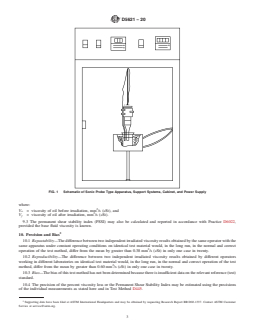

Overview
ASTM D5621-20 is the internationally recognized standard test method for evaluating the shear stability of hydraulic fluids using sonic shear techniques. Developed and maintained by ASTM International, this standard outlines a laboratory procedure that irradiates hydraulic fluid samples in a sonic oscillator to assess their viscosity stability. The test minimizes thermal and oxidative effects, leading to more reliable measurements of a fluid’s ability to withstand mechanical shear, which is critical for the performance and longevity of hydraulic systems.
This method is applicable to a wide range of hydraulic fluids, including those formulated with both readily-sheared and shear-resistant polymers. ASTM D5621-20 is especially valued for its strong correlation to real-world vane pump test procedures and its relevance as a predictor of in-service fluid performance.
Key Topics
- Shear Stability Assessment: The test method determines the extent of viscosity loss in hydraulic fluids after sonic oscillation, reflecting their ability to resist mechanical shear.
- Test Apparatus: Utilizes a fixed frequency oscillator, sonic horn, and calibrated viscometers (in accordance with ASTM D445 or D7042).
- Reference Fluids: Relies on an ASTM Reference Fluid B, a petroleum oil with known viscosity, to calibrate and benchmark apparatus performance.
- Test Conditions: Specifies critical parameters such as sample volume, irradiation time, and bath temperature to ensure consistent and reproducible results.
- Result Reporting: Requires testing and reporting the viscosity of fluids before and after irradiation, as well as calculating the percentage loss of viscosity and, optionally, the Permanent Shear Stability Index (PSSI).
- Safety and Compliance: Reinforces the user’s responsibility to comply with appropriate safety, health, and environmental protocols during test execution.
Applications
The ASTM D5621-20 standard is vital for:
- Quality Control in Lubricant Manufacturing: Ensures that hydraulic fluids meet required shear stability specifications, preventing premature viscosity breakdown under service conditions.
- Hydraulic System Maintenance: Enables predictive assessment of fluid longevity, supporting proactive maintenance of machinery where hydraulic fluids are exposed to high shear rates.
- Product Development and Benchmarking: Supports formulators in optimizing the blend of base oils and additives to achieve superior shear stability, especially in fluids containing polymer thickeners.
- Industry Compliance: Helps manufacturers and laboratories demonstrate compliance with international quality and performance standards for hydraulic fluids, adding confidence for end users in sectors such as manufacturing, automotive, construction, and aviation.
- Research and Development: Provides a standardized approach for comparing the performance of new fluid formulations against established benchmarks.
Related Standards
ASTM D5621-20 is part of a suite of standards for evaluating lubricant and hydraulic fluid properties. Key related standards include:
- ASTM D445 - Test Method for Kinematic Viscosity of Transparent and Opaque Liquids (and Calculation of Dynamic Viscosity)
- ASTM D2603 - Test Method for Sonic Shear Stability of Polymer-Containing Oils
- ASTM D6022 - Practice for Calculation of Permanent Shear Stability Index
- ASTM D7042 - Test Method for Dynamic Viscosity and Density of Liquids by Stabinger Viscometer
Adhering to ASTM D5621-20 enables organizations to maintain high standards of hydraulic fluid quality, optimize equipment performance, and reduce the risk of unscheduled downtime due to fluid degradation. This standard is a critical tool for any industry that depends on reliable hydraulic systems.
Relations
- Effective Date
- 01-May-2020
- Effective Date
- 01-Apr-2024
- Effective Date
- 01-Nov-2023
- Effective Date
- 01-May-2020
- Effective Date
- 01-Dec-2019
- Effective Date
- 01-Jun-2019
- Effective Date
- 15-Dec-2016
- Effective Date
- 01-Jul-2014
- Effective Date
- 01-Jul-2014
- Effective Date
- 01-May-2014
- Refers
ASTM D2603-01(2013) - Standard Test Method for Sonic Shear Stability of Polymer-Containing Oils - Effective Date
- 01-May-2013
- Effective Date
- 01-Nov-2012
- Effective Date
- 01-Nov-2012
- Effective Date
- 15-Apr-2012
- Effective Date
- 15-Apr-2012
Get Certified
Connect with accredited certification bodies for this standard

Element Materials Technology
Materials testing and product certification.

ABS Group Brazil
ABS Group certification services in Brazil.

ABS Quality Evaluations Inc.
American Bureau of Shipping quality certification.
Sponsored listings
Frequently Asked Questions
ASTM D5621-20 is a standard published by ASTM International. Its full title is "Standard Test Method for Sonic Shear Stability of Hydraulic Fluids". This standard covers: SIGNIFICANCE AND USE 4.1 This test method was developed using Test Method D2603–91. 4.2 This test method permits the evaluation of shear stability with minimum interference from thermal and oxidative factors that may be present in some applications. It has been found applicable to fluids containing both readily sheared and shear-resistant polymers. Correlation with performance in the case of hydraulic applications has been established. SCOPE 1.1 This test method covers the evaluation of the shear stability of hydraulic fluids in terms of the final viscosity that results from irradiating a sample of the hydraulic fluid in a sonic oscillator. 1.2 Evidence has been presented that a good correlation exists between the shear degradation that results from sonic oscillation and that obtained in a vane pump test procedure.2 1.3 This test method uses millimetres squared per second (mm2/s), an SI unit, as the unit of viscosity. For information, the equivalent unit, cSt, is shown in parentheses. 1.4 This standard does not purport to address all of the safety concerns, if any, associated with its use. It is the responsibility of the user of this standard to establish appropriate safety, health, and environmental practices and determine the applicability of regulatory limitations prior to use. 1.5 This international standard was developed in accordance with internationally recognized principles on standardization established in the Decision on Principles for the Development of International Standards, Guides and Recommendations issued by the World Trade Organization Technical Barriers to Trade (TBT) Committee.
SIGNIFICANCE AND USE 4.1 This test method was developed using Test Method D2603–91. 4.2 This test method permits the evaluation of shear stability with minimum interference from thermal and oxidative factors that may be present in some applications. It has been found applicable to fluids containing both readily sheared and shear-resistant polymers. Correlation with performance in the case of hydraulic applications has been established. SCOPE 1.1 This test method covers the evaluation of the shear stability of hydraulic fluids in terms of the final viscosity that results from irradiating a sample of the hydraulic fluid in a sonic oscillator. 1.2 Evidence has been presented that a good correlation exists between the shear degradation that results from sonic oscillation and that obtained in a vane pump test procedure.2 1.3 This test method uses millimetres squared per second (mm2/s), an SI unit, as the unit of viscosity. For information, the equivalent unit, cSt, is shown in parentheses. 1.4 This standard does not purport to address all of the safety concerns, if any, associated with its use. It is the responsibility of the user of this standard to establish appropriate safety, health, and environmental practices and determine the applicability of regulatory limitations prior to use. 1.5 This international standard was developed in accordance with internationally recognized principles on standardization established in the Decision on Principles for the Development of International Standards, Guides and Recommendations issued by the World Trade Organization Technical Barriers to Trade (TBT) Committee.
ASTM D5621-20 is classified under the following ICS (International Classification for Standards) categories: 75.120 - Hydraulic fluids. The ICS classification helps identify the subject area and facilitates finding related standards.
ASTM D5621-20 has the following relationships with other standards: It is inter standard links to ASTM D5621-19, ASTM D445-24, ASTM D445-23, ASTM D2603-20, ASTM D6022-19, ASTM D2603-19, ASTM D445-16, ASTM D445-14, ASTM D445-14e1, ASTM D7042-14, ASTM D2603-01(2013), ASTM D6022-06(2012), ASTM D7042-12a, ASTM D445-12, ASTM D7042-12. Understanding these relationships helps ensure you are using the most current and applicable version of the standard.
ASTM D5621-20 is available in PDF format for immediate download after purchase. The document can be added to your cart and obtained through the secure checkout process. Digital delivery ensures instant access to the complete standard document.
Standards Content (Sample)
This international standard was developed in accordance with internationally recognized principles on standardization established in the Decision on Principles for the
Development of International Standards, Guides and Recommendations issued by the World Trade Organization Technical Barriers to Trade (TBT) Committee.
Designation: D5621 − 20
Standard Test Method for
Sonic Shear Stability of Hydraulic Fluids
This standard is issued under the fixed designation D5621; the number immediately following the designation indicates the year of
original adoption or, in the case of revision, the year of last revision. A number in parentheses indicates the year of last reapproval. A
superscript epsilon (´) indicates an editorial change since the last revision or reapproval.
1. Scope* D6022 Practice for Calculation of Permanent Shear Stability
Index
1.1 This test method covers the evaluation of the shear
D7042 Test Method for Dynamic Viscosity and Density of
stability of hydraulic fluids in terms of the final viscosity that
Liquids by Stabinger Viscometer (and the Calculation of
results from irradiating a sample of the hydraulic fluid in a
Kinematic Viscosity)
sonic oscillator.
1.2 Evidence has been presented that a good correlation
3. Summary of Test Method
exists between the shear degradation that results from sonic
2 3.1 Aconvenient volume of hydraulic fluid is irradiated in a
oscillation and that obtained in a vane pump test procedure.
sonic oscillator for a period of time and the viscosities before
1.3 This test method uses millimetres squared per second
and after irradiation are determined by Test Method D445 and
(mm /s), an SI unit, as the unit of viscosity. For information,
D7042.Astandard reference fluid containing a readily sheared
the equivalent unit, cSt, is shown in parentheses.
polymer is run frequently to ensure that the equipment imparts
1.4 This standard does not purport to address all of the a controlled amount of sonic energy to the sample.
safety concerns, if any, associated with its use. It is the
3.2 The conditions to obtain the data for the precision
responsibility of the user of this standard to establish appro-
statement were: 30 mL sample, 12.5 min calibration, and
priate safety, health, and environmental practices and deter-
40 min sample irradiation at 0 °C jacket temperature.
mine the applicability of regulatory limitations prior to use.
1.5 This international standard was developed in accor-
4. Significance and Use
dance with internationally recognized principles on standard-
4.1 This test method was developed using Test Method
ization established in the Decision on Principles for the
D2603–91.
Development of International Standards, Guides and Recom-
mendations issued by the World Trade Organization Technical 4.2 Thistestmethodpermitstheevaluationofshearstability
Barriers to Trade (TBT) Committee. with minimum interference from thermal and oxidative factors
that may be present in some applications. It has been found
2. Referenced Documents
applicable to fluids containing both readily sheared and shear-
resistant polymers. Correlation with performance in the case of
2.1 ASTM Standards:
hydraulic applications has been established.
D445 Test Method for Kinematic Viscosity of Transparent
and Opaque Liquids (and Calculation of Dynamic Viscos-
5. Apparatus
ity)
D2603 Test Method for Sonic Shear Stability of Polymer-
5.1 Sonic Shear Unit, fixed frequency oscillator and sonic
Containing Oils
horn.
5.2 Auxiliary Equipment—To facilitate uniform
1 performance, the following auxiliary equipment is recom-
This test method is under the jurisdiction of ASTM Committee D02 on
Petroleum Products, Liquid Fuels, and Lubricants and is the direct responsibility of
mended:
Subcommittee D02.07 on Flow Properties.
5.2.1 Cooling Bath or Ice Bath, to maintain a jacket
Current edition approved May 1, 2020. Published May 2020. Originally
temperature of 0 °C.
approved in 1994. Last previous edition approved in 2019 as D5621 – 19. DOI:
5.2.2 Griffın 50 mL Beaker, borosilicate glass.
10.1520/D5621-20.
Stambaugh, R. L., Kopko, R. J., and Roland, T. F., “Hydraulic Pump
5.2.3 Sonic-Insulated Box, to enclose the sonic horn to
Performance—A Basis for Fluid Viscosity Classification,” SAE Paper No. 901633.
reduce the ambient noise level produced by the sonic shear
Available from Society of Automotive Engineers, 400 Commonwealth Dr.,
unit.
Warrendale, PA 15096.
For referenced ASTM standards, visit the ASTM website, www.astm.org, or
5.3 Viscometer—Any viscometer and bath meeting the re-
contact ASTM Customer Service at service@astm.org. For Annual Book of ASTM
quirements for determining kinematic viscosity: Test Method
Standards volume information, refer to the standard’s Document Summary page on
the ASTM website. D445 or D7042. Whichever method is chosen, that same
*A Summary of Changes section appears at the end of this standard
Copyright © ASTM International, 100 Barr Harbor Drive, PO Box C700, West Conshohocken, PA 19428-2959. United States
D5621 − 20
method must be used for the before and after samples as well
as calibration samples.
6. Reference Fluids
6.1 The reference fluid is ASTM Reference Fluid B, a
petroleum oil containing a polymer capable of being broken
down by turbulence at high rates of shear. This oil has a
viscosity of about 13.6 mm /s (cSt) at 40 °C. The viscosity of
a specific lot is supplied by the provider of that lot.
7. Calibration of Apparatus
7.1 The reference fluid provides a practical way to define
the performance (severity level) of a sonic oscillator unit so
that satisfactory comparison can be made between tests run on
different days in the same unit and between tests run with
different units.
7.2 The decrease in viscosity observed for a given hydraulic
fluidonirradiationinanoscillatorunitdependsonanumberof
factors; these include sample volume, irradiation time, and
oscillator power setting. Frequency of the generator is 23 kHz
6 2 kHz. Typical power settings are in the range of 50 W.
Manual tuning of the oscillator-horn combination is also
required in some instruments in order to ensure efficiency of
energy coupling between the two units. The procedure de-
scribed in 7.3 is recommended for establishing a reproducible
performance level for a given unit.
7.3 Confirm and record the 40 °C viscosity of the reference
fluid. Introduce 30 mL (room temperature) of the reference
fluid into the 50 mL Griffin beaker. Immerse the beaker in ice
water or a constant temperature bath at 0 °C until the sample
fluid level is below the liquid level in the bath. The beaker
should be maintained in a vertical position in the bath. Secure
beaker in this position and condition the samp
...
This document is not an ASTM standard and is intended only to provide the user of an ASTM standard an indication of what changes have been made to the previous version. Because
it may not be technically possible to adequately depict all changes accurately, ASTM recommends that users consult prior editions as appropriate. In all cases only the current version
of the standard as published by ASTM is to be considered the official document.
Designation: D5621 − 19 D5621 − 20
Standard Test Method for
Sonic Shear Stability of Hydraulic Fluids
This standard is issued under the fixed designation D5621; the number immediately following the designation indicates the year of
original adoption or, in the case of revision, the year of last revision. A number in parentheses indicates the year of last reapproval. A
superscript epsilon (´) indicates an editorial change since the last revision or reapproval.
1. Scope*
1.1 This test method covers the evaluation of the shear stability of hydraulic fluids in terms of the final viscosity that results
from irradiating a sample of the hydraulic fluid in a sonic oscillator.
1.2 Evidence has been presented that a good correlation exists between the shear degradation that results from sonic oscillation
and that obtained in a vane pump test procedure.
1.3 This test method uses millimetres squared per second (mm /s), an SI unit, as the unit of viscosity. For information, the
equivalent unit, cSt, is shown in parentheses.
1.4 This standard does not purport to address all of the safety concerns, if any, associated with its use. It is the responsibility
of the user of this standard to establish appropriate safety, health, and environmental practices and determine the applicability of
regulatory limitations prior to use.
1.5 This international standard was developed in accordance with internationally recognized principles on standardization
established in the Decision on Principles for the Development of International Standards, Guides and Recommendations issued
by the World Trade Organization Technical Barriers to Trade (TBT) Committee.
2. Referenced Documents
2.1 ASTM Standards:
D445 Test Method for Kinematic Viscosity of Transparent and Opaque Liquids (and Calculation of Dynamic Viscosity)
D2603 Test Method for Sonic Shear Stability of Polymer-Containing Oils
D6022 Practice for Calculation of Permanent Shear Stability Index
D7042 Test Method for Dynamic Viscosity and Density of Liquids by Stabinger Viscometer (and the Calculation of Kinematic
Viscosity)
3. Summary of Test Method
3.1 A convenient volume of hydraulic fluid is irradiated in a sonic oscillator for a period of time and the viscosities before and
after irradiation are determined by Test Method D445 and D7042. A standard reference fluid containing a readily sheared polymer
is run frequently to ensure that the equipment imparts a controlled amount of sonic energy to the sample.
3.2 The conditions to obtain the data for the precision statement were: 30 mL sample, 12.5 min calibration, and 40 min sample
irradiation at 0 °C jacket temperature.
4. Significance and Use
4.1 This test method was developed using Test Method D2603–91.
4.2 This test method permits the evaluation of shear stability with minimum interference from thermal and oxidative factors that
may be present in some applications. It has been found applicable to fluids containing both readily sheared and shear-resistant
polymers. Correlation with performance in the case of hydraulic applications has been established.
This test method is under the jurisdiction of ASTM Committee D02 on Petroleum Products, Liquid Fuels, and Lubricants and is the direct responsibility of Subcommittee
D02.07 on Flow Properties.
Current edition approved June 1, 2019May 1, 2020. Published July 2019May 2020. Originally approved in 1994. Last previous edition approved in 20132019 as
D5621 – 07 (2013).D5621 – 19. DOI: 10.1520/D5621-19.10.1520/D5621-20.
Stambaugh, R. L., Kopko, R. J., and Roland, T. F., “Hydraulic Pump Performance—A Basis for Fluid Viscosity Classification,” SAE Paper No. 901633. Available from
Society of Automotive Engineers, 400 Commonwealth Dr., Warrendale, PA 15096.
For referenced ASTM standards, visit the ASTM website, www.astm.org, or contact ASTM Customer Service at service@astm.org. For Annual Book of ASTM Standards
volume information, refer to the standard’s Document Summary page on the ASTM website.
*A Summary of Changes section appears at the end of this standard
Copyright © ASTM International, 100 Barr Harbor Drive, PO Box C700, West Conshohocken, PA 19428-2959. United States
D5621 − 20
5. Apparatus
5.1 Sonic Shear Unit, fixed frequency oscillator and sonic horn.
5.2 Auxiliary Equipment—To facilitate uniform performance, the following auxiliary equipment is recommended:
5.2.1 Cooling Bath or Ice Bath, to maintain a jacket temperature of 0 °C.
5.2.2 Griffın 50 mL Beaker, borosilicate glass.
5.2.3 Sonic-Insulated Box, to enclose the sonic horn to reduce the ambient noise level produced by the sonic shear unit.
5.3 Viscometer, Viscometer—anyAny viscometer and bath meeting the requirements of for determining kinematic viscosity: Test
Method D445 or D7042. Whichever method is chosen, that same method must be used for the before and after samples as well
as calibration samples.
6. Reference Fluids
6.1 The reference fluid is ASTM Reference Fluid B, a petroleum oil containing a polymer capable of being broken down by
turbulence at high rates of shear. This oil has a viscosity of about 13.6 mm /s (cSt) at 40 °C. The viscosity of a specific lot is
supplied by the provider of that lot.
7. Calibration of Apparatus
7.1 The reference fluid provides a practical way to define the performance (severity level) of a sonic oscillator unit so that
satisfactory comparison can be made between tests run on different days in the same unit and between tests run with different units.
7.2 The decrease in viscosity observed for a given hydraulic fluid on irradiation in an oscillator unit depends on a number of
factors; these include sample volume, irradiation time, and oscillator power setting. Frequency of the generator is 23 kHz 6 2 kHz.
Typical power settings are in the range of 50 W. Manual tuning of the oscillator-horn combination is also required in some
instruments in order to ensure efficiency of energy coupling between the two units. The procedure described in 7.3 is recommended
for establishing a reproducible performance level for a given unit.
7.3 Confirm and record the 40 °C viscosity of the reference fluid. Introduce 30 mL (room temperature) of the reference fluid
into the 50 mL Griffin beaker. Immerse the beaker in ice water or a constant temperature bath at 0 °C until the sample fluid level
is below the liquid level in the bath. The beaker should be maintained in a vertical position in the bath. Secure beaker in this
p
...