

ASTM D8374-21
(Guide)Standard Guide for Personal Cannabis/Hemp Plant Growing Appliances
General Information
- Abstract
SIGNIFICANCE AND USE
4.1 This guide is intended to educate new and experienced users of personal cannabis/hemp plant growing appliances on the various characteristics that can be available in personal cannabis/hemp plant growing appliances.
4.2 This guide will outline characteristics of personal cannabis/hemp plant growing appliances, which includes individual components, design elements, and basic universal functions.
4.3 This guide will categorize common characteristics using categories based on different technologies and describe in simple terms the details attributable to each category but is not intended to be all inclusive.
4.4 This guide will serve to provide clarity to industry, government, and the public on terminology, and universal functions of personal cannabis/hemp plant growing appliances.
4.5 Reference to a type characteristic in this guide is not intended in any manner to denote endorsement or approval of said type by ASTM International.
SCOPE
1.1 This guide is intended to define characteristics, functions and technologies commonly present in personal cannabis/hemp plant growing appliances
1.2 This guide will provide clarity and understanding to the industry, government, consumers and the general public on different features and technologies that may be present and/or are used in the design and manufacture of personal cannabis/hemp plant growing appliances.
1.3 This guide shall be used in conjunction with Classification D8390.
1.4 Units—The values stated in SI units are to be regarded as standard. No other units of measurement are included in this standard.
1.5 This standard does not purport to address all of the safety concerns, if any, associated with its use. It is the responsibility of the user of this standard to establish appropriate safety, health, and environmental practices and determine the applicability of regulatory limitations prior to use.
1.6 This international standard was developed in accordance with internationally recognized principles on standardization established in the Decision on Principles for the Development of International Standards, Guides and Recommendations issued by the World Trade Organization Technical Barriers to Trade (TBT) Committee.
- Status
- Published
- Publication Date
- 31-Jan-2021
- Technical Committee
- D37 - Cannabis
- Drafting Committee
- D37.08 - Personal/Household-Use Cannabis Devices and Appliances
Overview
ASTM D8374-21 - Standard Guide for Personal Cannabis/Hemp Plant Growing Appliances provides a comprehensive framework for understanding the features and technologies commonly found in appliances designed for the personal cultivation of cannabis and hemp plants. Developed by ASTM International, this standard offers valuable clarity to industry professionals, regulators, and consumers by outlining key components, design considerations, and universal functions of these personal growing systems. It aims to standardize terminology and functional classifications, facilitating safer, more reliable, and efficient home cultivation practices.
Key Topics
ASTM D8374-21 covers a wide array of topics, ensuring that users-whether novice or experienced-gain an informed perspective on personal cannabis and hemp plant growing appliances. Key areas addressed in the standard include:
- Key Components: Outlines various appliance parts such as tanks, main delivery lines, drip emitters, bubblers, micro sprayers, and atmospheric sensors.
- Irrigation Systems: Discusses methods like hydroponics, aquaponics, aeroponics, manual watering, and sprinkler systems.
- Lighting Technologies: Details popular systems such as LEDs, High Pressure Sodium (HPS), Metal Halide (MH), fluorescents, and interchangeable lighting setups.
- Grow Mediums: Categorizes mediums into soil, soilless, or combination types-each supporting plant growth in unique ways.
- Water Supply and Drainage: Explains water delivery methods including hard plumbing, manual reservoirs, and drainage combinations.
- Nutrients and Growing Aids: Explores nutrient solutions, solid fertilizers, and organic options, with attention to pH balance and nutrient composition.
- Material Considerations: Identifies the types of materials used in appliance design such as coated metals, plastics, glass, or blended materials for optimal plant contact.
- Automation and Control: Provides guidance on automation levels-ranging from manual to fully automated growing operations-and their impact on monitoring, adjusting, and optimizing conditions.
Applications
The practical applications of ASTM D8374-21 are wide-ranging, making it an essential guide for multiple stakeholders:
- Home and Personal Cultivators: Helps individual users understand what features to look for in personal cannabis/hemp growing appliances, ensuring more successful and efficient home cultivation.
- Manufacturers and Designers: Provides a baseline for product development, design optimization, and component selection, increasing product reliability and consumer trust.
- Regulatory Agencies: Offers standardized definitions and functional categorizations, supporting clear communication and compliance within the cannabis cultivation equipment sector.
- Retailers and Distributors: Enhances product knowledge, aiding in customer education and after-sales support.
- Community and Advocacy Groups: Assists in promoting safe, responsible, and legal personal cultivation by referencing universally accepted standards.
The guide also emphasizes the importance of safe practices, user responsibility for safety and compliance, and adaptability to various plant types and growing environments.
Related Standards
For enhanced clarity and comprehensive understanding, ASTM D8374-21 should be used in conjunction with related standards, including:
- ASTM D8390: Classification for Domestic Cannabis/Hemp Plant Indoor Growing Appliances
- ASTM D8270: Terminology Relating to Cannabis
- ASTM D8245: Guide for Disposal of Resin-Containing Cannabis Raw Materials and Downstream Products
- UL 8800 / ANSI/CAN/UL: Standard for Horticultural Lighting Equipment and Systems
Conclusion
Adopting ASTM D8374-21 ensures that industry participants and consumers are equipped with accurate, standardized knowledge regarding personal cannabis and hemp plant growing appliances. This guidance promotes safer, more effective, and transparent cultivation practices, further professionalizing the sector and enhancing outcomes for all stakeholders.
Get Certified
Connect with accredited certification bodies for this standard

BSI Group
BSI (British Standards Institution) is the business standards company that helps organizations make excellence a habit.

TÜV Rheinland
TÜV Rheinland is a leading international provider of technical services.

TÜV SÜD
TÜV SÜD is a trusted partner of choice for safety, security and sustainability solutions.
Sponsored listings
Frequently Asked Questions
ASTM D8374-21 is a guide published by ASTM International. Its full title is "Standard Guide for Personal Cannabis/Hemp Plant Growing Appliances". This standard covers: SIGNIFICANCE AND USE 4.1 This guide is intended to educate new and experienced users of personal cannabis/hemp plant growing appliances on the various characteristics that can be available in personal cannabis/hemp plant growing appliances. 4.2 This guide will outline characteristics of personal cannabis/hemp plant growing appliances, which includes individual components, design elements, and basic universal functions. 4.3 This guide will categorize common characteristics using categories based on different technologies and describe in simple terms the details attributable to each category but is not intended to be all inclusive. 4.4 This guide will serve to provide clarity to industry, government, and the public on terminology, and universal functions of personal cannabis/hemp plant growing appliances. 4.5 Reference to a type characteristic in this guide is not intended in any manner to denote endorsement or approval of said type by ASTM International. SCOPE 1.1 This guide is intended to define characteristics, functions and technologies commonly present in personal cannabis/hemp plant growing appliances 1.2 This guide will provide clarity and understanding to the industry, government, consumers and the general public on different features and technologies that may be present and/or are used in the design and manufacture of personal cannabis/hemp plant growing appliances. 1.3 This guide shall be used in conjunction with Classification D8390. 1.4 Units—The values stated in SI units are to be regarded as standard. No other units of measurement are included in this standard. 1.5 This standard does not purport to address all of the safety concerns, if any, associated with its use. It is the responsibility of the user of this standard to establish appropriate safety, health, and environmental practices and determine the applicability of regulatory limitations prior to use. 1.6 This international standard was developed in accordance with internationally recognized principles on standardization established in the Decision on Principles for the Development of International Standards, Guides and Recommendations issued by the World Trade Organization Technical Barriers to Trade (TBT) Committee.
SIGNIFICANCE AND USE 4.1 This guide is intended to educate new and experienced users of personal cannabis/hemp plant growing appliances on the various characteristics that can be available in personal cannabis/hemp plant growing appliances. 4.2 This guide will outline characteristics of personal cannabis/hemp plant growing appliances, which includes individual components, design elements, and basic universal functions. 4.3 This guide will categorize common characteristics using categories based on different technologies and describe in simple terms the details attributable to each category but is not intended to be all inclusive. 4.4 This guide will serve to provide clarity to industry, government, and the public on terminology, and universal functions of personal cannabis/hemp plant growing appliances. 4.5 Reference to a type characteristic in this guide is not intended in any manner to denote endorsement or approval of said type by ASTM International. SCOPE 1.1 This guide is intended to define characteristics, functions and technologies commonly present in personal cannabis/hemp plant growing appliances 1.2 This guide will provide clarity and understanding to the industry, government, consumers and the general public on different features and technologies that may be present and/or are used in the design and manufacture of personal cannabis/hemp plant growing appliances. 1.3 This guide shall be used in conjunction with Classification D8390. 1.4 Units—The values stated in SI units are to be regarded as standard. No other units of measurement are included in this standard. 1.5 This standard does not purport to address all of the safety concerns, if any, associated with its use. It is the responsibility of the user of this standard to establish appropriate safety, health, and environmental practices and determine the applicability of regulatory limitations prior to use. 1.6 This international standard was developed in accordance with internationally recognized principles on standardization established in the Decision on Principles for the Development of International Standards, Guides and Recommendations issued by the World Trade Organization Technical Barriers to Trade (TBT) Committee.
ASTM D8374-21 is classified under the following ICS (International Classification for Standards) categories: 11.120.10 - Medicaments; 65.020.20 - Plant growing. The ICS classification helps identify the subject area and facilitates finding related standards.
ASTM D8374-21 is available in PDF format for immediate download after purchase. The document can be added to your cart and obtained through the secure checkout process. Digital delivery ensures instant access to the complete standard document.
Standards Content (Sample)
This international standard was developed in accordance with internationally recognized principles on standardization established in the Decision on Principles for the
Development of International Standards, Guides and Recommendations issued by the World Trade Organization Technical Barriers to Trade (TBT) Committee.
Designation: D8374 − 21
Standard Guide for
Personal Cannabis/Hemp Plant Growing Appliances
This standard is issued under the fixed designation D8374; the number immediately following the designation indicates the year of
original adoption or, in the case of revision, the year of last revision. A number in parentheses indicates the year of last reapproval. A
superscript epsilon (´) indicates an editorial change since the last revision or reapproval.
1. Scope 3.1.1 array pattern, n—a group of LEDs arranged in rows
and columns that form a complete unit.
1.1 This guide is intended to define characteristics, func-
tions and technologies commonly present in personal cannabis/ 3.1.2 bubbler, n—an irrigation system component that re-
hemp plant growing appliances
sides at the end of a micro delivery line from which small
low-pressure water stream bubbles upward in a similar manner
1.2 This guide will provide clarity and understanding to the
to a drinking fountain stream that wets the cannabis plants root
industry, government, consumers and the general public on
zone.
different features and technologies that may be present and/or
are used in the design and manufacture of personal cannabis/
3.1.3 closed cell foam, n—a type of foam material that is
hemp plant growing appliances. commonly used where liquid resistance is desirable.
1.3 This guide shall be used in conjunction with Classifica-
3.1.4 drip emitter, n—an irrigation system delivery compo-
tion D8390. nent that resides at the end of a micro delivery line used to
deliver drips of water directly to the cannabis plants roots in a
1.4 Units—The values stated in SI units are to be regarded
slow and steady manner.
as standard. No other units of measurement are included in this
standard.
3.1.5 fertilizer, n—a term used for chemical substances that
contain nutrients that aid in plant growth.
1.5 This standard does not purport to address all of the
safety concerns, if any, associated with its use. It is the
3.1.5.1 Discussion—Fertilizers are typically applied to soil
responsibility of the user of this standard to establish appro-
medium to supplement or enhance elements found naturally in
priate safety, health, and environmental practices and deter-
soil and to help in the replacement of these elements that have
mine the applicability of regulatory limitations prior to use.
been consumed by plants.
1.6 This international standard was developed in accor-
3.1.5.2 Discussion—Fertilizers are composed of primary
dance with internationally recognized principles on standard-
(macro nutrients), secondary (micro nutrients), and tertiary
ization established in the Decision on Principles for the
(minor nutrients). The most prominent macro nutrients for
Development of International Standards, Guides and Recom-
cannabis growth are Nitrogen (N), Phosphorus (P), and Potas-
mendations issued by the World Trade Organization Technical
sium (K) commonly referred to as NPK. In addition, micro
Barriers to Trade (TBT) Committee.
nutrients such as Calcium (Ca), Magnesium (Mg), and Sul-
fur(S) are used to supplement cannabis plant growth, as well as
2. Referenced Documents
otherminornutrientssuchasManganese(Mn),Boron(B),Iron
2.1 ASTM Standards:
(Fe), Copper (Cu), Nickel (Ni), Zinc (Zn), Molybdenum (Mo),
D8390 Classification for Domestic Cannabis/Hemp Plant
and Chlorine (Cl).
Indoor Growing Appliances
3.1.6 main delivery line, n—a larger diameter supply line
that is directly connected to a main water supply which
3. Terminology
may/may not be pressure regulated and timer controlled.
3.1 Definitions of Terms Specific to This Standard:
3.1.6.1 Discussion—the main delivery line will have mul-
tiple micro delivery lines inserted to which drip emitters,
1 stream emitters, bubblers, micro sprayers or combinations are
This guide is under the jurisdiction ofASTM Committee D37 on Cannabis and
is the direct responsibility of Subcommittee D37.08 on Cannabis Devices and attached for controlled water delivery.
Appliances.
3.1.7 medium, n—a means to carry nutrients to help in plant
Current edition approved Feb. 1, 2021. Published June 2021. DOI: 10.1520/
growth and development.
D8374-21.
For referenced ASTM standards, visit the ASTM website, www.astm.org, or
3.1.8 micro sprayer, n—a low pressure irrigation system
contact ASTM Customer Service at service@astm.org. For Annual Book of ASTM
component that resides at the end of a micro delivery line
Standards volume information, refer to the standard’s Document Summary page on
the ASTM website. with/withoutanelevatedstake,usedtodeliverwaterdirectlyto
Copyright © ASTM International, 100 Barr Harbor Drive, PO Box C700, West Conshohocken, PA 19428-2959. United States
D8374 − 21
plants in an umbrella like spray pattern. Spray patterns may 4.3 This guide will categorize common characteristics using
cover various angles such as 90°, 180° and 360°. categories based on different technologies and describe in
simple terms the details attributable to each category but is not
3.1.9 nutrient, n—any substance that provides nourishment
intended to be all inclusive.
for plants growth and development during its growth cycle.
4.4 This guide will serve to provide clarity to industry,
3.1.9.1 Discussion—Nutrients can be organic materials,
government, and the public on terminology, and universal
such as animal biproducts or inorganic materials, such as
functions of personal cannabis/hemp plant growing appliances.
chemical fertilizers.
4.5 Reference to a type characteristic in this guide is not
3.1.10 stream emitter, n—an irrigation system component
intended in any manner to denote endorsement or approval of
that resides at the end of a micro delivery line used to deliver
said type by ASTM International.
an adjustable stream of water directly to the cannabis plants
roots.
5. Characteristics
3.1.11 tank, n—a large receptacle for holding or storing
5.1 The various characteristics of personal cannabis/hemp
liquids
plant growing appliances appear in Table 1.
3.1.11.1 Discussion—the term tank in irrigation is a reser-
5.2 Characteristic I: Grow Medium:
voirthatmayholdwater,asolutionofnutrient-richoxygenated
5.2.1 a. Soil—A grow medium of organic matter for seed
water or other liquid solution that is used or delivered to the
germination with sufficient nutrients and good water and
cannabis plants root system during plant growth.
oxygen retention properties that allows the cannabis plant to
3.2 Abbreviated Terms — Acronyms and Initialisms:
grow.
3.2.1 LED—light emitting diode
5.2.2 b. Soilless—A grow medium composed of non-soil
3.2.2 HID—high intensity discharge
ingredients. Examples of these medium are perlite, peat moss,
3.2.3 HPS—high pressure sodium
coco coir, rockwool, and vermiculite to name a few. Typically,
no nutrients are present. Nutrients are instead added to water,
3.2.4 MH—metal halide
which is used to feed the cannabis plant.
3.2.5 NPK—nitrogen, phosphorous, potassium
5.2.3 c. Combination—A grow medium comprising of a
3.2.6 EC—electrical conductivity
mixture of organic and inorganic ingredients.
3.2.7 TDS—total dissolved solids
5.3 Characteristic II: Lighting System:
3.2.8 CO2—carbon dioxide
5.3.1 a. Light Emitting Diode (LED—A lighting system
commonly used in the aid of growing cannabis plants in a
3.2.9 pH—potential of hydrogen ion
controlled environment. This type of lighting system consists
4. Significance and Use
of a series of small semiconductor components that are laid out
in an array pattern. When an electric charge or current is
4.1 This guide is intended to educate new and experienced
applied through the array, each individual LED emits visible
users of personal cannabis/hemp plant growing appliances on
light. The visible light produced by the LED’s is part of the
the various characteristics that can be available in personal
light spectrum (1). These lighting systems can also have
cannabis/hemp plant growing appliances.
optional electronic controls used to vary wavelengths and
4.2 This guide will outline characteristics of personal
cannabis/hemp plant growing appliances, which includes indi-
vidual components, design elements, and basic universal func- 3
The boldface numbers in parentheses refer to a list of references at the end of
tions. this standard.
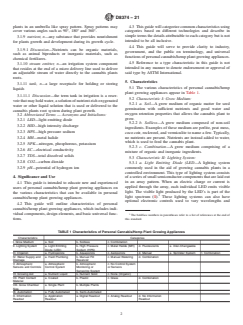
TABLE 1 Characteristics of Personal Cannabis/Hemp Plant Growing Appliances
Characteristics Categories
I. Grow Medium a. Soil b. Soilless c. Combination
II. Lighting System a. Light Emitting b. High Pressure c. Metal Halide (MH) d. Fluorescents e. Inter-Changeable
Diode (LED) Sodium (HPS)
III. Irrigation a. Hydroponics b. Aquaponics c. Aeroponics d. Manual e. Sprinkler System f. Combination
IV. Water Supply and a. Hard Plumbing b. Manual Fill c. Manual Watering d. Combination
Drainage Reservoir
V. Atmospheric a. Atmospheric b. Atmospheric c. No Control System
Sensors and Controls Control System Monitoring or or Sensors
Sensoring System
VI. Growing Aid a. Nutrient Liquid b. Nutrient Solid c. None (Organic)
VII. Plant Contact a. Coated b. Plastic c. Glass d. Combination
Material
VIII. Grow Chamber a. Single Plant b. Multiple Plants
Size
IX. Automation a. Fully Automated b. Semi-Automated
X. Information a. Application a. Digital Readout c. Analog Readout d. No Information
Readout Readout Readout
D8374 − 21
controlthelightspectrumduringvegetationtofloweringstages 5.4 Characteristic III: Irrigation:
of plant growth. This type of lighting system is very efficient
5.4.1 a. Hydroponics—A method or process for growing
and produces little heat.
cannabis plants that does not use soil as a medium, instead it
uses a soilless medium with water and nutrients used for
5.3.2 b. High Pressure Sodium (HPS)—A lighting system
growingcannabisplants.Inhydroponics,therootsystemofthe
commonly used for various lighting applications, including
plant is supported in mediums such as perlite, peat moss coco
plant grow lights. This type of lamp or bulb is commonly
coir, rockwool or vermiculite and is irrigated with the nutrient
referred to as a High Intensity Discharge (HID) lamp. It
solution.
consists of a bulb, which inside contains a frame that supports
a ceramic arc tube (2). The arc tube is typically made of 5.4.2 b. Aquaponics—Aprocessforgrowingcannabisplants
aluminium oxide and inside contains a mix of sodium and
that uses a combination aquaculture and hydroponics in a
mercury combined with xenon gas. Additionally, the system closed loop system. The process involves the growing of fish
contains an electrical ballast (3), which is used for regulating and/or other aquatic animals and plants. Fish are grown in a
voltage and electrical current. When an input voltage is tank where they excrete waste into water. This excretion water
applied, an electric current is passed through the arc tube’s iscomprisedprimarilyofnitrogenintheformofammoniawith
xenon gas, which heats up the mercury, heating the bulb and as other nutrients such as phosphorous and potassium. Microba-
the bulb heats, the sodium vaporises, emitting bright light. The teria within the water then convert the ammonia to nutrients.
The fish wastewater is then pumped into a secondary tank, that
light produced by HPS bulbs lies within the light spectrum but
tends have a lower output of white and blue light (due to is, the plant tank, that contains plants with their roots sub-
merged in the plant tank. The cannabis plants then draw
mercury) and more yellow and red light (due to sodium).
Yellow and red wavelength light is very desirable for the nitrogen and other nutrients from the water and absorbed them
through their root system. This both feeds the cannabis plants
flowering stage of plant growth. An HPS bulb light system
and filters the water, reducing toxins in the water. The filtered
tends to produce much higher heat than LED’s and typically
water then recycles back to the fish tank and the cycle repeats
requires a cooling system to aid in heated air exhaust from
itself.
within the growing appliance.
5.4.3 c. Aeroponics—Aprocess for growing cannabis plants
5.3.3 c. Metal Halide (MH)—A lighting system commonly
that uses no soil medium or other soilless mediums. The
used for plant grow lights. This type of lamp or bulb is also a
cannabis plants are held by their stems using a closed cell foam
type of HID lamp. Like an HPS system, it consists of a bulb
or other material inserted into a growing fixture residing above
containing a frame that supports a quartz arc tube containing
a tank. The top upper portion of the plant and leaves are
mercury vapour combined with metal halides (4). The com-
divided from roots below the foam insert. The root system for
monly used metal halides in these lamps are mixtures of metal
each plant hangs suspended in an air environment and a
iodide and metal bromide complexes. Similar to HPS, an
nutrient rich solution is pumped from a reservoir tank and
electrical ballast is used for regulating voltage and electrical
delivered periodically in the form of an atomized fine mist or
current. MH type systems provide more blue wavelength light
water droplets to the plant roots for absorption. Any excess
spectrum which is more desirable in the vegetation stage of
droplets are captured in the tank and are then returned by
plant growth. This type of lighting system also produces heat
means of a gravity or pump system to the reservoir.
like HPS, thus also requiring a method or cooling system for
air exhaust from within the growing appliance.
5.4.4 d. Manual—As is inferred, the irrigation process is
manual. This is typically applicable to soil medium. The
5.3.4 d. Fluorescent—This lighting system is an alternate
grower may use visual and finger touch methods to detect the
andinexpensivelightingsystemcommonlyusedforplantgrow
wetness of the soil or alternatively a soil moisture meter probe
lights. It consists of a glass tube containing an inert gas such as
may be used to monitor moisture content of the soil. Based on
argon, with electr
...