


ASTM F1069-19
(Specification)Standard Specification for Doors, Watertight, Gastight/Airtight and Weathertight, Individually Dogged, for Marine Use
Standard Specification for Doors, Watertight, Gastight/Airtight and Weathertight, Individually Dogged, for Marine Use
ABSTRACT
This specification covers the principal shapes and dimensions, and mechanical requirements for the manufacture of two types of individually dogged watertight, gastight/airtight, and weathertight doors of steel, aluminum, and glass-reinforced plastic construction. These doors, which shall be complete with frames, are built for access through bulkheads by marine personnel, and are intended to maintain the structural and tightness integrity of the bulkheads. The doors shall be classified into groups according to their area of application, as follow: Group A—watertight doors in the bridge front bulkhead and the unprotected bulkhead of deckhouses/superstructures, and deckhouses that enclose machinery openings; Group B—watertight doors in the deckhouse bulkheads partially protected or in the bulkhead of deckhouses/superstructures, and not around machinery openings, watertight and airtight doors below weather deck; Group C—airtight /gastight doors in the aft end bulkhead of the bridge, forecastle, and deckhouses at the weather deck level; and Group D—weathertight doors in the deckhouse above the weather deck level. All doors shall be certified for applicable tightness integrity prior to delivery.
SCOPE
1.1 This specification, to be used in conjunction with Specification F1073, covers the principal dimensions and the mechanical requirements for manufacturing steel, aluminum, and glass-reinforced plastic, individually dogged, watertight, gastight/airtight, and weathertight doors, for personnel access through bulkheads, complete with frames, for marine use intended to maintain the structural and tightness integrity of bulkheads.
1.2 The values stated in inch-pound units are to be regarded as the standard. The values given in parentheses are for information only.
1.3 The following safety hazards caveat pertains to the test method portion, Section 8, of this specification: This standard does not purport to address all of the safety concerns, if any, associated with its use. It is the responsibility of the user of this standard to establish appropriate safety, health, and environmental practices and determine the applicability of regulatory limitations prior to use.
1.4 This international standard was developed in accordance with internationally recognized principles on standardization established in the Decision on Principles for the Development of International Standards, Guides and Recommendations issued by the World Trade Organization Technical Barriers to Trade (TBT) Committee.
General Information
- Status
- Published
- Publication Date
- 28-Feb-2019
- Technical Committee
- F25 - Ships and Marine Technology
- Drafting Committee
- F25.03 - Outfitting and Deck Machinery
Relations
- Effective Date
- 01-Mar-2019
- Effective Date
- 01-Mar-2019
- Effective Date
- 01-Oct-2014
- Effective Date
- 01-Nov-2013
- Effective Date
- 01-Nov-2012
- Effective Date
- 01-Oct-2012
- Effective Date
- 01-Nov-2010
- Effective Date
- 15-May-2008
- Effective Date
- 01-Mar-2008
- Effective Date
- 01-Aug-2007
- Effective Date
- 01-Aug-2007
- Effective Date
- 01-Mar-2007
- Effective Date
- 01-Jul-2006
- Effective Date
- 01-Mar-2005
- Effective Date
- 01-Sep-2004
Overview
ASTM F1069-19 is the internationally recognized standard specification for the manufacture of individually dogged, watertight, gastight/airtight, and weathertight doors used in marine environments. Developed by ASTM Committee F25 on Ships and Marine Technology, this standard provides essential requirements for doors constructed from steel, aluminum, and glass-reinforced plastic (GRP). These doors ensure personnel access through ship bulkheads while maintaining the crucial structural and tightness integrity necessary for marine safety and vessel performance.
This specification is intended for use in conjunction with ASTM F1073, which details fittings applicable to marine doors.
Key Topics
Door Types and Groups:
ASTM F1069-19 classifies doors by both type and application:- Type I: Standard dimensions and details as defined by the specification.
- Type II: Custom doors for special applications conforming to test methods provided. Doors are grouped by their intended use location, including:
- Group A: Doors in bridge front or unprotected bulkheads and deckhouses enclosing machinery (watertight).
- Group B: Watertight/airtight doors in protected deckhouse bulkheads or below weather deck.
- Group C: Airtight/gastight doors in the aft bulkhead, bridge, and deckhouses at the weather deck.
- Group D: Weathertight doors above the weather deck level.
Materials:
Specifies use of steel (ASTM A36/A131), aluminum (ASTM B209), and GRP (meeting military specifications for marine durability and flammability resistance). Gaskets and finishes are also regulated for performance in marine applications.Mechanical Requirements:
Outlines principal shapes, dimensions, and mechanical properties to ensure doors can withstand design pressures:- Steel doors: 9 psi (62 kPa) internal pressure
- Aluminum and GRP: 5 psi (34 kPa)
- Gastight/airtight doors: 2 psi (14 kPa)
Construction & Installation:
Details on right-hand/left-hand openings, installation of dogs, hinges, hasps, grab handles, and the requirement for complete door-frame assemblies.Safety and Testing:
Addresses marking, integrity certification prior to delivery, and guidelines for inspection and acceptance between purchaser and supplier.
Applications
Shipbuilding and Marine Structures:
Essential for all vessels, from commercial ships to naval craft, requiring secure bulkhead access while maintaining water, gas, and weather tightness.Offshore Platforms:
Used on offshore installations where personnel access must be provided without compromising environmental or compartment integrity.Retrofit and Repairs:
Applicable for retrofitting old vessels or replacing doors to meet updated safety regulations.Compliance:
Ensures compliance with both national and international maritime safety and construction codes, including those set by classification societies such as the American Bureau of Shipping (ABS).
Related Standards
- ASTM F1073: Specification for door fittings for watertight, gastight/airtight, weathertight, and non-tight doors for marine use.
- ASTM A36/A36M: Specification for carbon structural steel.
- ASTM A131/A131M: Specification for structural steel for ships.
- ASTM B209: Specification for aluminum and aluminum-alloy sheet and plate.
- ABS Rules: Rules for Building and Classing Steel Vessels.
- Relevant Military Standards: MIL-R-900 (gasket material), MIL-P-17549 (GRP laminates), MIL-R-21607 (fire-retardant resins).
Keywords: marine doors, watertight doors, airtight doors, gastight doors, weathertight doors, ship bulkhead access, ASTM marine standard, marine safety, vessel construction.
Buy Documents
ASTM F1069-19 - Standard Specification for Doors, Watertight, Gastight/Airtight and Weathertight, Individually Dogged, for Marine Use
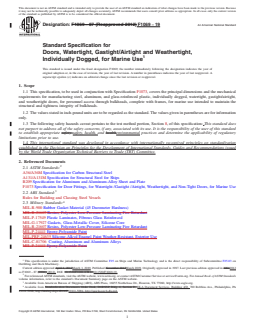
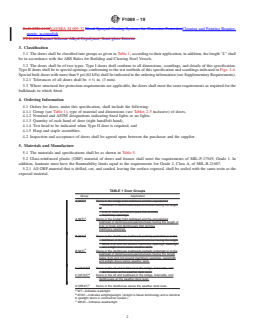
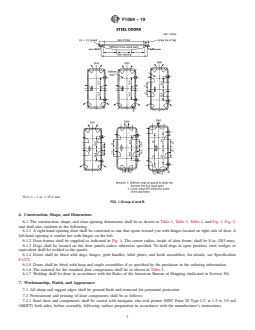
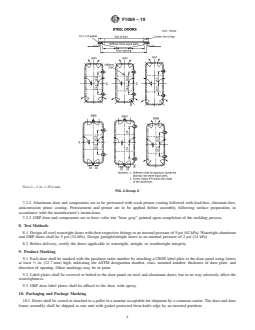
REDLINE ASTM F1069-19 - Standard Specification for Doors, Watertight, Gastight/Airtight and Weathertight, Individually Dogged, for Marine Use
Get Certified
Connect with accredited certification bodies for this standard

DNV
DNV is an independent assurance and risk management provider.

Lloyd's Register
Lloyd's Register is a global professional services organisation specialising in engineering and technology.

ABS Quality Evaluations Inc.
American Bureau of Shipping quality certification.
Sponsored listings
Frequently Asked Questions
ASTM F1069-19 is a technical specification published by ASTM International. Its full title is "Standard Specification for Doors, Watertight, Gastight/Airtight and Weathertight, Individually Dogged, for Marine Use". This standard covers: ABSTRACT This specification covers the principal shapes and dimensions, and mechanical requirements for the manufacture of two types of individually dogged watertight, gastight/airtight, and weathertight doors of steel, aluminum, and glass-reinforced plastic construction. These doors, which shall be complete with frames, are built for access through bulkheads by marine personnel, and are intended to maintain the structural and tightness integrity of the bulkheads. The doors shall be classified into groups according to their area of application, as follow: Group A—watertight doors in the bridge front bulkhead and the unprotected bulkhead of deckhouses/superstructures, and deckhouses that enclose machinery openings; Group B—watertight doors in the deckhouse bulkheads partially protected or in the bulkhead of deckhouses/superstructures, and not around machinery openings, watertight and airtight doors below weather deck; Group C—airtight /gastight doors in the aft end bulkhead of the bridge, forecastle, and deckhouses at the weather deck level; and Group D—weathertight doors in the deckhouse above the weather deck level. All doors shall be certified for applicable tightness integrity prior to delivery. SCOPE 1.1 This specification, to be used in conjunction with Specification F1073, covers the principal dimensions and the mechanical requirements for manufacturing steel, aluminum, and glass-reinforced plastic, individually dogged, watertight, gastight/airtight, and weathertight doors, for personnel access through bulkheads, complete with frames, for marine use intended to maintain the structural and tightness integrity of bulkheads. 1.2 The values stated in inch-pound units are to be regarded as the standard. The values given in parentheses are for information only. 1.3 The following safety hazards caveat pertains to the test method portion, Section 8, of this specification: This standard does not purport to address all of the safety concerns, if any, associated with its use. It is the responsibility of the user of this standard to establish appropriate safety, health, and environmental practices and determine the applicability of regulatory limitations prior to use. 1.4 This international standard was developed in accordance with internationally recognized principles on standardization established in the Decision on Principles for the Development of International Standards, Guides and Recommendations issued by the World Trade Organization Technical Barriers to Trade (TBT) Committee.
ABSTRACT This specification covers the principal shapes and dimensions, and mechanical requirements for the manufacture of two types of individually dogged watertight, gastight/airtight, and weathertight doors of steel, aluminum, and glass-reinforced plastic construction. These doors, which shall be complete with frames, are built for access through bulkheads by marine personnel, and are intended to maintain the structural and tightness integrity of the bulkheads. The doors shall be classified into groups according to their area of application, as follow: Group A—watertight doors in the bridge front bulkhead and the unprotected bulkhead of deckhouses/superstructures, and deckhouses that enclose machinery openings; Group B—watertight doors in the deckhouse bulkheads partially protected or in the bulkhead of deckhouses/superstructures, and not around machinery openings, watertight and airtight doors below weather deck; Group C—airtight /gastight doors in the aft end bulkhead of the bridge, forecastle, and deckhouses at the weather deck level; and Group D—weathertight doors in the deckhouse above the weather deck level. All doors shall be certified for applicable tightness integrity prior to delivery. SCOPE 1.1 This specification, to be used in conjunction with Specification F1073, covers the principal dimensions and the mechanical requirements for manufacturing steel, aluminum, and glass-reinforced plastic, individually dogged, watertight, gastight/airtight, and weathertight doors, for personnel access through bulkheads, complete with frames, for marine use intended to maintain the structural and tightness integrity of bulkheads. 1.2 The values stated in inch-pound units are to be regarded as the standard. The values given in parentheses are for information only. 1.3 The following safety hazards caveat pertains to the test method portion, Section 8, of this specification: This standard does not purport to address all of the safety concerns, if any, associated with its use. It is the responsibility of the user of this standard to establish appropriate safety, health, and environmental practices and determine the applicability of regulatory limitations prior to use. 1.4 This international standard was developed in accordance with internationally recognized principles on standardization established in the Decision on Principles for the Development of International Standards, Guides and Recommendations issued by the World Trade Organization Technical Barriers to Trade (TBT) Committee.
ASTM F1069-19 is classified under the following ICS (International Classification for Standards) categories: 47.020.10 - Hulls and their structure elements. The ICS classification helps identify the subject area and facilitates finding related standards.
ASTM F1069-19 has the following relationships with other standards: It is inter standard links to ASTM F1069-87(2012), ASTM F1073-19, ASTM A131/A131M-14, ASTM A131/A131M-13, ASTM A36/A36M-12, ASTM F1073-87(2012), ASTM B209-10, ASTM A36/A36M-08, ASTM A131/A131M-08, ASTM B209-07, ASTM F1073-87(2007), ASTM A131/A131M-07, ASTM B209-06, ASTM A36/A36M-05, ASTM A131/A131M-04a. Understanding these relationships helps ensure you are using the most current and applicable version of the standard.
ASTM F1069-19 is available in PDF format for immediate download after purchase. The document can be added to your cart and obtained through the secure checkout process. Digital delivery ensures instant access to the complete standard document.
Standards Content (Sample)
This international standard was developed in accordance with internationally recognized principles on standardization established in the Decision on Principles for the
Development of International Standards, Guides and Recommendations issued by the World Trade Organization Technical Barriers to Trade (TBT) Committee.
Designation:F1069 −19 An American National Standard
Standard Specification for
Doors, Watertight, Gastight/Airtight and Weathertight,
Individually Dogged, for Marine Use
This standard is issued under the fixed designation F1069; the number immediately following the designation indicates the year of
original adoption or, in the case of revision, the year of last revision. A number in parentheses indicates the year of last reapproval. A
superscript epsilon (´) indicates an editorial change since the last revision or reapproval.
1. Scope F1073 Specification for Door Fittings, for Watertight
/Gastight /Airtight, Weathertight, and Non-Tight Doors,
1.1 This specification, to be used in conjunction with
for Marine Use
Specification F1073, covers the principal dimensions and the
mechanical requirements for manufacturing steel, aluminum, 2.2 ABS Standard:
and glass-reinforced plastic, individually dogged, watertight, Rules for Building and Classing Steel Vessels
gastight/airtight, and weathertight doors, for personnel access 4
2.3 Military Standards:
through bulkheads, complete with frames, for marine use
MIL-R-900 Rubber Gasket Material (45 Durometer Hard-
intended to maintain the structural and tightness integrity of
ness)
bulkheads.
MIL-P-17549 Plastic Laminates, Fibrous Glass Reinforced
1.2 The values stated in inch-pound units are to be regarded MIL-G-17927 Gaskets, Glass-Metallic Cover, Silicone Core
as the standard. The values given in parentheses are for MIL-R-21607 Resins, Polyester Low-Pressure Laminating
information only. Fire Retardant
MIL-P-24441 Epoxy-Polyamide Paint
1.3 The following safety hazards caveat pertains to the test
MIL-PRF-24635 Silicone-Alkyd Enamel Paint Weather-
method portion, Section 8, of this specification: This standard
Resistant, Exterior Use
does not purport to address all of the safety concerns, if any,
MIL-C-81706 Coating, Aluminum and Aluminum Alloys
associatedwithitsuse.Itistheresponsibilityoftheuserofthis
NAVSEA SI 009-32 Cleaning and Painting Requirements;
standard to establish appropriate safety, health, and environ-
accomplish
mental practices and determine the applicability of regulatory
limitations prior to use.
3. Classification
1.4 This international standard was developed in accor-
dance with internationally recognized principles on standard-
3.1 The doors shall be classified into groups as given in
ization established in the Decision on Principles for the
Table 1, according to their application; in addition, the length
Development of International Standards, Guides and Recom-
“L” shall be in accordance with the ABS Rules for Building
mendations issued by the World Trade Organization Technical
and Classing Steel Vessels.
Barriers to Trade (TBT) Committee.
3.2 The doors shall be of two types. Type I doors shall
conform to all dimensions, scantlings, and details of this
2. Referenced Documents
specification. Type II doors shall be to special openings
2.1 ASTM Standards:
conforming to the test methods of this specification and
A36/A36M Specification for Carbon Structural Steel
scantlings indicated in Figs. 1-4. Special built doors with more
A131/A131M Specification for Structural Steel for Ships
than 9 psi (62 kPa) shall be indicated in the ordering informa-
B209 Specification for Aluminum and Aluminum-Alloy
tion (see Supplementary Requirements).
Sheet and Plate
3.2.1 Tolerances of all doors shall be 6 ⁄8 in. (3 mm).
3.3 Where structural fire protection requirements are
This specification is under the jurisdiction of ASTM Committee F25 on Ships
applicable, the doors shall meet the same requirements as
and Marine Technology and is the direct responsibility of Subcommittee F25.03 on
required for the bulkheads in which fitted.
Outfitting and Deck Machinery.
Current edition approved March 1, 2019. Published March 2019. Originally
approved in 1987. Last previous edition approved in 2012 as F1069 – 87 (2012).
DOI: 10.1520/F1069-19.
2 3
For referenced ASTM standards, visit the ASTM website, www.astm.org, or Available from American Bureau of Shipping (ABS), ABS Plaza, 16855
contact ASTM Customer Service at service@astm.org. For Annual Book of ASTM Northchase Dr., Houston, TX 77060, http://www.eagle.org.
Standards volume information, refer to the standard’s Document Summary page on Available from DLA Document Services, Building 4/D, 700 Robbins Ave.,
the ASTM website. Philadelphia, PA 19111-5094, http://quicksearch.dla.mil.
Copyright © ASTM International, 100 Barr Harbor Drive, PO Box C700, West Conshohocken, PA 19428-2959. United States
F1069−19
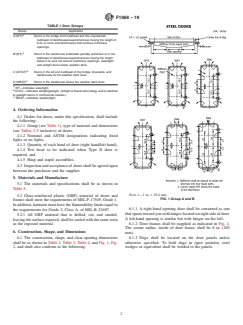
TABLE 1 Door Groups
Group Application
A
A (WT) Doors in the bridge front bulkhead and the unprotected
bulkhead of deckhouses/superstructures having the length of
0.4L or more and deckhouses that enclose machinery
openings.
A
B (WT) Doors in the deckhouse bulkheads partially protected or in the
bulkhead of deckhouses/superstructures having the length
below 0.4L and not around machinery openings, watertight
and airtight doors below weather deck.
B
C (AT/GT) Doors in the aft end bulkhead of the bridge, forecastle, and
deckhouses at the weather deck level.
C
D (WEAT) Doors in the deckhouse above the weather deck level.
A
WT—Indicates watertight.
B
AT/GT—Indicates airtight/gastight. (Airtight is Naval terminology and is identical
to gastight doors in commercial vessels.)
C
WEAT—Indicates weathertight.
4. Ordering Information
4.1 Orders for doors, under this specification, shall include
the following:
4.1.1 Group (see Table 1), type of material and dimensions
(see Tables 2-5 inclusive) of doors,
4.1.2 Nominal and ASTM designations indicating fixed
lights or no lights,
4.1.3 Quantity of each hand of door (right hand/left hand),
4.1.4 Test head to be indicated when Type II door is
required, and
4.1.5 Hasp and staple assemblies.
4.2 Inspection and acceptance of doors shall be agreed upon
between the purchaser and the supplier.
5. Materials and Manufacture
5.1 The materials and specifications shall be as shown in
Table 5.
NOTE 1—1 in. = 25.4 mm.
5.2 Glass-reinforced plastic (GRP) material of doors and
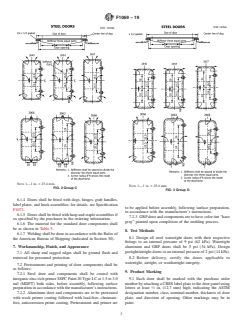
FIG. 1Group A and B
frames shall meet the requirements of MIL-P-17549, Grade 1.
Inaddition,laminatemusthavetheflammabilitylimitsequalto
6.1.1 A right-hand opening door shall be construed as one
the requirements for Grade 2, Class A, of MIL-R-21607.
thatopenstowardyouwithhingeslocatedonrightsideofdoor.
5.2.1 All GRP material that is drilled, cut, and sanded,
A left-hand opening is similar but with hinges on the left.
leavingthesurfaceexposed,shallbesealedwiththesameresin
6.1.2 Door frames shall be supplied as indicated in Fig. 4.
as the exposed material.
The corner radius, inside of door frame, shall be 8 in. (203
6. Construction, Shape, and Dimensions
mm).
6.1 The construction, shape, and c
...
This document is not an ASTM standard and is intended only to provide the user of an ASTM standard an indication of what changes have been made to the previous version. Because
it may not be technically possible to adequately depict all changes accurately, ASTM recommends that users consult prior editions as appropriate. In all cases only the current version
of the standard as published by ASTM is to be considered the official document.
Designation: F1069 − 87 (Reapproved 2012) F1069 − 19 An American National Standard
Standard Specification for
Doors, Watertight, Gastight/Airtight and Weathertight,
Individually Dogged, for Marine Use
This standard is issued under the fixed designation F1069; the number immediately following the designation indicates the year of
original adoption or, in the case of revision, the year of last revision. A number in parentheses indicates the year of last reapproval. A
superscript epsilon (´) indicates an editorial change since the last revision or reapproval.
1. Scope
1.1 This specification, to be used in conjunction with Specification F1073, covers the principal dimensions and the mechanical
requirements for manufacturing steel, aluminum, and glass-reinforced plastic, individually dogged, watertight, gastight/airtight,
and weathertight doors, for personnel access through bulkheads, complete with frames, for marine use intended to maintain the
structural and tightness integrity of bulkheads.
1.2 The values stated in inch-pound units are to be regarded as the standard. The values given in parentheses are for information
only.
1.3 The following safety hazards caveat pertains to the test method portion, Section 8, of this specification: This standard does
not purport to address all of the safety concerns, if any, associated with its use. It is the responsibility of the user of this standard
to establish appropriate safety safety, health, and healthenvironmental practices and determine the applicability of regulatory
limitations prior to use.
1.4 This international standard was developed in accordance with internationally recognized principles on standardization
established in the Decision on Principles for the Development of International Standards, Guides and Recommendations issued
by the World Trade Organization Technical Barriers to Trade (TBT) Committee.
2. Referenced Documents
2.1 ASTM Standards:
A36/A36M Specification for Carbon Structural Steel
A131/A131M Specification for Structural Steel for Ships
B209 Specification for Aluminum and Aluminum-Alloy Sheet and Plate
F1073 Specification for Door Fittings, for Watertight /Gastight /Airtight, Weathertight, and Non-Tight Doors, for Marine Use
2.2 ABS Standard:
Rules for Building and Classing Steel Vessels
2.3 Military Standards:
MIL-R-900 Rubber Gasket Material (45 Durometer Hardness)
MIL-R-21607 Resins, Polyester Low-Pressure Laminating Fire Retardant
MIL-P-17549 Plastic Laminates, Fibrous Glass Reinforced
MIL-G-17927 Gaskets, Glass-Metallic Cover, Silicone Core
MIL-R-21607 Resins, Polyester Low-Pressure Laminating Fire Retardant
MIL-P-24441 Epoxy-Polyamide Paint
MIL-PRF-24635 Silicone-Alkyd Enamel Paint Weather-Resistant, Exterior Use
MIL-C-81706 Coating, Aluminum and Aluminum Alloys
MIL-P-24441 Epoxy-Polyamide Paint
This specification is under the jurisdiction of ASTM Committee F25 on Ships and Marine Technology and is the direct responsibility of Subcommittee F25.03 on
Outfitting and Deck Machinery.
Current edition approved April 1, 2012March 1, 2019. Published November 2012March 2019. Originally approved in 1987. Last previous edition approved in 20042012
as F1069 – 87 (2004).(2012). DOI: 10.1520/F1069-87R12.10.1520/F1069-19.
For referenced ASTM standards, visit the ASTM website, www.astm.org, or contact ASTM Customer Service at service@astm.org. For Annual Book of ASTM Standards
volume information, refer to the standard’s Document Summary page on the ASTM website.
Available from American Bureau of Shipping (ABS), ABS Plaza, 16855 Northchase Dr., Houston, TX 77060, http://www.eagle.org.
Available from Standardization Documents Order Desk, DODSSP, Bldg. 4, Section D, DLA Document Services, Building 4/D, 700 Robbins Ave., Philadelphia, PA
19111-5098, http://dodssp.daps.dla.mil.19111-5094, http://quicksearch.dla.mil.
Copyright © ASTM International, 100 Barr Harbor Drive, PO Box C700, West Conshohocken, PA 19428-2959. United States
F1069 − 19
DoD-STD-2138NAVSEA SI 009-32 Metal Sprayed Coating Systems for Corrosion ProtectionCleaning and Painting Require-
ments; accomplish
TT-E-490 Enamel Silicone Alkyd Copolymer, Semi-gloss Exterior
3. Classification
3.1 The doors shall be classified into groups as given in Table 1, according to their application; in addition, the length “L” shall
be in accordance with the ABS Rules for Building and Classing Steel Vessels.
3.2 The doors shall be of two types. Type I doors shall conform to all dimensions, scantlings, and details of this specification.
Type II doors shall be to special openings conforming to the test methods of this specification and scantlings indicated in Figs. 1-4.
Special built doors with more than 9 psi (62 kPa) shall be indicated in the ordering information (see Supplementary Requirements).
3.2.1 Tolerances of all doors shall be 6 ⁄8 in. (3 mm).
3.3 Where structural fire protection requirements are applicable, the doors shall meet the same requirements as required for the
bulkheads in which fitted.
4. Ordering Information
4.1 Orders for doors, under this specification, shall include the following:
4.1.1 Group (see Table 1), type of material and dimensions (see Tables 2-5 inclusive) of doors,
4.1.2 Nominal and ASTM designations indicating fixed lights or no lights,
4.1.3 Quantity of each hand of door (right hand/left hand),
4.1.4 Test head to be indicated when Type II door is required, and
4.1.5 Hasp and staple assemblies.
4.2 Inspection and acceptance of doors shall be agreed upon between the purchaser and the supplier.
5. Materials and Manufacture
5.1 The materials and specifications shall be as shown in Table 5.
5.2 Glass-reinforced plastic (GRP) material of doors and frames shall meet the requirements of MIL-P-17549, Grade 1. In
addition, laminate must have the flammability limits equal to the requirements for Grade 2, Class A, of MIL-R-21607.
5.2.1 All GRP material that is drilled, cut, and sanded, leaving the surface exposed, shall be sealed with the same resin as the
exposed material.
TABLE 1 Door Groups
Group Application
A
A (WT) Doors in the bridge front bulkhead and the unprotected
bulkhead of deckhouses/superstructures having the length
of
0.4L or more and deckhouses that enclose
machinery openings.
A
A (WT) Doors in the bridge front bulkhead and the unprotected
bulkhead of deckhouses/superstructures having the length of
0.4L or more and deckhouses that enclose
machinery openings.
A
B (WT) Doors in the deckhouse bulkheads partially protected or in the
bulkhead of deckhouses/superstructures having the length
below 0.4L and not around machinery openings, watertight
and airtight doors below weather deck.
A
B (WT) Doors in the deckhouse bulkheads partially protected or in the
bulkhead of deckhouses/superstructures having the length
below 0.4L and not around machinery openings, watertight
and airtight doors below weather deck.
B
C (AT/GT) Doors in the aft end bulkhead of the bridge, forecastle, and
deckhouses at the weather deck level.
B
C (AT/GT) Doors in the aft end bulkhead of the bridge, forecastle, and
deckhouses at the weather deck level.
C
D (WEAT) Doors in the deckhouse above the weather deck level.
A
WT—Indicates watertight.
B
AT/GT—Indicates airtight/gastight. (Airtight is Naval terminology and is identical
to gastight doors in commercial vessels.)
C
WEAT—Indicates weathertight.
F1069 − 19
NOTE 1—1 in. = 25.4 mm.
FIG. 1 Group A and B
6. Construction, Shape, and Dimensions
6.1 The construction, s
...
Questions, Comments and Discussion
Ask us and Technical Secretary will try to provide an answer. You can facilitate discussion about the standard in here.
Loading comments...