


ASTM D5034-21
(Test Method)Standard Test Method for Breaking Strength and Elongation of Textile Fabrics (Grab Test)
Standard Test Method for Breaking Strength and Elongation of Textile Fabrics (Grab Test)
SIGNIFICANCE AND USE
5.1 The grab test procedure in this test method for the determination of breaking force and elongation is considered satisfactory for acceptance testing of commercial shipments of most woven or nonwoven textile fabrics, and the modified grab test procedure is considered satisfactory for acceptance testing of commercial shipments of most woven textile fabrics, since the procedures have been used extensively in the trade for acceptance testing.
5.1.1 In case of disagreement arising from differences in reported test values when using this test method for acceptance testing of commercial shipments, the purchaser and the supplier should conduct comparative tests to determine if there is a statistical bias between their laboratories. Competent statistical assistance is recommended for the investigation of bias. As a minimum, the two parties should take a group of test specimens which are as homogeneous as possible and which are from a lot of material of the type in question. The test specimens should then be randomly assigned in equal numbers to each laboratory for testing. The average results from the two laboratories should be compared using Student's t-test for unpaired data and an acceptable probability level chosen by the two parties before testing is begun. If a bias is found, either its cause must be found and corrected, or the purchaser and the supplier must agree to interpret future test results in light of the known bias.
5.2 This test method is not recommended for knitted fabrics because of their high stretch.
5.3 Some modification of technique may be necessary for any fabric having a strength in excess of 200-N/cm (1140-lb/in.) width. Special precautionary measures are provided for use when necessary for strong fabrics.
5.4 All of the procedures are applicable for testing fabrics either conditioned or wet.
5.5 Comparison of results from tensile testing machines operating on different principles is not recommended. When different types of machine...
SCOPE
1.1 This test method covers the grab and modified grab test procedures for determining the breaking strength and elongation of most textile fabrics. Provisions are made for wet testing.
1.1.1 The grab test procedure is applicable to woven, nonwoven, and felted fabrics, while the modified grab test procedure is used primarily for woven fabrics.
1.2 This test method is not recommended for glass fabrics, or for knitted fabrics and other textile fabrics which have high stretch (more than 11 %).
Note 1: For the determination of the breaking force and elongation of textile fabrics using the raveled strip test procedure and the cut strip test procedure, refer to Test Method D5035.
1.3 This test method provides the values in both inch-pound units and SI units. Inch-pound units is the technically correct name for the customary units used in the United States. SI units is the technically correct name for the system of metric units known as the International System of Units. The values stated in either acceptable metric units or in other units shall be regarded separately as standard. The values stated in each system may not be exact equivalents; therefore, each system must be used independently of the other, without combining in any way.
1.4 This standard does not purport to address all of the safety concerns, if any, associated with its use. It is the responsibility of the user of this standard to establish appropriate safety, health, and environmental practices and determine the applicability of regulatory limitations prior to use.
1.5 This international standard was developed in accordance with internationally recognized principles on standardization established in the Decision on Principles for the Development of International Standards, Guides and Recommendations issued by the World Trade Organization Technical Barriers to Trade (TBT) Committee.
General Information
- Status
- Published
- Publication Date
- 14-Feb-2021
- Technical Committee
- D13 - Textiles
- Drafting Committee
- D13.60 - Fabric Physical Test Methods B
Relations
- Effective Date
- 01-Jul-2019
- Effective Date
- 01-Sep-2018
- Effective Date
- 01-Jul-2018
- Effective Date
- 15-Jul-2017
- Effective Date
- 01-Mar-2017
- Effective Date
- 15-Sep-2015
- Effective Date
- 01-Sep-2015
- Effective Date
- 01-Apr-2015
- Effective Date
- 01-Feb-2015
- Effective Date
- 01-Oct-2013
- Effective Date
- 01-Oct-2013
- Effective Date
- 01-Oct-2013
- Effective Date
- 01-Oct-2013
- Effective Date
- 01-Jul-2013
- Effective Date
- 01-Jul-2013
Overview
ASTM D5034-21, published by ASTM International, defines the Standard Test Method for Breaking Strength and Elongation of Textile Fabrics (Grab Test). This widely recognized test method specifies the grab and modified grab test procedures for evaluating the breaking force and elongation of most woven, nonwoven, and felted textile fabrics. Provision is also made for the measurement of these properties in wet conditions.
The grab test assesses the effective strength of fabric by measuring the tensile force required to break a standardized specimen, taking into account both the yarns gripped between the clamps and the reinforcement provided by adjacent yarns. The modified grab test is particularly suited for woven fabrics where unraveling during standard testing is a concern. The standard is commonly applied in the acceptance testing of commercial textile shipments, ensuring reliable and consistent quality control within the industry.
Key Topics
- Test Procedures: Details both grab and modified grab methods for determining breaking strength and elongation in textile fabrics.
- Applicability: Suitable for most woven and nonwoven fabrics but not recommended for glass or highly stretchable textiles such as knitted fabrics with more than 11% stretch.
- Testing Conditions: Provides guidelines for specimen preparation in both conditioned and wet environments to simulate real-world fabric performance.
- Machine Types: Supports use of various tensile testing machines (constant-rate-of-extension, constant-rate-of-load, and constant-rate-of-traverse).
- Interpretation of Results: Outlines procedures for statistical comparison in cases of inter-laboratory discrepancies, including recommendations for Student’s t-tests and agreement on acceptable probability levels.
- Reporting Requirements: Specifies mandatory reporting details such as average breaking force, elongation, type of specimen and machine, pretension, jaw face size, and other test conditions.
Applications
ASTM D5034-21 is essential in several practical contexts within the textile industry and related sectors:
- Quality Assurance and Control: Used by manufacturers and buyers to verify the strength and elongation characteristics of woven and nonwoven fabrics in commercial shipments.
- Research and Development: Provides a standardized approach to assess how new fabric treatments or fiber blends impact tensile properties.
- Product Compliance: Ensures textile products meet regulatory requirements and customer specifications for durability and performance.
- Comparative Method: Facilitates inter-laboratory comparison and validation of testing equipment and results, promoting consistency across the supply chain.
- Performance Evaluation: Applicable for testing both “conditioned” (standard atmospheric conditions) and “wet” fabrics, giving insights into fabric behavior in real-world usage scenarios such as laundering or exposure to moisture.
Related Standards
To enhance the rigor and utility of textile fabric testing, ASTM D5034-21 references and aligns with several other ASTM standards:
- ASTM D5035 - Test Method for Breaking Force and Elongation of Textile Fabrics (Strip Method), for raveled and cut strip tests.
- ASTM D76 - Specification for Tensile Testing Machines for Textiles, ensuring testing apparatus meets relevant performance criteria.
- ASTM D1776 - Practice for Conditioning and Testing Textiles, providing standard atmospheric conditions for fabric testing.
- ASTM D4848, D4849, D4850 - Terminology standards related to textiles, yarns, and fabrics.
- ASTM D629 - Test Methods for Quantitative Analysis of Textiles, for further fabric component analysis.
- ASTM D1059 - Test Method for Yarn Number Based on Short-Length Specimens.
By following ASTM D5034-21, organizations can maintain high standards in textile quality assurance, benefiting from internationally recognized procedures for breaking strength and elongation assessments. This standard ensures reliable, repeatable results whether for research, product development, or routine quality control.
Buy Documents
ASTM D5034-21 - Standard Test Method for Breaking Strength and Elongation of Textile Fabrics (Grab Test)
REDLINE ASTM D5034-21 - Standard Test Method for Breaking Strength and Elongation of Textile Fabrics (Grab Test)
Get Certified
Connect with accredited certification bodies for this standard

Control Union Certifications
Global certification for agriculture and sustainability.

Bureau Veritas Bangladesh
Bureau Veritas certification services in Bangladesh.

ECOCERT France
Leader in organic and sustainability certification worldwide.
Sponsored listings
Frequently Asked Questions
ASTM D5034-21 is a standard published by ASTM International. Its full title is "Standard Test Method for Breaking Strength and Elongation of Textile Fabrics (Grab Test)". This standard covers: SIGNIFICANCE AND USE 5.1 The grab test procedure in this test method for the determination of breaking force and elongation is considered satisfactory for acceptance testing of commercial shipments of most woven or nonwoven textile fabrics, and the modified grab test procedure is considered satisfactory for acceptance testing of commercial shipments of most woven textile fabrics, since the procedures have been used extensively in the trade for acceptance testing. 5.1.1 In case of disagreement arising from differences in reported test values when using this test method for acceptance testing of commercial shipments, the purchaser and the supplier should conduct comparative tests to determine if there is a statistical bias between their laboratories. Competent statistical assistance is recommended for the investigation of bias. As a minimum, the two parties should take a group of test specimens which are as homogeneous as possible and which are from a lot of material of the type in question. The test specimens should then be randomly assigned in equal numbers to each laboratory for testing. The average results from the two laboratories should be compared using Student's t-test for unpaired data and an acceptable probability level chosen by the two parties before testing is begun. If a bias is found, either its cause must be found and corrected, or the purchaser and the supplier must agree to interpret future test results in light of the known bias. 5.2 This test method is not recommended for knitted fabrics because of their high stretch. 5.3 Some modification of technique may be necessary for any fabric having a strength in excess of 200-N/cm (1140-lb/in.) width. Special precautionary measures are provided for use when necessary for strong fabrics. 5.4 All of the procedures are applicable for testing fabrics either conditioned or wet. 5.5 Comparison of results from tensile testing machines operating on different principles is not recommended. When different types of machine... SCOPE 1.1 This test method covers the grab and modified grab test procedures for determining the breaking strength and elongation of most textile fabrics. Provisions are made for wet testing. 1.1.1 The grab test procedure is applicable to woven, nonwoven, and felted fabrics, while the modified grab test procedure is used primarily for woven fabrics. 1.2 This test method is not recommended for glass fabrics, or for knitted fabrics and other textile fabrics which have high stretch (more than 11 %). Note 1: For the determination of the breaking force and elongation of textile fabrics using the raveled strip test procedure and the cut strip test procedure, refer to Test Method D5035. 1.3 This test method provides the values in both inch-pound units and SI units. Inch-pound units is the technically correct name for the customary units used in the United States. SI units is the technically correct name for the system of metric units known as the International System of Units. The values stated in either acceptable metric units or in other units shall be regarded separately as standard. The values stated in each system may not be exact equivalents; therefore, each system must be used independently of the other, without combining in any way. 1.4 This standard does not purport to address all of the safety concerns, if any, associated with its use. It is the responsibility of the user of this standard to establish appropriate safety, health, and environmental practices and determine the applicability of regulatory limitations prior to use. 1.5 This international standard was developed in accordance with internationally recognized principles on standardization established in the Decision on Principles for the Development of International Standards, Guides and Recommendations issued by the World Trade Organization Technical Barriers to Trade (TBT) Committee.
SIGNIFICANCE AND USE 5.1 The grab test procedure in this test method for the determination of breaking force and elongation is considered satisfactory for acceptance testing of commercial shipments of most woven or nonwoven textile fabrics, and the modified grab test procedure is considered satisfactory for acceptance testing of commercial shipments of most woven textile fabrics, since the procedures have been used extensively in the trade for acceptance testing. 5.1.1 In case of disagreement arising from differences in reported test values when using this test method for acceptance testing of commercial shipments, the purchaser and the supplier should conduct comparative tests to determine if there is a statistical bias between their laboratories. Competent statistical assistance is recommended for the investigation of bias. As a minimum, the two parties should take a group of test specimens which are as homogeneous as possible and which are from a lot of material of the type in question. The test specimens should then be randomly assigned in equal numbers to each laboratory for testing. The average results from the two laboratories should be compared using Student's t-test for unpaired data and an acceptable probability level chosen by the two parties before testing is begun. If a bias is found, either its cause must be found and corrected, or the purchaser and the supplier must agree to interpret future test results in light of the known bias. 5.2 This test method is not recommended for knitted fabrics because of their high stretch. 5.3 Some modification of technique may be necessary for any fabric having a strength in excess of 200-N/cm (1140-lb/in.) width. Special precautionary measures are provided for use when necessary for strong fabrics. 5.4 All of the procedures are applicable for testing fabrics either conditioned or wet. 5.5 Comparison of results from tensile testing machines operating on different principles is not recommended. When different types of machine... SCOPE 1.1 This test method covers the grab and modified grab test procedures for determining the breaking strength and elongation of most textile fabrics. Provisions are made for wet testing. 1.1.1 The grab test procedure is applicable to woven, nonwoven, and felted fabrics, while the modified grab test procedure is used primarily for woven fabrics. 1.2 This test method is not recommended for glass fabrics, or for knitted fabrics and other textile fabrics which have high stretch (more than 11 %). Note 1: For the determination of the breaking force and elongation of textile fabrics using the raveled strip test procedure and the cut strip test procedure, refer to Test Method D5035. 1.3 This test method provides the values in both inch-pound units and SI units. Inch-pound units is the technically correct name for the customary units used in the United States. SI units is the technically correct name for the system of metric units known as the International System of Units. The values stated in either acceptable metric units or in other units shall be regarded separately as standard. The values stated in each system may not be exact equivalents; therefore, each system must be used independently of the other, without combining in any way. 1.4 This standard does not purport to address all of the safety concerns, if any, associated with its use. It is the responsibility of the user of this standard to establish appropriate safety, health, and environmental practices and determine the applicability of regulatory limitations prior to use. 1.5 This international standard was developed in accordance with internationally recognized principles on standardization established in the Decision on Principles for the Development of International Standards, Guides and Recommendations issued by the World Trade Organization Technical Barriers to Trade (TBT) Committee.
ASTM D5034-21 is classified under the following ICS (International Classification for Standards) categories: 59.080.30 - Textile fabrics. The ICS classification helps identify the subject area and facilitates finding related standards.
ASTM D5034-21 has the following relationships with other standards: It is inter standard links to ASTM D5035-11(2019), ASTM D4848-98(2018), ASTM D4849-13(2018), ASTM D4850-13(2017), ASTM D123-17, ASTM D123-15b, ASTM D123-15a, ASTM D123-15, ASTM D629-15, ASTM D4849-13, ASTM D4849-13e2, ASTM D4849-13e3, ASTM D4849-13e1, ASTM D4850-13, ASTM D4850-13e1. Understanding these relationships helps ensure you are using the most current and applicable version of the standard.
ASTM D5034-21 is available in PDF format for immediate download after purchase. The document can be added to your cart and obtained through the secure checkout process. Digital delivery ensures instant access to the complete standard document.
Standards Content (Sample)
This international standard was developed in accordance with internationally recognized principles on standardization established in the Decision on Principles for the
Development of International Standards, Guides and Recommendations issued by the World Trade Organization Technical Barriers to Trade (TBT) Committee.
Designation:D5034 −21
Standard Test Method for
Breaking Strength and Elongation of Textile Fabrics (Grab
Test)
This standard is issued under the fixed designation D5034; the number immediately following the designation indicates the year of
original adoption or, in the case of revision, the year of last revision. A number in parentheses indicates the year of last reapproval. A
superscript epsilon (´) indicates an editorial change since the last revision or reapproval.
This standard has been approved for use by agencies of the U.S. Department of Defense.
1. Scope 2. Referenced Documents
1.1 This test method covers the grab and modified grab test 2.1 ASTM Standards:
procedures for determining the breaking strength and elonga- D76 Specification for Tensile Testing Machines for Textiles
tionofmosttextilefabrics.Provisionsaremadeforwettesting. D123 Terminology Relating to Textiles
1.1.1 The grab test procedure is applicable to woven, D629 Test Methods for Quantitative Analysis of Textiles
nonwoven, and felted fabrics, while the modified grab test D1059 Test Method for Yarn Number Based on Short-
procedure is used primarily for woven fabrics. Length Specimens
D1776 Practice for Conditioning and Testing Textiles
1.2 This test method is not recommended for glass fabrics,
D5035 Test Method for Breaking Force and Elongation of
or for knitted fabrics and other textile fabrics which have high
Textile Fabrics (Strip Method)
stretch (more than 11 %).
D4848 Terminology Related to Force, Deformation and
NOTE 1—For the determination of the breaking force and elongation of
Related Properties of Textiles
textile fabrics using the raveled strip test procedure and the cut strip test
D4849 Terminology Related to Yarns and Fibers
procedure, refer to Test Method D5035.
D4850 Terminology Relating to Fabrics and Fabric Test
1.3 This test method provides the values in both inch-pound
Methods
units and SI units. Inch-pound units is the technically correct
nameforthecustomaryunitsusedintheUnitedStates.SIunits
3. Terminology
is the technically correct name for the system of metric units
3.1 For definition of textile terms used in this test method:
known as the International System of Units. The values stated
breaking force, breaking load, elongation, extension, tensile
in either acceptable metric units or in other units shall be
test, refer to Terminology D4848.
regarded separately as standard. The values stated in each
3.2 For definitions of textile terms used in this test method:
system may not be exact equivalents; therefore, each system
constant-rate-of-extension (CRE tensile testing machine,
must be used independently of the other, without combining in
constant-rate-of-load (CRL) tensile testing machine, constant-
any way.
rate-of-traverse (CRT) tensile testing machine, refer to Termi-
1.4 This standard does not purport to address all of the
nology D4849.
safety concerns, if any, associated with its use. It is the
3.3 For definitions of textile terms used in this test method:
responsibility of the user of this standard to establish appro-
grab test – in fabric testing, and modified grab test – in fabric
priate safety, health, and environmental practices and deter-
testing refer to Terminology D4850.
mine the applicability of regulatory limitations prior to use.
1.5 This international standard was developed in accor-
3.4 For all other textile terms used in this test method, refer
dance with internationally recognized principles on standard-
to Terminology D123.
ization established in the Decision on Principles for the
Development of International Standards, Guides and Recom- 4. Summary of Test Method
mendations issued by the World Trade Organization Technical
4.1 A100-mm (4.0-in.) wide specimen is mounted centrally
Barriers to Trade (TBT) Committee.
in clamps of a tensile testing machine and a force applied until
the specimen breaks. Values for the breaking force and the
This test method is under the jurisdiction ofASTM Committee D13 on Textiles
and is the direct responsibility of Subcommittee D13.60 on Fabric Test Methods,
Specific. For referenced ASTM standards, visit the ASTM website, www.astm.org, or
Current edition approved Feb. 15, 2021. Published March 2021. Replaces Grab contact ASTM Customer Service at service@astm.org. For Annual Book of ASTM
Testing sections of Test Method D1682 – 90. Originally approved in 1990. Last Standards volume information, refer to the standard’s Document Summary page on
previous edition approved in 2017 as D5034–09(2017). DOI: 10.1520/D5034-21. the ASTM website.
Copyright © ASTM International, 100 Barr Harbor Drive, PO Box C700, West Conshohocken, PA 19428-2959. United States
D5034−21
elongation of the test specimen are obtained from machine 5.5 Comparison of results from tensile testing machines
scales, dials, autographic recording charts, or a computer operating on different principles is not recommended. When
interfaced with the testing machine. different types of machines are used for comparison testing,
constant-time-to-break at 20 6 3 s is the established way of
4.2 This test method describes procedures for carrying out
producing data. Even then the data may differ significantly.
fabric grab tensile tests using two types of specimens and three
alternative types of testing machines. For reporting, use the 5.6 Although a constant-rate-of-extension is preferred in
these procedures, in cases of dispute, unless there is agreement
following identification system of specific specimen and ma-
chine combinations. to the contrary between the purchaser and the supplier, a
constant-time-to-break (20 6 3 s) is to be used.
4.2.1 Type of specimen:
4.2.1.1 G—Grab
5.7 The grab test procedure is applicable to the determina-
4.2.1.2 MG—Modified grab
tion of the effective strength of the fabric; that is, the strength
4.2.2 Type of tensile testing machine:
of the yarns in a specific width together with the fabric
4.2.2.1 E—Constant-rate-of-extension (CRE)
assistance from the adjacent yarns. The breaking force deter-
4.2.2.2 L—Constant-rate-of-load (CRL) mined by the grab procedure is not a reflection of the strength
4.2.2.3 T—Constant-rate-of -traverse (CRT) of the yarns actually gripped between clamps and cannot be
used for direct comparison with yarn strength determinations.
4.2.3 Possible combinations can be identified as follows:
Grabtestspecimensrequiremuchlesstimetopreparealthough
Type of Tester
Constant-Rate- Constant-Rate- Constant-Rate- they require more fabric per specimen. There is no simple
Test Specimen of-Extension of-Load of-Traverse
relationship between grab tests and strip tests since the amount
Grab G-E G-L G-T
of fabric assistance depends on the type of fabric and construc-
Modified Grab MG-E MG-L MG-T
For example, Test Method D5034, G-E refers to a grab test carried out on a
tion variables.
constant rate-of-extension tensile testing machine.
5.8 The modified grab test procedure is applicable to the
determination of the breaking force of fabrics with construc-
5. Significance and Use
tions in which the application of tensile stress on raveled strip
5.1 The grab test procedure in this test method for the
specimens produces further unraveling. This test method is
determination of breaking force and elongation is considered
particularly applicable to high-strength fabrics.
satisfactory for acceptance testing of commercial shipments of
mostwovenornonwoventextilefabrics,andthemodifiedgrab
test procedure is considered satisfactory for acceptance testing
of commercial shipments of most woven textile fabrics, since
the procedures have been used extensively in the trade for
acceptance testing.
5.1.1 In case of disagreement arising from differences in
reported test values when using this test method for acceptance
testing of commercial shipments, the purchaser and the sup-
plier should conduct comparative tests to determine if there is
a statistical bias between their laboratories. Competent statis-
tical assistance is recommended for the investigation of bias.
As a minimum, the two parties should take a group of test
specimens which are as homogeneous as possible and which
are from a lot of material of the type in question. The test
specimens should then be randomly assigned in equal numbers
to each laboratory for testing.The average results from the two
Metric Equivalents
laboratories should be compared using Student’s t-test for
in. 1 2
unpaireddataandanacceptableprobabilitylevelchosenbythe mm 25 50
two parties before testing is begun. If a bias is found, either its
FIG. 1 Schematic Illustration of Jaw Faces for Modified Grab
cause must be found and corrected, or the purchaser and the
Test
supplier must agree to interpret future test results in light of the
known bias.
5.2 This test method is not recommended for knitted fabrics
6. Apparatus, Reagents, and Materials
because of their high stretch.
6.1 Tensile Testing Machine, of the CRE, CRL, or CRTtype
5.3 Some modification of technique may be necessary for
conforming to Specification D76, with respect to force
any fabric having a strength in excess of 200-N/cm (1140-lb/
indication, working range, capacity, and elongation indicator,
in.)width.Specialprecautionarymeasuresareprovidedforuse
and designed for operation at a speed of 300 6 10 mm/min (12
when necessary for strong fabrics.
6 0.5 in./min); or, a variable speed drive, change gears, or
5.4 All of the procedures are applicable for testing fabrics interchangeable weights as required to obtain the 20 6 3-s
either conditioned or wet. time-to-break (see 5.5 and 5.6).
D5034−21
NOTE 4—Results obtained on small hand samples (swatches) can only
6.2 Clamps and Jaw Faces—Each jaw face shall be smooth,
be considered as representative of the sample swatch and cannot be
flat,andwithametallic,orotheragreedupon,grippingsurface.
assumed to be representative of the fabric piece from which the hand
The faces shall be parallel and have matching centers with
sample (swatch) was taken.
respect to one another in the same clamp and to the corre-
7.3 Test Specimens—From each laboratory sample, take five
sponding jaw face of the other clamp.
specimens from the warp (machine) direction and eight speci-
6.2.1 For grab tests, each clamp shall have a front (or top)
mens from the filling (cross) direction (if tested) for each
jaw face measuring 25 6 1 mm (1.0 6 0.02 in.) perpendicular
testing condition.
tothedirectionoftheapplicationoftheforce,andnotlessthan
7.3.1 Testing conditions include the following:
25 nor more than 50 mm (1.0 nor more than 2.0 in.) parallel to
7.3.1.1 Warp or Machine Direction—Standard conditions
the direction of the application of the force (Note 2).The back,
for testing textiles.
or bottom, jaw face of each clamp shall be at least as large as
7.3.1.2 Warp or Machine Direction—Wet at 21°C (70°F).
its mate. Use of a larger face for the second jaw reduces the
7.3.1.3 Filling or Cross Direction—Standard conditions for
problem of front and back jaw face misalignment.
testing textiles.
NOTE 2—Front (or top) faces measuring 25 by 50 mm (1.0 by 2.0 in.)
7.3.1.4 Filling or Cross Direction—Wet at 21°C (70°F).
will not necessarily give the same value as 25 by 25-mm (1.0 by 1.0-in.)
7.3.2 When using the constant-time-to-break technique and
faces. For many materials, the former are preferable because of the larger
unfamiliar fabrics, prepare two or three extra specimens to
gripping area which tends to reduce slippage.While both sizes of gripping
establish the proper rate of loading (or speed for testing).
surface are permitted, the face sizes used must be the same for all samples
in the test and must be recorded in the report.
8. Conditioning
6.2.2 For modified grab tests, the top (or front) jaw faces
8.1 For Conditioned Testing:
shall measure 25 by 50 mm (1.0 by 2.0 in.) or more, with the
longer dimension parallel to the direction of load application. 8.1.1 If the samples have a higher moisture content than the
moisture present when at equilibrium in the standard atmo-
The bottom (or back) jaw faces shall measure 50 by 50 mm
(2.0 by 2.0 in.) or more. (See Fig. 1.) sphere for testing textiles, precondition as directed in Practice
D1776.
6.3 Metal Clamp, auxiliary, 170 g (6 oz) with at least
8.1.2 Bring samples to moisture equilibrium in the standard
100-mm (4.0-in.) width anvils.
atmosphere for testing textiles as directed in Practice D1776.
6.4 Distilled Water, for wet testing.
Equilibrium is considered to have been reached when the
increaseinmassofthespecimeninsuccessiveweighingsmade
6.5 Nonionic Wetting Agent, for wet testing.
at intervals of not less than 2 h does not exceed 0.1 % of the
6.6 Container, for wetting out specimens.
mass of the specimen.
6.7 Standard Fabrics , for use in verification of apparatus.
NOTE 5—It is recognized that in practice, materials are frequently not
(See Annex A1.)
weighedtodeterminewhenmoistureequilibriumhasbeenreached.While
6.8 Pins, stainless-steel, 10-mm ( ⁄8-in.) diameter by 125 conditioningforafixedtimecannotbeacceptedincasesofdispute,itmay
be sufficient in routine testing to expose the material to the standard
mm (5 in.) long. Two are required if used.
atmosphere for testing textiles for a reasonable period of time before the
specimens are tested. As a guide the following conditioning periods are
7. Sampling
suggested:
7.1 Lot Sample—Take a lot sample as directed in the
Minimum Condi-
Fiber tioning Period, h
applicable material specification. In the absence of such a
Animal Fibers (for example, wool, and regenerated proteins) 8
specification, randomly take rolls or pieces that constitute the
Vegetable Fibers (for example, cotton) 6
lot sample using the following schedule:
Viscose 8
Acetate 4
Number of Rolls, Pieces in Lot, Number of Rolls or Pieces in Lot
Fibers having a regain less than 5 % at 65 % relative 2
Inclusive Sample
humidity
1to3 all
4to24 4
8.2 For Wet Testing:
25 to 50 5
8.2.1 Specimens to be tested in the wet condition shall be
over 50 10 % to a maximum of 10 rolls or
immersedinwateratroomtemperatureuntilthoroughlywetted
pieces
(Note6).Tothoroughlywetaspecimen,itmaybenecessaryto
NOTE 3—An adequate specification or other agreement between the
add not more than 0.05 % of a nonionic wetting agent to the
purchaser and the supplier requires taking into account the variability
water. A test of any wet specimen shall be completed within
between rolls of fabric and between specimens from a swatch from a roll
of fabric to provide a sampling plan with a meaningful producer’s risk,
two minutes after its removal from the water.
consumer’s risk, acceptable quality level, and limiting quality level.
NOTE 6—The material has been thoroughly wet out when it has been
7.2 Laboratory Sample—From each roll or piece of fabric
taken from the lot sample, cut at least one laboratory sample
the full width of the fabric and1m(1yd) along the selvage
These periods are approximate and apply only to fabrics, spread out in single
thickness, and exposed to freely moving air in the standard atmosphere for testing
(machine direction).
textiles. Heavy or coated fabrics may require conditioning periods longer than those
suggested. If a fabric contains more than one fiber, it should be conditioned for the
period required by the fiber component which requires the most time (for example,
Apparatus and accessories are commercially available. 8 h for a wool and acetate blend).
D5034−21
determined that additional immersion time does not produce any addi-
being tested, severing all long yarns except those comprising
tional changes in breaking strength of test specimens. This method of
the central 25 6 1 mm, (1.0 6 0.02 in.) as shown in Fig. 2.
determination must be used in cases of dispute. However, for routine
9.3.2.1 When the number of yarns per inch is less than 25,
testing in the laboratory, it may be sufficient to immerse the material for
the nearest whole number of yarns just less than those
1h.
comprising 25-mm (1.0-in.) (by physical count) shall be left
8.2.2 Theproceduresinthistestmethodshouldbeusedwith
uncut and the test results shall be adjusted to the 25-mm
caution when testing fabrics that do not wet out uniformly and
(1.0-in.) count.
thoroughly because of the presence of sizing, oil, protective
9.4 When the breaking force of wet fabric is required in
coatings, or water repellents.
addition to that of conditioned fabric, cut one set of specimens
8.2.3 When the strength of wet specimens without sizing,
with each test specimen twice the normal length (Note 8).
water repellents, etc. is required, before preparing the test
Number each specimen at both ends and then cut the
specimens,treatthematerialasdirectedinTestMethodsD629,
specimens, in half crosswise, to provide one set for determin-
using appropriate de-sizing or finish removal procedures that
ing the conditioned breaking force, and another set for deter-
will not affect the normal physical properties of the fabric.
miningthewetbreakingforce.Thisallowsforbreaksonpaired
specimens which leads to more direct comparison of condi-
9. Preparation of Specimens
tioned versus wet breaking force because both specimens of a
9.1 General:
pair contain the same test yarns (channel/cross direction).
9.1.1 Cut specimens with their long dimensions parallel
NOTE 8—For fabrics which shrink excessively when wet, it will be
either to the warp (machine) direction or to the filling (cross)
necessary to cut the test specimens to allow for longer wet breaking force
direction, or cut specimens for testing both directions if
specimens than conditioned breaking force specimens.
required. Preferably, specimens for a given fabric direction
should be spaced along a diagonal of the fabric to allow for
10. Preparation, Calibration, and Verification of
representation of different warp and filling yarns, or machine
Apparatus
and cross direction areas, in each specimen. When possible,
10.1 Tensile Testing Machine:
filling specimens should contain yarn from widely separated
10.1.1 Prepare the machine according to the manufacturer’s
filling areas. Unless otherwise specified, take specimens no
instructions and using the conditions given in 10.1.2 – 10.1.4
...
This document is not an ASTM standard and is intended only to provide the user of an ASTM standard an indication of what changes have been made to the previous version. Because
it may not be technically possible to adequately depict all changes accurately, ASTM recommends that users consult prior editions as appropriate. In all cases only the current version
of the standard as published by ASTM is to be considered the official document.
Designation: D5034 − 09 (Reapproved 2017) D5034 − 21
Standard Test Method for
Breaking Strength and Elongation of Textile Fabrics (Grab
Test)
This standard is issued under the fixed designation D5034; the number immediately following the designation indicates the year of
original adoption or, in the case of revision, the year of last revision. A number in parentheses indicates the year of last reapproval. A
superscript epsilon (´) indicates an editorial change since the last revision or reapproval.
This standard has been approved for use by agencies of the U.S. Department of Defense.
1. Scope
1.1 This test method covers the grab and modified grab test procedures for determining the breaking strength and elongation of
most textile fabrics. Provisions are made for wet testing.
1.1.1 The grab test procedure is applicable to woven, nonwoven, and felted fabrics, while the modified grab test procedure is used
primarily for woven fabrics.
1.2 This test method is not recommended for glass fabrics, or for knitted fabrics and other textile fabrics which have high stretch
(more than 11 %).
NOTE 1—For the determination of the breaking force and elongation of textile fabrics using the raveled strip test procedure and the cut strip test procedure,
refer to Test Method D5035.
1.3 This test method provides the values in both inch-pound units and SI units. Inch-pound units is the technically correct name
for the customary units used in the United States. SI units is the technically correct name for the system of metric units known
as the International System of Units. The values stated in either acceptable metric units or in other units shall be regarded separately
as standard. The values stated in each system may not be exact equivalents; therefore, each system must be used independently
of the other, without combining in any way.
1.4 This standard does not purport to address all of the safety concerns, if any, associated with its use. It is the responsibility
of the user of this standard to establish appropriate safety, health, and environmental practices and determine the applicability of
regulatory limitations prior to use.
1.5 This international standard was developed in accordance with internationally recognized principles on standardization
established in the Decision on Principles for the Development of International Standards, Guides and Recommendations issued
by the World Trade Organization Technical Barriers to Trade (TBT) Committee.
2. Referenced Documents
2.1 ASTM Standards:
D76 Specification for Tensile Testing Machines for Textiles
D123 Terminology Relating to Textiles
This test method is under the jurisdiction of ASTM Committee D13 on Textiles and is the direct responsibility of Subcommittee D13.60 on Fabric Test Methods, Specific.
Current edition approved July 15, 2017Feb. 15, 2021. Published August 2017March 2021. Replaces Grab Testing sections of Test Method D1682 – 90. Originally approved
in 1990. Last previous edition approved in 20132017 as D5034–09(2013).D5034–09(2017). DOI: 10.1520/D5034-09R17.10.1520/D5034-21.
For referenced ASTM standards, visit the ASTM website, www.astm.org, or contact ASTM Customer Service at service@astm.org. For Annual Book of ASTM Standards
volume information, refer to the standard’s Document Summary page on the ASTM website.
Copyright © ASTM International, 100 Barr Harbor Drive, PO Box C700, West Conshohocken, PA 19428-2959. United States
D5034 − 21
D629 Test Methods for Quantitative Analysis of Textiles
D1059 Test Method for Yarn Number Based on Short-Length Specimens
D1776 Practice for Conditioning and Testing Textiles
D5035 Test Method for Breaking Force and Elongation of Textile Fabrics (Strip Method)
D4848 Terminology Related to Force, Deformation and Related Properties of Textiles
D4849 Terminology Related to Yarns and Fibers
D4850 Terminology Relating to Fabrics and Fabric Test Methods
3. Terminology
3.1 For definition of textile terms used in this test method: breaking force, breaking load, elongation, extension, tensile test, refer
to Terminology D4848.
3.2 For definitions of textile terms used in this test method: constant-rate-of-extension (CRE tensile testing machine,
constant-rate-of-load (CRL) tensile testing machine, constant-rate-of-traverse (CRT) tensile testing machine, refer to Terminology
D4849.
3.3 For definitions of textile terms used in this test method: grab test – in fabric testing, and modified grab test – in fabric testing
refer to Terminology D4850.
3.4 For all other textile terms used in this test method, refer to Terminology D123.
4. Summary of Test Method
4.1 A 100-mm (4.0-in.) wide specimen is mounted centrally in clamps of a tensile testing machine and a force applied until the
specimen breaks. Values for the breaking force and the elongation of the test specimen are obtained from machine scales, dials,
autographic recording charts, or a computer interfaced with the testing machine.
4.2 This test method describes procedures for carrying out fabric grab tensile tests using two types of specimens and three
alternative types of testing machines. For reporting, use the following identification system of specific specimen and machine
combinations.
4.2.1 Type of specimen:
4.2.1.1 G—Grab
4.2.1.2 MG—Modified grab
4.2.2 Type of tensile testing machine:
4.2.2.1 E—Constant-rate-of-extension (CRE)
4.2.2.2 L—Constant-rate-of-load (CRL)
4.2.2.3 T—Constant-rate-of -traverse (CRT)
4.2.3 Possible combinations can be identified as follows:
Type of Tester
Constant-Rate- Constant-Rate- Constant-Rate-
Test Specimen of-Extension of-Load of-Traverse
Grab G-E G-L G-T
Modified Grab MG-E MG-L MG-T
For example, Test Method D5034, G-E refers to a grab test carried out on a
constant rate-of-extension tensile testing machine.
5. Significance and Use
5.1 The grab test procedure in this test method for the determination of breaking force and elongation is considered satisfactory
D5034 − 21
for acceptance testing of commercial shipments of most woven or nonwoven textile fabrics, and the modified grab test procedure
is considered satisfactory for acceptance testing of commercial shipments of most woven textile fabrics, since the procedures have
been used extensively in the trade for acceptance testing.
5.1.1 In case of disagreement arising from differences in reported test values when using this test method for acceptance testing
of commercial shipments, the purchaser and the supplier should conduct comparative tests to determine if there is a statistical bias
between their laboratories. Competent statistical assistance is recommended for the investigation of bias. As a minimum, the two
parties should take a group of test specimens which are as homogeneous as possible and which are from a lot of material of the
type in question. The test specimens should then be randomly assigned in equal numbers to each laboratory for testing. The average
results from the two laboratories should be compared using Student’s t-test for unpaired data and an acceptable probability level
chosen by the two parties before testing is begun. If a bias is found, either its cause must be found and corrected, or the purchaser
and the supplier must agree to interpret future test results in light of the known bias.
5.2 This test method is not recommended for knitted fabrics because of their high stretch.
5.3 Some modification of technique may be necessary for any fabric having a strength in excess of 200-N/cm (1140-lb/in.) width.
Special precautionary measures are provided for use when necessary for strong fabrics.
5.4 All of the procedures are applicable for testing fabrics either conditioned or wet.
5.5 Comparison of results from tensile testing machines operating on different principles is not recommended. When different
types of machines are used for comparison testing, constant-time-to-break at 20 6 3 s is the established way of producing data.
Even then the data may differ significantly.
5.6 Although a constant-rate-of-extension is preferred in these procedures, in cases of dispute, unless there is agreement to the
contrary between the purchaser and the supplier, a constant-time-to-break (20 6 3 s) is to be used.
5.7 The grab test procedure is applicable to the determination of the effective strength of the fabric; that is, the strength of the yarns
in a specific width together with the fabric assistance from the adjacent yarns. The breaking force determined by the grab procedure
is not a reflection of the strength of the yarns actually gripped between clamps and cannot be used for direct comparison with yarn
strength determinations. Grab test specimens require much less time to prepare although they require more fabric per specimen.
There is no simple relationship between grab tests and strip tests since the amount of fabric assistance depends on the type of fabric
and construction variables.
5.8 The modified grab test procedure is applicable to the determination of the breaking force of fabrics with constructions in which
the application of tensile stress on raveled strip specimens produces further unraveling. This test method is particularly applicable
to high-strength fabrics.
Metric Equivalents
in. 1 2
mm 25 50
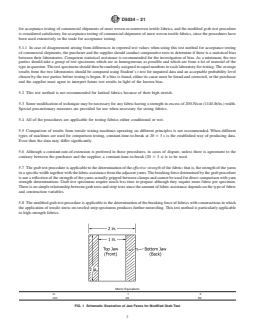
FIG. 1 Schematic Illustration of Jaw Faces for Modified Grab Test
D5034 − 21
6. Apparatus, Reagents, and Materials
6.1 Tensile Testing Machine, of the CRE, CRL, or CRT type conforming to Specification D76, with respect to force indication,
working range, capacity, and elongation indicator, and designed for operation at a speed of 300 6 10 mm/min (12 6 0.5 in./min);
or, a variable speed drive, change gears, or interchangeable weights as required to obtain the 20 6 3-s time-to-break (see 5.5 and
5.6).
6.2 Clamps and Jaw Faces—Each jaw face shall be smooth, flat, and with a metallic, or other agreed upon, gripping surface. The
faces shall be parallel and have matching centers with respect to one another in the same clamp and to the corresponding jaw face
of the other clamp.
6.2.1 For grab tests, each clamp shall have a front (or top) jaw face measuring 25 6 1 mm (1.0 6 0.02 in.) perpendicular to the
direction of the application of the force, and not less than 25 nor more than 50 mm (1.0 nor more than 2.0 in.) parallel to the
direction of the application of the force (Note 2). The back, or bottom, jaw face of each clamp shall be at least as large as its mate.
Use of a larger face for the second jaw reduces the problem of front and back jaw face misalignment.
NOTE 2—Front (or top) faces measuring 25 by 50 mm (1.0 by 2.0 in.) will not necessarily give the same value as 25 by 25-mm (1.0 by 1.0-in.) faces.
For many materials, the former are preferable because of the larger gripping area which tends to reduce slippage. While both sizes of gripping surface
are permitted, the face sizes used must be the same for all samples in the test and must be recorded in the report.
6.2.2 For modified grab tests, the top (or front) jaw faces shall measure 25 by 50 mm (1.0 by 2.0 in.) or more, with the longer
dimension parallel to the direction of load application. The bottom (or back) jaw faces shall measure 50 by 50 mm (2.0 by 2.0 in.)
or more. (See Fig. 1.)
6.3 Metal Clamp, auxiliary, 170 g (6 oz) with at least 100-mm (4.0-in.) width anvils.
6.4 Distilled Water, for wet testing.
6.5 Nonionic Wetting Agent, for wet testing.
6.6 Container, for wetting out specimens.
6.7 Standard Fabrics , for use in verification of apparatus. (See Annex A1.)
6.8 Pins, stainless-steel, 10-mm ( ⁄8-in.) diameter by 125 mm (5 in.) long. Two are required if used.
7. Sampling
7.1 Lot Sample—Take a lot sample as directed in the applicable material specification. In the absence of such a specification,
randomly take rolls or pieces that constitute the lot sample using the following schedule:
Number of Rolls, Pieces in Lot, Number of Rolls or Pieces in Lot
Inclusive Sample
1 to 3 all
4 to 24 4
25 to 50 5
over 50 10 % to a maximum of 10 rolls or
pieces
NOTE 3—An adequate specification or other agreement between the purchaser and the supplier requires taking into account the variability between rolls
of fabric and between specimens from a swatch from a roll of fabric to provide a sampling plan with a meaningful producer’s risk, consumer’s risk,
acceptable quality level, and limiting quality level.
7.2 Laboratory Sample—From each roll or piece of fabric taken from the lot sample, cut at least one laboratory sample the full
width of the fabric and 1 m (1 yd) along the selvage (machine direction).
Apparatus and accessories are commercially available.
D5034 − 21
NOTE 4—Results obtained on small hand samples (swatches) can only be considered as representative of the sample swatch and cannot be assumed to
be representative of the fabric piece from which the hand sample (swatch) was taken.
7.3 Test Specimens—From each laboratory sample, take five specimens from the warp (machine) direction and eight specimens
from the filling (cross) direction (if tested) for each testing condition.
7.3.1 Testing conditions include the following:
7.3.1.1 Warp or Machine Direction—Standard conditions for testing textiles.
7.3.1.2 Warp or Machine Direction—Wet at 21°C (70°F).
7.3.1.3 Filling or Cross Direction—Standard conditions for testing textiles.
7.3.1.4 Filling or Cross Direction—Wet at 21°C (70°F).
7.3.2 When using the constant-time-to-break technique and unfamiliar fabrics, prepare two or three extra specimens to establish
the proper rate of loading (or speed for testing).
8. Conditioning
8.1 For Conditioned Testing:
8.1.1 If the samples have a higher moisture content than the moisture present when at equilibrium in the standard atmosphere for
testing textiles, precondition as directed in Practice D1776.
8.1.2 Bring samples to moisture equilibrium in the standard atmosphere for testing textiles as directed in Practice D1776.
Equilibrium is considered to have been reached when the increase in mass of the specimen in successive weighings made at
intervals of not less than 2 h does not exceed 0.1 % of the mass of the specimen.
NOTE 5—It is recognized that in practice, materials are frequently not weighed to determine when moisture equilibrium has been reached. While
conditioning for a fixed time cannot be accepted in cases of dispute, it may be sufficient in routine testing to expose the material to the standard atmosphere
for testing textiles for a reasonable period of time before the specimens are tested. As a guide the following conditioning periods are suggested:
Minimum Condi-
Fiber tioning Period, h
Animal Fibers (for example, wool, and regenerated proteins) 8
Vegetable Fibers (for example, cotton) 6
Viscose 8
Acetate 4
Fibers having a regain less than 5 % at 65 % relative 2
humidity
8.2 For Wet Testing:
8.2.1 Specimens to be tested in the wet condition shall be immersed in water at room temperature until thoroughly wetted (Note
6). To thoroughly wet a specimen, it may be necessary to add not more than 0.05 % of a nonionic wetting agent to the water. A
test of any wet specimen shall be completed within two minutes after its removal from the water.
NOTE 6—The material has been thoroughly wet out when it has been determined that additional immersion time does not produce any additional changes
in breaking strength of test specimens. This method of determination must be used in cases of dispute. However, for routine testing in the laboratory, it
may be sufficient to immerse the material for 1 h.
These periods are approximate and apply only to fabrics, spread out in single thickness, and exposed to freely moving air in the standard atmosphere for testing textiles.
Heavy or coated fabrics may require conditioning periods longer than those suggested. If a fabric contains more than one fiber, it should be conditioned for the period required
by the fiber component which requires the most time (for example, 8 h for a wool and acetate blend).
D5034 − 21
8.2.2 The procedures in this test method should be used with caution when testing fabrics that do not wet out uniformly and
thoroughly because of the presence of sizing, oil, protective coatings, or water repellents.
8.2.3 When the strength of wet specimens without sizing, water repellents, etc. is required, before preparing the test specimens,
treat the material as directed in Test Methods D629, using appropriate de-sizing or finish removal procedures that will not affect
the normal physical properties of the fabric.
9. Preparation of Specimens
9.1 General:
9.1.1 Cut specimens with their long dimensions parallel either to the warp (machine) direction or to the filling (cross) direction,
or cut specimens for testing both directions if required. Preferably, specimens for a given fabric direction should be spaced along
a diagonal of the fabric to allow for representation of different warp and filling yarns, or machine and cross direction areas, in each
specimen. When possible, filling specimens should contain yarn from widely separated filling areas. Unless otherwise specified,
take specimens no nearer to the selvage, or edge of the fabric, than one tenth of the width of the fabric (see 7.3.2).
9.2 Grab Test, G:
9.2.1 Cut each specimen 100 6 1 mm (4 6 0.05 in.) wide by at least 150 mm (6 in.) long (Note 7) with the long dimension parallel
to the direction of testing and force application.
NOTE 7—The length of the specimen depends on the type of clamps being used. The specimen should be long enough to extend through the clamps and
project at least 10 mm (0.5 in.) at each end. The specimen length may be calculated using Eq 1 or Eq 2:
Specimen length, mm 5 C12W (1)
Specimen length, in. 5 K12W (2)
where:
C = constant based on a gage length of 75 + 20 mm for projections beyond the clamp, 95 mm,
K = constant based on a gage length of 3 + 1 in. for projections beyond the clamps, 4 in., and
W = jaw face width in direction of force, mm (in.).
9.2.2 Draw a line on the specimen which is parallel to the long direction (and along a yarn of woven fabric) and located 37 6
1 mm (1.5 6 0.02 in.) in from the edge of one side of the specimen.
9.3 Modified Grab Test, MG:
9.3.1 Cut and mark modified grab specimens as directed in 9.2.1 and 9.2.2.
9.3.1.1 For alternative high-strength fabric method of specimen clamping, cut specimens at least 400 mm
...
Questions, Comments and Discussion
Ask us and Technical Secretary will try to provide an answer. You can facilitate discussion about the standard in here.
Loading comments...