

ASTM E1091-21
(Specification)Standard Specification for Nonmetallic Honeycomb Core for Use in Shelter Panels
General Information
- Abstract
ABSTRACT
This specification is for nonmetallic honeycomb core used in the manufacture of adhesively bonded sandwich panels for tactical shelters. Five types of nonmetallic honeycomb material are specified: type I - honeycomb for use in panels which are required to have a high load-carrying capability that could not be adequately met using any of the other type; type II - honeycomb for use in panels which are required to have a load-carrying capability that could not be adequately met by using materials of any of types III, IV, or V; type III - honeycomb for general use in panels where the higher performances of types I, II, and IV materials are not required; type IV - honeycomb similar to type II but with slightly lower performance; and type V - honeycomb similar to type III but with slightly lower performance. The density, honeycomb core shear, honeycomb core compression, honeycomb core cyclic aging, honeycomb core brittleness impact, flatwise tensile, and pH shall be tested to meet the requirements prescribed. The fungus resistance test, thermal resistance test, shear modulus test, core compressive modulus test, water migration resistance test, flame resistance test, and dimensional examination shall be performed to meet the requirements prescribed.
SCOPE
1.1 This specification is for nonmetallic honeycomb core used in the manufacture of adhesively bonded sandwich panels for tactical shelters. The materials are intended for adhesive bonding to aluminum facings using materials and processes defined by Practices E864 and E874, and Specifications E865, E866, and E990. This specification covers five main types of honeycomb for use in sandwich panels, Types I, II, III, IV, and V. Types I, II, and III honeycombs correspond to three honeycomb densities. Types IV and V are similar to Types II and III, respectively, but have lower performance requirements.
1.2 The values stated in inch-pound units are to be regarded as standard. The values given in parentheses are mathematical conversions to SI units that are provided for information only and are not considered standard. For conversion of quantities in various systems of measurement to SI units, refer to Practice E380.
1.3 This standard does not purport to address all of the safety concerns, if any, associated with its use. It is the responsibility of the user of this standard to establish appropriate safety, health, and environmental practices and determine the applicability of regulatory limitations prior to use.
1.4 This international standard was developed in accordance with internationally recognized principles on standardization established in the Decision on Principles for the Development of International Standards, Guides and Recommendations issued by the World Trade Organization Technical Barriers to Trade (TBT) Committee.
- Status
- Published
- Publication Date
- 31-Jan-2021
- Technical Committee
- E06 - Performance of Buildings
Buy Documents
ASTM E1091-21 - Standard Specification for Nonmetallic Honeycomb Core for Use in Shelter Panels
REDLINE ASTM E1091-21 - Standard Specification for Nonmetallic Honeycomb Core for Use in Shelter Panels
Overview
ASTM E1091-21: Standard Specification for Nonmetallic Honeycomb Core for Use in Shelter Panels covers the requirements for nonmetallic honeycomb core materials used in adhesively bonded sandwich panels, especially for tactical and relocatable shelters. This standard defines five types of honeycomb cores with varying load-carrying capabilities and performance characteristics, ensuring the suitability of materials for military and commercial panelized shelter systems. Developed by ASTM, this specification is recognized for use by the U.S. Department of Defense and conforms with international standardization principles.
Key Topics
Material Types: The standard categorizes honeycomb core into five types based on their density and performance:
- Type I: Highest load-carrying capability.
- Type II: High load-carrying, next to Type I.
- Type III: General-purpose panels where higher performance is not required.
- Type IV and V: Lower performance versions of Types II and III, respectively.
Physical and Mechanical Properties: The standard prescribes test methods and acceptance criteria for:
- Density
- Shear strength (dry and wet)
- Compression strength (dry, wet, elevated temperature)
- Flatwise tensile strength
- Impact and brittleness resistance
- Water migration resistance
- pH and fungus resistance
Configuration and Workmanship: The honeycomb must exhibit a uniform cellular shape, proper bonding, limited unbonded nodes per area, and be free of excess resin, starved sections, and foreign materials.
Flame Resistance: Specific requirements regarding burn rate, self-extinguishing, and prevention of fire propagation are set for core materials to ensure safety.
Applications
Tactical Shelter Panels: Nonmetallic honeycomb core is primarily used in panels for mobile, relocatable, or field-deployable shelters. Its light weight and high strength-to-density ratio make it ideal for applications requiring ease of transport and assembly.
Adhesively Bonded Sandwich Panels: These cores are designed for adhesive bonding to aluminum sheet facings, as specified by referenced ASTM standards, creating high-performance, rigid sandwich panels.
Military and Civil Structures: The specification is applicable to defense and commercial sectors that require durable yet lightweight structures, such as field hospitals, mobile workspaces, and disaster relief shelters.
Quality Assurance: Manufacturers and purchasers rely on ASTM E1091-21 to verify material quality through standard testing and inspection protocols, ensuring consistent performance and compliance with procurement requirements.
Related Standards
Compliance with ASTM E1091-21 often involves reference to several other ASTM and federal standards, including:
- ASTM B209: Aluminum and Aluminum-Alloy Sheet and Plate
- ASTM C177, C366/C366M, C481, C518: Core thickness, laboratory aging, and thermal properties test methods
- ASTM E864, E865, E866, E874, E990: Specifications and practices for surface preparation, structural film adhesives, adhesive primers, and adhesive bonding processes
- ASTM E380: SI unit usage (withdrawn, but referenced for conversions)
- MIL-STD-401: General test methods for sandwich constructions and core materials
- MIL-STD-105, MIL-STD-129: Sampling and marking standards for inspection and shipping
- FED-STD-191A, FAR 25.853(a): Textile test methods, flame resistance for compartment interiors
Practical Value
Adhering to ASTM E1091-21 ensures the nonmetallic honeycomb core materials used in critical shelter systems meet stringent requirements for strength, durability, and safety. This helps organizations:
- Enhance structural reliability for mobile shelters and relocatable buildings
- Optimize lightweight performance without compromising on load-bearing needs
- Achieve compliance in defense and commercial procurements
- Maintain consistent quality and interoperability across different projects and suppliers
By specifying and testing according to ASTM E1091-21, stakeholders can be confident in the functional and safety performance of shelter panel cores, supporting mission success in demanding environments.
Relations
- Effective Date
- 01-Jul-2019
- Effective Date
- 01-Oct-2018
- Effective Date
- 15-Sep-2016
- Effective Date
- 01-Sep-2015
- Effective Date
- 01-Mar-2015
- Effective Date
- 01-Nov-2014
- Effective Date
- 01-Sep-2011
- Effective Date
- 01-Aug-2011
- Effective Date
- 01-May-2011
- Effective Date
- 01-Apr-2011
- Effective Date
- 01-Nov-2010
- Effective Date
- 01-Nov-2010
- Effective Date
- 01-Nov-2010
- Effective Date
- 01-Oct-2010
- Effective Date
- 01-Jun-2010
Buy Documents
ASTM E1091-21 - Standard Specification for Nonmetallic Honeycomb Core for Use in Shelter Panels
REDLINE ASTM E1091-21 - Standard Specification for Nonmetallic Honeycomb Core for Use in Shelter Panels
Get Certified
Connect with accredited certification bodies for this standard

DIBt (Deutsches Institut für Bautechnik)
German Institute for Building Technology.
DIN CERTCO
DIN Group product certification.

Aboma Certification B.V.
Specialized in construction, metal, and transport sectors.
Sponsored listings
Frequently Asked Questions
ASTM E1091-21 is a technical specification published by ASTM International. Its full title is "Standard Specification for Nonmetallic Honeycomb Core for Use in Shelter Panels". This standard covers: ABSTRACT This specification is for nonmetallic honeycomb core used in the manufacture of adhesively bonded sandwich panels for tactical shelters. Five types of nonmetallic honeycomb material are specified: type I - honeycomb for use in panels which are required to have a high load-carrying capability that could not be adequately met using any of the other type; type II - honeycomb for use in panels which are required to have a load-carrying capability that could not be adequately met by using materials of any of types III, IV, or V; type III - honeycomb for general use in panels where the higher performances of types I, II, and IV materials are not required; type IV - honeycomb similar to type II but with slightly lower performance; and type V - honeycomb similar to type III but with slightly lower performance. The density, honeycomb core shear, honeycomb core compression, honeycomb core cyclic aging, honeycomb core brittleness impact, flatwise tensile, and pH shall be tested to meet the requirements prescribed. The fungus resistance test, thermal resistance test, shear modulus test, core compressive modulus test, water migration resistance test, flame resistance test, and dimensional examination shall be performed to meet the requirements prescribed. SCOPE 1.1 This specification is for nonmetallic honeycomb core used in the manufacture of adhesively bonded sandwich panels for tactical shelters. The materials are intended for adhesive bonding to aluminum facings using materials and processes defined by Practices E864 and E874, and Specifications E865, E866, and E990. This specification covers five main types of honeycomb for use in sandwich panels, Types I, II, III, IV, and V. Types I, II, and III honeycombs correspond to three honeycomb densities. Types IV and V are similar to Types II and III, respectively, but have lower performance requirements. 1.2 The values stated in inch-pound units are to be regarded as standard. The values given in parentheses are mathematical conversions to SI units that are provided for information only and are not considered standard. For conversion of quantities in various systems of measurement to SI units, refer to Practice E380. 1.3 This standard does not purport to address all of the safety concerns, if any, associated with its use. It is the responsibility of the user of this standard to establish appropriate safety, health, and environmental practices and determine the applicability of regulatory limitations prior to use. 1.4 This international standard was developed in accordance with internationally recognized principles on standardization established in the Decision on Principles for the Development of International Standards, Guides and Recommendations issued by the World Trade Organization Technical Barriers to Trade (TBT) Committee.
ABSTRACT This specification is for nonmetallic honeycomb core used in the manufacture of adhesively bonded sandwich panels for tactical shelters. Five types of nonmetallic honeycomb material are specified: type I - honeycomb for use in panels which are required to have a high load-carrying capability that could not be adequately met using any of the other type; type II - honeycomb for use in panels which are required to have a load-carrying capability that could not be adequately met by using materials of any of types III, IV, or V; type III - honeycomb for general use in panels where the higher performances of types I, II, and IV materials are not required; type IV - honeycomb similar to type II but with slightly lower performance; and type V - honeycomb similar to type III but with slightly lower performance. The density, honeycomb core shear, honeycomb core compression, honeycomb core cyclic aging, honeycomb core brittleness impact, flatwise tensile, and pH shall be tested to meet the requirements prescribed. The fungus resistance test, thermal resistance test, shear modulus test, core compressive modulus test, water migration resistance test, flame resistance test, and dimensional examination shall be performed to meet the requirements prescribed. SCOPE 1.1 This specification is for nonmetallic honeycomb core used in the manufacture of adhesively bonded sandwich panels for tactical shelters. The materials are intended for adhesive bonding to aluminum facings using materials and processes defined by Practices E864 and E874, and Specifications E865, E866, and E990. This specification covers five main types of honeycomb for use in sandwich panels, Types I, II, III, IV, and V. Types I, II, and III honeycombs correspond to three honeycomb densities. Types IV and V are similar to Types II and III, respectively, but have lower performance requirements. 1.2 The values stated in inch-pound units are to be regarded as standard. The values given in parentheses are mathematical conversions to SI units that are provided for information only and are not considered standard. For conversion of quantities in various systems of measurement to SI units, refer to Practice E380. 1.3 This standard does not purport to address all of the safety concerns, if any, associated with its use. It is the responsibility of the user of this standard to establish appropriate safety, health, and environmental practices and determine the applicability of regulatory limitations prior to use. 1.4 This international standard was developed in accordance with internationally recognized principles on standardization established in the Decision on Principles for the Development of International Standards, Guides and Recommendations issued by the World Trade Organization Technical Barriers to Trade (TBT) Committee.
ASTM E1091-21 is classified under the following ICS (International Classification for Standards) categories: 91.060.20 - Roofs. The ICS classification helps identify the subject area and facilitates finding related standards.
ASTM E1091-21 has the following relationships with other standards: It is inter standard links to ASTM E874-19, ASTM E1749-18, ASTM C481-99(2016), ASTM C518-15, ASTM E631-15, ASTM E631-14, ASTM E874-11, ASTM C481-99(2011), ASTM E866-11, ASTM C366/C366M-11, ASTM E874-10a, ASTM E1749-10, ASTM B209-10, ASTM E874-10, ASTM C177-10. Understanding these relationships helps ensure you are using the most current and applicable version of the standard.
ASTM E1091-21 is available in PDF format for immediate download after purchase. The document can be added to your cart and obtained through the secure checkout process. Digital delivery ensures instant access to the complete standard document.
Standards Content (Sample)
This international standard was developed in accordance with internationally recognized principles on standardization established in the Decision on Principles for the
Development of International Standards, Guides and Recommendations issued by the World Trade Organization Technical Barriers to Trade (TBT) Committee.
Designation:E1091 −21
Standard Specification for
Nonmetallic Honeycomb Core for Use in Shelter Panels
This standard is issued under the fixed designation E1091; the number immediately following the designation indicates the year of
original adoption or, in the case of revision, the year of last revision. A number in parentheses indicates the year of last reapproval. A
superscript epsilon (´) indicates an editorial change since the last revision or reapproval.
This standard has been approved for use by agencies of the U.S. Department of Defense.
1. Scope B209 Specification for Aluminum and Aluminum-Alloy
Sheet and Plate
1.1 This specification is for nonmetallic honeycomb core
C177 Test Method for Steady-State Heat Flux Measure-
used in the manufacture of adhesively bonded sandwich panels
ments and Thermal Transmission Properties by Means of
for tactical shelters. The materials are intended for adhesive
the Guarded-Hot-Plate Apparatus
bonding to aluminum facings using materials and processes
C366/C366M Test Methods for Measurement of Thickness
defined by Practices E864 and E874, and Specifications E865,
of Sandwich Cores
E866, and E990. This specification covers five main types of
C481 Test Method for Laboratory Aging of Sandwich Con-
honeycomb for use in sandwich panels, Types I, II, III, IV, and
structions
V. Types I, II, and III honeycombs correspond to three
C518 Test Method for Steady-State Thermal Transmission
honeycomb densities. Types IV and V are similar to Types II
Properties by Means of the Heat Flow Meter Apparatus
and III, respectively, but have lower performance require-
E380 Practice for Use of the International System of Units
ments.
(SI) (the Modernized Metric System) (Withdrawn 1997)
1.2 The values stated in inch-pound units are to be regarded
E631 Terminology of Building Constructions
as standard. The values given in parentheses are mathematical
E864 Practice for Surface Preparation of Aluminum Alloys
conversions to SI units that are provided for information only
to Be Adhesively Bonded in Honeycomb Shelter Panels
andarenotconsideredstandard.Forconversionofquantitiesin
E865 Specification for Structural Film Adhesives for Hon-
various systems of measurement to SI units, refer to Practice
eycomb Sandwich Panels
E380.
E866 Specification for Corrosion-Inhibiting Adhesive
1.3 This standard does not purport to address all of the Primer forAluminumAlloys to BeAdhesively Bonded in
safety concerns, if any, associated with its use. It is the
Honeycomb Shelter Panels
responsibility of the user of this standard to establish appro-
E874 Practice for Adhesive Bonding of Aluminum Facings
priate safety, health, and environmental practices and deter- to Nonmetallic Honeycomb Core for Shelter Panels
mine the applicability of regulatory limitations prior to use.
E990 Specification for Core-Splice Adhesive for Honey-
1.4 This international standard was developed in accor- comb Sandwich Structural Panels
dance with internationally recognized principles on standard-
E1749 Terminology Relating to Rigid Wall Relocatable
ization established in the Decision on Principles for the Shelters
Development of International Standards, Guides and Recom-
F501 Test Method for Aerospace Materials Response to
mendations issued by the World Trade Organization Technical Flame, with Vertical Test Specimen (for Aerospace Ve-
Barriers to Trade (TBT) Committee.
hicles Standard Conditions) (Withdrawn 1998)
2.2 Federal Aviation Regulation:
2. Referenced Documents
FAR 25.853(a) Compartment Interiors
2.1 ASTM Standards:
2.3 Federal Standards:
FED-STD-191A Textile Test Methods
QQ-A-250/8 Aluminum Alloy 5052, Plate and Sheet
This specification is under the jurisdiction of ASTM Committee E06 on
QQ-A-250/11 Aluminum Alloy 6061, Plate and Sheet
PerformanceofBuildingsandisthedirectresponsibilityofSubcommitteeE06.53on
Materials and Processes for Durable Rigidwall Relocatable Structures.
Current edition approved Feb. 1, 2021. Published February 2021. Originally
approved in 1986. Last previous edition approved in 2013 as E1091 – 13. DOI: The last approved version of this historical standard is referenced on
10.1520/E1091-21. www.astm.org.
2 4
For referenced ASTM standards, visit the ASTM website, www.astm.org, or Available from Federal Aviation Administration (FAA), 800 Independence
contact ASTM Customer Service at service@astm.org. For Annual Book of ASTM Ave., SW, Washington, DC 20591, http://www.faa.gov.
Standards volume information, refer to the standard’s Document Summary page on Available from DLA Document Services, Building 4/D, 700 Robbins Avenue,
the ASTM website. Philadelphia, PA 19111-5094, http://quicksearch.dla.mil/.
Copyright © ASTM International, 100 Barr Harbor Drive, PO Box C700, West Conshohocken, PA 19428-2959. United States
E1091−21
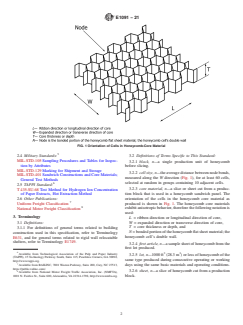
FIG. 1Orientation of Cells in Honeycomb-Core Material
2.4 Military Standards: 3.2 Definitions of Terms Specific to This Standard:
MIL-STD-105 Sampling Procedures and Tables for Inspec-
3.2.1 block, n—a single production unit of honeycomb
tion by Attributes
before slicing.
MIL-STD-129 Marking for Shipment and Storage
3.2.2 cell size, n—theaveragedistancebetweennodebonds,
MIL-STD-401 Sandwich Constructions and Core Materials;
measured along the W direction (Fig. 1), for at least 60 cells,
General Test Methods
selected at random in groups containing 10 adjacent cells.
2.5 TAPPI Standard:
3.2.3 core material, n—a slice or sheet cut from a produc-
T 435-SU-68 Test Method for Hydrogen Ion Concentration
tion block that is used in a honeycomb sandwich panel. The
of Paper Extracts, Hot Extraction Method
orientation of the cells in the honeycomb core material as
2.6 Other Publications:
produced is shown in Fig. 1. The honeycomb core materials
Uniform Freight Classification
exhibitanisotropicbehavior,thereforethefollowingnotationis
National Motor Freight Classification
used:
3. Terminology
L = ribbon direction or longitudinal direction of core,
W = expanded direction or transverse direction of core,
3.1 Definitions:
T = core thickness or depth, and
3.1.1 For definitions of general terms related to building
N=bondedportionofthehoneycombflatsheetmaterial;the
construction used in this specification, refer to Terminology
honeycomb cell’s double wall.
E631, and for general terms related to rigid wall relocatable
shelters, refer to Terminology E1749.
3.2.4 first article, n—a sample sheet of honeycomb from the
first lot produced.
3 3
Available from Technological Association of the Pulp and Paper Industry
3.2.5 lot, n—1000 ft (28.3 m ) or less of honeycomb of the
(TAPPI), 15 Technology Parkway South, Suite 115, Peachtree Corners, GA 30092,
same type produced during consecutive operating or working
http://www.tappi.org.
days using the same basic materials and operating conditions.
Available from RAILINC, 7001 Weston Parkway, Suite 200, Cary, NC 27513,
https://public.railinc.com/.
8 3.2.6 sheet, n—a slice of honeycomb cut from a production
Available from National Motor Freight Traffic Association, Inc. (NMFTA),
1001 N. Fairfax St., Suite 600, Alexandria, VA 22314-1798, http://www.nmfta.org. block.
E1091−21
4. Classification 6.3.2 Self extinguishment within 15 s after removal of the
60 s applied flame.
4.1 Five types of nonmetallic honeycomb material are
6.3.3 Burning without flame shall not extend into undam-
specified. Their required properties are given in Section 6 and
aged area of core material.
in Table 1.
6.4 Dimensions—Using the methods specified in 7.15, the
5. Ordering Information
length,width,andthicknessdimensionsofthehoneycombcore
5.1 Procurement Documents—Purchasers shall select any of (see Fig. 1) and the cell size shall be as specified.
the desired options offered herein and the procurement docu-
6.5 Dimensional Tolerances—Unless otherwise specified,
ments shall specify the following:
the dimensional tolerances of the honeycomb core material
5.1.1 Title, number, and date of this specification.
shall be as specified in Table 2. The cell size shall not vary
5.1.2 Type of honeycomb required (see Section 4).
more than 10 % from the specified dimension within any lot.
5.1.3 Dimensions required (see 6.4).
6.6 Unbonded Nodes—There shall be no more than one
5.1.4 Cell size required (see 6.2 and 6.4).
unbonded node within any 10 in. by 10 in. (250 mm by
5.1.5 Whether a first article sample is required (see 3.3).
250 mm) area of the honeycomb core.
5.1.6 Whether qualification is necessary (see 8.2.2).
6.7 Honeycomb Properties:
5.2 When a first article sample is required, specific instruc-
6.7.1 Physical and Mechanical—Thephysicalandmechani-
tions shall be given regarding arrangements for examination,
cal properties of the honeycomb material shall meet the
test, and approval of the first article.
requirements listed in Table 1 when tested using the methods
6. Materials and Manufacture
specified.
6.7.2 pH—When tested as specified, the pH of the honey-
6.1 Materials—Materials shall be as specified herein for the
comb material shall meet the requirements listed in Table 1.
type ordered and shall comply with all provisions of this
6.7.3 Fungus Resistance—When the fungus resistance is
specification for this type.
determined as specified, the compressive strength of the
6.2 Configuration—The honeycomb material (see Fig. 1)
honeycomb shall meet the requirements listed in Table 1.
shall consist of a nonmetallic web material, suitably bonded so
6.8 Density—The density of the honeycomb material, deter-
that in its final expanded form, a reasonably uniform cellular
shape is developed. Unless otherwise specified, the cell size mined as specified, shall not exceed the values shown in Table
1 and shall be within 610 % of the manufacturer’s specified
shall not exceed 0.5 in. (12.5 mm).
density.
6.3 Flame Resistance—The honeycomb core material shall
meet the following requirements when tested as specified: 6.9 Workmanship—The honeycomb core material shall be
6.3.1 Average burn rate shall not exceed 4 in./min. free of excess resin accumulations (for example, runs and
TABLE 1 Honeycomb-Core Material Properties
Type Type I Type II Type III Type IV Type V
3 3
Maximum density, lb/ft (kg/m ) 5.5 (88) 4.4 (70) 3.3 (53) 4.4 (70) 3.3 (53)
pH, pH units 7.0±0.5 7.0±0.5 7.0±0.5 6.0±0.5 6.0±0.5
A
Compressive strength, psi (MPa):
B
Dry, min 464 (3.20) 464 (3.20) 232 (1.60) 404 (2.79) 198 (1.37)
C
Wet, min 406 (2.80) 232 (1.60) 116 (0.80) 163 (1.13) 98 (0.68)
D
At elevated temperature 394 (2.72) 278 (1.92) 139 (0.96) 185 (1.28) 115 (0.79)
Cyclic aging, minimum 363 (2.50) 190 (1.31) 104 (0.72) 119 (0.82) 62 (0.43)
E
After fungus test See Footnote E
A
Shear strength, psi (MPa):
Dry, min
B
TL core orientation 218 (1.50) 218 (1.50) 116 (0.80) 180 (1.24) 85 (0.59)
B
TW core orientation 130 (0.90) 116 (0.80) 65 (0.45) 113 (0.78) 57 (0.39)
Wet, min
C
TL core orientation 203 (1.40) 109 (0.75) 58 (0.40) 86 (0.59) 53 (0.37)
C
TW core orientation 116 (0.80) 58 (0.40) 33 (0.23) 58 (0.40) 32 (0.22)
F
Flatwise tensile strength, min, :
psi (MPa) 406 (2.80) 406 (2.80) 231 (1.60) 306 (2.11) 231 (1.60)
Brittleness/Impact:
Drop height, min, in. (mm) 40 (1016) 30 (762) 20 (508) 30 (762) 20 (508)
Water migration resistance:
24 h, max, number of cells 3 3 3 3 3
A
Two-inch (51 mm) thick core with 0.05 in. (1.3 mm) facings, tested at 73 °F±2°F(23 °C±1°C)unlessotherwisestatedherein. Shear tests shall be conducted with the
core oriented in the TL and TW planes (Fig. 1).
B
At equilibrium with 73 °F±2°F (23 °C±1°C), and 50±4% RH.
C
After soaking in water at 70 °F±5°F (21.1°C±3°C) for 48 h with perforated facings.
D
After heating for 30 min at, and tested at, 176 °F±5°F (80 °C±3°C).
E
Values for compressive strength shall be not less than 85 % of the dry compressive strength values for Types I, II, and III and 80 % for Types IV and V.
F 2 2
Tested at 73 °F±2°F (23 °C±1°C) with loading blocks bonded directly to each side of core specimen having a minimum area of 9 in. (5806 mm ).
E1091−21
TABLE 2 Dimensional Tolerances
7.3.2 Dry—Condition twelve specimens as specified in 7.1
Tolerance, in. (mm) for at least 48 h, then test as described in 7.3.1. At the option
Dimensions
plus minus
of the supplier, the skins specified in 7.3 do not necessarily
Length 2.0 (50.8) 0 (0)
have to be perforated. Record all individual shear strength
Width 1.0 (25.4) 0 (0)
Thickness 0.010 (0.254) 0.010 (0.254)
values for each plane. The test is failed if two or more of the
six values for each plane do not meet the requirements ofTable
1 or the average value is below Table 1.
sags), starved areas (for example, lack of resin), and foreign
materials. The cell wall edges of the core shall be clean cut 7.4 Honeycomb Core Compression—The L by W by T
with no broken edges. dimensionsofthebondedsandwichspecimensshallbe4 in.by
4 in. by 2 in. (100 mm by 100 mm by 50 mm). The skin shall
6.10 Thermal Resistance—At the request of the purchaser,
consist of 0.05 in. (1.3 mm) thick perforated sheet of 5052H34
the thermal resistance, determined as specified, shall be re-
or 6061T6 aluminum alloy (Federal Specifications QQ-A-
ported.
250/8 or QQ-A-250/11) or (Specification B209). The perfo-
6.11 Shear Modulus and Compressive Modulus—At the
rated holes shall be 0.13 in. (3.2 mm) in diameter with 0.19 in.
request of the purchaser, the honeycomb shear modulus and
(4.8 mm) staggered centers.The adhesive used for bonding the
compressive modulus, determined as specified, shall be re-
specimen shall conform to Specification E865.
ported.
7.4.1 Wet—Soaksixspecimensundera12 in.(3.0kPa)head
7. Test Methods ofwaterat70 °F 6 5 °F(21 °C 6 3 °C)foratleast48h.When
perforated skins are bonded to the core, clear the perforations
7.1 Test Specimens—Unless otherwise specified, test speci-
of adhesive so that there is at least one hole into each cell
mens shall be bonded at the same temperature, cure time, and
through each skin. After removal from the water, shake the
pressure profiles as used in actual shelter panel manufacture
bonded specimens to remove excess water. Then test the
and conditioned and tested under standard conditions of
bonded specimens in accordance with the Core Compression
73 °F 6 2 °F (23 °C 6 1 °C) and 50 % 6 4 % relative humid-
Test Method of MIL-STD-401. Record all individual compres-
ity (RH). (See Specification E865.)
sive strength values. The test is failed if two or more of the six
7.2 Density—Testthedensityofthehoneycombmaterialfor
values do not meet the requirements of Table 1 or the average
compliance with the requirements given in Table 1. Determine
value is below the value given in Table 1.
the density using the core density method of MIL-STD-401
2 2 7.4.2 Dry—Condition six specimens as specified in 7.1 for
using two specimens, each at least 2.2 ft (0.2 m ) in area.
at least 48 h. Then test in accordance with the Core Compres-
Condition the specimens as specified for at least 48 h. Record
sion Test Method of MIL-STD-401. At the option of the
each individual density value. Determine the average density
supplier, the skins specified do not necessarily have to be
value of the two specimens. The test is failed if any average
perforated. Record all individual compressive strength values.
density value does not meet the requirements of Table 1 and
The test is failed if two or more of the six values do not meet
6.8.
therequirementsofTable1ortheaveragevalueisbelowTable
7.3 Honeycomb Core Shear—The L by W by I dimensions
1.
of the bonded sandwich specimens shall be 15 in. by 3 in. by 2
7.4.3 Elevated Temperature—Heat six specimens to
in. (380 mm by 75 mm by 50 mm). The skin shall consist of
176 °F 6 5 °F (80 °C 6 3 °C) for a duration of 30 min and test
0.05 in.(1.3 mm)thickperforatedsheetof5052H34or6061T6
immediately at that temperature. The test procedure shall be in
aluminum alloy. The perforated holes shall be 0.13 in. (3.2
accordance with the Core Compression Test Method of MIL-
mm) in diameter with 0.19 in. (4.8 mm) staggered centers. The
STD-401. At the option of the supplier, the skins do not
adhesive used for bonding the specimen shall conform to
necessarily have to be perforated. Record all individual com-
Specification E865.
pressive strength values.The test is failed if two or more of the
7.3.1 Wet—Soak twelve specimens under a 12 in. (3.0 kPa)
six values do not meet the requirements of Table 1 or the
head of water at 70 °F 6 5 °F (21 °C 6 3 °C) for at least 48 h.
average value is below the value given in Table 1.
When perforated skins are bonded to the core, clear the
perforations of adhesive so that there is at least one hole into 7.5 Honeycomb Core Cyclic Aging—Specimens shall be as
each cell through each skin. After removal from the water, specified in 7.4.
...
This document is not an ASTM standard and is intended only to provide the user of an ASTM standard an indication of what changes have been made to the previous version. Because
it may not be technically possible to adequately depict all changes accurately, ASTM recommends that users consult prior editions as appropriate. In all cases only the current version
of the standard as published by ASTM is to be considered the official document.
Designation: E1091 − 13 E1091 − 21
Standard Specification for
Nonmetallic Honeycomb Core for Use in Shelter Panels
This standard is issued under the fixed designation E1091; the number immediately following the designation indicates the year of
original adoption or, in the case of revision, the year of last revision. A number in parentheses indicates the year of last reapproval. A
superscript epsilon (´) indicates an editorial change since the last revision or reapproval.
This standard has been approved for use by agencies of the U.S. Department of Defense.
1. Scope
1.1 This specification is for nonmetallic honeycomb core used in the manufacture of adhesively bonded sandwich panels for
tactical shelters. The materials are intended for adhesive bonding to aluminum facings using materials and processes defined by
Practices E864 and E874, and Specifications E865, E866, and E990. This specification covers five main types of honeycomb for
use in sandwich panels, Types I, II, III, IV, and V. Types I, II, and III honeycombs correspond to three honeycomb densities. Types
IV and V are similar to Types II and III, respectively, but have lower performance requirements.
1.2 The values stated in inch-pound units are to be regarded as standard. The values given in parentheses are mathematical
conversions to SI units that are provided for information only and are not considered standard. For conversion of quantities in
various systems of measurement to SI units, refer to Practice E380.
1.3 This standard does not purport to address all of the safety concerns, if any, associated with its use. It is the responsibility
of the user of this standard to establish appropriate safety safety, health, and healthenvironmental practices and determine the
applicability of regulatory limitations prior to use.
1.4 This international standard was developed in accordance with internationally recognized principles on standardization
established in the Decision on Principles for the Development of International Standards, Guides and Recommendations issued
by the World Trade Organization Technical Barriers to Trade (TBT) Committee.
2. Referenced Documents
2.1 ASTM Standards:
B209 Specification for Aluminum and Aluminum-Alloy Sheet and Plate
C177 Test Method for Steady-State Heat Flux Measurements and Thermal Transmission Properties by Means of the
Guarded-Hot-Plate Apparatus
C366/C366M Test Methods for Measurement of Thickness of Sandwich Cores
C481 Test Method for Laboratory Aging of Sandwich Constructions
C518 Test Method for Steady-State Thermal Transmission Properties by Means of the Heat Flow Meter Apparatus
E380 Practice for Use of the International System of Units (SI) (the Modernized Metric System) (Withdrawn 1997)
E631 Terminology of Building Constructions
E864 Practice for Surface Preparation of Aluminum Alloys to Be Adhesively Bonded in Honeycomb Shelter Panels
E865 Specification for Structural Film Adhesives for Honeycomb Sandwich Panels
This specification is under the jurisdiction of ASTM Committee E06 on Performance of Buildingsand is the direct responsibility of Subcommittee E06.53 on Materials
and Processes for Durable Rigidwall Relocatable Structures.
Current edition approved Oct. 1, 2013Feb. 1, 2021. Published February 2014February 2021. Originally approved in 1986. Last previous edition approved in 20082013
as E1091 – 08.E1091 – 13. DOI: 10.1520/E1091-13.10.1520/E1091-21.
For referenced ASTM standards, visit the ASTM website, www.astm.org, or contact ASTM Customer Service at service@astm.org. For Annual Book of ASTM Standards
volume information, refer to the standard’sstandard’s Document Summary page on the ASTM website.
The last approved version of this historical standard is referenced on www.astm.org.
Copyright © ASTM International, 100 Barr Harbor Drive, PO Box C700, West Conshohocken, PA 19428-2959. United States
E1091 − 21
E866 Specification for Corrosion-Inhibiting Adhesive Primer for Aluminum Alloys to Be Adhesively Bonded in Honeycomb
Shelter Panels
E874 Practice for Adhesive Bonding of Aluminum Facings to Nonmetallic Honeycomb Core for Shelter Panels
E990 Specification for Core-Splice Adhesive for Honeycomb Sandwich Structural Panels
E1749 Terminology Relating to Rigid Wall Relocatable Shelters
F501 Test Method for Aerospace Materials Response to Flame, with Vertical Test Specimen (for Aerospace Vehicles Standard
Conditions) (Withdrawn 1998)
2.2 Federal Aviation Regulation:
FAR 25.853(a) Compartment Interiors
2.3 Federal Standards:
FED-STD-191A Textile Test Methods
QQ-A-250/8 Aluminum Alloy 5052, Plate and Sheet
QQ-A-250/11 Aluminum Alloy 6061, Plate and Sheet
2.4 Military Standards:
MIL-STD-105 Sampling Procedures and Tables for Inspection by Attributes
MIL-STD-129 Marking for Shipment and Storage
MIL-STD-401 Sandwich Constructions and Core Materials; General Test Methods
2.5 TAPPI Standard:
T 435-SU-68 Test Method for Hydrogen Ion Concentration of Paper Extracts, Hot Extraction Method
2.6 Other Publications:
Uniform Freight Classification
National Motor Freight Classification
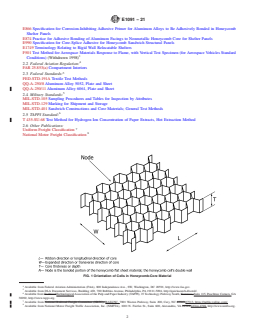
FIG. 1 Orientation of Cells in Honeycomb-Core Material
Available from Federal Aviation Administration (FAA), 800 Independence Ave., SW, Washington, DC 20591, http://www.faa.gov.
Available from DLA Document Services, Building 4/D, 700 Robbins Avenue, Philadelphia, PA 19111-5094, http://quicksearch.dla.mil/.
Available from TechnicalTechnological Association of the Pulp and Paper Industry (TAPPI), 15 Technology Parkway South, Norcross, Suite 115, Peachtree Corners, GA
30092, http://www.tappi.org.
Available from National Railroad Freight Committee (NRFC), RAILINC, 7001 Weston Parkway, Suite 200, Cary, NC 27513.27513, https://public.railinc.com/.
Available from National Motor Freight Traffic Association, Inc. (NMFTA), 1001 N. Fairfax St., Suite 600, Alexandria, VA 22314,22314-1798, http://www.nmfta.org.
E1091 − 21
3. Terminology
3.1 Definitions—See Terminologies E631 and E1749 for definitions of terms used in this specification.
3.1 Definitions:
3.1.1 For definitions of general terms related to building construction used in this specification, refer to Terminology E631, and
for general terms related to rigid wall relocatable shelters, refer to Terminology E1749.
3.2 DescriptionsDefinitions of Terms Specific Toto This Standard:
3.2.1 block, n—a single production unit of honeycomb before slicing.
3.2.2 cell size, n—the average distance between node bonds, measured along the W direction (Fig. 1), for at least 60 cells, selected
at random in groups containing 10 adjacent cells.
3.2.3 core material, n—a slice or sheet cut from a production block that is used in a honeycomb sandwich panel. The orientation
of the cells in the honeycomb core material as produced is shown in Fig. 1. The honeycomb core materials exhibit anisotropic
behavior, therefore the following notation is used:
L = ribbon direction or longitudinal direction of core,
W = expanded direction or transverse direction of core,
T = core thickness or depth, and
N = bonded portion of the honeycomb flat sheet material; the honeycomb cell’s double wall.
3.2.4 first article, n—a sample sheet of honeycomb from the first lot produced.
3 3
3.2.5 lot, n—1000 ft (28.3 m ) or less of honeycomb of the same type produced during consecutive operating or working days
using the same basic materials and operating conditions.
3.2.6 sheet, n—a slice of honeycomb cut from a production block.
4. Classification
4.1 Five types of nonmetallic honeycomb material are specified. Their required properties are given in Section 6 and in Table 1.
5. Ordering Information
5.1 Procurement Documents—Purchasers shall select any of the desired options offered herein and the procurement documents
shall specify the following:
5.1.1 Title, number, and date of this specification.
5.1.2 Type of honeycomb required (see Section 4).
5.1.3 Dimensions required (see 6.4).
5.1.4 Cell size required (see 6.2 and 6.4).
5.1.5 Whether a first article sample is required (see 3.3).
5.1.6 Whether qualification is necessary (see 8.2.2).
5.2 When a first article sample is required, specific instructions shall be given regarding arrangements for examination, test, and
approval of the first article.
E1091 − 21
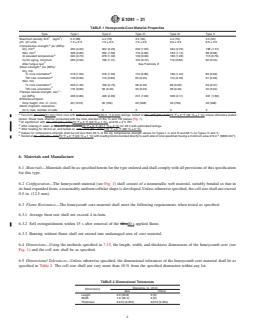
TABLE 1 Honeycomb-Core Material Properties
Type Type I Type II Type III Type IV Type V
3 3
Maximum density, lb/ft (kg/m ) 5.5 (88) 4.4 (70) 3.3 (53) 4.4 (70) 3.3 (53)
pH, pH units 7.0 ± 0.5 7.0 ± 0.5 7.0 ± 0.5 6.0 ± 0.5 6.0 ± 0.5
A
Compressive strength, psi (MPa):
B
Dry, min 464 (3.20) 464 (3.20) 232 (1.60) 404 (2.79) 198 (1.37)
C
Wet, min 406 (2.80) 232 (1.60) 116 (0.80) 163 (1.13) 98 (0.68)
D
At elevated temperature 394 (2.72) 278 (1.92) 139 (0.96) 185 (1.28) 115 (0.79)
Cyclic aging, minimum 363 (2.50) 190 (1.31) 104 (0.72) 119 (0.82) 62 (0.43)
E
After fungus test See Footnote E
A
Shear strength, psi (MPa):
Dry, min
B
TL core orientation 218 (1.50) 218 (1.50) 116 (0.80) 180 (1.24) 85 (0.59)
B
TW core orientation 130 (0.90) 116 (0.80) 65 (0.45) 113 (0.78) 57 (0.39)
Wet, min
C
TL core orientation 203 (1.40) 109 (0.75) 58 (0.40) 86 (0.59) 53 (0.37)
C
TW core orientation 116 (0.80) 58 (0.40) 33 (0.23) 58 (0.40) 32 (0.22)
F
Flatwise tensile strength, min, :
psi (MPa) 406 (2.80) 406 (2.80) 231 (1.60) 306 (2.11) 231 (1.60)
Brittleness/Impact:
Drop height, min, in. (mm) 40 (1016) 30 (762) 20 (508) 30 (762) 20 (508)
Water migration resistance:
24 h, max, number of cells 3 3 3 3 3
A
Two-inch (51-mm)(51 mm) thick core with 0.05-in. (1.3-mm)0.05 in. (1.3 mm) facings, tested at 73 ± 2°F (23 ± 1°C)73 °F ± 2 °F (23 °C ± 1 °C) unless otherwise stated
herein. Shear tests shall be conducted with the core oriented in the TL and TW planes (Fig. 1).
B
At equilibrium with 73 ± 2°F (23 ± 1°C),73 °F ± 2 °F (23 °C ± 1 °C), and 50 ± 4 % RH.
C
After soaking in water at 70 ± 5°F (21.1 ± 3°C)70 °F ± 5 °F (21.1 °C ± 3 °C) for 48 h with perforated facings.
D
After heating for 30 min at, and tested at, 176 ± 5°F (80 ± 3°C).176 °F ± 5 °F (80 °C ± 3 °C).
E
Values for compressive strength shall be not less than 85 % of the dry compressive strength values for Types I, II, and III and 80 % for Types IV and V.
F 2 2
Tested at 73 ± 2°F (23 ± 1°C)73 °F ± 2 °F (23 °C ± 1 °C) with loading blocks bonded directly to each side of core specimen having a minimum area of 9 in. (5806 mm ).
6. Materials and Manufacture
6.1 Materials—Materials shall be as specified herein for the type ordered and shall comply with all provisions of this specification
for this type.
6.2 Configuration—The honeycomb material (see Fig. 1) shall consist of a nonmetallic web material, suitably bonded so that in
its final expanded form, a reasonably uniform cellular shape is developed. Unless otherwise specified, the cell size shall not exceed
0.5 in. (12.5 mm).
6.3 Flame Resistance—The honeycomb core material shall meet the following requirements when tested as specified:
6.3.1 Average burn rate shall not exceed 4 in./min.
6.3.2 Self extinguishment within 15 s after removal of the 60-s60 s applied flame.
6.3.3 Burning without flame shall not extend into undamaged area of core material.
6.4 Dimensions—Using the methods specified in 7.15, the length, width, and thickness dimensions of the honeycomb core (see
Fig. 1) and the cell size shall be as specified.
6.5 Dimensional Tolerances—Unless otherwise specified, the dimensional tolerances of the honeycomb core material shall be as
specified in Table 2. The cell size shall not vary more than 10 % from the specified dimension within any lot.
TABLE 2 Dimensional Tolerances
Tolerance, in. (mm)
Dimensions
plus minus
Length 2.0 (50.8) 0 (0)
Width 1.0 (25.4) 0 (0)
Thickness 0.010 (0.254) 0.010 (0.254)
E1091 − 21
6.6 Unbonded Nodes—There shall be no more than one unbonded node within any 1010 in. by 10-in. (25010 in. (250 mm by
250-mm)250 mm) area of the honeycomb core.
6.7 Honeycomb Properties:
6.7.1 Physical and Mechanical—The physical and mechanical properties of the honeycomb material shall meet the requirements
listed in Table 1 when tested using the methods specified.
6.7.2 pH—When tested as specified, the pH of the honeycomb material shall meet the requirements listed in Table 1.
6.7.3 Fungus Resistance—When the fungus resistance is determined as specified, the compressive strength of the honeycomb shall
meet the requirements listed in Table 1.
6.8 Density—The density of the honeycomb material, determined as specified, shall not exceed the values shown in Table 1 and
shall be within 610 % of the manufacturer’s specified density.
6.9 Workmanship—The honeycomb core material shall be free of excess resin accumulations (for example, runs and sags), starved
areas (for example, lack of resin), and foreign materials. The cell wall edges of the core shall be clean cut with no broken edges.
6.10 Thermal Resistance—At the request of the purchaser, the thermal resistance, determined as specified, shall be reported.
6.11 Shear Modulus and Compressive Modulus—At the request of the purchaser, the honeycomb shear modulus and compressive
modulus, determined as specified, shall be reported.
7. Test Methods
7.1 Test Specimens—Unless otherwise specified, test specimens shall be bonded at the same temperature, cure time, and pressure
profiles as used in actual shelter panel manufacture and conditioned and tested under standard conditions of 73 6 2°F
(23 6 1°C)73 °F 6 2 °F (23 °C 6 1 °C) and 50 6 4 %50 % 6 4 % relative humidity (RH). (See Specification E865.)
7.2 Density—Test the density of the honeycomb material for compliance with the requirements given in Table 1. Determine the
2 2
density using the core density method of MIL-STD-401 using two specimens, each at least 2.2 ft (0.2 m ) in area. Condition the
specimens as specified for at least 48 h. Record each individual density value. Determine the average density value of the two
specimens. The test is failed if any average density value does not meet the requirements of Table 1 and 6.8.
7.3 Honeycomb Core Shear—The L by W by I dimensions of the bonded sandwich specimens shall be 1515 in. by 33 in. by 2 in.
(380(380 mm by 7575 mm by 50 mm). The skin shall consist of 0.05-in. (1.3-mm)0.05 in. (1.3 mm) thick perforated sheet of
5052H34 or 6061T6 aluminum alloy. The perforated holes shall be 0.13 in. (3.2 mm) in diameter with 0.19 in. (4.8 mm) staggered
centers. The adhesive used for bonding the specimen shall conform to Specification E865.
7.3.1 Wet—Soak twelve specimens under a 12-in.12 in. (3.0 kPa) head of water at 70 6 5°F (21 6 3°C)70 °F 6 5 °F
(21 °C 6 3 °C) for at least 48 h. When perforated skins are bonded to the core, clear the perforations of adhesive so that there is
at least one hole into each cell through each skin. After removal from the water, shake the bonded specimens to remove excess
water. Then test the bonded specimens in accordance with the Sandwich Flexure test method of MIL-STD-401 using a 12-in.
(305-mm)12 in. (305 mm) span, 2-point loading system consisting of 22 in. by 33 in. by 0.25 in. (50(50 mm by 7575 mm by 6 mm)
loading blocks on ⁄3 span. Test six bonded specimens with the core oriented in the TL plane (Fig. 1) and six with the core oriented
in the TW plane (Fig. 1). Record all individual shear strength values for each plane. The test is failed if two or more of the six
values of each plane do not meet the requirements of Table 1 or the average value is below Table 1.
7.3.2 Dry—Condition twelve specimens as specified in 7.1 for at least 48 h, then test as described in 7.3.1. At the option of the
supplier, the skins specified in 7.3 do not necessarily have to be perforated. Record all individual shear strength values for each
plane. The test is failed if two or more of the six values for each plane do not meet the requirements of Table 1 or the average
value is below Table 1.
E1091 − 21
7.4 Honeycomb Core Compression—The L by W by T dimensions of the bonded sandwich specimens shall be 44 in. by 44 in. by
2 in. (100(100 mm by 100100 mm by 50 mm). The skin shall consist of 0.05-in. (1.3-mm)0.05 in. (1.3 mm) thick perforated sheet
of 5052H34 or 6061T6 aluminum alloy (Federal Specifications QQ-A-250/8 or QQ-A-250/11) or (Specification B209). The
perforated holes shall be 0.13 in. (3.2 mm) in diameter with 0.19 in. (4.8 mm) staggered centers. The adhesive used for bonding
the specimen shall conform to Specification E865.
7.4.1 Wet—Soak six specimens under a 12-in.12 in. (3.0 kPa) head of water at 70 6 5°F (21 6 3°C)70 °F 6 5 °F (21 °C 6 3 °C)
for at least 48 h. When perforated skins are bonded to the core, clear the perforations of adhesive so that there is at least one hole
into each cell through each skin. After removal from the water, shake the bonded specimens to remove excess water. Then test the
bonded specimens in accordance with the Core Compression Test Method of MIL-STD-401. Record all individual compressive
strength values. The test is failed if two or more of the six values do not meet the requirements of Table 1 or the average value
is below the value given in Table 1.
7.4.2 Dry—Condition six specimens as specified in 7.1 for at least 48 h. Then test in accordance with the Core Compression Test
Method of MIL-STD-
...