

ASTM D3195/D3195M-10(2023)
(Practice)Standard Practice for Rotameter Calibration
General Information
- Abstract
SIGNIFICANCE AND USE
5.1 Choice of method depends primarily on which equipment is available. Higher accuracy is possible with the gasometer. The accuracies of the methods of atmospheric analysis, for which the calibration procedure is intended, do not warrant the very highest possible accuracy in flow measurement.
SCOPE
1.1 This practice covers the calibration of variable-area flowmeters (rotameters) used to determine air sample volumes at or close to ambient conditions of pressure and temperature, in the analysis of atmospheres for pollutant content.
1.2 Units—The values stated in either SI units or inch-pound units are to be regarded separately as standard. The values stated in each system may not be exact equivalents; therefore, each system shall be used independently of the other. Combining values from the two systems may result in non-conformance with the standard.
1.3 This standard does not purport to address all of the safety concerns, if any, associated with its use. It is the responsibility of the user of this standard to establish appropriate safety, health, and environmental practices and determine the applicability of regulatory limitations prior to use.
1.4 This international standard was developed in accordance with internationally recognized principles on standardization established in the Decision on Principles for the Development of International Standards, Guides and Recommendations issued by the World Trade Organization Technical Barriers to Trade (TBT) Committee.
- Status
- Published
- Publication Date
- 31-Aug-2023
- Technical Committee
- D22 - Air Quality
- Drafting Committee
- D22.01 - Quality Control

Overview
ASTM D3195/D3195M-10(2023), Standard Practice for Rotameter Calibration, provides a widely recognized methodology for calibrating variable-area flowmeters (rotameters) utilized in atmospheric analysis for pollutant content. The standard outlines procedures to ensure accurate determination of air sample volumes at or near ambient conditions of pressure and temperature. The calibration practices described are suitable for environmental testing laboratories, industrial hygiene professionals, and organizations conducting air quality assessments.
This international standard is aligned with the principles established by the World Trade Organization Technical Barriers to Trade (TBT) Committee, promoting harmonization and reliability in flow measurement for air sampling and analysis.
Key Topics
- Scope of Calibration: The standard covers the calibration of rotameters employed in the assessment of pollutant concentrations in atmospheric samples, with a focus on air samples collected at ambient temperature and pressure.
- Calibration Methods:
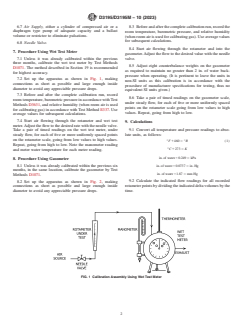
- Wet test meters (water-sealed rotating drum meters)
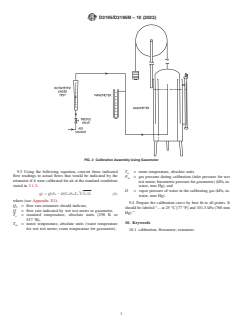
- Volumetric gasometers (bell provers)
- Measurement Units: Values may be reported in either SI units or inch-pound units, but units from the two systems should not be combined in a single calibration to maintain conformity.
- Accuracy Considerations: The choice of calibration method depends on available equipment; the gasometer method allows for higher accuracy, but atmospheric analysis requirements generally do not demand the highest possible accuracy.
- Standard Conditions: Calibration results are referenced to 25 °C (77 °F) and 101.3 kPa (760 mm Hg) at the existing ambient humidity, ensuring compatibility with standard atmospheric sampling methods.
- Required Apparatus:
- Wet test meter or gasometer
- Mercury barometer or psychrometer
- Thermometers in accordance with ASTM specifications
- Stopwatch, needle valve, and suitable air supply
Applications
ASTM D3195/D3195M-10(2023) is essential for organizations and professionals involved in:
- Air Quality Monitoring: Ensuring accurate volume measurements for air samples collected for pollutant content analysis.
- Industrial Hygiene: Supporting compliance with occupational health guidelines by providing reliable flow measurement for air sampling.
- Environmental Laboratories: Standardizing rotameter calibration practices for consistent environmental data and quality assurance.
- Regulatory Compliance: Assisting in meeting national and international environmental standards for air sampling and pollutant analysis.
By adhering to this standard, users can ensure the traceability and comparability of air flow measurements, which is crucial for credible environmental data reporting and regulatory acceptance.
Related Standards
Several ASTM and international standards are referenced or complement the practice outlined in ASTM D3195/D3195M-10(2023):
- ASTM D1071 – Test Methods for Volumetric Measurement of Gaseous Fuel Samples
- ASTM D1356 – Terminology Relating to Sampling and Analysis of Atmospheres
- ASTM D3631 – Test Methods for Measuring Surface Atmospheric Pressure
- ASTM E1 – Specification for ASTM Liquid-in-Glass Thermometers
- ASTM E337 – Test Method for Measuring Humidity with a Psychrometer
- ASTM E1137/E1137M – Specification for Industrial Platinum Resistance Thermometers
- ASTM E2251 – Specification for Liquid-in-Glass ASTM Thermometers with Low-Hazard Precision Liquids
These standards support proper calibration setup, environmental monitoring, and quality control, ensuring rotameter accuracy and consistency across air sampling and pollutant analysis applications.
Keywords: rotameter calibration, ASTM D3195, variable-area flowmeter, air sampling, flow measurement, pollutant analysis, environmental standards, gasometer, wet test meter, air quality monitoring
Relations
- Effective Date
- 01-Sep-2023
- Effective Date
- 01-Sep-2023
- Referred By
ASTM D3466-06(2018) - Standard Test Method for Ignition Temperature of Granular Activated Carbon - Effective Date
- 01-Sep-2023
- Effective Date
- 01-Sep-2023
- Effective Date
- 01-Sep-2023
- Effective Date
- 01-Sep-2023
Get Certified
Connect with accredited certification bodies for this standard

BSMI (Bureau of Standards, Metrology and Inspection)
Taiwan's standards and inspection authority.
Sponsored listings
Frequently Asked Questions
ASTM D3195/D3195M-10(2023) is a standard published by ASTM International. Its full title is "Standard Practice for Rotameter Calibration". This standard covers: SIGNIFICANCE AND USE 5.1 Choice of method depends primarily on which equipment is available. Higher accuracy is possible with the gasometer. The accuracies of the methods of atmospheric analysis, for which the calibration procedure is intended, do not warrant the very highest possible accuracy in flow measurement. SCOPE 1.1 This practice covers the calibration of variable-area flowmeters (rotameters) used to determine air sample volumes at or close to ambient conditions of pressure and temperature, in the analysis of atmospheres for pollutant content. 1.2 Units—The values stated in either SI units or inch-pound units are to be regarded separately as standard. The values stated in each system may not be exact equivalents; therefore, each system shall be used independently of the other. Combining values from the two systems may result in non-conformance with the standard. 1.3 This standard does not purport to address all of the safety concerns, if any, associated with its use. It is the responsibility of the user of this standard to establish appropriate safety, health, and environmental practices and determine the applicability of regulatory limitations prior to use. 1.4 This international standard was developed in accordance with internationally recognized principles on standardization established in the Decision on Principles for the Development of International Standards, Guides and Recommendations issued by the World Trade Organization Technical Barriers to Trade (TBT) Committee.
SIGNIFICANCE AND USE 5.1 Choice of method depends primarily on which equipment is available. Higher accuracy is possible with the gasometer. The accuracies of the methods of atmospheric analysis, for which the calibration procedure is intended, do not warrant the very highest possible accuracy in flow measurement. SCOPE 1.1 This practice covers the calibration of variable-area flowmeters (rotameters) used to determine air sample volumes at or close to ambient conditions of pressure and temperature, in the analysis of atmospheres for pollutant content. 1.2 Units—The values stated in either SI units or inch-pound units are to be regarded separately as standard. The values stated in each system may not be exact equivalents; therefore, each system shall be used independently of the other. Combining values from the two systems may result in non-conformance with the standard. 1.3 This standard does not purport to address all of the safety concerns, if any, associated with its use. It is the responsibility of the user of this standard to establish appropriate safety, health, and environmental practices and determine the applicability of regulatory limitations prior to use. 1.4 This international standard was developed in accordance with internationally recognized principles on standardization established in the Decision on Principles for the Development of International Standards, Guides and Recommendations issued by the World Trade Organization Technical Barriers to Trade (TBT) Committee.
ASTM D3195/D3195M-10(2023) is classified under the following ICS (International Classification for Standards) categories: 17.080 - Measurement of time, velocity, acceleration, angular velocity. The ICS classification helps identify the subject area and facilitates finding related standards.
ASTM D3195/D3195M-10(2023) has the following relationships with other standards: It is inter standard links to ASTM D3195/D3195M-10(2015), ASTM D8068-19, ASTM D3466-06(2018), ASTM D3824-20, ASTM D7788-14(2023), ASTM D3266-91(2018). Understanding these relationships helps ensure you are using the most current and applicable version of the standard.
ASTM D3195/D3195M-10(2023) is available in PDF format for immediate download after purchase. The document can be added to your cart and obtained through the secure checkout process. Digital delivery ensures instant access to the complete standard document.
Standards Content (Sample)
This international standard was developed in accordance with internationally recognized principles on standardization established in the Decision on Principles for the
Development of International Standards, Guides and Recommendations issued by the World Trade Organization Technical Barriers to Trade (TBT) Committee.
Designation: D3195/D3195M − 10 (Reapproved 2023)
Standard Practice for
Rotameter Calibration
This standard is issued under the fixed designation D3195/D3195M; the number immediately following the designation indicates the
year of original adoption or, in the case of revision, the year of last revision. A number in parentheses indicates the year of last
reapproval. A superscript epsilon (´) indicates an editorial change since the last revision or reapproval.
1. Scope E1137/E1137M Specification for Industrial Platinum Resis-
tance Thermometers
1.1 This practice covers the calibration of variable-area
E2251 Specification for Liquid-in-Glass ASTM Thermom-
flowmeters (rotameters) used to determine air sample volumes
eters with Low-Hazard Precision Liquids
at or close to ambient conditions of pressure and temperature,
in the analysis of atmospheres for pollutant content.
3. Terminology
1.2 Units—The values stated in either SI units or inch-
3.1 Definitions:
pound units are to be regarded separately as standard. The
3.1.1 For definitions of terms used in this practice, refer to
values stated in each system may not be exact equivalents;
Terminology D1356.
therefore, each system shall be used independently of the other.
3.1.2 Standard conditions are taken as 25 °C [77 °F] and
Combining values from the two systems may result in non-
101.3 kPa (760 mm Hg) at existing ambient humidity. This
conformance with the standard.
conforms to most of the ASTM methods for atmospheric
1.3 This standard does not purport to address all of the
sampling and analysis that involve volumetric corrections.
safety concerns, if any, associated with its use. It is the
Absolute temperature scales are to be used when substituting
responsibility of the user of this standard to establish appro-
values into the formulae used in this procedure.
priate safety, health, and environmental practices and deter-
mine the applicability of regulatory limitations prior to use.
4. Summary of Practice
1.4 This international standard was developed in accor-
4.1 Two alternative methods of performing the required
dance with internationally recognized principles on standard-
volume determinations for rotameter calibration are described:
ization established in the Decision on Principles for the
4.1.1 Using the water-sealed rotating drum meter (wet test
Development of International Standards, Guides and Recom-
meter). See Section 7.
mendations issued by the World Trade Organization Technical
4.1.2 Using the volumetric gasometer (bell prover). See
Barriers to Trade (TBT) Committee.
Section 8.
2. Referenced Documents
5. Significance and Use
2.1 ASTM Standards:
D1071 Test Methods for Volumetric Measurement of Gas-
5.1 Choice of method depends primarily on which equip-
eous Fuel Samples
ment is available. Higher accuracy is possible with the gasom-
D1356 Terminology Relating to Sampling and Analysis of
eter. The accuracies of the methods of atmospheric analysis, for
Atmospheres
which the calibration procedure is intended, do not warrant the
D3631 Test Methods for Measuring Surface Atmospheric
very highest possible accuracy in flow measurement.
Pressure
E1 Specification for ASTM Liquid-in-Glass Thermometers
6. Apparatus
E337 Test Method for Measuring Humidity with a Psy-
6.1 Wet Test Meter, or Volumetric Gasometer, with water
chrometer (the Measurement of Wet- and Dry-Bulb Tem-
seal and equipped with a water manometer on the inlet.
peratures)
6.2 Counter Balance Weights, for gasometer.
This practice is under the jurisdiction of ASTM Committee D22 on Air Quality
6.3 Mercury Barometer—See Test Methods D3631.
and is the direct responsibility of Subcommittee D22.01 on Quality Control.
Current edition approved Sept. 1, 2023. Published September 2023. Originally 6.4 Psychrometer (if room air is used for calibration gas).
approved in 1973. Last previous edition approved in 2015 as D3195/D3195M – 10
See Test Method E337.
(2015). DOI: 10.1520/D3195_D3195M-10R23.
For referenced ASTM standards, visit the ASTM website, www.astm.org, or 6.5 Thermometer, to measure ambient temperature. See
contact ASTM Customer Service at service@astm.org. For Annual Book of ASTM
Specifications E1, E1137/E1137M, and E2251.
Standards volume information, refer to the standard’s Document Summary page on
the ASTM website. 6.6 Stopwatch.
Copyright © ASTM International, 100 Barr Harbor Drive, PO Box C700, West Conshohocken, PA 19428-2959. United States
D3195/D3195M − 10 (2023)
6.7 Air Supply, either a cylinder of compressed air or a 8.3 Before and after the complete calibration run, record the
diaphragm type pump of adequate capacity and a ballast room temperature, barometric pressure, and relative humidity
volume or restrictor to eliminate pulsations.
(when room air is used for calibrating gas). Use average values
for subsequent calculations.
6.8 Needle Valve.
8.4 Start air flowing through the rotameter and into the
7. Procedure Using Wet Test Meter
gasometer. Adjust the flow to the desired value with the needle
7.1 Unless it was already calibrated within the previous valve.
three months, calibrate the wet test meter by Test Methods
8.5 Adjust eight counterbalance weights on the gasometer
D1071. The method described in Section 19 is recommended
as required to maintain no greater than 2 in. of water back-
for highest accuracy.
pressure when operating. (It is pertinent to leave the units in
7.2 Set up the apparatus as shown in Fig. 1, making
non-SI units as this calibration is in accordance with the
connections as short as possible and large enough inside
procedure of manufacturer specifications for testing, thus no
diameter to avoid any appreciable pressure drops.
equivalent SI units given.)
7.3 Before and after the complete calibration run, record
8.6 Take a pair of timed readings on the gasometer scale,
room temperature, barometric pressure in accordance with Test
under steady flow, for each of five or more uniformly spaced
Methods D3631, and relative humidity (when room air is used
points on the rotameter scale g
...