

ASTM D8304-19
(Test Method)Standard Test Method for Determination of Compounded Forms of Iron in In-service Fluids
General Information
- Abstract
SIGNIFICANCE AND USE
5.1 This test method is applicable for determining the level of iron contamination in lubricating oils from sources other than physical wear of the machinery or equipment, such as corrosion. It is particularly suited for oils from engines running on sulphur containing fuels where acidic combustion by-products can enter the lubrication system and cause corrosive damage. The test can be performed at the point of use as it does not require extensive laboratory equipment allowing timely intervention if necessary.
SCOPE
1.1 This method covers a procedure for determining the concentration of compounded forms of iron in in-service fluids. It is applicable over an iron concentration range of 20 mg/kg to 800 mg/kg (ppm by mass hereafter). The test is not sensitive to metallic iron and thus provides a means of discrimination between the two forms of iron. It is suitable for monitoring the condition of equipment where iron contamination in the lubricating oil or functional fluid may not originate solely from physical wear, for example from corrosion or other forms of undesirable chemical processes within the equipment.
1.2 Units—The values stated in SI units are to be regarded as standard. Concentrations are reported as parts per million by mass (ppm) equivalent to iron contents expressed in mg per kg of oil sample (mg/kg).
1.3 This standard does not purport to address all of the safety concerns, if any, associated with its use. It is the responsibility of the user of this standard to establish appropriate safety, health, and environmental practices and determine the applicability of regulatory limitations prior to use.
1.4 This international standard was developed in accordance with internationally recognized principles on standardization established in the Decision on Principles for the Development of International Standards, Guides and Recommendations issued by the World Trade Organization Technical Barriers to Trade (TBT) Committee.
- Status
- Published
- Publication Date
- 30-Nov-2019
- Technical Committee
- D02 - Petroleum Products, Liquid Fuels, and Lubricants
- Drafting Committee
- D02.96.02 - Chemistry for the Evaluation of In-Service Lubricants
Overview
ASTM D8304-19 - Standard Test Method for Determination of Compounded Forms of Iron in In-service Fluids provides a procedure for accurately measuring the concentration of compounded iron species, excluding metallic (wear-related) iron, in lubricating oils and functional fluids. Developed by ASTM, this standard is particularly significant for routine condition monitoring and oil analysis in industrial equipment or engines, especially those operating on sulfur-containing fuels where corrosive damage can introduce iron compounds into the lubricant.
With an applicable detection range of 20 mg/kg to 800 mg/kg (ppm by mass), ASTM D8304-19 enables both reliability-focused maintenance and timely intervention without the need for specialized laboratory equipment. This makes it a practical standard for on-site testing in a variety of industrial and automotive applications.
Key Topics
- Iron Contamination Source Identification: Discriminates between iron introduced through corrosive processes (such as from fuels or chemical degradation) and iron generated by mechanical wear.
- Test Range and Sensitivity: Measures compounded, non-metallic iron in concentrations from 20 ppm to 800 ppm in oil samples, reported as mg/kg.
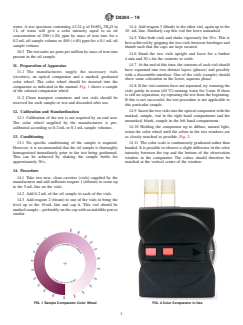
- User-Friendly Testing: Designed for routine checks at the point of use, utilizing an optical comparator and color wheel method for quick and reliable results.
- Sample Handling and Interference Awareness: Outlines best practices for collecting representative in-service fluid samples and notes potential interference from common cations and additives.
- Reporting and Data Interpretation: Details procedures for reading concentration values and emphasizes the standard’s role in supporting trend analysis and predictive maintenance.
Applications
ASTM D8304-19 is a valuable tool for industries where equipment reliability and oil cleanliness directly impact operational efficiency, safety, and cost control. Typical applications include:
- Engine Oils in Transportation and Marine Sectors: Monitoring lubricants in engines running on sulfur-containing fuels for corrosive iron compound buildup.
- Industrial Equipment Maintenance: Ongoing surveillance of hydraulic fluids and lubricants in compressors, turbines, and manufacturing machinery to detect non-wear related iron ingress.
- Power Generation: Condition monitoring of oils in turbines or generators, where atmospheric or fuel-borne contaminants may cause corrosion.
- Predictive Maintenance Programs: Facilitates data-driven interventions by distinguishing between iron from corrosion and from wear, supporting precise root cause analysis.
- Oil Analysis Laboratories: Supplementary test in broader oil analysis suites, helping to meet compliance and performance targets.
Related Standards
ASTM D8304-19 builds upon or is frequently used alongside several other key ASTM standards in oil condition monitoring:
- ASTM D4057 - Practice for Manual Sampling of Petroleum and Petroleum Products: Provides guidance on properly collecting oil samples for laboratory or field analysis.
- ASTM D4177 - Practice for Automatic Sampling of Petroleum and Petroleum Products: Specifies methods for automated sampling, ensuring representative fluid collection.
- ASTM D1193 - Specification for Reagent Water: Reference for water quality when preparing reagents or diluents involved in the test.
- ASTM D6300 - Practice for Determination of Precision and Bias Data for Use in Test Methods for Petroleum Products and Lubricants: Guides the statistical assessment of test method performance.
- ASTM E177 - Practice for Use of the Terms Precision and Bias in ASTM Test Methods: Standardizes definitions and expectations for test result interpretation.
By enabling the detection of corrosion-related iron compounds in in-service lubricants, ASTM D8304-19 enhances equipment protection and oil analysis accuracy. Proper use supports informed maintenance, reduces unplanned downtime, and helps optimize lubricant change intervals, especially in environments susceptible to corrosive contaminants. For organizations aiming for industry-best practices in predictive maintenance and oil condition monitoring, adherence to ASTM D8304-19 offers significant operational benefits.
Relations
- Effective Date
- 01-Mar-2024
- Effective Date
- 01-Dec-2023
- Effective Date
- 01-Dec-2019
- Effective Date
- 01-Apr-2016
- Effective Date
- 01-Jun-2015
- Effective Date
- 01-Jun-2014
- Effective Date
- 01-Jun-2014
- Effective Date
- 01-May-2014
- Effective Date
- 01-May-2014
- Effective Date
- 01-Dec-2013
- Effective Date
- 15-Jul-2013
- Effective Date
- 01-May-2013
- Refers
ASTM D4057-06(2011) - Standard Practice for Manual Sampling of Petroleum and Petroleum Products - Effective Date
- 01-Jun-2011
- Effective Date
- 01-Oct-2010
- Effective Date
- 15-Dec-2008
Get Certified
Connect with accredited certification bodies for this standard

Element Materials Technology
Materials testing and product certification.

ABS Group Brazil
ABS Group certification services in Brazil.

ABS Quality Evaluations Inc.
American Bureau of Shipping quality certification.
Sponsored listings
Frequently Asked Questions
ASTM D8304-19 is a standard published by ASTM International. Its full title is "Standard Test Method for Determination of Compounded Forms of Iron in In-service Fluids". This standard covers: SIGNIFICANCE AND USE 5.1 This test method is applicable for determining the level of iron contamination in lubricating oils from sources other than physical wear of the machinery or equipment, such as corrosion. It is particularly suited for oils from engines running on sulphur containing fuels where acidic combustion by-products can enter the lubrication system and cause corrosive damage. The test can be performed at the point of use as it does not require extensive laboratory equipment allowing timely intervention if necessary. SCOPE 1.1 This method covers a procedure for determining the concentration of compounded forms of iron in in-service fluids. It is applicable over an iron concentration range of 20 mg/kg to 800 mg/kg (ppm by mass hereafter). The test is not sensitive to metallic iron and thus provides a means of discrimination between the two forms of iron. It is suitable for monitoring the condition of equipment where iron contamination in the lubricating oil or functional fluid may not originate solely from physical wear, for example from corrosion or other forms of undesirable chemical processes within the equipment. 1.2 Units—The values stated in SI units are to be regarded as standard. Concentrations are reported as parts per million by mass (ppm) equivalent to iron contents expressed in mg per kg of oil sample (mg/kg). 1.3 This standard does not purport to address all of the safety concerns, if any, associated with its use. It is the responsibility of the user of this standard to establish appropriate safety, health, and environmental practices and determine the applicability of regulatory limitations prior to use. 1.4 This international standard was developed in accordance with internationally recognized principles on standardization established in the Decision on Principles for the Development of International Standards, Guides and Recommendations issued by the World Trade Organization Technical Barriers to Trade (TBT) Committee.
SIGNIFICANCE AND USE 5.1 This test method is applicable for determining the level of iron contamination in lubricating oils from sources other than physical wear of the machinery or equipment, such as corrosion. It is particularly suited for oils from engines running on sulphur containing fuels where acidic combustion by-products can enter the lubrication system and cause corrosive damage. The test can be performed at the point of use as it does not require extensive laboratory equipment allowing timely intervention if necessary. SCOPE 1.1 This method covers a procedure for determining the concentration of compounded forms of iron in in-service fluids. It is applicable over an iron concentration range of 20 mg/kg to 800 mg/kg (ppm by mass hereafter). The test is not sensitive to metallic iron and thus provides a means of discrimination between the two forms of iron. It is suitable for monitoring the condition of equipment where iron contamination in the lubricating oil or functional fluid may not originate solely from physical wear, for example from corrosion or other forms of undesirable chemical processes within the equipment. 1.2 Units—The values stated in SI units are to be regarded as standard. Concentrations are reported as parts per million by mass (ppm) equivalent to iron contents expressed in mg per kg of oil sample (mg/kg). 1.3 This standard does not purport to address all of the safety concerns, if any, associated with its use. It is the responsibility of the user of this standard to establish appropriate safety, health, and environmental practices and determine the applicability of regulatory limitations prior to use. 1.4 This international standard was developed in accordance with internationally recognized principles on standardization established in the Decision on Principles for the Development of International Standards, Guides and Recommendations issued by the World Trade Organization Technical Barriers to Trade (TBT) Committee.
ASTM D8304-19 is classified under the following ICS (International Classification for Standards) categories: 75.100 - Lubricants, industrial oils and related products. The ICS classification helps identify the subject area and facilitates finding related standards.
ASTM D8304-19 has the following relationships with other standards: It is inter standard links to ASTM D6300-24, ASTM D6300-23a, ASTM D6300-19a, ASTM D6300-16, ASTM D6300-15, ASTM D6300-14ae1, ASTM D6300-14a, ASTM E177-14, ASTM D6300-14, ASTM D6300-13a, ASTM D6300-13, ASTM E177-13, ASTM D4057-06(2011), ASTM E177-10, ASTM D6300-08. Understanding these relationships helps ensure you are using the most current and applicable version of the standard.
ASTM D8304-19 is available in PDF format for immediate download after purchase. The document can be added to your cart and obtained through the secure checkout process. Digital delivery ensures instant access to the complete standard document.
Standards Content (Sample)
This international standard was developed in accordance with internationally recognized principles on standardization established in the Decision on Principles for the
Development of International Standards, Guides and Recommendations issued by the World Trade Organization Technical Barriers to Trade (TBT) Committee.
Designation: D8304 − 19
Standard Test Method for
Determination of Compounded Forms of Iron in In-service
Fluids
This standard is issued under the fixed designation D8304; the number immediately following the designation indicates the year of
original adoption or, in the case of revision, the year of last revision. A number in parentheses indicates the year of last reapproval. A
superscript epsilon (´) indicates an editorial change since the last revision or reapproval.
1. Scope D4177 Practice for Automatic Sampling of Petroleum and
Petroleum Products
1.1 This method covers a procedure for determining the
D6300 Practice for Determination of Precision and Bias
concentrationofcompoundedformsofironinin-servicefluids.
Data for Use in Test Methods for Petroleum Products and
Itisapplicableoveranironconcentrationrangeof20 mg⁄kgto
Lubricants
800 mg⁄kg (ppm by mass hereafter).The test is not sensitive to
E177 Practice for Use of the Terms Precision and Bias in
metallic iron and thus provides a means of discrimination
ASTM Test Methods
between the two forms of iron. It is suitable for monitoring the
condition of equipment where iron contamination in the
3. Terminology
lubricating oil or functional fluid may not originate solely from
3.1 Definitions:
physical wear, for example from corrosion or other forms of
3.1.1 condition monitoring, n—the recording and analyzing
undesirable chemical processes within the equipment.
of data relating to the condition of equipment or machinery for
1.2 Units—The values stated in SI units are to be regarded
the purpose of predictive maintenance or optimization of
as standard. Concentrations are reported as parts per million by
performance.
mass (ppm) equivalent to iron contents expressed in mg per kg
3.1.2 machinery health, n—qualitative indication of the
of oil sample (mg/kg).
overall condition of equipment or machinery. May depend on
1.3 This standard does not purport to address all of the
data and trend analysis from several sources.
safety concerns, if any, associated with its use. It is the
3.1.3 trend analysis, n—the interpretation of regular or
responsibility of the user of this standard to establish appro-
continuous (in time) condition monitoring data in order to
priate safety, health, and environmental practices and deter-
determine any changes indicative of deterioration or incipient
mine the applicability of regulatory limitations prior to use.
failure in equipment or machinery.
1.4 This international standard was developed in accor-
3.1.4 wear, n—the loss of material from a surface, generally
dance with internationally recognized principles on standard-
occurring between two surfaces in relative motion, and result-
ization established in the Decision on Principles for the
ing from mechanical or chemical action, or a combination of
Development of International Standards, Guides and Recom-
both.
mendations issued by the World Trade Organization Technical
Barriers to Trade (TBT) Committee.
4. Summary of Test Method
4.1 A sample of oil is extracted from the equipment and
2. Referenced Documents
collected in a clean sample bottle. Two small, but equal
2.1 ASTM Standards:
volumes of the sample are subsequently transferred to two
D1193 Specification for Reagent Water
clean optical cuvettes. In one, a combined reagent is added.
D4057 Practice for Manual Sampling of Petroleum and
This combined reagent provides:
Petroleum Products
4.1.1 a means for reducing any iron present in an oxidation
state of +3, ferric iron, to an oxidation state of +2, ferrous iron,
4.1.2 a means of transferring the ferrous iron ions from the
oil phase to the aqueous phase of the combined reagent,
This test method is under the jurisdiction of ASTM Committee D02 on
Petroleum Products, Liquid Fuels, and Lubricants and is the direct responsibility of
4.1.3 a complexing reagent which can react with the ferrous
Subcommittee D02.96.02 on Chemistry for the Evaluation of In-Service Lubricants.
iron ions to form a product having a purple color of peak
Current edition approved Dec. 1, 2019. Published February 2020. DOI: 10.1520/
wavelength 538 nm.
D8304-19.
For referenced ASTM standards, visit the ASTM website, www.astm.org, or
4.2 In the second cuvette, a blank reagent is added. This
contact ASTM Customer Service at service@astm.org. For Annual Book of ASTM
provides all of the above apart from the complexing reagent in
Standards volume information, refer to the standard’s Document Summary page on
the ASTM website. step iii. The intensity of the color developed in the sample
Copyright © ASTM International, 100 Barr Harbor Drive, PO Box C700, West Conshohocken, PA 19428-2959. United States
D8304 − 19
cuvette is related to the concentration of the ferric and ferrous 8.2 Three reagents are required for the test comprising as
ironionsintheoriginaloilsample.Bycomparingthisintensity follows:
against a calibrated color wheel in an optical comparator, a
8.3 Thioglycolic Acid Reagent—Contains thioglycolic acid
determination of the compounded iron concentration can be
(C H O S) 1 % to 3 % (Warning—Toxic and skin corrosive),
2 4 2
made. The blank cuvette provides a reference for the compara-
sodium chloride (NaCl) 10 % to 28 %, pH buffer of
tor.
2-aminoethanol (C H NO) (Warning—Toxic and skin corro-
2 7
sive)andammonia(NH )solution(Warning—Skincorrosive)
4.3 Two test ranges are covered by this method:
1 % to 8 %, in water.
4.3.1 20 ppm to 400 ppm by using a 0.2 mL sample of oil,
4.3.2 40 ppm to 800 ppm by using a 0.1 mL sample of oil.
8.4 Phase Transfer and Diluent Reagent—2-propanol
(C H O) (Warning—Flammable and eye irritant) 40 % to
3 7
5. Significance and Use
75 %, non-polar solvent, for example, light distillate (for
example, CAS Number: 64742-47-8) (Warning—
5.1 This test method is applicable for determining the level
Combustible, Toxic and irritant) 20 % to 50 %, water 0 % to
of iron contamination in lubricating oils from sources other
3%.
than physical wear of the machinery or equipment, such as
corrosion. It is particularly suited for oils from engines running 8.5 Blank Reagent—As the thioglycolic reagent but omit-
on sulphur containing fuels where acidic combustion by- ting the thioglycolic acid.
products can enter the lubrication system and cause corrosive
9. Hazards
damage.Thetestcanbeperformedatthepointofuseasitdoes
not require extensive laboratory equipment allowing timely
9.1 The specific hazards for the individual constituents of
intervention if necessary.
the test reagents are noted in Section 8, however the commer-
cially available formulations contain the hazardous compo-
6. Interferences
nents at low concentrations and can be regarded as non-
hazardous. Normal practice regarding the use of hand and eye
6.1 Some anions and various cations are known to have
protection should still be adopted when handling the reagents
interfering effects with the thioglycolic acid reagent , either by
as a precautionary measure.
enhancing or reducing the intensity of the developed color by
the formation of similar complexes as can be formed with
9.2 Suitable protective equipment should be worn when
ferrous ions, or by causing precipitation. For those additives or
preparing the test specimen described in 10.2.
contaminants likely to be found in in-service fluids, only the
9.3 Disposal of the spent reagents and oil samples should be
cations noted in the following table have an appreciable effect.
carried out in accordance with local regulations regarding
The limits are stated as the mass of the cation compared to the
waste oil and solvent disposal to prevent environmental dam-
mass of the compounded iron present in the sample beyond
age.
which a change in the color intensity would be noticeable and
lead to an error in the iron determination exceeding 3 %.
10. Sampling, Test Specimens, and Test Units
Cation Effect on color intensity Limits (3 % error)
10.1 In-service fluid samples should be collected in accor-
Cobalt Enhances 2 % (factor of 0.02)
dance with the practices described in Practices D4057 or
Nickel Enhances 10 % (factor of 0.1)
Lead Reduces 100 % (factor of 1)
D4177, or both, ensuring that a representative sample is
Copper Reduces 1000 % (factor of 10)
2+ collected.Thesampleshouldbetransferredtocleanbottlesand
Bivalent Tin (Sn ) Reduces 20 000 % (factor of
sealed until required for use. The minimum quantity of fluid
200)
required is 0.4 mL which will be divided into two aliquots for
7. Apparatus the sample and blank determination. However, it is recom-
mended that a much greater volume than this is collected,
7.1 Optical comparator equipped with a calibrated color
approximately 100 mL. Before dividing the collected sample,
wheel.
ensure that it is thoroughly homogenized by shaking for
7.2 Cuvettes or vials that fit in the comparator and are
approximately 30 s.
transparent over the visible wavelengths.
10.2 Test specimens can be prepared by dissolving a suit-
able soluble iron compound in water at specific concentrations
8. Reagents and Materials
to give the required iron ppm level expected after extraction
8.1 Unless otherwise indicated, references to water shall be from an oil sample. One suitable iron compound is Ferrous
understood to mean Type I or better in Specification D1193. Sulphate Heptahydrate (FeSO .7H 0, CAS 7782-63-0, mo-
4 2
lecular weight 278.01 g⁄mol) (Warning—Toxic, skin and eye
irritant). This material is readily available and very soluble in
Swank, H.W. and Mellon, M.G., Ing. Eng. Chem. Anal., Ed., 10, 7-9, 1938.
The sole source of supply of the apparatus known to the committee at this time
is Parker Hannifin Ltd., Littlehampton, UK, BN17 7LU. If you are aware of The sole source of supply of the reagents known to the committee at this time
alternative suppliers, please provide this information to ASTM International is Parker Hannifin Ltd., Littlehampton, UK, BN17 7LU. The compositions of the
Headquarters.Your comments will receive careful consideration at a meeting of the reagents are covere
...