

ASTM D2397/D2397M-20
(Specification)Standard Specification for Cationic Emulsified Asphalt
General Information
- Abstract
ABSTRACT
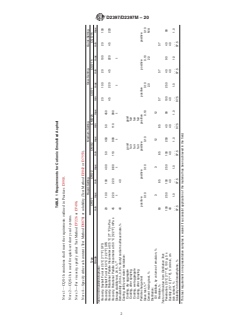
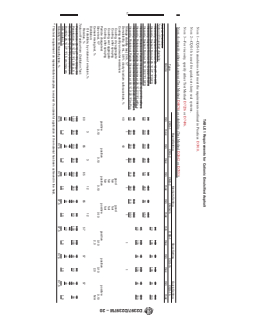
This specification covers the seven grades of cationic emulsified asphalt for use in pavement construction. The asphalt shall be homogeneous after thorough mixing provided separation has not been caused by freezing and shall conform to the requirements set for viscosity, storage stability, demulsibility, coating ability and water resistance, particle charge, and distillation.
SCOPE
1.1 This specification covers seven grades of cationic emulsified asphalt for use in pavement construction in the manner designated.
1.2 The values stated in either SI units or inch-pound units are to be regarded separately as standard. The values stated in each system are not necessarily exact equivalents; therefore, to ensure conformance with the standard, each system shall be used independently of the other, and values from the two systems shall not be combined.
1.3 This international standard was developed in accordance with internationally recognized principles on standardization established in the Decision on Principles for the Development of International Standards, Guides and Recommendations issued by the World Trade Organization Technical Barriers to Trade (TBT) Committee.
- Status
- Published
- Publication Date
- 30-Jun-2020
- Technical Committee
- D04 - Road and Paving Materials
- Drafting Committee
- D04.41 - Emulsified Asphalt Specifications




Overview
ASTM D2397/D2397M-20, titled “Standard Specification for Cationic Emulsified Asphalt,” establishes property requirements and testing methods for seven grades of cationic emulsified asphalts used in pavement construction. This ASTM standard provides guidance to ensure consistent quality, performance, and suitability of emulsified asphalt products through defined properties such as viscosity, storage stability, demulsibility, particle charge, and water resistance.
Designed in accordance with internationally recognized principles of standardization, ASTM D2397/D2397M-20 addresses both SI and inch-pound units. The specification is recognized for use by agencies such as the U.S. Department of Defense, highlighting its importance in both civil infrastructure and government applications.
Key Topics
- Seven Grades of Cationic Emulsified Asphalt: Includes rapid-setting (CRS-1, CRS-2), medium-setting (CMS-2, CMS-2h), slow-setting (CSS-1, CSS-1h), and quick-setting (CQS-1h) types for a range of construction needs.
- Essential Performance Requirements:
- Viscosity: Ensures proper flow and application, measured by Saybolt Furol or rotational paddle viscometer (Test Methods D7496, D7226).
- Storage Stability: Guarantees emulsion consistency (Test Method D6930).
- Demulsibility: Measures how readily the asphalt separates from the emulsion (Test Method D6936).
- Coating Ability and Water Resistance: Evaluates performance in contact with aggregates and under wet/dry conditions (Test Methods D244).
- Particle Charge: Confirms cationic (positive) charge needed for effective adhesion (Practice D7402).
- Sieve Test: Identifies oversized particles (Test Method D6933).
- Distillation and Residue Analysis: Assesses oil distillate content and residue quality (Test Method D6997).
- Detailed Sampling and Testing Protocols: Specifies sampling practice (D140/D140M) and the use of clean, sealed containers to maintain sample integrity.
Applications
Cationic emulsified asphalt specified under ASTM D2397/D2397M-20 is widely used in a variety of pavement construction and maintenance operations, including:
- Road Surface Treatments: Chip seals, slurry seals, and cold-mix paving where rapid and strong adhesion of asphalt is critical.
- Slurry Seal Systems: Particularly the CQS-1h grade, used for quick-setting in pavement preservation.
- Patching and Repair: Effective in cold and damp conditions due to its water-tolerant characteristics.
- Flexible Base Construction: Enhances aggregate binding and durability for sub-base and base courses.
Applying certified cationic emulsified asphalt supports extended pavement life, reduced maintenance, and improved performance under traffic and environmental stresses.
Related Standards
Several referenced ASTM standards support testing and application of cationic emulsified asphalts:
- ASTM D5/D5M: Penetration of Bituminous Materials
- ASTM D113: Ductility of Asphalt Materials
- ASTM D140/D140M: Sampling Asphalt Materials
- ASTM D244: Emulsified Asphalt Test Methods
- ASTM D2042 & D7553: Solubility of Asphalt Materials
- ASTM D3910: Slurry Seal Design and Construction
- ASTM D6930, D6933, D6935, D6936: Tests for Storage Stability, Sieve, Cement Mixing, Demulsibility
- ASTM D6997: Distillation of Emulsified Asphalt
- ASTM D7226, D7496: Viscosity Testing
- ASTM D8078: Ash Content of Asphalt and Residues
These interrelated standards ensure the effectiveness and reliability of cationic emulsified asphalt products, guiding producers and users in compliance, testing, and application best practices.
Keywords: cationic emulsified asphalt, ASTM D2397, pavement construction, rapid setting, medium setting, slow setting, storage stability, road materials, asphalt emulsion standards.
Relations
- Effective Date
- 01-Dec-2023
- Effective Date
- 01-Dec-2023
- Effective Date
- 01-Oct-2023
- Effective Date
- 15-Dec-2019
- Refers
ASTM D6930-19 - Standard Test Method for Settlement and Storage Stability of Emulsified Asphalts - Effective Date
- 01-Jul-2019
- Refers
ASTM D7496-18 - Standard Test Method for Viscosity of Emulsified Asphalt by Saybolt Furol Viscometer - Effective Date
- 01-Dec-2018
- Refers
ASTM D8078-18e1 - Standard Test Method for Ash Content of Asphalt and Emulsified Asphalt Residues - Effective Date
- 01-Apr-2018
- Refers
ASTM D8078-18 - Standard Test Method for Ash Content of Asphalt and Emulsified Asphalt Residues - Effective Date
- 01-Apr-2018
- Effective Date
- 01-Oct-2017
- Effective Date
- 01-Oct-2017
- Refers
ASTM D7496-17 - Standard Test Method for Viscosity of Emulsified Asphalt by Saybolt Furol Viscometer - Effective Date
- 01-Sep-2017
- Effective Date
- 01-Sep-2017
- Refers
ASTM D8078-16 - Standard Test Method for Ash Content of Asphalt and Emulsified Asphalt Residues - Effective Date
- 01-Oct-2016
- Effective Date
- 01-Jun-2016
- Effective Date
- 01-Jun-2015
Get Certified
Connect with accredited certification bodies for this standard

DIBt (Deutsches Institut für Bautechnik)
German Institute for Building Technology.
DIN CERTCO
DIN Group product certification.
Zavod za gradbeništvo Slovenije (ZAG) - Inšpekcija
ZAG inspection body for construction products, structures, and materials.
Sponsored listings
Frequently Asked Questions
ASTM D2397/D2397M-20 is a technical specification published by ASTM International. Its full title is "Standard Specification for Cationic Emulsified Asphalt". This standard covers: ABSTRACT This specification covers the seven grades of cationic emulsified asphalt for use in pavement construction. The asphalt shall be homogeneous after thorough mixing provided separation has not been caused by freezing and shall conform to the requirements set for viscosity, storage stability, demulsibility, coating ability and water resistance, particle charge, and distillation. SCOPE 1.1 This specification covers seven grades of cationic emulsified asphalt for use in pavement construction in the manner designated. 1.2 The values stated in either SI units or inch-pound units are to be regarded separately as standard. The values stated in each system are not necessarily exact equivalents; therefore, to ensure conformance with the standard, each system shall be used independently of the other, and values from the two systems shall not be combined. 1.3 This international standard was developed in accordance with internationally recognized principles on standardization established in the Decision on Principles for the Development of International Standards, Guides and Recommendations issued by the World Trade Organization Technical Barriers to Trade (TBT) Committee.
ABSTRACT This specification covers the seven grades of cationic emulsified asphalt for use in pavement construction. The asphalt shall be homogeneous after thorough mixing provided separation has not been caused by freezing and shall conform to the requirements set for viscosity, storage stability, demulsibility, coating ability and water resistance, particle charge, and distillation. SCOPE 1.1 This specification covers seven grades of cationic emulsified asphalt for use in pavement construction in the manner designated. 1.2 The values stated in either SI units or inch-pound units are to be regarded separately as standard. The values stated in each system are not necessarily exact equivalents; therefore, to ensure conformance with the standard, each system shall be used independently of the other, and values from the two systems shall not be combined. 1.3 This international standard was developed in accordance with internationally recognized principles on standardization established in the Decision on Principles for the Development of International Standards, Guides and Recommendations issued by the World Trade Organization Technical Barriers to Trade (TBT) Committee.
ASTM D2397/D2397M-20 is classified under the following ICS (International Classification for Standards) categories: 91.100.50 - Binders. Sealing materials; 93.080.20 - Road construction materials. The ICS classification helps identify the subject area and facilitates finding related standards.
ASTM D2397/D2397M-20 has the following relationships with other standards: It is inter standard links to ASTM D6936-23, ASTM D140/D140M-16(2023), ASTM D244-23, ASTM D5/D5M-19a, ASTM D6930-19, ASTM D7496-18, ASTM D8078-18e1, ASTM D8078-18, ASTM D244-09(2017), ASTM D7402-09(2017), ASTM D7496-17, ASTM D6936-17, ASTM D8078-16, ASTM D140/D140M-16, ASTM D140/D140M-15. Understanding these relationships helps ensure you are using the most current and applicable version of the standard.
ASTM D2397/D2397M-20 is available in PDF format for immediate download after purchase. The document can be added to your cart and obtained through the secure checkout process. Digital delivery ensures instant access to the complete standard document.
Standards Content (Sample)
This international standard was developed in accordance with internationally recognized principles on standardization established in the Decision on Principles for the
Development of International Standards, Guides and Recommendations issued by the World Trade Organization Technical Barriers to Trade (TBT) Committee.
Designation:D2397/D2397M −20
Standard Specification for
Cationic Emulsified Asphalt
This standard is issued under the fixed designation D2397/D2397M; the number immediately following the designation indicates the
year of original adoption or, in the case of revision, the year of last revision. A number in parentheses indicates the year of last
reapproval. A superscript epsilon (´) indicates an editorial change since the last revision or reapproval.
This standard has been approved for use by agencies of the U.S. Department of Defense.
1. Scope D6935 Test Method for Determining Cement Mixing of
Emulsified Asphalt
1.1 This specification covers seven grades of cationic emul-
D6936 Test Method for Determining Demulsibility of Emul-
sified asphalt for use in pavement construction in the manner
sified Asphalt
designated.
D6997 Test Method for Distillation of Emulsified Asphalt
1.2 The values stated in either SI units or inch-pound units
D7226 Test Method for Determining the Viscosity of Emul-
are to be regarded separately as standard. The values stated in
sified Asphalts Using a Rotational Paddle Viscometer
each system are not necessarily exact equivalents; therefore, to
D7402 Practice for Identifying Cationic EmulsifiedAsphalts
ensure conformance with the standard, each system shall be
D7496 Test Method for Viscosity of Emulsified Asphalt by
used independently of the other, and values from the two
Saybolt Furol Viscometer
systems shall not be combined.
D7553 Test Method for Solubility of Asphalt Materials in
1.3 This international standard was developed in accor- N-Propyl Bromide
dance with internationally recognized principles on standard-
D8078 Test Method for Ash Content of Asphalt and Emul-
ization established in the Decision on Principles for the sified Asphalt Residues
Development of International Standards, Guides and Recom-
mendations issued by the World Trade Organization Technical
3. Requirements
Barriers to Trade (TBT) Committee.
3.1 The emulsified asphalt shall be tested within 14 days of
delivery. The emulsified asphalt shall be homogeneous after
2. Referenced Documents
thorough mixing, provided separation has not been caused by
2.1 ASTM Standards:
freezing. Emulsions separated by freezing shall not be tested.
D5/D5M Test Method for Penetration of Bituminous Mate-
3.2 Emulsified asphalt shall conform to the requirements
rials
prescribed in Table 1. Specify the test method to be used.
D113 Test Method for Ductility of Asphalt Materials
Specify either Test Method D7226 or D7496.
D140/D140M Practice for Sampling Asphalt Materials
D244 Test Methods and Practices for Emulsified Asphalts
4. Sampling
D2042 Test Method for Solubility of Asphalt Materials in
Trichloroethylene 4.1 Samples of emulsified asphalt shall be taken in accor-
D3910 Practices for Design, Testing, and Construction of dance with Practice D140/D140M.
Slurry Seal
4.2 Samples shall be stored in clean, airtight, sealed con-
D6930 Test Method for Settlement and Storage Stability of
tainers at a temperature of not less than 4 °C [39.2 °F] until
Emulsified Asphalts
tested.
D6933 Test Method for Oversized Particles in Emulsified
Asphalts (Sieve Test)
5. Test Methods
5.1 The properties of the emulsified asphalts given in Table
This specification is under the jurisdiction of ASTM Committee D04 on Road 1 shall be determined in accordance with the followingASTM
and Paving Materials and is the direct responsibility of Subcommittee D04.41 on
standards:
Emulsified Asphalt Specifications.
5.1.1 Viscosity—Test Method D7496 or D7226 for Table 1.
Current edition approved July 1, 2020. Published July 2020. Originally approved
5.1.2 Storage Stability—Test Method D6930.
in 1965. Last previous edition approved in 2019 as D2397/D2397M – 19a. DOI:
10.1520/D2397_D2397M-20.
5.1.3 Demulsibility—Test Method D6936.
For referenced ASTM standards, visit the ASTM website, www.astm.org, or
5.1.4 Coating Ability and Water Resistance—Test Methods
contact ASTM Customer Service at service@astm.org.
...
This document is not an ASTM standard and is intended only to provide the user of an ASTM standard an indication of what changes have been made to the previous version. Because
it may not be technically possible to adequately depict all changes accurately, ASTM recommends that users consult prior editions as appropriate. In all cases only the current version
of the standard as published by ASTM is to be considered the official document.
Designation: D2397/D2397M − 19a D2397/D2397M − 20
Standard Specification for
Cationic Emulsified Asphalt
This standard is issued under the fixed designation D2397/D2397M; the number immediately following the designation indicates the
year of original adoption or, in the case of revision, the year of last revision. A number in parentheses indicates the year of last
reapproval. A superscript epsilon (´) indicates an editorial change since the last revision or reapproval.
This standard has been approved for use by agencies of the U.S. Department of Defense.
1. Scope
1.1 This specification covers seven grades of cationic emulsified asphalt for use in pavement construction in the manner
designated.
1.2 The values stated in either SI units or inch-pound units are to be regarded separately as standard. The values stated in each
system are not necessarily exact equivalents; therefore, to ensure conformance with the standard, each system shall be used
independently of the other, and values from the two systems shall not be combined.
1.3 This international standard was developed in accordance with internationally recognized principles on standardization
established in the Decision on Principles for the Development of International Standards, Guides and Recommendations issued
by the World Trade Organization Technical Barriers to Trade (TBT) Committee.
2. Referenced Documents
2.1 ASTM Standards:
D5/D5M Test Method for Penetration of Bituminous Materials
D113 Test Method for Ductility of Asphalt Materials
D140/D140M Practice for Sampling Asphalt Materials
D244 Test Methods and Practices for Emulsified Asphalts
D2042 Test Method for Solubility of Asphalt Materials in Trichloroethylene
D3910 Practices for Design, Testing, and Construction of Slurry Seal
D6930 Test Method for Settlement and Storage Stability of Emulsified Asphalts
D6933 Test Method for Oversized Particles in Emulsified Asphalts (Sieve Test)
D6935 Test Method for Determining Cement Mixing of Emulsified Asphalt
D6936 Test Method for Determining Demulsibility of Emulsified Asphalt
D6997 Test Method for Distillation of Emulsified Asphalt
D7226 Test Method for Determining the Viscosity of Emulsified Asphalts Using a Rotational Paddle Viscometer
D7402 Practice for Identifying Cationic Emulsified Asphalts
D7496 Test Method for Viscosity of Emulsified Asphalt by Saybolt Furol Viscometer
D7553 Test Method for Solubility of Asphalt Materials in N-Propyl Bromide
D8078 Test Method for Ash Content of Asphalt and Emulsified Asphalt Residues
3. Requirements
3.1 The emulsified asphalt shall be tested within 14 days of delivery. The emulsified asphalt shall be homogeneous after
thorough mixing, provided separation has not been caused by freezing. Emulsions separated by freezing shall not be tested.
3.2 Emulsified asphalt shall conform to the requirements prescribed in Table 1. Specify the test method to be used. Specify
either Test Method D7226 or D7496.
This specification is under the jurisdiction of ASTM Committee D04 on Road and Paving Materials and is the direct responsibility of Subcommittee D04.41 on Emulsified
Asphalt Specifications.
Current edition approved Nov. 1, 2019July 1, 2020. Published November 2019July 2020. Originally approved in 1965. Last previous edition approved in 2019 as
D2397/D2397M – 19.D2397/D2397M – 19a. DOI: 10.1520/D2397_D2397M-19A.10.1520/D2397_D2397M-20.
For referenced ASTM standards, visit the ASTM website, www.astm.org, or contact ASTM Customer Service at service@astm.org. For Annual Book of ASTM Standards
volume information, refer to the standard’s Document Summary page on the ASTM website.
Copyright © ASTM International, 100 Barr Harbor Drive, PO Box C700, West Conshohocken, PA 19428-2959. United States
D2397/D2397M − 20
TABLE 1 Requirements for Cationic Emulsified Asphalt
NOTE 1—CQS-1h emulsions shall meet the requirements outlined in Practices D3910.
NOTE 2—CQS-1h is used for quick-set slurry seal systems.
NOTE 3—For viscosity, specify either Test Method D7226 or D7496.
NOTE 4—Specify either ash content (Test Method D8078) or solubility (Test Method D2042 or D7553).
Rapid-Setting Medium-Setting Slow-Setting Quick-Setting
Type CRS-1
...