

ASTM D2625-20
(Test Method)Standard Test Method for Endurance (Wear) Life and Load-Carrying Capacity of Solid Film Lubricants (Falex Pin and Vee Method)
General Information
- Abstract
SIGNIFICANCE AND USE
5.1 This test method differentiates between bonded solid lubricants with respect to their wear life and load-carrying capacity. If the test conditions are changed, wear life may change and relative ratings of the bonded solid film lubricants may be different.
SCOPE
1.1 This test method (see Note 1) covers the determination of the endurance (wear) life and load-carrying capacity of dry solid film lubricants in sliding steel-on-steel applications.
Note 1: Reference may be made to Coordinating Research Council, Inc. (CRC) Report No. 419, “Development of Research Technique for Measuring Wear Life of Bonded Solid Lubricant Coatings for Airframes, Using the Falex Tester.” See also SAE Aerospace Standard AS5272.
1.2 The values stated in SI units are to be regarded as the standard except where equipment is supplied using inch-pound units and would then be regarded as standard. The metric equivalents of inch-pound units given in such cases in the body of the standard may be approximate.
1.3 This standard does not purport to address all of the safety concerns, if any, associated with its use. It is the responsibility of the user of this standard to establish appropriate safety, health, and environmental practices and determine the applicability of regulatory limitations prior to use.
1.4 This international standard was developed in accordance with internationally recognized principles on standardization established in the Decision on Principles for the Development of International Standards, Guides and Recommendations issued by the World Trade Organization Technical Barriers to Trade (TBT) Committee.
- Status
- Published
- Publication Date
- 31-Aug-2020
- Technical Committee
- D02 - Petroleum Products, Liquid Fuels, and Lubricants
- Drafting Committee
- D02.L0.05 - Solid Lubricants
Buy Documents
ASTM D2625-20 - Standard Test Method for Endurance (Wear) Life and Load-Carrying Capacity of Solid Film Lubricants (Falex Pin and Vee Method)
REDLINE ASTM D2625-20 - Standard Test Method for Endurance (Wear) Life and Load-Carrying Capacity of Solid Film Lubricants (Falex Pin and Vee Method)
Overview
ASTM D2625-20 is the internationally recognized standard test method established by ASTM for measuring the endurance (wear) life and load-carrying capacity of solid film lubricants using the Falex Pin and Vee Method. This test provides a consistent way to differentiate between dry, bonded solid lubricants based on their longevity and ability to withstand applied loads in steel-on-steel sliding applications. The standard is an essential reference for evaluating performance, quality, and suitability of lubricants, particularly in environments where traditional liquid lubrication is not viable.
Key Topics
- Wear Life Assessment: The test quantifies the endurance (wear) life of a solid film lubricant, reporting the duration a lubricant functions under a constant load before failure occurs.
- Load-Carrying Capacity: Measures the maximum load the lubricant can sustain for at least one minute before mechanical or performance failure.
- Test Methodology: The Falex Pin and Vee apparatus subjects coated steel pins and vee blocks to controlled, incremental loading while recording torque and signs of failure.
- Specimen Preparation: Requires strict cleaning and preparation of test specimens using approved methods and non-depleting solvents to ensure data accuracy.
- Calibration and Consistency: Detailed calibration of equipment and precise test setup are necessary for reliable, repeatable results.
- Precision and Bias: The method outlines repeatability and reproducibility metrics, aiding users in data evaluation across laboratories.
- Safety & Environmental Considerations: The procedure emphasizes user responsibility for safety, environmental protection, and compliance with related regulatory limitations.
Applications
The ASTM D2625-20 test method is widely used in industries that require reliable solid film lubricants, especially when liquid lubricants are impractical due to temperature, contamination, or access restrictions. Common applications include:
- Aerospace: Ensuring bonded lubricants used in airframes and other critical aircraft components meet endurance and loading requirements.
- Automotive and Heavy Machinery: Testing lubricants for high-wear parts such as connections, gears, and sliding surfaces.
- Defense: Validating performance of solid film lubricants for military applications where maintenance intervals are extended and reliability is critical.
- General Manufacturing: Specifying lubricants for equipment operating under boundary or mixed lubrication conditions.
This standard is crucial for procurement, quality assurance, research, and development teams seeking to compare different lubricants, develop new products, or meet industry benchmarks.
Related Standards
ASTM D2625-20 references and aligns with several other standards and specifications to enhance its relevance and application, including:
- SAE Aerospace Standard AS5272: Covers specifications for heat-cured, corrosion-inhibiting solid film lubricants.
- ASTM F22: Describes the water-break test method for assessing hydrophobic surface films, important for confirming cleanliness before testing.
- MIL-L-8937 & MIL-DTL-16232: U.S. military specifications for lubricants and phosphate coatings applicable to test specimen preparation.
- Federal Test Method Standard 791: Additional procedures relevant to lubricant and material testing.
- 42USC7671a (Clean Air Act Amendments of 1990): Specifies environmental requirements for cleaning agents used in preparation.
- ASTM B16/B16M: Material specifications for components such as brass shear pins.
Practical Value
Using ASTM D2625-20 ensures that evaluations of solid film lubricants are accurate, reproducible, and recognized across international and industry borders. This standard aids manufacturers, suppliers, and end-users in:
- Selecting suitable solid film lubricants based on comparative wear life and load-carrying ability.
- Meeting contractual and regulatory requirements in aerospace, defense, automotive, and industrial sectors.
- Minimizing maintenance costs and repeat testing through proven, standardized methods.
By adopting this methodology, organizations achieve higher confidence in equipment reliability and lubricant performance, leading to extended service life and operational efficiency.
Relations
- Effective Date
- 01-Oct-2019
- Effective Date
- 01-May-2015
- Effective Date
- 01-Oct-2010
- Refers
ASTM F22-02(2007) - Standard Test Method for Hydrophobic Surface Films by the Water-Break Test - Effective Date
- 01-Apr-2007
- Effective Date
- 01-Mar-2005
- Effective Date
- 10-Oct-2002
- Effective Date
- 10-Jan-2000
- Refers
ASTM F22-65(1998) - Standard Test Method for Hydrophobic Surface Films by the Water-Break Test - Effective Date
- 01-Jan-1992
Buy Documents
ASTM D2625-20 - Standard Test Method for Endurance (Wear) Life and Load-Carrying Capacity of Solid Film Lubricants (Falex Pin and Vee Method)
REDLINE ASTM D2625-20 - Standard Test Method for Endurance (Wear) Life and Load-Carrying Capacity of Solid Film Lubricants (Falex Pin and Vee Method)
Get Certified
Connect with accredited certification bodies for this standard

Element Materials Technology
Materials testing and product certification.

ABS Group Brazil
ABS Group certification services in Brazil.

ABS Quality Evaluations Inc.
American Bureau of Shipping quality certification.
Sponsored listings
Frequently Asked Questions
ASTM D2625-20 is a standard published by ASTM International. Its full title is "Standard Test Method for Endurance (Wear) Life and Load-Carrying Capacity of Solid Film Lubricants (Falex Pin and Vee Method)". This standard covers: SIGNIFICANCE AND USE 5.1 This test method differentiates between bonded solid lubricants with respect to their wear life and load-carrying capacity. If the test conditions are changed, wear life may change and relative ratings of the bonded solid film lubricants may be different. SCOPE 1.1 This test method (see Note 1) covers the determination of the endurance (wear) life and load-carrying capacity of dry solid film lubricants in sliding steel-on-steel applications. Note 1: Reference may be made to Coordinating Research Council, Inc. (CRC) Report No. 419, “Development of Research Technique for Measuring Wear Life of Bonded Solid Lubricant Coatings for Airframes, Using the Falex Tester.” See also SAE Aerospace Standard AS5272. 1.2 The values stated in SI units are to be regarded as the standard except where equipment is supplied using inch-pound units and would then be regarded as standard. The metric equivalents of inch-pound units given in such cases in the body of the standard may be approximate. 1.3 This standard does not purport to address all of the safety concerns, if any, associated with its use. It is the responsibility of the user of this standard to establish appropriate safety, health, and environmental practices and determine the applicability of regulatory limitations prior to use. 1.4 This international standard was developed in accordance with internationally recognized principles on standardization established in the Decision on Principles for the Development of International Standards, Guides and Recommendations issued by the World Trade Organization Technical Barriers to Trade (TBT) Committee.
SIGNIFICANCE AND USE 5.1 This test method differentiates between bonded solid lubricants with respect to their wear life and load-carrying capacity. If the test conditions are changed, wear life may change and relative ratings of the bonded solid film lubricants may be different. SCOPE 1.1 This test method (see Note 1) covers the determination of the endurance (wear) life and load-carrying capacity of dry solid film lubricants in sliding steel-on-steel applications. Note 1: Reference may be made to Coordinating Research Council, Inc. (CRC) Report No. 419, “Development of Research Technique for Measuring Wear Life of Bonded Solid Lubricant Coatings for Airframes, Using the Falex Tester.” See also SAE Aerospace Standard AS5272. 1.2 The values stated in SI units are to be regarded as the standard except where equipment is supplied using inch-pound units and would then be regarded as standard. The metric equivalents of inch-pound units given in such cases in the body of the standard may be approximate. 1.3 This standard does not purport to address all of the safety concerns, if any, associated with its use. It is the responsibility of the user of this standard to establish appropriate safety, health, and environmental practices and determine the applicability of regulatory limitations prior to use. 1.4 This international standard was developed in accordance with internationally recognized principles on standardization established in the Decision on Principles for the Development of International Standards, Guides and Recommendations issued by the World Trade Organization Technical Barriers to Trade (TBT) Committee.
ASTM D2625-20 is classified under the following ICS (International Classification for Standards) categories: 75.100 - Lubricants, industrial oils and related products. The ICS classification helps identify the subject area and facilitates finding related standards.
ASTM D2625-20 has the following relationships with other standards: It is inter standard links to ASTM B16/B16M-19, ASTM B16/B16M-10(2015), ASTM B16/B16M-10, ASTM F22-02(2007), ASTM B16/B16M-05, ASTM F22-02, ASTM B16/B16M-00, ASTM F22-65(1998). Understanding these relationships helps ensure you are using the most current and applicable version of the standard.
ASTM D2625-20 is available in PDF format for immediate download after purchase. The document can be added to your cart and obtained through the secure checkout process. Digital delivery ensures instant access to the complete standard document.
Standards Content (Sample)
This international standard was developed in accordance with internationally recognized principles on standardization established in the Decision on Principles for the
Development of International Standards, Guides and Recommendations issued by the World Trade Organization Technical Barriers to Trade (TBT) Committee.
Designation: D2625 − 20
Standard Test Method for
Endurance (Wear) Life and Load-Carrying Capacity of Solid
Film Lubricants (Falex Pin and Vee Method)
This standard is issued under the fixed designation D2625; the number immediately following the designation indicates the year of
original adoption or, in the case of revision, the year of last revision.Anumber in parentheses indicates the year of last reapproval.A
superscript epsilon (´) indicates an editorial change since the last revision or reapproval.
This standard has been approved for use by agencies of the U.S. Department of Defense.
1. Scope* and Shapes for Use in Screw Machines
F22Test Method for Hydrophobic Surface Films by the
1.1 This test method (see Note 1) covers the determination
Water-Break Test
of the endurance (wear) life and load-carrying capacity of dry
2.2 U.S. Military Specifications:
solid film lubricants in sliding steel-on-steel applications.
MIL-DTL-16232PhosphateCoatings,Heavy,Manganeseor
NOTE 1—Reference may be made to Coordinating Research Council,
Zinc Base
Inc. (CRC) Report No. 419, “Development of Research Technique for
2.3 Other Standards:
Measuring Wear Life of Bonded Solid Lubricant Coatings forAirframes,
42USC7671aClean Air Act Amendments of 1990
Using the Falex Tester.” See also SAE Aerospace Standard AS5272.
SAE AS5272Lubricant, Solid Film, Heat Cured, Corrosion
1.2 The values stated in SI units are to be regarded as the
Inhibiting, Procurement Specification
standardexceptwhereequipmentissuppliedusinginch-pound
units and would then be regarded as standard. The metric
3. Terminology
equivalentsofinch-poundunitsgiveninsuchcasesinthebody
3.1 Definitions:
of the standard may be approximate.
3.1.1 dry solid film lubricants, n—drycoatingsconsistingof
1.3 This standard does not purport to address all of the
lubricating powders in a solid matrix bonded to one or both
safety concerns, if any, associated with its use. It is the
surfaces to be lubricated.
responsibility of the user of this standard to establish appro-
3.2 Definitions of Terms Specific to This Standard:
priate safety, health, and environmental practices and deter-
3.2.1 direct load, n—theloadthatisappliedlinearly,bisect-
mine the applicability of regulatory limitations prior to use.
ing the angle of the vee block corrected to either the 800lbf
1.4 This international standard was developed in accor-
(3550N) gauge reference or the 3000lbf (13300N) gauge
dance with internationally recognized principles on standard-
reference.
ization established in the Decision on Principles for the
3.2.1.1 Discussion—This load is equivalent to the true load
Development of International Standards, Guides and Recom-
times the cos 42°.
mendations issued by the World Trade Organization Technical
Barriers to Trade (TBT) Committee. 3.2.2 endurance (wear) life, n—the length of test time
beforefailureunderaconstantloadedcondition,inminutes,in
2. Referenced Documents
which the applied test lubricant performs its function.
2.1 ASTM Standards: 3.2.3 gauge load, n—the value obtained from the gauge
B16/B16MSpecification for Free-Cutting Brass Rod, Bar
while running the test after being corrected to the standard
curve using the calibration procedure for the 4500 lbf
(20000N) reference gauge.
This test method is under the jurisdiction of ASTM Committee D02 on
3.2.3.1 Discussion—Thegaugereadingisirrespectiveofthe
Petroleum Products, Liquid Fuels, and Lubricants and is the direct responsibility of
particulargaugeused,andcorrectionsaremadebycomparison
Subcommittee D02.L0.05 on Solid Lubricants.
totheBrinellballimpressiondiametersonastandardreference
Current edition approved Sept. 1, 2020. Published October 2020. Originally
approved in 1967. Last previous edition approved in 2015 as D2625–94 (2015).
DOI: 10.1520/D2625-20.
2 3
For referenced ASTM standards, visit the ASTM website, www.astm.org, or Available from https://quicksearch.dla.mil/qsSearch.aspx.
contact ASTM Customer Service at service@astm.org. For Annual Book of ASTM Available from U.S. Environmental Protection Agency, http://epa.gov.
Standards volume information, refer to the standard’s Document Summary page on AvailablefromSAEInternational(SAE),400CommonwealthDr.,Warrendale,
the ASTM website. PA 15096, http://www.sae.org.
*A Summary of Changes section appears at the end of this standard
Copyright © ASTM International, 100 Barr Harbor Drive, PO Box C700, West Conshohocken, PA 19428-2959. United States
D2625 − 20
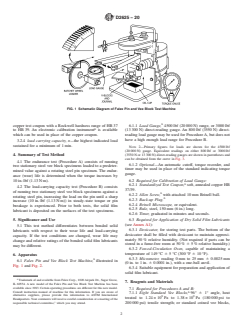
FIG. 1 Schematic Diagram of Falex Pin and Vee Block Test Machine
copper test coupon with a Rockwell hardness range of HB37 6.1.1 Load Gauge, 4500lbf (20000N) range, or 3000lbf
to HB39. An electronic calibration instrument is available (13300N) direct-reading gauge. An 800lbf (3550N) direct-
which can be used in place of the copper coupon. reading load gauge may be used for ProcedureA, but does not
have a high enough load range for Procedure B.
3.2.4 load carrying capacity, n—the highest indicated load
sustained for a minimum of 1min.
NOTE 2—Primary figures for loads are shown for the 4500lbf
(20000N) gauge. Equivalent readings on either 800lbf or 3000lbf
(3550N or 13300N) direct-reading gauges are shown in parentheses and
4. Summary of Test Method
can be obtained from the curve in Fig. 3.
4.1 The endurance test (Procedure A) consists of running
6.1.2 Optional—An automatic cutoff, torque recorder, and
two stationary steel vee block specimens loaded to a predeter-
timer may be used in place of the standard indicating torque
mined value against a rotating steel pin specimen. The endur-
gauge.
ance (wear) life is determined when the torque increases by
10in.·lbf (1.13N·m). 6.2 Required for Calibration of Load Gauge:
6.2.1 Standardized Test Coupon, soft, annealed copper HB
4.2 The load-carrying capacity test (Procedure B) consists
37/39.
of running two stationary steel vee block specimens against a
6.2.2 Allen Screw, with attached 10mm Brinell ball.
rotating steel pin, increasing the load on the pin until a sharp
6.2.3 Back-up Plug.
increase (10in.·lbf (1.13N·m)) in steady-state torque or pin
6.2.4 Brinell Microscope, or equivalent.
breakage is experienced. Prior to both tests, the solid film
6.2.5 Rule, steel, 150mm (6in.) long.
lubricant is deposited on the surfaces of the test specimens.
6.2.6 Timer, graduated in minutes and seconds.
5. Significance and Use
6.3 Required for Application of Dry Solid Film Lubricants
(see Annex A1):
5.1 This test method differentiates between bonded solid
6.3.1 Desiccator, for storing test parts. The bottom of the
lubricants with respect to their wear life and load-carrying
desiccator shall be filled with desiccant to maintain approxi-
capacity. If the test conditions are changed, wear life may
mately 50% relative humidity. (Not required if parts can be
change and relative ratings of the bonded solid film lubricants
stored in a fume-free room at 50% 6 5% relative humidity.)
may be different.
6.3.2 Forced-Circulation Oven, capable of maintaining a
temperature of 149°C 6 5°C (300°F 6 10°F).
6. Apparatus
6.3.3 Micrometer, reading 0mm to 25mm 6 0.0025mm
6.1 Falex Pin and Vee Block Test Machine, illustrated in
(0in. to 1in. 6 0.0001in.), with a one-ball anvil.
Fig. 1 and Fig. 2.
6.3.4 Suitable equipment for preparation and application of
solid film lubricant.
Trademark of and available from Falex Corp., 1020Airpark Dr., Sugar Grove,
7. Reagents and Materials
IL 60554. A new model of the Falex Pin and Vee Block Test Machine has been
available since 1983. Certain operating procedures are different for this new model.
7.1 Required for Procedures A and B:
Consult instruction manual of machine for this information. If you are aware of 6
7.1.1 Eight Standard Vee Blocks, 96° 6 1° angle, heat
alternative suppliers, please provide this information to ASTM International
9 9
treated to 1.24×10 Pa to 1.38×10 Pa (180000psi to
Headquarters.Your comments will receive careful consideration at a meeting of the
responsible technical committee, which you may attend. 200000psi) tensile strength; or standard coined vee blocks,
D2625 − 20
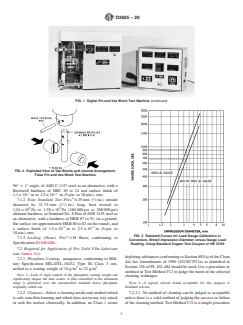
FIG. 1 Digital Pin and Vee Block Test Machine (continued)
FIG. 2 Exploded View of Vee Blocks and Journal Arrangement,
Falex Pin and Vee Block Test Machine
96° 6 1° angle, ofAISI C-1137 steel as an alternative, with a
Rockwell hardness of HRC 20 to 24 and surface finish of
−7 −7
1.3×10 mto2.5×10 m (5µin. to 10µin.), rms.
7.1.2 Four Standard Test Pins, 6.35mm ( ⁄4in.) outside
diameter by 31.75 mm (1 ⁄4 in.) long, heat treated to
9 9
1.24×10 Pa to 1.38×10 Pa (180000psi to 200000psi)
ultimatehardness;orStandardNo.8PinsofAISI3135steelas
an alternative, with a hardness of HRB 87 to 91, on a ground,
flatsurface(orapproximatelyHRB80to83ontheround),and
−7 −7
a surface finish of 1.3×10 mto2.5×10 m (5µin. to
10µin.) rms.
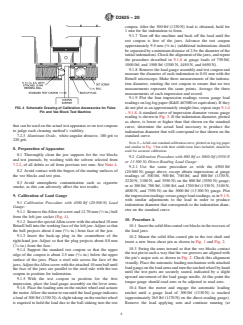
FIG. 3 Standard Curves for Load Gauge Calibration or
7.1.3 Locking (Shear) Pin, ⁄2H Brass, conforming to
Conversion, Brinell Impression Diameter versus Gauge Load
Specification B16/B16M.
Reading, Using Standard Copper Test Coupon of HB 37/39
7.2 Required for Application of Dry Solid Film Lubricant
(see Annex A1):
depletingsubstancesconformingtoSection602(a)oftheClean
7.2.1 Phosphate Coating, manganese, conforming to Mili-
Air Act Amendments of 1990 (42USC7671a) as identified in
tary Specification MIL-DTL-16232, Type M, Class 3 con-
2 2 Section 326 of PL102-484 should be used. Use a procedure as
trolled to a coating weight of 16g⁄m to 22g⁄m .
outlined in Test Method F22 to judge the merit of the selected
NOTE 3—Lack of rigid control of the phosphate coating weight can
cleaning technique.
significantly impact the data scatter. A film controlled to the minimum
range is preferred over the uncontrolled standard heavy phosphate NOTE 4—A typical solvent found acceptable for this purpose is
originally called out. Stoddard solvent.
7.2.2 Cleaners—Select a cleaning media and method which 7.2.2.1 No method of cleaning can be judged as acceptable
issafe,non-filmformingandwhichdoesnotinanywayattack unless there is a valid method of judging the success or failure
or etch the surface chemically. In addition, no Class 1 ozone ofthecleaningmethod.TestMethodF22isasimpleprocedure
D2625 − 20
coupon. After the 300lbf (1330N) load is obtained, hold for
1min for the indentation to form.
9.1.7 Turn off the machine and back off the load until the
test coupon is free of the jaws. Advance the test coupon
approximately 9.5mm ( ⁄8in.) (additional indentations should
beseparatedbyaminimumdistanceof2.5×thediameterofthe
initialindentation).Checkthealignmentofthejaws,andrepeat
the procedure described in 9.1.6 at gauge loads of 750lbf,
1000lbf, and 1500lbf (3300N, 4450N, and 6650N).
9.1.8 Remove the load gauge assembly and test coupon and
measure the diameter of each indentation to 0.01mm with the
Brinell microscope. Make three measurements of the indenta-
tion diameter, rotating the test coupon to ensure that no two
measurements represent the same points. Average the three
measurements of each impression and record.
9.1.9 Plot the four impression readings versus gauge load
readingsonlog-logpaper(K&E467080orequivalent).Ifthey
do not plot as an approximately straight line, repeat steps 9.1.4
FIG. 4 Schematic Drawing of Calibration Accessories for Falex
Pin and Vee Block Test Machine
– 9.1.8.Astandard curve of impression diameter versus gauge
reading is shown in Fig. 3. If the indentation diameter, plotted
as above, is lower or higher than that shown on the standard
that can be used on the actual test apparatus or on test coupons
curve, determine the actual load necessary to produce the
to judge each cleaning method’s viability.
indentation diameter that will correspond to that shown on the
7.2.3 Aluminum Oxide, white angular abrasive, 180grit to
standard curve.
220grit.
NOTE5—Afull-sizestandardcalibrationcurve,plottedonlog-logpaper
and similar to Fig. 3 but with finer subdivision lines included, should be
8. Preparation of Apparatus
used for accurate calibration.
8.1 Thoroughly clean the jaw supports for the vee blocks
9.2 Calibration Procedure with 800 lbf or 3000 lbf (3550 N
and test journals, by washing with the solvent selected from
or 13 300 N) Direct-Reading Load Gauge:
7.2.2, of all debris or oil from previous test runs. See Note 4.
9.2.1 Use the same procedure as with the 4500 lbf
8.2 Avoid contact with the fingers of the mating surfaces of
(20000N) gauge above, except obtain impressions at gauge
the vee blocks and test pins. readings of 300lbf, 500lbf, 700lbf, and 800lbf (1330N,
2220N, 3100N,
...
This document is not an ASTM standard and is intended only to provide the user of an ASTM standard an indication of what changes have been made to the previous version. Because
it may not be technically possible to adequately depict all changes accurately, ASTM recommends that users consult prior editions as appropriate. In all cases only the current version
of the standard as published by ASTM is to be considered the official document.
Designation: D2625 − 94 (Reapproved 2015) D2625 − 20
Standard Test Method for
Endurance (Wear) Life and Load-Carrying Capacity of Solid
Film Lubricants (Falex Pin and Vee Method)
This standard is issued under the fixed designation D2625; the number immediately following the designation indicates the year of
original adoption or, in the case of revision, the year of last revision. A number in parentheses indicates the year of last reapproval. A
superscript epsilon (´) indicates an editorial change since the last revision or reapproval.
This standard has been approved for use by agencies of the U.S. Department of Defense.
1. Scope Scope*
1.1 This test method (see Note 1) covers the determination of the endurance (wear) life and load-carrying capacity of dry solid
film lubricants in sliding steel-on-steel applications.
NOTE 1—Reference may be made to Coordinating Research Council, Inc. (CRC) Report No. 419, “Development of Research Technique for Measuring
Wear Life of Bonded Solid Lubricant Coatings for Airframes, Using the Falex Tester.” See also Military Specification MIL-L-8937 (ASG), SAE
Aerospace Standard AS5272.Jan. 22, 1963, and Methods 3807 and 3812 of Federal Test Method 791a.
1.2 The values stated in SI units are to be regarded as the standard except where equipment is supplied using inch-pound units
and would then be regarded as standard. The metric equivalents of inch-pound units given in such cases in the body of the standard
may be approximate.
1.3 This standard does not purport to address all of the safety concerns, if any, associated with its use. It is the responsibility
of the user of this standard to establish appropriate safety safety, health, and healthenvironmental practices and determine the
applicability of regulatory limitations prior to use.
1.4 This international standard was developed in accordance with internationally recognized principles on standardization
established in the Decision on Principles for the Development of International Standards, Guides and Recommendations issued
by the World Trade Organization Technical Barriers to Trade (TBT) Committee.
2. Referenced Documents
2.1 ASTM Standards:
B16/B16M Specification for Free-Cutting Brass Rod, Bar and Shapes for Use in Screw Machines
F22 Test Method for Hydrophobic Surface Films by the Water-Break Test
2.2 U.S. Military Specifications:
MIL-L-8937
MIL-P-16232FMIL-DTL-16232 Phosphate Coatings, Heavy, Manganese or Zinc Base (for Ferrous Metals)
This test method is under the jurisdiction of ASTM Committee D02 on Petroleum Products, Liquid Fuels, and Lubricants and is the direct responsibility of Subcommittee
D02.L0.05 on Solid Lubricants.
Current edition approved July 1, 2015Sept. 1, 2020. Published July 2015October 2020. Originally approved in 1967. Last previous edition approved in 20102015 as
D2625 – 94 (2010).(2015). DOI: 10.1520/D2625-94R15.10.1520/D2625-20.
For referenced ASTM standards, visit the ASTM website, www.astm.org, or contact ASTM Customer Service at service@astm.org. For Annual Book of ASTM Standards
volume information, refer to the standard’s Document Summary page on the ASTM website.
Available from Standardization Documents Order Desk, DODSSP, Bldg. 4, Section D, 700 Robbins Ave., Philadelphia, PA 19111-5098, http://dodssp.daps.dla.mil.https://
quicksearch.dla.mil/qsSearch.aspx.
*A Summary of Changes section appears at the end of this standard
Copyright © ASTM International, 100 Barr Harbor Drive, PO Box C700, West Conshohocken, PA 19428-2959. United States
D2625 − 20
2.3 Other Standards:
42USC7671a Clean Air Act Amendments of 1990
Federal Test Method 791aSAE AS5272 Methods 3807 and 3812Lubricant, Solid Film, Heat Cured, Corrosion Inhibiting,
Procurement Specification
3. Terminology
3.1 Definitions:
3.1.1 dry solid film lubricants—lubricants, n—dry coatings consisting of lubricating powders in a solid matrix bonded to one or
both surfaces to be lubricated.
3.2 Definitions of Terms Specific to This Standard:
3.2.1 direct load, n—the load that is applied linearly, bisecting the angle of the vee block corrected to either the 800 lbf (3550 N)
gauge reference or the 3000 lbf (13 300 N) gauge reference.
3.2.1.1 Discussion—
This load is equivalent to the true load times the cos 42°.
3.2.2 endurance (wear) life—life, n—the length of test time before failure under a constant loaded condition, in minutes, in which
the applied test lubricant performs its function.
3.2.3 gauge load, n—the value obtained from the gauge while running the test after being corrected to the standard curve using
the calibration procedure for the 4500 lbf (20 000 N) reference gauge.
3.2.3.1 Discussion—
The gauge reading is irrespective of the particular gauge used, and corrections are made by comparison to the Brinell ball
impression diameters on a standard reference copper test coupon with a Rockwell hardness range of HB 37 to HB 39. An electronic
calibration instrument is available which can be used in place of the copper coupon.
3.2.4 load carrying capacity—capacity, n—the highest indicated load sustained for a minimum of 1 min.
4. Summary of Test Method
4.1 The endurance test (Procedure A) consists of running two stationary steel vee block specimens loaded to a predetermined value
against a rotating steel pin specimen. The endurance (wear) life is determined when the torque increases by 10 in.·lbf (1.13 N·m).
4.2 The load-carrying capacity test (Procedure B) consists of running two stationary steel vee block specimens against a rotating
steel pin, increasing the load on the pin until a sharp increase (10 in.·lbf (1.13 N·m)) in steady-state torque or pin breakage is
experienced. Prior to both tests, the solid film lubricant is deposited on the surfaces of the test specimens.
5. Significance and Use
5.1 This test method differentiates between bonded solid lubricants with respect to their wear life and load-carrying capacity. If
the test conditions are changed, wear life may change and relative ratings of the bonded solid film lubricants may be different.
6. Apparatus
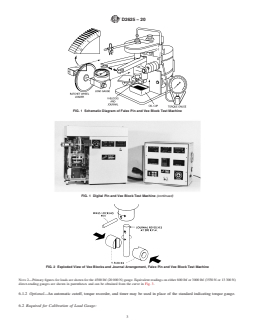
6.1 Falex Pin and Vee Block Test Machine, illustrated illustrated in Fig. 1 and Fig. 2.
6.1.1 Load Gauge, 4500 lbf 4500 lbf (20 000 N) range, or 3000 lbf (13 300 N) direct-reading gauge. An 800 lbf (3550 N)
direct-reading load gauge may be used for Procedure A, but does not have a high enough load range for Procedure B.
Available from U.S. Government Printing Office Superintendent of Documents, 732 N. Capitol St., NW, Mail Stop: SDE, Washington, DC 20401, http://
www.access.gpo.gov.Environmental Protection Agency, http://epa.gov.
Available from SAE International (SAE), 400 Commonwealth Dr., Warrendale, PA 15096, http://www.sae.org.
Trademark of and available from Falex Corp., 1020 Airpark Dr., Sugar Grove, IL 60554. A new model of the Falex Pin and Vee Block Test Machine has been available
since 1983. Certain operating procedures are different for this new model. Consult instruction manual of machine for this information. If you are aware of alternative suppliers,
please provide this information to ASTM International Headquarters. Your comments will receive careful consideration at a meeting of the responsible technical committee,
which you may attend.
D2625 − 20
FIG. 1 Schematic Diagram of Falex Pin and Vee Block Test Machine
FIG. 1 Digital Pin and Vee Block Test Machine (continued)
FIG. 2 Exploded View of Vee Blocks and Journal Arrangement, Falex Pin and Vee Block Test Machine
NOTE 2—Primary figures for loads are shown for the 4500 lbf (20 000 N) gauge. Equivalent readings on either 800 lbf or 3000 lbf (3550 N or 13 300 N)
direct-reading gauges are shown in parentheses and can be obtained from the curve in Fig. 3.
6.1.2 Optional—An automatic cutoff, torque recorder, and timer may be used in place of the standard indicating torque gauge.
6.2 Required for Calibration of Load Gauge:
D2625 − 20
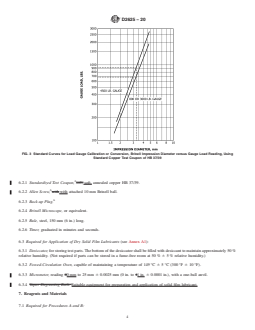
FIG. 3 Standard Curves for Load Gauge Calibration or Conversion, Brinell Impression Diameter versus Gauge Load Reading, Using
Standard Copper Test Coupon of HB 37/39
6.2.1 Standardized Test Coupon, soft, soft, annealed copper HB 37/39.
6.2.2 Allen Screw, with with attached 10 mm Brinell ball.
6.2.3 Back-up Plug.
6.2.4 Brinell Microscope, or equivalent.
6.2.5 Rule, steel, 150 mm (6 in.) long.
6.2.6 Timer, graduated in minutes and seconds.
6.3 Required for Application of Dry Solid Film Lubricants (see Annex A1):
6.3.1 Desiccator, for storing test parts. The bottom of the desiccator shall be filled with desiccant to maintain approximately 50 %
relative humidity. (Not required if parts can be stored in a fume-free room at 50 % 6 5 % relative humidity.)
6.3.2 Forced-Circulation Oven, capable of maintaining a temperature of 149 °C 6 5 °C (300 °F 6 10 °F).
6.3.3 Micrometer, reading 00 mm to 25 mm 6 0.0025 mm (0 in. to 11 in. 6 0.0001 in.), with a one-ball anvil.
6.3.4 Vapor Degreasing Bath. Suitable equipment for preparation and application of solid film lubricant.
7. Reagents and Materials
7.1 Required for Procedures A and B:
D2625 − 20
6 9 9
7.1.1 Eight Standard Vee Blocks, 96° 96° 6 1° angle, heat treated to 1.24 × 10 Pa to 1.38 × 10 Pa (180 000 psi to 200 000 psi)
tensile strength; or standard coined vee blocks, 9696° 6 1° angle, of AISI C-1137 steel as an alternative, with a Rockwell hardness
−7 −7
of HRC 20 to 24 and surface finish of 1.3 × 10 m to 2.5 × 10 m (5 μin. to 10 μin.), rms.
1 1
7.1.2 Four Standard Test Pins, 6.35 mm 6.35 mm ( ⁄4 in.) outside diameter by 31.75 mm (1 ⁄4 in.) long, heat treated to
9 9
1.24 × 10 Pa to 1.38 × 10 Pa (180 000 psi to 200 000 psi) ultimate hardness; or Standard No. 8 Pins of AISI 3135 steel as an
alternative, with a hardness of HRB 87 to 91, on a ground, flat surface (or approximately HRB 80 to 83 on the round), and a surface
−7 −7
finish of 1.3 × 10 m to 2.5 × 10 m (5 μin. to 10 μin.) rms.
7.1.3 Locking (Shear) Pin, ⁄2 H H Brass, conforming to Specification B16/B16M.
7.2 Required for Application of Dry Solid Film Lubricant (see Annex A1):
7.2.1 Phosphate Coating, manganese, manganese, conforming to Military Specification MIL-P-16232F,MIL-DTL-16232, Type
2 2
M, Class 3 controlled to a coating weight of 16 g ⁄m to 22 g ⁄m .
NOTE 3—Lack of rigid control of the phosphate coating weight can significantly impact the data scatter. A film controlled to the minimum range is
preferred over the uncontrolled standard heavy phosphate originally called out.
7.2.2 Cleaners—Select a cleaning media and method which is safe, non-film forming and which does not in any way attack or
etch the surface chemically. In addition, no Class 1 ozone depleting substances conforming to Section 602(a) of the Clean Air Act
Amendments of 1990 (42USC7671a) as identified in Section 326 of PL 102-484 should be used. Use a procedure as outlined in
Test Method F22 to judge the merit of the selected cleaning technique.
NOTE 4—A typical solvent found acceptable for this purpose is Stoddard solvent.
7.2.2.1 No method of cleaning can be judged as acceptable unless there is a valid method of judging the success or failure of the
cleaning method. Test Method F22 is a simple procedure that can be used on the actual test apparatus or on test coupons to judge
each cleaning method’s viability.
7.2.3 Aluminum Oxide, white white angular abrasive, 180 grit to 220 grit.180 grit to 220 grit.
8. Preparation of Apparatus
8.1 Thoroughly clean the jaw supports for the vee blocks and test journals, by washing with the solvent selected from 7.2.2, of
all debris or oil from previous test runs. See Note 4.
8.2 Avoid contact with the fingers of the mating surfaces of the vee blocks and test pins.
8.3 Avoid atmospheric contamination such as cigarette smoke, as this can adversely affect the test results.
9. Calibration of Load Gauge
9.1 Calibration Procedure with 4500-lbf (20 000-N)4500 lbf (20 000 N) Load Gauge:
9.1.1 Remove the Allen set screw and 12.70 mm ( ⁄2 in.) ball from the left jaw socket (Fig. 4).
9.1.2 Insert the special Allen screw with the attached 10 mm Brinell ball into the working face of the left jaw. Adjust so that the
ball projects about 4 mm ( ⁄32 in.) from face of the jaw.
9.1.3 Insert the back-up plug in the counterbore of the right-hand jaw. Adjust so that the plug projects about 0.8 mm ( ⁄32 in.) from
the face.
9.1.4 Support the standard test coupon so that the upper edge of the coupon is about 2.5 mm ( ⁄32 in.) below the upper surface of
the jaws. Place a steel rule across the face of the jaws. Adjust the Allen screw with the attached 10 mm ball until the face of the
jaws are parallel to the steel rule with the test coupon in position for indentation.
D2625 − 20
FIG. 4 Schematic Drawing of Calibration Accessories for Falex Pin and Vee Block Test Machine
9.1.5 With the test coupon in position for the first impression, place the load gauge assembly on the lever arms.
9.1.6 Place the loading arm on the ratchet wheel and actuate the motor. Allow the motor to run until the load gauge indicates a
load of 300 lbf (1330 N). A slight takeup on the ratchet wheel is required to hold the load due to the ball sinking into the test
coupon. After the 300 lbf (1330 N) load is obtained, hold for 1 min for the indentation to form.
9.1.7 Turn off th
...