

IEC 63174:2021
(Main)Electrically operated toothbrushes - Methods for measuring the performance
General Information
- Abstract
IEC 63174:2021 applies to electrically operated toothbrushes used for electric cleaning of teeth. Rechargeable toothbrushes and primary battery operated toothbrushes, both for adults and children, are within the scope of this document.
This document describes the test methods for measurement of the performance parameters as listed in Clause 4.
The purpose of this document is only to specify the measurement method; it does not define any limit values.
- Status
- Published
- Publication Date
- 28-Nov-2021
- Technical Committee
- SC 59L - Small household appliances
- Current Stage
- PPUB - Publication issued
- Start Date
- 29-Nov-2021
- Completion Date
- 31-Dec-2021
Overview
IEC 63174:2021 is an international standard developed by the International Electrotechnical Commission (IEC) that specifies the methods for measuring the performance of electrically operated toothbrushes. It applies to both rechargeable and primary battery operated toothbrushes, designed for adults and children, to ensure consistent test methods across all types and models. This standard focuses on defining precise testing methodologies rather than setting performance limits.
Key Topics
The standard covers comprehensive methodologies to evaluate several critical performance parameters of electrically operated toothbrushes, including:
Weight Measurement
Assessment of the hand-held toothbrush part using precise scales, reported in grams (g).Vibration Frequency Measurement
Testing with fully charged devices or an external DC supply for battery-operated types, using stroboscopic observation to measure the vibration frequency under no-load conditions.Rotational Speed Measurement
Determination of the rotations per minute (rpm) for rotary and reciprocating toothbrush types, essential for assessing cleaning efficacy.Charging Time Assessment
Measurement of hours required for fully charging rechargeable toothbrushes to understand user convenience and product efficiency.Operating Time After Charge or Battery Replacement
Evaluation of working minutes post-charge or battery swap, supporting endurance analysis for daily use reliability.Electrical Endurance Testing
Procedures to verify the electrical durability of towels during extended operational cycles.Mechanical Endurance Testing
Includes drop tests and button operation endurance to confirm robustness and long-term physical reliability.Button Operation Endurance
Assessment of the mechanical lifespan of user interface components to ensure usability over the product’s expected life.Standby Power Consumption Measurement
Using methods aligned with IEC 62301 standards to evaluate power efficiency when the toothbrush is not in active use.
Environmental and Testing Conditions
- Testing is carried out under controlled temperature (20 °C ± 5 °C) and relative humidity (50%) to ensure reliability and reproducibility.
- Samples are prepared by cycling rechargeable devices through full charge and discharge twice before conducting performance tests.
- Tests follow operational conditions specified by manufacturers for real-use simulation.
Applications
IEC 63174:2021 serves as a crucial reference for:
- Manufacturers of electrically operated toothbrushes aiming to standardize performance testing and product development.
- Quality assurance laboratories conducting consistent, repeatable tests to verify compliance and durability.
- Product certification bodies assessing product safety and endurance.
- Consumer safety organizations ensuring that powered toothbrush products meet international quality and performance benchmarks.
- Retailers and consumers comparing products based on standardized performance data.
The standard helps in guaranteeing product reliability, consumer safety, and innovation through validated testing methods. It applies broadly to toothbrush categories such as:
- Rotary (rotating brush heads),
- Reciprocating (linear or rotational back-and-forth motion),
- Vibratory (continuous slight shaking),
- Rechargeable wireless and corded toothbrushes,
- Primary battery-operated models.
Related Standards
IEC 63174 references other important standards to complement its testing protocols:
IEC 62301: Household Electrical Appliances – Measurement of Standby Power
Provides standardized test methods for evaluating standby energy consumption, relevant for power efficiency measurement of electrically operated toothbrushes.ISO/IEC Directives
Governs standard development and ensures international harmonization and rigorous documentation practices.IEC Electropedia and International Electrotechnical Vocabulary (IEV)
Offer authoritative definitions of terms used within IEC 63174, ensuring clarity and consistency in terminology.
Summary
IEC 63174:2021 establishes internationally recognized test methods for evaluating the key performance metrics of electrically operated toothbrushes. By standardizing how parameters like vibration frequency, rotation speed, charging time, and endurance are measured, the standard supports manufacturers, laboratories, and regulators in delivering high-quality and reliable oral hygiene products worldwide. Its detailed approach to measurement ensures accurate and repeatable testing outcomes, promoting better product development, consumer trust, and global market harmonization.
Frequently Asked Questions
IEC 63174:2021 is a standard published by the International Electrotechnical Commission (IEC). Its full title is "Electrically operated toothbrushes - Methods for measuring the performance". This standard covers: IEC 63174:2021 applies to electrically operated toothbrushes used for electric cleaning of teeth. Rechargeable toothbrushes and primary battery operated toothbrushes, both for adults and children, are within the scope of this document. This document describes the test methods for measurement of the performance parameters as listed in Clause 4. The purpose of this document is only to specify the measurement method; it does not define any limit values.
IEC 63174:2021 applies to electrically operated toothbrushes used for electric cleaning of teeth. Rechargeable toothbrushes and primary battery operated toothbrushes, both for adults and children, are within the scope of this document. This document describes the test methods for measurement of the performance parameters as listed in Clause 4. The purpose of this document is only to specify the measurement method; it does not define any limit values.
IEC 63174:2021 is classified under the following ICS (International Classification for Standards) categories: 97.030 - Domestic electrical appliances in general. The ICS classification helps identify the subject area and facilitates finding related standards.
IEC 63174:2021 is available in PDF format for immediate download after purchase. The document can be added to your cart and obtained through the secure checkout process. Digital delivery ensures instant access to the complete standard document.
Standards Content (Sample)
IEC 63174 ®
Edition 1.0 2021-11
INTERNATIONAL
STANDARD
NORME
INTERNATIONALE
colour
inside
Electrically operated toothbrushes – Methods for measuring the performance
Brosses à dents électriques – Méthodes de mesure de l'aptitude à la fonction
All rights reserved. Unless otherwise specified, no part of this publication may be reproduced or utilized in any form
or by any means, electronic or mechanical, including photocopying and microfilm, without permission in writing from
either IEC or IEC's member National Committee in the country of the requester. If you have any questions about IEC
copyright or have an enquiry about obtaining additional rights to this publication, please contact the address below or
your local IEC member National Committee for further information.
Droits de reproduction réservés. Sauf indication contraire, aucune partie de cette publication ne peut être reproduite
ni utilisée sous quelque forme que ce soit et par aucun procédé, électronique ou mécanique, y compris la photocopie
et les microfilms, sans l'accord écrit de l'IEC ou du Comité national de l'IEC du pays du demandeur. Si vous avez des
questions sur le copyright de l'IEC ou si vous désirez obtenir des droits supplémentaires sur cette publication, utilisez
les coordonnées ci-après ou contactez le Comité national de l'IEC de votre pays de résidence.
IEC Central Office Tel.: +41 22 919 02 11
3, rue de Varembé info@iec.ch
CH-1211 Geneva 20 www.iec.ch
Switzerland
About the IEC
The International Electrotechnical Commission (IEC) is the leading global organization that prepares and publishes
International Standards for all electrical, electronic and related technologies.
About IEC publications
The technical content of IEC publications is kept under constant review by the IEC. Please make sure that you have the
latest edition, a corrigendum or an amendment might have been published.
IEC publications search - webstore.iec.ch/advsearchform IEC online collection - oc.iec.ch
The advanced search enables to find IEC publications by a Discover our powerful search engine and read freely all the
variety of criteria (reference number, text, technical publications previews. With a subscription you will always
committee, …). It also gives information on projects, replaced have access to up to date content tailored to your needs.
and withdrawn publications.
Electropedia - www.electropedia.org
IEC Just Published - webstore.iec.ch/justpublished
The world's leading online dictionary on electrotechnology,
Stay up to date on all new IEC publications. Just Published
containing more than 22 000 terminological entries in English
details all new publications released. Available online and
and French, with equivalent terms in 18 additional languages.
once a month by email.
Also known as the International Electrotechnical Vocabulary
(IEV) online.
IEC Customer Service Centre - webstore.iec.ch/csc
If you wish to give us your feedback on this publication or
need further assistance, please contact the Customer Service
Centre: sales@iec.ch.
A propos de l'IEC
La Commission Electrotechnique Internationale (IEC) est la première organisation mondiale qui élabore et publie des
Normes internationales pour tout ce qui a trait à l'électricité, à l'électronique et aux technologies apparentées.
A propos des publications IEC
Le contenu technique des publications IEC est constamment revu. Veuillez vous assurer que vous possédez l’édition la
plus récente, un corrigendum ou amendement peut avoir été publié.
Recherche de publications IEC - IEC online collection - oc.iec.ch
webstore.iec.ch/advsearchform Découvrez notre puissant moteur de recherche et consultez
La recherche avancée permet de trouver des publications IEC gratuitement tous les aperçus des publications. Avec un
en utilisant différents critères (numéro de référence, texte, abonnement, vous aurez toujours accès à un contenu à jour
comité d’études, …). Elle donne aussi des informations sur adapté à vos besoins.
les projets et les publications remplacées ou retirées.
Electropedia - www.electropedia.org
IEC Just Published - webstore.iec.ch/justpublished
Le premier dictionnaire d'électrotechnologie en ligne au
Restez informé sur les nouvelles publications IEC. Just
monde, avec plus de 22 000 articles terminologiques en
Published détaille les nouvelles publications parues.
anglais et en français, ainsi que les termes équivalents dans
Disponible en ligne et une fois par mois par email.
16 langues additionnelles. Egalement appelé Vocabulaire
Electrotechnique International (IEV) en ligne.
Service Clients - webstore.iec.ch/csc
Si vous désirez nous donner des commentaires sur cette
publication ou si vous avez des questions contactez-nous:
sales@iec.ch.
IEC 63174 ®
Edition 1.0 2021-11
INTERNATIONAL
STANDARD
NORME
INTERNATIONALE
colour
inside
Electrically operated toothbrushes – Methods for measuring the performance
Brosses à dents électriques – Méthodes de mesure de l'aptitude à la fonction
INTERNATIONAL
ELECTROTECHNICAL
COMMISSION
COMMISSION
ELECTROTECHNIQUE
INTERNATIONALE
ICS 97.030 ISBN 978-2-8322-1056-9
– 2 – IEC 63174:2021 © IEC 2021
CONTENTS
FOREWORD . 3
1 Scope . 5
2 Normative references . 5
3 Terms and definitions . 5
4 Items to be measured . 7
5 Testing method . 8
5.1 Conditions for the tests . 8
5.2 Preparation of the test sample . 8
5.3 Weight of electrically operated toothbrush. 8
5.4 Measurement of vibration frequency . 8
5.5 Measurement of rotation speed . 8
5.6 Hours taken to fully charge the rechargeable toothbrush . 8
5.7 Working time after each charging or battery replacement . 9
5.8 Electrical endurance . 9
5.9 Mechanical endurance . 10
5.10 Button operation endurance . 14
5.11 Stand-by power consumption . 14
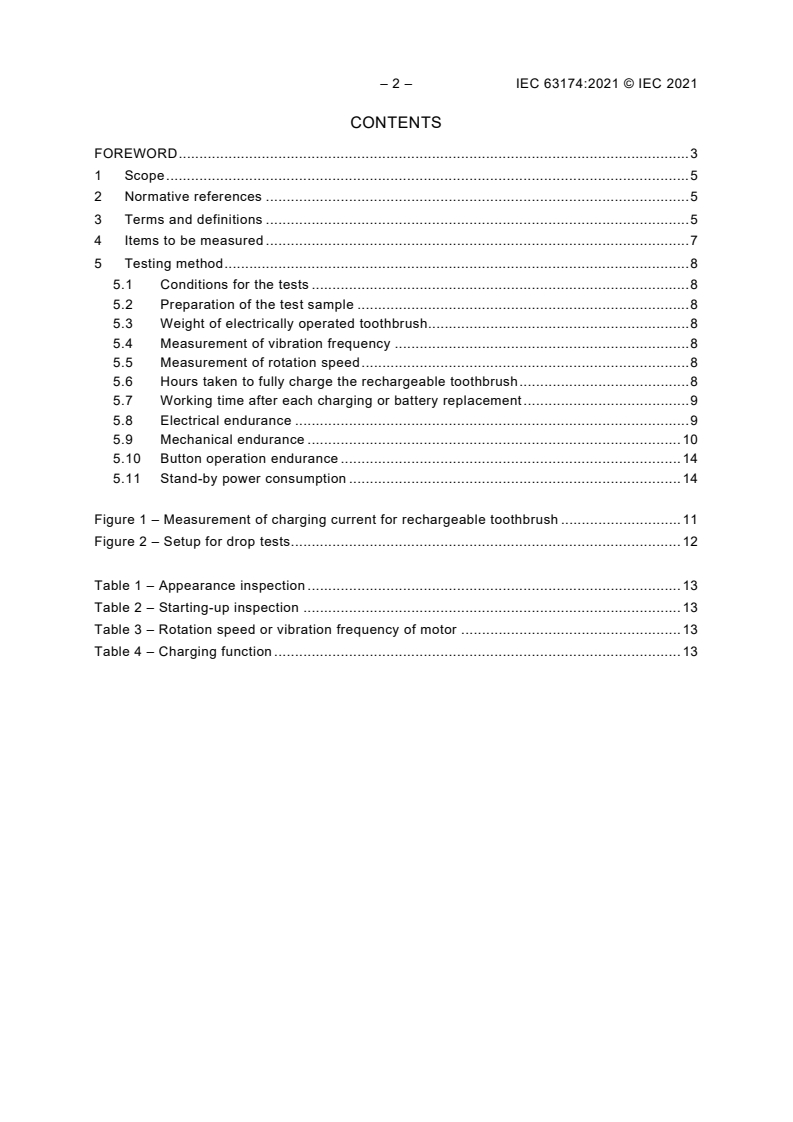
Figure 1 – Measurement of charging current for rechargeable toothbrush . 11
Figure 2 – Setup for drop tests. 12
Table 1 – Appearance inspection . 13
Table 2 – Starting-up inspection . 13
Table 3 – Rotation speed or vibration frequency of motor . 13
Table 4 – Charging function . 13
INTERNATIONAL ELECTROTECHNICAL COMMISSION
____________
ELECTRICALLY OPERATED TOOTHBRUSHES –
METHODS FOR MEASURING THE PERFORMANCE
FOREWORD
1) The International Electrotechnical Commission (IEC) is a worldwide organization for standardization comprising
all national electrotechnical committees (IEC National Committees). The object of IEC is to promote international
co-operation on all questions concerning standardization in the electrical and electronic fields. To this end and
in addition to other activities, IEC publishes International Standards, Technical Specifications, Technical Reports,
Publicly Available Specifications (PAS) and Guides (hereafter referred to as “IEC Publication(s)”). Their
preparation is entrusted to technical committees; any IEC National Committee interested in the subject dealt with
may participate in this preparatory work. International, governmental and non-governmental organizations liaising
with the IEC also participate in this preparation. IEC collaborates closely with the International Organization for
Standardization (ISO) in accordance with conditions determined by agreement between the two organizations.
2) The formal decisions or agreements of IEC on technical matters express, as nearly as possible, an international
consensus of opinion on the relevant subjects since each technical committee has representation from all
interested IEC National Committees.
3) IEC Publications have the form of recommendations for international use and are accepted by IEC National
Committees in that sense. While all reasonable efforts are made to ensure that the technical content of IEC
Publications is accurate, IEC cannot be held responsible for the way in which they are used or for any
misinterpretation by any end user.
4) In order to promote international uniformity, IEC National Committees undertake to apply IEC Publications
transparently to the maximum extent possible in their national and regional publications. Any divergence between
any IEC Publication and the corresponding national or regional publication shall be clearly indicated in the latter.
5) IEC itself does not provide any attestation of conformity. Independent certification bodies provide conformity
assessment services and, in some areas, access to IEC marks of conformity. IEC is not responsible for any
services carried out by independent certification bodies.
6) All users should ensure that they have the latest edition of this publication.
7) No liability shall attach to IEC or its directors, employees, servants or agents including individual experts and
members of its technical committees and IEC National Committees for any personal injury, property damage or
other damage of any nature whatsoever, whether direct or indirect, or for costs (including legal fees) and
expenses arising out of the publication, use of, or reliance upon, this IEC Publication or any other IEC
Publications.
8) Attention is drawn to the Normative references cited in this publication. Use of the referenced publications is
indispensable for the correct application of this publication.
9) Attention is drawn to the possibility that some of the elements of this IEC Publication may be the subject of patent
rights. IEC shall not be held responsible for identifying any or all such patent rights.
IEC 63174 has been prepared by subcommittee 59L: Small household appliances, of IEC
technical committee 59: Performance of household and similar electrical appliances. It is an
International Standard.
The text of this International Standard is based on the following documents:
Draft Report on voting
59L/208/FDIS 59L/211/RVD
Full information on the voting for its approval can be found in the report on voting indicated in
the above table.
The language used for the development of this International Standard is English.
This document was drafted in accordance with ISO/IEC Directives, Part 2, and developed in
accordance with ISO/IEC Directives, Part 1 and ISO/IEC Directives, IEC Supplement, available
at www.iec.ch/members_experts/refdocs. The main document types developed by IEC are
described in greater detail at www.iec.ch/standardsdev/publications.
– 4 – IEC 63174:2021 © IEC 2021
Terms in bold in the text are defined in Clause 3.
The committee has decided that the contents of this document will remain unchanged until the
stability date indicated on the IEC website under webstore.iec.ch in the data related to the
specific document. At this date, the document will be
• reconfirmed,
• withdrawn,
• replaced by a revised edition, or
• amended.
IMPORTANT – The "colour inside" logo on the cover page of this document indicates
that it contains colours which are considered to be useful for the correct understanding
of its contents. Users should therefore print this document using a colour printer.
ELECTRICALLY OPERATED TOOTHBRUSHES –
METHODS FOR MEASURING THE PERFORMANCE
1 Scope
This document applies to electrically operated toothbrushes used for electric cleaning of
teeth. Rechargeable toothbrushes and primary battery operated toothbrushes, both for
adults and children, are within the scope of this document.
This document describes the test methods for measurement of the performance parameters as
listed in Clause 4.
The purpose of this document is only to specify the measurement method; it does not define
any limit values.
NOTE The electrically operated toothbrushes are classified as follows:
Classification with regard to supply modes:
– primary battery operated toothbrush;
– rechargeable toothbrush:
• wireless rechargeable toothbrush;
• corded rechargeable toothbrush.
Classification with regard to operating modes:
– rotary electrically operated toothbrush;
– reciprocating electrically operated toothbrush:
• linear reciprocating electrically operated toothbrush;
• rotational reciprocating electrically operated toothbrush;
– vibratory electrically operated toothbrush.
The different types are explained for information only, since the tests to be carried out are identical, except for
primary battery operated toothbrushes and rechargeable toothbrushes.
2 Normative references
The following documents are referred to in the text in such a way that some or all of their content
constitutes requirements of this document. For dated references, only the edition cited applies.
For undated references, the latest edition of the referenced document (including any
amendments) applies.
IEC 62301, Household electrical appliances – Measurement of standby power
3 Terms and definitions
For the purposes of this document, the following terms and definitions apply.
ISO and IEC maintain terminological databases for use in standardization at the following
addresses:
• IEC Electropedia: available at https://www.electropedia.org/
• ISO Online browsing platform: available at https://www.iso.org/obp
– 6 – IEC 63174:2021 © IEC 2021
3.1
electrically operated toothbrush
hand-held electrically operated appliance, the brush head of which carries filaments, used
primarily for cleaning surfaces within the oral cavity by means of a reciprocating, rotating, or
vibrating brush
3.2
rechargeable toothbrush
electrically operated toothbrush powered by incorporated rechargeable batteries
3.3
wireless rechargeable toothbrush
rechargeable toothbrush that is charged with a wireless charging device (electro-magnetic
induction)
3.4
corded rechargeable toothbrush
rechargeable toothbrush that is charged by connecting a charging device to a connector
3.5
primary battery operated toothbrush
electrically operated toothbrush deriving its energy solely from non-rechargeable batteries
3.6
head
end part of electrically operated toothbrush with a non-detachable or detachable brush
3.7
rotary electrically operated toothbrush
electrically operated toothbrush fitted with a round brush head acting in a rotating motion
Note 1 to entry: The direction of rotation can oscillate during the cycle.
3.8
reciprocating electrically operated toothbrush
electrically operated toothbrush fitted with a brush head acting in a reciprocating motion
Note 1 to entry: An example of reciprocating motion is a back-and-forth motion along the long axis of the toothbrush,
or reciprocating rotational motion around the long axis of the toothbrush.
3.8.1
linear reciprocating electrically operated toothbrush
reciprocating electrically operated toothbrush whose reciprocating motion is back and forth
along the longitudinal axis of the toothbrush
3.8.2
rotational reciprocating electrically operated toothbrush
reciprocating electrically operated toothbrush whose reciprocating motion is rotational
about the longitudinal axis of the toothbrush
3.9
vibratory electrically operated toothbrush
electrically operated toothbrush fitted with a brush head acting in a vibrating motion
Note 1 to entry: Vibrations are continuous slight shaking motions of the brush head without moving in any particular
direction.
4 Items to be measured
– Weight of the toothbrush
– Vibration frequency
– Rotational speed
– Hours taken to fully charge the rechargeable toothbrush
– Working minutes after each charging or battery replacement
– Electrical endurance
– Mechanical endurance
– Button operation endurance
– Stand-by power
– 8 – IEC 63174:2021 © IEC 2021
5 Testing method
5.1 Conditions for the tests
5.1.1 Unless otherwise specified, tests are carried out under the following environmental
conditions:
– Temperature: 20 °C ± 5 °C
– Relative humidity: 50 %
5.1.2 Samples shall be tested under the operational conditions specified in the instructions
for use.
5.1.3 The power supply used for the tests shall be the same as that specified for the
electrically operated toothbrush. If the electrically operated toothbrush is provided with
more than one power supply, it shall be tested with the one that gives the most unfavorable
results.
5.2 Preparation of the test sample
For rechargeable toothbrushes, the sample is fully charged and discharged two times before
subjecting it to the tests from 5.3 to 5.11.
5.3 Weight of electrically operated toothbrush
The hand-held part of the sample is weighed with scales and the weight is recorded in g.
5.4 Measurement of vibration frequency
The rechargeable toothbrush is fully charged.
The primary battery operated toothbrush is supplied from an external DC supply with the
voltage equal to the battery’s rated voltage, as specified in the instructions for use.
The toothbrush shall run under no-load condition for 1 min.
The vibration frequency is measured by a stroboscope. The recorded value for vibration
frequency shall be the average value of three consecutive measurements.
5.5 Measurement of rotation speed
The rechargeable toothbrush is fully charged.
The primary battery operated toothbrush is supplied from an external DC supply with the
voltage equal to the battery’s rated voltage as specified in the instructions for use.
The toothbrush shall run under no-load condition for 1 min.
The rotational speed is measured by a stroboscope or digital speedometer. The recorded value
for rotational speed shall be the average value of three consecutive measurements.
5.6 Hours taken to fully charge the rechargeable toothbrush
The sample is fully charged and then discharged until the rotation speed or vibrating speed falls
to zero. The sample is connected to the charger in accordance with the instructions for use and
the measurement of time is started. Measurement of time is stopped as soon as the fully-
charged signal is on. The time from starting to stopping is recorded in hours.
5.7 Working time after each charging or battery replacement
5.7.1 Determination of working time of rechargeable toothbrush after fully charging
The sample is fully charged and discharged. Then it is fully recharged in accordance with the
instructions for use. When it is fully charged, the toothbrush is disconnected from the power
supply and is left to rest for 1 h.
The toothbrush is then operated under no-load condition, at the maximum working mode for
2 min and switched off for 2 min. This on-off cycle is repeated until the toothbrush is out of
power and stops running. All on times during the test are accumulated and recorded in minutes.
NOTE Any low-energy prompting is ignored.
5.7.2 Determination of working time of primary battery operated toothbrush after
battery replacement
The toothbrush is supplied from an external DC supply with a voltage equivalent to the nominal
voltage of the primary battery, as marked on the toothbrush or specified in the instructions for
use. The toothbrush is adjusted to the maximum working mode, then it is operated under no-
load conditions for 2 min and switched off for 2 min. The test is repeated in such cycles.
A voltammeter is used to measure the energy consumption ε (Wh) of the toothbrush during the
t
cycles. The test is terminated when the energy consumption ε (Wh) is equal to the reference
t
energy (ε ) of the battery.
When the instructions for use state that one LR03 cell is used, the reference energy (ε ) of the
battery is 1,0 Wh. When the instructions for use state that one LR6 cell is used, the reference
energy (ε ) of the battery is 2,8 Wh. When the instructions for use state that two LR6 cells are
used, the reference energy (ε ) of the battery is 3,5 Wh.
The accumulated working time during the test is calculated and recorded in minutes.
5.8 Electrical endurance
5.8.1 The rechargeable toothbrush is fully charged in accordance with the instructions for
use at rated frequency and rated voltage. The toothbrush is operated according to the no-load
test condition specified in 5.1 for 2 min, then stopped and rested for 2 min. This cycle is
repeated until the toothbrush (including the charger) stops working or until the established
number of cycles is reached, whichever is shorter. The accumulated working time is recorded.
During this period, the toothbrush shall be recharged in accordance with the instructions for
use when it is out of power.
NOTE The established number of cycles can be agreed between the manufacturer or the client and the laboratory
before the test.
5.8.2 For primary battery operated toothbrushes, an equivalent DC supply with the
voltage equal to the battery’s rated voltage, as specified in the instructions, is used to power
the toothbrush. The toothbrush is operated in accordance with the no-load test condition
specified in 5.1 for 2 min, then stopped and rested for 2 min. This cycle is repeated until the
toothbrush stops to work or until the established number of cycles is reached, whichever is
shorter. The accumulated working time is recorded.
NOTE The established number of cycles can be agreed between the manufacturer or the client and the laboratory
before the endurance test.
– 10 – IEC 63174:2021 © IEC 2021
5.9 Mechanical endurance
5.9.1 Preparation of the drop test
5.9.1.1 Prior to the drop test, the appearance and the normal operation of the sample is
checked. The sample shall be complete, in good order, and in normal starting-up, charging and
motor rotation. Inspection is carried out in accordance with 5.9.1.2 to 5.9.1.4.
The inspection result shall be recorded in Table 1 to Table 4.
NOTE Pictures can be used to show the state of the sample.
5.9.1.2 Appearance and start-up operation are inspected visually.
5.9.1.3 For inspection of the running motor, the vibration rate and speed are measured in
accordance with the method specified in 5.4 and 5.5, respectively.
5.9.1.4 For inspection of the charging function, the charging current is measured by the
following method.
a) For the corded rechargeable toothbrush
The toothbrush is discharged completely. The toothbrush is connected to the charging
connector of the charging device. The charging device is plugged to the supply mains and
charging begins. After 5 min, a reading of the current is taken. The measuring diagram is as
shown in Figure 1a.
b) For the wireless rechargeable toothbrush
The toothbrush is discharged completely. The toothbrush is placed on the charging base of the
charging device. The charging device is plugged to the supply mains and charging begins. After
5 min, a reading of the current is taken. The measuring diagram is as shown in Figure 1b.
a) Measurement of charging current for corded rechargeable toothbrush
b) Measurement of charging current for wireless rechargeable toothbrush
Figure 1 – Measurement of charging current for rechargeable toothbrush
5.9.2 Procedures of drop tests
A first drop test (referred to as Drop A) is carried out. The toothbrush is positioned with the
head pointing upward, with the lowest point of the sample 900 mm above a flat and hard rigid
surface made of concrete (see item A of Figure 2). The toothbrush is operated in the no-load
condition on the maximum setting for 30 s, then it is released and allowed to drop to the floor
freely.
Then inspection is carried out in accordance with 5.9.3.1 and 5.9.3.2, and the result is recorded
in the column A1 in the relevant tables in 5.9.3.3 (Table 1 to Table 4).
If the sample is obviously incomplete or cannot operate further following the previous drop, then
the drop test is terminated. If the user-replaceable head is broken, the drop test shall be
continued by replacing the broken head with a new head.
If the sample can still function, a second drop test (referred as Drop B) is carried out. The
sample is positioned with the head pointing downwards, with the lowest point of the sample
900 mm above a flat and hard rigid surface made of concrete (see item B of Figure 2). The
sample is operated in the no-load condition on the maximum setting for 30 s, then it is released
and allowed to drop to the floor freely.
Then inspection is carried out in accordance with 5.9.3.1 and 5.9.3.2, and the result is recorded
in the column B1 in the relevant tables in 5.9.3.3 (Table 1 to Table 4).
– 12 – IEC 63174:2021 © IEC 2021
If the sample is obviously incomplete or cannot operate further following the previous drop, then
the drop test is terminated. If the user-replaceable head is broken, the drop test shall be
continued by replacing the broken head with a new head.
If the sample can still function, a third drop (referred as Drop C) is carried out. The sample is
positioned in such a way that the longitudinal axis of the hand-held part, is located horizontally
and the side containing the switches or controls points downwards, with the longitudinal axis
being 900 mm above a flat and hard rigid surface made of concrete (see item C of Figure 2).
The sample is operated in the no-load condition on the maximum setting for 30 s, then it is
released and allowed to drop to the floor freely.
Then inspection is carried out in accordance with 5.9.3.1 and 5.9.3.2, and the result is recorded
in the column C1 in the relevant tables in 5.9.3.3 (Table 1 to Table 4).
If the sample is obviously incomplete or cannot operate further following the previous drop, then
the drop test is terminated. If the user-replaceable head is broken, the drop test shall be
continued by replacing the broken head with a new head.
Dimensions in metres
Figure 2 – Setup for drop tests
The tests are carried out in an environment with no significant air circulation.
The drop test is continued in the order of the above drop A1, drop B1, drop C1, drop A2, drop B2,
drop C2, drop A3 and so on; it is terminated when the sample cannot operate anymore, or when
the established number of cycles is reached. The test is terminated and the cumulative number
of drops is recorded.
NOTE The established number of cycles can be agreed between the manufacturer or the client and the laboratory
before the test.
5.9.3 Inspection and recording after each drop
5.9.3.1 Inspection of appearance
The sample is inspected to check if the enclosure is worn out or if parts are broken off. The
result is recorded.
NOTE Pictures can be used to show the results of the test.
5.9.3.2 Inspection of electrical performance
1) Inspection of start-up: inspection is carried out in accordance with 5.9.1.2. The inspection
results are recorded in Table 2.
2) Inspection of running motor: vibration rate or rotational speed of the sample is measured in
accordance with the method specified in 5.4 or 5.5, respectively, and the results are
recorded in Table 3.
3) Inspection of the charging function: charging current is measured in accordance with the
method specified in 5.9.1.4. The measured charging current is recorded in Table 4. If the
measured charging current is less than 20 % of the original charging current that is
measured before any drop, the sample is considered to not be operational and the drop test
is terminated.
5.9.3.3 Examples of checklists
Table 1 – Appearance inspection
Before Drop Drop Drop Drop Drop Drop Drop ……
drop A1 B1 C1 A2 B2 C2 A3
Enclosure damage
Inner parts breaking off
Others
Table 2 – Starting-up inspection
Before Drop Drop Drop Drop Drop Drop Drop ……
drop A1 B1 C1 A2 B2 C2 A3
Toothbrush cannot start up
normally
Indicating lights work
abnormally or do not work
Functional keys do not
function normally
Others
Table 3 – Rotation speed or vibration frequency of motor
Before Drop Drop Drop Drop Drop Drop Drop ……
drop A1 B1 C1 A2 B2 C2 A3
Rotation speed (compared
with value measured
before drop test)
Vibration frequency
(compared with value
measured before drop test)
Others
Table 4 – Charging function
Before Drop Drop Drop Drop Drop Drop Drop ……
drop A1 B1 C1 A2 B2 C2 A3
Charging current
(compared with the value
measured before the drop
test)
Others
– 14 – IEC 63174:2021 © IEC 2021
5.10 Butto
...