

SIST EN 12024:1997
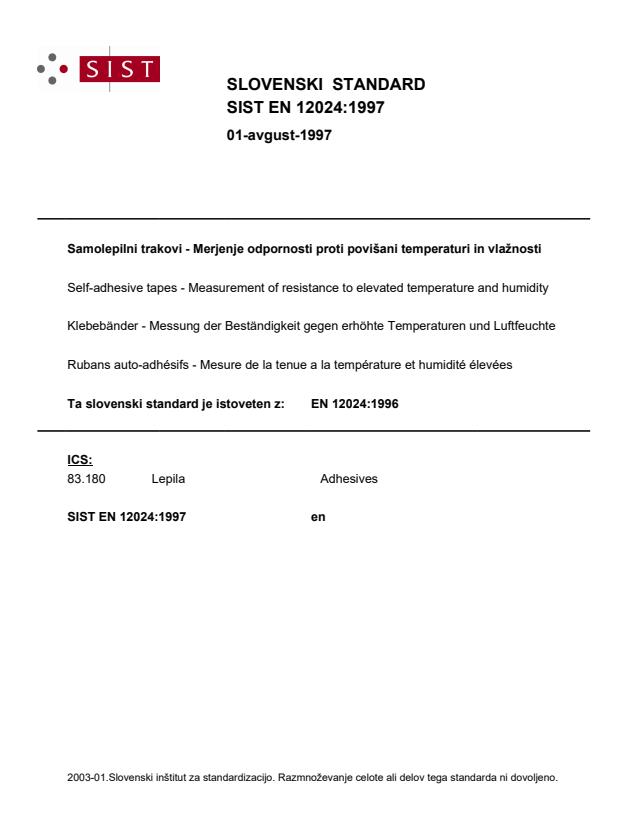
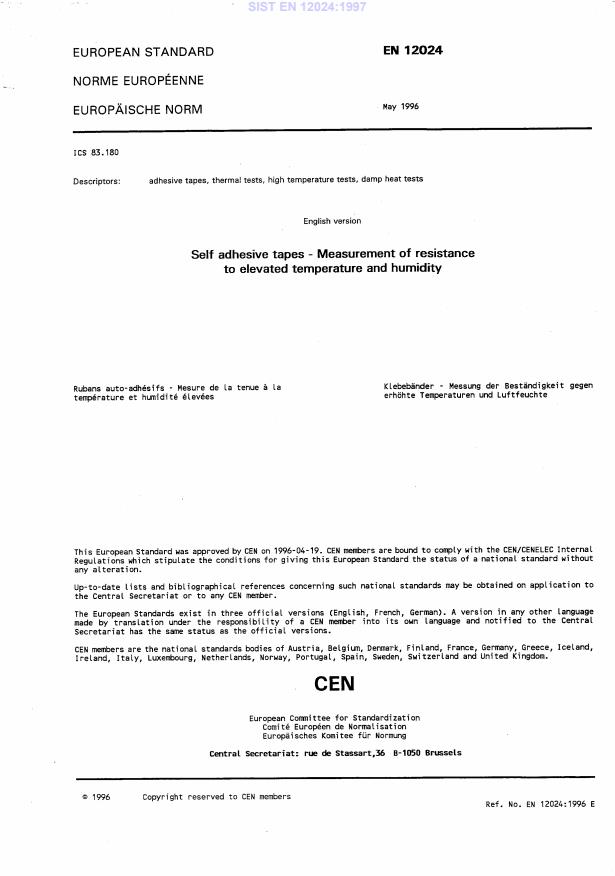
(Main)Self-adhesive tapes - Measurement of resistance to elevated temperature and humidity
General Information
- Abstract
This standard specifies a method to obtain an indication of the behaviour of the adhesive tape under specified conditions of elevated temperature and high humidity.
- Status
- Published
- Publication Date
- 31-Jul-1997
- Technical Committee
- EPO - Packaging - sales and grouped
- Current Stage
- 6060 - National Implementation/Publication (Adopted Project)
- Start Date
- 01-Aug-1997
- Due Date
- 01-Aug-1997
- Completion Date
- 01-Aug-1997

Overview
SIST EN 12024:1997 is a European standard developed by CEN that specifies a precise method for evaluating the resistance of self-adhesive tapes under conditions of elevated temperature and high humidity. This standard is essential for manufacturers and users of adhesive tapes to ensure product performance and reliability in challenging environmental conditions. By following this standardized testing procedure, stakeholders can obtain consistent and comparable data on how adhesive tapes behave when exposed to heat and moisture over time.
Key Topics
- Self-adhesive tapes: Pressure-sensitive tapes that adhere to surfaces without the need for solvents or heat.
- Resistance measurement: Testing the durability and effectiveness of adhesive properties when subjected to elevated temperature and humidity.
- Elevated temperature conditions: Simulating environments where tapes are exposed to higher-than-normal temperatures to assess thermal stability.
- High humidity exposure: Assessing tape performance when subjected to moisture-laden environments that could affect adhesion.
- Standardized testing procedure: Consistent methodology to obtain reliable and reproducible results across different operators and labs.
- Performance indication: Understanding tape behavior for quality control, product development, and validation purposes.
Applications
SIST EN 12024:1997 is highly valuable across a range of industries where self-adhesive tapes are used in environments with fluctuating or harsh conditions:
- Automotive industry: Reliable tape adhesion for interior and exterior tape applications exposed to temperature variations and humidity.
- Electronics manufacturing: Ensuring tape performance for components that may be subjected to heat during operation or assembly.
- Construction and building: Durable adhesive tapes for sealing, mounting, and insulation in damp or warm environments.
- Packaging: Secure sealing solutions that maintain strength despite changes in climate or storage conditions.
- Aerospace and transportation: Critical evaluation of tapes used in cabins and other areas facing extreme environmental stresses.
- General industrial use: Broad application for tapes in assembly lines or maintenance tasks requiring thermal and moisture resistance.
Related Standards
To complement the testing of adhesive tapes under elevated temperature and humidity, the following related standards may also be relevant:
- EN ISO 4587: Adhesive tapes - Determination of peeling resistance.
- EN 1939: Adhesive tapes - Tension test.
- EN 1465: Adhesive tapes - Shear test.
- EN 1942: Adhesive tapes - Temperature test methods.
- ISO 9001: Quality management systems ensuring consistent manufacturing processes for adhesive tapes.
Practical Value
Implementing SIST EN 12024:1997 allows manufacturers to:
- Guarantee product quality and consistency across production batches.
- Reduce failure rates due to environmental exposure in final applications.
- Provide validated data to customers regarding tape durability.
- Enhance product development by identifying weaknesses under specific climatic conditions.
- Improve market competitiveness with certified performance claims.
This standard is a critical tool for adhesion testing laboratories, quality assurance departments, and R&D teams engaged in the design, production, and selection of self-adhesive tapes fit for demanding environments.
Get Certified
Connect with accredited certification bodies for this standard

DIN CERTCO
DIN Group product certification.

Smithers Quality Assessments
US management systems and product certification.
Sponsored listings
Frequently Asked Questions
SIST EN 12024:1997 is a standard published by the Slovenian Institute for Standardization (SIST). Its full title is "Self-adhesive tapes - Measurement of resistance to elevated temperature and humidity". This standard covers: This standard specifies a method to obtain an indication of the behaviour of the adhesive tape under specified conditions of elevated temperature and high humidity.
This standard specifies a method to obtain an indication of the behaviour of the adhesive tape under specified conditions of elevated temperature and high humidity.
SIST EN 12024:1997 is classified under the following ICS (International Classification for Standards) categories: 83.180 - Adhesives. The ICS classification helps identify the subject area and facilitates finding related standards.
SIST EN 12024:1997 is available in PDF format for immediate download after purchase. The document can be added to your cart and obtained through the secure checkout process. Digital delivery ensures instant access to the complete standard document.
Standards Content (Sample)
2003-01.Slovenski inštitut za standardizacijo. Razmnoževanje celote ali delov tega standarda ni dovoljeno.Samolepilni trakovi - Merjenje odpornosti proti povišani temperaturi in vlažnostiKlebebänder - Messung der Beständigkeit gegen erhöhte Temperaturen und LuftfeuchteRubans auto-adhésifs - Mesure de la tenue a la température et humidité élevéesSelf-adhesive tap
...