

ASTM E1523-15
(Guide)Standard Guide to Charge Control and Charge Referencing Techniques in X-Ray Photoelectron Spectroscopy
General Information
- Abstract
SIGNIFICANCE AND USE
5.1 The acquisition of chemical information from variations in the energy position of peaks in the XPS spectrum is of primary interest in the use of XPS as a surface analytical tool. Surface charging acts to shift spectral peaks independent of their chemical relationship to other elements on the same surface. The desire to eliminate the influence of surface charging on the peak positions and peak shapes has resulted in the development of several empirical methods designed to assist in the interpretation of the XPS peak positions, determine surface chemistry, and allow comparison of spectra of conducting and non-conducting systems of the same element. It is assumed that the spectrometer is generally working properly for non-insulating specimens (see Practice E902).
5.2 Although highly reliable methods have now been developed to stabilize surface potentials during XPS analysis of most materials (5, 6), no single method has been developed to deal with surface charging in all circumstances (10, 11). For insulators, an appropriate choice of any control or referencing system will depend on the nature of the specimen, the instruments, and the information needed. The appropriate use of charge control and referencing techniques will result in more consistent, reproducible data. Researchers are strongly urged to report both the control and referencing techniques that have been used, the specific peaks and binding energies used as standards (if any), and the criteria applied in determining optimum results so that the appropriate comparisons may be made.
SCOPE
1.1 This guide acquaints the X-ray photoelectron spectroscopy (XPS) user with the various charge control and charge shift referencing techniques that are and have been used in the acquisition and interpretation of XPS data from surfaces of insulating specimens and provides information needed for reporting the methods used to customers or in the literature.
1.2 This guide is intended to apply to charge control and charge referencing techniques in XPS and is not necessarily applicable to electron-excited systems.
1.3 The values stated in SI units are to be regarded as standard. No other units of measurement are included in this standard.
1.4 This standard does not purport to address all of the safety concerns, if any, associated with its use. It is the responsibility of the user of this standard to establish appropriate safety and health practices and determine the applicability of regulatory limitations prior to use.
- Status
- Published
- Publication Date
- 31-May-2015
- Technical Committee
- E42 - Surface Analysis
Buy Documents
ASTM E1523-15 - Standard Guide to Charge Control and Charge Referencing Techniques in X-Ray Photoelectron Spectroscopy
REDLINE ASTM E1523-15 - Standard Guide to Charge Control and Charge Referencing Techniques in X-Ray Photoelectron Spectroscopy
Overview
ASTM E1523-15: Standard Guide to Charge Control and Charge Referencing Techniques in X-Ray Photoelectron Spectroscopy (XPS) provides essential guidance for XPS users analyzing insulating specimens. The standard outlines the significance of surface charging, the challenges and effects that charging introduces, and best practices for charge control and referencing. This enables users to acquire reproducible, chemically accurate data when evaluating materials with poor electrical conductivity, improving the comparability and reliability of XPS results across different sample types and instruments.
Adherence to this standard allows laboratories and researchers in surface analysis and materials characterization to properly document their charge compensation techniques and reporting methods, a critical step for ensuring consistency in published data and communication between customers and stakeholders.
Key Topics
Charge Control in XPS
- Surface charging occurs when X-ray photoexcitation causes a buildup of positive charge, especially in non-conductive samples, shifting the energy positions of spectral peaks.
- The guide describes several empirical methods developed to minimize or correct these charge shifts, including charge compensation techniques and referencing approaches.
Common Charge Control Methods
- Electron Flood Guns: Use of low-energy electrons to neutralize surface charge, particularly effective for insulating materials.
- Low-Energy Ion Sources: Complement electron flooding for uniform charge stabilization by also providing positive ions.
- Ultraviolet Flood Lamps: Generation of low-energy electrons through UV light can help neutralize charge.
- Grounding, Enhanced Conduction Paths, and Specimen Heating: Improve dissipation of charge for more reproducible data.
- Sample Mounting Techniques: Techniques such as metal meshes improve electrical contact and minimize charging.
Charge Referencing Techniques
- Adventitious Carbon Referencing: Utilizing the known binding energy of surface carbon contamination for charge correction.
- Internal and Substrate Referencing: Using spectral lines of known binding energy within the sample or substrate as charge references.
- Gold Deposition and Other Reference Layers: Evaporating thin gold layers onto the sample for energy calibration.
- Auger Parameter Methods: Employ both photoelectron and Auger peaks to derive charge-independent chemical state information.
Reporting and Documentation
- Proper documentation of charge control and referencing methods, standard peaks, binding energies, and rationale for chosen techniques is critical for reproducibility and data validation.
Applications
Practical Value for Laboratories and Industry
- Surface Chemistry Analysis: XPS is widely used in materials science, chemistry, electronics, and coatings to investigate surface composition and chemical states.
- Research and Quality Control: By employing standardized charge control and referencing procedures, labs can reliably compare data from conducting and non-conducting samples, avoid misinterpretation due to charging artifacts, and support product development.
- Data Comparability: Standardized reporting ensures that XPS data can be shared, validated, and benchmarked globally, facilitating collaboration and regulatory compliance.
- Instrument Calibration and Troubleshooting: The standard offers guidance on diagnosing and compensating for charging, enabling more effective instrument maintenance and method development.
Related Standards
- ASTM E902 – Practice for Checking the Operating Characteristics of X-Ray Photoelectron Spectrometers
- ASTM E673 – Terminology Relating to Surface Analysis
- ASTM E1078 – Guide for Specimen Preparation and Mounting in Surface Analysis
- ASTM E1829 – Guide for Handling Specimens Prior to Surface Analysis
ASTM E1523-15 serves as a foundational reference for charge correction protocols in XPS, helping to advance reliable and harmonized surface analysis in scientific and industrial settings. Proper implementation of its guidelines enhances the integrity and reproducibility of XPS results, especially when working with insulating materials.
Relations
- Effective Date
- 01-Jun-2015
- Effective Date
- 01-May-2009
- Effective Date
- 01-May-2009
- Effective Date
- 01-Apr-2005
- Effective Date
- 01-Dec-2003
- Effective Date
- 10-Dec-2002
- Effective Date
- 10-Aug-2002
- Effective Date
- 10-Apr-2002
- Effective Date
- 10-Apr-2002
- Effective Date
- 10-Nov-2001
- Effective Date
- 10-Nov-2001
- Effective Date
- 10-Sep-1999
- Effective Date
- 01-Jun-2015
- Referred By
ASTM E1078-14(2020) - Standard Guide for Specimen Preparation and Mounting in Surface Analysis - Effective Date
- 01-Jun-2015
- Effective Date
- 01-Jun-2015
Buy Documents
ASTM E1523-15 - Standard Guide to Charge Control and Charge Referencing Techniques in X-Ray Photoelectron Spectroscopy
REDLINE ASTM E1523-15 - Standard Guide to Charge Control and Charge Referencing Techniques in X-Ray Photoelectron Spectroscopy
Get Certified
Connect with accredited certification bodies for this standard

ECOCERT
Organic and sustainability certification.

Eurofins Food Testing Global
Global leader in food, environment, and pharmaceutical product testing.

Intertek Bangladesh
Intertek certification and testing services in Bangladesh.
Sponsored listings
Frequently Asked Questions
ASTM E1523-15 is a guide published by ASTM International. Its full title is "Standard Guide to Charge Control and Charge Referencing Techniques in X-Ray Photoelectron Spectroscopy". This standard covers: SIGNIFICANCE AND USE 5.1 The acquisition of chemical information from variations in the energy position of peaks in the XPS spectrum is of primary interest in the use of XPS as a surface analytical tool. Surface charging acts to shift spectral peaks independent of their chemical relationship to other elements on the same surface. The desire to eliminate the influence of surface charging on the peak positions and peak shapes has resulted in the development of several empirical methods designed to assist in the interpretation of the XPS peak positions, determine surface chemistry, and allow comparison of spectra of conducting and non-conducting systems of the same element. It is assumed that the spectrometer is generally working properly for non-insulating specimens (see Practice E902). 5.2 Although highly reliable methods have now been developed to stabilize surface potentials during XPS analysis of most materials (5, 6), no single method has been developed to deal with surface charging in all circumstances (10, 11). For insulators, an appropriate choice of any control or referencing system will depend on the nature of the specimen, the instruments, and the information needed. The appropriate use of charge control and referencing techniques will result in more consistent, reproducible data. Researchers are strongly urged to report both the control and referencing techniques that have been used, the specific peaks and binding energies used as standards (if any), and the criteria applied in determining optimum results so that the appropriate comparisons may be made. SCOPE 1.1 This guide acquaints the X-ray photoelectron spectroscopy (XPS) user with the various charge control and charge shift referencing techniques that are and have been used in the acquisition and interpretation of XPS data from surfaces of insulating specimens and provides information needed for reporting the methods used to customers or in the literature. 1.2 This guide is intended to apply to charge control and charge referencing techniques in XPS and is not necessarily applicable to electron-excited systems. 1.3 The values stated in SI units are to be regarded as standard. No other units of measurement are included in this standard. 1.4 This standard does not purport to address all of the safety concerns, if any, associated with its use. It is the responsibility of the user of this standard to establish appropriate safety and health practices and determine the applicability of regulatory limitations prior to use.
SIGNIFICANCE AND USE 5.1 The acquisition of chemical information from variations in the energy position of peaks in the XPS spectrum is of primary interest in the use of XPS as a surface analytical tool. Surface charging acts to shift spectral peaks independent of their chemical relationship to other elements on the same surface. The desire to eliminate the influence of surface charging on the peak positions and peak shapes has resulted in the development of several empirical methods designed to assist in the interpretation of the XPS peak positions, determine surface chemistry, and allow comparison of spectra of conducting and non-conducting systems of the same element. It is assumed that the spectrometer is generally working properly for non-insulating specimens (see Practice E902). 5.2 Although highly reliable methods have now been developed to stabilize surface potentials during XPS analysis of most materials (5, 6), no single method has been developed to deal with surface charging in all circumstances (10, 11). For insulators, an appropriate choice of any control or referencing system will depend on the nature of the specimen, the instruments, and the information needed. The appropriate use of charge control and referencing techniques will result in more consistent, reproducible data. Researchers are strongly urged to report both the control and referencing techniques that have been used, the specific peaks and binding energies used as standards (if any), and the criteria applied in determining optimum results so that the appropriate comparisons may be made. SCOPE 1.1 This guide acquaints the X-ray photoelectron spectroscopy (XPS) user with the various charge control and charge shift referencing techniques that are and have been used in the acquisition and interpretation of XPS data from surfaces of insulating specimens and provides information needed for reporting the methods used to customers or in the literature. 1.2 This guide is intended to apply to charge control and charge referencing techniques in XPS and is not necessarily applicable to electron-excited systems. 1.3 The values stated in SI units are to be regarded as standard. No other units of measurement are included in this standard. 1.4 This standard does not purport to address all of the safety concerns, if any, associated with its use. It is the responsibility of the user of this standard to establish appropriate safety and health practices and determine the applicability of regulatory limitations prior to use.
ASTM E1523-15 is classified under the following ICS (International Classification for Standards) categories: 71.040.50 - Physicochemical methods of analysis. The ICS classification helps identify the subject area and facilitates finding related standards.
ASTM E1523-15 has the following relationships with other standards: It is inter standard links to ASTM E1523-09, ASTM E1829-09, ASTM E1078-09, ASTM E902-05, ASTM E673-03, ASTM E673-02a, ASTM E1078-02, ASTM E1829-02, ASTM E1829-97, ASTM E673-98E1, ASTM E673-01, ASTM E902-94(1999), ASTM E2108-16, ASTM E1078-14(2020), ASTM E2735-14(2020). Understanding these relationships helps ensure you are using the most current and applicable version of the standard.
ASTM E1523-15 is available in PDF format for immediate download after purchase. The document can be added to your cart and obtained through the secure checkout process. Digital delivery ensures instant access to the complete standard document.
Standards Content (Sample)
This international standard was developed in accordance with internationally recognized principles on standardization established in the Decision on Principles for the
Development of International Standards, Guides and Recommendations issued by the World Trade Organization Technical Barriers to Trade (TBT) Committee.
Designation: E1523 − 15
Standard Guide to
Charge Control and Charge Referencing Techniques in
X-Ray Photoelectron Spectroscopy
This standard is issued under the fixed designation E1523; the number immediately following the designation indicates the year of
original adoption or, in the case of revision, the year of last revision. A number in parentheses indicates the year of last reapproval. A
superscript epsilon (´) indicates an editorial change since the last revision or reapproval.
1. Scope 3. Terminology
3.1 Definitions—See Terminology E673 for definitions of
1.1 This guide acquaints the X-ray photoelectron spectros-
copy (XPS) user with the various charge control and charge terms used in XPS.
shift referencing techniques that are and have been used in the
3.2 Symbols:
acquisition and interpretation of XPS data from surfaces of
BE Binding energy, in eV
insulating specimens and provides information needed for
BE Corrected binding energy, in eV
corr
BE Measured binding energy, in eV
reporting the methods used to customers or in the literature.
meas
BE Reference binding energy, in eV
ref
1.2 This guide is intended to apply to charge control and BE Measured Binding energy, in eV, of a reference line
meas, ref
FWHM Full width at half maximum amplitude of a peak in the
charge referencing techniques in XPS and is not necessarily
photoelectron spectrum above the background, in eV
applicable to electron-excited systems.
XPS X-ray photoelectron spectroscopy
∆ Correction energy, to be added to measured binding
corr
1.3 The values stated in SI units are to be regarded as
energies for charge correction, in eV
standard. No other units of measurement are included in this
standard.
4. Overview of Charging Effects
1.4 This standard does not purport to address all of the
4.1 For insulating specimen surfaces, the emission of pho-
safety concerns, if any, associated with its use. It is the
toelectrons following X-ray excitation may result in a tempo-
responsibility of the user of this standard to establish appro-
rary (or sometimes persistent) buildup of a positive surface
priate safety and health practices and determine the applica-
charge caused by the photoelectric effect. Its insulating nature
bility of regulatory limitations prior to use.
prevents the compensation of the charge buildup by means of
electron conduction from the sample holder. This positive
2. Referenced Documents surface charge changes the surface potential thereby shifting
the measured energies of the photoelectron peaks to higher
2.1 ASTM Standards:
binding energy. This binding energy shift may reach a nearly
E673 Terminology Relating to SurfaceAnalysis (Withdrawn
steady-state value of between 2 and 5 eV for spectrometers
2012)
equipped with nonmonochromatic X-ray sources. The surface
E902 Practice for Checking the Operating Characteristics of
potential charge and the resulting binding energy shift is,
X-Ray Photoelectron Spectrometers (Withdrawn 2011)
generally, larger for spectrometers equipped with monochro-
E1078 Guide for Specimen Preparation and Mounting in
matic X-ray sources because of the, generally, lower flux of
Surface Analysis
low-energy electrons impinging on the specimen surface. This
E1829 Guide for Handling Specimens Prior to Surface
lower flux arises because focused, monochromatic X-ray
Analysis
beams irradiate only a portion of the specimen and not other
nearby surfaces (for example, the specimen holder) that are
sources of low-energy electrons. The absence of an X-ray
This guide is under the jurisdiction of ASTM Committee E42 on Surface
window in many monochromatic X-ray sources (or a greater
Analysis and is the direct responsibility of Subcommittee E42.03 on Auger Electron
distance of the specimen from the X-ray window) also elimi-
Spectroscopy and X-Ray Photoelectron Spectroscopy.
nates another source of low-energy electrons.
Current edition approved June 1, 2015. Published June 2015. Originally
approved in 1993. Last previous edition approved in 2009 as E1523 – 09. DOI:
4.2 The amount of induced surface charge, its distribution
10.1520/E1523-15.
acrossthespecimensurface,anditsdependenceonexperimen-
For referenced ASTM standards, visit the ASTM website, www.astm.org, or
contact ASTM Customer Service at service@astm.org. For Annual Book of ASTM
tal conditions are determined by several factors including
Standards volume information, refer to the standard’s Document Summary page on
specimen composition, homogeneity, magnitude of surface
the ASTM website.
conductivity, total photoionization cross-section, surface
The last approved version of this historical standard is referenced on
www.astm.org. topography, spatial distribution of the exciting X-rays, and
Copyright © ASTM International, 100 Barr Harbor Drive, PO Box C700, West Conshohocken, PA 19428-2959. United States
E1523 − 15
availability of neutralizing electrons. Charge buildup is a 5. Significance and Use
well-studied(1, 2) ,threedimensionalphenomenonthatoccurs
5.1 The acquisition of chemical information from variations
along the sample surface and into the material.The presence of
in the energy position of peaks in the XPS spectrum is of
particles on or different phases in the specimen surface may
primary interest in the use of XPS as a surface analytical tool.
result in an uneven distribution of charge across the surface, a
Surface charging acts to shift spectral peaks independent of
phenomenon known as differential charging. Charge buildup
their chemical relationship to other elements on the same
may also occur at phase boundaries or interface regions within
surface. The desire to eliminate the influence of surface
the depth of the sample that is impacted by X-ray radiation.
charging on the peak positions and peak shapes has resulted in
4.3 Several techniques have been developed for the purpose the development of several empirical methods designed to
of controlling charge buildup and the subsequent changes in assistintheinterpretationoftheXPSpeakpositions,determine
surface potential in order to obtain meaningful and reproduc- surfacechemistry,andallowcomparisonofspectraofconduct-
ible data from insulating specimens. These techniques are ing and non-conducting systems of the same element. It is
employed during the data acquisition and are discussed in 7.2. assumed that the spectrometer is generally working properly
for non-insulating specimens (see Practice E902).
4.4 Several techniques have been developed for the purpose
of correcting the binding energy shifts that result from surface
5.2 Although highly reliable methods have now been devel-
charging. These corrections are performed after the data has oped to stabilize surface potentials during XPS analysis of
been accumulated and are discussed in 7.3. most materials (5, 6), no single method has been developed to
deal with surface charging in all circumstances (10, 11). For
4.5 The use of the various charge control or charge refer-
insulators, an appropriate choice of any control or referencing
encing techniques described in this guide may depend on the
system will depend on the nature of the specimen, the
available instrument as well as the specimen being analyzed.
instruments, and the information needed. The appropriate use
4.6 Specimens with non-insulating surfaces are those with a
ofchargecontrolandreferencingtechniqueswillresultinmore
high enough electron conductivity to dynamically compensate
consistent,reproducibledata.Researchersarestronglyurgedto
theelectronlosscausedbythephotoelectriceffect;theyneither
report both the control and referencing techniques that have
require control of the surface charge buildup nor charge
been used, the specific peaks and binding energies used as
reference corrections. It is important to distinguish the shifts
standards (if any), and the criteria applied in determining
due to the temporary charge build caused by the photoelectric
optimum results so that the appropriate comparisons may be
effect from intrinsic charging effects. Intrinsic effects, such as
made.
the accumulation of charge at an interface during film growth,
influence the nature of spectra obtained and the BEs measured,
6. Apparatus
but are part of the sample (3). It is also possible that the
6.1 One or more of the charge compensation techniques
impinging of the X-ray changes the charge distribution by
mentioned in this guide may be employed in virtually any XPS
means of volatilization of certain chemical species or the
spectrometer.
creation or charge centers. Such specimens may never achieve
steady-state potentials. Although artifact to the process of
6.2 Some of the techniques outlined require special acces-
measurement,thosechangesbecomepartofthesampleandare
sory apparatus, such as electron flood sources or a source for
not necessarily to be corrected or compensated by the methods
evaporative deposition.
described in 7.2 and 7.3.
6.3 Certain specimen mounting procedures, such as mount-
4.7 Majoradvancesintheabilitytocontrolsamplecharging
ing the specimen under a fine metal mesh (12), can enhance
and to stabilize surface potential were made in the late 1990s
electrical contact of the specimen with the specimen holder, or
including the ability to achieve charge control for small area
reduce the amount of surface charge buildup. This and other
analysis (4). These approaches usually involve the use of
methods of specimen mounting to reduce static charge are
electron flood guns and some additional methods (ions or
described in detail in Guide E1078 and Guide E1829.
magnetic fields) to control localized surface charge (5, 6).As a
result of these advances it is now possible to collect high
7. Procedures
quality reproducible data on many systems. However, these
7.1 The methods described here involve charge control (the
advancesdonotremoveallofthechallengesforoptimizingthe
effort to control the buildup of charge at a surface or to
conditions for analysis for complex samples or interpreting the
minimize its effect), charge referencing (the effort to determine
data.
a reliable binding energy despite buildup of charge), or some
4.8 Although changes in surface potential during XPS
combination of the two. For charge control, peak shape is the
analysis and other charging effects are usually viewed as
mostimportantparametertoconsider.Aconstantandrelatively
problemstobeavoided,suchphenomenacanbeusedtoextract
uniformly surface potential provides the conditions needed to
important information about specimens (7-9).
obtain reproducible data and optimum peak shape. Correcting
the peak position is accomplished separately using an appro-
priate charge referencing technique. In some circumstances,
theAuger parameter can provide chemical information without
The boldface numbers in parentheses refer to a list of references at the end of
this standard. the need to resort to surface potential corrections.
E1523 − 15
7.2 Avariety of different methods is used to either enhance behaving in the same manner as the peaks of interest from the
conductivity to minimize charge buildup during XPS analysis specimen (12, 20, 21). For non-uniform or composite (non-
or to control the surface potential by other methods. These conducting or partially conducting) specimens, a variety of
methods employed to control the surface potential in insulating charge shifts may be observed upon biasing. This may provide
specimens are listed in Table 1 in approximate order of useful information about the sample and indicate a need to
frequency of use (more frequently used first) and summarized more carefully connect the specimen to ground or to isolate the
below: sample from ground. Sometimes all data for some specimens
7.2.1 Methods for Controlling the Sample Surface Poten- are collected with a bias applied (see also 7.4).
tial: 7.2.1.5 Isolation from Ground—For some materials, or mix-
7.2.1.1 Electron Flood Gun (13-16)—Use of low-energy tures of materials with different electrical conductivity, differ-
electron flood guns to stabilize the surface potential of insula- ential charging can occur. This phenomenon can be used to
tors examined by XPS (14), in particular when monochroma- obtain information about the sample (4, 22) and can sometimes
tized X-rays are employed. Optimum operating conditions, for be minimized (and a more uniform sample potential can be
example, filament position, electron energy, and electron achieved) by isolating the specimen from ground. In some
current, depend upon the orientation of the electron flood gun circumstances an electron flood gun is more effective in
with respect to the specimen and upon the particular design of controlling the surface potential when the sample is isolated
the electron flood gun and must, in general, be determined by from ground.
the user. Use low-electron energies (usually 10 eV or less) to 7.2.2 Methods for Minimizing Charge Accumulation—
maximize the neutralization effect and reduce the number of These methods attempt to stabilize the surface potential by
electron bombardment-induced reactions. A metal screen minimizing the charge buildup or potential change by lowering
placed on or above the specimen can help (17, 18). sample resistance to ground or the spectrometer mount.
7.2.1.2 Low Energy Ion Source—Recent work indicates that 7.2.2.1 Grounding and Enhanced Conduction Path—
portionsofaninsulatorsurfacecanbenegativelycharged,even Surrounding of insulating materials with a conducting material
when some areas exposed to X-rays are charged positively has been a common approach to minimizing the charge build
(19). Such effects appear to be particularly important for up on samples. This can mean masking a solid sample with a
focused X-ray beam systems, where the X-rays strike only a conducting aperture, grid, or foil or mounting particles on a
relatively small portion of the specimen. In these conducting foil or tape (2).
circumstances, the use of a low-energy positive-ion source, in 7.2.2.2 Specimen Heating—For a limited number of
addition to an electron source, helps stabilize (and make more specimens, heating can increase the electrical conductivity of
uniform) the surface potential of the specimen. Several com- the specimen, thus decreasing charging (2).
mercial XPS now effectively combine electrons and ions to
7.3 Binding Energy Reference Methods—Avariety of meth-
achieve uniform surface potentials for many types of insula-
ods (as listed in Table 2 and described below) have been used
tors.
to determine the amount of binding energy shift resulting from
7.2.1.3 Ultraviolet Flood Lamp (20)—Ultraviolet radiation
surface charging in insulating specimens. Each of these meth-
can also produce low-energy electrons (for example, from the
ods is based on the assumption that differential charging (along
specimen holder) that may be useful in neutralizing specimen
the surface or within the sample) is not present to a significant
charging and stabilizing the surface potential.
degree. If significant differential charging is found to occur or
7.2.1.4 Biasing—Applying a low-voltage bias (-10 to
thought to be present, it may be necessary to alter the method
+10 V) to the specimen and observing the changes in the
of charge (potential) control.
binding energies of various peaks can be used to learn about
7.3.1 Adventitious Carbon Referencing (12, 13, 20, 23-
the electrical contact of a specimen (or parts of a specimen)
27)—Unless specimens are prepared for analysis under care-
with the specimen holder. Peaks in the XPS spectrum that shift
fully controlled atmospheres, the surface, generally, is coated
when the bias is applied are from conducting regions of the
by adventitious contaminants. Once introduced into the
specimen. Other peaks from insulating regions may not shift
spectrometer, further specimen contamination can occur by the
nearly as much or at all and can be interpreted accordingly.
adsorption of residual gases, especially in instruments with oil
This method can sometimes verify that the peaks being used
diffusion pumps. These contamination layers can be used for
for charge referencing (for example, gold 4f or carbon 1s) are
referencing purposes if it is assumed that they truly reflect the
steady-state static charge exhibited by the specimen surface
TABLE 1 Methods Used to Stabilize or Control Surface Potential
and that they contain an element with a peak of known binding
During XPS Analysis
energy. Carbon is most commonly detected in adventitious
Approach/Method Section
Controlling the Sample Surface Potential 7.2.1
Electron Flood Gun 7.2.1.1
TABLE 2 Binding Energy Reference Methods
Low Energy Ion Source 7.2.1.2
Approach/Method Section
Ultraviolet Flood Lamp 7.2.1.3
Biasing 7.2.1.4 Adventitious Carbon Referencing 7.3.1
Isolation from Ground 7.2.1.5 Internal Referencing 7.3.2
Minimizing Charge Accumulation 7.2.2 Substrate Referencing 7.3.3
Grounding and Enhanced Conduction Path 7.2.2.1 Gold Deposition 7.3.4
Specimen Heating 7.2.2.2 Implantation with Inert Gases 7.3.5
E1523 − 15
layers, and photoelectrons from the carbon 1s transition are assessed from the change of the energy difference between the
those most often adopted as a reference. substrate peaks and the overlayer peaks relative to other
samples where the dipoles are not expected to be present.
7.3.1.1 A binding energy of 284.8 eV is often used for the
7.3.4 Gold Deposition (13, 14, 23, 31-34)—Gold deposition
carbon 1s level of this contamination and the difference be-
refers to the application of a uniform thin layer (0.5 to 0.7 nm)
tween the measured position in the energy spectrum and the
of elemental gold to the entire surface of an insulator in order
reference value, above, is the amount of surface potential shift
to provide a metal calibrant on the sample surface. This layer
caused by charging. This reference energy is based on the
is also connected to the spectrometer by mechanical contact
assumption that the carbon is in the form of a hydrocarbon or
with the sample holder so that both the spectrometer and the
graphite and that other carbon species are either not present or
can be distinguished from this peak. layer are at the same electrical potential. It is assumed that the
contact between the deposited layer and the surface of the
7.3.1.2 Asignificant disadvantage of this method lies in the
specimen is sufficient to establish a path that removes the
uncertainty of the true nature of the carbon and the appropriate
specimen surface charge and positions the specimen binding
reference values which have a wide range as reported in the
energy position at a value that can be referenced to the gold
literature (13, 24, 25) that ranges from 284.6 to 285.2 eV for
binding energy. In practice, it has been found that for gold
the carbon 1s electrons. Therefore, it is recommended that if
coverages, often less than one monolayer, there may be a
adventitious carbon is to be used for referencing, the reference
reaction with the substrate. In addition to producing changes in
binding energy should be determined on the user’s own
the specimen, binding energies, such reactions may cause a
spectrometer. Ideally, this measurement should be carried out
chemical shift of the gold 4f peak (32, 33), and result in a
on a substrate similar in its chemical and physical properties to
different binding energy than expected for the gold metal
thematerialtobeanalyzedandcoveredbyonlyathin,uniform
reference. The influence of such reactions with the gold
contamination layer (that is, of the order of a monolayer).
calibrant should decrease as the gold overlayer thickness
7.3.1.3 Care must be taken where adventitious hydrocarbon
increases. However, shifts in the gold 4f peak can occur with
can be chemically transformed, as, for example, by a strongly
thickness of the deposited material and with changes in its
oxidizing specimen (25). With less than one monolayer cover-
morphology.Inaddition,itmustberememberedthatth
...
This document is not an ASTM standard and is intended only to provide the user of an ASTM standard an indication of what changes have been made to the previous version. Because
it may not be technically possible to adequately depict all changes accurately, ASTM recommends that users consult prior editions as appropriate. In all cases only the current version
of the standard as published by ASTM is to be considered the official document.
Designation: E1523 − 09 E1523 − 15
Standard Guide to
Charge Control and Charge Referencing Techniques in
X-Ray Photoelectron Spectroscopy
This standard is issued under the fixed designation E1523; the number immediately following the designation indicates the year of
original adoption or, in the case of revision, the year of last revision. A number in parentheses indicates the year of last reapproval. A
superscript epsilon (´) indicates an editorial change since the last revision or reapproval.
1. Scope
1.1 This guide acquaints the X-ray photoelectron spectroscopy (XPS) user with the various charge control and charge shift
referencing techniques that are and have been used in the acquisition and interpretation of XPS data from surfaces of insulating
specimens and provides information needed for reporting the methods used to customers or in the literature.
1.2 This guide is intended to apply to charge control and charge referencing techniques in XPS and is not necessarily applicable
to electron-excited systems.
1.3 The values stated in SI units are to be regarded as standard. No other units of measurement are included in this standard.
1.4 This standard does not purport to address all of the safety concerns, if any, associated with its use. It is the responsibility
of the user of this standard to establish appropriate safety and health practices and determine the applicability of regulatory
limitations prior to use.
2. Referenced Documents
2.1 ASTM Standards:
E673 Terminology Relating to Surface Analysis (Withdrawn 2012)
E902 Practice for Checking the Operating Characteristics of X-Ray Photoelectron Spectrometers (Withdrawn 2011)
E1078 Guide for Specimen Preparation and Mounting in Surface Analysis
E1829 Guide for Handling Specimens Prior to Surface Analysis
3. Terminology
3.1 Definitions—See Terminology E673 for definitions of terms used in XPS.
3.2 Symbols:
BE Binding energy, in eV
BE Corrected binding energy, in eV
corr
BE Measured binding energy, in eV
meas
BE Reference binding energy, in eV
ref
BE Measured Binding energy, in eV, of a reference line
meas, ref
FWHM Full width at half maximum amplitude of a peak in the
photoelectron spectrum above the background, in eV
XPS X-ray photoelectron spectroscopy
Δ Correction energy, to be added to measured binding
corr
energies for charge correction, in eV
4. Overview of Charging Effects
4.1 For insulating specimen surfaces, the emission of photoelectrons following X-ray excitation may result in a temporary (or
sometimes persistent) buildup of a positive surface charge caused by the photoelectric effect. Its insulating nature prevents the
compensation of the charge buildup by means of electron conduction from the sample holder. This positive surface charge changes
the surface potential thereby shifting the measured energies of the photoelectron peaks to higher binding energy. This binding
This guide is under the jurisdiction of ASTM Committee E42 on Surface Analysis and is the direct responsibility of Subcommittee E42.03 on Auger Electron
Spectroscopy and X-Ray Photoelectron Spectroscopy.
Current edition approved May 1, 2009June 1, 2015. Published June 2009June 2015. Originally approved in 1993. Last previous edition approved in 20032009 as
E1523 – 03.E1523 – 09. DOI: 10.1520/E1523-09.10.1520/E1523-15.
For referenced ASTM standards, visit the ASTM website, www.astm.org, or contact ASTM Customer Service at service@astm.org. For Annual Book of ASTM Standards
volume information, refer to the standard’s Document Summary page on the ASTM website.
The last approved version of this historical standard is referenced on www.astm.org.
Copyright © ASTM International, 100 Barr Harbor Drive, PO Box C700, West Conshohocken, PA 19428-2959. United States
E1523 − 15
energy shift may reach a nearly steady-state value of between 2 and 5 eV for spectrometers equipped with nonmonochromatic
X-ray sources. The surface potential charge and the resulting binding energy shift is, generally, larger for spectrometers equipped
with monochromatic X-ray sources because of the, generally, lower flux of low-energy electrons impinging on the specimen
surface. This lower flux arises because focused, monochromatic X-ray beams irradiate only a portion of the specimen and not other
nearby surfaces (for example, the specimen holder) that are sources of low-energy electrons. The absence of an X-ray window in
many monochromatic X-ray sources (or a greater distance of the specimen from the X-ray window) also eliminates another source
of low-energy electrons.
4.2 The amount of induced surface charge, its distribution across the specimen surface, and its dependence on experimental
conditions are determined by several factors including specimen composition, homogeneity, magnitude of surface conductivity,
total photoionization cross-section, surface topography, spatial distribution of the exciting X-rays, and availability of neutralizing
electrons. Charge buildup is a well-studied (1, 2) , three dimensional phenomenon that occurs along the sample surface and into
the material. The presence of particles on or different phases in the specimen surface may result in an uneven distribution of charge
across the surface, a phenomenon known as differential charging. Charge buildup may also occur at phase boundaries or interface
regions within the depth of the sample that is impacted by X-ray radiation.
4.3 Several techniques have been developed for the purpose of controlling charge buildup and the subsequent changes in surface
potential in order to obtain meaningful and reproducible data from insulating specimens. These techniques are employed during
the data acquisition and are discussed in 7.2.
4.4 Several techniques have been developed for the purpose of correcting the binding energy shifts that result from surface
charging. These corrections are performed after the data has been accumulated and are discussed in 7.3.
4.5 The use of the various charge control or charge referencing techniques described in this guide may depend on the available
instrument as well as the specimen being analyzed.
4.6 Specimens with non-insulating surfaces are those with a high enough electron conductivity to dynamically compensate the
electron loss caused by the photoelectric effect; they neither require control of the surface charge buildup nor charge reference
corrections. It is important to distinguish the shifts due to the temporary charge build caused by the photoelectric effect from
intrinsic charging effects. Intrinsic effects, such as the accumulation of charge at an interface during film growth, influence the
nature of spectra obtained and the BEs measured, but are part of the sample (3). It is also possible that the impinging of the X-ray
changes the charge distribution by means of volatilization of certain chemical species or the creation or charge centers. Such
specimens may never achieve steady-state potentials. Although artifact to the process of measurement, those changes become part
of the sample and are not necessarily to be corrected or compensated by the methods described in 7.2 and 7.3.
4.7 Major advances in the ability to control sample charging and to stabilize surface potential were made in the late 1990s
including the ability to achieve charge control for small area analysis (4). These approaches usually involve the use of electron
flood guns and some additional methods (ions or magnetic fields) to control localized surface charge (5, 6). As a result of these
advances it is now possible to collect high quality reproducible data on many systems. However, these advances do not remove
all of the challenges for optimizing the conditions for analysis for complex samples or interpreting the data.
4.8 Although changes in surface potential during XPS analysis and other charging effects are usually viewed as problems to be
avoided, such phenomena can be used to extract important information about specimens (7-9).
5. Significance and Use
5.1 The acquisition of chemical information from variations in the energy position of peaks in the XPS spectrum is of primary
interest in the use of XPS as a surface analytical tool. Surface charging acts to shift spectral peaks independent of their chemical
relationship to other elements on the same surface. The desire to eliminate the influence of surface charging on the peak positions
and peak shapes has resulted in the development of several empirical methods designed to assist in the interpretation of the XPS
peak positions, determine surface chemistry, and allow comparison of spectra of conducting and non-conducting systems of the
same element. It is assumed that the spectrometer is generally working properly for non-insulating specimens (see Practice E902).
5.2 Although highly reliable methods have now been developed to stabilize surface potentials during XPS analysis of most
materials (5, 6), no single method has been developed to deal with surface charging in all circumstances (10, 11). For insulators,
an appropriate choice of any control or referencing system will depend on the nature of the specimen, the instruments, and the
information needed. The appropriate use of charge control and referencing techniques will result in more consistent, reproducible
data. Researchers are strongly urged to report both the control and referencing techniques that have been used, the specific peaks
and binding energies used as standards (if any), and the criteria applied in determining optimum results so that the appropriate
comparisons may be made.
The boldface numbers in parentheses refer to a list of references at the end of this standard.
E1523 − 15
6. Apparatus
6.1 One or more of the charge compensation techniques mentioned in this guide may be employed in virtually any XPS
spectrometer.
6.2 Some of the techniques outlined require special accessory apparatus, such as electron flood sources or a source for
evaporative deposition.
6.3 Certain specimen mounting procedures, such as mounting the specimen under a fine metal mesh (12), can enhance electrical
contact of the specimen with the specimen holder, or reduce the amount of surface charge buildup. This and other methods of
specimen mounting to reduce static charge are described in detail in Guide E1078 and Guide E1829.
7. Procedures
7.1 The methods described here involve charge control (the effort to control the buildup of charge at a surface or to minimize
its effect), charge referencing (the effort to determine a reliable binding energy despite buildup of charge), or some combination
of the two. For charge control, peak shape is the most important parameter to consider. A constant and relatively uniformly surface
potential provides the conditions needed to obtain reproducible data and optimum peak shape. Correcting the peak position is
accomplished separately using an appropriate charge referencing technique. In some circumstances, the Auger parameter can
provide chemical information without the need to resort to surface potential corrections.
7.2 A variety of different methods areis used to either enhance conductivity to minimize charge buildup during XPS analysis
or to control the surface potential by other methods. These methods employed to control the surface potential in insulating
specimens are listed in Table 1 in approximate order of frequent frequency of use (more frequently used first) and summarized
below:
7.2.1 Methods for Controlling the Sample Surface Potential:
7.2.1.1 Electron Flood Gun (13-16)—Use of low-energy electron flood guns to stabilize the surface potential of insulators
examined by XPS (14), in particular when monochromatized X-rays are employed. Optimum operating conditions, for example,
filament position, electron energy, and electron current, depend upon the orientation of the electron flood gun with respect to the
specimen and upon the particular design of the electron flood gun and must, in general, be determined by the user. Use low-electron
energies (usually 10 eV or less) to maximize the neutralization effect and reduce the number of electron bombardment-induced
reactions. A metal screen placed on or above the specimen can help (17, 18).
7.2.1.2 Low Energy Ion Source—Recent work indicates that portions of an insulator surface can be negatively charged, even
when some areas exposed to X-rays are charged positively (19). Such effects appear to be particularly important for focused X-ray
beam systems, where the X-rays strike only a relatively small portion of the specimen. In these circumstances, the use of a
low-energy positive-ion source, in addition to an electron source, helps stabilize (and make more uniform) the surface potential
of the specimen. Several commercial XPS now effectively combine electrons and ions to achieve uniform surface potentials for
many types of insulators.
7.2.1.3 Ultraviolet Flood Lamp (20)—Ultraviolet radiation can also produce low-energy electrons (for example, from the
specimen holder) that may be useful in neutralizing specimen charging and stabilizing the surface potential.
7.2.1.4 Biasing—Applying a low-voltage bias (-10 to +10 V) to the specimen and observing the changes in the binding energies
of various peaks can be used to learn about the electrical contact of a specimen (or parts of a specimen) with the specimen holder.
Peaks in the XPS spectrum that shift when the bias is applied are from conducting regions of the specimen. Other peaks from
insulating regions may not shift nearly as much or at all and can be interpreted accordingly. This method can sometimes verify
that the peaks being used for charge referencing (for example, gold 4f or carbon 1s) are behaving in the same manner as the peaks
of interest from the specimen (12, 20, 21). For non-uniform or composite (non-conducting or partially conducting) specimens, a
variety of charge shifts may be observed upon biasing. This may provide useful information about the sample and indicate a need
to more carefully connect the specimen to ground or to isolate the sample from ground. Sometimes all data for some specimens
are collected with a bias applied (see also 7.4).
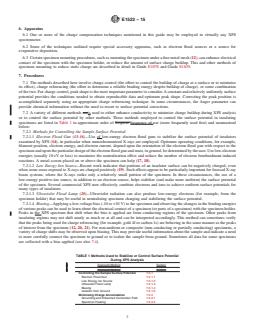
TABLE 1 Methods Used to Stabilize or Control Surface Potential
During XPS Analysis
Approach/Method Section
Approach/Method Section
Controlling the Sample Surface Potential 7.2.1
Electron Flood Gun 7.2.1.1
Low Energy Ion Source 7.2.1.2
Ultraviolet Flood Lamp 7.2.1.3
Biasing 7.2.1.4
Isolation from Ground 7.2.1.5
Minimizing Charge Accumulation 7.2.2
Grounding and Enhanced Conduction Path 7.2.2.1
Specimen Heating 7.2.2.2
E1523 − 15
7.2.1.5 Isolation from Ground—For some materials, or mixtures of materials with different electrical conductivity, differential
charging can occur. This phenomenon can be used to obtain information about the sample (4, 22) and can sometimes be minimized
(and a more uniform sample potential can be achieved) by isolating the specimen from ground. In some circumstances an electron
flood gun is more effective in controlling the surface potential when the sample is isolated from ground.
7.2.2 Methods for Minimizing Charge Accumulation—These methods attempt to stabilize the surface potential by minimizing
the charge buildup or potential change by lowering sample resistance to ground or the spectrometer mount.
7.2.2.1 Grounding and Enhanced Conduction Path—Surrounding of insulating materials with a conducting material has been
a common approach to minimizing the charge build up on samples. This can mean masking a solid sample with a conducting
aperture, grid, or foil or mounting particles on a conducting foil or tape (2).
7.2.2.2 Specimen Heating—For a limited number of specimens, heating can increase the electrical conductivity of the specimen,
thus decreasing charging (2).
7.3 Binding Energy Reference Methods—A variety of methods (as listed in Table 2 and described below) have been used to
determine the amount of binding energy shift resulting from surface charging in insulating specimens. Each of these methods is
based on the assumption that differential charging (along the surface or within the sample) is not present to a significant degree.
If significant differential charging is found to occur or thought to be present, it may be necessary to alter the method of charge
(potential) control.
7.3.1 Adventitious Carbon Referencing (12, 13, 20, 23-27)—Unless specimens are prepared for analysis under carefully
controlled atmospheres, the surface, generally, is coated by adventitious contaminants. Once introduced into the spectrometer,
further specimen contamination can occur by the adsorption of residual gases, especially in instruments with oil diffusion pumps.
These contamination layers can be used for referencing purposes if it is assumed that they truly reflect the steady-state static charge
exhibited by the specimen surface and that they contain an element with a peak of known binding energy. Carbon is most
commonly detected in adventitious layers, and photoelectrons from the carbon 1s transition are those most often adopted as a
reference.
7.3.1.1 A binding energy of 284.8 eV is often used for the carbon 1s level of this contamination and the difference between the
measured position in the energy spectrum and the reference value, above, is the amount of surface potential shift caused by
charging. This reference energy is based on the assumption that the carbon is in the form of a hydrocarbon or graphite and that
other carbon species are either not present or can be distinguished from this peak.
7.3.1.2 A significant disadvantage of this method lies in the uncertainty of the true nature of the carbon and the appropriate
reference values which have a wide range as reported in the literature (13, 24, 25) that ranges from 284.6 to 285.2 eV for the
carbon 1s electrons. Therefore, it is recommended that if adventitious carbon is to be used for referencing, the reference binding
energy should be determined on the user’s own spectrometer. Ideally, this measurement should be carried out on a substrate similar
in its chemical and physical properties to the material to be analyzed and covered by only a thin, uniform contamination layer (that
is, of the order of a monolayer).
7.3.1.3 Care must be taken where adventitious hydrocarbon can be chemically transformed, as, for example, by a strongly
oxidizing specimen (25). With less than one monolayer coverage of adventitious carbon, the carbon 1s binding energy sometimes
decreases (26). The carbon binding energy may also shift as a consequence of ion sputtering; evidence has been found for carbon
of lower binding energy, possibly graphite or, more likely, carbon in domains approaching atomic dimensions (20). One method
for distinguishing the presence of more than one type of carbon is to monitor the FWHM of the carbon 1s photoelectron peak.
Abnormally broad peaks suggest the presence of more than one type of carbon or differential charge. Broadened carbon 1s peaks
may result from the presence of more than one type of carbon or differential charging. Despite the limitations and uncertainties
associated with the use of adventitious carbon for static-charge referencing, it is the most convenient and commonly applied
technique.
7.3.2 Internal Referencing—Sometimes the specimen is of such a nature that a portion of it has spectral lines of known binding
energy that can be used as the charge reference (23). This method assumes the invariance of the binding energy of the chosen
chemical group in different molecules. The measured peak energy will include the static charge of the specimen. A shift factor,
calculated to correct the binding energy of the reference chemical group to the assumed value, can be applied to other measured
peaks. If carbon is used, the technique is called internal carbon referencing. In many circumstances, the oxygen 1s photoelectron
peak is useful as a reference (28).
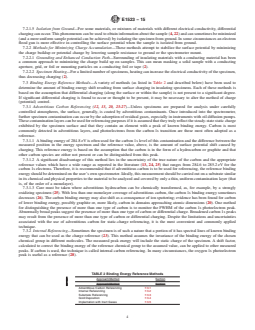
TABLE 2 Binding Energy Reference Methods
Approach/Method Section
Approach/Method Section
Adventitious Carbon Referencing 7.3.1
Internal Referencing 7.3.2
Substrate Referencing 7.3.3
Gold Deposition 7.3.4
Implantation
...