

ASTM D5876/D5876M-17(2024)
(Guide)Standard Guide for Use of Direct Rotary Wireline Casing Advancement Drilling Methods for Geoenvironmental Exploration and Installation of Subsurface Water-Quality Monitoring Devices
General Information
- Abstract
SIGNIFICANCE AND USE
5.1 Wireline casing advancement may be used in support of geoenvironmental exploration and for installation of subsurface monitoring devices in both unconsolidated and consolidated materials. Use of direct-rotary wireline casing-advancement drilling methods with fluids are applicable to a wide variety of consolidated or unconsolidated materials as long as fluid circulation can be maintained. Wireline casing-advancement drilling offers the advantages of high drilling-penetration rates in a wide variety of materials with the added benefit of the large-diameter drilling rod serving as protective casing. Wireline coring does not require tripping in and out of the hole each time a core is obtained. The drill rods need only be removed when the coring bit is worn or damaged or if the inner core barrel becomes stuck in the outer barrel.
5.1.1 Wireline casing advancers may be adapted for use with circulating air under pressure for sampling water-sensitive materials where fluid exposure may alter the core or in cavernous materials or lost circulation occurs (1, 2).4 Several advantages of using the air-rotary drilling method over other methods may include the ability to drill rather rapidly through consolidated materials and, in many instances, not require the introduction of drilling fluids to the borehole. Air-rotary drilling techniques are usually employed to advance the borehole when water-sensitive materials (that is, friable sandstones or collapsible soils) may preclude use of water-based rotary-drilling methods. Some disadvantages to air-rotary drilling may include poor borehole integrity in unconsolidated materials when casing is not used and the possible volatilization of contaminants and air-borne dust. Air drilling may not be satisfactory in unconsolidated or cohesionless soils, or both, when drilling below the groundwater table. In some instances, water or foam additives, or both, may be injected into the air stream to improve cuttings-lifting capacity and cutti...
SCOPE
1.1 This guide covers how direct (straight) wireline rotary casing advancement drilling and sampling procedures may be used for geoenvironmental exploration and installation of subsurface water-quality monitoring devices.
Note 1: The term “direct” with respect to the rotary drilling method of this guide indicates that a water-based drilling fluid or air is injected through a drill-rod column to rotating bit(s) or coring bit. The fluid or air cools the bit(s) and transports cuttings to the surface in the annulus between the drill rod column and the borehole wall.
Note 2: This guide does not include the procedures for fluid rotary systems which are addressed in a separate guide, Guide D5783.
1.2 The term “casing advancement” is sometimes used to describe rotary wireline drilling because the center pilot bit or core barrel assemblies may be removed and the large inside diameter drill rods can act as a temporary casing for testing or installation of monitoring devices. This guide addresses casing-advancement equipment in which the drill rod (casing) is advanced by rotary force applied to the bit with application of static downforce to aid in the cutting process.
1.3 This guide includes several forms of rotary wireline drilling configurations. General borehole advancement may be performed without sampling by using a pilot roller cone or drag bit until the desired depth is reached. Alternately, the material may be continuously or incrementally sampled by replacing the pilot bit with a core-barrel assembly designed for coring either rock or soil. Rock coring should be performed in accordance with Practice D2113.
1.4 Units—The values stated in either SI units or Inch-Pound units given in brackets are to be regarded separately as standard. The values stated in each system may not be exactly equivalents; therefore, each system shall be used independently of the other. Combining values from the two system may result i...
- Status
- Published
- Publication Date
- 14-Mar-2024
- Technical Committee
- D18 - Soil and Rock
- Drafting Committee
- D18.21 - Groundwater and Vadose Zone Investigations
Overview
ASTM D5876/D5876M-17(2024) is the internationally recognized standard guide published by ASTM International for the use of direct rotary wireline casing advancement drilling methods in geoenvironmental exploration and the installation of subsurface water-quality monitoring devices. This guide outlines procedures and equipment configurations for both unconsolidated and consolidated formations, supporting reliable data collection for environmental site characterization, groundwater monitoring, and other subsurface investigations.
Wireline casing advancement allows for efficient drilling by providing high penetration rates and maintaining borehole stability. The use of large-diameter drill rods as a temporary casing is a key feature, which protects the borehole during testing or installation of monitoring wells and devices.
Key Topics
- Direct Rotary Wireline Drilling: Focuses on drilling methods where fluids (air or water-based) are circulated through hollow drill rods, cooling the bit and transporting cuttings to the surface.
- Casing Advancement: Utilizes drill rods that double as temporary casing, allowing for testing or monitoring device installation without removing the rod string for each operation.
- Sampling Procedures: Provides options for continuous or incremental sampling of soil and rock using core-barrel assemblies, enhancing flexibility in site investigations.
- Adaptation to Ground Conditions: Details the advantages and limitations of using air or fluid circulation, especially when drilling through water-sensitive or unconsolidated formations.
- Safety and Environmental Considerations: Stresses the responsibility of practitioners to establish appropriate safety, health, and environmental practices and documentation throughout drilling operations.
- Practical Equipment Configurations: Discusses required apparatus, including drill rigs, drill rods, coring bits, overshot assemblies, and fluid circulation systems.
Applications
ASTM D5876/D5876M-17(2024) is widely applied in:
- Geoenvironmental Site Exploration: Facilitating the collection of high-quality soil, rock, and groundwater samples for environmental assessment, remediation planning, and regulatory compliance.
- Groundwater and Subsurface Water-Quality Monitoring: Enabling precise installation of wells and monitoring devices into boreholes, while minimizing the potential for borehole damage and cross-contamination.
- Hydrogeological Investigations: Supporting in situ testing methods for hydraulic conductivity, transmissivity, and other aquifer properties.
- Site Characterization for Infrastructure Projects: Providing guidance for efficient and safe drilling operations in support of civil, mining, and environmental projects.
- Sampling in Challenging Conditions: Addressing drilling through complex subsurface materials, including collapsible soils, friable sandstones, or areas of possible fluid loss.
Related Standards
Professionals using ASTM D5876/D5876M-17(2024) may also reference:
- ASTM D2113 - Practice for Rock Core Drilling and Sampling for Site Exploration (for rock coring techniques)
- ASTM D5092/D5092M - Practice for Design and Installation of Ground Water Monitoring Wells
- ASTM D5782 - Guide for Use of Direct Air-Rotary Drilling for Geoenvironmental Exploration
- ASTM D5783 - Guide for Use of Direct Rotary Drilling with Water-Based Drilling Fluid
- ASTM D6026 - Practice for Using Significant Digits and Data Records in Geotechnical Data
- ASTM D653 - Terminology Relating to Soil, Rock, and Contained Fluids
Practical Value
By following this standard, practitioners can achieve:
- Improved drilling efficiency and high-quality sample recovery.
- Reduced borehole collapse and fluid loss, even in challenging subsurface conditions.
- Reliable installation of water-quality monitoring devices that meets regulatory and scientific requirements.
- Comprehensive documentation for traceability, quality assurance, and environmental stewardship.
Adopting ASTM D5876/D5876M-17(2024) in geoenvironmental projects helps ensure consistent, repeatable results and supports informed decision-making in environmental site assessments, remediation, and long-term monitoring.
Relations
- Effective Date
- 15-Mar-2024
- Effective Date
- 15-Mar-2024
- Effective Date
- 15-Mar-2024
Get Certified
Connect with accredited certification bodies for this standard

CIS Institut d.o.o.
Personal Protective Equipment (PPE) certification body. Notified Body NB-2890 for EU Regulation 2016/425 PPE.

Kiwa BDA Testing
Building and construction product certification.
Kmetijski inštitut Slovenije
Agricultural Institute of Slovenia. Soil testing, plant health, agricultural product analysis.
Sponsored listings
Frequently Asked Questions
ASTM D5876/D5876M-17(2024) is a guide published by ASTM International. Its full title is "Standard Guide for Use of Direct Rotary Wireline Casing Advancement Drilling Methods for Geoenvironmental Exploration and Installation of Subsurface Water-Quality Monitoring Devices". This standard covers: SIGNIFICANCE AND USE 5.1 Wireline casing advancement may be used in support of geoenvironmental exploration and for installation of subsurface monitoring devices in both unconsolidated and consolidated materials. Use of direct-rotary wireline casing-advancement drilling methods with fluids are applicable to a wide variety of consolidated or unconsolidated materials as long as fluid circulation can be maintained. Wireline casing-advancement drilling offers the advantages of high drilling-penetration rates in a wide variety of materials with the added benefit of the large-diameter drilling rod serving as protective casing. Wireline coring does not require tripping in and out of the hole each time a core is obtained. The drill rods need only be removed when the coring bit is worn or damaged or if the inner core barrel becomes stuck in the outer barrel. 5.1.1 Wireline casing advancers may be adapted for use with circulating air under pressure for sampling water-sensitive materials where fluid exposure may alter the core or in cavernous materials or lost circulation occurs (1, 2).4 Several advantages of using the air-rotary drilling method over other methods may include the ability to drill rather rapidly through consolidated materials and, in many instances, not require the introduction of drilling fluids to the borehole. Air-rotary drilling techniques are usually employed to advance the borehole when water-sensitive materials (that is, friable sandstones or collapsible soils) may preclude use of water-based rotary-drilling methods. Some disadvantages to air-rotary drilling may include poor borehole integrity in unconsolidated materials when casing is not used and the possible volatilization of contaminants and air-borne dust. Air drilling may not be satisfactory in unconsolidated or cohesionless soils, or both, when drilling below the groundwater table. In some instances, water or foam additives, or both, may be injected into the air stream to improve cuttings-lifting capacity and cutti... SCOPE 1.1 This guide covers how direct (straight) wireline rotary casing advancement drilling and sampling procedures may be used for geoenvironmental exploration and installation of subsurface water-quality monitoring devices. Note 1: The term “direct” with respect to the rotary drilling method of this guide indicates that a water-based drilling fluid or air is injected through a drill-rod column to rotating bit(s) or coring bit. The fluid or air cools the bit(s) and transports cuttings to the surface in the annulus between the drill rod column and the borehole wall. Note 2: This guide does not include the procedures for fluid rotary systems which are addressed in a separate guide, Guide D5783. 1.2 The term “casing advancement” is sometimes used to describe rotary wireline drilling because the center pilot bit or core barrel assemblies may be removed and the large inside diameter drill rods can act as a temporary casing for testing or installation of monitoring devices. This guide addresses casing-advancement equipment in which the drill rod (casing) is advanced by rotary force applied to the bit with application of static downforce to aid in the cutting process. 1.3 This guide includes several forms of rotary wireline drilling configurations. General borehole advancement may be performed without sampling by using a pilot roller cone or drag bit until the desired depth is reached. Alternately, the material may be continuously or incrementally sampled by replacing the pilot bit with a core-barrel assembly designed for coring either rock or soil. Rock coring should be performed in accordance with Practice D2113. 1.4 Units—The values stated in either SI units or Inch-Pound units given in brackets are to be regarded separately as standard. The values stated in each system may not be exactly equivalents; therefore, each system shall be used independently of the other. Combining values from the two system may result i...
SIGNIFICANCE AND USE 5.1 Wireline casing advancement may be used in support of geoenvironmental exploration and for installation of subsurface monitoring devices in both unconsolidated and consolidated materials. Use of direct-rotary wireline casing-advancement drilling methods with fluids are applicable to a wide variety of consolidated or unconsolidated materials as long as fluid circulation can be maintained. Wireline casing-advancement drilling offers the advantages of high drilling-penetration rates in a wide variety of materials with the added benefit of the large-diameter drilling rod serving as protective casing. Wireline coring does not require tripping in and out of the hole each time a core is obtained. The drill rods need only be removed when the coring bit is worn or damaged or if the inner core barrel becomes stuck in the outer barrel. 5.1.1 Wireline casing advancers may be adapted for use with circulating air under pressure for sampling water-sensitive materials where fluid exposure may alter the core or in cavernous materials or lost circulation occurs (1, 2).4 Several advantages of using the air-rotary drilling method over other methods may include the ability to drill rather rapidly through consolidated materials and, in many instances, not require the introduction of drilling fluids to the borehole. Air-rotary drilling techniques are usually employed to advance the borehole when water-sensitive materials (that is, friable sandstones or collapsible soils) may preclude use of water-based rotary-drilling methods. Some disadvantages to air-rotary drilling may include poor borehole integrity in unconsolidated materials when casing is not used and the possible volatilization of contaminants and air-borne dust. Air drilling may not be satisfactory in unconsolidated or cohesionless soils, or both, when drilling below the groundwater table. In some instances, water or foam additives, or both, may be injected into the air stream to improve cuttings-lifting capacity and cutti... SCOPE 1.1 This guide covers how direct (straight) wireline rotary casing advancement drilling and sampling procedures may be used for geoenvironmental exploration and installation of subsurface water-quality monitoring devices. Note 1: The term “direct” with respect to the rotary drilling method of this guide indicates that a water-based drilling fluid or air is injected through a drill-rod column to rotating bit(s) or coring bit. The fluid or air cools the bit(s) and transports cuttings to the surface in the annulus between the drill rod column and the borehole wall. Note 2: This guide does not include the procedures for fluid rotary systems which are addressed in a separate guide, Guide D5783. 1.2 The term “casing advancement” is sometimes used to describe rotary wireline drilling because the center pilot bit or core barrel assemblies may be removed and the large inside diameter drill rods can act as a temporary casing for testing or installation of monitoring devices. This guide addresses casing-advancement equipment in which the drill rod (casing) is advanced by rotary force applied to the bit with application of static downforce to aid in the cutting process. 1.3 This guide includes several forms of rotary wireline drilling configurations. General borehole advancement may be performed without sampling by using a pilot roller cone or drag bit until the desired depth is reached. Alternately, the material may be continuously or incrementally sampled by replacing the pilot bit with a core-barrel assembly designed for coring either rock or soil. Rock coring should be performed in accordance with Practice D2113. 1.4 Units—The values stated in either SI units or Inch-Pound units given in brackets are to be regarded separately as standard. The values stated in each system may not be exactly equivalents; therefore, each system shall be used independently of the other. Combining values from the two system may result i...
ASTM D5876/D5876M-17(2024) is classified under the following ICS (International Classification for Standards) categories: 13.060.99 - Other standards related to water quality. The ICS classification helps identify the subject area and facilitates finding related standards.
ASTM D5876/D5876M-17(2024) has the following relationships with other standards: It is inter standard links to ASTM D5876/D5876M-17, ASTM D6001/D6001M-20, ASTM D6286/D6286M-20. Understanding these relationships helps ensure you are using the most current and applicable version of the standard.
ASTM D5876/D5876M-17(2024) is available in PDF format for immediate download after purchase. The document can be added to your cart and obtained through the secure checkout process. Digital delivery ensures instant access to the complete standard document.
Standards Content (Sample)
This international standard was developed in accordance with internationally recognized principles on standardization established in the Decision on Principles for the
Development of International Standards, Guides and Recommendations issued by the World Trade Organization Technical Barriers to Trade (TBT) Committee.
Designation: D5876/D5876M − 17 (Reapproved 2024)
Standard Guide for
Use of Direct Rotary Wireline Casing Advancement Drilling
Methods for Geoenvironmental Exploration and Installation
of Subsurface Water-Quality Monitoring Devices
This standard is issued under the fixed designation D5876/D5876M; the number immediately following the designation indicates the
year of original adoption or, in the case of revision, the year of last revision. A number in parentheses indicates the year of last
reapproval. A superscript epsilon (´) indicates an editorial change since the last revision or reapproval.
1. Scope 1.5 All observed and calculated values are to conform to the
guidelines for significant digits and rounding established in
1.1 This guide covers how direct (straight) wireline rotary
D6026. The procedures used to specify how data are collected/
casing advancement drilling and sampling procedures may be
recorded or calculated in this standard are regarded as the
used for geoenvironmental exploration and installation of
industry standard. In addition, they are representative of the
subsurface water-quality monitoring devices.
significant digits that generally should be retained. The proce-
NOTE 1—The term “direct” with respect to the rotary drilling method of
dures used do not consider material variation, purpose for
this guide indicates that a water-based drilling fluid or air is injected
obtaining the data, special purpose studies, or any consider-
through a drill-rod column to rotating bit(s) or coring bit. The fluid or air
ations for the user’s objective; and it is common practice to
cools the bit(s) and transports cuttings to the surface in the annulus
increase or reduce the significant digits of reported data to be
between the drill rod column and the borehole wall.
NOTE 2—This guide does not include the procedures for fluid rotary
commensurate with these considerations. It is beyond the scope
systems which are addressed in a separate guide, Guide D5783.
of this standard to consider significant digits used in analysis
1.2 The term “casing advancement” is sometimes used to method or engineering design.
describe rotary wireline drilling because the center pilot bit or
1.6 Direct rotary wireline drilling methods for geoenviron-
core barrel assemblies may be removed and the large inside
mental exploration will often involve safety planning,
diameter drill rods can act as a temporary casing for testing or
administration, and documentation. This guide does not pur-
installation of monitoring devices. This guide addresses
port to specifically address exploration and site safety.
casing-advancement equipment in which the drill rod (casing)
1.7 This standard does not purport to address all of the
is advanced by rotary force applied to the bit with application
safety concerns, if any, associated with its use. It is the
of static downforce to aid in the cutting process.
responsibility of the user of this standard to establish appro-
1.3 This guide includes several forms of rotary wireline
priate safety, health, and environmental practices and deter-
drilling configurations. General borehole advancement may be
mine the applicability of regulatory limitations prior to use.
performed without sampling by using a pilot roller cone or drag
1.8 This guide offers an organized collection of information
bit until the desired depth is reached. Alternately, the material
or a series of options and does not recommend a specific
may be continuously or incrementally sampled by replacing the
course of action. This document cannot replace education or
pilot bit with a core-barrel assembly designed for coring either
experience and should be used in conjunction with professional
rock or soil. Rock coring should be performed in accordance
judgment. Not all aspects of this guide may be applicable in all
with Practice D2113.
circumstances. This ASTM standard is not intended to repre-
1.4 Units—The values stated in either SI units or Inch-
sent or replace the standard of care by which the adequacy of
Pound units given in brackets are to be regarded separately as
a given professional service must be judged, nor should this
standard. The values stated in each system may not be exactly
document be applied without consideration of a project’s many
equivalents; therefore, each system shall be used independently
unique aspects. The word “Standard” in the title of this
of the other. Combining values from the two system may result
document means only that the document has been approved
in non-conformance with the standard.
through the ASTM consensus process.
1.9 This international standard was developed in accor-
dance with internationally recognized principles on standard-
This guide is under the jurisdiction of ASTM Committee D18 on Soil and
Rockand is the direct responsibility of Subcommittee D18.21 on Groundwater and
ization established in the Decision on Principles for the
Vadose Zone Investigations.
Development of International Standards, Guides and Recom-
Current edition approved March 15, 2024. Published March 2024. Originally
mendations issued by the World Trade Organization Technical
approved in 1995. Last previous edition approved in 2017 as D5876 – 17. DOI:
10.1520/D5876_D5876M-17R24. Barriers to Trade (TBT) Committee.
Copyright © ASTM International, 100 Barr Harbor Drive, PO Box C700, West Conshohocken, PA 19428-2959. United States
D5876/D5876M − 17 (2024)
2. Referenced Documents reached after an interval of cutting. The cleanout depth (or
2 drilled depth as it is referred to after cleaning out of sloughed
2.1 ASTM Standards:
material in the bottom of the borehole) is usually recorded to
D653 Terminology Relating to Soil, Rock, and Contained
the nearest 0.03 m [0.1 ft].
Fluids
D1452/D1452M Practice for Soil Exploration and Sampling 3.2.3 drill hole, n—in drilling, a cylindrical hole advanced
into the subsurface by mechanical means. Also known as a
by Auger Borings
D1586/D1586M Test Method for Standard Penetration Test borehole or boring.
(SPT) and Split-Barrel Sampling of Soils
3.2.4 drill string, n—in drilling, the rotary drilling assembly
D1587/D1587M Practice for Thin-Walled Tube Sampling of
under rotation including bit, sampler/core barrel, drill rods, and
Fine-Grained Soils for Geotechnical Purposes (Withdrawn
connector assemblies (subs). The total length of this assembly
2024)
is used to determine drilling depth by referencing the position
D2113 Practice for Rock Core Drilling and Sampling of
of the top of the string to a datum near the ground surface.
Rock for Site Exploration (Withdrawn 2023)
3.2.5 filter pack, n—in drilling, also known as a gravel pack
D3550/D3550M Practice for Thick Wall, Ring-Lined, Split
or primary filter pack in the practice of monitoring-well
Barrel, Drive Sampling of Soils
installations. The gravel pack is usually granular material,
D4630 Test Method for Determining Transmissivity and
having selected grain-size characteristics, that is placed be-
Storage Coefficient of Low-Permeability Rocks by In Situ
tween a monitoring device and the borehole wall. The basic
Measurements Using the Constant Head Injection Test
purpose of the filter pack or gravel envelope is to act as: a
D4631 Test Method for Determining Transmissivity and
nonclogging filter when the aquifer is not suited to natural
Storativity of Low Permeability Rocks by In Situ Mea-
development or, as a formation stabilizer when the aquifer is
surements Using Pressure Pulse Technique
suitable for natural development.
D5088 Practice for Decontamination of Field Equipment
3.2.5.1 Discussion—Under most circumstances, a clean,
Used at Waste Sites
quartz sand or gravel should be used. In some cases, a
D5092/D5092M Practice for Design and Installation of
prepacked screen may be used.
Groundwater Monitoring Wells
3.2.6 head space, n—in drilling, on a double- or triple-tube
D5099 Test Methods for Rubber—Measurement of Process-
wireline core barrel it is the spacing adjustment made between
ing Properties Using Capillary Rheometry
the pilot-shoe leading edge and the inner kerf of the outer-tube
D5608 Practices for Decontamination of Sampling and Non
cutting bit. Spacing should be about 1.6 mm [0.0625 in.] or
Sample Contacting Equipment Used at Low Level Radio-
roughly, the thickness of a matchbook. (The head-space
active Waste Sites
adjustment is made by removing the inner-barrel assembly,
D5782 Guide for Use of Direct Air-Rotary Drilling for
loosening the lock nut on the hanger-bearing shaft and either
Geoenvironmental Exploration and the Installation of
tightening or loosening the threaded shaft until the inner barrel
Subsurface Water-Quality Monitoring Devices
is moved the necessary distance, up or down, to obtain the
D5783 Guide for Use of Direct Rotary Drilling with Water-
correct setting. Reassemble the inner- and outer-barrel
Based Drilling Fluid for Geoenvironmental Exploration
assemblies, attach the barrel to the drill rod or a wireline and
and the Installation of Subsurface Water-Quality Monitor-
suspend vertically allowing the inner-barrel assembly to hang
ing Devices
freely inside the outer barrel on the inner hanger-bearing
D6026 Practice for Using Significant Digits and Data Re-
assembly. Check the head space. It is imperative that the
cords in Geotechnical Data
adjustment is correct to make sure that the inner barrel is free
3. Terminology
to rotate without contacting the outer barrel. If incorrectly
adjusted, the inner barrel will “hang up” and rotate with the
3.1 Definitions—For definitions of common technical terms
outer barrel as the core is being cut. This will cause the core to
in this standard, refer to Terminology D653.
break and block entry of core into the inner barrel.)
3.2 Definitions of Terms Specific to This Standard:
3.2.7 in situ testing devices, n—in drilling, sensors or
3.2.1 bentonite, n—in drilling, the common name for drill-
probes, used for obtaining mechanical- or chemical-test data,
ing fluid additives and well-construction products consisting
that are typically pushed, rotated, or driven below the bottom
mostly of naturally occurring montmorillonite. Some bentonite
of a borehole following completion of an increment of drilling.
products have chemical additives that may affect water-quality
However, some in situ testing devices (such as electronic
analyses.
pressure transducers, gas-lift samplers, tensiometers, and so
3.2.2 cleanout depth, n—in drilling, the depth to which the
forth) may require lowering and setting of the device(s) in
end of the drill string (bit or core barrel cutting end) has
preexisting boreholes by means of a suspension line or a string
of lowering rods or pipes. Centralizers may be needed to
correctly position the device(s) in the borehole.
For referenced ASTM standards, visit the ASTM website, www.astm.org, or
contact ASTM Customer Service at service@astm.org. For Annual Book of ASTM
3.2.8 lead distance, n—in drilling, the mechanically ad-
Standards volume information, refer to the standard’s Document Summary page on
justed length or distance that the inner-barrel cutting shoe is set
the ASTM website.
to extend beyond the outer core-barrel cutting bit in order to
The last approved version of this historical standard is referenced on
www.astm.org. reduce potential core-erosion damage that can be caused by the
D5876/D5876M − 17 (2024)
circulating drilling-fluid media. Lead distance is checked by advancement drilling methods with fluids are applicable to a
vertically suspending the entire core-barrel assembly from a wide variety of consolidated or unconsolidated materials as
wireline or from a section of drill rod so that the inner-barrel long as fluid circulation can be maintained. Wireline casing-
can hang freely from the upper inner-barrel swivel assembly. advancement drilling offers the advantages of high drilling-
The cutting shoe extension below the outer core-barrel cutting penetration rates in a wide variety of materials with the added
bit can then be checked. The “stiffer” or more competent the benefit of the large-diameter drilling rod serving as protective
formation to be cored, the less the extension of the inner-barrel casing. Wireline coring does not require tripping in and out of
cutting shoe is necessary to avoid core erosion. the hole each time a core is obtained. The drill rods need only
be removed when the coring bit is worn or damaged or if the
3.2.9 overshot, n—in drilling, a latching mechanism located
inner core barrel becomes stuck in the outer barrel.
at the end of the hoisting line. It is specially designed to latch
5.1.1 Wireline casing advancers may be adapted for use
onto or release pilot bit or core-barrel assemblies.
with circulating air under pressure for sampling water-sensitive
3.2.10 pilot bit assembly, n—in drilling, design to lock into
materials where fluid exposure may alter the core or in
the end section of drill rod for drilling without sampling. The
cavernous materials or lost circulation occurs (1, 2). Several
pilot bit can be either drag, roller cone, or diamond plug types.
advantages of using the air-rotary drilling method over other
The bit can be set to protrude from the rod coring bit depending
methods may include the ability to drill rather rapidly through
on formation conditions.
consolidated materials and, in many instances, not require the
3.2.11 sub, n—in drilling, a substitute or adaptor used to
introduction of drilling fluids to the borehole. Air-rotary
connect from one size or type of threaded drill rod or tool
drilling techniques are usually employed to advance the
connection to another.
borehole when water-sensitive materials (that is, friable sand-
3.2.12 subsurface water-quality monitoring device, n—in stones or collapsible soils) may preclude use of water-based
rotary-drilling methods. Some disadvantages to air-rotary drill-
drilling, an instrument placed below ground surface to obtain a
sample for analyses of the chemical, biological, or radiological ing may include poor borehole integrity in unconsolidated
materials when casing is not used and the possible volatiliza-
characteristics of subsurface pore water or to make in situ
measurements. tion of contaminants and air-borne dust. Air drilling may not be
satisfactory in unconsolidated or cohesionless soils, or both,
3.2.13 wireline drilling, n—in drilling, a rotary drilling
when drilling below the groundwater table. In some instances,
process which uses special enlarged inside diameter drilling
water or foam additives, or both, may be injected into the air
rods with special latching pilot bits or core barrels which are
stream to improve cuttings-lifting capacity and cuttings return.
raised or lowered inside the rods with a wireline and overshot
Use of water or other additives, or both, should be documented.
latching mechanism.
The use of air under high pressures may cause fracturing of the
formation materials or extreme erosion of the borehole if
4. Summary of Practice
drilling pressures and techniques are not carefully maintained
4.1 Wireline drilling is a rotary drilling process that uses
and monitored. If borehole damage becomes apparent, other
special enlarged inside diameter drilling rods with special
drilling method(s) should be considered.
latching pilot bits or core barrels which are raised or lowered
5.1.2 When air is used as the circulating fluid, the user
inside the rods with a wireline and overshot latching mecha-
should consult Refs (1, 2) and Guide D5782.
nism. The bottom section of rod has either a diamond or
carbide coring bit at the end and is specially machined to 5.2 The application of wireline casing advancement to
geoenvironmental exploration may involve sampling of
accommodate latching of either pilot bits or core barrels. The
overshot mechanism is designed to latch and unlatch bit or groundwater, soil, or rock; or in situ or pore-fluid testing; or
installation of other casings for subsequent drilling activities in
barrel assemblies. Bit cutting is accomplished by application of
the combination rotary and static down forces to the bit. unconsolidated or consolidated materials.
General drill-hole advancement may be performed without
5.3 The wireline drill rod can act as a temporary casing and
sampling by using either a pilot roller cone or drag bit until the
may be used to facilitate the installation of a monitoring
desired depth is reached. Alternately, the material may be
device. The monitoring device may be installed as the drill rod
continuously or incrementally sampled by replacing the pilot
is removed from the drill hole.
bit with a core-barrel assembly designed for coring either rock
NOTE 3—The user may install a monitoring device within the same drill
or soil.
hole wherein sampling or in situ testing was performed.
4.2 The pilot bit or core barrel can be inserted or removed
5.4 Wireline casing-advancement rotary-drilling methods
during the drilling process and the large inside diameter rods
use fluid or air circulation to lubricate cutting bits and for
can act as a temporary casing for testing or installation of
removal of drill cuttings. In many cases, additives are added to
monitoring devices.
improve circulation, cuttings return, borehole wall
stabilization, and sealing of the borehole wall from fluid loss.
5. Significance and Use
The use of fluid or air under high pressures may allow for
5.1 Wireline casing advancement may be used in support of
geoenvironmental exploration and for installation of subsur-
face monitoring devices in both unconsolidated and consoli-
The boldface numbers given in parentheses refer to a list of references at the
dated materials. Use of direct-rotary wireline casing- end of the text.
D5876/D5876M − 17 (2024)
damage to formation materials by fracturing or excessive fluid circulation systems require drill fluid, mud pit, suction
erosion if drilling conditions are not carefully maintained and hose, drill fluid circulation pump, pressure hose, and swivel.
monitored. If undesirable formation damage is occurring or Air circulation systems require an air compressor, dust
evident, other drilling method(s) should be considered. collector, air cleaning device, pressure hose, and swivel.
6.2.1 Drill Rig—Most top-head drive or hollow-spindle
6. Apparatus
drills are suitable for performing rotary wireline drilling.
6.1 General—Direct rotary wireline casing advancement
Rock-coring drills with smooth hydraulic operation and high
systems and procedures used for geoenvironmental exploration
RPM capability are desirable for rock-coring operations. Ro-
and subsurface water-quality monitoring device installations
tary table and kelly drills generally are not acceptable for
include direct air or mud-rotary drilling using wireline drill
wireline-drilling use due to difficulty or inability to raise and
rods. The wireline drill rod has a large inside diameter and is
lower wireline assemblies. The drill unit should have the
equipped with either a wireline-retrievable center pilot bit for
ability to rotate a drill-rod column and apply a controllable
general hole advancement, or a rock- or soil-core barrel for
axial force on the drill bit appropriate to the drilling and
sampling the borehole as it is advanced. Fig. 1 (a through d)
sampling requirements and the geologic conditions.
shows basic schematics of the components of a wireline-
6.2.2 Drill Rods, transfer force and rotation from the drill
drilling assembly using a rock core-barrel assembly to sample
rig to the bit or core barrel. When rotary drilling is stopped, the
formations as drilling progresses.
large inside diameter wireline drill rod acts can as casing, that
6.2 The basic mechanical components of wireline casing- is, by preventing against hole collapse—to allow for testing or
advancement drilling systems include the drill rig with either installation of monitoring devices for hole protection. Drill
hollow spindle or top-head drive, drill rods, coring or casing rods conduct drilling fluid to the bit or core barrel. Individual
bits, overshot assembly, pilot bit, or core barrel. Water-based drill rods (that is, drill stem, drill string, drill pipe) should be
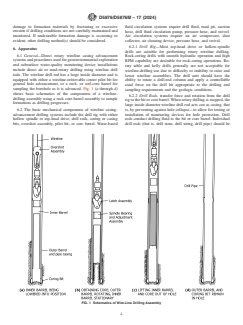
FIG. 1 Schematics of Wire-Line Drilling Assembly
D5876/D5876M − 17 (2024)
straight so they do not contribute to excessive vibrations or which are listed in 2.2, can also be used to obtain samples.
“whipping” of the drill-rod column. Threaded connections When drilling in a casing-advancement mode using a pilot bit,
should be in good repair and not leak significantly at the without sampling, the bit is referred to as a casing bit.
internal fluid pressure typically used for drilling. Drill rods
6.2.3.1 Numerous coring or casing bits can be selected
should be made up and kept secure by wrench tightening at the
depending on the properties of the formation to be drilled or
threaded joint(s) to prevent rod damage.
cored. Since it is undesirable to remove the outer bit, design of
6.2.2.1 Wireline drill rod dimensions are not fully standard- this bit is highly important. When coring, particularly in
ized. The available sizes depend on the manufacturing sources
unconsolidated materials, it is important that the bit cuts the
(3). General hole diameter available from most manufacturers material and not merely tears it and pushes it aside. Some bit
follows the Diamond Core Drill Manufacturers Association
types successfully used include either carbide inserts coring
(DCDMA) size conventions of A (48-mm), B (59.9-mm), N bits or diamond core bits. In rock-coring operations the kerf
(75.7-mm), H (96.3-mm), and P (122.6-mm) sizes (4). Inside
design inner gage of bit, matrix cutting capacity, and location
diameter varies depending on the manufacturer. of drilling-fluid circulation ports are important. The inner gage
of the bit can be selected so that the core is slightly undercut,
NOTE 4—Sizes of casings, casing bits, drill rods, and core barrels are
thereby allowing it to move freely up the inner tube and not
standardized by the DCDMA and the American Petroleum Institute (API).
cause core blockage. If the core is over cut and air is present in
Refer to Ref (4) for available sizes and capacities of common use drilling
equipment used for soil and rock exploration.
the barrel, consideration should be given to possible alteration
of the core that may occur during subsequent sealing and
6.2.2.2 The wireline lead rod contains shoulders for latching
storage of the core obtained. It is beyond the scope of this
of pilot bits or core barrels. Wireline lead-rod sections are
guide to recommend bit styles. Bit selection can be aided by
equipped with coring or casing bits. There are many configu-
review of literature (1, 2, 3, 5, 6) and consultation with
rations of wireline drilling equipment possible depending on
manufacturers.
the manufacturer. With rock-coring systems, the wireline lead
6.2.3.2 The dimensions of the coring or casing bits often
rod is equipped with a reaming shell to maintain circulation
determine the maximum diameter of testing or sampling device
and act as a stabilizer. Some multipurpose systems allow for
that can be inserted through the wireline drill rods. As
latching of pilot bit, rock-core barrel, or soil-core barrel to the
mentioned previously, the bit size is usually selected to provide
lead wireline rod section. In most coring operations the lead
a drill hole of sufficient diameter for specified borehole
wireline rod is considered to be the outer barrel in a double- or
sampling or testing to be accomplished or for insertion of
triple-tube core barrel design (see Practice D2113). The bit is
instrumentation device components such as the screened
referred to as a core bit.
intake, riser pipe, filter pack, and well-completion installation
6.2.2.3 The wireline rod size is usually selected to provide a
devices such as a tremie pipe in the borehole.
drill hole of sufficient diameter for specified sampling, testing,
6.2.4 Wireline Retrievable Pilot-Bit Assembly, used when no
or insertion of instrumentation-device components, such as, the
borehole coring/sampling is desired. The assembly is equipped
screened intake and filter pack and installation devices such as
with a receiver for pickup by the overshot latching assembly.
a tremie pipe. The inside diameter of the wireline rod should
Several pilot-bit styles are available including roller cone and
permit easy insertion and retraction of a sampler or a pipe with
drag bit configurations. Bit selection can be aided by review of
a sufficiently large inside diameter to accommodate the place-
literature (1, 2, 3, 5, 6) and consultation with manufacturers.
ment of completion materials adjacent to the screened intake
and riser of an instrumentation device. Coring bits are selected
NOTE 6—Bottom-discharge bits are those having drill-fluid circulation
to provide adequate hole or core diameter, or both. Selection of
discharge ports in direct contact with the base of the hole. If these bits are
protective casings, bits, and core barrels is made by consider- used to drill loose cohesionless materials, jetting or excessive erosion of
the test intervals could occur.
ing size requirements listed above combined with: annulus
circulation capabilities of drill rod used, and the need for
6.2.5 Overshot, a latching retrieval assembly that is lowered
tapering from larger to smaller diameters casings (“nesting” of
into the hole with a wireline hoist cable to either retrieve or
casing) if difficult drilling conditions occur (lost circulation,
lower core-barrel inner assemblies or bits equipped with an
zones of contamination, and so forth) requiring these problem
upper retrieval spear and downhole latching assemblies.
zones in the borehole to be cased off.
NOTE 7—When lowering a latching bit assembly or retrievable inner-
NOTE 5—Drill rods usually require lubricants on the threads to allow
core barrel assembly into a dry hole, a retrievable dry-hole lowering tool
easy threading and unthreading of the drill-rod tool joints. Some lubricants
should be employed to prevent damaging the outer bit kerf, matrix, or
have organic or metallic constituents, or both, that could be interpreted as
latching assemblies, or combination thereof. Inner tools should not be
contaminants if detected in a sample. Various lubricants are available that
allowed to free-fall down the drill rod in a dry hole.
have components of known chemistry. The effect of drill-rod lubricants on
6.2.6 Wireline Core Barrels, available for obtaining continu-
chemical analyses of samples should be considered and documented when
ous samples of soil or rock. The barrels for use in coring rock
using direct-rotary drilling. The same consideration and documentation
should be given to lubricants used with water swivels, hoisting swivels, or
vary in design and manufacture from those barrels used for
other devices used near the drilling axis.
coring unconsolidated materials. The recommended core re-
6.2.3 The casing bit or core bit provides the material cutting covery in rock usually requires a double- or triple-tube,
capability. In coring operations, the bit is referred to as a core swivel-type design. The inner tube of the rock core barrel
bit. Rock coring should be performed in accordance with consists of a core-lifter case and core lifter that threads onto the
Practice D2113. Soil sampling or coring methods, some of lower end of the inner tube. On the upper end of the inner tube
D5876/D5876M − 17 (2024)
is a removable threaded inner-tube head swivel-bearing assem- 6.3.2 Suction Hose, sometimes equipped with a foot valve
bly with an inner-tube latching device and release mechanism. or strainer, or both, conducts the drilling fluid from the mud pit
to the drilling-fluid circulation pump.
The inner-tube latching device locks into a complementary
recess in the wall of the lead outer drill rod such that the drill
6.3.3 Drilling-Fluid Circulation Pump, having the capabil-
rod may be rotated while the inner tube remains stationary. The ity to lift the drilling fluid from the mud pit and move it through
use of split inner tubes or split inner-tube liners inside a solid the system against variable pumping heads at a flow rate to
inner-tube barrel facilitates easier handling, study, and removal provide an annular velocity that is adequate to transport drill
of the core from the core barrel. cuttings out of the drill hole.
6.3.3.1 Fluid pressures at the bit should be as low as
6.2.6.1 Several types of soil core barrels are also available.
necessary to maintain circulation in order to reduce the
Most barrels have a cutting shoe that is either flush with the
potential for hydraulic fracturing or excessive erosion of the
outer tube cutting bit or, it is made to extend past the outer tube
surrounding materials. Fluid pressures should be monitored
core bit. Sample barrels may be of either the solid- or split-tube
during drilling. Normally, injection fluid pressures are easily
configuration. Some barrels may also be equipped with either
monitored. Changes in fluid return and circulation pressures
a split tube or solid tube inner liner to reduce potential
may indicate occurrence of excessive erosion, formation fluid
exposure of the core to fluids or other materials. Important
loss, or formation fracturing. Abrupt changes or anomalies in
considerations for sampling results and maximum core recov-
the fluid pressures should be duly noted and documented
ery are: use of the “correct” lead distance of the inner barrel
including the depth(s) of occurrence(s).
cutting shoe, using the “optimum” clearance ratio or head
6.3.4 Drilling Fluid, usually consisting of a water-based
space of the cutting shoe, and prevention of inner-barrel
circulation media and one or more additives that increase
rotation. (For maximum core recovery and minimum core
viscosity or provide other desirable physical or chemical
damage the user is referred to 3.2.5 and 3.2.8 for making
properties. Principal functions of drilling fluid include: sealing
proper lead-distance or head-space adjustments of the inner-
the drill hole wall to reduce loss of drilling fluid, providing a
barrel cutting shoe.) The lead distance of the cutting shoe ahead
hydraulic pressure against the drill-hole wall to support the
of the cutting bit depends on the stiffness of the formations to
open drill hole, removing cuttings generated at the bit, and
be sampled. Stiffer materials require less lead distance.
lubricating and cooling of the bit. Drilling-fluid management
6.2.6.2 The clearance ratio or head space of the cutting shoe
requires considerable experience for successful use. Drilling-
with respect to inner barrel should be selected to result in core
fluid program design can be aided by review of literature (1, 3,
that fills the barrel without excessive compression of the core
4, 5, 6) and consultation with manufacturers. If changes to the
due to friction. If the clearance ratio is too great and the core
circulating medium are made, the depth(s) or interval(s) of
is over cut, core-erosion damage may occur. If core is over cut
these changes should be documented. Samples of cuttings can
and air is present in the barrel, alteration of the soil may occur
be collected for analysis of materials being penetrated. If
during subsequent packaging, sealing, and storage of the
samples are taken, the depth(s) and interval(s) should be
core(s). Use of single-tube split barrels below the water table
documented.
may expose soil cores to fluids present in the drill rod.
NOTE 9—Particular attention should be given to the drilling-fluid
6.2.7 Pressure Hose, conducting the drilling fluid from the
makeup-water source and the means used to transport the makeup water
circulation pump to the swivel.
to the drilling site as potential sources of contamination in the drilling
6.2.8 Swivel, directing the drilling fluid to the rotating kelly fluid. If the chemical makeup of the water is determined the test results
should be documented.
or drill-rod column.
6.3.4.1 Some commonly used additives for water-based
6.3 Rotary Wireline Drilling, with water-based drilling flu-
drilling fluids are listed in 6.3.4.2 – 6.3.4.10.
ids.
6.3.4.
...