


ASTM F2003-02(2022)
(Practice)Standard Practice for Accelerated Aging of Ultra-High Molecular Weight Polyethylene After Gamma Irradiation in Air
Standard Practice for Accelerated Aging of Ultra-High Molecular Weight Polyethylene After Gamma Irradiation in Air
SIGNIFICANCE AND USE
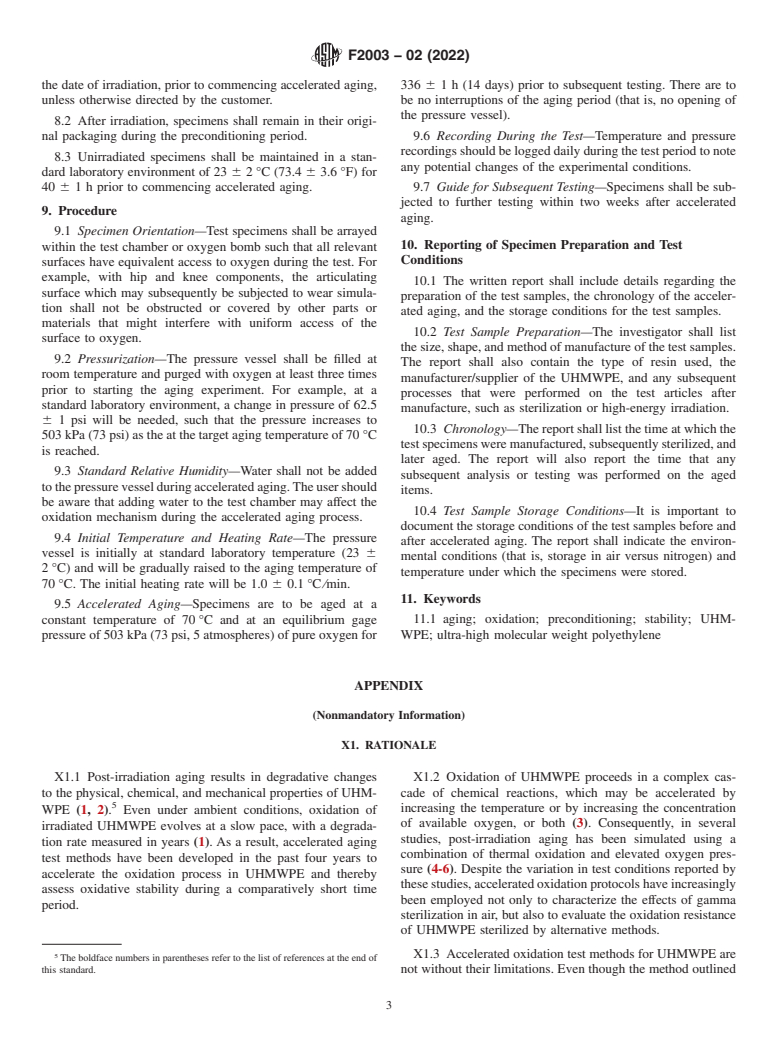
4.1 This practice summarizes a method that may be used to accelerate the oxidation of UHMWPE components using elevated temperature and elevated oxygen pressure. Under real-time conditions, such as shelf aging and implantation, oxidative changes to UHMWPE after sterilization using high-energy radiation may take months or years to produce changes that may result in deleterious mechanical performance. The method outlined in this practice permits the evaluation of oxidative stability in a relatively short period of time (for example, weeks).
4.2 This practice may also be used to oxidize UHMWPE test specimens and joint replacement components prior to characterization of their physical, chemical, and mechanical properties. In particular, this practice may be used for accelerated aging of UHMWPE components prior to evaluation in a hip or knee joint wear simulator as outlined in Guide F1714 (hip wear), Guide F1715 (knee wear), ISO 14242 (hip wear), or ISO 14243 (knee wear), or combination thereof.
SCOPE
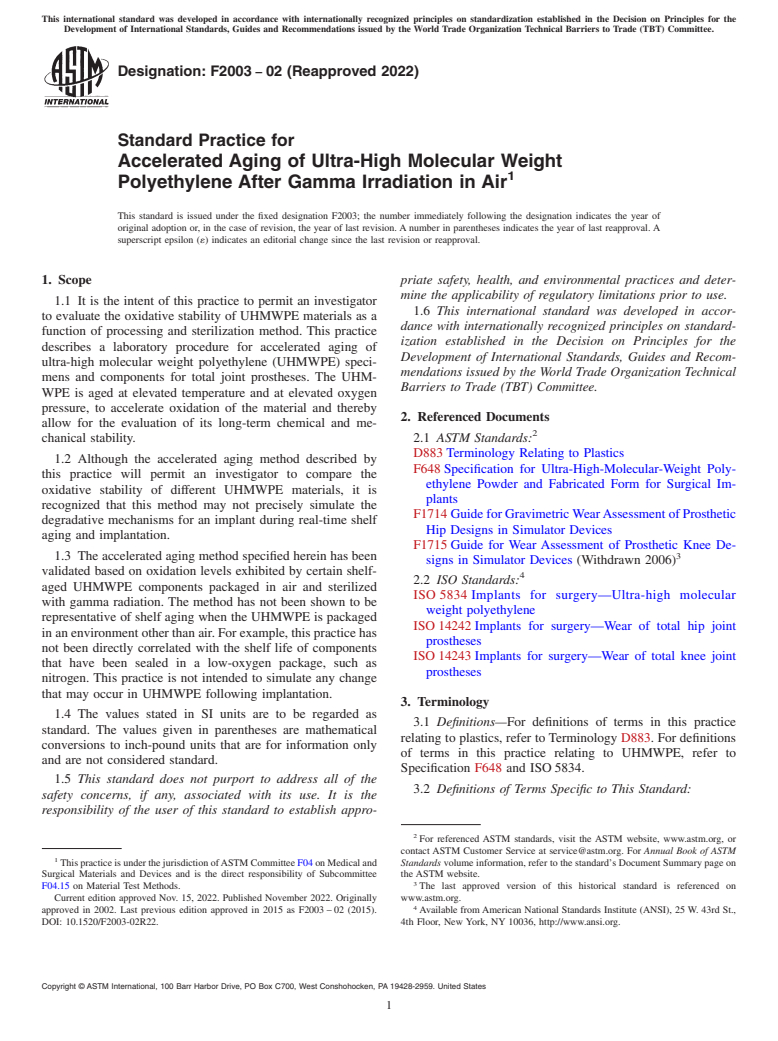
1.1 It is the intent of this practice to permit an investigator to evaluate the oxidative stability of UHMWPE materials as a function of processing and sterilization method. This practice describes a laboratory procedure for accelerated aging of ultra-high molecular weight polyethylene (UHMWPE) specimens and components for total joint prostheses. The UHMWPE is aged at elevated temperature and at elevated oxygen pressure, to accelerate oxidation of the material and thereby allow for the evaluation of its long-term chemical and mechanical stability.
1.2 Although the accelerated aging method described by this practice will permit an investigator to compare the oxidative stability of different UHMWPE materials, it is recognized that this method may not precisely simulate the degradative mechanisms for an implant during real-time shelf aging and implantation.
1.3 The accelerated aging method specified herein has been validated based on oxidation levels exhibited by certain shelf-aged UHMWPE components packaged in air and sterilized with gamma radiation. The method has not been shown to be representative of shelf aging when the UHMWPE is packaged in an environment other than air. For example, this practice has not been directly correlated with the shelf life of components that have been sealed in a low-oxygen package, such as nitrogen. This practice is not intended to simulate any change that may occur in UHMWPE following implantation.
1.4 The values stated in SI units are to be regarded as standard. The values given in parentheses are mathematical conversions to inch-pound units that are for information only and are not considered standard.
1.5 This standard does not purport to address all of the safety concerns, if any, associated with its use. It is the responsibility of the user of this standard to establish appropriate safety, health, and environmental practices and determine the applicability of regulatory limitations prior to use.
1.6 This international standard was developed in accordance with internationally recognized principles on standardization established in the Decision on Principles for the Development of International Standards, Guides and Recommendations issued by the World Trade Organization Technical Barriers to Trade (TBT) Committee.
General Information
Standards Content (Sample)
This international standard was developed in accordance with internationally recognized principles on standardization established in the Decision on Principles for the
Development of International Standards, Guides and Recommendations issued by the World Trade Organization Technical Barriers to Trade (TBT) Committee.
Designation: F2003 − 02 (Reapproved 2022)
Standard Practice for
Accelerated Aging of Ultra-High Molecular Weight
1
Polyethylene After Gamma Irradiation in Air
This standard is issued under the fixed designation F2003; the number immediately following the designation indicates the year of
original adoption or, in the case of revision, the year of last revision. A number in parentheses indicates the year of last reapproval. A
superscript epsilon (´) indicates an editorial change since the last revision or reapproval.
1. Scope priate safety, health, and environmental practices and deter-
mine the applicability of regulatory limitations prior to use.
1.1 It is the intent of this practice to permit an investigator
1.6 This international standard was developed in accor-
to evaluate the oxidative stability of UHMWPE materials as a
dance with internationally recognized principles on standard-
function of processing and sterilization method. This practice
ization established in the Decision on Principles for the
describes a laboratory procedure for accelerated aging of
Development of International Standards, Guides and Recom-
ultra-high molecular weight polyethylene (UHMWPE) speci-
mendations issued by the World Trade Organization Technical
mens and components for total joint prostheses. The UHM-
Barriers to Trade (TBT) Committee.
WPE is aged at elevated temperature and at elevated oxygen
pressure, to accelerate oxidation of the material and thereby
2. Referenced Documents
allow for the evaluation of its long-term chemical and me-
2
2.1 ASTM Standards:
chanical stability.
D883 Terminology Relating to Plastics
1.2 Although the accelerated aging method described by
F648 Specification for Ultra-High-Molecular-Weight Poly-
this practice will permit an investigator to compare the
ethylene Powder and Fabricated Form for Surgical Im-
oxidative stability of different UHMWPE materials, it is
plants
recognized that this method may not precisely simulate the
F1714 Guide for GravimetricWearAssessment of Prosthetic
degradative mechanisms for an implant during real-time shelf
Hip Designs in Simulator Devices
aging and implantation.
F1715 Guide for Wear Assessment of Prosthetic Knee De-
3
1.3 The accelerated aging method specified herein has been
signs in Simulator Devices (Withdrawn 2006)
validated based on oxidation levels exhibited by certain shelf-
4
2.2 ISO Standards:
aged UHMWPE components packaged in air and sterilized
ISO 5834 Implants for surgery—Ultra-high molecular
with gamma radiation. The method has not been shown to be
weight polyethylene
representative of shelf aging when the UHMWPE is packaged
ISO 14242 Implants for surgery—Wear of total hip joint
in an environment other than air. For example, this practice has
prostheses
not been directly correlated with the shelf life of components
ISO 14243 Implants for surgery—Wear of total knee joint
that have been sealed in a low-oxygen package, such as
prostheses
nitrogen. This practice is not intended to simulate any change
that may occur in UHMWPE following implantation.
3. Terminology
1.4 The values stated in SI units are to be regarded as
3.1 Definitions—For definitions of terms in this practice
standard. The values given in parentheses are mathematical
relating to plastics, refer to Terminology D883. For definitions
conversions to inch-pound units that are for information only
of terms in this practice relating to UHMWPE, refer to
and are not considered standard.
Specification F648 and ISO 5834.
1.5 This standard does not purport to address all of the
3.2 Definitions of Terms Specific to This Standard:
safety concerns, if any, associated with its use. It is the
responsibility of the user of this standard to establish appro-
2
For referenced ASTM standards, visit the ASTM website, www.astm.org, or
contact ASTM Customer Service at service@astm.org. For Annual Book of ASTM
1
ThispracticeisunderthejurisdictionofASTMCommitteeF04onMedicaland Standards volume information, refer to the standard’s Document Summary page on
Surgical Materials and Devices and is the direct responsibility of Subcommittee the ASTM website.
3
F04.15 on Material Test Methods. The last approved version of this historical standard is referenced on
Current edition approved Nov. 15, 2022. Published November 2022. Originally www.astm.org.
4
approved in 2002. Last previous edition approved in 2015 as F2003 – 02 (2015). Available fromAmerican National Standards Institute (ANSI), 25 W. 43rd St.,
DOI: 10.1520/F2003-02R22. 4th Floor, New York, NY 10036, http://www.ansi.org.
Copyright © ASTM International, 100 Barr Harbor Drive, PO Box C700, West Conshohocken, PA 19428-2959. United States
1
--------------
...
Questions, Comments and Discussion
Ask us and Technical Secretary will try to provide an answer. You can facilitate discussion about the standard in here.