

ASTM D7450-19
(Specification)Standard Specification for Performance of Rear Axle Gear Lubricants Intended for API Category GL-5 Service
General Information
- Abstract
SCOPE
1.1 This specification covers test methods and acceptance criteria for determining the acceptability of gear oils for applications that specify a lubricant meeting the performance requirements of API Category GL-5 service. Lubricants that meet these performance requirements are typically intended for use in automotive axles, particularly those containing hypoid gears, operating under various combinations of high-speed/shock-load and low-speed/high-torque conditions.
1.2 The values stated in inch-pound units are to be regarded as standard. The values given in parentheses are mathematical conversions to SI units that are provided for information only and are not considered standard.
1.3 This standard does not purport to address all of the safety concerns, if any, associated with its use. It is the responsibility of the user of this standard to establish appropriate safety, health, and environmental practices and determine the applicability of regulatory limitations prior to use.
1.4 This international standard was developed in accordance with internationally recognized principles on standardization established in the Decision on Principles for the Development of International Standards, Guides and Recommendations issued by the World Trade Organization Technical Barriers to Trade (TBT) Committee.
- Status
- Published
- Publication Date
- 30-Apr-2019
- Technical Committee
- D02 - Petroleum Products, Liquid Fuels, and Lubricants
- Drafting Committee
- D02.B0 - Automotive Lubricants
Buy Documents
ASTM D7450-19 - Standard Specification for Performance of Rear Axle Gear Lubricants Intended for API Category GL-5 Service

REDLINE ASTM D7450-19 - Standard Specification for Performance of Rear Axle Gear Lubricants Intended for API Category GL-5 Service
Overview
ASTM D7450-19 is the internationally recognized standard specification for the performance of rear axle gear lubricants intended for API Category GL-5 service. Developed by ASTM International, this specification outlines the necessary test methods and acceptance criteria to determine if gear oils are suitable for automotive axle applications-particularly in hypoid gear systems requiring high levels of protection under severe operating conditions. GL-5 service lubricants are essential for axles subjected to high-speed/shock-load and low-speed/high-torque environments commonly found in automotive and heavy-duty applications.
Key Topics
- Performance Requirements: The specification details performance criteria for gear lubricants, including resistance to scoring, pitting, spalling, corrosion, and wear. These criteria ensure optimal gear protection and longevity.
- Test Methods: ASTM D7450-19 references a suite of ASTM test methods, such as:
- D130 for copper corrosion
- D892 for foaming characteristics
- D5704 for thermal and oxidative stability
- D6121 and D8165 for load-carrying capacity in hypoid drive axles
- D7038 for moisture corrosion resistance
- D7452 for load-carrying under high-speed/shock loads
- Viscosity Classification: The specification incorporates the SAE J306 standard for automotive gear lubricant viscosity grading, ensuring correct lubricant selection for varying operating needs.
- Standardization and Safety: All values are provided in inch-pound units (with SI conversions for reference), and users are reminded to establish safety, health, and environmental practices.
Applications
ASTM D7450-19 is critical for:
- Automotive Manufacturers and Suppliers: Ensuring that factory-fill and aftermarket gear oils meet rigorous API GL-5 requirements for rear axle protection.
- Lubricant Formulators and Blenders: Evaluating and certifying product performance before market introduction.
- Fleet Operators and Maintenance Professionals: Selecting gear lubricants that offer proven durability in high-stress, heavy-load, and high-torque driving conditions.
- Quality Assurance: Conducting performance validation to prevent gear failure, minimize downtime, and extend service intervals.
- Military and Specialty Vehicles: Meeting the demands of multipurpose gear oils specified in relevant military standards (e.g., MIL-L-2105D, MIL-PRF-2105E).
Related Standards
A range of related standards and test methods are referenced in ASTM D7450-19, supporting robust lubricant evaluation:
- ASTM Standards:
- D130: Corrosiveness to copper
- D892: Foaming characteristics of lubricating oils
- D5704: Thermal and oxidative stability
- D6121 & D8165: Load-carrying capacity for hypoid axles
- D7038: Moisture corrosion resistance
- D7452: High-speed/shock-load testing for axles
- SAE Standards:
- SAE J306: Viscosity classification for gear lubricants
- SAE J2360: Multipurpose gear lubricant performance
- Military Specifications:
- MIL-L-2105C/D: Multipurpose gear lubricating oils
- MIL-PRF-2105E: High-quality gear lubricants for military applications
Practical Value
Implementing ASTM D7450-19 ensures that gear lubricants for API GL-5 service provide superior protection under severe conditions encountered by modern automotive axles, especially hypoid gears. Adherence to this standard promotes product reliability, reduces warranty claims, and enhances equipment longevity, making it an indispensable tool for automotive, maintenance, and lubricant industry professionals worldwide.
Keywords: ASTM D7450-19, rear axle gear lubricants, API GL-5, automotive gear oil standard, hypoid gear lubricant, gear oil performance, ASTM gear oil specification, automotive axle lubricant, gear lubricant testing.
Relations
- Effective Date
- 01-May-2019
- Effective Date
- 01-Mar-2024
- Effective Date
- 01-Nov-2023
- Effective Date
- 01-Oct-2023
- Effective Date
- 01-Dec-2019
- Effective Date
- 01-Jul-2019
- Effective Date
- 01-Jul-2019
- Effective Date
- 01-May-2019
- Effective Date
- 01-Oct-2018
- Effective Date
- 01-Apr-2018
- Effective Date
- 01-Dec-2017
- Effective Date
- 01-May-2017
- Effective Date
- 01-May-2017
- Effective Date
- 01-May-2017
- Effective Date
- 01-May-2017
Buy Documents
ASTM D7450-19 - Standard Specification for Performance of Rear Axle Gear Lubricants Intended for API Category GL-5 Service
REDLINE ASTM D7450-19 - Standard Specification for Performance of Rear Axle Gear Lubricants Intended for API Category GL-5 Service
Get Certified
Connect with accredited certification bodies for this standard

Element Materials Technology
Materials testing and product certification.

ABS Group Brazil
ABS Group certification services in Brazil.

ABS Quality Evaluations Inc.
American Bureau of Shipping quality certification.
Sponsored listings
Frequently Asked Questions
ASTM D7450-19 is a technical specification published by ASTM International. Its full title is "Standard Specification for Performance of Rear Axle Gear Lubricants Intended for API Category GL-5 Service". This standard covers: SCOPE 1.1 This specification covers test methods and acceptance criteria for determining the acceptability of gear oils for applications that specify a lubricant meeting the performance requirements of API Category GL-5 service. Lubricants that meet these performance requirements are typically intended for use in automotive axles, particularly those containing hypoid gears, operating under various combinations of high-speed/shock-load and low-speed/high-torque conditions. 1.2 The values stated in inch-pound units are to be regarded as standard. The values given in parentheses are mathematical conversions to SI units that are provided for information only and are not considered standard. 1.3 This standard does not purport to address all of the safety concerns, if any, associated with its use. It is the responsibility of the user of this standard to establish appropriate safety, health, and environmental practices and determine the applicability of regulatory limitations prior to use. 1.4 This international standard was developed in accordance with internationally recognized principles on standardization established in the Decision on Principles for the Development of International Standards, Guides and Recommendations issued by the World Trade Organization Technical Barriers to Trade (TBT) Committee.
SCOPE 1.1 This specification covers test methods and acceptance criteria for determining the acceptability of gear oils for applications that specify a lubricant meeting the performance requirements of API Category GL-5 service. Lubricants that meet these performance requirements are typically intended for use in automotive axles, particularly those containing hypoid gears, operating under various combinations of high-speed/shock-load and low-speed/high-torque conditions. 1.2 The values stated in inch-pound units are to be regarded as standard. The values given in parentheses are mathematical conversions to SI units that are provided for information only and are not considered standard. 1.3 This standard does not purport to address all of the safety concerns, if any, associated with its use. It is the responsibility of the user of this standard to establish appropriate safety, health, and environmental practices and determine the applicability of regulatory limitations prior to use. 1.4 This international standard was developed in accordance with internationally recognized principles on standardization established in the Decision on Principles for the Development of International Standards, Guides and Recommendations issued by the World Trade Organization Technical Barriers to Trade (TBT) Committee.
ASTM D7450-19 is classified under the following ICS (International Classification for Standards) categories: 75.100 - Lubricants, industrial oils and related products. The ICS classification helps identify the subject area and facilitates finding related standards.
ASTM D7450-19 has the following relationships with other standards: It is inter standard links to ASTM D7450-13, ASTM D7452-24, ASTM D7038-23, ASTM D892-23, ASTM D8165-19a, ASTM D6121-19, ASTM D8165-19, ASTM D7038-19, ASTM D7038-18a, ASTM D7038-18, ASTM D8165-17, ASTM D7452-17, ASTM D7038-17, ASTM D6121-17, ASTM D5704-17. Understanding these relationships helps ensure you are using the most current and applicable version of the standard.
ASTM D7450-19 is available in PDF format for immediate download after purchase. The document can be added to your cart and obtained through the secure checkout process. Digital delivery ensures instant access to the complete standard document.
Standards Content (Sample)
This international standard was developed in accordance with internationally recognized principles on standardization established in the Decision on Principles for the
Development of International Standards, Guides and Recommendations issued by the World Trade Organization Technical Barriers to Trade (TBT) Committee.
Designation:D7450 −19
Standard Specification for
Performance of Rear Axle Gear Lubricants Intended for API
Category GL-5 Service
This standard is issued under the fixed designation D7450; the number immediately following the designation indicates the year of
original adoption or, in the case of revision, the year of last revision. A number in parentheses indicates the year of last reapproval. A
superscript epsilon (´) indicates an editorial change since the last revision or reapproval.
1. Scope* Oxidative Stability of Lubricating Oils Used for Manual
Transmissions and Final Drive Axles
1.1 This specification covers test methods and acceptance
D6121 Test Method for Evaluation of Load-Carrying Capac-
criteria for determining the acceptability of gear oils for
ity of Lubricants Under Conditions of Low Speed and
applications that specify a lubricant meeting the performance
High Torque Used for Final Hypoid Drive Axles
requirements of API Category GL-5 service. Lubricants that
D7038 Test Method for Evaluation of Moisture Corrosion
meettheseperformancerequirementsaretypicallyintendedfor
Resistance of Automotive Gear Lubricants
use in automotive axles, particularly those containing hypoid
D7452 Test Method for Evaluation of the Load Carrying
gears, operating under various combinations of high-speed/
Properties of Lubricants Used for Final Drive Axles,
shock-load and low-speed/high-torque conditions.
Under Conditions of High Speed and Shock Loading
1.2 The values stated in inch-pound units are to be regarded
D8165 Test Method for Evaluation of Load-Carrying Capac-
as standard. The values given in parentheses are mathematical
ity of Lubricants Used in Hypoid Final-Drive Axles
conversions to SI units that are provided for information only
Operated under Low-Speed and High-Torque Conditions
and are not considered standard.
2.2 Military Standards:
1.3 This standard does not purport to address all of the
MIL-L-2105C Lubricating Oil, Gear, Multipurpose
safety concerns, if any, associated with its use. It is the
MIL-L-2105D Lubricating Oil, Gear, Multipurpose
responsibility of the user of this standard to establish appro-
MIL-PRF-2105E Lubricating Oil, Gear, Multipurpose
priate safety, health, and environmental practices and deter-
2.3 SAE Documents:
mine the applicability of regulatory limitations prior to use.
J306 Automotive Gear Lubricant Viscosity Classification
1.4 This international standard was developed in accor-
J2360 Lubricating Oil, Gear Multipurpose (Metric) Military
dance with internationally recognized principles on standard-
Use
ization established in the Decision on Principles for the
Development of International Standards, Guides and Recom-
3. Terminology
mendations issued by the World Trade Organization Technical
3.1 Definitions:
Barriers to Trade (TBT) Committee.
3.1.1 ridging, n—on ring and pinion gears, an alteration of
the tooth surface to give a series of parallel raised and polished
2. Referenced Documents
ridges running diagonally in the direction of sliding motion,
2.1 ASTM Standards:
eitherpartiallyorcompletelyacrossthetoothsurfacesofgears.
D130 Test Method for Corrosiveness to Copper from Petro-
D6121
leum Products by Copper Strip Test
3.1.2 rippling, n—on ring and pinion gears, an alteration of
D892 Test Method for Foaming Characteristics of Lubricat-
the tooth surface to give an appearance of a more or less
ing Oils
regular pattern resembling ripples on water or fish scales.
D5704 Test Method for Evaluation of the Thermal and
D6121
3.1.3 pitting, n—on ring and pinion gears, small irregular
This specification is under the jurisdiction of ASTM Committee D02 on
cavities in the tooth surface, resulting from the breaking out of
Petroleum Products, Liquid Fuels, and Lubricants and is the direct responsibility of
small areas of surface metal. D6121
Subcommittee D02.B0 on Automotive Lubricants.
Current edition approved May 1, 2019. Published June 2019. Originally
approved in 2008. Last previous edition approved in 2013 as D7450 – 13. DOI:
10.1520/D7450-19. Available from Standardization Documents Order Desk, DODSSP, Bldg. 4,
For referenced ASTM standards, visit the ASTM website, www.astm.org, or Section D, 700 Robbins Ave., Philadelphia, PA 19111-5098, http://
contact ASTM Customer Service at service@astm.org. For Annual Book of ASTM www.dodssp.daps.mil
Standards volume information, refer to the standard’s Document Summary page on Available from Society of Automotive Engineers (SAE), 400 Commonwealth
the ASTM website. Dr., Warrendale, PA 15096-0001, http://www.sae.org.
*A Summary of Changes section appears at the end of this standard
Copyright © ASTM International, 100 Barr Harbor Drive, PO Box C700, West Conshohocken, PA 19428-2959. United States
D7450−19
3.1.4 spalling, n—on ring and pinion gears, the breaking for gears, particularly those in automotive axles equipped with
out of flakes of irregular area of the tooth surface, a condition hypoid gears, operating under various combination of high-
more extensive than pitting. D6121
speed/shock-load and low-speed/high-torque conditions. Ap-
proved lubricants under the SAE J2360 Standard, the MIL-L-
3.1.5 scoring, n—on ring and pinion gears, the rapid
2105C Specification, the MIL-L-2105D Specification, and the
removal of metal from the tooth surfaces caused by the tearing
MIL-PRF-2105E Specification satisfy the requirements ofAPI
out of small contacting particles that have welded together as
a result of metal-to-metal contact; the scored surface is Category GL-5. Note that these standards and specifications
characterized by a matte or dull finish. D6121 contain performance requirements that exceed those of API
Category GL-5.
3.1.6 wear, n—on ring and pinion gears, the removal of
metal, without evidence of surface fatigue or adhesive wear,
5. Performance Requirements
resulting in partial or complete elimination of tool or grinding
marks or development of a discernible shoulder ridge at the
5.1 API Category GL-5 performance requirements for can-
bottomofthecontactareaneartherootoratthetoeorheelend
didate gear lubricants using the most current test methods and
of pinion tooth contact area (abrasive wear). D6121
procedures are provided in Table 1.
3.2 Definitions of Terms Specific to This Standard:
3.2.1 lubrited, adj—having its surface coated with phos-
6. Keywords
phate.
6.1 axle lubricants; gear lubricants; high-speed/shock-load;
4. Performance Classification
hypoid gear lubricants; hypoid gears; low-speed/high-torque
4.1 API Category GL-5—The designation API Category
GL-5isdesignedtoidentifythecategoryoflubricantsintended
D7450−19
TABLE 1 API Category GL-5 Tests and Acceptance Criteria
Test Item Minimum Maximum
A,B
Test Method D7452 (formerly L-42
...
This document is not an ASTM standard and is intended only to provide the user of an ASTM standard an indication of what changes have been made to the previous version. Because
it may not be technically possible to adequately depict all changes accurately, ASTM recommends that users consult prior editions as appropriate. In all cases only the current version
of the standard as published by ASTM is to be considered the official document.
Designation: D7450 − 13 D7450 − 19
Standard Specification for
Performance of Rear Axle Gear Lubricants Intended for API
Category GL-5 Service
This standard is issued under the fixed designation D7450; the number immediately following the designation indicates the year of
original adoption or, in the case of revision, the year of last revision. A number in parentheses indicates the year of last reapproval. A
superscript epsilon (´) indicates an editorial change since the last revision or reapproval.
1. Scope*
1.1 This specification covers test methods and acceptance criteria for determining the acceptability of gear oils for applications
that specify a lubricant meeting the performance requirements of API Category GL-5 service. Lubricants that meet these
performance requirements are typically intended for use in automotive axles, particularly those containing hypoid gears, operating
under various combinations of high-speed/shock-load and low-speed/high-torque conditions.
1.2 The values stated in inch-pound units are to be regarded as standard. The values given in parentheses are mathematical
conversions to SI units that are provided for information only and are not considered standard.
1.3 This standard does not purport to address all of the safety concerns, if any, associated with its use. It is the responsibility
of the user of this standard to establish appropriate safety safety, health, and healthenvironmental practices and determine the
applicability of regulatory limitations prior to use.
1.4 This international standard was developed in accordance with internationally recognized principles on standardization
established in the Decision on Principles for the Development of International Standards, Guides and Recommendations issued
by the World Trade Organization Technical Barriers to Trade (TBT) Committee.
2. Referenced Documents
2.1 ASTM Standards:
D130 Test Method for Corrosiveness to Copper from Petroleum Products by Copper Strip Test
D892 Test Method for Foaming Characteristics of Lubricating Oils
D5704 Test Method for Evaluation of the Thermal and Oxidative Stability of Lubricating Oils Used for Manual Transmissions
and Final Drive Axles
D6121 Test Method for Evaluation of Load-Carrying Capacity of Lubricants Under Conditions of Low Speed and High Torque
Used for Final Hypoid Drive Axles
D7038 Test Method for Evaluation of Moisture Corrosion Resistance of Automotive Gear Lubricants
D7452 Test Method for Evaluation of the Load Carrying Properties of Lubricants Used for Final Drive Axles, Under Conditions
of High Speed and Shock Loading
D8165 Test Method for Evaluation of Load-Carrying Capacity of Lubricants Used in Hypoid Final-Drive Axles Operated under
Low-Speed and High-Torque Conditions
2.2 Military Standards:
MIL-L-2105C Lubricating Oil, Gear, Multipurpose
MIL-L-2105D Lubricating Oil, Gear, Multipurpose
MIL-PRF-2105E Lubricating Oil, Gear, Multipurpose
2.3 SAE Documents:
J306 Automotive Gear Lubricant Viscosity Classification
J2360 Lubricating Oil, Gear Multipurpose (Metric) Military Use
This specification is under the jurisdiction of ASTM Committee D02 on Petroleum Products, Liquid Fuels, and Lubricants and is the direct responsibility of Subcommittee
D02.B0 on Automotive Lubricants.
Current edition approved May 1, 2013May 1, 2019. Published May 2013June 2019. Originally approved in 2008. Last previous edition approved in 20082013 as
D7450 – 08D7450 – 13. DOI: 10.1520/D7450-13.10.1520/D7450-19.
For referenced ASTM standards, visit the ASTM website, www.astm.org, or contact ASTM Customer Service at service@astm.org. For Annual Book of ASTM Standards
volume information, refer to the standard’s Document Summary page on the ASTM website.
Available from Standardization Documents Order Desk, DODSSP, Bldg. 4, Section D, 700 Robbins Ave., Philadelphia, PA 19111-5098, http://www.dodssp.daps.mil.
http://www.dodssp.daps.mil
Available from Society of Automotive Engineers (SAE), 400 Commonwealth Dr., Warrendale, PA 15096-0001, http://www.sae.org.
*A Summary of Changes section appears at the end of this standard
Copyright © ASTM International, 100 Barr Harbor Drive, PO Box C700, West Conshohocken, PA 19428-2959. United States
D7450 − 19
3. Terminology
3.1 Definitions:
3.1.1 ridging, n—on ring and pinion gears, an alteration of the tooth surface to give a series of parallel raised and polished
ridges running diagonally in the direction of sliding motion, either partially or completely across the tooth surfaces of gears. D6121
D6121
3.1.2 rippling, n—on ring and pinion gears, an alteration of the tooth surface to give an appearance of a more or less regular
pattern resembling ripples on water or fish scales. D6121 D6121
3.1.3 pitting, n—on ring and pinion gears, small irregular cavities in the tooth surface, resulting from the breaking out of small
areas of surface metal. D6121 D6121
3.1.4 spalling, n—on ring and pinion gears, the breaking out of flakes of irregular area of the tooth surface, a condition more
extensive than pitting. D6121 D6121
3.1.5 scoring, n—on ring and pinion gears, the rapid removal of metal from the tooth surfaces caused by the tearing out of small
contacting particles that have welded together as a result of metal-to-metal contact. Thecontact; the scored surface is characterized
by a matte or dull finish. D6121 D6121
3.1.6 wear, n—on ring and pinion gears, the removal of metal, without evidence of surface fatigue or adhesive wear, resulting
in partial or complete elimination of tool or grinding marks or development of a discernible shoulder ridge at the bottom of the
contact area near the root or at the toe or heel end of pinion tooth contact area (abrasive wear). D6121 D6121
3.2 Definitions of Terms Specific to This Standard:
3.2.1 lubrited, adj—having its surface coated with phosphate.
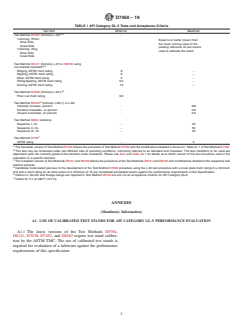
TABLE 1 API Category GL-5 Tests and Acceptance Criteria
Test Item Minimum Maximum
A,B
Test Method D7452 (formerly L-42) .
%Scoring, Pinion
Equal to or better (lower) than
Drive Side
the mean scoring value of the
Coast Side
passing reference oil test results
%Scoring, Ring
used to calibrate the stand
Drive Side
Coast Side
Test Method D6121 (formerly L-37) or D8165 using
B,C
non-lubrited hardware
Ridging, ASTM merit rating 8 .
Rippling, ASTM merit rating 8 .
Wear, ASTM merit rating 5 .
Pitting/Spalling, ASTM merit rating 9.3 .
Scoring, ASTM merit rating 10 .
D
Test Method D7038 (formerly L-33-1)
Final rust merit rating 9.0
E
Test Method D5704 (formerly L-60-1) or L-60
Viscosity Increase, percent { 100
Pentane Insolubles, wt percent { 3.0
Toluene Insolubles, wt percent { 2.0
Test Method D892, tendency
Sequence I, mL . 20
Sequence II, mL . 50
Sequence III, mL . 20
F
Test Method D130
ASTM rating . 3
A
The Canadian version of Test Method D7452 follows the procedure of Test Method D7452 with the modifications detailed in Annex A1, Table A1.1 of Test Method D7452.
...