

ASTM C1231/C1231M-23
(Practice)Standard Practice for Use of Unbonded Caps in Determination of Compressive Strength of Hardened Cylindrical Concrete Specimens
General Information
- Abstract
SIGNIFICANCE AND USE
4.1 This practice provides for using an unbonded capping system in testing hardened concrete cylinders made in accordance with Practices C31/C31M or C192/C192M, or cores obtained in accordance with Test Method C42/C42M in lieu of the capping systems described in Practice C617/C617M.
4.2 The elastomeric pads deform in initial loading to conform to the contour of the ends of the test specimens and are restrained from excessive lateral spreading by plates and metal rings to provide a uniform distribution of load from the bearing blocks of the testing machine to the ends of the concrete or mortar specimens.
SCOPE
1.1 This practice covers requirements for a capping system using unbonded caps for testing concrete cylinders molded in accordance with Practice C31/C31M or C192/C192M, or cores obtained in accordance with Test Method C42/C42M. Unbonded neoprene caps of a defined hardness are permitted to be used for testing for a specified maximum number of reuses without qualification testing up to a certain concrete compressive strength level. Above that strength, level neoprene caps will require qualification testing. Qualification testing is required for all elastomeric materials other than neoprene regardless of the concrete strength.
1.2 Unbonded caps are not to be used for acceptance testing of concrete with compressive strength below 10 MPa [1500 psi ] or above 80 MPa [12 000 psi].
1.3 The text of this standard refers to notes and footnotes that provide explanatory material. These notes and footnotes (excluding those in tables and figures) shall not be considered as requirements of the standard.
1.4 Units—The values stated in either SI units or inch-pound units are to be regarded separately as standard. The values stated in each system are not necessarily exact equivalents; therefore, to ensure conformance with the standard, each system shall be used independently of the other, and values from the two systems shall not be combined. Combining values from the two systems may result in non-conformance with the standard.
1.5 This standard does not purport to address all of the safety concerns, if any, associated with its use. It is the responsibility of the user of this standard to establish appropriate safety, health, and environmental practices and determine the applicability of regulatory limitations prior to use. (Warning—Concrete specimens tested with unbonded caps rupture more violently than comparable specimens tested with bonded caps. The safety precautions given in the Manual of Aggregate and Concrete Testing are recommended.2)
1.6 This international standard was developed in accordance with internationally recognized principles on standardization established in the Decision on Principles for the Development of International Standards, Guides and Recommendations issued by the World Trade Organization Technical Barriers to Trade (TBT) Committee.
- Status
- Published
- Publication Date
- 30-Sep-2023
- Technical Committee
- C09 - Concrete and Concrete Aggregates
- Drafting Committee
- C09.61 - Testing for Strength
Buy Documents
ASTM C1231/C1231M-23 - Standard Practice for Use of Unbonded Caps in Determination of Compressive Strength of Hardened Cylindrical Concrete Specimens
REDLINE ASTM C1231/C1231M-23 - Standard Practice for Use of Unbonded Caps in Determination of Compressive Strength of Hardened Cylindrical Concrete Specimens
Overview
ASTM C1231/C1231M-23 is the standard practice for the use of unbonded caps in the determination of compressive strength of hardened cylindrical concrete specimens. Developed by ASTM International, this standard outlines the procedures and requirements for employing an unbonded capping system-most commonly utilizing neoprene pads and metal retainers-during compressive strength testing of concrete cylinders and cores. This practice provides an alternative to traditional bonded capping methods, supporting reliable and efficient concrete test workflows while ensuring accurate force distribution during testing.
Key Topics
- Unbonded Capping System Requirements: Describes specifications for pads (such as neoprene with defined Shore A hardness) and metal retainers, including their dimensions, allowable reuses, and necessary markings.
- Specimen Compatibility: Covers procedures for use with concrete specimens prepared according to applicable ASTM standards (C31/C31M, C192/C192M, and C42/C42M).
- Pad Qualification and Reuse: Details qualification testing for pads-particularly when used outside recommended strength ranges or when non-neoprene elastomers are involved-and sets maximum reuse limits to assure test accuracy.
- Load Uniformity: Explains how elastomeric pads conform to specimen ends and distribute loads evenly, reducing stress concentration and improving test result consistency.
- Safety Considerations: Warns that concrete specimens tested with unbonded caps may rupture more violently than those with bonded caps, recommending adherence to best practices for laboratory safety.
- Measurement Units: Reinforces the strict use of either SI or inch-pound units independently, prohibiting mixing systems to ensure consistency and conformance.
Applications
ASTM C1231/C1231M-23 is widely applied in laboratory and field environments where concrete compressive strength testing is conducted. Typical applications include:
- Construction Quality Control: Enabling efficient and repeatable compressive strength testing for routine construction materials verification.
- Concrete Testing Laboratories: Streamlining operations by allowing multiple tests per pad within defined limits, reducing the need for casting and grinding capping materials.
- Testing of Drilled Concrete Cores: Facilitating the evaluation of existing structures by providing standardized procedures for core compressive strength tests.
- Research and Development: Supporting studies where consistency and reproducibility of compressive strength results are critical.
- Regulatory Compliance: Helping organizations conform with industry standards for acceptance testing, provided that the compressive strength of the concrete falls within the specified range (not below 10 MPa or above 80 MPa).
The use of unbonded caps as outlined in ASTM C1231/C1231M-23 results in faster specimen preparation, less labor, and improved reliability for qualifying concrete strength compared to some traditional bonded capping systems.
Related Standards
- ASTM C31/C31M: Practice for Making and Curing Concrete Test Specimens in the Field
- ASTM C39/C39M: Test Method for Compressive Strength of Cylindrical Concrete Specimens
- ASTM C42/C42M: Test Method for Obtaining and Testing Drilled Cores and Sawed Beams of Concrete
- ASTM C192/C192M: Practice for Making and Curing Concrete Test Specimens in the Laboratory
- ASTM C617/C617M: Practice for Capping Cylindrical Concrete Specimens
- ASTM D2000: Classification System for Rubber Products in Automotive Applications
By aligning with ASTM C1231/C1231M-23, organizations contribute to repeatable, safe, and accurate compressive strength assessment, supporting broader quality assurance goals in the concrete and construction industries.
Relations
- Effective Date
- 01-Oct-2023
- Refers
ASTM C31/C31M-24a - Standard Practice for Making and Curing Concrete Test Specimens in the Field - Effective Date
- 01-Apr-2024
- Refers
ASTM C31/C31M-24 - Standard Practice for Making and Curing Concrete Test Specimens in the Field - Effective Date
- 01-Jan-2024
- Refers
ASTM C39/C39M-23 - Standard Test Method for Compressive Strength of Cylindrical Concrete Specimens - Effective Date
- 01-Dec-2023
- Effective Date
- 01-Oct-2023
- Refers
ASTM C31/C31M-23 - Standard Practice for Making and Curing Concrete Test Specimens in the Field - Effective Date
- 01-Jun-2023
- Effective Date
- 01-Apr-2015
- Effective Date
- 01-Oct-2023
- Effective Date
- 01-Oct-2023
- Referred By
ASTM C39/C39M-21 - Standard Test Method for Compressive Strength of Cylindrical Concrete Specimens - Effective Date
- 01-Oct-2023
- Effective Date
- 01-Oct-2023
- Effective Date
- 01-Oct-2023
- Effective Date
- 01-Oct-2023
- Referred By
ASTM C1768/C1768M-12(2017) - Standard Practice for Accelerated Curing of Concrete Cylinders - Effective Date
- 01-Oct-2023
- Effective Date
- 01-Oct-2023
Buy Documents
ASTM C1231/C1231M-23 - Standard Practice for Use of Unbonded Caps in Determination of Compressive Strength of Hardened Cylindrical Concrete Specimens
REDLINE ASTM C1231/C1231M-23 - Standard Practice for Use of Unbonded Caps in Determination of Compressive Strength of Hardened Cylindrical Concrete Specimens
Get Certified
Connect with accredited certification bodies for this standard

DIBt (Deutsches Institut für Bautechnik)
German Institute for Building Technology.
DIN CERTCO
DIN Group product certification.

Aboma Certification B.V.
Specialized in construction, metal, and transport sectors.
Sponsored listings
Frequently Asked Questions
ASTM C1231/C1231M-23 is a standard published by ASTM International. Its full title is "Standard Practice for Use of Unbonded Caps in Determination of Compressive Strength of Hardened Cylindrical Concrete Specimens". This standard covers: SIGNIFICANCE AND USE 4.1 This practice provides for using an unbonded capping system in testing hardened concrete cylinders made in accordance with Practices C31/C31M or C192/C192M, or cores obtained in accordance with Test Method C42/C42M in lieu of the capping systems described in Practice C617/C617M. 4.2 The elastomeric pads deform in initial loading to conform to the contour of the ends of the test specimens and are restrained from excessive lateral spreading by plates and metal rings to provide a uniform distribution of load from the bearing blocks of the testing machine to the ends of the concrete or mortar specimens. SCOPE 1.1 This practice covers requirements for a capping system using unbonded caps for testing concrete cylinders molded in accordance with Practice C31/C31M or C192/C192M, or cores obtained in accordance with Test Method C42/C42M. Unbonded neoprene caps of a defined hardness are permitted to be used for testing for a specified maximum number of reuses without qualification testing up to a certain concrete compressive strength level. Above that strength, level neoprene caps will require qualification testing. Qualification testing is required for all elastomeric materials other than neoprene regardless of the concrete strength. 1.2 Unbonded caps are not to be used for acceptance testing of concrete with compressive strength below 10 MPa [1500 psi ] or above 80 MPa [12 000 psi]. 1.3 The text of this standard refers to notes and footnotes that provide explanatory material. These notes and footnotes (excluding those in tables and figures) shall not be considered as requirements of the standard. 1.4 Units—The values stated in either SI units or inch-pound units are to be regarded separately as standard. The values stated in each system are not necessarily exact equivalents; therefore, to ensure conformance with the standard, each system shall be used independently of the other, and values from the two systems shall not be combined. Combining values from the two systems may result in non-conformance with the standard. 1.5 This standard does not purport to address all of the safety concerns, if any, associated with its use. It is the responsibility of the user of this standard to establish appropriate safety, health, and environmental practices and determine the applicability of regulatory limitations prior to use. (Warning—Concrete specimens tested with unbonded caps rupture more violently than comparable specimens tested with bonded caps. The safety precautions given in the Manual of Aggregate and Concrete Testing are recommended.2) 1.6 This international standard was developed in accordance with internationally recognized principles on standardization established in the Decision on Principles for the Development of International Standards, Guides and Recommendations issued by the World Trade Organization Technical Barriers to Trade (TBT) Committee.
SIGNIFICANCE AND USE 4.1 This practice provides for using an unbonded capping system in testing hardened concrete cylinders made in accordance with Practices C31/C31M or C192/C192M, or cores obtained in accordance with Test Method C42/C42M in lieu of the capping systems described in Practice C617/C617M. 4.2 The elastomeric pads deform in initial loading to conform to the contour of the ends of the test specimens and are restrained from excessive lateral spreading by plates and metal rings to provide a uniform distribution of load from the bearing blocks of the testing machine to the ends of the concrete or mortar specimens. SCOPE 1.1 This practice covers requirements for a capping system using unbonded caps for testing concrete cylinders molded in accordance with Practice C31/C31M or C192/C192M, or cores obtained in accordance with Test Method C42/C42M. Unbonded neoprene caps of a defined hardness are permitted to be used for testing for a specified maximum number of reuses without qualification testing up to a certain concrete compressive strength level. Above that strength, level neoprene caps will require qualification testing. Qualification testing is required for all elastomeric materials other than neoprene regardless of the concrete strength. 1.2 Unbonded caps are not to be used for acceptance testing of concrete with compressive strength below 10 MPa [1500 psi ] or above 80 MPa [12 000 psi]. 1.3 The text of this standard refers to notes and footnotes that provide explanatory material. These notes and footnotes (excluding those in tables and figures) shall not be considered as requirements of the standard. 1.4 Units—The values stated in either SI units or inch-pound units are to be regarded separately as standard. The values stated in each system are not necessarily exact equivalents; therefore, to ensure conformance with the standard, each system shall be used independently of the other, and values from the two systems shall not be combined. Combining values from the two systems may result in non-conformance with the standard. 1.5 This standard does not purport to address all of the safety concerns, if any, associated with its use. It is the responsibility of the user of this standard to establish appropriate safety, health, and environmental practices and determine the applicability of regulatory limitations prior to use. (Warning—Concrete specimens tested with unbonded caps rupture more violently than comparable specimens tested with bonded caps. The safety precautions given in the Manual of Aggregate and Concrete Testing are recommended.2) 1.6 This international standard was developed in accordance with internationally recognized principles on standardization established in the Decision on Principles for the Development of International Standards, Guides and Recommendations issued by the World Trade Organization Technical Barriers to Trade (TBT) Committee.
ASTM C1231/C1231M-23 is classified under the following ICS (International Classification for Standards) categories: 91.100.30 - Concrete and concrete products. The ICS classification helps identify the subject area and facilitates finding related standards.
ASTM C1231/C1231M-23 has the following relationships with other standards: It is inter standard links to ASTM C1231/C1231M-15, ASTM C31/C31M-24a, ASTM C31/C31M-24, ASTM C39/C39M-23, ASTM C617/C617M-23, ASTM C31/C31M-23, ASTM C617/C617M-15, ASTM C497M-20a, ASTM C1622/C1622M-10(2016)e1, ASTM C39/C39M-21, ASTM D4832/D4832M-23, ASTM C873/C873M-23, ASTM C497-20e1, ASTM C1768/C1768M-12(2017), ASTM C42/C42M-20. Understanding these relationships helps ensure you are using the most current and applicable version of the standard.
ASTM C1231/C1231M-23 is available in PDF format for immediate download after purchase. The document can be added to your cart and obtained through the secure checkout process. Digital delivery ensures instant access to the complete standard document.
Standards Content (Sample)
This international standard was developed in accordance with internationally recognized principles on standardization established in the Decision on Principles for the
Development of International Standards, Guides and Recommendations issued by the World Trade Organization Technical Barriers to Trade (TBT) Committee.
Designation: C1231/C1231M − 23
Standard Practice for
Use of Unbonded Caps in Determination of Compressive
Strength of Hardened Cylindrical Concrete Specimens
This standard is issued under the fixed designation C1231/C1231M; the number immediately following the designation indicates the
year of original adoption or, in the case of revision, the year of last revision. A number in parentheses indicates the year of last
reapproval. A superscript epsilon (´) indicates an editorial change since the last revision or reapproval.
1. Scope* bonded caps. The safety precautions given in the Manual of
Aggregate and Concrete Testing are recommended. )
1.1 This practice covers requirements for a capping system
1.6 This international standard was developed in accor-
using unbonded caps for testing concrete cylinders molded in
dance with internationally recognized principles on standard-
accordance with Practice C31/C31M or C192/C192M, or cores
ization established in the Decision on Principles for the
obtained in accordance with Test Method C42/C42M. Un-
Development of International Standards, Guides and Recom-
bonded neoprene caps of a defined hardness are permitted to
mendations issued by the World Trade Organization Technical
be used for testing for a specified maximum number of reuses
Barriers to Trade (TBT) Committee.
without qualification testing up to a certain concrete compres-
sive strength level. Above that strength, level neoprene caps
2. Referenced Documents
will require qualification testing. Qualification testing is re-
2.1 ASTM Standards:
quired for all elastomeric materials other than neoprene
C31/C31M Practice for Making and Curing Concrete Test
regardless of the concrete strength.
Specimens in the Field
1.2 Unbonded caps are not to be used for acceptance testing
C39/C39M Test Method for Compressive Strength of Cylin-
of concrete with compressive strength below 10 MPa [1500 psi
drical Concrete Specimens
] or above 80 MPa [12 000 psi].
C42/C42M Test Method for Obtaining and Testing Drilled
1.3 The text of this standard refers to notes and footnotes
Cores and Sawed Beams of Concrete
that provide explanatory material. These notes and footnotes C192/C192M Practice for Making and Curing Concrete Test
(excluding those in tables and figures) shall not be considered
Specimens in the Laboratory
as requirements of the standard. C617/C617M Practice for Capping Cylindrical Concrete
Specimens
1.4 Units—The values stated in either SI units or inch-
D2000 Classification System for Rubber Products in Auto-
pound units are to be regarded separately as standard. The
motive Applications
values stated in each system are not necessarily exact equiva-
lents; therefore, to ensure conformance with the standard, each
3. Terminology
system shall be used independently of the other, and values
3.1 Definitions of Terms Specific to This Standard:
from the two systems shall not be combined. Combining values
3.1.1 pad, n—an unbonded elastomeric pad.
from the two systems may result in non-conformance with the
standard.
3.1.2 unbonded cap, n—a metal retainer and an elastomeric
pad.
1.5 This standard does not purport to address all of the
safety concerns, if any, associated with its use. It is the
4. Significance and Use
responsibility of the user of this standard to establish appro-
4.1 This practice provides for using an unbonded capping
priate safety, health, and environmental practices and deter-
system in testing hardened concrete cylinders made in accor-
mine the applicability of regulatory limitations prior to use.
dance with Practices C31/C31M or C192/C192M, or cores
(Warning—Concrete specimens tested with unbonded caps
obtained in accordance with Test Method C42/C42M in lieu of
rupture more violently than comparable specimens tested with
the capping systems described in Practice C617/C617M.
1 2
This practice is under the jurisdiction of ASTM Committee C09 on Concrete Section on Safety Precautions, Manual of Aggregate and Concrete Testing,
and Concrete Aggregates and is the direct responsibility of Subcommittee C09.61 on Annual Book of ASTM Standards, Vol 04.02.
Testing for Strength. For referenced ASTM standards, visit the ASTM website, www.astm.org, or
Current edition approved Oct. 1, 2023. Published October 2023. Originally contact ASTM Customer Service at service@astm.org. For Annual Book of ASTM
approved in 1993. Last previous edition approved in 2014 as C1231/C1231M – 23. Standards volume information, refer to the standard’s Document Summary page on
DOI: 10.1520/C1231_C1231M-23. the ASTM website.
*A Summary of Changes section appears at the end of this standard
Copyright © ASTM International, 100 Barr Harbor Drive, PO Box C700, West Conshohocken, PA 19428-2959. United States
C1231/C1231M − 23
4.2 The elastomeric pads deform in initial loading to con- diameter of the retaining ring shall not be less than 102 % or
form to the contour of the ends of the test specimens and are greater than 107% of the diameter of the specimen. For test
restrained from excessive lateral spreading by plates and metal specimens having nominal diameters of 100 mm [4 in.] or less,
rings to provide a uniform distribution of load from the bearing the thickness of the retaining ring shall be at least 9 mm [0.35
blocks of the testing machine to the ends of the concrete or in.] and the thickness of the baseplate shall be at least 8 mm
mortar specimens. [0.30 in.]. For test specimens having nominal diameters greater
than 100 mm [4 in.], the thickness of the retaining ring and
5. Materials and Apparatus
baseplate shall be at least 12 mm [0.47 in.]. The surface of the
baseplate that contacts the bearing block of the testing machine
5.1 Materials and equipment necessary to produce ends of
shall be plane to within 0.05 mm [0.002 in.]. The bearing
the reference specimens that conform to planeness require-
surfaces of the retainers shall not have gouges, grooves,
ments of Test Method C39/C39M and the requirements of
protrusions, or indentations greater than 0.25 mm [0.010 in.]
Practice C617/C617M. This may include grinding equipment
2 2
deep or greater than 32 mm [0.05 in. ] in surface area.
or capping materials and equipment to produce neat cement
paste, high strength gypsum plaster, or sulfur mortar caps.
NOTE 1—Retainers made from steel and some aluminum alloys have
been found acceptable.
5.2 Elastomeric Pads:
1 1
5.2.1 Pads shall be 13 mm 6 2 mm [ ⁄2 in. 6 ⁄16 in.] thick
6. Test Specimens
and the diameter shall not be more than 2 mm [ ⁄16 in.] smaller
6.1 Specimens shall be cylinders made in accordance with
than the inside diameter of the retaining ring.
Practices C31/C31M or C192/C192M, or cores obtained in
5.2.2 Pads shall be made from polychloroprene (neoprene)
accordance with Test Method C42/C42M.
meeting the requirements of Classification D2000 as follows:
Shore A Classification D2000 6.2 Depressions under a straight edge measured with a
Durometer Line Call-Out
round wire gage across any diameter shall not exceed 5 mm
50 M2BC514
[0.20 in.]. If the specimen ends do not meet this tolerance, the
60 M2BC614
70 M2BC714
specimen shall not be tested unless irregularities are corrected
by sawing or grinding.
The tolerance on Shore A durometer hardness is 65. Table 1
provides requirements for use of caps made from material
7. Procedure
meeting the requirements of Classification D2000, above.
5.2.3 Other elastomeric materials that meet the performance
7.1 Unbonded caps are permitted to be used on one or both
requirements of qualification tests in Section 8 are permitted.
ends of a test specimen in lieu of a cap or caps meeting Practice
5.2.4 Elastomeric pads shall be supplied with the following
C617/C617M, provided the caps meet the requirements of
information:
Section 5. Pad hardness shall be in accordance with Table 1.
5.2.4.1 The manufacturer’s or supplier’s name,
NOTE 2—The specified strength in the contract documents is for various
5.2.4.2 The Shore A hardness, and
stages of construction. This may include strength test requirements for
5.2.4.3 The applicable range of concrete compressive
formwork removal or release of prestress in addition to the test require-
strength from Table 1 or from qualification testing.
ments for verification of specified compressive strength. Therefore, pad
selection is based on the strength requirement for the designated stage of
5.2.5 The user shall maintain a record indicating the date the
construction.
pads are placed in service, the pad durometer, and the number
of uses to which they have been subjected. 7.2 Replace pads that do not meet the dimensional require-
ments of 5.2 or that exceed the maximum reuse limits of Table
5.3 Retainers are a pair of metal fixtures used to provide
1. Insert pad in the retainer before it is placed on the specimen.
support for and alignment of the neoprene pads and the test
specimen ends (Note 1 and Fig. 1). Each retainer (upper and
NOTE 3—Some manufacturers recommend dusting the pads and the
ends of the specimens with corn starch or talcum powder prior to testing.
lower) includes a (retaining) ring that is welded to or manu-
factured integrally with a base plate. The height of the retaining
7.3 Complete the load application, testing, calculation, and
ring shall be 25 mm 6 3 mm [1.0 in. 6 0.1 in.]. The inside
reporting of results in accordance with Test Method C39/
C39M.
NOTE 4—Some users have reported damage to testing machines from
TABLE 1 Requirements for Use of Polychloroprene(Neoprene)
the sudden release of energy stored in the elastomeric pads.
Pads
NOTE 5—Occasionally, specimens tested with unbonded caps may
Shore A
A
develop early cracking, but continue to carry increasing load
...
This document is not an ASTM standard and is intended only to provide the user of an ASTM standard an indication of what changes have been made to the previous version. Because
it may not be technically possible to adequately depict all changes accurately, ASTM recommends that users consult prior editions as appropriate. In all cases only the current version
of the standard as published by ASTM is to be considered the official document.
Designation: C1231/C1231M − 15 C1231/C1231M − 23
Standard Practice for
Use of Unbonded Caps in Determination of Compressive
Strength of Hardened Cylindrical Concrete Specimens
This standard is issued under the fixed designation C1231/C1231M; the number immediately following the designation indicates the
year of original adoption or, in the case of revision, the year of last revision. A number in parentheses indicates the year of last
reapproval. A superscript epsilon (´) indicates an editorial change since the last revision or reapproval.
1. Scope*
1.1 This practice covers requirements for a capping system using unbonded caps for testing concrete cylinders molded in
accordance with Practice C31/C31M or C192/C192M, or cores obtained in accordance with Test Method C42/C42M. Unbonded
neoprene caps of a defined hardness are permitted to be used for testing for a specified maximum number of reuses without
qualification testing up to a certain concrete compressive strength level. Above that strength, level neoprene caps will require
qualification testing. Qualification testing is required for all elastomeric materials other than neoprene regardless of the concrete
strength.
1.2 Unbonded caps are not to be used for acceptance testing of concrete with compressive strength below 10 MPa [1500 psi ] or
above 80 MPa [12 000 psi].
1.3 The text of this standard refers to notes and footnotes that provide explanatory material. These notes and footnotes (excluding
those in tables and figures) shall not be considered as requirements of the standard.
1.4 Units—The values stated in either SI units or inch-pound units are to be regarded separately as standard. The values stated in
each system may not beare not necessarily exact equivalents; therefore, to ensure conformance with the standard, each system shall
be used independently of the other. other, and values from the two systems shall not be combined. Combining values from the two
systems may result in non-conformance with the standard.
1.5 This standard does not purport to address all of the safety concerns, if any, associated with its use. It is the responsibility
of the user of this standard to establish appropriate safety and healthsafety, health, and environmental practices and determine
the applicability of regulatory limitations prior to use. (Warning—Concrete specimens tested with unbonded caps rupture more
violently than comparable specimens tested with bonded caps. The safety precautions given in the Manual of Aggregate and
Concrete Testing are recommended. )
1.6 This international standard was developed in accordance with internationally recognized principles on standardization
established in the Decision on Principles for the Development of International Standards, Guides and Recommendations issued
by the World Trade Organization Technical Barriers to Trade (TBT) Committee.
This practice is under the jurisdiction of ASTM Committee C09 on Concrete and Concrete Aggregates and is the direct responsibility of Subcommittee C09.61 on Testing
for Strength.
Current edition approved Dec. 1, 2015Oct. 1, 2023. Published February 2016October 2023. Originally approved in 1993. Last previous edition approved in 2014 as
C1231/C1231M – 14. DOI: 10.1520/C1231_C1231M-15.23. DOI: 10.1520/C1231_C1231M-23.
Section on Safety Precautions, Manual of Aggregate and Concrete Testing, Annual Book of ASTM Standards, Vol 04.02.
*A Summary of Changes section appears at the end of this standard
Copyright © ASTM International, 100 Barr Harbor Drive, PO Box C700, West Conshohocken, PA 19428-2959. United States
C1231/C1231M − 23
2. Referenced Documents
2.1 ASTM Standards:
C31/C31M Practice for Making and Curing Concrete Test Specimens in the Field
C39/C39M Test Method for Compressive Strength of Cylindrical Concrete Specimens
C42/C42M Test Method for Obtaining and Testing Drilled Cores and Sawed Beams of Concrete
C192/C192M Practice for Making and Curing Concrete Test Specimens in the Laboratory
C617C617/C617M Practice for Capping Cylindrical Concrete Specimens
D2000 Classification System for Rubber Products in Automotive Applications
3. Terminology
3.1 Definitions of Terms Specific to This Standard:
3.1.1 pad, n—an unbonded elastomeric pad.
3.1.2 unbonded cap, n—a metal retainer and an elastomeric pad.
4. Significance and Use
4.1 This practice provides for using an unbonded capping system in testing hardened concrete cylinders made in accordance with
Practices C31/C31M or C192/C192M, or cores obtained in accordance with Test Method C42/C42M in lieu of the capping systems
described in Practice C617C617/C617M.
4.2 The elastomeric pads deform in initial loading to conform to the contour of the ends of the test specimens and are restrained
from excessive lateral spreading by plates and metal rings to provide a uniform distribution of load from the bearing blocks of the
testing machine to the ends of the concrete or mortar specimens.
5. Materials and Apparatus
5.1 Materials and equipment necessary to produce ends of the reference specimens that conform to planeness requirements of Test
Method C39/C39M and the requirements of Practice C617C617/C617M. This may include grinding equipment or capping
materials and equipment to produce neat cement paste, high strength gypsum plaster, or sulfur mortar caps.
5.2 Elastomeric Pads:
1 1 1
5.2.1 Pads shall be 1313 mm 6 2 mm [ ⁄2 in. 6 ⁄16 in.] thick and the diameter shall not be more than 2 mm [ ⁄16 in.] smaller than
the inside diameter of the retaining ring.
5.2.2 Pads shall be made from polychloroprene (neoprene) meeting the requirements of Classification D2000 as follows:
Shore A Classification D2000
Durometer Line Call-Out
50 M2BC514
60 M2BC614
70 M2BC714
The tolerance on Shore A durometer hardness is 65. Table 1 provides requirements for use of caps made from material meeting
the requirements of Classification D2000, above.
5.2.3 Other elastomeric materials that meet the performance requirements of qualification tests in Section 8 are permitted.
5.2.4 Elastomeric pads shall be supplied with the following information:
5.2.4.1 The manufacturer’s or supplier’s name,
5.2.4.2 The Shore A hardness, and
For referenced ASTM standards, visit the ASTM website, www.astm.org, or contact ASTM Customer Service at service@astm.org. For Annual Book of ASTM Standards
volume information, refer to the standard’s Document Summary page on the ASTM website.
C1231/C1231M − 23
TABLE 1 Requirements for Use of Polychloroprene(Neoprene)
Pads
Shore A
A
Compressive Strength, MPa Qualification Maximum
Durometer
[psi]
Tests Required Reuses
Hardness
Less than 10 [1 500] Not permitted
10 to 40 [1 500 to 6 000] 50 None 100
17 to 50 [2 500 to 7 000] 60 None 100
28 to 50 [4 000 to 7 000] 70 None 100
50 to 80 [7 000 to 12 000] 70 Required 50
Greater than 80 [12 000] Not permitted
A
Compressive strength of concrete at age of testing as specified in Contract
’
Documents. For acceptance testing, it is the specified compressive strength f .
c
5.2.4.3 The applicable range of concrete compressive strength from Table 1 or from qualification testing.
5.2.5 The user shall maintain a record indicating the date the pads are placed in service, the pad durometer, and the number of
uses to which they have been subjected.
5.3 Retainers are a pair of metal fixtures used to provide support for and alignment of the neoprene pads and the test specimen
ends (Note 1 and Fig. 1). Each retainer (upper and lower) includes a (retaining) ring that is welded to or manufactured integrally
with a base plate. The height of the retaining ring shall be 2525 mm 6 3 mm [1.0[1.0 in. 6 0.1 in.]. The inside diameter of the
retaining ring shall not be less than 102%102 % or greater than 107% of the diameter of the specimen. For test specimens having
nominal diameters of 100 mm [4 in.] or less, the thickness of the retaining ring shall be at least 9 mm [0.35 in.] and the thickness
of the baseplate shall be at least 8 mm [0.30 in.]. For test specimens having nominal diameters greater than 100 mm [4 in.], the
thickness of the retaining ring and baseplate shall be at least 12 mm [0.47 in.]. The surface of the baseplate that contacts the bearing
block of the testing machine shall be plane to within 0.05 mm [0.002 in.]. The bearing surfaces of the retainers shall not have
2 2
gouges, grooves, protrusions, or indentations greater than 0.25 mm [0.010 in.] deep or greater than 32 mm [0.05 in. ] in surface
area.
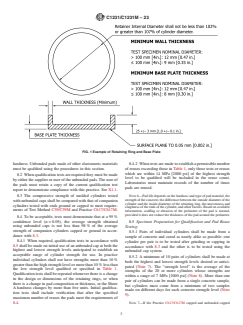
FIG. 1 Example of Retaining Ring and Base Plate
C1231/C1231M − 23
NOTE 1—Retainers made from steel and some aluminum alloys have been found acceptable.
6. Test Specimens
6.1 Specimens shall be cylinders made in accordance with Practices C31/C31M or C192/C192M, or cores obtained in accordance
with Test Method C42/C42M.
6.2 Depressions under a straight edge measured with a round wire gage across any diameter shall not exceed 5 mm [0.20 in.]. If
the specimen ends do not meet this tolerance, the specimen shall not be tested unless irregularities are corrected by sawing or
grinding.
7. Procedure
7.1 Unbonded caps are permitted to be used on one or both ends of a test specimen in lieu of a cap or caps meeting Practice
C617C617/C617M, provided the caps meet the requirements of Section 5. Pad hardness shall be in accordance with Table 1.
NOTE 2—The specified strength in the contract documents is for various stages of construction. This may include strength test requirements for formwork
removal or release of prestress in addition to the test requirements for verification of specified compressive strength. Therefore, pad selection is based
on the strength requirement for the designated stage of construction.
7.2 Replace pads that do not meet the dimensional requirements of 5.2 or that exceed the maximum reuse limits of Table 1. Insert
pad in the retainer before it is placed on the specimen.
NOTE 3—Some manufacturers recommend dusting the pads and the ends of the specimens with corn starch or talcum powder prior to testing.
7.3 Complete the load application, testing, c
...