


ASTM C1529-19
(Specification)Standard Specification for Quicklime, Hydrated Lime, and Limestone for Environmental Uses
Standard Specification for Quicklime, Hydrated Lime, and Limestone for Environmental Uses
ABSTRACT
This specification covers lime and limestone productions and by-product alkaline materials suitable for environmental uses. Requirements for quicklime, hydrated lime, and limestone for the designated end uses are specified, and are on the basis of the weight of sample taken at the place of manufacture. Quicklime shall be free of unslakable residues and shall be capable of disintegrating in water to form a suspension of finely divided material. The amount of residue shall not exceed that agreed upon between the manufacturer and the purchaser (the residue is the amount of the material retained on a specified screen). The slaking rate for the specified quicklime should be matched to the requirements of the slaking equipment. Test methods such as chemical analyses, physical tests and basic factor test shall be performed.
SCOPE
1.1 This specification covers lime and limestone products and by-product alkaline materials suitable for environmental uses as shown in Table 1.
CQ = Quicklime, high-calcium DQ = Quicklime, dolomitic MQ = Quicklime, magnesian CH = Hydrated lime, high-calcium DH = Hydrated lime, dolomitic MH = Hydrated lime, magnesian CL = Limestone, high-calcium DL = Limestone, dolomitic ML = Limestone, magnesian
1.2 The values stated in SI units are to be regarded as standard. No other units of measurement are included in this standard.
1.3 The buyer shall designate the use, as listed in Table 1, and may specify one or more of the type designations listed below Table 1.
1.4 This standard does not purport to address all of the safety concerns, if any, associated with its use. It is the responsibility of the user of this standard to establish appropriate safety, health, and environmental practices and determine the applicability of regulatory limitations prior to use.
1.5 This international standard was developed in accordance with internationally recognized principles on standardization established in the Decision on Principles for the Development of International Standards, Guides and Recommendations issued by the World Trade Organization Technical Barriers to Trade (TBT) Committee.
General Information
- Status
- Published
- Publication Date
- 30-Nov-2019
- Technical Committee
- C07 - Lime and Limestone
- Drafting Committee
- C07.02 - Specifications and Guidelines
Relations
- Effective Date
- 01-Dec-2019
- Effective Date
- 01-Oct-2023
- Effective Date
- 01-Dec-2019
- Effective Date
- 01-Dec-2019
- Refers
ASTM D6249-19 - Standard Guide for Alkaline Stabilization of Wastewater Treatment Plant Residuals - Effective Date
- 01-May-2019
- Effective Date
- 01-May-2019
- Effective Date
- 01-Dec-2018
- Refers
ASTM C110-16 - Standard Test Methods for Physical Testing of Quicklime, Hydrated Lime, and Limestone - Effective Date
- 01-Dec-2016
- Effective Date
- 01-Jun-2015
- Refers
ASTM C110-15 - Standard Test Methods for Physical Testing of Quicklime, Hydrated Lime, and Limestone - Effective Date
- 01-Jun-2015
- Effective Date
- 01-Dec-2014
- Refers
ASTM C110-14 - Standard Test Methods for Physical Testing of Quicklime, Hydrated Lime, and Limestone - Effective Date
- 01-Dec-2014
- Effective Date
- 01-Jul-2013
- Effective Date
- 01-Jul-2013
- Effective Date
- 01-Jun-2013
Overview
ASTM C1529-19: Standard Specification for Quicklime, Hydrated Lime, and Limestone for Environmental Uses sets the requirements for lime and limestone products, as well as by-product alkaline materials, used in various environmental applications. Developed by ASTM International, this specification covers high-calcium and dolomitic quicklime, hydrated lime, magnesian variants, and limestone, ensuring these materials meet specific chemical and physical criteria, primarily measured at the place of manufacture. The standard exclusively uses SI units for consistency and global applicability.
ASTM C1529-19 is designed to assist environmental professionals, suppliers, and purchasers by establishing uniform criteria, facilitating clear communication, and supporting regulatory compliance in environmental projects involving lime and limestone products.
Key Topics
- Product Types Covered
- Quicklime (high-calcium, dolomitic, and magnesian)
- Hydrated lime (high-calcium, dolomitic, and magnesian)
- Limestone (high-calcium, dolomitic, and magnesian)
- By-product alkaline materials (such as lime kiln dust, high-lime fly ash)
- Requirements
- Minimum chemical composition, especially calcium oxide (CaO) and magnesium oxide (MgO) content
- Physical properties, such as residue limits after slaking, particle size distribution, and proper disintegration in water
- Specific rates for slaking tailored to user equipment
- Testing and Compliance
- Mandatory testing methods for chemical analysis and physical testing to ensure product conformance
- Buyer must clearly designate intended use and selected product type for appropriate specification alignment
- Safety and Environmental Responsibility
- Encourages users to develop and follow appropriate health, safety, and environmental practices
- Advises assessment of regulatory limitations prior to use
Applications
ASTM C1529-19 outlines the use of lime and limestone products in a variety of environmental sectors, maximizing their effectiveness for:
- Drinking Water Softening
- Reducing water hardness, clarifying water, and aiding bacterial and color removal
- Waste and Wastewater Neutralization
- Treating industrial and municipal waste streams by adjusting pH and neutralizing acidic contaminants
- Stabilization of Wastewater Treatment Residuals
- Alkaline stabilization of biosolids and sewage sludge, improving land application suitability and reducing pathogen content
- Biosolids Treatment
- Raising pH to stabilize municipal biosolids, with quicklime and hydrated lime or alkaline by-product materials
The standard underpins process reliability in municipal water treatment, industrial wastewater management, and biosolids stabilization, supporting both public health and environmental protection initiatives.
Related Standards
Several ASTM standards are referenced within ASTM C1529-19 for testing, terminology, and best practices, including:
- ASTM C25 - Test Methods for Chemical Analysis of Limestone, Quicklime, and Hydrated Lime
- ASTM C50/C50M - Practice for Sampling, Sample Preparation, Packaging, and Marking of Lime and Limestone Products
- ASTM C51 - Terminology Relating to Lime and Limestone
- ASTM C110 - Test Methods for Physical Testing of Quicklime, Hydrated Lime, and Limestone
- ASTM C400 - Test Methods for Quicklime and Hydrated Lime for Neutralization of Waste Acid
- ASTM D6249 - Guide for Alkaline Stabilization of Wastewater Treatment Plant Residuals
Compliance with ASTM C1529-19 and its related standards ensures that quicklime, hydrated lime, and limestone products are fit for environmental use, providing reliable, safe outcomes for water treatment, waste management, and biosolids stabilization projects.
Buy Documents
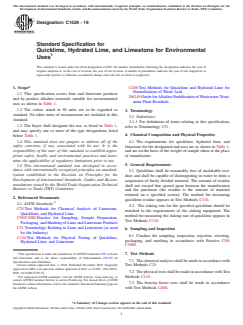
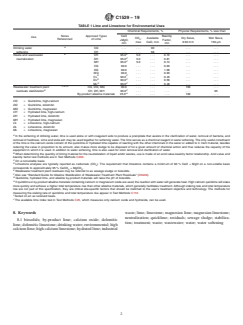


ASTM C1529-19 - Standard Specification for Quicklime, Hydrated Lime, and Limestone for Environmental Uses
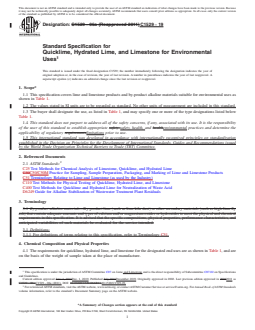
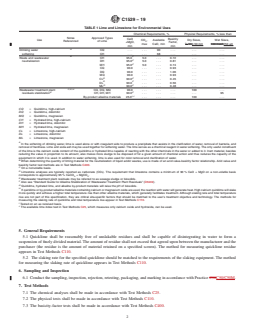


REDLINE ASTM C1529-19 - Standard Specification for Quicklime, Hydrated Lime, and Limestone for Environmental Uses
Get Certified
Connect with accredited certification bodies for this standard

ICC Evaluation Service
Building products evaluation and certification.

QAI Laboratories
Building and construction product testing and certification.

Aboma Certification B.V.
Specialized in construction, metal, and transport sectors.
Sponsored listings
Frequently Asked Questions
ASTM C1529-19 is a technical specification published by ASTM International. Its full title is "Standard Specification for Quicklime, Hydrated Lime, and Limestone for Environmental Uses". This standard covers: ABSTRACT This specification covers lime and limestone productions and by-product alkaline materials suitable for environmental uses. Requirements for quicklime, hydrated lime, and limestone for the designated end uses are specified, and are on the basis of the weight of sample taken at the place of manufacture. Quicklime shall be free of unslakable residues and shall be capable of disintegrating in water to form a suspension of finely divided material. The amount of residue shall not exceed that agreed upon between the manufacturer and the purchaser (the residue is the amount of the material retained on a specified screen). The slaking rate for the specified quicklime should be matched to the requirements of the slaking equipment. Test methods such as chemical analyses, physical tests and basic factor test shall be performed. SCOPE 1.1 This specification covers lime and limestone products and by-product alkaline materials suitable for environmental uses as shown in Table 1. CQ = Quicklime, high-calcium DQ = Quicklime, dolomitic MQ = Quicklime, magnesian CH = Hydrated lime, high-calcium DH = Hydrated lime, dolomitic MH = Hydrated lime, magnesian CL = Limestone, high-calcium DL = Limestone, dolomitic ML = Limestone, magnesian 1.2 The values stated in SI units are to be regarded as standard. No other units of measurement are included in this standard. 1.3 The buyer shall designate the use, as listed in Table 1, and may specify one or more of the type designations listed below Table 1. 1.4 This standard does not purport to address all of the safety concerns, if any, associated with its use. It is the responsibility of the user of this standard to establish appropriate safety, health, and environmental practices and determine the applicability of regulatory limitations prior to use. 1.5 This international standard was developed in accordance with internationally recognized principles on standardization established in the Decision on Principles for the Development of International Standards, Guides and Recommendations issued by the World Trade Organization Technical Barriers to Trade (TBT) Committee.
ABSTRACT This specification covers lime and limestone productions and by-product alkaline materials suitable for environmental uses. Requirements for quicklime, hydrated lime, and limestone for the designated end uses are specified, and are on the basis of the weight of sample taken at the place of manufacture. Quicklime shall be free of unslakable residues and shall be capable of disintegrating in water to form a suspension of finely divided material. The amount of residue shall not exceed that agreed upon between the manufacturer and the purchaser (the residue is the amount of the material retained on a specified screen). The slaking rate for the specified quicklime should be matched to the requirements of the slaking equipment. Test methods such as chemical analyses, physical tests and basic factor test shall be performed. SCOPE 1.1 This specification covers lime and limestone products and by-product alkaline materials suitable for environmental uses as shown in Table 1. CQ = Quicklime, high-calcium DQ = Quicklime, dolomitic MQ = Quicklime, magnesian CH = Hydrated lime, high-calcium DH = Hydrated lime, dolomitic MH = Hydrated lime, magnesian CL = Limestone, high-calcium DL = Limestone, dolomitic ML = Limestone, magnesian 1.2 The values stated in SI units are to be regarded as standard. No other units of measurement are included in this standard. 1.3 The buyer shall designate the use, as listed in Table 1, and may specify one or more of the type designations listed below Table 1. 1.4 This standard does not purport to address all of the safety concerns, if any, associated with its use. It is the responsibility of the user of this standard to establish appropriate safety, health, and environmental practices and determine the applicability of regulatory limitations prior to use. 1.5 This international standard was developed in accordance with internationally recognized principles on standardization established in the Decision on Principles for the Development of International Standards, Guides and Recommendations issued by the World Trade Organization Technical Barriers to Trade (TBT) Committee.
ASTM C1529-19 is classified under the following ICS (International Classification for Standards) categories: 91.100.15 - Mineral materials and products. The ICS classification helps identify the subject area and facilitates finding related standards.
ASTM C1529-19 has the following relationships with other standards: It is inter standard links to ASTM C1529-06a(2011), ASTM C51-23, ASTM C50/C50M-13(2019), ASTM C400-19, ASTM D6249-19, ASTM C25-19e1, ASTM C51-18, ASTM C110-16, ASTM C110-15e1, ASTM C110-15, ASTM C110-14e1, ASTM C110-14, ASTM C400-98(2013)e1, ASTM C400-98(2013), ASTM C50/C50M-13. Understanding these relationships helps ensure you are using the most current and applicable version of the standard.
ASTM C1529-19 is available in PDF format for immediate download after purchase. The document can be added to your cart and obtained through the secure checkout process. Digital delivery ensures instant access to the complete standard document.
Standards Content (Sample)
This international standard was developed in accordance with internationally recognized principles on standardization established in the Decision on Principles for the
Development of International Standards, Guides and Recommendations issued by the World Trade Organization Technical Barriers to Trade (TBT) Committee.
Designation:C1529 −19
Standard Specification for
Quicklime, Hydrated Lime, and Limestone for Environmental
Uses
This standard is issued under the fixed designation C1529; the number immediately following the designation indicates the year of
original adoption or, in the case of revision, the year of last revision. A number in parentheses indicates the year of last reapproval. A
superscript epsilon (´) indicates an editorial change since the last revision or reapproval.
1. Scope* C400 Test Methods for Quicklime and Hydrated Lime for
Neutralization of Waste Acid
1.1 This specification covers lime and limestone products
D6249 Guide forAlkaline Stabilization ofWastewaterTreat-
and by-product alkaline materials suitable for environmental
ment Plant Residuals
uses as shown in Table 1.
1.2 The values stated in SI units are to be regarded as
3. Terminology
standard. No other units of measurement are included in this
3.1 Definitions:
standard.
3.1.1 For definitions of terms relating to this specification,
1.3 The buyer shall designate the use, as listed in Table 1,
refer to Terminology C51.
and may specify one or more of the type designations listed
below Table 1. 4. Chemical Composition and Physical Properties
1.4 This standard does not purport to address all of the 4.1 The requirements for quicklime, hydrated lime, and
safety concerns, if any, associated with its use. It is the
limestone for the designated end uses are as shown in Table 1,
responsibility of the user of this standard to establish appro- and are on the basis of the weight of sample taken at the place
priate safety, health, and environmental practices and deter-
of manufacture.
mine the applicability of regulatory limitations prior to use.
5. General Requirements
1.5 This international standard was developed in accor-
dance with internationally recognized principles on standard-
5.1 Quicklime shall be reasonably free of unslakable resi-
ization established in the Decision on Principles for the
dues and shall be capable of disintegrating in water to form a
Development of International Standards, Guides and Recom-
suspension of finely divided material. The amount of residue
mendations issued by the World Trade Organization Technical
shall not exceed that agreed upon between the manufacturer
Barriers to Trade (TBT) Committee.
and the purchaser (the residue is the amount of material
retained on a specified screen). The method for measuring
2. Referenced Documents
quicklime residue appears in Test Methods C110.
2.1 ASTM Standards:
5.2 The slaking rate for the specified quicklime should be
C25 Test Methods for Chemical Analysis of Limestone,
matched to the requirements of the slaking equipment. The
Quicklime, and Hydrated Lime
method for measuring the slaking rate of quicklime appears in
C50/C50M Practice for Sampling, Sample Preparation,
Test Methods C110.
Packaging, and Marking of Lime and Limestone Products
C51 Terminology Relating to Lime and Limestone (as used
6. Sampling and Inspection
by the Industry)
6.1 Conduct the sampling, inspection, rejection, retesting,
C110 Test Methods for Physical Testing of Quicklime,
packaging, and marking in accordance with Practice C50/
Hydrated Lime, and Limestone
C50M.
This specification is under the jurisdiction of ASTM Committee C07 on Lime 7. Test Methods
and Limestone and is the direct responsibility of Subcommittee C07.02 on
7.1 The chemical analyses shall be made in accordance with
Specifications and Guidelines.
Current edition approved Dec. 1, 2019. Published December 2019. Originally Test Methods C25.
approved in 2002. Last previous edition approved in 2011 as C1529 – 06a (2011).
7.2 The physical tests shall be made in accordance withTest
DOI: 10.1520/C1529-19.
For referenced ASTM standards, visit the ASTM website, www.astm.org, or Methods C110.
contact ASTM Customer Service at service@astm.org. For Annual Book of ASTM
7.3 The basicity-factor tests shall be made in accordance
Standards volume information, refer to the standard’s Document Summary page on
the ASTM website. with Test Methods C400.
*A Summary of Changes section appears at the end of this standard
Copyright © ASTM International, 100 Barr Harbor Drive, PO Box C700, West Conshohocken, PA 19428-2959. United States
C1529−19
TABLE 1 Lime and Limestone for Environmental Uses
Chemical Requirements, % Physical Requirements, % less than
Notes Approved Types
CaO Basicity
Use
CO , Available Dry Sieve, Wet Sieve,
Referenced of Lime
+MgO, Factor,
max CaO, min 9.50 mm 150 µm
min min
A
Drinking water CQ . . 90 . . .
softening CH . . 68 . . .
B C
Waste and wastewater CH 95.0 5.0 . 0.72 . .
C
neutralization
DH 95.0 5.0 . 0.81 . .
C
MH 95.0 5.0 . 0.74 . .
CQ 90.0 . . 0.93 . .
DQ 90.0 . . 1.06 . .
MQ 90.0 . . 0.93 . .
D C
CL 90.0 . . 0.45 . .
D C
DL 90.0
...
This document is not an ASTM standard and is intended only to provide the user of an ASTM standard an indication of what changes have been made to the previous version. Because
it may not be technically possible to adequately depict all changes accurately, ASTM recommends that users consult prior editions as appropriate. In all cases only the current version
of the standard as published by ASTM is to be considered the official document.
Designation: C1529 − 06a (Reapproved 2011) C1529 − 19
Standard Specification for
Quicklime, Hydrated Lime, and Limestone for Environmental
Uses
This standard is issued under the fixed designation C1529; the number immediately following the designation indicates the year of
original adoption or, in the case of revision, the year of last revision. A number in parentheses indicates the year of last reapproval. A
superscript epsilon (´) indicates an editorial change since the last revision or reapproval.
1. Scope*
1.1 This specification covers lime and limestone products and by-product alkaline materials suitable for environmental uses as
shown in Table 1.
1.2 The values stated in SI units are to be regarded as standard. No other units of measurement are included in this standard.
1.3 The buyer shall designate the use, as listed in Table 1, and may specify one or more of the type designations listed below
Table 1.
1.4 This standard does not purport to address all of the safety concerns, if any, associated with its use. It is the responsibility
of the user of this standard to establish appropriate safety safety, health, and healthenvironmental practices and determine the
applicability of regulatory requirementslimitations prior to use.
1.5 This international standard was developed in accordance with internationally recognized principles on standardization
established in the Decision on Principles for the Development of International Standards, Guides and Recommendations issued
by the World Trade Organization Technical Barriers to Trade (TBT) Committee.
2. Referenced Documents
2.1 ASTM Standards:
C25 Test Methods for Chemical Analysis of Limestone, Quicklime, and Hydrated Lime
C50C50/C50M Practice for Sampling, Sample Preparation, Packaging, and Marking of Lime and Limestone Products
C51 Terminology Relating to Lime and Limestone (as used by the Industry)
C110 Test Methods for Physical Testing of Quicklime, Hydrated Lime, and Limestone
C400 Test Methods for Quicklime and Hydrated Lime for Neutralization of Waste Acid
D6249 Guide for Alkaline Stabilization of Wastewater Treatment Plant Residuals
3. Terminology
3.1 By-product alkaline materials—By-product lime (such as lime kiln dust) or other secondary materials (such as high-lime fly
ash) that contain adequate amounts and types of calcium and/or magnesium oxides or hydroxides to meet the physical and chemical
requirements in this specification. It is advised that the specific compositions, physical properties, performance characteristics, and
anticipated variabilities of such materials be evaluated for the service intended.
3.1 Definitions:
3.1.1 For definitions of terms relating to this specification, refer to Terminology C51.
4. Chemical Composition and Physical Properties
4.1 The requirements for quicklime, hydrated lime, and limestone for the designated end uses are as shown in Table 1, and are
on the basis of the weight of sample taken at the place of manufacture.
This specification is under the jurisdiction of ASTM Committee C07 on Lime and Limestone and is the direct responsibility of Subcommittee C07.02 on Specifications
and Guidelines.
Current edition approved June 1, 2011Dec. 1, 2019. Published July 2011December 2019. Originally approved in 2002. Last previous edition approved in 20062011 as
C1529 – 06a.C1529 – 06a (2011). DOI: 10.1520/C1529-06AR11.10.1520/C1529-19.
For referenced ASTM standards, visit the ASTM website, www.astm.org, or contact ASTM Customer Service at service@astm.org. For Annual Book of ASTM Standards
volume information, refer to the standard’s Document Summary page on the ASTM website.
*A Summary of Changes section appears at the end of this standard
Copyright © ASTM International, 100 Barr Harbor Drive, PO Box C700, West Conshohocken, PA 19428-2959. United States
C1529 − 19
TABLE 1 Lime and Limestone for Environmental Uses
Chemical Requirements, % Physical Requirements, % less than
Notes Approved Types
CaO Basicity
Use
CO , Available Dry Sieve, Wet Sieve,
Referenced of Lime
+MgO, Factor,
max CaO, min ⁄8 in.9.50 mm 100 mesh150 μm
min min
A
Drinking water CQ . . . . . . 90 . . . . . . . . .
softening
CH . . . . . . 68 . . . . . . . . .
B C
Waste and wastewater CH 95.0 5.0 . . . 0.72 . . . . . .
C
neutralization DH 95.0 5.0 . . . 0.81 . . . . . .
C
MH 95.0 5.0 . . . 0.74 . . . . . .
CQ 90.0 . . . . . . 0.93 . . . . . .
DQ 90.0 . . . . . . 1.06 . . . . . .
MQ 90.0 . . . . . . 0.93 . . . . . .
D C
CL 90.0 . . . . . . 0.45 . . . . . .
D C
DL 90.0 . . . . . . 0.56 . . . . . .
D C
ML 90.0 . . . . . . 0.48 . . . . . .
F,G,H
Wastewater treatment plant CQ, DQ, MQ 90.0 . . . . . . . . . 100 . . .
E C
residuals stabilization CH, DH, MH 90.0 . . . . . . . . . . . . 95
I,J
By-product alkaline materials 25.0 . . . . . . . . . 100 . . .
CQ = Quicklime, high-calcium
DQ = Quicklime, dolomitic
MQ = Quicklime, magnesian
CH = Hydrated lime, high-calcium
DH = Hydrated lime, dolomitic
MH = Hydrated lime, magnesian
CL = Limestone, high-calcium
DL = Limestone, dolomitic
ML = Limestone, magnesian
A
In the softening of drinking water, lime is used alone or with coagulant aids to produce a precipitate that assists in the clarification of water, removal of bacteria, and
removal of hardness. Lime and soda ash may be used together for softening water. The lime serves as a chemical reagent in water soft
...
Questions, Comments and Discussion
Ask us and Technical Secretary will try to provide an answer. You can facilitate discussion about the standard in here.
Loading comments...