

ASTM C485-24
(Test Method)Standard Test Method for Measuring Warpage of Ceramic Tile
General Information
- Abstract
SIGNIFICANCE AND USE
5.1 This test method provides a means for determining whether or not a lot of ceramic tile meets the warpage requirements that may appear in specifications to assure satisfactory tile installations. In accordance with this test method, warpage is calculated as a percentage of the length of the edge or diagonal being tested. It is realized that the percentage values based on the overall edge length, or on the overall diagonal length of a tile will be slightly lower than those based on the distance between reference points. However, the ratio of the overall lengths to the distance between reference points will be practically constant for any particular size of tile and, therefore, the percentage values will be comparable and equally indicative of warpage.
SCOPE
1.1 This test method covers procedures for measuring the corner, diagonal, and edge warpages of ceramic tile.
1.1.1 Tile Requirements for Corner, Diagonal, and Edge Warpage Measurement
Tile should be nominally flat, uniform in overall thickness, smooth faced, and rectangular in shape, including square.
1.1.2 Tile Requirements for Corner Warpage Measurement
All facial edge dimensions equal to or greater than 2.36 in. (60 mm) in length.
1.1.3 Tile Requirements for Edge and Diagonal Warpage Measurement
All facial edge dimensions equal to or greater than 2 in. (51 mm) in length.
1.1.4 Trim Tile meeting the descriptions in 1.1.1 – 1.1.3 except that only a part of the tile surface is flat. (Surface trim tile should be treated as flat tile whenever possible.)
1.2 This test method is not applicable to tile having embossed surfaces that are not flat, or that have a combination of variable body thickness and an irregular face.
1.3 The values stated in inch-pound units are to be regarded as standard. The values given in parentheses are mathematical conversions to SI units that are provided for information only and are not considered standard.
1.4 This standard does not purport to address all of the safety concerns, if any, associated with its use. It is the responsibility of the user of this standard to establish appropriate safety, health, and environmental practices and determine the applicability of regulatory limitations prior to use.
1.5 This international standard was developed in accordance with internationally recognized principles on standardization established in the Decision on Principles for the Development of International Standards, Guides and Recommendations issued by the World Trade Organization Technical Barriers to Trade (TBT) Committee.
- Status
- Published
- Publication Date
- 31-Jan-2024
- Technical Committee
- C21 - Ceramic Whitewares and Related Products
- Drafting Committee
- C21.06 - Ceramic Tile
Overview
ASTM C485-24 - Standard Test Method for Measuring Warpage of Ceramic Tile establishes a procedure for determining the warpage of various types of ceramic tiles. Warpage, the deviation of the tile surface from a true flat plane, directly impacts the quality and overall performance of tile installations. This standard offers key methodologies to evaluate the edge, diagonal, and corner warpages, supporting compliance with relevant specification requirements to ensure satisfactory installations.
The test procedures apply to ceramic tiles that are nominally flat, of uniform overall thickness, smooth-faced, and rectangular (including square), as well as certain non-rectangular and trim tiles. However, the method is not applicable to tiles with embossed surfaces that are not flat or have irregular body thickness and face.
Key Topics
Scope of Applicability
- Applies to square, oblong, and nonrectilinear ceramic tiles, as well as selected trim tiles with sufficiently flat surfaces
- Excludes tiles with fully embossed or irregular surfaces
Warpage Types Measured
- Edge Warpage: Deviation at the midpoint of each edge
- Diagonal Warpage: Deviation at the midpoint of each diagonal
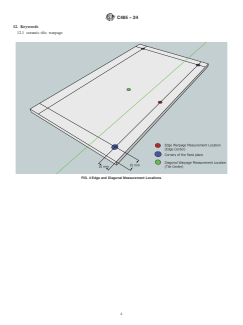
- Corner Warpage: Deviation at the corners, measured 10 mm from each edge
Measurement Procedures
- Utilizes contact or non-contact devices (such as mechanical gauges or laser measurement tools)
- Measurements are recorded as positive (convex) or negative (concave) with respect to the tile face
- Calculations are made as a percentage of the length of the edge or diagonal tested
Reporting Requirements
- Nominal size and category of tile tested
- Actual and percent warpage values for each edge, diagonal, and corner tested
- Identification of test specimens and adherence to random sampling
Precision and Reliability
- Repeatability has been evaluated, with standard deviations provided for edge, diagonal, and corner warpage
Applications
ASTM C485-24 is widely used throughout the ceramic tile manufacturing and construction industries:
Quality Control in Manufacturing
- Helps manufacturers verify that ceramic tiles meet precise flatness standards before distribution
- Essential for maintaining consistency across production batches
Product Evaluation
- Enables architects, builders, and inspectors to assess tile lots against project specifications and industry benchmarks
Ensuring Installation Quality
- Supports project managers, installers, and specifiers in identifying suitable tile lots, thereby minimizing installation issues such as lippage or improper adhesion
- Contributes to enhanced aesthetics and performance of tiled surfaces
Compliance with Market and Regulatory Requirements
- Demonstrates due diligence in meeting contractual, regulatory, and customer requirements for flatness and overall tile quality
Related Standards
For comprehensive assessment of ceramic tile properties and terminology, the following related ASTM standards are also commonly referenced:
- ASTM C242: Terminology of Ceramic Whitewares and Related Products
- ASTM Adjunct Gages: Warpage Gage for Ceramic Tile (supporting tools)
- Quality Concepts: International principles reflected in World Trade Organization (WTO) TBT Committee guidelines
Keywords: ASTM C485-24, ceramic tile warpage, warpage measurement, flatness of ceramic tile, tile installation quality, standard test method, edge warpage, diagonal warpage, corner warpage, ceramic tile testing, tile manufacturing quality control
By following ASTM C485-24, industry stakeholders ensure that ceramic tiles conform to required flatness standards, promoting successful tile installations and long-lasting surface performance.
Relations
- Effective Date
- 01-Feb-2024
- Effective Date
- 01-Feb-2024
Get Certified
Connect with accredited certification bodies for this standard

DIBt (Deutsches Institut für Bautechnik)
German Institute for Building Technology.
DIN CERTCO
DIN Group product certification.

Aboma Certification B.V.
Specialized in construction, metal, and transport sectors.
Sponsored listings
Frequently Asked Questions
ASTM C485-24 is a standard published by ASTM International. Its full title is "Standard Test Method for Measuring Warpage of Ceramic Tile". This standard covers: SIGNIFICANCE AND USE 5.1 This test method provides a means for determining whether or not a lot of ceramic tile meets the warpage requirements that may appear in specifications to assure satisfactory tile installations. In accordance with this test method, warpage is calculated as a percentage of the length of the edge or diagonal being tested. It is realized that the percentage values based on the overall edge length, or on the overall diagonal length of a tile will be slightly lower than those based on the distance between reference points. However, the ratio of the overall lengths to the distance between reference points will be practically constant for any particular size of tile and, therefore, the percentage values will be comparable and equally indicative of warpage. SCOPE 1.1 This test method covers procedures for measuring the corner, diagonal, and edge warpages of ceramic tile. 1.1.1 Tile Requirements for Corner, Diagonal, and Edge Warpage Measurement Tile should be nominally flat, uniform in overall thickness, smooth faced, and rectangular in shape, including square. 1.1.2 Tile Requirements for Corner Warpage Measurement All facial edge dimensions equal to or greater than 2.36 in. (60 mm) in length. 1.1.3 Tile Requirements for Edge and Diagonal Warpage Measurement All facial edge dimensions equal to or greater than 2 in. (51 mm) in length. 1.1.4 Trim Tile meeting the descriptions in 1.1.1 – 1.1.3 except that only a part of the tile surface is flat. (Surface trim tile should be treated as flat tile whenever possible.) 1.2 This test method is not applicable to tile having embossed surfaces that are not flat, or that have a combination of variable body thickness and an irregular face. 1.3 The values stated in inch-pound units are to be regarded as standard. The values given in parentheses are mathematical conversions to SI units that are provided for information only and are not considered standard. 1.4 This standard does not purport to address all of the safety concerns, if any, associated with its use. It is the responsibility of the user of this standard to establish appropriate safety, health, and environmental practices and determine the applicability of regulatory limitations prior to use. 1.5 This international standard was developed in accordance with internationally recognized principles on standardization established in the Decision on Principles for the Development of International Standards, Guides and Recommendations issued by the World Trade Organization Technical Barriers to Trade (TBT) Committee.
SIGNIFICANCE AND USE 5.1 This test method provides a means for determining whether or not a lot of ceramic tile meets the warpage requirements that may appear in specifications to assure satisfactory tile installations. In accordance with this test method, warpage is calculated as a percentage of the length of the edge or diagonal being tested. It is realized that the percentage values based on the overall edge length, or on the overall diagonal length of a tile will be slightly lower than those based on the distance between reference points. However, the ratio of the overall lengths to the distance between reference points will be practically constant for any particular size of tile and, therefore, the percentage values will be comparable and equally indicative of warpage. SCOPE 1.1 This test method covers procedures for measuring the corner, diagonal, and edge warpages of ceramic tile. 1.1.1 Tile Requirements for Corner, Diagonal, and Edge Warpage Measurement Tile should be nominally flat, uniform in overall thickness, smooth faced, and rectangular in shape, including square. 1.1.2 Tile Requirements for Corner Warpage Measurement All facial edge dimensions equal to or greater than 2.36 in. (60 mm) in length. 1.1.3 Tile Requirements for Edge and Diagonal Warpage Measurement All facial edge dimensions equal to or greater than 2 in. (51 mm) in length. 1.1.4 Trim Tile meeting the descriptions in 1.1.1 – 1.1.3 except that only a part of the tile surface is flat. (Surface trim tile should be treated as flat tile whenever possible.) 1.2 This test method is not applicable to tile having embossed surfaces that are not flat, or that have a combination of variable body thickness and an irregular face. 1.3 The values stated in inch-pound units are to be regarded as standard. The values given in parentheses are mathematical conversions to SI units that are provided for information only and are not considered standard. 1.4 This standard does not purport to address all of the safety concerns, if any, associated with its use. It is the responsibility of the user of this standard to establish appropriate safety, health, and environmental practices and determine the applicability of regulatory limitations prior to use. 1.5 This international standard was developed in accordance with internationally recognized principles on standardization established in the Decision on Principles for the Development of International Standards, Guides and Recommendations issued by the World Trade Organization Technical Barriers to Trade (TBT) Committee.
ASTM C485-24 is classified under the following ICS (International Classification for Standards) categories: 91.100.25 - Terracotta building products. The ICS classification helps identify the subject area and facilitates finding related standards.
ASTM C485-24 has the following relationships with other standards: It is inter standard links to ASTM C485-16, ASTM F109-21. Understanding these relationships helps ensure you are using the most current and applicable version of the standard.
ASTM C485-24 is available in PDF format for immediate download after purchase. The document can be added to your cart and obtained through the secure checkout process. Digital delivery ensures instant access to the complete standard document.
Standards Content (Sample)
This international standard was developed in accordance with internationally recognized principles on standardization established in the Decision on Principles for the
Development of International Standards, Guides and Recommendations issued by the World Trade Organization Technical Barriers to Trade (TBT) Committee.
Designation: C485 − 24
Standard Test Method for
Measuring Warpage of Ceramic Tile
This standard is issued under the fixed designation C485; the number immediately following the designation indicates the year of
original adoption or, in the case of revision, the year of last revision. A number in parentheses indicates the year of last reapproval. A
superscript epsilon (´) indicates an editorial change since the last revision or reapproval.
1. Scope 2. Referenced Documents
2.1 ASTM Standards:
1.1 This test method covers procedures for measuring the
C242 Terminology of Ceramic Whitewares and Related
corner, diagonal, and edge warpages of ceramic tile.
Products
1.1.1 Tile Requirements for Corner, Diagonal, and Edge
2.2 ASTM Adjuncts:
Warpage Measurement Tile should be nominally flat, uniform
Warpage Gage for Ceramic Tile
in overall thickness, smooth faced, and rectangular in shape,
including square.
3. Terminology
1.1.2 Tile Requirements for Corner Warpage Measurement
3.1 Definitions:
All facial edge dimensions equal to or greater than 2.36 in.
3.1.1 contact warpage device, n—consisting of a fixture that
(60 mm) in length.
has reference pins, contact gauges, and zero blank plates. The
1.1.3 Tile Requirements for Edge and Diagonal Warpage
device can be specific to a tile size or adjustable. Typically the
Measurement All facial edge dimensions equal to or greater
tile rests on the pins and the zero plane is fixed from these
than 2 in. (51 mm) in length.
contact points.
1.1.4 Trim Tile meeting the descriptions in 1.1.1 – 1.1.3
3.1.2 non-contact warpage device, n—a device that uses
except that only a part of the tile surface is flat. (Surface trim
some form of non-contact method to take measurements. An
tile should be treated as flat tile whenever possible.)
example would be laser measurement. These devices can use a
1.2 This test method is not applicable to tile having em- fixed reference plane (zero with flat blanks) or calculate a
theoretical reference plane.
bossed surfaces that are not flat, or that have a combination of
variable body thickness and an irregular face.
3.1.3 reference plane, n—the zero plane from which tile
planar deviations are measured.
1.3 The values stated in inch-pound units are to be regarded
as standard. The values given in parentheses are mathematical 3.1.4 tile, n—see Definitions C242.
conversions to SI units that are provided for information only
3.1.5 warpage, n—curvature of a flat tile measured as
and are not considered standard.
deviation of the tile surface from a true plane along the edges,
at the corners, or the diagonals. The deviation is measured at
1.4 This standard does not purport to address all of the
the mid-length of an edge or diagonal, or at a corner, expressed
safety concerns, if any, associated with its use. It is the
as a percentage of the length of the edge, diagonal, or corner,
responsibility of the user of this standard to establish appro-
and called convex or concave with respect to the face of the
priate safety, health, and environmental practices and deter-
tile.
mine the applicability of regulatory limitations prior to use.
1.5 This international standard was developed in accor-
4. Summary of Test Method
dance with internationally recognized principles on standard-
4.1 This method calculates the deviation of a ceramic tile
ization established in the Decision on Principles for the
from a flat plane. Measurements are made along the edges,
Development of International Standards, Guides and Recom-
diagonals, and corners of a tile. The deviation is expressed as
mendations issued by the World Trade Organization Technical
convex (positive) or concave (negative) warpage in relation to
Barriers to Trade (TBT) Committee.
the tile face.
1 2
This method is under the jurisdiction of ASTM Committee C21 on Ceramic For referenced ASTM standards, visit the ASTM website, www.astm.org, or
Whitewares and Related Productsand is the direct responsibility of Subcommittee contact ASTM Customer Service at service@astm.org. For Annual Book of ASTM
C21.06 on Ceramic Tile. Standards volume information, refer to the standard’s Document Summary page on
Current edition approved Feb. 1, 2024. Published February 2024. Originally the ASTM website.
approved in 1961. Last previous edition approved in 2016 as C485 – 16. DOI: Three drawings showing construction details are available from ASTM
10.1520/C0485-24. Headquarters. Order ADJC0485.
Copyright © ASTM International, 100 Barr Harbor Drive, PO Box C700, West Conshohocken, PA 19428-2959. United States
C485 − 24
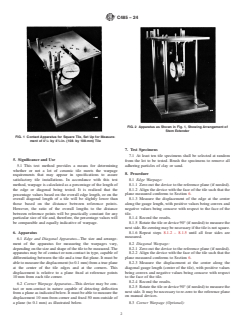
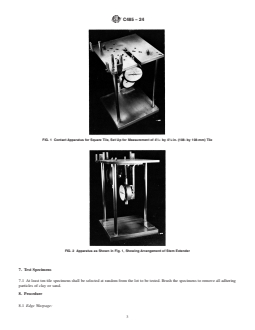
FIG. 2 Apparatus as Shown in Fig. 1, Showing Arrangement of
Stem Extender
FIG. 1 Contact Apparatus for Square Tile, Set Up for Measure-
1 1
ment of 4 ⁄4- by 4 ⁄4-in. (108- by 108-mm) Tile
7. Test Specimens
7.1 At least ten tile specimens shall be selected at random
5. Significance and Use
from the lot to be tested. Brush the specimens to remove all
adhering particles of clay or sand.
5.1 This test method provides a means for determining
whether or not a lot of ceramic tile meets the warpage
8. Procedure
requirements that may appear in specifications to assure
satisfactory tile installations. In accordance with this test 8.1 Edge Warpage:
method, warpage is calculated as a percentage of the length of 8.1.1 Zero out the device to the reference plane (if needed).
the edge or diagonal being tested. It is realized that the 8.1.2 Align the device with the face of the tile such that the
percentage values based on the overall edge length, or on the plane measured conforms to Section 6.
overall diagonal length of a tile will be slightly lower than 8.1.3 Measure the displacement of the edge at the center
those based on the distance between reference points. along the gauge length, with positive values being convex and
However, the ratio of the overall lengths to the distance negative values being concave with respect to the face of the
between reference points will be practically constant for any tile.
particular size of tile and, therefore, the percentage values will 8.1.4 Record the results.
be comparable and e
...
This document is not an ASTM standard and is intended only to provide the user of an ASTM standard an indication of what changes have been made to the previous version. Because
it may not be technically possible to adequately depict all changes accurately, ASTM recommends that users consult prior editions as appropriate. In all cases only the current version
of the standard as published by ASTM is to be considered the official document.
Designation: C485 − 16 C485 − 24
Standard Test Method for
Measuring Warpage of Ceramic Tile
This standard is issued under the fixed designation C485; the number immediately following the designation indicates the year of
original adoption or, in the case of revision, the year of last revision. A number in parentheses indicates the year of last reapproval. A
superscript epsilon (´) indicates an editorial change since the last revision or reapproval.
1. Scope
1.1 This test method covers procedures for measuring the corner, diagonal, and edge warpages of the following categories of
ceramic tile:ceramic tile.
1.1.1 Square Tile, Tile Requirements for Corner, Diagonal, and Edge Warpage Measurement 2 by 2 in. (51 by 51 mm) or larger,
that are nominally flat, of uniform overall thickness, and have a smooth face of one of the types: unglazed, bright glazed, matte
glazed, or finely crystalline glazed.Tile should be nominally flat, uniform in overall thickness, smooth faced, and rectangular in
shape, including square.
1.1.2 Oblong Tile, no facial dimension smaller than 2 in. (51 mm), that are flat, of uniform overall thickness, and have a smooth
face of one of the types: unglazed, bright glazed, matte glazed, or finely crystalline glazed.
1.1.2 Square and Oblong Tile, Tile Requirements for Corner Warpage Measurement no facial dimension smaller than 2 in. (51
mm), that are flat, but have an irregular face such as embossed, sloped, bumpy, wavy, coarsely crystalline, or wire-cut textured.All
facial edge dimensions equal to or greater than 2.36 in. (60 mm) in length.
1.1.3 Nonrectilinear Tile, Tile Requirements for Edge and Diagonal Warpage Measurement larger than 4 in.All facial edge
2 2
dimensions (26 cm ), that are flat and of uniform body thickness with smooth or irregular face, such as hexagonal, diamond,
Spanish type, and so forth. equal to or greater than 2 in. (51 mm) in length.
1.1.4 Trim Tile meeting one of the descriptions in 1.1.1 – 1.1.31.1.4 except that only a part of the tile surface is flat. (Surface trim
tile should be treated as flat tile whenever possible.)
2 2
1.1.6 Square or Oblong Tile with facial area less than 4 in. (26 cm ) and at least two straight sides equal to or greater than 1.0
in. (25 mm) long. (Modular 1- by 1-in. tile are not in the scope of this test method.)
1.2 This test method is not applicable to tile having embossed surfaces that are not flat, or that have a combination of variable
body thickness and an irregular face.
1.3 The values stated in inch-pound units are to be regarded as standard. The values given in parentheses are mathematical
conversions to SI units that are provided for information only and are not considered standard.
1.4 This standard does not purport to address all of the safety concerns, if any, associated with its use. It is the responsibility
of the user of this standard to establish appropriate safety and healthsafety, health, and environmental practices and determine
the applicability of regulatory limitations prior to use.
This method is under the jurisdiction of ASTM Committee C21 on Ceramic Whitewares and Related Productsand is the direct responsibility of Subcommittee C21.06
on Ceramic Tile.
Current edition approved Dec. 1, 2016Feb. 1, 2024. Published January 2017February 2024. Originally approved in 1961. Last previous edition approved in 20092016 as
C485 – 09.C485 – 16. DOI: 10.1520/C0485-16.10.1520/C0485-24.
Copyright © ASTM International, 100 Barr Harbor Drive, PO Box C700, West Conshohocken, PA 19428-2959. United States
C485 − 24
1.5 This international standard was developed in accordance with internationally recognized principles on standardization
established in the Decision on Principles for the Development of International Standards, Guides and Recommendations issued
by the World Trade Organization Technical Barriers to Trade (TBT) Committee.
2. Referenced Documents
2.1 ASTM Standards:
C242 Terminology of Ceramic Whitewares and Related Products
2.2 ASTM Adjuncts:
Warpage Gage for Ceramic Tile
3. Terminology
3.1 Definitions:
3.1.1 contact warpage device, n—consisting of a fixture that has reference pins, contact gauges, and zero blank plates. The device
can be specific to a tile size or adjustable. Typically the tile rests on the pins and the zero plane is fixed from these contact points.
3.1.2 non-contact warpage device, n—a device that uses some form of non-contact method to take measurements. An example
would be laser measurement. These devices can useduse a fixed reference plane (zero with flat blanks) or calculate a theoretical
reference plane.
3.1.3 reference plane, n—the zero plane from which tile planar deviations are measured.
3.1.4 tile, n—see Definitions C242.
3.1.5 warpage, n—curvature of a flat tile measured as deviation of the tile surface from a true plane along the edges, at the corners,
or the diagonals. The deviation is measured at the mid-length of an edge or diagonal, or at a corner, expressed as a percentage of
the length of the edge, diagonal, or corner, and called convex or concave with respect to the face of the tile.
4. Summary of Test Method
4.1 This method calculates the deviation of a ceramic tile from a flat plane. Measurements are made along the edges, diagonals,
and corners of a tile. The deviation is expressed as convex (positive) or concave (negative) warpage in relation to the tile face.
5. Significance and Use
5.1 This test method provides a means for determining whether or not a lot of ceramic tile meets the warpage requirements that
may appear in specifications to assure satisfactory tile installations. In accordance with this test method, warpage is calculated as
a percentage of the length of the edge or diagonal being tested. It is realized that the percentage values based on the overall edge
length, or on the overall diagonal length of a tile will be slightly lower than those based on the distance between reference points.
However, the ratio of the overall lengths to the distance between reference points will be practically constant for any particular
size of tile and, therefore, the percentage values will be comparable and equally indicative of warpage.
6. Apparatus
6.1 Edge and Diagonal Apparatus—The size and arrangement of the apparatus for measuring the warpages vary, depending on
the size and shape of the tile to be measured. The apparatus may be of contact or non-contact in type, capable of differentiating
between the tile and a true flat plane. It must be able to measure the displacement (to 0.1 mm) from a true plane at the center of
the tile edges and at the corners. This displacement is relative to a plane fixed at reference points 10 mm from each tile corner.
6.2 Corner Warpage Apparatus—This devi
...