

ASTM F720-17
(Practice)Standard Practice for Testing Guinea Pigs for Contact Allergens: Guinea Pig Maximization Test
General Information
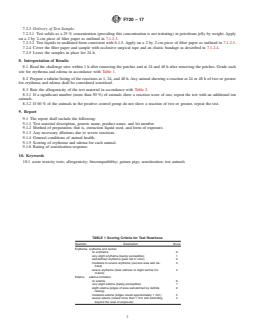
- Abstract
SIGNIFICANCE AND USE
4.1 In selecting a new material for human contact in medical applications, it is important to ensure that the material will not stimulate the immune system to produce an allergic reaction. The reaction would be due to substances which could leach out of a material. Therefore, this practice provides for using material extracts. The rationale for this practice is based on the fact that the guinea pig has been shown to be the best animal model for human allergic contact dermatitis. The use of Freund’s complete adjuvant and sodium lauryl sulfate tends to enhance the potential of a material to cause an allergy. Therefore, this test, while not guaranteeing that a material is nonallergenic, is the most severe animal test in common use today.
SCOPE
1.1 This practice is intended to determine the potential for a substance, or material extract, to elicit contact dermal allergenicity.
1.2 The values stated in SI units are to be regarded as standard. No other units of measurement are included in this standard.
1.3 This standard does not purport to address all of the safety concerns, if any, associated with its use. It is the responsibility of the user of this standard to establish appropriate safety, health and environmental practices and determine the applicability of regulatory limitations prior to use.
1.4 This international standard was developed in accordance with internationally recognized principles on standardization established in the Decision on Principles for the Development of International Standards, Guides and Recommendations issued by the World Trade Organization Technical Barriers to Trade (TBT) Committee.
- Status
- Published
- Publication Date
- 31-Aug-2017
- Technical Committee
- F04 - Medical and Surgical Materials and Devices
- Drafting Committee
- F04.16 - Biocompatibility Test Methods
Buy Documents


ASTM F720-17 - Standard Practice for Testing Guinea Pigs for Contact Allergens: Guinea Pig Maximization Test

REDLINE ASTM F720-17 - Standard Practice for Testing Guinea Pigs for Contact Allergens: Guinea Pig Maximization Test
Overview
ASTM F720-17: Standard Practice for Testing Guinea Pigs for Contact Allergens: Guinea Pig Maximization Test provides an internationally recognized method to assess the potential for substances or material extracts to elicit contact dermal allergenicity. This standard is widely used in the evaluation of materials intended for human contact, particularly in medical applications, where biocompatibility and the avoidance of allergic reactions are critical considerations.
The method employs the guinea pig maximization test, leveraging the animal’s sensitivity to mirror potential human dermal allergic responses. By using material extracts and enhancing agents such as Freund’s complete adjuvant and sodium lauryl sulfate, the test maximizes the detection of sensitization hazards. While not guaranteeing a material is nonallergenic, this practice represents one of the most stringent in vivo sensitization assays in routine use.
Key Topics
- Objective: To determine if a substance, material, or extract can cause an allergic skin reaction.
- Animal Model: The guinea pig, specifically the Hartley strain, is used due to its well-established sensitivity to human allergens.
- Testing Procedures:
- Two-stage induction process using intradermal injections and topical applications.
- Use of enhancing agents (Freund’s adjuvant and sodium lauryl sulfate) to amplify potential allergic responses.
- Challenge phase to confirm sensitization.
- Grading and classification of skin reactions.
- Results Interpretation: Responses are graded for severity of erythema and edema, classifying sensitization from mild to extreme based on the percentage of animals reacting.
- Reporting: Required details include sample preparation, animal health, test results, and sensitization rating.
Applications
ASTM F720-17 is especially relevant in the following areas:
- Medical Device Development: Used as part of biocompatibility testing to meet regulatory requirements for materials that will contact human skin.
- Material Selection: Assists manufacturers in screening new materials or additives for potential skin sensitization before use in commercial products.
- Quality Assurance & Risk Mitigation: Identifies and helps mitigate the risk of allergic reactions due to leachable substances in medical or consumer products.
- Regulatory Submissions: Supports claims of safety and compliance for medical devices under global regulations, including FDA and European MDR submissions.
Related Standards
To ensure comprehensive evaluation and compliance, the following standards are often referenced alongside ASTM F720-17:
- ASTM F619: Practice for Extraction of Medical Plastics, providing methods for preparing material extracts used in animal sensitization tests.
- ISO 10993-10: Biological evaluation of medical devices - Part 10: Tests for irritation and skin sensitization, a globally recognized standard harmonized with many regional regulations.
- ASTM Committee F04 Standards: A broader suite of biocompatibility test methods for medical and surgical materials and devices.
Summary
ASTM F720-17 delivers a rigorous, standardized practice for assessing the sensitization potential of materials using the guinea pig maximization test. It is a critical tool in ensuring product safety, regulatory compliance, and protecting human health by identifying materials that may cause allergic contact dermatitis. Adoption of this standard supports effective risk management and fosters trust in medical devices and materials that touch the skin.
Relations
- Effective Date
- 01-Sep-2017
- Effective Date
- 01-Aug-2008
- Effective Date
- 01-Nov-2003
- Effective Date
- 10-Apr-2002
- Effective Date
- 10-Dec-1997
- Effective Date
- 01-Sep-2017
- Effective Date
- 01-Sep-2017
- Effective Date
- 01-Sep-2017
- Effective Date
- 01-Sep-2017
- Effective Date
- 01-Sep-2017
Buy Documents
ASTM F720-17 - Standard Practice for Testing Guinea Pigs for Contact Allergens: Guinea Pig Maximization Test
REDLINE ASTM F720-17 - Standard Practice for Testing Guinea Pigs for Contact Allergens: Guinea Pig Maximization Test
Get Certified
Connect with accredited certification bodies for this standard

BSI Group
BSI (British Standards Institution) is the business standards company that helps organizations make excellence a habit.

TÜV Rheinland
TÜV Rheinland is a leading international provider of technical services.

TÜV SÜD
TÜV SÜD is a trusted partner of choice for safety, security and sustainability solutions.
Sponsored listings
Frequently Asked Questions
ASTM F720-17 is a standard published by ASTM International. Its full title is "Standard Practice for Testing Guinea Pigs for Contact Allergens: Guinea Pig Maximization Test". This standard covers: SIGNIFICANCE AND USE 4.1 In selecting a new material for human contact in medical applications, it is important to ensure that the material will not stimulate the immune system to produce an allergic reaction. The reaction would be due to substances which could leach out of a material. Therefore, this practice provides for using material extracts. The rationale for this practice is based on the fact that the guinea pig has been shown to be the best animal model for human allergic contact dermatitis. The use of Freund’s complete adjuvant and sodium lauryl sulfate tends to enhance the potential of a material to cause an allergy. Therefore, this test, while not guaranteeing that a material is nonallergenic, is the most severe animal test in common use today. SCOPE 1.1 This practice is intended to determine the potential for a substance, or material extract, to elicit contact dermal allergenicity. 1.2 The values stated in SI units are to be regarded as standard. No other units of measurement are included in this standard. 1.3 This standard does not purport to address all of the safety concerns, if any, associated with its use. It is the responsibility of the user of this standard to establish appropriate safety, health and environmental practices and determine the applicability of regulatory limitations prior to use. 1.4 This international standard was developed in accordance with internationally recognized principles on standardization established in the Decision on Principles for the Development of International Standards, Guides and Recommendations issued by the World Trade Organization Technical Barriers to Trade (TBT) Committee.
SIGNIFICANCE AND USE 4.1 In selecting a new material for human contact in medical applications, it is important to ensure that the material will not stimulate the immune system to produce an allergic reaction. The reaction would be due to substances which could leach out of a material. Therefore, this practice provides for using material extracts. The rationale for this practice is based on the fact that the guinea pig has been shown to be the best animal model for human allergic contact dermatitis. The use of Freund’s complete adjuvant and sodium lauryl sulfate tends to enhance the potential of a material to cause an allergy. Therefore, this test, while not guaranteeing that a material is nonallergenic, is the most severe animal test in common use today. SCOPE 1.1 This practice is intended to determine the potential for a substance, or material extract, to elicit contact dermal allergenicity. 1.2 The values stated in SI units are to be regarded as standard. No other units of measurement are included in this standard. 1.3 This standard does not purport to address all of the safety concerns, if any, associated with its use. It is the responsibility of the user of this standard to establish appropriate safety, health and environmental practices and determine the applicability of regulatory limitations prior to use. 1.4 This international standard was developed in accordance with internationally recognized principles on standardization established in the Decision on Principles for the Development of International Standards, Guides and Recommendations issued by the World Trade Organization Technical Barriers to Trade (TBT) Committee.
ASTM F720-17 is classified under the following ICS (International Classification for Standards) categories: 11.220 - Veterinary medicine. The ICS classification helps identify the subject area and facilitates finding related standards.
ASTM F720-17 has the following relationships with other standards: It is inter standard links to ASTM F720-13, ASTM F619-03(2008), ASTM F619-03, ASTM F619-02, ASTM F619-79(1997)e1, ASTM F3089-23, ASTM F2212-20, ASTM F2148-18, ASTM F748-16, ASTM F2147-01(2016). Understanding these relationships helps ensure you are using the most current and applicable version of the standard.
ASTM F720-17 is available in PDF format for immediate download after purchase. The document can be added to your cart and obtained through the secure checkout process. Digital delivery ensures instant access to the complete standard document.
Standards Content (Sample)
This international standard was developed in accordance with internationally recognized principles on standardization established in the Decision on Principles for the
Development of International Standards, Guides and Recommendations issued by the World Trade Organization Technical Barriers to Trade (TBT) Committee.
Designation: F720 − 17
Standard Practice for
Testing Guinea Pigs for Contact Allergens: Guinea Pig
Maximization Test
ThisstandardisissuedunderthefixeddesignationF720;thenumberimmediatelyfollowingthedesignationindicatestheyearoforiginal
adoption or, in the case of revision, the year of last revision.Anumber in parentheses indicates the year of last reapproval.Asuperscript
epsilon (´) indicates an editorial change since the last revision or reapproval.
1. Scope guinea pigs. After 24 h, the patches are removed and the skin
examined for allergic reaction, and the intensity of the reaction
1.1 This practice is intended to determine the potential for a
scored at the time of removal and 24 and 48 h subsequent to
substance, or material extract, to elicit contact dermal allerge-
removal.
nicity.
1.2 The values stated in SI units are to be regarded as 4. Significance and Use
standard. No other units of measurement are included in this
4.1 Inselectinganewmaterialforhumancontactinmedical
standard.
applications, it is important to ensure that the material will not
1.3 This standard does not purport to address all of the
stimulate the immune system to produce an allergic reaction.
safety concerns, if any, associated with its use. It is the
The reaction would be due to substances which could leach out
responsibility of the user of this standard to establish appro-
of a material. Therefore, this practice provides for using
priate safety, health and environmental practices and deter-
material extracts. The rationale for this practice is based on the
mine the applicability of regulatory limitations prior to use.
fact that the guinea pig has been shown to be the best animal
1.4 This international standard was developed in accor-
model for human allergic contact dermatitis. The use of
dance with internationally recognized principles on standard-
Freund’s complete adjuvant and sodium lauryl sulfate tends to
ization established in the Decision on Principles for the
enhance the potential of a material to cause an allergy.
Development of International Standards, Guides and Recom-
Therefore, this test, while not guaranteeing that a material is
mendations issued by the World Trade Organization Technical
nonallergenic, is the most severe animal test in common use
Barriers to Trade (TBT) Committee.
today.
2. Referenced Documents 5. Materials and Manufacturer
5.1 Hartley Strain Guinea Pigs, male, 300 to 500 g.
2.1 ASTM Standards:
F619 Practice for Extraction of Medical Plastics 5.1.1 Ten animals are used for each test material.
2.2 ISO Standards:
5.2 Freund’s Complete Adjuvant.
ISO 10993–10 Biological evaluation of medical devices—
5.3 Occlusive Surgical Tape, 3.75 cm in width.
Part 10: Tests for irritation and skin sensitization
5.4 Elastic Bandage.
3. Summary of Practice
5.5 Sodium Lauryl Sulfate (10 weight %) in USP petroleum
3.1 After a two-stage induction employing Freund’s com- jelly.
plete adjuvant and sodium lauryl sulfate, the substance or
5.6 Positive Control Substance.
extract is placed on patches and then placed on the skin of
5.6.1 5 % formaldehyde for water-soluble test substances.
6. Preparation of Test Samples
ThispracticeisunderthejurisdictionofASTMCommitteeF04onMedicaland
6.1 Samples for Intradermal Injection:
Surgical Materials and Devices and is the direct responsibility of Subcommittee
F04.16 on Biocompatibility Test Methods.
6.1.1 Water-Soluble Constituents or Water Extract Liquids:
Current edition approved Sept. 1, 2017. Published September 2017. Originally
6.1.1.1 Dissolve the water-soluble constituent up to its
approved in 1981. Last previous edition approved in 2013 as F720 – 13. DOI:
maximum solubility, not to exceed a concentration of 10
10.1520/F0720-17.
weight %, or obtain a water extraction liquid as described in
For referenced ASTM standards, visit the ASTM website, www.astm.org, or
contact ASTM Customer Service at service@astm.org. For Annual Book of ASTM
Practice F619.
Standards volume information, refer to the standard’s Document Summary page on
6.1.1.2 Combine equal volumes of the liquid described in
the ASTM website.
6.1.1.1 and Freund’s complete adjuvant. Homogenize by con-
Available from International Organization for Standardization (ISO), 1, ch. de
la Voie-Creuse, CP 56, CH-1211 Geneva 20, Switzerland, http://www.iso.org. tinuous and vigorous vortex mixing for a minimum of 5 min.
Copyright © ASTM International, 100 Barr Harbor Drive, PO Box C700, West Conshohocken, PA 19428-2959. United States
F720 − 17
Emulsification is complete when a drop placed on the surface 7.1.2.2 Ifthetestsampleisnon-irritating,treateachtestarea
of a water-ice bath remains intact. with 10 % sodium lauryl sulfate (SLS) in petroleum jelly, 24 h
before applying the test patches. Massage the SLS into the skin
6.1.1.3 Also prepare the constituent or extract to the same
with a glass rod.
concentration in water without Freund’s complete adjuvant.
7.1.2.3 Apply the test sample toa2by 4-cm patch of
6.1.2 Oil Soluble Constituents:
qualitative filter paper. For oil-miscible liquids, if they have
6.1.2.1 Dissolve oil-soluble constituents in Freund’s com-
been diluted in accordance with section 6.2.1.1, apply the
plete adjuvant to a concentration of 10 weight %.
diluted liquid to the filter in a thick, even layer. Otherwise,
6.1.2.2 Combine equal volumes of the 10 % Freund’s adju-
apply the test liquid or the test extract neat to the test paper
vant solution with an equal volume of water by slowly adding
until saturated.
the water to the adjuvant while homogenizing with a rotating
7.1.2.4 Apply filter paper to the injection site of the guinea
stirrer. Homogenize by continuous and vigorous mixing for a
pigs. Cover with 3.75-cm occlusive surgical tape and wrap an
minimum of 5 min. Emulsification is complete when a drop
elastic bandage around the torso to secure the tape.
pla
...
This document is not an ASTM standard and is intended only to provide the user of an ASTM standard an indication of what changes have been made to the previous version. Because
it may not be technically possible to adequately depict all changes accurately, ASTM recommends that users consult prior editions as appropriate. In all cases only the current version
of the standard as published by ASTM is to be considered the official document.
Designation: F720 − 13 F720 − 17
Standard Practice for
Testing Guinea Pigs for Contact Allergens: Guinea Pig
Maximization Test
This standard is issued under the fixed designation F720; the number immediately following the designation indicates the year of original
adoption or, in the case of revision, the year of last revision. A number in parentheses indicates the year of last reapproval. A superscript
epsilon (´) indicates an editorial change since the last revision or reapproval.
1. Scope
1.1 This practice is intended to determine the potential for a substance, or material extract, to elicit contact dermal allergenicity.
1.2 The values stated in SI units are to be regarded as standard. No other units of measurement are included in this standard.
1.3 This standard does not purport to address all of the safety concerns, if any, associated with its use. It is the responsibility
of the user of this standard to establish appropriate safety safety, health and healthenvironmental practices and determine the
applicability of regulatory limitations prior to use.
1.4 This international standard was developed in accordance with internationally recognized principles on standardization
established in the Decision on Principles for the Development of International Standards, Guides and Recommendations issued
by the World Trade Organization Technical Barriers to Trade (TBT) Committee.
2. Referenced Documents
2.1 ASTM Standards:
F619 Practice for Extraction of Medical Plastics
2.2 ISO Standards:
ISO 10993–10 Biological evaluation of medical devices—Part 10: Tests for irritation and skin sensitization
3. Summary of Practice
3.1 After a two-stage induction employing Freund’s complete adjuvant and sodium lauryl sulfate, the substance or extract is
placed on patches and then placed on the skin of guinea pigs. After 24 h, the patches are removed and the skin examined for allergic
reaction, and the intensity of the reaction scored at the time of removal and 24 and 48 h subsequent to removal.
4. Significance and Use
4.1 In selecting a new material for human contact in medical applications, it is important to ensure that the material will not
stimulate the immune system to produce an allergic reaction. The reaction would be due to substances which could leach out of
a material. Therefore, this practice provides for using material extracts. The rationale for this practice is based on the fact that the
guinea pig has been shown to be the best animal model for human allergic contact dermatitis. The use of Freund’s complete
adjuvant and sodium lauryl sulfate tends to enhance the potential of a material to cause an allergy. Therefore, this test, while not
guaranteeing that a material is nonallergenic, is the most severe animal test in common use today.
5. Materials and Manufacturer
5.1 Hartley Strain Guinea Pigs, male, 300 to 500 g.
5.1.1 Ten animals are used for each test material.
5.2 Freund’s Complete Adjuvant.
5.3 Occlusive Surgical Tape, 3.75 cm in width.
This practice is under the jurisdiction of ASTM Committee F04 on Medical and Surgical Materials and Devices and is the direct responsibility of Subcommittee F04.16
on Biocompatibility Test Methods.
Current edition approved June 1, 2013Sept. 1, 2017. Published July 2013September 2017. Originally approved in 1981. Last previous edition approved in 20122013 as
F720 – 81 (2012).F720 – 13. DOI: 10.1520/F0720-13.10.1520/F0720-17.
For referenced ASTM standards, visit the ASTM website, www.astm.org, or contact ASTM Customer Service at service@astm.org. For Annual Book of ASTM Standards
volume information, refer to the standard’s Document Summary page on the ASTM website.
Available from International Organization for Standardization (ISO), 1, ch. de la Voie-Creuse, CP 56, CH-1211 Geneva 20, Switzerland, http://www.iso.org.
Copyright © ASTM International, 100 Barr Harbor Drive, PO Box C700, West Conshohocken, PA 19428-2959. United States
F720 − 17
5.4 Elastic Bandage.
5.5 Sodium Lauryl Sulfate (10 weight %) in USP petroleum jelly.
5.6 Positive Control Substance.
5.6.1 5 % formaldehyde for water-soluble test substances.
6. Preparation of Test Samples
6.1 Samples for Intradermal Injection:
6.1.1 Water-Soluble Constituents or Water Extract Liquids:
6.1.1.1 Dissolve the water-soluble constituent up to its maximum solubility, not to exceed a concentration of 10 weight %, or
obtain a water extraction liquid as described in Practice F619.
6.1.1.2 Combine equal volumes of the liquid described in 6.1.1.1 and Freund’s complete adjuvant. Homogenize by continuous
and vigorous vortex mixing for a minimum of 5 min. Emulsification is complete when a drop placed on the surface of a water-ice
bath remains intact.
6.1.1.3 Also prepare the constituent or extract to the same concentration in water without Freund’s complete adjuvant.
6.1.2 Oil Soluble Constituents:
6.1.2.1 Dissolve oil-soluble constituents in Freund’s complete adjuvant to a concentration of 10 weight %.
6.1.2.2 Combine equal volumes of the 10 % Freund’s adjuvant solution with an equal volume of water by slowly adding the
water to the adjuvant while homogenizing with a rotating stirrer. Homogenize by continuous and vigorous mixing for a minimum
of 5 min. Emulsification is complete when a drop placed on the surface of the water in a water-ice bath remains intact.
6.1.2.3 Also prepare the constituent to an equal concentration without Freund’s complete adjuvant.
6.1.3 Vegetable Oil Extract Liquids:
6.1.3.1 Mix equal volumes of oil extract liquid obtained in accordance with Practice F619 with an equal volume of Freund’s
complete adjuvant.
6.1.3.2 Also prepare extract to an equal concentration in water without Freund’s complete adjuvant.
6.1.4 Alternative Sample Preparation: As an alternative method for sample extraction, the method described in ISO 10993–10,
Annex E is recommended for consideration for the extraction of polymeric materials.
6.1.5 Prepare
...