

ASTM C450-18
(Practice)Standard Practice for Fabrication of Thermal Insulating Fitting Covers for NPS Piping, and Vessel Lagging
General Information
- Abstract
SIGNIFICANCE AND USE
4.1 This system of dimensions provides a guide for forming thermal insulation in advance of field application. Forming is done by cutting, grinding, milling, or molding, depending upon the method most suitable for the thermal insulation being fabricated. It is equally applicable for all service temperature ranges.
SCOPE
1.1 This practice provides tables of dimensions of preformed pipe insulation that shall be used in fabricating insulation covers for use on valves, ells, tees, flanges, and vessels in the pressure range from 150 to 1500 psi (1 to 10 MPa). These tables, which are part of this standard, are published separately as the ASTM Recommended Dimensional Standards for Fabrication of Thermal Insulation Fitting Covers for NPS Piping and Vessel Lagging. In addition, the ADJC0450A tables for Short Radius (SR) and Long Radius (LR) Elbows Insulation Fitting Covers for piping are included in this practice. The tables were developed to provide dimensions for shop fabrication use in forming pipe insulation fitting covers on NPS pipe operating at high temperature and low temperature. The tables also include dimensions for use in forming thermal insulation into curved segments, and lagging, for application on vessels. This practice does not apply to reflective-type insulation, insulation on screwed elbows, Short Radius (SR) and Long Radius (LR) Elbows Fitting Covers for tubing, dutchman (extended leg) insulation fitting covers, double-layered staggered-joint pipe insulation fitting covers, flexible preformed pipe-tube elastomeric foam fitting covers in accordance with Specification C534/C534M or polyolefin foam fitting covers in accordance with Specification C1427.
1.1.1 Refer to Guide C1710 when referring to insulation materials for fabrication of preformed flexible closed cell insulated 90° elbows, tees, or similar products.
1.2 This practice does not specify fabrication methods. Thermal insulation for fitting covers is formed by numerous fabrication methods. In general, insulations are cut by circular or band saws, shaped by grinders or millers, or molded/preformed. Each method has certain advantages and disadvantages, depending upon the material to be formed, number of cuts required, material waste permissible, and quantity of fittings being produced. Fitting parts are assembled using adhesives and fabrication cements applied using dip pots, rollers, doctor blades, brush, or trowel, depending upon the materials being used. Any specification of the fabrication techniques is beyond the scope of this standard.
1.3 The values stated in inch-pound units are to be regarded as standard. In a few parts of this practice, the values given in parentheses are mathematical conversions to SI units that are provided for information only and are not considered standard. The dimensional standard tables with fractional inch-pound (I.P.) system provided from the adjunct and in this document’s tables are currently not available in decimal and metric equivalents.
1.4 This standard does not purport to address all of the safety concerns, if any, associated with its use. It is the responsibility of the user of this standard to establish appropriate safety, health, and environmental practices and determine the applicability of regulatory limitations prior to use.
1.5 This international standard was developed in accordance with internationally recognized principles on standardization established in the Decision on Principles for the Development of International Standards, Guides and Recommendations issued by the World Trade Organization Technical Barriers to Trade (TBT) Committee.
- Status
- Published
- Publication Date
- 31-Mar-2018
- Technical Committee
- C16 - Thermal Insulation
- Drafting Committee
- C16.20 - Homogeneous Inorganic Thermal Insulations
Buy Documents
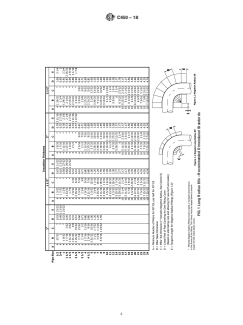
ASTM C450-18 - Standard Practice for Fabrication of Thermal Insulating Fitting Covers for NPS Piping, and Vessel Lagging
REDLINE ASTM C450-18 - Standard Practice for Fabrication of Thermal Insulating Fitting Covers for NPS Piping, and Vessel Lagging
Overview
ASTM C450-18 sets forth a standardized practice for the fabrication of thermal insulating fitting covers for NPS (Nominal Pipe Size) piping and vessel lagging. Published by ASTM International, this standard is crucial for ensuring consistency, quality, and thermal performance when preforming and fabricating insulation for various piping system components, including valves, elbows (ells), tees, flanges, and vessels. The practice provides dimensional tables and guidelines to facilitate shop fabrication of preformed pipe insulation, making it suitable for applications across all service temperature ranges and pressures from 150 to 1500 psi (1 to 10 MPa).
Key Topics
Dimensional Standards: ASTM C450-18 provides detailed tables-published as separate adjuncts-with recommended dimensions for fabricated insulation fitting covers for common piping components and vessel lagging. These dimensional standards are based on ASTM Practice C585 and are designed to ensure a proper fit and optimum thermal protection.
Applicable Fittings: The scope covers insulation covers for valves, welded short and long radius elbows, tees, flanges, and vessel sidewalls. The dimensional tables include both curved and flat component applications.
Fabrication Methods: The standard recognizes multiple fabrication techniques, such as cutting, grinding, milling, and molding, allowing flexibility based on material characteristics and project requirements. However, specific fabrication methods are not mandated, acknowledging the diversity of insulation materials and available production tools.
Tolerance and Assembly: Tight fitting and proper assembly are essential. All formed pieces must close joints to within a maximum of 1/16 inch. Identification tagging and alignment of insulation surfaces are addressed to simplify field installation and assure construction quality.
Safety and Metrication: The standard uses inch-pound units as the official system; SI metric conversions are informational only. Users are responsible for addressing relevant safety, health, and regulatory considerations.
Applications
Industrial Piping Systems: ASTM C450-18 is extensively used in power plants, chemical processing, oil & gas facilities, and other industrial environments where thermal insulation of piping and vessel systems is essential for energy efficiency, personnel safety, and process control.
HVAC and Plumbing: The standard also finds application in commercial and institutional HVAC systems where insulated pipe fittings are needed for chilled water, steam, or hot water lines.
Shop Fabrication: It is especially valuable to insulation fabricators and contractors, enabling them to preproduce insulation fitting covers and vessel lagging that will fit precisely during field installation, reducing waste and installation time.
Specialty Equipment Manufacturers: Manufacturers of large pressure vessels or complex piping arrangements rely on the standard to specify and source custom-fabricated insulation covers.
Related Standards
- ASTM C168: Terminology Relating to Thermal Insulation - Provides definitions and terms used in thermal insulation standards.
- ASTM C585: Practice for Inner and Outer Diameters of Thermal Insulation for Nominal Sizes of Pipe and Tubing - Basis for dimensional tables in C450-18.
- ASTM C534/C534M: Specification for Preformed Flexible Elastomeric Cellular Thermal Insulation - Reference for insulation types not covered by C450-18.
- ASTM C1427: Specification for Extruded Preformed Flexible Cellular Polyolefin Thermal Insulation - Additional reference for specific insulation products.
- ASTM C1710: Guide for Installation of Flexible Closed Cell Preformed Insulation in Tube and Sheet Form - Guidance for products outside the scope of C450-18.
Practical Value
By adhering to ASTM C450-18, professionals in the insulation industry can ensure dimensional accuracy, compatibility, and durability of thermal insulating fitting covers. This translates to improved installation efficiency, reduced potential for thermal bridging, and long-term operational reliability in a range of demanding applications. The standard supports manufacturers, fabricators, specifiers, and installers in achieving best practices for thermal insulation of piping systems and vessels.
Keywords: thermal insulation, piping insulation, ASTM C450-18, fitting covers, vessel lagging, insulation fabrication, industrial insulation standards
Relations
- Effective Date
- 01-Apr-2018
- Effective Date
- 15-Apr-2024
- Effective Date
- 01-Mar-2024
- Effective Date
- 01-Mar-2019
- Effective Date
- 15-Apr-2018
- Effective Date
- 01-Jun-2017
- Effective Date
- 01-Oct-2016
- Effective Date
- 15-Oct-2015
- Effective Date
- 15-Sep-2015
- Effective Date
- 01-Jun-2015
- Effective Date
- 15-Apr-2014
- Effective Date
- 01-Jun-2013
- Effective Date
- 01-May-2013
- Effective Date
- 01-Apr-2013
- Effective Date
- 01-Nov-2012
Buy Documents
ASTM C450-18 - Standard Practice for Fabrication of Thermal Insulating Fitting Covers for NPS Piping, and Vessel Lagging
REDLINE ASTM C450-18 - Standard Practice for Fabrication of Thermal Insulating Fitting Covers for NPS Piping, and Vessel Lagging
Get Certified
Connect with accredited certification bodies for this standard

DNV
DNV is an independent assurance and risk management provider.

Lloyd's Register
Lloyd's Register is a global professional services organisation specialising in engineering and technology.
DNV Energy Systems
Energy and renewable energy certification.
Sponsored listings
Frequently Asked Questions
ASTM C450-18 is a standard published by ASTM International. Its full title is "Standard Practice for Fabrication of Thermal Insulating Fitting Covers for NPS Piping, and Vessel Lagging". This standard covers: SIGNIFICANCE AND USE 4.1 This system of dimensions provides a guide for forming thermal insulation in advance of field application. Forming is done by cutting, grinding, milling, or molding, depending upon the method most suitable for the thermal insulation being fabricated. It is equally applicable for all service temperature ranges. SCOPE 1.1 This practice provides tables of dimensions of preformed pipe insulation that shall be used in fabricating insulation covers for use on valves, ells, tees, flanges, and vessels in the pressure range from 150 to 1500 psi (1 to 10 MPa). These tables, which are part of this standard, are published separately as the ASTM Recommended Dimensional Standards for Fabrication of Thermal Insulation Fitting Covers for NPS Piping and Vessel Lagging. In addition, the ADJC0450A tables for Short Radius (SR) and Long Radius (LR) Elbows Insulation Fitting Covers for piping are included in this practice. The tables were developed to provide dimensions for shop fabrication use in forming pipe insulation fitting covers on NPS pipe operating at high temperature and low temperature. The tables also include dimensions for use in forming thermal insulation into curved segments, and lagging, for application on vessels. This practice does not apply to reflective-type insulation, insulation on screwed elbows, Short Radius (SR) and Long Radius (LR) Elbows Fitting Covers for tubing, dutchman (extended leg) insulation fitting covers, double-layered staggered-joint pipe insulation fitting covers, flexible preformed pipe-tube elastomeric foam fitting covers in accordance with Specification C534/C534M or polyolefin foam fitting covers in accordance with Specification C1427. 1.1.1 Refer to Guide C1710 when referring to insulation materials for fabrication of preformed flexible closed cell insulated 90° elbows, tees, or similar products. 1.2 This practice does not specify fabrication methods. Thermal insulation for fitting covers is formed by numerous fabrication methods. In general, insulations are cut by circular or band saws, shaped by grinders or millers, or molded/preformed. Each method has certain advantages and disadvantages, depending upon the material to be formed, number of cuts required, material waste permissible, and quantity of fittings being produced. Fitting parts are assembled using adhesives and fabrication cements applied using dip pots, rollers, doctor blades, brush, or trowel, depending upon the materials being used. Any specification of the fabrication techniques is beyond the scope of this standard. 1.3 The values stated in inch-pound units are to be regarded as standard. In a few parts of this practice, the values given in parentheses are mathematical conversions to SI units that are provided for information only and are not considered standard. The dimensional standard tables with fractional inch-pound (I.P.) system provided from the adjunct and in this document’s tables are currently not available in decimal and metric equivalents. 1.4 This standard does not purport to address all of the safety concerns, if any, associated with its use. It is the responsibility of the user of this standard to establish appropriate safety, health, and environmental practices and determine the applicability of regulatory limitations prior to use. 1.5 This international standard was developed in accordance with internationally recognized principles on standardization established in the Decision on Principles for the Development of International Standards, Guides and Recommendations issued by the World Trade Organization Technical Barriers to Trade (TBT) Committee.
SIGNIFICANCE AND USE 4.1 This system of dimensions provides a guide for forming thermal insulation in advance of field application. Forming is done by cutting, grinding, milling, or molding, depending upon the method most suitable for the thermal insulation being fabricated. It is equally applicable for all service temperature ranges. SCOPE 1.1 This practice provides tables of dimensions of preformed pipe insulation that shall be used in fabricating insulation covers for use on valves, ells, tees, flanges, and vessels in the pressure range from 150 to 1500 psi (1 to 10 MPa). These tables, which are part of this standard, are published separately as the ASTM Recommended Dimensional Standards for Fabrication of Thermal Insulation Fitting Covers for NPS Piping and Vessel Lagging. In addition, the ADJC0450A tables for Short Radius (SR) and Long Radius (LR) Elbows Insulation Fitting Covers for piping are included in this practice. The tables were developed to provide dimensions for shop fabrication use in forming pipe insulation fitting covers on NPS pipe operating at high temperature and low temperature. The tables also include dimensions for use in forming thermal insulation into curved segments, and lagging, for application on vessels. This practice does not apply to reflective-type insulation, insulation on screwed elbows, Short Radius (SR) and Long Radius (LR) Elbows Fitting Covers for tubing, dutchman (extended leg) insulation fitting covers, double-layered staggered-joint pipe insulation fitting covers, flexible preformed pipe-tube elastomeric foam fitting covers in accordance with Specification C534/C534M or polyolefin foam fitting covers in accordance with Specification C1427. 1.1.1 Refer to Guide C1710 when referring to insulation materials for fabrication of preformed flexible closed cell insulated 90° elbows, tees, or similar products. 1.2 This practice does not specify fabrication methods. Thermal insulation for fitting covers is formed by numerous fabrication methods. In general, insulations are cut by circular or band saws, shaped by grinders or millers, or molded/preformed. Each method has certain advantages and disadvantages, depending upon the material to be formed, number of cuts required, material waste permissible, and quantity of fittings being produced. Fitting parts are assembled using adhesives and fabrication cements applied using dip pots, rollers, doctor blades, brush, or trowel, depending upon the materials being used. Any specification of the fabrication techniques is beyond the scope of this standard. 1.3 The values stated in inch-pound units are to be regarded as standard. In a few parts of this practice, the values given in parentheses are mathematical conversions to SI units that are provided for information only and are not considered standard. The dimensional standard tables with fractional inch-pound (I.P.) system provided from the adjunct and in this document’s tables are currently not available in decimal and metric equivalents. 1.4 This standard does not purport to address all of the safety concerns, if any, associated with its use. It is the responsibility of the user of this standard to establish appropriate safety, health, and environmental practices and determine the applicability of regulatory limitations prior to use. 1.5 This international standard was developed in accordance with internationally recognized principles on standardization established in the Decision on Principles for the Development of International Standards, Guides and Recommendations issued by the World Trade Organization Technical Barriers to Trade (TBT) Committee.
ASTM C450-18 is classified under the following ICS (International Classification for Standards) categories: 27.220 - Heat recovery. Thermal insulation. The ICS classification helps identify the subject area and facilitates finding related standards.
ASTM C450-18 has the following relationships with other standards: It is inter standard links to ASTM C450-17, ASTM C168-24, ASTM C1710-24, ASTM C534/C534M-19, ASTM C168-18, ASTM C168-17, ASTM C534/C534M-16, ASTM C168-15a, ASTM C1710-15, ASTM C168-15, ASTM C534/C534M-14, ASTM C534/C534M-13, ASTM C1427-13, ASTM C168-13, ASTM C1427-12. Understanding these relationships helps ensure you are using the most current and applicable version of the standard.
ASTM C450-18 is available in PDF format for immediate download after purchase. The document can be added to your cart and obtained through the secure checkout process. Digital delivery ensures instant access to the complete standard document.
Standards Content (Sample)
This international standard was developed in accordance with internationally recognized principles on standardization established in the Decision on Principles for the
Development of International Standards, Guides and Recommendations issued by the World Trade Organization Technical Barriers to Trade (TBT) Committee.
Designation: C450 − 18
Standard Practice for
Fabrication of Thermal Insulating Fitting Covers for NPS
Piping, and Vessel Lagging
This standard is issued under the fixed designation C450; the number immediately following the designation indicates the year of
original adoption or, in the case of revision, the year of last revision. A number in parentheses indicates the year of last reapproval. A
superscript epsilon (´) indicates an editorial change since the last revision or reapproval.
1. Scope usingadhesivesandfabricationcementsappliedusingdippots,
rollers, doctor blades, brush, or trowel, depending upon the
1.1 This practice provides tables of dimensions of pre-
materials being used. Any specification of the fabrication
formed pipe insulation that shall be used in fabricating insula-
techniques is beyond the scope of this standard.
tion covers for use on valves, ells, tees, flanges, and vessels in
the pressure range from 150 to 1500 psi (1 to 10 MPa). These 1.3 The values stated in inch-pound units are to be regarded
tables, which are part of this standard, are published separately as standard. In a few parts of this practice, the values given in
as the ASTM Recommended Dimensional Standards for Fab- parentheses are mathematical conversions to SI units that are
rication of Thermal Insulation Fitting Covers for NPS Piping provided for information only and are not considered standard.
and Vessel Lagging. In addition, the ADJC0450A tables for The dimensional standard tables with fractional inch-pound
Short Radius (SR) and Long Radius (LR) Elbows Insulation (I.P.) system provided from the adjunct and in this document’s
Fitting Covers for piping are included in this practice. The tables are currently not available in decimal and metric
tables were developed to provide dimensions for shop fabrica- equivalents.
tion use in forming pipe insulation fitting covers on NPS pipe
1.4 This standard does not purport to address all of the
operating at high temperature and low temperature. The tables
safety concerns, if any, associated with its use. It is the
also include dimensions for use in forming thermal insulation
responsibility of the user of this standard to establish appro-
into curved segments, and lagging, for application on vessels.
priate safety, health, and environmental practices and deter-
This practice does not apply to reflective-type insulation,
mine the applicability of regulatory limitations prior to use.
insulation on screwed elbows, Short Radius (SR) and Long
1.5 This international standard was developed in accor-
Radius (LR) Elbows Fitting Covers for tubing, dutchman
dance with internationally recognized principles on standard-
(extended leg) insulation fitting covers, double-layered
ization established in the Decision on Principles for the
staggered-joint pipe insulation fitting covers, flexible pre-
Development of International Standards, Guides and Recom-
formedpipe-tubeelastomericfoamfittingcoversinaccordance
mendations issued by the World Trade Organization Technical
with Specification C534/C534M or polyolefin foam fitting
Barriers to Trade (TBT) Committee.
covers in accordance with Specification C1427.
1.1.1 Refer to Guide C1710 when referring to insulation
2. Referenced Documents
materials for fabrication of preformed flexible closed cell
2.1 ASTM Standards:
insulated 90° elbows, tees, or similar products.
C168 Terminology Relating to Thermal Insulation
1.2 This practice does not specify fabrication methods.
C534/C534M Specification for Preformed Flexible Elasto-
Thermal insulation for fitting covers is formed by numerous
meric Cellular Thermal Insulation in Sheet and Tubular
fabrication methods. In general, insulations are cut by circular
Form
or band saws, shaped by grinders or millers, or molded/
C585 Practice for Inner and Outer Diameters of Thermal
preformed. Each method has certain advantages and
Insulation for Nominal Sizes of Pipe and Tubing
disadvantages, depending upon the material to be formed,
C1427 Specification for Extruded Preformed Flexible Cel-
number of cuts required, material waste permissible, and
lular Polyolefin Thermal Insulation in Sheet and Tubular
quantity of fittings being produced. Fitting parts are assembled
Form
C1710 Guide for Installation of Flexible Closed Cell Pre-
formed Insulation in Tube and Sheet Form
This practice is under the jurisdiction of ASTM Committee C16 on Thermal
InsulationandisthedirectresponsibilityofSubcommitteeC16.20onHomogeneous
Inorganic Thermal Insulations. For referenced ASTM standards, visit the ASTM website, www.astm.org, or
Current edition approved April 1, 2018. Published April 2018. Originally contact ASTM Customer Service at service@astm.org. For Annual Book of ASTM
approved in 1960. Last previous edition approved in 2017 as C450 – 17. DOI: Standards volume information, refer to the standard’s Document Summary page on
10.1520/C0450-18. the ASTM website.
Copyright © ASTM International, 100 Barr Harbor Drive, PO Box C700, West Conshohocken, PA 19428-2959. United States
C450 − 18
2.2 ASTM Adjuncts: 5. Basis of Design
Fabrication of Thermal Insulating Covers for NPS Piping
5.1 All dimensions presented are based on the use of pipe
and Vessel Lagging on CD-ROM
insulation manufactured to Practice C585 with no pipe insula-
2.2.1 Adjunct Table of Contents:
tion outside diameter (OD) tolerances and to the Basic Dimen-
2.2.1.1 Forward and Introduction:
sional Standards for Pipe Insulation as given in ADJC0450A
(1) Practice C585 Base Dimensions for NPS Inner Diam-
Table 1, Pipe Insulation Inside Diameters, and Table 2, Pipe
eters with plus and minus tolerance
Insulation Outside Diameters, with no tolerances of the Fabri-
(2) Practice C585 Base Dimensions for NPS Outer Diam-
cationofThermalInsulatingFittingCoversforNPSPipingand
eters with no tolerances
Vessel Lagging.
2.2.1.2 Insulation Covers for NPS Pipe Fittings—Short and
5.1.1 The mitering elbow dimensions shown in this Practice
Long Radius Welded Elbows
includinginthetablesandtheADJC0450Aareapplicableonly
2.2.1.3 Coverings for Vessels: Sidewall – Cylindrical Flat to mitered insulated fitting covers. However, there are some
Lagging—Single-Edge Cut and Double-Edge Cut
smaller diameter two-piece (spun produced) insulated fittings
that their outer diameter targets match those shown for mitered
2.2.1.4 Flanged – High & Low Temperature Service:
insulation fitting covers in the aforementioned tables.
(1) 150-lb,300-lb,400-lb,600-lb,900-lb,and1500-lbLine
Flanges
5.1.2 TheLongRadiusInsulatedWeldedElbowsTablesand
(2) 150-lb, 300-lb, 400-lb, 600-lb, 900-lb, and 1500-lb
the Short Radius Insulated Welded Elbows Tables from
Flanged Globe Valves
ADJC0450A have been carried over to this practice, Sections
(3) 1 to 5 in. NPS and 6 to 24 in. NPS 125 and 150 lb
9 and 10, respectively.
Flanged Gate Valves
5.2 There are two tables that provide dimensions for welded
(4) 1 to 3 in. NPS, 3 ⁄2 to 5 in. NPS and 12 to 24 in. NPS
elbowinsulationfittingcoversinthispracticeandADJC0450A
150-lb Flanged 90° Ells
for installation on nominal pipe size (NPS) pipe operating at
(5) 300-lb, 400-lb, 600-lb, 900-lb, and 1500-lb Flanged
high and low temperatures.
Gate Valves
(6) 1 to 5 in. NPS and 6 to 24 in. NPS 150-lb Flanged 45°
NOTE 1—Should the base dimension pipe insulation O.D. have a
Ells dimensional tolerance other than “zero” inches, more than likely the
mitered insulated fitting cover will not fit the exact curvature of the pipe
(7) 1 to 5 in. NPS and 6 to 24 in. NPS 150-lb Flanged 45°
fitting.Thetabledimensionswillhavetobeadjustedforaproperfitonthe
Tees
pipe fitting with O.D. tolerances.
5.3 Dimensions presented for cutting beveled blocks from
3. Terminology
preformed thermal insulation (lags) are based on blocks 6 in.
3.1 Definitions—For definitions used in this practice see
(152 mm) wide by the thickness required.
Terminology C168.
5.4 Dimensions given for flanged pairs, flanged fittings, and
3.2 Definitions of Terms Specific to This Standard:
flanged valves do not allow for flange bolt removal. When bolt
3.2.1 base dimension, n—a measurement of, for example, a
removal is required, the pipe insulation next to the flange is
pipe insulat
...
This document is not an ASTM standard and is intended only to provide the user of an ASTM standard an indication of what changes have been made to the previous version. Because
it may not be technically possible to adequately depict all changes accurately, ASTM recommends that users consult prior editions as appropriate. In all cases only the current version
of the standard as published by ASTM is to be considered the official document.
Designation: C450 − 17 C450 − 18
Standard Practice for
Fabrication of Thermal Insulating Fitting Covers for NPS
Piping, and Vessel Lagging
This standard is issued under the fixed designation C450; the number immediately following the designation indicates the year of
original adoption or, in the case of revision, the year of last revision. A number in parentheses indicates the year of last reapproval. A
superscript epsilon (´) indicates an editorial change since the last revision or reapproval.
1. Scope
1.1 This practice provides tables of dimensions of preformed pipe insulation that shall be used in fabricating insulation covers
for use on valves, ells, tees, flanges, and vessels in the pressure range from 150 to 1500 psi (1 to 10 MPa). These tables, which
are part of this standard, are published separately as the ASTM Recommended Dimensional Standards for Fabrication of Thermal
Insulation Fitting Covers for NPS Piping and Vessel Lagging. In addition, the ADJC0450A tables for Short Radius (SR) and Long
Radius (LR) Elbows Insulation Fitting Covers for piping are included in this practice. The tables were developed to provide
dimensions for shop fabrication use in forming pipe insulation fitting covers on NPS pipe operating at high temperature and low
temperature. The tables also include dimensions for use in forming thermal insulation into curved segments, and lagging, for
application on vessels. This practice does not apply to reflective-type insulation, insulation on screwed elbows, Short Radius (SR)
&and Long Radius (LR) Elbows Fitting Covers for tubing, dutchman (extended leg) insulation fitting covers, double-layered
staggered-joint pipe insulation fitting covers, flexible preformed pipe-tube elastomeric foam fitting covers in accordance with
Specification C534/C534M or polyolefin foam fitting covers in accordance with Specification C1427.
1.1.1 Refer to Guide C1710 when referring to insulation materials for fabrication of preformed flexible closed cell insulated 90°
elbows, tees, or similar products.
1.2 This practice does not specify fabrication methods. Thermal insulation for fitting covers is formed by numerous fabrication
methods. In general, insulations are cut by circular or band saws, shaped by grinders or millers, or molded/preformed. Each method
has certain advantages and disadvantages, depending upon the material to be formed, number of cuts required, material waste
permissible, and quantity of fittings being produced. Fitting parts are assembled using adhesives and fabrication cements applied
using dip pots, rollers, doctor blades, brush, or trowel, depending upon the materials being used. Any specification of the
fabrication techniques is beyond the scope of this standard.
1.3 The values stated in inch-pound units are to be regarded as standard. In a few parts of this practice, the values given in
parentheses are mathematical conversions to SI units that are provided for information only and are not considered standard. The
dimensional standard tables with fractional inch-pound (I.P.) system provided from the adjunct and in this document’s tables are
currently not available in decimal and metric equivalents.
1.4 This standard does not purport to address all of the safety concerns, if any, associated with its use. It is the responsibility
of the user of this standard to establish appropriate safety, health, and environmental practices and determine the applicability of
regulatory limitations prior to use.
1.5 This international standard was developed in accordance with internationally recognized principles on standardization
established in the Decision on Principles for the Development of International Standards, Guides and Recommendations issued
by the World Trade Organization Technical Barriers to Trade (TBT) Committee.
2. Referenced Documents
2.1 ASTM Standards:
C168 Terminology Relating to Thermal Insulation
C534/C534M Specification for Preformed Flexible Elastomeric Cellular Thermal Insulation in Sheet and Tubular Form
C585 Practice for Inner and Outer Diameters of Thermal Insulation for Nominal Sizes of Pipe and Tubing
This practice is under the jurisdiction of ASTM Committee C16 on Thermal Insulation and is the direct responsibility of Subcommittee C16.20 on Homogeneous
Inorganic Thermal Insulations.
Current edition approved Nov. 1, 2017April 1, 2018. Published December 2017April 2018. Originally approved in 1960. Last previous edition approved in 20142017 as
C450 – 08 (2014).C450 – 17. DOI: 10.1520/C0450-17.10.1520/C0450-18.
For referenced ASTM standards, visit the ASTM website, www.astm.org, or contact ASTM Customer Service at service@astm.org. For Annual Book of ASTM Standards
volume information, refer to the standard’s Document Summary page on the ASTM website.
Copyright © ASTM International, 100 Barr Harbor Drive, PO Box C700, West Conshohocken, PA 19428-2959. United States
C450 − 18
C1427 Specification for Extruded Preformed Flexible Cellular Polyolefin Thermal Insulation in Sheet and Tubular Form
C1710 Guide for Installation of Flexible Closed Cell Preformed Insulation in Tube and Sheet Form
2.2 ASTM Adjuncts:
2.2 ASTM Adjuncts:
Fabrication of Thermal Insulating Covers for NPS Piping and Vessel Lagging on CD-ROM
2.2.1 Adjunct Table of Contents:
2.2.1.1 Forward and Introduction:
(1) Practice C585 Base Dimensions for NPS Inner Diameters with plus and minus tolerance
(2) Practice C585 Base Dimensions for NPS Outer Diameters with no tolerances
2.2.1.2 Insulation Covers for NPS Pipe Fittings—Short and Long Radius Welded Elbows
2.2.1.3 Coverings for Vessels: Sidewall – Cylindrical Flat Lagging—Single-Edge Cut and Double-Edge Cut
2.2.1.4 Flanged – High & Low Temperature Service:
(1) 150-lb, 300-lb, 400-lb, 600-lb, 900-lb, and 1500-lb Line Flanges
(2) 150-lb, 300-lb, 400-lb, 600-lb, 900-lb, and 1500-lb Flanged Globe Valves
(3) 1 to 5 in. NPS and 6 to 24 in. NPS 125 and 150 lb Flanged Gate Valves
(4) 1 to 3 in. NPS, 3 ⁄2 to 5 in. NPS and 12 to 24 in. NPS 150-lb Flanged 90° Ells
(5) 300-lb, 400-lb, 600-lb, 900-lb, and 1500-lb Flanged Gate Valves
(6) 1 to 5 in. NPS and 6 to 24 in. NPS 150-lb Flanged 45° Ells
(7) 1 to 5 in. NPS and 6 to 24 in. NPS 150-lb Flanged 45° Tees
3. Terminology
3.1 Definitions—For definitions used in this practice see Terminology C168.
3.2 Definitions of Terms Specific to This Standard:
3.2.1 base dimension, n—a measurement of, for example, a pipe insulation’s inside diameter (ID), outside diameter (OD), and
miter dimensions, all without any I.D. and O.D. tolerances.
3.2.2 dutchman, n—an extended pipe insulation fitting leg attached to, for example, the ends of an insulated 90° elbow fitting
cover.
3.2.3 pipe fitting, n—a fitting is used in pipe systems to connect straight pipe or tubing sections with, for example, 90° elbows.
4. Significance and Use
4.1 This system of dimensions provides a guide for forming thermal insulation in advance of field application. Forming is done
by cutting, grinding, milling, or molding, depending upon the method most suitable for the thermal insulation being fabricated. It
is equally applicable for all service temperature ranges.
5. Basis of Design
5.1 All dimensions presented are based on the use of pipe insulation manufactured to Practice C585 with no pipe insulation
outside diameter (OD) tolerances and to the Basic Dimensional Standards for Pipe Insulation as given in ADJC0450A Table 1, Pipe
Insulation Inside Diameters, and Table 2, Pipe Insulation Outside Diameters, with no tolerances of the Fabrication of Thermal
Insulating Fitting Covers for NPS Piping and Vessel Lagging.
5.1.1 The mitering elbow dimensions shown in this Practice including in the tables and the ADJC0450A are applicable only
to mitered insulated fitting covers. However, there are some smaller diameter two-piece (spun produced) insulated fittings that their
outer diameter targets match those shown for mitered insulation fitting covers in the aforementioned tables.
5.1.2 The ShortLong Radius Insulated Welded Elbows Tables and the LongShort Radius Insulated Welded ElbowElbows Tables
from ADJC0450A have been carried over to this practice, Sections 9 and 10, respectively.
5.2 There are two tables that provide dimensions for welded elbow insulation fitting covers in this prac
...