

ASTM D7227/D7227M-22
(Practice)Standard Practice for Rapid Drying of Compacted Asphalt Mixture Specimens Using Vacuum Drying Apparatus
General Information
- Abstract
SIGNIFICANCE AND USE
4.1 Specimen dry weight is a critical measure in determination of accurate density and many other tests in the construction and raw materials industries. Drying specimens at room temperature is required for some tests and provides an advantage for other tests to ensure the integrity and to preserve the characteristics of specimens.
4.2 This practice covers drying compacted asphalt mixture specimens in a vacuum chamber that is capable of keeping the specimen at close to room temperature. A vacuum pump reduces the pressure inside the chamber, thus allowing water to evaporate at low temperature. Since the specimen naturally cools during the evaporation process, making water harder to evaporate, it is important to have proper temperature controls in the chamber to ensure the specimen remains at close to room temperature. Automatic controls within the unit allow the specimen to remain at close to room temperature by periodically allowing a flow of warm and dry air, typically generated by an inline air heater, to enter the vacuum chamber. Cycling between vacuum and airflow conditions allows the specimen to dry in a short period of time. Completely saturated specimens with over 30 g [0.07 lb] of retained water can be dried in about 30 min. For most field cores that are not completely saturated, the drying time is generally less than 15 min.
Note 1: Cycle time (period) can depend on the material composition. Each cycle involves an alternating period of 30 to 180 s of vacuum operation and 30 to 120 s of airflow.
4.3 This method can be used for 100 mm [4 in.] diameter, 150 mm [6 in.] diameter cylindrical, and cubical compacted asphalt mixture specimens.
4.4 This method can also be used for drying loose asphalt mixtures, aggregate samples, and other solid specimens. Follow the manufacturer’s recommended procedures for drying specimens other than compacted asphalt mixture specimens.
4.5 This method can be used to determine moisture content and amount of water loss...
SCOPE
1.1 This practice covers the process of drying compacted asphalt mixture specimens using vacuum drying apparatus.
1.2 The specimens dried by this practice remain at room temperature, which helps in maintaining specimen integrity during the drying process.
1.3 This practice can be used for compacted cylindrical and cubical laboratory and field asphalt mixture specimens.
1.4 This practice can also be used for drying other construction materials such as concrete, soils, aggregates, and loose asphalt mixtures. Use the manufacturer’s recommendations for drying other construction materials.
1.5 The values stated in either SI units or inch-pound units are to be regarded separately as standard. The values stated in each system may not be exact equivalents; therefore, each system shall be used independently of the other. Combining values from the two systems may result in nonconformance with the standard.
1.6 The text of this standard references notes and footnotes which provide explanatory material. These notes and footnotes (excluding those in tables and figures) shall not be considered as requirements of the standard.
1.7 This standard does not purport to address all of the safety concerns, if any, associated with its use. It is the responsibility of the user of this standard to establish appropriate safety, health, and environmental practices and determine the applicability of regulatory limitations prior to use.
1.8 This international standard was developed in accordance with internationally recognized principles on standardization established in the Decision on Principles for the Development of International Standards, Guides and Recommendations issued by the World Trade Organization Technical Barriers to Trade (TBT) Committee.
- Status
- Published
- Publication Date
- 30-Nov-2022
- Technical Committee
- D04 - Road and Paving Materials
- Drafting Committee
- D04.21 - Specific Gravity and Density of Asphalt Mixtures
Buy Documents


ASTM D7227/D7227M-22 - Standard Practice for Rapid Drying of Compacted Asphalt Mixture Specimens Using Vacuum Drying Apparatus

REDLINE ASTM D7227/D7227M-22 - Standard Practice for Rapid Drying of Compacted Asphalt Mixture Specimens Using Vacuum Drying Apparatus
Overview
ASTM D7227/D7227M-22: Standard Practice for Rapid Drying of Compacted Asphalt Mixture Specimens Using Vacuum Drying Apparatus is an international standard developed by ASTM International. This standard specifies procedures for the rapid drying of compacted asphalt mixture specimens using a vacuum drying apparatus, ensuring specimens remain at room temperature throughout the process. Accurate specimen dry weight is essential for precise density and moisture content measurements in the construction and materials testing industries.
By leveraging vacuum drying at low temperatures with controlled temperature cycles, this practice enables efficient and reliable drying of compacted asphalt and other construction material specimens, helping maintain the integrity and physical characteristics vital for further testing.
Key Topics
Vacuum Drying Process
Utilizes a vacuum chamber with temperature control to rapidly remove moisture while ensuring the specimen remains near room temperature.- Reduces water evaporation point through low-pressure conditions.
- Periodic introduction of warm, dry air maintains temperature and speeds up drying.
Specimen Types and Compatibility
Suitable for both laboratory-molded and field-collected cylindrical or cubical compacted asphalt mixture specimens.- Also applicable to loose asphalt mixtures, aggregates, soils, and concrete, following manufacturer recommendations.
Cycle Timing and Efficiency
Automated control cycles between vacuum and airflow, greatly reducing drying time without overheating specimens.- Heavily saturated specimens (>30g water) dry in about 30 minutes.
- Most field cores dry in less than 15 minutes.
Measurement and Integrity
Dried at room temperature to prevent altering material characteristics-critical for accurate density (specific gravity) and moisture determination.Data Collection
Includes procedures for recording specimen weight before and after drying to calculate moisture content and monitor equipment performance.
Applications
ASTM D7227/D7227M-22 has practical applications across a range of industries and laboratory settings:
Construction Quality Control
Provides reliable moisture measurements for compacted asphalt mixtures, essential for meeting design and specification requirements.Pavement and Road Testing
Ensures accurate density and moisture content results for field and laboratory paving materials, supporting long-term performance assessments.Materials Testing Laboratories
Enables efficient sample preparation for further analyses, such as bulk specific gravity and density determinations.Broader Materials Compatibility
Can be adapted for drying concrete, soils, aggregates, and loose mixtures, supporting diversified civil engineering testing programs.
This standard is crucial for agencies and laboratories where rapid, repeatable, and accurate drying of asphalt and construction materials is essential.
Related Standards
ASTM D7227/D7227M-22 references and is often used alongside other important ASTM standards, including:
- ASTM D8: Terminology for Materials for Roads and Pavements
- ASTM D2726/D2726M: Bulk Specific Gravity and Density of Non-Absorptive Compacted Asphalt Mixtures
- ASTM D1188/D1188M: Bulk Specific Gravity and Density of Compact Asphalt Mixtures Using Coated Samples
- ASTM D3666: Minimum Requirements for Agencies Testing and Inspecting Road and Paving Materials
- ASTM D5361/D5361M: Sampling Compacted Asphalt Mixtures for Laboratory Testing
- ASTM D6752/D6752M: Bulk Specific Gravity and Density Using Automatic Vacuum Sealing Method
Summary
ASTM D7227/D7227M-22 offers a consistent, fast, and low-temperature drying solution for compacted asphalt and construction material specimens, preserving specimen quality and enabling precise test results. Following this standard ensures compliance with industry best practices for moisture determination and supports reliable laboratory and field investigations within construction and civil engineering.
Relations
- Effective Date
- 01-Nov-2023
- Effective Date
- 01-Aug-2019
- Effective Date
- 15-Dec-2018
- Effective Date
- 15-Aug-2018
- Effective Date
- 15-Aug-2018
- Effective Date
- 01-Jul-2018
- Effective Date
- 01-Feb-2018
- Effective Date
- 15-Jul-2017
- Effective Date
- 15-Jun-2017
- Effective Date
- 01-Jun-2017
- Effective Date
- 01-Jun-2017
- Effective Date
- 01-May-2017
- Effective Date
- 01-Mar-2017
- Effective Date
- 01-Dec-2016
- Effective Date
- 01-Oct-2016
Buy Documents
ASTM D7227/D7227M-22 - Standard Practice for Rapid Drying of Compacted Asphalt Mixture Specimens Using Vacuum Drying Apparatus
REDLINE ASTM D7227/D7227M-22 - Standard Practice for Rapid Drying of Compacted Asphalt Mixture Specimens Using Vacuum Drying Apparatus
Get Certified
Connect with accredited certification bodies for this standard

DIBt (Deutsches Institut für Bautechnik)
German Institute for Building Technology.
DIN CERTCO
DIN Group product certification.

Aboma Certification B.V.
Specialized in construction, metal, and transport sectors.
Sponsored listings
Frequently Asked Questions
ASTM D7227/D7227M-22 is a standard published by ASTM International. Its full title is "Standard Practice for Rapid Drying of Compacted Asphalt Mixture Specimens Using Vacuum Drying Apparatus". This standard covers: SIGNIFICANCE AND USE 4.1 Specimen dry weight is a critical measure in determination of accurate density and many other tests in the construction and raw materials industries. Drying specimens at room temperature is required for some tests and provides an advantage for other tests to ensure the integrity and to preserve the characteristics of specimens. 4.2 This practice covers drying compacted asphalt mixture specimens in a vacuum chamber that is capable of keeping the specimen at close to room temperature. A vacuum pump reduces the pressure inside the chamber, thus allowing water to evaporate at low temperature. Since the specimen naturally cools during the evaporation process, making water harder to evaporate, it is important to have proper temperature controls in the chamber to ensure the specimen remains at close to room temperature. Automatic controls within the unit allow the specimen to remain at close to room temperature by periodically allowing a flow of warm and dry air, typically generated by an inline air heater, to enter the vacuum chamber. Cycling between vacuum and airflow conditions allows the specimen to dry in a short period of time. Completely saturated specimens with over 30 g [0.07 lb] of retained water can be dried in about 30 min. For most field cores that are not completely saturated, the drying time is generally less than 15 min. Note 1: Cycle time (period) can depend on the material composition. Each cycle involves an alternating period of 30 to 180 s of vacuum operation and 30 to 120 s of airflow. 4.3 This method can be used for 100 mm [4 in.] diameter, 150 mm [6 in.] diameter cylindrical, and cubical compacted asphalt mixture specimens. 4.4 This method can also be used for drying loose asphalt mixtures, aggregate samples, and other solid specimens. Follow the manufacturer’s recommended procedures for drying specimens other than compacted asphalt mixture specimens. 4.5 This method can be used to determine moisture content and amount of water loss... SCOPE 1.1 This practice covers the process of drying compacted asphalt mixture specimens using vacuum drying apparatus. 1.2 The specimens dried by this practice remain at room temperature, which helps in maintaining specimen integrity during the drying process. 1.3 This practice can be used for compacted cylindrical and cubical laboratory and field asphalt mixture specimens. 1.4 This practice can also be used for drying other construction materials such as concrete, soils, aggregates, and loose asphalt mixtures. Use the manufacturer’s recommendations for drying other construction materials. 1.5 The values stated in either SI units or inch-pound units are to be regarded separately as standard. The values stated in each system may not be exact equivalents; therefore, each system shall be used independently of the other. Combining values from the two systems may result in nonconformance with the standard. 1.6 The text of this standard references notes and footnotes which provide explanatory material. These notes and footnotes (excluding those in tables and figures) shall not be considered as requirements of the standard. 1.7 This standard does not purport to address all of the safety concerns, if any, associated with its use. It is the responsibility of the user of this standard to establish appropriate safety, health, and environmental practices and determine the applicability of regulatory limitations prior to use. 1.8 This international standard was developed in accordance with internationally recognized principles on standardization established in the Decision on Principles for the Development of International Standards, Guides and Recommendations issued by the World Trade Organization Technical Barriers to Trade (TBT) Committee.
SIGNIFICANCE AND USE 4.1 Specimen dry weight is a critical measure in determination of accurate density and many other tests in the construction and raw materials industries. Drying specimens at room temperature is required for some tests and provides an advantage for other tests to ensure the integrity and to preserve the characteristics of specimens. 4.2 This practice covers drying compacted asphalt mixture specimens in a vacuum chamber that is capable of keeping the specimen at close to room temperature. A vacuum pump reduces the pressure inside the chamber, thus allowing water to evaporate at low temperature. Since the specimen naturally cools during the evaporation process, making water harder to evaporate, it is important to have proper temperature controls in the chamber to ensure the specimen remains at close to room temperature. Automatic controls within the unit allow the specimen to remain at close to room temperature by periodically allowing a flow of warm and dry air, typically generated by an inline air heater, to enter the vacuum chamber. Cycling between vacuum and airflow conditions allows the specimen to dry in a short period of time. Completely saturated specimens with over 30 g [0.07 lb] of retained water can be dried in about 30 min. For most field cores that are not completely saturated, the drying time is generally less than 15 min. Note 1: Cycle time (period) can depend on the material composition. Each cycle involves an alternating period of 30 to 180 s of vacuum operation and 30 to 120 s of airflow. 4.3 This method can be used for 100 mm [4 in.] diameter, 150 mm [6 in.] diameter cylindrical, and cubical compacted asphalt mixture specimens. 4.4 This method can also be used for drying loose asphalt mixtures, aggregate samples, and other solid specimens. Follow the manufacturer’s recommended procedures for drying specimens other than compacted asphalt mixture specimens. 4.5 This method can be used to determine moisture content and amount of water loss... SCOPE 1.1 This practice covers the process of drying compacted asphalt mixture specimens using vacuum drying apparatus. 1.2 The specimens dried by this practice remain at room temperature, which helps in maintaining specimen integrity during the drying process. 1.3 This practice can be used for compacted cylindrical and cubical laboratory and field asphalt mixture specimens. 1.4 This practice can also be used for drying other construction materials such as concrete, soils, aggregates, and loose asphalt mixtures. Use the manufacturer’s recommendations for drying other construction materials. 1.5 The values stated in either SI units or inch-pound units are to be regarded separately as standard. The values stated in each system may not be exact equivalents; therefore, each system shall be used independently of the other. Combining values from the two systems may result in nonconformance with the standard. 1.6 The text of this standard references notes and footnotes which provide explanatory material. These notes and footnotes (excluding those in tables and figures) shall not be considered as requirements of the standard. 1.7 This standard does not purport to address all of the safety concerns, if any, associated with its use. It is the responsibility of the user of this standard to establish appropriate safety, health, and environmental practices and determine the applicability of regulatory limitations prior to use. 1.8 This international standard was developed in accordance with internationally recognized principles on standardization established in the Decision on Principles for the Development of International Standards, Guides and Recommendations issued by the World Trade Organization Technical Barriers to Trade (TBT) Committee.
ASTM D7227/D7227M-22 is classified under the following ICS (International Classification for Standards) categories: 91.100.50 - Binders. Sealing materials. The ICS classification helps identify the subject area and facilitates finding related standards.
ASTM D7227/D7227M-22 has the following relationships with other standards: It is inter standard links to ASTM D6752/D6752M-23, ASTM D8-19, ASTM D8-18c, ASTM D6752/D6752M-18, ASTM D8-18b, ASTM D8-18a, ASTM D8-18, ASTM D8-17c, ASTM D8-17b, ASTM D6752/D6752M-17, ASTM D2726/D2726M-17, ASTM D8-17a, ASTM D8-17, ASTM D8-16b, ASTM D3666-16. Understanding these relationships helps ensure you are using the most current and applicable version of the standard.
ASTM D7227/D7227M-22 is available in PDF format for immediate download after purchase. The document can be added to your cart and obtained through the secure checkout process. Digital delivery ensures instant access to the complete standard document.
Standards Content (Sample)
This international standard was developed in accordance with internationally recognized principles on standardization established in the Decision on Principles for the
Development of International Standards, Guides and Recommendations issued by the World Trade Organization Technical Barriers to Trade (TBT) Committee.
Designation: D7227/D7227M − 22
Standard Practice for
Rapid Drying of Compacted Asphalt Mixture Specimens
Using Vacuum Drying Apparatus
This standard is issued under the fixed designation D7227/D7227M; the number immediately following the designation indicates the
year of original adoption or, in the case of revision, the year of last revision. A number in parentheses indicates the year of last
reapproval. A superscript epsilon (´) indicates an editorial change since the last revision or reapproval.
1. Scope 2. Referenced Documents
2.1 ASTM Standards:
1.1 This practice covers the process of drying compacted
asphalt mixture specimens using vacuum drying apparatus. D8 Terminology Relating to Materials for Roads and Pave-
ments
1.2 The specimens dried by this practice remain at room
D1188/D1188M Test Method for Bulk Specific Gravity and
temperature, which helps in maintaining specimen integrity
Density of Compacted Asphalt Mixtures Using Coated
during the drying process.
Samples
1.3 This practice can be used for compacted cylindrical and
D2726/D2726M Test Method for Bulk Specific Gravity and
cubical laboratory and field asphalt mixture specimens.
Density of Non-Absorptive Compacted Asphalt Mixtures
D3666 Specification for Minimum Requirements for Agen-
1.4 This practice can also be used for drying other construc-
cies Testing and Inspecting Road and Paving Materials
tion materials such as concrete, soils, aggregates, and loose
D5361/D5361M Practice for Sampling Compacted Asphalt
asphalt mixtures. Use the manufacturer’s recommendations for
Mixtures for Laboratory Testing
drying other construction materials.
D6752/D6752M Test Method for Bulk Specific Gravity and
1.5 The values stated in either SI units or inch-pound units
Density of CompactedAsphalt Mixtures UsingAutomatic
are to be regarded separately as standard. The values stated in
Vacuum Sealing Method
each system may not be exact equivalents; therefore, each
system shall be used independently of the other. Combining
3. Terminology
values from the two systems may result in nonconformance
3.1 For definitions of terms used in this standard, refer to
with the standard.
Terminology D8.
1.6 The text of this standard references notes and footnotes
which provide explanatory material. These notes and footnotes 4. Significance and Use
(excluding those in tables and figures) shall not be considered
4.1 Specimen dry weight is a critical measure in determi-
as requirements of the standard.
nation of accurate density and many other tests in the construc-
1.7 This standard does not purport to address all of the tion and raw materials industries. Drying specimens at room
safety concerns, if any, associated with its use. It is the temperature is required for some tests and provides an advan-
responsibility of the user of this standard to establish appro- tage for other tests to ensure the integrity and to preserve the
priate safety, health, and environmental practices and deter- characteristics of specimens.
mine the applicability of regulatory limitations prior to use.
4.2 This practice covers drying compacted asphalt mixture
1.8 This international standard was developed in accor-
specimens in a vacuum chamber that is capable of keeping the
dance with internationally recognized principles on standard-
specimen at close to room temperature. A vacuum pump
ization established in the Decision on Principles for the
reduces the pressure inside the chamber, thus allowing water to
Development of International Standards, Guides and Recom-
evaporate at low temperature. Since the specimen naturally
mendations issued by the World Trade Organization Technical
cools during the evaporation process, making water harder to
Barriers to Trade (TBT) Committee.
evaporate, it is important to have proper temperature controls
inthechambertoensurethespecimenremainsatclosetoroom
temperature. Automatic controls within the unit allow the
This practice is under the jurisdiction of ASTM Committee D04 on Road and
Paving Materials and is the direct responsibility of Subcommittee D04.21 on
Specific Gravity and Density of Asphalt Mixtures. For referenced ASTM standards, visit the ASTM website, www.astm.org, or
Current edition approved Dec. 1, 2022. Published January 2023. Originally contact ASTM Customer Service at service@astm.org. For Annual Book of ASTM
approved in 2006. Last previous edition approved in 2017 as D7227/D7227M – 17. Standards volume information, refer to the standard’s Document Summary page on
DOI: 10.1520/D7227_D7227M-22. the ASTM website.
Copyright © ASTM International, 100 Barr Harbor Drive, PO Box C700, West Conshohocken, PA 19428-2959. United States
D7227/D7227M − 22
specimen to remain at close to room temperature by periodi- 5. Apparatus
cally allowing a flow of warm and dry air, typically generated
5.1 Absorptive Cloth or Paper Towels, for drying water
by an inline air heater, to enter the vacuum chamber. Cycling
from surface of the specimens.
betweenvacuumandairflowconditionsallowsthespecimento
dry in a short period of time. Completely saturated specimens
5.2 Vacuum Chamber, with a pump capable of evacuating a
with over 30 g [0.07 lb] of retained water can be dried in about
sealed and enclosed chamber to a pressure of 6 mm Hg
30 min. For most field cores that are not completely saturated,
[6 Torr], when at sea level, in less than 90 s.The chamber shall
the drying time is generally less than 15 min.
be large enough to accommodate specimens of 150 mm [6 in.]
NOTE 1—Cycle time (period) can depend on the material composition.
width or diameter and 180 mm [7 in.] in height. The device
Each cycle involves an alternating period of 30 to 180 s of vacuum
shall have an automatic vacuum, airflow, and temperature
operation and 30 to 120 s of airflow.
control features to ensure proper drying of the specimen at
4.3 This method can be used for 100 mm [4 in.] diameter,
close to room temperatures. Automatic controls of the unit
150 mm [6 in.] diameter cylindrical, and cubical compacted
shall be calibrated by the manufacturer prior to initial use. The
asphalt mixture specimens.
device shall have the capability to display vacuum readings in
4.4 This method can also be used for drying loose asphalt
the chamber or automatically indicate the completion of the
mixtures, aggregate samples, and other solid specimens. Fol-
test as well as the total number of cycles.
low the manufacturer’s recommended procedures for drying
5.3 Water Removable Plate, used for removing free water
specimens other than compacted asphalt mixture speci
...
This document is not an ASTM standard and is intended only to provide the user of an ASTM standard an indication of what changes have been made to the previous version. Because
it may not be technically possible to adequately depict all changes accurately, ASTM recommends that users consult prior editions as appropriate. In all cases only the current version
of the standard as published by ASTM is to be considered the official document.
Designation: D7227/D7227M − 17 D7227/D7227M − 22
Standard Practice for
Rapid Drying of Compacted Asphalt Mixture Specimens
Using Vacuum Drying Apparatus
This standard is issued under the fixed designation D7227/D7227M; the number immediately following the designation indicates the
year of original adoption or, in the case of revision, the year of last revision. A number in parentheses indicates the year of last
reapproval. A superscript epsilon (´) indicates an editorial change since the last revision or reapproval.
1. Scope
1.1 This practice covers the process of drying compacted asphalt mixture specimens using vacuum drying apparatus.
1.2 The specimens dried by this practice remain at room temperature, which helps in maintaining specimen integrity during the
drying process.
1.3 This practice can be used for compacted cylindrical and cubical laboratory and field asphalt mixture specimens.
1.4 This practice can also be used for drying other construction materials such as concrete, soils, aggregates, and loose asphalt
mixtures. Use the manufacturer’s recommendations for drying other construction materials.
1.5 The values stated in either SI units or inch-pound units are to be regarded separately as standard. The values stated in each
system may not be exact equivalent;equivalents; therefore, each system shall be used independently of the other. Combining values
from the two systems may result in nonconformance with the standard.
1.6 The text of this standard references notes and footnotes which provide explanatory material. These notes and footnotes
(excluding those in tables and figures) shall not be considered as requirements of the standard.
1.7 This standard does not purport to address all of the safety concerns, if any, associated with its use. It is the responsibility
of the user of this standard to establish appropriate safety safety, health, and healthenvironmental practices and determine the
applicability of regulatory requirementslimitations prior to use.
1.8 This international standard was developed in accordance with internationally recognized principles on standardization
established in the Decision on Principles for the Development of International Standards, Guides and Recommendations issued
by the World Trade Organization Technical Barriers to Trade (TBT) Committee.
2. Referenced Documents
2.1 ASTM Standards:
D8 Terminology Relating to Materials for Roads and Pavements
D1188/D1188M Test Method for Bulk Specific Gravity and Density of Compacted Asphalt Mixtures Using Coated Samples
This practice is under the jurisdiction of ASTM Committee D04 on Road and Paving Materials and is the direct responsibility of Subcommittee D04.21 on Specific
Gravity and Density of Asphalt Mixtures.
Current edition approved June 1, 2017Dec. 1, 2022. Published June 2017January 2023. Originally approved in 2006. Last previous edition approved in 20112017 as
ɛ1
D7227/D7227M – 11D7227/D7227M – 17. . DOI: 10.1520/D7227_D7227M-17.10.1520/D7227_D7227M-22.
For referenced ASTM standards, visit the ASTM website, www.astm.org, or contact ASTM Customer Service at service@astm.org. For Annual Book of ASTM Standards
volume information, refer to the standard’s Document Summary page on the ASTM website.
Copyright © ASTM International, 100 Barr Harbor Drive, PO Box C700, West Conshohocken, PA 19428-2959. United States
D7227/D7227M − 22
D2726/D2726M Test Method for Bulk Specific Gravity and Density of Non-Absorptive Compacted Asphalt Mixtures
D3666 Specification for Minimum Requirements for Agencies Testing and Inspecting Road and Paving Materials
D5361D5361/D5361M Practice for Sampling Compacted Asphalt Mixtures for Laboratory Testing
D6752/D6752M Test Method for Bulk Specific Gravity and Density of Compacted Asphalt Mixtures Using Automatic Vacuum
Sealing Method
3. Terminology
3.1 For definitions of terms used in this standard, refer to Terminology D8.
4. Significance and Use
4.1 Specimen dry weight is a critical measure in determination of accurate density and many other tests in the construction and
raw materials industries. Drying specimens at room temperature is required for some tests and provides an advantage for other tests
to ensure the integrity and to preserve the characteristics of specimens.
4.2 This practice covers drying compacted asphalt mixture specimens in a vacuum chamber that is capable of keeping the
specimen at close to room temperature. A vacuum pump reduces the pressure inside the chamber, thus allowing water to evaporate
at low temperature. Since the specimen naturally cools during the evaporation process, making water harder to evaporate, it is
important to have proper temperature controls in the chamber to ensure the specimen remains at close to room temperature.
Automatic controls within the unit allow the specimen to remain at close to room temperature by periodically allowing a flow of
warm air and dry air, typically generated by an inline air heater, to enter the vacuum chamber. Cycling between vacuum and airflow
conditions allows the specimen to dry in a short period of time. Completely saturated specimens with over 30 g [0.07 lb] of retained
water can be dried in about 30 min. For most field cores that are not completely saturated, the drying time is generally less than
15 min.
NOTE 1—Cycle time (period) can depend on the material composition. Each cycle involves an alternating period of 30 to 180 s of vacuum operation and
30 to 120 s of air flow.airflow.
4.3 This method can be used for 100 mm [4 in.] diameter, 150 mm [6 in.] diameter cylindrical, and cubical compacted asphalt
mixture specimens.
4.4 This method can also be used for drying loose asphalt mixtures, aggregate samples, and other solid specimens. Follow the
manufacturer’s recommended procedures for drying specimens other than compacted asphalt mixture specimens.
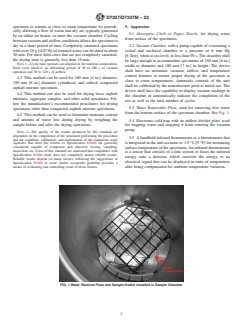
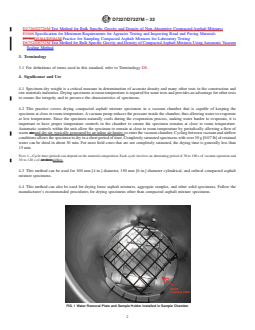
FIG. 1 Water Removal Plate and Sample Holder Installed in Sample Chamber
D7227/D7227M − 22
4.5 This method can be used to determine moisture content and amount of water loss during drying by weighing the sample before
and after the drying operations.
NOTE 2—The quality of the results produced by this standard are dependent on the competence of the personnel performing the procedure and the
capability, calibration, and maintenance of the equipment used. Agencies that meet the criteria of Specification D3666 are generally considered capable
of competent and objective testing, sampling, inspection, etc. Users of this standard are cautioned that compliance with Specification D3666 alone does
not completely ensure reliable results. Reliable results depend on many factors; following
...