

ASTM B94-18
(Specification)Standard Specification for Magnesium-Alloy Die Castings
General Information
- Abstract
ABSTRACT
This specification covers magnesium-alloy die castings. The magnesium alloys used for the manufacture of die castings shall conform to the chemical composition requirements of this specification. The producer or supplier is responsible for the performance of all inspection and test requirements when specified in the contract or purchase order. Samples for chemical analysis shall be taken from the material by drilling, sawing, milling, turning, or clipping a representative piece or pieces to obtain a weight of prepared sample the soundness of die castings which shall conform to standards or requirements agreed upon between the producer or supplier and the purchaser. Die castings shall have uniform quality that is free from injurious discontinuities that will adversely affect their serviceability. All castings shall be properly marked for identification with the part number, name or brand of the producer, as agreed upon the contract.
SCOPE
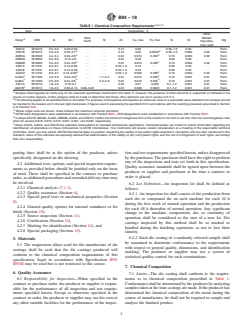
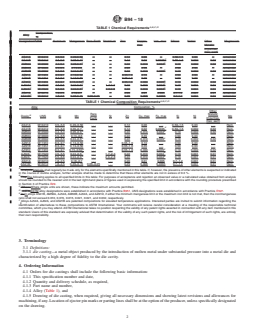
1.1 This specification covers magnesium-alloy die castings. Current alloy compositions are specified under the designations shown in Table 1.2 (A) Analysis shall regularly be made only for the elements specifically mentioned in this table. If, however, the presence of other elements is suspected or indicated in the course of routine analysis, further analysis shall be made to determine that these other elements are not in excess of 0.3 %.(B) The following applies to all specified limits in this table: For purposes of acceptance and rejection an observed value or a calculated value obtained from analysis should be rounded to the nearest unit in the last right-hand place of figures used in expressing the specified limit in accordance with the rounding procedure prescribed in Section 3 of Practice E29.(C) Where single units are shown, these indicate the maximum amounts permitted.(D) ASTM alloy designations were established in accordance with Practice B951, UNS designations were established in accordance with Practice E527.(E) In alloys AS41B, AM50A, AJ52A, AM60B, AJ62A, and AZ91D, if either the minimum manganese limit or the maximum iron limit is not met, then the iron/manganese ratio shall not exceed 0.010, 0.015, 0.015, 0.021, 0.021, and 0.032, respectively.(F) Alloys AJ52A, AJ62A, and AS21B are patented compositions for elevated temperature applications. Interested parties are invited to submit information regarding the identification of alternatives to these compositions to ASTM International. Your comments will receive careful consideration at a meeting of the responsible technical committee, which you may attend. ASTM International takes no position respecting the validity of any patent rights asserted in connection with any item mentioned in this standard. Users of this standard are expressly advised that determination of the validity of any such patent rights, and the risk of infringement of such rights, are entirely their own responsibility.
1.2 The values stated in inch-pound units are standard. The SI values in parentheses are provided for information only.
1.3 This standard does not purport to address all of the safety concerns, if any, associated with its use. It is the responsibility of the user of this standard to establish appropriate safety, health, and environmental practices and determine the applicability of regulatory limitations prior to use.
1.4 This international standard was developed in accordance with internationally recognized principles on standardization established in the Decision on Principles for the Development of International Standards, Guides and Recommendations issued by the World Trade Organization Technical Barriers to Trade (TBT) Committee.
- Status
- Published
- Publication Date
- 30-Apr-2018
- Technical Committee
- B07 - Light Metals and Alloys
- Drafting Committee
- B07.04 - Magnesium Alloy Cast and Wrought Products
Overview
ASTM B94-18: Standard Specification for Magnesium-Alloy Die Castings outlines the technical and quality requirements for magnesium-alloy die castings used in a variety of industrial and commercial applications. Developed by ASTM International, this specification defines the acceptable chemical compositions, ordering information, sampling techniques, testing procedures, and marking practices for magnesium die castings. The standard ensures that castings deliver consistent quality, mechanical properties, and performance characteristics, helping manufacturers and purchasers achieve reliable results in product design and manufacturing.
Key Topics
- Chemical Composition: Magnesium alloys used for die castings must conform to specified limits for elements such as aluminum, manganese, zinc, copper, and iron. The presence of other elements must not exceed the defined maximum impurity thresholds.
- Quality Assurance: Producers are responsible for meeting all inspection and test requirements as outlined or as specified in procurement contracts. Quality assurance includes random sampling, dimensional checks, and additional testing if required.
- Ordering Requirements: Purchasers must provide details such as specification number, part name and number, alloy designation, and, when necessary, dimensional drawings and any special instructions for testing or packaging.
- Sampling and Testing: The standard specifies methods for obtaining representative samples for chemical analysis and outlines procedures for handling test specimens to ensure valid results.
- Dimensional and Mechanical Requirements: Permissible dimensional variations must be within specified tolerances. Mechanical property requirements, when specified, are validated through proof testing or agreed-upon methods.
- Product Marking and Packaging: Identifying markings and proper packaging methods are prescribed to guarantee traceability, safety, and compliance during storage and transit.
Applications
Magnesium-alloy die castings are valued for their light weight, good mechanical strength, and ease of fabrication, making ASTM B94-18 especially relevant in:
- Automotive Industry: Used in components such as housings, brackets, and transmission parts due to magnesium's strength-to-weight ratio.
- Aerospace: Important for lightweight structural components where both strength and weight are critical.
- Electronics and Consumer Goods: Ideal for housings and frames that benefit from a lightweight yet durable construction.
- Industrial Equipment: Employed in machinery parts where reduced weight improves energy efficiency and handling.
Following this standard helps ensure die cast parts meet performance expectations, safety requirements, and regulatory compliance, supporting efficiency and repeatability in large-scale manufacturing.
Related Standards
For comprehensive specification and testing of magnesium-alloy die castings, the following related ASTM and industry standards are referenced within ASTM B94-18:
- ASTM B93/B93M: Specification for Magnesium Alloys in Ingot Form for Sand Castings, Permanent Mold Castings, and Die Castings
- ASTM B557: Test Methods for Tension Testing Wrought and Cast Aluminum- and Magnesium-Alloy Products
- ASTM B660: Practices for Packaging/Packing of Aluminum and Magnesium Products
- ASTM B951: Practice for Codification of Unalloyed Magnesium and Magnesium-Alloys, Cast and Wrought
- ASTM B953/B954: Practices and Methods for Sampling and Analysis of Magnesium Alloys
- ASTM E23: Test Methods for Notched Bar Impact Testing of Metallic Materials
- ASTM E505: Reference Radiographs for Inspection of Aluminum and Magnesium Die Castings
- SAE AMS-STD-184: Identification Marking of Aluminum, Magnesium and Titanium
- FED-STD-123, MIL-STD-129: Marking for Shipment and Storage
By adhering to ASTM B94-18 and its related standards, manufacturers and purchasers can ensure magnesium die castings are produced, tested, and delivered to meet stringent quality, reliability, and traceability requirements. This contributes to safe, durable, and high-performance end products in critical applications.
Relations
- Effective Date
- 01-May-2018
- Effective Date
- 01-Apr-2024
- Effective Date
- 01-Nov-2023
- Effective Date
- 01-May-2018
- Effective Date
- 01-Apr-2016
- Effective Date
- 01-Jan-2016
- Effective Date
- 15-May-2014
- Effective Date
- 15-Nov-2012
- Effective Date
- 01-Jul-2012
- Effective Date
- 01-Jun-2012
- Effective Date
- 15-May-2012
- Effective Date
- 01-Nov-2011
- Effective Date
- 01-Aug-2011
- Effective Date
- 01-Jul-2010
- Effective Date
- 01-Feb-2010
Get Certified
Connect with accredited certification bodies for this standard

Element Materials Technology
Materials testing and product certification.

Inštitut za kovinske materiale in tehnologije
Institute of Metals and Technology. Materials testing, metallurgical analysis, NDT.
Sponsored listings
Frequently Asked Questions
ASTM B94-18 is a technical specification published by ASTM International. Its full title is "Standard Specification for Magnesium-Alloy Die Castings". This standard covers: ABSTRACT This specification covers magnesium-alloy die castings. The magnesium alloys used for the manufacture of die castings shall conform to the chemical composition requirements of this specification. The producer or supplier is responsible for the performance of all inspection and test requirements when specified in the contract or purchase order. Samples for chemical analysis shall be taken from the material by drilling, sawing, milling, turning, or clipping a representative piece or pieces to obtain a weight of prepared sample the soundness of die castings which shall conform to standards or requirements agreed upon between the producer or supplier and the purchaser. Die castings shall have uniform quality that is free from injurious discontinuities that will adversely affect their serviceability. All castings shall be properly marked for identification with the part number, name or brand of the producer, as agreed upon the contract. SCOPE 1.1 This specification covers magnesium-alloy die castings. Current alloy compositions are specified under the designations shown in Table 1.2 (A) Analysis shall regularly be made only for the elements specifically mentioned in this table. If, however, the presence of other elements is suspected or indicated in the course of routine analysis, further analysis shall be made to determine that these other elements are not in excess of 0.3 %.(B) The following applies to all specified limits in this table: For purposes of acceptance and rejection an observed value or a calculated value obtained from analysis should be rounded to the nearest unit in the last right-hand place of figures used in expressing the specified limit in accordance with the rounding procedure prescribed in Section 3 of Practice E29.(C) Where single units are shown, these indicate the maximum amounts permitted.(D) ASTM alloy designations were established in accordance with Practice B951, UNS designations were established in accordance with Practice E527.(E) In alloys AS41B, AM50A, AJ52A, AM60B, AJ62A, and AZ91D, if either the minimum manganese limit or the maximum iron limit is not met, then the iron/manganese ratio shall not exceed 0.010, 0.015, 0.015, 0.021, 0.021, and 0.032, respectively.(F) Alloys AJ52A, AJ62A, and AS21B are patented compositions for elevated temperature applications. Interested parties are invited to submit information regarding the identification of alternatives to these compositions to ASTM International. Your comments will receive careful consideration at a meeting of the responsible technical committee, which you may attend. ASTM International takes no position respecting the validity of any patent rights asserted in connection with any item mentioned in this standard. Users of this standard are expressly advised that determination of the validity of any such patent rights, and the risk of infringement of such rights, are entirely their own responsibility. 1.2 The values stated in inch-pound units are standard. The SI values in parentheses are provided for information only. 1.3 This standard does not purport to address all of the safety concerns, if any, associated with its use. It is the responsibility of the user of this standard to establish appropriate safety, health, and environmental practices and determine the applicability of regulatory limitations prior to use. 1.4 This international standard was developed in accordance with internationally recognized principles on standardization established in the Decision on Principles for the Development of International Standards, Guides and Recommendations issued by the World Trade Organization Technical Barriers to Trade (TBT) Committee.
ABSTRACT This specification covers magnesium-alloy die castings. The magnesium alloys used for the manufacture of die castings shall conform to the chemical composition requirements of this specification. The producer or supplier is responsible for the performance of all inspection and test requirements when specified in the contract or purchase order. Samples for chemical analysis shall be taken from the material by drilling, sawing, milling, turning, or clipping a representative piece or pieces to obtain a weight of prepared sample the soundness of die castings which shall conform to standards or requirements agreed upon between the producer or supplier and the purchaser. Die castings shall have uniform quality that is free from injurious discontinuities that will adversely affect their serviceability. All castings shall be properly marked for identification with the part number, name or brand of the producer, as agreed upon the contract. SCOPE 1.1 This specification covers magnesium-alloy die castings. Current alloy compositions are specified under the designations shown in Table 1.2 (A) Analysis shall regularly be made only for the elements specifically mentioned in this table. If, however, the presence of other elements is suspected or indicated in the course of routine analysis, further analysis shall be made to determine that these other elements are not in excess of 0.3 %.(B) The following applies to all specified limits in this table: For purposes of acceptance and rejection an observed value or a calculated value obtained from analysis should be rounded to the nearest unit in the last right-hand place of figures used in expressing the specified limit in accordance with the rounding procedure prescribed in Section 3 of Practice E29.(C) Where single units are shown, these indicate the maximum amounts permitted.(D) ASTM alloy designations were established in accordance with Practice B951, UNS designations were established in accordance with Practice E527.(E) In alloys AS41B, AM50A, AJ52A, AM60B, AJ62A, and AZ91D, if either the minimum manganese limit or the maximum iron limit is not met, then the iron/manganese ratio shall not exceed 0.010, 0.015, 0.015, 0.021, 0.021, and 0.032, respectively.(F) Alloys AJ52A, AJ62A, and AS21B are patented compositions for elevated temperature applications. Interested parties are invited to submit information regarding the identification of alternatives to these compositions to ASTM International. Your comments will receive careful consideration at a meeting of the responsible technical committee, which you may attend. ASTM International takes no position respecting the validity of any patent rights asserted in connection with any item mentioned in this standard. Users of this standard are expressly advised that determination of the validity of any such patent rights, and the risk of infringement of such rights, are entirely their own responsibility. 1.2 The values stated in inch-pound units are standard. The SI values in parentheses are provided for information only. 1.3 This standard does not purport to address all of the safety concerns, if any, associated with its use. It is the responsibility of the user of this standard to establish appropriate safety, health, and environmental practices and determine the applicability of regulatory limitations prior to use. 1.4 This international standard was developed in accordance with internationally recognized principles on standardization established in the Decision on Principles for the Development of International Standards, Guides and Recommendations issued by the World Trade Organization Technical Barriers to Trade (TBT) Committee.
ASTM B94-18 is classified under the following ICS (International Classification for Standards) categories: 77.120.20 - Magnesium and magnesium alloys. The ICS classification helps identify the subject area and facilitates finding related standards.
ASTM B94-18 has the following relationships with other standards: It is inter standard links to ASTM B94-13, ASTM E23-24, ASTM B660-23, ASTM B951-11(2018), ASTM E23-16a, ASTM E23-16, ASTM B557-14, ASTM E23-12c, ASTM E23-12b, ASTM E23-12a, ASTM E23-12, ASTM B951-11, ASTM E505-01(2011), ASTM B557-10, ASTM B951-10. Understanding these relationships helps ensure you are using the most current and applicable version of the standard.
ASTM B94-18 is available in PDF format for immediate download after purchase. The document can be added to your cart and obtained through the secure checkout process. Digital delivery ensures instant access to the complete standard document.
Standards Content (Sample)
This international standard was developed in accordance with internationally recognized principles on standardization established in the Decision on Principles for the
Development of International Standards, Guides and Recommendations issued by the World Trade Organization Technical Barriers to Trade (TBT) Committee.
Designation:B94 −18
Standard Specification for
Magnesium-Alloy Die Castings
This standard is issued under the fixed designation B94; the number immediately following the designation indicates the year of original
adoption or, in the case of revision, the year of last revision.Anumber in parentheses indicates the year of last reapproval.Asuperscript
epsilon (´) indicates an editorial change since the last revision or reapproval.
This standard has been approved for use by agencies of the U.S. Department of Defense.
1. Scope* B951 PracticeforCodificationofUnalloyedMagnesiumand
Magnesium-Alloys, Cast and Wrought
1.1 This specification covers magnesium-alloy die castings.
B953 Practice for Sampling Magnesium and Magnesium
Currentalloycompositionsarespecifiedunderthedesignations
2 Alloys for Spectrochemical Analysis
shown in Table 1.
B954 Test Method for Analysis of Magnesium and Magne-
1.2 The values stated in inch-pound units are standard. The
sium Alloys by Atomic Emission Spectrometry
SI values in parentheses are provided for information only.
E23 Test Methods for Notched Bar Impact Testing of Me-
1.3 This standard does not purport to address all of the tallic Materials
safety concerns, if any, associated with its use. It is the
E29 Practice for Using Significant Digits in Test Data to
responsibility of the user of this standard to establish appro- Determine Conformance with Specifications
priate safety, health, and environmental practices and deter-
E505 Reference Radiographs for Inspection of Aluminum
mine the applicability of regulatory limitations prior to use. and Magnesium Die Castings
1.4 This international standard was developed in accor-
E527 Practice for Numbering Metals and Alloys in the
dance with internationally recognized principles on standard- Unified Numbering System (UNS)
ization established in the Decision on Principles for the
2.3 American Die Casting Institute:
Development of International Standards, Guides and Recom- “E” Series Product Standards
mendations issued by the World Trade Organization Technical
2.4 Federal Standards:
Barriers to Trade (TBT) Committee. FED-STD-123 Marking for Shipment (Civil Agencies)
SAE AMS-STD-184 Identification Marking of Aluminum,
2. Referenced Documents
Magnesium and Titanium
2.5 Military Standard:
2.1 The following documents of the issue in effect on date
MIL-STD-129 Marking for Shipment and Storage
of order acceptance form a part of this specification to the
extent referenced herein:
3. Terminology
2.2 ASTM Standards:
3.1 Definitions:
B93/B93M Specification for Magnesium Alloys in Ingot
3.1.1 die casting—a metal object produced by the introduc-
Form for Sand Castings, Permanent Mold Castings, and
tion of molten metal under substantial pressure into a metal die
Die Castings
and characterized by a high degree of fidelity to the die cavity.
B557 Test Methods for Tension Testing Wrought and Cast
Aluminum- and Magnesium-Alloy Products
4. Ordering Information
B660 Practices for Packaging/Packing of Aluminum and
4.1 Orders for die castings shall include the following basic
Magnesium Products
information:
4.1.1 This specification number and date,
4.1.2 Quantity and delivery schedule, as required,
This specification is under the jurisdiction of ASTM Committee B07 on Light
4.1.3 Part name and number,
Metals and Alloys and is the direct responsibility of Subcommittee B07.04 on
Magnesium Alloy Cast and Wrought Products.
4.1.4 Alloy (Table 1), and
Current edition approved May 1, 2018. Published May 2018. Originally
4.1.5 Drawing of die casting, when required, giving all
approved in 1934. Last previous edition approved in 2013 as B94 – 13. DOI:
necessary dimensions and showing latest revisions and allow-
10.1520/B0094-18.
SAE specifications No. 501 and 501A conform to the requirements for Alloy ances for machining, if any. Location of ejector pin marks or
AZ91A and AZ91B respectively.
For referenced ASTM standards, visit the ASTM website, www.astm.org, or
contact ASTM Customer Service at service@astm.org. For Annual Book of ASTM Available from Standardization Documents Order Desk, DODSSP, Bldg. 4,
Standards volume information, refer to the standard’s Document Summary page on Section D, 700 Robbins Ave., Philadelphia, PA 19111-5098, http://
the ASTM website. www.dodssp.daps.mil.
*A Summary of Changes section appears at the end of this standard
Copyright © ASTM International, 100 Barr Harbor Drive, PO Box C700, West Conshohocken, PA 19428-2959. United States
B94−18
A,B,C,D
TABLE 1 Chemical Composition Requirements
Alloy Composition, %
Other
Rare Metallic
B
Desig. UNS Al Mn Sr Zn Cu, max Fe, max Si Ni Mg
Earth Impurities,
max, each
AS41A M10410 3.5–5.0 0.20–0.50 . . . . . . 0.12 0.06 . . . 0.50–1.5 0.03 . . . Rem.
E E
AS41B M10412 3.5–5.0 0.35–0.7 . . . . . . 0.12 0.02 0.0035 0.50–1.5 0.002 0.02 Rem.
E E
AM50A M10500 4.4–5.4 0.26–0.6 . . . . . . 0.22 0.010 0.004 0.10 0.002 0.02 Rem.
AM60A M10600 5.5–6.5 0.13–0.6 . . . . . . 0.22 0.35 . . . 0.50 0.03 . . . Rem.
E E
AM60B M10602 5.5–6.5 0.24–0.6 . . . . . . 0.22 0.010 0.005 0.10 0.002 0.02 Rem.
AZ91A M11910 8.3–9.7 0.13–0.50 . . . . . . 0.35–1.0 0.10 . . . 0.50 0.03 . . . Rem.
AZ91B M11912 8.3–9.7 0.13–0.50 . . . . . . 0.35–1.0 0.35 . . . 0.50 0.03 . . . Rem.
E E
AZ91D M11916 8.3–9.7 0.15–0.50 . . . . . . 0.35–1.0 0.030 0.005 0.10 0.002 0.02 Rem.
F E E
AJ52A M17520 4.5–5.5 0.24–0.6 . . . 1.7–2.3 0.22 0.010 0.004 0.10 0.001 0.01 Rem.
F E E
AJ62A M17620 5.5–6.6 0.24–0.6 . . . 2.0–2.8 0.22 0.010 0.004 0.10 0.001 0.01 Rem.
AS21A M10210 1.8–2.5 0.18–0.7 . . . . . . 0.20 0.01 0.005 0.7–1.2 0.001 0.01 Rem.
F
AS21B M10212 1.8–2.5 0.05–0.15 0.06–0.25 . . . 0.25 0.008 0.0035 0.7–1.2 0.001 0.01 Rem.
A
Analysis shall regularly be made only for the elements specifically mentioned in this table. If, however, the presence of other elements is suspected or indicated in the
course of routine analysis, further analysis shall be made to determine that these other elements are not in excess of 0.3 %.
B
The following applies to all specified limits in this table: For purposes of acceptance and rejection an observed value or a calculated value obtained from analysis should
be rounded to the nearest unit in the last right-hand place of figures used in expressing the specified limit in accordance with the rounding procedure prescribed in Section
3 of Practice E29.
C
Where single units are shown, these indicate the maximum amounts permitted.
D
ASTM alloy designations were established in accordance with Practice B951, UNS designations were established in accordance with Practice E527.
E
In alloys AS41B, AM50A, AJ52A, AM60B, AJ62A, and AZ91D, if either the minimum manganese limit or the maximum iron limit is not met, then the iron/manganese ratio
shall not exceed 0.010, 0.015, 0.015, 0.021, 0.021, and 0.032, respectively.
F
Alloys AJ52A, AJ62A, and AS21B are patented compositions for elevated temperature applications. Interested parties are invited to submit information regarding the
identification of alternatives to these compositions to ASTM International. Your comments will receive careful consideration at a meeting of the responsible technical
committee, which you may attend. ASTM International takes no position respecting the validity of any patent rights asserted in connection with any item mentioned in this
standard. Users of this standard are expressly advised that determination of the validity of any such patent rights, and the risk of infringement of such rights, are entirely
their own responsibility.
parting lines shall be at the option of the producer, unless tion and test requirements specified herein, unless disapproved
specifically designated on the drawing. by the purchaser. The purchaser shall have the right to perform
any of the inspections and tests set forth in this specification.
4.2 Additional tests, options, and special inspection require-
Quality assurance standards shall be agreed upon between the
ments as provided below should be justified only on the basis
producer or supplier and purchaser at the time a contract or
of need. These shall be specified in the contract or purchase
order is placed.
order,asadditionalproceduresandextendeddeliverytimemay
be involved.
6.2 Lot Definition—An inspection lot shall be defined as
4.2.1 Chemical analysis (7.1.1),
follows:
4.2.2 Quality assurance (Section 6),
6.2.1 An inspection lot shall consist of the production from
4.2.3 Special proof tests or mechanical properties (Section
each die or compound die on each machine for each 24 h
8),
during the first week of normal operation and the production
4.2.4 General quality options for internal soundness or for
for each 48 h thereafter of normal operation. Any significant
finish (Section 10),
change in the machine, composition, die, or continuity of
4.2.5 Source inspection (Section 11),
operation shall be considered as the start of a new lot. Die
4.2.6 Certification (Section 12),
castings inspected by this method shall be so marked or
4.2.7 Marking for identification (Section 14), and
handled during the finishing operations as not to lose their
4.2.8 Special packaging (Section 15).
identity.
6.2.2 Each die casting of a randomly selected sample shall
5. Materials
be examined to determine conformance to the requirements
5.1 The magnesium alloys used for the manufacture of die
with respect to general quality, dimensions, and identification
castings shall be such that the die castings produced will
marking. The producer or supplier may use a system of
conform to the chemical composition requirements of this
statistical quality control for such examinations.
specification. Ingot in accordance with Specification B93/
B93M may be used but is not restricted to this source.
7. Chemical Composition
6. Quality Assurance
7.1 Limits—The die casting shall conform to the require-
6.1 Responsibility for Inspection—When specified in the ments as to chemical composition prescribed in Table 1.
contract or purchase order, the producer or supplier is respon- Conformanceshallbedeterminedbytheproducerbyanalyzing
sible for the performance of all inspection and test require- samplestakenatthetimecastingsaremade.Iftheproducerhas
ments specified herein. Except as otherwise specified in the determined the chemical composition of the metal during the
contract or order, the producer or supplier may use his own or course of manufacture, he shall not be required to sample and
any other suitable facilities for the performance of the inspec- analyze the finished product.
B94−18
7.1.1 When a detailed chemical analysis is required with a 10. General Quality
shipment,itshallbecalledforinthecontractorpurchaseorder.
10.1 Internal Soundness—When specified, the soundness of
7.1.2 If the producer’s or supplier’s method of composition
die castings shall conform to standards or requirements agreed
control is acceptable, sampling for chemical analysis may be
upon between the producer or supplier and the purchaser. The
waived at the discretion of the purchaser.
number and extent of imperfections shall not exceed those
specified by the purchaser. The standards or requirements may
7.2 Number of Samples—When required, samples for deter-
consist of radiographs in accordance with Reference Radio-
mination of chemical composition shall be taken to represent
graphs E505, photographs, or sectioned die castings.
the following:
7.2.1 A sample shall be taken from each of two representa-
10.2 Imperfections inherent in die castings shall not be
tive castings selected from each lot defined in Section 6.2.1.
cause for rejection provided it is demonstrated that the die
castings are in accordance with the requirements and standards
7.3 Methods of Sampling—Samples from die castings for
agreed upon.
determination of chemical composition shall be taken in
accordance with one of the following methods: 10.3 Workmanship—Die castings shall be of uniform
quality, free from injurious discontinuities that will adversely
7.3.1 Samples for chemical analysis shall be taken from the
affect their serviceability.
material by drilling, sawing, milling, turning, or clipping a
representative piece or pieces to obtain a weight of prepared
10.4 Finish—When specified in the contract or purchase
sample not less than 75 g. Sampling shall be in accordance
order the as-cast surface finish required shall conform to
with Practice B953.
standards agreed upon between the purchaser and the producer
7.3.2 By agreement, an appropriate spectrographic sample
or supplier, or as prescribed in ADCI Product Standard E18
may be prepared at time of manufacture.
“E” Series Product Standards.
7.3.3 The method of sampling cast products for spectro-
10.5 Pressure Tightness—When specified in the contract or
chemical and other methods of analysis shall be suitable for the
purchase order the pressure tightness of die castings shall
form of material being analyzed and the type of analytical
conform to standards agreed upon between the purchaser and
method used.
the producer or supplier, or as prescribed in ADCI Product
Standard E17 “E” Series Product Standards.
7.4 Method of Analysis—The determination of chemical
composition shall be made in accordance with suitable
chemical, spectrochemical (Test Method B954), or other meth- 11. Source Inspection
ods. In case of disput
...
This document is not an ASTM standard and is intended only to provide the user of an ASTM standard an indication of what changes have been made to the previous version. Because
it may not be technically possible to adequately depict all changes accurately, ASTM recommends that users consult prior editions as appropriate. In all cases only the current version
of the standard as published by ASTM is to be considered the official document.
Designation: B94 − 13 B94 − 18
Standard Specification for
Magnesium-Alloy Die Castings
This standard is issued under the fixed designation B94; the number immediately following the designation indicates the year of original
adoption or, in the case of revision, the year of last revision. A number in parentheses indicates the year of last reapproval. A superscript
epsilon (´) indicates an editorial change since the last revision or reapproval.
This standard has been approved for use by agencies of the U.S. Department of Defense.
1. Scope*
1.1 This specification covers magnesium-alloy die castings. Current alloy compositions are specified under the designations
shown in Table 1.
1.2 The values stated in inch-pound units are standard. The SI values in parentheses are provided for information only.
1.3 This standard does not purport to address all of the safety concerns, if any, associated with its use. It is the responsibility
of the user of this standard to establish appropriate safety safety, health, and healthenvironmental practices and determine the
applicability of regulatory limitations prior to use.
1.4 This international standard was developed in accordance with internationally recognized principles on standardization
established in the Decision on Principles for the Development of International Standards, Guides and Recommendations issued
by the World Trade Organization Technical Barriers to Trade (TBT) Committee.
2. Referenced Documents
2.1 The following documents of the issue in effect on date of order acceptance form a part of this specification to the extent
referenced herein:
2.2 ASTM Standards:
B93/B93M Specification for Magnesium Alloys in Ingot Form for Sand Castings, Permanent Mold Castings, and Die Castings
B557 Test Methods for Tension Testing Wrought and Cast Aluminum- and Magnesium-Alloy Products
B660 Practices for Packaging/Packing of Aluminum and Magnesium Products
B951 Practice for Codification of Unalloyed Magnesium and Magnesium-Alloys, Cast and Wrought
B953 Practice for Sampling Magnesium and Magnesium Alloys for Spectrochemical Analysis
B954 Test Method for Analysis of Magnesium and Magnesium Alloys by Atomic Emission Spectrometry
E23 Test Methods for Notched Bar Impact Testing of Metallic Materials
E29 Practice for Using Significant Digits in Test Data to Determine Conformance with Specifications
E88 Practice for Sampling Nonferrous Metals and Alloys in Cast Form for Determination of Chemical Composition
E505 Reference Radiographs for Inspection of Aluminum and Magnesium Die Castings
E527 Practice for Numbering Metals and Alloys in the Unified Numbering System (UNS)
2.3 American Die Casting Institute:
“E” Series Product Standards
2.4 Federal Standards:
FED-STD-123 Marking for Shipment (Civil Agencies)
SAE AMS-STD-184 Identification Marking of Aluminum, Magnesium and Titanium
2.5 Military Standard:
MIL-STD-129 Marking for Shipment and Storage
This specification is under the jurisdiction of ASTM Committee B07 on Light Metals and Alloys and is the direct responsibility of Subcommittee B07.04 on Magnesium
Alloy Cast and Wrought Products.
Current edition approved May 1, 2013May 1, 2018. Published June 2013May 2018. Originally approved in 1934. Last previous edition approved in 20072013 as
B94 – 07.B94 – 13. DOI: 10.1520/B0094-13.10.1520/B0094-18.
SAE specifications No. 501 and 501A conform to the requirements for Alloy AZ91A and AZ91B respectively.
For referenced ASTM standards, visit the ASTM website, www.astm.org, or contact ASTM Customer Service at service@astm.org. For Annual Book of ASTM Standards
volume information, refer to the standard’s Document Summary page on the ASTM website.
Available from Standardization Documents Order Desk, DODSSP, Bldg. 4, Section D, 700 Robbins Ave., Philadelphia, PA 19111-5098, http://www.dodssp.daps.mil.
*A Summary of Changes section appears at the end of this standard
Copyright © ASTM International, 100 Barr Harbor Drive, PO Box C700, West Conshohocken, PA 19428-2959. United States
B94 − 18
A,B,C,D
TABLE 1 Chemical Requirements
Composition,
Alloy
%
B
Designation UNS Aluminum Manganese Rare Earth Strontium Zinc Copper, Iron, max Silicon Nickel Other Magnesium
max Metallic
Impurities,
max, each
AS41A M10410 3.5-5.0 0.20-0.50 . . 0.12 0.06 . 0.50-1.5 0.03 . remainder
E E
AS41B M10412 3.5-5.0 0.35-0.7 . . 0.12 0.02 0.0035 0.50-1.5 0.002 0.02 remainder
E E
AM50A M10500 4.4-5.4 0.26-0.6 . . 0.22 0.010 0.004 0.10 0.002 0.02 remainder
AM60A M10600 5.5-6.5 0.13-0.6 . . 0.22 0.35 . 0.50 0.03 . remainder
E E
AM60B M10602 5.5-6.5 0.24-0.6 . . 0.22 0.010 0.005 0.10 0.002 0.02 remainder
AZ91A M11910 8.3-9.7 0.13-0.50 . . 0.35-1.0 0.10 . 0.50 0.03 . remainder
AZ91B M11912 8.3-9.7 0.13-0.50 . . 0.35-1.0 0.35 . 0.50 0.03 . remainder
E E
AZ91D M11916 8.3-9.7 0.15-0.50 . . 0.35-1.0 0.030 0.005 0.10 0.002 0.02 remainder
F E E
AJ52A M17520 4.5-5.5 0.24-0.6 . 1.7-2.3 0.22 0.010 0.004 0.10 0.001 0.01 remainder
F E E
AJ62A M17620 5.5-6.6 0.24-0.6 . 2.0-2.8 0.22 0.010 0.004 0.10 0.001 0.01 remainder
AS21A M10210 1.8-2.5 0.18-0.7 . . 0.20 0.01 0.005 0.7-1.2 0.001 0.01 remainder
F
AS21B M10212 1.8-2.5 0.05-0.15 0.06-0.25 . 0.25 0.008 0.0035 0.7-1.2 0.001 0.01 remainder
A,B,C,D
TABLE 1 Chemical Composition Requirements
Alloy Composition, %
Other
Rare Metallic
B
Desig. UNS Al Mn Sr Zn Cu, max Fe, max Si Ni Mg
Earth Impurities,
max, each
AS41A M10410 3.5–5.0 0.20–0.50 . . . . . . 0.12 0.06 . . . 0.50–1.5 0.03 . . . Rem.
E E
AS41B M10412 3.5–5.0 0.35–0.7 . . . . . . 0.12 0.02 0.0035 0.50–1.5 0.002 0.02 Rem.
E E
AM50A M10500 4.4–5.4 0.26–0.6 . . . . . . 0.22 0.010 0.004 0.10 0.002 0.02 Rem.
AM60A M10600 5.5–6.5 0.13–0.6 . . . . . . 0.22 0.35 . . . 0.50 0.03 . . . Rem.
E E
AM60B M10602 5.5–6.5 0.24–0.6 . . . . . . 0.22 0.010 0.005 0.10 0.002 0.02 Rem.
AZ91A M11910 8.3–9.7 0.13–0.50 . . . . . . 0.35–1.0 0.10 . . . 0.50 0.03 . . . Rem.
AZ91B M11912 8.3–9.7 0.13–0.50 . . . . . . 0.35–1.0 0.35 . . . 0.50 0.03 . . . Rem.
E E
AZ91D M11916 8.3–9.7 0.15–0.50 . . . . . . 0.35–1.0 0.030 0.005 0.10 0.002 0.02 Rem.
F E E
AJ52A M17520 4.5–5.5 0.24–0.6 . . . 1.7–2.3 0.22 0.010 0.004 0.10 0.001 0.01 Rem.
F E E
AJ62A M17620 5.5–6.6 0.24–0.6 . . . 2.0–2.8 0.22 0.010 0.004 0.10 0.001 0.01 Rem.
AS21A M10210 1.8–2.5 0.18–0.7 . . . . . . 0.20 0.01 0.005 0.7–1.2 0.001 0.01 Rem.
F
AS21B M10212 1.8–2.5 0.05–0.15 0.06–0.25 . . . 0.25 0.008 0.0035 0.7–1.2 0.001 0.01 Rem.
A
Analysis Analysis shall regularly be made only for the elements specifically mentioned in this table. If, however, the presence of other elements is suspected or indicated
in the course of routine analysis, further analysis shall be made to determine that these other elements are not in excess of 0.3 %.
B
The The following applies to all specified limits in this table: For purposes of acceptance and rejection an observed value or a calculated value obtained from analysis
should be rounded to the nearest unit in the last right-hand place of figures used in expressing the specified limit in accordance with the rounding procedure prescribed
in Section 3 of Practice E29.
C
Where Where single units are shown, these indicate the maximum amounts permitted.
D
ASTMASTM alloy designations were established in accordance with Practice B951, UNS designations were established in accordance with Practice E527.
E
In In alloys AS41B, AM50A, AJ52A, AM60B, AJ62A, and AZ91D, if either the minimum manganese limit or the maximum iron limit is not met, then the iron/manganese
ratio shall not exceed 0.010, 0.015, 0.015, 0.021, 0.021, and 0.032, respectively.
F
Alloys AJ52A, AJ62A, and AS21B are patented compositions for elevated temperature applications. Interested parties are invited to submit information regarding the
identification of alternatives to these compositions to ASTM International. Your comments will receive careful consideration at a meeting of the responsible technical
committee, which you may attend. ASTM International takes no position respecting the validity of any patent rights asserted in connection with any item mentioned in this
standard. Users of this standard are expressly advised that determination of the validity of any such patent rights, and the risk of infringement of such rights, are entirely
their own responsibility.
3. Terminology
3.1 Definitions:
3.1.1 die casting—a metal object produced by the introduction of molten metal under substantial pressure into a metal die and
characterized by a high degree of fidelity to the die cavity.
4. Ordering Information
4.1 Orders for die castings shall include the following basic information:
4.1.1 This specification number and date,
4.1.2 Quantity and delivery schedule, as required,
4.1.3 Part name and number,
4.1.4 Alloy (Table 1), and
4.1.5 Drawing of die casting, when required, giving all necessary dimensions and showing latest revisions and allowances for
machining, if any. Location of ejector pin marks or parting lines shall be at the option of the producer, unless specifically designated
on the drawing.
B94 − 18
4.2 Additional tests, options, and special inspection requirements as provided below should be justified only on the basis of
need. These shall be specified in the contract or purchase order, as additional procedures and extended delivery time may be
involved.
4.2.1 Chemical analysis (7.1.1),
4.2.2 Quality assurance (Section 6),
4.2.3 Special proof tests or mechanical properties (Section 8),
4.2.4 General quality options for internal soundness or for finish (Section 10),
4.2.5 Source inspection (Section 11),
4.2.6 Certification (Section 12),
4.2.7 Marking for identification (Section 14), and
4.2.8 Special packaging (Section 15).
5. Materials
5.1 The magnesium alloys used for the manufacture of die castings shall be such that the die castings produced will conform
to the chemical composition requirements of this specification. Ingot in accordance with Specification B93/B93M may be used but
is not restricted to this source.
6. Quality Assurance
6.1 Responsibility for Inspection—When specified in the contract or purchase order, the producer or supplier is responsible for
the performance of all inspection and test requirements specified herein. Except as otherwise specified in the contract or order, the
producer or supplier may use his own or any other suitable facilities for the performance of the inspection and test requirements
specified herein, unless disapproved by the purchaser. The purchaser shall have the right to perform any of the inspections and tests
set forth in this specification. Quality assurance standards shall be agreed upon between the producer or supplier and purchaser
at the time a contract or order is placed.
6.2 Lot Definition—An inspection lot shall be defined as follows:
6.2.1 An inspection lot shall consist of the production from each die or compound die on each machine for each 24 h during
the first week of normal operation and the production for each 48 h thereafter of normal operation. Any significant change in the
machine, composition, die, or continuity of operation shall be considered as the start of a new lot. Die castings inspected by this
method shall be so marked or handled during the finishing operations as not to lose their identity.
6.2.2 Each die casting of a randomly selected sample shall be examined to determine conformance to the requirements with
respect to general quality, dimensions, and identification marking. The producer or supplier may use a system of statistical quality
control for such examinations.
7. Chemical Composition
7.1 Limits—The die casting shall conform to the requirements as to chemical composition prescribed in Table 1. Conformance
shall be determined by the producer by analyzing samples taken at the time castings are made. If the producer has determined the
chemical composition of the metal during the course of manufacture, he shall not be required to sample and analyze the finished
product.
7.1.1 When a detailed chemical analysis is required with a shipment, it shall be called for in the contract or purchase order.
7.1.2 If the producer’s or supplier’s method of composition control is acceptable, sampling for chemical analysis may be waived
at the discretion of the purchaser.
7.2 Number of Samples—When required, samples for determination of chemical composition shall be taken to represent the
following:
7.2.1 A sample shall be taken from each of two representative castings selected from each lot defined in Section 6.2.1.
7.3 Methods of Sampling—Samples from die castings for determination of chemical composition shall be taken in accordance
with one of the following methods:
7.3.1 Samples for chemical analysis shall be taken from the material by drilling, sawing, milling, turning, or clipping a
representative piece or pieces to obtain a weight of prepared sample not less than 75 g. Sampling shall be in accordance with
Practice B953.
7.3.2 By agreement, an appropriate spectrographic sample may be prepared at time of manufacture.
7.3.3 The method of sampling cast products for spectrochemical and other methods of analysis shall be suitable for the form
of material being analyzed and the type of analytical method used.
7.4 Method of Analysis—The determination of chemical composition shall be made in accordance with suitable chemical,
spectrochemical (Test Method B954), or other methods. In case of dispute, the results secured by Test Methods B954 shall be the
basis of acceptance.
B94 − 18
8. Mechanical Properties and Tests
8.1 Unless specified in the contract or purchase order or
specifically guaranteed by the manufacturer, acceptance of die castings under these specifications shall not depend on
mechanical properties determined by tension or impact tests. Tables X1.1 and X1.2 show typical mechanical properties and
characteristics. When tension or impact tests are made, the tension test specimen shown in Fig. 13 of Test Methods B557, and the
impact test specimen shown in Fig. 6 of Test Methods E23 shall be used.
8.2 When specified in the contract or purchase order, die castings shall withstand pro
...