

ASTM D7417-17
(Test Method)Standard Test Method for Analysis of In-Service Lubricants Using Particular Four-Part Integrated Tester (Atomic Emission Spectroscopy, Infrared Spectroscopy, Viscosity, and Laser Particle Counter)
General Information
- Abstract
SIGNIFICANCE AND USE
5.1 The integrated tester is primarily used to perform on-site analysis of in-service lubricants used in the automotive, highway trucking, mining, construction, off-road “mining,” marine, industrial, power generation, agriculture, and manufacturing industries.
5.2 The immediate results of analysis of in-service lubricants are critical when performing proactive and preventative maintenance. On-site oil analysis, when used in conjunction with these programs, allows continuous system monitoring and contamination control potentially improving equipment “up-time” and equipment life.
SCOPE
1.1 This test method covers the quantitative analysis of in-service lubricants using an automatic testing device that integrates these varied technologies: atomic emission spectroscopy, infrared spectroscopy, viscosity, and particle counting.
1.2 This is suited for in-service lubricating oils having viscosities in the range between ISO 10 and ISO 320 and properties in the ranges given in Tables 1 and 2.
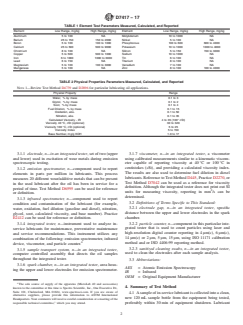
TABLE 1 Element Test Parameters Measured, Calculated, and Reported
Element
Low Range, mg/kg
High Range, mg/kg
Element
Low Range, mg/kg
High Range, mg/kg
Aluminum
5 to 100
NA
Molybdenum
10 to 1000
NA
Barium
25 to 150
150 to 2000
Nickel
5 to 100
NA
Boron
5 to 100
100 to 1000
Phosphorous
100 to 600
600 to 4000
Calcium
25 to 500
500 to 9000
Potassium
10 to 1000
1000 to 4000
Chromium
8 to 100
NA
Silicon
5 to 150
150 to 3000
Copper
5 to 500
500 to 1000
Sodium
10 to 1000
NA
Iron
6 to 1000
1000 to 3000
Tin
6 to 100
NA
Lead
6 to 150
NA
Titanium
8 to 100
NA
Magnesium
5 to 100
100 to 3000
Vanadium
7 to 100
NA
Manganese
5 to 100
NA
Zinc
8 to 100
100 to 4000
TABLE 2 Physical Properties Parameters Measured, Calculated, and Reported
Note 1: Review Test Method D4739 and D2896 for particular lubricating oil applications.
Physical Property
Range
Water, % by mass
0.1 to 3
Glycol, % by mass
0.1 to 2
Soot, % by mass
0.1 to 4
Fuel Dilution, % by mass
0.1 to 15
Oxidation, abs.
0.1 to 50
Nitration, abs.
0.1 to 35
Calculated Viscosity - IR
4 to 35 (100° cSt)
Viscosity 40 °C, cSt (optional)
30 to 320
Viscosity 100 °C, cSt (optional)
5 to 25
Viscosity Index
5 to 150
Base Number, mg/g KOH
1.0 to 17
1.3 This test method may be used to establish trends in wear and contamination of in-service lubricants and may not give equivalent numerical results to current ASTM test methods.
1.4 This test method is not intended for use with crude oil.
1.5 The values stated in SI units are to be regarded as standard. No other units of measurement are included in this standard.
1.6 This standard does not purport to address all of the safety concerns, if any, associated with its use. It is the responsibility of the user of this standard to establish appropriate safety, health, and environmental practices and determine the applicability of regulatory limitations prior to use. (Specific hazard statements are given in Section 9 and 11.3.)
1.7 This international standard was developed in accordance with internationally recognized principles on standardization established in the Decision on Principles for the Development of International Standards, Guides and Recommendations issued by the World Trade Organization Technical Barriers to Trade (TBT) Committee.
- Status
- Published
- Publication Date
- 30-Sep-2017
- Technical Committee
- D02 - Petroleum Products, Liquid Fuels, and Lubricants
Buy Documents
ASTM D7417-17 - Standard Test Method for Analysis of In-Service Lubricants Using Particular Four-Part Integrated Tester (Atomic Emission Spectroscopy, Infrared Spectroscopy, Viscosity, and Laser Particle Counter)
REDLINE ASTM D7417-17 - Standard Test Method for Analysis of In-Service Lubricants Using Particular Four-Part Integrated Tester (Atomic Emission Spectroscopy, Infrared Spectroscopy, Viscosity, and Laser Particle Counter)
Overview
ASTM D7417-17 is the international standard test method for the analysis of in-service lubricants utilizing a four-part integrated tester. This method combines atomic emission spectroscopy (AES), infrared (IR) spectroscopy, viscosity measurement, and laser particle counting to provide a comprehensive approach to lubricant condition monitoring. The standard is widely adopted across various sectors, including automotive, transportation, mining, construction, marine, industrial, power generation, agriculture, and manufacturing.
On-site lubricant analysis, as enabled by this integrated tester, is essential for proactive and preventative maintenance programs. Immediate results help identify wear, contamination, and lubricant degradation, supporting improved equipment reliability and extending operational life.
Key Topics
Comprehensive Analysis: The integrated tester automatically analyzes lubricating oils using multiple detection technologies:
- Atomic Emission Spectroscopy (AES): Measures wear and additive metals in used oils, including aluminum, iron, copper, chromium, and others.
- Infrared Spectroscopy (IR): Identifies contaminants and degradation products such as water, glycol, soot, fuel dilution, oxidation, and nitration.
- Viscosity Measurement: Evaluates lubricant viscosity at 40 °C and 100 °C and calculates the viscosity index.
- Laser Particle Counter: Detects and counts particulate contamination, an indicator of component wear or ingress of external materials.
Quantitative Measurement Ranges:
- Metal elements are quantified in mg/kg (ppm), e.g., iron (6-3000 mg/kg), calcium (25-9000 mg/kg), zinc (8-4000 mg/kg), etc.
- Physical properties such as water (0.1-3% by mass), glycol (0.1-2%), soot (0.1-4%), and fuel dilution (0.1-15%) are measured.
Applicability: Suitable for in-service lubricating oils with viscosities between ISO 10 and ISO 320, including hydraulic, power steering, and transmission fluids.
Result Interpretation: The software provides automatic data reporting and maintenance recommendations based on sample analysis.
Applications
- On-Site Oil Analysis: Enables rapid decision-making regarding machinery health by monitoring lubricant condition at the point of use.
- Predictive Maintenance: Early detection of contaminants and wear metals allows maintenance teams to address potential problems before costly failures occur.
- Continuous System Monitoring: Essential for high-value equipment in industries such as mining, marine, and power generation, allowing for real-time contamination control and optimization of oil change intervals.
- Enhanced Equipment Lifespan: Continuous monitoring and proactive response reduce unplanned downtime and lengthen component service intervals.
Industries that benefit from ASTM D7417-17 include:
- Automotive fleets and highway trucking operations
- Mining and construction equipment management
- Marine and shipping enterprises
- Industrial manufacturing plants
- Power generation facilities
- Agricultural machinery operations
Related Standards
For more comprehensive lubrication and oil analysis programs, the following referenced standards are commonly used alongside ASTM D7417-17:
- ASTM D445 – Kinematic Viscosity of Transparent and Opaque Liquids
- ASTM D2270 – Calculating Viscosity Index from Kinematic Viscosity
- ASTM D4057 – Manual Sampling of Petroleum and Petroleum Products
- ASTM D6595 – Determination of Wear Metals and Contaminants by Rotating Disc Electrode AES
- ASTM D7042 – Dynamic Viscosity and Density by Stabinger Viscometer
- ASTM D2896/D4739 – Methods for Base Number of Petroleum Products
- ASTM E2412 – Condition Monitoring by Trend Analysis Using FT-IR Spectrometry
- ISO 4406:99 – Hydraulic Fluid Power - Contamination Code
- ISO 11171 – Calibration of Automatic Particle Counters
ASTM D7417-17 is a cornerstone in modern machinery maintenance, ensuring optimum lubricant performance and helping industries maximize asset value and productivity through effective condition monitoring and contamination control.
Relations
- Effective Date
- 01-Oct-2017
- Effective Date
- 01-Apr-2024
- Effective Date
- 01-Nov-2023
- Effective Date
- 01-Nov-2023
- Effective Date
- 15-Dec-2016
- Effective Date
- 01-Jul-2016
- Effective Date
- 01-Jul-2014
- Effective Date
- 01-Jul-2014
- Effective Date
- 01-May-2014
- Effective Date
- 01-Nov-2012
- Effective Date
- 15-Apr-2012
- Effective Date
- 15-Apr-2012
- Effective Date
- 15-Apr-2012
- Effective Date
- 01-Oct-2011
- Refers
ASTM D4057-06(2011) - Standard Practice for Manual Sampling of Petroleum and Petroleum Products - Effective Date
- 01-Jun-2011
Buy Documents
ASTM D7417-17 - Standard Test Method for Analysis of In-Service Lubricants Using Particular Four-Part Integrated Tester (Atomic Emission Spectroscopy, Infrared Spectroscopy, Viscosity, and Laser Particle Counter)
REDLINE ASTM D7417-17 - Standard Test Method for Analysis of In-Service Lubricants Using Particular Four-Part Integrated Tester (Atomic Emission Spectroscopy, Infrared Spectroscopy, Viscosity, and Laser Particle Counter)
Get Certified
Connect with accredited certification bodies for this standard

Element Materials Technology
Materials testing and product certification.

ABS Group Brazil
ABS Group certification services in Brazil.

ABS Quality Evaluations Inc.
American Bureau of Shipping quality certification.
Sponsored listings
Frequently Asked Questions
ASTM D7417-17 is a standard published by ASTM International. Its full title is "Standard Test Method for Analysis of In-Service Lubricants Using Particular Four-Part Integrated Tester (Atomic Emission Spectroscopy, Infrared Spectroscopy, Viscosity, and Laser Particle Counter)". This standard covers: SIGNIFICANCE AND USE 5.1 The integrated tester is primarily used to perform on-site analysis of in-service lubricants used in the automotive, highway trucking, mining, construction, off-road “mining,” marine, industrial, power generation, agriculture, and manufacturing industries. 5.2 The immediate results of analysis of in-service lubricants are critical when performing proactive and preventative maintenance. On-site oil analysis, when used in conjunction with these programs, allows continuous system monitoring and contamination control potentially improving equipment “up-time” and equipment life. SCOPE 1.1 This test method covers the quantitative analysis of in-service lubricants using an automatic testing device that integrates these varied technologies: atomic emission spectroscopy, infrared spectroscopy, viscosity, and particle counting. 1.2 This is suited for in-service lubricating oils having viscosities in the range between ISO 10 and ISO 320 and properties in the ranges given in Tables 1 and 2. TABLE 1 Element Test Parameters Measured, Calculated, and Reported Element Low Range, mg/kg High Range, mg/kg Element Low Range, mg/kg High Range, mg/kg Aluminum 5 to 100 NA Molybdenum 10 to 1000 NA Barium 25 to 150 150 to 2000 Nickel 5 to 100 NA Boron 5 to 100 100 to 1000 Phosphorous 100 to 600 600 to 4000 Calcium 25 to 500 500 to 9000 Potassium 10 to 1000 1000 to 4000 Chromium 8 to 100 NA Silicon 5 to 150 150 to 3000 Copper 5 to 500 500 to 1000 Sodium 10 to 1000 NA Iron 6 to 1000 1000 to 3000 Tin 6 to 100 NA Lead 6 to 150 NA Titanium 8 to 100 NA Magnesium 5 to 100 100 to 3000 Vanadium 7 to 100 NA Manganese 5 to 100 NA Zinc 8 to 100 100 to 4000 TABLE 2 Physical Properties Parameters Measured, Calculated, and Reported Note 1: Review Test Method D4739 and D2896 for particular lubricating oil applications. Physical Property Range Water, % by mass 0.1 to 3 Glycol, % by mass 0.1 to 2 Soot, % by mass 0.1 to 4 Fuel Dilution, % by mass 0.1 to 15 Oxidation, abs. 0.1 to 50 Nitration, abs. 0.1 to 35 Calculated Viscosity - IR 4 to 35 (100° cSt) Viscosity 40 °C, cSt (optional) 30 to 320 Viscosity 100 °C, cSt (optional) 5 to 25 Viscosity Index 5 to 150 Base Number, mg/g KOH 1.0 to 17 1.3 This test method may be used to establish trends in wear and contamination of in-service lubricants and may not give equivalent numerical results to current ASTM test methods. 1.4 This test method is not intended for use with crude oil. 1.5 The values stated in SI units are to be regarded as standard. No other units of measurement are included in this standard. 1.6 This standard does not purport to address all of the safety concerns, if any, associated with its use. It is the responsibility of the user of this standard to establish appropriate safety, health, and environmental practices and determine the applicability of regulatory limitations prior to use. (Specific hazard statements are given in Section 9 and 11.3.) 1.7 This international standard was developed in accordance with internationally recognized principles on standardization established in the Decision on Principles for the Development of International Standards, Guides and Recommendations issued by the World Trade Organization Technical Barriers to Trade (TBT) Committee.
SIGNIFICANCE AND USE 5.1 The integrated tester is primarily used to perform on-site analysis of in-service lubricants used in the automotive, highway trucking, mining, construction, off-road “mining,” marine, industrial, power generation, agriculture, and manufacturing industries. 5.2 The immediate results of analysis of in-service lubricants are critical when performing proactive and preventative maintenance. On-site oil analysis, when used in conjunction with these programs, allows continuous system monitoring and contamination control potentially improving equipment “up-time” and equipment life. SCOPE 1.1 This test method covers the quantitative analysis of in-service lubricants using an automatic testing device that integrates these varied technologies: atomic emission spectroscopy, infrared spectroscopy, viscosity, and particle counting. 1.2 This is suited for in-service lubricating oils having viscosities in the range between ISO 10 and ISO 320 and properties in the ranges given in Tables 1 and 2. TABLE 1 Element Test Parameters Measured, Calculated, and Reported Element Low Range, mg/kg High Range, mg/kg Element Low Range, mg/kg High Range, mg/kg Aluminum 5 to 100 NA Molybdenum 10 to 1000 NA Barium 25 to 150 150 to 2000 Nickel 5 to 100 NA Boron 5 to 100 100 to 1000 Phosphorous 100 to 600 600 to 4000 Calcium 25 to 500 500 to 9000 Potassium 10 to 1000 1000 to 4000 Chromium 8 to 100 NA Silicon 5 to 150 150 to 3000 Copper 5 to 500 500 to 1000 Sodium 10 to 1000 NA Iron 6 to 1000 1000 to 3000 Tin 6 to 100 NA Lead 6 to 150 NA Titanium 8 to 100 NA Magnesium 5 to 100 100 to 3000 Vanadium 7 to 100 NA Manganese 5 to 100 NA Zinc 8 to 100 100 to 4000 TABLE 2 Physical Properties Parameters Measured, Calculated, and Reported Note 1: Review Test Method D4739 and D2896 for particular lubricating oil applications. Physical Property Range Water, % by mass 0.1 to 3 Glycol, % by mass 0.1 to 2 Soot, % by mass 0.1 to 4 Fuel Dilution, % by mass 0.1 to 15 Oxidation, abs. 0.1 to 50 Nitration, abs. 0.1 to 35 Calculated Viscosity - IR 4 to 35 (100° cSt) Viscosity 40 °C, cSt (optional) 30 to 320 Viscosity 100 °C, cSt (optional) 5 to 25 Viscosity Index 5 to 150 Base Number, mg/g KOH 1.0 to 17 1.3 This test method may be used to establish trends in wear and contamination of in-service lubricants and may not give equivalent numerical results to current ASTM test methods. 1.4 This test method is not intended for use with crude oil. 1.5 The values stated in SI units are to be regarded as standard. No other units of measurement are included in this standard. 1.6 This standard does not purport to address all of the safety concerns, if any, associated with its use. It is the responsibility of the user of this standard to establish appropriate safety, health, and environmental practices and determine the applicability of regulatory limitations prior to use. (Specific hazard statements are given in Section 9 and 11.3.) 1.7 This international standard was developed in accordance with internationally recognized principles on standardization established in the Decision on Principles for the Development of International Standards, Guides and Recommendations issued by the World Trade Organization Technical Barriers to Trade (TBT) Committee.
ASTM D7417-17 is classified under the following ICS (International Classification for Standards) categories: 75.100 - Lubricants, industrial oils and related products. The ICS classification helps identify the subject area and facilitates finding related standards.
ASTM D7417-17 has the following relationships with other standards: It is inter standard links to ASTM D7417-10, ASTM D445-24, ASTM E2412-23a, ASTM D445-23, ASTM D445-16, ASTM D6595-16, ASTM D445-14e1, ASTM D445-14, ASTM D7042-14, ASTM D7042-12a, ASTM D7042-12e1, ASTM D445-12, ASTM D7042-12, ASTM D7042-11a, ASTM D4057-06(2011). Understanding these relationships helps ensure you are using the most current and applicable version of the standard.
ASTM D7417-17 is available in PDF format for immediate download after purchase. The document can be added to your cart and obtained through the secure checkout process. Digital delivery ensures instant access to the complete standard document.
Standards Content (Sample)
This international standard was developed in accordance with internationally recognized principles on standardization established in the Decision on Principles for the
Development of International Standards, Guides and Recommendations issued by the World Trade Organization Technical Barriers to Trade (TBT) Committee.
Designation: D7417 − 17
Standard Test Method for
Analysis of In-Service Lubricants Using Particular Four-Part
Integrated Tester (Atomic Emission Spectroscopy, Infrared
Spectroscopy, Viscosity, and Laser Particle Counter)
This standard is issued under the fixed designation D7417; the number immediately following the designation indicates the year of
original adoption or, in the case of revision, the year of last revision. A number in parentheses indicates the year of last reapproval. A
superscript epsilon (´) indicates an editorial change since the last revision or reapproval.
1. Scope* 2. Referenced Documents
1.1 This test method covers the quantitative analysis of 2.1 ASTM Standards:
in-service lubricants using an automatic testing device that D445 Test Method for Kinematic Viscosity of Transparent
integrates these varied technologies: atomic emission and Opaque Liquids (and Calculation of Dynamic Viscos-
spectroscopy, infrared spectroscopy, viscosity, and particle ity)
counting. D2270 Practice for Calculating Viscosity Index from Kine-
matic Viscosity at 40 °C and 100 °C
1.2 This is suited for in-service lubricating oils having
D2896 Test Method for Base Number of Petroleum Products
viscosities in the range between ISO 10 and ISO 320 and
by Potentiometric Perchloric Acid Titration
properties in the ranges given in Tables 1 and 2.
D4057 Practice for Manual Sampling of Petroleum and
1.3 This test method may be used to establish trends in wear
Petroleum Products
and contamination of in-service lubricants and may not give
D4739 Test Method for Base Number Determination by
equivalent numerical results to current ASTM test methods.
Potentiometric Hydrochloric Acid Titration
D6595 Test Method for Determination of Wear Metals and
1.4 This test method is not intended for use with crude oil.
Contaminants in Used Lubricating Oils or Used Hydraulic
1.5 The values stated in SI units are to be regarded as
Fluids by Rotating Disc ElectrodeAtomic Emission Spec-
standard. No other units of measurement are included in this
trometry
standard.
D7042 Test Method for Dynamic Viscosity and Density of
1.6 This standard does not purport to address all of the
Liquids by Stabinger Viscometer (and the Calculation of
safety concerns, if any, associated with its use. It is the
Kinematic Viscosity)
responsibility of the user of this standard to establish appro-
E2412 Practice for Condition Monitoring of In-Service Lu-
priate safety, health, and environmental practices and deter-
bricants by Trend Analysis Using Fourier Transform
mine the applicability of regulatory limitations prior to use.
Infrared (FT-IR) Spectrometry
(Specific hazard statements are given in Section 9 and 11.3.) 3
2.2 ISO Standards:
1.7 This international standard was developed in accor-
ISO 4406:99 Hydraulic Fluid Power Solid Contaminations
dance with internationally recognized principles on standard-
Code
ization established in the Decision on Principles for the
ISO 11171 Automatic Particle Counter Calibration Proce-
Development of International Standards, Guides and Recom-
dures
mendations issued by the World Trade Organization Technical
Barriers to Trade (TBT) Committee. 3. Terminology
3.1 Definitions:
This test method is under the jurisdiction of ASTM Committee D02 on
Petroleum Products, Liquid Fuels, and Lubricants and is the direct responsibility of For referenced ASTM standards, visit the ASTM website, www.astm.org, or
Subcommittee D02.96.07 on Integrated Testers, Instrumentation Techniques for contact ASTM Customer Service at service@astm.org. For Annual Book of ASTM
In-Service Lubricants. Standards volume information, refer to the standard’s Document Summary page on
Current edition approved Oct. 1, 2017. Published October 2017. Originally the ASTM website.
approved in 2010. Last previous edition approved in 2010 as D7417 – 10. DOI: Available fromAmerican National Standards Institute (ANSI), 25 W. 43rd St.,
10.1520/D7417-17. 4th Floor, New York, NY 10036, http://www.ansi.org.
*A Summary of Changes section appears at the end of this standard
Copyright ©ASTM International, 100 Barr Harbor Drive, PO Box C700, West Conshohocken, PA19428-2959. United States
D7417 − 17
TABLE 1 Element Test Parameters Measured, Calculated, and Reported
Element Low Range, mg/kg High Range, mg/kg Element Low Range, mg/kg High Range, mg/kg
Aluminum 5 to 100 NA Molybdenum 10 to 1000 NA
Barium 25 to 150 150 to 2000 Nickel 5 to 100 NA
Boron 5 to 100 100 to 1000 Phosphorous 100 to 600 600 to 4000
Calcium 25 to 500 500 to 9000 Potassium 10 to 1000 1000 to 4000
Chromium 8 to 100 NA Silicon 5 to 150 150 to 3000
Copper 5 to 500 500 to 1000 Sodium 10 to 1000 NA
Iron 6 to 1000 1000 to 3000 Tin 6 to 100 NA
Lead 6 to 150 NA Titanium 8 to 100 NA
Magnesium 5 to 100 100 to 3000 Vanadium 7 to 100 NA
Manganese 5 to 100 NA Zinc 8 to 100 100 to 4000
TABLE 2 Physical Properties Parameters Measured, Calculated, and Reported
NOTE 1—Review Test Method D4739 and D2896 for particular lubricating oil applications.
Physical Property Range
Water, % by mass 0.1 to 3
Glycol, % by mass 0.1 to 2
Soot, % by mass 0.1 to 4
Fuel Dilution, % by mass 0.1 to 15
Oxidation, abs. 0.1 to 50
Nitration, abs. 0.1to35
Calculated Viscosity - IR 4 to 35 (100° cSt)
Viscosity 40°C, cSt (optional) 30 to 320
Viscosity 100°C, cSt (optional) 5 to 25
Viscosity Index 5to150
Base Number, mg/g KOH 1.0 to 17
3.1.1 electrode, n—in an integrated tester, set of two (upper 3.1.7 viscometer, n—in an integrated tester, a viscometer
and lower) used in excitation of wear metals during emission using calibrated measurements similar to a kinematic viscom-
spectroscopic testing. eter capable of reporting viscosity at 40 °C or 100 °C in
centistokes (cSt), and providing a calculated viscosity index.
3.1.2 emission spectrometer, n—component used to report
The results are also used to determine fuel dilution in diesel
elements in parts per million in lubricants. This process
lubricants. Reference toTest Method D445, Practice D2270,or
measures 20 different wear/additive metals that can be present
Test Method D7042 can be used as a reference for viscosity
in the used lubricant after the oil has been in service for a
definition. Although the integrated tester does not print out SI
period of time. Test Method D6595 can be used for reference
units for measuring viscosity, reporting in mm /s can be
or definition.
determined.
3.1.3 infrared spectrometer, n—component used to report
3.2 Definitions of Terms Specific to This Standard:
condition and contamination of the lubricant (for example,
3.2.1 electrode gap, n—in an integrated tester, specific
water, oxidation, fuel dilution (gasoline and diesel), nitration,
distance between the upper and lower electrodes in the spark
glycol, soot, calculated viscosity, and base number). Practice
chamber.
E2412 can be used for reference or definition.
3.2.2 particle counter, n—component in this particular inte-
3.1.4 integrated tester, n—instrument used to analyze in-
grated tester that is used to count particles using laser and
service lubricants for maintenance, preventative maintenance
high-resolution digital counter reporting in 4 µm(c), 6 µm(c),
and service recommendations. This instrument utilizes any
14 µm(c) or 2 µm, 5 µm, 15 µm, using ISO 11171 calibration
combination of the following: emission spectrometer, infrared
method and or ISO 4406:99 reporting method.
device, viscometer, and particle counter.
3.2.3 sanitized cleaning swabs, n—in an integrated tester,
3.1.5 sample transport system, n—in an integrated tester,
used to clean the electrodes after each sample analysis.
computer controlled assembly that directs the oil samples
throughout the integrated tester.
3.3 Abbreviations:
3.1.6 spark chamber, n—in an integrated tester, area hous-
AES = Atomic Emission Spectroscopy
ing the upper and lower electrodes for emission spectrometer.
IR = Infrared
OEM = Original Equipment Manufacturer
The sole source of supply of the apparatus (MicroLab 40 and accessories)
4. Summary of Test Method
known to the committee at this time is Spectro Scientific, Inc., One Executive Dr.,
Suite 101, Chelmsford, MA 01824, www.spectrosci.com. If you are aware of
4.1 Asampleofin-servicelubricantiscollectedintoaclean,
alternative suppliers, please provide this information to ASTM International
new 120 mL sample bottle from the equipment being tested,
Headquarters.Your comments will receive careful consideration at a meeting of the
responsible technical committee, which you may attend. preferably within 30 min of equipment shutdown. Lubricant
D7417 − 17
description and service information should be recorded for functionality for the particular integrated tester; an electronic
proper evaluation.The integrated tester is prepared for analysis user with help screens and a condensed reference manual for
according to the operations manual and on-screen prompts. quick reference, interface, hierarchical equipment database to
Thelubricantsampleisplacedintothesampletransportsystem store, analyze and manage data, embedded logic for data
and is analyzed using available integrated devices. The appli- interpretation; and automatic reporting tools. A complete op-
cation software guides the entire procedure, controls the erations manual and troubleshooting guide accompany the
transfer of the sample, stores data, and generates on screen and software application.
printed results with a printed generic recommendation of the
8. Reagents and Materials
lubricant’s physical condition.
8.1 The particular integrated tester uses the following sup-
5. Significance and Use
plies which are available from the manufacturer to ensure
5.1 Theintegratedtesterisprimarilyusedtoperformon-site
accurate operation of the integrated tester:
analysis of in-service lubricants used in the automotive, high-
8.1.1 Electrodes—A high-purity silver electrode set (upper
way trucking, mining, construction, off-road “mining,” marine,
and lower).
industrial, power generation, agriculture, and manufacturing
8.1.2 Cleaning Fluid—An environmentally safe mineral oil,
industries.
to clean the instruments internal flow system. The cleaning
5.2 The immediate results of analysis of in-service lubri- solution in most cases can also be used as the base oil for the
cants are critical when performing proactive and preventative calibration of the instrument. This product is a nonflammable
maintenance. On-site oil analysis, when used in conjunction product consisting of technical grade Semtol White Mineral
with these programs, allows continuous system monitoring and Oil.
contamination control potentially improving equipment “up- 8.1.3 Test Standard—This solution is intended for use as a
time” and equipment life. calibration standard for the integrated tester. It is a multi-
element solution of Primol N352 that was prepared with
6. Interferences
neutral oil as a functional antioxidant for specific concentra-
6.1 Sample Size—Using less than the required 130 mL of
tions. The certified concentrations are based upon the assayed
sample for the analysis may result in erroneous numbers.
concentrations of the raw materials and the gravimetric proce-
dures used to prepare the final standard. The uncertainty
6.2 High Concentration—Of a contaminant such as water
associatedwitheachcertifiedconcentrationis 62 mg⁄kg(parts
and or soot in the IR device might cause other parameters to be
per million). In order to verify these certified values, the final
blocked out in the IR band resulting in a default returned value
solution was analyzed by plasma emission spectroscopy (ICP).
of not applicable or “n/a” for these other parameters.
NOTE 1—The manufacturer guarantees the accuracy of this solution
7. Apparatus
until the expiration date shown, provided it is kept tightly capped and
stored in original bottle under normal laboratory conditions. Do not
7.1 Integrated Tester—The particular integrated tester will
refrigerate or store in direct sunlight. Minimize exposure to moisture or
incorporate two or more of the following sensors: an emission
high humidity. It is recommended that the solution be thoroughly mixed,
spectrometer, an infrared device, a viscometer, or a particle
by shaking the bottle, prior to use.
counter.
8.1.4 High Viscosity Fluid—For use with viscometer only.
7.2 Emission Spectrometer—Consists of an excitation
This fluid is blended with known viscosities and is periodically
source, spark stand, and optical system.
analyzedtoconfirmcalibrationortorecalibratetheviscometer.
7.3 Infrared Device—Consists of an infrared source, sample It consists of a highly refined mineral oil and a detergent/
dispersant engine oil additive package.
cell, and optical system.
8.1.5 Low Viscosity Fluid—For use with viscometer only.
7.4 Dual Temperature Viscometer—Consists of a tempera-
This fluid is blended with known viscosities and is periodically
ture controlled sample reservoir and electronic control system.
analyzedtoconfirmcalibrationortorecalibratetheviscometer.
7.5 Particle Counter—Consists of a sophisticated sensor
It consists of a highly refined mineral oil and a detergent/
cellusingredlaserlightextinctiontechnologyutilizingtheISO
dispersant engine oil additive package.
11171 calibration and ISO 4406:99 reporting.
8.1.6 Reference Oil—Used to verify accuracy of physical
property test results reported by infrared device. The reference
7.6 Sample Container—Sample container of no less than
118 mL that is free of contaminants shall be used for the
in-service oil samples and shall be discarded after use. The
The sole source of supply of the apparatus known to the committee at this time
maximumdimensionsof10.8 cmhigh,8.9 cmindiameter,and
is Sonneborn, Inc., 771 Old Saw Mill River Rd.,Tarrytown, NY10591-6716. If you
an opening of no less than 1.6 cm shall be used.
are aware of alternative suppliers, please provide this information to ASTM
International Headquarters. Your comments will receive careful consideration at a
7.7 Sonic Bath—Water-filled, vibrating tool used to be sure
meeting of the responsible technical committee, which you may attend.
that all of the contamination is in suspension in the lubricant
The sole source of supply of the apparatus known to the committee at this time
sample.This is mostly used when preparing a lubri
...
This document is not an ASTM standard and is intended only to provide the user of an ASTM standard an indication of what changes have been made to the previous version. Because
it may not be technically possible to adequately depict all changes accurately, ASTM recommends that users consult prior editions as appropriate. In all cases only the current version
of the standard as published by ASTM is to be considered the official document.
Designation: D7417 − 10 D7417 − 17
Standard Test Method for
Analysis of In-Service Lubricants Using Particular Four-Part
Integrated Tester (Atomic Emission Spectroscopy, Infrared
Spectroscopy, Viscosity, and Laser Particle Counter)
This standard is issued under the fixed designation D7417; the number immediately following the designation indicates the year of
original adoption or, in the case of revision, the year of last revision. A number in parentheses indicates the year of last reapproval. A
superscript epsilon (´) indicates an editorial change since the last revision or reapproval.
1. Scope Scope*
1.1 This test method covers the quantitative analysis of in-service lubricants using an automatic testing device that integrates
these varied technologies: atomic emission spectroscopy, infrared spectroscopy, viscosity, and particle counting.
1.2 This is suited for in-service lubricating oils having viscosities in the range between ISO 10 and ISO 320 and properties in
the ranges given in Tables 1 and 2.
1.3 This test method may be used to establish trends in wear and contamination of in-service lubricants and may not give
equivalent numerical results to current ASTM test methods.
1.4 This test method is not intended for use with crude oil.
1.5 The values stated in SI units are to be regarded as standard. No other units of measurement are included in this standard.
1.6 This standard does not purport to address all of the safety concerns, if any, associated with its use. It is the responsibility
of the user of this standard to establish appropriate safety safety, health, and healthenvironmental practices and determine the
applicability of regulatory limitations prior to use. (Specific hazard statements are given in Section 9 and 11.3.)
1.7 This international standard was developed in accordance with internationally recognized principles on standardization
established in the Decision on Principles for the Development of International Standards, Guides and Recommendations issued
by the World Trade Organization Technical Barriers to Trade (TBT) Committee.
2. Referenced Documents
2.1 ASTM Standards:
D445 Test Method for Kinematic Viscosity of Transparent and Opaque Liquids (and Calculation of Dynamic Viscosity)
D2270 Practice for Calculating Viscosity Index from Kinematic Viscosity at 40 °C and 100 °C
D2896 Test Method for Base Number of Petroleum Products by Potentiometric Perchloric Acid Titration
D4057 Practice for Manual Sampling of Petroleum and Petroleum Products
D4739 Test Method for Base Number Determination by Potentiometric Hydrochloric Acid Titration
D6595 Test Method for Determination of Wear Metals and Contaminants in Used Lubricating Oils or Used Hydraulic Fluids by
Rotating Disc Electrode Atomic Emission Spectrometry
D7042 Test Method for Dynamic Viscosity and Density of Liquids by Stabinger Viscometer (and the Calculation of Kinematic
Viscosity)
E2412 Practice for Condition Monitoring of In-Service Lubricants by Trend Analysis Using Fourier Transform Infrared (FT-IR)
Spectrometry
2.2 ISO Standards:
ISO 4406:99 Hydraulic Fluid Power Solid Contaminations Code
ISO 11171 Automatic Particle Counter Calibration Procedures
This test method is under the jurisdiction of ASTM Committee D02 on Petroleum Products, Liquid Fuels, and Lubricants and is the direct responsibility of Subcommittee
D02.96.07 on Integrated Testers, Instrumentation Techniques for In-Service Lubricants.
Current edition approved Oct. 1, 2010Oct. 1, 2017. Published November 2010October 2017. Originally approved in 2010. Last previous edition approved in 2010 as
D7417 – 10. DOI: 10.1520/D7417-10.10.1520/D7417-17.
For referenced ASTM standards, visit the ASTM website, www.astm.org, or contact ASTM Customer Service at service@astm.org. For Annual Book of ASTM Standards
volume information, refer to the standard’s Document Summary page on the ASTM website.
Available from American National Standards Institute (ANSI), 25 W. 43rd St., 4th Floor, New York, NY 10036, http://www.ansi.org.
*A Summary of Changes section appears at the end of this standard
Copyright © ASTM International, 100 Barr Harbor Drive, PO Box C700, West Conshohocken, PA 19428-2959. United States
D7417 − 17
TABLE 1 Element Test Parameters Measured, Calculated, and Reported
Element Low Range, mg/kg High Range, mg/kg Element Low Range, mg/kg High Range, mg/kg
Aluminum 5 to 100 NA Molybdenum 10 to 1000 NA
Barium 25 to 150 150 to 2000 Nickel 5 to 100 NA
Boron 5 to 100 100 to 1000 Phosphorous 100 to 600 600 to 4000
Calcium 25 to 500 500 to 9000 Potassium 10 to 1000 1000 to 4000
Chromium 8 to 100 NA Silicon 5 to 150 150 to 3000
Copper 5 to 500 500 to 1000 Sodium 10 to 1000 NA
Iron 6 to 1000 1000 to 3000 Tin 6 to 100 NA
Lead 6 to 150 NA Titanium 8 to 100 NA
Magnesium 5 to 100 100 to 3000 Vanadium 7 to 100 NA
Manganese 5 to 100 NA Zinc 8 to 100 100 to 4000
TABLE 2 Physical Properties Parameters Measured, Calculated, and Reported
NOTE 1—Review Test Method D4739 and D2896 for particular lubricating oil applications.
Physical Property Range
Water, wt% 0.1 to 3
Water, % by mass 0.1 to 3
Glycol, wt% 0.1 to 2
Glycol, % by mass 0.1 to 2
Soot, wt% 0.1 to 4
Soot, % by mass 0.1 to 4
Fuel Dilution, wt% 0.1 to 15
Fuel Dilution, % by mass 0.1 to 15
Oxidation, abs. 0.1 to 50
Nitration, abs. 0.1 to 35
Calculated Viscosity - IR 4 to 35 (100° cSt)
Viscosity 40°C, cSt (optional) 30 to 320
Viscosity 40 °C, cSt (optional) 30 to 320
Viscosity 100°C, cSt (optional) 5 to 25
Viscosity 100 °C, cSt (optional) 5 to 25
Viscosity Index 5 to 150
Base Number, mg KOH/g 1.0 to 17
Base Number, mg/g KOH 1.0 to 17
3. Terminology
3.1 Definitions:
3.1.1 electrode, n—in an integrated tester, set of two (upper and lower) used in excitation of wear metals during emission
spectroscopic testing.
3.1.2 emission spectrometer, n—component used to report elements in parts per million in lubricants. This process measures 20
different wear/additive metals that can be present in the used lubricant after the oil has been in service for a period of time. Test
Method D6595 can be used for reference or definition.
3.1.3 infrared spectrometer, n—component used to report condition and contamination of the lubricant (for example, water,
oxidation, fuel dilution (gasoline and diesel), nitration, glycol, soot, calculated viscosity, and base number). Practice E2412 can
be used for reference or definition.
3.1.4 integrated tester, n—instrument used to analyze in-service lubricants for maintenance, preventative maintenance and
service recommendations. This instrument utilizes any combination of the following: emission spectrometer, infrared device,
viscometer, and particle counter.
3.1.5 sample transport system, n—in an integrated tester, computer controlled assembly that directs the oil samples throughout
the integrated tester.
3.1.6 spark chamber, n—in an integrated tester, area housing the upper and lower electrodes for emission spectrometer.
3.1.7 viscometer, n—in an integrated tester, a viscometer using calibrated measurements similar to a kinematic viscometer
capable of reporting viscosity at 40°C40 °C or 100°C100 °C in centistokes (cSt), and providing a calculated viscosity index. The
results are also used to determine fuel dilution in diesel lubricants. Reference to Test Method D445, Practice D2270, or Test
Method D7042 can be used as a reference for viscosity definition. Although the integrated tester does not print out SI units for
measuring viscosity, reporting in mm /s can be determined.
The sole source of supply of the apparatus (OSA Lab Four Part Analyzer (MicroLab 40 and accessories) known to the committee at this time is On-Site Analysis, Inc.,
7108 Fairway Drive, Suite 130, Palm Beach Gardens, FL 33418 (manufacturing division in Marlborough, MA), www.on-siteanalysis.com. Spectro Scientific, Inc., One
Executive Dr., Suite 101, Chelmsford, MA 01824, www.spectrosci.com. If you are aware of alternative suppliers, please provide this information to ASTM International
Headquarters. Your comments will receive careful consideration at a meeting of the responsible technical committee, which you may attend.
D7417 − 17
3.2 Definitions of Terms Specific to This Standard:
3.2.1 electrode gap, n—in an integrated tester, specific distance between the upper and lower electrodes in the spark chamber.
3.2.2 particle counter, n—component in this particular integrated tester that is used to count particles using laser and
high-resolution digital counter reporting in 4 μm(c), 6 μm(c), 14 μm(c) or 2 μm, 5 μm, 15 μm, 4 μm(c), 6 μm(c), 14 μm(c) or 2 μm,
5 μm, 15 μm, using ISO 11171 calibration method and or ISO 4406:99 reporting method.
3.2.3 sanitized cleaning swabs, n—in an integrated tester, used to clean the electrodes after each sample analysis.
3.3 Abbreviations:
AES = Atomic Emission Spectroscopy
IR = Infrared
OEM = Original Equipment Manufacturer
4. Summary of Test Method
4.1 A sample of in-service lubricant is collected into a clean, new 120 mL 120 mL sample bottle from the equipment being
tested, preferably within 30 min 30 min of equipment shutdown. Lubricant description and service information should be recorded
for proper evaluation. The integrated tester is prepared for analysis according to the operations manual and on-screen prompts. The
lubricant sample is placed into the sample transport system and is analyzed using available integrated devices. The application
software guides the entire procedure, controls the transfer of the sample, stores data, and generates on screen and printed results
with a printed generic recommendation of the lubricant’s physical condition.
5. Significance and Use
5.1 The integrated tester is primarily used to perform on-site analysis of in-service lubricants used in the automotive, highway
trucking, mining, construction, off-road “mining,” marine, industrial, power generation, agriculture, and manufacturing industries.
5.2 The immediate results of analysis of in-service lubricants are critical when performing proactive and preventative
maintenance. On-site oil analysis, when used in conjunction with these programs, allows continuous system monitoring and
contamination control potentially improving equipment “up-time” and equipment life.
6. Interferences
6.1 Sample Size—Using less than the required 130 mL 130 mL of sample for the analysis may result in erroneous numbers.
6.2 High Concentration—Of a contaminant such as water and or soot in the IR device might cause other parameters to be
blocked out in the IR band resulting in a default returned value of not applicable or “n/a” for these other parameters.
7. Apparatus
7.1 Integrated Tester—The particular integrated tester will incorporate two or more of the following sensors: an emission
spectrometer, an infrared device, a viscometer, or a particle counter.
7.2 Emission Spectrometer—Consists of an excitation source, spark stand, and optical system.
7.3 Infrared Device—Consists of an infrared source, sample cell, and optical system.
7.4 Dual Temperature Viscometer—Consists of a temperature controlled sample reservoir and electronic control system.
7.5 Particle Counter—Consists of a sophisticated sensor cell using red laser light extinction technology utilizing the ISO 11171
calibration and ISO 4406:99 reporting.
7.6 Sample Container—Sample container of no less than 118 mL 118 mL that is free of contaminants shall be used for the
in-service oil samples and shall be discarded after use. The maximum dimensions of 10.8 cm high, 8.9 cm 10.8 cm high, 8.9 cm
in diameter, and an opening of no less than 1.6 cm 1.6 cm shall be used.
7.7 Sonic Bath—Water-filled, vibrating tool used to be sure that all of the contamination is in suspension in the lubricant sample.
This is mostly used when preparing a lubricant sample for a particle count analysis procedure.
7.8 Computer Application Software and Operations Manual—The computer application software provides the functionality for
the particular integrated tester; an electronic user with help screens and a condensed reference manual for quick reference,
interface, hierarchical equipment database to store, analyze and manage data, embedded logic for data interpretation; and automatic
reporting tools. A complete operations manual and troubleshooting guide accompany the software application.
8. Reagents and Materials
8.1 The particular integrated tester uses the following supplies which are available from the manufacturer to ensure accurate
operation of the integrated tester:
8.1.1 Electrodes—A high-purity silver electrode set (upper and lower).
D7417 − 17
8.1.2 Cleaning Fluid—An environmentally safe mineral oil, to clean the instruments internal flow system. The cleaning solution
in most cases can also be used as the base oil for the calibration of the instrument. This product is a nonflammable product
consisting of technical grade Semtol White Mineral Oil.
8.1.3 Test Standard—This solution is intended for use as a calibration standard for the integrated tester. It is a multi-element
solution of Primol N352 that was prepared with neutral oil as a functional antioxidant for specific concentrations. The certified
concentrations are based upon the assayed concentrations of the raw materials and the gravimetric procedures used to prepare the
final standard. The uncertainty associated with each certified concentration is 6262 mg mg/kg ⁄kg (parts per million). In order
to verify these certified values, the final solution was analyzed by plasma emission spectroscopy (ICP).
NOTE 1—The manufacturer guarantees the accuracy of this solution until the expiration date shown, provided it is kept tightly capped and stored in
original bottle under normal laboratory conditions. Do not refrigerate or store in direct sunlight. Minimize exposure to moisture or high humidity. It is
recommended that the solution be thoroughly mixed, by shaking the bottle, prior to use.
8.1.4 High Viscosity Fluid—For use with viscometer only. This fluid is blended with known viscosities and is periodically
analyzed to confirm calibration or to recalibrate the viscometer. It consists of a highly refined mineral oil and a detergent/dispersant
engine oil additive package.
8.1.5 Low Viscosity Fluid—For use with viscometer only. This fluid is blended with known viscosities and is periodically
analyzed to confirm calibration or to recalibrate the viscometer. It consists of a highly refined mineral oil and a detergent/dispersant
engine oil additive package.
8.1.6 Reference Oil—Used to verify accuracy of physical property test results reported by infrared device. The reference oil has
known physical properties which are tested against the infrared device using the software to determine standardization. It consists
of a highly refined mineral oil combined with zinc alkyl dithiophosphate.
8.1.7 Sanitary Cleaning Swabs—Used to clean the electrodes after each sample an
...