

ASTM F2739-19
(Guide)Standard Guide for Quantifying Cell Viability and Related Attributes within Biomaterial Scaffolds
General Information
- Abstract
SIGNIFICANCE AND USE
5.1 The number and distribution of viable and non-viable cells within, or on the surface of, a biomaterial scaffold is one of several important characteristics that may determine in vivo product performance of cell/biomaterial constructs (see 5.7); therefore, there is a need for standardized test methods to quantify cell viability.
5.2 There are a variety of static and dynamic methods to seed cells on scaffolds, each with different cell seeding efficiencies. In general, static methods such as direct pipetting of cells onto scaffold surfaces have been shown to have lower cell seeding efficiencies than dynamic methods that push cells into the scaffold interior. Dynamic methods include: injection of cells into the scaffold, cell seeding on biomaterials contained in spinner flasks or perfusion chambers, or seeding that is enhanced by the application of centrifugal forces. The methods described in this guide can assist in establishing cell seeding efficiencies as a function of seeding method and for standardizing viable cell numbers within a given methodology.
5.3 As described in Guide F2315, thick scaffolds or scaffolds highly loaded with cells lead to diffusion limitations during culture or implantation that can result in cell death in the center of the construct, leaving only an outer rim of viable cells. Spatial variations of viable cells such as this may be quantified using the tests within this guide. The effectiveness of the culturing method or bioreactor conditions on the viability of the cells throughout the scaffold can also be evaluated with the methods described in this guide.
5.4 These test methods can be used to quantify cells on non-porous or within porous hard or soft 3-D synthetic or natural-based biomaterials, such as ceramics, polymers, hydrogels, and decellularized extracellular matrices. The test methods also apply to cells seeded on porous coatings.
5.5 Test methods described in this guide may also be used to distinguish between prolifer...
SCOPE
1.1 This guide is a resource of cell viability test methods that can be used to assess the number and distribution of viable and non-viable cells within porous and non-porous, hard or soft biomaterial scaffolds, such as those used in tissue-engineered medical products (TEMPs).
1.2 In addition to providing a compendium of available techniques, this guide describes materials-specific interactions with the cell assays that can interfere with accurate cell viability analysis, and includes guidance on how to avoid or account for, or both, scaffold material/cell viability assay interactions.
1.3 These methods can be used for 3-D scaffolds containing cells that have been cultured in vitro or for scaffold/cell constructs that are retrieved after implantation in living organisms.
1.4 This guide does not propose acceptance criteria based on the application of cell viability test methods.
1.5 The values stated in SI units are to be regarded as standard. No other units of measurement are included in this standard.
1.6 This standard does not purport to address all of the safety concerns, if any, associated with its use. It is the responsibility of the user of this standard to establish appropriate safety, health, and environmental practices and determine the applicability of regulatory limitations prior to use.
1.7 This international standard was developed in accordance with internationally recognized principles on standardization established in the Decision on Principles for the Development of International Standards, Guides and Recommendations issued by the World Trade Organization Technical Barriers to Trade (TBT) Committee.
- Status
- Published
- Publication Date
- 31-Aug-2019
- Technical Committee
- F04 - Medical and Surgical Materials and Devices
- Drafting Committee
- F04.43 - Cells and Tissue Engineered Constructs for TEMPs
Buy Documents
ASTM F2739-19 - Standard Guide for Quantifying Cell Viability and Related Attributes within Biomaterial Scaffolds
REDLINE ASTM F2739-19 - Standard Guide for Quantifying Cell Viability and Related Attributes within Biomaterial Scaffolds
Overview
ASTM F2739-19, "Standard Guide for Quantifying Cell Viability and Related Attributes within Biomaterial Scaffolds," provides a comprehensive reference for standardized test methods to assess the number and distribution of viable and non-viable cells in biomaterial scaffolds. Accurate quantification of cell viability is critical in tissue engineering, regenerative medicine, and the development of tissue-engineered medical products (TEMPs). This guide covers both static and dynamic cell seeding methods, discusses assay limitations, and addresses how scaffold characteristics can impact cell viability analysis.
Key Topics
- Cell Viability in Biomaterial Scaffolds: Emphasizes the significance of determining viable versus non-viable cells, as this influences the in vivo performance of cell/biomaterial constructs.
- Seeding Methods and Efficiencies: Outlines static (e.g., direct pipetting) and dynamic (e.g., injection, spinner flasks, perfusion chambers, centrifugation) methods, highlighting the impact on cell distribution and seeding efficiency.
- Assay Interactions: Describes how scaffold material properties can interfere with cell viability assays and measures to mitigate or account for these effects.
- Methods for Quantifying Viability: Provides a compendium of destructive and non-destructive assays for cell counting and viability, including metabolic, dye exclusion, fluorescence-based, and imaging methods.
- Assay Limitations and Controls: Discusses diffusion limitations, scaffold opacity, assay interference, and the need for proper controls (such as blank scaffolds) to ensure accurate results.
- Applications in Different Scaffold Types: Methods are applicable to porous and non-porous, hard or soft, synthetic or natural biomaterials such as ceramics, polymers, hydrogels, and decellularized matrices.
Applications
- Tissue Engineering: Quantitative viability assessments are essential for designing 3-D tissue constructs and ensuring their suitability for implantation and further biological studies.
- Medical Device Development: Evaluation of cell viability on biomaterial surfaces and within scaffolds is fundamental for pre-clinical and quality assessment of medical devices.
- Process Optimization: Standardized viability testing enables comparison of different cell seeding and culture methods, supporting process improvements and reproducibility.
- Quality Control: Regular viability checks facilitate compliance with regulatory requirements for living cell-based products and scaffold materials.
- Research and Development: Offers valuable guidance for academic and industrial laboratories developing new biomaterial scaffolds and cell-based therapies.
Related Standards
For comprehensive evaluation, ASTM F2739-19 references several other important standards and guidelines:
- ASTM F748: Practice for Selecting Generic Biological Test Methods for Materials and Devices
- ASTM F2149: Test Method for Automated Analyses of Cells-The Electrical Sensing Zone Method
- ASTM F2315: Guide for Immobilization or Encapsulation of Living Cells or Tissue in Alginate Gels
- ASTM F2998: Guide for Using Fluorescence Microscopy to Quantify the Spread Area of Fixed Cells
- ICH Q2(R1): Validation of Analytical Procedures-Text and Methodology (International Conference on Harmonisation)
- FDA Guidance: Analytical Procedures and Methods Validation for Drugs and Biologics
Implementing ASTM F2739-19 ensures that laboratories and manufacturers use robust, reproducible methods for quantifying cell viability in biomaterial scaffolds, supporting scientific progress and regulatory compliance in regenerative medicine and medical device development.
Relations
- Effective Date
- 01-Sep-2019
- Effective Date
- 01-Apr-2016
- Effective Date
- 15-Jan-2016
- Effective Date
- 01-Mar-2011
- Effective Date
- 01-Jun-2010
- Effective Date
- 01-Jun-2010
- Effective Date
- 01-Oct-2007
- Effective Date
- 01-Dec-2006
- Effective Date
- 01-May-2004
- Effective Date
- 10-Sep-2003
- Effective Date
- 10-Oct-2001
- Effective Date
- 10-Aug-1998
- Effective Date
- 01-Sep-2019
- Effective Date
- 01-Sep-2019
- Effective Date
- 01-Sep-2019
Buy Documents
ASTM F2739-19 - Standard Guide for Quantifying Cell Viability and Related Attributes within Biomaterial Scaffolds
REDLINE ASTM F2739-19 - Standard Guide for Quantifying Cell Viability and Related Attributes within Biomaterial Scaffolds
Frequently Asked Questions
ASTM F2739-19 is a guide published by ASTM International. Its full title is "Standard Guide for Quantifying Cell Viability and Related Attributes within Biomaterial Scaffolds". This standard covers: SIGNIFICANCE AND USE 5.1 The number and distribution of viable and non-viable cells within, or on the surface of, a biomaterial scaffold is one of several important characteristics that may determine in vivo product performance of cell/biomaterial constructs (see 5.7); therefore, there is a need for standardized test methods to quantify cell viability. 5.2 There are a variety of static and dynamic methods to seed cells on scaffolds, each with different cell seeding efficiencies. In general, static methods such as direct pipetting of cells onto scaffold surfaces have been shown to have lower cell seeding efficiencies than dynamic methods that push cells into the scaffold interior. Dynamic methods include: injection of cells into the scaffold, cell seeding on biomaterials contained in spinner flasks or perfusion chambers, or seeding that is enhanced by the application of centrifugal forces. The methods described in this guide can assist in establishing cell seeding efficiencies as a function of seeding method and for standardizing viable cell numbers within a given methodology. 5.3 As described in Guide F2315, thick scaffolds or scaffolds highly loaded with cells lead to diffusion limitations during culture or implantation that can result in cell death in the center of the construct, leaving only an outer rim of viable cells. Spatial variations of viable cells such as this may be quantified using the tests within this guide. The effectiveness of the culturing method or bioreactor conditions on the viability of the cells throughout the scaffold can also be evaluated with the methods described in this guide. 5.4 These test methods can be used to quantify cells on non-porous or within porous hard or soft 3-D synthetic or natural-based biomaterials, such as ceramics, polymers, hydrogels, and decellularized extracellular matrices. The test methods also apply to cells seeded on porous coatings. 5.5 Test methods described in this guide may also be used to distinguish between prolifer... SCOPE 1.1 This guide is a resource of cell viability test methods that can be used to assess the number and distribution of viable and non-viable cells within porous and non-porous, hard or soft biomaterial scaffolds, such as those used in tissue-engineered medical products (TEMPs). 1.2 In addition to providing a compendium of available techniques, this guide describes materials-specific interactions with the cell assays that can interfere with accurate cell viability analysis, and includes guidance on how to avoid or account for, or both, scaffold material/cell viability assay interactions. 1.3 These methods can be used for 3-D scaffolds containing cells that have been cultured in vitro or for scaffold/cell constructs that are retrieved after implantation in living organisms. 1.4 This guide does not propose acceptance criteria based on the application of cell viability test methods. 1.5 The values stated in SI units are to be regarded as standard. No other units of measurement are included in this standard. 1.6 This standard does not purport to address all of the safety concerns, if any, associated with its use. It is the responsibility of the user of this standard to establish appropriate safety, health, and environmental practices and determine the applicability of regulatory limitations prior to use. 1.7 This international standard was developed in accordance with internationally recognized principles on standardization established in the Decision on Principles for the Development of International Standards, Guides and Recommendations issued by the World Trade Organization Technical Barriers to Trade (TBT) Committee.
SIGNIFICANCE AND USE 5.1 The number and distribution of viable and non-viable cells within, or on the surface of, a biomaterial scaffold is one of several important characteristics that may determine in vivo product performance of cell/biomaterial constructs (see 5.7); therefore, there is a need for standardized test methods to quantify cell viability. 5.2 There are a variety of static and dynamic methods to seed cells on scaffolds, each with different cell seeding efficiencies. In general, static methods such as direct pipetting of cells onto scaffold surfaces have been shown to have lower cell seeding efficiencies than dynamic methods that push cells into the scaffold interior. Dynamic methods include: injection of cells into the scaffold, cell seeding on biomaterials contained in spinner flasks or perfusion chambers, or seeding that is enhanced by the application of centrifugal forces. The methods described in this guide can assist in establishing cell seeding efficiencies as a function of seeding method and for standardizing viable cell numbers within a given methodology. 5.3 As described in Guide F2315, thick scaffolds or scaffolds highly loaded with cells lead to diffusion limitations during culture or implantation that can result in cell death in the center of the construct, leaving only an outer rim of viable cells. Spatial variations of viable cells such as this may be quantified using the tests within this guide. The effectiveness of the culturing method or bioreactor conditions on the viability of the cells throughout the scaffold can also be evaluated with the methods described in this guide. 5.4 These test methods can be used to quantify cells on non-porous or within porous hard or soft 3-D synthetic or natural-based biomaterials, such as ceramics, polymers, hydrogels, and decellularized extracellular matrices. The test methods also apply to cells seeded on porous coatings. 5.5 Test methods described in this guide may also be used to distinguish between prolifer... SCOPE 1.1 This guide is a resource of cell viability test methods that can be used to assess the number and distribution of viable and non-viable cells within porous and non-porous, hard or soft biomaterial scaffolds, such as those used in tissue-engineered medical products (TEMPs). 1.2 In addition to providing a compendium of available techniques, this guide describes materials-specific interactions with the cell assays that can interfere with accurate cell viability analysis, and includes guidance on how to avoid or account for, or both, scaffold material/cell viability assay interactions. 1.3 These methods can be used for 3-D scaffolds containing cells that have been cultured in vitro or for scaffold/cell constructs that are retrieved after implantation in living organisms. 1.4 This guide does not propose acceptance criteria based on the application of cell viability test methods. 1.5 The values stated in SI units are to be regarded as standard. No other units of measurement are included in this standard. 1.6 This standard does not purport to address all of the safety concerns, if any, associated with its use. It is the responsibility of the user of this standard to establish appropriate safety, health, and environmental practices and determine the applicability of regulatory limitations prior to use. 1.7 This international standard was developed in accordance with internationally recognized principles on standardization established in the Decision on Principles for the Development of International Standards, Guides and Recommendations issued by the World Trade Organization Technical Barriers to Trade (TBT) Committee.
ASTM F2739-19 is classified under the following ICS (International Classification for Standards) categories: 07.100.99 - Other standards related to microbiology. The ICS classification helps identify the subject area and facilitates finding related standards.
ASTM F2739-19 has the following relationships with other standards: It is inter standard links to ASTM F2739-16, ASTM F748-16, ASTM F2149-16, ASTM F2315-11, ASTM F2315-10, ASTM F748-06(2010), ASTM F2149-01(2007), ASTM F748-06, ASTM F748-04, ASTM F2315-03, ASTM F2149-01, ASTM F748-98, ASTM F3206-17, ASTM F561-19, ASTM F3225-17(2022). Understanding these relationships helps ensure you are using the most current and applicable version of the standard.
ASTM F2739-19 is available in PDF format for immediate download after purchase. The document can be added to your cart and obtained through the secure checkout process. Digital delivery ensures instant access to the complete standard document.
Standards Content (Sample)
This international standard was developed in accordance with internationally recognized principles on standardization established in the Decision on Principles for the
Development of International Standards, Guides and Recommendations issued by the World Trade Organization Technical Barriers to Trade (TBT) Committee.
Designation: F2739 − 19
Standard Guide for
Quantifying Cell Viability and Related Attributes within
Biomaterial Scaffolds
This standard is issued under the fixed designation F2739; the number immediately following the designation indicates the year of
original adoption or, in the case of revision, the year of last revision. A number in parentheses indicates the year of last reapproval. A
superscript epsilon (´) indicates an editorial change since the last revision or reapproval.
1. Scope 2. Referenced Documents
2.1 ASTM Standards:
1.1 This guide is a resource of cell viability test methods
F748 PracticeforSelectingGenericBiologicalTestMethods
that can be used to assess the number and distribution of viable
for Materials and Devices
andnon-viablecellswithinporousandnon-porous,hardorsoft
F2149 Test Method for Automated Analyses of Cells—the
biomaterial scaffolds, such as those used in tissue-engineered
Electrical Sensing Zone Method of Enumerating and
medical products (TEMPs).
Sizing Single Cell Suspensions
1.2 In addition to providing a compendium of available
F2315 Guide for Immobilization or Encapsulation of Living
techniques, this guide describes materials-specific interactions
Cells or Tissue in Alginate Gels
with the cell assays that can interfere with accurate cell
F2998 Guide for Using Fluorescence Microscopy to Quan-
viability analysis, and includes guidance on how to avoid or
tify the Spread Area of Fixed Cells
account for, or both, scaffold material/cell viability assay
2.2 ICH Document:
interactions.
ICH Q2(R1) Validation of Analytical Procedures: Text and
1.3 These methods can be used for 3-D scaffolds containing Methodology
cells that have been cultured in vitro or for scaffold/cell
2.3 FDA Document:
constructs that are retrieved after implantation in living organ-
U.S. Food and Drug Administration (FDA) Center for
isms.
Biologics Evaluation and Research (CBER), 2015 Ana-
lytical Procedures and Methods Validation for Drugs and
1.4 This guide does not propose acceptance criteria based
Biologics—Guidance for Industry
on the application of cell viability test methods.
1.5 The values stated in SI units are to be regarded as
3. Terminology
standard. No other units of measurement are included in this
3.1 Definitions:
standard.
3.1.1 non-viable cell, n—a cell not meeting one or more of
1.6 This standard does not purport to address all of the
the criteria for a viable cell.
safety concerns, if any, associated with its use. It is the
3.1.2 viable cell, n—a cell capable of metabolic activity that
responsibility of the user of this standard to establish appro-
is structurally intact with a functioning cell membrane.
priate safety, health, and environmental practices and deter-
mine the applicability of regulatory limitations prior to use.
3.1.2.1 Discussion—The use of the term viable herein only
applies at the instant at which the measurement is conducted
1.7 This international standard was developed in accor-
and is not meant to indicate anything about the future state of
dance with internationally recognized principles on standard-
the cell.
ization established in the Decision on Principles for the
Development of International Standards, Guides and Recom-
mendations issued by the World Trade Organization Technical
Barriers to Trade (TBT) Committee.
For referenced ASTM standards, visit the ASTM website, www.astm.org, or
contact ASTM Customer Service at service@astm.org. For Annual Book of ASTM
Standards volume information, refer to the standard’s Document Summary page on
the ASTM website.
1 3
This guide is under the jurisdiction of ASTM Committee F04 on Medical and Available from International Conference on Harmonisation of Technical
Surgical Materials and Devices and is the direct responsibility of Subcommittee Requirements for Registration of Pharmaceuticals for Human Use (ICH), ICH
F04.43 on Cells and Tissue Engineered Constructs for TEMPs. Secretariat, 9, chemin des Mines, P.O. Box 195, 1211 Geneva 20, Switzerland,
Current edition approved Sept. 1, 2019. Published November 2019. Originally http://www.ich.org.
approved in 2008. Last previous edition approved in 2016 as F2739 – 16. DOI: Available from U.S. Food and Drug Administration (FDA), 10903 New
10.1520/F2739-19. Hampshire Ave., Silver Spring, MD 20993, http://www.fda.gov.
Copyright © ASTM International, 100 Barr Harbor Drive, PO Box C700, West Conshohocken, PA 19428-2959. United States
F2739 − 19
4. Summary of Guide the culturing method or bioreactor conditions on the viability
of the cells throughout the scaffold can also be evaluated with
4.1 It is the intent of this guide to provide a compendium of
the methods described in this guide.
the commonly used methods for quantifying the number and
distribution of viable and non-viable cells within, or on, a 5.4 These test methods can be used to quantify cells on
biomaterial scaffold, because cell viability is an important non-porous or within porous hard or soft 3-D synthetic or
parameter of tissue-engineered products used to regenerate or natural-based biomaterials, such as ceramics, polymers,
repair lost or diseased tissue. The methods can be applied to hydrogels, and decellularized extracellular matrices. The test
cells residing within an intact 3-D scaffold or matrix (that is, methods also apply to cells seeded on porous coatings.
non-destructive methods) or to cells that have been removed
5.5 Testmethodsdescribedinthisguidemayalsobeusedto
from the scaffold or matrix (that is, destructive methods). It
distinguish between proliferating and non-proliferating viable
should be noted that not all cells require a scaffold, and some
cells. Proliferating cells proceed through the DNA synthesis
cell types, such as hematopoietic cells, cannot be cultured or
(S) phase and the mitosis (M) phase to produce two daughter
grown on an adherent surface.
cells. Non-proliferating viable cells are in some phase of the
4.2 Most of the methods originate from analysis of cell
cell cycle, but are not necessarily proceeding through the cell
numberon2-Dsurfaces,buthavebeenadaptedfortheanalysis cycle culminating in proliferation.
of cells within 3-D constructs that are typically used in
5.6 Viable cells may be under stress or undergoing apopto-
regenerative medicine approaches. The mechanisms and the
sis. Assays for evaluating cell stress or apoptosis are not
sensitivity of the assays are discussed. The limitations of the
addressed in this guide.
assays due to using standard curves generated from cells on
5.7 While cell viability is an important characteristic of a
2-D surfaces are described in this document. In addition, the
TEMP, the biological performance of a TEMPis dependent on
ways in which the biomaterial scaffold itself can affect the
additional parameters.Additional tests to evaluate and confirm
viability assays are described.
the cell identity, protein expression, genetic profile, lineage
4.3 This guide describes test methods which, when used
progression, extent of differentiation, activation status, and
together, may enable accurate measure of the number and
morphology are recommended.
distribution of viable and non-viable cells. Different viability
5.8 The main focus of this document is not scaffold toxicity
assays have different measurands, which means that the results
or the toxicity of the scaffold raw materials. This document is
from different assays may not correlate with one another. For
meant to address the situation where a scaffold that is thought
instance, cell membrane integrity tests and cell metabolic tests
to be cytocompatible is cultured with cells and the user desires
measure fundamentally different cell properties.Although both
to assess the viability of cells within the construct. Prior to
tests are related to cell viability, they may not correlate with
conducting the tests described herein, the raw materials used to
one another.
make the scaffold should be assessed as described in Practice
F748. This testing may include assessment of the release of
5. Significance and Use
toxic leachables from the raw materials.
5.1 The number and distribution of viable and non-viable
5.9 Methods that remove the cells from a 3-D scaffold may
cells within, or on the surface of, a biomaterial scaffold is one
of several important characteristics that may determine in vivo reduce the cell number and viability due to the manipulation
required.
product performance of cell/biomaterial constructs (see 5.7);
therefore, there is a need for standardized test methods to
5.10 Some scaffold constructs may prevent reliable mea-
quantify cell viability.
surements of cell viability within the scaffolds using the
5.2 There are a variety of static and dynamic methods to methods described herein. Scaffolds may limit diffusion of
seed cells on scaffolds, each with different cell seeding assay components into and out of the scaffolds. This is
efficiencies. In general, static methods such as direct pipetting especially problematic for methods that require dyes to pen-
of cells onto scaffold surfaces have been shown to have lower etrate into the scaffold, that require detergents or other cell-
cell seeding efficiencies than dynamic methods that push cells lysing agents to diffuse into the construct, that require lysed-
into the scaffold interior. Dynamic methods include: injection cell components to diffuse out of the constructs, or that require
ofcellsintothescaffold,cellseedingonbiomaterialscontained assay reactants to diffuse into or out of the scaffold. Diffusion
in spinner flasks or perfusion chambers, or seeding that is inscaffoldsandassayresultsmayalsobeaffectedbydensecell
enhanced by the application of centrifugal forces.The methods populations in scaffolds, the generation of tissue-like structures
described in this guide can assist in establishing cell seeding by the cells within the scaffold, and the presence of cell-
efficiencies as a function of seeding method and for standard- generated extracellular matrix (ECM) in the scaffold. The
izing viable cell numbers within a given methodology. formation of tight junctions between cells and cell-ECM
interactions may also limit diffusion, especially in the case of
5.3 As described in Guide F2315, thick scaffolds or scaf-
hard tissues such as bone.
folds highly loaded with cells lead to diffusion limitations
duringcultureorimplantationthatcanresultincelldeathinthe 5.11 Assay results may be affected by interactions between
center of the construct, leaving only an outer rim of viable assay components and the scaffold. Assay components may
cells. Spatial variations of viable cells such as this may be adsorb to the surface of the scaffold which would affect their
quantifiedusingthetestswithinthisguide.Theeffectivenessof participation in the assay and the resulting assay signal.
F2739 − 19
Biochemical interactions between the scaffold and assay com- 6.2 Development of assays to assess cell viability in scaf-
ponents may cause activation or inhibition of the assay folds should consider ICH Q2(R1), which describes assay
chemistries.
characteristics of accuracy, precision, specificity, detection
limit, quantification limit, linearity, and range. Another useful
5.12 Different cell viability tests may measure different
resource is the FDA Guidance for Industry on Analytical
things and may not agree with one another. A large variety of
Procedures and Methods Validation for Drugs and Biologics.
cell viability assays have been developed to measure different
These documents are applicable to cell-scaffold constructs
aspects of the cell death process. Some of the common
intended for clinical use where cell viability quantification is
measurements include penetration of dyes into the cell, cell
used as part of the process to establish identity, strength,
metabolic activity, cellular ATP, and leakage of intracellular
quality, purity, and potency.
components out of the cell. Each of these phenomena are
related to the state of cell viability in different ways, and may
6.3 The total number of cells, both alive and dead, within a
represent different attributes of the cell death process. The
3-D construct may be determined by DNA analysis (7.2) after
mechanism of cell death will also affect the results for these
the cells are removed destructively (lysis) from the biomaterial
different types of viability measurements. Necrosis, oxygen
scaffold and solubilized (with detergents or sonication, for
depravation, starvation, chemical toxicity, apoptosis, anoikis,
example). It may not be possible to completely recover all cell
and mechanical damage represent some of the causes of cell
material that is located deep within scaffold pores due to
death. Each of these mechanisms may have different effects on
diffusion limitations.
the different aspects of cell death that are measured by cell
viability assays.
6.4 Counting cells harvested (by trypsinization or
passaging, for example) from scaffolds may not be reliable if
6. Selection of Test Methods
the scaffold specimens are small (from 96-well or 48-well
plates,forexample).Thedilutionswithcellharvestingmedium
6.1 Table 1 is a compendium of methods that can be used to
or buffers may yield cell concentrations that are too low to be
quantify cell viability on surfaces or in biomaterial scaffolds.
effectively counted (by hemocytometer, for example).
Importantly, a combination of the methods listed in Table 1 is
required to determine viable and non-viable (or live and dead)
6.5 If cells in a suspension are to be counted, electrical
cells quantitatively, and additional tests must be completed to
sensing zone test method (Test Method F2149) or flow cytom-
quantify the subset of proliferating viable cells within the total
etry may be useful.
number of viable cells. Proliferating cells are viable, but viable
6.6 To determine the quantity of live cells only, the use of a
cells are not necessarily proliferating. Non-viable cells can be
identified, even if they are not intact structurally or fluorescent or colorimetric metabolic indicator that fluoresces
or changes color in response to cell metabolic activity may be
metabolically, by intact nuclei, DNA stains, or dye entry into
the cell through a disrupted cytoplasmic membrane. used (7.2). Metabolic assays are available in both destructive
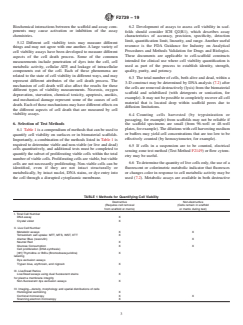
TABLE 1 Methods for Quantifying Cell Viability
Destructive Non-destructive
(Requires cell removal (Cells remain in scaffold
from scaffold or matrix) or matrix during test)
I. Total Cell Number
DNA assay X
Crystal violet X
II. Live Cell Number
Metabolic assays X X
Tetrazolium salt uptake: MTT, MTS, WST, XTT X
Alamar Blue (resorufin) X
Neutral Red X
Glucose Consumption X X
Cell proliferation (DNA synthesis)
[3H] Thymidine or BrDu (Bromodoeoxyuridine) X
labeling
Dye exclusion assays
Trypan blue, erythrosin, and nigrosin X
III. Live/Dead Ratios
Live/Dead assays using dual fluorescent stains X
for plasma membrane integrity
Non-fluorescent dye exclusion assays X
IV. Imaging—density, morphology and spatial distributions of cells
Histological sectioning X
Confocal microscopy X X
Scanning electron microscopy X
F2739 − 19
and non-destructive forms. The MTT (3-[4,5-dimethylthiazol- cultures of cells because some cells are more metabolically
2]-2,5-diphenyltetrazolium bromide) or MTS ([3-(4,5- active than others. There is a similar problem with dyes:
dimethylthiazol-2-yl)-5-(3-carboxymethoxyphenyl)-2-(4- nuclear sizes may not be identical (though they may be
sulfophenyl)-2H-tetrazolium) assays (7.2.1) are destructive, similar). Cell cytoplasm volumes may be very different, as
commonly used methods that can be read with a spectropho- could be the number of cellular processes. In a mixed popula-
tometer. The Alamar Blue assay (resorufin) (7.2.2) is a non- tion of cells, some cells may be proliferating rapidly, whereas
destructive method that requires a fluorimeter. Cell metabolism others might be post-mitotic.
in a 2-D environment may differ from than in a 3-D
6.12 Some scaffolds will be translucent, others opaque.
environment, even when the same cell numbers are the same.
Some may be rigid, others very fragile. For more fragile
Accordingly, results for 3-D cell numbers can be erroneous
scaffolds, cells may fall off during handling, so it would be
when growth curves of cells cultured in 2-D are used for
preferable to use a method that minimizes handling. Scaffolds
calibration (1). Itisimportanttonotethatmetabolicassaysare
break down over time. Edges of scaffolds might be softer than
direct measures of intracellular enzyme activity produced by
internal portions. Scaffolds may not have uniform thickness or
cells. Although the level of enzyme activity may be directly
density, which may affect statistical sampling.
proportional to the number of viable cells, it is possible that
6.13 It is important that any test of cell viability clearly
specific culture conditions may affect the production and
defines how cell viability is measured.There are many tests for
activity of the enzyme being assayed or that the scaffold may
cell viability, and confusion often arises when the methods
interfere with the measurement (matrix effects). In this
used to assess cell viability are not clearly defined.
situation, the metabolic measurement may not be directly
proportional to cell number.
7. Specific Test Methods for Determining Cell Viability
6.7 The quantity of live cells within the total cell population
may be determined by a proliferation or metabolic assay (7.3). 7.1 Dye Exclusion Technique to Distinguish Live from
Dead:
It may be helpful to verify quantitative results with an imaging
technique (7.4) in order to provide visual evidence of live or 7.1.1 One of the simplest methods to approximate cell
dead cells. Visual evidence assures that the quantitative mea- viability is the dye exclusion technique.This approach is based
surements can be trusted and did not arise due to experimental on the assumption that viable cells must have an intact
artifacts (such as the scaffold reacting with assay reagents and membrane, which is required for life-associated cellular pro-
causing a false positive reading). Imaging also provides infor- cesses such as the conversion of food sources into energy,
mation on the spatial distribution of live cells within a growth, and reproduction. This method utilizes an indicator
construct. dye to demonstrate cell membrane damage. Cells which absorb
the dye become stained and are considered non-viable. Dyes
6.8 Non-destructive methods to determine cell viability of
such as trypan blue, erythrosin, and nigrosin are used
an entire cell population within a scaffold or bioreactor are
commonly, with trypan blue being the most common in
included in this guide and are useful for conducting kinetic
preliminary cell isolation procedures. Cells must be removed
studies of cell number and distribution over time within the
from the scaffold, mixed with the dye, and then counted
same sample.
manually with a hematocytometer. Cells must be analyzed
6.9 Since scaffolds can interfere with cell viability assays, a
shortly after the addition of 0.4 % trypan blue, since trypan
blank scaffold, without cells, should always be included as a
blue is cytotoxic. There are large standard deviations with
control.Assay components may bind or adsorb to the scaffold,
increasing cell densities; therefore, samples should be diluted
which can affect results. The scaffold may activate assay
to the densities recommended in the hematocytometer instruc-
components, causing a false positive reading. If the assay is
tions.
affected by the presence of the scaffold, then either the
7.2 Determination of Total Cell Number:
interferenceshouldbesubtractedoranalternativeassayshould
7.2.1 DNA Assay—DNA analysis is a commonly used
be selected. Notes on known interferences are included in each
method for determining cell number because the amount of
of the assay descriptions below.
DNAper cell is relatively constant. There are several commer-
6.10 Cell density could impact accuracy of quantification.
cially available kits for assessing DNAcontent. It is important
Cells grown at low density are generally harder to wash off
to fully extract the cells from the scaffold prior to analysis,
than cells grown to confluency, where a whole sheet of cells
using for example, a solution of 0.125 mg/mL papain and
may be rather easy to displace. Many scaffolds are seeded at as
10 mmol⁄L L-cysteine dihydrochloride in phosphate-buffered
high a cell density as possible. High densities may also affect
ethylenediaminetetraacetic acid (EDTA) in a 60 °C water bath
dye binding. Also, cell density generally impacts the “health”
for 10 h (2). The process lyses the cells to yield soluble DNA
of the whole culture, since cell-to-cell interactions are impor-
for detection by the assay and the papain and EDTAinactivate
tant effectors of cell state.
nucleases to prevent DNA degradation. A freeze/thaw cycle
6.11 In many instances, a mixed population of cells may be
(-20 °C for at least 1 h) can rupture cell membranes to improve
present. Metabolic assays will not accurately quantify mixed
DNA recovery. For natural ECM-based biomaterial scaffolds
orconstructswithtissue-likecontenthavinghighcelldensities,
enzymatic treatment for protein digestion, using, for example,
The boldface numbers in parentheses refer to the list of references at the end of
this standard. proteinase K digestion for2hto6hat60°C,canbe used to
F2739 − 19
obtain a DNA lysate for analysis. This step may also ablate formazan accumulating during the incubation period (typically
endogenous fluorescence of the cells if measuring cells by 1 or more hours). The amount of formazan dye formed
fluorescence (3). A DNA standard curve should be run for
correlates directly to the number of metabolically active cells
calculating the amount of DNA. To correlate these results to
in the culture. A plate reader is used to read the results. The
cells per unit volume of scaffold, the standard curve should be
seeded scaffolds should be rinsed in either a serum-free
compared to DNA isolates from a known number of cells that
medium or PBS to remove unattached cells before beginning
are of the same source and cultured under the same conditions
the assay. Since there can be a chemical interaction of the
usedinthescaffolds.Thisdoesnotcorrectforvariationsincell
biomaterial scaffold with the assay components or an absor-
DNA content due to metabolic differences (quiescent cells
bance from the scaffold itself, an unseeded scaffold must be
versus rapidly dividing populations). It is important to realize
used as a control. Although a standard curve may be estab-
that DNA may not degrade immediately after a cell dies and
lished
...
This document is not an ASTM standard and is intended only to provide the user of an ASTM standard an indication of what changes have been made to the previous version. Because
it may not be technically possible to adequately depict all changes accurately, ASTM recommends that users consult prior editions as appropriate. In all cases only the current version
of the standard as published by ASTM is to be considered the official document.
Designation: F2739 − 16 F2739 − 19
Standard Guide for
Quantifying Cell Viability and Related Attributes within
Biomaterial Scaffolds
This standard is issued under the fixed designation F2739; the number immediately following the designation indicates the year of
original adoption or, in the case of revision, the year of last revision. A number in parentheses indicates the year of last reapproval. A
superscript epsilon (´) indicates an editorial change since the last revision or reapproval.
1. Scope
1.1 This guide is a resource of cell viability test methods that can be used to assess the number and distribution of viable and
non-viable cells within porous and non-porous, hard or soft biomaterial scaffolds, such as those used in tissue-engineered medical
products (TEMPs).
1.2 In addition to providing a compendium of available techniques, this guide describes materials-specific interactions with the
cell assays that can interfere with accurate cell viability analysis, and includes guidance on how to avoid, and/oravoid or account
for, or both, scaffold material/cell viability assay interactions.
1.3 These methods can be used for 3-D scaffolds containing cells that have been cultured in vitro or for scaffold/cell constructs
that are retrieved after implantation in living organisms.
1.4 This guide does not propose acceptance criteria based on the application of cell viability test methods.
1.5 The values stated in SI units are to be regarded as standard. No other units of measurement are included in this standard.
1.6 This standard does not purport to address all of the safety concerns, if any, associated with its use. It is the responsibility
of the user of this standard to establish appropriate safety safety, health, and healthenvironmental practices and determine the
applicability of regulatory limitations prior to use.
1.7 This international standard was developed in accordance with internationally recognized principles on standardization
established in the Decision on Principles for the Development of International Standards, Guides and Recommendations issued
by the World Trade Organization Technical Barriers to Trade (TBT) Committee.
2. Referenced Documents
2.1 ASTM Standards:
F748 Practice for Selecting Generic Biological Test Methods for Materials and Devices
F2149 Test Method for Automated Analyses of Cells—the Electrical Sensing Zone Method of Enumerating and Sizing Single
Cell Suspensions
F2315 Guide for Immobilization or Encapsulation of Living Cells or Tissue in Alginate Gels
F2998 Guide for Using Fluorescence Microscopy to Quantify the Spread Area of Fixed Cells
2.2 ICH Document:
ICH Q2(R1) Validation of Analytical Procedures: Text and Methodology
2.3 FDA Document:
U.S. Food and Drug Administration (FDA) Center for Biologics Evaluation and Research (CBER), 2015 Analytical Procedures
and Methods Validation for Drugs and Biologics—Guidance for Industry
3. Terminology
3.1 Definitions:
3.1.1 non-viable cell, n—a cell not meeting one or more of the criteria for a viable cell.
This guide is under the jurisdiction of ASTM Committee F04 on Medical and Surgical Materials and Devices and is the direct responsibility of Subcommittee F04.43
on Cells and Tissue Engineered Constructs for TEMPs.
Current edition approved Oct. 1, 2016Sept. 1, 2019. Published November 2016November 2019. Originally approved in 2008. Last previous edition approved in 20082016
as F2739 – 08.16. DOI: 10.1520/F2739-16.10.1520/F2739-19.
For referenced ASTM standards, visit the ASTM website, www.astm.org, or contact ASTM Customer Service at service@astm.org. For Annual Book of ASTM Standards
volume information, refer to the standard’s Document Summary page on the ASTM website.
Available from International Conference on Harmonisation of Technical Requirements for Registration of Pharmaceuticals for Human Use (ICH), ICH Secretariat, 9,
chemin des Mines, P.O. Box 195, 1211 Geneva 20, Switzerland, http://www.ich.org.
Available from U.S. Food and Drug Administration (FDA), 10903 New Hampshire Ave., Silver Spring, MD 20993, http://www.fda.gov.
Copyright © ASTM International, 100 Barr Harbor Drive, PO Box C700, West Conshohocken, PA 19428-2959. United States
F2739 − 19
3.1.2 viable cell, n—a cell capable of metabolic activity that is structurally intact with a functioning cell membrane.
3.1.2.1 Discussion—
The use of the term viable herein only applies at the instant at which the measurement is conducted and is not meant to indicate
anything about the future state of the cell.
4. Summary of Guide
4.1 It is the intent of this guide to provide a compendium of the commonly used methods for quantifying the number and
distribution of viable and non-viable cells within, or on, a biomaterial scaffold, because cell viability is an important parameter of
tissue-engineered products used to regenerate or repair lost or diseased tissue. The methods can be applied to cells residing within
an intact 3-D scaffold or matrix (that is, non-destructive methods) or to cells that have been removed from the scaffold or matrix
(that is, destructive methods). It should be noted that not all cells require a scaffold, and some cell types, such as hematopoietic
cells, cannot be cultured or grown on an adherent surface.
4.2 Most of the methods originate from analysis of cell number on 2-D surfaces, but have been adapted for the analysis of cells
within 3-D constructs that are typically used in regenerative medicine approaches. The mechanisms and the sensitivity of the assays
are discussed. The limitations of the assays due to using standard curves generated from cells on 2-D surfaces are described in this
document. In addition, the ways in which the biomaterial scaffold itself can affect the viability assays are described.
4.3 This guide describes test methods which, when used together, may enable accurate measure of the number and distribution
of viable and non-viable cells. Different viability assays have different measurands, which means that the results from different
assays may not correlate with one another. For instance, cell membrane integrity tests and cell metabolic tests measure
fundamentally different cell properties. Although both tests are related to cell viability, they may not correlate with one another.
5. Significance and Use
5.1 The number and distribution of viable and non-viable cells within, or on the surface of, a biomaterial scaffold is one of
several important characteristics that may determine in vivo product performance of cell/biomaterial constructs (see 5.7); therefore,
there is a need for standardized test methods to quantify cell viability.
5.2 There are a variety of static and dynamic methods to seed cells on scaffolds, each with different cell seeding efficiencies.
In general, static methods such as direct pipetting of cells onto scaffold surfaces have been shown to have lower cell seeding
efficiencies than dynamic methods that push cells into the scaffold interior. Dynamic methods include: injection of cells into the
scaffold, cell seeding on biomaterials contained in spinner flasks or perfusion chambers, or seeding that is enhanced by the
application of centrifugal forces. The methods described in this guide can assist in establishing cell seeding efficiencies as a
function of seeding method and for standardizing viable cell numbers within a given methodology.
5.3 As described in Guide F2315, thick scaffolds or scaffolds highly loaded with cells lead to diffusion limitations during culture
or implantation that can result in cell death in the center of the construct, leaving only an outer rim of viable cells. Spatial variations
of viable cells such as this may be quantified using the tests within this guide. The effectiveness of the culturing method or
bioreactor conditions on the viability of the cells throughout the scaffold can also be evaluated with the methods described in this
guide.
5.4 These test methods can be used to quantify cells on non-porous or within porous hard or soft 3-D synthetic or natural-based
biomaterials, such as ceramics and polymer gels. ceramics, polymers, hydrogels, and decellularized extracellular matrices. The test
methods also apply to cells seeded on porous coatings.
5.5 Test methods described in this guide may also be used to distinguish between proliferating and non-proliferating viable cells.
Proliferating cells proceed through the DNA synthesis (S) phase and the mitosis (M) phase to produce two daughter cells.
Non-proliferating viable cells are in some phase of the cell cycle, but are not necessarily proceeding through the cell cycle
culminating in proliferation.
5.6 Viable cells may be under stress or undergoing apoptosis. Assays for evaluating cell stress or apoptosis are not addressed
in this guide.
5.7 While cell viability is an important characteristic of a TEMP, the biological performance of a TEMP is dependantdependent
on additional parameters. Additional tests to evaluate and confirm the cell identity, protein expression, genetic profile, lineage
progression, extent of differentiation, activation status, and morphology are recommended.
5.8 Fundamental biocompatibility testing of the scaffold material itself The main focus of this document is not scaffold toxicity
or the toxicity of the scaffold raw materials. This document is meant to address the situation where a scaffold that is thought to
be cytocompatible is cultured with cells and the user desires to assess the viability of cells within the construct. Prior to conducting
F2739 − 19
the tests described herein, the raw materials used to make the scaffold should be assessed as described in Practice F748 should be
completed prior to using the biomaterial with cells. This testing may include assessment of the release of toxic leachables from
the raw materials.
5.9 Methods that remove the cells from a 3-D scaffold may reduce the cell number and viability due to the manipulation
required.
5.10 Some scaffold constructs may prevent reliable measurements of cell viability within the scaffolds using the methods
described herein. Scaffolds may limit diffusion of assay components into and out of the scaffolds. This is especially problematic
for methods that require dyes to penetrate into the scaffold, that require detergents or other cell-lysing agents to diffuse into the
construct, that require lysed-cell components to diffuse out of the constructs, or that require assay reactants to diffuse into or out
of the scaffold. Diffusion in scaffolds and assay results may also be affected by dense cell populations in scaffolds, the generation
of tissue-like structures by the cells within the scaffold, and the presence of cell-generated extracellular matrix (ECM) in the
scaffold. The formation of tight junctions between cells and cell-ECM interactions may also limit diffusion, especially in the case
of hard tissues such as bone.
5.11 Assay results may be affected by interactions between assay components and the scaffold. Assay components may adsorb
to the surface of the scaffold which would affect their participation in the assay and the resulting assay signal. Biochemical
interactions between the scaffold and assay components may cause activation or inhibition of the assay chemistries.
5.12 Different cell viability tests may measure different things and may not agree with one another. A large variety of cell
viability assays have been developed to measure different aspects of the cell death process. Some of the common measurements
include penetration of dyes into the cell, cell metabolic activity, cellular ATP, and leakage of intracellular components out of the
cell. Each of these phenomena are related to the state of cell viability in different ways, and may represent different attributes of
the cell death process. The mechanism of cell death will also affect the results for these different types of viability measurements.
Necrosis, oxygen depravation, starvation, chemical toxicity, apoptosis, anoikis, and mechanical damage represent some of the
causes of cell death. Each of these mechanisms may have different effects on the different aspects of cell death that are measured
by cell viability assays.
6. Selection of Test Methods
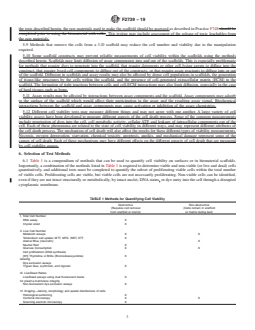
6.1 Table 1 is a compendium of methods that can be used to quantify cell viability on surfaces or in biomaterial scaffolds.
Importantly, a combination of the methods listed in Table 1 is required to determine viable and non-viable (or live and dead) cells
quantitatively, and additional tests must be completed to quantify the subset of proliferating viable cells within the total number
of viable cells. Proliferating cells are viable, but viable cells are not necessarily proliferating. Non-viable cells can be identified,
even if they are not intact structurally or metabolically, by intact nuclei, DNA stains, or dye entry into the cell through a disrupted
cytoplasmic membrane.
TABLE 1 Methods for Quantifying Cell Viability
Destructive Non-destructive
(Requires cell removal (Cells remain in scaffold
from scaffold or matrix) or matrix during test)
I. Total Cell Number
DNA assay X
Crystal violet X
II. Live Cell Number
Metabolic assays X X
Tetrazolium salt uptake: MTT, MTS, WST, XTT X
Alamar Blue (resorufin) X
Neutral Red X
Glucose Consumption X X
Cell proliferation (DNA synthesis)
[3H] Thymidine or BrDu (Bromodoeoxyuridine) X
labeling
Dye exclusion assays
Trypan blue, erythrosin, and nigrosin X
III. Live/Dead Ratios
Live/Dead assays using dual fluorescent stains X
for plasma membrane integrity
Non-fluorescent dye exclusion assays X
IV. Imaging—density, morphology and spatial distributions of cells
Histological sectioning X
Confocal microscopy X X
Scanning electron microscopy X
F2739 − 19
6.2 Development of assays to assess cell viability in scaffolds should consider ICH Q2(R1), which describes assay
characteristics of accuracy, precision, specificity, detection limit, quantification limit, linearity, and range. Another useful resource
is the FDA Guidance for Industry on Analytical Procedures and Methods Validation for Drugs and Biologics. These documents
are applicable to cell-scaffold constructs intended for clinical use where cell viability quantification is used as part of the process
to establish identity, strength, quality, purity, and potency.
6.3 The total number of cells, both alive and dead, within a 3-D construct may be determined by DNA analysis (7.2) after the
cells are removed destructively (lysis) from the biomaterial scaffold and solubilized (with detergents or sonication, for example).
It may not be possible to completely recover all cell material that is located deep within scaffold pores due to diffusion limitations.
6.4 Counting cells harvested (by trypsinization or passaging, for example) from scaffolds may not be reliable if the scaffold
specimens are small (from 96-well or 48-well plates, for example). The dilutions with cell harvesting medium or buffers may yield
cell concentrations that are too low to be effectively counted (by hemocytometer, for example).
6.5 If cells in a suspension are to be counted, electrical sensing zone test method ((Test Method F2149) or flow cytometry may
be useful.
6.6 To determine the quantity of live cells only, the use of a fluorescent or colorimetric metabolic indicator that fluoresces or
changes color in response to cell metabolic activity may be used (7.2). Metabolic assays are available in both destructive and
non-destructive forms. The MTT (3-[4,5-dimethylthiazol-2]-2,5-diphenyltetrazolium bromide) or MTS ([3-(4,5-dimethylthiazol-
2-yl)-5-(3-carboxymethoxyphenyl)-2-(4-sulfophenyl)-2H-tetrazolium) assays (7.2.1) are destructive, commonly used methods that
can be read with a spectrophotometer. The Alamar Blue assay (resorufin) (7.2.2) is a non-destructive method that requires a
fluorimeter. Cell metabolism in a 2-D environment may differ from than in a 3-D environment, even when the same cell numbers
are the same. Accordingly, results for 3-D cell numbers can be erroneous when growth curves of cells cultured in 2-D are used
for calibration (1). It is important to note that metabolic assays are direct measures of intracellular enzyme activity produced by
cells. Although the level of enzyme activity may be directly proportional to the number of viable cells, it is possible that specific
culture conditions may affect the production and activity of the enzyme being assayed or that the scaffold may interfere with the
measurement (matrix effects). In this situation, the metabolic measurement may not be directly proportional to cell number.
6.7 The quantity of live cells within the total cell population may be determined by a proliferation or metabolic assay (7.3). It
may be helpful to verify quantitative results with an imaging technique (7.4) in order to provide visual evidence of live or dead
cells. Visual evidence assures that the quantitative measurements can be trusted and did not arise due to experimental artifacts (such
as the scaffold reacting with assay reagents and causing a false positive reading). Imaging also provides information on the spatial
distribution of live cells within a construct.
6.8 Non-destructive methods to determine cell viability of an entire cell population within a scaffold or bioreactor are included
in this guide and are useful for conducting kinetic studies of cell number and distribution over time.time within the same sample.
6.9 The scaffolding material may interfere with any of the following assays and must be included within the assay, typically as
a control, to determine whether it has an effect. Since scaffolds can interfere with cell viability assays, a blank scaffold, without
cells, should always be included as a control. Assay components may bind or adsorb to the scaffold, which can affect results. The
scaffold may activate assay components, causing a false positive reading. If the assay is affected by the presence of the scaffold,
then either the interference should be subtracted out or an alternative assay should be selected. Notes on known interferences are
included in each of the assay descriptions below.
6.10 Cell density could impact accuracy of quantification. Cells grown at low density are generally harder to wash off than cells
grown to confluency, where a whole sheet of cells may be rather easy to displace. Many scaffolds are seeded at as high a cell
density as possible. High densities may also affect dye binding. Also, cell density generally impacts the “health” of the whole
culture, since cell-to-cell interactions are important effectors of cell state.
6.11 In many instances, a mixed population of cells may be present. Metabolic assays will not accurately quantify mixed
cultures of cells because some cells are more metabolically active than others. There is a similar problem with dyes: nuclear sizes
may not be identical (though they may be similar). Cell cytoplasm volumes may be very different, as could be the number of
cellular processes. In a mixed population of cells, some cells may be proliferating rapidly, whereas others might be post-mitotic.
6.12 Some scaffolds will be translucent, others opaque. Some may be rigid, others very fragile. For more fragile scaffolds, cells
may fall off during handling, so it would be preferable to use a method that minimizes handling. Scaffolds break down over time.
Edges of scaffolds might be softer than internal portions. Scaffolds may not have uniform thickness or density, which may affect
statistical sampling.
6.13 It is important that any test of cell viability clearly defines how cell viability is measured. There are many tests for cell
viability, and confusion often arises when the methods used to assess cell viability are not clearly defined.
The boldface numbers in parentheses refer to the list of references at the end of this standard.
F2739 − 19
7. Specific Test Methods for Determining Cell Viability
7.1 Dye Exclusion Technique to Distinguish Live from Dead:
7.1.1 One of the simplest methods to approximate cell viability is the dye exclusion technique. This approach is based on the
assumption that viable cells must have an intact membrane, which is required for life-associated cellular processes such as the
conversion of food sources into energy, growth, and reproduction. This method utilizes an indicator dye to demonstrate cell
membrane damage. Cells which absorb the dye become stained and are considered non-viable. Dyes such as trypan blue,
erythrosin, and nigrosin are used commonly, with trypan blue being the most common in preliminary cell isolation procedures.
Cells must be removed from the scaffold, mixed with the dye, and then counted manually with a hematocytometer. Cells must be
analyzed shortly after the addition of 0.4 % trypan blue, since trypan blue is cytotoxic. There are large standard deviations with
increasing cell densities; therefore, samples should be diluted to the densities recommended in the hematocytometer instructions.
7.2 Determination of Total Cell Number:
7.2.1 DNA Assay—DNA analysis is a commonly used method for determining total cell number, including both viable and
non-viable cells. cell number because the amount of DNA per cell is relatively constant. There are several commercially available
kits for assessing DNA content. It is important to fully extract the cells from the scaffold prior to analysis, using for example, a
solution of 0.125 mg/mL papain and 1010 mmol mmol/L ⁄L L-cysteine dihydrochloride in phosphate buffered phosphate-buffered
ethylenediaminetetraacetic acid (EDTA) in a 60°C60 °C water bath for 10 hours to extract cells from a polymer matrix h (2). The
process lyses the cells to yield soluble DNA for detection by the assay and the papain and EDTA inactivate nucleases to prevent
DNA degradation. If the cell fluorescence will be measured, a protein digestion step using a proteinase may A freeze/thaw cycle
(-20 °C for at least 1 h) can rupture cell membranes to improve DNA recovery. For natural ECM-based biomaterial scaffolds or
constructs with tissue-like content having high cell densities, enzymatic treatment for protein digestion, using, for example,
proteinase K digestion for 2 h to 6 h at 60 °C, can be used to obtain a DNA lysate for analysis. This step may also ablate
endogenous fluorescence of the cells if measuring cells by fluorescence (3). A DNA standard curve should be run for calculating
the amount of DNA. To correlate these results to cells per unit volume of scaffold, the standard curve should be compared to DNA
isolates from a known number of cells that are of the same source and cultured under the same conditions used in the scaffolds.
This does not correct for variations in cell DNA content due to metabolic differences (quiescent cells versus rapidly dividing
populations). It is important to realize that DNA may not degrade immediately after a cell dies and may persist for a day or more
(4).
7.2.1.1 Note on DNA Standard Curves—Comparison to a DNA standard curve provides the concentration of DNA in the sample,
but does not directly give the number of cells per sample. These data can still be used to compare various test conditions within
the same experiment (for example, fold-change in cell number as a function of treatment group), but cannot be directly correlated
to an absolute cell number without having a value for the amount of DNA per cell. The amount of DNA per
...