

ASTM A414/A414M-23
(Specification)Standard Specification for Steel, Sheet, Carbon, and High-Strength, Low-Alloy for Pressure Vessels
General Information
- Abstract
ABSTRACT
This specification covers hot-rolled carbon steel sheet for pressure vessels involving fusion welding or brazing. Tensile and yield strengths shall be determined after a tension test of the sheets. The material shall be furnished without removing the hot-rolled oxide or scale. When required, the material may be specified to be pickled or blast cleaned. When specified to be pickled or blast cleaned, the material shall be furnished oiled. When required, pickled or blast-cleaned material may be specified to be furnished dry.
SCOPE
1.1 This specification2 covers hot-rolled carbon steel sheet for pressure vessels involving fusion welding or brazing. Welding and brazing technique is of fundamental importance and shall be in accordance with commercial practices.
1.2 The following grades are included in this specification:
Mechanical Requirements
Yield Strength, min
Tensile Strength, min
Grade
ksi
MPa
ksi
MPa
A
25
170
45
310
B
30
205
50
345
C
33
230
55
380
D
35
240
60
415
E
38
260
65
450
F
42
290
70
485
G
45
310
75
515
H
45
310
75
515
1.3 Hot-rolled carbon steel sheet is generally furnished in cut lengths and to decimal thickness only. Coils may be furnished, provided tension test specimens are taken to represent the middle of the slab as required by 6.1.3. The purchaser should recognize this may require cutting the coils to obtain test samples and results in half-size coils. The sheet is furnished to the following size limits:
Width, in. [mm]
Thickness, in. [mm]
Over 12 [Over 300]
0.270 to 0.230 [7.0 to 6.0]
sheet (coils only)
Under 0.230 to 0.057 [6.0 to 1.5]
sheet
1.4 The values stated in either inch-pound units or SI units are to be regarded separately as standard. Within the text, the SI units are shown in brackets. The values stated in each system are not exact equivalents; therefore, each system shall be used independently of the other. Combining values from the two systems may result in nonconformance with the specification.
1.5 Tolerances are found in General Requirements Specifications A568/A568M and A635/A635M. The appropriate General Requirements specification is applied based on the thickness and width of the product ordered.
1.6 This international standard was developed in accordance with internationally recognized principles on standardization established in the Decision on Principles for the Development of International Standards, Guides and Recommendations issued by the World Trade Organization Technical Barriers to Trade (TBT) Committee.
- Status
- Published
- Publication Date
- 31-Oct-2023
- Technical Committee
- A01 - Steel, Stainless Steel and Related Alloys
- Drafting Committee
- A01.19 - Steel Sheet and Strip
Buy Documents
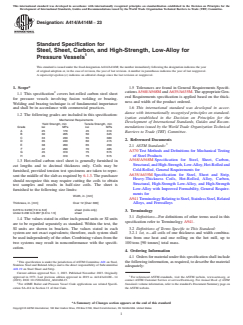
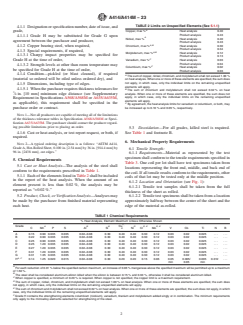
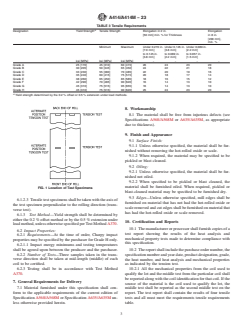

ASTM A414/A414M-23 - Standard Specification for Steel, Sheet, Carbon, and High-Strength, Low-Alloy for Pressure Vessels
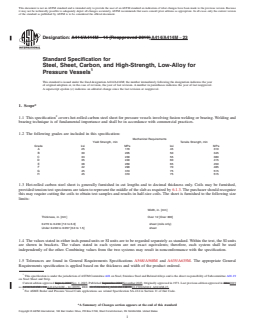
REDLINE ASTM A414/A414M-23 - Standard Specification for Steel, Sheet, Carbon, and High-Strength, Low-Alloy for Pressure Vessels
Overview
ASTM A414/A414M-23: Standard Specification for Steel, Sheet, Carbon, and High-Strength, Low-Alloy for Pressure Vessels is a widely recognized specification issued by ASTM International. This standard establishes the requirements for hot-rolled carbon steel sheet designed specifically for use in pressure vessels where fusion welding or brazing is involved. The specification includes multiple grades, each with specified mechanical properties, and covers requirements for finish, quality, testing, and certification.
Employing ASTM A414/A414M-23 ensures materials meet consistent quality and safety criteria crucial to the pressure vessel industry. Compliance supports best practices for manufacturers, fabricators, and engineers involved in product specification, procurement, and design.
Key Topics
Material Types and Grades
- Covers hot-rolled carbon steel and high-strength, low-alloy steel sheets.
- Eight grades (A-H), each with specific minimum yield and tensile strength requirements.
Mechanical and Chemical Requirements
- Material must undergo tensile and yield tests.
- Chemical composition limits for elements such as carbon, manganese, phosphorus, sulfur, and others.
Sizes and Tolerances
- Sheets are provided in specified width and thickness ranges, either as cut lengths or coils.
- Tolerances refer to general ASTM requirements for sheet steel (A568/A568M or A635/A635M).
Surface Condition
- Sheets typically supplied with hot-rolled oxide or scale intact.
- Options for pickled, blast cleaned, oiled, or dry finishes as required by purchaser.
Test and Certification Requirements
- Certificate of compliance and detailed test reports required with each lot.
- Mechanical tests must be performed according to ASTM A370.
Marking and Identification
- Manufacturer, grade, heat number, and relevant data to be clearly marked on each product.
- Electronic documentation is permitted and recognized as valid.
Applications
ASTM A414/A414M-23 steel sheets are primarily used in:
- Pressure Vessel Construction
- Boiler shells, storage tanks, and other pressure-retaining equipment.
- Industrial Equipment
- Fabrication of welded or brazed structures where pressure-carrying capacity is critical.
- Oil & Gas, Chemical Processing, and Power Generation
- Used where high-strength, formable steel is required for reliable and safe containment under pressure.
- Custom Fabrications
- Suitable for components with demanding strength requirements in engineered systems.
The standard supports both inch-pound and SI units, facilitating global usage and trade. Its detailed approach to material certification and ordering information makes it well-suited for both large-scale manufacturing and custom fabrication.
Related Standards
For comprehensive conformity and procurement, ASTM A414/A414M-23 references and aligns with several related ASTM standards, including:
- ASTM A568/A568M: General Requirements for Steel, Sheet, Carbon, and High-Strength, Low-Alloy, Hot- and Cold-Rolled
- ASTM A635/A635M: General Requirements for Heavy-Thickness Coils, Hot-Rolled, Alloy, and High-Strength Low-Alloy Steel
- ASTM A370: Test Methods and Definitions for Mechanical Testing of Steel Products
- ASTM A941: Terminology Relating to Steel, Stainless Steel, and Related Alloys
Compliance with these standards ensures products meet rigorous safety and quality benchmarks, underpinning confidence in critical pressure vessel applications.
Keywords: ASTM A414, pressure vessel steel, carbon steel sheet, high-strength low-alloy steel, hot-rolled steel, mechanical properties, steel sheet specification, welded vessel, industrial steel standards.
Relations
- Effective Date
- 01-Nov-2023
- Effective Date
- 01-Mar-2024
- Effective Date
- 01-Mar-2024
- Effective Date
- 15-Sep-2023
- Effective Date
- 01-May-2023
- Effective Date
- 01-Nov-2023
- Effective Date
- 01-Nov-2023
Buy Documents
ASTM A414/A414M-23 - Standard Specification for Steel, Sheet, Carbon, and High-Strength, Low-Alloy for Pressure Vessels
REDLINE ASTM A414/A414M-23 - Standard Specification for Steel, Sheet, Carbon, and High-Strength, Low-Alloy for Pressure Vessels
Get Certified
Connect with accredited certification bodies for this standard

Element Materials Technology
Materials testing and product certification.

Inštitut za kovinske materiale in tehnologije
Institute of Metals and Technology. Materials testing, metallurgical analysis, NDT.
Sponsored listings
Frequently Asked Questions
ASTM A414/A414M-23 is a technical specification published by ASTM International. Its full title is "Standard Specification for Steel, Sheet, Carbon, and High-Strength, Low-Alloy for Pressure Vessels". This standard covers: ABSTRACT This specification covers hot-rolled carbon steel sheet for pressure vessels involving fusion welding or brazing. Tensile and yield strengths shall be determined after a tension test of the sheets. The material shall be furnished without removing the hot-rolled oxide or scale. When required, the material may be specified to be pickled or blast cleaned. When specified to be pickled or blast cleaned, the material shall be furnished oiled. When required, pickled or blast-cleaned material may be specified to be furnished dry. SCOPE 1.1 This specification2 covers hot-rolled carbon steel sheet for pressure vessels involving fusion welding or brazing. Welding and brazing technique is of fundamental importance and shall be in accordance with commercial practices. 1.2 The following grades are included in this specification: Mechanical Requirements Yield Strength, min Tensile Strength, min Grade ksi MPa ksi MPa A 25 170 45 310 B 30 205 50 345 C 33 230 55 380 D 35 240 60 415 E 38 260 65 450 F 42 290 70 485 G 45 310 75 515 H 45 310 75 515 1.3 Hot-rolled carbon steel sheet is generally furnished in cut lengths and to decimal thickness only. Coils may be furnished, provided tension test specimens are taken to represent the middle of the slab as required by 6.1.3. The purchaser should recognize this may require cutting the coils to obtain test samples and results in half-size coils. The sheet is furnished to the following size limits: Width, in. [mm] Thickness, in. [mm] Over 12 [Over 300] 0.270 to 0.230 [7.0 to 6.0] sheet (coils only) Under 0.230 to 0.057 [6.0 to 1.5] sheet 1.4 The values stated in either inch-pound units or SI units are to be regarded separately as standard. Within the text, the SI units are shown in brackets. The values stated in each system are not exact equivalents; therefore, each system shall be used independently of the other. Combining values from the two systems may result in nonconformance with the specification. 1.5 Tolerances are found in General Requirements Specifications A568/A568M and A635/A635M. The appropriate General Requirements specification is applied based on the thickness and width of the product ordered. 1.6 This international standard was developed in accordance with internationally recognized principles on standardization established in the Decision on Principles for the Development of International Standards, Guides and Recommendations issued by the World Trade Organization Technical Barriers to Trade (TBT) Committee.
ABSTRACT This specification covers hot-rolled carbon steel sheet for pressure vessels involving fusion welding or brazing. Tensile and yield strengths shall be determined after a tension test of the sheets. The material shall be furnished without removing the hot-rolled oxide or scale. When required, the material may be specified to be pickled or blast cleaned. When specified to be pickled or blast cleaned, the material shall be furnished oiled. When required, pickled or blast-cleaned material may be specified to be furnished dry. SCOPE 1.1 This specification2 covers hot-rolled carbon steel sheet for pressure vessels involving fusion welding or brazing. Welding and brazing technique is of fundamental importance and shall be in accordance with commercial practices. 1.2 The following grades are included in this specification: Mechanical Requirements Yield Strength, min Tensile Strength, min Grade ksi MPa ksi MPa A 25 170 45 310 B 30 205 50 345 C 33 230 55 380 D 35 240 60 415 E 38 260 65 450 F 42 290 70 485 G 45 310 75 515 H 45 310 75 515 1.3 Hot-rolled carbon steel sheet is generally furnished in cut lengths and to decimal thickness only. Coils may be furnished, provided tension test specimens are taken to represent the middle of the slab as required by 6.1.3. The purchaser should recognize this may require cutting the coils to obtain test samples and results in half-size coils. The sheet is furnished to the following size limits: Width, in. [mm] Thickness, in. [mm] Over 12 [Over 300] 0.270 to 0.230 [7.0 to 6.0] sheet (coils only) Under 0.230 to 0.057 [6.0 to 1.5] sheet 1.4 The values stated in either inch-pound units or SI units are to be regarded separately as standard. Within the text, the SI units are shown in brackets. The values stated in each system are not exact equivalents; therefore, each system shall be used independently of the other. Combining values from the two systems may result in nonconformance with the specification. 1.5 Tolerances are found in General Requirements Specifications A568/A568M and A635/A635M. The appropriate General Requirements specification is applied based on the thickness and width of the product ordered. 1.6 This international standard was developed in accordance with internationally recognized principles on standardization established in the Decision on Principles for the Development of International Standards, Guides and Recommendations issued by the World Trade Organization Technical Barriers to Trade (TBT) Committee.
ASTM A414/A414M-23 is classified under the following ICS (International Classification for Standards) categories: 77.140.30 - Steels for pressure purposes; 77.140.50 - Flat steel products and semi-products. The ICS classification helps identify the subject area and facilitates finding related standards.
ASTM A414/A414M-23 has the following relationships with other standards: It is inter standard links to ASTM A414/A414M-14(2019), ASTM A370-24, ASTM A941-24, ASTM A370-23, ASTM A941-23, ASTM A568/A568M-19a, ASTM A635/A635M-22. Understanding these relationships helps ensure you are using the most current and applicable version of the standard.
ASTM A414/A414M-23 is available in PDF format for immediate download after purchase. The document can be added to your cart and obtained through the secure checkout process. Digital delivery ensures instant access to the complete standard document.
Standards Content (Sample)
This international standard was developed in accordance with internationally recognized principles on standardization established in the Decision on Principles for the
Development of International Standards, Guides and Recommendations issued by the World Trade Organization Technical Barriers to Trade (TBT) Committee.
Designation: A414/A414M − 23
Standard Specification for
Steel, Sheet, Carbon, and High-Strength, Low-Alloy for
Pressure Vessels
This standard is issued under the fixed designation A414/A414M; the number immediately following the designation indicates the year
of original adoption or, in the case of revision, the year of last revision. A number in parentheses indicates the year of last reapproval.
A superscript epsilon (´) indicates an editorial change since the last revision or reapproval.
1. Scope* 1.5 Tolerances are found in General Requirements Specifi-
2 cations A568/A568M and A635/A635M. The appropriate Gen-
1.1 This specification covers hot-rolled carbon steel sheet
eral Requirements specification is applied based on the thick-
for pressure vessels involving fusion welding or brazing.
ness and width of the product ordered.
Welding and brazing technique is of fundamental importance
1.6 This international standard was developed in accor-
and shall be in accordance with commercial practices.
dance with internationally recognized principles on standard-
1.2 The following grades are included in this specification:
ization established in the Decision on Principles for the
Mechanical Requirements
Development of International Standards, Guides and Recom-
Yield Strength, min Tensile Strength, min
Grade ksi MPa ksi MPa mendations issued by the World Trade Organization Technical
A 25 170 45 310
Barriers to Trade (TBT) Committee.
B 30 205 50 345
C 33 230 55 380
2. Referenced Documents
D 35 240 60 415
E 38 260 65 450
2.1 ASTM Standards:
F 42 290 70 485
A370 Test Methods and Definitions for Mechanical Testing
G 45 310 75 515
H 45 310 75 515 of Steel Products
A568/A568M Specification for Steel, Sheet, Carbon,
1.3 Hot-rolled carbon steel sheet is generally furnished in
Structural, and High-Strength, Low-Alloy, Hot-Rolled and
cut lengths and to decimal thickness only. Coils may be
Cold-Rolled, General Requirements for
furnished, provided tension test specimens are taken to repre-
A635/A635M Specification for Steel, Sheet and Strip,
sent the middle of the slab as required by 6.1.3. The purchaser
Heavy-Thickness Coils, Hot-Rolled, Alloy, Carbon,
should recognize this may require cutting the coils to obtain
Structural, High-Strength Low-Alloy, and High-Strength
test samples and results in half-size coils. The sheet is
Low-Alloy with Improved Formability, General Require-
furnished to the following size limits:
ments for
Width, in. [mm]
A941 Terminology Relating to Steel, Stainless Steel, Related
Thickness, in. [mm] Over 12 [Over 300]
Alloys, and Ferroalloys
0.270 to 0.230 [7.0 to 6.0] sheet (coils only)
3. Terminology
Under 0.230 to 0.057 [6.0 to 1.5] sheet
3.1 Definitions—For definitions of other terms used in this
1.4 The values stated in either inch-pound units or SI units
specification refer to Terminology A941.
are to be regarded separately as standard. Within the text, the
SI units are shown in brackets. The values stated in each 3.2 Definitions of Terms Specific to This Standard:
system are not exact equivalents; therefore, each system shall 3.2.1 lot, n—all coils of one thickness and width combina-
be used independently of the other. Combining values from the tion from one heat and one rolling on the hot mill, up to
two systems may result in nonconformance with the specifi- 100 tons [90 tonnes] total mass.
cation.
4. Ordering Information
4.1 Orders for material under this specification shall include
This specification is under the jurisdiction of ASTM Committee A01 on Steel, the following information, as required, to describe the material
Stainless Steel and Related Alloys and is the direct responsibility of Subcommittee
adequately:
A01.19 on Steel Sheet and Strip.
Current edition approved Nov. 1, 2023. Published November 2023. Originally
approved in 1971. Last previous edition approved in 2019 as A414/A414M – 14 For referenced ASTM standards, visit the ASTM website, www.astm.org, or
(2019). DOI: 10.1520/A0414_A0414M-23. contact ASTM Customer Service at service@astm.org. For Annual Book of ASTM
For ASME Boiler and Pressure Vessel Code applications see related Specifi- Standards volume information, refer to the standard’s Document Summary page on
cation SA-414 in Section 11 of that Code. the ASTM website.
*A Summary of Changes section appears at the end of this standard
Copyright © ASTM International, 100 Barr Harbor Drive, PO Box C700, West Conshohocken, PA 19428-2959. United States
A414/A414M − 23
TABLE 2 Limits on Unspecified Elements (See 5.1.1)
4.1.1 Designation or specification number, date of issue, and
A
grade, Copper, max % Heat analysis 0.40
Product analysis 0.43
4.1.1.1 Grade H may be substituted for Grade G upon
A
Nickel, max % Heat analysis 0.40
agreement between the purchaser and producer,
Product analysis 0.43
A,B
4.1.2 Copper bearing steel, when required, Chromium, max % Heat analysis 0.30
Product analysis 0.34
4.1.3 Special requirements, if required,
A,B
Molybdenum, max % Heat analysis 0.12
4.1.3.1 Charpy impact properties may be specified for
Product analysis 0.13
C
Vanadium, max % Heat analysis 0.03
Grade H at the time of order,
Product analysis 0.04
4.1.3.2 Strength levels at other than room temperature may
C
Columbium, max % Heat analysis 0.02
be specified for Grade H at the time of order,
Product analysis 0.03
4.1.4 Condition—pickled (or blast cleaned), if required
A
The sum of copper, nickel, chromium, and molybdenum shall not exceed 1.00 %
(material so ordered will be oiled unless ordered dry), and on heat analysis. When one or more of these elements are specified, the sum does
not apply, in which case, only the individual limits on the remaining unspecified
4.1.5 Dimensions, including type of edges.
elements will apply.
4.1.5.1 When the purchaser requires thickness tolerances for B
The sum of chromium and molybdenum shall not exceed 0.32 % on heat
⁄8 in. [10 mm] minimum edge distance (see Supplementary analysis. When one or more of these elements are specified, the sum does not
apply, in which case, only the individual limits on the remaining unspecified
Requirement in Specifications A568/A568M or A635/A635M,
elements will apply.
as applicable), this requirement shall be specified in the C
By agreement, the heat analysis limits for vanadium or columbium, or both, may
purchase order or contract. be increased up to 0.10 % and 0.05 %, respectively.
NOTE 1—Not all producers are capable of meeting all of the limitations
of the thickness tolerance tables in Specification A568/A568M or Speci-
fication A635/A635M. The purchaser should contact the producer regard-
ing possible limitations prior to placing an order.
5.3 Deoxidation—For all grades, killed steel is required.
4.1.6 Cast or heat analysis, or test report request, or both, if
See Table 1 and footnote B.
required.
6. Mechanical Property Requirements
NOTE 2—A typical ordering description is as follows: “ASTM A414,
Grade A, Hot-Rolled Sheet, 0.100 in. [2.54 mm] by 36 in. [914.4 mm] by
6.1 Tensile Strength:
96 in. [2438 mm], cut edges.”
6.1.1 Requirements—Material as represented by the test
specimen shall conform to the tensile requirements specified in
5. Chemical Requirements
Table 3. One coil per lot shall have test specimens taken from
5.1 Cast or Heat Analysis—The analysis of the steel shall
locations representing the front end, middle, and back end of
conform to the requirements prescribed in Table 1.
the coil. If all tensile results conform to the requirements, other
5.1.1 Each of the elements listed in Table 2 shall be included
coils of that lot may be tested only at the middle position.
in the report of the heat analysis. When the amount of an
6.1.2 Location and Orientation (see Fig. 1):
element present is less than 0.02 %, the analysis may be
6.1.2.1 Tensile test samples shall be taken from the full
reported as “<0.02 %.”
thickness of the sheet as rolled.
5.2 Product, Check, or Verification Analysis—Analyses may 6.1.2.2 Tensile test specimens shall be taken from a location
be made by the purchaser from finished material representing approximately halfway between the center of the sheet and the
each heat. edge of the material as-rolled.
TABLE 1 Chemical Requirements
% Heat Analysis, Element Maximum Unless Otherwise Shown
C
,
Grade A B B Cu D D, E D, E
C Mn P S Al Si Ni Cr Mo V Cb Ti N B
D
A 0.15 0.90 0.035 0.035 0.02–0.08 0.30 0.40 0.40 0.30 0.12 0.03 0.02 0.025 . . . . . .
B 0.22 0.90 0.035 0.035 0.02–0.08 0.30 0.40 0.40 0.30 0.12 0.03 0.02 0.025 . . . . . .
C 0.25 0.90 0.035 0.035 0.02–0.08 0.30 0.40 0.40 0.30 0.12 0.03 0.02 0.025 . . . . . .
D 0.25 1.20 0.035 0.035 0.02–0.08 0.30 0.40 0.40 0.30 0.12 0.03 0.02 0.025 . . . . . .
E 0.27 1.20 0.035
...
This document is not an ASTM standard and is intended only to provide the user of an ASTM standard an indication of what changes have been made to the previous version. Because
it may not be technically possible to adequately depict all changes accurately, ASTM recommends that users consult prior editions as appropriate. In all cases only the current version
of the standard as published by ASTM is to be considered the official document.
Designation: A414/A414M − 14 (Reapproved 2019) A414/A414M − 23
Standard Specification for
Steel, Sheet, Carbon, and High-Strength, Low-Alloy for
Pressure Vessels
This standard is issued under the fixed designation A414/A414M; the number immediately following the designation indicates the year
of original adoption or, in the case of revision, the year of last revision. A number in parentheses indicates the year of last reapproval.
A superscript epsilon (´) indicates an editorial change since the last revision or reapproval.
1. Scope*
1.1 This specification covers hot-rolled carbon steel sheet for pressure vessels involving fusion welding or brazing. Welding and
brazing technique is of fundamental importance and shall be in accordance with commercial practices.
1.2 The following grades are included in this specification:
Mechanical Requirements
Yield Strength, min Tensile Strength, min
Grade ksi MPa ksi MPa
A 25 170 45 310
B 30 205 50 345
C 33 230 55 380
D 35 240 60 415
E 38 260 65 450
F 42 290 70 485
G 45 310 75 515
H 45 310 75 515
1.3 Hot-rolled carbon steel sheet is generally furnished in cut lengths and to decimal thickness only. Coils may be furnished,
provided tension test specimens are taken to represent the middle of the slab as required by 6.1.3. The purchaser should recognize
this may require cutting the coils to obtain test samples and results in half-size coils. The sheet is furnished to the following size
limits:
Width, in. [mm]
Thickness, in. [mm] Over 12 [Over 300]
0.270 to 0.230 [7.0 to 6.0] sheet (coils only)
Under 0.230 to 0.057 [6.0 to 1.5] sheet
1.4 The values stated in either inch-pound units or SI units are to be regarded separately as standard. Within the text, the SI units
are shown in brackets. The values stated in each system are not exact equivalents; therefore, each system shall be used
independently of the other. Combining values from the two systems may result in nonconformance with the specification.
1.5 Tolerances are found in General Requirements Specifications A568/A568M and A635/A635M. The appropriate General
Requirements specification is applied based on the thickness and width of the product ordered.
This specification is under the jurisdiction of ASTM Committee A01 on Steel, Stainless Steel and Related Alloys and is the direct responsibility of Subcommittee A01.19
on Steel Sheet and Strip.
Current edition approved Sept. 1, 2019Nov. 1, 2023. Published September 2019November 2023. Originally approved in 1971. Last previous edition approved in 20142019
as A414/A414M – 14.A414/A414M – 14 (2019). DOI: 10.1520/A0414_A0414M-14R19.10.1520/A0414_A0414M-23.
For ASME Boiler and Pressure Vessel Code applications see related Specification SA-414 in Section 11 of that Code.
*A Summary of Changes section appears at the end of this standard
Copyright © ASTM International, 100 Barr Harbor Drive, PO Box C700, West Conshohocken, PA 19428-2959. United States
A414/A414M − 23
1.6 This international standard was developed in accordance with internationally recognized principles on standardization
established in the Decision on Principles for the Development of International Standards, Guides and Recommendations issued
by the World Trade Organization Technical Barriers to Trade (TBT) Committee.
2. Referenced Documents
2.1 ASTM Standards:
A370 Test Methods and Definitions for Mechanical Testing of Steel Products
A568/A568M Specification for Steel, Sheet, Carbon, Structural, and High-Strength, Low-Alloy, Hot-Rolled and Cold-Rolled,
General Requirements for
A635/A635M Specification for Steel, Sheet and Strip, Heavy-Thickness Coils, Hot-Rolled, Alloy, Carbon, Structural,
High-Strength Low-Alloy, and High-Strength Low-Alloy with Improved Formability, General Requirements for
A941 Terminology Relating to Steel, Stainless Steel, Related Alloys, and Ferroalloys
3. Terminology
3.1 Definitions—For definitions of other terms used in this specification refer to Terminology A941.
3.2 Definitions of Terms Specific to This Standard:
3.2.1 lot, n—all coils of one thickness and width combination from one heat and one rolling on the hot mill, up to 100 tons 100 tons
[90 tonnes] total mass.
4. Ordering Information
4.1 Orders for material under this specification shall include the following information, as required, to describe the material
adequately:
4.1.1 Designation or specification number, date of issue, and grade,
4.1.1.1 Grade H may be substituted for Grade G upon agreement between the purchaser and producer,
4.1.2 Copper bearing steel, when required,
4.1.3 Special requirements, if required,
4.1.3.1 Charpy impact properties may be specified for Grade H at the time of order,
4.1.3.2 Strength levels at other than room temperature may be specified for Grade H at the time of order,
4.1.4 Condition—pickled (or blast cleaned), if required (material so ordered will be oiled unless ordered dry), and
4.1.5 Dimensions, including type of edges.
4.1.5.1 When the purchaser requires thickness tolerances for ⁄83⁄8 in. in. [10 mm] minimum edge distance (see Supplementary
Requirement in Specifications A568/A568M or A635/A635M, as applicable), this requirement shall be specified in the purchase
order or contract.
NOTE 1—Not all producers are capable of meeting all of the limitations of the thickness tolerance tables in Specification A568/A568M or Specification
A635/A635M. The purchaser should contact the producer regarding possible limitations prior to placing an order.
4.1.6 Cast or heat analysis, or test report request, or both, if required.
NOTE 2—A typical ordering description is as follows: “ASTM A414, Grade A, Hot-Rolled Sheet, 0.100 in. [2.54 mm] by 36 in. [914.4 mm] by 96 in.
[2438 mm], cut edges.”
For referenced ASTM standards, visit the ASTM website, www.astm.org, or contact ASTM Customer Service at service@astm.org. For Annual Book of ASTM Standards
volume information, refer to the standard’s Document Summary page on the ASTM website.
A414/A414M − 23
5. Chemical Requirements
5.1 Cast or Heat Analysis—The analysis of the steel shall conform to the requirements prescribed in Table 1.
5.1.1 Each of the elements listed in Table 2 shall be included in the report of the heat analysis. When the amount of an element
present is less than 0.02 %, the analysis may be reported as “<0.02 %.”
5.2 Product, Check, or Verification Analysis—Analyses may be made by the purchaser from finished material representing each
heat.
5.3 Deoxidation—For all grades, killed steel is required. See Table 1 and footnote B.
6. Mechanical Property Requirements
6.1 Tensile Strength:
6.1.1 Requirements—Material as represented by the test specimen shall conform to the tensile requirements specified in Table 3.
One coil per lot shall have test specimens taken from locations representing the front end, middle, and back end of the coil. If all
tensile results conform to the requirements, other coils of that lot may be tested only at the middle position.
6.1.2 Location and Orientation (see Fig. 1):
6.1.2.1 Tensile test samples shall be taken from the full thickness of the sheet as rolled.
6.1.2.2 Tensile test specimens shall be taken from a location approximately halfway between the center of the sheet and the edge
of the material as-rolled.
6.1.2.3 Tensile test specimens shall be taken with the axis of the test specimen perpendicular to the rolling direction (transverse
test).
6.1.3 Test Method—Yield strength shall be determined by either the 0.2 % offset method or by the 0.5 % extension under load
method, unless otherwise specified per Test Method A370.
6.2 Impact Properties:
TABLE 1 Chemical Requirements
% Heat Analysis, Element Maximum Unless Otherwise Shown
C
,
Grade Cu
A B B D D, E D, E F
C Mn P S Al Si D Ni Cr Mo V Cb Ti N B
A 0.15 0.90 0.035 0.035 0.02–0.08 0.30 0.40 0.40 0.30 0.12 0.03 0.02 0.025 . . . . . .
B 0.22 0.90 0.035 0.035 0.02–0.08 0.30 0.40 0.40 0.30 0.12 0.03 0.02 0.025 . . . . . .
C 0.25 0.90 0.035 0.035 0.02–0.08 0.30 0.40 0.40 0.30 0.12 0.03 0.02 0.025 . . . . . .
D 0.25 1.20 0.035 0.035 0.02–0.08 0.30 0.40 0.40 0.30 0.12 0.03 0.02 0.025 . . . . . .
E 0.27 1.20 0.035 0.035 0.02–0.08 0.30 0.40 0.40 0.30 0.12 0.03 0.02 0.025 . . . . . .
F 0.31 1.20 0.035 0.035 0.02–0.08 0.30 0.40 0.40 0.30 0.12 0.03 0.02 0.025 . . . . . .
G 0.31 1.35 0.035 0.035 0.02–0.08 0.30 0.40 0.40 0.30 0.12 0.03 0.02 0.025 . . . . . .
A, G
H 0.14 1.25 0.020 0.015 0.02–0.08 0.30 0.20 0.20 0.15 0.06 0.05 0.005/ 0.005 0.009 . . .
min 0.05 min
A, F
H 0.14 1.25 0.020 0.015 0.02–0.08 0.30 0.20 0.20 0.15 0.06 0.05 0.005/ 0.005 0.012 . . .
min 0.05 min
A
For each reduction of 0.01 % below the specified carbon maximum, an increase of 0.06 % manganese above the specified maximum wll be permitted up to a maximum
of 1.50 %.
B
The steel shall be considered aluminum-silicon killed when the silicon is between 0.15 % and 0.30 %,
...