

ASTM F2989-21
(Specification)Standard Specification for Metal Injection Molded Unalloyed Titanium Components for Surgical Implant Applications
General Information
- Abstract
SCOPE
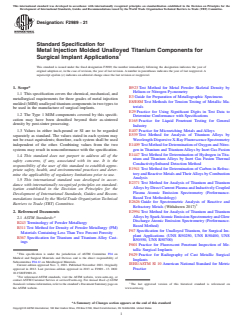
1.1 This specification covers the chemical, mechanical, and metallurgical requirements for three grades of metal injection molded (MIM) unalloyed titanium components in two types to be used in the manufacture of surgical implants.
1.2 The Type 1 MIM components covered by this specification may have been densified beyond their as-sintered density by post-sinter processing.
1.3 Values in either inch-pound or SI are to be regarded separately as standard. The values stated in each system may not be exact equivalents; therefore, each system shall be used independent of the other. Combining values from the two systems may result in nonconformance with the specification.
1.4 This standard does not purport to address all of the safety concerns, if any, associated with its use. It is the responsibility of the user of this standard to establish appropriate safety, health, and environmental practices and determine the applicability of regulatory limitations prior to use.
1.5 This international standard was developed in accordance with internationally recognized principles on standardization established in the Decision on Principles for the Development of International Standards, Guides and Recommendations issued by the World Trade Organization Technical Barriers to Trade (TBT) Committee.
- Status
- Published
- Publication Date
- 31-Oct-2021
- Technical Committee
- F04 - Medical and Surgical Materials and Devices
- Drafting Committee
- F04.12 - Metallurgical Materials
Buy Documents
ASTM F2989-21 - Standard Specification for Metal Injection Molded Unalloyed Titanium Components for Surgical Implant Applications
REDLINE ASTM F2989-21 - Standard Specification for Metal Injection Molded Unalloyed Titanium Components for Surgical Implant Applications
Overview
ASTM F2989-21: Standard Specification for Metal Injection Molded Unalloyed Titanium Components for Surgical Implant Applications provides detailed technical requirements for the use of metal injection molded (MIM) unalloyed titanium in surgical implants. Developed by ASTM International, this standard outlines chemical, mechanical, and metallurgical specifications for three titanium grades and two component types, ensuring the safety, reliability, and performance of titanium components utilized in medical devices and orthopedic applications.
This document supports compliance with global standards and regulatory frameworks, reflecting best practices in material quality, testing, and quality management systems for surgical and medical device manufacturers.
Key Topics
Scope: The standard defines requirements for MIM unalloyed titanium components in surgical implants, specifying chemical composition, mechanical properties, and microstructural attributes across three grades and two types (Type 1: densified post-sinter; Type 2: as-sintered).
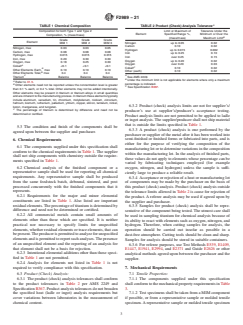
Material Specification: Chemical composition limits are established for elements such as nitrogen, carbon, hydrogen, iron, oxygen, and cobalt, in line with regulatory requirements, such as EU MDR concerning cobalt content.
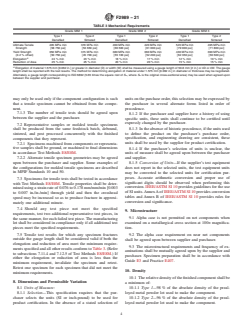
Mechanical Requirements: The standard details minimum tensile properties, including ultimate tensile strength, yield strength, elongation, and reduction of area for each grade and type.
Microstructure and Density: Criteria cover the absence of alpha case (a hard, brittle layer) on net components, required relative densities for Type 1 (98%) and Type 2 (96%) components, and specified testing methods for density.
Testing and Inspection: Certification processes involve chemical analysis, tensile testing, microstructural examination, density measurement, and optional nondestructive tests, such as fluorescent penetrant and radiographic examination, according to agreed procedures between suppliers and purchasers.
Quality Assurance: Emphasizes the need for a quality management system, referencing ISO 9001 and ISO 13485, with provisions for certification and purchaser audits.
Applications
The ASTM F2989-21 specification is essential for a range of medical device and orthopedic manufacturing contexts, where unalloyed titanium MIM components are required for:
- Orthopedic Implants: Including bone plates, screws, and joint replacement devices, where biocompatibility and mechanical performance are critical.
- Dental Implants: Precision components benefiting from the near-net-shape capabilities of metal injection molding and titanium’s established biosafety.
- Custom Surgical Devices: Applications requiring high strength-to-weight ratios, corrosion resistance, and intricate geometries enabled by the MIM process.
By adhering to this standard, manufacturers ensure their titanium components meet rigorous performance, safety, and regulatory requirements for surgical implant applications.
Related Standards
Several international and industry standards are cross-referenced in ASTM F2989-21 to ensure comprehensive quality and regulatory compliance, including:
- ASTM B243: Terminology of Powder Metallurgy
- ASTM E8/E8M: Test Methods for Tension Testing of Metallic Materials
- ASTM F67: Specification for Unalloyed Titanium for Surgical Implant Applications
- ASTM B923: Test Method for Metal Powder Skeletal Density
- ASTM E165, F601, F629: Nondestructive testing methods for surgical implants
- ISO 13485: Medical Devices - Quality Management Systems
- ISO 9001: Quality Management Systems
These documents collectively reinforce the stringent requirements for metal injection molded titanium surgical components, supporting safe and effective patient outcomes across medical and dental fields.
Keywords: ASTM F2989-21, metal injection molded titanium, surgical implants, medical device standards, orthopedic implants, titanium components, MIM, quality assurance, biocompatibility, mechanical properties, international standards.
Relations
- Effective Date
- 01-Jan-2024
- Effective Date
- 15-Nov-2023
- Effective Date
- 01-Nov-2023
- Effective Date
- 01-Feb-2020
- Effective Date
- 01-Mar-2019
- Effective Date
- 01-Oct-2018
- Effective Date
- 01-Mar-2017
- Effective Date
- 01-Oct-2016
- Effective Date
- 15-Jul-2016
- Effective Date
- 01-Jul-2016
- Effective Date
- 01-Dec-2015
- Effective Date
- 01-Jun-2015
- Effective Date
- 01-Feb-2015
- Refers
ASTM F601-13 - Standard Practice for Fluorescent Penetrant Inspection of Metallic Surgical Implants - Effective Date
- 01-Dec-2013
- Effective Date
- 01-Nov-2013
Buy Documents
ASTM F2989-21 - Standard Specification for Metal Injection Molded Unalloyed Titanium Components for Surgical Implant Applications
REDLINE ASTM F2989-21 - Standard Specification for Metal Injection Molded Unalloyed Titanium Components for Surgical Implant Applications
Get Certified
Connect with accredited certification bodies for this standard

BSI Group
BSI (British Standards Institution) is the business standards company that helps organizations make excellence a habit.

TÜV Rheinland
TÜV Rheinland is a leading international provider of technical services.

TÜV SÜD
TÜV SÜD is a trusted partner of choice for safety, security and sustainability solutions.
Sponsored listings
Frequently Asked Questions
ASTM F2989-21 is a technical specification published by ASTM International. Its full title is "Standard Specification for Metal Injection Molded Unalloyed Titanium Components for Surgical Implant Applications". This standard covers: SCOPE 1.1 This specification covers the chemical, mechanical, and metallurgical requirements for three grades of metal injection molded (MIM) unalloyed titanium components in two types to be used in the manufacture of surgical implants. 1.2 The Type 1 MIM components covered by this specification may have been densified beyond their as-sintered density by post-sinter processing. 1.3 Values in either inch-pound or SI are to be regarded separately as standard. The values stated in each system may not be exact equivalents; therefore, each system shall be used independent of the other. Combining values from the two systems may result in nonconformance with the specification. 1.4 This standard does not purport to address all of the safety concerns, if any, associated with its use. It is the responsibility of the user of this standard to establish appropriate safety, health, and environmental practices and determine the applicability of regulatory limitations prior to use. 1.5 This international standard was developed in accordance with internationally recognized principles on standardization established in the Decision on Principles for the Development of International Standards, Guides and Recommendations issued by the World Trade Organization Technical Barriers to Trade (TBT) Committee.
SCOPE 1.1 This specification covers the chemical, mechanical, and metallurgical requirements for three grades of metal injection molded (MIM) unalloyed titanium components in two types to be used in the manufacture of surgical implants. 1.2 The Type 1 MIM components covered by this specification may have been densified beyond their as-sintered density by post-sinter processing. 1.3 Values in either inch-pound or SI are to be regarded separately as standard. The values stated in each system may not be exact equivalents; therefore, each system shall be used independent of the other. Combining values from the two systems may result in nonconformance with the specification. 1.4 This standard does not purport to address all of the safety concerns, if any, associated with its use. It is the responsibility of the user of this standard to establish appropriate safety, health, and environmental practices and determine the applicability of regulatory limitations prior to use. 1.5 This international standard was developed in accordance with internationally recognized principles on standardization established in the Decision on Principles for the Development of International Standards, Guides and Recommendations issued by the World Trade Organization Technical Barriers to Trade (TBT) Committee.
ASTM F2989-21 is classified under the following ICS (International Classification for Standards) categories: 11.040.40 - Implants for surgery, prosthetics and orthotics. The ICS classification helps identify the subject area and facilitates finding related standards.
ASTM F2989-21 has the following relationships with other standards: It is inter standard links to ASTM E8/E8M-24, ASTM B923-23, ASTM E407-23, ASTM F629-20, ASTM E539-19, ASTM B243-18, ASTM F67-13(2017), ASTM B923-16, ASTM E8/E8M-16, ASTM B243-16, ASTM F629-15, ASTM E407-07(2015)e1, ASTM E8/E8M-15, ASTM F601-13, ASTM B243-13. Understanding these relationships helps ensure you are using the most current and applicable version of the standard.
ASTM F2989-21 is available in PDF format for immediate download after purchase. The document can be added to your cart and obtained through the secure checkout process. Digital delivery ensures instant access to the complete standard document.
Standards Content (Sample)
This international standard was developed in accordance with internationally recognized principles on standardization established in the Decision on Principles for the
Development of International Standards, Guides and Recommendations issued by the World Trade Organization Technical Barriers to Trade (TBT) Committee.
Designation: F2989 −21
Standard Specification for
Metal Injection Molded Unalloyed Titanium Components for
Surgical Implant Applications
This standard is issued under the fixed designation F2989; the number immediately following the designation indicates the year of
original adoption or, in the case of revision, the year of last revision.Anumber in parentheses indicates the year of last reapproval.A
superscript epsilon (´) indicates an editorial change since the last revision or reapproval.
1. Scope* B923Test Method for Metal Powder Skeletal Density by
Helium or Nitrogen Pycnometry
1.1 This specification covers the chemical, mechanical, and
E3Guide for Preparation of Metallographic Specimens
metallurgical requirements for three grades of metal injection
E8/E8MTest Methods for Tension Testing of Metallic Ma-
molded (MIM) unalloyed titanium components in two types to
terials
be used in the manufacture of surgical implants.
E29Practice for Using Significant Digits in Test Data to
1.2 The Type 1 MIM components covered by this specifi-
Determine Conformance with Specifications
cation may have been densified beyond their as-sintered
E165Practice for Liquid Penetrant Testing for General
density by post-sinter processing.
Industry
E407Practice for Microetching Metals and Alloys
1.3 Values in either inch-pound or SI are to be regarded
separately as standard. The values stated in each system may E539Test Method for Analysis of Titanium Alloys by
WavelengthDispersiveX-RayFluorescenceSpectrometry
not be exact equivalents; therefore, each system shall be used
independent of the other. Combining values from the two E1409TestMethodforDeterminationofOxygenandNitro-
gen in Titanium and TitaniumAlloys by Inert Gas Fusion
systems may result in nonconformance with the specification.
E1447Test Method for Determination of Hydrogen in Tita-
1.4 This standard does not purport to address all of the
nium and Titanium Alloys by Inert Gas Fusion Thermal
safety concerns, if any, associated with its use. It is the
Conductivity/Infrared Detection Method
responsibility of the user of this standard to establish appro-
E1941Test Method for Determination of Carbon in Refrac-
priate safety, health, and environmental practices and deter-
toryandReactiveMetalsandTheirAlloysbyCombustion
mine the applicability of regulatory limitations prior to use.
Analysis
1.5 This international standard was developed in accor-
E2371Test Method for Analysis of Titanium and Titanium
dance with internationally recognized principles on standard-
AlloysbyDirectCurrentPlasmaandInductivelyCoupled
ization established in the Decision on Principles for the
Plasma Atomic Emission Spectrometry (Performance-
Development of International Standards, Guides and Recom-
Based Test Methodology)
mendations issued by the World Trade Organization Technical
E2626Guide for Spectrometric Analysis of Reactive and
Barriers to Trade (TBT) Committee.
Refractory Metals (Withdrawn 2017)
E2994Test Method for Analysis of Titanium and Titanium
2. Referenced Documents
2 AlloysbySparkAtomicEmissionSpectrometryandGlow
2.1 ASTM Standards:
Discharge Atomic Emission Spectrometry (Performance-
B243Terminology of Powder Metallurgy
Based Method)
B311Test Method for Density of Powder Metallurgy (PM)
F67Specification for Unalloyed Titanium, for Surgical Im-
Materials Containing Less Than Two Percent Porosity
plant Applications (UNS R50250, UNS R50400, UNS
B367Specification for Titanium and Titanium Alloy Cast-
R50550, UNS R50700)
ings
F601Practice for Fluorescent Penetrant Inspection of Me-
tallic Surgical Implants
This specification is under the jurisdiction of ASTM Committee F04 on
F629Practice for Radiography of Cast Metallic Surgical
Medical and Surgical Materials and Devices and is the direct responsibility of
Implants
Subcommittee F04.12 on Metallurgical Materials.
IEEE/ASTM SI 10American National Standard for Metric
Current edition approved Nov. 1, 2021. Published November 2021. Originally
approved in 2012. Last previous edition approved in 2013 as F2989–13. DOI: Practice
10.1520/F2989-21.
For referenced ASTM standards, visit the ASTM website, www.astm.org, or
contact ASTM Customer Service at service@astm.org. For Annual Book of ASTM
Standards volume information, refer to the standard’s Document Summary page on The last approved version of this historical standard is referenced on
the ASTM website. www.astm.org.
*A Summary of Changes section appears at the end of this standard
Copyright © ASTM International, 100 Barr Harbor Drive, PO Box C700, West Conshohocken, PA 19428-2959. United States
F2989 − 21
2.2 ISO Standards: 3.3.5 lot, n—a specified quantity of components made up of
ISO5832-3ImplantsforSurgery—MetallicMaterials—Part the same batch of feedstock, debound, sintered, and post-
3: Wrought Titanium 6-Aluminum 4-Vanadium Alloy processed under the same conditions at essentially the same
ISO 6892Metallic Materials—Tensile Testing at Ambient time.
Temperature
3.3.6 metal injection molded component, n—product fabri-
ISO 9001Quality Management Systems—Requirements
cated by a metal injection molding process consisting of
ISO 13485 Medical Devices—Quality Management
mixing metal powders with binders to make a feedstock,
Systems—Requirements for Regulatory Purpose
introducing this feedstock into a mold by injection or other
2.3 Aerospace Material Specifications:
means, debinding to remove the binders, and sintering.
AMS 2249Chemical Check Analysis Limits, Titanium and
3.3.7 near net component, n—a component that meets
Titanium Alloys
dimensional tolerance as built with little post processing.
2.4 MPIF Standards:
3.3.8 net component, n—a component that meets dimen-
Standard 10Determination of the Tensile Properties of
sional tolerance as built with no post processing.
Powder Metallurgy Materials
3.3.9 pre-alloyed powder, n—powder composed of two or
Standard 42Determination of Density of Compacted or
more elements that are alloyed in the powder manufacturing
Sintered Powder Metallurgy Product
process in which the particles are of the same nominal
Standard 50 Preparing and Evaluating Metal Injection
composition throughout.
Molded Sintered/Heat Treated Tension Specimens
Standard 63Density Determinations of MIM Components
3.3.10 relative density, n—the density ratio, often expressed
(Gas Pycnometry)
as a percentage, of the density of a porous material to the
Standard 64Terms Used in Metal Injection Molding
absolute density of the same material, completely free of
porosity.
3. Terminology
3.3.11 sintering, v—themetallurgicalbondingofparticlesin
3.1 DefinitionsofpowdermetallurgyandMIMtermscanbe
a MIM component resulting from a thermal treatment at a
foundinTerminologyB243andMPIFStandard64.Additional
temperature below the melting point of the main constituent.
descriptive information is available in the Related Material
3.3.12 Type 1, n—a MIM component that may have been
Section of Vol. 02.05 of the Annual Book of ASTM Standards.
densified beyond its as-sintered density by post-sinter process-
3.2 The materials produced by means of the metal injection
ing.
moldingprocessaredesignatedbytheprefix“MIM,”followed
3.3.13 Type 2, n—a MIM component that shows the as-
by the appropriate designation for the alloy grade. The MIM
sintered density and was not densified after sintering.
designates that it was made by metal injection molding.
3.3 Definitions of Terms Specific to This Standard:
4. Ordering Information
3.3.1 absolute density, n—the value of density used to
4.1 Include with inquiries and orders for material under this
characterize a powder material with a particular chemical
specification the following information:
composition as if it were a fully dense material, completely
4.1.1 Quantity,
free of porosity.
4.1.2 ASTM specification and date of issue,
3.3.1.1 Discussion—For the purposes of this specification,
4.1.3 Grade (MIM 1, MIM 2, or MIM 3),
the skeletal density (also referred to as pycnometer density)
4.1.4 Type (1 or 2),
measured on the raw material powders using the pycnometry
4.1.5 Units to be certified—SI or inch-pound,
method of Test Method B923 shall be used to represent the
4.1.6 Component configuration (engineering drawing or 3D
absolute density of the particular chemical composition.
solid model, or both) and dimensional requirements,
3.3.2 debinding, v—a step between molding and sintering
4.1.7 Condition (5.2),
where the majority of the binder used in molding is extracted
4.1.8 Mechanical properties (if applicable),
by heat, solvent, a catalyst, or other techniques.
4.1.9 Finish (5.2),
3.3.3 feedstock, n—in metal injection molding, a moldable
4.1.10 Special tests (Sections 9, 10, and 11), if any, and
mixture of metal powder and binder.
4.1.11 Other requirements.
3.3.4 feedstock batch, n—a specified quantity of feedstock
made up of the same lot of metallic powders and the same lot
5. Materials and Manufacture
of binder materials mixed under the same conditions at
5.1 Components conforming to this specification shall be
essentially the same time.
produced by the metal injection molding process using unal-
loyed metal powders with major elemental composition meet-
ing the chemical requirements of Table 1.
Available fromAmerican National Standards Institute (ANSI), 25 W. 43rd St.,
4th Floor, New York, NY 10036, http://www.ansi.org.
5.2 Post-sintering operations may be employed to achieve
AvailablefromSAEInternational(SAE),400CommonwealthDr.,Warrendale,
the desired density, shape, size, surface finish, or other com-
PA 15096-0001, http://aerospace.sae.org.
ponent properties. The post-sintering operations shall be
Available from Metal Powder Industries Federation (MPIF), 105 College Rd.
East, Princeton, NJ 08540, http://www.mpif.org. agreed upon between the supplier and purchaser.
F2989 − 21
A
TABLE 1 Chemical Composition TABLE 2 Product (Check) Analysis Tolerance
Limit or Maximum of Tolerance Under the
Composition for both Type 1 and Type 2
Element Specified Range %, Minimum or Over the
Composition, % (mass/mass)
B
(mass/mass) Maximum Limit
Grade Grade Grade
Element
Nitrogen up to 0.05 0.02
MIM 1 MIM 2 MIM 3
Carbon 0.10 0.02
Nitrogen, max 0.03 0.03 0.05
Hydrogen up to 0.015 0.002
Carbon, max 0.08 0.08 0.08
Iron up to 0.25 0.10
Hydrogen, max 0.015 0.015 0.015
Iron over 0.25 0.15
Iron, max 0.20 0.30 0.30
Oxygen up to 0.20 0.02
Oxygen, max 0.18 0.25 0.30
Oxygen over 0.20 0.03
A
Cobalt <0.1 <0.1 <0.1
C
Cobalt 0.10 0.02
B
Other Elements Each, max 0.10 0.10 0.10
Other (each) 0.10 0.02
B
Other Elements Total, max 0.4 0.4 0.4
A
C
Titanium Balance Balance Balance See AMS 2249.
B
Under the minimum limit is not applicable for elements where only a maximum
A
Refer to X1.5.
percentage is indicated.
B
Other elements need not be reported unless the concentration level is greater
C
See Specification B367.
than 0.1 % each, or 0.4 % total. Other elements may not be added intentionally.
Other elements may be present in titanium or titanium alloys in small quantities
andareinherenttothemanufacturingprocess.Intitaniumtheseelementstypically
include aluminum, vanadium, tin, chromium, molybdenum, niobium, zirconium,
hafnium, bismuth, ruthenium, palladium, yttrium, copper, silicon, tantalum, nickel,
6.3.2 Product (check) analysis limits are not for supplier’s/
boron, manganese, and tungsten.
C
The percentage of titanium is determined by difference and need not be
producer’s use at supplier’s/producer’s acceptance testing.
determined or certified.
Product analysis limits are not permitted to be applied to ladle
or ingot analysis.The supplier/producer shall not ship material
that is outside the limits specified in Table 1.
5.3 The condition and finish of the components shall be
6.3.3 A product (check) analysis is one performed by the
agreed upon between the supplier and purchaser.
purchaserorsupplierofthemetalafterithasbeenworkedinto
semi-finished or finished forms or fabricated into parts, and is
6. Chemical Requirements
either for the purpose of verifying the composition of the
6.1 The components supplied under this specification shall
manufacturinglotortodeterminevariationsinthecomposition
conform to the chemical requirements in Table 1.The supplier
within the manufacturing lot. In the analysis of finished parts,
shall not ship components with chemistry outside the require-
thesevaluesdonotapplytoelementswhosepercentagecanbe
ments specified in Table 1.
varied by fabricating techniques employed (for example
6.2 Chemical analysis of the finished component or a
oxygen, nitrogen, and hydrogen) unless the sample is suffi-
representative sample shall be used for reporting all chemical
ciently large to produce a reliable result.
requirements. Any representative sample shall be produced
6.3.4 Acceptance or rejection of a heat or manufacturing lot
from the same feedstock batch, debound, sintered, and post
of components may be made by the purchaser on the basis of
processed concurrently with the finished components that it
this product (check) analysis. Product (check) analysis outside
represents.
the tolerance limits allowed in Table 2 is cause for rejection of
6.2.1 Requirements for the major and minor elemental
the product.Areferee analysis may be used if agreed upon by
constituents are listed in Table 1. Also listed are important
the supplier and purchaser.
residualelements.Thepercentageoftitaniumisdeterminedby
6.3.5 Samples for product (check) analysis shall be repre-
difference and need not be determined or certified.
sentative of the component being tested. The utmost care shall
6.2.2 All commercial metals contain small amounts of
be used in sampling titanium for chemical analysis because of
elements other than those which are specified. It is neither
its ability to react with elements such as oxygen, nitrogen, and
practical nor necessary to specify limits for unspecified
hydrogen. Therefore, when cutting samples for analysis, the
elements,whetherresidualelementsortraceelements,thatcan
operation should be carried out insofa
...
This document is not an ASTM standard and is intended only to provide the user of an ASTM standard an indication of what changes have been made to the previous version. Because
it may not be technically possible to adequately depict all changes accurately, ASTM recommends that users consult prior editions as appropriate. In all cases only the current version
of the standard as published by ASTM is to be considered the official document.
Designation: F2989 − 13 F2989 − 21
Standard Specification for
Metal Injection Molded Unalloyed Titanium Components for
Surgical Implant Applications
This standard is issued under the fixed designation F2989; the number immediately following the designation indicates the year of
original adoption or, in the case of revision, the year of last revision. A number in parentheses indicates the year of last reapproval. A
superscript epsilon (´) indicates an editorial change since the last revision or reapproval.
1. Scope Scope*
1.1 This specification covers the chemical, mechanical, and metallurgical requirements for three grades of metal injection molded
(MIM) unalloyed titanium components in two types to be used in the manufacture of surgical implants.
1.2 The Type 1 MIM components covered by this specification may have been densified beyond their as-sintered density by
post-sinter processing.
1.3 Values in either inch-pound or SI are to be regarded separately as standard. The values stated in each system may not be exact
equivalents; therefore, each system shall be used independent of the other. Combining values from the two systems may result in
non-conformancenonconformance with the specification.
1.4 This standard does not purport to address all of the safety concerns, if any, associated with its use. It is the responsibility
of the user of this standard to establish appropriate safety safety, health, and healthenvironmental practices and determine the
applicability of regulatory limitations prior to use.
1.5 This international standard was developed in accordance with internationally recognized principles on standardization
established in the Decision on Principles for the Development of International Standards, Guides and Recommendations issued
by the World Trade Organization Technical Barriers to Trade (TBT) Committee.
2. Referenced Documents
2.1 ASTM Standards:
B243 Terminology of Powder Metallurgy
B311 Test Method for Density of Powder Metallurgy (PM) Materials Containing Less Than Two Percent Porosity
B367 Specification for Titanium and Titanium Alloy Castings
B923 Test Method for Metal Powder Skeletal Density by Helium or Nitrogen Pycnometry
E3 Guide for Preparation of Metallographic Specimens
E8/E8M Test Methods for Tension Testing of Metallic Materials
E29 Practice for Using Significant Digits in Test Data to Determine Conformance with Specifications
E165 Practice for Liquid Penetrant Testing for General Industry
E407 Practice for Microetching Metals and Alloys
E539 Test Method for Analysis of Titanium Alloys by Wavelength Dispersive X-Ray Fluorescence Spectrometry
This specification is under the jurisdiction of ASTM Committee F04 on Medical and Surgical Materials and Devices and is the direct responsibility of Subcommittee
F04.12 on Metallurgical Materials.
Current edition approved April 1, 2013Nov. 1, 2021. Published April 2013November 2021. Originally approved in 2012. Last previous edition approved in 20122013 as
F2989F2989 – 13.– 12. DOI: 10.1520/F2989-13.10.1520/F2989-21.
For referenced ASTM standards, visit the ASTM website, www.astm.org, or contact ASTM Customer Service at service@astm.org. For Annual Book of ASTM Standards
volume information, refer to the standard’s Document Summary page on the ASTM website.
*A Summary of Changes section appears at the end of this standard
Copyright © ASTM International, 100 Barr Harbor Drive, PO Box C700, West Conshohocken, PA 19428-2959. United States
F2989 − 21
E1409 Test Method for Determination of Oxygen and Nitrogen in Titanium and Titanium Alloys by Inert Gas Fusion
E1447 Test Method for Determination of Hydrogen in Titanium and Titanium Alloys by Inert Gas Fusion Thermal
Conductivity/Infrared Detection Method
E1941 Test Method for Determination of Carbon in Refractory and Reactive Metals and Their Alloys by Combustion Analysis
E2371 Test Method for Analysis of Titanium and Titanium Alloys by Direct Current Plasma and Inductively Coupled Plasma
Atomic Emission Spectrometry (Performance-Based Test Methodology)
E2626 Guide for Spectrometric Analysis of Reactive and Refractory Metals (Withdrawn 2017)
E2994 Test Method for Analysis of Titanium and Titanium Alloys by Spark Atomic Emission Spectrometry and Glow Discharge
Atomic Emission Spectrometry (Performance-Based Method)
F67 Specification for Unalloyed Titanium, for Surgical Implant Applications (UNS R50250, UNS R50400, UNS R50550, UNS
R50700)
F601 Practice for Fluorescent Penetrant Inspection of Metallic Surgical Implants
F629 Practice for Radiography of Cast Metallic Surgical Implants
IEEE/ASTM SI 10 American National Standard for Use of the International System of Units (SI): The Modern Metric
SystemMetric Practice
2.2 ISO Standards:
ISO 5832-3 Implants for Surgery—Metallic Materials—Part 3: Wrought Titanium 6-Aluminum 4-Vanadium Alloy
ISO 6892 Metallic Materials—Tensile Testing at Ambient Temperature
ISO 9001 Quality Management Systems—Requirements
ISO 13485 Medical Devices—Quality Management Systems—Requirements for Regulatory Purpose
2.3 Aerospace Material Specifications:
AMS 2249 Chemical Check Analysis Limits, Titanium and Titanium Alloys
2.4 MPIF Standards:
Standard 10 Determination of the Tensile Properties of Powder Metallurgy Materials
Standard 42 Determination of Density of Compacted or Sintered Powder Metallurgy Product
Standard 50 Preparing and Evaluating Metal Injection Molded Sintered/Heat Treated Tension Specimens
Standard 63 Density Determinations of MIM Components (Gas Pycnometry)
Standard 64 Terms Used in Metal Injection Molding
3. Terminology
3.1 Definitions of powder metallurgy and MIM terms can be found in Terminology B243 and MPIF Standard 64. Additional
descriptive information is available in the Related Material Section of Vol. 02.05 of the Annual Book of ASTM Standards.
3.2 The materials produced by means of the metal injection molding process are designated by the prefix, “MIM”,prefix “MIM,”
followed by the appropriate designation for the alloy grade. The MIM designates that it was made by metal injection molding.
3.3 Definitions of Terms Specific to This Standard:
3.3.1 absolute density, n—the value of density used to characterize a powder material with a particular chemical composition as
if it were a fully dense material, completely free of porosity.
3.3.1.1 Discussion—
For the purposes of this specification, the skeletal density (also referred to as pycnometer density) measured on the raw material
powders using the pycnometry method of Test Method B923 shall be used to represent the absolute density of the particular
chemical composition.
3.3.2 debinding, v—a step between molding and sintering where the majority of the binder used in molding is extracted by heat,
solvent, a catalyst, or other techniques.
3.3.3 feedstock, n—in metal injection molding, a moldable mixture of metal powder and binder.
3.3.4 feedstock batch, n—a specified quantity of feedstock made up of the same lot of metallic powders and the same lot of binder
materials mixed under the same conditions at essentially the same time.
The last approved version of this historical standard is referenced on www.astm.org.
Available from American National Standards Institute (ANSI), 25 W. 43rd St., 4th Floor, New York, NY 10036, http://www.ansi.org.
Available from SAE International (SAE), 400 Commonwealth Dr., Warrendale, PA 15096-0001, http://aerospace.sae.org.
Available from Metal Powder Industries Federation (MPIF), 105 College Rd. East, Princeton, NJ 08540, http://www.mpif.org.
F2989 − 21
3.3.5 lot, n—a specified quantity of components made up of the same batch of feedstock, debound, sintered, and post-processed
under the same conditions at essentially the same time.
3.3.6 metal injection molded component, n—product fabricated by a metal injection molding process consisting of mixing metal
powders with binders to make a feedstock, introducing this feedstock into a mold by injection or other means, debinding to remove
the binders, and sintering.
3.3.7 near net component, n—a component that meets dimensional tolerance as built with little post processing.
3.3.8 net component, n—a component that meets dimensional tolerance as built with no post processing.
3.3.9 pre-alloyed powder, n—powder composed of two or more elements that are alloyed in the powder manufacturing process
in which the particles are of the same nominal composition throughout.
3.3.10 relative density, n—the density ratio, often expressed as a percentage, of the density of a porous material to the absolute
density of the same material, completely free of porosity.
3.3.11 sintering, v—the metallurgical bonding of particles in a MIM component resulting from a thermal treatment at a
temperature below the melting point of the main constituent.
3.3.12 Type 1, n—a MIM component that may have been desifieddensified beyond its as-sintered density by post-sinter processing.
3.3.13 Type 2, n—a MIM component that shows the as-sintered density and was not densified after sintering.
4. Ordering Information
4.1 Include with inquiries and orders for material under this specification the following information:
4.1.1 Quantity,
4.1.2 ASTM specification and date of issue,
4.1.3 Grade (MIM 1, MIM 2, or MIM 3),
4.1.4 Type (1 or 2),
4.1.5 Units to be certified—SI or Inch-Pounds,inch-pound,
4.1.6 Component configuration (engineering drawing or 3D solid model, or both) and dimensional requirements,
4.1.7 Condition (5.2),
4.1.8 Mechanical properties (if applicable),
4.1.9 Finish (5.2),
4.1.10 Special tests ((Sections 9, 10, and 11), if any, and
4.1.11 Other requirements.
5. Materials and Manufacture
5.1 Components conforming to this specification shall be produced by the metal injection molding process using unalloyed metal
powders with major elemental composition meeting the chemical requirements of Table 1.
F2989 − 21
TABLE 1 Chemical Composition
Composition for both Type 1 and Type 2
Composition, % (mass/mass)
Grade Grade Grade
Element
MIM 1 MIM 2 MIM 3
Nitrogen, max 0.03 0.03 0.05
Carbon, max 0.08 0.08 0.08
Hydrogen, max 0.015 0.015 0.015
Iron, max 0.20 0.30 0.30
Oxygen, max 0.18 0.25 0.30
A
Cobalt <0.1 <0.1 <0.1
B
Other Elements Each, max 0.10 0.10 0.10
B
Other Elements Total, max 0.4 0.4 0.4
C
Titanium Balance Balance Balance
A
Refer to X1.5.
B
Other elements need not be reported unless the concentration level is greater
than 0.1 % each, or 0.4 % total. Other elements may not be added intentionally.
Other elements may be present in titanium or titanium alloys in small quantities
and are inherent to the manufacturing process. In titanium these elements typically
include aluminum, vanadium, tin, chromium, molybdenum, niobium, zirconium,
hafnium, bismuth, ruthenium, palladium, yttrium, copper, silicon, tantalum, nickel,
boron, manganese, and tungsten.
C
The percentage of titanium is determined by difference and need not be
determined or certified.
5.2 Post-sintering operations may be employed to achieve the desired density, shape, size, surface finish, or other component
properties. The post-sintering operations shall be agreed upon between the supplier and purchaser.
5.3 The condition and finish of the components shall be agreed upon between the supplier and purchaser.
6. Chemical Requirements
6.1 The components supplied under this specification shall conform to the chemical requirements in Table 1. The supplier shall
not ship components with chemistry outside the requirements specified in Table 1.
6.2 Chemical analysis of the finished component or a representative sample shall be used for reporting all chemical requirements.
Any representative sample shall be produced from the same feedstock batch, debound, sintered, and post processed concurrently
with the finished components that it represents.
6.2.1 Requirements for the major and minor elemental constituents are listed in Table 1. Also listed are important residual
elements. The percentage of titanium is determined by difference and need not be determined or certified.
6.2.2 All commercial metals contain small amounts of elements other than those which are specified. It is neither practical nor
necessary to specify limits for unspecified elements, whether residual elements or trace elements, that can be present. The producer
is permitted to analyze for unspecified elements and is permitted to report such analyses. The presence of an unspecified element
and the reporting of an analysis for that element shall not be a basis for rejection.
6.2.3 Intentional elemental additions other than those specified in Table 1 are not permitted.
6.2.4 Analysis for elements not listed in Table 1 is not required to verify compliance with this specification.
6.3 Product (Check) Analysis:
6.3.1 Product analysis tolerances do not broaden the specified heat analysis requirements but coverThe product (check) analysis
tolerances shall conform to the product tolerances in Table 2 variations in the measurement ofper AMS 2249 and Specification
B367chemical content between laboratories. The product analysis tolerances shall conform to the product tolerances in. Product
analysis tolerances do not broaden the specified heat (ladle or ingot) analysis requirements Table 2.but cover variations between
laboratories in the measurement of chemical content.
F2989 − 21
A
TABLE 2 Product (Check) Analysis Tolerance
Limit or Maximum of Tolerance Under the
Element Specified Range %, Minimum or Over the
B
(mass/mass) Maximum Limit
Nitrogen up to 0.05 0.02
Carbon 0.10 0.02
Hydrogen up to 0.015 0.002
Iron up to 0.25 0.10
Iron over 0.25 0.15
Oxygen up to 0.20 0.02
Oxygen over 0.20 0.03
C
Cobalt 0.10 0.02
Other (each) 0.10 0.02
A
See AMS 2249.
B
Under the minimum limit is not applicable for elements where only a maximum
percentage is indicated.
C
See Specification B367.
6.3.2 Product (check) analysis limits are not for supplier’s/producer’s use at supplier’s/producer’s acceptance testing. Product
analysis limits are not permitted to be applied to ladle or ingot analysis. The supplier/producer shall not ship material that is outside
the limits specified in Table 1.
6.3.3 TheA product analysis is (check) analysis is one performed by the purchaser or supplier of the metal after it has been worked
into semi-finished or finished forms or fabricated into parts, and is either for the purpose of verifying the composition of the
manufacturing lot or to determine variations in the composition within the lot. Acceptance or rejection of the manufacturing lot
of components may be made by the purchaser on the basis of this product analyses.manufacturing lot. In the analysis of finished
parts, these values do not apply to elements whose percentage can be varied by fabricating techniques employed (for example
oxygen, nitrogen, and hydrogen) unless the sample is sufficiently large to produce a reliable result.
6.3.4 Acceptance or rejection of a heat or manufacturing lot of components may be made by the purchaser on the basis of this
product (check) analysis. Product (check) analysis outside the t
...