

ASTM E2584-20
(Practice)Standard Practice for Thermal Conductivity of Materials Using a Thermal Capacitance (Slug) Calorimeter
General Information
- Abstract
SIGNIFICANCE AND USE
5.1 This practice is useful for testing materials in general, including composites and multi-layered types.
5.2 The practice is especially useful for materials which undergo significant reactions or local dimensional changes, or both, during exposure to elevated temperatures and thus are difficult to evaluate using existing standard test methods such as Test Method C1113.
5.3 Performing the test over multiple heating/cooling cycles allows an assessment of the influence of reactions, phase changes, and mass transfer of reactions gases (for example, steam) on the thermal performance.
Note 3: This practice has been found to be especially applicable to testing fire resistive materials.
SCOPE
1.1 This practice describes a technique for the determination of the apparent thermal conductivity, λa, and thermal diffusivity, αa, of materials. It is for solid materials with apparent thermal conductivities in the approximate range 0.02 a
Note 1: While the practice should also be applicable to determining the thermal conductivity and thermal diffusivity of non-reactive materials, it has been found specifically useful in testing fire resistive materials that are both reactive and undergo significant dimensional changes during a high temperature exposure.
1.2 The values stated in SI units are to be regarded as standard. No other units of measurement are included in this standard.
1.3 This standard does not purport to address all of the safety concerns, if any, associated with its use. It is the responsibility of the user of this standard to establish appropriate safety, health, and environmental practices and determine the applicability of regulatory limitations prior to use.
1.4 This international standard was developed in accordance with internationally recognized principles on standardization established in the Decision on Principles for the Development of International Standards, Guides and Recommendations issued by the World Trade Organization Technical Barriers to Trade (TBT) Committee.
- Status
- Published
- Publication Date
- 30-Apr-2020
- Technical Committee
- E37 - Thermal Measurements
- Drafting Committee
- E37.05 - Thermophysical Properties
Buy Documents
ASTM E2584-20 - Standard Practice for Thermal Conductivity of Materials Using a Thermal Capacitance (Slug) Calorimeter
REDLINE ASTM E2584-20 - Standard Practice for Thermal Conductivity of Materials Using a Thermal Capacitance (Slug) Calorimeter
Overview
ASTM E2584-20 is the globally recognized standard practice for determining the apparent thermal conductivity and thermal diffusivity of solid materials using a thermal capacitance (slug) calorimeter. This test method is particularly valuable for evaluating a wide range of materials, including those that are composites, multi-layered, or undergo significant physical or chemical changes when exposed to elevated temperatures. The technique is especially suited for fire resistive materials, where conventional thermal conductivity test methods may not be suitable due to material reactivity or dimensional instability during testing.
The standard outlines procedures for the assembly, testing, and analysis required to measure thermal conductivity and diffusivity over a broad temperature range in accordance with international practices. It prescribes the use of SI units exclusively and highlights the importance of addressing all relevant safety considerations before conducting tests.
Key Topics
Thermal Conductivity Testing:
Utilizes a slug calorimeter method where a sample surrounds a metal slug; heat transfer through the specimen is calculated based on temperature response during controlled heating and cooling cycles.Thermal Diffusivity Assessment:
Involves measuring temperature differentials between the surface and center of the specimen to determine how quickly heat spreads through the material.Significance for Reactive and Fire Resistive Materials:
The method is especially applicable for materials that react, change phase, or experience dimensional change at high temperatures-conditions where other standard methods may fail.Precision and Repeatability:
Interlaboratory studies confirm the method’s repeatability and reproducibility for various fire resistive and insulation materials.Data Reporting Requirements:
Standardized reporting includes specimen identification, apparatus configuration, sensor details, and complete data on thermal properties over multiple heating and cooling cycles.
Applications
ASTM E2584-20 provides practical value across several sectors, particularly those requiring reliable measurement of thermal performance under challenging conditions, such as:
Fire Resistive Materials:
Essential for testing sprayed or board-type fireproofing used in building construction, industrial furnaces, and passive fire protection systems.Insulation Materials:
Suitable for composites, multi-layered insulations, and materials where reactions at high temperatures (e.g., gas emission, shrinkage, or phase changes) could affect standard test outcomes.Research and Quality Control:
Supports evaluation of new materials and quality assurance for products that must maintain thermal performance under cyclic thermal loading or exposure to high-heat environments.Product Development and Benchmarking:
Enables validation of claims for new or modified insulation products, especially those responding dynamically to heat or fire.
Related Standards
For comprehensive testing and reliable thermal property measurements, reference to the following standards is recommended:
- ASTM C1113: Test Method for Thermal Conductivity of Refractories by Hot Wire (Platinum Resistance Thermometer Technique)
- ASTM E220: Test Method for Calibration of Thermocouples by Comparison Techniques
- ASTM E230: Specification for Temperature-Electromotive Force (emf) Tables for Standardized Thermocouples
- ASTM E457: Test Method for Measuring Heat-Transfer Rate Using a Thermal Capacitance (Slug) Calorimeter
- ASTM E691: Practice for Conducting an Interlaboratory Study to Determine the Precision of a Test Method
Together, these standards provide a robust framework for evaluating the thermal conductivity and diffusivity of diverse materials, supporting safety, regulatory compliance, and performance optimization in high-temperature applications.
Keywords:
thermal conductivity, slug calorimeter, thermal diffusivity, fire resistive materials, ASTM E2584, insulation testing, high temperature materials, passive fire protection
Relations
- Effective Date
- 01-May-2020
- Effective Date
- 01-May-2014
- Effective Date
- 01-Nov-2013
- Effective Date
- 01-May-2013
- Effective Date
- 01-May-2013
- Effective Date
- 01-Nov-2011
- Effective Date
- 01-Oct-2010
- Effective Date
- 01-Oct-2008
- Effective Date
- 01-Oct-2008
- Effective Date
- 01-May-2008
- Refers
ASTM E220-07a - Standard Test Method for Calibration of Thermocouples By Comparison Techniques - Effective Date
- 01-Nov-2007
- Refers
ASTM E220-07e1 - Standard Test Method for Calibration of Thermocouples By Comparison Techniques - Effective Date
- 01-May-2007
- Effective Date
- 01-May-2007
- Refers
ASTM E177-06b - Standard Practice for Use of the Terms Precision and Bias in ASTM Test Methods - Effective Date
- 15-Nov-2006
- Refers
ASTM E177-06a - Standard Practice for Use of the Terms Precision and Bias in ASTM Test Methods - Effective Date
- 01-Nov-2006
Buy Documents
ASTM E2584-20 - Standard Practice for Thermal Conductivity of Materials Using a Thermal Capacitance (Slug) Calorimeter
REDLINE ASTM E2584-20 - Standard Practice for Thermal Conductivity of Materials Using a Thermal Capacitance (Slug) Calorimeter
Get Certified
Connect with accredited certification bodies for this standard

BSMI (Bureau of Standards, Metrology and Inspection)
Taiwan's standards and inspection authority.
Sponsored listings
Frequently Asked Questions
ASTM E2584-20 is a standard published by ASTM International. Its full title is "Standard Practice for Thermal Conductivity of Materials Using a Thermal Capacitance (Slug) Calorimeter". This standard covers: SIGNIFICANCE AND USE 5.1 This practice is useful for testing materials in general, including composites and multi-layered types. 5.2 The practice is especially useful for materials which undergo significant reactions or local dimensional changes, or both, during exposure to elevated temperatures and thus are difficult to evaluate using existing standard test methods such as Test Method C1113. 5.3 Performing the test over multiple heating/cooling cycles allows an assessment of the influence of reactions, phase changes, and mass transfer of reactions gases (for example, steam) on the thermal performance. Note 3: This practice has been found to be especially applicable to testing fire resistive materials. SCOPE 1.1 This practice describes a technique for the determination of the apparent thermal conductivity, λa, and thermal diffusivity, αa, of materials. It is for solid materials with apparent thermal conductivities in the approximate range 0.02 a Note 1: While the practice should also be applicable to determining the thermal conductivity and thermal diffusivity of non-reactive materials, it has been found specifically useful in testing fire resistive materials that are both reactive and undergo significant dimensional changes during a high temperature exposure. 1.2 The values stated in SI units are to be regarded as standard. No other units of measurement are included in this standard. 1.3 This standard does not purport to address all of the safety concerns, if any, associated with its use. It is the responsibility of the user of this standard to establish appropriate safety, health, and environmental practices and determine the applicability of regulatory limitations prior to use. 1.4 This international standard was developed in accordance with internationally recognized principles on standardization established in the Decision on Principles for the Development of International Standards, Guides and Recommendations issued by the World Trade Organization Technical Barriers to Trade (TBT) Committee.
SIGNIFICANCE AND USE 5.1 This practice is useful for testing materials in general, including composites and multi-layered types. 5.2 The practice is especially useful for materials which undergo significant reactions or local dimensional changes, or both, during exposure to elevated temperatures and thus are difficult to evaluate using existing standard test methods such as Test Method C1113. 5.3 Performing the test over multiple heating/cooling cycles allows an assessment of the influence of reactions, phase changes, and mass transfer of reactions gases (for example, steam) on the thermal performance. Note 3: This practice has been found to be especially applicable to testing fire resistive materials. SCOPE 1.1 This practice describes a technique for the determination of the apparent thermal conductivity, λa, and thermal diffusivity, αa, of materials. It is for solid materials with apparent thermal conductivities in the approximate range 0.02 a Note 1: While the practice should also be applicable to determining the thermal conductivity and thermal diffusivity of non-reactive materials, it has been found specifically useful in testing fire resistive materials that are both reactive and undergo significant dimensional changes during a high temperature exposure. 1.2 The values stated in SI units are to be regarded as standard. No other units of measurement are included in this standard. 1.3 This standard does not purport to address all of the safety concerns, if any, associated with its use. It is the responsibility of the user of this standard to establish appropriate safety, health, and environmental practices and determine the applicability of regulatory limitations prior to use. 1.4 This international standard was developed in accordance with internationally recognized principles on standardization established in the Decision on Principles for the Development of International Standards, Guides and Recommendations issued by the World Trade Organization Technical Barriers to Trade (TBT) Committee.
ASTM E2584-20 is classified under the following ICS (International Classification for Standards) categories: 17.200.10 - Heat. Calorimetry. The ICS classification helps identify the subject area and facilitates finding related standards.
ASTM E2584-20 has the following relationships with other standards: It is inter standard links to ASTM E2584-14, ASTM E177-14, ASTM E220-13, ASTM E691-13, ASTM E177-13, ASTM E691-11, ASTM E177-10, ASTM E691-08, ASTM E177-08, ASTM E457-08, ASTM E220-07a, ASTM E220-07e1, ASTM E220-07, ASTM E177-06b, ASTM E177-06a. Understanding these relationships helps ensure you are using the most current and applicable version of the standard.
ASTM E2584-20 is available in PDF format for immediate download after purchase. The document can be added to your cart and obtained through the secure checkout process. Digital delivery ensures instant access to the complete standard document.
Standards Content (Sample)
This international standard was developed in accordance with internationally recognized principles on standardization established in the Decision on Principles for the
Development of International Standards, Guides and Recommendations issued by the World Trade Organization Technical Barriers to Trade (TBT) Committee.
Designation: E2584 − 20
Standard Practice for
Thermal Conductivity of Materials Using a Thermal
Capacitance (Slug) Calorimeter
This standard is issued under the fixed designation E2584; the number immediately following the designation indicates the year of
original adoption or, in the case of revision, the year of last revision.Anumber in parentheses indicates the year of last reapproval.A
superscript epsilon (´) indicates an editorial change since the last revision or reapproval.
1. Scope 2. Referenced Documents
1.1 Thispracticedescribesatechniqueforthedetermination
2.1 ASTM Standards:
of the apparent thermal conductivity, λ , and thermal C1113Test Method for Thermal Conductivity of Refracto-
a
diffusivity, α , of materials. It is for solid materials with
ries by Hot Wire (Platinum Resistance Thermometer
a
apparent thermal conductivities in the approximate range 0.02 Technique)
< λ < 20 W/(m·K) over the approximate temperature range
D2214Test Method for Estimating the Thermal Conductiv-
a
between 300 K and 1100 K, if used stainless steel 304 slag ityofLeatherwiththeCenco-FitchApparatus(Withdrawn
calorimeter and K thermocouples, and up to 1600 K, if used
2008)
Alumina slag calorimeter and PtRh thermocouples. E177Practice for Use of the Terms Precision and Bias in
NOTE 1—While the practice should also be applicable to determining
ASTM Test Methods
thethermalconductivityandthermaldiffusivityofnon-reactivematerials,
E220Test Method for Calibration of Thermocouples By
it has been found specifically useful in testing fire resistive materials that
Comparison Techniques
are both reactive and undergo significant dimensional changes during a
E230Specification for Temperature-Electromotive Force
high temperature exposure.
(emf) Tables for Standardized Thermocouples
1.2 The values stated in SI units are to be regarded as
E457Test Method for Measuring Heat-Transfer Rate Using
standard. No other units of measurement are included in this
a Thermal Capacitance (Slug) Calorimeter
standard.
E691Practice for Conducting an Interlaboratory Study to
1.3 This standard does not purport to address all of the
Determine the Precision of a Test Method
safety concerns, if any, associated with its use. It is the
responsibility of the user of this standard to establish appro-
3. Terminology
priate safety, health, and environmental practices and deter-
3.1 Definitions:
mine the applicability of regulatory limitations prior to use.
3.1.1 apparent thermal conductivity, λ,n—when other
a
1.4 This international standard was developed in accor-
modes of heat transfer (and mass transfer) through a material
dance with internationally recognized principles on standard-
are present in addition to thermal conduction, the results of the
ization established in the Decision on Principles for the
measurements performed according to this practice will repre-
Development of International Standards, Guides and Recom-
sent the apparent or effective thermal conductivity for the
mendations issued by the World Trade Organization Technical
material tested.
Barriers to Trade (TBT) Committee.
3.1.2 apparent thermal diffusivity, n—the apparent thermal
conductivitydividedbybulkdensityandapparentspecificheat
capacity:
SPEC
α 5λ ⁄C ⁄ρ
a a p
3.1.3 specific heat capacity, C,n—the amount of heat
p
required to change a unit mass (or unit quantity, such as mole)
of a substance by one degree in temperature.
1 2
This practice is under the jurisdiction of ASTM Committee E37 on Thermal For referenced ASTM standards, visit the ASTM website, www.astm.org, or
Measurements and is the direct responsibility of Subcommittee E37.05 on Thermo- contact ASTM Customer Service at service@astm.org. For Annual Book of ASTM
physical Properties. Standards volume information, refer to the standard’s Document Summary page on
Current edition approved May 1, 2020. Published June 2020. Originally the ASTM website.
approved in 2007. Last previous edition approved in 2014 as E2584–14. DOI: The last approved version of this historical standard is referenced on
10.1520/E2584-20. www.astm.org.
Copyright © ASTM International, 100 Barr Harbor Drive, PO Box C700, West Conshohocken, PA 19428-2959. United States
E2584 − 20
3.1.4 thermal conductivity, λ,n—the time rate of heat flow, calorimeter between the samples. The thermal diffusivity is
understeadyconditions,throughunitarea,perunittemperature calculated based on measuring of temperature difference be-
gradient in the direction perpendicular to the area. tween surface and center of the sample and heating rate.
Heating rate should provide temperature difference in the
3.2 Symbols:
samples about5K–50K.
A = specimen area normal to heat flux direction, m
4.2 Boundary Conditions—The ideal model described
C = specific heat capacity, J/(kg·K)
p
aboveisbasedonheatflowtowardtheslug,perpendicularlyto
F = heating or cooling rate, (K/s)
the specimen, and always through the specimen. Deviating
L = thickness of a specimen (slab) or distance
from ideality can be due to:
between central and surface thermocouples,m
4.2.1 Thickness non-uniformity of the outer layer.
M = mass, kg
Q = heat flow, W
4.2.2 Inhomogeneity (chemical or microstructural) of the
T = absolute temperature, K
outer layer.
SSS
T = mean temperature of the stainless steel slug, K
inner
4.2.3 Parasiticpathsthroughcracks,gaps,orothermechani-
SPEC
T = mean temperature of outer (exposed) specimen
outer
cally induced paths.
surfaces, K
SPEC
4.2.4 Parasitic paths through wires, sheaths
T = mean temperature of specimen, K
mean
(thermocouples), etc., that are unavoidable parts of a practical
∆T = temperature difference across the specimen,
SPEC SSS
embodiment.
given by (T – T ), K
outer inner
λ = thermal conductivity, W/(m·K)
4.2.5 Delamination of the specimen from the slug’s surface
λ = apparent thermal conductivity, W/(m·K)
a
(gap formation).
SPEC 3
ρ = bulk density of specimen being tested, kg/m
SPEC
α = λ / C / ρ = apparent thermal diffusivity, NOTE 2—For low-density porous materials, however, it was found that,
a a p
generally,thecontactresistancebetweenthespecimen(s)andtheslugmay
m /sec
be neglected.
3.3 Subscripts/Superscripts:
4.3 Configurations—This practice lends itself to many pos-
sible geometrical configurations, a few of which are listed
SPEC = material specimen being evaluated
SSS = stainless steel slug (thermal capacitance transducer) below:
4.3.1 For pipe (tubular) insulations, a cylindrical slug is to
4. Summary of Practice
be used. End faces are to be blocked with insulation.
4.1 Principle of Operation—Calculations are performed in 4.3.2 For flat plate stock (insulating boards, bulk materials,
etc.), a rectangular shaped slug is considered most practical,
the range of monotonous heating, closed to a quasi- steady
state conditions, when rates of heating/cooling at the surface with the specimen material covering:
and the center of the sample and slug calorimeter are the same
4.3.2.1 Both large faces of the slab, with the edges heavily
(that means that initial stage of heating and cooling should be
insulated.
excluded during treatment of the experimental data).
4.3.2.2 One large face of the slab, with the other face and
4.1.1 Thermal Conductivity Testing—In principle, a slug of
the edges heavily insulated.
thermally conductive metal, capable of withstanding elevated
4.4 Operation—For simplicity, only the rectangular em-
temperatures,issurroundedwithanothermaterialofauniform
bodiment is described below:
thickness (the specimen) whose thermal conductivity is sub-
stantiallylowerthanthatoftheslug.Whentheoutersurfaceof 4.4.1 Twin Specimens (Double-Sided)—A sandwich test
this assembly is exposed to a temperature above that of the specimen is prepared consisting of twin specimens of the
slug, heat will pass through the outer layer, causing a tempera- material, of known mass and known and nominally identical
ture rise in the slug itself. The temperature rise of the slug is thickness, between which is sandwiched a stainless steel
controlled by the amount and rate of heat conducted to its thermal capacitance transducer (slug) of known mass. The
surface (flux), its mass, and its specific heat capacity. With the
entire sandwich is placed between two (high temperature)
knowledge of these properties, the rate of temperature rise of metal retaining plates, and the bolts holding the configuration
theslugisindirectproportiontotheheatfluxenteringit.Thus,
together are tightened with a torque not to exceed 1kg·m, to
under these conditions, the slug becomes a flux-gauging maintain a slight compressive load on the specimen. The
device. From this measured flux, along with the measured
assembled specimen is placed in a temperature-controlled
thermalgradientacrosstheouter(specimen)layer,theapparent environmentandthetemperaturesofthesteelslugandexposed
thermal conductivity of the specimen can be calculated. When
surfaces of the specimens versus time are measured during the
the heat source is removed, during natural cooling, the direc- course of multiple heating and cooling cycles. Under steady-
tion of the heat flow will be reversed. Still, from the measured
state(constantrate)heatingorcoolingconditions,theapparent
flux and thermal gradient, the apparent thermal conductivity
thermalconductivityisderivedfromthemeasuredtemperature
can be calculated.
gradients across the two specimens, the measured rate of
4.1.2 Thermal Diffusivity Testing—Apparent thermal diffu- temperature increase/decrease of the steel slug, and the known
sivity is measured by using the two similar samples assembly masses and specific heat capacities of the specimens and the
as for thermal conductivity testing, but without the slug stainless steel slug. In principle, the test apparatus is similar to
E2584 − 20
theCenco-Fitchapparatus (1) thatisemployedinTestMethod radiation can be decreased by screens between heaters and
D2214 for determining the thermal conductivity of leather. specimens, or by not transparent coating on the surface of the
Measuring the heat transfer through a material by using a specimens.
thermalcapacitancetransducerissimilartotheapproachthatis
5. Significance and Use
employed for measuring heat-transfer rates in Test Method
E457. 5.1 This practice is useful for testing materials in general,
4.4.1.1 Thespecimensformeasurementofthermaldiffusiv- including composites and multi-layered types.
ity can be the same shape and sizes as specimens for thermal
5.2 The practice is especially useful for materials which
conductivity.
undergo significant reactions or local dimensional changes, or
4.4.2 Single Specimen (One-Sided)—Similarlytotheabove,
both, during exposure to elevated temperatures and thus are
one unknown specimen is placed on one side of the slug and
difficult to evaluate using existing standard test methods such
another known specimen (buffer) of extremely high thermal
as Test Method C1113.
resistanceisplacedontheotherside.Inthisinstance,theouter
5.3 Performingthetestovermultipleheating/coolingcycles
surface of the buffer may be heated at the same time as the
allows an assessment of the influence of reactions, phase
other side, just like in case of a twin specimen, or may be left
changes, and mass transfer of reactions gases (for example,
unheated if it can be established that heat losses from the slug
steam) on the thermal performance.
through this face are negligible.
NOTE 3—This practice has been found to be especially applicable to
4.5 If the specimens for measurement of thermal conduc-
testing fire resistive materials.
tivity and diffusivity are transparent for heat radiation, the
6. Apparatus
6.1 Thermal Capacitance (Slug) Calorimeter:
6.1.1 The steel slug shall be manufactured from AISI 304
stainless steel or any other well characterized material of
Theboldfacenumbersinparenthesesrefertothelistofreferencesattheendof
this standard.
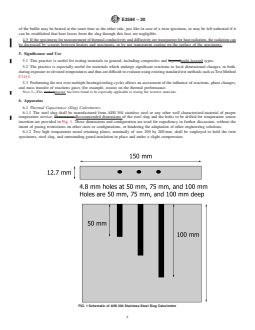
FIG. 1 Schematic of AISI 304 Stainless Steel Slug Calorimeter
E2584 − 20
proper temperature service. Recommended dimensions of the temperature equal to the measured temperature of the
steel slug and the holes to be drilled for temperature sensor temperature-controlled retaining plates (see Fig. 2).
insertion are provided in Fig. 1. These dimensions and con- 6.4.2 For the purposes of this test, it is reasonable to
figuration are used for expediency in further discussion, postulatethatthesurfacetemperatureoftheslugisidenticalto
without the intent of posing restrictions on other sizes or its mean temperature. When comparatively high thermal con-
configurations,orhinderingtheadaptationofotherengineering ductivity specimens are used, it is practical to embed a
solutions. temperature sensor near to or on the slug’s surface.
6.4.3 Anysensorpossessingadequateaccuracymaybeused
6.1.2 Two high temperature metal retaining plates, nomi-
for temperature measurement. TypeK or TypeN thermo-
nally of size 200 by 200mm, shall be employed to hold the
couples are normally employed. Their small size and ease of
twinspecimens,steelslug,andsurroundingguardinsulationin
manufacturing are distinct advantages. The sensors simply
place and under a slight compression.
must fit into the holes present in the thermal capacitance
6.1.3 Thesteelslugandtwinspecimensshallbesurrounded
calorimeter, where they can be easily inserted during the
on all sides by an appropriate high temperature insulation,
assembly of the configuration within the temperature-
nominally of 25mm thickness. Three holes shall be drilled
controlled environment.
through the section of insulation that covers the top of the slug
6.4.4 When thermocouples are employed, a constant tem-
in direct line with the corresponding milled holes in the steel
perature reference shall always be provided for all cold
slug to allow for insertion of the temperature sensors.
junctions. This reference can be an ice-cold slurry, a constant
6.2 Insulation Materials:
temperature zone box, or an integrated cold junction compen-
6.2.1 A large variety of materials exists for providing the
sation(CJC)sensor.Allthermocouplesshallbefabricatedfrom
guard insulation that surrounds the stainless steel slug and
either calibrated thermocouple wire or from wire that has been
specimens.Severalfactorsmustbeconsideredduringselection
certified by the supplier to be within the limits of error
of the most appropriate insulation. The insulation must be
specified inTable1 of Specification E230.Thermocouples can
stable over the anticipated temperature range, have a very low
be calibrated as described in Test Method E220.
λ, and be easy to handle, cut, and insert holes. In addition, the
6.5 Data Acquisition System—While manual acquisition of
insulation should not contaminate system components, it must
the data is possible, for convenience, increased reliability, and
have a low toxicity, and it should not conduct electricity. In
avoidance of transcription errors, it is recommended that an
general, microporous insulation boards are employed.
appropriate data acquisition system be employed to automati-
Typically, these materials exhibit a room temperature thermal
cally monitor all of the temperature sensors at regular (1min
conductivity as low as 0.02W⁄(m·K) and a thermal conduc-
for example) intervals. As examples, data may be acquired
tivity of less than 0.04 W/(m·K) at 1073K. These values are
using a thermocouple input module or a voltmeter/multimeter
much lower than those of typical materials that can be tested
system. In the latter case, the measured signals shall be
using this practice.
converted to temperatures using the appropriate tables from
6.3 Temperature-Controlled Environment:
Specification E230.
6.3.1 The temperature controlled environment shall consist
7. Hazards
of an enclosed volume in which the temperature can be
controlled during heating and monitored during (natural) 7.1 It shall be verified that specimens or the test assembly
cooling. The heating units shall be capable of supplying
havecooledadequatelybeforeattemptingtoremovethemfrom
sufficient energy to achieve the temperatures required for the the temperature-controlled environment.
evaluation of the materials under test. Typically, the heated
7.2 The recommendations of each material manufacturer
environment ranges in temperature between room temperature
shall be followed when handling their materials (for example,
and1000°Cduringthecourseofasingleheating/coolingcycle.
gloves, safety glasses, or respirators).
6.3.2 One example would be a temperature-controlled fur-
7.3 Materials that react at high temperatures may release
nacewithanelectroniccontrolsystemthatallowstheprogram-
noxiousortoxicproducts.Insuchcases,necessaryprecautions
ming of one or more temperature ramps. For example, the
should be taken to assure that any gases generated during the
following temperature setpoints (versus time) have been suc-
execution of this practice are properly filtered or vented, or
cessfully employed in the past: 538°C after 45min, 704°C
both.
after 70min, 843°C after 90min, 927°C after 105min, and
1010°C after 2h.
8. Sampling, Test Specimens, and Test Units
6.4 Temperature Sensors:
8.1 Double-Sided Systems:
6.4.1 There shall be a minimum one temperature sensor to 8.1.1 Two (twin) parallelepiped specimens, each with a
be inserted into the pre-drilled holes in the stainless steel slug. cross sectional area of 150 by 150mm and the thickness
The multiple sensors are useful to indicate the validity of selected for the particular test (for example, 25mm) shall be
one-dimensional heat transfer through the specimen(s) to the prepared (for example, by spraying, brush application, or
steel slug.Temperature sensors may also be mounted in milled simply cutting from a larger specimen). The length and width
grooves on the exterior surface of the specimens, one sensor of the specimens shall be determined by making a set of three
perspecimen.Whencontactheatresistancesarenegligible,the measurements across the top, middle, and bottom (left, center,
exposed face of the specimen may be assumed to have a and right) of the specimens. The similar shape and sizes of
E2584 − 20
FIG. 2 Schematic of an Assembled Twin Specimen Slug Calorimeter Specimen Ready for Thermal Conductivity Testing
specimens can be used both for thermal conductivity and tested with the substrate panels placed against the central steel
thermaldiffusivitytesting.Themeanandstandarddeviationof slug. If the steel panels are 150 by 163mm and a centered 150
themeasurementsshallbereported.Ifthestandarddeviationis by 150mm area specimen is applied, the two metal edges may
greater than 2.5mm, the specimen shall be recut in an attempt beconvenientlyusedto“grip”thespecimen(underaportionof
to obtain a squarer specimen. If necessary, prior to the the guard insulation) in the final specimen sandwich configu-
measurement of the specimen thickness, the planarity (level- ration. In this case, the mean specimen thickness can be
ness) of the top and bottom surfaces of the specimen shall be determined using the digital caliper technique outlined above,
verified and any “high” spots (local thickness 1mm or greater butfirstsubtractingthepreviouslymeasuredmeanthicknessof
than local background thickness) removed as needed. For the steel substrate (panel) from each individual thickness
example, these high spots may be removed by careful extrac- measurement.
tion using a utility knife or hacksaw blade for fibrous and soft 8.1.3 For specimens of sufficient thickness, a single cen-
materials, or by using a file or an electric sander for “harder” teredgrooveofsufficientsizefortheinsertionofatemperature
materials. The thickness of the specimen shall be determined sensor shall be made into the top (exposed) surface of each
by measurement using a digital thickness gauge (digital cali- specimen.After the groove has been properly sized, the initial
pers).Aminimumofeightmeasurements(twofromeachofthe mass of each specimen shall be determined and recorded. The
four sides of the specimen slab) shall be performed and the initial density of each specimen shall be determined by
mean and standard deviation shall be reported. If the standard dividing its measured mass by the product of its measured
deviation is greater than 1 mm, the specimen shall be either dimensions (volume). The mass of the steel slug shall also be
discarded or replaned in an attempt to achieve a more uniform measured and recorded. For thin specimens applied to steel
thickness. panels, no such groove shall be made and the measured
8.1.2 As an alternative to testing bulk specimens, thinner temperatureofthetemperature-controlledenvironmentshallbe
specimens may be applied to pre-weighed AISI Type304 used as being representative of the temperature of the exterior
stainless steel panels (1.6mm thick panels for example) and (exposed) surfaces of the specimens.
E2584 − 20
8.2 Single-Sided Systems: into the grooves (when present) on the exterior surface of the
8.2.1 For a single specimen device, the preparation proce- two twin specimens. At this point, the specimen is ready for
dure is identical, except as to the need for only a single one. testing.
9.2 Single-Sided Systems:
9. Preparation of Apparatus
9.2.1 For single sided application, the slug and the perma-
9.1 Double-Sided Systems:
nent (buffer) specimen are maintained as a unit, including all
9.1.1 Thesandwichspecimenshallbeassembledbyplacing
edge insulation. The unknown is fixed to the slug on the open
one of the outer retaining plates on a flat surface and centering
side, and the rest of the process is essentially the same. In a
the first specimen on the plate.The stainless steel slug shall be
horizontal configuration, the retaining plates may be omitted.
added next, followed by the second specimen. The specimens
andslugshallthenbesurroundedonallfoursidesbya25mm
10. Procedure
thickness(minimum)ofhightemperatureinsulationtoserveas
a guard insulation material. The insulation material on the top 10.1 The specimen shall be exposed to a measured time/
surfaceshallcontainthreesmallholeslocateddirectlyoverthe temperature exposure appropriate for the evaluation of the
three holes in the steel slug, for insertion of the temperature materialbeingexamined.Anexamplewouldbeusingaheating
sensors. The top retaining plate shall be applied and the rate of 1 to 5 K/min to the desired maximum temperature.
retaining bolts tightened manually with a wrench, to maintain Whatever time/temperature exposure is utilized, it should be
a slight compression on the entire sandwich specimen con- reported as part of the test results. When the maximum testing
struction. A schematic of a final assembled specimen in temperatureisachieved,theheatsourceshallbeturnedoffand
provided in Fig. 3. The mass of the final assembled specimen the temperature sensors shall continue to be monitored during
the natural cooling of the specimens in the temperature-
shall be measured and recorded.
9.1.2 The assembled specimen shall be centrally located in controlled environment. The maximum testing temperature
the temperature-controlled environment and the temperature may be set by when the steel slug reaches a pre-defined
sensors attached, three into the central steel slug and one each endpoint temperature (810 K for instance) or when the
FIG. 3 Schematic of an Assembled Twin Specimen Ready for Thermal Diffusivity Testing
E2584 − 20
temperature-controlled environment reaches some pre-defined vided in graphical form in Fig. 4, along with an equation that
endpoint temperature (1273K for instance), depending on the has been fitted to these literature values.
purpose of the test being conducted.
11.2 Single-Sided Configuration:
10.2 When the natural cooling has approached near room
11.2.1 Eq 1 can be easily modified for the single-sided
temperature (300 640K) and the measured temperature gra-
configuration. For example, the single-sided setup can be
dient across the specimen is less than 20K, the test is
conveniently thought of as a double-sided configuration in
completed.
which the thickness of the steel slug has been doubled. This is
only true, however, if the contribution of the buffer specimen
10.3 During the course of the test, the temperature sensors
hasbeendeterminedtobelessthan5%oftheheatconduction,
are typically read once per minute during the heating cycles.
whenthespecimenapparentthermalconductivityisequaltoor
During the slower natural cooling, the sampling frequency is
higher than 0.1W⁄(m·K) for a 25mm thick specimen. Then,
oftendecreasedtoeitheronceevery3minoronceevery5min.
the apparent thermal conductivity, λ , at each mean specimen
a
10.4 To provide quasi-steady state temperature field in the
temperature is calculated as:
assemblysample-slugcalorimeterattherequestedtemperature
SPEC
M C
range, for example, from room temperature, the assembly can SPEC p
SSS
FL M C 1
S D
SSS p
be cooled below the room temperature and the initial stage of
λ 5 (2)
a
A∆T
heating have to be excluded during calculations.
11.3 Thethermaldiffusivityisknown.Theapparentthermal
11. Calculation
conductivity, λ , is calculated as:
a
11.1 Double-Sided Configuration for Thermal Conductivity
SSS
FLM C
SSS p
λ 5 (3)
Testing:
a 2
FL
A ∆ T 2
11.1.1 The specific heat is known. At each sampling time, S D
2α
a
SPEC
themeanspecimentemperature(T )iscalculatedasthe
mean NOTE 4—In the Refs (3, 4) is suggested a method of calculation and
SSS
average of the mean slug temperature (T ) and the mean
software, which allow to decrease initial stage of the process if surface
inner
SPEC
temperature increases with constant rate and no latent heat effects. The
exterior specimen temperature (T ). If known specific
outer
method can be applied if no latent heat effects during heating/cooling.
heat of the sample the apparent thermal conductivity, λ,at
a
each mean specimen temperature is then calculated as:
11.4 Thermal Diffusivity Testing:
SSS SPEC 11.4.1 At each sampling time, the mean specimen tempera-
FL~M C 1M C !
SSS p SPEC p
SPEC
λ 5 (1)
a
ture (T ) is calculated and the mean exterior specimen
2A∆T mean
SPEC
temperature (T ). The apparent thermal diffusivity, α ,
outer a
wherethesymbolsareasdefinedin3.2,(with Frepresenting
at each mean specimen temperature is then calculated as:
theactualtemperatureincreaseoftheslugoveratimeinterval,
F
L
not the programmed heating rate for the system), and M
SPEC α 5 (4)
a
2∆T
refers to one half of the mass of the two (twin) specimens and
may be time (temperature)-dependent. Heat capacity data for 11.5 ThecorrectiontotheEq1-4orerrorscanbecalculated
based on the theory of monotonic heating (see Appendix X1).
AISI304 stainless steel taken from the literature (2) is pro-
NOTE 1—Fitted curve is of the form:
SSS
C 56.68310.04906*T180.74*ln~T!
p
with T in K.
FIG. 4 Literature Values (2) and Fitted Curve for Specific Heat Capacity of 304 Stainless Steel
E2584 − 20
11.6 Specific heat can be calculated as ratio of apparent tice E691 was followed for the design and analysis of the data;
thermal conductivity to the apparent thermal diffusivity and the details are given in a research report.
volume density.
13.1.1 Repeatability Limit (r)—Two test res
...
This document is not an ASTM standard and is intended only to provide the user of an ASTM standard an indication of what changes have been made to the previous version. Because
it may not be technically possible to adequately depict all changes accurately, ASTM recommends that users consult prior editions as appropriate. In all cases only the current version
of the standard as published by ASTM is to be considered the official document.
Designation: E2584 − 14 E2584 − 20
Standard Practice for
Thermal Conductivity of Materials Using a Thermal
Capacitance (Slug) Calorimeter
This standard is issued under the fixed designation E2584; the number immediately following the designation indicates the year of
original adoption or, in the case of revision, the year of last revision. A number in parentheses indicates the year of last reapproval. A
superscript epsilon (´) indicates an editorial change since the last revision or reapproval.
1. Scope
1.1 This practice describes a technique for the determination of the apparent thermal conductivity, λ , and thermal diffusivity,
a
α , of materials. It is for solid materials with apparent thermal conductivities in the approximate range 0.02 < λ0.02 < λ < 2 < 20
a a
W/(m·K) over the approximate temperature range between 300 K and 1100 K.300 K and 1100 K, if used stainless steel 304 slag
calorimeter and K thermocouples, and up to 1600 K, if used Alumina slag calorimeter and PtRh thermocouples.
NOTE 1—While the practice should also be applicable to determining the thermal conductivity and thermal diffusivity of non-reactive materials, it has
been found specifically useful in testing fire resistive materials that are both reactive and undergo significant dimensional changes during a high
temperature exposure.
1.2 The values stated in SI units are to be regarded as standard. No other units of measurement are included in this standard.
1.3 This standard does not purport to address all of the safety concerns, if any, associated with its use. It is the responsibility
of the user of this standard to establish appropriate safety safety, health, and healthenvironmental practices and determine the
applicability of regulatory limitations prior to use.
1.4 This international standard was developed in accordance with internationally recognized principles on standardization
established in the Decision on Principles for the Development of International Standards, Guides and Recommendations issued
by the World Trade Organization Technical Barriers to Trade (TBT) Committee.
This practice is under the jurisdiction of ASTM Committee E37 on Thermal Measurements and is the direct responsibility of Subcommittee E37.05 on Thermophysical
Properties.
Current edition approved Feb. 15, 2014May 1, 2020. Published March 2014June 2020. Originally approved in 2007. Last previous edition approved in 20102014 as
E2584 – 10.E2584 – 14. DOI: 10.1520/E2584-14.10.1520/E2584-20.
Copyright © ASTM International, 100 Barr Harbor Drive, PO Box C700, West Conshohocken, PA 19428-2959. United States
E2584 − 20
2. Referenced Documents
2.1 ASTM Standards:
C1113 Test Method for Thermal Conductivity of Refractories by Hot Wire (Platinum Resistance Thermometer Technique)
D2214 Test Method for Estimating the Thermal Conductivity of Leather with the Cenco-Fitch Apparatus (Withdrawn 2008)
E177 Practice for Use of the Terms Precision and Bias in ASTM Test Methods
E220 Test Method for Calibration of Thermocouples By Comparison Techniques
E230 Specification for Temperature-Electromotive Force (emf) Tables for Standardized Thermocouples
E457 Test Method for Measuring Heat-Transfer Rate Using a Thermal Capacitance (Slug) Calorimeter
E691 Practice for Conducting an Interlaboratory Study to Determine the Precision of a Test Method
3. Terminology
3.1 Definitions:
3.1.1 thermal conductivity, λ—the time rate of heat flow, under steady conditions, through unit area, per unit temperature
gradient in the direction perpendicular to the area.
3.1.1 apparent thermal conductivity, λ , n——when other modes of heat transfer (and mass transfer) through a material are
a
present in addition to thermal conduction, the results of the measurements performed according to this practice will represent the
apparent or effective thermal conductivity for the material tested.
3.1.2 apparent thermal diffusivity, n—the apparent thermal conductivity divided by bulk density and apparent specific heat
capacity:
SPEC
α 5 λ ⁄C ⁄ρ
a a p
3.1.3 specific heat capacity, C , n—the amount of heat required to change a unit mass (or unit quantity, such as mole) of a
p
substance by one degree in temperature.
3.1.4 thermal conductivity, λ, n—the time rate of heat flow, under steady conditions, through unit area, per unit temperature
gradient in the direction perpendicular to the area.
3.2 Symbols:
A = specimen area normal to heat flux direction, m
C = specific heat capacity, J/(kg·K)
p
F = heating or cooling rate, (K/s)
L = thickness of a specimen (slab) in heat transfer direction, m
L = thickness of a specimen (slab) or distance between central and surface thermocouples, m
M = mass, kg
Q = heat flow, W
T = absolute temperature, K
SSS
T = mean temperature of the stainless steel slug, K
inner
SPEC
T = mean temperature of outer (exposed) specimen surfaces, K
outer
SPEC
T = mean temperature of specimen, K
mean
SPEC SSS
ΔT = temperature difference across the specimen, given by (T – T ), K
outer inner
λ = thermal conductivity, W/(m·K)
λ = apparent thermal conductivity, W/(m·K)
a
SPEC 3
ρ = bulk density of specimen being tested, kg/m
SPEC 2
α = λ / C / ρ = apparent thermal diffusivity, m /sec
a a p
3.3 Subscripts/Superscripts:
SPEC = material specimen being evaluated
SSS = stainless steel slug (thermal capacitance transducer)
4. Summary of Practice
4.1 Principle of Operation—In principle, a slug of thermally conductive metal, capable of withstanding elevated temperatures,
is surrounded with another material of a uniform thickness (the specimen) whose thermal conductivity is substantially lower than
that of the slug. When the outer surface of this assembly is exposed to a temperature above that of the slug, heat will pass through
the outer layer, causing a temperature rise in the slug itself. The temperature rise of the slug is controlled by the amount and rate
of heat conducted to its surface (flux), its mass, and its specific heat capacity. With the knowledge of these properties, the rate of
temperature rise of the slug is in direct proportion to the heat flux entering it. Thus, under these conditions, the slug becomes a
For referenced ASTM standards, visit the ASTM website, www.astm.org, or contact ASTM Customer Service at service@astm.org. For Annual Book of ASTM Standards
volume information, refer to the standard’s Document Summary page on the ASTM website.
The last approved version of this historical standard is referenced on www.astm.org.
E2584 − 20
flux-gauging device. From this measured flux, along with the measured thermal gradient across the outer (specimen) layer, the
apparent thermal conductivity of the specimen can be calculated. When the heat source is removed, during natural cooling, the
direction of the heat flow will be reversed. Still, from the measured flux and thermal gradient, the apparent thermal conductivity
can be calculated.Calculations are performed in the range of monotonous heating, closed to a quasi- steady state conditions, when
rates of heating/cooling at the surface and the center of the sample and slug calorimeter are the same (that means that initial stage
of heating and cooling should be excluded during treatment of the experimental data).
4.1.1 Thermal Conductivity Testing—In principle, a slug of thermally conductive metal, capable of withstanding elevated
temperatures, is surrounded with another material of a uniform thickness (the specimen) whose thermal conductivity is
substantially lower than that of the slug. When the outer surface of this assembly is exposed to a temperature above that of the
slug, heat will pass through the outer layer, causing a temperature rise in the slug itself. The temperature rise of the slug is
controlled by the amount and rate of heat conducted to its surface (flux), its mass, and its specific heat capacity. With the knowledge
of these properties, the rate of temperature rise of the slug is in direct proportion to the heat flux entering it. Thus, under these
conditions, the slug becomes a flux-gauging device. From this measured flux, along with the measured thermal gradient across the
outer (specimen) layer, the apparent thermal conductivity of the specimen can be calculated. When the heat source is removed,
during natural cooling, the direction of the heat flow will be reversed. Still, from the measured flux and thermal gradient, the
apparent thermal conductivity can be calculated.
4.1.2 Thermal Diffusivity Testing—Apparent thermal diffusivity is measured by using the two similar samples assembly as for
thermal conductivity testing, but without the slug calorimeter between the samples. The thermal diffusivity is calculated based on
measuring of temperature difference between surface and center of the sample and heating rate. Heating rate should provide
temperature difference in the samples about 5 K – 50 K.
4.2 Boundary Conditions—The ideal model described above is based on heat flow toward the slug, perpendicularly to the
specimen, and always through the specimen. Deviating from ideality can be due to:
4.2.1 Thickness non-uniformity of the outer layer.
4.2.2 Inhomogeneity (chemical or microstructural) of the outer layer.
4.2.3 Parasitic paths through cracks, gaps, or other mechanically induced paths.
4.2.4 Parasitic paths through wires, sheaths (thermocouples), etc., that are unavoidable parts of a practical embodiment.
4.2.5 Delamination of the specimen from the slug’s surface (gap formation).
NOTE 2—The user of this method should be very aware of the fact that the contact resistance between the specimen(s) and the slug may not always
be neglected, and in some cases may be even significant, becoming probably the most important source of uncertainty in the measurement. For
low-density porous materials, however, it was found that, generally, the contact resistance between the specimen(s) and the slug may be neglected.
4.3 Configurations—This methodpractice lends itself to many possible geometrical configurations, a few of which are listed
below:
4.3.1 For pipe (tubular) insulations, a cylindrical slug is to be used. End faces are to be blocked with insulation.
4.3.2 For flat plate stock (insulating boards, bulk materials, etc.), a rectangular shaped slug is considered most practical, with
the specimen material covering:
4.3.2.1 Both large faces of the slab, with the edges heavily insulated.
4.3.2.2 One large face of the slab, with the other face and the edges heavily insulated.
4.4 Operation—For simplicity, only the rectangular embodiment is described below:
4.4.1 Twin Specimens (Double-Sided)—A sandwich test specimen is prepared consisting of twin specimens of the material, of
known mass and known and nominally identical thickness, between which is sandwiched a stainless steel thermal capacitance
transducer (slug) of known mass. The entire sandwich is placed between two (high temperature) metal retaining plates, and the
bolts holding the configuration together are tightened with a torque not to exceed 1 kg·m, to maintain a slight compressive load
on the specimen. The assembled specimen is placed in a temperature-controlled environment and the temperatures of the steel slug
and exposed surfaces of the specimens versus time are measured during the course of multiple heating and cooling cycles. Under
steady-state (constant rate) heating or cooling conditions, the apparent thermal conductivity is derived from the measured
temperature gradients across the two specimens, the measured rate of temperature increase/decrease of the steel slug, and the
known masses and specific heat capacities of the specimens and the stainless steel slug. In principle, the test apparatus is similar
to the Cenco-Fitch apparatus (1) that is employed in Test Method D2214 for determining the thermal conductivity of leather.
Measuring the heat transfer through a material by using a thermal capacitance transducer is similar to the approach that is employed
for measuring heat-transfer rates in Test Method E457.
4.4.1.1 The specimens for measurement of thermal diffusivity can be the same shape and sizes as specimens for thermal
conductivity.
4.4.2 Single Specimen (One-Sided)—Similarly to the above, one unknown specimen is placed on one side of the slug and
another known specimen (buffer) of extremely high thermal resistance is placed on the other side. In this instance, the outer surface
The boldface numbers in parentheses refer to the list of references at the end of this standard.
E2584 − 20
of the buffer may be heated at the same time as the other side, just like in case of a twin specimen, or may be left unheated if it
can be established that heat losses from the slug through this face are negligible.
4.5 If the specimens for measurement of thermal conductivity and diffusivity are transparent for heat radiation, the radiation can
be decreased by screens between heaters and specimens, or by not transparent coating on the surface of the specimens.
5. Significance and Use
5.1 This practice is useful for testing materials in general, including composites and layeredmulti-layered types.
5.2 The practice is especially useful for materials which undergo significant reactions or local dimensional changes, or both,
during exposure to elevated temperatures and thus are difficult to evaluate using existing standard test methods such as Test Method
C1113.
5.3 Performing the test over multiple heating/cooling cycles allows an assessment of the influence of reactions, phase changes,
and mass transfer of reactions gases (for example, steam) on the thermal performance.
NOTE 3—This methodpractice has been found to be especially applicable to testing fire resistive materials.
6. Apparatus
6.1 Thermal Capacitance (Slug) Calorimeter:
6.1.1 The steel slug shall be manufactured from AISI 304 stainless steel or any other well characterized material of proper
temperature service. Dimensions Recommended dimensions of the steel slug and the holes to be drilled for temperature sensor
insertion are provided in Fig. 1. These dimensions and configuration are used for expediency in further discussion, without the
intent of posing restrictions on other sizes or configurations, or hindering the adaptation of other engineering solutions.
6.1.2 Two high temperature metal retaining plates, nominally of size 200 by 200 mm, shall be employed to hold the twin
specimens, steel slug, and surrounding guard insulation in place and under a slight compression.
FIG. 1 Schematic of AISI 304 Stainless Steel Slug Calorimeter
E2584 − 20
6.1.3 The steel slug and twin specimens shall be surrounded on all sides by an appropriate high temperature insulation,
nominally of 25 mm thickness. Three holes shall be drilled through the section of insulation that covers the top of the slug in direct
line with the corresponding milled holes in the steel slug to allow for insertion of the temperature sensors.
6.2 Insulation Materials:
6.2.1 A large variety of materials exists for providing the guard insulation that surrounds the stainless steel slug and specimens.
Several factors must be considered during selection of the most appropriate insulation. The insulation must be stable over the
anticipated temperature range, have a very low λ, and be easy to handle, cut, and insert holes. In addition, the insulation should
not contaminate system components, it must have a low toxicity, and it should not conduct electricity. In general, microporous
insulation boards are employed. Typically, these materials exhibit a room temperature thermal conductivity as low as
0.02 W ⁄(m·K) and a thermal conductivity of less than 0.04 W/(m·K) at 1073 K. These values are much lower than those of typical
materials that can be tested using this method.practice.
6.3 Temperature-Controlled Environment:
6.3.1 The temperature controlled environment shall consist of an enclosed volume in which the temperature can be controlled
during heating and monitored during (natural) cooling. The heating units shall be capable of supplying sufficient energy to achieve
the temperatures required for the evaluation of the materials under test. Typically, the heated environment ranges in temperature
between room temperature and 1000°C during the course of a single heating/cooling cycle.
6.3.2 One example would be a temperature-controlled furnace with an electronic control system that allows the programming
of one or more temperature ramps. For example, the following temperature setpoints (versus time) have been successfully
employed in the past: 538°C after 45 min, 704°C after 70 min, 843°C after 90 min, 927°C after 105 min, and 1010°C after 2 h.
6.4 Temperature Sensors:
6.4.1 There shall be a minimum of three one temperature sensorssensor to be inserted into the pre-drilled holes in the stainless
steel slug. The multiple sensors are useful to indicate the validity of one-dimensional heat transfer through the specimen(s) to the
steel slug. Temperature sensors may also be mounted in milled grooves on the exterior surface of the specimens, one sensor per
specimen. When this is not possible, contact heat resistances are negligible, the exposed face of the specimen may be assumed to
have a temperature equal to the measured temperature of the temperature-controlled environment.retaining plates (see Fig. 2).
6.4.2 For the purposes of this test, it is reasonable to postulate that the surface temperature of the slug is identical to its mean
temperature. When comparatively high thermal conductivity specimens are used, it is practical to embed a temperature sensor near
to or on the slug’s surface.
6.4.3 Any sensor possessing adequate accuracy may be used for temperature measurement. Type K or Type N thermocouples
are normally employed. Their small size and ease of manufacturing are distinct advantages. The sensors simply must fit into the
holes present in the thermal capacitance calorimeter, where they can be easily inserted during the assembly of the configuration
within the temperature-controlled environment.
6.4.4 When thermocouples are employed, a constant temperature reference shall always be provided for all cold junctions. This
reference can be an ice-cold slurry, a constant temperature zone box, or an integrated cold junction compensation (CJC) sensor.
All thermocouples shall be fabricated from either calibrated thermocouple wire or from wire that has been certified by the supplier
to be within the limits of error specified in Table 1 of Specification E230. Thermocouples can be calibrated as described in Test
Method E220.
6.5 Data Acquisition System—While manual acquisition of the data is possible, for convenience, increased reliability, and
avoidance of transcription errors, it is recommended that an appropriate data acquisition system be employed to automatically
monitor all of the temperature sensors at regular (1 min for example) intervals. As examples, data may be acquired using a
thermocouple input module or a voltmeter/multimeter system. In the latter case, the measured signals shall be converted to
temperatures using the appropriate tables from Specification E230.
7. Hazards
7.1 It shall be verified that specimens or the test assembly have cooled adequately before attempting to remove them from the
temperature-controlled environment.
7.2 The recommendations of each material manufacturer shall be followed when handling their materials (for example, gloves,
safety glasses, or respirators).
7.3 Materials that react at high temperatures may release noxious or toxic products. In such cases, necessary precautions should
be taken to assure that any gases generated during the execution of this test method practice are properly filtered or vented, or both.
8. Sampling, Test Specimens, and Test Units
8.1 Double-Sided Systems:
8.1.1 Two (twin) parallelepiped specimens, each with a cross sectional area of 150 by 150 mm and the thickness selected for
the particular test (for example, 25 mm) shall be prepared (for example, by spraying, brush application, or simply cutting from a
larger specimen). The length and width of the specimens shall be determined by making a set of three measurements across the
E2584 − 20
FIG. 2 Schematic of an Assembled Twin Specimen Slug Calorimeter Specimen Ready for Thermal Conductivity Testing
top, middle, and bottom (left, center, and right) of the specimens. The similar shape and sizes of specimens can be used both for
thermal conductivity and thermal diffusivity testing. The mean and standard deviation of the measurements shall be reported. If
the standard deviation is greater than 2.5 mm, the specimen shall be recut in an attempt to obtain a squarer specimen. If necessary,
prior to the measurement of the specimen thickness, the planarity (levelness) of the top and bottom surfaces of the specimen shall
be verified and any “high” spots (local thickness 1 mm or greater than local background thickness) removed as needed. For
example, these high spots may be removed by careful extraction using a utility knife or hacksaw blade for fibrous and soft
materials, or by using a file or an electric sander for “harder” materials. The thickness of the specimen shall be determined by
measurement using a digital thickness gauge (digital calipers). A minimum of eight measurements (two from each of the four sides
of the specimen slab) shall be performed and the mean and standard deviation shall be reported. If the standard deviation is greater
than 1 mm, the specimen shall be either discarded or replaned in an attempt to achieve a more uniform thickness.
8.1.2 As an alternative to testing bulk specimens, thinner specimens may be applied to pre-weighed AISI Type 304 stainless
steel panels (1.6 mm thick panels for example) and tested with the substrate panels placed against the central steel slug. If the steel
panels are 150 by 163 mm and a centered 150 by 150 mm area specimen is applied, the two metal edges may be conveniently used
to “grip” the specimen (under a portion of the guard insulation) in the final specimen sandwich configuration. In this case, the mean
specimen thickness can be determined using the digital caliper technique outlined above, but first subtracting the previously
measured mean thickness of the steel substrate (panel) from each individual thickness measurement.
8.1.3 For specimens of sufficient thickness, a single centered groove of sufficient size for the insertion of a temperature sensor
shall be made into the top (exposed) surface of each specimen. After the groove has been properly sized, the initial mass of each
specimen shall be determined and recorded. The initial density of each specimen shall be determined by dividing its measured mass
by the product of its measured dimensions (volume). The mass of the steel slug shall also be measured and recorded. For thin
specimens applied to steel panels, no such groove shall be made and the measured temperature of the temperature-controlled
environment shall be used as being representative of the temperature of the exterior (exposed) surfaces of the specimens.
E2584 − 20
8.2 Single-Sided Systems:
8.2.1 For a single specimen device, the preparation procedure is identical, except as to the need for only a single one.
9. Preparation of Apparatus
9.1 Double-Sided Systems:
9.1.1 The sandwich specimen shall be assembled by placing one of the outer retaining plates on a flat surface and centering the
first specimen on the plate. The stainless steel slug shall be added next, followed by the second specimen. The specimens and slug
shall then be surrounded on all four sides by a 25 mm thickness (minimum) of high temperature insulation to serve as a guard
insulation material. The insulation material on the top surface shall contain three small holes located directly over the three holes
in the steel slug, for insertion of the temperature sensors. The top retaining plate shall be applied and the retaining bolts tightened
manually with a wrench, to maintain a slight compression on the entire sandwich specimen construction. A schematic of a final
assembled specimen in provided in Fig. 23. The mass of the final assembled specimen shall be measured and recorded.
9.1.2 The assembled specimen shall be centrally located in the temperature-controlled environment and the temperature sensors
attached, three into the central steel slug and one each into the grooves (when present) on the exterior surface of the two twin
specimens. At this point, the specimen is ready for testing.
9.2 Single-Sided Systems:
9.2.1 For single sided application, the slug and the permanent (buffer) specimen are maintained as a unit, including all edge
insulation. The unknown is fixed to the slug on the open side, and the rest of the process is essentially the same. In a horizontal
configuration, the retaining plates may be omitted.
10. Procedure
10.1 The specimen shall be exposed to a measured time/temperature exposure appropriate for the evaluation of the material
being examined. An example would be using a heating rate of 1 to 5 K/min to the desired maximum temperature. Whatever
time/temperature exposure is utilized, it should be reported as part of the test results. When the maximum testing temperature is
FIG. 3 Schematic of an Assembled Twin Specimen Ready for Thermal Diffusivity Testing
E2584 − 20
achieved, the heat source shall be turned off and the temperature sensors shall continue to be monitored during the natural cooling
of the specimens in the temperature-controlled environment. The maximum testing temperature may be set by when the steel slug
reaches a pre-defined endpoint temperature (810 K for instance) or when the temperature-controlled environment reaches some
pre-defined endpoint temperature (1273 K for instance), depending on the purpose of the test being conducted.
10.2 When the natural cooling has approached near room temperature (300 6 40 K) and the measured temperature gradient
across the specimen is less than 20 K, the test is completed.
10.3 During the course of the test, the temperature sensors are typically read once per minute during the heating cycles. During
the slower natural cooling, the sampling frequency is often decreased to either once every 3 min or once every 5 min.
10.4 To provide quasi-steady state temperature field in the assembly sample- slug calorimeter at the requested temperature
range, for example, from room temperature, the assembly can be cooled below the room temperature and the initial stage of heating
have to be excluded during calculations.
11. Calculation
11.1 Double-Sided Configuration: Configuration for Thermal Conductivity Testing:
SPEC
11.1.1 The specific heat is known. At each sampling time, the mean specimen temperature (T ) is calculated as the
mean
SSS SPEC
average of the mean slug temperature (T ) and the mean exterior specimen temperature (T ). The If known specific
inner outer
heat of the sample the apparent thermal conductivity, λ , at each mean specimen temperature is then calculated as:
a
SSS SPEC
FL M C 1M C
~ !
SSS p SPEC p
λ 5 (1)
a
2AΔT
where the symbols are as defined in 3.2, (with F representing the actual temperature increase of the slug over a time interval,
not the programmed heating rate for the system), and M refers to one half of the mass of the two (twin) specimens and may
SPEC
be time (temperature)-dependent. Heat capacity data for AISI 304 stainless steel taken from the literature (2) is provided in
graphical form in Fig. 34, along with an equation that has been fitted to these literature values.
11.2 Single-Sided Configuration: 4
11.2.1 Eq 1 can be easily modified for the single-sided configuration. For example, the single-sided setup can be conveniently
thought of as a double-sided configuration in which the thickness of the steel slug has been doubled. This is only true, however,
if the contribution of the buffer specimen has been determined to be less than 5 % 5 % of the heat conduction, when the specimen
apparent thermal conductivity is equal to or higher than 0.1 W ⁄(m·K) for a 25 mm thick specimen. Then, the apparent thermal
conductivity, λ , at each mean specimen temperature is calculated as:
a
SPEC
M C
SPEC p
SSS
FL M C 1
S D
SSS p
λ 5 (2)
a
AΔT
NOTE 1—Fitted curve is of the form:
SSS
C 5 6.68310.04906*T180.74*ln~T!
p
with T in K.
FIG. 34 Literature Values (2) and Fitted Curve for Specific Heat Capacity of 304 Stainless Steel
SSS
Fitted Curve is of the Form C = 6.683 + 0.04906*T + 80.74*ln(T) with T in K
p
E2584 − 20
11.3 The thermal diffusivity is known. The apparent thermal conductivity, λ , is calculated as:
a
SSS
FLM C
SSS p
λ 5 (3)
a
FL
A Δ T 2
S D
2α
a
NOTE 4—In the Refs (3, 4) is suggested a method of calculation and software, which allow to decrease initial stage of the process if surface temperature
increases with constant rate and no latent heat effects. The method can be applied if no latent heat effects during heating/cooling.
11.4 Thermal Diffusivity Testing:
SPEC
11.4.1 At each sampling time, the mean specimen temperature (T ) is calculated and the mean exterior specimen
mean
SPEC
temperature (T ). The apparent thermal diffusivity, α , at each mean specimen temperature is then calculated as:
outer a
F
L
α 5 (4)
a
2ΔT
11.5 The correction to the Eq 1-4 or errors can be calculated based on the theory of monotonic heating (see Appendix X1).
11.6 Specific heat can be calculated as ratio of apparent thermal conductivity to th
...