

ASTM E2594-20
(Test Method)Standard Test Method for Analysis of Nickel Alloys by Inductively Coupled Plasma Atomic Emission Spectrometry (Performance-Based)
General Information
- Abstract
SIGNIFICANCE AND USE
5.1 This test method for the chemical analysis of nickel alloys is primarily intended to test material for compliance with specifications such as those under jurisdiction of ASTM Committee B02. It may also be used to test compliance with other specifications that are compatible with the test method.
5.2 It is assumed that all who use this test method will be trained analysts capable of performing common laboratory procedures skillfully and safely, and that the work will be performed in a properly equipped laboratory.
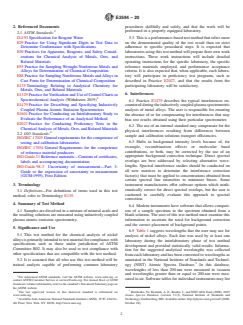
5.3 This is a performance-based test method that relies more on the demonstrated quality of the test result than on strict adherence to specific procedural steps. It is expected that laboratories using this test method will prepare their own work instructions. These work instructions will include detailed operating instructions for the specific laboratory, the specific reference materials employed, and performance acceptance criteria. It is also expected that, when applicable, each laboratory will participate in proficiency test programs, such as described in Practice E2027, and that the results from the participating laboratory will be satisfactory.
SCOPE
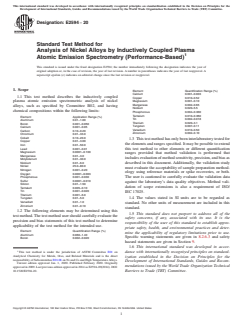
1.1 This test method describes the inductively coupled plasma atomic emission spectrometric analysis of nickel alloys, such as specified by Committee B02, and having chemical compositions within the following limits:
Element
Application Range (%)
Aluminum
0.01–1.00
Boron
0.001–0.050
Calcium
0.001–0.05
Carbon
0.10–0.20
Chromium
0.01–33.0
Cobalt
0.10–20.0
Copper
0.01–3.00
Iron
0.01–50.0
Lead
0.001–0.01
Magnesium
0.0001–0.100
Manganese
0.01–3.0
Molybdenum
0.01–30.0
Niobium
0.01–6.0
Nickel
25.0–80.0
Nitrogen
0.001–0.20
Oxygen
0.0001–0.003
Phosphorous
0.001–0.030
Sulfur
0.0001–0.010
Silicon
0.01–1.50
Tantalum
0.005–0.10
Tin
0.001–0.020
Titanium
0.001–6.0
Tungsten
0.01–5.0
Vanadium
0.01–1.0
Zirconium
0.01–0.10
1.2 The following elements may be determined using this test method. The test method user should carefully evaluate the precision and bias statements of this test method to determine applicability of the test method for the intended use.
Element
Quantification Range (%)
Aluminum
0.060–1.40
Boron
0.002–0.020
Calcium
0.001–0.003
Copper
0.010–0.52
Magnesium
0.001–0.10
Manganese
0.002–0.65
Niobium
0.020–5.5
Phosphorous
0.004–0.030
Tantalum
0.010–0.050
Tin
0.002–0.018
Titanium
0.020–3.1
Tungsten
0.007–0.11
Vanadium
0.010–0.50
Zirconium
0.002–0.10
1.3 This test method has only been interlaboratory tested for the elements and ranges specified. It may be possible to extend this test method to other elements or different quantification ranges provided that method validation is performed that includes evaluation of method sensitivity, precision, and bias as described in this document. Additionally, the validation study must evaluate the acceptability of sample preparation methodology using reference materials or spike recoveries, or both. The user is cautioned to carefully evaluate the validation data against the laboratory’s data quality objectives. Method validation of scope extensions is also a requirement of ISO/IEC 17025.
1.4 The values stated in SI units are to be regarded as standard. No other units of measurement are included in this standard.
1.5 This standard does not purport to address all of the safety concerns, if any, associated with its use. It is the responsibility of the user of this standard to establish appropriate safety, health, and environmental practices and determine the applicability of regulatory limitations prior to use. Specific warning statements are given in 8.2.6.3 and safety hazard statements are given i...
- Status
- Published
- Publication Date
- 31-Dec-2019
- Technical Committee
- E01 - Analytical Chemistry for Metals, Ores, and Related Materials
- Drafting Committee
- E01.08 - Ni and Co and High Temperature Alloys
Buy Documents
ASTM E2594-20 - Standard Test Method for Analysis of Nickel Alloys by Inductively Coupled Plasma Atomic Emission Spectrometry (Performance-Based)
REDLINE ASTM E2594-20 - Standard Test Method for Analysis of Nickel Alloys by Inductively Coupled Plasma Atomic Emission Spectrometry (Performance-Based)
Overview
ASTM E2594-20 is the standard test method established by ASTM International for the chemical analysis of nickel alloys using Inductively Coupled Plasma Atomic Emission Spectrometry (ICP-AES), following a performance-based approach. This method provides laboratories with a robust protocol for determining the elemental composition of nickel-based alloys to ensure compliance with relevant specifications, particularly those governed by ASTM Committee B02. The standard emphasizes method performance and reliability over strict procedural uniformity, allowing laboratories the flexibility to adapt procedures to their specific equipment and quality objectives.
Key Topics
Performance-Based Approach
Rather than mandating exactly how to conduct every step, this standard requires laboratories to validate their own procedures, focusing on the quality of results, method sensitivity, and precision. Documentation of operating instructions, acceptance criteria, and participation in proficiency testing (where applicable) are all expected.Scope of Analysis
The method is designed for nickel alloys with a wide range of chemical compositions. Elements such as aluminum, boron, chromium, cobalt, copper, iron, lead, magnesium, manganese, molybdenum, niobium, nickel, nitrogen, oxygen, phosphorus, sulfur, silicon, tantalum, tin, titanium, tungsten, vanadium, and zirconium can be determined within specified quantitative limits.Sample Preparation and Instrumentation
Laboratories are responsible for preparing work instructions tailored to their equipment. Sample dissolution typically involves mineral acids, and analysis is completed using ICP-AES, adhering to stringent requirements for calibration, control materials, and potential interference checks.Validation and Quality Control
Method validation, proficiency testing, and control chart management are required to verify and maintain the accuracy and consistency of results. Method extensions or adaptation to new elements or matrices must be justified with thorough validation against laboratory data quality objectives and, where appropriate, ISO/IEC 17025.
Applications
Compliance Testing
The primary use of ASTM E2594-20 is to ensure nickel alloy products meet industry and customer specifications. This is essential for materials used in aerospace, power generation, automotive, and industrial manufacturing.Material Certification and Quality Assurance
Metallurgical laboratories, alloy producers, and third-party testing agencies use this standard to certify compositions of nickel alloys, supporting traceability and quality assurance throughout the supply chain.Research and Development
R&D laboratories in the field of metallurgy utilize this standard to evaluate and refine new nickel-based alloys, supporting innovation and performance optimization in demanding applications.Extended Analytical Capabilities
While interlaboratory validation currently covers the principal alloys and elements specified, the method can be extended to additional elements or altered ranges through formal validation studies, broadening its use in specialized or emerging alloy systems.
Related Standards
For a comprehensive, consistent approach to the analysis and quality control of nickel alloys, the following standards are often used in conjunction with ASTM E2594-20:
- ASTM D1193 - Specification for Reagent Water
- ASTM E29 - Practice for Using Significant Digits in Test Data
- ASTM E50 - Practices for Apparatus, Reagents, and Safety in Chemical Analysis of Metals
- ASTM E55 - Practice for Sampling Wrought Nonferrous Metals and Alloys
- ASTM E88 - Practice for Sampling Nonferrous Metals in Cast Form
- ASTM E135 - Terminology for Analytical Chemistry of Metals
- ASTM E1479 - Practice for Describing and Specifying ICP-AES Instruments
- ASTM E1601 - Practice for Interlaboratory Study of Analytical Methods
- ASTM E2027 - Practice for Conducting Proficiency Tests in Chemical Analysis of Metals
- ISO/IEC 17025 - General Requirements for the Competence of Testing and Calibration Laboratories
- ISO/IEC 17034 - General Requirements for Reference Material Producers
Conclusion
By following ASTM E2594-20, laboratories gain a reliable, flexible framework for nickel alloy analysis using ICP-AES. This facilitates both routine quality control and advanced materials research, ensuring accurate certification and compliance across industries relying on high-performance nickel alloys. The standard’s emphasis on method validation, quality assurance, and adaptability to laboratory capabilities makes it an essential tool for modern analytical labs.
Relations
- Effective Date
- 01-Jan-2020
- Effective Date
- 01-Nov-2019
- Effective Date
- 15-May-2019
- Effective Date
- 15-Nov-2017
- Effective Date
- 01-Sep-2017
- Effective Date
- 01-Sep-2017
- Effective Date
- 01-Nov-2016
- Effective Date
- 01-Aug-2016
- Effective Date
- 15-May-2016
- Effective Date
- 01-Jul-2015
- Effective Date
- 15-May-2015
- Effective Date
- 15-Aug-2014
- Effective Date
- 01-Apr-2014
- Effective Date
- 15-Feb-2014
- Effective Date
- 01-Dec-2013
Buy Documents
ASTM E2594-20 - Standard Test Method for Analysis of Nickel Alloys by Inductively Coupled Plasma Atomic Emission Spectrometry (Performance-Based)
REDLINE ASTM E2594-20 - Standard Test Method for Analysis of Nickel Alloys by Inductively Coupled Plasma Atomic Emission Spectrometry (Performance-Based)
Get Certified
Connect with accredited certification bodies for this standard

Element Materials Technology
Materials testing and product certification.

Inštitut za kovinske materiale in tehnologije
Institute of Metals and Technology. Materials testing, metallurgical analysis, NDT.
Sponsored listings
Frequently Asked Questions
ASTM E2594-20 is a standard published by ASTM International. Its full title is "Standard Test Method for Analysis of Nickel Alloys by Inductively Coupled Plasma Atomic Emission Spectrometry (Performance-Based)". This standard covers: SIGNIFICANCE AND USE 5.1 This test method for the chemical analysis of nickel alloys is primarily intended to test material for compliance with specifications such as those under jurisdiction of ASTM Committee B02. It may also be used to test compliance with other specifications that are compatible with the test method. 5.2 It is assumed that all who use this test method will be trained analysts capable of performing common laboratory procedures skillfully and safely, and that the work will be performed in a properly equipped laboratory. 5.3 This is a performance-based test method that relies more on the demonstrated quality of the test result than on strict adherence to specific procedural steps. It is expected that laboratories using this test method will prepare their own work instructions. These work instructions will include detailed operating instructions for the specific laboratory, the specific reference materials employed, and performance acceptance criteria. It is also expected that, when applicable, each laboratory will participate in proficiency test programs, such as described in Practice E2027, and that the results from the participating laboratory will be satisfactory. SCOPE 1.1 This test method describes the inductively coupled plasma atomic emission spectrometric analysis of nickel alloys, such as specified by Committee B02, and having chemical compositions within the following limits: Element Application Range (%) Aluminum 0.01–1.00 Boron 0.001–0.050 Calcium 0.001–0.05 Carbon 0.10–0.20 Chromium 0.01–33.0 Cobalt 0.10–20.0 Copper 0.01–3.00 Iron 0.01–50.0 Lead 0.001–0.01 Magnesium 0.0001–0.100 Manganese 0.01–3.0 Molybdenum 0.01–30.0 Niobium 0.01–6.0 Nickel 25.0–80.0 Nitrogen 0.001–0.20 Oxygen 0.0001–0.003 Phosphorous 0.001–0.030 Sulfur 0.0001–0.010 Silicon 0.01–1.50 Tantalum 0.005–0.10 Tin 0.001–0.020 Titanium 0.001–6.0 Tungsten 0.01–5.0 Vanadium 0.01–1.0 Zirconium 0.01–0.10 1.2 The following elements may be determined using this test method. The test method user should carefully evaluate the precision and bias statements of this test method to determine applicability of the test method for the intended use. Element Quantification Range (%) Aluminum 0.060–1.40 Boron 0.002–0.020 Calcium 0.001–0.003 Copper 0.010–0.52 Magnesium 0.001–0.10 Manganese 0.002–0.65 Niobium 0.020–5.5 Phosphorous 0.004–0.030 Tantalum 0.010–0.050 Tin 0.002–0.018 Titanium 0.020–3.1 Tungsten 0.007–0.11 Vanadium 0.010–0.50 Zirconium 0.002–0.10 1.3 This test method has only been interlaboratory tested for the elements and ranges specified. It may be possible to extend this test method to other elements or different quantification ranges provided that method validation is performed that includes evaluation of method sensitivity, precision, and bias as described in this document. Additionally, the validation study must evaluate the acceptability of sample preparation methodology using reference materials or spike recoveries, or both. The user is cautioned to carefully evaluate the validation data against the laboratory’s data quality objectives. Method validation of scope extensions is also a requirement of ISO/IEC 17025. 1.4 The values stated in SI units are to be regarded as standard. No other units of measurement are included in this standard. 1.5 This standard does not purport to address all of the safety concerns, if any, associated with its use. It is the responsibility of the user of this standard to establish appropriate safety, health, and environmental practices and determine the applicability of regulatory limitations prior to use. Specific warning statements are given in 8.2.6.3 and safety hazard statements are given i...
SIGNIFICANCE AND USE 5.1 This test method for the chemical analysis of nickel alloys is primarily intended to test material for compliance with specifications such as those under jurisdiction of ASTM Committee B02. It may also be used to test compliance with other specifications that are compatible with the test method. 5.2 It is assumed that all who use this test method will be trained analysts capable of performing common laboratory procedures skillfully and safely, and that the work will be performed in a properly equipped laboratory. 5.3 This is a performance-based test method that relies more on the demonstrated quality of the test result than on strict adherence to specific procedural steps. It is expected that laboratories using this test method will prepare their own work instructions. These work instructions will include detailed operating instructions for the specific laboratory, the specific reference materials employed, and performance acceptance criteria. It is also expected that, when applicable, each laboratory will participate in proficiency test programs, such as described in Practice E2027, and that the results from the participating laboratory will be satisfactory. SCOPE 1.1 This test method describes the inductively coupled plasma atomic emission spectrometric analysis of nickel alloys, such as specified by Committee B02, and having chemical compositions within the following limits: Element Application Range (%) Aluminum 0.01–1.00 Boron 0.001–0.050 Calcium 0.001–0.05 Carbon 0.10–0.20 Chromium 0.01–33.0 Cobalt 0.10–20.0 Copper 0.01–3.00 Iron 0.01–50.0 Lead 0.001–0.01 Magnesium 0.0001–0.100 Manganese 0.01–3.0 Molybdenum 0.01–30.0 Niobium 0.01–6.0 Nickel 25.0–80.0 Nitrogen 0.001–0.20 Oxygen 0.0001–0.003 Phosphorous 0.001–0.030 Sulfur 0.0001–0.010 Silicon 0.01–1.50 Tantalum 0.005–0.10 Tin 0.001–0.020 Titanium 0.001–6.0 Tungsten 0.01–5.0 Vanadium 0.01–1.0 Zirconium 0.01–0.10 1.2 The following elements may be determined using this test method. The test method user should carefully evaluate the precision and bias statements of this test method to determine applicability of the test method for the intended use. Element Quantification Range (%) Aluminum 0.060–1.40 Boron 0.002–0.020 Calcium 0.001–0.003 Copper 0.010–0.52 Magnesium 0.001–0.10 Manganese 0.002–0.65 Niobium 0.020–5.5 Phosphorous 0.004–0.030 Tantalum 0.010–0.050 Tin 0.002–0.018 Titanium 0.020–3.1 Tungsten 0.007–0.11 Vanadium 0.010–0.50 Zirconium 0.002–0.10 1.3 This test method has only been interlaboratory tested for the elements and ranges specified. It may be possible to extend this test method to other elements or different quantification ranges provided that method validation is performed that includes evaluation of method sensitivity, precision, and bias as described in this document. Additionally, the validation study must evaluate the acceptability of sample preparation methodology using reference materials or spike recoveries, or both. The user is cautioned to carefully evaluate the validation data against the laboratory’s data quality objectives. Method validation of scope extensions is also a requirement of ISO/IEC 17025. 1.4 The values stated in SI units are to be regarded as standard. No other units of measurement are included in this standard. 1.5 This standard does not purport to address all of the safety concerns, if any, associated with its use. It is the responsibility of the user of this standard to establish appropriate safety, health, and environmental practices and determine the applicability of regulatory limitations prior to use. Specific warning statements are given in 8.2.6.3 and safety hazard statements are given i...
ASTM E2594-20 is classified under the following ICS (International Classification for Standards) categories: 77.120.40 - Nickel, chromium and their alloys. The ICS classification helps identify the subject area and facilitates finding related standards.
ASTM E2594-20 has the following relationships with other standards: It is inter standard links to ASTM E135-20, ASTM E1601-19, ASTM E135-19, ASTM E2027-17, ASTM E88-11(2017), ASTM E50-17, ASTM E1479-16, ASTM E50-11(2016), ASTM E135-16, ASTM E135-15a, ASTM E135-15, ASTM E135-14b, ASTM E135-14a, ASTM E135-14, ASTM E135-13a. Understanding these relationships helps ensure you are using the most current and applicable version of the standard.
ASTM E2594-20 is available in PDF format for immediate download after purchase. The document can be added to your cart and obtained through the secure checkout process. Digital delivery ensures instant access to the complete standard document.
Standards Content (Sample)
This international standard was developed in accordance with internationally recognized principles on standardization established in the Decision on Principles for the
Development of International Standards, Guides and Recommendations issued by the World Trade Organization Technical Barriers to Trade (TBT) Committee.
Designation: E2594 − 20
Standard Test Method for
Analysis of Nickel Alloys by Inductively Coupled Plasma
Atomic Emission Spectrometry (Performance-Based)
This standard is issued under the fixed designation E2594; the number immediately following the designation indicates the year of
original adoption or, in the case of revision, the year of last revision. A number in parentheses indicates the year of last reapproval. A
superscript epsilon (´) indicates an editorial change since the last revision or reapproval.
1. Scope
Element Quantification Range (%)
Calcium 0.001–0.003
1.1 This test method describes the inductively coupled
Copper 0.010–0.52
plasma atomic emission spectrometric analysis of nickel Magnesium 0.001–0.10
Manganese 0.002–0.65
alloys, such as specified by Committee B02, and having
Niobium 0.020–5.5
chemical compositions within the following limits:
Phosphorous 0.004–0.030
Tantalum 0.010–0.050
Element Application Range (%)
Tin 0.002–0.018
Aluminum 0.01–1.00
Titanium 0.020–3.1
Boron 0.001–0.050
Tungsten 0.007–0.11
Calcium 0.001–0.05
Vanadium 0.010–0.50
Carbon 0.10–0.20
Zirconium 0.002–0.10
Chromium 0.01–33.0
Cobalt 0.10–20.0
1.3 Thistestmethodhasonlybeeninterlaboratorytestedfor
Copper 0.01–3.00
the elements and ranges specified. It may be possible to extend
Iron 0.01–50.0
Lead 0.001–0.01 this test method to other elements or different quantification
Magnesium 0.0001–0.100
ranges provided that method validation is performed that
Manganese 0.01–3.0
includesevaluationofmethodsensitivity,precision,andbiasas
Molybdenum 0.01–30.0
Niobium 0.01–6.0 described in this document. Additionally, the validation study
Nickel 25.0–80.0
must evaluate the acceptability of sample preparation method-
Nitrogen 0.001–0.20
ology using reference materials or spike recoveries, or both.
Oxygen 0.0001–0.003
Phosphorous 0.001–0.030 The user is cautioned to carefully evaluate the validation data
Sulfur 0.0001–0.010
against the laboratory’s data quality objectives. Method vali-
Silicon 0.01–1.50
dation of scope extensions is also a requirement of ISO/
Tantalum 0.005–0.10
Tin 0.001–0.020
IEC 17025.
Titanium 0.001–6.0
1.4 The values stated in SI units are to be regarded as
Tungsten 0.01–5.0
Vanadium 0.01–1.0
standard. No other units of measurement are included in this
Zirconium 0.01–0.10
standard.
1.2 The following elements may be determined using this
1.5 This standard does not purport to address all of the
test method.The test method user should carefully evaluate the
safety concerns, if any, associated with its use. It is the
precision and bias statements of this test method to determine
responsibility of the user of this standard to establish appro-
applicability of the test method for the intended use.
priate safety, health, and environmental practices and deter-
Element Quantification Range (%)
mine the applicability of regulatory limitations prior to use.
Aluminum 0.060–1.40
Specific warning statements are given in 8.2.6.3 and safety
Boron 0.002–0.020
hazard statements are given in Section 9.
1.6 This international standard was developed in accor-
dance with internationally recognized principles on standard-
This test method is under the jurisdiction of ASTM Committee E01 on
Analytical Chemistry for Metals, Ores, and Related Materials and is the direct
ization established in the Decision on Principles for the
responsibility of Subcommittee E01.08 on Ni and Co and HighTemperatureAlloys.
Development of International Standards, Guides and Recom-
Current edition approved Jan. 1, 2020. Published February 2020. Originally
mendations issued by the World Trade Organization Technical
approvedin2009.Lastpreviouseditionapprovedin2014asE2594–09(2014).DOI:
10.1520/E2594-20. Barriers to Trade (TBT) Committee.
Copyright © ASTM International, 100 Barr Harbor Drive, PO Box C700, West Conshohocken, PA 19428-2959. United States
E2594 − 20
2. Referenced Documents procedures skillfully and safely, and that the work will be
2 performed in a properly equipped laboratory.
2.1 ASTM Standards:
D1193 Specification for Reagent Water 5.3 Thisisaperformance-basedtestmethodthatreliesmore
E29 Practice for Using Significant Digits in Test Data to on the demonstrated quality of the test result than on strict
Determine Conformance with Specifications adherence to specific procedural steps. It is expected that
E50 Practices for Apparatus, Reagents, and Safety Consid- laboratories using this test method will prepare their own work
erations for Chemical Analysis of Metals, Ores, and instructions. These work instructions will include detailed
Related Materials operating instructions for the specific laboratory, the specific
E55 Practice for Sampling Wrought Nonferrous Metals and reference materials employed, and performance acceptance
Alloys for Determination of Chemical Composition criteria. It is also expected that, when applicable, each labora-
E88 Practice for Sampling Nonferrous Metals and Alloys in tory will participate in proficiency test programs, such as
Cast Form for Determination of Chemical Composition described in Practice E2027, and that the results from the
E135 Terminology Relating to Analytical Chemistry for participating laboratory will be satisfactory.
Metals, Ores, and Related Materials
6. Interferences
E1329 Practice for Verification and Use of Control Charts in
Spectrochemical Analysis (Withdrawn 2019)
6.1 Practice E1479 describes the typical interferences en-
E1479 Practice for Describing and Specifying Inductively
countered during the inductively coupled plasma spectrometric
Coupled Plasma Atomic Emission Spectrometers
analysis of metal alloys. The user is responsible for ensuring
E1601 Practice for Conducting an Interlaboratory Study to
the absence of or for compensating for interferences that may
Evaluate the Performance of an Analytical Method
bias test results obtained using their particular spectrometer.
E2027 Practice for Conducting Proficiency Tests in the
6.2 The use of an internal standard may compensate for the
ChemicalAnalysis of Metals, Ores, and Related Materials
physical interferences resulting from differences between
2.2 ISO Standards:
sample and calibration solutions transport efficiencies.
ISO/IEC 17025 General requirements for the competence of
6.3 Shifts in background intensity levels because of, for
testing and calibration laboratories
example, recombination effects or molecular band
ISO/IEC 17034 General Requirements for the competence
contributions, or both, may be corrected by the use of an
of reference material producers
appropriate background correction technique. Direct spectral
ISO Guide 31 Reference materials—Contents of certificates,
overlaps are best addressed by selecting alternative wave-
labels and accompanying documentation
lengths. Spectral interference studies should be conducted on
ISO Guide 98-3 Uncertainty of measurement—Part 3:
all new matrices to determine the interference correction
Guide to the expression of uncertainty in measurement
factor(s) that must be applied to concentrations obtained from
(GUM:1995), First Edition
certain spectral line intensities to minimize biases. Some
3. Terminology
instrument manufacturers offer software options which math-
ematically correct for direct spectral overlaps, but the user is
3.1 Definitions—For definitions of terms used in this test
cautioned to carefully evaluate this approach to spectral
method, refer to Terminology E135.
correction.
4. Summary of Test Method
6.4 Modern instruments have software that allows compari-
4.1 Samples are dissolved in a mixture of mineral acids and son of a sample spectrum to the spectrum obtained from a
the resulting solutions are measured using inductively coupled blank solution. The user of this test method must examine this
plasma atomic emission spectrometry. information to ascertain the need for background correction
and the correct placement of background points.
5. Significance and Use
6.5 Table 1 suggests wavelengths that the user may use for
5.1 This test method for the chemical analysis of nickel
analysis of nickel alloys. Each line was used by at least one
alloysisprimarilyintendedtotestmaterialforcompliancewith
laboratory during the interlaboratory phase of test method
specifications such as those under jurisdiction of ASTM
development and provided statistically valid results. Informa-
Committee B02. It may also be used to test compliance with
tion for the suggested analytical wavelengths was collected
other specifications that are compatible with the test method.
fromeachlaboratoryandhasbeenconvertedtowavelengthsas
annotated in the National Institute of Standards and Technol-
5.2 It is assumed that all who use this test method will be
trained analysts capable of performing common laboratory ogy (NIST) Atomic Spectra Database. In this database,
wavelengths of less than 200 nm were measured in vacuum
and wavelengths greater than or equal to 200 nm were mea-
For referenced ASTM standards, visit the ASTM website, www.astm.org, or
sured in air. Software tables for individual instruments may list
contact ASTM Customer Service at service@astm.org. For Annual Book of ASTM
Standards volume information, refer to the standard’s Document Summary page on
the ASTM website.
3 5
The last approved version of this historical standard is referenced on Ralchenko, Yu, Kramida,A. E., Reader, J., and NISTASD Team (2008). NIST
www.astm.org. Atomic Spectra Database (version 3.1.5), National Institute of Standards and
Available fromAmerican National Standards Institute (ANSI), 25 W. 43rd St., Technology,Gaithersburg,MD.Availableonline:http://physics.nist.gov/asd3[2008,
4th Floor, New York, NY 10036, http://www.ansi.org. October 28].
E2594 − 20
TABLE 1 Suggested Wavelengths/Interferences
optimized for the particular alloy being determined. It is
Element Wavelength (nm) Potential Interference recommended that when wavelengths and appropriate spectral
Aluminum 396.152 corrections are determined, the user of this test method should
Aluminum 394.401 Nickel
specify this information or reference instrument programs that
Aluminum 237.312
include this information in their laboratory analysis proce-
Aluminum 176.638
Aluminum 167.079 dures.
Boron 182.641 Molybdenum, Cobalt,
Chromium
7. Apparatus
Boron 182.591 Molybdenum, Cobalt,
Chromium
7.1 Inductively Coupled Plasma Atomic Emission
Boron 136.246 Cobalt
Spectrometers—Used to perform analysis by this test method
Calcium 396.847
Calcium 393.366 Cobalt may conform to the specifications given in Practice E1479.
Copper 327.396 Titanium, Niobium,
Suitability of a specific instrument for testing to this test
Gadolinium
method will be established using the performance criteria
Copper 224.700 Molybdenum, Iron
described in 12.1. The sample introduction system shall be
Copper 219.958 Tantalum
Copper 218.172
capable of handling solutions containing up to 5 % HF.
Copper 217.894
Copper 213.598
7.2 Sample Preparation Equipment—Machine tools capable
Magnesium 383.829
of removing surface oxides and other contamination from the
Magnesium 280.270 Cobalt
as-received sample shall be used to produce chips or millings
Magnesium 279.553
Manganese 283.930
for analysis.
Manganese 257.610 Cerium, Cobalt,
Tungsten
8. Reagents and Materials
Niobium 319.498
Niobium 309.418 Chromium, Vanadium
8.1 Reagents:
Niobium 294.154 Vanadium
8.1.1 Purity of Reagents—Reagent grade chemicals shall be
Niobium 269.706
Niobium 210.942
used in all tests. Unless otherwise indicated, it is intended that
Phosphorous 178.766
all reagents conform to the specifications of the Committee on
Phosphorous 178.284 Cobalt
Analytical Reagents of the American Chemical Society where
Phosphorous 177.495 Nickel, Copper
Tantalum 263.558 Molybdenum such specifications are available. Other grades may be used,
Tantalum 240.063 Cobalt, Chromium,
provided it is first ascertained that the reagent is of sufficiently
Vanadium
high purity to permit its use without lessening the accuracy of
Tantalum 226.230
Tin 189.991 Titanium
the determination.
Tin 175.800
8.1.2 Purity of Water—Unless otherwise indicated, refer-
Tin 140.052
ences to water shall mean reagent water as defined by Type II
Titanium 350.489
Titanium 338.376
of Specification D1193. The water purification method used
Titanium 337.280 Niobium
must be capable of removal of all elements in concentrations
Titanium 323.228
that might bias the test results.
Titanium 321.827
Tungsten 207.912
8.1.3 Internal Standard—The use of an internal standard is
Tungsten 202.999
optional. However, the use of an internal standard may
Vanadium 437.924
compensate for the physical interferences resulting from dif-
Vanadium 375.087
Vanadium 309.311
ferences in sample and calibration solutions transport effi-
Vanadium 292.464
ciency.
Vanadium 292.402
Zirconium 357.247
8.2 Calibration Solutions:
Zirconium 343.823 Niobium
8.2.1 In this test method, calibration is based on laboratory-
Zirconium 327.305 Chromium, Europium
Zirconium 256.887 prepared, alloy matrix-matched calibration solutions. Alloy
matrix-matched calibration solutions are solutions that contain
the approximate amounts of the major alloying elements
nickel, chromium, cobalt, molybdenum, and iron found in
wavelengths somewhat differently, as instrument optical path
typical sample solutions. They are intended to model the
atmospheric conditions may vary.
physical behavior of sample solutions in the plasma. The
6.6 Information on potential spectral interfering elements
matrix solutions are prepared with starting materials of known
was provided by the laboratories participating in the interlabo-
purity and are then spiked with aliquots of single element
ratory study and may have originated from sources such as
certified reference material (CRM) solutions that contain the
recognized wavelength reference tables, instrument manufac-
analytes to be quantified. The CRMs shall be compliant with
turer’s software wavelength tables, or an individual laborato-
ry’s wavelength research studies, or combinations thereof.
Reagent Chemicals, American Chemical Society Specifications, American
6.7 The user must verify that the selected wavelength
Chemical Society, Washington, DC, www.chemistry.org. For suggestions on the
performs acceptably in their laboratory, preferably during
testing of reagents not listed by the American Chemical Society, see the United
method validation (see Section 15). The user also may choose
States Pharmacopeia and National Formulary, U.S. Pharmacopeial Convention,
to use multiple wavelengths to help verify that line selection is Inc. (USPC), Rockville, MD, http://www.usp.org.
E2594 − 20
ISO Guide 31 and ISO/IEC 17034. It may be possible to 8.2.6.6 Transfer the solutions into 100-mL plastic volumet-
analyze different alloys using common matrix-matched cali- ric flasks. Polypropylene or polymethylpentene flasks are
bration solutions provided method validation studies demon- acceptable for this purpose.
strate acceptable data. 8.2.6.7 If an internal standard is used, pipet the predeter-
mined amount into each volumetric flask.
8.2.2 Steps 8.2.3 and following describe the preparation of
8.2.6.8 Proceed to 8.2.8.
alloy matrix-matched calibration solutions for analysis of
8.2.7 As an alternative to using high purity metals for
sample solutions that contain 1 g alloy/100 mLfinal dilution. It
preparing the alloy matrix solution, single element CRM
is acceptable to vary the sample mass and final volume as long
solutions may be used according to the following steps:
as the user’s method demonstrates adequate sensitivity and
precision (see 12.1). 8.2.7.1 Calculate the nominal amounts of nickel, chromium,
cobalt, molybdenum, and iron in 1 g of the alloy to be
8.2.3 Calculate the nominal amounts of the alloying metals
analyzed.
nickel, chromium, cobalt, molybdenum, and iron in 1 g of the
8.2.7.2 Transfer appropriate quantities of the single element
alloy to be analyzed. Use a source of each metal that contains
CRMs into the appropriate number (see 8.2.5) of polytetrafluo-
a known, low mass fraction of each analyte to be determined.
roethylene beakers.
8.2.4 Calculate the amount of analyte contained in each
8.2.7.3 Heatthebeakersgentlytotheboilingpoint.Remove
matrix metal. This quantity of analyte will be present in the
the beakers from the heat, add ten drops of 49 % HF, and swirl
calibration solutions. Total the amount of analyte from these
gently.
sources and adjust the stated concentration of each calibration
8.2.7.4 If the solutions are being used for determination of
solution accordingly.
niobium, tantalum, titanium, tungsten, or zirconium, or com-
NOTE 1—Powdered metals have been found acceptable for preparing
binations thereof, then increase the amount of 49 % HF to
matrix solutions. Select powdered metals that do not exhibit excessive
2 mL.
surface oxidation. However, do not use powdered metals to make analyte
8.2.7.5 If an internal standard is used, pipet the predeter-
additions as oxidation can lead to significant error in the amount of metal
mined amount into each volumetric flask.
added.
8.2.7.6 Transfer the solutions into 100-mL plastic volumet-
8.2.5 Determine the number and concentration of the cali-
ric flasks. Polypropylene or polymethylpentene flasks have
bration solutions needed to cover the mass fraction range for
been found acceptable for this purpose.
each element. It is suggested that the calibration solutions have
8.2.7.7 The CRM solutions used to prepare the matrix
their highest concentration slightly above the highest expected
solutions may contain analyte elements in significant concen-
sample mass fraction, their lowest mass fraction near the
trations. Calculate the amount of analyte contained in each
lowest expected sample mass fraction, a mass fraction near the
singleelementCRMaddition.Totaltheamountofanalytefrom
mid range of the expected sample concentrations, and a blank.
these sources and adjust the stated concentration of each
Regardless, a minimum of three solutions must be used for
calibration solution accordingly. Proceed to 8.2.8.
calibration.
8.2.8 Pipet the needed amount of single element CRM
8.2.6 Preparethealloymatrix-matchedsolutionsasfollows:
solutions into the volumetric flasks, ensuring that one is left
8.2.6.1 Weigh the amounts of the pure metals calculated in
analyte-free for use as a blank. Adjust the acidity to approxi-
8.2.3 into a polytetrafluoroethylene beaker. Use one beaker for
mate the acidity of the sample solutions as prepared in 13.1.
each calibration solution to be made.
Typically, if these solutions are to match samples prepared
8.2.6.2 Dissolve the pure metals in 20 mL of acid mixture using 1 g of alloy diluted to 100 mL, the quantity of acids used
in 8.2.6.2 will be sufficient to hold all analytes in solution. If
per gram of sample. Select acid mixtures that will dissolve the
metals used in the calibration solutions and the alloys to be further dilution is necessary, it may be necessary to adjust the
acidity of the calibration and sample solutions to assure
analyzed using this test method.
solution stability. Dilute the flasks to volume and mix well.
8.2.6.3 A mixture of HCl + HNO (9+1) or
HCl+H O + HNO (3+2+1) will dissolve many types of
8.3 Other Materials:
2 3
nickel alloys. For alloys containing > 5 % molybdenum or
8.3.1 Argon—The purity of the argon shall meet or exceed
> 20 % chromium, or both, it has been found that HCl with the
the specifications of the instrument manufacturer.
addition of HNO dropwise may be necessary to avoid passi-
8.3.2 Purge Gases—The purity of the purge gases shall
vation. (Warning—If powdered metals are used, add the acid
meet or exceed the specifications of the instrument manufac-
cautiously as powdered metals tend to be very reactive.)
turer.
8.2.6.4 It may be necessary to dissolve the pure chromium
8.3.3 Control Materials:
separately in HCl (1 + 1), as unalloyed chromium does not
8.3.3.1 A laboratory may choose to procure or have manu-
dissolve readily in the noted acid mixtures. Heat the beakers
factured a chip material containing analyte contents in the
gently until the metals dissolve. Remove the beakers from the
range of typical samples to be used as a control material.These
heat, add ten drops of 49 % HF, and swirl gently.
chips should be homogenous and well blended. Users of this
test method are strongly discouraged from using certified
8.2.6.5 If the solutions are being used for the determination
of niobium, tantalum, titanium, tungsten, or zirconium, or reference materials as routine control materials.
combinations thereof, then increase the amount of 49 % HF to 8.3.3.2 A laboratory may find it difficult to procure or have
2 mL. manufactured the materials described in 8.3.3.1 for all of the
E2594 − 20
necessary analytes or alloys. If this is the case, then it is where:
acceptable to prepare equivalent reference material solutions
s = estimated standard deviation, and
usingtheproceduredescribedin8.2touseascontrolsolutions. ¯
C = average of the ten results for the measured
concentration.
9. Hazards
12.1.2.1 The calculated % RSD should be approximately
9.1 This test method involves the use of HF. Read and
1 %. However, as concentrations decrease or as intensities
follow label precautions, safety data sheet (SDS) information,
approach detector saturation, % RSD may tend to increase,
and Practices E50 for HF handling precautions, as well. For
while not necessarily affecting the quality of the reported
precautions to be observed in the use of certain other reagents
result. During the interlaboratory study % RSD values were
in this test method, refer to Practices E50.
typically approximately 1 %, although some values ap-
10. Sampling, Test Specimens, and Test Units
proached 5 %. The user of this test method must decide if
precision is adequate for meeting data quality objectives.
10.1 Laboratories shall follow written practices for sam-
Practice E1479 provides limited guidance as to the parameters
pling and preparation of test samples. These practices shall
that may have an effect on instrument precision. Instrument
meet all customer requirements. Practices E55 and E88 also
troubleshooting manuals provided by the manufacturer of the
provide guidance for sampling.
equipment may also provide guidance for optimizing perfor-
10.2 Test specimens should be obtained by milling or
mance for the specific instrument being used.
drilling chips that are clean and of sufficient size to allow the
weighing of a nominal 1-g sample for dissolution and analysis. 12.2 Calibration:
12.2.1 Set up the instrument for calibration in a manner
11. Preparation of Apparatus
consistent with the manufacturer’s recommendations.
11.1 Analytical instrumentation and sample preparation
12.2.2 Specify calibration units consistent with the concen-
equipment shall be installed and operated in a manner consis-
trations of the calibration solutions prepared in 8.2. The user
tent with manufacturer’s recommendations.
may choose to specify units in the inductively coupled plasma
atomic emission spectrometry (ICP-AES) instrument software
12. Calibration and Drift Correction (Standardization)
as a mass fraction such as % or mg/kg in order to simplify
12.1 Priortocalibration,itwillbenecessarytoestablishthat
calculation and reporting of final results.
the instrument being used is capable of demonstrating accept-
12.2.3 Define the number of replicate measurements to be
able sensitivity and precision for the elements being deter-
made and averaged for a single reported result. Typically, a
mined. Once it has been demonstrated that the instrument has
minimum of two replicates is specified.
acceptable sensitivity and precision for these elements, it will
12.2.4 Calibrate the instrument using the calibration solu-
notbenecessarytoroutinelyevaluatesensitivityandprecision.
tions. Calibrations for ICP-AES are generally linear over
Evaluate equipment sensitivity and precision as described in
several orders of magnitude. Typical calibration methods
12.1.1 and 12.1.2.
include calculation of a linear function using a calculated
12.1.1 Sensitivity—Sensitivity shall be evaluated by estab-
intercept, calculation of a linear function while forcing the
lishing two-point calibrations for each element being deter-
intercept through zero, and calculation of a linear function
mined using the blank and a high calibration solution prepared
using concentration weighting. Method validation in accor-
as described in 8.2. After thorough rinsing, the blank solution
dance with Section 15 may help the laboratory in selecting an
is analyzed ten times. Calculate three times the standard
appropriate calibration algorithm.
deviation of this determination as an approximation of the
12.2.5 Theu
...
This document is not an ASTM standard and is intended only to provide the user of an ASTM standard an indication of what changes have been made to the previous version. Because
it may not be technically possible to adequately depict all changes accurately, ASTM recommends that users consult prior editions as appropriate. In all cases only the current version
of the standard as published by ASTM is to be considered the official document.
Designation: E2594 − 09 (Reapproved 2014) E2594 − 20
Standard Test Method for
Analysis of Nickel Alloys by Inductively Coupled Plasma
Atomic Emission Spectrometry (Performance-Based
Method)(Performance-Based)
This standard is issued under the fixed designation E2594; the number immediately following the designation indicates the year of
original adoption or, in the case of revision, the year of last revision. A number in parentheses indicates the year of last reapproval. A
superscript epsilon (´) indicates an editorial change since the last revision or reapproval.
1. Scope
1.1 This test method describes the inductively coupled plasma atomic emission spectrometric analysis of nickel alloys, such as
specified by Committee B02, and having chemical compositions within the following limits:
Application
Element
Range (%)
Aluminum 0.01–1.00
Boron 0.001–0.050
Calcium 0.001–0.05
Carbon 0.10–0.20
Chromium 0.01–33.0
Cobalt 0.10–20.0
Copper 0.01–3.00
Iron 0.01–50.0
Lead 0.001–0.01
Magnesium 0.0001–0.100
Manganese 0.01–3.0
Molybdenum 0.01–30.0
Niobium 0.01–6.0
Nickel 25.0–80.0
Nitrogen 0.001–0.20
Oxygen 0.0001–0.003
Phosphorous 0.001–0.030
Sulfur 0.0001–0.010
Silicon 0.01–1.50
Tantalum 0.005–0.10
Tin 0.001–0.020
Titanium 0.001–6.0
Tungsten 0.01–5.0
Vanadium 0.01–1.0
Zirconium 0.01–0.10
1.2 The following elements may be determined using this test method. The test method user should carefully evaluate the
precision and bias statements of this test method to determine applicability of the test method for the intended use.
Quantification
Element
Range (%)
Aluminum 0.060–1.40
Boron 0.002–0.020
Calcium 0.001–0.003
Copper 0.010–0.52
Magnesium 0.001–0.10
Manganese 0.002–0.65
Niobium 0.020–5.5
Phosphorous 0.004–0.030
Tantalum 0.010–0.050
Tin 0.002–0.018
Titanium 0.020–3.1
Tungsten 0.007–0.11
This test method is under the jurisdiction of ASTM Committee E01 on Analytical Chemistry for Metals, Ores, and Related Materials and is the direct responsibility of
Subcommittee E01.08 on Ni and Co and High Temperature Alloys.
Current edition approved June 1, 2014Jan. 1, 2020. Published June 2014February 2020. Originally approved in 2009. Last previous edition approved in 20092014 as
E2594E2594–09(2014). – 09. DOI: 10.1520/E2594-09R14.10.1520/E2594-20.
Copyright © ASTM International, 100 Barr Harbor Drive, PO Box C700, West Conshohocken, PA 19428-2959. United States
E2594 − 20
Quantification
Element
Range (%)
Vanadium 0.010–0.50
Zirconium 0.002–0.10
1.3 This test method has only been interlaboratory tested for the elements and ranges specified. It may be possible to extend
this test method to other elements or different concentrationquantification ranges provided that method validation is performed that
includes evaluation of method sensitivity, precision, and bias as described in this document. Additionally, the validation study must
evaluate the acceptability of sample preparation methodology using reference materials or spike recoveries, or both. The user is
cautioned to carefully evaluate the validation data against the laboratory’s data quality objectives. Method validation of scope
extensions is also a requirement of ISO/IEC 17025.
1.4 The values stated in SI units are to be regarded as standard. No other units of measurement are included in this standard.
1.5 This standard does not purport to address all of the safety concerns, if any, associated with its use. It is the responsibility
of the user of this standard to establish appropriate safety safety, health, and healthenvironmental practices and determine the
applicability of regulatory limitations prior to use. Specific warning statements are given in 8.2.6.3 and safety hazard statements
are given in Section 9.
1.6 This international standard was developed in accordance with internationally recognized principles on standardization
established in the Decision on Principles for the Development of International Standards, Guides and Recommendations issued
by the World Trade Organization Technical Barriers to Trade (TBT) Committee.
2. Referenced Documents
2.1 ASTM Standards:
D1193 Specification for Reagent Water
E29 Practice for Using Significant Digits in Test Data to Determine Conformance with Specifications
E50 Practices for Apparatus, Reagents, and Safety Considerations for Chemical Analysis of Metals, Ores, and Related Materials
E55 Practice for Sampling Wrought Nonferrous Metals and Alloys for Determination of Chemical Composition
E88 Practice for Sampling Nonferrous Metals and Alloys in Cast Form for Determination of Chemical Composition
E135 Terminology Relating to Analytical Chemistry for Metals, Ores, and Related Materials
E1329 Practice for Verification and Use of Control Charts in Spectrochemical Analysis (Withdrawn 2019)
E1479 Practice for Describing and Specifying Inductively Coupled Plasma Atomic Emission Spectrometers
E1601 Practice for Conducting an Interlaboratory Study to Evaluate the Performance of an Analytical Method
E2027 Practice for Conducting Proficiency Tests in the Chemical Analysis of Metals, Ores, and Related Materials
2.2 ISO Standards:
ISO/IEC 17025 General Requirementsrequirements for the Competencecompetence of Calibrationtesting and Testing Labora-
toriescalibration laboratories
ISO/IEC 17034 General Requirements for the competence of reference material producers
ISO Guide 31 Reference Materials—Contentsmaterials—Contents of Certificates and Labelscertificates, labels and accompa-
nying documentation
ISO Guide 34 General Requirements for the Competence of Reference Material Producers
ISO Guide 98-3 Uncertainty of Measurement Part measurement—Part 3: Guide to the Expressionexpression of Uncertain-
tyuncertainty in Measurementmeasurement (GUM:1995), First Edition
3. Terminology
3.1 Definitions—For definitions of terms used in this test method, refer to Terminology E135.
4. Summary of Test Method
4.1 Samples are dissolved in a mixture of mineral acids and the resulting solutions are measured using inductively coupled
plasma atomic emission spectrometry.
5. Significance and Use
5.1 This test method for the chemical analysis of nickel alloys is primarily intended to test material for compliance with
specifications such as those under jurisdiction of ASTM Committee B02. It may also be used to test compliance with other
specifications that are compatible with the test method.
For referenced ASTM standards, visit the ASTM website, www.astm.org, or contact ASTM Customer Service at service@astm.org. For Annual Book of ASTM Standards
volume information, refer to the standard’s Document Summary page on the ASTM website.
The last approved version of this historical standard is referenced on www.astm.org.
Available from American National Standards Institute (ANSI), 25 W. 43rd St., 4th Floor, New York, NY 10036, http://www.ansi.org.
E2594 − 20
5.2 It is assumed that all who use this test method will be trained analysts capable of performing common laboratory procedures
skillfully and safely, and that the work will be performed in a properly equipped laboratory.
5.3 This is a performance-based test method that relies more on the demonstrated quality of the test result than on strict
adherence to specific procedural steps. It is expected that laboratories using this test method will prepare their own work
instructions. These work instructions will include detailed operating instructions for the specific laboratory, the specific reference
materials employed, and performance acceptance criteria. It is also expected that, when applicable, each laboratory will participate
in proficiency test programs, such as described in Practice E2027, and that the results from the participating laboratory will be
satisfactory.
6. Interferences
6.1 Practice E1479 describes the typical interferences encountered during the inductively coupled plasma spectrometric analysis
of metal alloys. The user is responsible for ensuring the absence of or for compensating for interferences that may bias test results
obtained using their particular spectrometer.
6.2 The use of an internal standard may compensate for the physical interferences resulting from differences between sample
and calibration solutions transport efficiencies.
6.3 Shifts in background intensity levels because of, for example, recombination effects or molecular band contributions, or
both, may be corrected by the use of an appropriate background correction technique. Direct spectral overlaps are best addressed
by selecting alternative wavelengths. Spectral interference studies should be conducted on all new matrices to determine the
interference correction factor(s) that must be applied to concentrations obtained from certain spectral line intensities to minimize
biases. Some instrument manufacturers offer software options which mathematically correct for direct spectral overlaps, but the
user is cautioned to carefully evaluate this approach to spectral correction.
6.4 Modern instruments have software that allows comparison of a sample spectrum to the spectrum obtained from a blank
solution. The user of this test method must examine this information to ascertain the need for background correction and the correct
placement of background points.
6.5 Table 1 suggests wavelengths that the user may use for analysis of nickel alloys. Each line was used by at least one
laboratory during the interlaboratory phase of test method development and provided statistically valid results. Information for the
suggested analytical wavelengths was collected from each laboratory and has been converted to wavelengths as annotated in the
National Institute of Standards and Technology (NIST) Atomic Spectra Database. In this database, wavelengths of less than
200 nm were measured in vacuum and wavelengths greater than or equal to 200 nm were measured in air. Software tables for
individual instruments may list wavelengths somewhat differently, as instrument optical path atmospheric conditions may vary.
6.6 Information on potential spectral interfering elements was provided by the laboratories participating in the interlaboratory
study and may have originated from sources such as recognized wavelength reference tables, instrument manufacturer’s software
wavelength tables, or an individual laboratory’s wavelength research studies, or combinations thereof.
6.7 The user must verify that the selected wavelength performs acceptably in their lab,laboratory, preferably during method
validation (see Section 15). The user also may choose to use multiple wavelengths to help verify that line selection is optimized
for the particular alloy being determined. It is recommended that when wavelengths and appropriate spectral corrections are
determined, the user of this test method should specify this information or reference instrument programs that include this
information in their laboratory analysis procedures.
7. Apparatus
7.1 Inductively Coupled Plasma Atomic Emission Spectrometers—Used to perform analysis by this test method may conform
to the specifications given in Practice E1479. Suitability of a specific instrument for testing to this test method will be established
using the performance criteria described in 12.1. The sample introduction system shall be capable of handling solutions containing
up to 5 % HF.
7.2 Sample Preparation Equipment—Machine tools capable of removing surface oxides and other contamination from the
as-received sample shall be used to produce chips or millings for analysis.
8. Reagents and Materials
8.1 Reagents:
8.1.1 Purity of Reagents—Reagent grade chemicals shall be used in all tests. Unless otherwise indicated, it is intended that all
reagents conform to the specifications of the Committee on Analytical Reagents of the American Chemical Society where such
Ralchenko, Yu, Kramida, A. E., Reader, J., and NIST ASD Team (2008). NIST Atomic Spectra Database (version 3.1.5), National Institute of Standards and Technology,
Gaithersburg, MD. Available online: http://physics.nist.gov/asd3 [2008, October 28].
E2594 − 20
TABLE 1 Suggested Wavelengths/Interferences
Wavelength
Element Potential Interference
(nm)
Aluminum 396.152
Aluminum 394.401 Nickel
Aluminum 237.312
Aluminum 176.638
Aluminum 167.079
Boron 182.641 Molybdenum, Cobalt,
Chromium
Boron 182.591 Molybdenum, Cobalt,
Chromium
Boron 136.246 Cobalt
Calcium 396.847
Calcium 393.366 Cobalt
Copper 327.396 Titanium, Niobium,
Gadolinium
Copper 224.700 Molybdenum, Iron
Copper 219.958 Tantalum
Copper 218.172
Copper 217.894
Copper 213.598
Magnesium 383.829
Magnesium 280.270 Cobalt
Magnesium 279.553
Manganese 283.930
Manganese 257.610 Cerium, Cobalt,
Tungsten
Niobium 319.498
Niobium 309.418 Chromium, Vanadium
Niobium 294.154 Vanadium
Niobium 269.706
Niobium 210.942
Phosphorous 178.766
Phosphorous 178.284 Cobalt
Phosphorous 177.495 Nickel, Copper
Tantalum 263.558 Molybdenum
Tantalum 240.063 Cobalt, Chromium,
Vanadium
Tantalum 226.230
Tin 189.991 Titanium
Tin 175.800
Tin 140.052
Titanium 350.489
Titanium 338.376
Titanium 337.280 Niobium
Titanium 323.228
Titanium 321.827
Tungsten 207.912
Tungsten 202.999
Vanadium 437.924
Vanadium 375.087
Vanadium 309.311
Vanadium 292.464
Vanadium 292.402
Zirconium 357.247
Zirconium 343.823 Niobium
Zirconium 327.305 Chromium, Europium
Zirconium 256.887
specifications are available. Other grades may be used, provided it is first ascertained that the reagent is of sufficiently high purity
to permit its use without lessening the accuracy of the determination.
8.1.2 Purity of Water—Unless otherwise indicated, references to water shall be understood to mean reagent water as defined by
Type II of Specification D1193. The water purification method used must be capable of removal of all elements in concentrations
that might bias the test results.
8.1.3 Internal Standard—The use of an internal standard is optional. However, the use of an internal standard may compensate
for the physical interferences resulting from differences in sample and calibration solutions transport efficiency.
Reagent Chemicals, American Chemical Society Specifications, American Chemical Society, Washington, DC, www.chemistry.org. For suggestions on the testing of
reagents not listed by the American Chemical Society, see the United States Pharmacopeia and National Formulary, U.S. Pharmacopeial Convention, Inc. (USPC), Rockville,
MD, http://www.usp.org.
E2594 − 20
8.2 Calibration Solutions:
8.2.1 In this test method, calibration is based on laboratory-prepared, alloy matrix-matched calibration solutions. Alloy
matrix-matched calibration solutions are solutions that contain the approximate amounts of the major alloying elements nickel,
chromium, cobalt, molybdenum, and iron found in typical sample solutions. They are intended to model the physical behavior of
sample solutions in the plasma. The matrix solutions are prepared with starting materials of known purity and are then spiked with
aliquots of single element certified reference material (CRM) solutions that contain the analytes to be quantified. The CRMs shall
be compliant with ISO Guide 31 and ISO Guide 34.ISO/IEC 17034. It may be possible to analyze different alloys using common
matrix-matched calibration solutions provided method validation studies demonstrate acceptable data.
8.2.2 Steps 8.2.3 and following describe the preparation of alloy matrix-matched calibration solutions for analysis of sample
solutions that contain 1 g alloy/100 mL final dilution. It is acceptable to vary the sample weightmass and final volume as long as
the user’s method demonstrates adequate sensitivity and precision (see 12.1).
8.2.3 Calculate the nominal amounts of the alloying metals nickel, chromium, cobalt, molybdenum, and iron in 1 g of the alloy
to be analyzed. Use a source of each metal that contains a known, low concentration mass fraction of each analyte to be determined.
8.2.4 Calculate the amount of analyte contained in each matrix metal. This quantity of analyte will be present in the calibration
solutions. Total the amount of analyte from these sources and adjust the stated concentration of each calibration solution
accordingly.
NOTE 1—Powdered metals have been found acceptable for preparing matrix solutions. Select powdered metals that do not exhibit excessive surface
oxidation. However, do not use powdered metals to make analyte additions as oxidation can lead to significant error in the amount of metal added.
8.2.5 Determine the number and concentration of the calibration solutions needed to cover the concentration mass fraction range
for each element. It is suggested that the calibration solutions have their highest concentration slightly above the highest expected
sample concentration, mass fraction, their lowest concentration mass fraction near the lowest expected sample concentration, a
concentration mass fraction, a mass fraction near the mid range of the expected sample concentrations, and a blank. Regardless,
a minimum of three solutions must be used for calibration.
8.2.6 Prepare the alloy matrix-matched solutions as follows:
8.2.6.1 Weigh the amounts of the pure metals calculated in 8.2.3 into a polytetrafluoroethylene beaker. Use one beaker for each
calibration solution to be made.
8.2.6.2 Dissolve the pure metals in 20 mL of acid mixture per gram of sample. Select acid mixtures that will dissolve the metals
used in the calibration solutions and the alloys to be analyzed using this test method.
8.2.6.3 A mixture of HCl + HNO (9 + 1) or HCl + H O + HNO (3 + 2 + 1) will dissolve many types of nickel alloys. For
3 2 3
alloys containing > 5 % molybdenum or > 20 % chromium, or both, it has been found that concentrated HCl with the addition of
concentrated HNO dropwise may be necessary to avoid passivation. (Warning—If powdered metals are used, add the acid
cautiously as powdered metals tend to be very reactive.)
8.2.6.4 It may be necessary to dissolve the pure chromium separately in HCl (1 + 1), as unalloyed chromium does not dissolve
readily in the noted acid mixtures. Heat the beakers gently until the metals dissolve. Remove the beakers from the heat, add ten
drops of 49 % HF, and swirl gently.
8.2.6.5 If the solutions are being used for the determination of niobium, tantalum, titanium, tungsten, or zirconium, or
combinations thereof, then increase the amount of 49 % HF to 2 mL.
8.2.6.6 Transfer the solutions into 100 mL100-mL plastic volumetric flasks. Polypropylene or polymethylpentene flasks are
acceptable for this purpose.
8.2.6.7 If an internal standard is used, pipet the predetermined amount into each volumetric flask.
8.2.6.8 Proceed to 8.2.8.
8.2.7 As an alternative to using high purity metals for preparing the alloy matrix solution, single element CRM solutions may
be used according to the following steps:
8.2.7.1 Calculate the nominal amounts of nickel, chromium, cobalt, molybdenum, and iron in 1 g of the alloy to be analyzed.
8.2.7.2 Transfer appropriate quantities of the single element CRMs into the appropriate number (see 8.2.5) of polytetrafluo-
roethylene beakers.
8.2.7.3 Heat the beakers gently to the boiling point. Remove the beakers from the heat, add ten drops of 49 % HF, and swirl
gently.
8.2.7.4 If the solutions are being used for determination of niobium, tantalum, titanium, tungsten, or zirconium, or combinations
thereof, then increase the amount of 49 % HF to 2 mL.
8.2.7.5 If an internal standard is used, pipet the predetermined amount into each volumetric flask.
8.2.7.6 Transfer the solutions into 100 mL100-mL plastic volumetric flasks. Polypropylene or polymethylpentene flasks have
been found acceptable for this purpose.
8.2.7.7 The CRM solutions used to prepare the matrix solutions may contain analyte elements in significant concentrations.
Calculate the amount of analyte contained in each single element CRM addition. Total the amount of analyte from these sources
and adjust the stated concentration of each calibration solution accordingly. Proceed to 8.2.8.
8.2.8 Pipet the needed amount of single element CRM solutions into the volumetric flasks, making sure to leave oneensuring
that one is left analyte-free for use as a blank. Adjust the acidity to approximate the acidity of the sample solutions as prepared
E2594 − 20
in 13.1. Typically, if these solutions are to match samples prepared using 1 g of alloy diluted to 100 mL, the quantity of acids used
in 8.2.6.2 will be sufficient to hold all analytes in solution. If further dilution is necessary, it may be necessary to adjust the acidity
of the calibration and sample solutions to assure solution stability. Dilute the flasks to volume and mix well.
8.3 Other Materials:
8.3.1 Argon—The purity of the argon shall meet or exceed the specifications of the instrument manufacturer.
8.3.2 Purge Gases—The purity of the purge gases shall meet or exceed the specifications of the instrument manufacturer.
8.3.3 Control Materials:
8.3.3.1 A laboratory may choose to procure or have manufactured a chip material containing analyte contents in the range of
typical samples to be used as a control material. These chips should be homogenous and well blended. Users of this test method
are strongly discouraged from using certified reference materials as routine control materials.
8.3.3.2 A laboratory may find it difficult to procure or have manufactured the materials described in 8.3.3.1 for all of the
necessary analytes or alloys. If this is the case, then it is acceptable to prepare equivalent reference material solutions using the
procedure described in 8.2 to use as control solutions.
9. Hazards
9.1 This test method involves the use of concentrated HF. Read and follow label precautions, material safety data sheet
(MSDS)(SDS) information, and Practices E50 for HF handling precautions, as well. For precautions to be observed in the use of
certain other reagents in this test method, refer to Practices E50.
10. Sampling, Test Specimens, and Test Units
10.1 Laboratories shall follow written practices for sampling and preparation of test samples. These practices shall meet all
customer requirements. Practices E55 and E88 also provide guidance for sampling.
10.2 Test specimens should be obtained by milling or drilling chips that are clean and of sufficient size to allow the weighing
of a nominal 1-g sample for dissolution and analysis.
11. Preparation of Apparatus
11.1 Analytical instrumentation and sample preparation equipment shall be installed and operated in a manner consistent with
manufacturer’s recommendations.
12. Calibration and StandardizationDrift Correction (Standardization)
12.1 Prior to calibration, it will be necessary to establish that the instrument being used is capable of demonstrating acceptable
sensitivity and precision for the elements being determined. Once it has been demonstrated that the instrument has acceptable
sensitivity and precision for these elements, it will not be necessary to routinely evaluate sensitivity and precision. Evaluate
equipment sensitivity and precision as described in 12.1.1 and 12.1.2.
12.1.1 Sensitivity—Sensitivity shall be evaluated by establishing two-point calibrations for each element being determined using
the blank and a high calibration solution prepared as described in 8.2. After thorough rinsing, the blank solution is analyzed ten
times. Calculate three times the standard deviation of this determination as an approximation of the detection limit. Calculate ten
times the standard deviation to approximate the limit of quantification. If the instrument/parameter selection of the user does not
produce an estimated detection limit equal to or better than the lower scope limit of the method for the element(s) being
determined, then it is probable the method user will be unable to meet the method’s lower scope limit. If the instrument/parameter
selection of the user does not produce a limit of quantification equal to or better than the lower scope limit of the method for the
element(s) being determined, then it is possible the method user will be unable to consistently meet the method’s lower scope limit.
12.1.2 Precision—The short-term precision shall be determined as follows. Using the two-point calibration generated in 12.1.1,
analyze the high calibration solution ten times using the instrument/parameters selected by the method user. Calculate the
% Relative Standard Deviation (% RSD) as follows:
100 s
%RSD 5 (1)
H
C
where:
s = estimated standard deviation, and
C¯ = average of the ten results for the measured concentration.
12.1.2.1 The calculated % RSD should be approximately 1 %. However, as concentrations decrease or as intensities approach
detector saturation, % RSD may tend to increase, while not necessarily affecting the quality of the reported result. During the
interlaboratory study % RSD values were typically approximately 1 %, although some values approached 5 %. The user of this test
method must decide if precision is adequate for meeting data quality objectives. Practice E1479 provides limited guidance as to
the parameters that may have an effect on instrument precision. Instrument troubleshooting manuals provided by the manufacturer
of the equipment may also provide guidance for optimizing performance for the specific instrument being used.
E2594 − 20
12.2 Calibration:
12.2.1 Set up the instrument for calibration in a manner consistent with the manufacturer’s recommendations.
12.2.2 Specify calibration units consistent with the concentrations of the calibration solutions prepared in 8.2. The user may
choose to specify units in the inductively coupled plasma atomic emission spectrometry (ICP-AES) instrument software as a mass
fraction such as % or mg/kg in order to simplify calculation and reporting of final results.
12.2.3 Define the number of replicate measurements to be made and averaged for a single reported result. Typically, a minimum
of two replicates is specified.
12.2.4 Calibrate the instrument using the cal
...