

EN 12099:1997
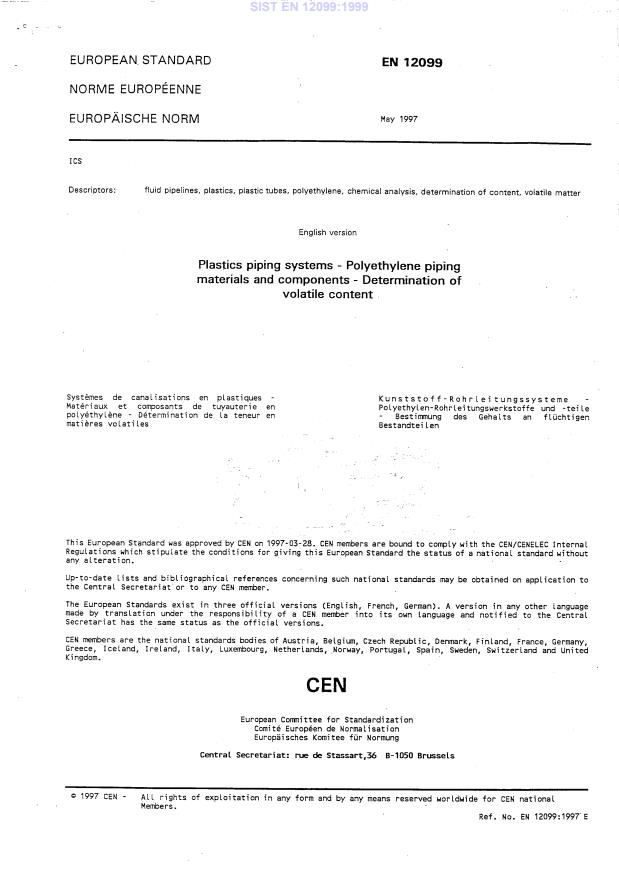
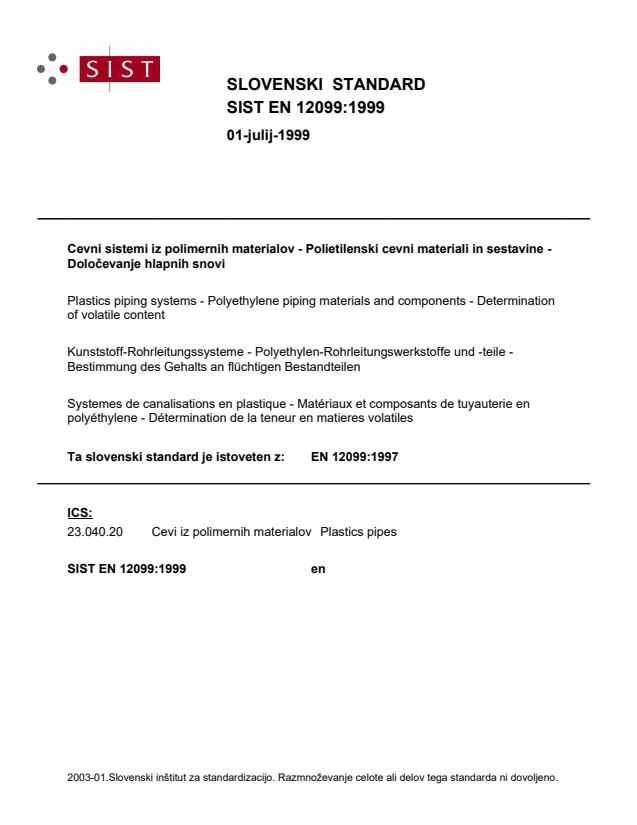
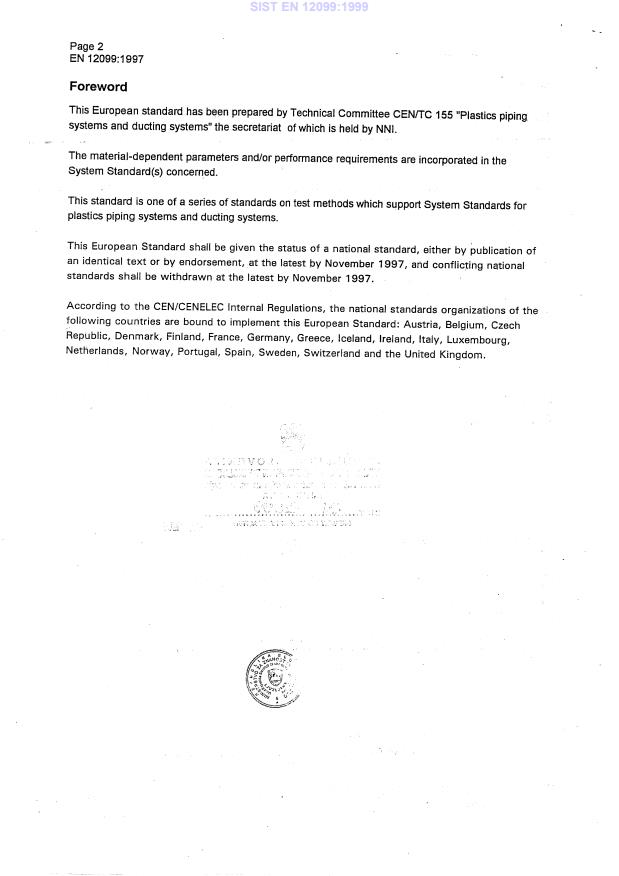
(Main)Plastics piping systems - Polyethylene piping materials and components - Determination of volatile content
- Abstract
This standard specifies a method for determining the content of material volatile at 105 °C in polyethylene (PE) piping materials. This method is applicable to moulding and extrusion materials. It also can be applicable to components in PE piping systems.
- Status
- Published
- Publication Date
- 20-May-1997
- Technical Committee
- CEN/TC 155 - Plastics piping systems and ducting systems
- Current Stage
- 9093 - Decision to confirm - Review Enquiry
- Start Date
- 08-May-2025
- Completion Date
- 14-Oct-2026

Overview
EN 12099:1997 (CEN) specifies a standardized method for the determination of volatile content in polyethylene (PE) piping materials and components. The procedure targets material volatile fractions that evaporate at 105 °C and is applicable to both moulding and extrusion grades of polyethylene as well as to finished components used in PE piping systems. The standard supports consistent laboratory measurement for material characterization and quality control.
Key topics and requirements
- Scope and applicability: Measurement of material volatile content at 105 °C for PE used in piping systems; covers moulding, extrusion materials and components.
- Test condition focus: Establishes a common temperature reference (105 °C) to quantify volatile substances that can be released from PE piping materials.
- Sample applicability: Intended for both raw polymer compounds and manufactured components, enabling assessment at different production stages.
- Quality and conformity: Provides a reproducible basis for manufacturers and testing laboratories to compare volatile content against internal or regulatory limits.
- Reporting: Requires clear documentation of sample type, test conditions and measured volatile fraction to ensure traceability and comparability.
Practical applications
- Manufacturing quality control: Routine checks on raw PE compounds and extrusion/moulded components to detect excessive volatile content before shipment.
- Material acceptance and supplier control: Verifying incoming PE materials meet purchaser or industry criteria for volatile content.
- Product development and formulation: Comparing effects of additives, processing aids or stabilizers on residual volatiles in PE formulations.
- Failure analysis and forensic testing: Identifying whether volatile constituents may have contributed to odor, cosmetic defects, weldability issues or long‑term performance concerns.
- Third‑party testing and certification: Used by independent labs and certification bodies to support compliance assessments for PE piping products.
Who uses this standard
- PE pipe and fittings manufacturers
- Polymer compounders and masterbatch suppliers
- Independent testing laboratories and conformity assessment bodies
- Product engineers, quality managers and R&D teams working on PE piping systems
- Specifiers and procurement officers who require documented material properties
Related standards
- Other CEN/EN standards governing PE piping systems performance, material properties and installation (standards addressing mechanical properties, hydrostatic design and system testing) are typically used alongside EN 12099 to ensure complete specification and compliance of PE piping systems.
Keywords: EN 12099:1997, polyethylene piping, PE piping materials, determination of volatile content, 105 °C, moulding and extrusion, CEN, plastics piping systems, quality control, testing method.
Relations
- Effective Date
- 09-Feb-2026
- Effective Date
- 28-Jan-2026
- Effective Date
- 28-Jan-2026
- Effective Date
- 28-Jan-2026
- Effective Date
- 28-Jan-2026
- Effective Date
- 28-Jan-2026
- Effective Date
- 28-Jan-2026
- Effective Date
- 28-Jan-2026
- Effective Date
- 28-Jan-2026
- Effective Date
- 28-Jan-2026
- Effective Date
- 28-Jan-2026
- Effective Date
- 28-Jan-2026
- Effective Date
- 28-Jan-2026
- Effective Date
- 28-Jan-2026
- Effective Date
- 28-Jan-2026
Get Certified
Connect with accredited certification bodies for this standard

DIN CERTCO
DIN Group product certification.

Smithers Quality Assessments
US management systems and product certification.
Sponsored listings
Frequently Asked Questions
EN 12099:1997 is a standard published by the European Committee for Standardization (CEN). Its full title is "Plastics piping systems - Polyethylene piping materials and components - Determination of volatile content". This standard covers: This standard specifies a method for determining the content of material volatile at 105 °C in polyethylene (PE) piping materials. This method is applicable to moulding and extrusion materials. It also can be applicable to components in PE piping systems.
This standard specifies a method for determining the content of material volatile at 105 °C in polyethylene (PE) piping materials. This method is applicable to moulding and extrusion materials. It also can be applicable to components in PE piping systems.
EN 12099:1997 is classified under the following ICS (International Classification for Standards) categories: 83.140.30 - Plastics pipes and fittings for non fluid use. The ICS classification helps identify the subject area and facilitates finding related standards.
EN 12099:1997 has the following relationships with other standards: It is inter standard links to EN 50626-2:2023, EN 1451-1:2017, EN 15347:2007, EN 15346:2007, EN 1852-1:2018, EN 13598-2:2020, EN 14758-1:2023, EN 17670-2:2023, EN 12201-1:2011, EN 1555-1:2021, CEN/TS 14541:2007, EN 15346:2014, EN 13476-3:2018, EN 1555-1:2010, EN 1555-1:2025. Understanding these relationships helps ensure you are using the most current and applicable version of the standard.
EN 12099:1997 is associated with the following European legislation: EU Directives/Regulations: 305/2011, 89/106/EEC. When a standard is cited in the Official Journal of the European Union, products manufactured in conformity with it benefit from a presumption of conformity with the essential requirements of the corresponding EU directive or regulation.
EN 12099:1997 is available in PDF format for immediate download after purchase. The document can be added to your cart and obtained through the secure checkout process. Digital delivery ensures instant access to the complete standard document.
Standards Content (Sample)
2003-01.Slovenski inštitut za standardizacijo. Razmnoževanje celote ali delov tega standarda ni dovoljeno.Kunststoff-Rohrleitungssysteme - Polyethylen-Rohrleitungswerkstoffe und -teile - Bestimmung des Gehalts an flüchtigen BestandteilenSystemes de canalisations en plastique - Matériaux et composants de tuyauterie en polyéthylene - Détermination de la teneur en matieres volatilesPlastics pipin
...