

ASTM F1154-24
(Practice)Standard Practices for Evaluating the Comfort, Fit, Function, and Durability of Protective Ensembles, Ensemble Elements, and Other Components
General Information
- Abstract
SIGNIFICANCE AND USE
5.1 These practices establish standard procedures designed for qualitatively evaluating the performance characteristics of protective ensembles or ensemble elements in terms of comfort, fit, function, and durability. Limited quantitative measures are also provided.
5.2 These practices are suitable for both end users and manufacturers to evaluate performance characteristics of protective ensembles and ensemble elements.
5.2.1 End users may use these practices to qualitatively determine how well protective ensembles and ensemble elements (gloves, boots, and respirators) and ensemble components (communications systems, cooling devices, and undergarments) meet their particular application.
5.2.2 Manufacturers of protective ensembles and ensemble elements may use these practices to determine the qualitative performance characteristics in existing or proposed designs.
5.3 Option A permits a qualitative evaluation of protective ensemble or ensemble element mobility by subjecting the protective ensemble to a manned exercise routine. Option B permits a qualitative evaluation of protective ensemble or ensemble element function. Each procedure can be used to assess ensemble comfort and fit by relating test subject responses and by comparing the dimensions and weights of both the test subject and suit.
Note 1: The accumulation of suit and human subject dimension data may eventually be used by manufacturers or end users in standards to improve the sizing of chemical protective suits and the integration of ensemble components in protective ensembles.
5.4 The use of these practices is primarily for qualitative purposes only. In general, results from use of these practices on one type of ensemble may not be comparable to other test results on a different ensemble due to the subjective nature of test results.
5.5 Certain aspects of these practices are quantitative. The effect of wearing the ensemble or ensemble element can also be assessed by the measurement of t...
SCOPE
1.1 These practices are intended for evaluating protective ensembles and ensemble elements to determine the suitability of the ensemble or ensemble components in a work environment on the basis of its comfort, fit, function, and durability.
1.1.1 Option A is a manned exercise scenario intended to evaluate the impact of the ensembles and ensemble elements on wearer mobility when worn in a series of different physical exercises that are intended to evaluate the range of motion permitted by the ensemble or ensemble element.
1.1.2 Option B is a manned work task scenario intended to determine the impact of the ensemble or ensemble element on wearer function.
1.1.3 Recording the length of time used to complete these tasks provides a means for quantifying the impact of the ensemble or ensemble element on the wearer function.
1.1.4 Relating the ability of the subject to completely perform all tasks provides a qualitative assessment for the impact of the ensemble or ensemble element on wearer function.
1.1.5 The optional evaluation of ensembles or ensemble elements for liquid or vapor integrity following the exercise protocols provides a basis for evaluating the impact of wearing on ensemble or ensemble element integrity.
1.1.6 The optional evaluation of donning and doffing instructions provides a basis for evaluating the potential for errors which may impact the effectiveness of the ensemble.
1.2 These practices apply to protective ensembles and certain ensemble elements that are used for protection against different chemical, biological, physical, thermal, and other hazards, but are primarily useful for ensembles that include barrier layers such as liquid splash protective ensembles used for protection against hazardous chemicals or highly infectious diseases, or vapor protective ensembles used for chemical protection.
1.3 The values as stated in inch-pound units are to be regarded as the standard. The v...
- Status
- Published
- Publication Date
- 31-Jan-2024
- Technical Committee
- F23 - Personal Protective Clothing and Equipment
- Drafting Committee
- F23.30 - Chemicals
Buy Documents
ASTM F1154-24 - Standard Practices for Evaluating the Comfort, Fit, Function, and Durability of Protective Ensembles, Ensemble Elements, and Other Components
REDLINE ASTM F1154-24 - Standard Practices for Evaluating the Comfort, Fit, Function, and Durability of Protective Ensembles, Ensemble Elements, and Other Components
Overview
ASTM F1154-24 sets forth standard practices for evaluating the comfort, fit, function, and durability of protective ensembles, their elements, and associated components. This standard is designed to assist both manufacturers and end users in assessing the performance of protective clothing and equipment used in environments where exposure to chemical, biological, physical, or thermal hazards is a concern. The scope of ASTM F1154-24 primarily addresses qualitative evaluation methods, with some quantitative measures for aspects such as task completion time and ensemble integrity after use.
Typical items covered by this standard include chemical-protective suits, gloves, boots, respirators, cooling devices, communications systems, and undergarments. The standard is especially relevant for ensembles incorporating barrier layers, such as liquid splash or vapor protective clothing used in hazardous chemical response, healthcare, or laboratory settings.
Key Topics
ASTM F1154-24 focuses on the following core evaluation criteria for protective ensembles and their elements:
- Comfort and Fit: Assessment methodologies for how well an ensemble or component fits the wearer, and how comfortable it is during various movements and tasks.
- Function: Evaluation of the ensemble's impact on the ability of the wearer to perform work-related tasks or exercises, including mobility and dexterity.
- Durability: Inspection before and after use to identify any damage such as wear, tear, or performance degradation after physical activity or task completion.
- Integrity: Optional testing for barrier performance to liquids or vapors following simulated use, ensuring the ensemble maintains its protective function.
- Donning and Doffing: Evaluation of instructions and protocols for putting on and removing the ensemble, with attention to potential errors or cross-contamination.
The standard provides two primary test options:
- Option A (Exercise Scenario): Assesses the effect on mobility through a series of physical exercises.
- Option B (Work Task Scenario): Assesses impact on the completion of routine work tasks.
Assessments may include visual acuity through protective visors, field of vision, and the ability to manipulate or access equipment, as appropriate to the ensemble’s configuration.
Applications
Practical uses of ASTM F1154-24 include:
- End User Evaluation: Organizations can use these practices to determine if specific protective ensembles or elements (such as gloves, boots, or respirators) are suitable for their environment and operational needs.
- Design Assessment for Manufacturers: Manufacturers can evaluate how new or existing ensemble designs perform in real-world scenarios, focusing on user comfort, task efficiency, and durability.
- Procurement and Compliance: The standard helps purchasing teams or safety managers quantitatively and qualitatively compare potential equipment for use in fields such as hazardous materials response, healthcare, laboratories, emergency services, and industry.
- Integration Testing: Assesses how well multiple ensemble components (e.g., respirators, gloves, communications gear) function together, which is essential for complex protective systems.
Related Standards
ASTM F1154-24 references and complements several other key standards in the evaluation and specification of protective clothing, including:
- ASTM F1052 - Pressure Testing of Vapor Protective Suits
- ASTM F1359/F1359M - Liquid Penetration Resistance of Protective Clothing and Ensembles
- ASTM F1494 - Terminology Relating to Protective Clothing
- ASTM F2407/F2407M - Specification for Surgical Gowns Used in Healthcare Facilities
- ASTM F2668 - Practice for Determining Physiological Responses of the Wearer to Protective Ensembles
- ASTM F2704 - Specification for Air-Fed Protective Ensembles
- ASTM F3031 - Practice for Range of Motion Evaluation of Protective Ensembles
- ASTM F3352/F3352M - Specification for Isolation Gowns in Healthcare Settings
Keywords: protective ensembles, chemical protective clothing, comfort, fit, function, durability, hazard protection, wear assessment, ensemble integrity, PPE evaluation.
By using ASTM F1154-24, both manufacturers and end users can ensure a structured and reliable approach to selecting and validating the performance of personal protective equipment, supporting safety, regulation compliance, and effective hazard risk management.
Relations
- Effective Date
- 01-Feb-2024
- Effective Date
- 01-Feb-2024
- Effective Date
- 01-Feb-2024
- Effective Date
- 01-Feb-2024
- Effective Date
- 01-Feb-2024
- Effective Date
- 01-Feb-2024
- Effective Date
- 01-Feb-2024
- Effective Date
- 01-Feb-2024
- Referred By
ASTM F2588-12(2020) - Standard Test Method for Man-In-Simulant Test (MIST) for Protective Ensembles - Effective Date
- 01-Feb-2024
- Effective Date
- 01-Feb-2024
Buy Documents
ASTM F1154-24 - Standard Practices for Evaluating the Comfort, Fit, Function, and Durability of Protective Ensembles, Ensemble Elements, and Other Components
REDLINE ASTM F1154-24 - Standard Practices for Evaluating the Comfort, Fit, Function, and Durability of Protective Ensembles, Ensemble Elements, and Other Components
Get Certified
Connect with accredited certification bodies for this standard

CIS Institut d.o.o.
Personal Protective Equipment (PPE) certification body. Notified Body NB-2890 for EU Regulation 2016/425 PPE.

Kiwa BDA Testing
Building and construction product certification.
Kmetijski inštitut Slovenije
Agricultural Institute of Slovenia. Soil testing, plant health, agricultural product analysis.
Sponsored listings
Frequently Asked Questions
ASTM F1154-24 is a standard published by ASTM International. Its full title is "Standard Practices for Evaluating the Comfort, Fit, Function, and Durability of Protective Ensembles, Ensemble Elements, and Other Components". This standard covers: SIGNIFICANCE AND USE 5.1 These practices establish standard procedures designed for qualitatively evaluating the performance characteristics of protective ensembles or ensemble elements in terms of comfort, fit, function, and durability. Limited quantitative measures are also provided. 5.2 These practices are suitable for both end users and manufacturers to evaluate performance characteristics of protective ensembles and ensemble elements. 5.2.1 End users may use these practices to qualitatively determine how well protective ensembles and ensemble elements (gloves, boots, and respirators) and ensemble components (communications systems, cooling devices, and undergarments) meet their particular application. 5.2.2 Manufacturers of protective ensembles and ensemble elements may use these practices to determine the qualitative performance characteristics in existing or proposed designs. 5.3 Option A permits a qualitative evaluation of protective ensemble or ensemble element mobility by subjecting the protective ensemble to a manned exercise routine. Option B permits a qualitative evaluation of protective ensemble or ensemble element function. Each procedure can be used to assess ensemble comfort and fit by relating test subject responses and by comparing the dimensions and weights of both the test subject and suit. Note 1: The accumulation of suit and human subject dimension data may eventually be used by manufacturers or end users in standards to improve the sizing of chemical protective suits and the integration of ensemble components in protective ensembles. 5.4 The use of these practices is primarily for qualitative purposes only. In general, results from use of these practices on one type of ensemble may not be comparable to other test results on a different ensemble due to the subjective nature of test results. 5.5 Certain aspects of these practices are quantitative. The effect of wearing the ensemble or ensemble element can also be assessed by the measurement of t... SCOPE 1.1 These practices are intended for evaluating protective ensembles and ensemble elements to determine the suitability of the ensemble or ensemble components in a work environment on the basis of its comfort, fit, function, and durability. 1.1.1 Option A is a manned exercise scenario intended to evaluate the impact of the ensembles and ensemble elements on wearer mobility when worn in a series of different physical exercises that are intended to evaluate the range of motion permitted by the ensemble or ensemble element. 1.1.2 Option B is a manned work task scenario intended to determine the impact of the ensemble or ensemble element on wearer function. 1.1.3 Recording the length of time used to complete these tasks provides a means for quantifying the impact of the ensemble or ensemble element on the wearer function. 1.1.4 Relating the ability of the subject to completely perform all tasks provides a qualitative assessment for the impact of the ensemble or ensemble element on wearer function. 1.1.5 The optional evaluation of ensembles or ensemble elements for liquid or vapor integrity following the exercise protocols provides a basis for evaluating the impact of wearing on ensemble or ensemble element integrity. 1.1.6 The optional evaluation of donning and doffing instructions provides a basis for evaluating the potential for errors which may impact the effectiveness of the ensemble. 1.2 These practices apply to protective ensembles and certain ensemble elements that are used for protection against different chemical, biological, physical, thermal, and other hazards, but are primarily useful for ensembles that include barrier layers such as liquid splash protective ensembles used for protection against hazardous chemicals or highly infectious diseases, or vapor protective ensembles used for chemical protection. 1.3 The values as stated in inch-pound units are to be regarded as the standard. The v...
SIGNIFICANCE AND USE 5.1 These practices establish standard procedures designed for qualitatively evaluating the performance characteristics of protective ensembles or ensemble elements in terms of comfort, fit, function, and durability. Limited quantitative measures are also provided. 5.2 These practices are suitable for both end users and manufacturers to evaluate performance characteristics of protective ensembles and ensemble elements. 5.2.1 End users may use these practices to qualitatively determine how well protective ensembles and ensemble elements (gloves, boots, and respirators) and ensemble components (communications systems, cooling devices, and undergarments) meet their particular application. 5.2.2 Manufacturers of protective ensembles and ensemble elements may use these practices to determine the qualitative performance characteristics in existing or proposed designs. 5.3 Option A permits a qualitative evaluation of protective ensemble or ensemble element mobility by subjecting the protective ensemble to a manned exercise routine. Option B permits a qualitative evaluation of protective ensemble or ensemble element function. Each procedure can be used to assess ensemble comfort and fit by relating test subject responses and by comparing the dimensions and weights of both the test subject and suit. Note 1: The accumulation of suit and human subject dimension data may eventually be used by manufacturers or end users in standards to improve the sizing of chemical protective suits and the integration of ensemble components in protective ensembles. 5.4 The use of these practices is primarily for qualitative purposes only. In general, results from use of these practices on one type of ensemble may not be comparable to other test results on a different ensemble due to the subjective nature of test results. 5.5 Certain aspects of these practices are quantitative. The effect of wearing the ensemble or ensemble element can also be assessed by the measurement of t... SCOPE 1.1 These practices are intended for evaluating protective ensembles and ensemble elements to determine the suitability of the ensemble or ensemble components in a work environment on the basis of its comfort, fit, function, and durability. 1.1.1 Option A is a manned exercise scenario intended to evaluate the impact of the ensembles and ensemble elements on wearer mobility when worn in a series of different physical exercises that are intended to evaluate the range of motion permitted by the ensemble or ensemble element. 1.1.2 Option B is a manned work task scenario intended to determine the impact of the ensemble or ensemble element on wearer function. 1.1.3 Recording the length of time used to complete these tasks provides a means for quantifying the impact of the ensemble or ensemble element on the wearer function. 1.1.4 Relating the ability of the subject to completely perform all tasks provides a qualitative assessment for the impact of the ensemble or ensemble element on wearer function. 1.1.5 The optional evaluation of ensembles or ensemble elements for liquid or vapor integrity following the exercise protocols provides a basis for evaluating the impact of wearing on ensemble or ensemble element integrity. 1.1.6 The optional evaluation of donning and doffing instructions provides a basis for evaluating the potential for errors which may impact the effectiveness of the ensemble. 1.2 These practices apply to protective ensembles and certain ensemble elements that are used for protection against different chemical, biological, physical, thermal, and other hazards, but are primarily useful for ensembles that include barrier layers such as liquid splash protective ensembles used for protection against hazardous chemicals or highly infectious diseases, or vapor protective ensembles used for chemical protection. 1.3 The values as stated in inch-pound units are to be regarded as the standard. The v...
ASTM F1154-24 is classified under the following ICS (International Classification for Standards) categories: 13.340.10 - Protective clothing. The ICS classification helps identify the subject area and facilitates finding related standards.
ASTM F1154-24 has the following relationships with other standards: It is inter standard links to ASTM F1154-18, ASTM F1296-08(2023), ASTM F2407/F2407M-23a, ASTM F1052-20, ASTM F2704-17a, ASTM F1494-23, ASTM F1461-17, ASTM F3352/F3352M-23b, ASTM F2588-12(2020), ASTM F1731-21. Understanding these relationships helps ensure you are using the most current and applicable version of the standard.
ASTM F1154-24 is available in PDF format for immediate download after purchase. The document can be added to your cart and obtained through the secure checkout process. Digital delivery ensures instant access to the complete standard document.
Standards Content (Sample)
This international standard was developed in accordance with internationally recognized principles on standardization established in the Decision on Principles for the
Development of International Standards, Guides and Recommendations issued by the World Trade Organization Technical Barriers to Trade (TBT) Committee.
Designation: F1154 − 24
Standard Practices for
Evaluating the Comfort, Fit, Function, and Durability of
Protective Ensembles, Ensemble Elements, and Other
Components
This standard is issued under the fixed designation F1154; the number immediately following the designation indicates the year of
original adoption or, in the case of revision, the year of last revision. A number in parentheses indicates the year of last reapproval. A
superscript epsilon (´) indicates an editorial change since the last revision or reapproval.
INTRODUCTION
Protective clothing is generally used in combination with other items to form an ensemble of
clothing and equipment. Generally, as the risks for exposure to chemical, biological, thermal, physical,
and other hazards increase, it becomes increasingly important that the ensemble provide consistent and
overall performance in protecting the wearer. At the same time, the more encumbered the individual
wearer, the more likely that ensembles comprising multiple elements and components will impact the
ability of the wearer to carry out different tasks and remain comfortable without increased
physiological stress, particularly for clothing that incorporates barrier layers. The majority of industry
test methods address specific performance attributes for protecting against specific types of hazards,
but do not address particular designs or assess the impact of all elements and components forming the
ensemble. These elements may comprise various types of protective clothing, ranging from partial
body such as aprons and sleeve protectors, to fully encapsulating suits that also must be integrated
with various types of respirators, gloves, footwear, head protection such as helmets, cooling devices,
communications systems, and undergarments. Therefore, there is a need for methodology that allows
the assessment of how well ensembles affect wearer comfort and function, as well as providing for
evaluation of fit and any impact of wearing on the overall integrity intended for the ensemble.
This standard is intended to provide standardized methods for qualitatively evaluating the comfort,
fit, function, and durability of protective ensembles and ensemble components. It may also be used by
protective clothing manufacturers and users to assess current or proposed designs and their
instructions for donning, doffing, and using products as an ensemble component. This standard has
utility for a variety of applications, including chemical protective ensembles, ensembles used in
various healthcare settings or against other types of biological hazards, and different ensembles that
may include some form of barrier layer in their various elements or components.
1. Scope exercises that are intended to evaluate the range of motion
permitted by the ensemble or ensemble element.
1.1 These practices are intended for evaluating protective
1.1.2 Option B is a manned work task scenario intended to
ensembles and ensemble elements to determine the suitability
determine the impact of the ensemble or ensemble element on
of the ensemble or ensemble components in a work environ-
wearer function.
ment on the basis of its comfort, fit, function, and durability.
1.1.1 Option A is a manned exercise scenario intended to 1.1.3 Recording the length of time used to complete these
tasks provides a means for quantifying the impact of the
evaluate the impact of the ensembles and ensemble elements
on wearer mobility when worn in a series of different physical ensemble or ensemble element on the wearer function.
1.1.4 Relating the ability of the subject to completely
perform all tasks provides a qualitative assessment for the
These practices are under the jurisdiction of ASTM Committee F23 on Personal
Protective Clothing and Equipment and are the direct responsibility of Subcommit- impact of the ensemble or ensemble element on wearer
tee F23.30 on Chemicals.
function.
Current edition approved Feb. 1, 2024. Published February 2024. Originally
1.1.5 The optional evaluation of ensembles or ensemble
approved in 1988. Last previous edition approved in 2018 as F1154 – 18. DOI:
10.1520/F1154-24. elements for liquid or vapor integrity following the exercise
Copyright © ASTM International, 100 Barr Harbor Drive, PO Box C700, West Conshohocken, PA 19428-2959. United States
F1154 − 24
protocols provides a basis for evaluating the impact of wearing 3.1.1 ensemble component, n—an item used as part of the
on ensemble or ensemble element integrity. protective ensemble that provides additional protective or
1.1.6 The optional evaluation of donning and doffing in- functional performance, but is not necessarily an item of
structions provides a basis for evaluating the potential for protective clothing.
errors which may impact the effectiveness of the ensemble. 3.1.1.1 Discussion—Examples of ensemble components are
cooling devices, communications systems, fall protection
1.2 These practices apply to protective ensembles and
harnesses, and undergarments. In cases where the respirator
certain ensemble elements that are used for protection against
does not also provide skin protection, the respirator is also
different chemical, biological, physical, thermal, and other
considered an ensemble component.
hazards, but are primarily useful for ensembles that include
3.1.2 ensemble element, n—an item of protective clothing
barrier layers such as liquid splash protective ensembles used
used in the protective ensemble that provides direct protection
for protection against hazardous chemicals or highly infectious
of the individual.
diseases, or vapor protective ensembles used for chemical
3.1.2.1 Discussion—Examples of ensemble elements in-
protection.
clude full-body protective clothing such as coveralls, two-piece
1.3 The values as stated in inch-pound units are to be
splash suits, surgical gowns, and encapsulating suits; and
regarded as the standard. The values in parentheses are given
partial-body protective clothing such as aprons, smocks, labo-
for information only.
ratory coats, hoods, sleeve protectors, gloves, footwear, and
1.4 This standard does not purport to address all of the
respirators where the respirator facepiece functions to provide
safety concerns, if any, associated with its use. It is the
protection to the wearer’s face.
responsibility of the user of this standard to establish appro-
3.1.3 liquid splash protective ensemble, n—protective en-
priate safety, health, and environmental practices and deter-
semble used to protect the wearer from liquid splashes and
mine the applicability of regulatory limitations prior to use.
other forms of incidental liquid contact.
Specific safety precautions are given in Section 7.
3.1.4 protective clothing, n—an item of clothing that is
1.5 This international standard was developed in accor-
specifically designed and constructed for the intended purpose
dance with internationally recognized principles on standard-
of isolating all or part of the body from a potential hazard, or,
ization established in the Decision on Principles for the
isolating the external environment from contamination by the
Development of International Standards, Guides and Recom-
wearer of the clothing.
mendations issued by the World Trade Organization Technical
Barriers to Trade (TBT) Committee.
3.1.5 protective ensemble, n—the combination of ensemble
elements and ensemble components to protect the wearer from
2. Referenced Documents
an exposure hazard when worn together.
2.1 ASTM Standards:
3.1.5.1 Discussion—In these practices, the applicable pro-
F1052 Test Method for Pressure Testing Vapor Protective
tective ensemble is principally intended to provide protection
Suits
from hazardous chemicals, highly infectious diseases, and
F1359/F1359M Test Method for Liquid Penetration Resis-
other hazardous substances that require barrier layers in the
tance of Protective Clothing or Protective Ensembles
protective clothing or ensemble elements. Examples of en-
Under a Shower Spray While on a Manikin
sembles include liquid splash protective ensembles and vapor
F1494 Terminology Relating to Protective Clothing
protective ensembles.
F2407/F2407M Specification for Surgical Gowns Intended
3.1.6 vapor protective ensemble, n—protective ensemble
for Use in Healthcare Facilities
used to protect the wearer from exposure to chemical vapors
F2668 Practice for Determining the Physiological Responses
and gases.
of the Wearer to Protective Clothing Ensembles
3.2 For definitions of other protective clothing terms used in
F2704 Specification for Air-Fed Protective Ensembles
these practices, refer to Terminology F1494.
F3031 Practice for Range of Motion Evaluation of First
Responder’s Protective Ensembles
4. Summary of Practices
F3352/F3352M Specification for Isolation Gowns Intended
4.1 Two options are provided for evaluating the comfort, fit,
for Use in Healthcare Facilities
2.2 OSHA Specifications: function, and durability of protective ensembles and ensemble
elements using a test subject. These options are performed
29 CFR Part 1910.25 Portable Wood Ladders
29 CFR Part 1910.26 Portable Metal Ladders either separately or in combination.
4.1.1 In Option A, the impact of the protective ensembles or
3. Terminology
ensemble elements on wearer mobility is evaluated by subject-
3.1 Definitions: ing the protective ensemble to a manned exercise scenario. The
time for the test subject to complete all exercises is recorded.
The protective ensemble, ensemble elements, and components
For referenced ASTM standards, visit the ASTM website, www.astm.org, or
contact ASTM Customer Service at service@astm.org. For Annual Book of ASTM
are inspected prior to and after the series of exercises to assess
Standards volume information, refer to the standard’s Document Summary page on
damage or changes that may have occurred as a result of the
the ASTM website.
exercises. The test subject qualitatively rates the ease of
The Code of Federal Regulations is available from the Superintendent of
Documents, Government Printing Office, Washington, DC 20401. movement for each of the exercises.
F1154 − 24
4.1.2 In Option B, the function of the protective ensemble permits a qualitative evaluation of protective ensemble or
and ensemble components are evaluated by observing the ensemble element function. Each procedure can be used to
ability of a test subject to perform routine work tasks while assess ensemble comfort and fit by relating test subject
wearing the protective ensemble. The time for the test subject responses and by comparing the dimensions and weights of
to complete all tasks is recorded. As in Option A, the protective both the test subject and suit.
ensemble, ensemble elements, and components are inspected
NOTE 1—The accumulation of suit and human subject dimension data
prior to and after the series of tasks to assess damages or
may eventually be used by manufacturers or end users in standards to
changes that may have occurred as a result of the exercises, and
improve the sizing of chemical protective suits and the integration of
the test subject qualitatively rates the ease of performing each ensemble components in protective ensembles.
work task.
5.4 The use of these practices is primarily for qualitative
4.1.3 Additional evaluations or assessments are applied for
purposes only. In general, results from use of these practices on
specific types of ensembles or ensemble elements depending
one type of ensemble may not be comparable to other test
on their features, including visual acuity and field of vision
results on a different ensemble due to the subjective nature of
(through a visor provided as part of the ensemble that covers
test results.
the respirator facepiece) and the time required for the test
5.5 Certain aspects of these practices are quantitative. The
subject to remove and replace their hands in the gloves of the
effect of wearing the ensemble or ensemble element can also be
protective ensemble (for encapsulating suits where wearers are
assessed by the measurement of the time to complete the
intended to be able to remove their hands for adjusting their
exercise and tasks defined in Option A and Option B, respec-
respirator equipment or wipe their visor).
tively. Further, liquid penetration resistance testing is applied
4.1.4 The typical activities and tasks associated with the use
to liquid splash protective ensembles in accordance with Test
of the ensemble should be considered when selecting tasks and
Method F1359/F1359M, and pressure testing is applied to
exercises.
vapor protective ensembles in accordance with Test Method
4.1.5 Integrity testing is applied to ensembles after one or
F1052 to determine if the exercises or tasks affect the durability
both options to determine if the ensemble provides acceptable
of the protective ensemble or ensemble element to provide
levels of integrity following the performance of the exercises
acceptable levels of integrity. Depending on the ensemble
or tasks. Liquid splash protective ensembles are evaluated for
configuration, specific evaluations and assessments are used to
liquid penetration resistance in accordance with Test Method
determine the effect of the ensemble or ensemble element on
F1359/F1359M, and vapor protective ensembles are evaluated
the wearer’s visual acuity, their field of vision, and their ability
using pressure testing in accordance with Test Method F1052.
to remove and reinsert their hands into gloves when attached to
4.2 For each option, the fit and comfort of the protective
encapsulating protective ensembles.
ensemble and ensemble components are assessed by measuring
5.6 Quantitative practices for determining the specific im-
the test subject’s body dimensions and mass, and the dimen-
pact of the protective ensemble on the wearer’s range of
sions and mass of the ensemble. These measurements have
motion are found in Practice F3031.
utility in evaluating the fit and comfort by relating test subject
and ensemble measurements to test subject responses follow-
5.7 These practices are not intended to assess heat stress
ing each test. resulting from wearing a protective ensemble, although ther-
mal comfort of the suit ensemble may be subjectively evalu-
5. Significance and Use ated. Use Practice F2668 for measuring the physiological
impact of wearing ensembles or ensemble elements on wear-
5.1 These practices establish standard procedures designed
ers.
for qualitatively evaluating the performance characteristics of
protective ensembles or ensemble elements in terms of 5.8 It is recommended that end users and manufacturers of
comfort, fit, function, and durability. Limited quantitative protective ensembles and ensemble elements consider these
measures are also provided. practices to be minimum procedures for evaluating ensemble
and ensemble element performance characteristics. Additional
5.2 These practices are suitable for both end users and
tests and procedures that relate directly to their particular
manufacturers to evaluate performance characteristics of pro-
application are also recommended where appropriate. Each
tective ensembles and ensemble elements.
facility performing these practices is encouraged to establish its
5.2.1 End users may use these practices to qualitatively
own criteria for assessing acceptable ensemble performance.
determine how well protective ensembles and ensemble ele-
ments (gloves, boots, and respirators) and ensemble compo-
6. Apparatus
nents (communications systems, cooling devices, and under-
garments) meet their particular application. 6.1 Fiberboard Boxes—Four standard shipping containers
3 3 3
5.2.2 Manufacturers of protective ensembles and ensemble of not less than 1.5 ft (0.03 m ) and not exceeding 2 ft
(0.06 m ) and filled with a non-hazardous material weighing
elements may use these practices to determine the qualitative
performance characteristics in existing or proposed designs. 20 lb (9.1 kg). The container shall be packed in such a way as
to preclude any internal movement or shifting of the mass.
5.3 Option A permits a qualitative evaluation of protective
ensemble or ensemble element mobility by subjecting the 6.2 Drum—A standard 55 gal (208 L) drum that is filled
protective ensemble to a manned exercise routine. Option B with 200 lb (90 kg) of a non-hazardous material.
F1154 − 24
6.3 Hand Truck—A standard, commercial-grade hand truck
that is typically employed for the transportation of 55 gal
(208 L) drums.
6.4 Valve—Any standard handwheel valve, or similar
representation, that may be vertically mounted in such a
manner to provide actuation in the overhead position (placed at
least at the same height as the test subject). The valve handle
is a minimum of 7 in. (1179 6 25 mm) in diameter and a
maximum of 8 in. (203 mm) in diameter.
6.5 Wrench—A 10 in. (254 mm) crescent wrench.
6.6 Screwdriver—A 10 in. (254 mm) slotted end screw-
driver.
6.7 Bolt and Screw Assembly—A metal stand shall be
1 3
threaded for a ⁄2-13 UNC size bolt and a ⁄8-16 UNC screw. A
⁄2-13 UNC 2 in. (51 mm) long hex head bolt shall be provided
for bolt installation and removal exercises. A ⁄8-16 UNC 2 in.
(51 mm) long slotted round-head screw shall be used for screw
installation and removal exercises. The metal stand shall be
placed on a waist-high table for the assembly and disassembly
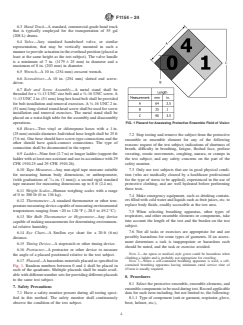
FIG. 1 Placard for Assessing Protective Ensemble Field of Vision
operations.
6.8 Hoses—Two vinyl or chloroprene hoses with a 1 in.
(25 mm) outside diameter. Individual hose length shall be 25 ft
7.2 Stop testing and remove the subject from the protective
(7.6 m). One hose should have screw-type connections and the
ensemble or ensemble element for any of the following
other should have quick-connect connections. The type of
reasons: request of the test subject; indications of shortness of
connection shall be documented in the report.
breath, difficulty in breathing, fatigue, flushed face, profuse
6.9 Ladder—Nine foot (2.7 m) or longer ladder (support the sweating, erratic movements, coughing, nausea, or cramps in
the test subject; and any safety concerns on the part of the
ladder with at least one assistant and use in accordance with 29
CFR 1910.25 and 29 CFR 1910.26). safety monitor.
6.10 Tape Measures—Any non-rigid tape measure suitable 7.3 Only use test subjects that are in good physical condi-
for measuring human body dimensions, or anthropometer,
tion (who are medically cleared by a healthcare professional
(with graduations of ⁄16 in. (1 mm)); a second rigid standard for the type of stress to be applied), experienced in the use of
t
...
This document is not an ASTM standard and is intended only to provide the user of an ASTM standard an indication of what changes have been made to the previous version. Because
it may not be technically possible to adequately depict all changes accurately, ASTM recommends that users consult prior editions as appropriate. In all cases only the current version
of the standard as published by ASTM is to be considered the official document.
Designation: F1154 − 18 F1154 − 24
Standard Practices for
Evaluating the Comfort, Fit, Function, and Durability of
Protective Ensembles, Ensemble Elements, and Other
Components
This standard is issued under the fixed designation F1154; the number immediately following the designation indicates the year of
original adoption or, in the case of revision, the year of last revision. A number in parentheses indicates the year of last reapproval. A
superscript epsilon (´) indicates an editorial change since the last revision or reapproval.
INTRODUCTION
Protective clothing is generally used in combination with other items to form an ensemble of
clothing and equipment. Generally, as the risks for exposure to chemical, biological, thermal, physical,
and other hazards increase, it becomes increasingly important that the ensemble provide consistent and
overall performance in protecting the wearer. At the same time, the more encumbered the individual
wearer, the more likely that ensembles comprising multiple elements and components will impact the
ability of the wearer to carry out different tasks and remain comfortable without increased
physiological stress, particularly for clothing that incorporates barrier layers. The majority of industry
test methods address specific performance attributes for protecting against specific types of hazards,
but do not address particular designs or assess the impact of all elements and components forming the
ensemble. These elements may comprise various types of protective clothing, ranging from partial
body such as aprons and sleeve protectors, to fully encapsulating suits that also must be integrated
with various types of respirators, gloves, footwear, head protection such as helmets, cooling devices,
communications systems, and undergarments. Therefore, there is a need for methodology that allows
the assessment of how well ensembles affect wearer comfort and function, as well as providing for
evaluation of fit and any impact of wearing on the overall integrity intended for the ensemble.
This standard is intended to provide standardized methods for qualitatively evaluating the comfort,
fit, function, and durability of protective ensembles and ensemble components. It may also be used by
protective clothing manufacturers and users to assess current or proposed designs. designs and their
instructions for donning, doffing, and using products as an ensemble component. This standard has
utility for a variety of applications, including chemical-protective chemical protective ensembles,
ensembles used in various healthcare settings or against other types of biological hazards, and different
ensembles that may include some form of barrier layer in their various elements or components.
1. Scope
1.1 These practices are intended for evaluating protective ensembles and ensemble elements to determine the suitability of the
ensemble or ensemble components in a work environment on the basis of its comfort, fit, function, and durability.
1.1.1 Option A Option A is a manned exercise scenario intended to evaluate the impact of the ensembles and ensemble elements
on wearer mobility when worn in a series of different physical exercises that are intended to evaluate the range of motion permitted
by the ensemble or ensemble element.
These practices are under the jurisdiction of ASTM Committee F23 on Personal Protective Clothing and Equipment and are the direct responsibility of Subcommittee
F23.30 on Chemicals.
Current edition approved July 15, 2018Feb. 1, 2024. Published July 2018February 2024. Originally approved in 1988. Last previous edition approved in 20112018 as
F1154 – 11.F1154 – 18. DOI: 10.1520/F1154-18.10.1520/F1154-24.
Copyright © ASTM International, 100 Barr Harbor Drive, PO Box C700, West Conshohocken, PA 19428-2959. United States
F1154 − 24
1.1.2 Option B Option B is a manned work task scenario intended to determine the impact of the ensemble or ensemble element
on wearer function.
1.1.3 Recording the length of time used to complete these tasks provides a means for quantifying the impact of the ensemble or
ensemble element on the wearer function.
1.1.4 Relating the ability of the subject to completely perform all tasks provides a qualitative assessment for the impact of the
ensemble or ensemble element on wearer function.
1.1.5 The optional evaluation of ensembles or ensemble elements for liquid or vapor integrity following the exercise protocols
provides a basis for evaluating the impact of wearing on ensemble or ensemble element integrity.
1.1.6 The optional evaluation of donning and doffing instructions provides a basis for evaluating the potential for errors which may
impact the effectiveness of the ensemble.
1.2 These practices apply to protective ensembles and certain ensemble elements that are used for protection against different
chemical, biological, physical, thermal, and other hazards, but are primarily useful for ensembles that include barrier layers such
as liquid splash-protective splash protective ensembles used for protection against hazardous chemicals or highly infectious
diseases, or vapor-protective vapor protective ensembles used for chemical protection.
1.3 The values as stated in inch-pound units are to be regarded as the standard. The values in parentheses are given for information
only.
1.4 This standard does not purport to address all of the safety concerns, if any, associated with its use. It is the responsibility
of the user of this standard to establish appropriate safety, health, and environmental practices and determine the applicability of
regulatory limitations prior to use. Specific safety precautions are given in Section 7.
1.5 This international standard was developed in accordance with internationally recognized principles on standardization
established in the Decision on Principles for the Development of International Standards, Guides and Recommendations issued
by the World Trade Organization Technical Barriers to Trade (TBT) Committee.
2. Referenced Documents
2.1 ASTM Standards:
F1052 Test Method for Pressure Testing Vapor Protective Suits
F1359/F1359M Test Method for Liquid Penetration Resistance of Protective Clothing or Protective Ensembles Under a Shower
Spray While on a Manikin
F1494 Terminology Relating to Protective Clothing
F2407/F2407M Specification for Surgical Gowns Intended for Use in Healthcare Facilities
F2668 Practice for Determining the Physiological Responses of the Wearer to Protective Clothing Ensembles
F2704 Specification for Air-Fed Protective Ensembles
F3031 Practice for Range of Motion Evaluation of First Responder’s Protective Ensembles
F3352/F3352M Specification for Isolation Gowns Intended for Use in Healthcare Facilities
2.2 OSHA Specifications:
29 CFR Part 1910.25 Portable Wood Ladders
29 CFR Part 1910.26 Portable Metal Ladders
3. Terminology
3.1 Definitions:
3.1.1 ensemble component, n—an item used as part of the protective ensemble that provides additional protective or functional
performance, but is not necessarily an item of protective clothing.
3.1.1.1 Discussion—
For referenced ASTM standards, visit the ASTM website, www.astm.org, or contact ASTM Customer Service at service@astm.org. For Annual Book of ASTM Standards
volume information, refer to the standard’s Document Summary page on the ASTM website.
The Code of Federal Regulations is available from the Superintendent of Documents, Government Printing Office, Washington, DC 20401.
F1154 − 24
Examples of ensemble components are cooling devices, communications systems, fall protection harnesses, and undergarments.
In cases where the respirator does not also provide skin protection, the respirator is also considered an ensemble component.
3.1.2 ensemble element, n—an item of protective clothing used in the protective ensemble that provides direct protection of the
individual.
3.1.2.1 Discussion—
Examples of ensemble elements include full-body protective clothing such as coveralls, two-piece splash suits, surgical gowns, and
encapsulating suits; and partial-body protective clothing such as aprons, smocks, laboratory coats, hoods, sleeve protectors, gloves,
footwear, and respirators where the respirator facepiece functions to provide protection to the wearer’s face.
3.1.3 liquid splash-protective splash protective ensemble, n—protective ensemble used to protect the wearer from liquid splashes
and other forms of incidental liquid contact.
3.1.4 protective clothing, n—an item of clothing that is specifically designed and constructed for the intended purpose of isolating
all or part of the body from a potential hazard, or, isolating the external environment from contamination by the wearer of the
clothing.
3.1.5 protective ensemble, n—the combination of ensemble elements and ensemble components to protect the wearer from an
exposure hazard when worn together.
3.1.5.1 Discussion—
In these practices, the applicable protective ensemble is principally intended to provide protection from hazardous chemicals,
highly infectious diseases, and other hazardous substances that require barrier layers in the protective clothing or ensemble
elements. Examples of ensembles include liquid splash-protective splash protective ensembles and vapor-protective vapor
protective ensembles.
3.1.6 vapor-protective vapor protective ensemble, n—protective ensemble used to protect the wearer from exposure to chemical
vapors and gases.
3.2 For definitions of other protective clothing terms used in these practices, refer to Terminology F1494.
4. Summary of Practices
4.1 Two options are provided for evaluating the comfort, fit, function, and durability of protective ensembles and ensemble
elements using a test subject. These options are performed either separately or in combination.
4.1.1 In Option A, the impact of the protective ensembles or ensemble elements on wearer mobility is evaluated by subjecting the
protective ensemble to a manned exercise scenario. The time for the test subject to complete all exercises is recorded. The
protective ensemble, ensemble elements, and components are inspected prior to and after the series of exercises to assess damage
or changes that may have occurred as a result of the exercises. The test subject qualitatively rates the ease of movement for each
of the exercises.
4.1.2 In Option B, the function of the protective ensemble and ensemble components are evaluated by observing the ability of a
test subject to perform routine work tasks while wearing the protective ensemble. The time for the test subject to complete all tasks
is recorded. As in Option A, the protective ensemble, ensemble elements, and components are inspected prior to and after the series
of tasks to assess damages or changes that may have occurred as a result of the exercises, and the test subject qualitatively rates
the ease of performing each work task.
4.1.3 Additional evaluations or assessments are applied for specific types of ensembles or ensemble elements depending on their
features, including visual acuity and field of vision (through a visor provided as part of the ensemble that covers the respirator
facepiece) and the time required for the test subject to remove and replace their hands in the gloves of the protective ensemble (for
encapsulating suits where wearers are intended to be able to remove their hands for adjusting their respirator equipment or wipe
their visor).
4.1.4 The typical activities and tasks associated with the use of the ensemble should be considered when selecting tasks and
exercises.
4.1.5 Integrity testing is applied to ensembles after one or both options to determine if the ensemble provides acceptable levels
F1154 − 24
of integrity following the performance of the exercises or tasks. Liquid splash-protective splash protective ensembles are evaluated
for liquid penetration resistance in accordance with Test Method F1359/F1359M, and vapor-protective vapor protective ensembles
are evaluated using pressure testing in accordance with Test Method F1052.
4.2 For each option, the fit and comfort of the protective ensemble and ensemble components are assessed by measuring the test
subject’s body dimensions and mass, and the dimensions and mass of the ensemble. These measurements have utility in evaluating
the fit and comfort by relating test subject and ensemble measurements to test subject responses following each test.
5. Significance and Use
5.1 These practices establish standard procedures designed for qualitatively evaluating the performance characteristics of
protective ensembles or ensemble elements in terms of comfort, fit, function, and durability. Limited quantitative measures are also
provided.
5.2 These practices are suitable for both end users and manufacturers to evaluate performance characteristics of protective
ensembles and ensemble elements.
5.2.1 End users may use these practices to qualitatively determine how well protective ensembles and ensemble elements (gloves,
boots, and respirators) and ensemble components (communications systems, cooling devices, and undergarments) meet their
particular application.
5.2.2 Manufacturers of protective ensembles and ensemble elements may use these practices to determine the qualitative
performance characteristics in existing or proposed designs.
5.3 Option A permits a qualitative evaluation of protective ensemble or ensemble element mobility by subjecting the protective
ensemble to a manned exercise routine. Option B permits a qualitative evaluation of protective ensemble or ensemble element
function. Each procedure can be used to assess ensemble comfort and fit by relating test subject responses and by comparing the
dimensions and weights of both the test subject and suit.
NOTE 1—The accumulation of suit and human subject dimension data may eventually be used by manufacturers or end users in standards to improve the
sizing of chemical-protective chemical protective suits and the integration of ensemble components in protective ensembles.
5.4 The use of these practices is primarily for qualitative purposes only. In general, results from use of these practices on one type
of ensemble may not be comparable to other test results on a different ensemble due to the subjective nature of test results.
5.5 Certain aspects of these practices are quantitative. The effect of wearing the ensemble or ensemble element can also be
assessed by the measurement of the time to complete the exercise and tasks defined in Option A and Option B, respectively. Further,
liquid penetration resistance testing is applied to liquid splash-protective splash protective ensembles in accordance with Test
Method F1359/F1359M, and pressure testing is applied to vapor-protective vapor protective ensembles in accordance with Test
Method F1052 to determine if the exercises or tasks affect the durability of the protective ensemble or ensemble element to provide
acceptable levels of integrity. Depending on the ensemble configuration, specific evaluations and assessments are used to determine
the effect of the ensemble or ensemble element on the wearer’s visual acuity, their field of vision, and their ability to remove and
reinsert their hands into gloves when attached to encapsulating protective ensembles.
5.6 Quantitative practices for determining the specific impact of the protective ensemble on the wearer’s range of motion are found
in Practice F3031.
5.7 These practices are not intended to assess heat stress resulting from wearing a protective ensemble, although thermal comfort
of the suit ensemble may be subjectively evaluated. Use Practice F2668 for measuring the physiological impact of wearing
ensembles or ensemble elements on wearers.
5.8 It is recommended that end users and manufacturers of protective ensembles and ensemble elements consider these practices
to be minimum procedures for evaluating ensemble and ensemble element performance characteristics. Additional tests and
procedures that relate directly to their particular application are also recommended where appropriate. Each facility performing
these practices is encouraged to establish its own criteria for assessing acceptable ensemble performance.
F1154 − 24
6. Apparatus
3 3 3 3
6.1 Fiberboard Boxes—Four standard shipping containers of not less than 1.5 ft (0.03 m ) and not exceeding 2 ft (0.06 m ) and
filled with a non-hazardous material weighing 20 lb (9.1 kg). The container shall be packed in such a way as to preclude any
internal movement or shifting of the mass.
6.2 Drum—A standard 55-gal (208-L) 55 gal (208 L) drum that is filled with 200 lb (90 kg) of a non-hazardous material.
6.3 Handtruck—Hand Truck—A standard, commercial-grade handtruck hand truck that is typically employed for the transporta-
tion of 55-gal (208-L) 55 gal (208 L) drums.
6.4 Valve—Any standard handwheel valve, or similar representation, that may be vertically mounted in such a manner to provide
actuation in the overhead position (placed at least at the same height as the test subject). The valve handle is a minimum of 7 in.
(1179 6 25 mm) in diameter and a maximum of 8 in. (203 mm) in diameter.
6.5 Wrench—A 10-in. (254-mm) 10 in. (254 mm) crescent wrench.
6.6 Screwdriver—A 10-in. (254-mm) 10 in. (254 mm) slotted end screwdriver.
1 3 1
6.7 BlotBolt and Screw Assembly—A metal stand shall be threaded for a ⁄2-13 UNC size bolt and a ⁄8-16 UNC screw. A ⁄2-13
UNC 2-in. (51-mm) 2 in. (51 mm) long hex head bolt shall be provided for bolt installation and removal exercises. A ⁄8-16 UNC
2-in. (51-mm) 2 in. (51 mm) long slotted round-head screw shall be used for screw installation and removal exercises. The metal
stand shall be placed on a waist-high table for the assembly and disassembly operations.
6.8 Hoses—Two vinyl or chloroprene hoses with a 1-in. (25-mm)1 in. (25 mm) outside diameter. Individual hose length shall be
25 ft (7.6 m). (7.6 m). One hose should have screw-type connections and the other should have quick-connect connections. The
type of connection shall be documented in the report.
6.9 Ladder—Nine-foot (2.7-m) Nine foot (2.7 m) or longer ladder (support the ladder with at least one assistant and use in
accordance with 29 CFR 1910.25 and 29 CFR 1910.26).
6.10 Tape Measures—Any non-rigid tape measure suitable for measuring human body dimensions, or anthropometer, (with
graduations of ⁄16 in. (1 mm)); a second rigid standard tape measure for measuring dimensions up to 8 ft (2.4 m).
6.11 Weight Scales—Human weighing scales with a range of 0 to 300 lb (0 to 136 kg).
6.12 Thermometer—A standard thermometer or other temperature measuring device capable of measuring environmental
temperatures ranging from −20 to 120 °F (–28.5 to 49.2 °C).
6.13 Wet Bulb Thermometer or Hygrometer—Any device capable of making measurements for determining environmental relative
humidity.
6.14 Eye Chart—A Snellen eye chart for a 20-ft (6-m)20 ft (6 m) distance.
6.15 Timing Device—A stopwatch or other timing device.
6.16 Protractor—A protractor or other device to measure the angle of a placard positioned relative to the test subject.
6.17 Placard—A hazardous materials placard as specified in Fig. 1. Random numbers between 0 and 4 shall be placed in each of
t
...