

ASTM D2559-12a(2018)
(Specification)Standard Specification for Adhesives for Bonded Structural Wood Products for Use Under Exterior Exposure Conditions
General Information
- Abstract
ABSTRACT
This specification covers adhesives suitable for the bonding of wood, including treated wood, into structural laminated wood products for general construction, for marine use, or for other uses where a high-strength, waterproof adhesive bond is required. The requirements of the adhesive are based on the performance of the adhesive in laminated wood as measured by the following test methods: resistance to shear by compression loading; resistance to delamination during accelerated exposure to wetting and drying; and resistance to deformation under static load. The wood shall be prepared by ambient curing and hot press curing.
SCOPE
1.1 This specification covers adhesives suitable for the bonding of wood, including treated wood, into structural wood products for general construction or other uses where a high-strength, durable adhesive bond is required.
1.2 This specification includes test methods that may be referenced by specific product standards for the evaluation and approval of structural wood adhesives. Methods are included to evaluate adhesives intended for use in exterior exposure.
Note 1: Consult the Commentary in Appendix X1 regarding the intent and limitations of each test method contained in this specification.
1.3 Description of Bondline Performance—It is recognized that structural wood adhesives are used in various applications and levels of severity in terms of moisture content, loading, cyclic and seasonal weather conditions, heat exposure and other use conditions. It is the intent of this standard to determine the suitability of an adhesive for use under various levels of severity and conditions with specific and appropriate test methods and requirements.
Note 2: This specification does not contain specific tests outlined for different chemical types of adhesives.
1.4 Strength and durability requirements of the adhesive are based on the performance of the adhesive in laminated wood as measured by:
1.4.1 Resistance to shear by compression loading after conditioning to the target moisture content indicated in 14.2.3 and meeting requirements in 14.4.
1.4.2 Resistance to delamination during exposure to three cycles of vacuum pressure wetting followed by drying at elevated temperature as indicated in 15.3 and meeting requirements in 15.4.
1.4.3 Resistance to creep under static load by subjecting test specimens to a specified shear stress and exposing one set of test specimens to an environment of elevated temperature and ambient humidity and another set to an environment of high humidity and meeting requirements set forth in 16.3.
1.4.4 For applications involving chemical treatment, the adhesive shall be evaluated using representative samples of treated wood.
Note 3: When using chemically treated wood, compatibility between the treatment, adhesive, and wood is to be considered and agreed upon between the chemical manufacture and the user.
Note 4: Additional durability testing may also be required as specified by individual product standards. Consult the Commentary in Appendix X1 for additional information and guidance as to the type of durability testing that may be appropriate to supplement this specification when characterizing the adhesive for suitability with specific wood products.
1.5 The evaluation of adhesives for use in ground contact and marine exposures are beyond the scope of this specification.
1.6 The evaluation of binder adhesives is beyond the scope of this specification.
1.7 The values stated in SI units are to be regarded as the standard. The values in parentheses are for information only.
1.8 The text of this specification references notes, footnotes and a commentary which provide explanatory material. These notes, footnotes and commentary (excluding those in tables and figures) shall not be considered as requirements of the specification.
1.9 This standard does not purport to address all of the safety concerns, if any, associated ...
- Status
- Published
- Publication Date
- 31-Jul-2018
- Technical Committee
- D14 - Adhesives
- Drafting Committee
- D14.30 - Wood Adhesives
Overview
ASTM D2559-12a(2018) is a standard specification developed by ASTM International that defines requirements for adhesives used in bonding structural wood products intended for exterior exposure. The standard covers adhesive performance for bonding wood, including treated wood, into structural laminated wood products designed for use in general construction, marine settings, or other demanding environments where a high-strength, waterproof adhesive bond is essential. Adhesives covered by this document are tested to ensure they meet criteria for durability and strength under varying environmental conditions, including resistance to moisture, temperature changes, and static load.
Key Topics
- Adhesive Types and Applications: The specification applies to a variety of adhesive chemistries suitable for structural wood bonding, such as those used in glued laminated timber (glulam), structural composite lumber, wood I-joists, and other engineered wood products.
- Performance-Based Evaluation: Adhesive suitability is determined through performance tests, not specific chemical formulations. The essential performance criteria include:
- Resistance to shear by compression loading
- Resistance to delamination after cycles of wetting, drying, and pressure
- Resistance to deformation (creep) under static load
- Test Methods: The standard outlines procedures for preparing wood specimens, applying adhesives under controlled conditions, curing, and testing for adhesive bond performance in conditions simulating severe exterior exposure.
- Compatibility with Treated Wood: For adhesives intended for use with chemically treated wood, additional evaluation ensures compatibility and durable bonding.
- Durability and Quality Control: Delamination and strength requirements help ensure long-term performance, providing benchmarks for adhesive manufacturers, quality control agencies, and product specifiers.
Applications
- General Construction: Adhesives compliant with ASTM D2559 are used in manufacturing structural elements where robust, weather-resistant wood joints are required, such as beams, columns, and supports for buildings, bridges, and outdoor structures.
- Engineered Wood Products: The standard guides the selection and testing of adhesives for production of engineered wood products, including:
- Glued laminated timber (glulam)
- Structural composite lumber (SCL)
- Wood I-joists
- Exterior and Exposed Environments: This covers applications where wood products may be subject to continuous or intermittent weather exposure, requiring adhesive bonds that resist water infiltration, temperature extremes, and cycling conditions.
- Marine Use and Treated Wood: While the standard provides a basis for adhesives in marine environments, scope limitations specify that direct ground contact and continuous marine exposure require additional consideration or testing.
Related Standards
- ASTM D905: Test Method for Strength Properties of Adhesive Bonds in Shear by Compression Loading
- ASTM D143: Test Methods for Small Clear Specimens of Timber
- ASTM D3535: Test Method for Resistance to Creep Under Static Loading for Structural Wood Laminating Adhesives Used Under Exterior Exposure Conditions
- ASTM D4442: Test Methods for Direct Moisture Content Measurement of Wood and Wood-Based Materials
- ASTM D4300: Test Methods for Ability of Adhesive Films to Support or Resist Fungal Growth
- ASTM D5456: Specification for Evaluation of Structural Composite Lumber Products
- ANSI/AITC A190.1: American National Standard for Wood Products-Structural Glued Laminated Timber
Practical Value
ASTM D2559-12a(2018) provides a clear, standardized approach to evaluating adhesives for exterior wood applications, ensuring engineered wood products deliver reliable, durable performance even in harsh environments. By establishing rigorous performance metrics and test protocols, the standard assists manufacturers in qualifying products, supports quality assurance efforts, and informs architects, engineers, and procurement professionals about the most suitable adhesives for outdoor and structural wood bonding.
Keywords: ASTM D2559, structural wood adhesives, exterior exposure, engineered wood, glulam, adhesive performance, wood bonding, delamination resistance, creep resistance, construction adhesives, treated wood.
Relations
- Effective Date
- 01-Aug-2018
- Effective Date
- 01-Feb-2024
- Effective Date
- 01-Feb-2024
- Effective Date
- 15-Nov-2023
- Effective Date
- 01-Mar-2020
- Effective Date
- 01-Mar-2019
- Refers
ASTM D1583-01(2018) - Standard Test Method for Hydrogen Ion Concentration of Dry Adhesive Films - Effective Date
- 01-Aug-2018
- Effective Date
- 01-Apr-2018
- Effective Date
- 01-Aug-2017
- Effective Date
- 15-Apr-2017
- Refers
ASTM D5456-17e1 - Standard Specification for Evaluation of Structural Composite Lumber Products - Effective Date
- 01-Mar-2017
- Effective Date
- 01-Mar-2017
- Effective Date
- 15-Nov-2016
- Effective Date
- 01-Aug-2016
- Effective Date
- 01-Jun-2016
Get Certified
Connect with accredited certification bodies for this standard

Gozdarski inštitut Slovenije
Slovenian Forestry Institute. Forest management certification support, timber testing.
Sponsored listings
Frequently Asked Questions
ASTM D2559-12a(2018) is a technical specification published by ASTM International. Its full title is "Standard Specification for Adhesives for Bonded Structural Wood Products for Use Under Exterior Exposure Conditions". This standard covers: ABSTRACT This specification covers adhesives suitable for the bonding of wood, including treated wood, into structural laminated wood products for general construction, for marine use, or for other uses where a high-strength, waterproof adhesive bond is required. The requirements of the adhesive are based on the performance of the adhesive in laminated wood as measured by the following test methods: resistance to shear by compression loading; resistance to delamination during accelerated exposure to wetting and drying; and resistance to deformation under static load. The wood shall be prepared by ambient curing and hot press curing. SCOPE 1.1 This specification covers adhesives suitable for the bonding of wood, including treated wood, into structural wood products for general construction or other uses where a high-strength, durable adhesive bond is required. 1.2 This specification includes test methods that may be referenced by specific product standards for the evaluation and approval of structural wood adhesives. Methods are included to evaluate adhesives intended for use in exterior exposure. Note 1: Consult the Commentary in Appendix X1 regarding the intent and limitations of each test method contained in this specification. 1.3 Description of Bondline Performance—It is recognized that structural wood adhesives are used in various applications and levels of severity in terms of moisture content, loading, cyclic and seasonal weather conditions, heat exposure and other use conditions. It is the intent of this standard to determine the suitability of an adhesive for use under various levels of severity and conditions with specific and appropriate test methods and requirements. Note 2: This specification does not contain specific tests outlined for different chemical types of adhesives. 1.4 Strength and durability requirements of the adhesive are based on the performance of the adhesive in laminated wood as measured by: 1.4.1 Resistance to shear by compression loading after conditioning to the target moisture content indicated in 14.2.3 and meeting requirements in 14.4. 1.4.2 Resistance to delamination during exposure to three cycles of vacuum pressure wetting followed by drying at elevated temperature as indicated in 15.3 and meeting requirements in 15.4. 1.4.3 Resistance to creep under static load by subjecting test specimens to a specified shear stress and exposing one set of test specimens to an environment of elevated temperature and ambient humidity and another set to an environment of high humidity and meeting requirements set forth in 16.3. 1.4.4 For applications involving chemical treatment, the adhesive shall be evaluated using representative samples of treated wood. Note 3: When using chemically treated wood, compatibility between the treatment, adhesive, and wood is to be considered and agreed upon between the chemical manufacture and the user. Note 4: Additional durability testing may also be required as specified by individual product standards. Consult the Commentary in Appendix X1 for additional information and guidance as to the type of durability testing that may be appropriate to supplement this specification when characterizing the adhesive for suitability with specific wood products. 1.5 The evaluation of adhesives for use in ground contact and marine exposures are beyond the scope of this specification. 1.6 The evaluation of binder adhesives is beyond the scope of this specification. 1.7 The values stated in SI units are to be regarded as the standard. The values in parentheses are for information only. 1.8 The text of this specification references notes, footnotes and a commentary which provide explanatory material. These notes, footnotes and commentary (excluding those in tables and figures) shall not be considered as requirements of the specification. 1.9 This standard does not purport to address all of the safety concerns, if any, associated ...
ABSTRACT This specification covers adhesives suitable for the bonding of wood, including treated wood, into structural laminated wood products for general construction, for marine use, or for other uses where a high-strength, waterproof adhesive bond is required. The requirements of the adhesive are based on the performance of the adhesive in laminated wood as measured by the following test methods: resistance to shear by compression loading; resistance to delamination during accelerated exposure to wetting and drying; and resistance to deformation under static load. The wood shall be prepared by ambient curing and hot press curing. SCOPE 1.1 This specification covers adhesives suitable for the bonding of wood, including treated wood, into structural wood products for general construction or other uses where a high-strength, durable adhesive bond is required. 1.2 This specification includes test methods that may be referenced by specific product standards for the evaluation and approval of structural wood adhesives. Methods are included to evaluate adhesives intended for use in exterior exposure. Note 1: Consult the Commentary in Appendix X1 regarding the intent and limitations of each test method contained in this specification. 1.3 Description of Bondline Performance—It is recognized that structural wood adhesives are used in various applications and levels of severity in terms of moisture content, loading, cyclic and seasonal weather conditions, heat exposure and other use conditions. It is the intent of this standard to determine the suitability of an adhesive for use under various levels of severity and conditions with specific and appropriate test methods and requirements. Note 2: This specification does not contain specific tests outlined for different chemical types of adhesives. 1.4 Strength and durability requirements of the adhesive are based on the performance of the adhesive in laminated wood as measured by: 1.4.1 Resistance to shear by compression loading after conditioning to the target moisture content indicated in 14.2.3 and meeting requirements in 14.4. 1.4.2 Resistance to delamination during exposure to three cycles of vacuum pressure wetting followed by drying at elevated temperature as indicated in 15.3 and meeting requirements in 15.4. 1.4.3 Resistance to creep under static load by subjecting test specimens to a specified shear stress and exposing one set of test specimens to an environment of elevated temperature and ambient humidity and another set to an environment of high humidity and meeting requirements set forth in 16.3. 1.4.4 For applications involving chemical treatment, the adhesive shall be evaluated using representative samples of treated wood. Note 3: When using chemically treated wood, compatibility between the treatment, adhesive, and wood is to be considered and agreed upon between the chemical manufacture and the user. Note 4: Additional durability testing may also be required as specified by individual product standards. Consult the Commentary in Appendix X1 for additional information and guidance as to the type of durability testing that may be appropriate to supplement this specification when characterizing the adhesive for suitability with specific wood products. 1.5 The evaluation of adhesives for use in ground contact and marine exposures are beyond the scope of this specification. 1.6 The evaluation of binder adhesives is beyond the scope of this specification. 1.7 The values stated in SI units are to be regarded as the standard. The values in parentheses are for information only. 1.8 The text of this specification references notes, footnotes and a commentary which provide explanatory material. These notes, footnotes and commentary (excluding those in tables and figures) shall not be considered as requirements of the specification. 1.9 This standard does not purport to address all of the safety concerns, if any, associated ...
ASTM D2559-12a(2018) is classified under the following ICS (International Classification for Standards) categories: 79.060.10 - Plywood. The ICS classification helps identify the subject area and facilitates finding related standards.
ASTM D2559-12a(2018) has the following relationships with other standards: It is inter standard links to ASTM D2559-12ae1, ASTM D2555-17a(2024)e1, ASTM D2555-17a(2024), ASTM D143-23, ASTM D4442-20, ASTM D5055-19, ASTM D1583-01(2018), ASTM D5456-18, ASTM D2555-17a, ASTM D2555-17, ASTM D5456-17e1, ASTM D5456-17, ASTM D4442-16, ASTM D2555-16, ASTM D5055-16. Understanding these relationships helps ensure you are using the most current and applicable version of the standard.
ASTM D2559-12a(2018) is available in PDF format for immediate download after purchase. The document can be added to your cart and obtained through the secure checkout process. Digital delivery ensures instant access to the complete standard document.
Standards Content (Sample)
This international standard was developed in accordance with internationally recognized principles on standardization established in the Decision on Principles for the
Development of International Standards, Guides and Recommendations issued by the World Trade Organization Technical Barriers to Trade (TBT) Committee.
Designation:D2559 −12a (Reapproved 2018)
Standard Specification for
Adhesives for Bonded Structural Wood Products for Use
Under Exterior Exposure Conditions
This standard is issued under the fixed designation D2559; the number immediately following the designation indicates the year of
original adoption or, in the case of revision, the year of last revision.Anumber in parentheses indicates the year of last reapproval.A
superscript epsilon (´) indicates an editorial change since the last revision or reapproval.
This standard has been approved for use by agencies of the U.S. Department of Defense.
INTRODUCTION
This specification, which was initially approved in 1966, was developed to ensure that adhesives
developed and used in structural glued laminated timber (glulam) are considered suitable for the
intended application. This would include, as a maximum level of severity in the case of moisture
effects, full and continuous exposure to the weather.
TheuseofadhesivesforstructuralwoodproductshasexpandedbeyondGlulamtoincludeproducts
suchasStructuralCompositeLumber,woodI-Joistsandvariouscompositesadhesivelybondedusing
a variety of materials. Although most structural glued wood products have traditionally specified an
adhesive suitable for exterior exposure, the actual exposure of glued wood products to exterior
conditions may range from exposure to the weather for brief periods of time, to continuous exposure
to a marine environment.
Adistinction between adhesive certification and product performance requirements is necessary to
ensure the broadest possible acceptance of adhesive systems.
NOTE 2—This specification does not contain specific tests outlined for
1. Scope
different chemical types of adhesives.
1.1 This specification covers adhesives suitable for the
1.4 Strengthanddurabilityrequirementsoftheadhesiveare
bonding of wood, including treated wood, into structural wood
basedontheperformanceoftheadhesiveinlaminatedwoodas
products for general construction or other uses where a
measured by:
high-strength, durable adhesive bond is required.
1.4.1 Resistance to shear by compression loading after
1.2 This specification includes test methods that may be
conditioning to the target moisture content indicated in 14.2.3
referenced by specific product standards for the evaluation and
and meeting requirements in 14.4.
approvalofstructuralwoodadhesives.Methodsareincludedto
1.4.2 Resistance to delamination during exposure to three
evaluate adhesives intended for use in exterior exposure.
cycles of vacuum pressure wetting followed by drying at
elevated temperature as indicated in 15.3 and meeting require-
NOTE1—ConsulttheCommentaryinAppendixX1regardingtheintent
and limitations of each test method contained in this specification.
ments in 15.4.
1.4.3 Resistancetocreepunderstaticloadbysubjectingtest
1.3 Description of Bondline Performance—It is recognized
specimens to a specified shear stress and exposing one set of
that structural wood adhesives are used in various applications
test specimens to an environment of elevated temperature and
and levels of severity in terms of moisture content, loading,
ambient humidity and another set to an environment of high
cyclic and seasonal weather conditions, heat exposure and
humidity and meeting requirements set forth in 16.3.
other use conditions. It is the intent of this standard to
1.4.4 For applications involving chemical treatment, the
determine the suitability of an adhesive for use under various
adhesive shall be evaluated using representative samples of
levels of severity and conditions with specific and appropriate
treated wood.
test methods and requirements.
NOTE 3—When using chemically treated wood, compatibility between
the treatment, adhesive, and wood is to be considered and agreed upon
1 between the chemical manufacture and the user.
This specification is under the jurisdiction of ASTM Committee D14 on
NOTE4—Additionaldurabilitytestingmayalsoberequiredasspecified
Adhesives and is the direct responsibility of Subcommittee D14.30 on Wood
byindividualproductstandards.ConsulttheCommentaryinAppendixX1
Adhesives.
foradditionalinformationandguidanceastothetypeofdurabilitytesting
Current edition approved Aug. 1, 2018. Published August 2018. Originally
ɛ1
approved in 1966. Last previous edition approved in 2012 as D2559–12a . DOI: that may be appropriate to supplement this specification when character-
10.1520/D2559-12AR18. izing the adhesive for suitability with specific wood products.
Copyright © ASTM International, 100 Barr Harbor Drive, PO Box C700, West Conshohocken, PA 19428-2959. United States
D2559−12a (2018)
1.5 The evaluation of adhesives for use in ground contact E691Practice for Conducting an Interlaboratory Study to
and marine exposures are beyond the scope of this specifica- Determine the Precision of a Test Method
tion.
3. Terminology
1.6 The evaluation of binder adhesives is beyond the scope
3.1 Definitions—Many terms in this specification are de-
of this specification.
fined in Terminologies D9 and D907.
1.7 The values stated in SI units are to be regarded as the
3.2 Definitions of Terms Specific to This Standard:
standard. The values in parentheses are for information only.
3.2.1 delamination, n—theseparationoflayersinalaminate
1.8 The text of this specification references notes, footnotes
because of failure of the adhesive, either in the adhesive itself
and a commentary which provide explanatory material. These
or at the interface between the adhesive and the adherend.
notes, footnotes and commentary (excluding those in tables
3.2.2 engineered wood product, n—aproductconsistingofa
and figures) shall not be considered as requirements of the
combination of smaller wood-based components bonded to-
specification.
getherusingastructuraladhesiveanddesignedusingengineer-
1.9 This standard does not purport to address all of the
ing methods; an alternative to traditional sawn lumber.
safety concerns, if any, associated with its use. It is the
NOTE 5—The following ASTM standards may be referred to for other
responsibility of the user of this standard to establish appro-
terms used in this specification: Nomenclature D1165, and Terminologies
priate safety, health, and environmental practices and deter-
D9, E6, and E41.
mine the applicability of regulatory limitations prior to use.
3.2.3 exterior exposure, n—service environment that cause
1.10 This international standard was developed in accor-
physical and chemical changes similar to that observed from
dance with internationally recognized principles on standard-
weathering in which a wood product, including any adhesive
ization established in the Decision on Principles for the
bondlines,issubjectedtoweathering,includingbutnotlimited
Development of International Standards, Guides and Recom-
to: rain, snow, heat, cold and ultraviolet radiation and their
mendations issued by the World Trade Organization Technical
cyclic or seasonal effects.
Barriers to Trade (TBT) Committee.
3.2.4 glulam, n—synonym for structural-glued-laminated
2. Referenced Documents
timber.
2.1 ASTM Standards: 3.2.5 structural-glued-laminated timber, n—an engineered
D9Terminology Relating to Wood and Wood-Based Prod-
stress-rated product of a timber laminating plant comprising
ucts assemblies of specially selected and prepared wood lamina-
D143Test Methods for Small Clear Specimens of Timber tions securely bonded together with adhesives, with the fol-
D905Test Method for Strength Properties of Adhesive lowing characteristics: (1) the grain of all laminations is
Bonds in Shear by Compression Loading approximately parallel longitudinally; and (2) the laminations
D907Terminology of Adhesives may be comprised of pieces end-joined to form any length, of
D1165Nomenclature of Commercial Hardwoods and Soft- pieces placed or glued edge-to-edge to make wider ones or of
woods pieces bent to curved form during gluing. (Synonym: glulam)
D1583Test Method for Hydrogen Ion Concentration of Dry ANSI/AITC A190.1. American National Standard for Wood
Adhesive Films Products–Structural Glued Laminated Timber (edited to con-
D2555PracticeforEstablishingClearWoodStrengthValues form with ASTM format).
D3535Test Method for Resistance to Creep Under Static
3.2.6 weathering, n—a complex series of physical and
Loading for Structural Wood LaminatingAdhesives Used
chemical changes occurring in wood products, including but
Under Exterior Exposure Conditions
not limited to, checking, dimension stability and chemical
D4442Test Methods for Direct Moisture Content Measure-
decomposition as well as a change in adhesive bondline
ment of Wood and Wood-Based Materials
integrity related to the natural swelling and shrinking stresses
D4300Test Methods for Ability of Adhesive Films to
when exposing to the natural elements such as air, water, light
Support or Resist the Growth of Fungi
and man-made pollutants.
D5055Specification for Establishing and Monitoring Struc-
tural Capacities of Prefabricated Wood I-Joists
4. Significance and Use
D5266Practice for Estimating the Percentage of Wood
4.1 Structural design based on strength of material prin-
Failure in Adhesive Bonded Joints
ciplesofthestructuralcomponents,includingtheadhesiveand
D5456Specification for Evaluation of Structural Composite
the adhesive’s potential durability, requires that the suitability
Lumber Products
for structural exterior exposure be predicted.
E6Terminology Relating to Methods of MechanicalTesting
4.2 Performance of the adhesive for resistance to shear by
E41Terminology Relating to Conditioning
compression loading, resistance to delamination during accel-
erated aging, exposure to wetting and drying, and resistance to
For referenced ASTM standards, visit the ASTM website, www.astm.org, or
contact ASTM Customer Service at service@astm.org. For Annual Book of ASTM
Standards volume information, refer to the standard’s Document Summary page on American Forest and PaperAssociation,American Wood Council, Engineered
the ASTM website. Wood Products – At a Glance, http://www.woodaware.info/guideewp.html.
D2559−12a (2018)
creepunderloaddatadevelopedbythistestaidindetermining manufacturer’s bulletin. The information furnished by the
if the adhesive is suitable for use in structural wood products manufacturer should include each of the following for each
under conditions of exterior exposure. species of wood included in his recommendations:
9.2.1 Limits of working life,
4.3 Test methods specified in the scope of this specification
9.2.2 Minimum and maximum open and closed assembly
are intended to provide the minimum basis for determining the
timesasdictatedbytemperature,moisturecontentofthewood,
suitability of an adhesive for use in exterior exposure condi-
mix age, etc.,
tions.
9.2.3 Minimum spread rates for assembly times and use
NOTE 6—Product-specific standards should be consulted for test meth-
conditions as indicated in 9.2.2,
ods applicable to desired service conditions, and appropriate criteria in
context with anticipated in-service product performance requirements.
9.2.4 Minimum cure time and temperature of bondline for
complete cure,
4.4 Test methods indicated for approval and certification of
9.2.5 Minimum pressure, and
adhesives can be useful to adhesive manufacturers, testing
9.2.6 Maximum and minimum allowable moisture content
laboratories, quality control agencies, architects, specifiers,
of the wood.
other professionals and the general public.
4.5 The suitability of adhesive systems for use in the
10. Selection and Preparation of Wood for Testing of
manufacture of engineered wood products for exterior appli-
Adhesives
cations is dependent on both the adhesive certification test
10.1 Test the adhesive on the species of wood to be bonded
requirements specified in this specification, and performance
or for which it is recommended including chemically treated
requirements provided in specific product standards.
wood (see Note 7). The wood shall have a maximum slope of
4.6 This specification does not purport to address all test
grain of 1 in 15 on any face or any edge. The wood shall
criteria required to fully identify the suitability of the adhesive 1
containnoknotslargerthan3mm( ⁄8in.)indiameterandshall
in a structural wood product.
be free from decay, machining defects (such as chipped grain,
dubbedends,feedrollpolish,coarseknifemarks,andfeedroll
5. Classification
compression), and any drying defects such as case hardening,
5.1 The manufacturer shall classify the adhesive as to
collapse, splits, or checks. Use only flat-grained wood.
generaltype.Typicalclassificationsinclude,butarenotlimited
NOTE 7—Grouping of species is not permitted.
to: resorcinol, phenol-resorcinol, phenol, melamine, structural
10.2 Wood Moisture Content:
polyurethane, emulsion polymer isocyanate, etc.
10.2.1 Ambient Curing Adhesives—Condition the wood at
5.2 The manufacturer may be considered to be the testing
23 62°C(73.4 63.6°F)andarelativehumidityof50to70%
facility certifying the adhesive.
(preferably 65%) until a moisture content of 8 to 14% or,
preferably 9 to 12%, has been attained.
6. Ordering Information
10.2.2 Hot Press Curing Adhesives—Condition the wood at
6.1 The manufacturer will furnish the adhesive in any
23 6 2°C (73.4 6 3.6°F) and a relative humidity of less than
suitable form agreeable to the purchaser.
50% until a moisture content of 3 to 8% has been attained.
7. Fillers and Extenders
10.3 Freshly surface each lamination before bonding with
the adhesive to be tested. Remove at least 0.4 mm ( ⁄64 in.)
7.1 If amylaceous or protein fillers and extenders are used,
from each face within 24 h of bonding. The machining
the adhesive must not only pass requirements of this
tolerances for each lamination used in preparing the test
specification, but in addition, possess sufficient antifungal
samples shall be no greater than 60.25 mm (0.01 in.) between
propertiestoinhibitthegrowthofselectedfungalspecieswhen
laminations and 60.20 mm (0.008 in.) within laminations.
tested in accordance with Test Methods D4300. The adhesive
manufacturer shall state in his bulletin whether such materials
11. Preparation of Laminated Wood Test Members
are present.
11.1 Ambient-Curing Adhesives:
8. Chemical Requirements
11.1.1 Prepare six pieces of wood of the same species for
eachlaminatedwoodmember.Eachofthesixpiecesshallhave
8.1 The cured adhesive film shall develop a pH value of not
a specific gravity equal to or exceeding the minimum require-
less than 2.5 when tested in accordance with Test Method
mentofTable1.Eachpieceofwoodshallbe19-mm(0.75-in.)
D1583.
thick lumber (see Note 8) at least 140 mm (5 ⁄2 in.) in width
9. Physical Requirements
and 1 m (40 in.) long. Orient the direction of the annular
growth rings when viewed on the end of the laminations in the
9.1 Theadhesivemanufacturershallfurnishwritteninstruc-
laminated wood test member so that they are alternated.
tions stating the general chemical type of adhesive, its storage
and mixing procedure, the method of wood preparation, and
NOTE 8—This thickness would normally come from “nominal 1-in.
any other data which is pertinent to the use of the adhesive in
lumber.”
the manufacture of laminated wood products.
11.1.1.1 As an alternative to the preparation of laminated
9.2 The adhesive must pass the tests required by this wood test members 1 m (40 in.) in length, prepare duplicate
specification for all limiting conditions recommended in the 610-mm(24-in.)laminatedwoodmemberstoobtainatleastan
D2559−12a (2018)
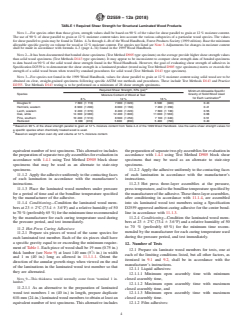
TABLE 1 Required Shear Strength for Structural Laminated Wood Products
NOTE 1—For species other than those given, strength values shall be based on 90% of the value for shear parallel to grain at 12% moisture content.
The use of 90% of shear parallel to grain at 12% moisture content takes into account the various subspecies of a particular wood species. The values
for shear parallel to grain may be found inTables 4-3a through 4–4b of theWood Handbook, Forest Products Society (1999 edition). Base the minimum
allowable specific gravity on volume for wood at 12% moisture content. For species not listed see Note 3.Adjustments for changes in moisture content
shall be made in accordance with formula 4–3 (page 4–34) found in the 1999 Wood Handbook.
NOTE2—Ithasbeendocumentedthatbondedshearspecimens(TestMethodD905typespecimen)ontheaverageprovidehighershearstrengthvalues
than solid wood specimens (Test Methods D143 type specimen). It may appear to be inconsistent to compare shear strength data of bonded specimens
to data based on 90% of the solid wood shear strength found in the Wood Handbook. However, the goal of evaluating shear strength of adhesives in
Specification D2559 is to demonstrate the shear strength in a laminated product (tested using Test Method D905 type specimens) meets or exceeds the
strength of a solid wood beam when tested by standard procedures for solid wood (Test Methods D143 type specimen).
NOTE 3—For species not found in the 1999 Wood Handbook, values for shear parallel to grain at 12% moisture content using solid wood are to be
obtained on clear, straight-grained specimens following specific ASTM test methods and procedures. These include Test Methods D143 and Practice
D2555. Test Methods D143 testing is to be performed on a minimum of 28 shear strength specimens.
A
Required Shear Strength, KPa (psi)
Minimum Allowable Specific
Species Gravity of Solid Wood Used
Moisture Content of Wood at Test
B
for Each Lamination
8% 12% 16%
Douglas fir 7 600 (1 110) 7 000 (1 020) 6 500 (940) 0.43
Hemlock, western 8 900 (1 290) 8 000 (1 160) 7 200 (1 050) 0.41
Larch, western 9 400 (1 370) 8 400 (1 220) 7 600 (1 100) 0.55
Oak, white 14 300 (2 080) 12 400 (1 800) 11 000 (1 560) 0.68
Pine, southern 10 400 (1 510) 8 600 (1 250) 7 100 (1 040) 0.51
Redwood 6 300 (910) 5 800 (850) 5 400 (790) 0.40
A
Based on 90 % of the shear strength parallel to grain at 12 % moisture content from Table 4–3 of the 1999 Wood Handbook. Use the same shear strength values for
a specific species when chemically treated wood is used.
B
Based on weight when oven dry and volume at 12 % moisture content.
equivalent number of test specimens. This alternative includes thepreparationofseparatetwo-plyassembliesforevaluationin
thepreparationofseparatetwo-plyassembliesforevaluationin accordance with 1.4.1 using Test Method D905 block shear
accordance with 1.4.1 using Test Method D905 block shear specimens that may be used as an alternate to stair-step
specimens that may be used as an alternate to stair-step specimens.
specimens. 11.2.2 Apply the adhesive uniformly to the contacting faces
11.1.2 Apply the adhesive uniformly to the contacting faces of each lamination in accordance with the manufacturer’s
of each lamination in accordance with the manufacturer’s instructions.
instructions. 11.2.3 Hot press three-layer assemblies at the pressure,
11.1.3 Place the laminated wood members under pressure presstemperature,andtothebondlinetemperaturespecifiedby
for a period of time and at the bondline temperature specified themanufactureroftheadhesive.Thesethree-layerassemblies,
by the manufacturer of the adhesive. after conditioning in accordance with 11.1.4, are assembled
11.1.4 Conditioning—Condition the laminated wood mem- into six laminated wood test members using a Specification
bers at 23 6 2°C (73.4 6 3.6°F) and a relative humidity of 50 D2559 approved ambient-curing adhesive for the center bond-
to70%(preferably65%)fortheminimumtimerecommended line in accordance with 11.1.3.
by the manufacturer for each curing temperature used during 11.2.4 Conditioning—Condition the laminated wood mem-
the pressure period, and test immediately. bers at 23 6 2°C (73.4 6 3.6°F) and a relative humidity of 50
to 70 % (preferably 65%) for the minimum time recom-
11.2 Hot-Press Curing Adhesives:
mended by the manufacturer for each curing temperature used
11.2.1 Prepare six pieces of wood of the same species for
during the pressure period, and test immediately.
each laminated test member. Each of the six pieces shall have
a specific gravity equal to or exceeding the minimum require-
12. Number of Tests
ment of Table 1. Each piece of wood shall be 19 mm (0.75 in.)
12.1 Prepare six laminate wood members for tests, one at
thick lumber (see Note 9) at least 140 mm (5 ⁄2 in.) in width
each of the limiting conditions listed, but all other factors, as
and 1 m (40 in.) long as allowed in 11.1.1.1. Orient the
itemized in 9.1 and 9.2, shall be in accordance with the
direction of the annular growth rings when viewed on the end
manufacturer’s instructions.
of the laminations in the laminated wood test member so that
12.1.1 Liquid adhesives:
they are alternated.
12.1.1.1 Minimum open assembly time with minimum
NOTE 9—This thickness would normally come from “nominal 1 in.
closed assembly time,
lumber.”
12.1.1.2 Maximum open assembly time with maximum
11.2.1.1 As an alternative to the preparation of laminated closed assembly time, and
wood test members 1 m (40 in.) in length, prepare duplicate 12.1.1.3 Minimum open assembly time with maximum
610-mm(24-in.)laminatedwoodmemberstoobtainatleastan closed assembly time.
equivalent number of test specimens. This alternative includes 12.1.2 Film adhesives:
D2559−12a (2018)
12.1.2.1 Minimum cure time, (0.50-in.)/min. The shearing tool shown in Fig. 1 of Test
12.1.2.2 Minimum cure temperature, and Method D905 has been found satisfactory. Locate the testing
12.1.2.3 Minimum pressure. machineinanatmospheresuchthatthemoisturecontentofthe
test pieces developed in accordance with 11.1.4 is not notice-
13. Preparation of Test Specimens
ably altered during testing.
13.1 Dress the laminated wood members, prepared in ac-
14.2 Samples:
cordance with Sections 11 and 12, on the sides to a uniform
14.2.1 Prepare at least six samples for testing in shear by
width of 127 mm (5 in.) at the completion of the conditioning
compression loading. When stair-step shear samples are used,
period. Trim 76 mm (3 in.) off one end of each of these
cut two from each of the 102-mm (4-in.) sections labeled “A”
members and discard it. Cut the remaining trimmed members
in Fig. 1. When separate two-ply laminated wood samples are
into five sections as shown in Fig. 1. Use the 102-mm (4-in.)
made in accordance with 11.1.1.1 or 11.2.1.1 make at least six
sections labeled “A” for conducting tests in resistance to shear
test samples and cut at least five test specimens from each as
bycompressionloadinginaccordancewithSection14,anduse
specified by the dimensions of Figs. 2 and 3 of Test Method
the 254-mm (10-in.) sections labeled “B” for conducting
D905.
resistance to delamination tests in accordance with Section 15.
14.2.2 The stair-step shear specimens shall conform to the
Discard the remaining waste trim portion.
form and dimensions shown in Fig. 2. Take care in preparing
13.1.1 If duplicate laminated wood members are made in
thetestspecimenstoassurethatthegraindirectioninthewood
accordance with 11.1.1.1 or 11.2.1.1 to obtain at least an
is parallel to the direction of loading during test. The loaded
equivalent number of test specimens, then trim 51 mm (2 in.)
surfaces shall be smooth and parallel to each other and
off each end. Utilize the remaining trimmed member, 508 mm
perpendicular to the height. When sawing the bonded
(20 in.) in length by cutting two 254-mm (10-in.) sections
assembly, exercise care to ensure that the saw cuts to, but not
labeled “B” or one 254-mm section “B” and two 102-mm
beyond,theadhesiveline.Measurethewidthandheightofthe
(4-in.) sections “A” as shown in Fig. 1. If two “B” sections are
specimen at the adhesive line to the nearest 0.25 mm (0.01 in.)
prepared then make separate specimens for shear testing by
todeterminethesheararea.Allrequirementsaboveshallapply
preparing two-layer laminated wood members and specimens
when individual test specimens are cut from the separately
in accordance with Test Method D905 and 11.1.1.1 and
laminated test members of Test Method D905.
11.2.1.1.Makeandtestthesespecimensfromthesamespecies
14.2.3 Condition the individual test specimens in the con-
of wood, at exactly the same time, and under the same
ditioningenvironmentdescribedin11.1.4and11.2.4toatarget
conditions as required for other test samples in this specifica-
moisturecontentof8,12,or16%forspecieslistedinTable1.
tion.
For all other species condition to a target moisture content of
12%. The allowable variation in the target moisture content
TEST METHODS
before testing is 61%. Moisture content is to be determined
using Test Methods D4442.
14. Resistance to Shear by Compression Loading
14.1 Apparatus—The testing machine capacity is to be of 14.3 Test the test specimens cut from the test samples
about 66900 N (15 000 lb) in compression or of sufficient described in 14.2 to failure. Report the shear strength calcu-
capacity to test the species of wood in use. Equip the testing lated in kilopascals (kPa) (pounds per square inch (psi)) based
machine with a shearing tool containing a self-aligning seat to on the bonded area between two laminations rounded to the
2 2
ensure uniform lateral distribution of the load. The machine nearest0.0645mm (0.01in. ),foreachtestspecimentogether
shall be capable of maintaining a uniform rate of loading such with the estimated percentage wood failure. Practice D5266
that the load is applied with a continuous motion of the has been found useful in estimating the percentage of wood
failure in adhesive bonded joints.
movable head to a maximum rate load not to exceed 13-mm
FIG. 1Laminated Test Beam
D2559−12a (2018)
15.1.3 Circular fluorescent desk lamp with 5× viewing
magnifier in the center of the lamp. Equivalent light sources
and magnifier may be substituted for the above.
15.1.4 Machinist’s scale graduated in 0.01 and 0.10 divi-
sions.
15.2 Samples:
15.2.1 For ambient-curing adhesives prepare six delamina-
tion specimens representing three from each 254-mm (10-in.)
section labeled “B” in Fig. 1. Cut each 254-mm section into
three 76-mm (3-in.) specimens with the 76-mm dimension
parallel to the grain direction in the wood. The total length of
bondlines on each end grain face is 635 mm (25 in.). On six
specimens this equals 7620 mm (300 in.). Test eighteen
specimens (six from each of three laminated wood test mem-
bers prepared in accordance with Sections 11, 12, and 13 to
certifyeachadhesiveoneachspeciesofwoodtobelaminated.
15.2.2 For hot-press curing adhesives prepare eight delami-
nation specimens (four from each 610 mm (24 in.) laminated
wood member as allowed in 13.1.1) with dimensions as
specified in 15.2.1. In order to achieve the required 7620 mm
(300 in.) of test bondlines (as specified in 15.2.1) with
hot-pressed laminated wood members, the end grain faces of
7.5 specimens are required. Thus for hot-press curing
adhesives, four test bondlines 508 mm (20 in.) on each end
grain face of 8 specimens will be examined for a total of 8128
mm (320 in.). Test twenty four specimens (four from each of
six laminated wood test members prepared in accordance with
Sections11–13) to certify each adhesive on each species of
FIG. 2Stair-Step Shear Specimen
wood to be laminated.
15.3 Procedure:
14.4 Requirements:
15.3.1 Weigh and record to the nearest 1 g (0.035 oz) the
14.4.1 The average shear strength for each group of lami-
weightofeachtestspecimen.Placetheeighteen76-mm(3-in.)
nated wood members made at one manufacturing condition as
testspecimensinthepressurevesseldescribedin15.1.1,weigh
specified in Section 12, and tested as described above shall be
down, and admit water at a temperature of 18 to 27°C (65 to
not less than the values specified in Table 1 at the appropriate
80°F) in sufficient quantity so that the specimens are com-
moisture content of the wood.
pletely submerged throughout the test. Separate the test speci-
14.4.2 The average wood failure for each group of lami-
mens by stickers, wire screens, or other means in such a
nated wood members made at one condition and tested as
manner that all end grain surfaces are freely exposed to the
prescribed in Section 14 shall be not less than 75% for all
water.Drawavacuumofatleast85kPa(25in.)Hg(sealevel)
species listed in Table 1.
and hold for 5 min. Release the vacuum and apply pressure of
14.5 Retest:
517 614kPa(7562psi)for1h.Repeatthevacuum-pressure
14.5.1 If the strength requirements of 14.4 are not satisfied,
cycle with the test specimens remaining submerged, making a
butthewoodfailurevalueis95%ormore,retesttheadhesive.
two-cycle impregnating period requiring a total of approxi-
mately 2 ⁄6h(Note 10). Dry the test specimens in the oven
15. Resistance to Delamination During Accelerated
described in 15.1.2 at 65.5 6 2°C (150 6 3.6°F) for a period
Exposure
of between 21 and 22 h, with sufficient air circulation to lower
15.1 Apparatus:
their weight to within 15% of the original test specimen
15.1.1 An autoclave or similar pressure vessel capable of
weight.Duringdrying,placethetestspecimensatleast51mm
withstanding at least 550 kPa (80 psi) is required for impreg-
(2 in.) apart with the end-grain surfaces parallel to the stream
nating the specimens with water. Equip the vessel with a
of air. This completes the first cycle.
vacuum pump or similar device capable of drawing vacuum of
at least 85 kPa (25 in.) Hg (sea level) in the vessel and provide NOTE 10—This should increase the weight of the test specimens by at
least 50%. If the weight is not increased by this amount, continue this
a method for obtaining pressures to 517 kPa (75 psig). Equip
cycle until the weight has increased at least 50%.
the vessel with a steam inlet capable of providing steam at
100°C (212°F) for 1 ⁄2 h. 15.3.2 Return the specimens to the pressure vessel and
15.1.2 An oven capable of maintaining 65.5 6 2°C (150 6 admit steam at 100°C (212°F) for 1 ⁄2 h, with drains open so
3.6°F) with sufficient circulation to remove moisture from the the wet condensate is removed as formed, after which admit
chamber is required for drying the specimens. water at 18 to 27°C (65 to 80°F) and apply a pressure of 517
D2559−12a (2018)
well as the test bondlines to ensure that the Specification D2559
6 14 kPa (75 6 2 psi) for 40 min. Dry the specimens in the
ambient-curing adhesive performs as expected.
oven as above. This completes the second cycle.
15.3.3 Repeat the first cycle, making a total test period of 3 15.5 Retest—If the requirements of 15.4.1 are not satisfied
days. Record the data as outlined in 15.4.1. in any one laminated wood member, including the center
bondline of a hot-pressed laminated test member, then test one
15.4 Requirements:
additional member. If all the requirements are met in retest,
15.4.1 At the end of the final drying period specified in
disregard the results of the original test.
Section 15, visually examine each specimen. Immediately
measure, to the nearest 1.27 mm (0.05 in.), the total length of
16. Resistance to Creep Under Static Loading
open joints (delamination) on each end-grain surface of each
16.1 Considerations regarding adhesive creep resistance:
specimenandrecordinTable2.Donotrecordasdelamination
16.1.1 Creep data obtained in this specification is based on
anyfailureinthewoodduetocheckingorsmallisolatedknots.
observing standard test specimens laminated with a test
Donotrecordanydelaminationthatislessthan2.54mm(0.10
adhesive, loaded to a specific shear stress, subjected to a
in.) in length and more than 5 mm (0.20 in.) away from any
specific environment of temperature and humidity and moni-
recordable delamination. Record as delamination, any failure
tored for any deformation over a short period of time. Test
where shallow wood failure is noted and no other factors
resultsfromtheevaluationofadhesivecreep,underdesignated
related to the wood, such as grain angle and growth-ring
environmental conditions of the test, provide a measure of the
structure, are influencing the delamination. Do not include as
adhesive to withstand constant loading over a relatively long
delamination, any failure where a significant amount of wood
period of time. Adhesive creep testing in this specification is
failureisnotedandwhichisinfluencedbyfactorssuchasgrain
intended to evaluate creep properties of an adhesive over a
angle or growth-ring structure. Measure and record in Table 2
relativelyshortperiodoftimeandisnotintendedasameasure
the total length of end grain bond line for each of the
of creep resistance of a structural wood product. Long term
specimens. For total delamination length, add together the
creep testing related to the adhesive in a structural wood
recorded delamination for each bond line on the two end-grain
product and exposed to specific service environments or
surfaces of all the specimens. Report as percent delamination,
classes is to be conducted in accordance with appropriate
the total delamination length in each bond line of all the
product standards. (Note 4.)
specimensdividedbythetotallengthofallthebondlinesofall
specimens multiplied by 100 and record in Table 2 (see Note
NOTE 13—Evaluation of creep in a structural wood product has several
12). The delamination for each manufacturing condition (see components. Creep of an adhesive, as measured by this specification, is
intended to only address the adhesive component and not other factors
Section 12) shall not exceed 1% for any bond line in the
such as design of the wood product, wood components, and any
laminated test member for softwoods or 1.6% for hardwoods.
interacting factors such as those related to shear stresses and service
Table 2 is provided to record all measurements and calculate
environment. Consult the Commentary in Appendix X1 for additional
percent delamination.
information and guidance related to evaluation of creep.
16.2 Procedure—Test the adhesive in accordance with Test
NOTE 11—In order to ensure that the core moisture content will exceed
theshellmoisturecontentandthusholdthedelaminationopenandvisible,
MethodD3535usingfourmultijointspecimens,eachloadedto
thelaminatedwoodtestspecimensshallberemovedfromthefinaldrying
218-kg (480-lb) total load or 1655 kPa (240 psi). Expose two
cycle in the oven, as prescribed in 15.3.1, when the final weight of each
specimens to an environment of 71°C (160°F) at ambient
specimen is not less than 1.15 nor more than 1.25 times the weight before
humidity and the other two at 27°C (80°F) at 90% relative
original treatment.
NOTE12—Forhot-pressedadhesivesthecenterbondlineisevaluatedas humidity. The exposure period shall be 7 days in both cases.
TABLE 2 ASTM D2559 Test Results
Adhesive:
Assembly time:
Species:
Softwood:
Hardwood:
Bond Line Allowable Allowable
Measured Delamination Length Bond Line Calculated
Delamination, Delamination Delamination
A C D
By Specimen Number, in. Length, in. Delamination, %
B
in. Softwood, % Hardwood, %
E E
Bond Line 1 2 3 4 5 6 7 8
A 11.6
B 11.6
C 11.6
D 11.6
E 11.6
A
Sum of both end grain surfaces for each bond line.
B
Sum of delamination for both end grain surfaces of all specimens for each bond line.
C
Sum of end grain bond line length of all the specimens.
D
Bondlinedelamination(totaldelaminationlengthinthebondlineofallspecimens)dividedbybondlinelength(totallengthofallthebondlinesofallspecimens)multiplied
by 100.
E
Used only for hot pressing adhesives.
D2559−12a (2018)
TABLE 4 Cyclic Delamination Precision
16.3 Measurement—At the end of the exposure period,
A B C D
measurethetotallengthofslippage(creep)tothenearest0.127 s s r R
r R
mm (0.005 in.).Add the total creep for both test specimens of SPF 3.97 4.25 11.12 11.76
SYP 1.54 2.68 4.31 7.50
each variable combination and report in millimeters (inches).
Hem Fir 5.01 9.18 14.02 25.70
16.4 Requirement—The total creep shall not exceed 3.63 A
Standard Deviation Within-Laboratory (repeatability).
B
mm (0.139 in.) for the two specimens combined from each Standard Deviation Between-Laboratories (reproducibility).
C
95 % Repeatability Limit (within a laboratory).
variable combination. If either variable combination exceeds
D
95 % Reproducibility Limit (between laboratories).
the allowable limit, the adhesive has failed.
16.5 Retest—If the creep requirements of 16.4 are not
limitedto:(1)thewoodspecies,(2)graindirection,(3)growth
satisfied, but the wood failure is 95% or more, retest the
ring orientation, (4) the quality of the bonded joint, (5)
adhesive.
precision of the testing machine, and (6) the operator.
18.1.1 The round robin was done using southern yellow
17. Report
pine lumber. Table 3 gives the results of the round robin. The
17.1 The report shall include the following:
results are expressed as precision statistics within a laboratory
17.1.1 Identification of the adhesive used by class, number,
(repeatability)andbetween-laboratories(reproducibility).Both
or manufacturer’s mark.
standard deviation (s and S ) and 95% repeatability and
r R
17.1.2 Application and bonding conditions used for the
reproducibility limits (r and R) were selected as precision
specimens.
statistics. The data generated by this round robin is available.
17.1.3 Wood species evaluated and if not listed in Table 1
18.1.2 The 95% repeatability and reproducibility limits
the adjusted (90%) shear strength parallel to grain at 12%
were similar for both shear strength and estimated wood
moisturecontent.ReportwhetherfromtheWoodHandbookor
failure. This may indicate that the largest source of variability
from testing following guidance in Note 3 in Table 1.
may be affecting all laboratories such as properties of the
17.1.4 Wood preparation and conditioning including spe-
wood.
cific gravity and moisture content at time of bonding.
18.2 A round robin was conducted on the test method for
17.1.5 Temperature and relative humidity at time of bond-
Resistance to Delamination using three different species of
ing.
wood (SPF, SYP, and Hem Fir).The results of the round robin
17.1.6 Number of specimens tested.
were analyzed using Practice E691.
17.1.7 Number of laminated wood members represented.
18.2.1 Table 4 gives the results of the round robin. Both
17.1.8 Maximum and minimum values obtained. Include
standard deviation (s and s ) and 95% repeatability and
the standard deviation or all individual test values, or both, in r R
reproducibility limits (r and R) were selected as precision
the report at the option of either the purchaser or the manu-
statistics.Sincethereproducibilitystandarddeviation(between
facturer of the adhesive.
laboratories) was not much larger than the repeatability stan-
17.1.9 The average value for each test and the average
dard deviation (within a laboratory), it may indicate that the
percentage wood failure for shear and creep resistance.
largest variability was due to a factor which would affect all
18. Precision and Bias
laboratories such as drying of the specimens or measuring the
amount of observable delamination.
18.1 A round robin test was conducted on the test method
18.2.2 Theprecisionofthistestmethodisaffectedbymany
for Resistance to Shear.The precision of shear strength testing
factors such as: wood species, grain direction, growth ring
has two components: within-laboratory (repeatability) and
orientation, specific gravity of the wood, quality of the bonded
between-laboratory (reproducibility). The data from the round
joint, oven drying rate, and the operator (including reading of
robin test was analyzed using Practice E691. The precision of
delamination). The data generated by this round robin is
the test method is affected by many factors including, but not
available.
TABLE 3 Shear Strength and Wood Failure Precision
18.3 The test methods have no bias because the shear
A B C D
strength,woodfailure,andpercentdelaminationaredefinedby
s s r R
r R
the testing methods.
Shear Strength 159.8 175.6 447.4 491.7
Wood Failure 11.2 13.4 31.4 37.5
19. Keywords
A
Standard Deviation Within-Laboratory (repeatability).
B
Standard Deviation Between-Laboratories (reproducibility).
19.1 adhesive; delamination; durability; exterior exposure;
C
95 % Repeatability Limit (within a laboratory).
glulam; laminated wood; shear strength; structural-glued-
D
95 % Reproducibility Limit (between laboratories).
laminated timber
D2559−12a (2018)
APPENDIX
(Nonmandatory Information)
X1. COMMENTARY
X1.1 Introduction to the Standard almost all structural wood products manufactured using these
adhesives, including those intended for interior applications,
X1.1.1 This revision of Specification D2559 for Adhesives
are expected to withstand exterior exposure. In addition, there
forStructuralWoodProductsforUseUnderExteriorExposure
are exceptions where use of the adhesive in interior applica-
Conditionshasbeenunderwayforsometime.Thegoalsofthis
tions would be subjected to similar environmental conditions
revision were many including, but not limited to:
asafullyexteriorenvironment,especiallyintermsofmoisture.
a. Structural wood adhesives development has expanded to
incorporate new chemistries and technologies;
X1.2 Application of the Standard Specification
b. Laminated structural wood products are no longer limited
X1.2.1 This standard is applicable to structural wood prod-
to assessing adhesives for structural glued-laminated-timber
ucts that are adhesively bonded with a variety of adhesive
(glulam) but may also be applicable to other structural wood
chemistries. Specification D2559 has remained the evaluation
products, some of which are now referred to as Engineered
standardofchoiceforthetraditionalstructuralwoodadhesives
Wood;
aswellastheneweradhesivesfortheseproducts.Thesenewer
c. Structural wood products containing these adhesives are
adhesively bonded wood products that have been developed
used in various applications that differ in severity as to the
are commonly referred to as Engineered Wood. Engineered
demands on the wood product and the adhesive bonds;
wood products include glulam but also products such as
d. Additional durability requirements and test methods may
laminatedveneerlumber(LVL),I-joists,structuralfingerjoints
be needed to address the various demands in severity on the
and other structural composite lumber (SCL) products. Speci-
adhesive bonds depending upon the wood product and service
fication D2559 is referenced in many of the appropriate
environments;
product standards such as Specification D5456 for Evaluation
e.HarmonizationwiththeASTMCommitteeD07onWood,
of Structural Composite Lumber Products and Specification
Canadian Standards Association (CSA) and International Or-
D5055 for Establishing and Monitoring Structural Capacities
ganizationofStandards(ISO)resultsinparallelmechanismsto
of Prefabricated Wood I-Joists.
evaluate structural wood adhesives.
It is noted and recognized that this specification is first and
Specification D2559 had its beginnings in 1966 as a mecha-
foremost an adhesive standard to evaluate an adhesive before
nism to evaluate and certify adhesives for use in the manufac-
consideringitsuitableforspecificproductsorapplications,and
ture of Glued Laminated Lumber. The specification became
is not intended as the sole mechanism for determining the
recognized as the premier method to evaluate structural wood
suitability of an adhesive for adhesively bonded wood prod-
adhesives. It was selected for reference in many product
ucts.However,althoughproductstandardssuchasthosewithin
standards withinASTM, in the wood industry and internation-
ASTM Committee D07 on Wood are specifically intended for
ally both as an adhesive evaluation tool and to specify
that purpose, it is recognized the line between evaluating an
adhesives in selected structural wood products.
adhesive and an end product may not be distinct.As a result, a
This specification is considered the classic standard specifi-
significant amount of the evaluation of the adhesive is neces-
cation for evaluating structural wood adhesives. These adhe-
sary to provide assurance that it and the resulting adhesive
sivesareintendedforuseinthemanufactureofwoodproducts
bonds will perform as expected in structural wood products in
exposed to a wide spectrum of environmental conditions or
their intended environment, but without addressing a specific
severity of exterior exposure. This spectrum of environmental
end product.
conditions range from an adhesive intended for use in a
protected service environment ex
...