


ASTM F1575/F1575M-24
(Test Method)Standard Test Method for Determining Bending Yield Moment of Nails, Spikes, and Dowel-type Threaded Fasteners
Standard Test Method for Determining Bending Yield Moment of Nails, Spikes, and Dowel-type Threaded Fasteners
SIGNIFICANCE AND USE
5.1 Nails, spikes, and dowel-type threaded fasteners are common mechanical fasteners in wood structures. Engineering design procedures used to determine the capacities of laterally-loaded connections with these types of fasteners rely on a yield theory to establish the nominal resistance. In order to develop the nominal resistance for laterally-loaded connections, the fastener bending yield strength, length, and diameter must be known.
SCOPE
1.1 This test method covers procedures for determining the bending yield moment and calculation of bending yield strength (Fyb) of nails, spikes, and dowel-type threaded fasteners (referred to collectively as fasteners) when subjected to static loading. Bending yield strength is used in engineered connection applications, in which a required connection capacity is specified by the designer.
1.2 The values stated in either SI units or inch-pound units are to be regarded separately as standard. The values stated in each system are not necessarily exact equivalents; therefore, to ensure conformance with the standard, each system shall be used independently of the other, and values from the two systems shall not be combined.
Note 1: This test method is applicable in either inch-pounds F1575 or SI Units [F1575M]. Values stated in SI are a mathematical conversion of two significant digits and are shown in brackets [ ].
1.3 This standard does not purport to address all of the safety concerns, if any, associated with its use. It is the responsibility of the user of this standard to establish appropriate safety, health, and environmental practices and determine the applicability of regulatory limitations prior to use.
1.4 This international standard was developed in accordance with internationally recognized principles on standardization established in the Decision on Principles for the Development of International Standards, Guides and Recommendations issued by the World Trade Organization Technical Barriers to Trade (TBT) Committee.
General Information
- Status
- Published
- Publication Date
- 31-Jan-2024
- Technical Committee
- F16 - Fasteners
- Drafting Committee
- F16.05 - Driven and Other Fasteners
Relations
- Effective Date
- 01-Feb-2024
- Referred By
ASTM F1667/F1667M-21a - Standard Specification for Driven Fasteners: Nails, Spikes, and Staples - Effective Date
- 01-Feb-2024
Overview
ASTM F1575/F1575M-24 is the internationally recognized standard test method for determining the bending yield moment of nails, spikes, and dowel-type threaded fasteners. Issued by ASTM International, this standard provides uniform procedures for evaluating the bending yield strength of these mechanical fasteners under static loading. The information produced by this method is essential in engineering design for establishing the nominal resistance of laterally-loaded connections in wood structures and ensures that fasteners meet strength and safety requirements for structural applications.
Key Topics
Bending Yield Moment and Strength: The core focus of ASTM F1575/F1575M is to measure the bending yield moment-identified at the yield load determined on a load-deformation curve-of nails, spikes, and dowel-type threaded fasteners. Subsequently, the bending yield strength is calculated for use in design capacities.
Applicable Fastener Types: Covers nails (including smooth, fully deformed, and partially deformed shank types), spikes, and an array of dowel-type threaded fasteners such as screws and bolts. Both standardized and proprietary fastener designs are addressed.
Test Procedures: Describes a three-point bending test with a constant deformation rate. The standard emphasizes precision in diameter and length measurements, correct load and support placement, and accurate deflection recording.
Measurement Systems: Details the use of both SI (metric) and inch-pound (imperial) units, specifying that they should not be combined to ensure consistency and compliance.
Yield Theory Application: Test results are specifically applicable to engineering yield theory models, which determine lateral load design values in connections made with dowel-type fasteners.
Safety and Regulatory Compliance: Reminds users to address relevant safety, health, and environmental considerations, acknowledging these are beyond the standard’s direct scope.
Applications
ASTM F1575/F1575M-24 is widely used in both research and industry for key applications such as:
Wood Structural Design: Provides critical data for engineers to determine the nominal resistance of laterally-loaded connections using nails, spikes, or threaded fasteners.
Quality Control: Product manufacturers and suppliers use this standard to verify the mechanical performance of their fasteners before distribution, ensuring compliance with design specifications and safety standards.
Product Evaluation and Certification: Accreditation organizations and certifying bodies rely on this test method to assess fastener performance for code compliance, product listings, and regulatory approvals.
Material Specification and Procurement: Construction professionals, suppliers, and procurement specialists refer to this standard to specify fastener types and performance requirements for wood connections in building projects.
Research and Innovation: Structural researchers use the data from this standard to improve fastener designs, test new materials, and refine construction methods.
Related Standards
ASTM F1575/F1575M-24 references several important standards to ensure comprehensive testing and reporting, including:
- ASTM E4 – Practices for Force Calibration and Verification of Testing Machines
- ASTM E2309/E2309M – Practices for Verification of Displacement Measuring Systems and Devices Used in Material Testing Machines
- ASTM F680 – Test Methods for Nails
- ASTM F1667/F1667M – Specification for Driven Fasteners: Nails, Spikes, and Staples
- ASME B18.2.1 – Square, Hex, Heavy Hex, and Askew Head Bolts, and Hex-type Screws
- ASME B18.6.1 – Wood Screws
These related standards provide additional requirements and specifications for testing apparatuses, measurement methods, and fastener types, supporting the robust application of ASTM F1575/F1575M-24 in various construction and manufacturing industries.
Keywords: ASTM F1575, bending yield moment, bending yield strength, nails, spikes, dowel-type threaded fasteners, fastener testing, structural fasteners, lateral load, wood connection design, yield theory, fastener standards.
Buy Documents
ASTM F1575/F1575M-24 - Standard Test Method for Determining Bending Yield Moment of Nails, Spikes, and Dowel-type Threaded Fasteners
REDLINE ASTM F1575/F1575M-24 - Standard Test Method for Determining Bending Yield Moment of Nails, Spikes, and Dowel-type Threaded Fasteners
Frequently Asked Questions
ASTM F1575/F1575M-24 is a standard published by ASTM International. Its full title is "Standard Test Method for Determining Bending Yield Moment of Nails, Spikes, and Dowel-type Threaded Fasteners". This standard covers: SIGNIFICANCE AND USE 5.1 Nails, spikes, and dowel-type threaded fasteners are common mechanical fasteners in wood structures. Engineering design procedures used to determine the capacities of laterally-loaded connections with these types of fasteners rely on a yield theory to establish the nominal resistance. In order to develop the nominal resistance for laterally-loaded connections, the fastener bending yield strength, length, and diameter must be known. SCOPE 1.1 This test method covers procedures for determining the bending yield moment and calculation of bending yield strength (Fyb) of nails, spikes, and dowel-type threaded fasteners (referred to collectively as fasteners) when subjected to static loading. Bending yield strength is used in engineered connection applications, in which a required connection capacity is specified by the designer. 1.2 The values stated in either SI units or inch-pound units are to be regarded separately as standard. The values stated in each system are not necessarily exact equivalents; therefore, to ensure conformance with the standard, each system shall be used independently of the other, and values from the two systems shall not be combined. Note 1: This test method is applicable in either inch-pounds F1575 or SI Units [F1575M]. Values stated in SI are a mathematical conversion of two significant digits and are shown in brackets [ ]. 1.3 This standard does not purport to address all of the safety concerns, if any, associated with its use. It is the responsibility of the user of this standard to establish appropriate safety, health, and environmental practices and determine the applicability of regulatory limitations prior to use. 1.4 This international standard was developed in accordance with internationally recognized principles on standardization established in the Decision on Principles for the Development of International Standards, Guides and Recommendations issued by the World Trade Organization Technical Barriers to Trade (TBT) Committee.
SIGNIFICANCE AND USE 5.1 Nails, spikes, and dowel-type threaded fasteners are common mechanical fasteners in wood structures. Engineering design procedures used to determine the capacities of laterally-loaded connections with these types of fasteners rely on a yield theory to establish the nominal resistance. In order to develop the nominal resistance for laterally-loaded connections, the fastener bending yield strength, length, and diameter must be known. SCOPE 1.1 This test method covers procedures for determining the bending yield moment and calculation of bending yield strength (Fyb) of nails, spikes, and dowel-type threaded fasteners (referred to collectively as fasteners) when subjected to static loading. Bending yield strength is used in engineered connection applications, in which a required connection capacity is specified by the designer. 1.2 The values stated in either SI units or inch-pound units are to be regarded separately as standard. The values stated in each system are not necessarily exact equivalents; therefore, to ensure conformance with the standard, each system shall be used independently of the other, and values from the two systems shall not be combined. Note 1: This test method is applicable in either inch-pounds F1575 or SI Units [F1575M]. Values stated in SI are a mathematical conversion of two significant digits and are shown in brackets [ ]. 1.3 This standard does not purport to address all of the safety concerns, if any, associated with its use. It is the responsibility of the user of this standard to establish appropriate safety, health, and environmental practices and determine the applicability of regulatory limitations prior to use. 1.4 This international standard was developed in accordance with internationally recognized principles on standardization established in the Decision on Principles for the Development of International Standards, Guides and Recommendations issued by the World Trade Organization Technical Barriers to Trade (TBT) Committee.
ASTM F1575/F1575M-24 is classified under the following ICS (International Classification for Standards) categories: 21.060.50 - Pins, nails. The ICS classification helps identify the subject area and facilitates finding related standards.
ASTM F1575/F1575M-24 has the following relationships with other standards: It is inter standard links to ASTM F1575/F1575M-21, ASTM F1667/F1667M-21a. Understanding these relationships helps ensure you are using the most current and applicable version of the standard.
ASTM F1575/F1575M-24 is available in PDF format for immediate download after purchase. The document can be added to your cart and obtained through the secure checkout process. Digital delivery ensures instant access to the complete standard document.
Standards Content (Sample)
This international standard was developed in accordance with internationally recognized principles on standardization established in the Decision on Principles for the
Development of International Standards, Guides and Recommendations issued by the World Trade Organization Technical Barriers to Trade (TBT) Committee.
Designation: F1575/F1575M − 24
Standard Test Method for
Determining Bending Yield Moment of Nails, Spikes, and
Dowel-type Threaded Fasteners
This standard is issued under the fixed designation F1575/F1575M; the number immediately following the designation indicates the year
of original adoption or, in the case of revision, the year of last revision. A number in parentheses indicates the year of last reapproval.
A superscript epsilon (´) indicates an editorial change since the last revision or reapproval.
1. Scope E2309/E2309M Practices for Verification of Displacement
Measuring Systems and Devices Used in Material Testing
1.1 This test method covers procedures for determining the
Machines
bending yield moment and calculation of bending yield
F680 Test Methods for Nails
strength (F ) of nails, spikes, and dowel-type threaded fasten-
yb
F1667/F1667M Specification for Driven Fasteners: Nails,
ers (referred to collectively as fasteners) when subjected to
Spikes, and Staples
static loading. Bending yield strength is used in engineered
2.2 ASME Standards:
connection applications, in which a required connection capac-
B18.2.1 Square, Hex, Heavy Hex, and Askew Head Bolts,
ity is specified by the designer.
and Hex, Heavy Hex, Hex Flange, Lobed Head, and Lag
1.2 The values stated in either SI units or inch-pound units
Screws (inch Series). 2012. The American Society of
are to be regarded separately as standard. The values stated in
Mechanical Engineers, Three Park Avenue, New York,
each system are not necessarily exact equivalents; therefore, to
NY.
ensure conformance with the standard, each system shall be
B18.6.1 Wood Screws. 1981 (R2008). The American Society
used independently of the other, and values from the two
of Mechanical Engineers, Three Park Avenue, New York,
systems shall not be combined.
NY.
NOTE 1—This test method is applicable in either inch-pounds F1575 or
SI Units [F1575M]. Values stated in SI are a mathematical conversion of
3. Terminology
two significant digits and are shown in brackets [ ].
1.3 This standard does not purport to address all of the 3.1 Definitions of Terms Related to All Fasteners of this
Standard:
safety concerns, if any, associated with its use. It is the
responsibility of the user of this standard to establish appro- 3.1.1 bending yield moment—the moment determined from
priate safety, health, and environmental practices and deter- the yield load point on the load-deformation curve that is
mine the applicability of regulatory limitations prior to use. intermediate between the proportional limit load and maximum
1.4 This international standard was developed in accor- load for the fastener.
dance with internationally recognized principles on standard-
3.1.2 bending yield strength—the fastener strength charac-
ization established in the Decision on Principles for the
teristic used in yield limit equations to determine lateral
Development of International Standards, Guides and Recom-
capacity of connection; determined from the bending yield
mendations issued by the World Trade Organization Technical
moment and dimensions of the fastener.
Barriers to Trade (TBT) Committee.
3.1.3 certifying body—an organization that is recognized
through compliance with national standards for the purpose of
2. Referenced Documents
product evaluation.
2.1 ASTM Standards:
3.1.4 proportional limit—the load at which the load-
E4 Practices for Force Calibration and Verification of Test-
deformation curve deviates from a straight line fitted to the
ing Machines
initial portion of the load-deformation curve (Fig. 1).
3.1.5 shank—a portion of the fastener below the head,
This test method is under the jurisdiction of ASTM Committee F16 on
excluding the tip, which is embedded in the connected mate-
Fasteners and is the direct responsibility of Subcommittee F16.05 on Driven and
Other Fasteners. rials and the portion of the fastener engaged in a nut or similar
Current edition approved Feb. 1, 2024. Published March 2024. Originally
anchorage device, if applicable.
approved in 1995. Last previous edition approved in 2021 as F1575 – 21. DOI:
10.1520/F1575_F1575M-24.
For referenced ASTM standards, visit the ASTM website, www.astm.org, or
contact ASTM Customer Service at service@astm.org. For Annual Book of ASTM Available from American Society of Mechanical Engineers (ASME), ASME
Standards volume information, refer to the standard’s Document Summary page on International Headquarters, Two Park Ave., New York, NY 10016-5990, http://
the ASTM website. www.asme.org.
Copyright © ASTM International, 100 Barr Harbor Drive, PO Box C700, West Conshohocken, PA 19428-2959. United States
F1575/F1575M − 24
3.1.6 transition point—the location of the transition from 3.3.8 reamer knurl—a screw feature that is a shank defor-
smooth shank to deformed shank on a partially deformed- mation located between the smooth portion of the shank and
the threaded portion of the shank that facilitates installation in
shank nail or spike; the location of the transition from smooth
shank to threaded shank or from a reamer knurl to threaded some materials.
shank for a partially-threaded dowel-type fastener.
3.3.9 thread—a type of dowel deformation intended to be
keyed into the receiving member, nut, or similar anchorage
3.1.7 yield load—load at the intersection of the load-
device by rotation of the fastener.
deformation curve and the 5 % offset line, or the maximum
load if the load-deformation curve and 5 % offset-line do not
4. Summary of Test Method
intersect.
4.1 The test procedure utilizes a three-point bending test
3.1.8 yield theory—the model for determining lateral load
where the span dimension is based on the nominal diameter of
design values for dowel-type fasteners that specifically ac-
a nail or the critical diameter of a dowel-type threaded fastener.
counts for the different ways these connections behave under
The load is applied at a constant rate and produces a continuous
load. The capacity of the connection under each yield mode is
load-deformation response diagram (Fig. 1). The precision of
determined by the bearing strength of the material under the
the test and resulting calculated properties depend on the
fastener and the bending strength of the fastener, with the
measurement of the applicable diameter and the positioning of
lowest capacity calculated for the various yield modes being
the fastener on the test span supports.
taken as the design load for the connection.
5. Significance and Use
3.2 Definitions of Terms Related to Nails and Spikes of this
Standard:
5.1 Nails, spikes, and dowel-type threaded fasteners are
3.2.1 deformed shank—a nail or spike shank that has been
common mechanical fasteners in wood structures. Engineering
mechanically deformed with annular rings, barbs, helical design procedures used to determine the capacities of laterally-
flutes, etc. for the purpose of improved withdrawal capacity. loaded connections with these types of fasteners rely on a yield
theory to establish the nominal resistance. In order to develop
3.2.2 fully deformed shank—a nail or spike shank that has
the nominal resistance for laterally-loaded connections, the
deformation along the entire length.
fastener bending yield strength, length, and diameter must be
3.2.3 partially deformed shank—a nail or spike shank that
known.
has been mechanically deformed over a portion of the shank
length. 6. Apparatus
6.1 Testing Machine—Any suitable testing machine capable
3.3 Definitions of Terms Related to Dowel-type Threaded
Fasteners of this Standard: of operation at a constant rate of motion of its movable head
and having an accuracy of 61 % when calibrated in accor-
3.3.1 critical diameter—the minor diameter in the threaded
dance with Practices E4.
portion of the fastener.
6.2 Deformation Gauge—Deformation measuring device
3.3.2 dowel-type threaded fastener—a nominally cylindrical
shall be used for measuring the deflection of the fastener during
fastener with threads, inserted into materials for the purpose of
the bending test. The device shall achieve at least a Class B
connecting pieces together. The dowel-type threaded fasteners
rating when verified in accordance with Practices E2309/
addressed in this standard include standardized and proprietary
E2309M.
screws, standard and self-drilling bolts, and similar fasteners.
6.3 Cylindrical Reaction Bearing Points—Any cylindrical
3.3.3 equivalent critical diameter—a calculated dimension
metal member capable of supporting the test specimen during
for a shank with non-circular minor diameter cross section that
has the same plastic section modulus as a shank with a circular
minor diameter.
3.3.4 fully–threaded shank—the shank of a dowel-type
threaded fastener with a thread along the entire length of the
shank.
3.3.5 minimally-threaded shank—the shank of a partially-
threaded dowel-type fastener that is generally smooth and has
a short threaded portion, typically less than three diameters in
length, where the lateral load is resisted by the smooth shank.
3.3.6 minor diameter—the smallest diameter in the threaded
portion of the body (D ).
minor
3.3.7 partially-threaded shank—the shank of a dowel-type
threaded fastener having one or more sections of shank that is
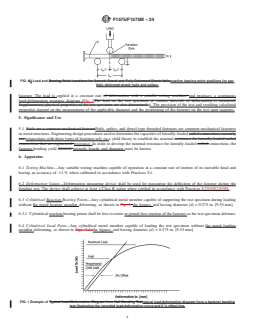
FIG. 1 Example of typical load-deformation diagram from a fas-
(are) threaded and one or more sections of shank that is (are)
tener bending test illustrating the recorded load-deformation
unthreaded. curve and 5 % offset line.
F1575/F1575M − 24
TABLE 1 Test Spans
loading without the metal bearing member deforming, as
shown in the figures, and having diameter (d) = 0.375 in. Nails and Spikes
Nominal Diameter per F1667/ Test Span , s
bp
[9.53 mm].
F1667M in. [mm] in. [mm]
6.3.1 Cylindrical reaction bearing points shall be free to
0.099 [2.51] 1.1 [28]
rotate or permit free rotation of the fastener as the test 0.113 [2.87] 1.3 [33]
0.120 [3.05] 1.4 [36]
specimen deforms.
0.131 [3.33] 1.5 [38]
0.148 [3.76] 1.7 [43]
6.4 Cylindrical Load Point—Any cylindrical metal member
0.162 [4.11] 1.9 [48]
capable of loading the test specimen without the metal loading
0.190 [4.83] 2.2 [56]
member deforming, as shown in the figures, and having
Larger than 0.190 [4.83] 11.5 times the normal diameter,
rounded to the nearest
diameter (d) = 0.375 in. [9.53 mm].
0.1 in. [2 mm]
6.5 Recording Device—Any device with at least a reading of Dowel-type Threaded Fasteners
Test span shall be 11.5 times the critical diameter or equivalent critical
0.001 in. [0.02 mm] and any suitable device for measuring the
diameter rounded to the nearest 0.1 in. [2 mm].
load on the test specimen during deformation.
1. Test spans for nails and spikes with diameters other than shown are
the test spans for the next smaller listed nominal diameter.
8.1.1.3 Fully Deformed Shank Nails and Spikes—The diam-
eter of fully deformed shank nails and spikes cannot be
accurately measured. Any measurement across the deformed
area of the shank will result in a diameter that differs from the
wire stock used to manufacture the fastener. When this occurs,
the manufacturer shall provide representative wire samples
from which the nails or spikes are manufactured for measure-
ment. This shall be noted in the test report.
8.1.2 Dowel-type Threaded Fasteners — Measurement of
Test Specimens Shall Take Place as Follows:
8.1.2.1 Partially-Threaded and Fully-threaded Shanks with
Circular Cross Sections—The minor diameter is the critical
FIG. 2 Load and reaction bearing point positions for smooth-
diameter and shall be measured at approximately the load point
shank and fully deformed-shank nails and spikes.
location.
8.1.2.2 Minimally-Threaded Shanks with Circular Cross
7. Sampling
Sections—The critical diameter is the smooth shank. The
7.1 Test specimens shall be randomly selected and repre-
smooth-shank diameter shall be measured at approximately the
sentative of the parent population of fasteners or wire from the
mid length of the smooth-shank portion of the fastener.
manufacturing process, as applicable. A minimum of 15
8.1.2.3 Threaded Shanks with Non-circular Cross
replicate specimens shall be tested for each test sample.
Sections—The equivalent critical diameter in the threaded
portion of a shank that is not circular in cross section shall be
7.2 Tests for smooth-shank nails, bolts, and similar fasteners
calculated as the product of the diameter of a circle that
that are not hardened shall be performed on either the finished
circumscribes the perimeter of the minor diameter cross section
fastener or a specimen of drawn wire stock from which the
(Fig. 7) and an adjustment factor. The minor diameter dimen-
fastener would be manufactured.
sions that are the basis of the equivalent diameter calculation
7.3 Tests for hardened smooth-shank fasteners, deformed-
shall be determined at the location on the shank where the
shank nails, and dowel-type threaded fasteners shall be per-
bending load is to be applied. Section X1.6 describes the
formed on the finished fastener.
method to calculate the adjustment factor that is used to
establish the equivalent critical diameter.
8. Procedure
NOTE 2—Some examples of shanks with non-circular minor diameter
8.1 Diameter Measurement:
cross sections are trilobular and twisted-square cross sections, which have
8.1.1 Diameter measurement procedures are addressed in
equivalent critical diameters of 0.66 and 0.81 times the diameters of the
Test Methods F680. Measurement of each test specimen shall
circumscribed circles, respectively.
take place as follows:
8.1.3 Coatings—For nails, spikes and other fasteners with
8.1.1.1 Smooth Shank Nails and Spikes—At the midpoint of
minor diameter < 0.250 in. [6 mm], diameter dimensions shall
the shank length.
be taken prior to the application of or after the removal of any
8.1.1.2 Partially Deformed Shank Nails and Spikes—On the
coatings or finish and shall not be measured across any gripper
smooth portion of the shank at the midpoint between head and
marks.
transition point. Exception: When gripper marks are present on
8.1.4 Diameters shall be measured to the nearest 0.001 in.
the smooth portion of the shank and the length of the smooth
[0.02 mm].
portion is insufficient for proper measurement, the nail or spike
shall be
...
This document is not an ASTM standard and is intended only to provide the user of an ASTM standard an indication of what changes have been made to the previous version. Because
it may not be technically possible to adequately depict all changes accurately, ASTM recommends that users consult prior editions as appropriate. In all cases only the current version
of the standard as published by ASTM is to be considered the official document.
Designation: F1575/F1575M − 21 F1575/F1575M − 24
Standard Test Method for
Determining Bending Yield Moment of NailsNails, Spikes,
and Dowel-type Threaded Fasteners
This standard is issued under the fixed designation F1575/F1575M; the number immediately following the designation indicates the year
of original adoption or, in the case of revision, the year of last revision. A number in parentheses indicates the year of last reapproval.
A superscript epsilon (´) indicates an editorial change since the last revision or reapproval.
1. Scope*Scope
1.1 This test method covers procedures for determining the bending yield moment of nails and calculation of bending yield
strength (F ) of nails, spikes, and dowel-type threaded fasteners (referred to collectively as fasteners) when subjected to static
yb
loading. It is intended only for nails Bending yield strength is used in engineered connection applications, in which a required
connection capacity is specified by the designer.
1.2 The values stated in either SI units or inch-pound units are to be regarded separately as standard. The values stated in each
system are not necessarily exact equivalents; therefore, to ensure conformance with the standard, each system shall be used
independently of the other, and values from the two systems shall not be combined.
NOTE 1—This test method is applicable in either inch-pounds F1575 or SI Units [F1575M]. Values stated in SI are a mathematical conversion of two
significant digits and are shown in brackets [ ].
1.3 This standard does not purport to address all of the safety concerns, if any, associated with its use. It is the responsibility
of the user of this standard to establish appropriate safety, health, and environmental practices and determine the applicability of
regulatory limitations prior to use.
1.4 This international standard was developed in accordance with internationally recognized principles on standardization
established in the Decision on Principles for the Development of International Standards, Guides and Recommendations issued
by the World Trade Organization Technical Barriers to Trade (TBT) Committee.
2. Referenced Documents
2.1 ASTM Standards:
E4 Practices for Force Calibration and Verification of Testing Machines
E2309/E2309M Practices for Verification of Displacement Measuring Systems and Devices Used in Material Testing Machines
F680 Test Methods for Nails
F1667/F1667M Specification for Driven Fasteners: Nails, Spikes, and Staples
2.2 ASME Standards:
B18.2.1 Square, Hex, Heavy Hex, and Askew Head Bolts, and Hex, Heavy Hex, Hex Flange, Lobed Head, and Lag Screws (inch
Series). 2012. The American Society of Mechanical Engineers, Three Park Avenue, New York, NY.
B18.6.1 Wood Screws. 1981 (R2008). The American Society of Mechanical Engineers, Three Park Avenue, New York, NY.
This test method is under the jurisdiction of ASTM Committee F16 on Fasteners and is the direct responsibility of Subcommittee F16.05 on Driven and Other Fasteners.
Current edition approved Dec. 1, 2021Feb. 1, 2024. Published January 2022March 2024. Originally approved in 1995. Last previous edition approved in 20172021 as
F1575 – 17.F1575 – 21. DOI: 10.1520/F1575_F1575M-21.10.1520/F1575_F1575M-24.
For referenced ASTM standards, visit the ASTM website, www.astm.org, or contact ASTM Customer Service at service@astm.org. For Annual Book of ASTM Standards
volume information, refer to the standard’s Document Summary page on the ASTM website.
Available from American Society of Mechanical Engineers (ASME), ASME International Headquarters, Two Park Ave., New York, NY 10016-5990, http://
www.asme.org.
*A Summary of Changes section appears at the end of this standard
Copyright © ASTM International, 100 Barr Harbor Drive, PO Box C700, West Conshohocken, PA 19428-2959. United States
F1575/F1575M − 24
3. Terminology
3.1 Definitions of Terms Specific to This Standard:Related to All Fasteners of this Standard:
3.1.1 bending yield moment—the moment determined from the yield load point on the load-deformation curve that is intermediate
between the proportional limit load and maximum load for the nail. It is calculated by the intersection of the load-deformation
curve with a line represented by the initial tangent modulus offset 5 % of the fastener diameter. fastener.
3.1.2 bending yield strength—the fastener strength characteristic used in yield limit equations to determine lateral capacity of
connection; determined from the bending yield moment and dimensions of the fastener.
3.1.3 deformed shank—certifying body—a nail shank that has been mechanically deformed with annular rings, barbs, helical flutes,
etc. an organization that is recognized through compliance with national standards for the purpose of improved withdrawal
capacity.product evaluation.
3.1.2.1 fully deformed shank—a nail shank that has deformation along the entire length.
3.1.2.2 partially deformed shank—a nail shank that that has both smooth and deformed sections along the length.
3.1.4 proportional limit load—limit—is the load at which the load-deformation curve deviates from a straight line fitted to the
initial portion of the load-deformation curve. (Seecurve (Fig. Fig. 1)1).
3.1.5 shank—a portion of the fastener below the head, excluding the tip, which is embedded in the connected materials and the
portion of the fastener engaged in a nut or similar anchorage device, if applicable.
3.1.6 transition zone—point—the location of the transition from smooth shank to deformed shank on a partially deformed-shank
nail. nail or spike; the location of the transition from smooth shank to threaded shank or from a reamer knurl to threaded shank
for a partially-threaded dowel-type fastener.
3.1.7 yield load—load at the intersection of the load-deformation curve and the 5 % offset line, or the maximum load if the
load-deformation curve and 5 % offset-line do not intersect.
3.1.8 yield theory—the model for determining lateral load design values for dowel-type fasteners that specifically accounts for
the different ways these connections behave under load. The capacity of the connection under each yield mode is determined by
the bearing strength of the material under the fastener and the bending strength of the fastener, with the lowest capacity calculated
for the various yield modes being taken as the design load for the connection.
3.2 Definitions of Terms Related to Nails and Spikes of this Standard:
FIG. 4 Load and Bearing Point Location for Partially Deformed Shank Nails with Insufficient Smooth Shank Lengthreaction bearing
point positions for deformed-shank nails and spikes with smooth-shank length that is too short to position the load bearing point at
the transition point.
F1575/F1575M − 24
3.2.1 deformed shank—a nail or spike shank that has been mechanically deformed with annular rings, barbs, helical flutes, etc.
for the purpose of improved withdrawal capacity.
3.2.2 fully deformed shank—a nail or spike shank that has deformation along the entire length.
3.2.3 partially deformed shank—a nail or spike shank that has been mechanically deformed over a portion of the shank length.
3.3 Definitions of Terms Related to Dowel-type Threaded Fasteners of this Standard:
3.3.1 critical diameter—the minor diameter in the threaded portion of the fastener.
3.3.2 dowel-type threaded fastener—a nominally cylindrical fastener with threads, inserted into materials for the purpose of
connecting pieces together. The dowel-type threaded fasteners addressed in this standard include standardized and proprietary
screws, standard and self-drilling bolts, and similar fasteners.
3.3.3 equivalent critical diameter—a calculated dimension for a shank with non-circular minor diameter cross section that has the
same plastic section modulus as a shank with a circular minor diameter.
3.3.4 fully–threaded shank—the shank of a dowel-type threaded fastener with a thread along the entire length of the shank.
3.3.5 minimally-threaded shank—the shank of a partially-threaded dowel-type fastener that is generally smooth and has a short
threaded portion, typically less than three diameters in length, where the lateral load is resisted by the smooth shank.
3.3.6 minor diameter—the smallest diameter in the threaded portion of the body (D ).
minor
3.3.7 partially-threaded shank—the shank of a dowel-type threaded fastener having one or more sections of shank that is (are)
threaded and one or more sections of shank that is (are) unthreaded.
3.3.8 reamer knurl—a screw feature that is a shank deformation located between the smooth portion of the shank and the threaded
portion of the shank that facilitates installation in some materials.
3.3.9 thread—a type of dowel deformation intended to be keyed into the receiving member, nut, or similar anchorage device by
rotation of the fastener.
4. Summary of Test Method
4.1 Test specimens are evaluated to determine capacity to resist lateral bending loads The test procedure utilizes a three-point
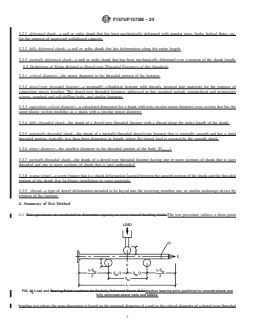
FIG. 32 Load and Bearing Point Locations for Partially Deformed Shank Nailsreaction bearing point positions for smooth-shank and
fully deformed-shank nails and spikes.
bending test where the span dimension is based on the nominal diameter of a nail or the critical diameter of a dowel-type threaded
F1575/F1575M − 24
FIG. 23 Load and Bearing Point Locations for Smooth Shank and Fully Deformed Shank Nailsreaction bearing point positions for par-
tially deformed-shank nails and spikes.
fastener. The load is applied at a constant rate of deformation with a suitable testing machine. and produces a continuous
load-deformation response diagram (Fig. 1The load on the test specimen at various intervals of deformation is measured.
Supplementary physical properties of the test specimen are also determined. ). The precision of the test and resulting calculated
properties depend on the measurement of the applicable diameter and the positioning of the fastener on the test span supports.
5. Significance and Use
5.1 Nails are a common mechanical fastenerNails, spikes, and dowel-type threaded fasteners are common mechanical fasteners
in wood structures. Engineering design procedures used to determine the capacities of laterally-loaded nailed connections currently
use connections with these types of fasteners rely on a yield theory to establish the nominal resistance for laterally-loaded nailed
connections that are engineered. resistance. In order to develop the nominal resistance for laterally-loaded nailed connections, the
fastener bending yield moment strength, length, and diameter must be known.
6. Apparatus
6.1 Testing Machine—Any suitable testing machine capable of operation at a constant rate of motion of its movable head and
having an accuracy of 61 % when calibrated in accordance with Practices E4.
6.2 Deformation Gauge—Deformation measuring device shall be used for measuring the deflection of the fastener during the
bending test. The device shall achieve at least a Class B rating when verified in accordance with Practices E2309/E2309M.
6.3 Cylindrical Reaction Bearing Points—Any cylindrical metal member capable of supporting the test specimen during loading
without the metal bearing member deforming, as shown in Fig. 3, the figures, and having diameter (d) = 0.375 in. [9.53 mm].
6.3.1 Cylindrical reaction bearing points shall be free to rotate or permit free rotation of the fastener as the test specimen deforms.
6.4 Cylindrical Load Point—Any cylindrical metal member capable of loading the test specimen without the metal loading
member deforming, as shown in Figs. 2-4, the figures, and having diameter (d) = 0.375 in. [9.53 mm].
FIG. 1 Example of Typical Load-Deformation Diagram from Nail Bending Testtypical load-deformation diagram from a fastener bending
test illustrating the recorded load-deformation curve and 5 % offset line.
F1575/F1575M − 24
6.5 Recording Device—Any device with at least a reading of 0.001 in. [0.01 mm] 0.001 in. [0.02 mm] and any suitable device for
measuring the load on the test specimen during deformation.
7. Sampling
7.1 Test specimens shall be randomly selected to represent and representative of the parent population of nailsfasteners or wire
from the manufacturing process. process, as applicable. A minimum of 15 replicate specimens shall be tested for each size or nail
type.test sample.
7.2 Tests for smooth-shank nails, bolts, and similar fasteners that are not hardened shall be performed on either the finished
fastener or a specimen of drawn wire stock from which the fastener would be manufactured.
7.3 Tests for hardened smooth-shank fasteners, deformed-shank nails, and dowel-type threaded fasteners shall be performed on
the finished fastener.
8. Specimens and Tests
8.1 Tests for smooth shank nails shall be performed on either the finished nail or a specimen of drawn wire stock from which the
nail would be manufactured. Tests for deformed-shank nails shall be performed on the finished nail.
8.2 Diameter Measurement—Diameter measurement procedures are addressed in Test Methods F680. Measurement of each test
specimen shall take place as follows:
8.2.1 Smooth Shank Nails—At the midpoint of the shank length.
8.2.2 Partially Deformed Shank Nails—On the smooth portion of the shank at the midpoint between nail head and transition zone.
Exception: When gripper marks are present on the smooth portion of the shank and the length of the smooth portion is insufficient
for proper measurement, the nail shall be measured in accordance with 8.2.3.
8.2.3 Fully Deformed Shank Nail—The diameter of a fully deformed shank nail cannot be accurately measured. Any measurement
TABLE 1 Length Between Nail Bearing PointsTest Spans
Nails and Spikes
Nail Nominal Diameter in. or Length Between
[mm], Bearing Points, in. or [mm]
tolerance per Specification s
bp
F1667/F1667M
Nominal Diameter Test Span ,
per s
bp
F1667/F1667M in. [mm] in. [mm]
0.099 [2.51] 1.1 [28]
0.113 [2.87] 1.3 [33]
0.120 [3.05] 1.4 [36]
0.131 [3.33] 1.5 [38]
0.148 [3.76] 1.7 [43]
0.162 [4.11] 1.9 [48]
0.190 [4.83] 2.2 [5.6]
0.190 [4.83] 2.2 [56]
Larger than 0.190 [4.83] 11.5 times the nail diameter,
rounded to the nearest
tenth of an inch or mm
Larger than 0.190 [4.83] 11.5 times the normal diameter,
rounded to the nearest
0.1 in. [2 mm]
Dowel-type Threaded Fasteners
Test span shall be 11.5 times the critical diameter or equivalent critical
diameter rounded to the nearest 0.1 in. [2 mm].
Length between bearing points for nails with diameters other than shown
in Table 1are the lengths for the next smaller listed diameter.
1. Test spans for nails and spikes with diameters other than shown are
the test spans for the next smaller listed nominal diameter.
F1575/F1575M − 24
across the deformed area of the shank will result in a diameter that differs from the wire stock used to manufacture the nail. When
this occurs the manufacturer shall provide representative wire samples from which the nails are manufactured for measurement.
This shall be noted in the test report.
8.2.4 All diameter dimensions shall be taken prior to the application of or after the removal of any coatings or finish and shall
not be measured across any gripper marks.
8.2.5 Diameters shall be measured to within the nearest 0.001 in. [0.01 mm].
8.3 Length Measurement—The nail shall be long enough to prevent the nail head or point from bearing on the cylindrical nail
supports during application of load to the nail through the time when maximum load is reached.
8. Procedure
8.1 Diameter Measurement:
8.1.1 Diameter measurement procedures are addressed in Test Methods F680. Measurement of each test specimen shall take place
as follows:
8.1.1.1 Smooth Shank Nails and Spikes—At the midpoint of the shank length.
8.1.1.2 Partially Deformed Shank Nails and Spikes—On the smooth portion of the shank at the midpoint between head and
transition point. Exception: When gripper marks are present on the smooth portion of the shank and the length of the smooth
portion is insufficient for proper measurement, the nail or spike shall be measured in accordance with 8.1.1.3.
8.1.1.3 Fully Deformed Shank Nails and Spikes—The diameter of fully deformed shank nails and spikes cannot be accurately
measured. Any measurement across the deformed area of the shank will result in a diameter that differs from the wire stock used
to manufacture the fastener. When this occurs, the manufacturer shall provide representative wire samples from which the nails
or spikes are manufactured for measurement. This shall be noted in the test report.
8.1.2 Dowel-type Threaded Fasteners — Measurement of Test Specimens Shall Take Place as Follows:
8.1.2.1 Partially-Threaded and Fully-threaded Shanks with Circular Cross Sections—The minor diameter is the critical diameter
and shall be measured at approximately the load point location.
8.1.2.2 Minimally-Threaded Shanks with Circular Cross Sections—The critical diameter is the smooth shank. The smooth-shank
diameter shall be measured at approximately the mid length of the smooth-shank portion of the fastener.
8.1.2.3 Threaded Shanks with Non-circular Cross Sections—The equivalent critical diameter in the threaded portion of a shank
that is not circular in cross section shall be calculated as the
...
Questions, Comments and Discussion
Ask us and Technical Secretary will try to provide an answer. You can facilitate discussion about the standard in here.
Loading comments...