

ASTM D7150-13(2020)
(Test Method)Standard Test Method for the Determination of Gassing Characteristics of Insulating Liquids Under Thermal Stress
General Information
- Abstract
SIGNIFICANCE AND USE
5.1 Generation of combustible gases is used to determine the condition of oil-filled electrical apparatus. Many years of empirical evidence has yielded guidelines such as those given in IEEE C57.104, IEC 60599 and IEC 61464. Industry experience has shown that electric and thermal faults in oil-filled electrical apparatus are the usual sources that generate gases. Experience has shown that some of the gases could form in the oil due to thermal stress or as a result of contamination, without any other influences.
5.2 Some transformer oils subjected to thermal stress and oils that contain certain types of contamination may produce specific gases at lower temperatures than normally expected for their generation and hence, falsely indicate abnormal operation of the electrical apparatus. Some new oils have produced large amounts of gases, especially hydrogen, without the influence of other electrical apparatus materials or electrical stresses. This renders interpretation of the dissolved gas analysis more complicated.
5.3 Heating for 164 h has been found to be sufficient to reach a stable and characteristic gassing pattern.
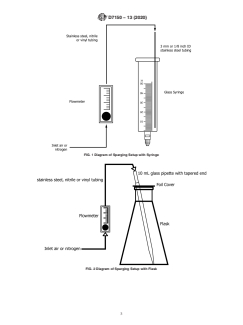
5.4 This method uses both dry air and dry nitrogen as the sparging gas. This is to reflect either an electrical apparatus preservation system that allows oxygen to contact the oil or one that is sealed from the outside atmosphere. Oils sparged with air generally produce much more hydrogen as a percentage of the total combustible gas content as compared to oils sparged with nitrogen as these produce more hydrocarbons in relation to hydrogen.
SCOPE
1.1 This test method describes the procedures to determine the gassing characteristics due to thermal stress at 120°C of insulating liquids specifically and without the influence of other electrical apparatus materials or electrical stresses. This test method was primarily designed for insulating mineral oil. It can be applied to other insulating liquids in which dissolved gas-in-oil analysis (Test Method D3612) is commonly performed.
1.2 This test method is particularly suited for detection of the phenomenon sometimes known as “stray gassing” and is also referred to in CIGRE TF11 B39.
1.3 This test method is performed on transformer insulating liquids to determine the propensity of the oil to produce certain gases such as hydrogen and hydrocarbons at low temperatures.
1.4 This test method details two procedures:
1.5 Method A describes the procedure for determining the gassing characteristics of insulating liquids, at 120°C for 164 h.
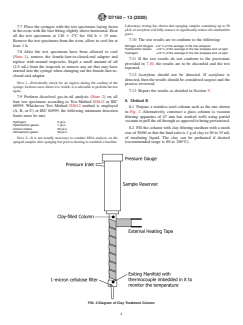
1.6 Method B describes the procedure for processing the insulating liquid through an attapulgite clay column to remove organic contaminants and other reactive groups that may influence the gassing behavior of an insulating liquid, which is suspected of being contaminated. This procedure applies to both new and used insulating liquids.
1.7 The values stated in SI units are to be regarded as standard. English units are used when there is no metric equivalent.
1.8 This standard does not purport to address all of the safety concerns, if any, associated with its use. It is the responsibility of the user of this standard to establish appropriate safety, health, and environmental practices and determine the applicability of regulatory limitations prior to use.
1.9 This international standard was developed in accordance with internationally recognized principles on standardization established in the Decision on Principles for the Development of International Standards, Guides and Recommendations issued by the World Trade Organization Technical Barriers to Trade (TBT) Committee.
- Status
- Published
- Publication Date
- 30-Nov-2020
- Technical Committee
- D27 - Electrical Insulating Liquids and Gases
- Drafting Committee
- D27.03 - Analytical Tests
Overview
ASTM D7150-13(2020), titled Standard Test Method for the Determination of Gassing Characteristics of Insulating Liquids Under Thermal Stress, provides a consistent procedure for evaluating how transformer and insulating oils generate combustible gases when exposed to thermal stress. This test method is critical for understanding the behavior of insulating liquids-primarily mineral oil, but also other insulating fluids-under controlled conditions, which aids in the early detection of issues within oil-filled electrical apparatus such as power transformers, tap changers, and similar equipment.
The generation of gases like hydrogen and hydrocarbons can be an early indicator of thermal or electrical faults, oil contamination, or other abnormal conditions inside electrical equipment. This standard complements dissolved gas-in-oil analysis (DGA), supporting condition monitoring and maintenance decision-making for electrical utilities and industries utilizing oil-filled apparatus.
Key Topics
- Gassing Characteristics under Thermal Stress: The standard outlines test methods to determine the amount and type of gases formed by insulating liquids heated to 120°C for a specified duration.
- Stray Gassing Detection: ASTM D7150 is particularly valuable for identifying “stray gassing” phenomena, where certain oils generate gases at lower temperatures even in the absence of electrical stress.
- Test Procedures:
- Method A: Evaluates the natural gassing tendency of the oil at 120°C for 164 hours.
- Method B: Involves passing the oil through an attapulgite clay column to remove reactive contaminants, then testing its gassing behavior.
- Use of Sparging Gases: The method specifies the use of both dry air and dry nitrogen. This reflects apparatus either exposed to atmospheric oxygen or sealed against it. Results typically show more hydrogen formation with air-sparged samples and increased hydrocarbons with nitrogen.
- Measurement and Analysis: Post-heating, gases dissolved in oil are quantified using gas chromatography as per ASTM D3612 or international equivalents.
Applications
- Transformer and Electrical Equipment Monitoring: Routine testing helps operators distinguish between actual operational faults and benign causes of gas formation, such as oil aging or contamination.
- Quality Control for New Oils: Verifies that new insulating oils do not exhibit undesirable gassing properties before being put in service.
- Diagnosing Faults: Guides interpretation of dissolved gas analysis, clarifying whether detected gases indicate an impending fault or are a result of oil characteristics.
- Research and Development: Supports studies into oil formulation, oil treatment, and the impact of contaminants on oil performance.
- Maintenance Planning: Provides actionable insight for preventative maintenance programs, reducing the risk of costly equipment failure.
Related Standards
- ASTM D3612 – Test Method for Analysis of Gases Dissolved in Electrical Insulating Oil by Gas Chromatography, the primary reference for measuring gas content after thermal stress.
- IEEE C57.104 – Guide for the Interpretation of Gases Generated in Oil-Immersed Transformers, offers guidance on interpreting DGA results.
- IEC 60599 – Mineral oil-impregnated electrical equipment in service: Guide to the interpretation of dissolved and free gases analysis.
- IEC 61464 – Guide for the interpretation of DGA in bushings using oil as an impregnating medium.
- CIGRE TF11 B39 – Gas formation tendency test for mineral transformer oils, referenced for “stray gassing” methodology.
Practical Value
Implementing ASTM D7150-13(2020) ensures reliable identification of abnormal oil behavior and stray gassing, reducing the likelihood of false alarms or misinterpretation during dissolved gas analysis. The standard supports safe and cost-effective management of transformer and electrical asset health, helping utilities, laboratories, and manufacturers maintain high operational reliability and extend equipment service life.
Keywords: ASTM D7150, insulating liquids, thermal stress, gassing characteristics, transformer oil, dissolved gas analysis, DGA, stray gassing, electrical insulating oil, preventive maintenance, mineral oil, gas chromatography, oil contamination detection.
Relations
- Effective Date
- 15-Nov-2017
- Refers
ASTM D1933-03(2017) - Standard Specification for Nitrogen Gas as an Electrical Insulating Material - Effective Date
- 01-Jan-2017
- Effective Date
- 15-May-2009
- Refers
ASTM D1933-03(2008) - Standard Specification for Nitrogen Gas as an Electrical Insulating Material - Effective Date
- 01-May-2008
- Effective Date
- 01-Oct-2003
- Effective Date
- 10-Oct-2002
- Effective Date
- 10-Oct-2002
- Effective Date
- 10-Feb-2001
- Effective Date
- 10-Feb-2001
- Effective Date
- 10-Apr-1997
Get Certified
Connect with accredited certification bodies for this standard

IMQ S.p.A. (Certification)
Italian electrical product certification.

SLG Prüf- und Zertifizierungs GmbH
German testing and certification body.

UL Solutions
Global safety science company with testing, inspection and certification.
Sponsored listings
Frequently Asked Questions
ASTM D7150-13(2020) is a standard published by ASTM International. Its full title is "Standard Test Method for the Determination of Gassing Characteristics of Insulating Liquids Under Thermal Stress". This standard covers: SIGNIFICANCE AND USE 5.1 Generation of combustible gases is used to determine the condition of oil-filled electrical apparatus. Many years of empirical evidence has yielded guidelines such as those given in IEEE C57.104, IEC 60599 and IEC 61464. Industry experience has shown that electric and thermal faults in oil-filled electrical apparatus are the usual sources that generate gases. Experience has shown that some of the gases could form in the oil due to thermal stress or as a result of contamination, without any other influences. 5.2 Some transformer oils subjected to thermal stress and oils that contain certain types of contamination may produce specific gases at lower temperatures than normally expected for their generation and hence, falsely indicate abnormal operation of the electrical apparatus. Some new oils have produced large amounts of gases, especially hydrogen, without the influence of other electrical apparatus materials or electrical stresses. This renders interpretation of the dissolved gas analysis more complicated. 5.3 Heating for 164 h has been found to be sufficient to reach a stable and characteristic gassing pattern. 5.4 This method uses both dry air and dry nitrogen as the sparging gas. This is to reflect either an electrical apparatus preservation system that allows oxygen to contact the oil or one that is sealed from the outside atmosphere. Oils sparged with air generally produce much more hydrogen as a percentage of the total combustible gas content as compared to oils sparged with nitrogen as these produce more hydrocarbons in relation to hydrogen. SCOPE 1.1 This test method describes the procedures to determine the gassing characteristics due to thermal stress at 120°C of insulating liquids specifically and without the influence of other electrical apparatus materials or electrical stresses. This test method was primarily designed for insulating mineral oil. It can be applied to other insulating liquids in which dissolved gas-in-oil analysis (Test Method D3612) is commonly performed. 1.2 This test method is particularly suited for detection of the phenomenon sometimes known as “stray gassing” and is also referred to in CIGRE TF11 B39. 1.3 This test method is performed on transformer insulating liquids to determine the propensity of the oil to produce certain gases such as hydrogen and hydrocarbons at low temperatures. 1.4 This test method details two procedures: 1.5 Method A describes the procedure for determining the gassing characteristics of insulating liquids, at 120°C for 164 h. 1.6 Method B describes the procedure for processing the insulating liquid through an attapulgite clay column to remove organic contaminants and other reactive groups that may influence the gassing behavior of an insulating liquid, which is suspected of being contaminated. This procedure applies to both new and used insulating liquids. 1.7 The values stated in SI units are to be regarded as standard. English units are used when there is no metric equivalent. 1.8 This standard does not purport to address all of the safety concerns, if any, associated with its use. It is the responsibility of the user of this standard to establish appropriate safety, health, and environmental practices and determine the applicability of regulatory limitations prior to use. 1.9 This international standard was developed in accordance with internationally recognized principles on standardization established in the Decision on Principles for the Development of International Standards, Guides and Recommendations issued by the World Trade Organization Technical Barriers to Trade (TBT) Committee.
SIGNIFICANCE AND USE 5.1 Generation of combustible gases is used to determine the condition of oil-filled electrical apparatus. Many years of empirical evidence has yielded guidelines such as those given in IEEE C57.104, IEC 60599 and IEC 61464. Industry experience has shown that electric and thermal faults in oil-filled electrical apparatus are the usual sources that generate gases. Experience has shown that some of the gases could form in the oil due to thermal stress or as a result of contamination, without any other influences. 5.2 Some transformer oils subjected to thermal stress and oils that contain certain types of contamination may produce specific gases at lower temperatures than normally expected for their generation and hence, falsely indicate abnormal operation of the electrical apparatus. Some new oils have produced large amounts of gases, especially hydrogen, without the influence of other electrical apparatus materials or electrical stresses. This renders interpretation of the dissolved gas analysis more complicated. 5.3 Heating for 164 h has been found to be sufficient to reach a stable and characteristic gassing pattern. 5.4 This method uses both dry air and dry nitrogen as the sparging gas. This is to reflect either an electrical apparatus preservation system that allows oxygen to contact the oil or one that is sealed from the outside atmosphere. Oils sparged with air generally produce much more hydrogen as a percentage of the total combustible gas content as compared to oils sparged with nitrogen as these produce more hydrocarbons in relation to hydrogen. SCOPE 1.1 This test method describes the procedures to determine the gassing characteristics due to thermal stress at 120°C of insulating liquids specifically and without the influence of other electrical apparatus materials or electrical stresses. This test method was primarily designed for insulating mineral oil. It can be applied to other insulating liquids in which dissolved gas-in-oil analysis (Test Method D3612) is commonly performed. 1.2 This test method is particularly suited for detection of the phenomenon sometimes known as “stray gassing” and is also referred to in CIGRE TF11 B39. 1.3 This test method is performed on transformer insulating liquids to determine the propensity of the oil to produce certain gases such as hydrogen and hydrocarbons at low temperatures. 1.4 This test method details two procedures: 1.5 Method A describes the procedure for determining the gassing characteristics of insulating liquids, at 120°C for 164 h. 1.6 Method B describes the procedure for processing the insulating liquid through an attapulgite clay column to remove organic contaminants and other reactive groups that may influence the gassing behavior of an insulating liquid, which is suspected of being contaminated. This procedure applies to both new and used insulating liquids. 1.7 The values stated in SI units are to be regarded as standard. English units are used when there is no metric equivalent. 1.8 This standard does not purport to address all of the safety concerns, if any, associated with its use. It is the responsibility of the user of this standard to establish appropriate safety, health, and environmental practices and determine the applicability of regulatory limitations prior to use. 1.9 This international standard was developed in accordance with internationally recognized principles on standardization established in the Decision on Principles for the Development of International Standards, Guides and Recommendations issued by the World Trade Organization Technical Barriers to Trade (TBT) Committee.
ASTM D7150-13(2020) is classified under the following ICS (International Classification for Standards) categories: 29.040.01 - Insulating fluids in general. The ICS classification helps identify the subject area and facilitates finding related standards.
ASTM D7150-13(2020) has the following relationships with other standards: It is inter standard links to ASTM D3612-02(2017), ASTM D1933-03(2017), ASTM D3612-02(2009), ASTM D1933-03(2008), ASTM D1933-03, ASTM D3612-02e1, ASTM D3612-02, ASTM D3612-01, ASTM D3612-96, ASTM D1933-97. Understanding these relationships helps ensure you are using the most current and applicable version of the standard.
ASTM D7150-13(2020) is available in PDF format for immediate download after purchase. The document can be added to your cart and obtained through the secure checkout process. Digital delivery ensures instant access to the complete standard document.
Standards Content (Sample)
This international standard was developed in accordance with internationally recognized principles on standardization established in the Decision on Principles for the
Development of International Standards, Guides and Recommendations issued by the World Trade Organization Technical Barriers to Trade (TBT) Committee.
Designation: D7150 − 13 (Reapproved 2020)
Standard Test Method for the
Determination of Gassing Characteristics of Insulating
Liquids Under Thermal Stress
This standard is issued under the fixed designation D7150; the number immediately following the designation indicates the year of
original adoption or, in the case of revision, the year of last revision. A number in parentheses indicates the year of last reapproval. A
superscript epsilon (´) indicates an editorial change since the last revision or reapproval.
1. Scope ization established in the Decision on Principles for the
Development of International Standards, Guides and Recom-
1.1 This test method describes the procedures to determine
mendations issued by the World Trade Organization Technical
the gassing characteristics due to thermal stress at 120°C of
Barriers to Trade (TBT) Committee.
insulating liquids specifically and without the influence of
other electrical apparatus materials or electrical stresses. This
2. Referenced Documents
test method was primarily designed for insulating mineral oil.
It can be applied to other insulating liquids in which dissolved
2.1 ASTM Standards:
gas-in-oil analysis (Test Method D3612) is commonly per-
D1933 Specification for Nitrogen Gas as an Electrical Insu-
formed.
lating Material
D3612 Test Method for Analysis of Gases Dissolved in
1.2 This test method is particularly suited for detection of
Electrical Insulating Oil by Gas Chromatography
the phenomenon sometimes known as “stray gassing” and is
also referred to in CIGRE TF11 B39.
2.2 IEEE Document:
C 57.104 IEEE Guide for the Interpretation of Gases Gen-
1.3 This test method is performed on transformer insulating
erated in Oil-Immersed Transformers, 2008
liquids to determine the propensity of the oil to produce certain
gases such as hydrogen and hydrocarbons at low temperatures.
2.3 IEC Documents:
IEC 60599 Mineral oil-impregnated electrical equipment in
1.4 This test method details two procedures:
service – Guide to the interpretation of dissolved and free
1.5 Method A describes the procedure for determining the
gases analysis, 2007
gassingcharacteristicsofinsulatingliquids,at120°Cfor164h.
IEC 61464 Guide for the interpretation of dissolved gas
1.6 Method B describes the procedure for processing the
analysis (DGA) in bushings where oil is the impregnating
insulating liquid through an attapulgite clay column to remove
medium of the main insulation (generally paper), 1998
organic contaminants and other reactive groups that may
CIGRE TF11 B39 Gas formation tendency test for mineral
influence the gassing behavior of an insulating liquid, which is
transformer oils, 2002
suspected of being contaminated. This procedure applies to
both new and used insulating liquids.
3. Terminology
1.7 The values stated in SI units are to be regarded as
3.1 Definitions:
standard. English units are used when there is no metric
3.1.1 stray gassing, n—the production of gases in an insu-
equivalent.
lating liquid due to heating, contamination or in combination.
1.8 This standard does not purport to address all of the
3.1.2 Fuller’s Earth, n—highly adsorbent clay-like sub-
safety concerns, if any, associated with its use. It is the
stance consisting mainly of hydrated aluminum silicates with
responsibility of the user of this standard to establish appro-
the main minerals being montmorillonite, kaolinite, attapulgite
priate safety, health, and environmental practices and deter-
and palygorskite.
mine the applicability of regulatory limitations prior to use.
1.9 This international standard was developed in accor-
dance with internationally recognized principles on standard-
For referenced ASTM standards, visit the ASTM website, www.astm.org, or
contact ASTM Customer Service at service@astm.org. For Annual Book of ASTM
This test method is under the jurisdiction of ASTM Committee D27 on Standards volume information, refer to the standard’s Document Summary page on
Electrical Insulating Liquids and Gases and is the direct responsibility of Subcom- the ASTM website.
mittee D27.03 on Analytical Tests. Available from the Institute of Electrical and Electronic Engineers, Inc, (IEEE),
Current edition approved Dec. 1, 2020. Published December 2020. Originally 445 Hoes Lane, Piscataway, NJ 08854; www.ieee.org
approved in 2005. Last previous edition approved in 2013 as D7150-13. DOI: Available from the International Electrotechnical Commission, 3, rue de
10.1520/D7150-13R20. Varembé, P.O. Box 131 CH-1211, Geneva 20, Switzerland; www.iec.ch
Copyright © ASTM International, 100 Barr Harbor Drive, PO Box C700, West Conshohocken, PA 19428-2959. United States
D7150 − 13 (2020)
4. Summary of Test Method 6.3 Dry Nitrogen, meeting the requirements of Specification
D1933, Type III with the following exception: the total
4.1 Method A—Insulating liquid is filtered through a mixed
hydrocarbon content must be <0.5 µL/L. This type of gas is
cellulose ester filter. A portion of the test specimen is sparged
sometimes referred to as Ultra-High Purity (UHP).
for 30 min with dry air. A test specimen is then placed into a
6.4 DryAir,meetingthefollowingrequirements:20to22%
glasssyringe,cappedandagedat120 62°Cfor164h.Thetest
oxygen, <3 µL/L water, and <1 µL/L total hydrocarbons. This
is run in duplicate. The other portion of the test specimen is
type of gas is sometimes referred to as Zero Grade.
sparged for 30 min with dry nitrogen. A test specimen is then
placed into a glass syringe, capped and aged at 120°C 6 2°C
6.5 Ovens, forced-draft, adjustable to 120 6 2°C and a
for 164 h. The test is run in duplicate.After the test specimens
drying oven, convection or forced-draft, or both, adjustable to
have cooled, dissolved gas-in-oil analysis is then performed
100 6 5°C.
according to Test Method D3612 or IEC Method 60599.
6.6 Syringes, glass, either 30 or 50 mL, either matched
4.2 Method B—Insulating oil is passed through a heated (60
plunger and barrel or precision ground to 0.006 6 0.001 mm
to 70°C) Fuller’s earth column at a rate of 3 to 5 mL per
maximum spacing between the inside of the barrel to the
minute. The insulating liquid is contacted with the Fuller’s
outside of the plunger for both the 30 mL and 50 mL syringes.
earth at a ratio of 1 g clay to 33 mL (range: 30 to 35 mL) of
6.7 Female-Luer-to-Closed-End-Adapter , nickel-plated
insulating liquid. The insulating liquid is collected and sub-
brass.
jected to the testing as outlined in 4.1.
6.8 Fuller’s Earth (clay), virgin material sized at 30/60
mesh.
5. Significance and Use
5.1 Generation of combustible gases is used to determine
7. Method A
the condition of oil-filled electrical apparatus. Many years of
7.1 If the sample has visible particles, filter 225 mL of
empirical evidence has yielded guidelines such as those given
insulating liquid througha1or 1.2-µm filter. Discard the first
in IEEE C57.104, IEC 60599 and IEC 61464. Industry expe-
25 mL. Collect the remainder in a flask that has been cleaned,
rience has shown that electric and thermal faults in oil-filled
rinsed with distilled water and dried for 4 h at 100 6 5°C.
electrical apparatus are the usual sources that generate gases.
Flasks that have been prepared beforehand are acceptable as
Experience has shown that some of the gases could form in the
long as all openings have been covered with aluminum foil.
oilduetothermalstressorasaresultofcontamination,without
Alternatively, remove the plunger from a glass syringe and
any other influences.
secure the tip of the barrel with a metal female luer-to-closed-
5.2 Some transformer oils subjected to thermal stress and
end adapter. Place the barrel in a vertical position so that the
oils that contain certain types of contamination may produce
large opening of the barrel is facing up. Place 25 mL of
specificgasesatlowertemperaturesthannormallyexpectedfor
insulating liquid in a 30 mLsyringe or 40 mLof oil in a 50 mL
their generation and hence, false
...