

ASTM D3705-14(2019)
(Test Method)Standard Test Method for Misting Properties of Lubricating Fluids
General Information
- Abstract
SIGNIFICANCE AND USE
5.1 This test provides a guide for evaluating the misting characteristics of oils for use in industrial mist lubrication systems. The degree of correlation between this test and service performance has not been fully determined.
SCOPE
1.1 This test method covers the determination of the misting characteristics of lubricating fluids.
Note 1: This test method should not be used to evaluate fluids containing solid additives such as graphite.
1.2 The values stated in SI units are to be regarded as standard.
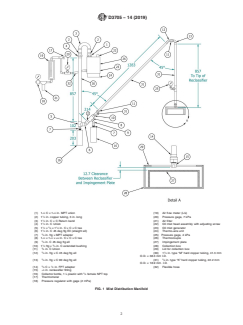
1.2.1 Inch-pound units are used to describe the various tube fittings shown in Fig. 1.
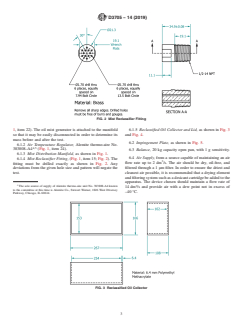
1.2.2 Inch-pound thread is shown in Fig. 2.
1.3 This standard does not purport to address all of the safety concerns, if any, associated with its use. It is the responsibility of the user of this standard to establish appropriate safety, health, and environmental practices and determine the applicability of regulatory limitations prior to use. For specific warning statements, see Sections 7 and 8.
1.4 This international standard was developed in accordance with internationally recognized principles on standardization established in the Decision on Principles for the Development of International Standards, Guides and Recommendations issued by the World Trade Organization Technical Barriers to Trade (TBT) Committee.
- Status
- Published
- Publication Date
- 30-Nov-2019
- Technical Committee
- D02 - Petroleum Products, Liquid Fuels, and Lubricants
- Drafting Committee
- D02.L0.01 - Metal Removal Fluids and Lubricants
Overview
ASTM D3705-14(2019), “Standard Test Method for Misting Properties of Lubricating Fluids,” is an internationally recognized standard developed by ASTM to determine the misting characteristics of lubricating oils. This test method is primarily intended for evaluating the performance of oils used in industrial mist lubrication systems. The procedure is designed to measure the ability of a lubricating fluid to generate mist, the tendency to form line condensate or reclassified oil, and the resulting stray mist output during application.
Misting properties are crucial in applications where lubrication is delivered as an oil mist. Correct misting enhances lubrication effectiveness, reduces oil waste, and minimizes environmental and health risks related to stray mist. The standard ensures a consistent approach for comparing various lubricating oils in terms of their suitability for use in mist systems.
Key Topics
- Misting Characteristics: The test evaluates how well a lubricating oil is atomized and transported as a mist, which is central to efficient lubrication in mist systems.
- Line Condensate and Reclassified Oil: The method quantifies the amounts of oil that coalesce in mist system lines (line condensate) and the oil droplets reclassified at lubrication points.
- Test Procedure: The lubricating fluid is subjected to a controlled environment where oil output, line condensate, and reclassified oil quantities are measured over a specified period.
- Safety and Environmental Considerations: Users must implement appropriate safety, health, and environmental practices due to the handling of oils and solvents.
Note: Oils containing solid additives such as graphite are excluded from this test method.
Applications
ASTM D3705-14(2019) is essential for several industries that rely on mist lubrication technology, including:
- Manufacturing and Metalworking: Ensures the optimum performance of mist lubricators used on conveyors, bearings, and machining centers.
- Power Generation and Turbomachinery: Maintains equipment reliability by delivering oil mist to critical rotating parts.
- Process Industries: Supports lubrication of pumps, compressors, and motors ensuring operational efficiency and extended equipment life.
Adhering to this standard helps organizations:
- Select Appropriate Lubricating Oils: Compare misting performance across fluid types to ensure compatibility with misting systems.
- Optimize Lubrication System Design: Use test results to refine system components for improved oil delivery and lower maintenance costs.
- Reduce Oil Consumption and Emissions: Select fluids that minimize stray mist, leading to a safer workplace and reduced impact on the environment.
Related Standards
For comprehensive fluid evaluation and compatibility, the following ASTM standards are commonly referenced with ASTM D3705:
- ASTM D91: Test Method for Precipitation Number of Lubricating Oils.
- ASTM D235: Specification for Mineral Spirits (Petroleum Spirits).
- ASTM D4175: Terminology Relating to Petroleum Products, Liquid Fuels, and Lubricants.
These standards, in conjunction with ASTM D3705, provide a robust framework for the selection, testing, and application of lubricating fluids in industrial mist lubrication systems.
By following the requirements and guidance of ASTM D3705-14(2019), users can ensure more reliable and safe operation of mist lubrication systems, contributing to maintenance efficiency, operational safety, and regulatory compliance across a range of industrial applications.
Relations
- Effective Date
- 01-Dec-2019
- Refers
ASTM D4175-23a - Standard Terminology Relating to Petroleum Products, Liquid Fuels, and Lubricants - Effective Date
- 15-Dec-2023
- Refers
ASTM D4175-23e1 - Standard Terminology Relating to Petroleum Products, Liquid Fuels, and Lubricants - Effective Date
- 01-Jul-2023
- Effective Date
- 01-Jul-2017
- Effective Date
- 01-Nov-2012
- Effective Date
- 01-Nov-2012
- Effective Date
- 01-Jun-2007
- Effective Date
- 01-May-2007
- Effective Date
- 01-May-2007
- Effective Date
- 10-Dec-2002
- Effective Date
- 10-Jun-2002
- Effective Date
- 10-Dec-1999
Get Certified
Connect with accredited certification bodies for this standard

Element Materials Technology
Materials testing and product certification.

ABS Group Brazil
ABS Group certification services in Brazil.

ABS Quality Evaluations Inc.
American Bureau of Shipping quality certification.
Sponsored listings
Frequently Asked Questions
ASTM D3705-14(2019) is a standard published by ASTM International. Its full title is "Standard Test Method for Misting Properties of Lubricating Fluids". This standard covers: SIGNIFICANCE AND USE 5.1 This test provides a guide for evaluating the misting characteristics of oils for use in industrial mist lubrication systems. The degree of correlation between this test and service performance has not been fully determined. SCOPE 1.1 This test method covers the determination of the misting characteristics of lubricating fluids. Note 1: This test method should not be used to evaluate fluids containing solid additives such as graphite. 1.2 The values stated in SI units are to be regarded as standard. 1.2.1 Inch-pound units are used to describe the various tube fittings shown in Fig. 1. 1.2.2 Inch-pound thread is shown in Fig. 2. 1.3 This standard does not purport to address all of the safety concerns, if any, associated with its use. It is the responsibility of the user of this standard to establish appropriate safety, health, and environmental practices and determine the applicability of regulatory limitations prior to use. For specific warning statements, see Sections 7 and 8. 1.4 This international standard was developed in accordance with internationally recognized principles on standardization established in the Decision on Principles for the Development of International Standards, Guides and Recommendations issued by the World Trade Organization Technical Barriers to Trade (TBT) Committee.
SIGNIFICANCE AND USE 5.1 This test provides a guide for evaluating the misting characteristics of oils for use in industrial mist lubrication systems. The degree of correlation between this test and service performance has not been fully determined. SCOPE 1.1 This test method covers the determination of the misting characteristics of lubricating fluids. Note 1: This test method should not be used to evaluate fluids containing solid additives such as graphite. 1.2 The values stated in SI units are to be regarded as standard. 1.2.1 Inch-pound units are used to describe the various tube fittings shown in Fig. 1. 1.2.2 Inch-pound thread is shown in Fig. 2. 1.3 This standard does not purport to address all of the safety concerns, if any, associated with its use. It is the responsibility of the user of this standard to establish appropriate safety, health, and environmental practices and determine the applicability of regulatory limitations prior to use. For specific warning statements, see Sections 7 and 8. 1.4 This international standard was developed in accordance with internationally recognized principles on standardization established in the Decision on Principles for the Development of International Standards, Guides and Recommendations issued by the World Trade Organization Technical Barriers to Trade (TBT) Committee.
ASTM D3705-14(2019) is classified under the following ICS (International Classification for Standards) categories: 75.100 - Lubricants, industrial oils and related products. The ICS classification helps identify the subject area and facilitates finding related standards.
ASTM D3705-14(2019) has the following relationships with other standards: It is inter standard links to ASTM D3705-14, ASTM D4175-23a, ASTM D4175-23e1, ASTM D91-02(2017), ASTM D91-02(2012)e1, ASTM D91-02(2012), ASTM D235-02(2007), ASTM D91-02(2007)e1, ASTM D91-02(2007), ASTM D235-02, ASTM D91-02, ASTM D235-99. Understanding these relationships helps ensure you are using the most current and applicable version of the standard.
ASTM D3705-14(2019) is available in PDF format for immediate download after purchase. The document can be added to your cart and obtained through the secure checkout process. Digital delivery ensures instant access to the complete standard document.
Standards Content (Sample)
This international standard was developed in accordance with internationally recognized principles on standardization established in the Decision on Principles for the
Development of International Standards, Guides and Recommendations issued by the World Trade Organization Technical Barriers to Trade (TBT) Committee.
Designation: D3705 − 14 (Reapproved 2019)
Standard Test Method for
Misting Properties of Lubricating Fluids
This standard is issued under the fixed designation D3705; the number immediately following the designation indicates the year of
original adoption or, in the case of revision, the year of last revision. A number in parentheses indicates the year of last reapproval. A
superscript epsilon (´) indicates an editorial change since the last revision or reapproval.
1. Scope 3. Terminology
3.1 For definitions of terms used in this test method, refer to
1.1 Thistestmethodcoversthedeterminationofthemisting
Terminology D4175.
characteristics of lubricating fluids.
3.2 Definitions of Terms Specific to This Standard:
NOTE 1—This test method should not be used to evaluate fluids
3.2.1 line condensate, n—in a mist lubrication system, oil
containing solid additives such as graphite.
mist which has coalesced in the distribution lines and is not
1.2 The values stated in SI units are to be regarded as
available for lubrication purposes.
standard.
3.2.2 reclassified oil, n—in a mist lubrication system, lubri-
1.2.1 Inch-pound units are used to describe the various tube
cant that has coalesced into larger droplets at the points of
fittings shown in Fig. 1.
required lubrication.
1.2.2 Inch-pound thread is shown in Fig. 2.
3.2.2.1 Discussion—Mist lubrication systems are designed
1.3 This standard does not purport to address all of the
so that the oil mist will coalesce in the appropriate area and
safety concerns, if any, associated with its use. It is the
provide lubrication in the right place.
responsibility of the user of this standard to establish appro-
priate safety, health, and environmental practices and deter- 4. Summary of Test Method
mine the applicability of regulatory limitations prior to use.
4.1 The mist generator is charged with oil and installed in
For specific warning statements, see Sections 7 and 8.
the mist system. The unit is operated for 19 h; the mist
1.4 This international standard was developed in accor-
generator, line condensate bottles, and reclassified oil collector
dance with internationally recognized principles on standard-
are weighed before and after the test. The output from the
ization established in the Decision on Principles for the
generator and percentages of reclassified oil, line condensate,
Development of International Standards, Guides and Recom-
and stray mist are determined from changes in weight.
mendations issued by the World Trade Organization Technical
NOTE 2—Line condensate is the commonly accepted term used to
Barriers to Trade (TBT) Committee.
describe the oil that coalesces in the mist distribution lines. In this test, the
oil that coalesces in the 38 mm (1 ⁄2 in.) tubing and the diagonal 19 mm
2. Referenced Documents ( ⁄4 in.) tubing is collected and weighed as line condensate. Oil that
coalesces in the vertical 19 mm ( ⁄4 in.) tubing becomes part of the
2.1 ASTM Standards:
reclassified oil.
D91 Test Method for Precipitation Number of Lubricating
5. Significance and Use
Oils
D235 Specification for Mineral Spirits (Petroleum Spirits)
5.1 This test provides a guide for evaluating the misting
(Hydrocarbon Dry Cleaning Solvent) characteristics of oils for use in industrial mist lubrication
D4175 Terminology Relating to Petroleum Products, Liquid
systems.Thedegreeofcorrelationbetweenthistestandservice
Fuels, and Lubricants performance has not been fully determined.
6. Apparatus
6.1 The basic system consists of the following:
This test method is under the jurisdiction of ASTM Committee D02 on
3,4
6.1.1 Oil Mist Generator,AlemiteNo.383802-B4 (Fig.1,
Petroleum Products, Liquid Fuels, and Lubricants and is the direct responsibility of
Subcommittee D02.L0.01 on Metal Removal Fluids and Lubricants.
item23)withspecialASTM-ASLEmisthead383803–B4(Fig.
Current edition approved Dec. 1, 2019. Published December 2019. Originally
approved in 1978. Last previous edition approved in 2014 as D3705 – 14. DOI:
10.1520/D3705-14R19. The sole source of supply of known to the committee at this time is Alemite
For referenced ASTM standards, visit the ASTM website, www.astm.org, or Co., Stewart Warner, 1826 West Diversey Parkway, Chicago, IL 60614.
contact ASTM Customer Service at service@astm.org. For Annual Book of ASTM If you are aware of alternative suppliers, please provide this information to
Standards volume information, refer to the standard’s Document Summary page on ASTM International Headquarters. Your comments will receive careful consider-
the ASTM website. ation at a meeting of the responsible technical committee , which you may attend.
Copyright © ASTM International, 100 Barr Harbor Drive, PO Box C700, West Conshohocken, PA 19428-2959. United States
D3705 − 14 (2019)
1 1
(1) 1 ⁄2C×1 ⁄2 in. MPT union (19) Air flow meter (L/s)
(2) 1 ⁄2 in. copper tubing, 3 in. long (20) Pressure gage, 7 kPa
(3) 1 ⁄2 in. C × C Return bend (21) Air filter
(4) 1 ⁄2 in. C Union (22) Oil mist head assembly with adjusting screw
1 3 1
(5) 1 ⁄2 × ⁄4×1 ⁄2in.C×C×Ctee (23) Oilmist generator
(6) 1 ⁄2 in. C 45 deg ftg Ell (straight ell) (24) Thermo-aire unit
(7) ⁄4 in. ftg × MPT adapter (25) Pressure gage, 4 kPa
1 1 3
(8) 1 ⁄2×1 ⁄2 × ⁄4in.C×C×Ctee (26) Thermocouple
(9) ⁄4 in. C 45 deg ftg ell (27) Impingement plate
1 3
(10) 1 ⁄2 ftg × ⁄4 in. C extended bushing (28) Collection box
(11) ⁄4 in. C Union (29) Lid for collection box
3 1
(12) ⁄4 in. ftg × C 45 deg ftg ell (30) 1 ⁄2 in. type “M” hard copper tubing, 41.3 mm
O.D. × 38.3 mm I.D.
3 3
(13) ⁄4 in. ftg × C 90 deg ftg ell (31) ⁄4 in. type “K” hard copper tubing, 22.2 mm
O.D. × 18.9 mm. I.D.
3 1
(14) ⁄4C× ⁄2 in. FPT adapter (32) Flexible hose
(15) ⁄2 in. reclassifier fitting
(16) Collector bottle, 1 L plastic with ⁄4 female NPT top
(17) Thermometer
(18) Pressure regulator with gage (2 mPa)
FIG. 1 Mist Distribution Manifold
D3705 − 14 (2019)
FIG. 2 Mist Reclassifier Fitting
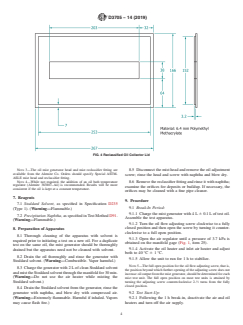
1, item 22). The oil mist generator is attached to the manifold 6.1.5 Reclassified Oil Collector and Lid, as shown in Fig. 3
so that it may be easily disconnected in order to determine its and Fig. 4.
mass before and after the test.
6.2 Impingement Plate, as shown in Fig. 5.
6.1.2 Air Temperature Regulator, Alemite thermo-aire No.
4,5
383808–A4 (Fig. 1, item 24).
6.3 Balance, 20 kg capacity open pan, with 1 g sensitivity.
6.1.3 Mist Distribution Manifold, as shown in Fig. 1.
6.4 Air Supply, from a source capable of maintaining an air
6.1.4 Mist Reclassifier Fitting, (Fig. 1, item 15; Fig. 2). The
flow rate up to 2 dm /s. The air should be dry, oil-free, and
fitting must be drilled exactly as shown in Fig. 2. Any
filtered througha1µm filter. In order to ensure the driest and
deviations from the given hole size and pattern will negate the
cleanest air possible, it is recommended that a drying element
test.
andfilteringsystemsuchasadesicantcartridgebeaddedtothe
apparatus. The device chosen should maintain a flow rate of
The sole source of supply of Alemite thermo-aire unit No. 383808-A4 known
14 dm /s and provide air with a dew point not in excess of
to the committee at this time is Alemite Co., Stewart Warner, 1826 West Diversey
–40 °C.
Parkway, Chicago, IL 60614.
FIG. 3 Reclassified Oil Collector
D3705 − 14 (2019)
FIG. 4 Reclassified Oil Collector Lid
NOTE 3—The oil mist generator head and mist reclassifier fitting are
8.5 Disconnect the mist head and remove the oil adjustment
available from the Alemite Co. Orders should specify Special ASTM-
screw; rinse the head and screw with naphtha and blow dry.
ASLE mist head and reclassifier fitting.
NOTE 4—While not required, the addition of an oil bath temperature 8.6 Remove the reclassifier fitting and rinse it with naphtha;
regulator (Alemite 383807–A4) is recommended. Results will be more
examine the orifices for deposits or buildup. If necessary, the
consistent if the oil is kept at a constant temperature.
orifices may be cleaned with a fine pipe cleaner.
7. Reagents
9. Procedure
7.1 Stoddard Solvent, as specified in Specification D235
9.1 Break-In Period:
(Type 1). (Warning
...