

ASTM D3201/D3201M-20
(Test Method)Standard Test Method for Hygroscopic Properties of Fire-Retardant Wood and Wood-Based Products
General Information
- Abstract
SIGNIFICANCE AND USE
4.1 The hygroscopic properties of wood and wood-based products treated with fire-retardant chemicals are often greater than for untreated products. This is particularly true at the higher relative humidity conditions. This higher hygroscopicity sometimes is the cause for staining, decay, poor paint adhesion, and migration and exuding of chemicals and moisture at the high humidities. Corrosion of metal fasteners sometimes also occurs.
4.2 The results obtained with this standard are important in identifying treatments with low hygroscopic properties.
4.3 Results can be useful in determining exposure limitations in service for specific treated products.
4.4 Building codes and other specifications for fire-retardant-treated wood for interior use include requirements based on this test method.
SCOPE
1.1 This test method prescribes the procedure for determining the hygroscopicity of fire retardant treated wood products by determining the moisture content of fire-retardant-treated wood and wood-based product specimens after exposure to a test condition of 92 ± 2 % relative humidity at 81 ± 4°F [27 ± 2°C].
1.2 The text of this test method references notes and footnotes which provide explanatory material. These notes and footnotes (excluding those in tables and figures) shall not be considered as requirements of this test method.
1.3 The values stated in either SI units or inch-pound units are to be regarded separately as standard. The values stated in each system are not necessarily exact equivalents; therefore, each system shall be used independently of the other. Combining values from the two systems has the potential to result in non-conformance with the standard.
1.4 This standard does not purport to address all of the safety concerns, if any, associated with its use. It is the responsibility of the user of this standard to establish appropriate safety, health, and environmental practices and determine the applicability of regulatory limitations prior to use.
1.5 This international standard was developed in accordance with internationally recognized principles on standardization established in the Decision on Principles for the Development of International Standards, Guides and Recommendations issued by the World Trade Organization Technical Barriers to Trade (TBT) Committee.
- Status
- Published
- Publication Date
- 30-Sep-2020
- Technical Committee
- D07 - Wood
- Drafting Committee
- D07.07 - Fire Performance of Wood
Buy Documents


ASTM D3201/D3201M-20 - Standard Test Method for Hygroscopic Properties of Fire-Retardant Wood and Wood-Based Products
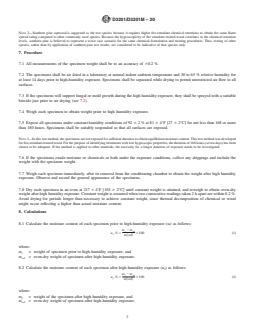

REDLINE ASTM D3201/D3201M-20 - Standard Test Method for Hygroscopic Properties of Fire-Retardant Wood and Wood-Based Products
Overview
ASTM D3201/D3201M-20 is a standard test method developed by ASTM International for determining the hygroscopic properties of fire-retardant-treated wood and wood-based products. This method evaluates how much moisture is absorbed by such products after exposure to high relative humidity. Understanding the hygroscopicity of fire-retardant-treated wood is essential because increased moisture content can lead to issues such as staining, decay, poor paint adhesion, chemical exudation, and even corrosion of metal fasteners. Results from this standard enable manufacturers, specifiers, and code officials to identify fire-retardant treatments with low hygroscopic properties and set appropriate exposure limitations within building and construction applications.
Key Topics
- Hygroscopicity of Fire-Retardant Wood: Wood treated with fire-retardant chemicals often has higher moisture absorption compared to untreated wood, particularly under high humidity conditions.
- Test Conditions: The method specifies exposing wood specimens to 92 ± 2% relative humidity at 81 ± 4°F (27 ± 2°C) to determine changes in moisture content.
- Specimen Identification: Requirements are given for the size and selection of specimens, including untreated controls for benchmarking.
- Moisture Content Calculation: The standard provides a clear calculation for determining the percentage of moisture before and after exposure.
- Reporting and Observations: The procedure documents changes in specimen appearance, including moisture exudation or surface wetness, for comprehensive quality assessment.
- Relevance to Building Codes: Many building codes and specifications reference this test method for fire-retardant-treated wood used in interiors, reinforcing its industry importance.
Applications
ASTM D3201/D3201M-20 is widely used in the qualified evaluation and certification of wood products intended for environments where fire retardancy and moisture resistance are critical. Key applications include:
- Building Materials Approval: Demonstrating compliance of treated wood products with building code requirements for moisture behavior under humid conditions.
- Product Development: Permits manufacturers to compare different fire-retardant treatments and optimize formulations to achieve lower hygroscopicity, reducing potential for staining, decay, or structural damage.
- Specifying Fire-Retardant Wood: Helpful for architects, specifiers, and builders in selecting products suitable for interior applications, ensuring enhanced durability and safety.
- Maintenance Planning: Insights from this test method enable informed decisions on product lifespan, exposure limitations, and maintenance schedules for wood used in humid or variable environments.
- Regulatory Compliance: Provides objective data to support product listings, certification, and regulatory filings involving fire-retardant-treated wood.
Related Standards
Several other ASTM standards provide foundational support and reference material for implementing ASTM D3201/D3201M-20, including:
- ASTM D9: Terminology Relating to Wood and Wood-Based Products
- ASTM E84: Test Method for Surface Burning Characteristics of Building Materials
- ASTM E176: Terminology of Fire Standards
- ASTM E2768: Test Method for Extended Duration Surface Burning Characteristics of Building Materials (30 min Tunnel Test)
Understanding and utilizing ASTM D3201/D3201M-20 is key for anyone involved in the testing, specification, or use of fire-retardant-treated wood and wood-based products. By ensuring low hygroscopic properties, stakeholders can enhance fire safety, durability, and compliance in a wide range of structural and architectural applications.
Relations
- Effective Date
- 01-Jan-2024
- Effective Date
- 01-Dec-2023
- Effective Date
- 01-Sep-2023
- Effective Date
- 01-Jul-2019
- Effective Date
- 15-Apr-2019
- Effective Date
- 01-Mar-2019
- Effective Date
- 15-Dec-2018
- Effective Date
- 01-Oct-2018
- Effective Date
- 01-Aug-2018
- Effective Date
- 01-Jul-2018
- Effective Date
- 01-Mar-2018
- Effective Date
- 01-Mar-2018
- Effective Date
- 01-Nov-2017
- Effective Date
- 01-Aug-2017
- Effective Date
- 01-Jul-2016
Buy Documents
ASTM D3201/D3201M-20 - Standard Test Method for Hygroscopic Properties of Fire-Retardant Wood and Wood-Based Products
REDLINE ASTM D3201/D3201M-20 - Standard Test Method for Hygroscopic Properties of Fire-Retardant Wood and Wood-Based Products
Get Certified
Connect with accredited certification bodies for this standard

Gozdarski inštitut Slovenije
Slovenian Forestry Institute. Forest management certification support, timber testing.
Sponsored listings
Frequently Asked Questions
ASTM D3201/D3201M-20 is a standard published by ASTM International. Its full title is "Standard Test Method for Hygroscopic Properties of Fire-Retardant Wood and Wood-Based Products". This standard covers: SIGNIFICANCE AND USE 4.1 The hygroscopic properties of wood and wood-based products treated with fire-retardant chemicals are often greater than for untreated products. This is particularly true at the higher relative humidity conditions. This higher hygroscopicity sometimes is the cause for staining, decay, poor paint adhesion, and migration and exuding of chemicals and moisture at the high humidities. Corrosion of metal fasteners sometimes also occurs. 4.2 The results obtained with this standard are important in identifying treatments with low hygroscopic properties. 4.3 Results can be useful in determining exposure limitations in service for specific treated products. 4.4 Building codes and other specifications for fire-retardant-treated wood for interior use include requirements based on this test method. SCOPE 1.1 This test method prescribes the procedure for determining the hygroscopicity of fire retardant treated wood products by determining the moisture content of fire-retardant-treated wood and wood-based product specimens after exposure to a test condition of 92 ± 2 % relative humidity at 81 ± 4°F [27 ± 2°C]. 1.2 The text of this test method references notes and footnotes which provide explanatory material. These notes and footnotes (excluding those in tables and figures) shall not be considered as requirements of this test method. 1.3 The values stated in either SI units or inch-pound units are to be regarded separately as standard. The values stated in each system are not necessarily exact equivalents; therefore, each system shall be used independently of the other. Combining values from the two systems has the potential to result in non-conformance with the standard. 1.4 This standard does not purport to address all of the safety concerns, if any, associated with its use. It is the responsibility of the user of this standard to establish appropriate safety, health, and environmental practices and determine the applicability of regulatory limitations prior to use. 1.5 This international standard was developed in accordance with internationally recognized principles on standardization established in the Decision on Principles for the Development of International Standards, Guides and Recommendations issued by the World Trade Organization Technical Barriers to Trade (TBT) Committee.
SIGNIFICANCE AND USE 4.1 The hygroscopic properties of wood and wood-based products treated with fire-retardant chemicals are often greater than for untreated products. This is particularly true at the higher relative humidity conditions. This higher hygroscopicity sometimes is the cause for staining, decay, poor paint adhesion, and migration and exuding of chemicals and moisture at the high humidities. Corrosion of metal fasteners sometimes also occurs. 4.2 The results obtained with this standard are important in identifying treatments with low hygroscopic properties. 4.3 Results can be useful in determining exposure limitations in service for specific treated products. 4.4 Building codes and other specifications for fire-retardant-treated wood for interior use include requirements based on this test method. SCOPE 1.1 This test method prescribes the procedure for determining the hygroscopicity of fire retardant treated wood products by determining the moisture content of fire-retardant-treated wood and wood-based product specimens after exposure to a test condition of 92 ± 2 % relative humidity at 81 ± 4°F [27 ± 2°C]. 1.2 The text of this test method references notes and footnotes which provide explanatory material. These notes and footnotes (excluding those in tables and figures) shall not be considered as requirements of this test method. 1.3 The values stated in either SI units or inch-pound units are to be regarded separately as standard. The values stated in each system are not necessarily exact equivalents; therefore, each system shall be used independently of the other. Combining values from the two systems has the potential to result in non-conformance with the standard. 1.4 This standard does not purport to address all of the safety concerns, if any, associated with its use. It is the responsibility of the user of this standard to establish appropriate safety, health, and environmental practices and determine the applicability of regulatory limitations prior to use. 1.5 This international standard was developed in accordance with internationally recognized principles on standardization established in the Decision on Principles for the Development of International Standards, Guides and Recommendations issued by the World Trade Organization Technical Barriers to Trade (TBT) Committee.
ASTM D3201/D3201M-20 is classified under the following ICS (International Classification for Standards) categories: 79.040 - Wood, sawlogs and sawn timber; 79.060.01 - Wood-based panels in general. The ICS classification helps identify the subject area and facilitates finding related standards.
ASTM D3201/D3201M-20 has the following relationships with other standards: It is inter standard links to ASTM E176-24, ASTM E84-23d, ASTM E84-23c, ASTM E84-19b, ASTM E84-19a, ASTM E84-19, ASTM E176-18a, ASTM E84-18b, ASTM E2768-11(2018), ASTM E84-18a, ASTM E176-18, ASTM E84-18, ASTM E84-17a, ASTM E84-17, ASTM E84-16. Understanding these relationships helps ensure you are using the most current and applicable version of the standard.
ASTM D3201/D3201M-20 is available in PDF format for immediate download after purchase. The document can be added to your cart and obtained through the secure checkout process. Digital delivery ensures instant access to the complete standard document.
Standards Content (Sample)
This international standard was developed in accordance with internationally recognized principles on standardization established in the Decision on Principles for the
Development of International Standards, Guides and Recommendations issued by the World Trade Organization Technical Barriers to Trade (TBT) Committee.
Designation: D3201/D3201M − 20
Standard Test Method for
Hygroscopic Properties of Fire-Retardant Wood and Wood-
Based Products
This standard is issued under the fixed designation D3201/D3201M; the number immediately following the designation indicates the
year of original adoption or, in the case of revision, the year of last revision. A number in parentheses indicates the year of last
reapproval. A superscript epsilon (´) indicates an editorial change since the last revision or reapproval.
1. Scope E84Test Method for Surface Burning Characteristics of
Building Materials
1.1 This test method prescribes the procedure for determin-
E176Terminology of Fire Standards
ing the hygroscopicity of fire retardant treated wood products
E2768Test Method for Extended Duration Surface Burning
by determining the moisture content of fire-retardant-treated
CharacteristicsofBuildingMaterials(30minTunnelTest)
wood and wood-based product specimens after exposure to a
testconditionof92 62%relativehumidityat81 64°F[27 6
3. Terminology
2°C].
3.1 Definitions—Definitions used in this practice are in
1.2 The text of this test method references notes and
accordance with Terminologies D9 and E176.
footnotes which provide explanatory material.These notes and
footnotes (excluding those in tables and figures) shall not be
4. Significance and Use
considered as requirements of this test method.
4.1 The hygroscopic properties of wood and wood-based
1.3 The values stated in either SI units or inch-pound units
products treated with fire-retardant chemicals are often greater
are to be regarded separately as standard. The values stated in
than for untreated products. This is particularly true at the
each system are not necessarily exact equivalents; therefore,
higherrelativehumidityconditions.Thishigherhygroscopicity
each system shall be used independently of the other. Combin-
sometimesisthecauseforstaining,decay,poorpaintadhesion,
ing values from the two systems has the potential to result in
and migration and exuding of chemicals and moisture at the
non-conformance with the standard.
high humidities. Corrosion of metal fasteners sometimes also
1.4 This standard does not purport to address all of the
occurs.
safety concerns, if any, associated with its use. It is the
4.2 The results obtained with this standard are important in
responsibility of the user of this standard to establish appro-
identifying treatments with low hygroscopic properties.
priate safety, health, and environmental practices and deter-
mine the applicability of regulatory limitations prior to use.
4.3 Results can be useful in determining exposure limita-
1.5 This international standard was developed in accor-
tions in service for specific treated products.
dance with internationally recognized principles on standard-
4.4 Building codes and other specifications for fire-
ization established in the Decision on Principles for the
retardant-treated wood for interior use include requirements
Development of International Standards, Guides and Recom-
based on this test method.
mendations issued by the World Trade Organization Technical
Barriers to Trade (TBT) Committee.
5. Apparatus
2. Referenced Documents
5.1 Conditioning chamber with air circulation and capable
2.1 ASTM Standards:
of being maintained at 81 6 4°F [27 6 2°C] and a relative
D9Terminology Relating to Wood and Wood-Based Prod- humidity of 92 62%.
ucts
5.2 Oven, air-circulated and vented, capable of maintaining
a temperature of 217 6 4°F [103 6 2°C].
This test method is under the jurisdiction of ASTM Committee D07 on Wood
and is the direct responsibility of Subcommittee D07.07 on Fire Performance of 5.3 Weighing Scale—A scale or balance that will weigh a
Wood.
specimen within an accuracy of 60.2%.
Current edition approved Oct. 1, 2020. Published October 2020. Originally
approved in 1973. Last previous edition approved in 2013 as D3201/D3201M–13.
6. Test Specimens
DOI: 10.1520/D3201_D3201M-20.
For referenced ASTM standards, visit the ASTM website, www.astm.org, or
6.1 Aminimumoffivespecimensshallbeselectedfromthe
contact ASTM Customer Service at service@astm.org. For Annual Book of ASTM
untreated product/species combination that is to be tested.
Standards volume information, refer to the standard’s Document Summary page on
the ASTM website. Solid wood specimens with identifiable sapwood shall be
Copyright © ASTM International, 100 Barr Harbor Drive, PO Box C700, West Conshohocken, PA 19428-2959. United States
D3201/D3201M − 20
selectedwithasmuchsapwoodascanbereadilyobtainedfrom Specimens shall be separated while drying to permit unre-
the lot of material from which it is selected. stricted air flow to all surfaces.
7.3 If the specimens will support fungal or mold growth
6.2 Specimen Size:
during the high humidity exposure, they shall be sprayed with
6.2.1 Solid wood specimens shall be cross sections cut
a suitable biocide just prior to air drying (see 7.2).
fromsolidsawn,surfacedlumberofnominal2×6size.Thetest
specimens shall be 1.0 6 0.1 in. [25 6 3 mm] along the grain
7.4 Weigh each specimen to obtain weight prior to high
by 5.5 6 0.1 in. [139 6 3 mm] wide by 1.5 6 0.1 in. [38 6
humidity exposure.
3 mm] deep.
7.5 Expose all specimens under constant humidity condi-
6.2.2 Panelproductspecimensshallbecutfrompanelswith
tionsof92 62%at81 64°F[27 62°C]fornotlessthan168
a nominal thickness between 15/32 in. [12 mm] and 5/8 in. [16
ormorethan180hours.Specimensshallbesuitablysuspended
mm].The test specimens shall be the thickness of the panel by
so that all surfaces are exposed.
5.5 6 0.1 in. [139 6 3 mm] by 5.5 6 0.1 in. [139 6 3 mm].
NOTE 3—In this test method, the specimens are not exposed for
6.2.3 Products for which the specimen sizes in 6.2.1 and
sufficient duration to obtain equilibrium moisture content. This test
6.2.2 are not applicable may be tested using specimens with
method was developed for fire-retardant-treated wood. For the purpose of
2 3
surface area to volume ratios greater than 3.7 in. :1 in. [0.15
identifying treatments with low hygroscopic properties, the duration of
2 3
mm :1 mm ] and minimum mass of 0.11 lb. [50 g].
168 hours (seven days) has been shown to be adequate. If the method is
applied to other materials, the necessity for a longer duration of exposure
6.3 Treatment with fire-retardant chemicals shall be done
needs to be investigated.
inamannerrepresentativeofthatfortheproduct/speciesbeing
7.6 If the specimens exude moisture or chemicals or both
tested.
under the exposure conditions, collect any drippings and
6.3.1 The fire retardant chemical retention of the treated
include the weight with the specimen weight.
produc
...
This document is not an ASTM standard and is intended only to provide the user of an ASTM standard an indication of what changes have been made to the previous version. Because
it may not be technically possible to adequately depict all changes accurately, ASTM recommends that users consult prior editions as appropriate. In all cases only the current version
of the standard as published by ASTM is to be considered the official document.
Designation: D3201/D3201M − 13 D3201/D3201M − 20
Standard Test Method for
Hygroscopic Properties of Fire-Retardant Wood and Wood-
Based Products
This standard is issued under the fixed designation D3201/D3201M; the number immediately following the designation indicates the
year of original adoption or, in the case of revision, the year of last revision. A number in parentheses indicates the year of last
reapproval. A superscript epsilon (´) indicates an editorial change since the last revision or reapproval.
1. Scope
1.1 This test method prescribes the procedure for determining the hygroscopicity of fire retardant treated wood products by
determining the moisture content of fire-retardant-treated wood and wood-based product specimens after exposure to a test
condition of 92 6 2 % relative humidity at 81 6 4°F [27 6 2°C].
1.2 The text of this test method references notes and footnotes which provide explanatory material. These notes and footnotes
(excluding those in tables and figures) shall not be considered as requirements of this test method.
1.3 The values stated in either SI units or inch-pound units are to be regarded separately as standard. The values stated in each
system are not necessarily exact equivalents; therefore, to ensure conformance with the standard, each system shall be used
independently of the other, andother. Combining values from the two systems shall not be combined.has the potential to result in
non-conformance with the standard.
1.4 This standard does not purport to address all of the safety concerns, if any, associated with its use. It is the responsibility
of the user of this standard to establish appropriate safety safety, health, and healthenvironmental practices and determine the
applicability of regulatory limitations prior to use.
1.5 This international standard was developed in accordance with internationally recognized principles on standardization
established in the Decision on Principles for the Development of International Standards, Guides and Recommendations issued
by the World Trade Organization Technical Barriers to Trade (TBT) Committee.
2. Referenced Documents
2.1 ASTM Standards:
D9 Terminology Relating to Wood and Wood-Based Products
E84 Test Method for Surface Burning Characteristics of Building Materials
E176 Terminology of Fire Standards
E2768 Test Method for Extended Duration Surface Burning Characteristics of Building Materials (30 min Tunnel Test)
3. Terminology
3.1 Definitions—Definitions used in this practice are in accordance with Terminologies D9 and E176.
This test method is under the jurisdiction of ASTM Committee D07 on Wood and is the direct responsibility of Subcommittee D07.07 on Fire Performance of Wood.
Current edition approved June 15, 2013Oct. 1, 2020. Published July 2013October 2020. Originally approved in 1973. Last previous edition approved in 20082013 as
ε1
D3201 – 08D3201/D3201M – 13. . DOI: 10.1520/D3201-13.10.1520/D3201_D3201M-20.
For referenced ASTM standards, visit the ASTM website, www.astm.org, or contact ASTM Customer Service at service@astm.org. For Annual Book of ASTM Standards
volume information, refer to the standard’s Document Summary page on the ASTM website.
Copyright © ASTM International, 100 Barr Harbor Drive, PO Box C700, West Conshohocken, PA 19428-2959. United States
D3201/D3201M − 20
4. Significance and Use
4.1 The hygroscopic properties of wood and wood-based products treated with fire-retardant chemicals are often greater than for
untreated products. This is particularly true at the higher relative humidity conditions. This higher hygroscopicity sometimes is the
cause for staining, decay, poor paint adhesion, and migration and exuding of chemicals and moisture at the high humidities.
Corrosion of metal fasteners sometimes also occurs.
4.2 The results obtained with this standard are important in identifying treatments with low hygroscopic properties.
4.3 Results can be useful in determining exposure limitations in service for specific treated products.
4.4 Building codes and other specifications for fire-retardant-treated wood for interior use include requirements based on this test
method.
5. Apparatus
5.1 Conditioning chamber with air circulation and capable of being maintained at 81 6 4°F [27 6 2°C] and a relative humidity
of 92 6 2 %.
5.2 Oven, air-circulated and vented, capable of maintaining a temperature of 217 6 4°F [103 6 2°C].
5.3 Weighing Scale—A scale or balance that will weigh a specimen within an accuracy of 60.2 %.
6. Test Specimens
6.1 A minimum of five specimens shall be selected from the untreated product/species combination that is to be tested. Solid wood
specimens with identifiable sapwood shall be selected with as much sapwood as can be readily obtained from the lot of material
from which it is selected.
6.2 Specimen Size:
6.2.1 Solid wood specimens shall be cross sections cut from solid sawn, surfaced lumber of nominal 2×6 size. The test specimens
shall be 1.0 6 0.1 in. [25 6 3 mm] along the grain by 5.5 6 0.1 in. [139 6 3 mm] wide by 1.5 6 0.1 in. [38 6 3 mm] deep.
6.2.2 Panel product specimens shall be cut from panels with a nominal thickness between 15/32 in. [12 mm] and 5/8 in. [16 mm].
The test specimens shall be the thickness of the panel by 5.5 6 0.1 in. [139 6 3 mm] by 5.5 6 0.1 in. [139 6 3 mm].
6.2.3 Products for which the specimen sizes in 6.2.1 and 6.2.2 are not applicable may be tested using specimens with surface area
2 3 2 3
to volume ratios greater than 3.7 in. :1 in. [0.15 mm :1 mm ] and minimum mass of 0.11 lb. [50 g].
6.3 Treatment with fire-retardant chemicals shall be done in a manner representative of that for the product/species being tested.
6.3.1 The fire retardant chemical retention of the treated product shall not be less than that specified by the agency certifying the
flame spread index of the treated product. The retention shall provide a flame-spread index of 25 or less when tested in accordance
with either Test Method E2768 or with Test Method E84 for 10 min with no evidence of significant progression combustion when
the test is continued for an additional 20-min period and without progression of the flame front beyond a distance of 10.5 ft. [3.2
m] beyond the centerline of the burners anytime during the 30-min extended test.
6.3.2 The provisions of 6.3.1 are not intended to prevent use of this test method when the fire-retardant treatments being tested
are for applications other than those requiring conformance to building code requirements for “fire-retardant-treated wood” that
require Test Method E84 test extended to 30 min or Test Method E2768. When alternative performance criteria for the treated
products are applicable, the test report shall include the alternative performance criteria and the treatment retention required for
specime
...