

ASTM F2387-21
(Specification)Standard Specification for Manufactured Safety Vacuum Release Systems (SVRS) for Swimming Pools, Spas and Hot Tubs
General Information
- Abstract
SCOPE
1.1 This specification covers requirements for safety vacuum release systems (SVRS) for use on both residential and commercial swimming pools, spas, hot tubs, and wading pools.
1.2 This specification is intended to reduce the risk of entrapment by providing a rapid detection and rapid release of vacuum or preventing a high vacuum altogether when a person becomes entrapped at the suction outlet serving a pumping system.
1.3 This specification only applies to systems equipped with pumps of similar horsepower and flow rating to those actually tested.
1.4 SVRS units manufactured, previously sold and installed, prior to the publication of this specification, which were compliant to the previous version of this specification, are to be considered compliant with this specification.
1.5 The values stated in inch-pound units are to be regarded as standard. The values given in parentheses are mathematical conversions to SI units that are provided for information only and are not considered standard.
1.6 The following safety hazards caveat pertains only to the test methods section, Section 5, of this specification. This standard does not purport to address all of the safety concerns, if any, associated with its use. It is the responsibility of the user of this standard to establish appropriate safety, health, and environmental practices and determine the applicability of regulatory limitations prior to use.
1.7 This international standard was developed in accordance with internationally recognized principles on standardization established in the Decision on Principles for the Development of International Standards, Guides and Recommendations issued by the World Trade Organization Technical Barriers to Trade (TBT) Committee.
- Status
- Published
- Publication Date
- 30-Apr-2021
- Technical Committee
- F15 - Consumer Products
Buy Documents
ASTM F2387-21 - Standard Specification for Manufactured Safety Vacuum Release Systems (SVRS) for Swimming Pools, Spas and Hot Tubs
REDLINE ASTM F2387-21 - Standard Specification for Manufactured Safety Vacuum Release Systems (SVRS) for Swimming Pools, Spas and Hot Tubs
Overview
ASTM F2387-21 is the Standard Specification for Manufactured Safety Vacuum Release Systems (SVRS) for Swimming Pools, Spas, and Hot Tubs. Developed by ASTM International, this standard establishes safety and performance requirements for SVRS devices intended for both residential and commercial use in swimming pools, spas, hot tubs, and wading pools. The primary goal is to reduce the risk of entrapment incidents by ensuring SVRS devices can rapidly detect and release vacuum or prevent the creation of dangerous high vacuum at suction outlets.
With growing awareness of suction entrapment accidents, this standard supports the pool and spa industry in adhering to internationally recognized best practices and regulatory guidelines. Compliance with ASTM F2387-21 helps manufacturers, installers, and facility operators ensure safer aquatic environments by specifying robust design, testing, and installation criteria for SVRS devices.
Key Topics
Scope and Coverage:
- Applies to both new and existing SVRS devices on swimming pools, spas, hot tubs, and wading pools.
- Covers devices installed on systems with tested pump horsepower and flow ratings.
Entrapment Prevention:
- Standards for rapid detection and release of vacuum when a potential entrapment occurs at suction outlets.
- Devices must operate without disabling other safety layers, such as anti-vortex covers or dual drains.
Design and Material Requirements:
- Mandates durable, UV-resistant materials suitable for outdoor environmental exposure.
- Requires surfaces to be free from sharp or rough edges to avoid injuries.
- Exposed components must meet requirements for environmental durability and chemical resistance.
Testing and Performance:
- Detailed test procedures for device actuation, reset, and fail-safe mechanisms.
- Mandates 100+ cycle durability testing and rapid vacuum release within specified timeframes.
Installation and Labeling:
- Comprehensive installation, operation, calibration, and maintenance instructions required.
- Labels must state compatibility with variable speed pumps and provide clear identification details for each device.
Applications
ASTM F2387-21 is widely adopted in the pool and spa industry to enhance user safety in various aquatic environments, including:
- Public and Commercial Pools and Spas: Ensures that facilities meet stringent safety regulations to protect bathers and comply with legal requirements.
- Residential Pools and Hot Tubs: Provides a framework for safer backyard pool installations, reducing the risk of injury due to suction entrapment.
- Pool and Spa Renovations: Facility owners and contractors use the standard to upgrade older systems, ensuring compliance and improved safety performance.
- Product Certification and Manufacturing: Manufacturers use the standard for SVRS product design, testing, certification, and quality assurance.
By following ASTM F2387-21, pool and spa professionals can demonstrate due diligence in preventing entrapment hazards and building customer confidence in compliant SVRS devices.
Related Standards
For holistic pool and spa safety, ASTM F2387-21 references and complements several other key standards and regulatory documents:
- ASTM F2707: Safety performance specification for field-fabricated suction-limiting vent systems.
- ASTM D2466 & D2855: Specifications for PVC pipe fittings and joining practices.
- NSF/ANSI 50: Standards for swimming pool and spa equipment and chemicals.
- UL 1081 & UL 746C: Standards for electrical safety and plastics evaluation in pool equipment.
- ASME B1.20.1: Pipe threading standards.
- CPSC Guidelines: Entrapment hazard recommendations by the U.S. Consumer Product Safety Commission.
Keywords: safety vacuum release systems, SVRS, swimming pool safety, suction entrapment prevention, spas, hot tubs, ASTM F2387-21, anti-suction devices, pool safety standards, commercial pool compliance, SVRS installation.
Relations
- Effective Date
- 01-Aug-2020
- Effective Date
- 01-May-2018
- Effective Date
- 01-Nov-2015
- Effective Date
- 01-Mar-2015
- Effective Date
- 01-Aug-2013
- Effective Date
- 01-Feb-2012
- Effective Date
- 01-Nov-2010
- Effective Date
- 01-Feb-2010
- Effective Date
- 01-Mar-2006
- Effective Date
- 01-May-2005
- Effective Date
- 01-Mar-2005
- Effective Date
- 10-Sep-2002
- Effective Date
- 10-Apr-2001
- Effective Date
- 10-Apr-2001
- Effective Date
- 10-Apr-1999
Buy Documents
ASTM F2387-21 - Standard Specification for Manufactured Safety Vacuum Release Systems (SVRS) for Swimming Pools, Spas and Hot Tubs
REDLINE ASTM F2387-21 - Standard Specification for Manufactured Safety Vacuum Release Systems (SVRS) for Swimming Pools, Spas and Hot Tubs
Frequently Asked Questions
ASTM F2387-21 is a technical specification published by ASTM International. Its full title is "Standard Specification for Manufactured Safety Vacuum Release Systems (SVRS) for Swimming Pools, Spas and Hot Tubs". This standard covers: SCOPE 1.1 This specification covers requirements for safety vacuum release systems (SVRS) for use on both residential and commercial swimming pools, spas, hot tubs, and wading pools. 1.2 This specification is intended to reduce the risk of entrapment by providing a rapid detection and rapid release of vacuum or preventing a high vacuum altogether when a person becomes entrapped at the suction outlet serving a pumping system. 1.3 This specification only applies to systems equipped with pumps of similar horsepower and flow rating to those actually tested. 1.4 SVRS units manufactured, previously sold and installed, prior to the publication of this specification, which were compliant to the previous version of this specification, are to be considered compliant with this specification. 1.5 The values stated in inch-pound units are to be regarded as standard. The values given in parentheses are mathematical conversions to SI units that are provided for information only and are not considered standard. 1.6 The following safety hazards caveat pertains only to the test methods section, Section 5, of this specification. This standard does not purport to address all of the safety concerns, if any, associated with its use. It is the responsibility of the user of this standard to establish appropriate safety, health, and environmental practices and determine the applicability of regulatory limitations prior to use. 1.7 This international standard was developed in accordance with internationally recognized principles on standardization established in the Decision on Principles for the Development of International Standards, Guides and Recommendations issued by the World Trade Organization Technical Barriers to Trade (TBT) Committee.
SCOPE 1.1 This specification covers requirements for safety vacuum release systems (SVRS) for use on both residential and commercial swimming pools, spas, hot tubs, and wading pools. 1.2 This specification is intended to reduce the risk of entrapment by providing a rapid detection and rapid release of vacuum or preventing a high vacuum altogether when a person becomes entrapped at the suction outlet serving a pumping system. 1.3 This specification only applies to systems equipped with pumps of similar horsepower and flow rating to those actually tested. 1.4 SVRS units manufactured, previously sold and installed, prior to the publication of this specification, which were compliant to the previous version of this specification, are to be considered compliant with this specification. 1.5 The values stated in inch-pound units are to be regarded as standard. The values given in parentheses are mathematical conversions to SI units that are provided for information only and are not considered standard. 1.6 The following safety hazards caveat pertains only to the test methods section, Section 5, of this specification. This standard does not purport to address all of the safety concerns, if any, associated with its use. It is the responsibility of the user of this standard to establish appropriate safety, health, and environmental practices and determine the applicability of regulatory limitations prior to use. 1.7 This international standard was developed in accordance with internationally recognized principles on standardization established in the Decision on Principles for the Development of International Standards, Guides and Recommendations issued by the World Trade Organization Technical Barriers to Trade (TBT) Committee.
ASTM F2387-21 is classified under the following ICS (International Classification for Standards) categories: 97.220.10 - Sports facilities. The ICS classification helps identify the subject area and facilitates finding related standards.
ASTM F2387-21 has the following relationships with other standards: It is inter standard links to ASTM D2855-20, ASTM F2707-10(2018)e1, ASTM D2855-15, ASTM D2466-15, ASTM D2466-13, ASTM F402-05(2012), ASTM F2707-10, ASTM D2855-96(2010), ASTM D2466-06, ASTM D2466-05, ASTM F402-05, ASTM D2466-02, ASTM D2466-01, ASTM D2466-99, ASTM F402-93(1999). Understanding these relationships helps ensure you are using the most current and applicable version of the standard.
ASTM F2387-21 is available in PDF format for immediate download after purchase. The document can be added to your cart and obtained through the secure checkout process. Digital delivery ensures instant access to the complete standard document.
Standards Content (Sample)
This international standard was developed in accordance with internationally recognized principles on standardization established in the Decision on Principles for the
Development of International Standards, Guides and Recommendations issued by the World Trade Organization Technical Barriers to Trade (TBT) Committee.
Designation: F2387 −21
Standard Specification for
Manufactured Safety Vacuum Release Systems (SVRS) for
Swimming Pools, Spas and Hot Tubs
This standard is issued under the fixed designation F2387; the number immediately following the designation indicates the year of
original adoption or, in the case of revision, the year of last revision.Anumber in parentheses indicates the year of last reapproval.A
superscript epsilon (´) indicates an editorial change since the last revision or reapproval.
INTRODUCTION
The U.S. Consumer Product Safety Commission is aware of 44 swimming pool and spa suction
entrapments between 2009 and 2018. Over this time period, two limb entrapment deaths were
reported.
If a cover or grate is unfastened, missing, or broken, exposure to the suction outlet force could
produceeviscerationorlimbentrapment.Eventhoughitmaybeperceivedthatsafetyvacuumrelease
devices may help in reducing cases of evisceration or limb entrapment, the devices are not designed
for nor intended to do so. More direct efforts are related to the use of certified suction outlet covers,
12in.by12in.orlargersuctionoutletcovers,poolcovers,dualsuctionoutlets,andsoforth.“Layered
protection” should be used as outlined in CPSC’s “Guidelines for Addressing Potential Entrapment
Hazards Associated with Swimming Pools and Spas.”
This specification is not intended to and does not address hair entrapment, evisceration, or limb
entrapment.
Field fabricated vent pipes are excluded from this specification and are addressed in a separate
standard, Safety Performance Specification F2707.
1. Scope conversions to SI units that are provided for information only
and are not considered standard.
1.1 This specification covers requirements for safety
1.6 The following safety hazards caveat pertains only to the
vacuumreleasesystems(SVRS)foruseonbothresidentialand
test methods section, Section 5, of this specification. This
commercialswimmingpools,spas,hottubs,andwadingpools.
standard does not purport to address all of the safety concerns,
1.2 This specification is intended to reduce the risk of
if any, associated with its use. It is the responsibility of the user
entrapment by providing a rapid detection and rapid release of
of this standard to establish appropriate safety, health, and
vacuumorpreventingahighvacuumaltogetherwhenaperson
environmental practices and determine the applicability of
becomes entrapped at the suction outlet serving a pumping
regulatory limitations prior to use.
system.
1.7 This international standard was developed in accor-
1.3 Thisspecificationonlyappliestosystemsequippedwith
dance with internationally recognized principles on standard-
pumps of similar horsepower and flow rating to those actually
ization established in the Decision on Principles for the
tested.
Development of International Standards, Guides and Recom-
mendations issued by the World Trade Organization Technical
1.4 SVRSunitsmanufactured,previouslysoldandinstalled,
Barriers to Trade (TBT) Committee.
prior to the publication of this specification, which were
complianttothepreviousversionofthisspecification,aretobe
2. Referenced Documents
considered compliant with this specification.
2.1 ASTM Standards:
1.5 The values stated in inch-pound units are to be regarded
D2466Specification for Poly(Vinyl Chloride) (PVC) Plastic
as standard. The values given in parentheses are mathematical
Pipe Fittings, Schedule 40
This specification is under the jurisdiction of ASTM Committee F15 on
Consumer Products and is the direct responsibility of Subcommittee F15.51 on
Safety Vacuum Release Systems for Swimming Pools, Spas and Hot Tubs. For referenced ASTM standards, visit the ASTM website, www.astm.org, or
Current edition approved May 1, 2021. Published May 2021. Originally contact ASTM Customer Service at service@astm.org. For Annual Book of ASTM
approved in 2003. Last previous edition approved in 2012 as F2387–04 (2012). Standards volume information, refer to the standard’s Document Summary page on
DOI: 10.1520/F2387-21. the ASTM website.
Copyright © ASTM International, 100 Barr Harbor Drive, PO Box C700, West Conshohocken, PA 19428-2959. United States
F2387 − 21
D2468 Specification for Acrylonitrile-Butadiene-Styrene operateinsuchawayastonotdefeatordisengageotherlayers
(ABS) Plastic Pipe Fittings, Schedule 40 (Withdrawn of protection installed to protect against suction entrapment.
2003)
3.1.7 suction outlet—appurtenance for conveying water out
D2855Practice for the Two-Step (Primer and Solvent Ce-
of a pool, spa, hot tub, whirlpool, therapy unit or similar
ment) Method of Joining Poly (Vinyl Chloride) (PVC) or
fixture.
Chlorinated Poly (Vinyl Chloride) (CPVC) Pipe and
3.1.8 test actuator (TA)—device used to lower the inter-
Piping Components with Tapered Sockets
rupter element (IE) in a uniform manner and rate.
F402 Practice for Safe Handling of Solvent Cements,
Primers, and Cleaners Used for Joining Thermoplastic
3.1.9 tripped position—the condition after a high-vacuum
Pipe and Fittings
eventwheretheSVRSisprotectingthesuctionoutletsuchthat
F2707SafetyPerformanceSpecificationforSafeDesignand
no further high-vacuum event can take place without resetting
Installation of Field Fabricated Suction-Limiting Vent
the SVRS.
Systems for Suction Entrapment Prevention in Swimming
3.1.10 variable speed pump—includes multi-speed or two-
Pools, Spas, Hot Tubs, and Wading Pools
speed pumps as well as devices external to the pump that vary
2.2 ASME Standard:
the speed of the pump.
ANSI/ASME B1.20.1Pipe Threads, General Purpose, Inch
2.3 Federal Document:
4. Requirements
CPSC DocumentGuidelines for Addressing Potential En-
trapment Hazards Associated with Swimming Pools and
4.1 General:
Spas
4.1.1 Exposed surfaces shall be free from rough or sharp
2.4 NSF Document:
edges.
NSF 50Equipment and Chemicals for Swimming Pools,
4.1.2 AnSVRSshallnotbemadedysfunctionalwithoutthe
Spas, Hot Tubs and Other Recreational Water Facilities
7 use of tools.
2.5 UL Standards:
4.1.3 Manufacturers shall evaluate all materials for expo-
UL 1081Standard for Safety for Swimming Pool Pumps,
sure and environmental conditions (chemicals, etc.) expected
Filters and Chlorinators
to be encountered in the use condition over a period of time to
UL 746CStandard for Safety Polymeric Material – Use in
insurelongtermdurabilityandoperation.NSF50andUL1081
Electrical Equipment Evaluation
may be used as guidelines.
3. Terminology
4.1.4 Materials exposed to outdoor elements shall be UV
3.1 Definitions of Terms Specific to This Standard: resistant and capable of withstanding ambient temperatures
3.1.1 high-vacuum occurrence—event where the operating between –40°F and 140°F (in accordance with 4.1.15 and
vacuum normally present within a pool circulation system 4.2.2).
suddenly increases due to a suction outlet blockage.
4.1.5 Under normal system operating conditions, the SVRS
shall not adversely affect pump suction, system pressure,
3.1.2 interrupter element (IE)—pad or mat used to simulate
system flow, or other equipment performance.
an entrapment event by blocking the suction outlet completely.
4.1.5.1 An SVRS must provide the means to protect the
3.1.3 non-mechanical SVRS—SVRS with no moving parts.
pump against consequential damage by a pump running dry
3.1.4 readily affıxed—to be easily retrofitted to existing
due to a loss of prime.
systems where an entrapment hazard is possible using ap-
4.1.6 AnSVRSshalllatchorlockoutinthetrippedposition
proved pipe fittings or approved adapters, or both.
following a high-vacuum occurrence until reset after a mini-
3.1.5 return inlet—appurtenance for conveying water re-
mum of 15s. See Note 1.
turned to the pool.
NOTE 1—The selection of a minimum of 15s before reset is the result
3.1.6 safety vacuum release system (SVRS)—system or de-
of a desire to ensure the system does not vapor lock the blocking element
vice capable of providing vacuum release at a suction outlet
to the sump.
caused by a high-vacuum occurrence due to a suction outlet
blockage. SVRS devices must allow for the vacuum release 4.1.7 SVRSs,followingahigh-vacuumoccurrence,shallbe
manually reset or automatically reset to its ready position
with or without suction outlet cover(s) in place, and shall
without requiring special tools.
4.1.8 In the event of a spring or loading mechanism failure,
The last approved version of this historical standard is referenced on
an SVRS shall fail in the tripped position.
www.astm.org.
Available from American Society of Mechanical Engineers (ASME), ASME
4.1.9 Any air inlet ports for SVRSs shall be designed and
International Headquarters, Two Park Ave., New York, NY 10016-5990, http://
installed in such a manner that the air inlet port(s) cannot be
www.asme.org.
defeated by reasonably anticipated conditions or in any
AvailablefromU.S.ConsumerProductSafetyCommission(CPSC),4330East
West Hwy., Bethesda, MD 20814, http://www.cpsc.gov.
manner, environmental or human, that would prevent the
Available from NSF International, P.O. Box 130140, 789 N. Dixboro Rd.,Ann
device from functioning as intended. This includes, but is not
Arbor, MI 48105, http://www.nsf.org.
limited to, infestation, debris buildup, or microbiological
Available from Underwriters Laboratories (UL), UL Headquarters, 333 Pfing-
sten Road, Northbrook, IL, 60062, http://www.ul.com. contamination.
F2387 − 21
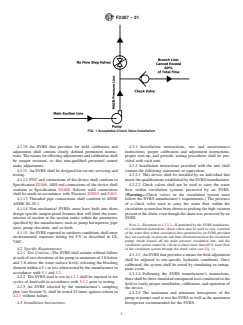
FIG. 1 Acceptable Check Valve Installation
4.1.10 An SVRS that provides for field calibration and 4.3.1 Installation instructions, use and maintenance
adjustment shall contain clearly defined permanent instruc- instructions, proper calibration and adjustment instructions,
tions.Themeansforeffectingadjustmentsandcalibrationshall proper start-up, and periodic testing procedures shall be pro-
be tamper resistant, so that non-qualified personnel cannot vided with each unit.
make adjustments. 4.3.2 Installation instructions provided with the unit shall
4.1.11 An SVRS shall be designed for on-site servicing and contain the following statements or equivalent:
testing. 4.3.2.1 This device shall be installed by an individual that
4.1.12 PVC end connections of the device shall conform to meetsthequalificationsestablishedbytheSVRSmanufacturer.
Specification D2466.ABS end connections of the device shall 4.3.2.2 Check valves shall not be used to carry the water
conform to Specification D2468. Solvent weld connections flow within circulation systems protected by an SVRS.
shall be made in accordance with Practices D2855 and F402. (Warning—Check valves in the circulation system must
4.1.13 Threaded pipe connections shall conform to ANSI/ follow the SVRS manufacturer’s requirements.) The presence
ASME B1.20.1. of a check valve used to carry the water flow within the
4.1.14 Non-mechanical SVRSs must have built into them circulationsystemhasbeenshowntoprolongthehighvacuum
design specific tamper-proof features that will limit the trans- present at the drain, even though the drain was protected by an
mission of suction at the suction outlet within the parameters SVRS.
specified by the manufacturer, such as pump horsepower, pipe
NOTE 2—Exception to 4.3.2.2—If permitted by the SVRS manufactur-
sizes, pump elevation, and so forth.
er’s installation instructions, check valves may be used to carry a portion
4.1.15 An SVRS exposed to outdoors conditions shall meet
of the water flow within circulat
...
This document is not an ASTM standard and is intended only to provide the user of an ASTM standard an indication of what changes have been made to the previous version. Because
it may not be technically possible to adequately depict all changes accurately, ASTM recommends that users consult prior editions as appropriate. In all cases only the current version
of the standard as published by ASTM is to be considered the official document.
Designation: F2387 − 04 (Reapproved 2012) F2387 − 21
Standard Specification for
Manufactured Safety Vacuum Release Systems (SVRS) for
Swimming Pools, Spas and Hot Tubs
This standard is issued under the fixed designation F2387; the number immediately following the designation indicates the year of
original adoption or, in the case of revision, the year of last revision. A number in parentheses indicates the year of last reapproval. A
superscript epsilon (´) indicates an editorial change since the last revision or reapproval.
INTRODUCTION
The U.S. Consumer Product Safety Commission is aware of 13844 swimming pool and spa drain
suction entrapments between 19852009 and 2001. During this time, 35 deaths due to drain suction
entrapment have been confirmed, including 15 deaths due to hair entrapment, 15 deaths due to body
entrapment and five deaths due to entrapment of an unknown type.2018. Over this time period, two
limb entrapment deaths were reported.
With the understanding of the potential hazard and despite the lack of extensive epidemiological
data, the manufacturers, consumers, and users supported by CPSC staff decided on February 6, 2001
to proceed with dedicated time, expense, and effort toward development of a voluntary safety standard
to reduce the possibilities of injuries due to swimming pool, spa, and hot tub body and limb
entrapment.
If a cover or grate is unfastened, missing, or broken, exposure to the drain suction outlet force could
produce evisceration. evisceration or limb entrapment. Even though it is expected may be perceived
that safety vacuum release devices may help in reducing cases of evisceration, evisceration or limb
entrapment, the devices are not designed for nor intended to do so. More direct efforts are related to
the use of proper drain covers, 12certified suction outlet covers, 12 in. by 12 in. or larger drain suction
outlet covers, pool covers, dual suction outlets, and so forth. “Layered protection” should be used as
outlined in CPSC’s “Guidelines for Addressing Potential Entrapment Hazards Associated with
Swimming Pools and Spas.”
This specification is not intended to and does not address hair entrapment, evisceration, or limb
entrapment.
Field fabricated vent pipes are excluded from this specification and will be are addressed in a
separate standard under development.standard, Safety Performance Specification F2707.
1. Scope
1.1 This specification covers requirements for safety vacuum release systems (SVRS) for use on both residential and commercial
swimming pools, spas, hot tubs, and wading pools.
1.2 This specification is intended to reduce the risk of drowning or entrapment by providing a rapid detection and rapid release
of vacuum or preventing a dangeroushigh vacuum altogether when a person becomes entrapped at the suction outlet serving a
pumping system.
This specification is under the jurisdiction of ASTM Committee F15 on Consumer Products and is the direct responsibility of Subcommittee F15.51 on Safety Vacuum
Release Systems for Swimming Pools, Spas and Hot Tubs.
Current edition approved Aug. 1, 2012May 1, 2021. Published August 2012May 2021. Originally approved in 2003. Last previous edition approved in 20042012 as
F2387 – 04.F2387 – 04 (2012). DOI: 10.1520/F2387-04R12.10.1520/F2387-21.
Copyright © ASTM International, 100 Barr Harbor Drive, PO Box C700, West Conshohocken, PA 19428-2959. United States
F2387 − 21
1.3 This specification only applies to systems equipped with pumps of similar horsepower and flow rating to those actually tested.
1.4 SVRS units manufactured, previously sold and installed, prior to the publication of this specification, which were compliant
to the previous version of this specification, are to be considered compliant with this specification.
1.5 The values stated in customary English inch-pound units are to be regarded as the standard. AnyThe values given in
parentheses are given for information only.mathematical conversions to SI units that are provided for information only and are not
considered standard.
1.6 The following safety hazards caveat pertains only to the test methods section, Section 5, of this specification. This standard
does not purport to address all of the safety concerns, if any, associated with its use. It is the responsibility of the user of this
standard to establish appropriate safety safety, health, and healthenvironmental practices and determine the applicability of
regulatory limitations prior to use.
1.7 This international standard was developed in accordance with internationally recognized principles on standardization
established in the Decision on Principles for the Development of International Standards, Guides and Recommendations issued
by the World Trade Organization Technical Barriers to Trade (TBT) Committee.
2. Referenced Documents
2.1 ASTM Standards:
D2466 Specification for Poly(Vinyl Chloride) (PVC) Plastic Pipe Fittings, Schedule 40
D2468 Specification for Acrylonitrile-Butadiene-Styrene (ABS) Plastic Pipe Fittings, Schedule 40 (Withdrawn 2003)
D2855 Practice for the Two-Step (Primer and Solvent Cement) Method of Joining Poly (Vinyl Chloride) (PVC) or Chlorinated
Poly (Vinyl Chloride) (CPVC) Pipe and Piping Components with Tapered Sockets
F402 Practice for Safe Handling of Solvent Cements, Primers, and Cleaners Used for Joining Thermoplastic Pipe and Fittings
F2707 Safety Performance Specification for Safe Design and Installation of Field Fabricated Suction-Limiting Vent Systems for
Suction Entrapment Prevention in Swimming Pools, Spas, Hot Tubs, and Wading Pools
2.2 ASME Standard:
ANSI/ASME B1.20.1 Pipe Threads, General Purpose, Inch
2.3 Federal Document:
CPSC Document Guidelines for Addressing Potential Entrapment Hazards Associated with Swimming Pools and Spas
2.4 NSF Document:
NSF 50 Circulatory System Components and Related Materials Equipment and Chemicals for Swimming Pools, Spas, Hot Tubs
and Other Recreational Water Facilities
2.5 UL Standards:
UL 1081 Standard for Safety for Swimming Pool Pumps, Filters and Chlorinators
UL 746A746C Plastics TestingStandard for Safety Polymeric Material – Use in Electrical Equipment Evaluation
3. Terminology
3.1 Definitions of Terms Specific to This Standard:
3.1.1 high vacuum high-vacuum occurrence—event where the operating vacuum normally present within a pool circulation system
suddenly increases due to a suction outlet blockage.
3.1.2 interrupter element (IE)—pad or mat used to simulate an entrapment event by blocking the suction outlet completely.
3.1.3 non-mechanical SVRS—SVRS with no moving parts.
For referenced ASTM standards, visit the ASTM website, www.astm.org, or contact ASTM Customer Service at service@astm.org. For Annual Book of ASTM Standards
volume information, refer to the standard’s Document Summary page on the ASTM website.
The last approved version of this historical standard is referenced on www.astm.org.
Available from American Society of Mechanical Engineers (ASME), ASME International Headquarters, ThreeTwo Park Ave., New York, NY 10016-5990. 10016-5990,
http://www.asme.org.
Available from U.S. Consumer Product Safety Commission (CPSC), 4330 East-West East West Hwy., Bethesda, MD 20814.20814, http://www.cpsc.gov.
Available from NSF International, P.O. Box 130140, 789 N. Dixboro Rd., Ann Arbor, MI 48113-0140.48105, http://www.nsf.org.
Available from American National Standards Institute (ANSI), 25 W. 43rd St., 4th Floor, New York, NY 10036.
Available from Underwriters Laboratories (UL), Corporate Progress,UL Headquarters, 333 Pfingsten Rd., Northbrook, IL 60062.Road, Northbrook, IL, 60062,
http://www.ul.com.
F2387 − 21
3.1.4 readily affıxed—to be easily retrofitted to existing systems where an entrapment hazard is possible using approved pipe
fittings or approved adapters, or both.
3.1.5 return inlet—appurtenance for conveying water returned to the pool.
3.1.6 safety vacuum release system (SVRS)—system or device capable of providing vacuum release at a suction outlet caused by
a high vacuum high-vacuum occurrence due to a suction outlet blockage. SVRS devices must allow for the vacuum release with
or without suction outlet cover(s) in place, and shall operate in such a way as to not defeat or disengage other layers of protection
installed to protect against suction entrapment.
3.1.7 suction outlet—appurtenance for conveying water out of a pool, spa, hot tub, whirlpool, therapy unit or similar fixture.
3.1.8 test actuator (TA)—device used to lower the interrupter element (IE) in a uniform manner and rate.
3.1.9 tripped position—the condition after a high-vacuum event where the SVRS is protecting the suction outlet such that no
further high-vacuum event can take place without resetting the SVRS.
3.1.10 variable speed pump—includes multi-speed or two-speed pumps as well as devices external to the pump that vary the speed
of the pump.
4. Requirements
4.1 General:
4.1.1 Exposed surfaces shall be free from rough or sharp edges.
4.1.2 An SVRS shall not be made dysfunctional without the use of tools.
4.1.3 Manufacturers shall evaluate all materials for exposure and environmental conditions (chemicals, etc.) expected to be
encountered in the use condition over a period of time to insure long term durability and operation. NSF 50 and UL 1081 may be
used as guidelines.
4.1.4 Materials exposed to outdoor elements shall be UV resistant and capable of withstanding ambient temperatures between
-40–40 °F and 140°F140 °F (in accordance with 4.1.15 and 4.2.2).
4.1.5 Under normal system operating conditions, the SVRS shall not adversely affect pump suction, system pressure, system flow,
or other equipment performance.
4.1.5.1 An SVRS must provide the means to protect the pump against consequential damage by a pump running dry due to a loss
of prime.
4.1.6 An SVRS shall latch or lock out in the open or off (safe) tripped position following a high vacuum occurrence until reset.
Systems such as non-mechanical SVRSs thathigh-vacuum occurrence until reset after a minimum of 15 s. See Note 1have no
moving parts do not require this latch or lock out feature.
NOTE 1—The selection of a minimum of 15 s before reset is the result of a desire to ensure the system does not vapor lock the blocking element to the
sump.
4.1.7 SVRSs, following a high vacuum high-vacuum occurrence, shall be manually reset or automatically reset to its original safe
ready position without requiring special tools.
4.1.8 An SVRS shall fail in the open or off (safe) position in the In the event of a spring or loading mechanism failure. Systems
such as non-mechanical SVRSs that have no moving parts are not required to provide this feature.failure, an SVRS shall fail in
the tripped position.
F2387 − 21
4.1.9 Any air inlet ports for SVRSs shall be designed and installed in such a manner that the air inlet port(s) cannot be defeated
by reasonably anticipated conditions or in any manner, environmental or human, that would prevent the device from functioning
as intended. This includes, but is not limited to, infestation, debris buildup, or microbiological contamination.
4.1.10 SVRSs An SVRS that provideprovides for field calibration and adjustment shall contain clearly defined permanent
instructions. The means for effecting adjustments and calibration shall be tamper resistant, so that non-qualified personnel cannot
make adjustments. Non-mechanical SVRSs that have no moving parts shall be pre-manufactured assemblies incorporating the
appropriate internal geometry to limit their suction. Adjustment of these devices is limited to the elevation of their physical
installation relative to the water level involved and field adjustment of internal water level coordinating mechanisms installed by
the factory.
4.1.11 An SVRS shall be designed for on-site servicing and testing.
4.1.12 PVC end connections of the device shall conform to Specification D2466. ABS end connections of the device shall conform
to Specification D2468. Solvent weld connections shall be made in accordance with Practices D2855 and F402.
4.1.13 Threaded pipe connections shall conform to ANSI/ASME B1.20.1.
4.1.14 Non-mechanical SVRSs must have built into them design specific tamper-proof features that will limit the transmission of
suction at the suction outlet to prevent any potential entrapment hazard regardless of all system operating parameters within the
parameters specified by the manufacturer, such as pump HP,horsepower, pipe sizes, pump elevation, and so forth.
4.1.15 An SVRS exposed to outdoors conditions shall meet environmental exposure testing for UV as described in UL
746A.746C.
4.2 Specific Requirements:
4.2.1 Test Criteria—The SVRS shall actuate without failure at each of two elevations of the pump (3 (a minimum of 3 ft below
and 3 ft above the water surface level), releasing the blocking element within 3 s 4.5 s or less when tested by the manufacturer
in accordance with 5.1 and 5.2.
4.2.2 The SVRS used to test in 4.2.1 shall be
...