


ASTM C750-18
(Specification)Standard Specification for Nuclear-Grade Boron Carbide Powder
Standard Specification for Nuclear-Grade Boron Carbide Powder
ABSTRACT
This specification defines the chemical and physical requirements for boron carbide powder intended for a variety of nuclear applications. The powder shall be classified as: Type 1; Type 2; and Type 3. The material shall conform to the chemical composition requirements prescribed. Quality control tests, acceptance tests, referee tests, and retention of archive samples by the seller shall be performed to conform to the specified requirements.
SCOPE
1.1 This specification defines the chemical and physical requirements for boron carbide powder intended for a variety of nuclear applications. Because each application has a different need for impurity and boron requirements, three different chemical compositions of powder are specified. In using this specification, it is necessary to dictate which type of powder is intended to be used. In general, the intended applications for the various powder types are as follows:
1.1.1 Type 1—For use as particulate material in nuclear reactor core applications.
1.1.2 Type 2—Powder that will be further processed into a fabricated shape for use in a nuclear reactor core or used in non-core applications when the powder directly or indirectly may cause adverse effects on structural components, such as halide stress corrosion of stainless steel.
1.1.3 Type 3—Powder that will be used for non-core applications or special in-core applications.
1.2 The values stated in SI units are to be regarded as standard. No other units of measurement are included in this standard.
1.3 This international standard was developed in accordance with internationally recognized principles on standardization established in the Decision on Principles for the Development of International Standards, Guides and Recommendations issued by the World Trade Organization Technical Barriers to Trade (TBT) Committee.
General Information
- Status
- Published
- Publication Date
- 31-May-2018
- Technical Committee
- C26 - Nuclear Fuel Cycle
- Drafting Committee
- C26.03 - Neutron Absorber Materials Specifications
Relations
- Effective Date
- 01-Jun-2018
- Effective Date
- 01-Feb-2024
- Effective Date
- 01-Jan-2024
- Effective Date
- 15-Nov-2023
- Effective Date
- 01-Oct-2018
- Effective Date
- 01-Oct-2016
- Effective Date
- 15-Dec-2014
- Effective Date
- 15-Jun-2014
- Refers
ASTM B527-14 - Standard Test Method for Determination of Tap Density of Metal Powders and Compounds - Effective Date
- 01-Apr-2014
- Effective Date
- 15-Jan-2014
- Effective Date
- 01-Oct-2013
- Effective Date
- 01-Jun-2013
- Effective Date
- 01-May-2013
- Effective Date
- 01-Jun-2012
- Effective Date
- 01-Jul-2011
Overview
ASTM C750-18, Standard Specification for Nuclear-Grade Boron Carbide Powder, establishes the chemical and physical requirements for boron carbide powder used in a range of nuclear applications. This standard, developed by ASTM International, is essential for specifying the quality, purity, and performance attributes of boron carbide powder, which plays a key role in nuclear reactor technology and supporting systems.
Key Topics
Powder Classification:
The specification defines three types of boron carbide powder, each tailored for different nuclear applications according to their impurity and boron content requirements:- Type 1: Particulate material for reactor core use.
- Type 2: Powder for fabrication into shapes used in reactor cores or in non-core applications where material interactions (such as halide-induced corrosion) matter.
- Type 3: Powder for non-core or specialized in-core applications.
Chemical Composition:
The standard outlines minimum and maximum levels for elements such as boron, carbon, fluoride, chloride, calcium, and iron to ensure performance and safety. Isotopic content requirements for boron (specifically B-10) are also defined based on powder type.Physical Properties:
Requirements cover particle size (range and distribution), density (tap and skeletal), and shape (angular or spherical), all critical for process compatibility and end-use requirements.Sampling, Inspection, and Testing:
- Quality control, acceptance, and referee tests are defined.
- Archive samples must be retained for traceability.
- Packaging and labeling requirements are specified to maintain powder integrity during shipment.
Quality Assurance:
The standard references external quality management documents such as ANSI/ASME NQA-1 and relevant U.S. NRC regulatory guides, supporting reliable nuclear-grade material supply chains.
Applications
The nuclear-grade boron carbide powder specified by ASTM C750-18 is vital in several nuclear industry applications, including:
- Neutron Absorber Materials: Used as a neutron absorber in the core of nuclear reactors, where precise boron content and minimal impurities are critical to reactor safety and control.
- Fabricated Components: Powder may be pressed or sintered into shapes for use in reactor cores, shielding, or control rod assemblies.
- Non-Core Nuclear Systems: Also serves in non-core contexts, such as shielding or other nuclear facility systems where boron carbide’s properties are advantageous, while additional requirements may be imposed to avoid adverse material interactions.
Related Standards
Several referenced and related standards support comprehensive testing, analysis, and quality control of boron carbide powder, including:
- ASTM B527: Test Method for Tap Density of Metal Powders and Compounds
- ASTM B822: Test Method for Particle Size Distribution by Light Scattering
- ASTM B923: Test Method for Metal Powder Skeletal Density by Helium or Nitrogen Pycnometry
- ASTM C371: Test Method for Wire-Cloth Sieve Analysis of Nonplastic Ceramic Powders
- ASTM C791: Chemical and Spectrochemical Analysis Methods for Nuclear-Grade Boron Carbide
- ANSI/ASME NQA-1: Quality Assurance Program Requirements for Nuclear Facilities
- U.S. NRC Title 10, Part 50 (Appendix B): Regulatory quality assurance constraints
Practical Value
ASTM C750-18 is essential for buyers, suppliers, and quality managers in the nuclear industry, providing a clear basis for procurement, testing, and certification of boron carbide powder. Specifying powder type, chemical composition, and physical properties ensures that the boron carbide delivered meets the rigorous demands of nuclear applications, thereby supporting reactor safety, reliability, and regulatory compliance.
When sourcing or certifying nuclear-grade boron carbide powder, referencing ASTM C750-18 assures consistent quality and facilitates alignment with international standards and nuclear regulatory bodies.
Keywords: nuclear-grade boron carbide powder, ASTM C750-18, reactor core, neutron absorber, powder specification, chemical composition, physical requirements, nuclear applications, quality assurance.
Buy Documents
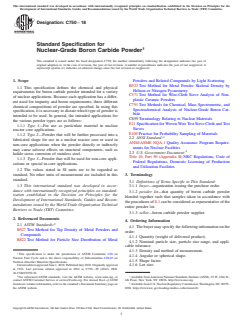
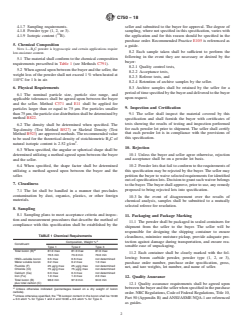


ASTM C750-18 - Standard Specification for Nuclear-Grade Boron Carbide Powder
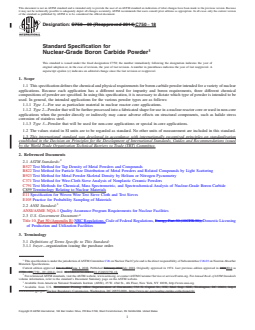
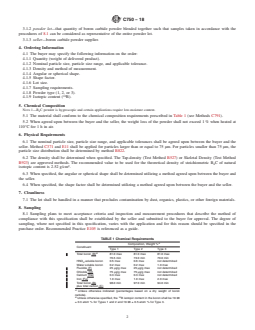


REDLINE ASTM C750-18 - Standard Specification for Nuclear-Grade Boron Carbide Powder
Get Certified
Connect with accredited certification bodies for this standard

DNV
DNV is an independent assurance and risk management provider.

Lloyd's Register
Lloyd's Register is a global professional services organisation specialising in engineering and technology.
DNV Energy Systems
Energy and renewable energy certification.
Sponsored listings
Frequently Asked Questions
ASTM C750-18 is a technical specification published by ASTM International. Its full title is "Standard Specification for Nuclear-Grade Boron Carbide Powder". This standard covers: ABSTRACT This specification defines the chemical and physical requirements for boron carbide powder intended for a variety of nuclear applications. The powder shall be classified as: Type 1; Type 2; and Type 3. The material shall conform to the chemical composition requirements prescribed. Quality control tests, acceptance tests, referee tests, and retention of archive samples by the seller shall be performed to conform to the specified requirements. SCOPE 1.1 This specification defines the chemical and physical requirements for boron carbide powder intended for a variety of nuclear applications. Because each application has a different need for impurity and boron requirements, three different chemical compositions of powder are specified. In using this specification, it is necessary to dictate which type of powder is intended to be used. In general, the intended applications for the various powder types are as follows: 1.1.1 Type 1—For use as particulate material in nuclear reactor core applications. 1.1.2 Type 2—Powder that will be further processed into a fabricated shape for use in a nuclear reactor core or used in non-core applications when the powder directly or indirectly may cause adverse effects on structural components, such as halide stress corrosion of stainless steel. 1.1.3 Type 3—Powder that will be used for non-core applications or special in-core applications. 1.2 The values stated in SI units are to be regarded as standard. No other units of measurement are included in this standard. 1.3 This international standard was developed in accordance with internationally recognized principles on standardization established in the Decision on Principles for the Development of International Standards, Guides and Recommendations issued by the World Trade Organization Technical Barriers to Trade (TBT) Committee.
ABSTRACT This specification defines the chemical and physical requirements for boron carbide powder intended for a variety of nuclear applications. The powder shall be classified as: Type 1; Type 2; and Type 3. The material shall conform to the chemical composition requirements prescribed. Quality control tests, acceptance tests, referee tests, and retention of archive samples by the seller shall be performed to conform to the specified requirements. SCOPE 1.1 This specification defines the chemical and physical requirements for boron carbide powder intended for a variety of nuclear applications. Because each application has a different need for impurity and boron requirements, three different chemical compositions of powder are specified. In using this specification, it is necessary to dictate which type of powder is intended to be used. In general, the intended applications for the various powder types are as follows: 1.1.1 Type 1—For use as particulate material in nuclear reactor core applications. 1.1.2 Type 2—Powder that will be further processed into a fabricated shape for use in a nuclear reactor core or used in non-core applications when the powder directly or indirectly may cause adverse effects on structural components, such as halide stress corrosion of stainless steel. 1.1.3 Type 3—Powder that will be used for non-core applications or special in-core applications. 1.2 The values stated in SI units are to be regarded as standard. No other units of measurement are included in this standard. 1.3 This international standard was developed in accordance with internationally recognized principles on standardization established in the Decision on Principles for the Development of International Standards, Guides and Recommendations issued by the World Trade Organization Technical Barriers to Trade (TBT) Committee.
ASTM C750-18 is classified under the following ICS (International Classification for Standards) categories: 27.120.30 - Fissile materials and nuclear fuel technology; 71.060.50 - Salts. The ICS classification helps identify the subject area and facilitates finding related standards.
ASTM C750-18 has the following relationships with other standards: It is inter standard links to ASTM C750-09(2014), ASTM C371-09(2024), ASTM C859-24, ASTM B923-23, ASTM C371-09(2018), ASTM B923-16, ASTM C371-09(2014), ASTM C859-14a, ASTM B527-14, ASTM C859-14, ASTM E11-13, ASTM C859-13a, ASTM C859-13, ASTM C791-12, ASTM C791-11. Understanding these relationships helps ensure you are using the most current and applicable version of the standard.
ASTM C750-18 is available in PDF format for immediate download after purchase. The document can be added to your cart and obtained through the secure checkout process. Digital delivery ensures instant access to the complete standard document.
Standards Content (Sample)
This international standard was developed in accordance with internationally recognized principles on standardization established in the Decision on Principles for the
Development of International Standards, Guides and Recommendations issued by the World Trade Organization Technical Barriers to Trade (TBT) Committee.
Designation:C750 −18
Standard Specification for
Nuclear-Grade Boron Carbide Powder
This standard is issued under the fixed designation C750; the number immediately following the designation indicates the year of
original adoption or, in the case of revision, the year of last revision. A number in parentheses indicates the year of last reapproval. A
superscript epsilon (´) indicates an editorial change since the last revision or reapproval.
1. Scope Powders and Related Compounds by Light Scattering
B923 Test Method for Metal Powder Skeletal Density by
1.1 This specification defines the chemical and physical
Helium or Nitrogen Pycnometry
requirements for boron carbide powder intended for a variety
C371 Test Method for Wire-Cloth Sieve Analysis of Non-
of nuclear applications. Because each application has a differ-
plastic Ceramic Powders
ent need for impurity and boron requirements, three different
C791 Test Methods for Chemical, Mass Spectrometric, and
chemical compositions of powder are specified. In using this
Spectrochemical Analysis of Nuclear-Grade Boron Car-
specification, it is necessary to dictate which type of powder is
bide
intended to be used. In general, the intended applications for
C859 Terminology Relating to Nuclear Materials
the various powder types are as follows:
E11 Specification for Woven Wire Test Sieve Cloth and Test
1.1.1 Type 1—For use as particulate material in nuclear
Sieves
reactor core applications.
E105 Practice for Probability Sampling of Materials
1.1.2 Type 2—Powder that will be further processed into a
2.2 ANSI Standard:
fabricated shape for use in a nuclear reactor core or used in
ANSI/ASME NQA-1 Quality Assurance Program Require-
non-core applications when the powder directly or indirectly
ments for Nuclear Facilities
may cause adverse effects on structural components, such as
2.3 U.S. Government Document:
halide stress corrosion of stainless steel.
Title 10, Part 50 (Appendix B) NRC Regulations, Code of
1.1.3 Type 3—Powder that will be used for non-core appli-
Federal Regulations, Domestic Licensing of Production
cations or special in-core applications.
and Utilization Facilities
1.2 The values stated in SI units are to be regarded as
standard. No other units of measurement are included in this 3. Terminology
standard.
3.1 Definitions of Terms Specific to This Standard:
1.3 This international standard was developed in accor-
3.1.1 buyer—organization issuing the purchase order.
dance with internationally recognized principles on standard-
3.1.2 powder lot—that quantity of boron carbide powder
ization established in the Decision on Principles for the
blended together such that samples taken in accordance with
Development of International Standards, Guides and Recom-
theproceduresof8.1canbeconsideredasrepresentativeofthe
mendations issued by the World Trade Organization Technical
entire powder lot.
Barriers to Trade (TBT) Committee.
3.1.3 seller—boron carbide powder supplier.
2. Referenced Documents
4. Ordering Information
2.1 ASTM Standards:
4.1 The buyer may specify the following information on the
B527 Test Method for Tap Density of Metal Powders and
order:
Compounds
4.1.1 Quantity (weight of delivered product).
B822 Test Method for Particle Size Distribution of Metal
4.1.2 Nominal particle size, particle size range, and appli-
cable tolerance.
4.1.3 Density and method of measurement.
This specification is under the jurisdiction of ASTM Committee C26 on
4.1.4 Angular or spherical shape.
Nuclear Fuel Cycle and is the direct responsibility of Subcommittee C26.03 on
4.1.5 Shape factor.
Neutron Absorber Materials Specifications.
CurrenteditionapprovedJune1,2018.PublishedJuly2018.Originallyapproved 4.1.6 Lot size.
in 1974. Last previous edition approved in 2014 as C750 – 09 (2014). DOI:
10.1520/C0750-18.
2 3
For referenced ASTM standards, visit the ASTM website, www.astm.org, or Available fromAmerican National Standards Institute (ANSI), 25 W. 43rd St.,
contact ASTM Customer Service at service@astm.org. For Annual Book of ASTM 4th Floor, New York, NY 10036, http://www.ansi.org.
Standards volume information, refer to the standard’s Document Summary page on Available from U.S. Nuclear Regulatory Commission, Washington, DC 20555-
the ASTM website. 0001, https://www.nrc.gov/reading-rm/doc-collections/cfr/.
Copyright © ASTM International, 100 Barr Harbor Drive, PO Box C700, West Conshohocken, PA 19428-2959. United States
C750−18
4.1.7 Sampling requirements. seller and submitted to the buyer for approval. The degree of
4.1.8 Powder type (1, 2, or 3). sampling, where not specified in this specification, varies with
4.1.9 Isotopic content ( B). the application and for this reason should be specified in the
purchase order. Recommended Practice E105 is referenced as
5. Chemical Composition
a guide.
NOTE 1—B C powder is hygroscopic and certain applications require
8.2 Each sample taken shall be sufficient to perform the
low-moisture content.
following in the event they are necessary or desired by the
5.1 The material shall conform to the chemical composition
buyer:
requirements prescribed in Table 1 (see Methods C791).
8.2.1 Quality control tests,
5.2 When agreed upon between the buyer and the seller, the
8.2.2 Acceptance tests,
weight loss of the powder shall
...
This document is not an ASTM standard and is intended only to provide the user of an ASTM standard an indication of what changes have been made to the previous version. Because
it may not be technically possible to adequately depict all changes accurately, ASTM recommends that users consult prior editions as appropriate. In all cases only the current version
of the standard as published by ASTM is to be considered the official document.
Designation: C750 − 09 (Reapproved 2014) C750 − 18
Standard Specification for
Nuclear-Grade Boron Carbide Powder
This standard is issued under the fixed designation C750; the number immediately following the designation indicates the year of
original adoption or, in the case of revision, the year of last revision. A number in parentheses indicates the year of last reapproval. A
superscript epsilon (´) indicates an editorial change since the last revision or reapproval.
1. Scope
1.1 This specification defines the chemical and physical requirements for boron carbide powder intended for a variety of nuclear
applications. Because each application has a different need for impurity and boron requirements, three different chemical
compositions of powder are specified. In using this specification, it is necessary to dictate which type of powder is intended to be
used. In general, the intended applications for the various powder types are as follows:
1.1.1 Type 1—For use as particulate material in nuclear reactor core applications.
1.1.2 Type 2—Powder that will be further processed into a fabricated shape for use in a nuclear reactor core or used in non-core
applications when the powder directly or indirectly may cause adverse effects on structural components, such as halide stress
corrosion of stainless steel.
1.1.3 Type 3—Powder that will be used for non-core applications or special in-core applications.
1.2 The values stated in SI units are to be regarded as standard. No other units of measurement are included in this standard.
1.3 This international standard was developed in accordance with internationally recognized principles on standardization
established in the Decision on Principles for the Development of International Standards, Guides and Recommendations issued
by the World Trade Organization Technical Barriers to Trade (TBT) Committee.
2. Referenced Documents
2.1 ASTM Standards:
B527 Test Method for Tap Density of Metal Powders and Compounds
B822 Test Method for Particle Size Distribution of Metal Powders and Related Compounds by Light Scattering
B923 Test Method for Metal Powder Skeletal Density by Helium or Nitrogen Pycnometry
C371 Test Method for Wire-Cloth Sieve Analysis of Nonplastic Ceramic Powders
C791 Test Methods for Chemical, Mass Spectrometric, and Spectrochemical Analysis of Nuclear-Grade Boron Carbide
C859 Terminology Relating to Nuclear Materials
E11 Specification for Woven Wire Test Sieve Cloth and Test Sieves
E105 Practice for Probability Sampling of Materials
2.2 ANSI Standard:
ANSI/ASME NQA-1 Quality Assurance Program Requirements for Nuclear Facilities
2.3 U.S. Government Document:
Title 10, Part 50 (Appendix B) NRC Regulations, Code of Federal Regulations, Energy Part 50 (10CFR 50), Domestic Licensing
of Production and Utilization Facilities
3. Terminology
3.1 Definitions of Terms Specific to This Standard:
3.1.1 buyer—organization issuing the purchase order.
This specification is under the jurisdiction of ASTM Committee C26 on Nuclear Fuel Cycle and is the direct responsibility of Subcommittee C26.03 on Neutron Absorber
Materials Specifications.
Current edition approved Jan. 1, 2014June 1, 2018. Published February 2014July 2018. Originally approved in 1974. Last previous edition approved in 20092014 as
C750 – 09.C750 – 09 (2014). DOI: 10.1520/C0750-09R14.10.1520/C0750-18.
For referenced ASTM standards, visit the ASTM website, www.astm.org, or contact ASTM Customer Service at service@astm.org. For Annual Book of ASTM Standards
volume information, refer to the standard’s Document Summary page on the ASTM website.
Available from American National Standards Institute (ANSI), 25 W. 43rd St., 4th Floor, New York, NY 10036, http://www.ansi.org.
Available from U.S. Government Printing Office Superintendent of Documents, 732 N. Capitol St., NW, Mail Stop: SDE, Washington, DC 20401, http://
www.access.gpo.gov. Nuclear Regulatory Commission, Washington, DC 20555-0001, https://www.nrc.gov/reading-rm/doc-collections/cfr/.
Copyright © ASTM International, 100 Barr Harbor Drive, PO Box C700, West Conshohocken, PA 19428-2959. United States
C750 − 18
3.1.2 powder lot—that quantity of boron carbide powder blended together such that samples taken in accordance with the
procedures of 8.1 can be considered as representative of the entire powder lot.
3.1.3 seller—boron carbide powder supplier.
4. Ordering Information
4.1 The buyer may specify the following information on the order:
4.1.1 Quantity (weight of delivered product).
4.1.2 Nominal particle size, particle size range, and applicable tolerance.
4.1.3 Density and method of measurement.
4.1.4 Angular or spherical shape.
4.1.5 Shape factor.
4.1.6 Lot size.
4.1.7 Sampling requirements.
4.1.8 Powder type (1, 2, or 3).
4.1.9 Isotopic content ( B).
5. Chemical Composition
NOTE 1—B C powder is hygroscopic and certain applications require low-moisture content.
5.1 The material shall conform to the chemical composition requirements prescribed in Table 1 (see Methods C791).
5.2 When agreed upon between the buyer and the seller, the weight loss of the powder shall not exceed 1 % when heated at
110°C for 1 h in air.
6. Physical Requirements
6.1 The nominal particle size, particle size range, and applicable tolerances shall be agreed upon between the buyer and the
seller. Method C371 and E11 shall be applied for particles larger than or equal
...
Questions, Comments and Discussion
Ask us and Technical Secretary will try to provide an answer. You can facilitate discussion about the standard in here.
Loading comments...