

ASTM C999-17
(Practice)Standard Practice for Soil Sample Preparation for the Determination of Radionuclides
General Information
- Abstract
SIGNIFICANCE AND USE
5.1 Soil samples prepared for radionuclide analyses by this practice can be used to characterize radionuclide constituents. This practice is intended to produce a homogeneous sample from which smaller aliquots may be drawn for radionuclide characterization.
5.2 Many soil characterization plans for radionuclide constituents utilize gamma-ray spectrometry measurements of soil to quantify a number of possible gamma emitting analytes. A widely used practice for these measurements is to fill a calibrated sample container, such as a Marinelli beaker (∼600-mL volume), with a homogenized soil sample for counting such as what may be done using Guide C1402. By preparing the entire soil core collection, sufficient homogeneous sample is available for such gamma-ray spectrometry and other radiochemical measurements.
SCOPE
1.1 This practice covers the preparation of surface soil samples collected for analysis of radionuclide constituents, particularly uranium and plutonium. This practice describes one acceptable approach to the preparation of soil samples for radiochemical analysis.
1.2 The values stated in SI units are to be regarded as standard. The values given in parentheses are for information only.
1.3 This standard does not purport to address all of the safety concerns, if any, associated with its use. It is the responsibility of the user of this standard to establish appropriate safety and health practices and determine the applicability of regulatory limitations prior to use. A specific hazard statement is given in 7.3.
1.4 This international standard was developed in accordance with internationally recognized principles on standardization established in the Decision on Principles for the Development of International Standards, Guides and Recommendations issued by the World Trade Organization Technical Barriers to Trade (TBT) Committee.
- Status
- Published
- Publication Date
- 31-May-2017
- Technical Committee
- C26 - Nuclear Fuel Cycle
- Drafting Committee
- C26.05 - Methods of Test
Buy Documents


ASTM C999-17 - Standard Practice for Soil Sample Preparation for the Determination of Radionuclides
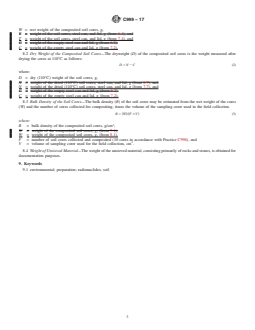
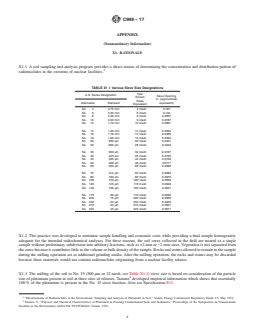
REDLINE ASTM C999-17 - Standard Practice for Soil Sample Preparation for the Determination of Radionuclides
Overview
ASTM C999-17: Standard Practice for Soil Sample Preparation for the Determination of Radionuclides provides a universal approach for the collection and preparation of surface soil samples to support radiochemical analyses of radionuclides. Developed by ASTM International, this standard ensures that soil samples are processed to achieve sufficient homogeneity, enabling reliable measurement of radionuclide constituents, including uranium and plutonium. By following this standard, laboratories, environmental monitoring agencies, and other stakeholders can generate accurate, comparable results crucial for assessing radionuclide presence, fallout distribution, and environmental impact near nuclear facilities.
Key Topics
- Homogenization of Soil Samples: The practice provides clear instructions for composite sampling from surface soil cores to achieve a representative and homogeneous sample suitable for subsequent radiochemical analysis.
- Sample Preparation Steps: Detailed steps include drying, milling, sieving to a 500-μm (No. 35 sieve) particle size, and removal of non-soil components like rocks and vegetation that do not significantly affect radionuclide content.
- Container and Apparatus Guidelines: Recommendations are given for using specified steel or plastic containers, jar mills, ceramic rods or steel balls for milling, and precise procedures for labeling, weighing, and transferring samples.
- Measurement and Calculation: The standard addresses how to determine both wet and dry weights, calculate bulk density, and document the process, ensuring traceability and accuracy.
- Safety and Quality Considerations: Users are advised to follow appropriate health and safety protocols, clean equipment properly to avoid cross-contamination, and observe regulatory restrictions.
Applications
- Environmental Monitoring: Widely used at nuclear facilities and sites affected by radiological events, this standard practice is essential for monitoring radionuclide deposition in the environment and meeting regulatory compliance requirements.
- Gamma-Ray Spectrometry: The homogenized soil sample produced is ideal for gamma-ray spectrometry using calibrated containers like Marinelli beakers, enabling quantification of gamma-emitting radionuclides.
- Radiochemical Analysis: The uniformity achieved by this method allows for accurate preparation of aliquots - small, representative portions of the larger sample - which supports precise laboratory analysis of specific radionuclides, such as uranium and plutonium.
- Soil Characterization Plans: The standard supports soil characterization efforts by regulatory bodies, environmental impact assessors, and nuclear industry operators, ensuring comparability across measurements and sites.
Related Standards
- ASTM C998: Practice for Sampling Surface Soil for Radionuclides - Offers guidance on soil sample collection procedures, serving as a foundational step prior to the sample preparation described in ASTM C999-17.
- ASTM C1402: Guide for High-Resolution Gamma-Ray Spectrometry of Soil Samples - Provides analytical procedures for the measurement phase following soil sample preparation.
- ASTM C859: Terminology Relating to Nuclear Materials - Clarifies relevant definitions used across soil sampling and analysis standards.
- ASTM E11: Specification for Woven Wire Test Sieve Cloth and Test Sieves - Defines requirements for sieve sizes and their use in material classification and sample preparation.
Keywords: ASTM C999-17, soil sample preparation, radionuclide determination, radiochemical analysis, gamma-ray spectrometry, homogenization, environmental monitoring, uranium, plutonium, nuclear facility soil testing.
Relations
- Effective Date
- 01-Jun-2017
- Effective Date
- 01-Jan-2024
- Effective Date
- 01-Jun-2017
- Effective Date
- 15-Jun-2014
- Effective Date
- 15-Jan-2014
- Effective Date
- 01-Oct-2013
- Effective Date
- 01-Jun-2013
- Effective Date
- 01-May-2013
- Effective Date
- 01-Nov-2010
- Effective Date
- 01-Aug-2010
- Effective Date
- 01-Jun-2010
- Effective Date
- 01-Feb-2010
- Refers
ASTM C1402-04(2009) - Standard Guide for High-Resolution Gamma-Ray Spectrometry of Soil Samples - Effective Date
- 01-Jun-2009
- Effective Date
- 01-May-2009
- Effective Date
- 15-Feb-2009
Buy Documents
ASTM C999-17 - Standard Practice for Soil Sample Preparation for the Determination of Radionuclides
REDLINE ASTM C999-17 - Standard Practice for Soil Sample Preparation for the Determination of Radionuclides
Get Certified
Connect with accredited certification bodies for this standard

CIS Institut d.o.o.
Personal Protective Equipment (PPE) certification body. Notified Body NB-2890 for EU Regulation 2016/425 PPE.

Kiwa BDA Testing
Building and construction product certification.
Kmetijski inštitut Slovenije
Agricultural Institute of Slovenia. Soil testing, plant health, agricultural product analysis.
Sponsored listings
Frequently Asked Questions
ASTM C999-17 is a standard published by ASTM International. Its full title is "Standard Practice for Soil Sample Preparation for the Determination of Radionuclides". This standard covers: SIGNIFICANCE AND USE 5.1 Soil samples prepared for radionuclide analyses by this practice can be used to characterize radionuclide constituents. This practice is intended to produce a homogeneous sample from which smaller aliquots may be drawn for radionuclide characterization. 5.2 Many soil characterization plans for radionuclide constituents utilize gamma-ray spectrometry measurements of soil to quantify a number of possible gamma emitting analytes. A widely used practice for these measurements is to fill a calibrated sample container, such as a Marinelli beaker (∼600-mL volume), with a homogenized soil sample for counting such as what may be done using Guide C1402. By preparing the entire soil core collection, sufficient homogeneous sample is available for such gamma-ray spectrometry and other radiochemical measurements. SCOPE 1.1 This practice covers the preparation of surface soil samples collected for analysis of radionuclide constituents, particularly uranium and plutonium. This practice describes one acceptable approach to the preparation of soil samples for radiochemical analysis. 1.2 The values stated in SI units are to be regarded as standard. The values given in parentheses are for information only. 1.3 This standard does not purport to address all of the safety concerns, if any, associated with its use. It is the responsibility of the user of this standard to establish appropriate safety and health practices and determine the applicability of regulatory limitations prior to use. A specific hazard statement is given in 7.3. 1.4 This international standard was developed in accordance with internationally recognized principles on standardization established in the Decision on Principles for the Development of International Standards, Guides and Recommendations issued by the World Trade Organization Technical Barriers to Trade (TBT) Committee.
SIGNIFICANCE AND USE 5.1 Soil samples prepared for radionuclide analyses by this practice can be used to characterize radionuclide constituents. This practice is intended to produce a homogeneous sample from which smaller aliquots may be drawn for radionuclide characterization. 5.2 Many soil characterization plans for radionuclide constituents utilize gamma-ray spectrometry measurements of soil to quantify a number of possible gamma emitting analytes. A widely used practice for these measurements is to fill a calibrated sample container, such as a Marinelli beaker (∼600-mL volume), with a homogenized soil sample for counting such as what may be done using Guide C1402. By preparing the entire soil core collection, sufficient homogeneous sample is available for such gamma-ray spectrometry and other radiochemical measurements. SCOPE 1.1 This practice covers the preparation of surface soil samples collected for analysis of radionuclide constituents, particularly uranium and plutonium. This practice describes one acceptable approach to the preparation of soil samples for radiochemical analysis. 1.2 The values stated in SI units are to be regarded as standard. The values given in parentheses are for information only. 1.3 This standard does not purport to address all of the safety concerns, if any, associated with its use. It is the responsibility of the user of this standard to establish appropriate safety and health practices and determine the applicability of regulatory limitations prior to use. A specific hazard statement is given in 7.3. 1.4 This international standard was developed in accordance with internationally recognized principles on standardization established in the Decision on Principles for the Development of International Standards, Guides and Recommendations issued by the World Trade Organization Technical Barriers to Trade (TBT) Committee.
ASTM C999-17 is classified under the following ICS (International Classification for Standards) categories: 13.080.05 - Examination of soils in general. The ICS classification helps identify the subject area and facilitates finding related standards.
ASTM C999-17 has the following relationships with other standards: It is inter standard links to ASTM C999-05(2010)e1, ASTM C859-24, ASTM C998-17, ASTM C859-14a, ASTM C859-14, ASTM E11-13, ASTM C859-13a, ASTM C859-13, ASTM C859-10b, ASTM C859-10a, ASTM C998-05(2010)e1, ASTM C859-10, ASTM C1402-04(2009), ASTM E11-09e1, ASTM C859-09. Understanding these relationships helps ensure you are using the most current and applicable version of the standard.
ASTM C999-17 is available in PDF format for immediate download after purchase. The document can be added to your cart and obtained through the secure checkout process. Digital delivery ensures instant access to the complete standard document.
Standards Content (Sample)
This international standard was developed in accordance with internationally recognized principles on standardization established in the Decision on Principles for the
Development of International Standards, Guides and Recommendations issued by the World Trade Organization Technical Barriers to Trade (TBT) Committee.
Designation: C999 − 17
Standard Practice for
Soil Sample Preparation for the Determination of
Radionuclides
This standard is issued under the fixed designation C999; the number immediately following the designation indicates the year of
original adoption or, in the case of revision, the year of last revision.Anumber in parentheses indicates the year of last reapproval.A
superscript epsilon (´) indicates an editorial change since the last revision or reapproval.
1. Scope 3. Terminology
3.1 Except as otherwise defined herein, definitions of terms
1.1 This practice covers the preparation of surface soil
are as given in Terminology C859.
samples collected for analysis of radionuclide constituents,
particularly uranium and plutonium. This practice describes
4. Summary of Practice
one acceptable approach to the preparation of soil samples for
radiochemical analysis.
4.1 Guidance is provided for the preparation of a homoge-
neous soil sample from ten composited core samples (aggre-
1.2 The values stated in SI units are to be regarded as
gateweightof4to5kg)collectedastoberepresentativeofthe
standard. The values given in parentheses are for information
area.
only.
1.3 This standard does not purport to address all of the
5. Significance and Use
safety concerns, if any, associated with its use. It is the
5.1 Soil samples prepared for radionuclide analyses by this
responsibility of the user of this standard to establish appro-
practice can be used to characterize radionuclide constituents.
priate safety and health practices and determine the applica-
This practice is intended to produce a homogeneous sample
bility of regulatory limitations prior to use. A specific hazard
from which smaller aliquots may be drawn for radionuclide
statement is given in 7.3.
characterization.
1.4 This international standard was developed in accor-
dance with internationally recognized principles on standard-
5.2 Many soil characterization plans for radionuclide con-
ization established in the Decision on Principles for the
stituents utilize gamma-ray spectrometry measurements of soil
Development of International Standards, Guides and Recom-
to quantify a number of possible gamma emitting analytes. A
mendations issued by the World Trade Organization Technical
widely used practice for these measurements is to fill a
Barriers to Trade (TBT) Committee.
calibrated sample container, such as a Marinelli beaker
(;600-mL volume), with a homogenized soil sample for
2. Referenced Documents counting such as what may be done using Guide C1402.By
preparing the entire soil core collection, sufficient homoge-
2.1 ASTM Standards:
neous sample is available for such gamma-ray spectrometry
C859Terminology Relating to Nuclear Materials
and other radiochemical measurements.
C998Practice for Sampling Surface Soil for Radionuclides
C1402Guide for High-Resolution Gamma-Ray Spectrom-
6. Apparatus
etry of Soil Samples
E11Specification forWovenWireTest Sieve Cloth andTest 6.1 Scale, capacity of 10 kg.
Sieves
6.2 Drying Oven, able to maintain 62°C.
6.3 Pans, disposable aluminum.
This practice is under the jurisdiction of ASTM Committee C26 on Nuclear
6.4 Jar Mill, capacity for 7.57-L (2-gal) cans.
Fuel Cycleand is the direct responsibility of Subcommittee C26.05 on Methods of
Test.
6.5 Steel Cans and Lids, 7.57-L (2-gal).
CurrenteditionapprovedJune1,2017.PublishedJuly2017.Originallyapproved
ɛ1 13 13
in 1983. Last previous edition approved in 2010 as C999–05 (2010) . DOI: 6.6 Ceramic Rods, 21 by 21-mm ( ⁄16 by ⁄16-in.) or steel
10.1520/C0999-17.
grinding balls, 25.4-mm (1-in.) diameter.
For referenced ASTM standards, visit the ASTM website, www.astm.org, or
contact ASTM Customer Service at service@astm.org. For Annual Book of ASTM
6.7 Sieve, U.S. Series No. 35 (500-µm or 32 mesh).
Standards volume information, refer to the standard’s Document Summary page on
the ASTM website. 6.8 Plastic Bottles, 7.57-L (2-gal).
Copyright © ASTM International, 100 Barr Harbor Drive, PO Box C700, West Conshohocken, PA 19428-2959. United States
C999 − 17
7. Procedure quired.) (Caution—The ceramic or steel grinding media and
thesievemustbecleanedthoroughlypriortoreusetoeliminate
7.1 Label a cleaned 7.57-L (2–gal) steel can and lid with a
the possibility of cross-contamination of samples.)
unique laboratory code number.
7.20 Remove a suitable aliquot of the sample from the jar
7.2 Weigh the labeled steel can and lid. Record the weight.
for radiochemical analysis using for example Guide C1402.
7.3 Transfer the ten soil cores (including vegetation) from
7.21 Cap the sample jar tightly.Wash and dry the outside of
thefieldcollectioncontainers,suchasmayhavebeencollected
the container prior to storage.
usingPracticeC998,intothelabeled,preweighedsteelcan.Do
not pack the can full. Place the steel lid loosely on the can.
8. Calculation
(Warning—Wearglovesthroughoutthepreparationprocedure
8.1 Wet Weight of the Composited Soil Cores—The wet
to minimize the possibility of fungus infection.)
weight(W)ofthecompositedsoilcoresistheweightmeasured
7.4 Weigh the sample cores, steel can, and lid to 650 g.
prior to oven-drying the cores as follows:
Record the weight.
W 5 T 2 C (1)
7.5 Remove the lid and place the sample in a 110°C drying
oven for 24 h or longer, depending on the depth of soil in the where:
can, until the sample has reached constant weight.
W = wet weight of the composited soil cores, g,
T = weightofthesoilcores,steelcan,andlid,g(from7.4),
7.6 Remove the sample from the oven, cap the can with its
and
lid, and cool to room temperature.
C = weight of the empty steel can and lid, g (from 7.2).
7.7 Weigh the dried sample cores, steel can, and lid to 650
8.2 Dry Weight of the Composited Soil Cores—The dry-
g. Record the weight.
weight(D)ofthecompositedsoilcoresistheweightmeasured
7.8 Remove the can lid and add 10 to 12 ceramic rods (21
after drying the cores at 110°C as follo
...
This document is not an ASTM standard and is intended only to provide the user of an ASTM standard an indication of what changes have been made to the previous version. Because
it may not be technically possible to adequately depict all changes accurately, ASTM recommends that users consult prior editions as appropriate. In all cases only the current version
of the standard as published by ASTM is to be considered the official document.
´1
Designation: C999 − 05 (Reapproved 2010) C999 − 17
Standard Practice for
Soil Sample Preparation for the Determination of
Radionuclides
This standard is issued under the fixed designation C999; the number immediately following the designation indicates the year of
original adoption or, in the case of revision, the year of last revision. A number in parentheses indicates the year of last reapproval. A
superscript epsilon (´) indicates an editorial change since the last revision or reapproval.
ε NOTE—Editorial changes were made throughout in June 2010.
1. Scope
1.1 This practice covers the preparation of surface soil samples collected for chemical analysis of radionuclides, radionuclide
constituents, particularly uranium and plutonium. This practice describes one acceptable approach to the preparation of soil
samples for radiochemical analysis.
1.2 The values stated in SI units are to be regarded as standard. The values given in parentheses are for information only.
1.3 This standard does not purport to address all of the safety concerns, if any, associated with its use. It is the responsibility
of the user of this standard to establish appropriate safety and health practices and determine the applicability of regulatory
limitations prior to use. A specific hazard statement is given in 6.37.3.
1.4 This international standard was developed in accordance with internationally recognized principles on standardization
established in the Decision on Principles for the Development of International Standards, Guides and Recommendations issued
by the World Trade Organization Technical Barriers to Trade (TBT) Committee.
2. Referenced Documents
2.1 ASTM Standards:
C859 Terminology Relating to Nuclear Materials
C998 Practice for Sampling Surface Soil for Radionuclides
C1402 Guide for High-Resolution Gamma-Ray Spectrometry of Soil Samples
E11 Specification for Woven Wire Test Sieve Cloth and Test Sieves
3. Terminology
3.1 Except as otherwise defined herein, definitions of terms are as given in Terminology C859.
4. Summary of Practice
4.1 Guidance is provided for the preparation of a homogeneous soil sample from ten composited core samples (aggregate weight
of 4 to 5 kg) collected as to be representative of the area.
5. Significance and Use
5.1 Soil samples prepared for radionuclide analyses by this practice can be used to monitor fallout distribution from nuclear
facilities. characterize radionuclide constituents. This practice is intended to produce a homogeneous sample from which a
relatively small aliquot (10 g) smaller aliquots may be drawn for radiochemical analyses.radionuclide characterization.
5.2 Most nuclear facilities fulfill major requirements of their monitoring programs by Many soil characterization plans for
radionuclide constituents utilize gamma-ray spectrometry measurements of soil. soil to quantify a number of possible gamma
emitting analytes. A widely used practice for these measurements is to fill a calibrated sample container, such as a Marinelli beaker
(;600-mL volume), with a homogenized soil sample. sample for counting such as what may be done using Guide C1402. By
This practice is under the jurisdiction of ASTM Committee C26 on Nuclear Fuel Cycleand is the direct responsibility of Subcommittee C26.05 on Methods of Test.
Current edition approved June 1, 2010June 1, 2017. Published June 2010July 2017. Originally approved in 1983. Last previous edition approved in 20052010 as
ɛ1
C999 – 05.C999 – 05 (2010) . DOI: 10.1520/C0999-05R10E01.10.1520/C0999-17.
For referenced ASTM standards, visit the ASTM website, www.astm.org, or contact ASTM Customer Service at service@astm.org. For Annual Book of ASTM Standards
volume information, refer to the standard’s Document Summary page on the ASTM website.
Copyright © ASTM International, 100 Barr Harbor Drive, PO Box C700, West Conshohocken, PA 19428-2959. United States
C999 − 17
preparing the entire soil core collection, sufficient homogeneous sample is available for radiochemical and such gamma-ray
spectrometry and other radiochemical measurements.
6. Apparatus
6.1 Scale, capacity of 10 kg.
6.2 Drying Oven, able to maintain 62°C.
6.3 Pans, disposable aluminum.
6.4 Jar Mill, capacity for 7.57-L (2-gal) cans.
6.5 Steel Cans and Lids, 7.57-L (2-gal).
13 13
6.6 Ceramic Rods, 21 by 21-mm ( ⁄16 by ⁄16-in.) or steel grinding balls, 25.4-mm (1-in.) diameter.
6.7 Sieve, U.S. Series No. 35 (500-μm or 32 mesh).
6.8 Plastic Bottles, 7.57-L (2-gal).
7. Procedure
7.1 Label a cleaned 7.57-L (2–gal) steel can and lid with a unique laboratory code number.
7.2 Weigh the labeled steel can and lid. Record the weight.
7.3 Transfer the ten soil cores (including vegetation) from the field collection containers containers, such as may have been
collected using Practice C998, into the labeled, preweighed steel can. Do not pack the can full. Place the steel lid loosely on the
can. (Warning—Wear gloves throughout the preparation procedure to minimize the possibility of fungus infection.)
7.4 Weigh the sample cores, steel can, and lid to 650 g. Record the weight.
7.5 Remove the lid and place the sample in a 110°C drying oven for 24 h or longer, depending on the depth of soil in the can,
until the sample has reached constant weight.
7.6 Remove the sample from the oven, cap the can with its lid, and cool to room temperature.
7.7 Weigh the dried sample cores, steel can, and lid to 650 g. Record the weight.
7.8 Remove the can lid and add 10 to 12 ceramic rods (21 by 21-mm) or steel balls (25.4–mm diameter) to the can.
7.9 Replace the lid and tightly seal the sample can.
7.10 Place the sample can on a jar mill for at least 4 h, or overnight if possible, at 30 r/min.
7.11 Remove the sample can from the mill and place in a hood.
7.12 Allow the sample to settle for a few minutes.
7.13 Label a 7.57-L (2-gal) plastic jar and cap with the laboratory code number of the sample.
7.14 Remove the lid from the sample can and transfer a portion of the sample to a U.S. Series No. 35 (500-μm or 32 mesh)
sieve.
7.15 Sieve the sample and transfer the sieved fraction to the prelabeled plastic jar.
7.16 Repeat the sieving and transfer steps until the entire sample has been processed.
7.17 Remove the ceramic rods or steel balls from the unsieved material.
7.18 Place the unsieved material in the can and replace the lid.
7.1
...