

ASTM F1927-20
(Test Method)Standard Test Method for Determination of Oxygen Gas Transmission Rate, Permeability and Permeance at Controlled Relative Humidity Through Barrier Materials Using a Coulometric Detector
General Information
- Abstract
SIGNIFICANCE AND USE
5.1 O2GTR at a given temperature and %RH is an important determinant of the packaging protection afforded by barrier materials. It is not, however the sole determinant, and additional tests, based on experience, must be used to correlate packaging performance with O2GTR. It is suitable as a referee method of testing, provided that purchaser and seller have agreed on sampling procedures, standardization procedures, test conditions and acceptance criteria.
SCOPE
1.1 This test method covers a procedure for determination of the rate of transmission of oxygen gas, at steady-state, at a given temperature and %RH level, through film, sheeting, laminates, co-extrusions, or plastic-coated papers or fabrics. This test method extends the common practice dealing with zero humidity or, at best, an assumed humidity. Humidity plays an important role in the oxygen gas transmission rate (O2GTR) of many materials. This test method provides for the determination of oxygen gas transmission rate (O2GTR), the permeance of the film to oxygen gas (PO2), the permeation coefficient of the film to its thickness (P”O2), and oxygen permeability coefficient (PʹO2) in the case of homogeneous materials at given temperature and %RH level(s).
1.2 The values stated in SI units are to be regarded as the standard.
1.3 This standard does not purport to address all of the safety concerns, if any, associated with its use. It is the responsibility of the user of this standard to establish appropriate safety, health, and environmental practices and determine the applicability of regulatory limitations prior to use. Specific precautionary statements are given in Section 9.
1.4 This international standard was developed in accordance with internationally recognized principles on standardization established in the Decision on Principles for the Development of International Standards, Guides and Recommendations issued by the World Trade Organization Technical Barriers to Trade (TBT) Committee.
- Status
- Published
- Publication Date
- 31-May-2020
- Technical Committee
- F02 - Primary Barrier Packaging
- Drafting Committee
- F02.10 - Permeation
Buy Documents
ASTM F1927-20 - Standard Test Method for Determination of Oxygen Gas Transmission Rate, Permeability and Permeance at Controlled Relative Humidity Through Barrier Materials Using a Coulometric Detector
REDLINE ASTM F1927-20 - Standard Test Method for Determination of Oxygen Gas Transmission Rate, Permeability and Permeance at Controlled Relative Humidity Through Barrier Materials Using a Coulometric Detector
Overview
ASTM F1927-20: Standard Test Method for Determination of Oxygen Gas Transmission Rate, Permeability and Permeance at Controlled Relative Humidity Through Barrier Materials Using a Coulometric Detector is a key international standard established by ASTM International. It outlines a robust test method for accurately measuring the oxygen gas transmission rate (O₂GTR), permeability, and permeance of barrier materials-including films, sheeting, laminates, co-extrusions, and plastic-coated papers or fabrics-under controlled relative humidity (RH) and temperature conditions. By using a coulometric detector, this test simulates real-world scenarios where humidity significantly impacts the protective properties of packaging barriers.
Key Topics
- Oxygen Transmission Rate (O₂GTR): Defines the rate at which oxygen passes through a barrier material at specific temperature and RH.
- Permeance and Permeability: Provides measurements both for overall materials and specifically for homogeneous substances.
- Controlled Relative Humidity: Enhances accuracy by accounting for the critical impact of environmental humidity on material performance, moving beyond prior zero or assumed humidity test conditions.
- Testing Materials: Suitable for a wide range of packaging materials such as flexible films, laminates, and coated papers.
- Coulometric Detection: Utilizes an oxygen-sensitive coulometric sensor for direct measurement, increasing precision.
- Test Conditions & Calibration: Emphasizes the importance of standardized conditions, temperature control, specimen preparation, equipment calibration, and the need to report test parameters consistently.
- Interferences: Highlights the need to minimize the presence of substances like chlorine and oxidizers in the carrier gas to avoid measurement errors.
Applications
ASTM F1927-20 is essential for industries focused on packaging protection for perishable products, especially in food, pharmaceuticals, and medical device manufacturing. Its practical value lies in:
- Quality Control: Verifying the effectiveness of oxygen barrier materials, ensuring product shelf life and safety.
- Research & Development: Comparing new materials or coatings for improved oxygen resistance.
- Regulatory Compliance: Meeting global packaging standards by using an internationally recognized referee method.
- Buyer-Seller Agreement: Serving as an agreed-upon reference method when evaluating packaging suitability, as long as both parties agree on sampling and acceptance criteria.
- Material Comparison: Comparing the barrier properties of various films and coatings under realistic humidity conditions to select optimal packaging solutions.
Related Standards
To ensure comprehensive understanding and proper test execution, ASTM F1927-20 references or aligns with several related ASTM standards:
- ASTM D3985: Test Method for Oxygen Gas Transmission Rate Through Plastic Film and Sheeting Using a Coulometric Sensor
- ASTM E104: Practice for Maintaining Constant Relative Humidity by Means of Aqueous Solutions
- ASTM E691: Practice for Conducting an Interlaboratory Study to Determine the Precision of a Test Method
These standards support activities such as sample preparation, maintenance of constant RH environments, and the establishment of precision and reproducibility.
By implementing ASTM F1927-20, manufacturers, researchers, and quality assurance professionals ensure robust assessment of oxygen barrier properties. This results in improved product protection, optimized material selection, and compliance with internationally recognized packaging performance benchmarks.
Relations
- Effective Date
- 01-Jun-2020
- Effective Date
- 01-May-2013
- Effective Date
- 01-Apr-2012
- Effective Date
- 01-Nov-2011
- Effective Date
- 01-Oct-2010
- Effective Date
- 01-Oct-2008
- Effective Date
- 01-Oct-2007
- Effective Date
- 01-Nov-2005
- Effective Date
- 01-Jun-2005
- Effective Date
- 10-Oct-2002
- Effective Date
- 10-May-2002
- Effective Date
- 10-May-2001
- Effective Date
- 10-May-1999
- Effective Date
- 01-Jan-1996
- Effective Date
- 01-Jun-2020
Buy Documents
ASTM F1927-20 - Standard Test Method for Determination of Oxygen Gas Transmission Rate, Permeability and Permeance at Controlled Relative Humidity Through Barrier Materials Using a Coulometric Detector
REDLINE ASTM F1927-20 - Standard Test Method for Determination of Oxygen Gas Transmission Rate, Permeability and Permeance at Controlled Relative Humidity Through Barrier Materials Using a Coulometric Detector
Get Certified
Connect with accredited certification bodies for this standard

DIN CERTCO
DIN Group product certification.

Smithers Quality Assessments
US management systems and product certification.
Sponsored listings
Frequently Asked Questions
ASTM F1927-20 is a standard published by ASTM International. Its full title is "Standard Test Method for Determination of Oxygen Gas Transmission Rate, Permeability and Permeance at Controlled Relative Humidity Through Barrier Materials Using a Coulometric Detector". This standard covers: SIGNIFICANCE AND USE 5.1 O2GTR at a given temperature and %RH is an important determinant of the packaging protection afforded by barrier materials. It is not, however the sole determinant, and additional tests, based on experience, must be used to correlate packaging performance with O2GTR. It is suitable as a referee method of testing, provided that purchaser and seller have agreed on sampling procedures, standardization procedures, test conditions and acceptance criteria. SCOPE 1.1 This test method covers a procedure for determination of the rate of transmission of oxygen gas, at steady-state, at a given temperature and %RH level, through film, sheeting, laminates, co-extrusions, or plastic-coated papers or fabrics. This test method extends the common practice dealing with zero humidity or, at best, an assumed humidity. Humidity plays an important role in the oxygen gas transmission rate (O2GTR) of many materials. This test method provides for the determination of oxygen gas transmission rate (O2GTR), the permeance of the film to oxygen gas (PO2), the permeation coefficient of the film to its thickness (P”O2), and oxygen permeability coefficient (PʹO2) in the case of homogeneous materials at given temperature and %RH level(s). 1.2 The values stated in SI units are to be regarded as the standard. 1.3 This standard does not purport to address all of the safety concerns, if any, associated with its use. It is the responsibility of the user of this standard to establish appropriate safety, health, and environmental practices and determine the applicability of regulatory limitations prior to use. Specific precautionary statements are given in Section 9. 1.4 This international standard was developed in accordance with internationally recognized principles on standardization established in the Decision on Principles for the Development of International Standards, Guides and Recommendations issued by the World Trade Organization Technical Barriers to Trade (TBT) Committee.
SIGNIFICANCE AND USE 5.1 O2GTR at a given temperature and %RH is an important determinant of the packaging protection afforded by barrier materials. It is not, however the sole determinant, and additional tests, based on experience, must be used to correlate packaging performance with O2GTR. It is suitable as a referee method of testing, provided that purchaser and seller have agreed on sampling procedures, standardization procedures, test conditions and acceptance criteria. SCOPE 1.1 This test method covers a procedure for determination of the rate of transmission of oxygen gas, at steady-state, at a given temperature and %RH level, through film, sheeting, laminates, co-extrusions, or plastic-coated papers or fabrics. This test method extends the common practice dealing with zero humidity or, at best, an assumed humidity. Humidity plays an important role in the oxygen gas transmission rate (O2GTR) of many materials. This test method provides for the determination of oxygen gas transmission rate (O2GTR), the permeance of the film to oxygen gas (PO2), the permeation coefficient of the film to its thickness (P”O2), and oxygen permeability coefficient (PʹO2) in the case of homogeneous materials at given temperature and %RH level(s). 1.2 The values stated in SI units are to be regarded as the standard. 1.3 This standard does not purport to address all of the safety concerns, if any, associated with its use. It is the responsibility of the user of this standard to establish appropriate safety, health, and environmental practices and determine the applicability of regulatory limitations prior to use. Specific precautionary statements are given in Section 9. 1.4 This international standard was developed in accordance with internationally recognized principles on standardization established in the Decision on Principles for the Development of International Standards, Guides and Recommendations issued by the World Trade Organization Technical Barriers to Trade (TBT) Committee.
ASTM F1927-20 is classified under the following ICS (International Classification for Standards) categories: 83.140.01 - Rubber and plastics products in general. The ICS classification helps identify the subject area and facilitates finding related standards.
ASTM F1927-20 has the following relationships with other standards: It is inter standard links to ASTM F1927-14, ASTM E691-13, ASTM E104-02(2012), ASTM E691-11, ASTM D3985-05(2010)e1, ASTM E691-08, ASTM E104-02(2007), ASTM E691-05, ASTM D3985-05, ASTM E104-02, ASTM D3985-02e1, ASTM D3985-02, ASTM E691-99, ASTM E104-85(1996), ASTM D3985-17. Understanding these relationships helps ensure you are using the most current and applicable version of the standard.
ASTM F1927-20 is available in PDF format for immediate download after purchase. The document can be added to your cart and obtained through the secure checkout process. Digital delivery ensures instant access to the complete standard document.
Standards Content (Sample)
This international standard was developed in accordance with internationally recognized principles on standardization established in the Decision on Principles for the
Development of International Standards, Guides and Recommendations issued by the World Trade Organization Technical Barriers to Trade (TBT) Committee.
Designation: F1927 − 20
Standard Test Method for
Determination of Oxygen Gas Transmission Rate,
Permeability and Permeance at Controlled Relative Humidity
Through Barrier Materials Using a Coulometric Detector
This standard is issued under the fixed designation F1927; the number immediately following the designation indicates the year of
original adoption or, in the case of revision, the year of last revision.Anumber in parentheses indicates the year of last reapproval.A
superscript epsilon (´) indicates an editorial change since the last revision or reapproval.
1. Scope D3985Test Method for Oxygen Gas Transmission Rate
Through Plastic Film and Sheeting Using a Coulometric
1.1 This test method covers a procedure for determination
Sensor
of the rate of transmission of oxygen gas, at steady-state, at a
E104Practice for Maintaining Constant Relative Humidity
given temperature and %RH level, through film, sheeting,
by Means of Aqueous Solutions
laminates, co-extrusions, or plastic-coated papers or fabrics.
E691Practice for Conducting an Interlaboratory Study to
This test method extends the common practice dealing with
Determine the Precision of a Test Method
zerohumidityor,atbest,anassumedhumidity.Humidityplays
animportantroleintheoxygengastransmissionrate(O GTR)
3. Terminology
of many materials. This test method provides for the determi-
nation of oxygen gas transmission rate (O GTR), the per-
3.1 Definitions:
meance of the film to oxygen gas (PO ), the permeation 3.1.1 oxygen permeability coeffıcient(PʹO )—theproductof
coefficient of the film to its thickness (P”O ), and oxygen
the permeance and the thickness of the film. The permeability
permeability coefficient (PʹO ) in the case of homogeneous is meaningful only for homogeneous materials, in which case
materials at given temperature and %RH level(s).
itisapropertycharacteristicofthebulkmaterial.Thisquantity
should not be used unless the relationship between thickness
1.2 The values stated in SI units are to be regarded as the
andpermeancehasbeenverifiedontestsusingseveraldifferent
standard.
thicknessesofthematerial.TheSIunitofoxygenpermeability
1.3 This standard does not purport to address all of the
is the mol/(m·s·Pa). The test conditions (see 3.1.4) must be
safety concerns, if any, associated with its use. It is the
stated.
responsibility of the user of this standard to establish appro-
3.1.2 oxygen permeance (PO )—the ratio of O GTR to the
2 2
priate safety, health, and environmental practices and deter-
difference between the partial pressure of O on the two sides
mine the applicability of regulatory limitations prior to use.
of the film. The SI unit of permeance is the mol/(m ·s·Pa).
Specific precautionary statements are given in Section 9.
The test conditions (see 3.1.4) must be stated.
1.4 This international standard was developed in accor-
3.1.3 oxygen permeation coeffıcient (P”O )—the ratio of
dance with internationally recognized principles on standard-
O GTR to the thickness of the film. The SI unit of permeance
ization established in the Decision on Principles for the
is the mol/(m ·s·cm). The permeation coefficient is mean-
Development of International Standards, Guides and Recom-
ingful only for homogeneous materials, in which case it is a
mendations issued by the World Trade Organization Technical
property characteristic of the bulk material. This quantity
Barriers to Trade (TBT) Committee.
should not be used unless the relationship between thickness
and transmission rate is known.
2. Referenced Documents
3.1.4 oxygen transmission rate—at a given temperature and
2.1 ASTM Standards:
%RH (O GTR), the quantity of oxygen gas passing through a
unit area of the parallel surfaces of a plastic film per unit time
This test method is under the jurisdiction ofASTM Committee F02 on Primary under the conditions of test. The SI unit of transmission rate is
Barrier Packaging and is the direct responsibility of Subcommittee F02.10 on
the mol/(m ·s). The test conditions, including temperature,
Permeation.
%RH and oxygen partial pressure on both sides of the film
CurrenteditionapprovedJune1,2020.PublishedJuly2020.Originallyapproved
must be stated.
in 1998. Last previous edition approved in 2014 as F1927–14. DOI: 10.1520/
F1927-20.
3.1.5 transmission rate(O GTR)—acommonlyusedmetric
For referenced ASTM standards, visit the ASTM website, www.astm.org, or 3 2
unit of O GTR is the cm (STP)/(m ·d) at one atmosphere
contact ASTM Customer Service at service@astm.org. For Annual Book of ASTM
pressuredifferentialwhere:1cm atStandardTemperatureand
Standards volume information, refer to the standard’s Document Summary page on
the ASTM website. Pressure (STP = 273.15K; 1.013 × 10 Pa) is 44.62 µmol and
Copyright © ASTM International, 100 Barr Harbor Drive, PO Box C700, West Conshohocken, PA 19428-2959. United States
F1927 − 20
one day is 86.4×10 s. O GTR in SI units is obtained by agreed on sampling procedures, standardization procedures,
-10
multiplying the value in metric units by 5.165×10 or the test conditions and acceptance criteria.
3 2
value in inch-pound units [(cm (STP)/100 in. · d)] by
6. Interferences
-9
8.005×10 .
6.1 The presence of certain interfering substances in the
4. Summary of Test Method carrier gas stream may give rise to unwanted electrical outputs
and error factors. Interfering substances include free chlorine
4.1 Theoxygengastransmissionrateisdeterminedafterthe
and some strong oxidizing agents. Exposure to carbon dioxide
sample has equilibrated in a given temperature and humidity
should also be minimized to avoid damage to the sensor
environment.
through reaction with the potassium hydroxide electrolyte.
4.2 The specimen is mounted as a sealed semi-barrier
7. Apparatus
between two chambers at ambient atmospheric pressure. One
chamber is slowly purged by a stream of nitrogen at a given
7.1 Oxygen Gas Transmission Apparatus, as diagramed in
temperature and %RH and the other chamber is purged by a
Fig. 1 and described following.Alternative systems need to be
stream of oxygen at the same temperature as the N stream but
evaluated to ensure equivalent performance.
may have a different %RH than the N stream. In this case the
7.1.1 Diffusion Cell, consisting of two metal halves, that,
environment would more closely simulate actual shelf condi-
when closed upon the test specimen, will accurately define a
tions. As oxygen gas permeates through the film into the
circular area. Typical acceptable diffusion cell areas are 100
nitrogen carrier gas, it is transported to the coulometric
and 50 cm . The volume enclosed by each cell half, when
detector where it produces an electrical current, the magnitude
clamped, is not critical: it should be small enough to allow for
of which is proportional to the amount of oxygen flowing into
rapid gas exchange, but not so small that an unsupported film
the detector per unit time.
whichhappenstosagorbulgewillcontactthesidesofthecell.
The diffusion cell shall be provided with a temperature
5. Significance and Use
measuring and controlling capability and a means to measure
5.1 O GTRatagiventemperatureand%RHisanimportant
and control relative humidity.
determinant of the packaging protection afforded by barrier 7.1.1.1 Temperature control is critical because RH can vary
materials. It is not, however the sole determinant, and addi- as much as 5% RH/°C in certain temperature regions. A
tional tests, based on experience, must be used to correlate compact design of the diffusion cell structure with associated
packaging performance with O GTR. It is suitable as a referee controls would lend itself to better temperature control. The
method of testing, provided that purchaser and seller have temperature should be controlled to 60.5°C or better.
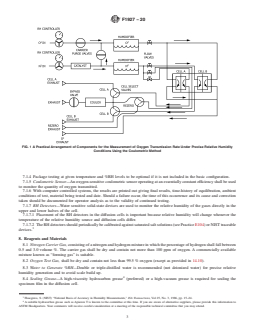
FIG. 1 A Practical Arrangement of Components for the Measurement of Oxygen Transmission Rate Under Precise Relative Humidity
Conditions Using the Coulometric Method
F1927 − 20
7.1.1.2 O-Ring—An appropriately sized groove, machined 8. Reagents and Materials
into the oxygen (or test gas) side of the diffusion cell, retains a
8.1 Nitrogen Carrier Gas, consisting of a nitrogen and
neoprene O-ring. The test area is considered to be that area
hydrogen mixture in which the percentage of hydrogen shall
established by the inside contact diameter of the compressed
fallbetween0.5and3.0volume%.Thecarriergasshallbedry
O-ring when the diffusion cell is clamped shut against the test
andcontainnotmorethan100ppmofoxygen.Acommercially
specimen.Thearea,A,canbeobtainedbymeasuringtheinside
available mixture known as “forming gas” is suitable.
diameteroftheimprintleftbytheO-ringonthespecimenafter
8.2 Oxygen Test Gas, shall be dry and contain not less than
it has been removed from the diffusion cell.
99.5% oxygen (except as provided in 14.10).
7.1.1.3 Thenitrogen(orcarriergas)sideofthediffusioncell
shall have a flat raised rim. Since this rim is a critical sealing 8.3 Water to Generate %RH—Double or triple-distilled
surface against which the test specimen is pressed, it shall be
water is recommended (not deionized water) for precise
smooth and flat, without radial scratches. relative humidity generation and to avoid scale build up.
7.1.1.4 Diffusion Cell Pneumatic Fittings—Each half of the 4
8.4 Sealing Grease—A high-viscosity hydrocarbon grease
diffusion cell shall incorporate suitable fittings for the intro-
(preferred) or a high-vacuum grease is required for sealing the
duction and exhaust of gasses without significant loss or
specimen film in the diffusion cell.
leakage.
7.1.1.5 Experience has shown that arrangements using mul-
9. Precautions
tiple diffusion cells are a practical way to increase the number
9.1 Temperature is a critical parameter affecting the mea-
of measurements which can be obtained from a coulometric
surement of O GTR. Careful temperature control will help to
sensor.Avalving manifold shall connect the carrier gas side of
minimize variations due to temperature fluctuations. During
each individual diffusion cell to the sensor in a preselected
equilibration and testing the temperature shall be monitored
pattern. Carrier gas is continually purging the carrier gas sides
periodically. Should this temperature exceed 60.5°C after
of those cells that are not connected to the sensor. Either test
reaching the desired temperature, report the average tempera-
gasorcarriergas,asisappropriate,purgesthetestgaschamber
ture and the range of temperatures found during the test.
of any individual cell.
9.2 Thesensorwillrequirearelativelylongtimetostabilize
7.1.2 Catalyst Bed—Should be used on the carrier gas (N )
to a low reading characteristic of a good barrier after it has
side of the diffusion cell assembly to provide an essentially
been used to test a poorer barrier such as low density
oxygenfreecarriergas.Palladiumcatalystonaluminaconverts
polyethylene. For this reason, materials of comparable gas
O molecules into H O, thus virtually eliminating O mol-
2 2 2
transmission qualities should be tested together.
ecules in the carrier gas.
7.1.3 Oxygen gas transmission apparatus shall have the
9.3 Back diffusion of air into the unit is undesirable. Care
capability of measuring, at a variety of relative levels
should be taken to ensure that there is a flow of nitrogen
including, zero RH to 90% RH at a wide range of tempera-
through the system at all times.This flow can be low when the
tures.
instrument is not being used.
7.1.4 Package testing at given temperature and %RH levels
9.4 Elevatedtemperaturestohastenspecimenoutgassingis
to be optional if it is not included in the basic configuration.
not recommended. RH is a function of temperature and,
7.1.5 Coulometric Sensor—An oxygen-sensitive coulomet-
therefore, equilibrating at some other temperature than the test
ric sensor operating at an essentially constant efficiency shall
temperature would expose the sample to an incorrect RH
be used to monitor the quantity of oxygen transmitted.
during the equilibration process. The entire test should be run
7.1.6 With computer controlled systems, the results are
at constant temperature and constant RH.
printed out giving final results, time-history of equilibration,
ambient conditions of test, material being tested and date.
10. Sampling
Shouldafailureoccur,thetimeofthisoccurrenceanditscause
10.1 The samples used for the determination of O GTR
and correction taken should be documented for operator
shall be representative of the quality of product for which the
analysis as to the validity of continued testing.
data are required. Care shall be taken to ensure that film
7.1.7 RH Detectors—Water sensitive solid-state devices are
samples are representative of conditions across the width and
used to monitor the relative humidity of the gases directly in
along the length of the film being tested.
the upper and lower halves of the cell.
7.1.7.1 Placement of the RH detectors in the diffusion cells
11. Test Specimen
is important because relative humidity will change whenever
11.1 Test specimens shall be representative of the material
the temperature of the relative humidity source and diffusion
being tested and free of defects, including wrinkles, creases,
cells differ.
and pinholes, unless these are a characteristic of the material
7.1.7.2 The RH detectors should periodically be calibrated
being tested.
against saturated salt solutions (see Practice E104) or NIST
traceable devices.
Asuitable hydrocarbon grease such asApiezonTis known to the committee at
this time. If you are aware of alternative suppliers, please provide this information
Hasegawa, S. (NIST) “National Basis of Accuracy in Humidity to ASTM Headquarters. Your comments will receive careful consideration at a
Measurements,” ISA Transactions, Vol 25, No. 3, 1986, pp. 15–24. meeting of the responsible technical committee that you may attend.
F1927 − 20
11.2 If required, the average thickness shall be determined meansthatthesealaroundtheedgeofthediffusioncellshould
to the nearest 2.5 µm (0.0001 in.), using a calibrated dial gage not be impaired if the specimen bulges or sags slightly.
or equivalent at a minimum of five points distributed over the
13.2 Measure O GTR in a temperature-controlled env
...
This document is not an ASTM standard and is intended only to provide the user of an ASTM standard an indication of what changes have been made to the previous version. Because
it may not be technically possible to adequately depict all changes accurately, ASTM recommends that users consult prior editions as appropriate. In all cases only the current version
of the standard as published by ASTM is to be considered the official document.
Designation: F1927 − 14 F1927 − 20
Standard Test Method for
Determination of Oxygen Gas Transmission Rate,
Permeability and Permeance at Controlled Relative Humidity
Through Barrier Materials Using a Coulometric Detector
This standard is issued under the fixed designation F1927; the number immediately following the designation indicates the year of
original adoption or, in the case of revision, the year of last revision. A number in parentheses indicates the year of last reapproval. A
superscript epsilon (´) indicates an editorial change since the last revision or reapproval.
1. Scope
1.1 This test method covers a procedure for determination of the rate of transmission of oxygen gas, at steady-state, at a given
temperature and %RH level, through film, sheeting, laminates, co-extrusions, or plastic-coated papers or fabrics. This test method
extends the common practice dealing with zero humidity or, at best, an assumed humidity. Humidity plays an important role in
the oxygen gas transmission rate (O GTR) of many materials. This test method provides for the determination of oxygen gas
transmission rate (O GTR), the permeance of the film to oxygen gas (PO ), the permeation coefficient of the film to its thickness
2 2
(P”O ), and oxygen permeability coefficient (PʹO ) in the case of homogeneous materials at given temperature and %RH level(s).
2 2
1.2 The values stated in SI units are to be regarded as the standard.
1.3 This standard does not purport to address all of the safety concerns, if any, associated with its use. It is the responsibility
of the user of this standard to establish appropriate safety safety, health, and healthenvironmental practices and determine the
applicability of regulatory limitations prior to use. Specific precautionary statements are given in Section 9.
1.4 This international standard was developed in accordance with internationally recognized principles on standardization
established in the Decision on Principles for the Development of International Standards, Guides and Recommendations issued
by the World Trade Organization Technical Barriers to Trade (TBT) Committee.
2. Referenced Documents
2.1 ASTM Standards:
D1898 Practice for Sampling of Plastics (Withdrawn 1998)
D3985 Test Method for Oxygen Gas Transmission Rate Through Plastic Film and Sheeting Using a Coulometric Sensor
E104 Practice for Maintaining Constant Relative Humidity by Means of Aqueous Solutions
E691 Practice for Conducting an Interlaboratory Study to Determine the Precision of a Test Method
3. Terminology
3.1 Definitions:
3.1.1 oxygen permeability coeffıcient (PʹO )—the product of the permeance and the thickness of the film. The permeability is
meaningful only for homogeneous materials, in which case it is a property characteristic of the bulk material. This quantity should
not be used unless the relationship between thickness and permeance has been verified on tests using several different thicknesses
of the material. The SI unit of oxygen permeability is the mol/(m · s · Pa). The test conditions (see 3.1.4) must be stated.
3.1.2 oxygen permeance (PO )—the ratio of O GTR to the difference between the partial pressure of O on the two sides of the
2 2 2
film. The SI unit of permeance is the mol/(m · s · Pa). The test conditions (see 3.1.4) must be stated.
3.1.3 oxygen permeation coeffıcient (P”O )—the ratio of O GTR to the thickness of the film. The SI unit of permeance is the
2 2
mol/(m · s · cm). The permeation coefficient is meaningful only for homogeneous materials, in which case it is a property
characteristic of the bulk material. This quantity should not be used unless the relationship between thickness and transmission rate
is known.
This test method is under the jurisdiction of ASTM Committee F02 on FlexiblePrimary Barrier Packaging and is the direct responsibility of Subcommittee F02.10 on
Permeation.
Current edition approved April 1, 2014June 1, 2020. Published June 2014July 2020. Originally approved in 1998. Last previous edition approved in 20072014 as
F1927 – 07.F1927 – 14. DOI: 10.1520/F1927-14.10.1520/F1927-20.
For referenced ASTM standards, visit the ASTM website, www.astm.org, or contact ASTM Customer Service at service@astm.org. For Annual Book of ASTM Standards
volume information, refer to the standard’s Document Summary page on the ASTM website.
Copyright © ASTM International, 100 Barr Harbor Drive, PO Box C700, West Conshohocken, PA 19428-2959. United States
F1927 − 20
3.1.4 oxygen transmission rate—at a given temperature and %RH (O GTR), the quantity of oxygen gas passing through a unit
area of the parallel surfaces of a plastic film per unit time under the conditions of test. The SI unit of transmission rate is the
mol/(m · s). The test conditions, including temperature, %RH and oxygen partial pressure on both sides of the film must be stated.
3 2
3.1.5 transmission rate (O GTR)—a commonly used metric unit of O GTR is the cm (STP)/(m · d) at one atmosphere
2 2
3 5
pressure differential where: 1 cm at Standard Temperature and Pressure (STP = 273.15K; 1.013 × 10 Pa) is 44.62 μmol and one
3 -10
day is 86.4 × 10 s. O GTR in SI units is obtained by multiplying the value in metric units by 5.165 × 10 or the value in
3 2 -9
inch-pound units [(cm (STP)/100 in. · d)] by 8.005 × 10 .
4. Summary of Test Method
4.1 The oxygen gas transmission rate is determined after the sample has equilibrated in a given temperature and humidity
environment.
4.2 The specimen is mounted as a sealed semi-barrier between two chambers at ambient atmospheric pressure. One chamber
is slowly purged by a stream of nitrogen at a given temperature and %RH and the other chamber is purged by a stream of oxygen
at the same temperature as the N stream but may have a different %RH than the N stream. In this case the environment would
2 2
more closely simulate actual shelf conditions. As oxygen gas permeates through the film into the nitrogen carrier gas, it is
transported to the coulometric detector where it produces an electrical current, the magnitude of which is proportional to the
amount of oxygen flowing into the detector per unit time.
5. Significance and Use
5.1 O GTR at a given temperature and %RH is an important determinant of the packaging protection afforded by barrier
materials. It is not, however the sole determinant, and additional tests, based on experience, must be used to correlate packaging
performance with O GTR. It is suitable as a referee method of testing, provided that purchaser and seller have agreed on sampling
procedures, standardization procedures, test conditions and acceptance criteria.
6. Interferences
6.1 The presence of certain interfering substances in the carrier gas stream may give rise to unwanted electrical outputs and error
factors. Interfering substances include free chlorine and some strong oxidizing agents. Exposure to carbon dioxide should also be
minimized to avoid damage to the sensor through reaction with the potassium hydroxide electrolyte.
7. Apparatus
7.1 Oxygen Gas Transmission Apparatus, as diagramed in Fig. 1 and described following. Alternative systems need to be
evaluated to ensure equivalent performance.
7.1.1 Diffusion Cell, consisting of two metal halves, that, when closed upon the test specimen, will accurately define a circular
area. Typical acceptable diffusion cell areas are 100 and 50 cm . The volume enclosed by each cell half, when clamped, is not
critical: it should be small enough to allow for rapid gas exchange, but not so small that an unsupported film which happens to
sag or bulge will contact the sides of the cell. The diffusion cell shall be provided with a temperature measuring and controlling
capability and a means to measure and control relative humidity.
7.1.1.1 Temperature control is critical because RH can vary as much as 5 % RH/°C in certain temperature regions. A compact
design of the diffusion cell structure with associated controls would lend itself to better temperature control. The temperature
should be controlled to 60.5°C or better.
7.1.1.2 O-Ring—An appropriately sized groove, machined into the oxygen (or test gas) side of the diffusion cell, retains a
neoprene O-ring. The test area is considered to be that area established by the inside contact diameter of the compressed O-ring
when the diffusion cell is clamped shut against the test specimen. The area, A, can be obtained by measuring the inside diameter
of the imprint left by the O-ring on the specimen after it has been removed from the diffusion cell.
7.1.1.3 The nitrogen (or carrier gas) side of the diffusion cell shall have a flat raised rim. Since this rim is a critical sealing
surface against which the test specimen is pressed, it shall be smooth and flat, without radial scratches.
7.1.1.4 Diffusion Cell Pneumatic Fittings—Each half of the diffusion cell shall incorporate suitable fittings for the introduction
and exhaust of gasses without significant loss or leakage.
7.1.1.5 Experience has shown that arrangements using multiple diffusion cells are a practical way to increase the number of
measurements which can be obtained from a coulometric sensor. A valving manifold shall connect the carrier gas side of each
individual diffusion cell to the sensor in a preselected pattern. Carrier gas is continually purging the carrier gas sides of those cells
that are not connected to the sensor. Either test gas or carrier gas, as is appropriate, purges the test gas chamber of any individual
cell.
7.1.2 Catalyst Bed—Should be used on the carrier gas (N ) side of the diffusion cell assembly to provide an essentially oxygen
free carrier gas. Palladium catalyst on alumina converts O molecules into H O, thus virtually eliminating O molecules in the
2 2 2
carrier gas.
7.1.3 Oxygen gas transmission apparatus shall have the capability of measuring, at a variety of relative levels including, zero
RH to 90 % RH at a wide range of temperatures.
F1927 − 20
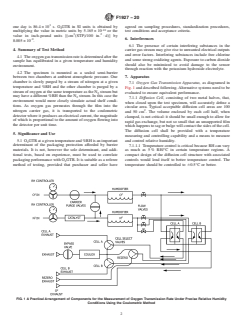
FIG. 1 A Practical Arrangement of Components for the Measurement of Oxygen Transmission Rate Under Precise Relative Humidity
Conditions Using the Coulometric Method
7.1.4 Package testing at given temperature and %RH levels to be optional if it is not included in the basic configuration.
7.1.5 Coulometric Sensor—An oxygen-sensitive coulometric sensor operating at an essentially constant efficiency shall be used
to monitor the quantity of oxygen transmitted.
7.1.6 With computer controlled systems, the results are printed out giving final results, time-history of equilibration, ambient
conditions of test, material being tested and date. Should a failure occur, the time of this occurrence and its cause and correction
taken should be documented for operator analysis as to the validity of continued testing.
7.1.7 RH Detectors—Water sensitive solid-state devices are used to monitor the relative humidity of the gases directly in the
upper and lower halves of the cell.
7.1.7.1 Placement of the RH detectors in the diffusion cells is important because relative humidity will change whenever the
temperature of the relative humidity source and diffusion cells differ.
7.1.7.2 The RH detectors should periodically be calibrated against saturated salt solutions (see Practice E104) or NIST traceable
devices.
8. Reagents and Materials
8.1 Nitrogen Carrier Gas, consisting of a nitrogen and hydrogen mixture in which the percentage of hydrogen shall fall between
0.5 and 3.0 volume %. The carrier gas shall be dry and contain not more than 100 ppm of oxygen. A commercially available
mixture known as “forming gas” is suitable.
8.2 Oxygen Test Gas, shall be dry and contain not less than 99.5 % oxygen (except as provided in 14.10).
8.3 Water to Generate %RH—Double or triple-distilled water is recommended (not deionized water) for precise relative
humidity generation and to avoid scale build up.
8.4 Sealing Grease—A high-viscosity hydrocarbon grease (preferred) or a high-vacuum grease is required for sealing the
specimen film in the diffusion cell.
Hasegawa, S. (NIST) “National Basis of Accuracy in Humidity Measurements,” ISA Transactions, Vol 25, No. 3, 1986, pp. 15–24.
A suitable hydrocarbon grease such as Apiezon T is known to the committee at this time. If you are aware of alternative suppliers, please provide this information to
ASTM Headquarters. Your comments will receive careful consideration at a meeting of the responsible technical committee that you may attend.
F1927 − 20
9. Precautions
9.1 Temperature is a critical parameter affecting the measurement of O GTR. Careful temperature control will help to minimize
variations due to temperature fluctuations. During equilibration and testing the temperature shall be monitored periodically. Should
this temperature exceed 60.5°C after reaching the desired temperature, report the average temperature and the range of
temperatures found during the test.
9.2 The sensor will require a relatively long time to stabilize to a low reading characteristic of a good barrier after it has been
used to test a poorer barrier such as low density polyethylene. For this reason, materials of comparable gas transmission qualities
should be tested together.
9.3 Back diffusion of air into the unit is undesirable. Care should be taken to ensure that there is a flow of nitrogen through the
system at all times. This flow can be low when the instrument is not being used.
9.4 Elevated temperatures to hasten specimen out gassing is not recommended. RH is a function of temperature and, therefore,
equilibrating at some other temperature than the test temperature would expose the sample to an incorrect RH during the
equilibration process. The entire test should be run at constant temperature and constant RH.
10. Sampling
10.1 The samples used for the determination of O GTR shall be representative of the quality of product for which the data are
required, in accordance with Practice required. D1898.Care shall be taken to ensure that film samples are representative of
conditions across the width and along the length of the film being tested.
11. Test Specimen
11.1 Test specimens shall be representative of the material being tested and free of defects, including wrinkles, creases, and
pinholes, unless these are a characteristic of the material being tested.
11.2 Average If required, the average thickness shall be determined to the nearest 2.5 μm (0.0001 in.), using a calibrated dial
gage or equivalent at a minimum of five points distributed over the entire test area. Maximum, minimum, and average values shall
be recorded. Note: If a sample is fragile (such as a thin coating or unprotected metallization) the act of measuring the material
might compromise or scratch the barrier layer. For such samples, analyzing the material thickness AFTER transmission rate testing
may be preferable.
11.3 If the test specimen is of an asymmetrical construction, the two surfaces shall be marked by appropriate distinguishing
marks and the orientation of the test specimen in the diffusion cell shall be reported (for example, “Side II Was Mounted Faci
...