

ASTM C293/C293M-16
(Test Method)Standard Test Method for Flexural Strength of Concrete (Using Simple Beam With Center-Point Loading)
General Information
- Abstract
SIGNIFICANCE AND USE
3.1 This test method is used to determine the modulus of rupture of specimens prepared and cured in accordance with Practices C31/C31M or C192/C192M. The strength determined will vary where there are differences in specimen size, preparation, moisture condition, or curing.
3.2 The results of this test method may be used to determine compliance with specifications or as a basis for proportioning, mixing and placement operations. This test method produces values of flexural strength significantly higher than Test Method C78/C78M.
SCOPE
1.1 This test method covers determination of the flexural strength of concrete specimens by the use of a simple beam with center-point loading. Test Method C293/C293M is not an alternative to Test Method C78/C78M.
1.2 The values stated in either SI units or inch-pound units are to be regarded separately as standard. The values stated in each system may not be exact equivalents; therefore, each system shall be used independently of the other. Combining values from the two systems may result in non-conformance with the standard.
1.3 This standard does not purport to address all of the safety concerns, if any, associated with its use. It is the responsibility of the user of this standard to establish appropriate safety and health practices and determine the applicability of regulatory limitations prior to use.
- Status
- Published
- Publication Date
- 14-Apr-2016
- Technical Committee
- C09 - Concrete and Concrete Aggregates
- Drafting Committee
- C09.61 - Testing for Strength
Buy Documents
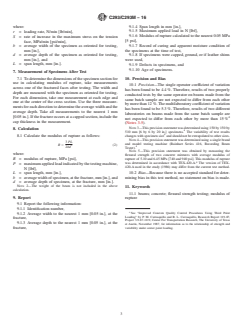

ASTM C293/C293M-16 - Standard Test Method for Flexural Strength of Concrete (Using Simple Beam With Center-Point Loading)

REDLINE ASTM C293/C293M-16 - Standard Test Method for Flexural Strength of Concrete (Using Simple Beam With Center-Point Loading)
Overview
ASTM C293/C293M-16 is the internationally recognized standard test method for determining the flexural strength of concrete using simple beam specimens with center-point loading. Published by ASTM International, this standard plays a vital role in testing concrete’s modulus of rupture-an indicator of its resistance to bending forces. This method is primarily applicable to specimens prepared and cured according to ASTM C31/C31M or ASTM C192/C192M practices. The results support compliance verification, mix proportioning, quality control, and performance evaluation in various concrete construction applications.
Key Topics
- Flexural Strength Measurement: The standard defines procedures for assessing the modulus of rupture by applying a concentrated load at the center point of a concrete beam.
- Specimen Preparation and Curing: Only specimens prepared and cured by referenced ASTM practices (C31/C31M or C192/C192M) are valid for this test.
- Equipment Requirements: Testing machines must deliver continuous, uniform loads across the specimen without shock or interruption. Special attention is required for the alignment, loading apparatus, and support blocks to maintain accuracy.
- Test Method Specifics:
- Specimens are tested on their side, and loading is applied until failure.
- Measurement of dimensions and documentation of testing details ensure consistency and reproducibility.
- Calculation of modulus of rupture is based on maximum applied load, specimen dimensions, and span length.
- Reporting and Precision: The standard outlines what information to report-including specimen identification, measurements, loading, and testing conditions-and provides guidance on acceptable variance within and between laboratories.
Applications
- Quality Control in Concrete Production: Ensures that batches meet flexural strength requirements for specific projects.
- Structural Design Validation: Useful for verifying that concrete mixtures achieve sufficient flexural capacity for pavements, slabs, beams, and other load-bearing structures.
- Material Specification Compliance: Results help determine alignment with contract or regulatory specifications.
- Optimization of Mix Proportions: Enables adjustments to concrete mix design to achieve desired flexural strength outcomes.
- Research and Development: Supports comparative studies between mix designs or curing conditions.
Related Standards
- ASTM C78/C78M - Standard Test Method for Flexural Strength of Concrete (Using Simple Beam with Third-Point Loading): Another method for flexural testing; the choice between C293/C293M and C78/C78M should be based on project or client requirements.
- ASTM C31/C31M - Practice for Making and Curing Concrete Test Specimens in the Field: Details field preparation and curing of concrete beams and cylinders.
- ASTM C192/C192M - Practice for Making and Curing Concrete Test Specimens in the Laboratory: Outlines laboratory procedures for specimen preparation and curing.
- ASTM C617/C617M - Practice for Capping Cylindrical Concrete Specimens: Covers preparation practices for uniform loading surfaces.
- ASTM E4 - Practices for Force Verification of Testing Machines: Specifies calibration and verification of testing equipment.
Practical Value
Using ASTM C293/C293M-16 ensures reliable flexural strength assessment critical in structural concrete applications. Adopting these practices facilitates:
- Consistency in test methods and data reporting
- Enhanced decision-making in material selection and quality assurance
- Improved compliance with construction specifications and building codes
- Reduction in structural failures related to inadequate flexural capacity
By adhering to this ASTM standard, professionals in construction, engineering, and materials testing can achieve greater confidence in concrete performance and structural safety.
Relations
- Effective Date
- 15-Apr-2016
- Refers
ASTM C31/C31M-24a - Standard Practice for Making and Curing Concrete Test Specimens in the Field - Effective Date
- 01-Apr-2024
- Effective Date
- 01-Jan-2024
- Refers
ASTM C31/C31M-24 - Standard Practice for Making and Curing Concrete Test Specimens in the Field - Effective Date
- 01-Jan-2024
- Effective Date
- 01-Oct-2023
- Refers
ASTM C31/C31M-18 - Standard Practice for Making and Curing Concrete Test Specimens in the Field - Effective Date
- 01-Jan-2018
- Effective Date
- 01-Dec-2016
- Effective Date
- 15-Oct-2016
- Effective Date
- 01-Feb-2016
- Effective Date
- 01-Feb-2016
- Refers
ASTM C31/C31M-15ae1 - Standard Practice for Making and Curing Concrete Test Specimens in the Field - Effective Date
- 15-Nov-2015
- Effective Date
- 01-Aug-2015
- Effective Date
- 01-May-2015
- Effective Date
- 01-Apr-2015
- Effective Date
- 01-Feb-2015
Buy Documents
ASTM C293/C293M-16 - Standard Test Method for Flexural Strength of Concrete (Using Simple Beam With Center-Point Loading)
REDLINE ASTM C293/C293M-16 - Standard Test Method for Flexural Strength of Concrete (Using Simple Beam With Center-Point Loading)
Get Certified
Connect with accredited certification bodies for this standard

DIBt (Deutsches Institut für Bautechnik)
German Institute for Building Technology.
DIN CERTCO
DIN Group product certification.

Aboma Certification B.V.
Specialized in construction, metal, and transport sectors.
Sponsored listings
Frequently Asked Questions
ASTM C293/C293M-16 is a standard published by ASTM International. Its full title is "Standard Test Method for Flexural Strength of Concrete (Using Simple Beam With Center-Point Loading)". This standard covers: SIGNIFICANCE AND USE 3.1 This test method is used to determine the modulus of rupture of specimens prepared and cured in accordance with Practices C31/C31M or C192/C192M. The strength determined will vary where there are differences in specimen size, preparation, moisture condition, or curing. 3.2 The results of this test method may be used to determine compliance with specifications or as a basis for proportioning, mixing and placement operations. This test method produces values of flexural strength significantly higher than Test Method C78/C78M. SCOPE 1.1 This test method covers determination of the flexural strength of concrete specimens by the use of a simple beam with center-point loading. Test Method C293/C293M is not an alternative to Test Method C78/C78M. 1.2 The values stated in either SI units or inch-pound units are to be regarded separately as standard. The values stated in each system may not be exact equivalents; therefore, each system shall be used independently of the other. Combining values from the two systems may result in non-conformance with the standard. 1.3 This standard does not purport to address all of the safety concerns, if any, associated with its use. It is the responsibility of the user of this standard to establish appropriate safety and health practices and determine the applicability of regulatory limitations prior to use.
SIGNIFICANCE AND USE 3.1 This test method is used to determine the modulus of rupture of specimens prepared and cured in accordance with Practices C31/C31M or C192/C192M. The strength determined will vary where there are differences in specimen size, preparation, moisture condition, or curing. 3.2 The results of this test method may be used to determine compliance with specifications or as a basis for proportioning, mixing and placement operations. This test method produces values of flexural strength significantly higher than Test Method C78/C78M. SCOPE 1.1 This test method covers determination of the flexural strength of concrete specimens by the use of a simple beam with center-point loading. Test Method C293/C293M is not an alternative to Test Method C78/C78M. 1.2 The values stated in either SI units or inch-pound units are to be regarded separately as standard. The values stated in each system may not be exact equivalents; therefore, each system shall be used independently of the other. Combining values from the two systems may result in non-conformance with the standard. 1.3 This standard does not purport to address all of the safety concerns, if any, associated with its use. It is the responsibility of the user of this standard to establish appropriate safety and health practices and determine the applicability of regulatory limitations prior to use.
ASTM C293/C293M-16 is classified under the following ICS (International Classification for Standards) categories: 91.100.30 - Concrete and concrete products. The ICS classification helps identify the subject area and facilitates finding related standards.
ASTM C293/C293M-16 has the following relationships with other standards: It is inter standard links to ASTM C293/C293M-15, ASTM C31/C31M-24a, ASTM C1077-24, ASTM C31/C31M-24, ASTM C617/C617M-23, ASTM C31/C31M-18, ASTM C78/C78M-15b, ASTM C1077-16a, ASTM C1077-16, ASTM C192/C192M-16, ASTM C31/C31M-15ae1, ASTM C1077-15a, ASTM C78/C78M-15a, ASTM C78/C78M-15, ASTM C1077-15. Understanding these relationships helps ensure you are using the most current and applicable version of the standard.
ASTM C293/C293M-16 is available in PDF format for immediate download after purchase. The document can be added to your cart and obtained through the secure checkout process. Digital delivery ensures instant access to the complete standard document.
Standards Content (Sample)
This international standard was developed in accordance with internationally recognized principles on standardization established in the Decision on Principles for the
Development of International Standards, Guides and Recommendations issued by the World Trade Organization Technical Barriers to Trade (TBT) Committee.
Designation: C293/C293M − 16
Standard Test Method for
Flexural Strength of Concrete (Using Simple Beam With
Center-Point Loading)
This standard is issued under the fixed designation C293/C293M; the number immediately following the designation indicates the year
of original adoption or, in the case of revision, the year of last revision. A number in parentheses indicates the year of last reapproval.
A superscript epsilon (´) indicates an editorial change since the last revision or reapproval.
This standard has been approved for use by agencies of the U.S. Department of Defense.
1. Scope* 2.2 TXDOT Standard:
TEX-420-A Test Method for Flexural Strength of Concrete
1.1 This test method covers determination of the flexural
Using Simple Beam with Center-Point Loading
strength of concrete specimens by the use of a simple beam
with center-point loading. Test Method C293/C293M is not an
3. Significance and Use
alternative to Test Method C78/C78M.
3.1 This test method is used to determine the modulus of
1.2 The values stated in either SI units or inch-pound units
rupture of specimens prepared and cured in accordance with
are to be regarded separately as standard. The values stated in
Practices C31/C31M or C192/C192M. The strength deter-
each system may not be exact equivalents; therefore, each
mined will vary where there are differences in specimen size,
system shall be used independently of the other. Combining
preparation, moisture condition, or curing.
values from the two systems may result in non-conformance
with the standard. 3.2 The results of this test method may be used to determine
compliance with specifications or as a basis for proportioning,
1.3 This standard does not purport to address all of the
mixing and placement operations. This test method produces
safety concerns, if any, associated with its use. It is the
values of flexural strength significantly higher than Test
responsibility of the user of this standard to establish appro-
Method C78/C78M.
priate safety and health practices and determine the applica-
bility of regulatory limitations prior to use.
4. Apparatus
2. Referenced Documents
4.1 Testing Machine—The testing machine shall conform to
2.1 ASTM Standards: the requirements of the sections on Basis of Verification,
C31/C31M Practice for Making and Curing Concrete Test
Corrections, and Time Interval Between Verifications of Prac-
Specimens in the Field ticesE4.Handoperatedtestingmachineshavingpumpsthatdo
C78/C78M Test Method for Flexural Strength of Concrete
notprovideacontinuousloadingtofailureinonestrokearenot
(Using Simple Beam with Third-Point Loading)
permitted. Motorized pumps or hand operated positive dis-
C192/C192M Practice for Making and Curing Concrete Test
placement pumps having sufficient volume in one continuous
Specimens in the Laboratory
stroke to complete a test without requiring replenishment are
C617/C617M Practice for Capping Cylindrical Concrete
permitted and shall be capable of applying loads at a uniform
Specimens
ratewithoutshockorinterruption.Thetestingmachineshallbe
C1077 Practice forAgencies Testing Concrete and Concrete
equipped with a means of recording or holding the peak value
Aggregates for Use in Construction and Criteria for
that will indicate the maximum load applied to the specimen
Testing Agency Evaluation during a test, to within 1 % accuracy of the load being applied.
E4 Practices for Force Verification of Testing Machines
4.2 Loading Apparatus—The mechanism by which forces
are applied to the specimen shall employ a load-applying block
and two specimen support blocks. It shall ensure that all forces
This test method is under the jurisdiction of ASTM Committee C09 on
Concrete and ConcreteAggregates and is the direct responsibility of Subcommittee
are applied perpendicular to the face of the specimen without
C09.61 on Testing for Strength.
eccentricity. A diagram of an apparatus that accomplishes this
Current edition approved April 15, 2016. Published June 2016. Originally
purpose is shown in Fig. 1.
approved in 1952. Last previous edition approved in 2015 as C293/C293M – 15.
DOI: 10.1520/C0293_C0293M-16.
For referenced ASTM standards, visit the ASTM website, www.astm.org, or
contact ASTM Customer Service at service@astm.org. For Annual Book of ASTM
Standards volume information, refer to the standard’s Document Summary page on ManualofTestingProcedures,TexasStateDepartmentofHighwaysandPublic
the ASTM website. Transportation, 1986.
*A Summary of Changes section appears at the end of this standard
Copyright © ASTM International, 100 Barr Harbor Drive, PO Box C700, West Conshohocken, PA 19428-2959. United States
C293/C293M − 16
NOTE 1—Apparatus may be used inverted.
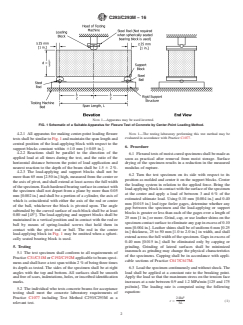
FIG. 1 Schematic of a Suitable Apparatus for Flexure Test of Concrete by Center-Point Loading Method.
NOTE 1—The testing laboratory performing this test method may be
4.2.1 All apparatus for making center-point loading flexure
evaluated in accordance with Practice C1077.
tests shall be similar to Fig. 1 and maintain the span length and
central position of the load-applying block with respect to the
6. Procedure
support blocks constant within 61.0 mm [60.05 in.].
4.2.2 Reactions shall be parallel to the direction of the
6.1 Flexuraltestsofmoist-curedspecimensshallbemadeas
applied load at all times during the test, and the ratio of the
soon as practical after removal from moist storage. Surface
horizontal distance between the point of load application and
drying of the specimen results in a reduction in the measured
nearest reaction to the depth of the beam shall be 1.5 62%.
modulus of rupture.
4.2.3 The load-applying and support blocks shall not be
6.2 Turn the test specimen on its side with respect to its
more than 65 mm [2.50 in.] high, measured from the center or
position as molded and center it on the support blocks. Center
the axis of pivot, and shall extend at least across the full width
the loading system in relation to the applied force. Bring the
of the specimen. Each hardened bearing surface in contact with
load-applyingblockincontactwiththesurfaceofthespecimen
the specimen shall not depart from a plane by more than 0.05
at the center and apply a load of between 3 and 6 % of the
mm [0.002 in.] and shall be a portion of a cylinder, the axis of
estimated ultimate load. Using 0.10 mm [0.004 in.] and 0.40
which is coincidental with either the axis of the rod or center
mm [0.015 in.] leaf-type feeler gages, determine whether any
of the ball, whichever the block is pivoted upon. The angle
gap between the specimen and the load-applying or support
subtended by the curved surface of each block shall be at least
blocks is greater or less than each of the gages over a length of
0.80 rad [45°]. The load-applying and support blocks shall be
25 mm [1 in.] or more. Grind, cap, or use leather shims on the
maintained in a vertical position and
...
This document is not an ASTM standard and is intended only to provide the user of an ASTM standard an indication of what changes have been made to the previous version. Because
it may not be technically possible to adequately depict all changes accurately, ASTM recommends that users consult prior editions as appropriate. In all cases only the current version
of the standard as published by ASTM is to be considered the official document.
Designation: C293/C293M − 15 C293/C293M − 16
Standard Test Method for
Flexural Strength of Concrete (Using Simple Beam With
Center-Point Loading)
This standard is issued under the fixed designation C293/C293M; the number immediately following the designation indicates the year
of original adoption or, in the case of revision, the year of last revision. A number in parentheses indicates the year of last reapproval.
A superscript epsilon (´) indicates an editorial change since the last revision or reapproval.
This standard has been approved for use by agencies of the U.S. Department of Defense.
1. Scope*
1.1 This test method covers determination of the flexural strength of concrete specimens by the use of a simple beam with
center-point loading. Test Method C293/C293M is not an alternative to Test Method C78/C78M.
1.2 The values stated in either SI units or inch-pound units are to be regarded separately as standard. The values stated in each
system may not be exact equivalents; therefore, each system shall be used independently of the other. Combining values from the
two systems may result in non-conformance with the standard.
1.3 This standard does not purport to address all of the safety concerns, if any, associated with its use. It is the responsibility
of the user of this standard to establish appropriate safety and health practices and determine the applicability of regulatory
limitations prior to use.
2. Referenced Documents
2.1 ASTM Standards:
C31/C31M Practice for Making and Curing Concrete Test Specimens in the Field
C78/C78M Test Method for Flexural Strength of Concrete (Using Simple Beam with Third-Point Loading)
C192/C192M Practice for Making and Curing Concrete Test Specimens in the Laboratory
C617C617/C617M Practice for Capping Cylindrical Concrete Specimens
C1077 Practice for Agencies Testing Concrete and Concrete Aggregates for Use in Construction and Criteria for Testing Agency
Evaluation
E4 Practices for Force Verification of Testing Machines
2.2 TXDOT Standard:
TEX-420-A Test Method for Flexural Strength of Concrete Using Simple Beam with Center-Point Loading
3. Significance and Use
3.1 This test method is used to determine the modulus of rupture of specimens prepared and cured in accordance with Practices
C31/C31M or C192/C192M. The strength determined will vary where there are differences in specimen size, preparation, moisture
condition, or curing.
3.2 The results of this test method may be used to determine compliance with specifications or as a basis for proportioning,
mixing and placement operations. This test method produces values of flexural strength significantly higher than Test Method
C78/C78M.
4. Apparatus
4.1 Testing Machine—The testing machine shall conform to the requirements of the sections on Basis of Verification,
Corrections, and Time Interval Between Verifications of Practices E4. Hand operated testing machines having pumps that do not
provide a continuous loading to failure in one stroke are not permitted. Motorized pumps or hand operated positive displacement
This test method is under the jurisdiction of ASTM Committee C09 on Concrete and Concrete Aggregates and is the direct responsibility of Subcommittee C09.61 on
Testing for Strength.
Current edition approved Dec. 1, 2015April 15, 2016. Published February 2016June 2016. Originally approved in 1952. Last previous edition approved in 20102015 as
C293/C293M – 10.15. DOI: 10.1520/C0293_C0293M-15.10.1520/C0293_C0293M-16.
For referenced ASTM standards, visit the ASTM website, www.astm.org, or contact ASTM Customer Service at service@astm.org. For Annual Book of ASTM Standards
volume information, refer to the standard’s Document Summary page on the ASTM website.
Manual of Testing Procedures, Texas State Department of Highways and Public Transportation, 1986.
*A Summary of Changes section appears at the end of this standard
Copyright © ASTM International, 100 Barr Harbor Drive, PO Box C700, West Conshohocken, PA 19428-2959. United States
C293/C293M − 16
pumps having sufficient volume in one continuous stroke to complete a test without requiring replenishment are permitted and shall
be capable of applying loads at a uniform rate without shock or interruption. The testing machine shall be equipped with a means
of recording or holding the peak value that will indicate the maximum load applied to the specimen during a test, to within 1 %
accuracy of the load being applied.
4.2 Loading Apparatus—The mechanism by which forces are applied to the specimen shall employ a load-applying block and
two specimen support blocks. It shall ensure that all forces are applied perpendicular to the face of the specimen without
eccentricity. A diagram of an apparatus that accomplishes this purpose is shown in Fig. 1.
4.2.1 All apparatus for making center-point loading flexure tests shall be similar to Fig. 1 and maintain the span length and
central position of the load-applying block with respect to the support blocks constant within 61.0 mm [60.05 in.].
4.2.2 Reactions shall be parallel to the direction of the applied load at all times during the test, and the ratio of the horizontal
distance between the point of load application and nearest reaction to the depth of the beam shall be 1.5 6 2 %.
4.2.3 The load-applying and support blocks shall not be more than 65 mm [2.50 in.] high, measured from the center or the axis
of pivot, and shall extend at least across the full width of the specimen. Each hardened bearing surface in contact with the specimen
shall not depart from a plane by more than 0.05 mm [0.002 in.] and shall be a portion of a cylinder, the axis of which is coincidental
with either the axis of the rod or center of the ball, whichever the block is pivoted upon. The angle subtended by the curved surface
of each block shall be at least 0.80 rad [45°]. The load-applying and support blocks shall be maintained in a vertical position and
in contact with the rod or ball by means of spring-loaded screws that hold them in contact with the pivot rod or ball. The rod in
the center load-applying block in Fig. 1 may be omitted when a spherically seated bearing block is used.
5. Testing
5.1 The test specimen shall conform to all requirements of Practice C31/C31M or C192/C192M applicable to beam specimens
and shall have a test span within 2 % of being three times its depth as tested. The sides of the specimen shall be at right angles
with the top and bottom. All surfaces shall be smooth and free of scars, indentations, holes, or inscribed identification marks.
5.2 The individual who tests concrete beams for acceptance testing shall meet the concrete laboratory requirements of Practice
C1077 including Test Method C293/C293M as a relevant test.
NOTE 1—The testing laboratory performing this test method may be evaluated in accordance with Practice C1077.
6. Procedure
6.1 Flexural tests of moist-cured specimens shall be made as soon as practical after removal from moist storag
...