

ASTM F2666-16
(Specification)Standard Specification for Aboveground Portable Pools for Residential Use
General Information
- Abstract
ABSTRACT
This specification provides safety and performance requirements for portable pools for residential use. This specification addresses pool hazards including childhood drowning, sanitation, electrical safety, and entrapment. Portable pool has two types: Type A which uses no pump and filter and Type B which uses pumps and filters. Pools shall be resistant to horizontal and vertical forces in order to avoid break or collapse when tested. All air valves shall be accessible for each inflatable section. Once a section of the pool is inflated, the air valve shall be capable of being inserted inside the inflated section without extending beyond the surface more than a certain length. Written instructions shall be provided with each pool. They shall include the pool model name or number, the name, address, and phone number of the manufacturer, distributor, or retailer and shall cover, at a minimum: pool safety, product description, parts and assembly (including where and how to affix safety signs, if applicable), filling (including information on the fill line), emptying, deflation (if applicable), cleaning, maintenance, and storage.
SCOPE
1.1 This specification provides safety and performance requirements for portable pools for residential use.
1.2 This specification addresses pool hazards including childhood drowning, sanitation, electrical safety, and entrapment.
1.3 This specification covers both portable pools that are designed to be used with pumps and filters and those not designed to be used with pumps and filters.
1.4 This specification covers all types of portable pools with a water depth of less than 36 in. (91 cm). Aboveground/on ground residential swimming pools with a water depth of 36 in. (91 cm) or greater shall comply with ANSI/APSP-4.
1.5 This specification does not cover public pools, pools used in commercial amusement parks, water fountains, water displays, or fish ponds.
1.6 The values stated in inch-pound units are to be regarded as standard. The values given in parentheses are mathematical conversions to SI units that are provided for information only and are not considered standard.
1.7 This standard does not purport to address all of the safety concerns, if any, associated with its use. It is the responsibility of the user of this standard to establish appropriate safety and health practices and determine the applicability of regulatory limitations prior to use.
- Status
- Published
- Publication Date
- 14-Jun-2016
- Technical Committee
- F15 - Consumer Products
- Drafting Committee
- F15.60 - Portable Pools
Buy Documents
ASTM F2666-16 - Standard Specification for Aboveground Portable Pools for Residential Use
REDLINE ASTM F2666-16 - Standard Specification for Aboveground Portable Pools for Residential Use
Overview
ASTM F2666-16: Standard Specification for Aboveground Portable Pools for Residential Use specifies safety and performance requirements for aboveground, portable residential pools with water depths less than 36 inches (91 cm). Developed by ASTM International, this standard focuses on minimizing risks such as childhood drowning, entrapment, electrical hazards, and sanitation concerns. The specification distinguishes between two main types of portable pools:
- Type A: Pools without pumps and filters
- Type B: Pools with circulation systems (pumps and filters)
This document is essential for manufacturers, retailers, and consumers involved with the design, sale, or use of portable residential pools, offering guidance to enhance pool safety and product reliability.
Key Topics
ASTM F2666-16 addresses critical aspects of portable residential pool safety and performance, including:
- Structural Integrity: Pools must withstand specified horizontal and vertical forces to prevent collapse and sudden water release, reducing injury risks.
- Entrapment and Drowning Prevention: Requirements for compliant suction outlets, fences, pool covers, and water watcher tags help minimize childhood drowning incidents and entrapment hazards.
- Electrical Safety: Type B pools must incorporate ground-fault circuit-interrupters (GFCIs) and adhere to applicable electromechanical standards.
- Product Marking and Instructions: Clear, permanent labeling and comprehensive instructions are mandated to guide safe installation, use, maintenance, and emergency response.
- Warning Labels: Placement of ANSI Z535.4-compliant warnings for drowning, diving, electrocution, and suction hazards are required on products and packaging.
- Pool Covers and Accessories: Specifications for covers, ladders, and related equipment, ensuring that each meets recognized safety performance benchmarks.
Applications
ASTM F2666-16 enhances residential pool safety by providing standardized, practical requirements for:
- Manufacturers: Assuring product compliance with recognized safety criteria before market release, reducing liability and recall risks.
- Distributors and Retailers: Ensuring that only compliant, clearly labeled products are marketed, helping customers make informed, safe choices.
- Homeowners and Contractors: Using or installing portable pools that meet ASTM F2666-16 provides confidence that critical hazards have been addressed, especially for families with young children.
- Regulatory Authorities and Inspectors: Reference for verifying compliance during inspections, licensing, or investigations related to pool safety incidents.
By adopting this standard, organizations contribute to reducing the national incidence of residential pool accidents, support public health objectives, and align with best practices in consumer product safety.
Related Standards
Several other industry standards complement ASTM F2666-16 to provide a comprehensive framework for residential pool safety and performance:
- ASTM F963: Consumer Safety Specification for Toy Safety
- ASTM F1346: Performance Specification for Safety Covers and Labeling Requirements for All Covers for Swimming Pools, Spas and Hot Tubs
- ANSI/APSP-4: American National Standard for Aboveground/On-Ground Residential Swimming Pools
- ANSI/APSP-7: American National Standard for Suction Entrapment Avoidance in Pools, Spas, and Hot Tubs
- ANSI/APSP-16: Standard Suction Fittings for Swimming Pools, Wading Pools, Spas, and Hot Tubs
- ANSI Z535.4: Product Safety Signs and Labels
- UL 943: Ground Fault Circuit Interrupters
- UL 1081: Swimming Pool Pumps, Filters, and Chlorinators
- CPSC Pub. No. 362: Safety Barrier Guidelines for Home Pools
Integration of ASTM F2666-16 with these related standards ensures a holistic approach to portable pool safety and risk management for residential settings.
Keywords: aboveground portable pool, ASTM F2666-16, residential pool safety, pool labeling, drowning prevention, pool hazard requirements, portable pool safety, pool entrapment, pool covers, consumer pool products
Relations
- Effective Date
- 15-Jun-2016
- Effective Date
- 01-Aug-2023
- Effective Date
- 01-Aug-2016
- Effective Date
- 01-Dec-2011
- Effective Date
- 01-Sep-2010
- Effective Date
- 01-Dec-2008
- Effective Date
- 15-Mar-2007
- Effective Date
- 01-Oct-2003
- Effective Date
- 10-Feb-2003
- Effective Date
- 10-Nov-1996
- Effective Date
- 10-Nov-1996
- Effective Date
- 10-Nov-1996
- Effective Date
- 01-Jan-1996
Buy Documents
ASTM F2666-16 - Standard Specification for Aboveground Portable Pools for Residential Use
REDLINE ASTM F2666-16 - Standard Specification for Aboveground Portable Pools for Residential Use
Frequently Asked Questions
ASTM F2666-16 is a technical specification published by ASTM International. Its full title is "Standard Specification for Aboveground Portable Pools for Residential Use". This standard covers: ABSTRACT This specification provides safety and performance requirements for portable pools for residential use. This specification addresses pool hazards including childhood drowning, sanitation, electrical safety, and entrapment. Portable pool has two types: Type A which uses no pump and filter and Type B which uses pumps and filters. Pools shall be resistant to horizontal and vertical forces in order to avoid break or collapse when tested. All air valves shall be accessible for each inflatable section. Once a section of the pool is inflated, the air valve shall be capable of being inserted inside the inflated section without extending beyond the surface more than a certain length. Written instructions shall be provided with each pool. They shall include the pool model name or number, the name, address, and phone number of the manufacturer, distributor, or retailer and shall cover, at a minimum: pool safety, product description, parts and assembly (including where and how to affix safety signs, if applicable), filling (including information on the fill line), emptying, deflation (if applicable), cleaning, maintenance, and storage. SCOPE 1.1 This specification provides safety and performance requirements for portable pools for residential use. 1.2 This specification addresses pool hazards including childhood drowning, sanitation, electrical safety, and entrapment. 1.3 This specification covers both portable pools that are designed to be used with pumps and filters and those not designed to be used with pumps and filters. 1.4 This specification covers all types of portable pools with a water depth of less than 36 in. (91 cm). Aboveground/on ground residential swimming pools with a water depth of 36 in. (91 cm) or greater shall comply with ANSI/APSP-4. 1.5 This specification does not cover public pools, pools used in commercial amusement parks, water fountains, water displays, or fish ponds. 1.6 The values stated in inch-pound units are to be regarded as standard. The values given in parentheses are mathematical conversions to SI units that are provided for information only and are not considered standard. 1.7 This standard does not purport to address all of the safety concerns, if any, associated with its use. It is the responsibility of the user of this standard to establish appropriate safety and health practices and determine the applicability of regulatory limitations prior to use.
ABSTRACT This specification provides safety and performance requirements for portable pools for residential use. This specification addresses pool hazards including childhood drowning, sanitation, electrical safety, and entrapment. Portable pool has two types: Type A which uses no pump and filter and Type B which uses pumps and filters. Pools shall be resistant to horizontal and vertical forces in order to avoid break or collapse when tested. All air valves shall be accessible for each inflatable section. Once a section of the pool is inflated, the air valve shall be capable of being inserted inside the inflated section without extending beyond the surface more than a certain length. Written instructions shall be provided with each pool. They shall include the pool model name or number, the name, address, and phone number of the manufacturer, distributor, or retailer and shall cover, at a minimum: pool safety, product description, parts and assembly (including where and how to affix safety signs, if applicable), filling (including information on the fill line), emptying, deflation (if applicable), cleaning, maintenance, and storage. SCOPE 1.1 This specification provides safety and performance requirements for portable pools for residential use. 1.2 This specification addresses pool hazards including childhood drowning, sanitation, electrical safety, and entrapment. 1.3 This specification covers both portable pools that are designed to be used with pumps and filters and those not designed to be used with pumps and filters. 1.4 This specification covers all types of portable pools with a water depth of less than 36 in. (91 cm). Aboveground/on ground residential swimming pools with a water depth of 36 in. (91 cm) or greater shall comply with ANSI/APSP-4. 1.5 This specification does not cover public pools, pools used in commercial amusement parks, water fountains, water displays, or fish ponds. 1.6 The values stated in inch-pound units are to be regarded as standard. The values given in parentheses are mathematical conversions to SI units that are provided for information only and are not considered standard. 1.7 This standard does not purport to address all of the safety concerns, if any, associated with its use. It is the responsibility of the user of this standard to establish appropriate safety and health practices and determine the applicability of regulatory limitations prior to use.
ASTM F2666-16 is classified under the following ICS (International Classification for Standards) categories: 97.220.10 - Sports facilities. The ICS classification helps identify the subject area and facilitates finding related standards.
ASTM F2666-16 has the following relationships with other standards: It is inter standard links to ASTM F2666-07, ASTM F963-23, ASTM F963-16, ASTM F963-11, ASTM F1346-91(2010), ASTM F963-08, ASTM F963-07e1, ASTM F963-03, ASTM F1346-91(2003), ASTM F963-96ae2, ASTM F963-96a, ASTM F963-96ae1, ASTM F1346-91(1996). Understanding these relationships helps ensure you are using the most current and applicable version of the standard.
ASTM F2666-16 is available in PDF format for immediate download after purchase. The document can be added to your cart and obtained through the secure checkout process. Digital delivery ensures instant access to the complete standard document.
Standards Content (Sample)
This international standard was developed in accordance with internationally recognized principles on standardization established in the Decision on Principles for the
Development of International Standards, Guides and Recommendations issued by the World Trade Organization Technical Barriers to Trade (TBT) Committee.
Designation:F2666 −16
Standard Specification for
Aboveground Portable Pools for Residential Use
This standard is issued under the fixed designation F2666; the number immediately following the designation indicates the year of
original adoption or, in the case of revision, the year of last revision. A number in parentheses indicates the year of last reapproval. A
superscript epsilon (´) indicates an editorial change since the last revision or reapproval.
INTRODUCTION
This specification has been developed to address the risk of drowning and other hazards associated
with portable pools. Portable pools—including “self-rising,” “soft-sided self-rising,” “frame pools,”
“big blue pools,” “inflatable,” or “inflatable top ring” pools—reemerged in the market in the 1990s.
To date, the Consumer Product Safety Commission (CPSC) has reports of nearly 100 portable pool
drowning deaths and submersions from 2000 through 2006. Most of these incidents involve children
younger than four years of age. In 2005, there were 32 portable pool drowning deaths and 7 additional
submersion incidents reported to the Commission. This is nearly triple the number of drowning and
submersion incidents the previous year. Further, it is likely that these numbers are undercounts as the
CPSC had not previously distinguished among pool types in its database. This specification has been
developed by ASTM International in response to this emerging hazard.
1. Scope responsibility of the user of this standard to establish appro-
priate safety and health practices and determine the applica-
1.1 This specification provides safety and performance re-
bility of regulatory limitations prior to use.
quirements for portable pools for residential use.
1.2 This specification addresses pool hazards including 2. Referenced Documents
childhood drowning, sanitation, electrical safety, and entrap- 2
2.1 ASTM Standards:
ment.
F963 Consumer Safety Specification for Toy Safety
1.3 This specification covers both portable pools that are F1346 Performance Specification for Safety Covers and
designed to be used with pumps and filters and those not Labeling Requirements for All Covers for Swimming
designed to be used with pumps and filters. Pools, Spas and Hot Tubs
2.2 ANSI Standards:
1.4 Thisspecificationcoversalltypesofportablepoolswith
ASME/ANSI A112.19.8 Suction Fittings for Use in Swim-
a water depth of less than 36 in. (91 cm). Aboveground/on
ming Pools, Wading Pools, Spas and Hot Tubs
groundresidentialswimmingpoolswithawaterdepthof36in.
ANSI Z535.4 American National Standard for Product
(91 cm) or greater shall comply with ANSI/APSP-4.
Safety Signs and Labels
1.5 This specification does not cover public pools, pools
ANSI/APSP-4 American National Standard for
used in commercial amusement parks, water fountains, water
Aboveground/On-Ground Residential Swimming Pools
displays, or fish ponds.
ANSI/APSP-7 American National Standard for Suction En-
1.6 The values stated in inch-pound units are to be regarded trapment Avoidance in Swimming Pools, Spas, Hot Tubs
as standard. The values given in parentheses are mathematical and Catch Basins
conversions to SI units that are provided for information only ANSI/APSP-16 American National Standard for Standard
and are not considered standard. Suction Fittings for Use in Swimming Pools, Wading
Pools, Spas, and Hot Tubs
1.7 This standard does not purport to address all of the
ANSI/IAF-8 Model Barrier Code for Residential Swimming
safety concerns, if any, associated with its use. It is the
Pools, Spas, and Hot Tubs
1 2
This specification is under the jurisdiction of ASTM Committee F15 on For referenced ASTM standards, visit the ASTM website, www.astm.org, or
Consumer Products and is the direct responsibility of Subcommittee F15.60 on contact ASTM Customer Service at service@astm.org. For Annual Book of ASTM
Portable Pools. Standards volume information, refer to the standard’s Document Summary page on
Current edition approved June 15, 2016. Published July 2016. Originally the ASTM website.
approved in 2007. Last previous edition approved in 2007 as F2666 – 07. DOI: Available from American National Standards Institute (ANSI), 25 W. 43rd St.,
10.1520/F2666-16. 4th Floor, New York, NY 10036, http://www.ansi.org.
Copyright © ASTM International, 100 Barr Harbor Drive, PO Box C700, West Conshohocken, PA 19428-2959. United States
F2666−16
ANSI Z535.6 Product Safety Information in Product 4.1.1 Type A—Portable Pools without a Pump and Filter—
Manuals, Instructions, and Other Collateral Materials Pools with no means of water circulation or water treatment
during or after use. Such pools include but are not limited to
2.3 Underwriters Laboratories Standards:
wading pools, splash pools, and kiddy pools.
UL 943 Ground Fault Circuit Interrupters
4.1.2 Type B—Portable Pools with Pumps and Filters—
UL 1081 Standard for Swimming Pool Pumps, Filters, and
Pools that are provided with a means or connection provisions
Chlorinators
5 to add equipment for circulation and filtration of water.
2.4 CPSC Documents:
CPSC Pub. No. 362 Safety Barrier Guidelines for Home
5. Performance Requirements
Pools
5.1 Ladders—Any ladders sold with or for use with TypeA
2.5 Other Standards:
or Type B pools shall meet all the applicable requirements
16 CFR 1501 Method for Identifying Toys and Other Ar-
found in ANSI/APSP-4 and be child resistant to the degree of
ticles Intended for Use by Children Under 3 Years ofAge
preventing unauthorized access for children under the age of
Which Present Choking,Aspiration, or Ingestion Hazards
five years. Verification can be satisfied by document review.
Because of Small Parts
2.6 ISO/IEC Standard: 5.2 Structural Integrity:
ISO/IEC 17025 General Requirements for the Competence
5.2.1 Resistance to Horizontal Force—To prevent injuries
of Testing and Calibration Laboratories associated with sudden release of water, pools with a fill line at
18 in. (46 cm) or greater shall not break or collapse such that
3. Terminology
the pool loses its structural integrity or functionality when
tested in accordance with 6.1.1. For pools with flexible side
3.1 Definitions of Terms Specific to This Standard:
walls shaped by the water content, this testing may result in
3.1.1 compliant, adj—obeying, produced in accordance
temporary lowering of the pool sides as a result of water loss
with specific rules.
through spillage. This is considered a failure if the overall
3.1.2 consistent, adj—harmonious with or compatible.
structural integrity and functionality are not maintained and
3.1.3 fill line, n—visible mark on the interior of the pool or
water continues to flow after the test.
as designated by the manufacturer to indicate the recom-
5.2.2 Resistance to Vertical Force—To prevent injuries
mended maximum water depth.
associated with sudden release of water, pools with a fill line at
3.1.4 nationally recognized testing laboratory, n—a lab that
18 in. (46 cm) or greater shall not break or collapse such that
conducts all testing or certification of products, or both, and is
the pool loses its structural integrity or functionality when
accredited to ISO/IEC 17025 by a member of ILAC (Interna-
tested in accordance with 6.1.2. For pools with flexible side
tional Laboratory Accreditation Council).
walls shaped by the water content, this testing may result in
temporary lowering of the pool sides as a result of water loss
3.1.5 permanent, adj—durable to the degree of maintaining
through spillage. This is considered a failure if the overall
safe viewing distance (see 8.3.2), clarity, legibility, and color
structural integrity and functionality are not maintained and
stability for the reasonably expected life of the product.
water continues to flow after the test.
3.1.6 portable pool, n—any movable structure with the
5.3 Air Valves for Inflatable Pool Sections:
intended purpose of being used for swimming or other water
5.3.1 All air valves shall be accessible for each inflatable
recreation by consumers, and having a water depth (at the fill
section.Onceasectionofthepoolisinflated,theairvalveshall
line) less than 36 in. (91 cm).
be capable of being inserted inside the inflated section without
3.1.7 suction outlet, n—a fitting, fitting assembly, cover/
extending beyond the surface more than 0.2 in. (5 mm).
grate and related components that provide a localized low
pressure area for the transfer of water from a swimming pool, 5.4 Small Parts, Sharp Edges—No small parts, as defined
by 16 CFR 1501, shall be readily accessible. There shall be no
wading pool, spa, or hot tub.
accessible, potentially hazardous sharp edges or corners, as
3.1.8 water watcher tag, n—tag worn by the designated
defined by Consumer Safety Specification F963.
adult responsible for watching children in or near the pool.
5.5 Pool Covers—If a pool “safety” cover is included or
4. Classification
made available as an optional accessory, the cover shall
comply with Performance Specification F1346. If the cover is
4.1 Types:
not claimed to be a safety cover, it shall bear a label as
indicated in 8.3.6.
Available from Underwriters Laboratories (UL), 2600 N.W. Lake Rd., Camas,
5.6 Suction Outlets—Submerged suction outlets shall com-
WA 98607-8542, http://www.ul.com.
ply with the requirements of ANSI/APSP-7 and be tested by a
Available from U.S. Consumer Product Safety Commission (CPSC), 4330 East
West Hwy., Bethesda, MD 20814, http://www.cpsc.gov. Nationally Recognized Testing Laboratory in accordance with
AvailablefromU.S.GovernmentPrintingOfficeSuperintendentofDocuments,
ANSI/APSP-16.
732 N. Capitol St., NW, Mail Stop: SDE, Washington, DC 20401, http://
www.access.gpo.gov. 5.7 Water Watcher Tags—Water watcher tag shall not dete-
Available from International Organization for Standardization (ISO), ISO
riorate or lose legibility when tested in accordance with 6.2.
Central Secretariat, BIBC II, Chemin de Blandonnet 8, CP 401, 1214 Vernier,
Geneva, Switzerland, http://www.iso.org. 5.8 Type B—Portable Pools with Pumps and Filters:
F2666−16
5.8.1 Manufacturers of Type B pools shall provide at the 6.2 Water Resistance of Water Watcher Tags—Submerse
minimum necessary filtration equipment to keep the pool water watcher tag in water for a duration of one hour. Remove
clean. Pumps and filters shall be designed to turn over the total tag from water, dry and, evaluate material deterioration and
volume of pool water no less than once every 12 h. loss of legibility.
5.8.2 All suction outlets included or sold for use with Type
7. Instructions
B pools shall be tested by a Nationally Recognized Testing
7.1 General—Instructions for all pools subject to this speci-
LaboratoryandcertifiedtoconformtoASME/ANSIA112.19.8
fication.
or its successor standard ANSI/APSP-16, in order to prevent
7.1.1 Written instructions shall be provided with each pool.
suction entrapment.
Instructions may be accompanied by illustrations that the
5.9 PumpsprovidedforthecirculationofwaterwithTypeB
manufacturer determines are necessary, appropriate, or may
pools shall be tested by a Nationally Recognized Testing
facilitate proper assembly, use, maintenance, and storage, or a
Laboratory and certified to conform to UL1081.
combination thereof.
7.1.2 Instructionsshallcontainthefollowing(orequivalent)
6. Tests
header: “Read and Follow All Safety Information and Instruc-
6.1 All tests conducted under Section 6.1 shall be tested
tions. Keep for Future Reference. Failure to follow these
with the pool fully inflated and filled to the manufacturer’s
warnings and instructions can result in serious injury or death
recommended fill line.
to users, especially children.” The font of the header shall be
6.1.1 Resistance to Horizontal Force—Place a two-sided
larger and bolder compared to the body of the text. This
corner block with the dimensions 15 ⁄4 by 4 in. (400 by 100
information shall be in a prominent place.
mm) on the top edge of the pool’s most vulnerable point (see
7.1.3 Instructions shall include the pool model name or
Fig. 1). Apply a horizontal force of 90 lbf (400 N) to the
number, the name, address, and phone number of the
vertical center of the block for a period of 10 s.
manufacturer, distributor, or retailer and shall cover, at a
minimum: pool safety, product description, parts, filling (in-
NOTE 1—This is based on the weight of the average 5.5- to 6.5-year-old
cluding information on the fill line), emptying, deflation (if
child (combined genders), which is 45 lb (20.5 kg). Two children of this
age or younger impulsively leaning or sitting together on a pool’s side is
applicable), cleaning, maintenance, and storage.
a foreseeable use.
7.1.4 Instructions shall include one removable water
6.1.2 Resistance to Vertical Force—Place a two-sided cor- watcher tag, along with instructions as to proper use and
ner block with the dimensions 15 ⁄4 by 4 in. (400 by 100 mm) information regarding sources for replacement tags. The fol-
on the top edge of the pool’s most vulnerable point. Apply a lowing or similar information should be stated:
vertical force of 90 lbf (400 N) to the horizontal center of the 7.1.4.1 Assign an adult to be responsible for watching
block for a period of 10 s. childreninthepool.Givethispersona“waterwatcher”tagand
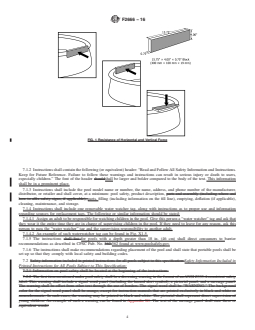
FIG. 1Resistance of Horizontal and Vertical Force
F2666−16
ask that they wear it the entire time they are in charge of
State or local laws or codes may require fencing or other approved barriers.
Check state or local laws and codes before setting up pool.
supervising children in the pool. If they need to leave for any
Drowning occurs silently and quickly. Assign an adult to supervise pool and
reason, ask this person to pass the “water watcher” tag and the
wear provided water watcher tag.
supervision responsibility to another adult. Keep children in your direct sight when they are in or near pool and when you
are filling and emptying pool.
7.1.4.2 An example of such waterwatcher tag can be found
When searching for a missing child, check pool first, even if you think your child
in Fig. X1.5.
is in the house.
7.1.5 The instructions for pools with a depth greater than 18
Prevent Young Children From Gaining Access to Pool:
in. (46 cm) shall direct consumers to barrier recommendations
Remove pool ladders before leaving pool. Toddlers can climb ladder and get
as described in CPSC Pub. No. 362 found at www.poolsafe-
into pool.
ly.gov.
Position furniture away from pool so that children cannot climb and gain access
to pool.
7.1.6 The instructions shall make recommendations regard-
When leaving pool, remove floats and toys from pool that might attract a child.
ing placement of the pool and shall state that portable pools
shall be set up so that they comply with local safety and
Be Prepared to Respond to an Emergency:
building codes.
Keep a working phone and list of emergency numbers near pool.
Become certified in cardiopulmonary resuscitation (CPR) so you can respond to
7.2 Safety Information Included in Printed Instructions for
an emergency.
All Pools Subject to This Specificat
...
This document is not an ASTM standard and is intended only to provide the user of an ASTM standard an indication of what changes have been made to the previous version. Because
it may not be technically possible to adequately depict all changes accurately, ASTM recommends that users consult prior editions as appropriate. In all cases only the current version
of the standard as published by ASTM is to be considered the official document.
Designation: F2666 − 07 F2666 − 16
Standard Specification for
Aboveground Portable Pools for Residential Use
This standard is issued under the fixed designation F2666; the number immediately following the designation indicates the year of
original adoption or, in the case of revision, the year of last revision. A number in parentheses indicates the year of last reapproval. A
superscript epsilon (´) indicates an editorial change since the last revision or reapproval.
INTRODUCTION
This specification has been developed to address the risk of drowning and other hazards associated
with portable pools. Portable pools—including “self-rising,” “soft-sided self-rising,” “frame pools,”
“big blue pools,” “inflatable,” or “inflatable top ring” pools—reemerged in the market in the 1990s.
To date, the Consumer Product Safety Commission (CPSC) has reports of nearly 100 portable pool
drowning deaths and submersions from 2000 through 2006. Most of these incidents involve children
younger than four years of age. In 2005, there were 32 portable pool drowning deaths and 7 additional
submersion incidents reported to the Commission. This is nearly triple the number of drowning and
submersion incidents the previous year. Further, it is likely that these numbers are undercounts as the
CPSC had not previously distinguished among pool types in its database. This specification has been
developed by ASTM International in response to this emerging hazard.
1. Scope
1.1 This specification provides safety and performance requirements for portable pools for residential use.
1.2 This specification addresses pool hazards including childhood drowning, sanitation, electrical safety, and entrapment.
1.3 This specification covers both portable pools that are designed to be used with pumps and filters and those not designed to
be used with pumps and filters.
1.4 This specification covers all types of portable pools with a water depth of less than 36 in. (91 cm). Aboveground/on ground
residential swimming pools with a water depth of 36 in. (91 cm) or greater shall comply with ANSI/APSP-4.
1.5 This specification does not cover public pools, pools used in commercial amusement parks, water fountains, water displays,
or fish ponds.
1.6 The values stated in inch-pound units are to be regarded as standard. The values given in parentheses are mathematical
conversions to SI units that are provided for information only and are not considered standard.
1.7 This standard does not purport to address all of the safety concerns, if any, associated with its use. It is the responsibility
of the user of this standard to establish appropriate safety and health practices and determine the applicability of regulatory
limitations prior to use.
2. Referenced Documents
2.1 ASTM Standards:
F963 Consumer Safety Specification for Toy Safety
F1346 Performance Specification for Safety Covers and Labeling Requirements for All Covers for Swimming Pools, Spas and
Hot Tubs
2.2 ANSI Standards:
ASME/ANSI A112.19.8 Suction Fittings for Use in Swimming Pools, Wading Pools, Spas and Hot Tubs
ANSI Z535.4 American National Standard for Product Safety Signs and Labels
This specification is under the jurisdiction of ASTM Committee F15 on Consumer Products and is the direct responsibility of Subcommittee F15.60 on Portable Pools.
Current edition approved Nov. 1, 2007June 15, 2016. Published December 2007July 2016. Originally approved in 2007. Last previous edition approved in 2007 as
F2666 – 07. DOI: 10.1520/F2666-07.10.1520/F2666-16.
For referenced ASTM standards, visit the ASTM website, www.astm.org, or contact ASTM Customer Service at service@astm.org. For Annual Book of ASTM Standards
volume information, refer to the standard’s Document Summary page on the ASTM website.
Available from American National Standards Institute (ANSI), 25 W. 43rd St., 4th Floor, New York, NY 10036, http://www.ansi.org.
Copyright © ASTM International, 100 Barr Harbor Drive, PO Box C700, West Conshohocken, PA 19428-2959. United States
F2666 − 16
ANSI/APSP-4 American National Standard for Aboveground/On-Ground Residential Swimming Pools
ANSI/APSP-7 American National Standard for Suction Entrapment Avoidance in Swimming Pools, Spas, Hot Tubs and Catch
Basins
ANSI/APSP-16 American National Standard for Standard Suction Fittings for Use in Swimming Pools, Wading Pools, Spas, and
Hot Tubs
ANSI/IAF-8 Model Barrier Code for Residential Swimming Pools, Spas, and Hot Tubs
ANSI Z535.6 Product Safety Information in Product Manuals, Instructions, and Other Collateral Materials
2.3 Underwriters Laboratories Standards:
UL 943 Ground Fault Circuit Interrupters
UL 1081 Standard for Swimming Pool Pumps, Filters, and Chlorinators
2.4 CPSC Documents:
CPSC Pub. No. 362 Safety Barrier Guidelines for Home Pools
2.5 Other Standards:
16 CFR 1501 Method for Identifying Toys and Other Articles Intended for Use by Children Under 3 Years of Age Which Present
Choking, Aspiration, or Ingestion Hazards Because of Small Parts
2.6 ISO/IEC Standard:
ISO/IEC 17025 General Requirements for the Competence of Testing and Calibration Laboratories
3. Terminology
3.1 Definitions of Terms Specific to This Standard:
3.1.1 compliant, adj—obeying, produced in accordance with specific rules.
3.1.2 consistent, adj—harmonious with or compatible.
3.1.3 fill line, n—visible mark on the interior of the pool or as designated by the manufacturer to indicate the recommended
maximum water depth.
3.1.4 nationally recognized testing laboratory, n—a lab that conducts all testing or certification of products, or both, and is
accredited to ISO/IEC 17025 by a member of ILAC (International Laboratory Accreditation Council).
3.1.5 permanent, adj—durable to the degree of maintaining safe viewing distance (see 8.3.2), clarity, legibility, and color
stability for the reasonably expected life of the product.
3.1.6 portable pool, n—any movable structure with the intended purpose of being used for swimming or other water recreation
by consumers, and having a water depth (at the fill line) less than 36 in. (91 cm).
3.1.7 suction outlet, n—a fitting, fitting assembly, cover/grate and related components that provide a localized low pressure area
for the transfer of water from a swimming pool, wading pool, spa, or hot tub.
3.1.8 water watcher tag, n—tag worn by the designated adult responsible for watching children in or near the pool.
4. Classification
4.1 Types:
4.1.1 Type A—Portable Pools Withoutwithout a Pump and Filter—Pools with no means of water circulation or water treatment
during or after use. Such pools include but are not limited to wading pools, splash pools, and kiddy pools.
4.1.2 Type B—Portable Pools with Pumps and Filters—Pools that are provided with a means to circulate and treat theor
connection provisions to add equipment for circulation and filtration of water.
5. Performance Requirements
5.1 Ladders—Any ladders sold with or for use with Type A or Type B pools shall meet all the applicable requirements found
in ANSI/APSP-4.ANSI/APSP-4 and be child resistant to the degree of preventing unauthorized access for children under the age
of five years. Verification can be satisfied by document review.
5.2 Structural Integrity:
5.2.1 Resistance to Horizontal Force—Pools with To prevent injuries associated with sudden release of water, pools with a fill
line at 18 in. (46 cm) or greater shall not break or collapse such that the pool loses its structural integrity or functionality when
tested in accordance with 6.1.1. For pools with flexible side walls shaped by the water content, this testing may result in temporary
Available from Underwriters Laboratories (UL), 2600 N.W. Lake Rd., Camas, WA 98607-8542, http://www.ul.com.
Available from U.S. Consumer Product Safety Commission (CPSC), 4330 East West Hwy., Bethesda, MD 20814, http://www.cpsc.gov.
Available from U.S. Government Printing Office Superintendent of Documents, 732 N. Capitol St., NW, Mail Stop: SDE, Washington, DC 20401, http://
www.access.gpo.gov.
Available from International Organization for Standardization (ISO), ISO Central Secretariat, BIBC II, Chemin de Blandonnet 8, CP 401, 1214 Vernier, Geneva,
Switzerland, http://www.iso.org.
F2666 − 16
lowering of the pool sides as a result of water loss through spillage. This is considered a failure if the overall structural integrity
and functionality are not maintained and water continues to flow after the test.
5.2.2 Resistance to Vertical Force—Pools with To prevent injuries associated with sudden release of water, pools with a fill line
at 18 in. (46 cm) or greater shall not break or collapse such that the pool loses its structural integrity or functionality when tested
in accordance with 6.1.2. For pools with flexible side walls shaped by the water content, this testing may result in temporary
lowering of the pool sides as a result of water loss through spillage. This is considered a failure if the overall structural integrity
and functionality are not maintained and water continues to flow after the test.
5.3 Air Valves for Inflatable Pool Sections:
5.3.1 All air valves shall be accessible for each inflatable section. Once a section of the pool is inflated, the air valve shall be
capable of being inserted inside the inflated section without extending beyond the surface more than 0.2 in. (5 mm).
5.4 Small Parts, Sharp Edges—No small parts, as defined by 16 CFR 1501, shall be readily accessible. There shall be no
accessible, potentially hazardous sharp edges or corners, as defined by Consumer Safety Specification F963.
5.5 Pool Covers—If a pool “safety” cover is included or made available as an optional accessory, the cover shall comply with
Performance Specification F1346. If the cover is not claimed to be a safety cover, it shall bear a warninglabel as indicated in 8.3.6.
5.6 Type A—Portable Pools without Pump and Filter: Suction Outlets—
5.6.1 Type A pools shall have a means of removing the water from the pool in a timely manner so as to not create a drowning
hazard.Submerged suction outlets shall comply with the requirements of ANSI/APSP-7 and be tested by a Nationally Recognized
Testing Laboratory in accordance with ANSI/APSP-16.
5.6.2 When water is intended to be emptied from a portable pool through the use of a drain(s), the pool shall have a large enough
drain(s) to empty the pool of water to a level of not more than ⁄2 in. (1 cm) in depth within 30 min after the drain(s) are opened.
5.7 Water Watcher Tags—Water watcher tag shall not deteriorate or lose legibility when tested in accordance with 6.2.
5.8 Type B—Portable Pools with Pumps and Filters:
5.8.1 Manufacturers of Type B pools shall provide at the minimum necessary filtration equipment to keep the pool clean and
sanitary. clean. Pumps and filters shall be designed to provide recirculation of the turn over the total volume of pool water no less
than once every 12 h.
5.7.2 Manufacturers shall provide a ground-fault circuit-interrupter (GFCI) as an integral part of the power supply to the pump.
The GFCI shall be listed by a third party test laboratory.
5.8.2 All suction outlets included or sold for use with Type B pools shall be designed to prevent suction entrapment hazards
per ANSI/APSP-7.tested by a Nationally Recognized Testing Laboratory and certified to conform to ASME/ANSI A112.19.8 or
its successor standard ANSI/APSP-16, in order to prevent suction entrapment.
5.9 Pumps provided for the circulation of water with Type B pools shall be tested by a Nationally Recognized Testing
Laboratory and certified to conform to UL1081.
6. Tests
6.1 All tests conducted under Section 6.1 shall be tested with the pool fully inflated and filled to the manufacturer’s
recommended fill line.
6.1.1 Resistance to Horizontal Force—Place a two-sided corner block with the dimensions 15 ⁄4 by 4 in. (400 by 100 mm) on
the top edge of the pool’s most vulnerable point. point (see Fig. 1). Apply a horizontal force of 90 lbf (400 N) to the vertical center
of the block for a period of 10 s.
NOTE 1—This is based on the weight of the average 5.5- to 6.5-year-old child (combined genders), which is 45 lb (20.5 kg). Two children of this age
or younger impulsively leaning or sitting together on a pool’s side is a foreseeable use.
6.1.2 Resistance to Vertical Force—Place a two-sided corner block with the dimensions 15 ⁄4 by 4 in. (400 by 100 mm) on the
top edge of the pool’s most vulnerable point. Apply a vertical force of 90 lbf (400 N) to the horizontal center of the block for a
period of 10 s.
6.2 Water Resistance of Water Watcher Tags—Submerse water watcher tag in water for a duration of one hour. Remove tag from
water, dry and, evaluate material deterioration and loss of legibility.
7. Instructions
7.1 General—Instructions for all pools subject to this specification.
7.1.1 Written instructions shall be provided with each pool. Instructions may be accompanied by illustrations that the
manufacturer determines are necessary, appropriate, or may facilitate proper assembly, use, maintenance, and storage, or a
combination thereof.
F2666 − 16
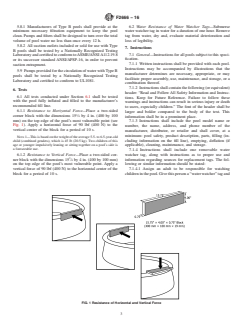
FIG. 1 Resistance of Horizontal and Vertical Force
7.1.2 Instructions shall contain the following (or equivalent) header: “Read and Follow All Safety Information and Instructions.
Keep for Future Reference. Failure to follow these warnings and instructions can result in serious injury or death to users,
especially children.” The font of the header shouldshall be larger and bolder compared to the body of the text. This information
shall be in a prominent place.
7.1.3 Instructions shall include the pool model name or number, the name, address, and phone number of the manufacturer,
distributor, or retailer and shall cover, at a minimum: pool safety, product description, parts and assembly (including where and
how to affix safety signs, if applicable), parts, filling (including information on the fill line), emptying, deflation (if applicable),
cleaning, maintenance, and storage.
7.1.4 Instructions shall include one removable water watcher tag, along with instructions as to proper use and information
regarding sources for replacement tags. The following or similar information should be stated:
7.1.4.1 Assign an adult to be responsible for watching children in the pool. Give this person a “water watcher” tag and ask that
they wear it the entire time they are in charge of supervising children in the pool. If they need to leave for any reason, ask this
person to pass the “water watcher” tag and the supervision responsibility to another adult.
7.1.4.2 An example of such waterwatcher tag can be found in Fig. X1.5.
7.1.5 The instructions shall list for pools with a depth greater than 18 in. (46 cm) shall direct consumers to barrier
recommendations as described in CPSC Pub. No. 362.362 found at www.poolsafely.gov.
7.1.6 The instructions shall make recommendations regarding placement of the pool and shall state that portable pools shall be
set up so that they comply with local safety and building codes.
7.2 Safety information included in printed instructions for all pools subject to this specification.Safety Information Included in
Printed Instructions for All Pools Subject to This Specification:
7.2.1 Information on pool safety shall be located at the beginning of the instructions.
7.2.2 The first item mentioned under pool safety shall be a drowning warning in the format of an ANSI Z535.4-consistent safety
label. This warning shall include a signal word panel (including the hazard alert symbol), a pictorial panel, and a message panel.
The warning shall be offset from other text through the use of borders. The signal word shall be “WARNING.” The background
color for the signal word panel shall be orange, except for instruction manuals that are printed exclusively in black and white or
monochromatic. In such cases, the warning may be printed in black and white. The pictorial shall represent direct supervision of
young children. An example of such a warning can be found in Appendix X1. The text of the message panel shall state these or
equivalent words:
F2666 − 16
Children, especially children younger than five years, are at high risk
of drowning.
Drowning occurs silently and quickly and can occur in as little as 2
in. (5 cm) of water.
Keep children in your direct sight, stay close, and actively supervise
them when they are in or near this pool and when you are filling and
emptying this pool.
When searching for a missing child, check the pool first, even if child
is thought to be in the house.
Empty pool completely after each use and store the empty pool in
such a way that it does not collect water from rain or any other
source.
7.2.1 The remainder of the safety section shall advise the following (or equivalent):Safety information and warnings shall be
presented at the front of the instruction booklet. The first item mentioned under pool safety shall be an ANSI Z535.4-consistent
warning pertaining to the drowning hazard. This warning shall include the following: (1) a safety alert symbol in the signal word
panel; (2) a pictorial panel; and (3) a message panel that clearly states the hazard and how to avoid it.
Drowning Risk:
Keep unsupervised children from accessing the pool by installing
fencing or other approved barrier around all sides of pool. State or
local laws or codes may require fencing or other approved barriers.
Check state or local laws and codes before setting up pool.
Remove pool ladders before leaving the pool. Children as young as
2 years have climbed up ladders and into pools and drowned.
Do not leave toys inside pool when finished using, since toys and
similar items might attract a child to the pool.
Position furniture (for example, tables, chairs) away from pool and
so that children cannot climb on it to gain access to the pool.
After using pool, remove water to a level of ⁄2 in. (1 cm) or less.
Diving Risk:
Do not dive into this pool. Diving into shallow water can result in a
broken neck, paralysis, or death.
Electrocution Risk:
Keep all electrical lines, radios, speakers and other electrical
appliances away from the pool.
Do not place pool near or under overhead electrical lines.
First Aid:
Keep a working phone and a list of emergenc
...