

ASTM D6044-21
(Guide)Standard Guide for Representative Sampling for Management of Waste and Contaminated Media
General Information
- Abstract
SIGNIFICANCE AND USE
4.1 This guide defines the meaning of a representative sample, as well as the attributes the sample(s) needs to have in order to provide a valid inference from the sample data to the population.
4.2 This guide also provides a process to identify the sources of error (both systematic and random) so that an effort can be made to control or minimize these errors. These sources include sampling error, measurement error, and statistical bias.
4.3 When the objective is limited to the taking of a representative (physical) sample or a representative set of (physical) samples, only potential sampling errors need to be considered. When the objective is to make an inference from the sample data to the population, additional measurement error and statistical bias need to be considered.
4.4 This guide does not apply to the cases where the taking of a nonrepresentative sample(s) is prescribed by the study objective. In that case, sampling approaches such as judgment sampling or biased sampling can be taken. These approaches are not within the scope of this guide.
4.5 Following this guide does not guarantee that representative samples will be obtained. But failure to follow this guide will likely result in obtaining sample data that are either biased or imprecise, or both. Following this guide should increase the level of confidence in making the inference from the sample data to the population.
4.6 This guide can be used in conjunction with the DQO process (see Practice D5792).
4.7 This guide is intended for those who manage, design, and implement sampling and analytical plans for waste management and contaminated media.
SCOPE
1.1 This guide covers the definition of representativeness in environmental sampling, identifies sources that can affect representativeness (especially bias), and describes the attributes that a representative sample or a representative set of samples should possess. For convenience, the term “representative sample” is used in this guide to denote both a representative sample and a representative set of samples, unless otherwise qualified in the text.
1.2 This guide outlines a process by which a representative sample may be obtained from a population. The purpose of the representative sample is to provide information about a statistical parameter(s) (such as mean) of the population regarding some characteristic(s) (such as concentration) of its constituent(s) (such as lead). This process includes the following stages: (1) minimization of sampling bias and optimization of precision while taking the physical samples, (2) minimization of measurement bias and optimization of precision when analyzing the physical samples to obtain data, and (3) minimization of statistical bias when making inferences from the sample data to the population. While both bias and precision are covered in this guide, major emphasis is given to bias reduction.
1.3 This guide describes the attributes of a representative sample and presents a general methodology for obtaining representative samples. It does not, however, provide specific or comprehensive sampling procedures. It is the user's responsibility to ensure that proper and adequate procedures are used.
1.4 The assessment of the representativeness of a sample is not covered in this guide since it is not possible to ever know the true value of the population.
1.5 Since the purpose of each sampling event is unique, this guide does not attempt to give a step-by-step account of how to develop a sampling design that results in the collection of representative samples.
1.6 Appendix X1 contains two case studies which discuss the factors for obtaining representative samples.
1.7 This standard does not purport to address all of the safety concerns, if any, associated with its use. It is the responsibility of the user of this standard to establish appropriate safety, health, and environmental practices and determine the applicabi...
- Status
- Published
- Publication Date
- 30-Sep-2021
- Technical Committee
- D34 - Waste Management
- Drafting Committee
- D34.01.01 - Planning for Sampling
Buy Documents
ASTM D6044-21 - Standard Guide for Representative Sampling for Management of Waste and Contaminated Media
REDLINE ASTM D6044-21 - Standard Guide for Representative Sampling for Management of Waste and Contaminated Media
Overview
ASTM D6044-21 is the Standard Guide for Representative Sampling for Management of Waste and Contaminated Media, published by ASTM International. This guide defines what constitutes a representative sample in the context of environmental sampling, specifically for waste and contaminated media. It addresses critical aspects of bias and precision, outlines potential sources of error, and describes attributes necessary for a valid, representative sample. ASTM D6044-21 supports environmental professionals-including those who plan, manage, design, and implement sampling programs-in developing reliable sampling and analytical strategies that strengthen the quality of environmental data.
Key Topics
- Definition of Representative Sample: Clarifies that a representative sample or set accurately reflects population characteristics relevant to the study objectives.
- Sources of Error: Identifies systematic (bias) and random (variance) errors impacting sample representativeness, including:
- Sampling error
- Measurement error
- Statistical bias
- Importance of Bias Reduction: Emphasizes minimizing bias (systematic error) as the most crucial step for valid sample-to-population inferences.
- Precision Considerations: Highlights the relationship between population heterogeneity, sample volume/number, and resulting data precision.
- Population and Sample Design: Outlines the importance of clearly defining both target and sampled populations, understanding strata within populations, and applying suitable sampling strategies.
- When the Guide Is Applicable: Focuses on acquiring representative samples unless study objectives specifically require nonrepresentative (e.g., judgmental or biased) samples, which are outside the document’s scope.
- Integration with Data Quality Objectives: Suggests using this guide alongside the Data Quality Objectives (DQO) process (refer to ASTM D5792).
Applications
ASTM D6044-21 applies to a wide range of environmental sampling scenarios, including:
- Waste Management: Collection of samples from landfills, waste storage sites, treatment facilities, and contaminated soils to infer the presence and concentration of hazardous substances.
- Contaminated Media Sampling: Assessment of environmental media (soil, water, sediment) to determine the extent and nature of contamination for regulatory compliance, remediation, and risk assessment.
- Sampling Plan Development: Designing robust, defensible sampling plans that minimize bias and optimize precision in both field and laboratory stages of environmental investigations.
- Environmental Data Validation: Increasing confidence in data-driven decisions, such as determining compliance with regulatory limits, verifying cleanup effectiveness, and supporting site risk evaluations.
Typical users of ASTM D6044-21 include environmental engineers, consultants, laboratory managers, regulators, and site investigators responsible for environmental site characterization and waste management activities.
Related Standards
ASTM D6044-21 references and complements several other ASTM guidelines and practices, including:
- ASTM D5792 - Practice for Generation of Environmental Data Related to Waste Management Activities: Development of Data Quality Objectives
- ASTM D6051 - Guide for Composite Sampling and Field Subsampling for Environmental Waste Management Activities
- ASTM D5956 - Guide for Sampling Strategies for Heterogeneous Wastes
- ASTM D3370 - Practices for Sampling Water from Flowing Process Streams
- ASTM D4700 - Guide for Soil Sampling from the Vadose Zone
- ASTM D4448 - Guide for Sampling Ground-Water Monitoring Wells
- ASTM D5088 - Practice for Decontamination of Field Equipment Used at Waste Sites
These related standards help users achieve comprehensive, consistent, and high-quality results when conducting environmental sampling and analysis for waste and contaminated media.
By following ASTM D6044-21, practitioners can systematically design sampling programs that maximize data reliability and stakeholder confidence, ensuring sound environmental management decisions.
Relations
- Effective Date
- 01-Nov-2023
- Effective Date
- 01-Nov-2023
- Effective Date
- 01-May-2020
- Effective Date
- 15-Feb-2020
- Effective Date
- 01-Nov-2019
- Effective Date
- 01-Oct-2019
- Effective Date
- 01-Feb-2019
- Effective Date
- 01-Nov-2018
- Effective Date
- 01-Sep-2017
- Effective Date
- 01-Nov-2016
- Effective Date
- 01-Feb-2016
- Effective Date
- 01-Sep-2015
- Effective Date
- 01-Sep-2015
- Effective Date
- 01-Aug-2015
- Effective Date
- 15-Jan-2015
Buy Documents
ASTM D6044-21 - Standard Guide for Representative Sampling for Management of Waste and Contaminated Media
REDLINE ASTM D6044-21 - Standard Guide for Representative Sampling for Management of Waste and Contaminated Media
Get Certified
Connect with accredited certification bodies for this standard

BSI Group
BSI (British Standards Institution) is the business standards company that helps organizations make excellence a habit.

Bureau Veritas
Bureau Veritas is a world leader in laboratory testing, inspection and certification services.

DNV
DNV is an independent assurance and risk management provider.
Sponsored listings
Frequently Asked Questions
ASTM D6044-21 is a guide published by ASTM International. Its full title is "Standard Guide for Representative Sampling for Management of Waste and Contaminated Media". This standard covers: SIGNIFICANCE AND USE 4.1 This guide defines the meaning of a representative sample, as well as the attributes the sample(s) needs to have in order to provide a valid inference from the sample data to the population. 4.2 This guide also provides a process to identify the sources of error (both systematic and random) so that an effort can be made to control or minimize these errors. These sources include sampling error, measurement error, and statistical bias. 4.3 When the objective is limited to the taking of a representative (physical) sample or a representative set of (physical) samples, only potential sampling errors need to be considered. When the objective is to make an inference from the sample data to the population, additional measurement error and statistical bias need to be considered. 4.4 This guide does not apply to the cases where the taking of a nonrepresentative sample(s) is prescribed by the study objective. In that case, sampling approaches such as judgment sampling or biased sampling can be taken. These approaches are not within the scope of this guide. 4.5 Following this guide does not guarantee that representative samples will be obtained. But failure to follow this guide will likely result in obtaining sample data that are either biased or imprecise, or both. Following this guide should increase the level of confidence in making the inference from the sample data to the population. 4.6 This guide can be used in conjunction with the DQO process (see Practice D5792). 4.7 This guide is intended for those who manage, design, and implement sampling and analytical plans for waste management and contaminated media. SCOPE 1.1 This guide covers the definition of representativeness in environmental sampling, identifies sources that can affect representativeness (especially bias), and describes the attributes that a representative sample or a representative set of samples should possess. For convenience, the term “representative sample” is used in this guide to denote both a representative sample and a representative set of samples, unless otherwise qualified in the text. 1.2 This guide outlines a process by which a representative sample may be obtained from a population. The purpose of the representative sample is to provide information about a statistical parameter(s) (such as mean) of the population regarding some characteristic(s) (such as concentration) of its constituent(s) (such as lead). This process includes the following stages: (1) minimization of sampling bias and optimization of precision while taking the physical samples, (2) minimization of measurement bias and optimization of precision when analyzing the physical samples to obtain data, and (3) minimization of statistical bias when making inferences from the sample data to the population. While both bias and precision are covered in this guide, major emphasis is given to bias reduction. 1.3 This guide describes the attributes of a representative sample and presents a general methodology for obtaining representative samples. It does not, however, provide specific or comprehensive sampling procedures. It is the user's responsibility to ensure that proper and adequate procedures are used. 1.4 The assessment of the representativeness of a sample is not covered in this guide since it is not possible to ever know the true value of the population. 1.5 Since the purpose of each sampling event is unique, this guide does not attempt to give a step-by-step account of how to develop a sampling design that results in the collection of representative samples. 1.6 Appendix X1 contains two case studies which discuss the factors for obtaining representative samples. 1.7 This standard does not purport to address all of the safety concerns, if any, associated with its use. It is the responsibility of the user of this standard to establish appropriate safety, health, and environmental practices and determine the applicabi...
SIGNIFICANCE AND USE 4.1 This guide defines the meaning of a representative sample, as well as the attributes the sample(s) needs to have in order to provide a valid inference from the sample data to the population. 4.2 This guide also provides a process to identify the sources of error (both systematic and random) so that an effort can be made to control or minimize these errors. These sources include sampling error, measurement error, and statistical bias. 4.3 When the objective is limited to the taking of a representative (physical) sample or a representative set of (physical) samples, only potential sampling errors need to be considered. When the objective is to make an inference from the sample data to the population, additional measurement error and statistical bias need to be considered. 4.4 This guide does not apply to the cases where the taking of a nonrepresentative sample(s) is prescribed by the study objective. In that case, sampling approaches such as judgment sampling or biased sampling can be taken. These approaches are not within the scope of this guide. 4.5 Following this guide does not guarantee that representative samples will be obtained. But failure to follow this guide will likely result in obtaining sample data that are either biased or imprecise, or both. Following this guide should increase the level of confidence in making the inference from the sample data to the population. 4.6 This guide can be used in conjunction with the DQO process (see Practice D5792). 4.7 This guide is intended for those who manage, design, and implement sampling and analytical plans for waste management and contaminated media. SCOPE 1.1 This guide covers the definition of representativeness in environmental sampling, identifies sources that can affect representativeness (especially bias), and describes the attributes that a representative sample or a representative set of samples should possess. For convenience, the term “representative sample” is used in this guide to denote both a representative sample and a representative set of samples, unless otherwise qualified in the text. 1.2 This guide outlines a process by which a representative sample may be obtained from a population. The purpose of the representative sample is to provide information about a statistical parameter(s) (such as mean) of the population regarding some characteristic(s) (such as concentration) of its constituent(s) (such as lead). This process includes the following stages: (1) minimization of sampling bias and optimization of precision while taking the physical samples, (2) minimization of measurement bias and optimization of precision when analyzing the physical samples to obtain data, and (3) minimization of statistical bias when making inferences from the sample data to the population. While both bias and precision are covered in this guide, major emphasis is given to bias reduction. 1.3 This guide describes the attributes of a representative sample and presents a general methodology for obtaining representative samples. It does not, however, provide specific or comprehensive sampling procedures. It is the user's responsibility to ensure that proper and adequate procedures are used. 1.4 The assessment of the representativeness of a sample is not covered in this guide since it is not possible to ever know the true value of the population. 1.5 Since the purpose of each sampling event is unique, this guide does not attempt to give a step-by-step account of how to develop a sampling design that results in the collection of representative samples. 1.6 Appendix X1 contains two case studies which discuss the factors for obtaining representative samples. 1.7 This standard does not purport to address all of the safety concerns, if any, associated with its use. It is the responsibility of the user of this standard to establish appropriate safety, health, and environmental practices and determine the applicabi...
ASTM D6044-21 is classified under the following ICS (International Classification for Standards) categories: 13.020.10 - Environmental management. The ICS classification helps identify the subject area and facilitates finding related standards.
ASTM D6044-21 has the following relationships with other standards: It is inter standard links to ASTM D5681-23, ASTM D5792-10(2023), ASTM D5088-20, ASTM D7929-20, ASTM D4823-95(2019), ASTM D6286-19, ASTM D4448-01(2019), ASTM D5681-18, ASTM D5681-17, ASTM D5681-16a, ASTM D5681-16, ASTM D4547-15, ASTM D5792-10(2015), ASTM D5088-15a, ASTM D5088-15. Understanding these relationships helps ensure you are using the most current and applicable version of the standard.
ASTM D6044-21 is available in PDF format for immediate download after purchase. The document can be added to your cart and obtained through the secure checkout process. Digital delivery ensures instant access to the complete standard document.
Standards Content (Sample)
This international standard was developed in accordance with internationally recognized principles on standardization established in the Decision on Principles for the
Development of International Standards, Guides and Recommendations issued by the World Trade Organization Technical Barriers to Trade (TBT) Committee.
Designation: D6044 − 21
Standard Guide for
Representative Sampling for Management of Waste and
Contaminated Media
This standard is issued under the fixed designation D6044; the number immediately following the designation indicates the year of
original adoption or, in the case of revision, the year of last revision.Anumber in parentheses indicates the year of last reapproval.A
superscript epsilon (´) indicates an editorial change since the last revision or reapproval.
1. Scope 1.6 Appendix X1 contains two case studies which discuss
the factors for obtaining representative samples.
1.1 This guide covers the definition of representativeness in
1.7 This standard does not purport to address all of the
environmental sampling, identifies sources that can affect
safety concerns, if any, associated with its use. It is the
representativeness (especially bias), and describes the attri-
responsibility of the user of this standard to establish appro-
butes that a representative sample or a representative set of
priate safety, health, and environmental practices and deter-
samples should possess. For convenience, the term “represen-
mine the applicability of regulatory limitations prior to use.
tative sample” is used in this guide to denote both a represen-
1.8 This international standard was developed in accor-
tative sample and a representative set of samples, unless
dance with internationally recognized principles on standard-
otherwise qualified in the text.
ization established in the Decision on Principles for the
1.2 This guide outlines a process by which a representative
Development of International Standards, Guides and Recom-
samplemaybeobtainedfromapopulation.Thepurposeofthe
mendations issued by the World Trade Organization Technical
representative sample is to provide information about a statis-
Barriers to Trade (TBT) Committee.
tical parameter(s) (such as mean) of the population regarding
some characteristic(s) (such as concentration) of its constitu-
2. Referenced Documents
ent(s) (such as lead). This process includes the following
2.1 ASTM Standards:
stages: (1) minimization of sampling bias and optimization of
D3370Practices for Sampling Water from Flowing Process
precision while taking the physical samples, (2) minimization
Streams
of measurement bias and optimization of precision when
D4448GuideforSamplingGround-WaterMonitoringWells
analyzing the physical samples to obtain data, and (3) minimi-
D4547Guide for Sampling Waste and Soils for Volatile
zation of statistical bias when making inferences from the
Organic Compounds
sample data to the population. While both bias and precision
D4823Guide for Core Sampling Submerged, Unconsoli-
are covered in this guide, major emphasis is given to bias
dated Sediments
reduction.
D5088Practice for Decontamination of Field Equipment
1.3 This guide describes the attributes of a representative
Used at Waste Sites
sample and presents a general methodology for obtaining
D5681Terminology for Waste and Waste Management
representative samples. It does not, however, provide specific
D5792Practice for Generation of Environmental Data Re-
or comprehensive sampling procedures. It is the user’s respon-
lated to Waste Management Activities: Development of
sibilitytoensurethatproperandadequateproceduresareused.
Data Quality Objectives
1.4 The assessment of the representativeness of a sample is
D5956Guide for Sampling Strategies for Heterogeneous
not covered in this guide since it is not possible to ever know
Wastes
the true value of the population.
D6051Guide for Composite Sampling and Field Subsam-
pling for Environmental Waste Management Activities
1.5 Sincethepurposeofeachsamplingeventisunique,this
D6169Guide for Selection of Soil and Rock Sampling
guidedoesnotattempttogiveastep-by-stepaccountofhowto
Devices Used With Drill Rigs for Environmental Investi-
develop a sampling design that results in the collection of
gations
representative samples.
D6286Guide for Selection of Drilling and Direct Push
This guide is under the jurisdiction of ASTM Committee D34 on Waste
Management and is the direct responsibility of Subcommittee D34.01.01 on
Planning for Sampling. For referenced ASTM standards, visit the ASTM website, www.astm.org, or
Current edition approved Oct. 1, 2021. Published October 2021. Originally contact ASTM Customer Service at service@astm.org. For Annual Book of ASTM
approved in 1996. Last previous edition approved in 2015 as D6044–96 (2015). Standards volume information, refer to the standard’s Document Summary page on
DOI: 10.1520/D6044-21. the ASTM website.
Copyright © ASTM International, 100 Barr Harbor Drive, PO Box C700, West Conshohocken, PA 19428-2959. United States
D6044 − 21
Methods for Geotechnical and Environmental Subsurface 3.2.6 error, n—the random or systematic deviation of the
Site Characterization observed sample value from its true value (see bias and
D6634Guide for Selection of Purging and Sampling De- sampling error).
vices for Groundwater Monitoring Wells
3.2.7 homogeneity,n—theconditionofthepopulationunder
D6771Practice for Low-Flow Purging and Sampling for
which all items of the population are identical with respect to
Wells and Devices Used for Ground-Water Quality Inves-
the characteristic(s) of interest.
tigations
3.2.8 judgment sampling, n—takingofasample(s)basedon
D7929Guide for Selection of Passive Techniques for Sam-
judgment that it will more or less represent the average
pling Groundwater Monitoring Wells
condition of the population.
3.2.8.1 Discussion—The sampling location(s) is selected
3. Terminology
because it is judged to be representative of the average
3.1 Definitions—For definitions of terms used in this
condition of the population. It can be effective when the
standard, refer to Terminology D5681.
populationisrelativelyhomogeneousorwhentheprofessional
judgment is good. It may or may not introduce bias. It is a
3.2 Definitions of Terms Specific to This Standard:
usefulsamplingapproachwhenprecisionisnotaconcern.This
3.2.1 analytical unit, n—the actual amount of the sample
is one form of authoritative sampling (see biased sampling).
material analyzed in the laboratory.
3.2.9 representativesample,n—asamplecollectedinsucha
3.2.2 bias, n—a systematic positive or negative deviation of
mannerthatitreflectsoneormorecharacteristicsofinterest(as
the sample or estimated value from the true population value.
defined by the project objectives) of a population from which
3.2.2.1 Discussion—This guide discusses three sources of
it is collected.
bias: sampling bias, measurement bias, and statistical bias.
3.2.9.1 Discussion—Arepresentativesamplecanbeasingle
3.2.2.2 Discussion—There is a sampling bias when the
sample, a collection of samples, or one or more composite
value inherent in the physical samples is systematically differ-
samples.Asingle sample can be representative only when the
ent from what is inherent in the population.
population is highly homogeneous.
3.2.2.3 Discussion—There is a measurement bias when the
3.2.10 sample, n—one or more items or portions collected
measurement process produces a sample value systematically
from a lot or population.
different from that inherent in the sample itself, although the
3.2.10.1 Discussion—Sample is a term with numerous
physical sample is itself unbiased. Measurement bias can also
meanings. The scientist collecting physical samples (for
include any systematic difference between the original sample
example, from a landfill, drum, or monitoring well) or analyz-
and the sample analyzed, when the analyzed sample may have
ingsamplesconsidersasampletobethatunitofthepopulation
been altered due to improper procedures such as improper
that was collected and placed in a container. A statistician
sample preservation or preparation, or both.
considers a sample to be a subset of the population, and this
3.2.2.4 Discussion—There is a statistical bias when, in the
subset may consist of one or more physical samples. To
absence of sampling bias and measurement bias, the statistical
minimize confusion, the term sample, as used in this guide, is
procedure produces a biased estimate of the population value.
a reference to either a physical sample held in a sample
3.2.2.5 Discussion—Sampling bias is considered the most
container, or that portion of the population that is subjected to
important factor affecting inference from the samples to the
in-situ measurements, or a set of physical samples. See
population.
representative sample.
3.2.10.2 Discussion—The term sample size also means dif-
3.2.3 biased sampling, n—the taking of a sample(s) with
ferent things to the scientist and the statistician. To avoid
priorknowledgethatthesamplingresultwillbebiasedrelative
confusion, terms such as sample mass/sample volume and
to the true value of the population.
number of samples are used instead of sample size.
3.2.3.1 Discussion—This is the taking of a sample(s) based
3.2.11 sampling error, n—the systematic and random devia-
on available information or knowledge, especially in terms of
tions of the sample value from that of the population. The
visible signs or knowledge of contamination. This kind of
systematic error is the sampling bias. The random error is the
sampling is used to detect the presence of localized contami-
sampling variance.
nation or to identify the source of a contamination. The
sampling results are not intended for generalization to the 3.2.11.1 Discussion—Beforethephysicalsamplesaretaken,
potential sampling variance comes from the inherent popula-
entire population. This is one form of authoritative sampling
(see judgment sampling). tion heterogeneity (sometimes called the “fundamental error”;
see heterogeneity). In the physical sampling stage, additional
3.2.4 composite sample, n—a combination of two or more
contributors to sampling variance include random errors in
samples.
collectingthesamples.Afterthesamplesarecollected,another
3.2.5 constituent, n—an element, component, or ingredient
contributor is the random error in the measurement process. In
of the population.
each of these stages, systematic errors can occur as well, but
they are the sources of bias, not sampling variance.
3.2.5.1 Discussion—If a population contains several con-
taminants (such as acetone, lead, and chromium), these con- 3.2.11.2 Discussion—Sampling variance is often used to
taminants are called the constituents of the population. refer to the total variance from the various sources.
D6044 − 21
3.2.12 stratum, n—a subgroup of the population separated necessary to characterize the population, because the popula-
inspaceortime,orboth,fromtheremainderofthepopulation, tion in environmental sampling is usually heterogeneous.
beinginternallysimilarwithrespecttoatargetcharacteristicof
5.3 Constituents and Characteristics—A population can
interest, and different from adjacent strata of the population.
possess many constituents, each with many characteristics.
3.2.12.1 Discussion—A landfill may display spatially sepa-
Usually it is only a subset of these constituents and character-
rated strata, such as old cells containing different wastes than
istics that are of interest in the context of the stated problem.
new cells. A waste pipe may discharge into temporally sepa-
Therefore, samples need to be representative of the population
rated strata of different constituents or concentrations, or both,
only in terms of these constituent(s) and characteristic(s) of
ifnight-shiftproductionvariesfromthedayshift.Inthisguide,
interest. A sampling plan needs to be designed accordingly.
strata refer mostly to the stratification in the concentrations of
5.4 Parameters—Similarly, samples need to be representa-
the same constituent(s).
tiveofthepopulationonlyintheparameter(s)ofinterest.Ifthe
4. Significance and Use interestisonlyinestimatingaparametersuchasthepopulation
mean, then composite samples, when taken correctly, will not
4.1 This guide defines the meaning of a representative
be biased and therefore constitute a representative sample
sample, as well as the attributes the sample(s) needs to have in
(regarding bias) for that parameter. On the other hand, if the
order to provide a valid inference from the sample data to the
interesthappenstobetheestimationofthepopulationvariance
population.
(of individual sampling units), another parameter, then the
4.2 This guide also provides a process to identify the
variance of the composite samples is a biased estimate of the
sources of error (both systematic and random) so that an effort
populationvarianceandthereforeisnotrepresentative.(Itisto
canbemadetocontrolorminimizetheseerrors.Thesesources
be noted that composite samples are often used to increase the
include sampling error, measurement error, and statistical bias.
precisioninestimatingthepopulationmeanandnottoestimate
the population variance of individual sampling units.)
4.3 When the objective is limited to the taking of a
representative (physical) sample or a representative set of
5.5 Population—Since the samples are intended to be rep-
(physical) samples, only potential sampling errors need to be
resentative of a population, a population must be well defined,
considered. When the objective is to make an inference from
especially in its spatial or temporal boundaries, or both,
the sample data to the population, additional measurement
according to the study objective.
error and statistical bias need to be considered.
5.6 Representativeness—Theword“reflects”inthisguideis
4.4 This guide does not apply to the cases where the taking
used to mean a certain degree of low bias and high precision
of a nonrepresentative sample(s) is prescribed by the study
when comparing the sample value(s) to the population val-
objective. In that case, sampling approaches such as judgment
ue(s). This is a broad definition of sample representativeness
sampling or biased sampling can be taken. These approaches
used in this guide.Anarrower definition of representativeness
are not within the scope of this guide.
is often used to mean simply the absence of bias.
4.5 Following this guide does not guarantee that represen-
5.6.1 Bias—Bias is sometimes mistakenly taken to be “a
tativesampleswillbeobtained.Butfailuretofollowthisguide
differencebetweentheobservedvalueofaphysicalsampleand
willlikelyresultinobtainingsampledatathatareeitherbiased
the true population value.” The correct definition of bias is “a
or imprecise, or both. Following this guide should increase the
systematic (or consistent) difference between an observed
level of confidence in making the inference from the sample
(sample) value and the true population value.” The word
data to the population.
“systematic” here implies “on the average” over a set of
physical samples, and not a single physical sample. Recall that
4.6 This guide can be used in conjunction with the DQO
sampling error consists of the random and systematic devia-
process (see Practice D5792).
tions of a sample (or estimated) value from that of the
4.7 This guide is intended for those who manage, design,
population. Although random deviations may occur on occa-
and implement sampling and analytical plans for waste man-
sions due to imprecision in the sampling or measurement
agement and contaminated media.
processes, or both, they balance out on the average and lead to
no systematic difference between the sample (or estimated)
5. Representative Samples
value and the population value. The random deviation corre-
5.1 Samples are taken to make inferences about some
sponds to the observation of “a random difference between a
statistical parameter(s) of the population regarding some char-
single physical sample value and the true population value,”
acteristic(s)ofitsconstituent(s)ofinterest.Thisisdiscussedin
which can be randomly positive or negative, and is not a bias.
the following sections.
On the other hand, a persistent positive or negative difference
is a systematic error and is a bias.
5.2 Samples—When a representative sample consists of a
single physical sample, it is a sample that by itself reflects the 5.6.1.1 In order to assess bias, the true population value
characteristics of interest of the population. On the other hand, must be known. Since the true population value is rarely
when a representative sample consists of a set of physical known, bias cannot be quantitatively assessed. However, this
samples, the samples collectively reflect some characteristics guideprovidesanapproachtoidentifyingthepotentialsources
of the population, though the samples individually may not be of bias and general considerations for controlling or minimiz-
representative.Inmostcases,morethanonephysicalsampleis ing these potential biases.
D6044 − 21
5.6.2 Precision—Precision has to do with the level of
confidenceinestimatingthepopulationvalueusingthesample
data. If the population is totally homogeneous and the mea-
surement process is flawless, a single sample will provide a
completely precise estimate of the population value. When the
population is heterogeneous or the measurement process is not
totallyprecise,orboth,alargernumberofsampleswillprovide
a more precise estimate than a smaller number of samples.
5.6.2.1 In the case of bias, the goal in environmental
sampling is its absence. In the case of precision, the goal in
sampling will depend on factors such as:
(1)Theprecisionlevelneededtoachievethedesiredlevels
ofdecisionerrors,bothfalsepositiveandfalsenegativeerrors,
(2)Ifthetruevalueisknownorsuspectedtobewellbelow
the regulatory limit, high precision in the samples may not be
needed, and
(3)The study budget.
5.6.2.2 Notethattheseconditemappliessimilarlytobiasas
well.
5.6.2.3 Since bias, especially during sampling, can be very
largewhenproperproceduresarenotfollowed,itisconsidered
to be the first necessary condition for sample representative-
ness. On the other hand, precision can be more or less
controlled, for example, by increasing the number of samples
taken or by decreasing the sampling or measurement
variabilities, or both.
5.6.2.4 The optimal number of samples to take to achieve a
desired level of precision is typically an issue in optimization
of a sampling plan. Therefore, the precision issue will be
covered only briefly in this guide.
6. A Systematic Approach to Representative Sampling
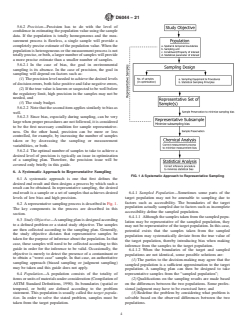
FIG. 1 A Systematic Approach to Representative Sampling
6.1 A systematic approach is one that first defines the
desired end result and then designs a process by which such a
result can be obtained. In representative sampling, the desired
end result is a sample or a set of samples that achieves desired 6.4.1 Sampled Population—Sometimes some parts of the
levels of low bias and high precision. target population may not be amenable to sampling due to
factors such as accessibility. The boundaries of the target
6.2 ArepresentativesamplingprocessisdescribedinFig.1.
population actually sampled due to factors such as incomplete
The key components in the process are described in this
accessibility define the sampled population.
section.
6.4.1.1 Althoughthesamplestakenfromthesampledpopu-
6.3 StudyObjective—Asamplingplanisdesignedaccording
lation may be representative of the sampled population, they
to a defined problem or a stated study objective. The samples
maynotberepresentativeofthetargetpopulation.Inthiscase,
are then collected according to the sampling plan. Generally,
potential exists that the samples taken from the sampled
the study objective dictates that representative samples be
population may systematically deviate from the true value of
taken for the purpose of inference about the population. In that
the target population, thereby introducing bias when making
case, these samples will need to be collected according to this
inference from the samples to the target population.
guide in order for the inference to be valid. Occasionally, the
6.4.1.2 When the boundaries of the target and sampled
objective is merely to detect the presence of a contaminant or
populations are not identical, some possible solutions are:
to obtain a “worst case” sample. In that case, an authoritative
(1)The parties to the decision-making may agree that the
sampling approach (biased sampling or judgment sampling)
sampled population is a sufficient approximation to the target
may be taken and this guide does not apply.
population. A sampling plan can then be designed to take
6.4 Population—A population consists of the totality of representative samples from the “sampled population”;
itemsorunitsofmaterialsunderconsideration(Compilationof (2)Qualifications on the sampling results are made based
ASTM Standard Definitions, 1990). Its boundaries (spatial or on the differences between the two populations. Some profes-
temporal, or both) are defined according to the problem sional judgment may have to be exercised here; and
statement. This population is usually called the target popula- (3)Redefine the problem by considering what problem is
tion. In order to solve the stated problem, samples must be solvable based on the observed differences between the two
taken from the target population. populations.
D6044 − 21
6.4.1.3 Occasionally, the sampled population is chosen on simple random sampling design will generally produce
purpose to be different from the target population. For samples with minimal bias. Its precision will then depend on
example, an investigator may be interested in the lead content the number of samples taken;
inthesludgeofasurfaceimpoundment(thetargetpopulation). (2)When the population is randomly heterogeneous in
He may decide to take samples from the sludge near the inlet concentrations due to large differences in the materials such as
(sampled population). Thus, the impoundment is the target particle size, a simple random sampling design may still be
population, while the inlet area is the sampled population. If effectiveifthesamplevolume/weightandsamplingequipment
the interest is in the target population, then this is an example are chosen to accommodate the largest particles and thereby
ofabiasedsamplingapproach.Ontheotherhand,theinvolved prevent introduction of bias; and
parties may decide to redefine the target population to include (3)If the population is systematically heterogeneous, such
only the inlet area.Then the target population and the sampled asthepresenceofstratificationinconcentrations,thenasimple
population are identical. Again, the definition of a population random sampling design may not be biased, but will be less
depends on the problem statement. precise than an alternative design such as stratified random
sampling.
6.4.1.4 In yet other circumstances, an investigator may take
only a sample from the population. The following cases are 6.4.3.2 Heterogeneity in the population affects the sampling
possible: variance.Samplingvarianceisafunctionoffactorssuchasthe
(1)Thisonephysicalsamplecanbeasamplefromabiased population heterogeneity and the sample volume or weight. It
samplingapproach,forthepurposeofdetectingthepresenceof is clear that the more heterogeneous the population is, the
a contaminant or identifying the source of contamination. larger the inherent sampling variance is. It is also clear that
Therefore, it is not a representative sample due to its bias; samples of smaller volume or weight will have a higher
(2)This one physical sample can be a sample from sampling variance than those with greater volume or weight.
judgment sampling, for the purpose of estimating the average However, the reduction in sampling variance due to increased
condition of the population. Bias may or may not exist volume or weight may eventually reach a limit. Determination
depending to some degree on the expertise of the sampler; oftheoptimalsamplevolumeorweightisbeyondthescopeof
(3)This sample can be viewed as a population itself if the this guide.
investigator is interested in the sample alone and a result from
6.4.3.3 The proper procedure is to first determine the right
this sample is not to be used to infer to areas outside the
sample volume or weight, then to determine the number of
sample. In this case, no bias exists; and
samples needed for the chosen sample volume or weight.
(4)If this sample is the composite of a few samples taken
6.4.3.4 Since stratification as a phenomenon of population
from the population, bias is likely to be minimal if the original
heterogeneity is fairly common, it is discussed in greater
samples are carefully taken.
details as follows.
6.4.2 Decision Unit—Often a population may be divided
6.4.4 Stratification—There are generally three types of
into several exposure units, cleanup units, or strata. If the
stratification affecting sample representativeness. One is a
environmental management decision is to be made for the
stratification in the distribution of the contaminant concentra-
entire population as a whole, representative samples can be
tion distribution alone. The second is a stratification in sam-
obtained by designs such as a stratified random sampling
plingmaterialsormatricesalone.Thethirdisacombinationof
design. Here the entire population is the decision unit. On the
both types. Stratification of any type is not a big problem
other hand, if the decision is to be made on each unit or
regarding sample representativeness if each stratum is a
stratum, then each unit or stratum is the decision unit. In this
decision unit. In that case, the units in a stratum are by
case, representative sample(s) need to be taken from each unit
definition relatively similar, apart from the random variations
or stratum as if the unit or stratum is the population.
in concentrations. A simple random sampling design can be
6.4.2.1 Iftheunitsorstrataarerelativelysmallinsizeortoo
used to obtain representative samples (unbiased) for each
numeroustotakemanysamplesperunitorstratum,composite
stratum. The question of sample representativeness becomes
sample(s) can be taken from each unit or stratum to increase
more complicated when a decision is to be made over all the
precisionwithoutintroducingbias.Alternatively,ifprecisionis
strata in the population.
not a concern and there is sufficient professional expertise to
6.4.4.1 A Single Representative Sample in a Stratified
avoid bias, a judgment sample(s) can be taken from each unit
Population—Whentheobjectiveistoobtainasingle(physical)
or stratum.
representative sample of all the strata, the sample must be a
6.4.3 Heterogeneity—Heterogeneity is discussed in greater
composite of individual samples from the strata (for example,
detail in Guide D5956.
at least one individual sample per stratum). Here the volumes
6.4.3.1 The degree and extent of population heterogeneity or weights of the individual samples should be proportional to
affect potential bias and precision in the samples. Population the relative stratum sizes. The composite sample so obtained
heterogeneity can be viewed at least in three different ways: wouldbeunbiased.However,sincethereisonlyonecomposite
(1)When the population is heterogeneous in a random sample,precisionofthecompositesamplecannotbeestimated.
manner in only the distribution of the concentration, but not in If there are existing data on the precision of the individual
the physical materials such as particle sizes, designs such as a samples in the strata, then the precision of the composite
D6044 − 21
sample can be inferred from the precision of the individual subsampling, sample preparation and preservation, and proper
samples by theoretical or empirical relationship. See Guide use of the chosen sampling equipment. This is a major source
D6051. affecting precision and bias, especially bias.
6.4.4.2 A Representative Set of Samples—When the popu-
6.5.5 In the case of precision, it can be controlled by things
lation is stratified, a set of samples obtained by statistical such as the number of samples taken, the use of composite
designs such as stratified random sampling, where the number
samples, or more precise sampling techniques. Often, the
of samples to be taken from the strata are proportional to the number of samples to take is considered the key design issue.
relative sizes of the strata, is unbiased and more precise than a
Some considerations regarding precision are:
set of samples taken without considering the stratification.
6.5.5.1 If a population is relatively small compared to the
6.4.5 Parameter(s) of Interest—This refers to the statistical
sample mass/volume and the distribution of the characteristic
parameter such as mean or variance of the population. It is
ofinterestisrandom,itmaybeappropriatetocollectasmaller
often used with a characteristic such as concentration of a
number of samples by a random or systematic sampling
constituent(s) of the population. An example is the mean
approach, and
(parameter)concentration(characteristic)oflead(constituent).
6.5.5.2 If a population is relatively large compared to
Anotherexampleisapopulationofmixtureofsilt-sizecalcium
sample mass/volume and the characteristic of interest is not
carbonate particles and large cobble-siz
...
This document is not an ASTM standard and is intended only to provide the user of an ASTM standard an indication of what changes have been made to the previous version. Because
it may not be technically possible to adequately depict all changes accurately, ASTM recommends that users consult prior editions as appropriate. In all cases only the current version
of the standard as published by ASTM is to be considered the official document.
Designation: D6044 − 96 (Reapproved 2015) D6044 − 21
Standard Guide for
Representative Sampling for Management of Waste and
Contaminated Media
This standard is issued under the fixed designation D6044; the number immediately following the designation indicates the year of
original adoption or, in the case of revision, the year of last revision. A number in parentheses indicates the year of last reapproval. A
superscript epsilon (´) indicates an editorial change since the last revision or reapproval.
1. Scope
1.1 This guide covers the definition of representativeness in environmental sampling, identifies sources that can affect
representativeness (especially bias), and describes the attributes that a representative sample or a representative set of samples
should possess. For convenience, the term “representative sample” is used in this guide to denote both a representative sample and
a representative set of samples, unless otherwise qualified in the text.
1.2 This guide outlines a process by which a representative sample may be obtained from a population. The purpose of the
representative sample is to provide information about a statistical parameter(s) (such as mean) of the population regarding some
characteristic(s) (such as concentration) of its constituent(s) (such as lead). This process includes the following stages: (1)
minimization of sampling bias and optimization of precision while taking the physical samples, (2) minimization of measurement
bias and optimization of precision when analyzing the physical samples to obtain data, and (3) minimization of statistical bias when
making inferenceinferences from the sample data to the population. While both bias and precision are covered in this guide, major
emphasis is given to bias reduction.
1.3 This guide describes the attributes of a representative sample and presents a general methodology for obtaining representative
samples. It does not, however, provide specific or comprehensive sampling procedures. It is the user’s responsibility to ensure that
proper and adequate procedures are used.
1.4 The assessment of the representativeness of a sample is not covered in this guide since it is not possible to ever know the true
value of the population.
1.5 Since the purpose of each sampling event is unique, this guide does not attempt to give a step by step step-by-step account
of how to develop a sampling design that results in the collection of representative samples.
1.6 Appendix X1 contains two case studies,studies which discuss the factors for obtaining representative samples.
1.7 This standard does not purport to address all of the safety concerns, if any, associated with its use. It is the responsibility
of the user of this standard to establish appropriate safety safety, health, and healthenvironmental practices and determine the
applicability of regulatory limitations prior to use.
1.8 This international standard was developed in accordance with internationally recognized principles on standardization
established in the Decision on Principles for the Development of International Standards, Guides and Recommendations issued
by the World Trade Organization Technical Barriers to Trade (TBT) Committee.
This guide is under the jurisdiction of ASTM Committee D34 on Waste Management and is the direct responsibility of Subcommittee D34.01.01 on Planning for
Sampling.
Current edition approved Sept. 1, 2015Oct. 1, 2021. Published September 2015October 2021. Originally approved in 1996. Last previous edition approved in 20092015
as D6044 – 96 (2009).(2015). DOI: 10.1520/D6044-96R15.10.1520/D6044-21.
Copyright © ASTM International, 100 Barr Harbor Drive, PO Box C700, West Conshohocken, PA 19428-2959. United States
D6044 − 21
2. Referenced Documents
2.1 ASTM Standards:
D3370 Practices for Sampling Water from Flowing Process Streams
D4448 Guide for Sampling Ground-Water Monitoring Wells
D4547 Guide for Sampling Waste and Soils for Volatile Organic Compounds
D4700 Guide for Soil Sampling from the Vadose Zone
D4823 Guide for Core Sampling Submerged, Unconsolidated Sediments
D5088 Practice for Decontamination of Field Equipment Used at Waste Sites
D5681 Terminology for Waste and Waste Management
D5792 Practice for Generation of Environmental Data Related to Waste Management Activities: Development of Data Quality
Objectives
D5956 Guide for Sampling Strategies for Heterogeneous Wastes
D6051 Guide for Composite Sampling and Field Subsampling for Environmental Waste Management Activities
D6169 Guide for Selection of Soil and Rock Sampling Devices Used With Drill Rigs for Environmental Investigations
D6286 Guide for Selection of Drilling and Direct Push Methods for Geotechnical and Environmental Subsurface Site
Characterization
D6634 Guide for Selection of Purging and Sampling Devices for Groundwater Monitoring Wells
D6771 Practice for Low-Flow Purging and Sampling for Wells and Devices Used for Ground-Water Quality Investigations
D7929 Guide for Selection of Passive Techniques for Sampling Groundwater Monitoring Wells
3. Terminology
3.1 analytical unit, n—the actual amount of the sample material analyzed in the laboratory.
3.2 bias, n—a systematic positive or negative deviation of the sample or estimated value from the true population value.
3.2.1 Discussion—This guide discusses three sources of bias—sampling bias, measurement bias, and statistical bias.
There is a sampling bias when the value inherent in the physical samples is systematically different from what is inherent in the
population.
There is a measurement bias when the measurement process produces a sample value systematically different from that inherent
in the sample itself, although the physical sample is itself unbiased. Measurement bias can also include any systematic difference
between the original sample and the sample analyzed, when the analyzed sample may have been altered due to improper
procedures such as improper sample preservation or preparation, or both.
There is a statistical bias when, in the absence of sampling bias and measurement bias, the statistical procedure produces a biased
estimate of the population value.
Sampling bias is considered the most important factor affecting inference from the samples to the population.
3.3 biased sampling, n—the taking of a sample(s) with prior knowledge that the sampling result will be biased relative to the true
value of the population.
3.3.1 Discussion—This is the taking of a sample(s) based on available information or knowledge, especially in terms of visible
signs or knowledge of contamination. This kind of sampling is used to detect the presence of localized contamination or to identify
the source of a contamination. The sampling results are not intended for generalization to the entire population. This is one form
of authoritative sampling (see judgment sampling.)
3.4 characteristic, n—a property of items in a sample or population that can be measured, counted, or otherwise observed, such
as viscosity, flash point, or concentration.
3.5 composite sample, n—a combination of two or more samples.
3.6 constituent, n—an element, component, or ingredient of the population.
For referenced ASTM standards, visit the ASTM website, www.astm.org, or contact ASTM Customer Service at service@astm.org. For Annual Book of ASTM Standards
volume information, refer to the standard’s Document Summary page on the ASTM website.
D6044 − 21
3.6.1 Discussion—If a population contains several contaminants (such as acetone, lead, and chromium), these contaminants are
called the constituents of the population.
3.7 Data Quality Objectives, DQOs, n—qualitative and quantitative statements derived from a DQO process describing the
decision rules and the uncertainties of the decision(s) within the context of the problem(s) (see Practice D5792).
3.8 Data Quality Objective Process—a quality management tool based on the Scientific Method and developed by the U.S.
Environmental Protection Agency to facilitate the planning of environmental data collection activities. The DQO process enables
planners to focus their planning efforts by specifying the use of data (the decision), the decision criteria (action level), and the
decision maker’s acceptable decision error rates. The products of the DQO process are the DQOs (see Practice D5792).
3.9 error, n—the random or systematic deviation of the observed sample value from its true value (see bias and sampling error).
3.10 heterogeneity, n—the condition or degree of the population under which all items of the population are not identical with
respect to the characteristic(s) of interest.
3.10.1 Discussion—Although the ultimate interest is in the statistical parameter such as the mean concentration of a constituent
of the population, heterogeneity relates to the presence of differences in the characteristics (for example, concentration) of the units
in the population. It is due to the presence of fundamental heterogeneity (or fundamental error) in the population that sampling
variance arises. Degree of sampling variance defines the degree of precision in estimating the population parameter using the
sample data. The smaller the sampling variance is, the more precise the estimate is. See also sampling error.
3.11 homogeneity, n—the condition of the population under which all items of the population are identical with respect to the
characteristic(s) of interest.
3.12 judgment sampling, n—taking of a sample(s) based on judgment that it will more or less represent the average condition of
the population.
3.12.1 Discussion—The sampling location(s) is selected because it is judged to be representative of the average condition of the
population. It can be effective when the population is relatively homogeneous or when the professional judgment is good. It may
or may not introduce bias. It is a useful sampling approach when precision is not a concern. This is one form of authoritative
sampling (see biased sampling.)
3.13 population, n—the totality of items or units of materials under consideration.
3.14 representative sample, n—a sample collected in such a manner that it reflects one or more characteristics of interest (as
defined by the project objectives) of a population from which it is collected.
3.14.1 Discussion—A representative sample can be a single sample, a collection of samples, or one or more composite samples.
A single sample can be representative only when the population is highly homogeneous.
3.15 representative sampling, n—the process of obtaining a representative sample or a representative set of samples.
3.16 representative set of samples, n—a set of samples that collectively reflect one or more characteristics of interest of a
population from which they were collected. See representative sample.
3.17 sample, n—a portion of material that is taken for testing or for record purposes.
3.17.1 Discussion—Sample is a term with numerous meanings. The scientist collecting physical samples (for example, from a
landfill, drum, or monitoring well) or analyzing samples considers a sample to be that unit of the population that was collected
and placed in a container. A statistician considers a sample to be a subset of the population, and this subset may consist of one
or more physical samples. To minimize confusion, the term sample, as used in this guide, is a reference to either a physical sample
held in a sample container, or that portion of the population that is subjected to in situ measurements, or a set of physical samples.
See representative sample.
D6044 − 21
3.17.1.1 The term sample size also means different things to the scientist and the statistician. To avoid confusion, terms such as
sample mass/sample volume and number of samples are used instead of sample size.
3.1 sampling error—Definitions—the systematic and random deviations of the sample value from that of the population.For
definitions of terms used in this standard, refer to Terminology D5681The systematic error is the .sampling bias. The random error
is the sampling variance.
3.18.1 Discussion—Before the physical samples are taken, potential sampling variance comes from the inherent population
heterogeneity (sometimes called the “fundamental error,” see heterogeneity). In the physical sampling stage, additional
contributors to sampling variance include random errors in collecting the samples. After the samples are collected, another
contributor is the random error in the measurement process. In each of these stages, systematic errors can occur as well, but they
are the sources of bias, not sampling variance.
3.18.1.1 Sampling variance is often used to refer to the total variance from the various sources.
3.19 stratum, n—a subgroup of the population separated in space or time, or both, from the remainder of the population, being
internally similar with respect to a target characteristic of interest, and different from adjacent strata of the population.
3.19.1 Discussion—A landfill may display spatially separated strata, such as old cells containing different wastes than new cells.
A waste pipe may discharge into temporally separated strata of different constituents or concentrations, or both, if night-shift
production varies from the day shift. In this guide, strata refer mostly to the stratification in the concentrations of the same
constituent(s).
3.2 Definitions of Terms Specific to This Standard:
3.2.1 analytical unit, n—the actual amount of the sample material analyzed in the laboratory.
3.2.2 bias, n—a systematic positive or negative deviation of the sample or estimated value from the true population value.
3.2.2.1 Discussion—
This guide discusses three sources of bias: sampling bias, measurement bias, and statistical bias.
3.2.2.2 Discussion—
There is a sampling bias when the value inherent in the physical samples is systematically different from what is inherent in the
population.
3.2.2.3 Discussion—
There is a measurement bias when the measurement process produces a sample value systematically different from that inherent
in the sample itself, although the physical sample is itself unbiased. Measurement bias can also include any systematic difference
between the original sample and the sample analyzed, when the analyzed sample may have been altered due to improper
procedures such as improper sample preservation or preparation, or both.
3.2.2.4 Discussion—
There is a statistical bias when, in the absence of sampling bias and measurement bias, the statistical procedure produces a biased
estimate of the population value.
3.2.2.5 Discussion—
Sampling bias is considered the most important factor affecting inference from the samples to the population.
3.2.3 biased sampling, n—the taking of a sample(s) with prior knowledge that the sampling result will be biased relative to the
true value of the population.
3.2.3.1 Discussion—
This is the taking of a sample(s) based on available information or knowledge, especially in terms of visible signs or knowledge
of contamination. This kind of sampling is used to detect the presence of localized contamination or to identify the source of a
contamination. The sampling results are not intended for generalization to the entire population. This is one form of authoritative
sampling (see judgment sampling).
3.2.4 composite sample, n—a combination of two or more samples.
3.2.5 constituent, n—an element, component, or ingredient of the population.
D6044 − 21
3.2.5.1 Discussion—
If a population contains several contaminants (such as acetone, lead, and chromium), these contaminants are called the constituents
of the population.
3.2.6 error, n—the random or systematic deviation of the observed sample value from its true value (see bias and sampling error).
3.2.7 homogeneity, n—the condition of the population under which all items of the population are identical with respect to the
characteristic(s) of interest.
3.2.8 judgment sampling, n—taking of a sample(s) based on judgment that it will more or less represent the average condition of
the population.
3.2.8.1 Discussion—
The sampling location(s) is selected because it is judged to be representative of the average condition of the population. It can be
effective when the population is relatively homogeneous or when the professional judgment is good. It may or may not introduce
bias. It is a useful sampling approach when precision is not a concern. This is one form of authoritative sampling (see biased
sampling).
3.2.9 representative sample, n—a sample collected in such a manner that it reflects one or more characteristics of interest (as
defined by the project objectives) of a population from which it is collected.
3.2.9.1 Discussion—
A representative sample can be a single sample, a collection of samples, or one or more composite samples. A single sample can
be representative only when the population is highly homogeneous.
3.2.10 sample, n—one or more items or portions collected from a lot or population.
3.2.10.1 Discussion—
Sample is a term with numerous meanings. The scientist collecting physical samples (for example, from a landfill, drum, or
monitoring well) or analyzing samples considers a sample to be that unit of the population that was collected and placed in a
container. A statistician considers a sample to be a subset of the population, and this subset may consist of one or more physical
samples. To minimize confusion, the term sample, as used in this guide, is a reference to either a physical sample held in a sample
container, or that portion of the population that is subjected to in-situ measurements, or a set of physical samples. See
representative sample.
3.2.10.2 Discussion—
The term sample size also means different things to the scientist and the statistician. To avoid confusion, terms such as sample
mass/sample volume and number of samples are used instead of sample size.
3.2.11 sampling error, n—the systematic and random deviations of the sample value from that of the population. The systematic
error is the sampling bias. The random error is the sampling variance.
3.2.11.1 Discussion—
Before the physical samples are taken, potential sampling variance comes from the inherent population heterogeneity (sometimes
called the “fundamental error”; see heterogeneity). In the physical sampling stage, additional contributors to sampling variance
include random errors in collecting the samples. After the samples are collected, another contributor is the random error in the
measurement process. In each of these stages, systematic errors can occur as well, but they are the sources of bias, not sampling
variance.
3.2.11.2 Discussion—
Sampling variance is often used to refer to the total variance from the various sources.
3.2.12 stratum, n—a subgroup of the population separated in space or time, or both, from the remainder of the population, being
internally similar with respect to a target characteristic of interest, and different from adjacent strata of the population.
3.2.12.1 Discussion—
A landfill may display spatially separated strata, such as old cells containing different wastes than new cells. A waste pipe may
discharge into temporally separated strata of different constituents or concentrations, or both, if night-shift production varies from
the day shift. In this guide, strata refer mostly to the stratification in the concentrations of the same constituent(s).
3.20 subsample, n—a portion of the original sample that is taken for testing or for record purposes.
D6044 − 21
4. Significance and Use
4.1 Representative samples are defined in the context of the study objectives.
4.1 This guide defines the meaning of a representative sample, as well as the attributes the sample(s) needs to have in order to
provide a valid inference from the sample data to the population.
4.2 This guide also provides a process to identify the sources of error (both systematic and random) so that an effort can be made
to control or minimize these errors. These sources include sampling error, measurement error, and statistical bias.
4.3 When the objective is limited to the taking of a representative (physical) sample or a representative set of (physical) samples,
only potential sampling errors need to be considered. When the objective is to make an inference from the sample data to the
population, additional measurement error and statistical bias need to be considered.
4.4 This guide does not apply to the cases where the taking of a nonrepresentative sample(s) is prescribed by the study objective.
In that case, sampling approaches such as judgment sampling or biased sampling can be taken. These approaches are not within
the scope of this guide.
4.5 Following this guide does not guarantee that representative samples will be obtained. But failure to follow this guide will likely
result in obtaining sample data that are either biased or imprecise, or both. Following this guide should increase the level of
confidence in making the inference from the sample data to the population.
4.6 This guide can be used in conjunction with the DQO process (see Practice D5792).
4.7 This guide is intended for those who manage, design, and implement sampling and analytical plans for waste management and
contaminated media.
5. Representative Samples
5.1 Samples are taken to infer make inferences about some statistical parameter(s) of the population regarding some
characteristic(s) of its constituent(s) of interest. This is discussed in the following sections.
5.2 Samples—When a representative sample consists of a single physical sample, it is a sample that by itself reflects the
characteristics of interest of the population. On the other hand, when a representative sample consists of a set of physical samples,
the samples collectively reflect some characteristics of the population, though the samples individually may not be representative.
In most cases, more than one physical sample is necessary to characterize the population, because the population in environmental
sampling is usually heterogeneous.
5.3 Constituents and Characteristics—A population can possess many constituents, each with many characteristics. Usually it is
only a subset of these constituents and characteristics that are of interest in the context of the stated problem. Therefore, samples
need to be representative of the population only in terms of these constituent(s) and characteristic(s) of interest. A sampling plan
needs to be designed accordingly.
5.4 Parameters—Similarly, samples need to be representative of the population only in the parameter(s) of interest. If the interest
is only in estimating a parameter such as the population mean, then composite samples, when taken correctly, will not be biased
and therefore constitute a representative sample (regarding bias) for that parameter. On the other hand, if the interest happens to
be the estimation of the population variance (of individual sampling units), another parameter, then the variance of the composite
samples is a biased estimate of the population variance and therefore is not representative. (It is to be noted that composite samples
are often used to increase the precision in estimating the population mean and not to estimate the population variance of individual
sampling units.)
5.5 Population—Since the samples are intended to be representative of a population, a population must be well defined, especially
in its spatial or temporal boundaries, or both, according to the study objective.
D6044 − 21
5.6 Representativeness—The word “reflects” in this guide is used to mean a certain degree of low bias and high precision when
comparing the sample value(s) to the population value(s). This is a broad definition of sample representativeness used in this guide.
A narrower definition of representativeness is often used to mean simply the absence of bias.
5.6.1 Bias—Bias is sometimes mistakenly taken to be “a difference between the observed value of a physical sample and the true
population value.” The correct definition of bias is “a systematic (or consistent) difference between an observed (sample) value and
the true population value.” The word “systematic” here implies “on the average” over a set of physical samples, and not a single
physical sample. Recall that sampling error consists of the random and systematic deviations of a sample (or estimated) value from
that of the population. Although random deviations may occur on occasions due to imprecision in the sampling or measurement
processes, or both, they balance out on the average and lead to no systematic difference between the sample (or estimated) value
and the population value. The random deviation corresponds to the observation of “a random difference between a single physical
sample value and the true population value,” which can be randomly positive or negative, and is not a bias. On the other hand,
a persistent positive or negative difference is a systematic error and is a bias.
5.6.1.1 In order to assess bias, the true population value must be known. Since the true population value is rarely known, bias
cannot be quantitatively assessed. However, this guide provides an approach to identifying the potential sources of bias and general
considerations for controlling or minimizing these potential biases.
5.6.2 Precision—Precision has to do with the level of confidence in estimating the population value using the sample data. If the
population is totally homogeneous and the measurement process is flawless, a single sample will provide a completely precise
estimate of the population value. When the population is heterogeneous or the measurement process is not totally precise, or both,
a larger number of samples will provide a more precise estimate than a smaller number of samples.
5.6.2.1 In the case of bias, the goal in environmental sampling is its absence. In the case of precision, the goal in sampling will
depend on factors such as:
(1) The precision level needed to achieve the desired levels of decision errors, both false positive and false negative errors,
(2) If the true value is known or suspected to be well below the regulatory limit, high precision in the samples may not be
needed, and
(3) The study budget.
5.6.2.2 Note that the second item applies similarly to bias as well.
5.6.2.3 Since bias, especially during sampling, can be very large when proper procedures are not followed, it is considered to be
the first necessary condition for sample representativeness. On the other hand, precision can be more or less controlled, for
example, by increasing the number of samples taken or by decreasing the sampling or measurement variabilities, or both.
5.6.2.4 The optimal number of samples to take to achieve a desired level of precision is typically an issue in optimization of a
sampling plan. Therefore, the precision issue will be covered only briefly in this guide.
6. A Systematic Approach to Representative Sampling
6.1 A systematic approach is one that first defines the desired end result and then designs a process by which such a result can
be obtained. In representative sampling, the desired end result is a sample or a set of samples that achieves desired levels of low
bias and high precision.
6.2 A representative sampling process is described in Fig. 1. The key components in the process are described in this section.
6.3 Study Objective—A sampling plan is designed according to a defined problem or a stated study objective. The samples are then
collected according to the sampling plan. Generally, the study objective dictates that representative samples be taken for the
purpose of inference about the population. In that case, these samples will need to be collected according to this guide in order
for the inference to be valid. Occasionally, the objective is merely to detect the presence of a contaminant or to obtain a “worst
case” sample. In that case, an authoritative sampling approach (biased sampling or judgment sampling) may be taken and this guide
does not apply.
6.4 Population—A population consists of the totality of items or units of materials under consideration (Compilation of ASTM
D6044 − 21
FIG. 1 A Systematic Approach to Representative Sampling
Standard Definitions, 1990). Its boundaries (spatial or temporal, or both) are defined according to the problem statement. This
population is usually called the target population. In order to solve the stated problem, samples must be taken from the target
population.
6.4.1 Sampled Population—Sometimes some parts of the target population may not be amenable to sampling due to factors such
as accessibility. The boundaries of the target population actually sampled due to factors such as incomplete accessibility define the
sampled population.
6.4.1.1 Although the samples taken from the sampled population may be representative of the sampled population, they may not
be representative of the target population. In this case, potential exists that the samples taken from the sampled population may
systematically deviate from the true value of the target population, thereby introducing bias when making inference from the
samples to the target population.
6.4.1.2 When the boundaries of the target and sampled populations are not identical, some possible solutions are:
(1) The parties to the decision-making may agree that the sampled population is a sufficient approximation to the target
population. A sampling plan can then be designed to take representative samples from the “sampled population,”population”;
(2) Qualifications on the sampling results are made based on the differences between the two populations. Some professional
judgment may have to be exercised here,here; and
(3) Redefine the problem by considering what problem is solvable based on the observed differences between the two
populations.
6.4.1.3 Occasionally, the sampled population is chosen on purpose to be different from the target population. For example, an
investigator may be interested in the lead content in the sludge of a surface impoundment (the target population). He may decide
to take samples from the sludge near the inlet (sampled population). Thus, the impoundment is the target population, while the inlet
area is the sampled population. If the interest is in the target population, then this is an example of a biased sampling approach.
D6044 − 21
On the other hand, the involved parties may decide to redefine the target population to include only the inlet area. Then the target
population and the sampled population are identical. Again, the definition of a population depends on the problem statement.
6.4.1.4 In yet other circumstances, an investigator may take only a sample from the population. The following cases are possible:
(1) This one physical sample can be a sample from a biased sampling approach, for the purpose of detecting the presence of
a contaminant or identifying the source of contamination. Therefore, it is not a representative sample due to its bias,bias;
(2) This one physical sample can be a sample from judgment sampling, for the purpose of estimating the average condition
of the population. Bias may or may not exist depending to some degree on the expertise of the sampler,sampler;
(3) This sample can be viewed as a population itself if the investigator is interested in the sample alone and a result from this
sample is not to be used to infer to areas outside the sample. In this case, no bias exists,exists; and
(4) If this sample is the composite of a few samples taken from the population, bias is likely to be minimal if the original
samples are carefully taken.
6.4.2 Decision Unit—Often a population may be divided into several exposure units, cleanup units, or strata. If the environmental
management decision is to be made for the entire population as a whole, representative samples can be obtained by designs such
as a stratified random sampling design. Here the entire population is the decision unit. On the other hand, if the decision is to be
made on each unit or stratum, then each unit or stratum is the decision unit. In this case, representative sample(s) need to be taken
from each unit or stratum as if the unit or stratum is the population.
6.4.2.1 If the units or strata are relatively small in size or too numerous to take many samples per unit or stratum, composite
sample(s) can be taken from each unit or stratum to increase precision without introducing bias. Alternatively, if precision is not
a concern and there is sufficient professional expertise to avoid bias, a judgment sample(s) can be taken from each unit or stratum.
6.4.3 Heterogeneity—Heterogeneity is discussed in greater detail in Guide D5956.
6.4.3.1 The degree and extent of population heterogeneity affect potential bias and precision in the samples. Population
heterogeneity can be viewed at least in three different ways:
(1) When the population is heterogeneous in a random manner in only the distribution of the concentration, but not in the
physical materials such as particle sizes, designs such as a simple random sampling design will generally produce samples with
minimal bias. Its precision will then depend on the number of samples taken,taken;
(2) When the population is randomly heterogeneous in concentrations due to large differences in the materials such as particle
size, a simple random sampling design may still be effective if the sample volume/weight and sampling equipment are chosen to
accommodate the largest particles and thereby prevent introduction of bias,bias; and
(3) If the population is systematically heterogeneous, such as the presence of stratification in concentrations, then a simple
random sampling design may not be biased, but will be less precise than an alternative design such as stratified random sampling.
6.4.3.2 Heterogeneity in the population affects the sampling variance. Sampling variance is a function of factors such as the
population heterogeneity and the sample volume or weight. It is clear that the more heterogeneous the population is, the larger the
inherent sampling variance is. It is also clear that samples of smaller volume or weight will have a higher sampling variance than
those with greater volume or weight. However, the reduction in sampling variance due to increased volume or weight may
eventually reach a limit. Determination of the optimal sample volume or weight is beyond the scope of this guide.
6.4.3.3 The proper procedure is to first determine the right sample volume or weight, then to determine the number of samples
needed for the chosen sample volume or weight.
6.4.3.4 Since stratification as a phenomenon of population heterogeneity is fairly common, it is discussed in greater details as
follows.
6.4.4 Stratification—There are generally three types of stratification affecting sample representativeness. One is a stratification in
the distribution of the contaminant concentration distribution alone. The second is a stratification in sampling materials or matrices
alone. The third is a combination of both types. Stratification of any type is not a big problem regarding sample representativeness
if each stratum is a decision unit. In that case, the units in a stratum are by definition relatively similar, apart from the random
variations in concentrations. A simple random sampling design can be used to obtain representative samples (unbiased) for each
stratum. The question of sample representativeness becomes more complicated when a decision is to be made over all the strata
in the population.
6.4.4.1 A Single Representative Sample in Aa Stratified Population—When the objective is to obtain a single (physical)
representative sample of all the strata, the sample must be a composite of individual samples from the strata (for example, at least
D6044 − 21
one individual sample per stratum). Here the volumes or weights of the individual samples should be proportional to the relative
stratum sizes. The composite sample so obtained would be unbiased. However, since there is only one composite sample, precision
of the composite sample cannot be estimated. If there are existing data on the precision of the individual samples in the strata, then
the precision of the composite sample can be inferred from the precision of the individual samples by theoretical or empirical
relationship. See Guide D6051.
6.4.4.2 A Representative Set of Samples—When the population is stratified, a set of samples obtained by statistical designs such
as stratified random sampling, where the number of samples to be taken from the strata are proportional to the relative sizes of
the strata, is unbiased and more precise than a set of samples taken without considering the stratification.
6.4.5 Parameter(s) of Interest—This refers to the statistical parameter such as mean or variance of the population. It is often used
with a characteristic such as concentration of a constituent(s) of the population. An example is the mean (parameter) concentration
(characteristic) of lead (constituent). Another example is a population of mixture of silt-size calcium carbonate particles and large
cobble-size particles of calcium carbonate. The interest here could be in the mean (parameter) particle size or chemical composition
(characteristic) of calcium carbonate (constituent), depending on the study objective.
6.5 Develop Aa Sampling Design—The objectives of a sampling design are to minimize bias and achieve a desired level of
precision. Precision and bias are an issue at various stages of the process of inferring from the samples to the population. The first
stage is the act of obtaining the physical samples. The second stage is the act of analyzing the physical samples and translating
them into data. The third stage is the use of statistical method to infer from the sample data to the population. At the first stage,
the main concerns are sampling precision and bias. At the second stage, the concerns are measurement of precision and bias. At
the third stage, the concern is statistical bias.
6.5.1 At the first stage of obtaining physical samples, the issues of precision and bias are sometimes grouped together as sampling
design issues.
6.5.2 Bias at this stage is often called the sampling bias. Sampling bias is the systematic difference between the value inherent
in the physical samples and the true population value. The word “inherent” is used because at this point the physical samples have
not been translated into data.
6.5.3 The phrase “systematic difference” implies a persistent difference in long-term average or expectation, not the occasional
random difference. Representative samples, apart from the issue of precision, are obtained when this long-term expected difference
is zero or nearly so.
6.5.4 Since the true population value is typically not known, sampling bias cannot be assessed. However, efforts to minimize
sampling bias can be attempted in at least two areas:
6.5.4.1 Proper Statistical Sampling Design—Statistical sampling design has to do with where and how samples are to be taken,
where equal probability of selecting any of the units or items in the population is often a primary requirement. If the probability
of selection is not equal, it is highly likely that bias will have been introduced into the physical samples so obtained. Depending
on the layout of the population, designs such as simple random sampling or stratified random sampling can be used.
6.5.4.2 Proper Sampling Procedures and Sampling Equipment—This includes proper procedures for compositing, subsampling,
sample preparation and preservation, and proper use of the chosen sampling equipment. This is a major source affecting precision
and bias, especially bias.
6.5.5 In the case of precision, it can be controlled by things such as the number of samples taken, the use of composite samples,
or more precise sampling techniques. Often, the number of samples to take is considered the key design issue. Some considerations
regarding precision are:
6.5.5.1 If a population is relatively small compared to the sample mass/volume and the distribution of the characteristic of interest
is random, it may be appropriate to collect a smaller number of samples by a random or systematic sampling approach, and
6.5.5.2 If a population is relatively large compared to sample mass/volume and the characteristic of interest is not randomly
distributed (for example, stratified), a greater number of samples and a stratified sampling approach may be needed.
6.5.6 Compositing—Compositing is the combination of two or more individual physical samples into a single sample. It is often
D6044 − 21
used to reduce the analytical costs, while maintaining or increasing precision relative to the individual samples (see Guide D6051).
Bias may or may not be introduced in compositing, depending on the study objective and the physical means of compositing. For
example:
6.5.6.1 If the study calls for the estimation of the population variance (or standard deviation) of individual samples, then composite
samples will surely underestimate the population variance, and
6.5.6.2 If the physical means of compositing changes the characteristics of the samples, then bias may have been introduced
(unless such changes are part of the study design).
6.6 Subsampling—Sampling bias can be introduced in subsampling unless the same proper sampling protocol is followed as in
taking samples from the original population.
6.6.1 Discussion—After the physical samples have been obtained and before they are measured, bias can be prevented by
following proper sample preservation and preparation procedures. It is not important whether these procedures are viewed as part
of the sampling process or as part of the measurement process. It is only important in following the proper procedures to prevent
bias.
6.7 Measurement of Precision and Bias:
6.7.1 The measurement process, like the sampling process, also consists of a random error and a systematic error. The random
errors define the degree of measurement precision, and the systematic error defines the degree of measurement bias.
6.7.2 Like sampling precision, measurement precision is controlled by things such as the number of replicate analyses performed
per sample and refinements of the analytical method.
6.7.3 Measurement bias is a systematic difference between the sample value produced by the measurement process and the true
population value, assuming that the physical samples are unbiased before the analysis. The bias can come from contamination, loss
or alteration of the sample materials, systematic errors in the measurement device, or from systematic human errors.
6.7.4 Often the measurement bias can be reasonably estimated in a laboratory testing setting when the true value is known.
Laboratory samples spiked with known quantities of a chemical or certified reference standard can often be used to assess potential
measurement bias. Minimization or adjustment for such estimable bias in the measurement process is essential in order to obtain
data that are unbiased. When estimation of bias is not possible, care in measurement protocol and training is probably the only
recourse.
6.7.4.1 Discussion—It is important to note that, when inferring from the sample data to the population, all the sources of
imprecision, including sampling, subsampling, and measurement, need to be combined. The process of accumulating these sources
of variation is sometimes called the “propagation of errors.” The determination of the optimal numbers of samples, subsamples,
and replicates areis an issue of optimization and is not covered in this guide.
6.8 Statistical Bias—Statistical bias can result from an inappropriate sampling design or inappropriate estimation procedures, or
both:both.
6.8.1 Selection Bias from Sampling Design—In the course of taking the sample, if the population units do not have the same
probability of being selected, bias can be introduced. This bias can be prevented or minimized when a statistical sampling design
is carefully selected, based on the
...