

ASTM C216-23
(Specification)Standard Specification for Facing Brick (Solid Masonry Units Made from Clay or Shale)
General Information
- Abstract
ABSTRACT
This specification covers brick intended for use in masonry and supplying structural or facing components, or both, to the structure. Bricks shall be classified according to their resistance to damage by freezing when saturated at a moisture content: Grade SW and Grade MW. The facing bricks shall be classified into three types: Types FBS; FBX; and FBA. Durability; absorption alternate; freezing and thawing alternative; breakage and weight loss; cracking; low weathering index alternative; compressive strength; and initial rate of absorption requirements shall be tested for the material to meet the specified requirements.
SCOPE
1.1 This specification covers brick intended for use in masonry supplying structural or facing components, or both, to the structure.
1.2 The requirements of this specification apply at the time of purchase. The use of results from testing of brick extracted from masonry structures for determining compliance with the requirements of this specification is beyond the intent of this standard.
1.3 The brick are prismatic units available in a variety of sizes, textures, colors, and shapes. This specification is not intended to provide specifications for paving brick (see Specification C902).
1.4 Brick are ceramic products manufactured primarily from clay, shale, or similar naturally occurring earthy substances and subjected to a heat treatment at elevated temperatures (firing). Additives or recycled materials are permitted to be included at the option of the manufacturer. The heat treatment must develop a fired bond between the particulate constituents to provide the strength and durability requirements of this specification (see Terminology C1232).
1.5 Brick are shaped during manufacture by molding, pressing, or extrusion, and the shaping method is a way to describe the brick.
1.5.1 This standard and its individual requirements shall not be used to qualify or corroborate the performance of a masonry unit made from other materials, or made with other forming methods, or other means of binding the materials.
1.6 Three types of brick in each of two grades are covered.
1.7 The text of this specification references notes and footnotes that provide explanatory material. These notes and footnotes (excluding those in tables and figures) shall not be considered as requirements of the standard.
1.8 The values stated in inch-pound units are to be regarded as standard. The values given in parentheses are mathematical conversions to SI units that are provided for information only and are not considered standard.
1.9 This international standard was developed in accordance with internationally recognized principles on standardization established in the Decision on Principles for the Development of International Standards, Guides and Recommendations issued by the World Trade Organization Technical Barriers to Trade (TBT) Committee.
- Status
- Published
- Publication Date
- 31-May-2023
- Technical Committee
- C15 - Masonry – Manufactured Masonry Units, Mortars and Grouts
- Drafting Committee
- C15.02 - Brick and Structural Clay Tile
Buy Documents
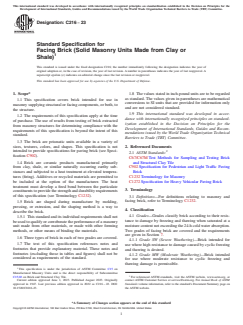
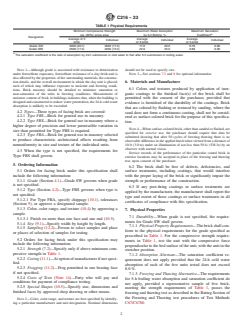
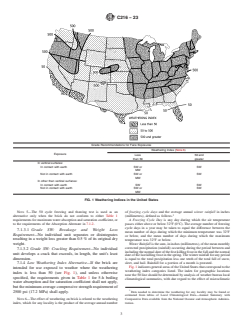
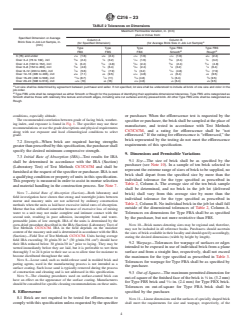
ASTM C216-23 - Standard Specification for Facing Brick (Solid Masonry Units Made from Clay or Shale)
REDLINE ASTM C216-23 - Standard Specification for Facing Brick (Solid Masonry Units Made from Clay or Shale)
Overview
ASTM C216-23: Standard Specification for Facing Brick (Solid Masonry Units Made from Clay or Shale) is an internationally recognized standard developed by ASTM International for masonry units primarily used as structural or facing components in construction. This specification sets the minimum requirements for the physical and appearance properties of clay and shale bricks categorized as facing brick. The standard is vital for manufacturers, architects, engineers, and contractors seeking high-quality, durable, and aesthetically pleasing masonry materials for use in a wide range of building projects.
ASTM C216-23 outlines the performance attributes necessary for bricks intended to resist exposure, endure severe weather, and maintain their appearance over time. It provides detailed criteria for grading, types, sampling, testing, and ordering of facing bricks used in exterior and interior masonry applications.
Key Topics
Brick Grades and Types:
- Grade SW (Severe Weathering): Intended for high resistance to cyclic freezing and thawing - suitable for most exterior applications.
- Grade MW (Moderate Weathering): Permits moderate exposure to freeze-thaw cycles, often used for interior or mild climate conditions.
- Types FBS, FBX, FBA:
- FBS: General use with standard dimensional tolerances.
- FBX: For projects demanding higher precision in size and finish.
- FBA: Emphasizes unique architectural effects, allowing greater variation in size and texture.
Physical Requirements:
- Compressive strength, water absorption, and saturation coefficient are key performance criteria.
- Warpage, dimensional tolerances, chippage, and finish requirements ensure uniformity and quality appearance.
Durability and Testing:
- Bricks must meet specific durability requirements proven through cold water absorption, boiling absorption tests, or freeze-thaw cycling.
- Sampling and testing procedures conform to referenced ASTM methods, ensuring reliable compliance and quality.
Material Composition:
- Bricks are manufactured from clay, shale, or similar earthy substances via molding, extrusion, or pressing, then fired to achieve the required bond and durability.
- The use of recycled additives is permitted.
Applications
ASTM C216-23 facing bricks are integral in a variety of construction applications:
- Building Facades: Ensuring consistent visual appeal, dimensional stability, and weather resistance in exterior walls.
- Structural Masonry: Providing both structural support and design flexibility for load-bearing and veneer walls.
- Architectural Elements: Enabling creative freedom in design with various colors, textures, and shapes, whether in new builds or restoration projects.
- Resilient Construction: Suitable for climates with severe freeze-thaw cycles, ensuring long-term integrity of masonry in challenging environments.
- Interior Masonry: Offering decorative solutions with tailored color, texture, and precision for feature walls and other creative interior elements.
Related Standards
To fully implement ASTM C216-23, familiarity with related ASTM standards is recommended:
- ASTM C67/C67M: Test Methods for Sampling and Testing Brick and Structural Clay Tile. Defines procedures for verifying physical properties.
- ASTM C902: Specification for Pedestrian and Light Traffic Paving Brick. Referenced for paving applications not covered by C216.
- ASTM C1232: Terminology for Masonry. Establishes definitions used within ASTM masonry standards.
- ASTM C1272: Specification for Heavy Vehicular Paving Brick. Applicable for paving in heavy traffic areas.
Keywords: ASTM C216, facing brick, masonry units, clay brick, shale brick, compressive strength, freeze-thaw durability, brick standards, building façade, exterior masonry, brick grading, architectural brick, physical requirements
By adhering to ASTM C216-23, building professionals can specify and use facing bricks that will enhance project durability, structural integrity, and aesthetic results, ensuring compliance with recognized industry benchmarks for masonry construction.
Relations
- Effective Date
- 15-Dec-2023
- Refers
ASTM C67/C67M-19 - Standard Test Methods for Sampling and Testing Brick and Structural Clay Tile - Effective Date
- 01-Jul-2019
- Refers
ASTM C67/C67M-18 - Standard Test Methods for Sampling and Testing Brick and Structural Clay Tile - Effective Date
- 01-Feb-2018
- Effective Date
- 01-Jun-2017
- Effective Date
- 01-Dec-2016
- Effective Date
- 01-Jun-2016
- Effective Date
- 15-Jan-2016
- Effective Date
- 01-Dec-2015
- Effective Date
- 01-Sep-2015
- Effective Date
- 01-Jun-2015
- Effective Date
- 15-Dec-2014
- Effective Date
- 01-Sep-2014
- Effective Date
- 01-Feb-2014
- Effective Date
- 01-Feb-2014
- Effective Date
- 01-Jun-2013
Buy Documents
ASTM C216-23 - Standard Specification for Facing Brick (Solid Masonry Units Made from Clay or Shale)
REDLINE ASTM C216-23 - Standard Specification for Facing Brick (Solid Masonry Units Made from Clay or Shale)
Get Certified
Connect with accredited certification bodies for this standard

DIBt (Deutsches Institut für Bautechnik)
German Institute for Building Technology.
DIN CERTCO
DIN Group product certification.

Aboma Certification B.V.
Specialized in construction, metal, and transport sectors.
Sponsored listings
Frequently Asked Questions
ASTM C216-23 is a technical specification published by ASTM International. Its full title is "Standard Specification for Facing Brick (Solid Masonry Units Made from Clay or Shale)". This standard covers: ABSTRACT This specification covers brick intended for use in masonry and supplying structural or facing components, or both, to the structure. Bricks shall be classified according to their resistance to damage by freezing when saturated at a moisture content: Grade SW and Grade MW. The facing bricks shall be classified into three types: Types FBS; FBX; and FBA. Durability; absorption alternate; freezing and thawing alternative; breakage and weight loss; cracking; low weathering index alternative; compressive strength; and initial rate of absorption requirements shall be tested for the material to meet the specified requirements. SCOPE 1.1 This specification covers brick intended for use in masonry supplying structural or facing components, or both, to the structure. 1.2 The requirements of this specification apply at the time of purchase. The use of results from testing of brick extracted from masonry structures for determining compliance with the requirements of this specification is beyond the intent of this standard. 1.3 The brick are prismatic units available in a variety of sizes, textures, colors, and shapes. This specification is not intended to provide specifications for paving brick (see Specification C902). 1.4 Brick are ceramic products manufactured primarily from clay, shale, or similar naturally occurring earthy substances and subjected to a heat treatment at elevated temperatures (firing). Additives or recycled materials are permitted to be included at the option of the manufacturer. The heat treatment must develop a fired bond between the particulate constituents to provide the strength and durability requirements of this specification (see Terminology C1232). 1.5 Brick are shaped during manufacture by molding, pressing, or extrusion, and the shaping method is a way to describe the brick. 1.5.1 This standard and its individual requirements shall not be used to qualify or corroborate the performance of a masonry unit made from other materials, or made with other forming methods, or other means of binding the materials. 1.6 Three types of brick in each of two grades are covered. 1.7 The text of this specification references notes and footnotes that provide explanatory material. These notes and footnotes (excluding those in tables and figures) shall not be considered as requirements of the standard. 1.8 The values stated in inch-pound units are to be regarded as standard. The values given in parentheses are mathematical conversions to SI units that are provided for information only and are not considered standard. 1.9 This international standard was developed in accordance with internationally recognized principles on standardization established in the Decision on Principles for the Development of International Standards, Guides and Recommendations issued by the World Trade Organization Technical Barriers to Trade (TBT) Committee.
ABSTRACT This specification covers brick intended for use in masonry and supplying structural or facing components, or both, to the structure. Bricks shall be classified according to their resistance to damage by freezing when saturated at a moisture content: Grade SW and Grade MW. The facing bricks shall be classified into three types: Types FBS; FBX; and FBA. Durability; absorption alternate; freezing and thawing alternative; breakage and weight loss; cracking; low weathering index alternative; compressive strength; and initial rate of absorption requirements shall be tested for the material to meet the specified requirements. SCOPE 1.1 This specification covers brick intended for use in masonry supplying structural or facing components, or both, to the structure. 1.2 The requirements of this specification apply at the time of purchase. The use of results from testing of brick extracted from masonry structures for determining compliance with the requirements of this specification is beyond the intent of this standard. 1.3 The brick are prismatic units available in a variety of sizes, textures, colors, and shapes. This specification is not intended to provide specifications for paving brick (see Specification C902). 1.4 Brick are ceramic products manufactured primarily from clay, shale, or similar naturally occurring earthy substances and subjected to a heat treatment at elevated temperatures (firing). Additives or recycled materials are permitted to be included at the option of the manufacturer. The heat treatment must develop a fired bond between the particulate constituents to provide the strength and durability requirements of this specification (see Terminology C1232). 1.5 Brick are shaped during manufacture by molding, pressing, or extrusion, and the shaping method is a way to describe the brick. 1.5.1 This standard and its individual requirements shall not be used to qualify or corroborate the performance of a masonry unit made from other materials, or made with other forming methods, or other means of binding the materials. 1.6 Three types of brick in each of two grades are covered. 1.7 The text of this specification references notes and footnotes that provide explanatory material. These notes and footnotes (excluding those in tables and figures) shall not be considered as requirements of the standard. 1.8 The values stated in inch-pound units are to be regarded as standard. The values given in parentheses are mathematical conversions to SI units that are provided for information only and are not considered standard. 1.9 This international standard was developed in accordance with internationally recognized principles on standardization established in the Decision on Principles for the Development of International Standards, Guides and Recommendations issued by the World Trade Organization Technical Barriers to Trade (TBT) Committee.
ASTM C216-23 is classified under the following ICS (International Classification for Standards) categories: 91.100.15 - Mineral materials and products. The ICS classification helps identify the subject area and facilitates finding related standards.
ASTM C216-23 has the following relationships with other standards: It is inter standard links to ASTM C1232-23, ASTM C67/C67M-19, ASTM C67/C67M-18, ASTM C1232-17, ASTM C1272-16b, ASTM C1272-16a, ASTM C1272-16, ASTM C1272-15, ASTM C1232-15a, ASTM C1232-15, ASTM C1272-14b, ASTM C1272-14a, ASTM C902-14, ASTM C1272-14, ASTM C902-13. Understanding these relationships helps ensure you are using the most current and applicable version of the standard.
ASTM C216-23 is available in PDF format for immediate download after purchase. The document can be added to your cart and obtained through the secure checkout process. Digital delivery ensures instant access to the complete standard document.
Standards Content (Sample)
This international standard was developed in accordance with internationally recognized principles on standardization established in the Decision on Principles for the
Development of International Standards, Guides and Recommendations issued by the World Trade Organization Technical Barriers to Trade (TBT) Committee.
Designation: C216 − 23
Standard Specification for
Facing Brick (Solid Masonry Units Made from Clay or
Shale)
This standard is issued under the fixed designation C216; the number immediately following the designation indicates the year of
original adoption or, in the case of revision, the year of last revision. A number in parentheses indicates the year of last reapproval. A
superscript epsilon (´) indicates an editorial change since the last revision or reapproval.
This standard has been approved for use by agencies of the U.S. Department of Defense.
1. Scope* 1.8 The values stated in inch-pound units are to be regarded
as standard. The values given in parentheses are mathematical
1.1 This specification covers brick intended for use in
conversions to SI units that are provided for information only
masonry supplying structural or facing components, or both, to
and are not considered standard.
the structure.
1.9 This international standard was developed in accor-
1.2 The requirements of this specification apply at the time
dance with internationally recognized principles on standard-
of purchase. The use of results from testing of brick extracted
ization established in the Decision on Principles for the
from masonry structures for determining compliance with the
Development of International Standards, Guides and Recom-
requirements of this specification is beyond the intent of this
mendations issued by the World Trade Organization Technical
standard.
Barriers to Trade (TBT) Committee.
1.3 The brick are prismatic units available in a variety of
sizes, textures, colors, and shapes. This specification is not 2. Referenced Documents
intended to provide specifications for paving brick (see Speci- 2
2.1 ASTM Standards:
fication C902).
C67/C67M Test Methods for Sampling and Testing Brick
1.4 Brick are ceramic products manufactured primarily and Structural Clay Tile
from clay, shale, or similar naturally occurring earthy sub- C902 Specification for Pedestrian and Light Traffic Paving
stances and subjected to a heat treatment at elevated tempera- Brick
tures (firing). Additives or recycled materials are permitted to C1232 Terminology for Masonry
be included at the option of the manufacturer. The heat C1272 Specification for Heavy Vehicular Paving Brick
treatment must develop a fired bond between the particulate
3. Terminology
constituents to provide the strength and durability requirements
of this specification (see Terminology C1232).
3.1 Definitions—For definitions relating to masonry and
facing brick, refer to Terminology C1232.
1.5 Brick are shaped during manufacture by molding,
pressing, or extrusion, and the shaping method is a way to
4. Classification
describe the brick.
4.1 Grades—Grades classify brick according to their resis-
1.5.1 This standard and its individual requirements shall not
tance to damage by freezing and thawing when saturated at a
be used to qualify or corroborate the performance of a masonry
moisture content not exceeding the 24-h cold water absorption.
unit made from other materials, or made with other forming
Two grades of facing brick are covered and the requirements
methods, or other means of binding the materials.
are given in Section 7.
1.6 Three types of brick in each of two grades are covered.
4.1.1 Grade SW (Severe Weathering)—Brick intended for
1.7 The text of this specification references notes and
use where high resistance to damage caused by cyclic freezing
footnotes that provide explanatory material. These notes and
and thawing is desired.
footnotes (excluding those in tables and figures) shall not be
4.1.2 Grade MW (Moderate Weathering)—Brick intended
considered as requirements of the standard.
for use where moderate resistance to cyclic freezing and
thawing damage is permissible.
This specification is under the jurisdiction of ASTM Committee C15 on
Manufactured Masonry Units and is the direct responsibility of Subcommittee
C15.02 on Brick and Structural Clay Tile. For referenced ASTM standards, visit the ASTM website, www.astm.org, or
Current edition approved June 1, 2023. Published August 2023. Originally contact ASTM Customer Service at service@astm.org. For Annual Book of ASTM
approved in 1947. Last previous edition approved in 2022 as C216 – 22. DOI: Standards volume information, refer to the standard’s Document Summary page on
10.1520/C0216-23. the ASTM website.
*A Summary of Changes section appears at the end of this standard
Copyright © ASTM International, 100 Barr Harbor Drive, PO Box C700, West Conshohocken, PA 19428-2959. United States
C216 − 23
TABLE 1 Physical Requirements
Minimum Compressive Strength Maximum Water Absorption Maximum Saturation
A
psi, (MPa) gross area by 5-h Boiling, % Coefficient
Designation
Average of 5 Average Average
Individual Individual Individual
brick of 5 brick of 5 brick
Grade SW 3000 (20.7) 2500 (17.2) 17.0 20.0 0.78 0.80
Grade MW 2500 (17.2) 2200 (15.2) 22.0 25.0 0.88 0.90
A
The saturation coefficient is the ratio of absorption by 24-h submersion in cold water to that after 5-h submersion in boiling water.
NOTE 1—Although grade is associated with resistance to deterioration should not be used to specify size.
under freeze/thaw exposures, freeze/thaw resistance of a clay brick unit is NOTE 3—See sections 7.3 and 8 for optional information.
also affected by the properties of the surrounding materials, the construc-
tion details, and the overall environment in which the clay unit is placed;
6. Materials and Manufacture
each of which may influence exposure to moisture and freezing condi-
6.1 Colors and textures produced by application of inor-
tions. Brick masonry should be detailed to minimize saturation or
near-saturation of the units in freezing conditions. Measurement of ganic coatings to the finished face(s) of the brick shall be
moisture content of brick in buildings indicates that, when the building is
permitted with the consent of the purchaser, provided that
designed and constructed to reduce water penetration, the 24-h cold water
evidence is furnished of the durability of the coatings. Brick
absorption is unlikely to be exceeded.
that are colored by flashing or textured by sanding, where the
4.2 Types—Three types of facing brick are covered:
sand does not form a continuous coating, shall not be consid-
4.2.1 Type FBS—Brick for general use in masonry.
ered as surface-colored brick for the purpose of this specifica-
4.2.2 Type FBX—Brick for general use in masonry where a
tion.
higher degree of precision and lower permissible variation in
NOTE 4—When surface-colored brick, other than sanded or flashed, are
size than permitted for Type FBS is required.
specified for exterior use, the purchaser should require that data be
4.2.3 Type FBA—Brick for general use in masonry selected
submitted showing that after 50 cycles of freezing thawing there is no
to produce characteristic architectural effects resulting from
observable difference in the applied finish when viewed from a distance of
10 ft (3.0 m) under an illumination of not less than 50 fc (538 lx) by an
nonuniformity in size and texture of the individual units.
observer with normal vision.
4.3 When the type is not specified, the requirements for
Service records of the performance of the particular coated brick in
Type FBS shall govern.
exterior locations may be accepted in place of the freezing and thawing
test, upon consent of the purchaser.
5. Ordering Information
6.2 The brick shall be free of defects, deficiencies, and
5.1 Orders for facing brick under this specification shall
surface treatments, including coatings, that would interfere
include the following information:
with the proper laying of the brick or significantly impair the
5.1.1 Grade (Section 4.1)—Grade SW governs when grade
strength or performance of the construction.
is not specified.
6.3 If any post-firing coatings or surface treatments are
5.1.2 Type (Section 4.2)—Type FBS governs when type is
applied by the manufacturer, the manufacturer shall report the
not specified.
type and extent of these coatings or surface treatments in all
5.1.2.1 For Type FBA, specify chippage (10.1), tolerances
certificates of compliance with this specification.
(Section 9), or approve a designated sample.
5.1.3 Color, color range, and texture (10.4) by approving a
7. Physical Properties
sample.
7.1 Durability—When grade is not specified, the require-
5.1.3.1 Finish on more than one face and one end (10.5).
ments for Grade SW shall govern.
5.1.4 Size (9.1)—Specify width by height by length.
7.1.1 Physical Property Requirements—The brick shall con-
5.1.5 Sampling (12.2)—Person to select samples and place
form to the physical requirements for the grade specified as
or places of selection of samples for testing.
prescribed in Table 1. For the compressive strength require-
5.2 Orders for facing brick under this specification may
ments in Table 1, test the unit with the compressive force
include the following information:
perpendicular to the bed surface of the unit, with the unit in the
5.2.1 Strength (7.2)—Specify only if above minimum com-
stretcher position.
pressive strength in Table 1.
7.1.2 Absorption Alternate—The saturation coefficient re-
5.2.2 Coring (11.1)—At option of manufacturer if not speci-
quirement does not apply provided that the 24-h cold water
fied.
absorption of each of the five units tested does not exceed
5.2.3 Frogging (11.2)—Frog permitted in one bearing face
8.0 %.
if not specified.
7.1.3 Freezing and Thawing Alternative—The requirements
5.2.4 Costs of Tests (Note 14)—Party who will pay and
for 5-h boiling water absorption and saturation coefficient do
conditions for payment of compliance testing.
not apply, provided a representative sample of five brick,
5.2.5 Special Shapes (10.5)—Specify size, dimensions and
meeting the strength requirements of Table 1, passes the
finished faces by approved shop drawing or other means.
freezing and thawing test as described in the Rating Section of
the Freezing and Thawing test procedures of Test Methods
NOTE 2—Color, color range, and texture are best specified by identify-
ing a particular manufacturer and unit designation. Nominal dimensions C67/C67M:
C216 − 23
Grade Recommendations for Face Exposures
Weathering Index (Note 6)
Exposure
Less 50 and
than 50 greater
In vertical surfaces:
In contact with earth SW or SW
MW
Not in contact with earth SW or SW
MW
In other than vertical surfaces:
In contact with earth SW SW
Not in contact with earth SW or SW
MW
FIG. 1 Weathering Indices in the United States
NOTE 5—The 50 cycle freezing and thawing test is used as an of freezing cycle days and the average annual winter rainfall in inches
alternative only when the brick do not conform to either Table 1 (millimetres), defined as follows.
requirements for maximum water absorption and saturation coefficient, or A Freezing Cycle Day is any day during which the air temperature
to the requirements of the Absorption Alternate in 7.1.2. passes either above or below 32°F (0°C). The average number of freezing
cycle days in a year may be taken to equal the difference between the
7.1.3.1 Grade SW: Breakage and Weight Loss
mean number of days during which the minimum temperature was 32°F
Requirement—No individual unit separates or disintegrates
or below, and the mean number of days during which the maximum
resulting in a weight loss greater than 0.5 % of its original dry temperature was 32°F or below.
Winter Rainfall is the sum, in inches (millimetres), of the mean monthly
weight.
corrected precipitation (rainfall) occurring during the period between and
7.1.3.2 Grade SW: Cracking Requirement—No individual
including the normal date of the first killing frost in the fall and the normal
unit develops a crack that exceeds, in length, the unit’s least
date of the last killing frost in the spring. The winter rainfall for any period
dimension.
is equal to the total precipitation less one tenth of the total fall of snow,
7.1.4 Low Weathering Index Alternative—If the brick are sleet, and hail. Rainfall for a portion of a month is prorated.
Fig. 1 indicates general areas of the United States that correspond to the
intended for use exposed to weather where the weathering
weathering index categories listed. The index for geographic locations
index is less than 50 (see Fig. 1), and unless otherwise
near the 50 line should be determined by analysis of weather bureau local
specified, the requirements given in Table 1 for 5-h boiling
climatological summaries, with due regard to the effect of microclimatic
water absorption and for saturation coefficient shall not apply,
but the minimum average compressive strength requirement of
Data needed to determine the weathering for any locality may be found or
2500 psi (17.2 MPa) shall apply.
estimated from tables of Local Climatological Data—Annual Summary with
NOTE 6—The effect of weathering on brick is related to the weathering Comparative Data available from the National Oceanic and Atmospheric Adminis-
index, which for any locality is the product of the average annual number tration.
C216 − 23
TABLE 2 Tolerances on Dimensions
Maximum Permissible Variation, in. (mm)
plus or minus from:
Specified Dimension or Average
Column A Column B
Brick Size in Job Lot Sample, in.
A
(for Specified Dimension) (for Average Brick Size in Job Lot Sample)
(mm)
Type Type Type Type FBS Type FBS
B B
FBX FBS FBX Smooth Rough
1 3 1 1 3
3 (76) and under ⁄16 (1.6) ⁄32 (2.4) ⁄16 (1.6) ⁄16 (1.6) ⁄32 (2.4)
3 1 1 3 1
Over 3–4 (76 to 102), incl ⁄32 (2.4) ⁄8 (3.2) ⁄16 (1.6) ⁄32 (2.4) ⁄8 (3.2)
1 3 3 3 3
Over 4–6 (102 to 152), incl ⁄8 (3.2) ⁄16 (4.8) ⁄32 (2.4) ⁄32 (2.4) ⁄16 (4.8)
5 1 3 1 1
Over 6–8 (152 to 203), incl ⁄32 (4.0) ⁄4 (6.4) ⁄32 (2.4) ⁄8 (3.2) ⁄4 (6.4)
7 5 1 3 5
Over 8–12 (203 to 305), incl ⁄32 (5.6) ⁄16 (7.9) ⁄8 (3.2) ⁄16 (4.8) ⁄16 (7.9)
9 3 3 1 3
Over 12–16 (305 to 406), incl ⁄32 (7.1) ⁄8 (9.5) ⁄16 (4.8) ⁄4 (6.4) ⁄8 (9.5)
11 7 3 1 3
Over 16–20 (406 to 508), incl ⁄32 (8.7) ⁄16 (11) ⁄16 (4.8) ⁄4 (6.4) ⁄8 (9.5)
13 5 3 1 3
Over 20–24 (508 to 610), incl ⁄32 (10) ⁄8 (16) ⁄16 (4.8) ⁄4 (6.4) ⁄8 (9.5)
A
Lot size shall be determined by agreement between purchaser and seller. If not specified, lot size shall be understood to include all brick of one size and color in the
job order.
B
Type FBS units shall be categorized as either Smooth or Rough for the purposes of identifying their applicable dimensional tolerances. Type FBS units categorized as
Smooth shall be those with relatively fine texture and smooth edges, including wire cut surfaces and dry-pressed brick. All other Type FBS units shall be categorized as
Rough.
conditions, especially altitude.
or purchaser. When the efflorescence test is requested by the
The recommended correlation between grade of facing brick, weather-
specifier or purchaser, the brick shall be sampled at the place of
ing index, and exposure is found in Fig. 1. The specifier may use these
manufacture, and tested in accordance with Test Methods
recommendations or use the grade descriptions and physical requirements
C67/C67M, and a rating for efflorescence shall be “not
along with use exposure and local climatological conditions to select
effloresced.” If the rating for efflorescence is “effloresced,” the
grade.
brick represented by the testing do not meet the efflorescence
7.2 Strength—When brick are required having strengths
requirements of this specification.
greater than prescribed by this specification, the purchaser shall
specify the desired minimum compressive strength.
9. Dimensions and Permissible Variations
7.3 Initial Rate of Absorption (IRA)—Test results for IRA
9.1 Size—The size of brick shall be as specified by the
shall be determined in accordance with the IRA (Suction)
purchaser (see Note 10). In a sample of ten brick selected to
(Laboratory Test) of Test Methods C67/C67M and shall be
represent the extreme range of sizes of brick to be supplied, no
furnished at the request of the specifier or purchaser. IRA is not
brick shall depart from the specified size by more than the
a qualifying condition or property of units in this specification.
individual tolerance for the type specified as prescribed in
This property is measured in order to assist in mortar selection
Table 2, Column A. The average size of the ten brick sample
and material handling in the construction process. See Note 7.
shall be determined, and no brick in the job lot (delivered
NOTE 7—Initial Rate of Absorption (Suction)—Both laboratory and
brick) shall vary from this average size by more than the
field investigation have shown that strong and watertight joints between
individual tolerance for the type specified as prescribed in
mortar and masonry units are not achieved by ordinary construction
Table 2, Column B. No individual brick in the job lot shall fall
methods when the units as laid have excessive initial rates of absorption.
outside of the dimensional tolerances of Table 2, Column A.
Mortar that has stiffened somewhat because of excessive loss of mixing
water to a unit may not make complete and intimate contact with the
Tolerances on dimensions for Type FBA shall be as specified
second unit, resulting in poor adhesion, incomplete bond, and water-
by the purchaser, but not more restrictive than FBS.
permeable joints of low strength. IRA of the units is determined by the
oven-dried procedure described in the IRA (Suction) (Laboratory Test) of NOTE 10—Brick names denoting sizes may be regional and, therefore,
Test Methods C67/C67M. IRA in the field depends on the moisture
may not be included in all reference books. Purchasers should ascertain
content of the masonry unit and is determined in accordance with the IRA the sizes of brick available in their locality and should specify accordingly,
(Suction)—Field Test of Test Methods C67/C67M. Units having average
stating the desired dimensions (width by height by length).
2 2
field IRA exceeding 30 g/min·30 in. (30 g/min·194 cm ) should have
9.2 Warpage—Tolerances for warpage of surfaces or edges
their IRA reduced below 30 g/min·30 in. prior to laying. They may be
intended to be exposed in use of individual brick from a plane
wetted immediately before they are laid, but it is preferable to wet them
thoroughly 3 to 24 h prior to their use so as to allow time for moisture to surface and from a straight line, respectively, shall not exceed
become distributed throughout the unit.
the maximum for the type specified as prescribed in Table 3.
NOTE 8—Loose sand, such as mold-release sand in molded brick and
Tolerances for warpage for Type FBA shall be as specified by
parting agents, used in the manufacturing process is not intended as a
the purchaser.
surface coating. Such loose sand is typically removed during the process
of construction and cleaning and is not addressed in this specification.
9.3 Out-of-Square—The maximum permitted dimension for
NOTE 9—The cleaning procedures used on surface-coated brick can
out-of-square of the finished face of the brick is ⁄8 in. (3.2 mm)
have an effect on the appearance of the surface coating. Manufacturers
for Type FBS brick and ⁄32 in. (2.4 mm) for Type FBX brick.
should be consulted for specific cleaning recommendations on these units.
Tolerances on out-of-square for Type FBA brick shall be
8. Efflorescence
specified by the purchaser.
8.1 Brick are not required to be tested for efflorescence to
NOTE 11—Linear dimensions and flat surfaces of specially shaped brick
comply with this specification unless requested by the specifier shall meet the requirements for size and warpage, respectively, of the
C216 − 23
TABLE 3 Tolerances on Warpage
general color tone as the approved sample. The texture of the
Maximum Permissible finished face(s) that will be exposed when in place shall
Warpage, in. (mm)
conform to an approved sample consisting of not less than four
Maximum Dimension, in. (mm)
Type Type
stretcher brick and one end, each representing the texture
FBX FBS
1 3
8 (203) and under ⁄16 (1.6) ⁄32 (2.4) desired. The color range shall be indicated by the approved
3 1
Over 8–12 (203 to 305), incl ⁄32 (2.4) ⁄8 (3.2)
sample.
1 5
Over 12 (305) ⁄8 (3.2) ⁄32 (4.0)
10.5 Where brick with other than one finished face and one
finished end are required (brick with two finished faces or ends,
or other types), all such special brick shall be explicitly
specified type. Tolerances for size and warpage of nonlinear dimensions
and surfaces, and out-of-square shall be determined by agreement with the
specified by the purchaser.
manufacturer.
NOTE 13—The manufacturer should be consulted for the availability of
specialty units suitable for the intended purpose.
10. Finish and Appearance
11. Coring and Frogging
10.1 Each finished face that will be exposed in place shall
be free of chips that exceed the limits given in Table 4. The
11.1 Coring—Brick are cored at the option of the manufac-
aggregate length of chips on an individual finished face shall
turer. Special coring configurations or 100 % solid units shall
not exceed 10 % of the perimeter of that same finished face of
be specified and shall meet all other requirements of this
the brick.
section. The net cross-sectional area of cored brick in any plane
parallel to the surface containing the cores shall be at least
NOTE 12—Of all the units that will have a finished face exposed in
place, a small percentage of the units may have chips on the finished face 75 % of the gross cross-sectional area measured in the same
that are larger in size than those chips allowed for the majority of the units. 3
plane. No part of any hole shall be less than ⁄4 in. (19.1 mm)
This special allowed percentage, listed in the second column from the left
from any edge of the brick.
of Table 4 ranges up to 5 % for FBX, up to 10 % for FBS (Plain), and up
to 15 % for FBS (Textured). The remainder of the units that will have a 11.2 Frogging—Brick are frogged at the option of the
finished face exposed in place, listed in the fifth column from the left, must
manufacturer; brick required to be without frogs shall be
conform to the chip sizes listed in the sixth and seventh columns from the
specified by the purchaser and shall meet all other requirements
left.
of this section. One bearing surface of each brick shall be
Example: Type FBS (Plain) units will conform to the requirements of
permitted to have a recess (panel frog) or deep frogs, or both.
Table 4 if not more than 10 % of the units have edge chips greater than ⁄4
5 3
in. (6.4 mm) but less than ⁄16 in. (7.9 mm) or corner chips greater than ⁄8 The recess or panel frog shall not exceed ⁄8 in. (9.5 mm) in
in. (9.5 mm) but less than ⁄2 in. (12.7 mm) and the remainder of the units,
depth and no part of the recess or panel frog shall be less than
in this maximum case 90 % (100 % − 10 %) do not have edge chips
⁄4 in. (19.1 mm) from any edge of the brick. In brick
greater than ⁄4 in. (6.4 mm) in from the edge nor corner chips greater than
3 containing deep frogs, frogs deeper than ⁄8 in. (9.5 mm), any
⁄8 in. (9.5 mm) in from the corner.
cross-section through the deep frogs parallel to the surface
10.1.1 Other than chips, each finished face that will be
containing the deep frogs shall conform to the requirements of
exposed in place shall be free of cracks or other imperfections
11.1.
detracting from the appearance of the designated sample when
viewed from a position approximately perpendicular to the
12. Sampling and Testing
sample face under diffused lighting at a distance of 15 ft (4.6
12.1 The brick shall be sampled and tested in accordance
m) for Type FBX and a distance of 20 ft (6.1 m) for Types FBS
with applicable sections in Test Methods C67/C67M.
and FBA.
NOTE 14—Unless otherwise specified in the purchase order, the cost of
10.2 The number of brick in a delivery that are broken or
tests is typically borne as follows: If the results of the tests show that the
otherwise fail to meet the requirements for chippage and
brick do not conform to the requirements of this specification, the cost is
typically borne by the seller. If the results of the tests show that the brick
tolerances shall not exceed 5 %.
do conform to the requirements of this specification, the cost is typically
10.3 After brick are placed in usage, the manufacturer or the
borne by the purchaser.
manufacturer’s agent shall not be held responsible for compli-
12.2 The manufacturer or the seller shall furnish specimens
ance of brick with the requirements of this specification for
for tests. The place or places of selection shall be designated
chippage and tolerances.
when the purchase order is placed.
10.4 If brick having a particular color, color range, or
13. Keywords
texture are desired, these features shall be specified separately
by the purchaser. At least one end of the majority of the
13.1 appearance requirements; clay; facing brick; fired ma-
individual brick shall have the same general texture and sonry units; masonry; physical properties; shale; solid brick
C216 − 23
TABLE 4 Maximum Permissible Extent of Chippage From the Edges and Corners of Each Finished Face onto the Surface
Percentage Chippage in in. (mm) in from Percentage Chippage in in. (mm) in from
Type A A
Allowed Allowed
Edge Corner Edge Corner
1 1 1 3 1 1
FBX 5 % or less ⁄8 – ⁄4 ⁄4 – ⁄8 95 to 100 % 0– ⁄8 0– ⁄4
(3.2–6.4) (6.4–9.5) (0–3.2) (0–6.4)
B
1 5 3 1 1 3
FBS ⁄4 – ⁄16 ⁄8 – ⁄2 90 to 100 % 0– ⁄4 0– ⁄8
(Plain)
10 % or less (6.4–7.9) (9.5–12.7) (0–6.4) (0–9.5)
C
5 7 1 3 5 1
FBS ⁄16 – ⁄16 ⁄2 – ⁄4 85 to 100 % 0– ⁄16 0– ⁄2
(Textured)
15 % or less (7.9–11.1) (12.7–19.1) (0–7.9) (0–12.7)
FBA to meet the designated sample or as specified by the purchaser, but not more restrictive than Type FBS (textured)
A
Percentage of exposed brick allowed in the wall with chips measured the listed dimensions in from an edge or corner.
B
Plain units are extruded brick with an unbroken natural die finished face and dry-pressed brick.
C
Textured units are extruded brick with the finished face(s) sanded, combed, scratched, scarified, or broken by mechanical means such as wire-cutting or wire-brushing,
and molded brick.
APPENDIXES
(Nonmandatory Information)
X1. INTRODUCTION
X1.1 A thorough understanding of facing brick use begins It cannot cover all of the considerations for the uses of brick.
with comprehension of this specification, ASTM C216. This
X1.2 Since this specification was first published in 1947, it
appendix is designed to explain the specification, noting
subtleties and relationships that might not otherwise be clear. has undergone many changes, and continues to do so under the
This specification provides requirements for brick as a product. jurisdiction of ASTM Committee C15.
X2. SCOPE (Section 1)
X2.1 This specification covers units made primarily from properties necessary to ensure the performance or serviceabil-
clay or shale that are formed to a specific shape, dried, and ity of the other product in real-world applications under typical
fired. Brick are made from a wide variety of materials, with exposure environments.
variations in local geology determining the use of appropriate
X2.3 Fired clay masonry units, commonly known as
raw materials and mineral content. Manufacturers often add
“brick,” have been used extensively throughout the world for
other materials to improve the forming, color and performance
centuries as basic masonry building units. Brick are available
properties of the resulting brick. More recently, recycled
in many colors, sizes, and textures, are made of fired clay or
materials have been incorporated in brick production. The
shale, and are usually in the form of rectangular prisms, of a
brick may be extruded, molded, or dry-pressed. Brick covered
size convenient to be installed by hand. Facing brick are used
by this specification must be fired at a temperature high enough
primarily for masonry elements requiring a finished appear-
to produce “incipient fusion,” the start of a permanent, glassy
ance.
bond between the inorganic particles. Adobe units, which are
X2.4 Brick properties can change over time after bricks are
either sun-dried or stabilized with asphalt, are not covered by
placed in use. Properties of brick addressed by this specifica-
this specification. There is no ASTM specification for adobe
tion that may change include cold and boiling water
units.
absorption, initial rate of absorption, saturation coefficient,
X2.2 The requirements of this standard are uniquely and efflorescence, size, and compressive strength. Properties can be
solely applicable to masonry units manufactured from fired
affected by contact with mortar, paint, plaster, or other coat-
clay, shale, or combinations thereof and are based on historical ings. Brick increase in size due to irreversible moisture
performance of the units in real-world applications under expansion or by freeze-thaw cycling when wet. Brick can
typical exposure environments. Many performance attributes decrease in compressive strength due to freeze-thaw cycling or
inherent in brick that contribute to its performance are not salt crystallization. As a consequence, the property require-
included within the requirements of this standard. Application ments of this specification apply only at the time of purchase.
of the requirements of this standard to another product that may Although brick can be tested after removal from a structure,
be similar in appearance, use, or nature to the products covered results of those tests should not be used to check compliance
by this standard may not include all of the pertinent physical with this specification
C216 − 23
X3. REFERENCED DOCUMENTS (Section 2)
X3.1 The specification lists five referenced documents, of Method C67/C67M outlines the procedures for sampling and
which the most frequently used is Test Method C67/C67M, testing brick to determine their physical and mechanical
Sampling and Testing Brick and Structural Clay Tile. Test properties.
X4. CLASSIFICATION (Section 4)
X4.1 The grade of a face brick identifies its anticipated tive in such exposure conditions.
durability under freeze-thaw cycling, based upon certain physi-
X4.6 Weathering Index (Note 5)—The weathering index is
cal properties. Two grades of face brick, Grade SW and Grade
an empirical description of the anticipated severity of exposure
MW, are defined in this specification, and are related to
in a particular geographic location. It is defined as the product
anticipated durability. The “SW” in “Grade SW brick” is an
of the average annual number of freezing-cycle days and the
abbreviation for “severe weathering”; and the “MW” in “Grade
average annual winter rainfall in inches. A freezing cycle day
MW brick” is an abbreviation for “moderate weathering.” The
is any day during which the air temperature passes through
table accompanying Fig. 1 of this specification provides
32°F (0°C). This definition results in values
...
This document is not an ASTM standard and is intended only to provide the user of an ASTM standard an indication of what changes have been made to the previous version. Because
it may not be technically possible to adequately depict all changes accurately, ASTM recommends that users consult prior editions as appropriate. In all cases only the current version
of the standard as published by ASTM is to be considered the official document.
Designation: C216 − 22 C216 − 23
Standard Specification for
Facing Brick (Solid Masonry Units Made from Clay or
Shale)
This standard is issued under the fixed designation C216; the number immediately following the designation indicates the year of
original adoption or, in the case of revision, the year of last revision. A number in parentheses indicates the year of last reapproval. A
superscript epsilon (´) indicates an editorial change since the last revision or reapproval.
This standard has been approved for use by agencies of the U.S. Department of Defense.
1. Scope*
1.1 This specification covers brick intended for use in masonry supplying structural or facing components, or both, to the structure.
1.2 The requirements of this specification apply at the time of purchase. The use of results from testing of brick extracted from
masonry structures for determining compliance with the requirements of this specification is beyond the intent of this standard.
1.3 The brick are prismatic units available in a variety of sizes, textures, colors, and shapes. This specification is not intended to
provide specifications for paving brick (see Specification C902).
1.4 Brick are ceramic products manufactured primarily from clay, shale, or similar naturally occurring earthy substances and
subjected to a heat treatment at elevated temperatures (firing). Additives or recycled materials are permitted to be included at the
option of the manufacturer. The heat treatment must develop a fired bond between the particulate constituents to provide the
strength and durability requirements of this specification (see Terminology C1232).
1.5 Brick are shaped during manufacture by molding, pressing, or extrusion, and the shaping method is a way to describe the brick.
1.5.1 This standard and its individual requirements shall not be used to qualify or corroborate the performance of a masonry unit
made from other materials, or made with other forming methods, or other means of binding the materials.
1.6 Three types of brick in each of two grades are covered.
1.7 The text of this specification references notes and footnotes that provide explanatory material. These notes and footnotes
(excluding those in tables and figures) shall not be considered as requirements of the standard.
1.8 The values stated in inch-pound units are to be regarded as standard. The values given in parentheses are mathematical
conversions to SI units that are provided for information only and are not considered standard.
1.9 This international standard was developed in accordance with internationally recognized principles on standardization
established in the Decision on Principles for the Development of International Standards, Guides and Recommendations issued
by the World Trade Organization Technical Barriers to Trade (TBT) Committee.
This specification is under the jurisdiction of ASTM Committee C15 on Manufactured Masonry Units and is the direct responsibility of Subcommittee C15.02 on Brick
and Structural Clay Tile.
Current edition approved June 1, 2022June 1, 2023. Published June 2022August 2023. Originally approved in 1947. Last previous edition approved in 20212022 as
C216 – 21.C216 – 22. DOI: 10.1520/C0216-22.10.1520/C0216-23.
*A Summary of Changes section appears at the end of this standard
Copyright © ASTM International, 100 Barr Harbor Drive, PO Box C700, West Conshohocken, PA 19428-2959. United States
C216 − 23
2. Referenced Documents
2.1 ASTM Standards:
C67/C67M Test Methods for Sampling and Testing Brick and Structural Clay Tile
C902 Specification for Pedestrian and Light Traffic Paving Brick
C1232 Terminology for Masonry
C1272 Specification for Heavy Vehicular Paving Brick
3. Terminology
3.1 Definitions—For definitions relating to masonry and facing brick, refer to Terminology C1232.
4. Classification
4.1 Grades—Grades classify brick according to their resistance to damage by freezing and thawing when saturated at a moisture
content not exceeding the 24-h cold water absorption. Two grades of facing brick are covered and the requirements are given in
Section 7.
4.1.1 Grade SW (Severe Weathering)—Brick intended for use where high resistance to damage caused by cyclic freezing and
thawing is desired.
4.1.2 Grade MW (Moderate Weathering)—Brick intended for use where moderate resistance to cyclic freezing and thawing
damage is permissible.
NOTE 1—Although grade is associated with resistance to deterioration under freeze/thaw exposures, freeze/thaw resistance of a clay brick unit is also
affected by the properties of the surrounding materials, the construction details, and the overall environment in which the clay unit is placed; each of which
may influence exposure to moisture and freezing conditions. Brick masonry should be detailed to minimize saturation or near-saturation of the units in
freezing conditions. Measurement of moisture content of brick in buildings indicates that, when the building is designed and constructed to reduce water
penetration, the 24-h cold water absorption is unlikely to be exceeded.
4.2 Types—Three types of facing brick are covered:
4.2.1 Type FBS—Brick for general use in masonry.
4.2.2 Type FBX—Brick for general use in masonry where a higher degree of precision and lower permissible variation in size than
permitted for Type FBS is required.
4.2.3 Type FBA—Brick for general use in masonry selected to produce characteristic architectural effects resulting from
nonuniformity in size and texture of the individual units.
4.3 When the type is not specified, the requirements for Type FBS shall govern.
5. Ordering Information
5.1 Orders for facing brick under this specification shall include the following information:
5.1.1 Grade (Section 4.1)—Grade SW governs when grade is not specified.
5.1.2 Type (Section 4.2)—Type FBS governs when type is not specified.
5.1.2.1 For Type FBA, specify chippage (10.1), tolerances (Section 9), or approve a designated sample.
5.1.3 Color, color range, and texture (10.4) by approving a sample.
5.1.3.1 Finish on more than one face and one end (10.5).
For referenced ASTM standards, visit the ASTM website, www.astm.org, or contact ASTM Customer Service at service@astm.org. For Annual Book of ASTM Standards
volume information, refer to the standard’s Document Summary page on the ASTM website.
C216 − 23
TABLE 1 Physical Requirements
Minimum Compressive Strength Maximum Water Absorption Maximum Saturation
A
psi, (MPa) gross area by 5-h Boiling, % Coefficient
Designation
Average of 5 Average Average
Individual Individual Individual
brick of 5 brick of 5 brick
Grade SW 3000 (20.7) 2500 (17.2) 17.0 20.0 0.78 0.80
Grade MW 2500 (17.2) 2200 (15.2) 22.0 25.0 0.88 0.90
A
The saturation coefficient is the ratio of absorption by 24-h submersion in cold water to that after 5-h submersion in boiling water.
5.1.4 Size (9.1)—Specify width by height by length.
5.1.5 Sampling (12.2)—Person to select samples and place or places of selection of samples for testing.
5.2 Orders for facing brick under this specification may include the following information:
5.2.1 Strength (7.2)—Specify only if above minimum compressive strength in Table 1.
5.2.2 Coring (11.1)—At option of manufacturer if not specified.
5.2.3 Frogging (11.2)—Frog permitted in one bearing face if not specified.
5.2.4 Costs of Tests (Note 14)—Party who will pay and conditions for payment of compliance testing.
5.2.5 Special Shapes (10.5)—Specify size, dimensions and finished faces by approved shop drawing or other means.
NOTE 2—Color, color range, and texture are best specified by identifying a particular manufacturer and unit designation. Nominal dimensions should not
be used to specify size.
NOTE 3—See sections 7.3 and 8 for optional information.
6. Materials and Manufacture
6.1 Colors and textures produced by application of inorganic coatings to the finished face(s) of the brick shall be permitted with
the consent of the purchaser, provided that evidence is furnished of the durability of the coatings. Brick that are colored by flashing
or textured by sanding, where the sand does not form a continuous coating, shall not be considered as surface-colored brick for
the purpose of this specification.
NOTE 4—When surface-colored brick, other than sanded or flashed, are specified for exterior use, the purchaser should require that data be submitted
showing that after 50 cycles of freezing thawing there is no observable difference in the applied finish when viewed from a distance of 10 ft (3.0 m) under
an illumination of not less than 50 fc (538 lx) by an observer with normal vision.
Service records of the performance of the particular coated brick in exterior locations may be accepted in place of the freezing and thawing test, upon
consent of the purchaser.
6.2 The brick shall be free of defects, deficiencies, and surface treatments, including coatings, that would interfere with the proper
laying of the brick or significantly impair the strength or performance of the construction.
6.3 If any post-firing coatings or surface treatments are applied by the manufacturer, the manufacturer shall report the type and
extent of these coatings or surface treatments in all certificates of compliance with this specification.
7. Physical Properties
7.1 Durability—When grade is not specified, the requirements for Grade SW shall govern.
7.1.1 Physical Property Requirements—The brick shall conform to the physical requirements for the grade specified as prescribed
in Table 1. For the compressive strength requirements in Table 1, test the unit with the compressive force perpendicular to the bed
surface of the unit, with the unit in the stretcher position.
C216 − 23
Grade Recommendations for Face Exposures
Weathering Index (Note 6)
Exposure
Less 50 and
than 50 greater
In vertical surfaces:
In contact with earth SW or SW
MW
Not in contact with earth SW or SW
MW
In other than vertical surfaces:
In contact with earth SW SW
Not in contact with earth SW or SW
MW
FIG. 1 Weathering Indices in the United States
7.1.2 Absorption Alternate—The saturation coefficient requirement does not apply provided that the 24-h cold water absorption
of each of the five units tested does not exceed 8.0 %.
7.1.3 Freezing and Thawing Alternative—The requirements for 5-h boiling water absorption and saturation coefficient do not
apply, provided a representative sample of five brick, meeting the strength requirements of Table 1, passes the freezing and thawing
test as described in the Rating Section of the Freezing and Thawing test procedures of Test Methods C67/C67M:
NOTE 5—The 50 cycle freezing and thawing test is used as an alternative only when the brick do not conform to either Table 1 requirements for maximum
water absorption and saturation coefficient, or to the requirements of the Absorption Alternate in 7.1.2.
7.1.3.1 Grade SW: Breakage and Weight Loss Requirement—No individual unit separates or disintegrates resulting in a weight loss
greater than 0.5 % of its original dry weight.
7.1.3.2 Grade SW: Cracking Requirement—No individual unit develops a crack that exceeds, in length, the unit’s least dimension.
7.1.4 Low Weathering Index Alternative—If the brick are intended for use exposed to weather where the weathering index is less
than 50 (see Fig. 1), and unless otherwise specified, the requirements given in Table 1 for 5-h boiling water absorption and for
saturation coefficient shall not apply, but the minimum average compressive strength requirement of 2500 psi (17.2 MPa) shall
apply.
C216 − 23
NOTE 6—The effect of weathering on brick is related to the weathering index, which for any locality is the product of the average annual number of
freezing cycle days and the average annual winter rainfall in inches (millimetres), defined as follows.
A Freezing Cycle Day is any day during which the air temperature passes either above or below 32°F (0°C). The average number of freezing cycle
days in a year may be taken to equal the difference between the mean number of days during which the minimum temperature was 32°F or below, and
the mean number of days during which the maximum temperature was 32°F or below.
Winter Rainfall is the sum, in inches (millimetres), of the mean monthly corrected precipitation (rainfall) occurring during the period between and
including the normal date of the first killing frost in the fall and the normal date of the last killing frost in the spring. The winter rainfall for any period
is equal to the total precipitation less one tenth of the total fall of snow, sleet, and hail. Rainfall for a portion of a month is prorated.
Fig. 1 indicates general areas of the United States that correspond to the weathering index categories listed. The index for geographic locations near
the 50 line should be determined by analysis of weather bureau local climatological summaries, with due regard to the effect of microclimatic conditions,
especially altitude.
The recommended correlation between grade of facing brick, weathering index, and exposure is found in Fig. 1. The specifier may use these
recommendations or use the grade descriptions and physical requirements along with use exposure and local climatological conditions to select grade.
7.2 Strength—When brick are required having strengths greater than prescribed by this specification, the purchaser shall specify
the desired minimum compressive strength.
7.3 Initial Rate of Absorption (IRA)—Test results for IRA shall be determined in accordance with the IRA (Suction) (Laboratory
Test) of Test Methods C67/C67M and shall be furnished at the request of the specifier or purchaser. IRA is not a qualifying
condition or property of units in this specification. This property is measured in order to assist in mortar selection and material
handling in the construction process. See Note 7.
NOTE 7—Initial Rate of Absorption (Suction)—Both laboratory and field investigation have shown that strong and watertight joints between mortar and
masonry units are not achieved by ordinary construction methods when the units as laid have excessive initial rates of absorption. Mortar that has stiffened
somewhat because of excessive loss of mixing water to a unit may not make complete and intimate contact with the second unit, resulting in poor
adhesion, incomplete bond, and water-permeable joints of low strength. IRA of the units is determined by the oven-dried procedure described in the IRA
(Suction) (Laboratory Test) of Test Methods C67/C67M. IRA in the field depends on the moisture content of the masonry unit and is determined in
accordance with the IRA (Suction)—Field Test of Test Methods C67/C67M. Units having average field IRA exceeding 30 g/min·30 in. (30 g/min·194
2 2
cm ) should have their IRA reduced below 30 g/min·30 in. prior to laying. They may be wetted immediately before they are laid, but it is preferable
to wet them thoroughly 3 to 24 h prior to their use so as to allow time for moisture to become distributed throughout the unit.
NOTE 8—Loose sand, such as mold-release sand in molded brick and parting agents, used in the manufacturing process is not intended as a surface coating.
Such loose sand is typically removed during the process of construction and cleaning and is not addressed in this specification.
NOTE 9—The cleaning procedures used on surface-coated brick can have an effect on the appearance of the surface coating. Manufacturers should be
consulted for specific cleaning recommendations on these units.
8. Efflorescence
8.1 Brick are not required to be tested for efflorescence to comply with this specification unless requested by the specifier or
purchaser. When the efflorescence test is requested by the specifier or purchaser, the brick shall be sampled at the place of
manufacture, and tested in accordance with Test Methods C67/C67M, and a rating for efflorescence shall be “not effloresced.” If
the rating for efflorescence is “effloresced,” the brick represented by the testing do not meet the efflorescence requirements of this
specification.
9. Dimensions and Permissible Variations
9.1 Size—The size of brick shall be as specified by the purchaser (see Note 10). In a sample of ten brick selected to represent the
extreme range of sizes of brick to be supplied, no brick shall depart from the specified size by more than the individual tolerance
for the type specified as prescribed in Table 2, Column A. The average size of the ten brick sample shall be determined, and no
brick in the job lot (delivered brick) shall vary from this average size by more than the individual tolerance for the type specified
as prescribed in Table 2, Column B. No individual brick in the job lot shall fall outside of the dimensional tolerances of Table 2,
Column A. Tolerances on dimensions for Type FBA shall be as specified by the purchaser, but not more restrictive than FBS.
NOTE 10—Brick names denoting sizes may be regional and, therefore, may not be included in all reference books. Purchasers should ascertain the sizes
of brick available in their locality and should specify accordingly, stating the desired dimensions (width by height by length).
Data needed to determine the weathering for any locality may be found or estimated from tables of Local Climatological Data—Annual Summary with Comparative
Data available from the National Oceanic and Atmospheric Administration.
C216 − 23
TABLE 2 Tolerances on Dimensions
Maximum Permissible Variation, in. (mm)
plus or minus from:
Specified Dimension or Average
Column A Column B
Brick Size in Job Lot Sample, in.
A
(for Specified Dimension) (for Average Brick Size in Job Lot Sample)
(mm)
Type Type Type Type FBS Type FBS
B B
FBX FBS FBX Smooth Rough
1 3 1 1 3
3 (76) and under ⁄16 (1.6) ⁄32 (2.4) ⁄16 (1.6) ⁄16 (1.6) ⁄32 (2.4)
3 1 1 3 1
Over 3–4 (76 to 102), incl ⁄32 (2.4) ⁄8 (3.2) ⁄16 (1.6) ⁄32 (2.4) ⁄8 (3.2)
1 3 3 3 3
Over 4–6 (102 to 152), incl ⁄8 (3.2) ⁄16 (4.8) ⁄32 (2.4) ⁄32 (2.4) ⁄16 (4.8)
5 1 3 1 1
Over 6–8 (152 to 203), incl ⁄32 (4.0) ⁄4 (6.4) ⁄32 (2.4) ⁄8 (3.2) ⁄4 (6.4)
7 5 1 3 5
Over 8–12 (203 to 305), incl ⁄32 (5.6) ⁄16 (7.9) ⁄8 (3.2) ⁄16 (4.8) ⁄16 (7.9)
9 3 3 1 3
Over 12–16 (305 to 406), incl ⁄32 (7.1) ⁄8 (9.5) ⁄16 (4.8) ⁄4 (6.4) ⁄8 (9.5)
11 7 3 1 3
Over 16–20 (406 to 508), incl ⁄32 (8.7) ⁄16 (11) ⁄16 (4.8) ⁄4 (6.4) ⁄8 (9.5)
13 5 3 1 3
Over 20–24 (508 to 610), incl ⁄32 (10) ⁄8 (16) ⁄16 (4.8) ⁄4 (6.4) ⁄8 (9.5)
A
LotLot size shall be determined by agreement between purchaser and seller. If not specified, lot size shall be understood to include all brick of one size and color in
the job order.
B
Type FBS units shall be categorized as either Smooth or Rough for the purposes of identifying their applicable dimensional tolerances. Type FBS units categorized as
Smooth shall be those with relatively fine texture and smooth edges, including wire cut surfaces and dry-pressed brick. All other Type FBS units shall be categorized as
Rough.
TABLE 3 Tolerances on Warpage
Maximum Permissible
Warpage, in. (mm)
Maximum Dimension, in. (mm)
Type Type
FBX FBS
1 3
8 (203) and under ⁄16 (1.6) ⁄32 (2.4)
3 1
Over 8–12 (203 to 305), incl ⁄32 (2.4) ⁄8 (3.2)
1 5
Over 12–16 (305 to 406), incl ⁄8 (3.2) ⁄32 (4.0)
1 5
Over 12 (305) ⁄8 (3.2) ⁄32 (4.0)
9.2 Warpage—Tolerances for warpage of surfaces or edges intended to be exposed in use of individual brick from a plane surface
and from a straight line, respectively, shall not exceed the maximum for the type specified as prescribed in Table 3. Tolerances for
warpage for Type FBA shall be as specified by the purchaser.
9.3 Out-of-Square—The maximum permitted dimension for out-of-square of the finished face of the brick is ⁄8 in. (3.2 mm) for
Type FBS brick and ⁄32 in. (2.4 mm) for Type FBX brick. Tolerances on out-of-square for Type FBA brick shall be specified by
the purchaser.
NOTE 11—Linear dimensions and flat surfaces of specially shaped brick shall meet the requirements for size and warpage, respectively, of the specified
type. Tolerances for size and warpage of nonlinear dimensions and surfaces, and out-of-square shall be determined by agreement with the manufacturer.
10. Finish and Appearance
10.1 Each finished face that will be exposed in place shall be free of chips that exceed the limits given in Table 4. The aggregate
length of chips on an individual finished face shall not exceed 10 % of the perimeter of that same finished face of the brick.
NOTE 12—Of all the units that will have a finished face exposed in place, a small percentage of the units may have chips on the finished face that are
larger in size than those chips allowed for the majority of the units. This special allowed percentage, listed in the second column from the left of Table
4 ranges up to 5 % for FBX, up to 10 % for FBS (Plain), and up to 15 % for FBS (Textured). The remainder of the units that will have a finished face
exposed in place, listed in the fifth column from the left, must conform to the chip sizes listed in the sixth and seventh columns from the left.
Example: Type FBS (Plain) units will conform to the requirements of Table 4 if not more than 10 % of the units have edge chips greater than ⁄4 in.
5 3 1
(6.4 mm) but less than ⁄16 in. (7.9 mm) or corner chips greater than ⁄8 in. (9.5 mm) but less than ⁄2 in. (12.7 mm) and the remainder of the units, in
1 3
this maximum case 90 % (100 % − 10 %) do not have edge chips greater than ⁄4 in. (6.4 mm) in from the edge nor corner chips greater than ⁄8 in. (9.5
mm) in from the corner.
10.1.1 Other than chips, each finished face that will be exposed in place shall be free of cracks or other imperfections detracting
from the appearance of the designated sample when viewed from a position approximately perpendicular to the sample face under
diffused lighting at a distance of 15 ft (4.6 m) for Type FBX and a distance of 20 ft (6.1 m) for Types FBS and FBA.
C216 − 23
TABLE 4 Maximum Permissible Extent of Chippage From the Edges and Corners of Each Finished Face onto the Surface
Percentage Chippage in in. (mm) in from Percentage Chippage in in. (mm) in from
Type A A
Allowed Allowed
Edge Corner Edge Corner
1 1 1 3 1 1
FBX 5 % or less ⁄8 – ⁄4 ⁄4 – ⁄8 95 to 100 % 0– ⁄8 0– ⁄4
(3.2–6.4) (6.4–9.5) (0–3.2) (0–6.4)
B
1 5 3 1 1 3
FBS ⁄4 – ⁄16 ⁄8 – ⁄2 90 to 100 % 0– ⁄4 0– ⁄8
(Plain)
10 % or less (6.4–7.9) (9.5–12.7) (0–6.4) (0–9.5)
C
5 7 1 3 5 1
FBS ⁄16 – ⁄16 ⁄2 – ⁄4 85 to 100 % 0– ⁄16 0– ⁄2
(Textured)
15 % or less (7.9–11.1) (12.7–19.1) (0–7.9) (0–12.7)
FBA to meet the designated sample or as specified by the purchaser, but not more restrictive than Type FBS (textured)
A
Percentage of exposed brick allowed in the wall with chips measured the listed dimensions in from an edge or corner.
B
Plain units are extruded brick with an unbroken natural die finished face and dry-pressed brick.
C
Textured units are extruded brick with the finished face(s) sanded, combed, scratched, scarified, or broken by mechanical means such as wire-cutting or wire-brushing,
and molded brick.
10.2 The number of brick in a delivery that are broken or otherwise fail to meet the requirements for chippage and tolerances shall
not exceed 5 %.
10.3 After brick are placed in usage, the manufacturer or the manufacturer’s agent shall not be held responsible for compliance
of brick with the requirements of this specification for chippage and tolerances.
10.4 If brick having a particular color, color range, or texture are desired, these features shall be specified separately by the
purchaser. At least one end of the majority of the individual brick shall have the same general texture and general color tone as
the approved sample. The texture of the finished face(s) that will be exposed when in place shall conform to an approved sample
consisting of not less than four stretcher brick and one end, each representing the texture desired. The color range shall be indicated
by the approved sample.
10.5 Where brick with other than one finished face and one finished end are required (brick with two finished faces or ends, or
other types), all such special brick shall be explicitly specified by the purchaser.
NOTE 13—The manufacturer should be consulted for the availability of specialty units suitable for the intended purpose.
11. Coring and Frogging
11.1 Coring—Brick are cored at the option of the manufacturer. Special coring configurations or 100 % solid units shall be
specified and shall meet all other requirements of this section. The net cross-sectional area of cored brick in any plane parallel to
the surface containing the cores shall be at least 75 % of the gross cross-sectional area measured in the same plane. No part of any
hole shall be less than ⁄4 in. (19.1 mm) from any edge of the brick.
11.2 Frogging—Brick are frogged at the option of the manufacturer; brick required to be without frogs shall be specified by the
purchaser and shall meet all other requirements of this section. One bearing surface of each brick shall be permitted to have a recess
(panel frog) or deep frogs, or both. The recess or panel frog shall not exceed ⁄8 in. (9.5 mm) in depth and no part of the recess
3 3
or panel frog shall be less than ⁄4 in. (19.1 mm) from any edge of the brick. In brick containing deep frogs, frogs deeper than ⁄8
in. (9.5 mm), any cross-section through the deep frogs parallel to the surface containing the deep frogs shall conform to the
requirements of 11.1.
12. Sampling and Testing
12.1 The brick shall be sampled and tested in accordance with applicable sections in Test Methods C67/C67M.
NOTE 14—Unless otherwise specified in the purchase order, the cost of tests is typically borne as follows: If the results of the tests show that the brick
do not conform to the requirements of this specification, the cost is typically borne by the seller. If the results of the tests show that the brick do conform
to the requirements of this specification, the cost is typically borne by the purchaser.
12.2 The manufacturer or the seller shall furnish specimens for tests. The place or places of selection shall be designated when
the purchase order is placed.
C216 − 23
13. Keywords
13.1 appearance requirements; clay; facing brick; fired masonry units; masonry; physical properties; shale; solid brick
APPENDIXES
(Nonmandatory Information)
X1. INTRODUCTION
X1.1 A thorough understanding of facing brick use begins with comprehension of this specification, ASTM C216. This appendix
is designed to explain the specification, noting subtleties and relationships that might not otherwise be clear. This specification
provides requirements for brick as a product. It cannot cover all of the considerations for the uses of brick.
X1.2 Since this specification was first published in 1947, it has undergone many changes, and continues to do so under the
jurisdiction of ASTM Committee C15.
X2. SCOPE (Section 1)
X2.1 This specification covers units made primarily from clay or shale that are formed to a specific shape, dried, and fired. Brick
are made from a wide variety of materials, with variations in local geology determining the use of appropriate raw materials and
mineral content. Manufacturers often add other materials to improve the forming, color and performance properties of the resulting
brick. More recently, recycled materials have been incorporated in brick production. The brick may be extruded, molded, or
dry-pressed. Brick covered by this specification must be fired at a temperature high enough to produce “incipient fusion,” the start
of a permanent, glassy bond between the inorganic particles. Adobe units, which are either sun-dried or stabilized with asphalt,
are not covered by this specification. There is no ASTM specification for adobe units.
X2.2 The requirements of this standard are uniquely and solely applicable to masonry units manufactured from fired clay, shale,
or combinations thereof and are based on historical performance of the units in real-world applications under typical exposure
environments. Many performance attributes inherent in brick that contribute to its performance are not included within the
requirements of this standard. Application of the requirements of this standard to another product that may be similar in
appearance, use, or nature to the products covered by this standard may not include all of the pertinent physical properties
necessary to ensure the performance or serviceability of the other product in real-world applications under typical exposure
environments.
X2.3 Fired clay masonry units, commonly known as “brick,” have been used extensively throughout the world for centuries as
basic masonry building units. Brick are available in many colors, sizes, and textures, are made of fired clay or shale, and are usually
in the form of rectangular prisms, of a size convenient to be installed by hand. Facing brick are used primarily for masonry
elements requiring a finished appearance.
X2.4 Brick properties can change over time after bricks are placed in use. Properties of brick addressed by this specification that
may change include cold and boiling water absorption, initial rate of absorption, saturation coefficient, efflorescence, size, and
compressive strength. Properties can be affected by contact with mortar, paint, plaster, or other coatings. Brick increase in size due
to irreversible moisture expansion or by freeze-thaw cycling when wet. Brick can decrease in compressive strength due to
freeze-thaw cycling or salt crystallization. As a consequence, the property requirements of this specification apply only at the time
of purchase. Although brick can be tested after removal from a structure, results of those tests should not be used to check
compliance with this specification
C216 − 23
X3. REFERENCED DOCUMENTS (Section 2)
X3.1 The specification lists five referenced documents, of which the most frequently used is Test Method C67/C67M, Sampling
and Testing Brick and Structural Clay Tile. Test Method C67/C67M outlines the procedures for sampling and testing brick to
determine their physical and mechanical properties.
X4. CLASSIFICATION (Section 4)
X4.1 The grade of a face brick identifies its anticipated durability under freeze-thaw cycling, based upon certain physical
properties. Two grades of face brick, Grade SW and Grade MW, are defined in this specification, and are related to anticipated
durability. The “SW” in “Grade SW brick” is an abbreviation for “severe weathering”; and the “MW” in “Grade MW brick” is
an abbreviation for “moderate weathering.” The table accompanying Fig. 1 of this specification provides assistance in selecting
a grade, based on the weathering index where the brick are to be used.
X4.2 In addition to weathering index, severity of exposure is also influenced by the orientation of the masonry’s exposed surface,
and whether or not that exposed surface will be in contact with the earth.
X4.3 Severe exposures include horizontal and sloped surfaces (non-vertical surfaces), free-standing walls, parapets, chimneys,
wing walls, and brick in contact with the ground or within 6 in. (152 mm) of the ground. Although brick used in paving applications
may experience su
...