

ASTM C1405-23
(Specification)Standard Specification for Glazed Brick (Single Fired, Brick Units)
General Information
- Abstract
ABSTRACT
This specification deals with the standards for bricks, having a ceramic glaze finish fused to the body during the same process as the unit body firing, that are intended for use in masonry. These products are also proposed for use in supplying structural or facing components. This specification, however, doest not cover double-fired glazed brick. The bricks shall be available in two grades: grade S (standard) and grade SS (select sized). Two types and classes of bricks are also covered: type I (single-faced units) and type II (two-faced units); and class exterior and class interior. The glazed bricks shall also conform to the physical properties such as durability, strength and absorption requirements and freezing and thawing requirements.
SCOPE
1.1 This specification covers brick, having a ceramic glaze finish fused to the body during the same process as the unit body firing, that are intended for use in masonry and supplying structural or facing components, or both, to the structure. This specification does not cover double-fired glazed brick. Some double-fired decorative glazes have physical properties, which vary from those of single-fired glazes due to the lower temperatures used in applying the decorative coating.
1.2 The property requirements of this specification apply at the time of purchase. The use of results from testing of brick extracted from masonry structures for determining conformance or nonconformance to the property requirements of this specification is beyond the scope of this specification.
1.3 Glazed brick are prismatic units available in a variety of sizes, textures, colors, and shapes. Glazed brick are manufactured from clay, shale, or similar naturally occurring earthy substances and subjected to a heat treatment at elevated temperatures (firing). The heat treatment shall develop a fired bond between the particulate constituents to provide the strength and durability requirements of this specification (see Terminology C1232).
1.4 Glazed brick are shaped during manufacture by molding, pressing, or extrusion, and the shaping method is a way to describe the brick.
1.5 Glazed brick are classified into one of two grades, one of two types, one of two classes, and one of three divisions.
1.6 Opacity of the glaze is not required unless specified by the purchaser.
1.7 The text of this standard references notes and footnotes that provide explanatory material. These notes and footnotes (excluding those in tables and figures) shall not be considered as requirements of this standard.
1.8 The values stated in inch-pound units are to be regarded as standard. The values given in parentheses are mathematical conversions to SI units that are provided for information only and are not considered standard.
1.9 This standard does not purport to address all of the safety concerns, if any, associated with its use. It is the responsibility of the user of this standard to establish appropriate safety, health, and environmental practices and determine the applicability of regulatory limitations prior to use.
1.10 This international standard was developed in accordance with internationally recognized principles on standardization established in the Decision on Principles for the Development of International Standards, Guides and Recommendations issued by the World Trade Organization Technical Barriers to Trade (TBT) Committee.
- Status
- Published
- Publication Date
- 28-Feb-2023
- Technical Committee
- C15 - Masonry – Manufactured Masonry Units, Mortars and Grouts
- Drafting Committee
- C15.02 - Brick and Structural Clay Tile
Buy Documents
ASTM C1405-23 - Standard Specification for Glazed Brick (Single Fired, Brick Units)
REDLINE ASTM C1405-23 - Standard Specification for Glazed Brick (Single Fired, Brick Units)
Overview
ASTM C1405-23 is the internationally recognized standard specification for glazed brick (single fired, brick units) used in masonry construction. Developed by ASTM, this specification prescribes the requirements for bricks with a ceramic glaze finish that is fused to the body during the same firing process as the brick unit itself. The standard addresses the use of glazed brick for both structural and facing applications and ensures consistent durability, strength, and physical properties necessary for performance in a wide variety of building projects.
This standard does not cover double-fired glazed bricks, which are produced with a separate, typically lower-temperature decorative glaze firing process. Single-fired glazed bricks specified in ASTM C1405-23 are prismatic units manufactured from clay, shale, or similar naturally occurring materials and are made available in a variety of sizes, colors, textures, and shapes to meet architectural and structural needs.
Key Topics
- Classification: Glazed brick units are categorized into two grades (Grade S - standard, and Grade SS - select sized), two types (Type I - single-faced, Type II - double-faced), two classes (Class Exterior for high resistance to freeze-thaw damage, Class Interior for limited resistance), and three divisions based on the presence and configuration of voids (Solid, H40V, H60V).
- Physical Requirements: The standard includes criteria for compressive strength, durability, water absorption, and freeze-thaw resistance, ensuring optimal performance under various environmental conditions.
- Appearance and Finish: Requirements ensure bricks are free from defects, with uniform, high-quality glazing available in custom colors and textures. Glazed surfaces must be free of chips, crazing, blisters, and significant imperfections when viewed under specified conditions.
- Testing and Compliance: Methods and referenced ASTM standards are provided for sampling, testing, compressive strength, water absorption, efflorescence, flame spread, smoke density, and scratch resistance. Properties are verified at the point of purchase.
- Dimensional Tolerances: Detailed permissible variations on brick dimensions and warpage are specified by grade, supporting consistency in installation and finished appearance.
- Special Properties: Glazed brick must demonstrate specific qualities such as imperviousness, resistance to fading, crazing, and scratching, and be rated “non-combustible” with low smoke and flame spread indices.
Applications
ASTM C1405-23 glazed brick is widely used in:
- Architectural facing: Offering a durable, low-maintenance, and aesthetically versatile surface for exterior and interior walls in commercial, public, and residential buildings.
- Structural masonry: Providing strength and resilience suitable for load-bearing and non-load-bearing wall systems.
- Exterior wall systems: Utilized in cavity wall, veneer, and drainage wall designs; effective where resistance to weather and specific visual effects are required.
- Moisture-resistant construction: The impervious glazed finish is ideal for environments with high humidity or exposure to water, such as pools, restrooms, and gymnasiums.
- Custom design needs: The availability of various colors, textures, and shapes supports creative architectural detailing and historic restoration.
Related Standards
- ASTM C67/C67M: Methods for sampling and testing brick and structural clay tile, referenced for several physical property evaluations.
- ASTM C1088: Specification for thin veneer brick made from clay or shale, applicable when thin units are specified.
- ASTM C1895: Test method for scratch hardness, important for assessing glazed surface durability.
- ASTM E84: Surface burning characteristics of building materials, critical for fire safety evaluation.
- ASTM E2105: Techniques for thermogravimetric analysis (TGA) of building materials.
- NFPA 255 and UL 723: Standards for evaluating flammability and smoke production of building materials.
Practical Value
By adhering to ASTM C1405-23, architects, engineers, builders, and manufacturers can ensure that glazed brick units meet stringent requirements for performance, longevity, and appearance in masonry construction. This supports high-quality installations, reduces maintenance, enhances safety by specifying non-combustible materials, and offers design flexibility for both traditional and modern buildings. Consistent compliance with this standard helps streamline specifications, procurement, and inspection processes for both national and international building projects.
Relations
- Effective Date
- 15-Dec-2023
- Effective Date
- 01-Dec-2023
- Effective Date
- 01-Sep-2023
- Effective Date
- 01-Apr-2020
- Effective Date
- 01-Dec-2019
- Refers
ASTM C1895-19 - Standard Test Method for Determination of Mohs Scratch Hardness of Ceramic Tile - Effective Date
- 01-Oct-2019
- Effective Date
- 01-Jul-2019
- Refers
ASTM C67/C67M-19 - Standard Test Methods for Sampling and Testing Brick and Structural Clay Tile - Effective Date
- 01-Jul-2019
- Effective Date
- 15-Apr-2019
- Effective Date
- 01-Mar-2019
- Effective Date
- 01-Mar-2019
- Effective Date
- 01-Oct-2018
- Effective Date
- 01-Sep-2018
- Effective Date
- 01-Jul-2018
- Effective Date
- 01-Mar-2018
Buy Documents
ASTM C1405-23 - Standard Specification for Glazed Brick (Single Fired, Brick Units)
REDLINE ASTM C1405-23 - Standard Specification for Glazed Brick (Single Fired, Brick Units)
Get Certified
Connect with accredited certification bodies for this standard

DIBt (Deutsches Institut für Bautechnik)
German Institute for Building Technology.
DIN CERTCO
DIN Group product certification.

Aboma Certification B.V.
Specialized in construction, metal, and transport sectors.
Sponsored listings
Frequently Asked Questions
ASTM C1405-23 is a technical specification published by ASTM International. Its full title is "Standard Specification for Glazed Brick (Single Fired, Brick Units)". This standard covers: ABSTRACT This specification deals with the standards for bricks, having a ceramic glaze finish fused to the body during the same process as the unit body firing, that are intended for use in masonry. These products are also proposed for use in supplying structural or facing components. This specification, however, doest not cover double-fired glazed brick. The bricks shall be available in two grades: grade S (standard) and grade SS (select sized). Two types and classes of bricks are also covered: type I (single-faced units) and type II (two-faced units); and class exterior and class interior. The glazed bricks shall also conform to the physical properties such as durability, strength and absorption requirements and freezing and thawing requirements. SCOPE 1.1 This specification covers brick, having a ceramic glaze finish fused to the body during the same process as the unit body firing, that are intended for use in masonry and supplying structural or facing components, or both, to the structure. This specification does not cover double-fired glazed brick. Some double-fired decorative glazes have physical properties, which vary from those of single-fired glazes due to the lower temperatures used in applying the decorative coating. 1.2 The property requirements of this specification apply at the time of purchase. The use of results from testing of brick extracted from masonry structures for determining conformance or nonconformance to the property requirements of this specification is beyond the scope of this specification. 1.3 Glazed brick are prismatic units available in a variety of sizes, textures, colors, and shapes. Glazed brick are manufactured from clay, shale, or similar naturally occurring earthy substances and subjected to a heat treatment at elevated temperatures (firing). The heat treatment shall develop a fired bond between the particulate constituents to provide the strength and durability requirements of this specification (see Terminology C1232). 1.4 Glazed brick are shaped during manufacture by molding, pressing, or extrusion, and the shaping method is a way to describe the brick. 1.5 Glazed brick are classified into one of two grades, one of two types, one of two classes, and one of three divisions. 1.6 Opacity of the glaze is not required unless specified by the purchaser. 1.7 The text of this standard references notes and footnotes that provide explanatory material. These notes and footnotes (excluding those in tables and figures) shall not be considered as requirements of this standard. 1.8 The values stated in inch-pound units are to be regarded as standard. The values given in parentheses are mathematical conversions to SI units that are provided for information only and are not considered standard. 1.9 This standard does not purport to address all of the safety concerns, if any, associated with its use. It is the responsibility of the user of this standard to establish appropriate safety, health, and environmental practices and determine the applicability of regulatory limitations prior to use. 1.10 This international standard was developed in accordance with internationally recognized principles on standardization established in the Decision on Principles for the Development of International Standards, Guides and Recommendations issued by the World Trade Organization Technical Barriers to Trade (TBT) Committee.
ABSTRACT This specification deals with the standards for bricks, having a ceramic glaze finish fused to the body during the same process as the unit body firing, that are intended for use in masonry. These products are also proposed for use in supplying structural or facing components. This specification, however, doest not cover double-fired glazed brick. The bricks shall be available in two grades: grade S (standard) and grade SS (select sized). Two types and classes of bricks are also covered: type I (single-faced units) and type II (two-faced units); and class exterior and class interior. The glazed bricks shall also conform to the physical properties such as durability, strength and absorption requirements and freezing and thawing requirements. SCOPE 1.1 This specification covers brick, having a ceramic glaze finish fused to the body during the same process as the unit body firing, that are intended for use in masonry and supplying structural or facing components, or both, to the structure. This specification does not cover double-fired glazed brick. Some double-fired decorative glazes have physical properties, which vary from those of single-fired glazes due to the lower temperatures used in applying the decorative coating. 1.2 The property requirements of this specification apply at the time of purchase. The use of results from testing of brick extracted from masonry structures for determining conformance or nonconformance to the property requirements of this specification is beyond the scope of this specification. 1.3 Glazed brick are prismatic units available in a variety of sizes, textures, colors, and shapes. Glazed brick are manufactured from clay, shale, or similar naturally occurring earthy substances and subjected to a heat treatment at elevated temperatures (firing). The heat treatment shall develop a fired bond between the particulate constituents to provide the strength and durability requirements of this specification (see Terminology C1232). 1.4 Glazed brick are shaped during manufacture by molding, pressing, or extrusion, and the shaping method is a way to describe the brick. 1.5 Glazed brick are classified into one of two grades, one of two types, one of two classes, and one of three divisions. 1.6 Opacity of the glaze is not required unless specified by the purchaser. 1.7 The text of this standard references notes and footnotes that provide explanatory material. These notes and footnotes (excluding those in tables and figures) shall not be considered as requirements of this standard. 1.8 The values stated in inch-pound units are to be regarded as standard. The values given in parentheses are mathematical conversions to SI units that are provided for information only and are not considered standard. 1.9 This standard does not purport to address all of the safety concerns, if any, associated with its use. It is the responsibility of the user of this standard to establish appropriate safety, health, and environmental practices and determine the applicability of regulatory limitations prior to use. 1.10 This international standard was developed in accordance with internationally recognized principles on standardization established in the Decision on Principles for the Development of International Standards, Guides and Recommendations issued by the World Trade Organization Technical Barriers to Trade (TBT) Committee.
ASTM C1405-23 is classified under the following ICS (International Classification for Standards) categories: 91.100.15 - Mineral materials and products. The ICS classification helps identify the subject area and facilitates finding related standards.
ASTM C1405-23 has the following relationships with other standards: It is inter standard links to ASTM C1232-23, ASTM E84-23d, ASTM E84-23c, ASTM C1895-20, ASTM C1088-19a, ASTM C1895-19, ASTM E84-19b, ASTM C67/C67M-19, ASTM E84-19a, ASTM C1088-19, ASTM E84-19, ASTM E84-18b, ASTM C1088-18, ASTM E84-18a, ASTM E84-18. Understanding these relationships helps ensure you are using the most current and applicable version of the standard.
ASTM C1405-23 is available in PDF format for immediate download after purchase. The document can be added to your cart and obtained through the secure checkout process. Digital delivery ensures instant access to the complete standard document.
Standards Content (Sample)
This international standard was developed in accordance with internationally recognized principles on standardization established in the Decision on Principles for the
Development of International Standards, Guides and Recommendations issued by the World Trade Organization Technical Barriers to Trade (TBT) Committee.
Designation: C1405 − 23
Standard Specification for
Glazed Brick (Single Fired, Brick Units)
This standard is issued under the fixed designation C1405; the number immediately following the designation indicates the year of
original adoption or, in the case of revision, the year of last revision. A number in parentheses indicates the year of last reapproval. A
superscript epsilon (´) indicates an editorial change since the last revision or reapproval.
1. Scope* conversions to SI units that are provided for information only
and are not considered standard.
1.1 This specification covers brick, having a ceramic glaze
1.9 This standard does not purport to address all of the
finish fused to the body during the same process as the unit
body firing, that are intended for use in masonry and supplying safety concerns, if any, associated with its use. It is the
responsibility of the user of this standard to establish appro-
structural or facing components, or both, to the structure. This
specification does not cover double-fired glazed brick. Some priate safety, health, and environmental practices and deter-
mine the applicability of regulatory limitations prior to use.
double-fired decorative glazes have physical properties, which
vary from those of single-fired glazes due to the lower 1.10 This international standard was developed in accor-
temperatures used in applying the decorative coating. dance with internationally recognized principles on standard-
ization established in the Decision on Principles for the
1.2 The property requirements of this specification apply at
Development of International Standards, Guides and Recom-
the time of purchase. The use of results from testing of brick
mendations issued by the World Trade Organization Technical
extracted from masonry structures for determining confor-
Barriers to Trade (TBT) Committee.
mance or nonconformance to the property requirements of this
specification is beyond the scope of this specification.
2. Referenced Documents
1.3 Glazed brick are prismatic units available in a variety of
2.1 ASTM Standards:
sizes, textures, colors, and shapes. Glazed brick are manufac-
C67/C67M Test Methods for Sampling and Testing Brick
tured from clay, shale, or similar naturally occurring earthy
and Structural Clay Tile
substances and subjected to a heat treatment at elevated
C1088 Specification for Thin Veneer Brick Units Made
temperatures (firing). The heat treatment shall develop a fired
From Clay or Shale
bond between the particulate constituents to provide the
C1232 Terminology for Masonry
strength and durability requirements of this specification (see
C1895 Test Method for Determination of Mohs Scratch
Terminology C1232).
Hardness
1.4 Glazed brick are shaped during manufacture by
E84 Test Method for Surface Burning Characteristics of
molding, pressing, or extrusion, and the shaping method is a
Building Materials
way to describe the brick.
E2105 Practice for General Techniques of Thermogravimet-
1.5 Glazed brick are classified into one of two grades, one of ric Analysis (TGA) Coupled With Infrared Analysis
two types, one of two classes, and one of three divisions.
(TGA/IR)
1.6 Opacity of the glaze is not required unless specified by 2.2 NFPA Standard:
the purchaser.
NFPA No. 255 Test for Surface Burning Characteristics of
Building Materials
1.7 The text of this standard references notes and footnotes
that provide explanatory material. These notes and footnotes 2.3 UL Standard:
(excluding those in tables and figures) shall not be considered UL No. 723 Flammability Studies of Cellular Plastics and
as requirements of this standard. Other Building Materials Used for Interior Finishes
1.8 The values stated in inch-pound units are to be regarded
as standard. The values given in parentheses are mathematical
For referenced ASTM standards, visit the ASTM website, www.astm.org, or
contact ASTM Customer Service at service@astm.org. For Annual Book of ASTM
This specification is under the jurisdiction of ASTM Committee C15 on Standards volume information, refer to the standard’s Document Summary page on
Manufactured Masonry Units and is the direct responsibility of Subcommittee the ASTM website.
C15.02 on Brick and Structural Clay Tile. Available from National Fire Protection Association (NFPA), 1 Batterymarch
Current edition approved March 1, 2023. Published March 2023. Originally Park, Quincy, MA 02169-7471, http://www.nfpa.org.
approved in 1998. Last previous edition approved in 2022 as C1405 – 22. DOI: Available from Underwriters Laboratories (UL), 333 Pfingsten Rd.,
10.1520/C1405-23. Northbrook, IL 60062-2096, http://www.ul.com.
*A Summary of Changes section appears at the end of this standard
Copyright © ASTM International, 100 Barr Harbor Drive, PO Box C700, West Conshohocken, PA 19428-2959. United States
C1405 − 23
3. Terminology area, measured in any plane parallel to the surface containing
the cores, cells, or deep frogs.
3.1 Definitions—Terms used in this specification are defined
4.4.3 Division H60V—Brick with void area greater than
in accordance with Terminology C1232.
40 % but less than or equal to 60 % of its gross cross sectional
area, measured in any plane parallel to the surface containing
4. Classification
the cores, cells, or deep frogs. The shell thicknesses shall
4.1 Grades—Grades classify glazed brick according to their
comply with the requirements in Table 1. See Fig. 1.
permissible variation in face dimension as follows. When
grade is not specified, the requirements for Grade S govern.
5. Physical Properties
4.1.1 Grade S (Standard), units for use where standard
5.1 Durability—Glazed brick shall conform to the physical
dimensional tolerances are desired.
properties requirements for the class specified as prescribed in
4.1.2 Grade SS (Select Sized), units for use where a higher
Table 2 or in 5.1.1 or 5.1.2. For the compressive strength
degree of precision and lower permissible variation in size are
requirements, test the unit with the compressive force perpen-
desired.
dicular to the bed surface of the unit, with the unit in the
4.2 Types—Two types of glazed brick are covered. When
stretcher position.
type is not specified, the requirements for Type I govern.
4.2.1 Type I (Single-Faced Units), for general use where NOTE 2—The physical property requirements for durability are based
upon correlation of these physical properties and freeze-thaw testing of
only one face is finished.
units in standard production. They indicate durability. Conformance with
4.2.2 Type II (Two-Faced Units), for use where two opposite
these property requirements provides a reasonable level of confidence as
faces are finished.
to durability in lieu of freeze-thaw testing.
NOTE 1—Type II units are not typically available as Subdivision Solid
5.1.1 Strength and Absorption Requirements Alternate—
Thin units.
The saturation coefficient requirement for Class Exterior does
4.3 Classes—Classes classify brick according to their resis-
not apply, provided the average compressive strength of a
tance to damage by freezing and thawing when saturated at a
random sample of five brick equals or exceeds 8000 psi (55.2
moisture content not exceeding the 24-h cold water absorption.
MPa) with no individual strength less than 7500 psi (51.8
Two classes of glazed brick are covered and the requirements
MPa). Additionally, the 24-h cold water absorption of each unit
are given in Section 5. When class is not specified, the
shall not exceed 6.0 %.
requirements for Class Exterior govern.
5.1.1.1 Subdivision Solid Thin—The saturation coefficient
4.3.1 Class Exterior, brick intended for use where high
requirement for Class Exterior does not apply, provided the
resistance to damage caused by cyclic freezing and thawing is
24-h cold water absorption of each unit shall not exceed 6.0 %.
desired.
5.1.2 Freezing and Thawing Alternative—The requirements
4.3.2 Class Interior, brick intended for use where little
for cold water absorption (5.1.1) and absorption and saturation
resistance to cyclic freezing and thawing damage is permis-
coefficient (Table 2) for Class Exterior do not apply, provided
sible.
a sample of five brick, meeting the strength requirements of
Table 2, passes the freezing and thawing test as described in the
4.4 Divisions—Three divisions and one subdivision of
Rating Section of the Freezing and Thawing test procedures of
glazed brick are covered. Divisions identify the amount and
Test Methods C67/C67M.
placement of hollow spaces (cores, cells and deep frogs) in the
cross section of the unit. In the Division nomenclature, H shall
NOTE 3—The 50 cycle freezing and thawing test is used as an
be understood to mean hollow, and V shall be understood to
alternative only when units do not conform to either Table 2 requirements
mean void. for maximum water absorption and saturation coefficient, or to the
appropriate requirements of the Strength and Absorption Alternates for
4.4.1 Division Solid—Brick with void area less than or
each Division and Subdivision in 5.1.1.
equal to 25 % of its gross cross sectional area, measured in any
plane parallel to the surface containing the cores, cells, or deep 5.1.2.1 Subdivision Solid Thin—The requirements for cold
frogs. water absorption (5.1.1.1) and absorption and saturation coef-
4.4.1.1 Subdivision Solid Thin—brick with a maximum ficient (Table 2) for Class do not apply, provided a sample of
thickness as defined in Specification C1088. five brick passes the freezing and thawing test as described in
4.4.2 Division H40V—Brick with void area greater than the Rating Section of the Freezing and Thawing test procedures
25 % but less than or equal to 40 % of its gross cross sectional of Test Methods C67/C67M.
TABLE 1 Division H60V—Hollow Glazed Brick Minimum Thickness of Face Shells and Webs, in. (mm)
Nominal Width of Unit Face Shell Type End Shells
Solid Cored or Double Shell
3 3
3 and 4 (76 and 102) ⁄4 (19.0) . ⁄4 (19.0)
6 (152) 1 (25.4) 1 ⁄2 (38.1) 1 (25.4)
1 1
8 (203) 1 ⁄4 (31.8) 1 ⁄2 (38.1) 1 (25.4)
3 5 1
10 (254) 1 ⁄8 (34.9) 1 ⁄8 (41.3) 1 ⁄8 (28.6)
1 1
12 (305) 1 ⁄2 (38.1) 2 (50.8) 1 ⁄8 (28.6)
C1405 − 23
extreme range of sizes of brick to be supplied, no brick shall
depart from the specified dimensions by more than the indi-
vidual tolerance for the grade specified as prescribed in Table
3, Column A. The average size of ten brick sample shall be
determined, and no brick in the job lot (delivered brick) shall
vary from this average size by more than the individual
tolerance for the grade specified as prescribed in Table 3,
Column B. No individual brick in the job lot shall fall outside
of the dimensional tolerances of Table 3.
7.2 Warpage—Tolerances for warpage of surfaces or edges
intended to be exposed in use of individual brick from a plane
surface and from a straight line, respectively, shall not exceed
the maximum for the grade specified as prescribed in Table 4.
7.3 Out-of-Square—The maximum permitted dimension for
out-of-square of the exposed face of the brick is ⁄32 in. (2.4
mm).
NOTE 5—Linear dimensions and flat surfaces of specially shaped brick
shall meet the requirements for size and warpage, respectively, of the
specified grade. Tolerances for size and warpage of nonlinear dimensions
and surfaces, and out-of-square shall be determined by agreement with the
manufacturer.
8. Finish and Appearance
8.1 The body of the units shall be free of defects,
deficiencies, and other imperfections that would interfere with
the proper setting of the brick or significantly impair the
strength or performance of the construction.
8.2 The color, color range, and texture shall be specified by
FIG. 1 Types of Hollow Glazed Brick Units
the purchaser. The stretcher face of the brick and the exposed
face(s) of shapes shall have the same general texture, color
5.1.2.2 Class Exterior: Breakage and Weight Loss range, and glaze as the approved sample. The texture of the
Requirement—No individual unit separates or disintegrates glazed surfaces shall conform to an approved sample of not
resulting in a weight loss greater than 0.5 % of its original dry less than four stretcher brick, each representing the texture
weight. desired. The color range shall be indicated by the approved
5.1.2.3 Class Exterior: Cracking Requirement—No indi-
sample.
vidual unit develops a crack that exceeds, in length, the unit’s 8.2.1 Where brick are required having faces glazed other
least dimension.
than those identified by type (Section 4), the purchaser shall
specify faces to be glazed and the quantity of brick needed.
5.2 Strength—When glazed brick are required having
strengths greater than prescribed by this specification, the
NOTE 6—Special brick shapes may be desired by the purchaser that do
not meet all of the requirements of this specification (see 8.2.1). Consult
purchaser shall specify the desired average compressive
the manufacturer for the availability of specialty units suitable for the
strength and the individual minimum compressive strength.
intended purposes.
5.3 Initial Rate of Absorption (IRA)—Determine results for
8.3 The face(s) to be glazed shall be covered with a ceramic
IRA in accordance with Test Methods C67/C67M and furnish
glaze of uniform quality. The glaze shall be free of chips,
results at the request of the specifier or purchaser.
crazes, blisters, crawling, or other imperfections detracting
NOTE 4—Initial Rate of Absorption (Suction)—IRA is not a qualifying
from the appearance of the designated sample when viewed
condition or property of units in this specification. This property is
under diffused lighting from a distance, at right angles to the
measured in order to assist in mortar selection and material handling in the
sample, of 15 ft (4.57 m) for Class Exterior units and 5 ft (1.52
construction process.
m) for Class Interior units.
6. Efflorescence
8.4 Overspray of glazes onto adjacent faces of the units
6.1 When the brick are tested in accordance with Test shall be regulated by the manufacturer. Residue resulting from
the glazing operation shall not interfere with the proper setting
Methods C67/C67M, the rating for efflorescence shall be: “not
effloresced.” of the units or significantly impair the strength or performance
of the construction.
7. Dimensions and Permissible Variations
NOTE 7—Consult the manufacturer for the extent of overspray common
7.1 The dimensions of brick shall be as specified by the
in production. Should other limits on allowable overspray be desired, the
purchaser. In a sample of ten brick selected to represent the manufacturer shall be consulted for availability.
...
This document is not an ASTM standard and is intended only to provide the user of an ASTM standard an indication of what changes have been made to the previous version. Because
it may not be technically possible to adequately depict all changes accurately, ASTM recommends that users consult prior editions as appropriate. In all cases only the current version
of the standard as published by ASTM is to be considered the official document.
Designation: C1405 − 22 C1405 − 23
Standard Specification for
Glazed Brick (Single Fired, Brick Units)
This standard is issued under the fixed designation C1405; the number immediately following the designation indicates the year of
original adoption or, in the case of revision, the year of last revision. A number in parentheses indicates the year of last reapproval. A
superscript epsilon (´) indicates an editorial change since the last revision or reapproval.
1. Scope*
1.1 This specification covers brick, having a ceramic glaze finish fused to the body during the same process as the unit body firing,
that are intended for use in masonry and supplying structural or facing components, or both, to the structure. This specification
does not cover double-fired glazed brick. Some double-fired decorative glazes have physical properties, which vary from those of
single-fired glazes due to the lower temperatures used in applying the decorative coating.
1.2 The property requirements of this specification apply at the time of purchase. The use of results from testing of brick extracted
from masonry structures for determining conformance or nonconformance to the property requirements of this specification is
beyond the scope of this specification.
1.3 Glazed brick are prismatic units available in a variety of sizes, textures, colors, and shapes. Glazed brick are manufactured
from clay, shale, or similar naturally occurring earthy substances and subjected to a heat treatment at elevated temperatures (firing).
The heat treatment shall develop a fired bond between the particulate constituents to provide the strength and durability
requirements of this specification (see Terminology C1232).
1.4 Glazed brick are shaped during manufacture by molding, pressing, or extrusion, and the shaping method is a way to describe
the brick.
1.5 Glazed brick are classified into one of two grades, one of two types, one of two classes, and one of three divisions.
1.6 Opacity of the glaze is not required unless specified by the purchaser.
1.7 The text of this standard references notes and footnotes that provide explanatory material. These notes and footnotes
(excluding those in tables and figures) shall not be considered as requirements of this standard.
1.8 The values stated in inch-pound units are to be regarded as standard. The values given in parentheses are mathematical
conversions to SI units that are provided for information only and are not considered standard.
1.9 This standard does not purport to address all of the safety concerns, if any, associated with its use. It is the responsibility
of the user of this standard to establish appropriate safety, health, and environmental practices and determine the applicability of
regulatory limitations prior to use.
This specification is under the jurisdiction of ASTM Committee C15 on Manufactured Masonry Units and is the direct responsibility of Subcommittee C15.02 on Brick
and Structural Clay Tile.
Current edition approved June 1, 2022March 1, 2023. Published June 2022March 2023. Originally approved in 1998. Last previous edition approved in 20202022 as
C1405 – 20a.C1405 – 22. DOI: 10.1520/C1405-22.10.1520/C1405-23.
*A Summary of Changes section appears at the end of this standard
Copyright © ASTM International, 100 Barr Harbor Drive, PO Box C700, West Conshohocken, PA 19428-2959. United States
C1405 − 23
1.10 This international standard was developed in accordance with internationally recognized principles on standardization
established in the Decision on Principles for the Development of International Standards, Guides and Recommendations issued
by the World Trade Organization Technical Barriers to Trade (TBT) Committee.
2. Referenced Documents
2.1 ASTM Standards:
C67/C67M Test Methods for Sampling and Testing Brick and Structural Clay Tile
C1088 Specification for Thin Veneer Brick Units Made From Clay or Shale
C1232 Terminology for Masonry
C1895 Test Method for Determination of Mohs Scratch Hardness
E84 Test Method for Surface Burning Characteristics of Building Materials
E2105 Practice for General Techniques of Thermogravimetric Analysis (TGA) Coupled With Infrared Analysis (TGA/IR)
2.2 NFPA Standard:
NFPA No. 255 Test for Surface Burning Characteristics of Building Materials
2.3 UL Standard:
UL No. 723 Flammability Studies of Cellular Plastics and Other Building Materials Used for Interior Finishes
3. Terminology
3.1 Definitions—Terms used in this specification are defined in accordance with Terminology C1232.
4. Classification
4.1 Grades—Grades classify glazed brick according to their permissible variation in face dimension as follows. When grade is not
specified, the requirements for Grade S govern.
4.1.1 Grade S (Standard), units for use where standard dimensional tolerances are desired.
4.1.2 Grade SS (Select Sized), units for use where a higher degree of precision and lower permissible variation in size are desired.
4.2 Types—Two types of glazed brick are covered. When type is not specified, the requirements for Type I govern.
4.2.1 Type I (Single-Faced Units), for general use where only one face is finished.
4.2.2 Type II (Two-Faced Units), for use where two opposite faces are finished.
NOTE 1—Type II units are not typically available as Subdivision Solid Thin units.
4.3 Classes—Classes classify brick according to their resistance to damage by freezing and thawing when saturated at a moisture
content not exceeding the 24-h cold water absorption. Two classes of glazed brick are covered and the requirements are given in
Section 5. When class is not specified, the requirements for Class Exterior govern.
4.3.1 Class Exterior, brick intended for use where high resistance to damage caused by cyclic freezing and thawing is desired.
4.3.2 Class Interior, brick intended for use where little resistance to cyclic freezing and thawing damage is permissible.
4.4 Divisions—Three divisions and one subdivision of glazed brick are covered. Divisions identify the amount and placement of
hollow spaces (cores, cells and deep frogs) in the cross section of the unit. In the Division nomenclature, H shall be understood
to mean hollow, and V shall be understood to mean void.
For referenced ASTM standards, visit the ASTM website, www.astm.org, or contact ASTM Customer Service at service@astm.org. For Annual Book of ASTM Standards
volume information, refer to the standard’s Document Summary page on the ASTM website.
Available from National Fire Protection Association (NFPA), 1 Batterymarch Park, Quincy, MA 02169-7471, http://www.nfpa.org.
Available from Underwriters Laboratories (UL), 333 Pfingsten Rd., Northbrook, IL 60062-2096, http://www.ul.com.
C1405 − 23
4.4.1 Division Solid—Brick with void area less than or equal to 25 % of its gross cross sectional area, measured in any plane
parallel to the surface containing the cores, cells, or deep frogs.
4.4.1.1 Subdivision Solid Thin—brick with a maximum thickness as defined in Specification C1088.
4.4.2 Division H40V—Brick with void area greater than 25 % but less than or equal to 40 % of its gross cross sectional area,
measured in any plane parallel to the surface containing the cores, cells, or deep frogs.
4.4.3 Division H60V—Brick with void area greater than 40 % but less than or equal to 60 % of its gross cross sectional area,
measured in any plane parallel to the surface containing the cores, cells, or deep frogs. The shell thicknesses shall comply with
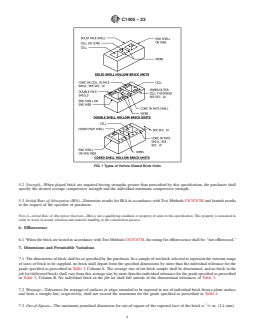
the requirements in Table 1. See Fig. 1.
5. Physical Properties
5.1 Durability—Glazed brick shall conform to the physical properties requirements for the class specified as prescribed in Table
2 or in 5.1.1 or 5.1.2. For the compressive strength requirements, test the unit with the compressive force perpendicular to the bed
surface of the unit, with the unit in the stretcher position.
NOTE 2—The physical property requirements for durability are based upon correlation of these physical properties and freeze-thaw testing of units in
standard production. They indicate durability. Conformance with these property requirements provides a reasonable level of confidence as to durability
in lieu of freeze-thaw testing.
5.1.1 Strength and Absorption Requirements Alternate—The saturation coefficient requirement for Class Exterior does not apply,
provided the average compressive strength of a random sample of five brick equals or exceeds 8000 psi (55.2 MPa) with no
individual strength less than 7500 psi (51.8 MPa). Additionally, the 24-h cold water absorption of each unit shall not exceed 6.0 %.
5.1.1.1 Subdivision Solid Thin—The saturation coefficient requirement for Class Exterior does not apply, provided the 24-h cold
water absorption of each unit shall not exceed 6.0 %.
5.1.2 Freezing and Thawing Alternative—The requirements for cold water absorption (5.1.1) and absorption and saturation
coefficient (Table 2) for Class Exterior do not apply, provided a sample of five brick, meeting the strength requirements of Table
2, passes the freezing and thawing test as described in the Rating Section of the Freezing and Thawing test procedures of Test
Methods C67/C67M.
NOTE 3—The 50 cycle freezing and thawing test is used as an alternative only when units do not conform to either Table 2 requirements for maximum
water absorption and saturation coefficient, or to the appropriate requirements of the Strength and Absorption Alternate Alternates for each Division and
Subdivision in 5.1.1.
5.1.2.1 Subdivision Solid Thin—The requirements for cold water absorption (5.1.1.1) and absorption and saturation coefficient
(Table 2) for Class do not apply, provided a sample of five brick passes the freezing and thawing test as described in the Rating
Section of the Freezing and Thawing test procedures of Test Methods C67/C67M.
5.1.2.2 Class Exterior: Breakage and Weight Loss Requirement—No individual unit separates or disintegrates resulting in a weight
loss greater than 0.5 % of its original dry weight.
5.1.2.3 Class Exterior: Cracking Requirement—No individual unit develops a crack that exceeds, in length, the unit’s least
dimension.
TABLE 1 Division H60V—Hollow Glazed Brick Minimum Thickness of Face Shells and Webs, in. (mm)
Nominal Width of Unit Face Shell Type End Shells
Solid Cored or Double Shell
3 3
3 and 4 (76 and 102) ⁄4 (19.0) . ⁄4 (19.0)
6 (152) 1 (25.4) 1 ⁄2 (38.1) 1 (25.4)
1 1
8 (203) 1 ⁄4 (31.8) 1 ⁄2 (38.1) 1 (25.4)
3 5 1
10 (254) 1 ⁄8 (34.9) 1 ⁄8 (41.3) 1 ⁄8 (28.6)
1 1
12 (305) 1 ⁄2 (38.1) 2 (50.8) 1 ⁄8 (28.6)
C1405 − 23
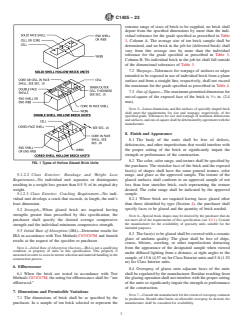
FIG. 1 Types of Hollow Glazed Brick Units
5.2 Strength—When glazed brick are required having strengths greater than prescribed by this specification, the purchaser shall
specify the desired average compressive strength and the individual minimum compressive strength.
5.3 Initial Rate of Absorption (IRA)—Determine results for IRA in accordance with Test Methods C67/C67M and furnish results
at the request of the specifier or purchaser.
NOTE 4—Initial Rate of Absorption (Suction)—IRA is not a qualifying condition or property of units in this specification. This property is measured in
order to assist in mortar selection and material handling in the construction process.
6. Efflorescence
6.1 When the brick are tested in accordance with Test Methods C67/C67M, the rating for efflorescence shall be: “not effloresced.”
7. Dimensions and Permissible Variations
7.1 The dimensions of brick shall be as specified by the purchaser. In a sample of ten brick selected to represent the extreme range
of sizes of brick to be supplied, no brick shall depart from the specified dimensions by more than the individual tolerance for the
grade specified as prescribed in Table 3, Column A. The average size of ten brick sample shall be determined, and no brick in the
job lot (delivered brick) shall vary from this average size by more than the individual tolerance for the grade specified as prescribed
in Table 3, Column B. No individual brick in the job lot shall fall outside of the dimensional tolerances of Table 3.
7.2 Warpage—Tolerances for warpage of surfaces or edges intended to be exposed in use of individual brick from a plane surface
and from a straight line, respectively, shall not exceed the maximum for the grade specified as prescribed in Table 4.
7.3 Out-of-Square—The maximum permitted dimension for out-of-square of the exposed face of the brick is ⁄32 in. (2.4 mm).
C1405 − 23
TABLE 2 Physical Requirements
Maximum
Minimum Compressive Strength, Water
A
Maximum Saturation Coefficient
psi (MPa), Gross Area Absorption by
24-h Cold, 7°
Designation Maximum
Water
Designation
B
Absorption Maximum Saturation Coefficient
Minimum Compressive Strength
by 24-h
A
,
Cold, 7°
psi (MPa), Gross Area
Average of 5 Individual Individual Average of 5 Individual
Brick Brick
Class Exterior 6000 (41.4) 5000 (34.8) 7.0 0.78 0.80
Class Interior 3000 (20.7) 2500 (17.2)
A
The Minimum Compressive Strength shall not be required for Subdivision Solid Thin units due to testing constraints.
B
The saturation coefficient is the ratio of absorption by 24 h submersion in cold water to that after 5 h submersion in boiling water.
TABLE 3 Tolerances on Dimensions
Maximum Permissible Variation in Dimensions, in. (mm)
Specified Dimension or plus or minus from:
Average Brick Size in Job Column A Column B
A
Lot Sample, in. (mm) (for Specified Dimension) (for Average Brick Size in Job Lot Sample)
Grade S Grade SS Grade S Grade SS
1 1 1 1
3 (76) and under ⁄16 (1.6) ⁄16 (1.6) ⁄16 (1.6) ⁄16 (1.6)
3 1 1 1
Over 3-4 (76-102), incl ⁄32 (2.4) ⁄16 (1.6) ⁄16 (1.6) ⁄16 (1.6)
1 1 3 1
Over 4-6 (102-152), incl ⁄8 (3.2) ⁄16 (1.6) ⁄32 (2.4) ⁄16 (1.6)
5 1 3 1
Over 6-8 (152-203), incl ⁄32 (4.0) ⁄16 (1.6) ⁄32 (2.4) ⁄16 (1.6)
7 1 1 1
Over 8-12 (203-305), incl ⁄32 (5.6) ⁄16 (1.6) ⁄8 (3.2) ⁄16 (1.6)
9 1 3 1
Over 12-16 (305-406), incl ⁄32 (7.1) ⁄16 (1.6) ⁄16 (4.8) ⁄16 (1.6)
A
Lot size shall be determined by agreement between purchaser and seller. If not specified, lot size shall be understood to include all brick of one size and color in the
job order.
TABLE 4 Tolerances on Warpage
Maximum Permissible Warpage,
Maximum Dimension,
in. (mm)
in. (mm)
Grade S Grade SS
1 1
8 (203) and under ⁄16 (1.6) ⁄16 (1.6)
3 3
Over 8-12 (203-305) incl ⁄32 (2.4) ⁄32 (2.4)
1 3
Over 12-16 (305-406) incl ⁄8 (3.2) ⁄32 (2.4)
NOTE 5—Linear dimensions and flat surfaces of specially shaped brick shall meet the requirements for size and warpage, respectively, of the specified
grade. Tolerances for size and warpage of nonlinear dimensions and surfaces, and out-of-square shall be determined by agreement with the manufacturer.
8. Finish and Appearance
8.
...