

ASTM D5150-92(2017)
(Test Method)Standard Test Method for Hiding Power of Architectural Paints Applied by Roller
General Information
- Abstract
SIGNIFICANCE AND USE
5.1 Laboratory hiding power measurements of architectural coatings generally employ blade-type applicators that lay down films of highly uniform thickness. But practical applicators, such as rollers, pads, and brushes, typically apply films that lack uniformity due to incomplete leveling, resulting in the practical hiding power of most paints being less than that measured on films applied with a drawdown blade. This test method simulates practical application procedures and conditions so as to provide an indication of the actual hiding performance obtainable when a paint is applied by an experienced worker. It is not intended to duplicate painting as done by the average consumer.
5.2 Since the rheological characteristics of a paint and its interaction with the applicator are influencing factors, rank order correlation between this test and one done by drawdown might not be obtained.
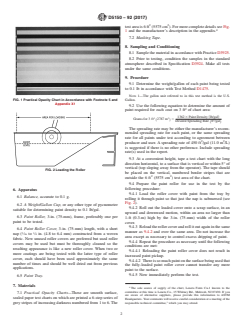
FIG. 1 Practical Opacity Chart in Accordance with Footnote 5 and Appendix X1
FIG. 2 Loading the Roller
SCOPE
1.1 This test method measures the ability of a paint to hide or obscure a surface to which it has been applied by a practical application procedure. This test method covers the use of a paint roller, but the concept is expected to work equally well when the application tool is a paint brush or paint pad.
1.2 The values stated in inch-pound units are to be regarded as standard. The values given in parentheses are mathematical conversions to SI units that are provided for information only and are not considered standard.
1.3 This standard does not purport to address all of the safety concerns, if any, associated with its use. It is the responsibility of the user of this standard to establish appropriate safety and health practices and determine the applicability of regulatory limitations prior to use.
1.4 This international standard was developed in accordance with internationally recognized principles on standardization established in the Decision on Principles for the Development of International Standards, Guides and Recommendations issued by the World Trade Organization Technical Barriers to Trade (TBT) Committee.
- Status
- Published
- Publication Date
- 31-May-2017
- Technical Committee
- D01 - Paint and Related Coatings, Materials, and Applications
- Drafting Committee
- D01.42 - Architectural Coatings

Overview
ASTM D5150-92(2017) - Standard Test Method for Hiding Power of Architectural Paints Applied by Roller provides a practical laboratory method for evaluating the hiding power, or opacity, of architectural paints when applied with a roller. Unlike traditional blade applicator methods that produce uniform films, this test simulates realistic application using rollers, accounting for the variability in coverage typical of actual painting conditions by experienced workers. This standard is essential for manufacturers, quality control laboratories, and professionals in the paint and coatings industry to assess how well architectural coatings hide or obscure a substrate in real-world scenarios.
Key Topics
- Hiding Power: Measures the ability of a paint to cover surface color or texture when applied with a roller. This standard provides an indication of the actual practical hiding performance, rather than the idealized version given by uniform blade application.
- Practical Application Conditions: The method replicates realistic coating application procedures, recognizing that tools like rollers, brushes, and pads do not create completely uniform coatings.
- Test Procedure: Involves applying paint at a specified spreading rate to a specially designed opacity chart featuring a series of grey stripes. Paint is applied in one and two coats, and the extent of obscuration is visually evaluated.
- Influence of Rheology: The interaction between paint rheological properties (like viscosity and leveling) and the applicator affects hiding power. As a result, the order of performance may differ from that obtained using blade applicators.
- Reporting: Results are reported by identifying the darkest stripe fully hidden after single and double coats, along with the spreading rate used.
Applications
ASTM D5150-92(2017) is highly valuable for:
- Paint Manufacturers: Comparing the practical hiding ability of new and existing architectural coatings, supporting product development and quality assurance.
- Specification Writers and Purchasers: Evaluating compliance with opacity requirements on painted surfaces for construction and renovation projects.
- Testing and Quality Control Laboratories: Implementing rigorous and repeatable methods for assessing paint performance as experienced by professional applicators.
- Research and Development: Understanding how formulation changes affect real-world hiding power, leading to improved paint products.
The test method is applicable to any architectural paint intended for wall or ceiling surfaces and is relevant when performance with practical applicators needs to be evaluated. It provides data aligned with field application conditions, supporting more accurate predictions of end-use appearance.
Related Standards
Several ASTM standards are referenced and related to the application and evaluation of paints:
- ASTM D16: Terminology for Paint, Related Coatings, Materials, and Applications
- ASTM D1475: Test Method for Density of Liquid Coatings, Inks, and Related Products
- ASTM D2244: Practice for Calculation of Color Tolerances and Color Differences
- ASTM D3924: Specification for Environment for Conditioning and Testing Paint, Varnish, Lacquer, and Related Materials
- ASTM D3925: Practice for Sampling Liquid Paints and Related Pigmented Coatings
- ASTM E1347: Test Method for Color and Color-Difference Measurement by Tristimulus Colorimetry
Practical Value
Implementing ASTM D5150-92(2017) helps ensure that:
- Products meet market expectations for coverage and appearance.
- Paint formulations are effectively tailored for both professional and high-performance consumer use.
- Users can compare paint products under conditions that closely reflect professional field application, resulting in a better understanding of true hiding power.
By relying on standardized measurement of the hiding power of architectural paints using a roller, industry stakeholders gain reliable, actionable data to inform decisions, specifications, and product improvements.
Relations
- Effective Date
- 01-Jun-2017
- Effective Date
- 01-Jan-2024
- Effective Date
- 01-May-2020
- Effective Date
- 01-Jul-2016
- Effective Date
- 01-Apr-2016
- Effective Date
- 01-Nov-2015
- Effective Date
- 01-Aug-2015
- Effective Date
- 01-Jan-2015
- Effective Date
- 01-Jan-2015
- Effective Date
- 01-Dec-2014
- Effective Date
- 01-May-2014
- Effective Date
- 01-Nov-2012
- Effective Date
- 01-Aug-2012
- Effective Date
- 01-Nov-2011
- Effective Date
- 01-Jun-2011
Frequently Asked Questions
ASTM D5150-92(2017) is a standard published by ASTM International. Its full title is "Standard Test Method for Hiding Power of Architectural Paints Applied by Roller". This standard covers: SIGNIFICANCE AND USE 5.1 Laboratory hiding power measurements of architectural coatings generally employ blade-type applicators that lay down films of highly uniform thickness. But practical applicators, such as rollers, pads, and brushes, typically apply films that lack uniformity due to incomplete leveling, resulting in the practical hiding power of most paints being less than that measured on films applied with a drawdown blade. This test method simulates practical application procedures and conditions so as to provide an indication of the actual hiding performance obtainable when a paint is applied by an experienced worker. It is not intended to duplicate painting as done by the average consumer. 5.2 Since the rheological characteristics of a paint and its interaction with the applicator are influencing factors, rank order correlation between this test and one done by drawdown might not be obtained. FIG. 1 Practical Opacity Chart in Accordance with Footnote 5 and Appendix X1 FIG. 2 Loading the Roller SCOPE 1.1 This test method measures the ability of a paint to hide or obscure a surface to which it has been applied by a practical application procedure. This test method covers the use of a paint roller, but the concept is expected to work equally well when the application tool is a paint brush or paint pad. 1.2 The values stated in inch-pound units are to be regarded as standard. The values given in parentheses are mathematical conversions to SI units that are provided for information only and are not considered standard. 1.3 This standard does not purport to address all of the safety concerns, if any, associated with its use. It is the responsibility of the user of this standard to establish appropriate safety and health practices and determine the applicability of regulatory limitations prior to use. 1.4 This international standard was developed in accordance with internationally recognized principles on standardization established in the Decision on Principles for the Development of International Standards, Guides and Recommendations issued by the World Trade Organization Technical Barriers to Trade (TBT) Committee.
SIGNIFICANCE AND USE 5.1 Laboratory hiding power measurements of architectural coatings generally employ blade-type applicators that lay down films of highly uniform thickness. But practical applicators, such as rollers, pads, and brushes, typically apply films that lack uniformity due to incomplete leveling, resulting in the practical hiding power of most paints being less than that measured on films applied with a drawdown blade. This test method simulates practical application procedures and conditions so as to provide an indication of the actual hiding performance obtainable when a paint is applied by an experienced worker. It is not intended to duplicate painting as done by the average consumer. 5.2 Since the rheological characteristics of a paint and its interaction with the applicator are influencing factors, rank order correlation between this test and one done by drawdown might not be obtained. FIG. 1 Practical Opacity Chart in Accordance with Footnote 5 and Appendix X1 FIG. 2 Loading the Roller SCOPE 1.1 This test method measures the ability of a paint to hide or obscure a surface to which it has been applied by a practical application procedure. This test method covers the use of a paint roller, but the concept is expected to work equally well when the application tool is a paint brush or paint pad. 1.2 The values stated in inch-pound units are to be regarded as standard. The values given in parentheses are mathematical conversions to SI units that are provided for information only and are not considered standard. 1.3 This standard does not purport to address all of the safety concerns, if any, associated with its use. It is the responsibility of the user of this standard to establish appropriate safety and health practices and determine the applicability of regulatory limitations prior to use. 1.4 This international standard was developed in accordance with internationally recognized principles on standardization established in the Decision on Principles for the Development of International Standards, Guides and Recommendations issued by the World Trade Organization Technical Barriers to Trade (TBT) Committee.
ASTM D5150-92(2017) is classified under the following ICS (International Classification for Standards) categories: 87.040 - Paints and varnishes. The ICS classification helps identify the subject area and facilitates finding related standards.
ASTM D5150-92(2017) has the following relationships with other standards: It is inter standard links to ASTM D5150-92(2013), ASTM D16-24, ASTM E1347-06(2020), ASTM D16-16, ASTM D3924-16, ASTM E1347-06(2015), ASTM D2244-15a, ASTM D2244-15e1, ASTM D2244-15, ASTM D16-14, ASTM D2244-14, ASTM D1475-98(2012), ASTM D16-12, ASTM E1347-06(2011), ASTM D16-11a. Understanding these relationships helps ensure you are using the most current and applicable version of the standard.
ASTM D5150-92(2017) is available in PDF format for immediate download after purchase. The document can be added to your cart and obtained through the secure checkout process. Digital delivery ensures instant access to the complete standard document.
Standards Content (Sample)
This international standard was developed in accordance with internationally recognized principles on standardization established in the Decision on Principles for the
Development of International Standards, Guides and Recommendations issued by the World Trade Organization Technical Barriers to Trade (TBT) Committee.
Designation: D5150 − 92 (Reapproved 2017)
Standard Test Method for
Hiding Power of Architectural Paints Applied by Roller
This standard is issued under the fixed designation D5150; the number immediately following the designation indicates the year of
original adoption or, in the case of revision, the year of last revision. A number in parentheses indicates the year of last reapproval. A
superscript epsilon (´) indicates an editorial change since the last revision or reapproval.
1. Scope Testing Paint, Varnish, Lacquer, and Related Materials
(Withdrawn 2016)
1.1 This test method measures the ability of a paint to hide
D3925 Practice for Sampling Liquid Paints and Related
or obscure a surface to which it has been applied by a practical
Pigmented Coatings
application procedure. This test method covers the use of a
E1347 Test Method for Color and Color-Difference Mea-
paint roller, but the concept is expected to work equally well
surement by Tristimulus Colorimetry
when the application tool is a paint brush or paint pad.
1.2 The values stated in inch-pound units are to be regarded
3. Terminology
as standard. The values given in parentheses are mathematical
3.1 Definitions:
conversions to SI units that are provided for information only
3.1.1 hiding power, n—theabilityofapaintorpaintmaterial
and are not considered standard.
as used to hide or obscure a surface to which it has been
1.3 This standard does not purport to address all of the
uniformly applied (see Terminology D16).
safety concerns, if any, associated with its use. It is the
responsibility of the user of this standard to establish appro-
4. Summary of Test Method
priate safety and health practices and determine the applica-
4.1 The test paint is applied with a roller at a specified
bility of regulatory limitations prior to use.
spreading rate onto a test chart consisting of a series of light to
1.4 This international standard was developed in accor-
dark grey stripes. After drying, a second coat is applied in the
dance with internationally recognized principles on standard-
same manner over half of the chart. After the second coat has
ization established in the Decision on Principles for the
dried, both the single- and double-coated areas are evaluated
Development of International Standards, Guides and Recom-
for hiding as judged by the darkest stripe in each area that is
mendations issued by the World Trade Organization Technical
completely or almost completely obscured.
Barriers to Trade (TBT) Committee.
5. Significance and Use
2. Referenced Documents
5.1 Laboratory hiding power measurements of architectural
2.1 ASTM Standards:
coatingsgenerallyemployblade-typeapplicatorsthatlaydown
D16 TerminologyforPaint,RelatedCoatings,Materials,and
films of highly uniform thickness. But practical applicators,
Applications
such as rollers, pads, and brushes, typically apply films that
D1475 Test Method For Density of Liquid Coatings, Inks,
lack uniformity due to incomplete leveling, resulting in the
and Related Products
practical hiding power of most paints being less than that
D2244 Practice for Calculation of Color Tolerances and
measured on films applied with a drawdown blade. This test
Color Differences from Instrumentally Measured Color
method simulates practical application procedures and condi-
Coordinates
tions so as to provide an indication of the actual hiding
D3924 Specification for Environment for Conditioning and
performance obtainable when a paint is applied by an experi-
enced worker. It is not intended to duplicate painting as done
by the average consumer.
This test method is under the jurisdiction of ASTM Committee D01 on Paint
5.2 Since the rheological characteristics of a paint and its
and Related Coatings, Materials, andApplications and is the direct responsibility of
interaction with the applicator are influencing factors, rank
Subcommittee D01.42 on Architectural Coatings.
order correlation between this test and one done by drawdown
Current edition approved June 1, 2017. Published June 2017. Originally
might not be obtained.
approved in 1991. Last previous edition approved in 2013 as D5150 – 92 (2013).
DOI: 10.1520/D5150-92R17.
For referenced ASTM standards, visit the ASTM website, www.astm.org, or
contact ASTM Customer Service at service@astm.org. For Annual Book of ASTM
Standards volume information, refer to the standard’s Document Summary page on The last approved version of this historical standard is referenced on
the ASTM website. www.astm.org.
Copyright © ASTM International, 100 Barr Harbor Drive, PO Box C700, West Conshohocken, PA 19428-2959. United States
D5150 − 92 (2017)
2 2
test area is 6 ft (5575 cm ). For more complete details see Fig.
1 and the manufacturer’s description in the appendix.
7.2 Masking Tape.
8. Sampling and Conditioning
8.1 Sample the material in accordance with Practice D3925.
8.2 Prior to testing, condition the samples in the standard
atmosphere described in Specification D3924. Make all tests
under the same conditions.
9. Procedure
9.1 Determine the weight/gallon of each paint being tested
to 0.1 lb in accordance with Test Method D1475.
NOTE 1—The gallon unit referred to in this test method is the U.S.
Gallon.
FIG. 1 Practical Opacity Chart in Accordance with Footnote 5 and
Appendix X1
9.2 Use the following equation to determine the amount of
paint required for each coat on 3 ft of chart area:
1362 3Paint Density lb/gal
~ !
2 2
Grams for 3 ft 2787 m 5
~ !
Desired Spreading Rate ft /gal
~ !
The spreading rate may be either the manufacturer’s recom-
mended spreading rate for each paint, or the same spreading
rate for all paints under test according to agreement between
2 2
producer and user. A spreading rate of 450 ft /gal (11.0 m /L)
is suggested if there is no other preference. Include spreading
rate(s) used in the report.
9.3 At a convenient height, tape a test chart with the long
direction horizontal, to a surface that is vertical or within 5° of
vertical (top sloping away from the operator). The tape should
FIG. 2 Loading the Roller
be placed on the vertical, numbered border stripes that are
2 2
outside the 6 ft (5575 cm ) test area of the chart.
9.4 Prepare the paint roller for use in the test by the
following procedure:
6. Apparatus
9.4.1 Load the roller cover with paint from the tray by
6.1 Balance, accurate to 0.1 g.
rolling it through paint so that just the nap is submersed (see
Fig. 2).
6.2 A Weight/Gallon Cup, or any other type of pycnometer
9.4.2 Roll out the loaded cover onto a scrap surface, in an
suitable for determining paint density to 0.1 lb/gal.
upward and downward motion, within an area no larger than
6.3 Paint Roller, 3-in. (75-mm), frame, preferably one per
1-ft (0.3-m) high by the 3-in. (75-mm) width of the roller
paint to be tested.
cover.
9.4.3 Reloadtherollercoverandrollitoutagaininthesame
6.4 Paint Roller Cover, 3-in. (75-mm) length, with a short
manner as 9.4.2 and over the same area. Do not increase the
3 1
nap ( ⁄16 to ⁄4 in. (4.8 to 6.4 mm) constructed from a woven
area except as necessary to control excess dripping of paint.
fabric. New unused roller covers are preferred but used roller
9.4.4 Repeat the procedure as necessary until the following
covers may be used but must be thoroughly cleaned so the
conditions are met:
resulting appearance is like a new roller cover. When two or
9.4.4.1 Reloading the paint roller cover does not result in
more coatings are being tested with the latter type of roller
increased paint pickup.
cover, each should have been used approximately the same
9.4.4.2 Thereissomuchpaintonthesurfacebeingusedthat
num
...